Tag: asia

  • Bacardi builds Dewar’s presence in Malaysia with pop-up Whisky Emporium

    Bacardi builds Dewar’s presence in Malaysia with pop-up Whisky Emporium

    Bacardi Global Travel Retail is aiming to build the presence of Dewar’s whisky in Malaysia with a two-month shopper engagement activation at Kuala Lumpur International Airport (KLIA).

    The pop-up John Dewar & Sons Fine Whisky Emporium features the travel retail launch of Craigellachie Speyside single malt in two age variants: 13yo and a travel retail-exclusive 19yo.

    Bacardi said the campaign is timed to maximise the extended holiday and gifting season in December and January covering Christmas, New Year 2017 and Chinese New Year.

    The pop-up is located in front of the Zon Duty Free Arrival Store run by Duty Free Zone (DFZ) in partnership with Heinemann Asia Pacific. Travellers can sample a variety of Dewar’s single malts and blends, including Dewar’s 15yo and 18yo, Aberfeldy 18yo, Glen Deveron 20yo, Royal Brackla 16yo and Craigellachie 13yo and 19yo.

    Customers who spend over RM288 (US$65) will receive a complimentary trolley bag.

    Bacardi Global Travel Retail Regional Director Asia Pacific and Middle East Africa Vinay Golikeri commented: “Kuala Lumpur International Airport is an important location for us as a brand building opportunity for Dewar’s with its passenger profile focused on emerging market travellers, especially the Chinese and Indian traveller.

    Dewar's KLIA Feb 2017 1

    “Covering both the December/January holiday season and Chinese New Year, we are engaging the additional surge of passengers travelling at this time with our Dewar’s single malt portfolio, which offers an intriguing range of whisky options perfect for gifting or for self-treats to add to a personal collection.”

    Dewar's KLIA Feb 2017 4

    Heinemann Asia Pacific Brand Activity Manager June Ong added: “The Dewar’s Emporium is a perfect attraction front of store at this time of year and our customers love it. The presentation of the Dewar’s range from the artisan wooden trolley encourages closer examination and the retail ambassadors are doing an excellent job in helping shoppers explore the offer for themselves. We are particularly keen to encourage this level of connection with our customers as it gives them a memorable experience in our store.”

  • Chinese businessman Jack Ma reveals what China really wants from Australia

    Chinese businessman Jack Ma reveals what China really wants from Australia

    Alibaba chairman Jack Ma was the guest of honour at an opening ceremony for a regional headquaters of the Chinese e-commere company, in Melbourne on Saturday. “We succeed by helping others, by being helped by others. We succeed because we empower the small business,” Jack Ma told the audience.

    “So our vision in the next 20 years, we want to create 100 million jobs for the world and we want to serve two billion population of the world and we want to make 10 million small businesses profitable on our platform,” he added. He stressed that Alibaba had a global vision for its business, saying “we believe globalisation is the future.” The newly opened office in Melbourne will serve as Alibaba’s Australian and New Zealand headquarters.

    China’s second richest man, Jack Ma, who is the founder of online retail giant Alibaba, said at the opening of the first Australian and New Zealand branch of his company in Melbourne that Australia had something “unique” that China was willing to spend big bucks on.

    “Australia is a gold mine. The next gold mine,” Mr Ma said in Melbourne on Saturday.

    “The clean water, the soil and the air, this is what you have, the most unique asset.”

    With China’s pollution problem, there’s no question as to why China would want to suck up some of Australia’s environment.

    China’s “airpocalypse” has seen the country’s pollution hit toxic levels and a blanket of smog the size of Victoria covered Beijing at the end of last year.

    People are seeing this as an opportunity in Australia to export our air to China.

    Currently New Zealand uses Alibaba, basically the Chinese version of Amazon, to sell fresh air to Chinese consumers.

    Oxygen Air bottles the air in aerosol cans and sells them for about $25.

    In Australia, up to $1 million worth of air has been bottled and Alibaba could be another opportunity for air farmers to expand their business.

    Air is being bottled in the Blue Mountains, Bondi Beach and the Yarra Valley.

    Green and Clean company director John Dickinson told the Herald Sun there was a high demand from people in China and India, who hoped the fresh air might clear their lungs.

    “A lot of people see the product as a supplement to clean their lungs out with fresh Australian air,” he said.

    There are also a number of other Australian products high in demand on the Alibaba site. One of them belongs to Gold Coast woman Brynly King, who expanded her business in her garage — turning it into a multi-million dollar company.

    Banaban Virgin Coconut Oil products are now on the shelves in some department stores in China and a number of other countries, all because she started selling on Alibaba.

    Alibaba has become the world’s largest retailer since 1999 and debuted on the New York Stock Exchange in 2014, becoming the biggest IPO in history.

    Mr Ma went from a struggling schoolteacher to a man who is worth $43.6 billion and he said all it took was hard work and created his company to give small businesses the opportunity to put their products in front of consumers.

    Whether you’re a mum and dad making soaps in the garage or a millennial with an invention, Mr Ma aims to give people a place where they can sell, and gives people a chance to buy.

    Ma has a long interest in Australia, it started when he was a 15-year-old living in China, and he would hang around western hotels so he could practise his English with tourists.

    He met an Australian family from Newcastle and from there realised what the country had to offer, particularly in a business sense.

    Many Australian small businesses have put their products on Alibaba to sell to China, and made a motza, like Ms King.

    Mr Ma said China has been long known for making products but he said the country needed high quality products and service and didn’t think China today could produce that.

    He said China will work with other nations, like Australia, to move from manufacturing to domestic consumption.

    There have been concerns that Alibaba could accelerate globalisation, the process of countries integrating into one because of an interchange of world views, culture and products.

    Mr Ma doesn’t buy into that.

    “Globalisation does not create problems, it shares culture and should always be inclusive. It is the future,” he said.

    Australia is the fourth highest seller on Alibaba and Mr Ma believes the Australian office will connect more people to consumers in China and boost our exports.

    Alibaba accounts for 60 per cent of China’s sales and Australian shoppers would have most likely heard of Aliexpress, which is one of Alibaba’s market places that is English and rivals eBay.

    It sells everything from fast fashion, phone accessories and camping gear.

    Mr Ma believes the Australian branch of Alibaba will boost trades in both Australia and China.

    The Australian and New Zealand branch of Alibaba will be headed by Maggie Zhou, who was the 48th person employed at the company which now gives jobs to millions.

    Ms Zhou said she would introduce new Australian brands to the Alibaba platform.

    “A physical Alibaba headquarters is a key step in ensuring Australian businesses have the support and information they need to succeed in China and the rest of the world,” she said.

    “Longer term, Alibaba Group’s vision for the ANZ region is to build the entire operating infrastructure needed to enable local businesses to expand globally.”
  • Trai to allow Jio to continue free data offer

    Trai to allow Jio to continue free data offer

    Indian telecommunications regulator Trai has determined to allow disruptive new market entrant Reliance Jio Infocomm to continue with its free data offer, despite objections from rivals.

    Trai has rejected petitions from incumbent operator Bharti Airtel as well as Idea Cellular calling for the regulator to prohibit Reliance Jio from maintaining what it calls a predatory promotional offer.

    Indian regulations prevent operators from running a promotional campaign for longer than three months, and Reliance Jio has now been offering free services to subscribers for longer than this time, having recently decided to extend the offer to March 31.

    But to circumvent the restriction, Jio is calling its current promotional offer the Happy New Year offer, and has argued that this was distinct from its initial Welcome offer.

    Trai has now sided with Jio, finding that the new offer is a distinct promotion and cannot be considered an extension of the earlier offer. On this basis, Jio will be allowed to continue to offer free services.

    Jio’s aggressive marketing is triggering a fresh price war in India, which could have a significant impact on an already hurting industry. The report cites an executive from one of the big three operators stating that if the price war continues, there will be job losses.

    Operators are meanwhile exploring consolidation in order to survive in the strictly competitive environment. Indian media recently reported of a four-way merger between Aircel, Reliance Communications, Telenor India and Sistema Shyam Teleservices (SSTL).

  • Vietnamese beer market big enough for all brewers

    Vietnamese beer market big enough for all brewers

    Analysts repeatedly warned that the competition in Vietnam would be fiercer as more and more big players, including foreign ones such as Asahi (Japan), Singha (Thailand), Corona (Mexico) and Royal (the Netherlands), have joined the market. However, surprisingly, all of brewers can make big money in Vietnam.

    A representative of Heineken Vietnam said that purchasing power was 20 percent higher than the same period of the previous year.

    At Big C, beer sales have increased by 30-40 percent compared with the end of 2016 as people rush to buy beer to prepare for Tet. The demand is so high that the retailer sells no less than two boxes of beer to one client every day.

    On January 7, at a conference reviewing its operation in 2016, Sabeco, the largest brewer, said 1.584 billion liters of beer were sold in the year, an increase of 8 percent over 2015.

    In fact, beer sales not only have increased on pre-Tet days, but have been increasing steadily over the last 15 years.

    A survey by Sabeco showed that the consumed beer volume increased from 2.33 billion liters in 2010 to 3.6 billion liters in 2015. Every Vietnamese adult drinks 35.5 liters of beer a year, with which Vietnam ranks the second in the world in terms of beer consumption per capita.

    A report by Euromonitor International released in June 2016 showed that the beer sales increased from VND82.376 trillion in 2010 to VND153.943 trillion in 2015, which means a sharp increase of 86.1 percent. The figure was VND166.388 trillion in 2016 and is expected to reach VND218.292 trillion by 2020.

    With an average population increase of 1 percent per annum and a popular beer culture, beer sales are expected to increase in the coming years.

    It is expected that 4.84 billion liters of beer would be consumed by 2020, including 492.9 million liters of high-end products, 3 billion liters of mid-range and 1.34 billion liters of low-cost products.

    Sales are predicted to see an average growth rate of 7.2 percent in the 2015-2020 period.

    Brewers continue to expand production and run marketing campaigns to retain their market share.

    Sapporo Vietnam, which has succeeded with Sapporo Premium Beer, has launched Blue Cap, another brand.

    In late December 2016, Saigon-Binh Tay JSC, belonging to Sabeco, marketed the first products bearing the Sagota brand. Meanwhile, Heineken Vietnam has launched Strongbow, a fermented fruit juice.

    Leo Evers, general director of Heineken Vietnam, said the company was planning to increase production capacity in Vietnam by 2025.

    Sapporo announced that its production capacity would increase from 40 million to 100 million liters.

  • Vietnam formally legalizes sports betting

    Vietnam formally legalizes sports betting

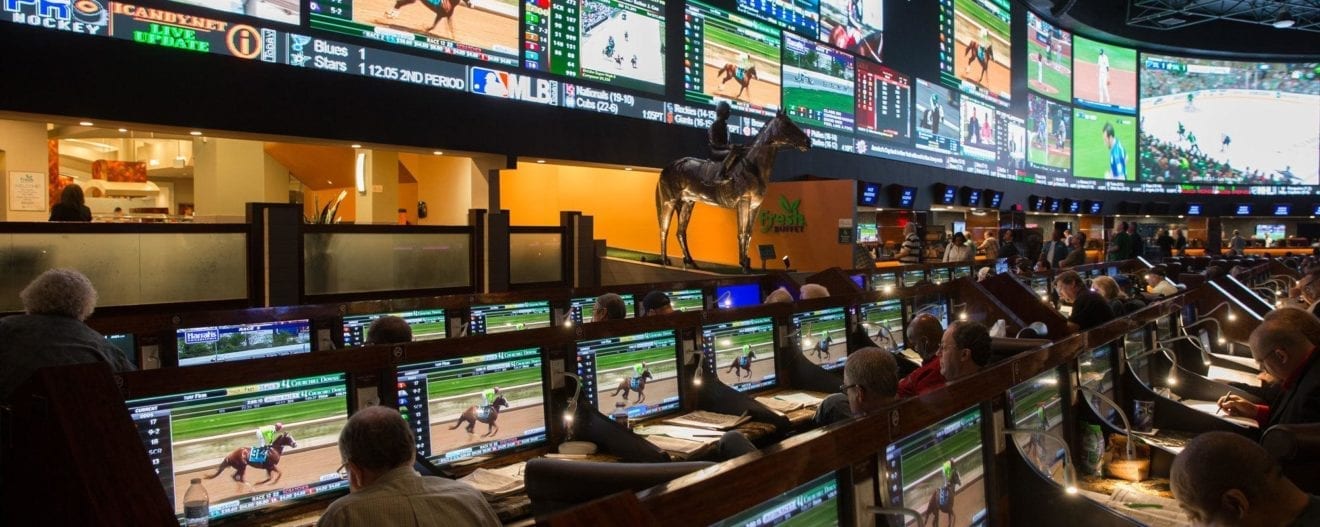
    After years of deliberation, Vietnam has finally made a historic decision to legalize sports betting. A new decree released on the government’s official website on Friday will allow citizens to bet on international soccer games and horse and greyhound races starting March 31.

    The minimum bet value is VND1,000 (4.42 cents) while the daily maximum limit is VND1 million ($44).Online betting is out of question for now. Only those above 21 years old are allowed to gamble and bookmakers have to be at least 500 meters away from schools and public venues for children.

    The decree only allows betting on international soccer games recognized by the governing body FIFA and approved by Vietnam’s sports ministry.

    Operators of bookmaking businesses will have to meet strict capital requirements: VND1 trillion ($44.2 million) for horse racing and soccer and VND300 billion ($13.2 million) for greyhound. A bidding process will be held to select one soccer betting provider for a five-year trial phase.

    Officials started working on sports betting rules in 1999 but debates after debates delayed the legalization.

    Vietnam now has one greyhound race course in the southern beach town of Vung Tau. A $100 million horse race course will be opened in the southern province of Binh Duong in April. Hanoi will also build a horse racetrack, a $500 million project that has been delayed for some time.

    The government last month also said it would allow citizens over 21 years old with a monthly income of at least VND10 million ($445) to hedge bets in local casinos from mid-March under a three-year pilot program, breaking a long-year ban of gambling among locals.

    All these recent moves show the government has shifted its stance on gambling, once considered a “social evil.”

    Many locals have broken the long-running gambling ban, creating a lucrative illegal industry for online betting. A number of online operations have been busted in recent years.

  • Subdued Amazon results clouds impressive growth

    Subdued Amazon results clouds impressive growth

    Amazon is usually a retailer that operates at full volume, the noise of its sales growth a clarion call in an often muted retail sector.

    However, this quarter that volume seems to have been turned down a couple of notches. While the latest Amazon results show impressive growth, and is a long way above the retail sector overall, by the high benchmark the company has set, the latest numbers have a certain softness. Revenue totalled US$43.7 billion, up 22 per cent year-on-year, below analysts’ expectations.

    Some of the loss in momentum comes down to a more unfavorable exchange rate. On a constant currency basis, Amazon’s overall growth is a more respectable 24 per cent; while its international growth leaps to 23 per cent from 18 per cent, once the impact of the strong dollar is factored out. Even so, these upticks still leave a gap in growth compared to what Amazon delivered over the first three quarters of the fiscal.

    Part of the softness comes down to shipping-related revenue, which grew by its slowest pace in over a year. This has placed a little downward pressure on the revenue line. More worryingly it means that shipping revenue from consumers is now strongly adrift from Amazon’s shipping costs. In the final quarter, the former grew by 29 per cent, while the latter surged by 35 per cent to just over $5.6 billion. This is one of the reasons the company missed its profit forecasts, and why operating profit came in at 2.9 per cent of sales versus 3.1 per cent over the same period last year.

    Arguably, low cost and fast delivery are a fundamental part of Amazon’s appeal to consumers. However, they are also its Achilles’ heel – and with Prime becoming more popular, and with a greater focus being put on speedier shipping times, we have concerns that Amazon could see further profit erosion as it enters its new fiscal year. This view is supported by Amazon’s own guidance for the next quarter, which suggests profit will come in well below last year.

    As niggling as these points are, they do not diminish Amazon’s success in other areas. Over the holiday quarter, the company saw demand for its devices, including the Echo product, boom. This helped Amazon to a very strong performance in electricals at a time when the overall market was struggling with a lack of newness and innovation. It also aids Amazon to extend its ecosystem to more households, something we believe will yield fruit over the coming years as it becomes a more integrated and critical part of people’s lives.

    The AWS (Amazon Web Services) division is also a success story. Here revenue grew by 47 per cent off the back of a very strong prior year comparative. This part of the business is helpful as its relatively strong profitability gives buoyancy to Amazon’s balance sheet.

    As much as this quarter has been more subdued, Amazon remains firmly on the front foot in terms of innovation. This alone will continue to make it a retail outperformer, at least in sales terms, over the next year and beyond.

  • Singapore retail rents set to stabilise in 2017

    Singapore retail rents set to stabilise in 2017

    Singapore retail rents slipped by 4.2 per cent in 2016 – an improvement on the 5.7 per cent decline of 2015, according to data from Edmund Tie & Company research.

    And they should remain resilient in the year ahead.

    The islandwide average monthly retail gross rent fell to about $29.25 per sq ft last year in what Edmund Tie describes as a “moderate decline”.

    Stabilising rents in the Orchard Road-Scotts Road precinct helped pare back the slide. While rents in Orchard/Scotts Road eased by 2.2 per cent in the first half of 2016, rents remained unchanged at $37.20 per sq ft per month in the second half.

    “The resilience in rents was attributed to limited supply in the prime shopping district, with only about 90,000 sq ft of retail net lettable area (NLA) expected to be completed over the next four years,” said Edmund Tie in a statement. “Moreover, there was strong demand for retail units in Orchard/Scotts Road, especially for those with a visible street frontage, as evidenced by the recent opening of several flagship stores and new-to-market brands.”

    During the third quarter of 2016, retailers absorbed some 112,000 sqft of new space in the precinct, a reversal from the negative net absorption of 99,000 sqft in the second quarter.

    “Hence, barring any unforeseen economic shocks, rents are anticipated to remain resilient in 2017.”

    Rents in the suburban areas were also stabilising, remaining unchanged quarter-on-quarter at $30.60 per sqft per month in the fourth quarter, after falling by 3.5 per cent during the first three quarters.

    Edmund Tie says rents are unlikely to decrease in 2017 as much as they did last year, with upcoming suburban malls reporting healthy pre-commitment rates.

    “In the third quarter, a positive net absorption of 314,000 sqft was recorded in the suburban areas, the highest in almost two years.”

    On the contrary, rents in the other city areas remained under pressure, falling by 1 per cent quarter-on-quarter to about $19.90 per sqft per month in the final three months. “This was the seventh consecutive quarter of decline and it took the total rental decline in the other city areas to 8.7 per cent in 2016.

    In addition, negative net absorption extended to -376,000 sqft in the third quarter from 25,000 sqft in the second. “Amid the impending supply of approximately 430,000 sqft of retail NLA in 2017, rents are likely to ease further in the first half of 2017, given a lack of crowds during the weekends due to the limited residential catchment. Nevertheless, the fall is likely to be transitory as retail demand will be supported by residents or guests of the residential, serviced apartment and/or hotel component in upcoming mixed-use developments such as DUO, OUE Downtown and Marina One.”

    2017 outlook

    “Overall, the decline in islandwide average rent is expected to moderate further in 2017,” predicted Edmund Tie. “To overcome competition from eCommerce and manpower constraints, more retailers are beginning to embrace technology, including NTUC FairPrice and Kopitiam. NTUC FairPrice currently offers the click-and-collect option for online shoppers, and self- checkout counters that are equipped to accept cash – which reduces its reliance on cashiers. Likewise, Kopitiam at the upcoming Hillion Mall will introduce the iCashbox payment system, as well as self-orderings kiosks and a rewards programme to encourage diners to “Return Tray for Reward”.”

    Dr Lee Nai Jia, Edmund Tie & Company’s Southeast Asia (SEA) head of research, noted: “Looking forward, it is possible that malls in the future will become fulfilment centres, where buyers go to the malls to collect their goods, or exhibition venues, where retailers attract buyers and deliver their purchases to their homes. Retail rents will not only reflect the location, but also the experiential effect of the mall.”

  • Etro China opens store in Shanghai mall

    Etro China opens store in Shanghai mall

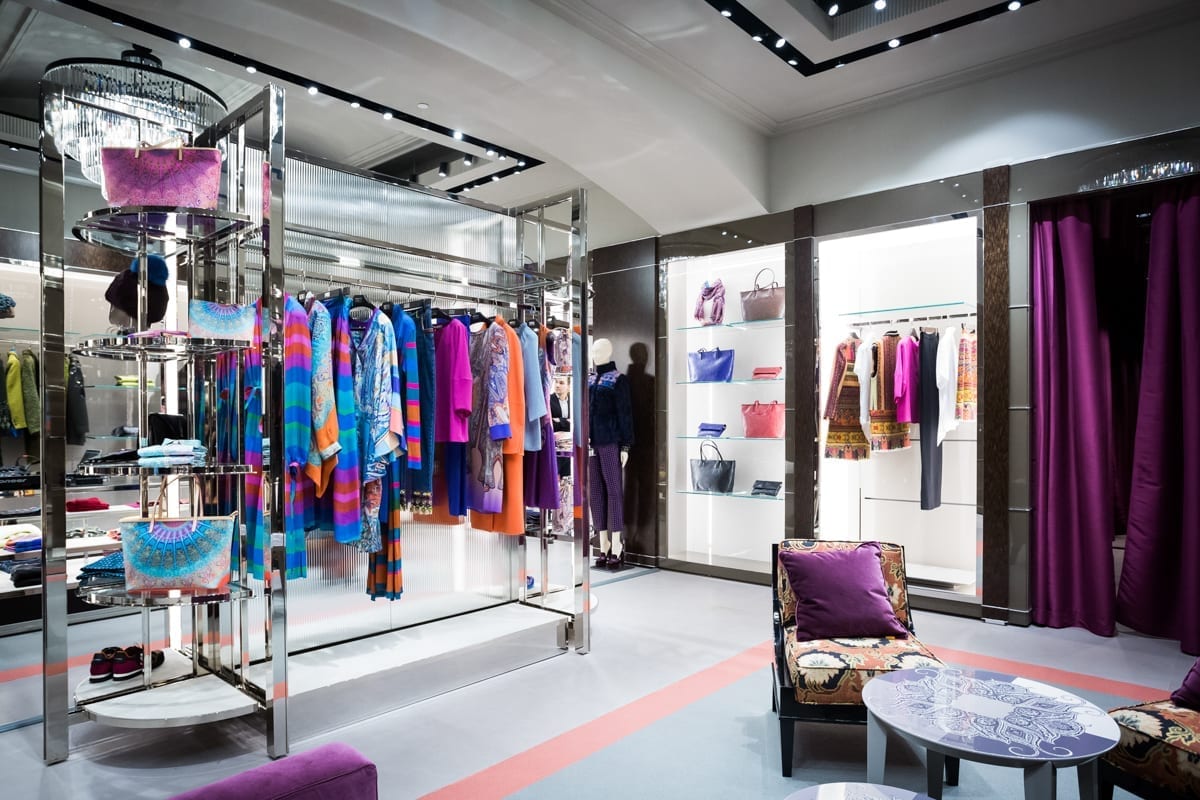
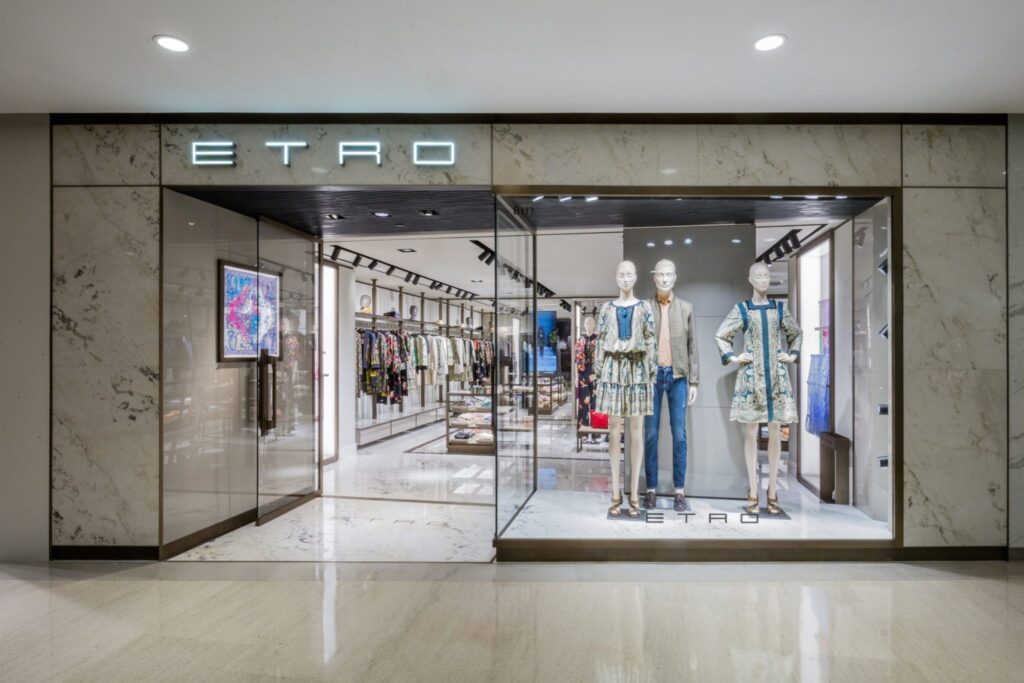
    Italian luxury house Etro China has opened a store in Shanghai’s Plaza 66 mall.

    Covering more than 150 sqm, the store features both men’s and women’s clothing and accessories collections as well as the brand’s latest retail design concept, reports CPP-Luxury.

    Founded in 1968, Etro is a family-owned fashion house with its headquarters in Milan. As well as China, it has outlets in Japan and South Korea.

    Etro Plaza 66


  • AS Watson to inject $70m in Canadian AI startup

    AS Watson to inject $70m in Canadian AI startup

    Hong Kong-based retailer A.S. Watson Group said on Thursday it will spend $70 million over the next three years in big data technologies, including investment in a Canadian artificial intelligence venture company.

    A.S. Watson will consolidate its customer data holdings into a big data analysis system for retailers developed by Rubikloud to optimize sales promotion activities and business operations.

    Rubikloud has an app designed to analyze customer characteristics and their purchase history using AI. The information will then be used for individual marketing and prediction of future sales.

    When A.S. Watson introduced the app at European stores on a trial basis starting in 2015, sales from personalized promotion activities increased by more than 8% over 10 months, hence the latest tie-up decision.

    “We are investing in big data amid global economic uncertainties because we believe that technology is a critical enabler for successful retailing in today’s world,” said Malina Ngai, chief operating officer of A.S. Watson Group, in a statement. Ngai added that Rubikloud’s technology will enable the company to “focus our resources, from back-end support to the shop floor, on building a better customer experience.”

    Kerry Liu, CEO of Rubikloud, said the company aims to enhance A.S. Watson’s capabilities to personalize customer offers through advanced targeting by “applying machine learning and flexible big data architectures in practical applications.”

    A.S. Watson is a subsidiary of conglomerate CK Hutchison Holdings, led by Li Ka-shing, a Hong Kong-based billionaire.

    A.S. Watson has more than 13,000 retail stores, including the company’s drugstore chain, in 25 countries and regions such as Asia and Europe. Li’s venture fund Horizons Ventures has also invested in Rubikloud.

  • China tourism revenue up 16 percent over Lunar New Year

    China tourism revenue up 16 percent over Lunar New Year

    China’s tourism industry saw revenues of 423.3 billion yuan ($61.55 billion) during the recent Lunar New Year festival, up 15.9 percent against last year, the China National Tourism Administration (CNTA) said late on Thursday.

    The rate of growth, driven by 344 million domestic tourist trips, was, however, slightly slower than the 16.3 percent rise seen in the corresponding year-ago period. Trips abroad over the period increased more moderately with around 6.15 million outbound Chinese tourists, up around 7 percent, CNTA said.

    China’s tourism industry is key to the country’s shift towards a more services-driven economy and is a useful indicator of the strength of consumer spending. The domestic sector raked in 3.9 trillion yuan in 2016, which Beijing wants to raise to 7 trillion yuan by 2020, official news agency Xinhua said.

    China’s retail and catering firms saw sales over the week-long holiday of around 840 billion yuan, the commerce ministry said in a separate statement, up 11.4 percent over 2016.

    Lunar New Year in China is closely watched as it marks a spike in tourism and retail spending as millions of people return home or go on vacation domestically or overseas.

  • Thai e-wallet platform provider joins hands with Myanmar retailer.

    Thai e-wallet platform provider joins hands with Myanmar retailer.

    A joint venture agreement between them was signed during a Myanmar-Thailand cooperation mission presided over by Myanmar State Counsellor Aung San Suu Kyi and Deputy Prime Minister of Thailand Dr Somkid Jatusripitak in Nay Pyi Taw yesterday.

    The joint venture will leverage the strengths of both parties to launch various innovative fintech services such as payment platform, loyalty, e-gift platform and closed- and open-loop e-wallets for Myanmar’s population of 51 million. The joint venture is a key stepping stone for T2P to expand its services beyond its home country Thailand and for City Mart to offer new products through its existing retail platform.

  • AmorePacific operating profit tops 1 trillion won in 2016

    AmorePacific operating profit tops 1 trillion won in 2016

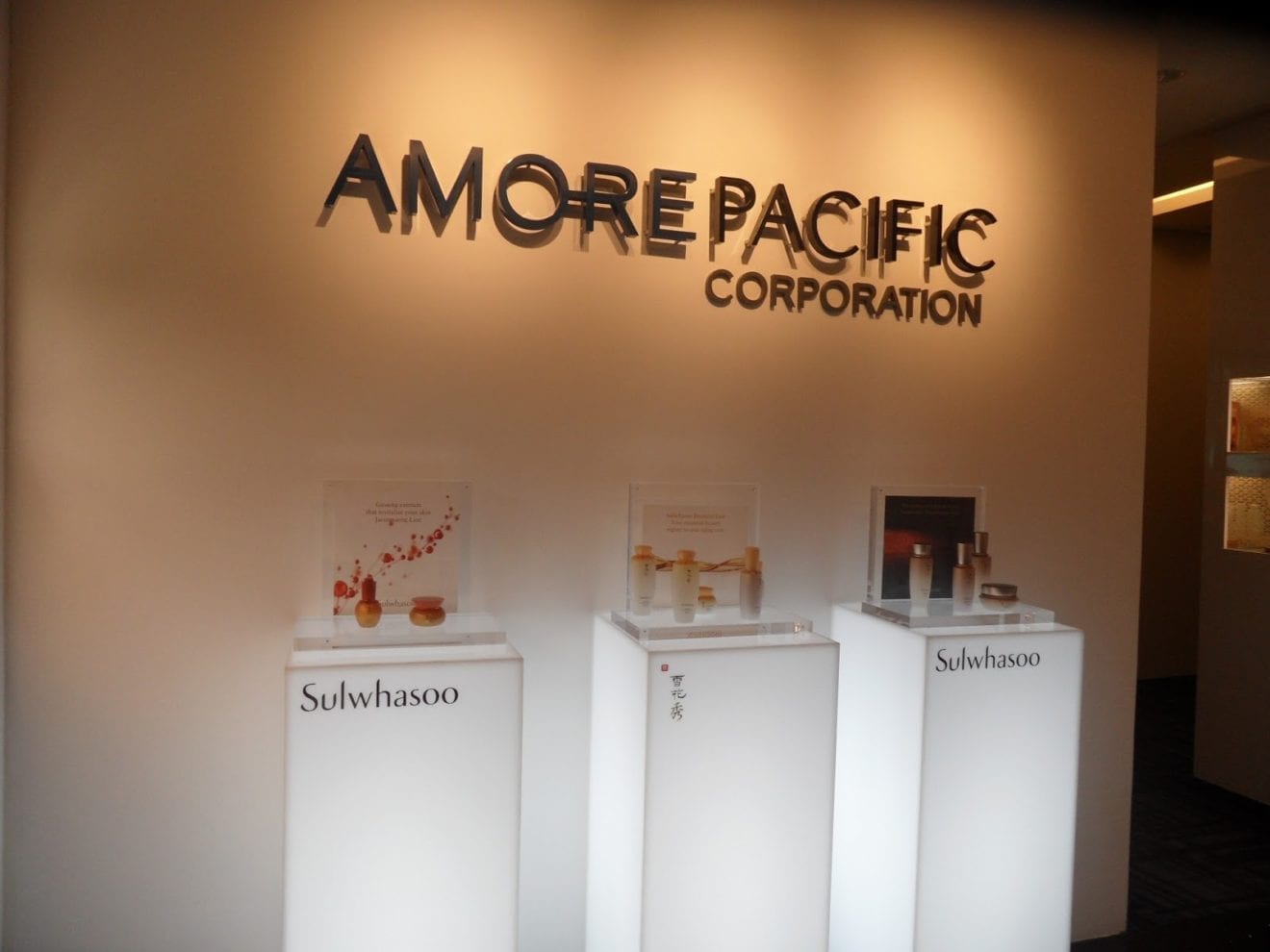
    AmorePacific Group’s yearly operating profit surpassed 1 trillion won in 2016 for the first time on diverse retail offerings in Korea and momentum in the global market.

    The company’s operating profit rose 18.5 percent year on year, reaching 1.08 trillion won ($940 million). Its revenue also jumped 18.3 percent compared to the previous year, hitting 1.7 trillion won.

    The group’s main affiliate of the same name that owns brands like Sulwhasoo and Laneige raked in 5.6 trillion won in 2016. The country’s No. 1 cosmetics company explained such growth was due to expanded channels of some of its high-end lines.

    Sulwhasoo, the company’s luxury line that is popular among older women for its anti-aging products, opened a flagship store in affluent Cheongdam-dong last year. The company said the store played a pivotal role in building up the brand’s luxury image to Asian consumers.

    The company’s global business also grew thanks to its so-called five champion brands: Sulwhasoo, Laneige, Mamonde, Innisfree and Etude House. Their sales in Asian countries soared 38 percent year-on-year to generate 1.6 trillion won.

    Hera, another high-end brand under AmorePacific, entered the Chinese market last year for the first time with its fortified makeup line.

    Sulwhasoo expanded its retail offerings in China by opening storefront and shops inside department stores.

    AmorePacific’s sales performance in North America region also saw a boost. It grew 10 percent in 2016 compared to the previous year as the company opened Sulwhasoo and Laneige shops in Canada.

    Its European sales saw a 4 percent year-on-year growth.

    Sales of the group’s other affiliated brands that are not under AmorePacific, such as Innisfree and Etude House, also surged.

    Innisfree, a nature-friendly brand that is in the lower price range, had a 30 percent year-on-year soar in revenue of 767.9 billion won. Its operating profit was 196.5 billion won, a 56 percent growth compared to the previous year. Innisfree focused on adding a cultural kick to its stores so consumers could better understand its brand. The company opened a shop with a cafe inside and a shop with a virtual-reality zone where consumers could experience Jeju Island with model Lee Min-ho.

    Etude House’s operating profit skyrocketed 1,153 percent year-on-year in 2016 to 29.5 billion won.

    Meanwhile, the group’s household product business performed poorly last year due to the massive recall of its toxic toothpaste line in September.

    The recall cost the company an additional 10 billion won in the fourth quarter, following 35 billion won in the third quarter. The group’s operating profit in the fourth quarter tumbled 16.5 percent to 134.4 trillion won.

    “In addition to the recall cost, the depressed domestic economy took toll on the company’s Q4 performance in Korea,” said a spokesperson.

  • Korean cosmetics drop in price, shipment volume in China

    Korean cosmetics drop in price, shipment volume in China

    The price of imported Korean cosmetics in China dropped by some 40 percent last year, Chinese customs data showed Thursday, for reasons industry watchers see as driven both politically and by the market.

    Records from the Tianjin Entry-Exit Inspection and Quarantine Bureau indicated an average 40 percent drop in the price of cosmetics shipped in from South Korea. The volume of the imported shipments totaled 2,200 tons last year, down 46 percent from the year before.

    The numbers translate to an average $11 per kilogram of imports, down from the previous $18.The monetary value of the imports reached $23 million, down 69 percent. The import volume, which had nearly doubled in 2015, fell back to the level of 2013, data indicated.

    The two countries’ relations, persistently challenged by the differences in the way their governments deal with North Korea, have recently roiled over Seoul’s decision to host an advanced US missile defense system, known as THAAD, which Beijing argues is also aimed at China. Beijing has retaliated by imposing bans on Korean culture content and a number of import items, and restricting travel to South Korea.

    In November last year, Chinese authorities prohibited imports of 19 South Korean cosmetics products, turning back 11 tons of them.

    Industry officials say that the South Korea-China free trade agreement that took effect in December 2015 and China’s lowering of the consumption tax on cosmetics also pushed down the prices, with competition with global brands stiffening for South Korean companies.

    Market watchers are predicting more price markdowns this year, as some of the Korean exporting companies already have made downward adjustments.

    Amorepacific, South Korea’s biggest cosmetics firm, lowered the price on 327 products by between 3 and 30 percent in January.

    “The cosmetics prices are becoming more transparent as online and direct shopping grow at a fast speed,” an industry official said. “It’s inevitable for foreign cosmetics companies to change their retail prices in China.”

  • Korean shopping mall launches international delivery service

    Korean shopping mall launches international delivery service

    Paju Premium Outlets has launched a new service through which products bought at its shopping mall in Paju, Korea can be delivered to countries across the world. The retail company has offered the service through an agreement with DHL Korea.

    The mall, located in South Korea’s Gyeonggi Province, is operated by Shinsegae Simon. Brands sold at the mall include Armani, DKNY and Polo Ralph Lauren.

    “The delivery service will make it possible for foreigners to enjoy shopping without the worry of how to take the purchased products home,” a Shinsegae Simon spokesperson was quoted as saying.

  • First ever sale kicks off on AirAsia India social channels

    First ever sale kicks off on AirAsia India social channels

    Riding on the increasing digital penetration in the Country, AirAsia India is launching its first ever ‘Big ASS’ Sale on its social channels at 2130 hours on Thursday, 2 nd February 2017.

    Here’s the chance for travel enthusiasts to pick up their bags, without thinking twice and head out to their favourite destinations immediately! By immediately, we mean as early as NOW till 30 th April 2017.

    Unable to hold on to your excitement? Don’t lose time! between 3 rd & 5 th Feb 2017 and get going! What’s more thrilling than indulging yourself in an unexpected holiday? It is the amazing fares that come with it! Your Goa dreams are finally coming true – fly to Goa from Bengaluru or Hyderabad at INR 899 (All-inclusive).

    It’s the perfect time to plan those long weekends coming up in Feb, March and April! There’s so much for you to explore in India and beyond – Kuala Lumpur & Bangkok. AirAsia India currently flies to 11 destinations with its two hubs in Bengaluru & New Delhi covering Chandigarh, Jaipur, Guwahati, Imphal, Pune, Goa, Visakhapatnam, Kochi and Hyderabad. The airline will start flying to Srinagar & Bagdogra form 19 February 2017.

    Keep yourself updated with AirAsia’s latest promotions and activities via Twitter

    (twitter.com/AirAsiaIN) and (facebook.com/AirAsiaIndia).