Tag: asia

  • Diebold Nixdorf establishes direct presence in Myanmar

    Diebold Nixdorf establishes direct presence in Myanmar

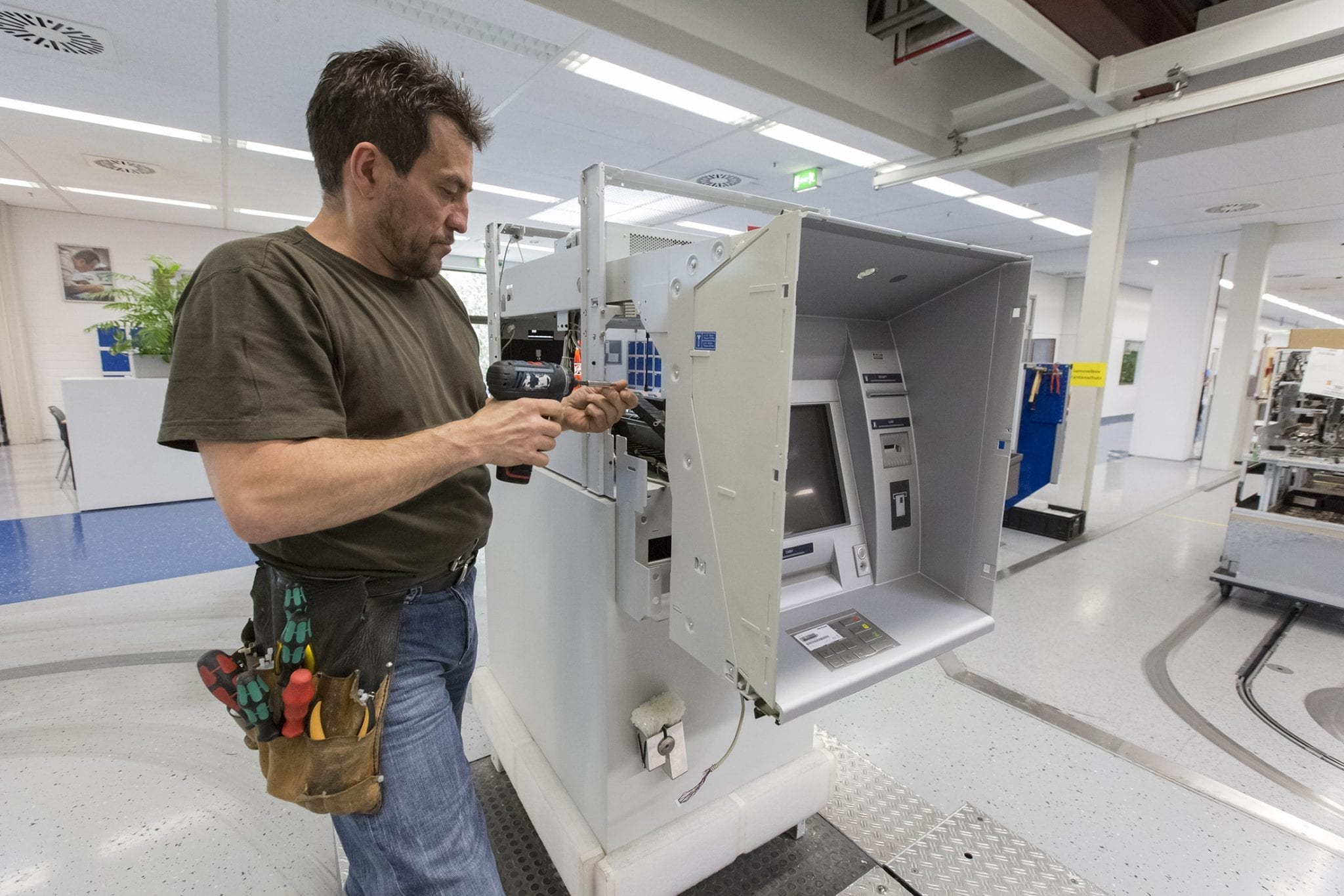
    Diebold Nixdorf, a leading innovation partner for nearly all of the world’s top 100 financial institutions and a majority of the top 25 global retailers, today announced the opening of an office in Yangon, Myanmar, creating a direct presence in the country for the newly combined company.

    Previously, Diebold Nixdorf had been operating in Myanmar through third-party business partners, supporting local banks with their self-service technology needs for many years.Six months into the implementation of the new government’s economic policy, digitization of the banking and financial system in Myanmar is making headways. Success stories of mobile money transfers and airtime top-ups suggest Myanmar banking and retail sectors are ready to migrate to digital channels. But as Myanmar treads the path between the physical and digital worlds, cash remains king as the main mode of payment, though in improved and more versatile ways.

    As of 2015, the total number of automated teller machines (ATMs) in Myanmar is approximately 1,780. The figure of 21% is a CAGR for growth between end-2015 and end-2021, according to strategic research and consulting firm RBR.

    With a population of nearly 54 million people, Myanmar has huge growth potential in the banking sector as it expands its services outside of Yangon to more rural areas where it is estimated that more than 95 percent of the population is unbanked. Diebold Nixdorf has worked with a number of banks in other countries across the Asia Pacific region to help them reduce the number of unbanked consumers and bring more customers on board. For example, in India the company has helped a number of local banks by providing low-energy ATMs which can work beyond the limited daily power and maintain them through its extensive services and logistics network. Diebold Nixdorf, which has already a team of 30 service staff in Myanmar, can help banks address these needs.

    Now, by establishing an in-country presence the company can cater to the growing needs of Myanmar banks as they expand their products and services in and beyond the main cities. In addition, Diebold Nixdorf plans to help established or new retailers who wish to enter the Myanmar market with its automation, omni-channel and lifecycle management solutions.

    Neil Emerson, Diebold Nixdorf senior vice president and managing director, Asia Pacific, said, “We’re delighted to be expanding our operations in Myanmar. By establishing a local office in the country it will help us build a closer relationship with our customers and serve them better. We continue to drive innovation in both banking and retail technology and services to meet Myanmar’s unique market requirements.”

    Piers Leach, country manager, Myanmar commented, “We have seen a significant growth in the banking industry in Myanmar over the last few years and we have already been a long and established partner for most of the country’s leading commercial banks. We are excited to more effectively grow our partnership with clients with a new, direct presence in the country.”

  • Big guns line up for Hong Kong International Airport duty free tenders as bids close

    Big guns line up for Hong Kong International Airport duty free tenders as bids close

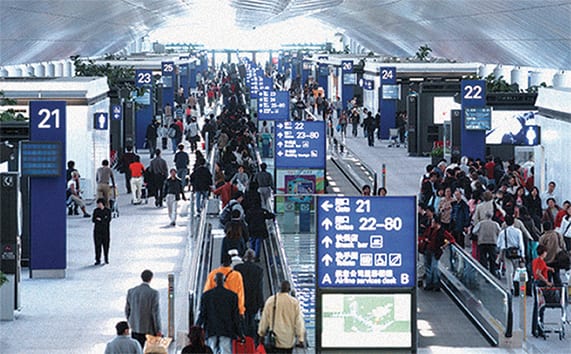
    Many a fortune has been squandered at Hong Kong’s famed Happy Valley race track. But it’s fair to say that picking a winner from the bidding line-up for the two core category tenders at Hong Kong International Airport (HKIA) some 30 minutes away is a far more difficult exercise than most events on the race card.

    The likely bidder line-up for the first two core category tenders at HKIA, which we held off publishing until bids closed. Note: We understand Heinemann bid for liquor/tobacco/gourmet, not beauty & accessories.

    When it views the submitted offers following the bid closure this afternoon, Airport Authority Hong Kong (AAHK) will no doubt issue a sigh of relief at both the depth and quality of the field it has attracted. With the financial difficulties at HKIA of incumbent DFS Group so well-documented, and Hong Kong’s tourism spending woes similarly familiar to potential contenders, the authority had the difficult job of talking up the tender while simultaneously trying not to deter potential bidders with superficial marketing hype.


    As previously reported, the liquor & tobacco concession is being increased substantially both in terms of space and range, with the addition of liquor-related accessories and gourmet items

    The perfumes & cosmetics concession will become a “beauty and accessories one-stop shopping destination”, including a minimum of 465sq m dedicated to fashion accessories

    Confectionery, a big in-demand category, will enjoy its own dedicated concession. The tender will be launched in March or April.

    Airport Authority Hong Kong believes that given the airport’s extremely strong line-up of speciality stores and mono-brand boutiques (its dazzling Chanel and Rolex duplex stores are shown left and right), there is no need for the airside general merchandise concession. Instead it has allocated the best-selling general merchandise categories to the other packages.

    It set about that goal in an impressive manner, most notably by restructuring the concessions themselves. Out went Airside General Merchandise, in came gourmet foods (to liquor & tobacco), and in came key accessory categories to the pivotal perfumes & cosmetics concession. As revealed by The Moodie Davitt Report, confectionery, an attractive but specialised category, is being offered as a separate single concession.

    The revamped tender model resulted from extensive dialogue between the Authority and the incumbent, other likely bidders and, most critically, consumers. Given the sheer weight and quality of ‘internal’ airport rivals to the general merchandise concession in the form of HKIA’s splendid line-up of stand-alone boutiques, the decision to scrap the all-embracing general merchandise category (and to move its best bits elsewhere) was highly astute.

    This is how the 2012 bidding line-up looked. Nuance-Watson and World Duty Free Group have since been subsumed into Dufry, which did not bid last time around.

    AAHK also emphasised time and again in the run-up to the tender (and in the documents) its whole-hearted commitment to its partners’ commercial success, via intensive physical and digital marketing, shared participation in promotional efforts and to driving HKIA’s passenger numbers.

    The formula seems to have worked. A star-studded field comprising many of the most powerful players in The Moodie Davitt Report’s acclaimed annual Top 25 Travel Retailers League – increasingly the reference point for investors and airports studying the market’s strength and profile – has emerged. While the beauty and accessories concession has attracted greater interest – not surprising considering its greater certainty – there are still enough powerful contenders for liquor, tobacco and gourmet foods to suggest that the stakes there, too, will be similarly high.

    What of the bidding levels? DFS’s sobering experience may have led to some wariness (certainly for the incumbent itself, though do not by any means count out its chances of retaining the beauty business on which it is bidding) but the prevalent market view is that the LVMH/Robert Miller retailer was unlucky in its last bid rather than over-ambitious.

    After all, when The Moodie Davitt Report announced the retailer’s spectacular June ‘One…two… three’ concession victory back in June 2012 amid surging Chinese travelling and spending levels, who could have possibly contemplated what would have followed? What a list: Xi Jinping’s election in March 2013; his subsequent crackdown on corruption and conspicuous consumption; the sharp decline in Mainland Chinese visitors to Hong Kong in 2015 (driven by anti-Mainlander sentiment and the pro-democracy protests); and the meteoric growth of cross-border e-commerce.

    Any one of those factors would have compromised an initially justifiable bid. Collectively they were enough to critically damage it, especially given the contractual premise of a MAG rising in line with increased passengers (as, for example, happened in 2015 and 2016) but where their actual spending (down) was not factored in. All in all, the perfect storm.

    Despite the chastening effect of such an experience (hardly confined to Hong Kong), the individual and collective ambitions of the bidders still represents a heady cocktail of strategic justification, geographic focus (Asia generally, China particularly), overseas expansion, national pride, ‘face’, category expertise and – dare one say it – sheer need for success. All that suggests AAHK will not have to worry too much about any shortfall in its budget going forward.

    So, with a nod in the direction of the race-card publisher down the road at Happy Valley (let’s call the HKIA racetrack Happy Value), here’s The Moodie Davitt Report’s view of the runners and riders in the great Hong Kong International Airport Duty Free Stakes (Note: several of these observations were made in our initial appraisal of the HKIA tenders back in July 2016. We have updated these where possible while respecting retailer confidentialities. All our comments were deliberately held back until just before the bids closed.)

    Likely contenders for the Hong Kong International Airport (HKIA) contracts

    Sky Connection: A certain bidder on liquor & tobacco, and a serious front-runner. The New World Development Company-owned retailer harboured deep disappointment over losing its long-time liquor & tobacco stronghold to DFS last time around, and is desperately keen to make a comeback. Well, not desperately – it’s a well-run company that insists on making money out of concessions – but you get the point. The company’s recent success in the MTR duty free bid augurs well and you can expect a highly focused, innovative, ambitious but not excessive pitch for the liquor & tobacco contract.

    China Duty Free Group & Lagardère Travel Retail: What a blockbuster this combination, revealed on the day the tender closed by The Moodie Davitt Report, represents.

    Deeply ambitious, and now part of the new Chinese tourism ‘super force’ created by China International Travel Service’s merger into China National Travel Service (HK), state-owned China Duty Free Group (CDFG) has made no secret of its desire to grow internationally. It’s off to a strong start in Cambodia (where it now has operations in Phnom Penh, Siem Reap and Sihanoukville) but its ambitions extend way beyond that. To use retail terminology, Hong Kong is a natural ‘adjacency’ to the Chinese Mainland operations; and CDFG’s powerful and complementary partnership with French partner Lagardère Travel Retail is a formidable one in anyone’s book.

    CDFG’s stunning success at its Haitang Bay off-airport store on Hainan Island, as well as its expanding Mainland airport portfolio, has underlined its credentials for running such a blue-chip business as HKIA. Funding will not be a problem, especially given the Sino–French JV now in place.

    For its part Lagardère Travel Retail sees Asia as pivotal to growth, and a blue-chip airport concession such as HKIA would provide a massive fillip. In 2011/12 it bid on perfumes & cosmetics and airside general merchandise; this time around it and CDFG are in for both contracts on offer. And they’re serious about both. International acumen, regional knowledge, combined strength: this is a force to be reckoned with alright.

    King Power Group (HK): Managing Director and lead shareholder Antares Cheng has history here. He was part of the former Kiu Fat Investment Corp’s famous, albeit short-lived, contract victory over incumbent DFS at Hong Kong’s old Kai Tak Airport in 1987, the start of a commercial war that is enshrined in industry legend. King Power (no relationship to the Thai company of the same name) still operates half of the duty free business at Macau International Airport, as well as having a strong (and growing) presence at Shanghai Pudong, and it would dearly love to complete a Chinese trio – and a Hong Kong Airport comeback – here. Hong Kong-based Cheng is highly capable, ambitious and well funded. Expect a big play for both concessions.

    Sunrise Duty Free: The privately held Mainland China retailer may be the most low-profile retailer in the industry but it is not shy in terms of growth ambitions. After all, this is the company that could have (and, some say due to its superior financial bid, should have) acquired World Duty Free ahead of eventual winner Dufry.

    The retailer (partly held by Hong Kong-based Boyu Capital and ably led by Madam Fengyi Zhang) wants to diversify its portfolio outside of its Shanghai Pudong, Shanghai Hongqiao and Beijing Capital International airport operations, and no international gateway would appear better suited to it than HKIA. Last time around the company bid in vain for all three core category concessions. Five years on it is stronger, more experienced – and even hungrier.

    Just as critically, through its Boyu shareholder base, it ticks just about all the social and digital media boxes that AAHK now deems vital to the future success of the airport retail business.

    Recently, for example, Sunrise entered into a long-term alliance with Chinese Internet services company Tencent to accelerates its already rapid development as an online to offline (O2O) shopping provider. Besides its Sunrise investment Boyu has holdings in a glittering portfolio of companies in the Consumer and Retail, Financial Services, Healthcare, and Media and Technology worlds – including, get this, Chinese e-commerce giant Alibaba; China’s largest private express delivery player, SF Express; and the country’s leading online travel agency, 17u.cn. Boyu has also developed a close partnership with powerful travel booking provider Ctrip.com, listed in Nasdaq and with more than 250 million active members in Asia.

    If it can channel those relationships – and its bid will certainly major on that prospect – Sunrise shapes as an entirely credible candidate to extend its impressive growth story. Expect a very strong proposal on beauty and accessories.

    DFS Group: The incumbent must always be respected, in terms of insight, knowledge and experience. And when it’s such a class act as DFS, you had better throw in quality as well. There’s no doubting the importance that the retailer places on HKIA, one of the two spiritual homes (along with Honolulu International Airport) of DFS Co-Founder Bob Miller; and despite the battering the retailer has taken in recent years here, it is back pitching for the key beauty business, albeit no doubt seeking improved terms.

    The big question is, how prudent can DFS afford to be without losing out to those who may have other motivations to bid much higher, even excessively? That whole weighing up of quality vs financials is set to play a vital role in the ultimate assessment.

    Lotte Duty Free: If you were a fiction writer telling the story of Korean duty free over the past two years, critics would dismiss the plot as implausible. And Lotte is the central character in all the drama.

    It first lost, then won back, its trading licence for the magnificent new Lotte World Tower Duty Free store and now faces the prospect of painful five-yearly (not ten as hoped) licence renewal bids for all its downtown businesses. Throw in a potential dilution of its Incheon International business if Korea Customs Service has its anti-chaebol way and you have the perfect incentive for a company to expand internationally. Fast.

    Because of its heavy concentration of Chinese passengers, few airports would attract the Korean giant more than HKIA. For such a brilliant domestic operator with a frankly superb command of social and digital marketing to not have a bigger international presence is a real blot on the corporate portfolio.

    Can it change things here? Lotte’s challenge, we suspect, is more cultural than commercial – it has to convince international airports that it can do the same job abroad as it does at home. What better place to start than HKIA? Then the domino theory might apply. Expect, therefore, a hugely robust bid for both contracts.

    The Shilla Duty Free: The long-time perception that a Korean travel retailer couldn’t win a major airport duty free contract abroad was laid to rest by Shilla’s January 2014 triumph in the Singapore Changi perfumes & cosmetics tender (followed by a joint-venture victory with Sky Connection at Macau International Airport).

    Life there has hardly been plain sailing since, following a difficult start-up and a series of big quarterly losses for its international businesses – overseas duty free sales increased by +9.9% year-on-year in Q4 2016 to KRW133 billion (US$114.4 million) but losses reached KRW8 billion (US$6.9 million).

    But don’t be misled by those figures. Shilla knew what it was getting into at Changi, which it viewed as a foreign laboratory. The learnings were expensive – but crucial. Like its great rival Lotte, Samsung affiliate Shilla faces mounting and often absurd regulatory and political pressure at home. As the engine room of publicly listed Hotel Shilla, it simply must produce a growth story. In the face of ever-proliferating Korean market competition, escalating tour commission costs and regulatory chaos, it has no choice but to look abroad. Tenders and M&A. The former starts here with P&C and accessories.

    Dufry: Last July we asked whether the industry’s equivalent of a Sumo wrestler would throw its considerable weight at the kind of tender that CEO Julián Díaz historically abhors. “Too much competition, too much likelihood of a ‘strategic overbid’, and too much risk to travel retail’s most robust P&L. And yet, and yet…” we wrote.

    With the highly capable Andrea Belardini now in situ in Hong Kong as Divisional CEO for the key regions of Asia, Middle East and Australia, it was always likely that Dufry would come to the table. Remember that The Nuance Group, which it acquired in 2014, ran the beauty and general merchandise concessions here very successfully for years. Given the super-sized retailer’s disproportionately small presence in Asia we expect a positive play here, probably focused on beauty & accessories only.

    Gebr Heinemann: The family-owned German company is another to have identified Asia Pacific as a key growth target. Last July we doubted that it would bid on Hong Kong given the difficult trading conditions and the stresses of the retailer’s deeply ambitious start-up at Sydney Airport. However the latter, buoyed by a hugely favourable swing in the value of the Aussie Dollar, has got off to a flying start – way beyond just about anybody’s projections. That, along with a desire to build on a small but promising Asian base, has prompted a serious review of this opportunity. And Heinemann does nothing in a half-hearted manner.
     

  • Koreans consume more foreign beef over expensive local hanwoo

    Koreans consume more foreign beef over expensive local hanwoo

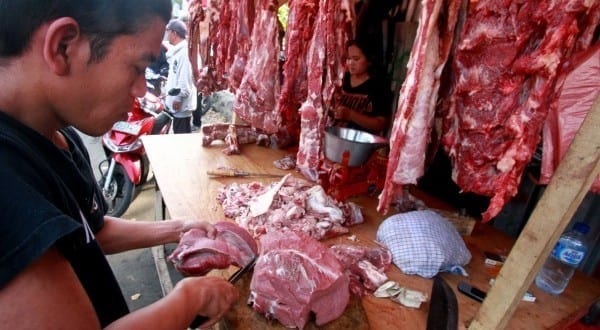
    South Koreans consumed more American and other foreign beef than expensive local beef last year, a move that has lowered the country’s self-sufficiency rate for beef to below 40 percent over 13 years, a state-run think tank said Thursday.

    Last year, South Koreans consumed 362,000 tons of foreign beef, accounting for 62.3 percent of the total beef consumption in the country, according to the Korea Rural Economic Institute.

    South Korea halted imports of U.S. beef in 2003 following the outbreak of a mad cow disease. Seoul lifted the ban in late 2008, which led to mass demonstrations among people in fear of their safety.Australian beef came to 178,000 tons, making up 49 percent of total beef imports. American and New Zealand beef stood at 42 percent and 6 percent, respectively.

    Still, the market share of American beef in South Korea has gradually been on the rise in recent years.

    In comparison, South Koreans consumed 219,000 tons of domestic beef, known as hanwoo last year, accounting for 37.7 percent of the total beef consumption in the country, according to the institute.

    It marked the first time that South Korea’s self-sufficiency rate for beef fell below 40 percent since 2003 when it stood at 36.3 percent.

    The decline came as South Korean consumers shunned expensive local beef.

    The wholesale prices of local beef once hit nearly 20,000 won ($17) per kilogram last year.

    Retail prices of the best quality local beef for bulgogi, a grilled marinated beef dish, came to 4,578 won per 100 grams last year, compared to 2,464 won for American beef for bulgogi, according to the institute.

    The prices of local beef have been on the rise since late 2015 as the number of cattle is continuing to fall.

    Domestic farms cut the number of cattle as the prices of local beef went down and the government helped some farms shut down to stem the decline of local beef following a free trade deal with the United States.

    South Korea’s anti-graft law — which took effect in September — is also adding to the woes of the local beef industry.

    Local beef was one of the favorite gifts during major holidays, but was overtaken by health products, according to major retailers.

    The law imposes tight limits on free meals and gifts that can be accepted by government officials, journalists and private school teachers to try to curb the deep-rooted tradition of excessive hospitality. The maximum value of a gift that a person subject to the law can receive has been set at 50,000 won.

  • South Korea’s Samsung consider building US appliance factory

    South Korea’s Samsung consider building US appliance factory

    South Korea’s Samsung Electronics said Friday it’s considering building a factory to make household appliances in the United States as various industries brace for potential protectionist trade policies under the administration of President Donald Trump.

    A spokeswoman for Samsung said the plans were “purely in the evaluation stage” and no decisions have been made. She didn’t want to be named, citing office rules.

    Samsung also said in an emailed statement on Friday that it continues to assess “new investment needs in the United States. The news drew the attention of Trump, who tweeted “Thank you, @Samsung! We would love to have you!”

    Most Samsung televisions, refrigerators and other household appliances sold in the United States are made in Mexico.

    The spokeswoman refused to say whether Samsung was worried about the possibility of the United States moving to impose tariffs on products imported from Mexico.

    A spokesman from LG Electronics, another South Korean technology company, said it is also considering building a manufacturing plant in the United States and will decide on the matter within the first half of the year. He also didn’t want to be named, saying that the matter was sensitive.

  • Las Vegas Sands Corporation may offload portion of Marina Bay Sands

    Las Vegas Sands Corporation may offload portion of Marina Bay Sands

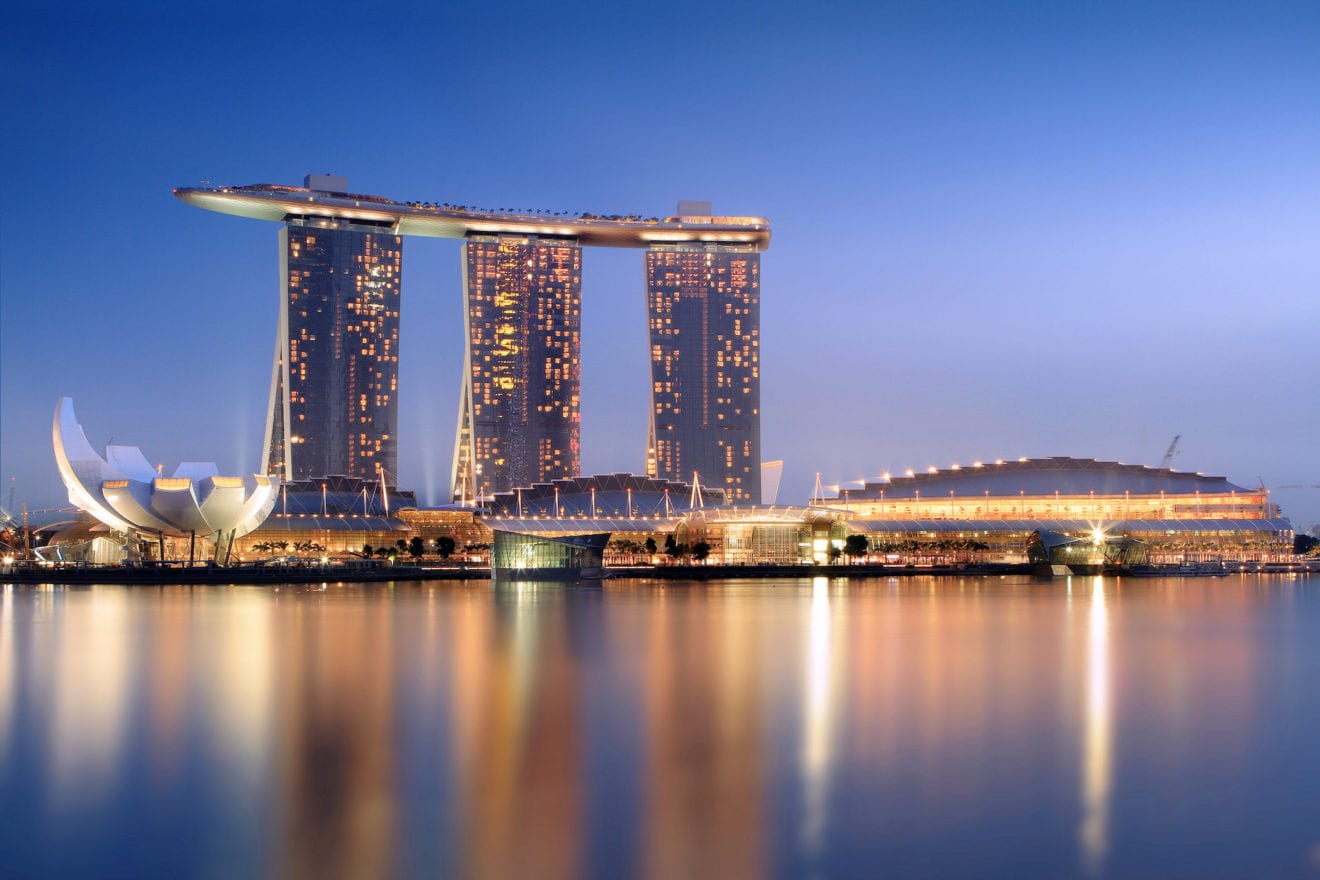
    In Singapore, giant casino operator Las Vegas Sands Corporation is reportedly hoping to sell off a large stake in its shopping mall inside the Marina Bay Sands development before potentially using the proceeds to invest in future venues in Japan or South Korea.

    According to a report from The Straits Times newspaper, the Las Vegas-based giant wants to offload a 49% share in its 800,000 sq ft The Shoppes At Marina Bay Sands for up to $3.5 billion but first needs the approval of the city-state’s government.

    “We expect to receive a very significant price for the 49% we are willing to sell,” Sheldon Adelson, Chairman and Chief Executive Officer for Las Vegas Sands Corporation, reportedly told analysts during a conference call on Wednesday. “We are looking at potentially $3 billion to $3.5 billion. We’re in preparation with our bankers to prepare that property to sell. The interest we have is that it is the highest trophy mall there is in the world. We anticipate almost an unprecedented price to sell 49% of it.”

    Adelson also reportedly declared that the desired price would make The Shoppes At Marina Bay Sands “the most expensive mall ever sold in the world” although any transaction would not take place until April or May.

    Under the terms of its original licensing deal, which began in March of 2007, Las Vegas Sands Corporation was reportedly given a ten-year exclusivity period so that it could begin to recoup the billions of dollars it had spent to construct the Marina Bay Sands. A similar agreement was moreover inked by Genting Singapore for its nearby Resorts World Sentosa integrated casino resort complex and both firms would need official approval before offloading any portion of their Singapore developments once this privileged phase expired.

    “There are more noises coming out of [South] Korea now that Japan is legalizing casino gaming,” Adelson reportedly told analysts. “We will want to see what the development opportunities are. We can always get money to develop properties.”

    Chew Tiong Heng, Infrastructure Planning And Management Executive Director for the Singapore Tourism Board, told The Straits Times that Las Vegas Sands Corporation, which also operates The Parisian Macao, The Plaza Macao, Sands Macao, The Venetian Macao and Sands Cotai Central in Macau via its Sands China Limited subsidiary, has indicated that it may sell off a portion of Marina Bay Sands but had yet to make a formal request.

    “My guess is the government doesn’t want [Las Vegas Sands Corporation] to cut and run or become asset-light and just focus on gambling,” Alan Cheong from global real estate services provider Savills Singapore told The Straits Times. “It wants Las Vegas Sands [Corporation] to still have commitment to its investment in Singapore. On the other hand, Las Vegas Sands [Corporation] may also want to retain majority control because it wants to maintain the mall’s position in the retail market.”

    Although more than 60% of Las Vegas Sands Corporation’s current revenues come from Macau, its Marina Bay Sands development is still a prized asset with the development recently posting an 8% increase year-on-year in fourth-quarter net profits to $366 million. This was helped by a 2.8% rise in overall revenues $723 million while gaming turnover swelled by 5.6% to reach $563 million.

    In terms of The Shoppes At Marina Bay Sands, turnover for the final three months of 2016 climbed by 4.8% year-on-year to hit $44 million while Cheong additionally told the newspaper that potential buyers could include “sovereign wealth funds or a consortium of large private equity firms” as there is currently “a lack of available good-quality retail mall stock” in Singapore.

  • Fast fashion wears green

    Fast fashion wears green

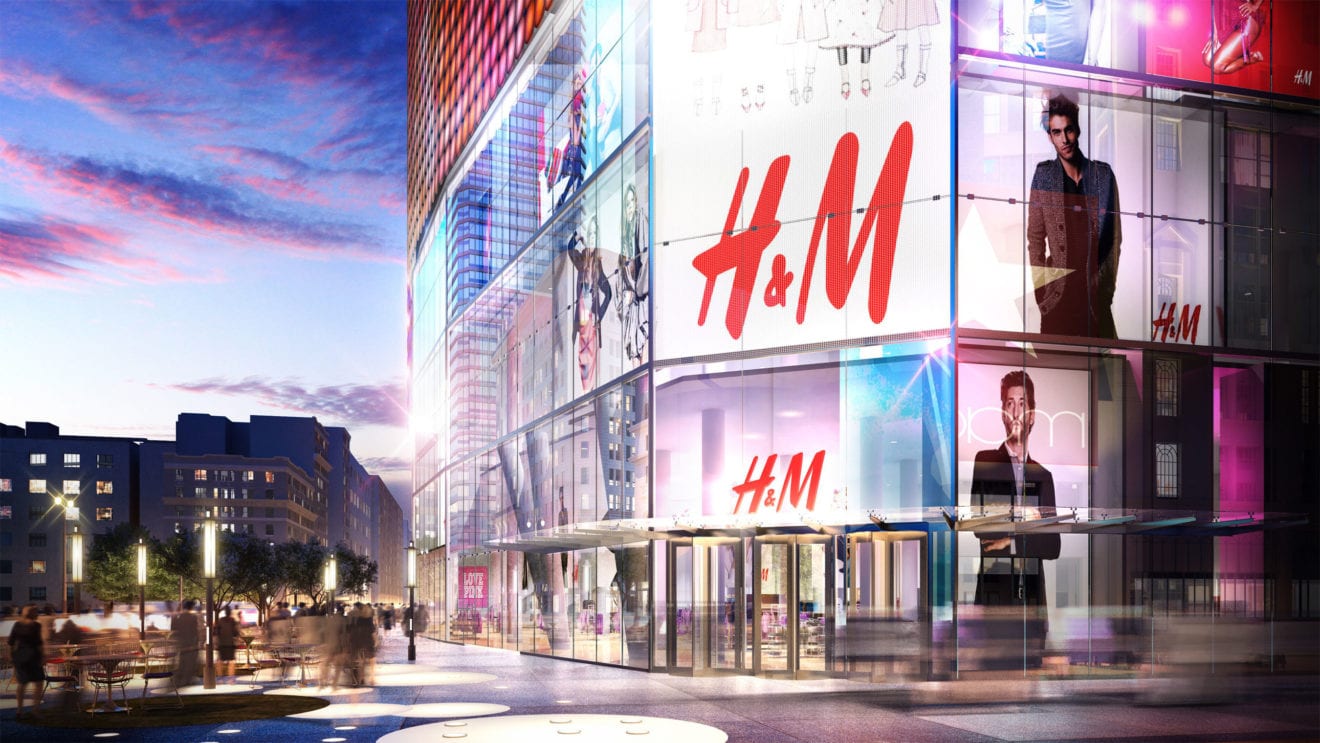
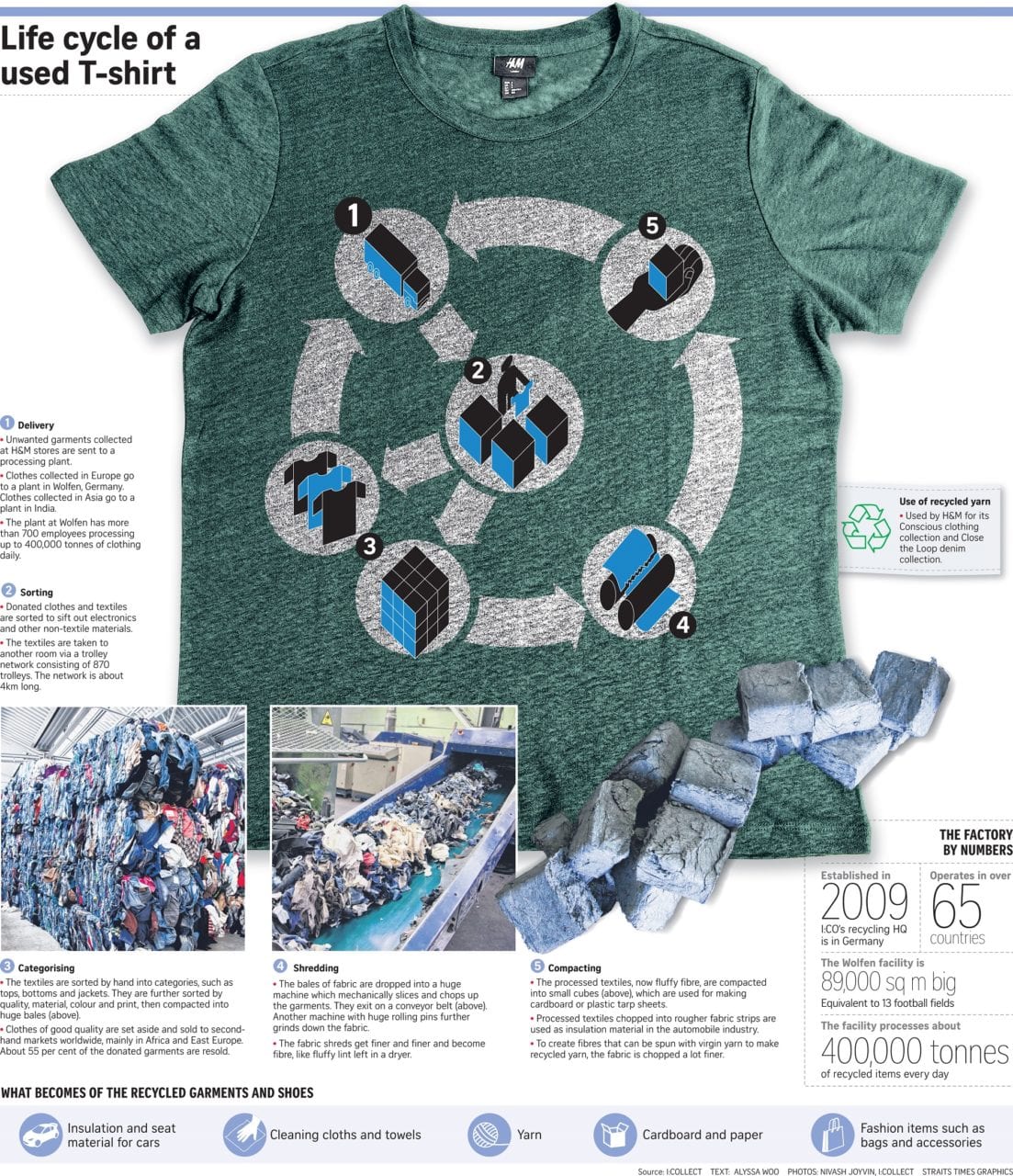
    Few shoppers at Swedish fast-fashion chain H&M notice the collection bin next to the cash counter, an inconspicuous receptacle for old and unwanted clothing. But this is slowly changing.

    The retailer, with 12 bins spread across its 10 outlets in Singapore, collected 64 tonnes of unwanted garments last year – about three- fifths the weight of a blue whale. This is almost triple the amount collected in 2015 (22.71 tonnes) and more than five times that collected in 2014 (12.09 tonnes).

    This year, H&M Singapore hopes to bag a record 88 tonnes, adding to the more than 40,000 tonnes of unwanted clothing it has amassed globally so far.

    Everything collected is sold to the chain’s recycling partner, I:Collect (I:CO), for a fee, which is donated to H&M Foundation, a non-profit global organisation .

    At I:CO’s processing plants in Germany, the United States and India, the clothing is sorted. About 55 per cent of it is resold in second- hand markets worldwide. The remainder is processed – chopped up into fabric shreds which are used as insulation material; or ground into finer fibres and made into cardboard and plastic tarp sheets; or spun with virgin cotton to create recycled yarn.

    It is this yarn that H&M uses for its two eco-friendly clothing lines Close the Loop and Conscious, comprising products made of up to 20 per cent recycled materials.

    The trend of more people donating their used clothes and more retailers accepting them seems to be growing.

    American fashion brand Levi’s launched its recycling drive, where shoppers can drop off their unwanted garments and shoes, in 2015 nationwide in the US after a successful pilot programme in 2014.

    Shoppers care more than just about how they look. They want to be part of a larger movement and they care about the social responsibility behind the brands they buy.

    LECTURER SARAH LIM, who says the time is ripe for fashion retailers to position themselves as environmentally responsible and not just profit-driven

    The North Face, which started collecting unwanted garments and footwear in 2013 in North America, expanded its collection drive to Germany and Canada last year. So far, it has collected 19.3 tonnes of unwanted clothing and footwear in the US alone.

    Fashion retail chain Forever 21 started its recycling efforts in San Francisco, California, in 2014.

    I:CO works with about 60 retail partners in 65 countries, including Levi’s, The North Face and Forever 21. H&M is its biggest partner.

    But recycling is more than just about reducing the amount of clothes headed for the dumpster.

    Mr Olle Blidholm, H&M’s environmental sustainability manager, says that, from a business perspective, it makes sense to take care of social and environmental issues.

    “To do good business long term, you need to take into account social and environmental responsibility in a more active way. You have to plan your business in line with what the planet can cope with,” he says.

    This comes as the global fashion industry cottons on to the environmental impact that the apparel industry has on the planet.

    Cotton production is a huge water guzzler. According to non-governmental organisation World Wide Fund, 20,000 litres of water are needed to produce just 1kg of cotton, equivalent to a T-shirt and a pair of jeans.

    A report in October, by management consulting firm McKinsey & Company, estimated that if 80 per cent of the population of emerging economies reached the same clothing-consumption level as that of the Western world by 2025, carbon dioxide emissions would increase by 77 per cent to 3,030 million metric tons, up from 1,714 million metric tons in 2015.

    This increases the amount of greenhouse gases released into the atmosphere, one of the key drivers of global warming.

    Singapore Polytechnic senior retail lecturer Sarah Lim says the time is ripe for fashion retailers to position themselves as environmentally responsible and not just profit- driven.

    “Shoppers care more than just about how they look. They want to be part of a larger movement and they care about the social responsibility behind the brands they buy,” she says, adding that by collecting old clothes, H&M lets customers participate in the greening process.

    She adds: “This also helps the brand establish a green reputation, which helps to build loyalty among the millennials of tomorrow.”

    According to a 2015 global report by research firm Nielsen, 72 per cent of Generation Z consumers – those aged between 15 and 20 – were willing to pay more for products and services from companies they viewed as committed to making a positive social and environmental impact.

    This is up from 55 per cent the year before.

    Over at H&M, the Conscious collection, launched in 2012, has been “well-received” here, according to the brand’s spokesman, who declined to disclose sales figures. The Close the Loop collection is not available in Singapore.

    Mr Fredrik Famm, country manager for H&M South-east Asia, puts the popularity of its eco-lines down to reasonable pricing and the fact that the products are also fashionable.

    Customers, he says, are also beginning to be more conscious and perceptive of the brands they consume.

    “There’s an increase in awareness about sustainability and being socially responsible,” he says, adding that the conveniently placed garment-recycling bins at stores make it easy for people to go green.

    For shopper Fabian Tan, H&M has given him an easy way to recycle his unwanted clothes.

    The market researcher has been donating his unwanted garments to the retail chain since it started its collection drive in 2013.

    The 29-year-old says he has donated about 150 items so far.

    “A lot of people have the intention to do good and recycle, but when it becomes troublesome to do so, they don’t do it in the end.

    “Retailers such as H&M make it easy for people to do the right thing.”

  • Retail offers banks a lifeline

    Retail offers banks a lifeline

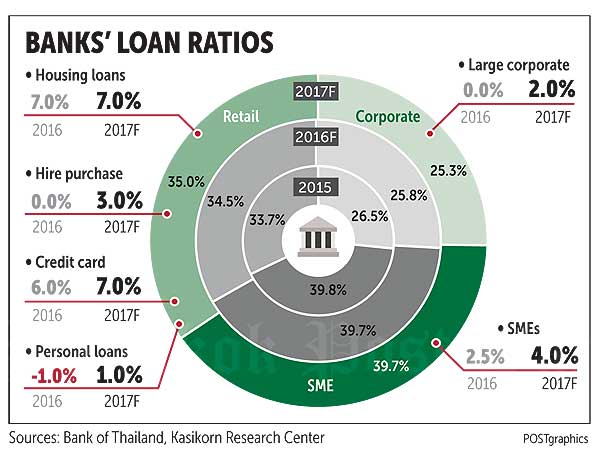
    Retail customers offer a silver lining for banks amid tepid demand in corporate lending and the fragile state of small and medium-sized enterprises (SMEs), says Kasikorn Research Center (KResearch).

    Lending to individual customers in 2017 is expected to continue to outshine overall loan growth and the traditional mainstay of Thai lenders — commercial loans — said the research unit of Kasikornbank (KBank) in a report.

    KResearch forecasts 5.5% growth in retail loans this year, compared with 3% in commercial loans and 4% in overall lending.

    Over the past few years, retail lending also grew at a faster pace than overall and commercial loans. Retail loans rose by 6.2% in 2015 and 4.5% in 2016, well above 2.9% and 1.5%, respectively, for commercial loans those two years and 4.0% and 2.5% for overall lending, according to KResearch data.

    Thai banks’ exposure to retail loans is expected to climb to 35% this year from 34.5% last year, with SME loans steady at 39.7%, said the report. The share of large corporate loans or so-called wholesale banking is projected to fall to 25.3% from 25.8%.

    As Thailand’s economy has struggled with subpar growth since 2013, it is not a surprise banks have pushed into the retail banking business — mortgages, credit cards and personal loans in particular — as companies’ investment projects have stalled. Companies have also turned to debt instruments to raise capital because of low interest rates.

    Retail banking business offers a better profit margin than corporate loans, but carries lower default risks than loans to SMEs struggling with the uneven economic turnaround.

    Moreover, retail borrowers, white-collar workers in particular, on average have seen their income continue to grow slowly, while the unemployment rate remains low at less than 1%.

    “We expect retail lending will deliver the strongest growth in that segment this year as large corporates move toward the capital market for fund mobilisation, while only a handful of banks, especially large lenders, have expertise in SMEs lending,” said Thanyalak Vacharachaisurapol, deputy managing director of KResearch.

    “Even though retail loan growth is expected to increase at a fast clip, overall lending will only record single-digit growth as banks remains cautious amid high household leverage. However, the end of the lock-up period for the first-time car buyer scheme will add to consumer purchasing power this year.”

    The lock-up period is five years for most cars bought under the excise tax rebate scheme. KResearch estimates some 320,000 car owners, representing 30% of those in the first-time car buyer scheme, will have their lock-up period end this year, and some may consider replacing their cars.

    Auto-hire purchase is expected drive retail lending growth this year, said the report.

    KResearch predicts auto loans will expand 3% this year, up from zero last year, while housing loans — accounting for more than half of retail lending — are expected to grow steadily at 7%.

    Although banks will likely focus on retail banking business this year, lenders’ focus areas will be diverse, said the report.

    Krungthai Bank (KTB) and Siam Commercial Bank plan to pay more attention to the wealth customer segment to offset fee-based income expected to be hit by PromptPay, electronic money transfer under the government’s national e-payment scheme.

    KTB, the country’s second-largest lender by total assets, aims to increase assets under management (AUM) for wealthy clients by 25% this year from 600 billion baht. Its provincial customer base is the bank’s strength for expanding both its wealthy client numbers and its AUM.

    KBank, the country’s fourth-largest lender by assets, set a total loan growth target of 4-6% and retail loan growth of 5-7%, with mortgages contributing the highest growth among other retail lending.

    Bank of Ayudhya (BAY) targets double-digit growth for its retail banking business this year compared with total loan growth of 6-8%. The bank recorded the highest loan growth among its industry peers last year at 11.2%, with retail blazing the trail, increasing 15.9%.

  • Japan firms line up for Philippines business after Abe pitch

    Japan firms line up for Philippines business after Abe pitch

    Japanese firms, especially those in the infrastructure business, are scrambling for a slice of prospective new businesses arising from Japan Prime Minister Shinzo Abe’s 1-trillion-yen (P440-billion) financing and investment pledge to the Philippines.

    This was stated by Japanese banking giant Bank of Tokyo-Mitsubishi UFJ, a leading player in project financing globally, which has been matching Japanese firms with potential local partners in support of Mr. Abe’s commitment to the Philippines.

    The Japanese bank is also preparing to fund large-scale projects in the Philippines under the golden age of infrastructure envisioned by President Duterte.

    Takayoshi Futae, BTMU chief executive officer for Asia & Oceania, said in a recent briefing that BTMU and many Japanese firms were upbeat on the

    1-trillion-yen package pledged by Abe to promote economic and infrastructure development in the Philippines within the next five years.

    “This is one of Japan’s largest investment directed at a single country and we really want to be part of this project,” said the Singapore-based Futae, who was in town for a series of meetings with BTMU’s local partner, Security Bank.

    “MUFG (Mitsubishi UFJ Financial Group—of which BTMU is part of) is very committed to supporting Asia’s growth. We not only have the financial capability but also strong network and strategic relationships across the region,” he said.

    Futae is unfazed by China’s bid to do more business in the Philippines—given the recent rekindling of bilateral ties with China—adding that there was enough business in the region for both Japanese and Chinese firms.

    Tadahiro Miyamoto, general manager of BTMU Philippines, said representatives of many Japanese prefectures (local government units) had been visiting the Philippines “trying to find market for their products.”  With its 100-million consumer market, he said many Japanese firms were interested in doing business in the Philippines.

    Miyamoto said Japanese infrastructure-related companies and those targeting domestic markets like retailers were among those most interested in the Philippines. Those involved in the car industry are likewise interested because of the government’s “CARS” program, he said.

    The government’s Comprehensive Automotive Resurgence Strategy (CARS) program seeks to attract new investments, stimulate demand and effectively implement industry regulations that will revitalize the Philippine automotive industry, and develop the country as a regional automotive manufacturing hub.  The program covers not only car assemblers but also manufacturers of vehicle parts.

    Futae said the 6-7 percent growth rate of the country was “amazing” from the perspective of someone who hails from a slow-growing economy like Japan.

    “Philippines and Japan should work more together,” he said.

    To better understand the country and flesh out its commitment, Futae said BTMU was in need of a strong and reliable local partner—now the role of Security Bank. Since acquiring a 20-percent stake in Security Bank in April last year, he said BTMU had been able to expand into retail lending and financing to Philippine companies.

    During recent meetings, Futae said BTMU and Security Bank discussed “further collaboration” and everyone was “bullish on the success of the collaboration.”

    Asked whether BTMU was keen on raising its interest in the local bank, Futae said the group was comfortable with its 20-percent stake but added that if given the opportunity to increase its stake in Security Bank, this would be something that the group would “seriously” consider.

  • German tech firm opens in Myanmar

    German tech firm opens in Myanmar

    Neil Emerson, the firm’s senior vice president and managing director for Asia Pacific, said that its customers’ positive feedback and satisfaction drove them to establish an on-the-ground presence in Myanmar.

    Previously, the firm had been operating in Myanmar through third-party business partners, supporting local banks with their self-service technology needs for many years.

    “Our intention is to work with the Myanmar community and become a trusted partner. That is really important to us,” he said.

    “Our local office will enable us to build a closer relationship with our customers and serve them better. We continue to drive innovation in both banking and retail technology and services to meet Myanmar’s unique market requirements … Myanmar banks really aim to expand to support their customers. We are willing to support them by having our presence here.”

    Emerson said that the firm could cater to the growing needs of Myanmar banks as they expand their products and services in and beyond major cities. The firm also plans to help established or new retailers who wish to enter the Myanmar market with its automation, omni-channel and lifecycle management solutions.

    Piers Leach, country manager for Myanmar, was proud to say that the firm is the market leader in Myanmar’s ATM (automated teller machine) network.

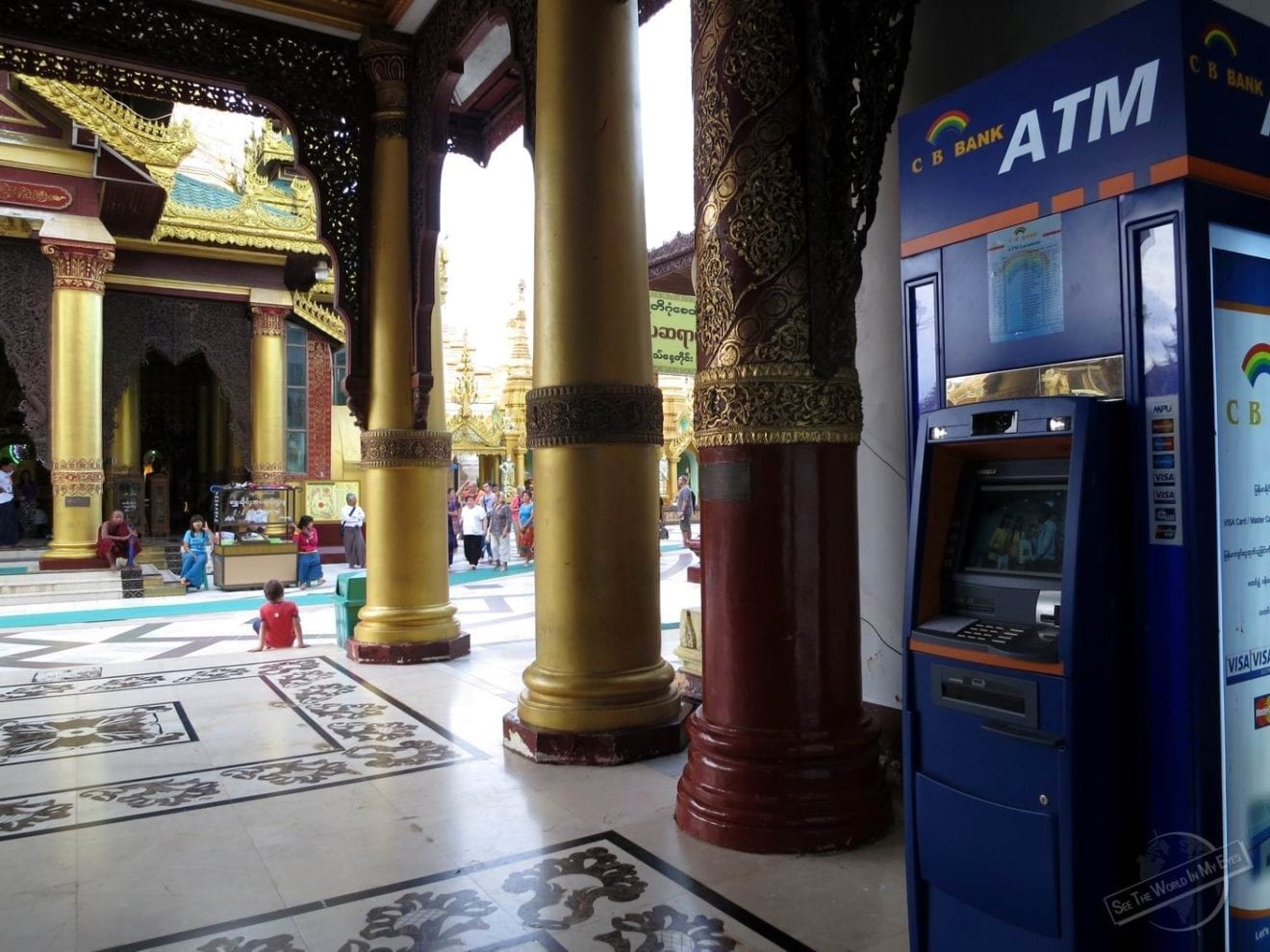
    To date, the firm has acquired 70 per cent market shares, providing its services to nearly 1,700 ATMs across the country. All the leading private banks including KBZ, Aya, CB, AGD and UAB have become its customers.

    Big contract

    Last month, CB bank signed an extensive contract with the firm for systems, software and services to expand its self-service cash offerings beyond Yangon. The bank operates one of the largest ATM networks in the country and aims to double its size of ATM network in 180 branches across the country. The bank will add 500 new ATMs and cash recyclers to its current network of 500 terminals supplied by the firm.

    Leach said that the firm aims at providing its technology to all the banks in Myanmar – private and state-owned.

    They are also looking at the retail sector including shopping malls, convenience stores, grocery shops and gas stations. The firm already has a team of 30 service staff in Myanmar, and will expand its workforce over time.

    “We have seen a significant growth in the banking industry in Myanmar over the last few years, and we have already been a long and established partner for most of the country’s leading commercial banks.

    “We are excited to more effectively grow our partnership with clients with a new, direct presence in the country,” he said.

    Leach does not consider Myanmar’s infrastructure as a challenge.

    “Network connection is improving over time in Myanmar. We have seen a lot of progress with regard to network connection. So, we do not see it as a problem,” he said.

    Biswajit Jha, vice president and managing director for Asean, shared a similar view.

    “It depends on how you look at it – whether it is a challenge or an opportunity. We see it as an |opportunity. Today, everybody has a smart phone in Myanmar, and infrastructure is developing very rapidly.

    You have to come across the learning phase for smooth transition to cashless society,” he said.

    “Everything is about convenience. If it is convenient to you, you would go for that,” added Jha.

    Sachin Handoo, senior director for Indochina and South Asia, said that a stable power supply should be provided to ensure that equipments are running properly.

  • H&M Asia looks to eCommerce

    H&M Asia looks to eCommerce

    H&M will open online stores in five Asian markets this year.

    The H&M Asia online stores will open in Hong Kong, Singapore, Macau, Taiwan and Malaysia. A sixth will open in Turkey.

    And, as previously reported , H&M will open its first store in Vietnam later this year at a site yet to be revealed. Some 430 new stores will open worldwide, including the first in Kazakhstan, Colombia, Iceland and Georgia.

    CEO Karl-Johan Persson confirmed the openings while announcing a 7 per cent increase in global sales for its financial year to November 30.

    Last year, H&M opened online stores in 11 markets, along with a new 427 new brick-and-mortar stores worldwide.

    “This means that H&M is now present in 64 markets of which 35 offer eCommerce. We welcomed more than 13,000 new colleagues which means there are now more than 161,000 colleagues in the group,” he said.

    And this year, the company – which also operates the Cos, Monki, Weekday and Cheap Monday retail brands – will also reveal one or two more brands.

    “In 2017 we are looking forward to delivering strong collections and customer experiences and launching one or two new brands. This, combined with the ongoing improvements and our investments in the omnichannel offering, the supply chain and advanced analytics make us positive towards our opportunities for reaching our newly rephrased growth target, both in 2017 and going forward,” Persson said.

    Most new stores will carry the H&M banner, but 70 to 80 will be for other brands, including its H&M Home offer.

    Global sales reached SEK 222,865 million (US$25.52 billion) in the financial year, however profits were eroded by a higher number of price markdowns and the higher US dollar which impacted on stock purchasing costs, falling from SEK 20,898 million ($2.39 billion) to 18,636 million ($2.13 billion).

  • Apple China sales slide further

    Apple China sales slide further

    Apple China sales have fallen for the fourth consecutive quarter, but the tech giant is putting on a brave face, buoyed by rising global revenue.

    Apple sold 78.29 million iPhones in the quarter ended December 31, up from 74.78 million last year, marking the first quarterly growth in iPhone sales in 12 months. It was as many as 2 million handsets more than analysts were predicting.

    But revenue in Greater China fell 11.6 per cent to US$16.23 billion as the iPhone came under heavy pressure from a raft of locally produced Android-based handsets with similar or higher specification and half the price.

    Apple executives put a positive spin on the China problem. “We were encouraged by our performance in China because it was clearly an improvement over the last couple of quarters,” CFO Luca Maestri said in a conference call. “In Mainland China in particular, our revenue was flat and actually grew in constant currency terms.”

    Neil Saunders, MD of GlobalData Retail, (formerly Conlumino), said both the new model iPhones and MacBook Pros helped deliver global growth for Apple: iPhone sales rose by 5 per cent in terms of units and revenues, and Mac sales were up by 7 per cent in revenue, and by 1 per cent in units.

    “In our view, the new MacBook Pros have a niche appeal, but the much higher price points helped to inflate sales. That said, given there is a more limited market for this fairly expensive kit, we question how much of a contribution to growth the new laptops will make over the remainder of this fiscal year.”

    Saunders said the first quarter results were a fairly positive note for the company, “finally pulling out of the tailspin of lower sales which have dogged it over the past year”.

    “However, the revenue uplifts have come off the back of fairly soft prior year comparatives, especially so in the North American market. Even so, the performance will come as a relief to Apple.”

    Services key to future

    Apple CEO Tim Cook said he expects revenue from services – which include the App Store, Apple Pay and iCloud – to double in the next four years after an 18 per cent improvement to to US$7.17 billion in the last quarter. Pokemon Go and subscription revenues had driven the growth.

    Saunders notes that in monetary terms services is now bigger than iPad sales and is almost as big as Mac sales.

    “Encouragingly, the division is nowhere near as mature as other parts of Apple’s business and we believe there is significant scope for future growth as Apple rolls out more content and services.”

    Despite these positives, Apple’s results do not provide the company with a completely clean bill of health, according to Saunders.

    “The iPad business, which was once a key driver of growth, is now firmly in decline with sales down 22 per cent over the prior year. And despite both product and operating system updates, sales of the Apple Watch continue to be anemic and it is clear that this product line is unlikely to be a significant winner.

    “The other major negative comes from the profit line where net income fell by 2.6 per cent. Admittedly this is much better than the circa-20 per cent declines that Apple has posted across the past three quarters. However, it underlines the fact that the top line is not moving ahead by enough to keep pace with the increased investment costs in store refreshes, product development, and research. Given that Apple remains extremely profitable, this is not a huge problem – but it does indicate that the days of heady bottom line growth are over, at least for this fiscal year.”

  • Sushi Kit Kats for new Nestle Japan store

    Sushi Kit Kats for new Nestle Japan store

    Nestle Japan will open its first stand-alone Kit Kat Chocolatory store in Tokyo’s Ginza district on February 2 – and marking the occasion with gifts of special sushi Kit Kats.

    Since the first Kit Kat Chocolatory opened in January 2014 as a specialty store offering premium and exclusive Kit Kats, the franchise has expanded to eight outlets across Japan, all within major department stores.

    sushi-kit-kats


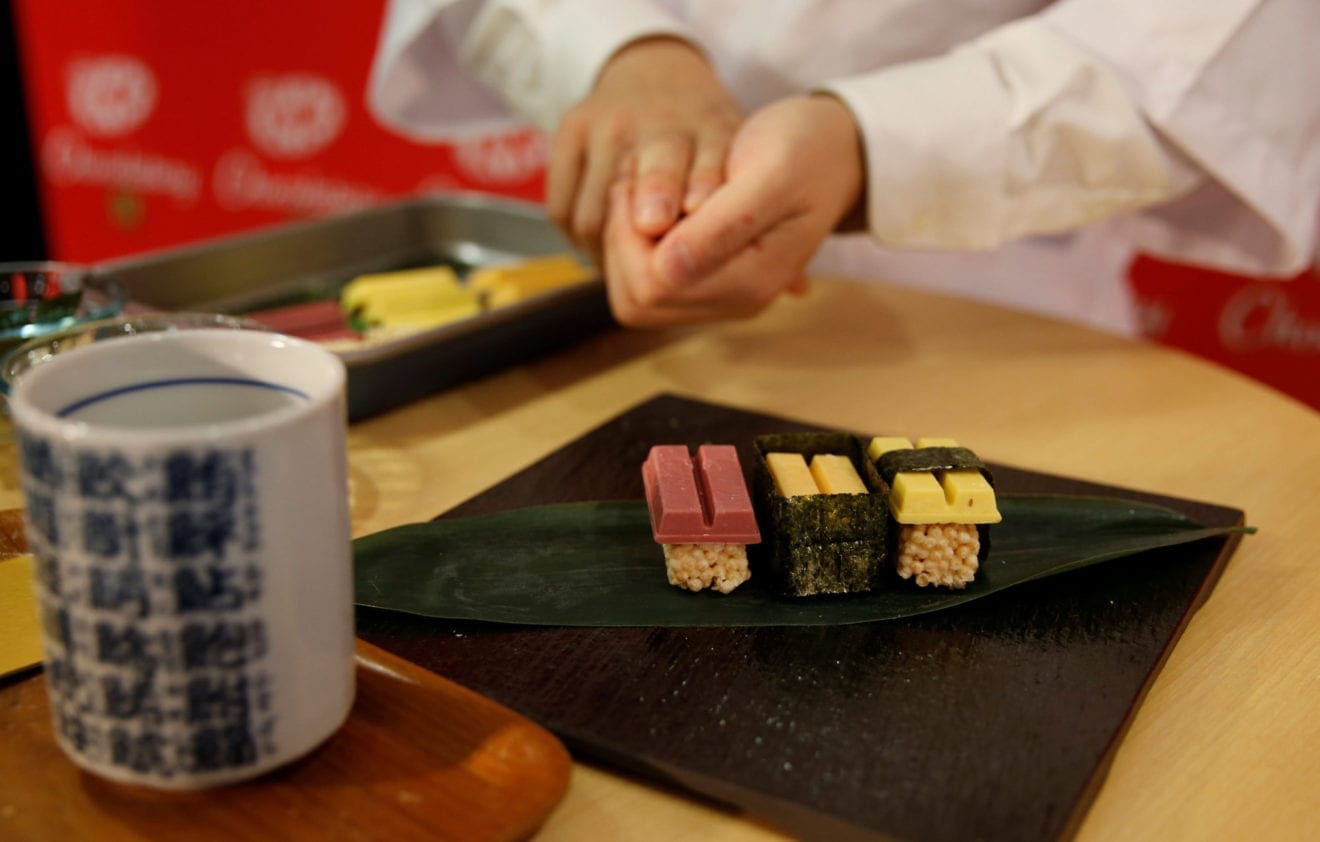
    For the grand opening of its stand-alone store, the company has created a set of three Kit Kats shaped like sushi – a combination of Kit Kats and rice puffs coated with white couverture chocolate. The maguro (tuna) version is topped with a raspberry-flavoured Kit Kat, the uni (sea urchin) version is made with a Kit Kat with the flavour of Hokkaido melon with mascarpone cheese, while the tamago (egg) version features a pumpkin pudding flavoured Kit Kat.

    kit-kats-chocolatory-japan

    Actually, the idea of a sushi Kit Kat was shared on social media by Nestle Japan as an April Fool’s Day joke last year, but the response was so huge the company decided to make it a reality. There will be 500 sets of the three sushi Kit Kats, with a limited number being offered each day to customers spending more than 3000 yen (US$26.50) or more at the new Ginza store.

    There are also plans to open a cafe on the second floor of the store in the next several months where customers will be able to try special items such as baked madeleines made with Kit Kats, or even make their own Kit Kat creations using toppings of their choice.

  • Hugo Barra leaves Xiaomi to join Facebook

    Hugo Barra leaves Xiaomi to join Facebook

    Hugo Barra, the international head at Xiaomi, is returning to Silicon Valley to head Facebook’s VR efforts, after spending three and half years in Beijing leading the Chinese smartphone maker’s global division.

    The announcement was made by Facebook head Mark Zuckerberg via his Facebook page last Wednesday.

    “I’m excited that Hugo Barra is joining Facebook to lead all of our virtual reality efforts, including our Oculus team,” Zuckerberg said in an announcement made in virtual reality.

    Barra will spearhead virtual reality efforts as Facebook’s VP of virtual reality. His relationship with Zuckerberg goes back years to when he broke ground on the Android operating system.

    More recently he worked at Xiaomi’s Beijing office as VP of International, serving as the face of the company and taking active part in product launches. Barra joined Xiaomi in 2013 from Google, where he worked as head of product management for Android, to oversee the company’s international expansion.

    Barra’s appointment comes over a month and a half after former Oculus CEO Brendan Iribe stepped down from his position in order to assume a leadership position within the company’s VR group.

    Telstra’s Cynthia Whelan to chair Foxtel

    Telstra has appointed group executive of new businesses Cynthia Whelan as the new chairman of Foxtel, the Australian incumbent’s 50/50 pay-TV joint venture with News Corporation.

    Whelan replaces Robert Nason, who retired from Telstra in 2015 and has been Foxtel chairman since June 2012. She has been a member of the Foxtel board since September last year.

    “Cynthia Whelan is an ideal chairman for Foxtel and will provide suitable leadership for the organization as it navigates a period of intense competition and technological evolution. She has significant experience in Australia and overseas in senior management and director roles,” Telstra CEO Andrew Penn said.

    Telstra’s partnership with News Corp over Foxtel allows Telstra to appoint the pay-TV firm’s chairman, while News Corp has the management control.

    Whelan will assume her new role on February 17. Telstra CFO Warwick Bray is also on the Foxtel board and the company will soon appointed a third director to replace Nason, the telco said in a statement.

  • Starbucks future strategy applauded

    Starbucks future strategy applauded

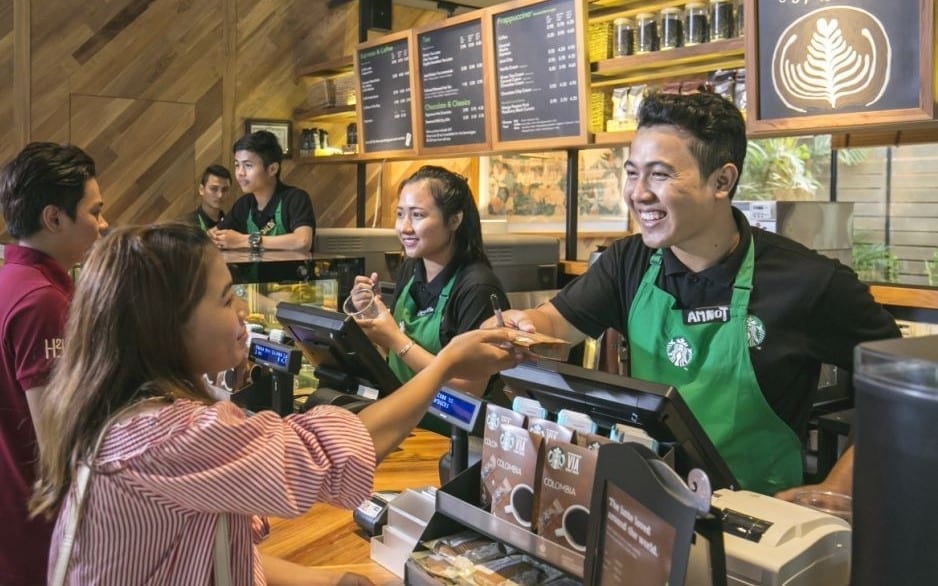
    While Starbucks has kicked off its new fiscal year with the lowest same-store sales growth since 2009, there is no reason to be overly discouraged by these results.

    Certainly, there are a few areas of softness, but the uplift of 3 per cent in the Americas comes off the back of a 9 per cent rise in the prior year. For a mature, fairly saturated company operating in a competitive segment of the market, the numbers show resilience.

    In any case, the overall revenue numbers are somewhat more robust – both within the Americas and on a global basis – thanks to a healthy program of store expansion. Starbucks may be reaching its peak in some localities, but it has demonstrated that even in its more mature markets it can still find headroom for new openings.

    Starbucks has done a reasonable job of managing its profitability at a time when margins are being squeezed by higher staffing costs. During this period, overall operating income increased by 7 per cent on a global basis and by 3 per cent within the Americas – partly thanks to the price increases of last year.

    All of that noted, there is no doubt that Starbucks is now firmly in middle age: it is finding growth more difficult to come by and, in financial terms, the business is not moving upwards at the pace it once did. In our view this is not demonstrative of a company in trouble, or even a company doing the wrong things, it is simply a reflection that Starbucks is a more mature business.

    Given that this dynamic is only likely to intensify over the next few years, it is incumbent on Starbucks to find new avenues for growth. The company is managing this well and has already set out its stall in terms of the innovations it intends to pursue to drive both the top and bottom lines.

    Some of these future plans lie outside the existing business model. Starbucks should be applauded for having the courage to look beyond its existing core operation, and to indicate its commitment to these ventures by putting Howard Schultz in charge of the new division. In truth, the push into premium through the development of the Princi chain and the Roastery and Reserve-only stores are not going to deliver sales volumes anywhere near those of the main business. However, their contribution will take the edge off the more subdued growth coming from core markets.

    As much as new initiatives will help, it is also important for Starbucks to look for ways to improve productivity at existing stores. This includes improvements to the food offer, which remains fairly low key and lacklustre.

    The year ahead will be both exciting and challenging in equal measure. However, Starbucks is a solid operator that will deliver single digit comparable sales growth, with total revenue uplifts just nudging into double digits.