Tag: asia

  • Vietnamese to be permitted to gamble in casinos

    Vietnamese to be permitted to gamble in casinos

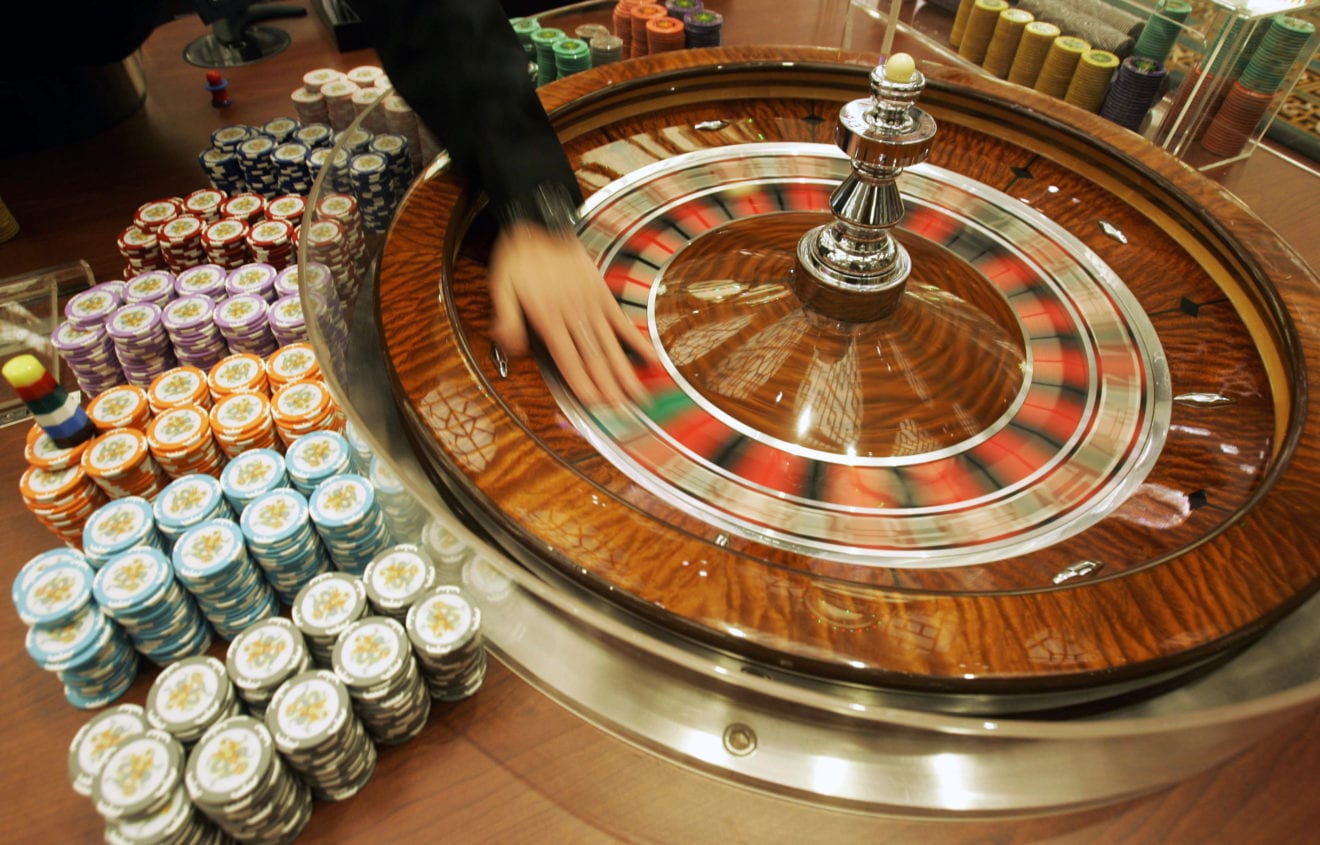
    The decree, titled 03/2017/NĐ-CP, allows foreigners and overseas Vietnamese situated abroad with a valid foreign passport to gamble in casinos in Vietnam.

    Vietnamese citizens can now also be admitted into domestic casinos, on a three year trial basis. After which, the government will decide whether or not to continue allowing domestic citizens to participate in casino gambling.

    All players must have full capacity for civil acts of individuals according to Vietnamese law and be willing to accept the terms and conditions of the games and the casino’s regulations.

    Vietnamese citizens admitted into casinos must be 21 years old or above with full capacity for civil acts of individuals according to Vietnamese law, have proof of regular monthly income of 10 million VND (450 USD) or be subjected to third degree taxation according to the law on individual income tax. The Ministry of Finance is responsible for providing citizens application forms for these conditions.

    Only enterprises with a Certification of Business will have the legal right to run a casino. The business must be a conditioned commercial act that is closely inspected by the appropriate government authority to ensure operations follow the decree’s regulations and other legal procedures, the decree dictates.

    Players must buy tickets to the casino at 1 million VND (45 USD) for 24 hours entry and 25 million VND (1,126) per person monthly. Players must not be related to casino owners in any way.

    Vietnamese players at casinos must exchange VND for tokens and vice versa.

    Vietnamese citizens who violated national security or committed other crimes abroad resulting in more than three years of imprisonment will not be admitted to casinos. This includes those serving jail time, with or without bail, or any other form of legal punishment.

    The decree did not restrict the amount of capital for business owners, but differentiated between large casinos (of more than 2 billion USD) and small casinos (less than 2 billion USD in capital).

    The decree states that the casino business must be linked to the entrepreneur’s key commercial operations to help boost tourism, trade, diversify entertainment and recreation and enrich tourists’ experience, while assuring security and nation defence, social order and moral health.

    The operation of and participation in gambling games must be transparent, coherent and honest, to protect the rights and legal benefits of parties involved.

    The decree bans gambling between players on results of games at casinos; cheating during preparation, organisation or participation in the casinos; any action that affects security and order in casinos and using gambling machines, tables, tokens and other devices with content not approved by the government.

    The decree also forbids the casino businesses from providing illegal gambling online or telecommunication networks, from smuggling and transferring foreign currency, precious gems and metals and other acts of money laundering, sponsoring terrorism and prostitution and paying out the wrong amount of prize money, among others.

    Organisations and individuals linked to the games’ operations must comply with the decree in its entirety and other legal requirements.
  • AirAsia to resume flights between Clark, Kalibo

    AirAsia to resume flights between Clark, Kalibo

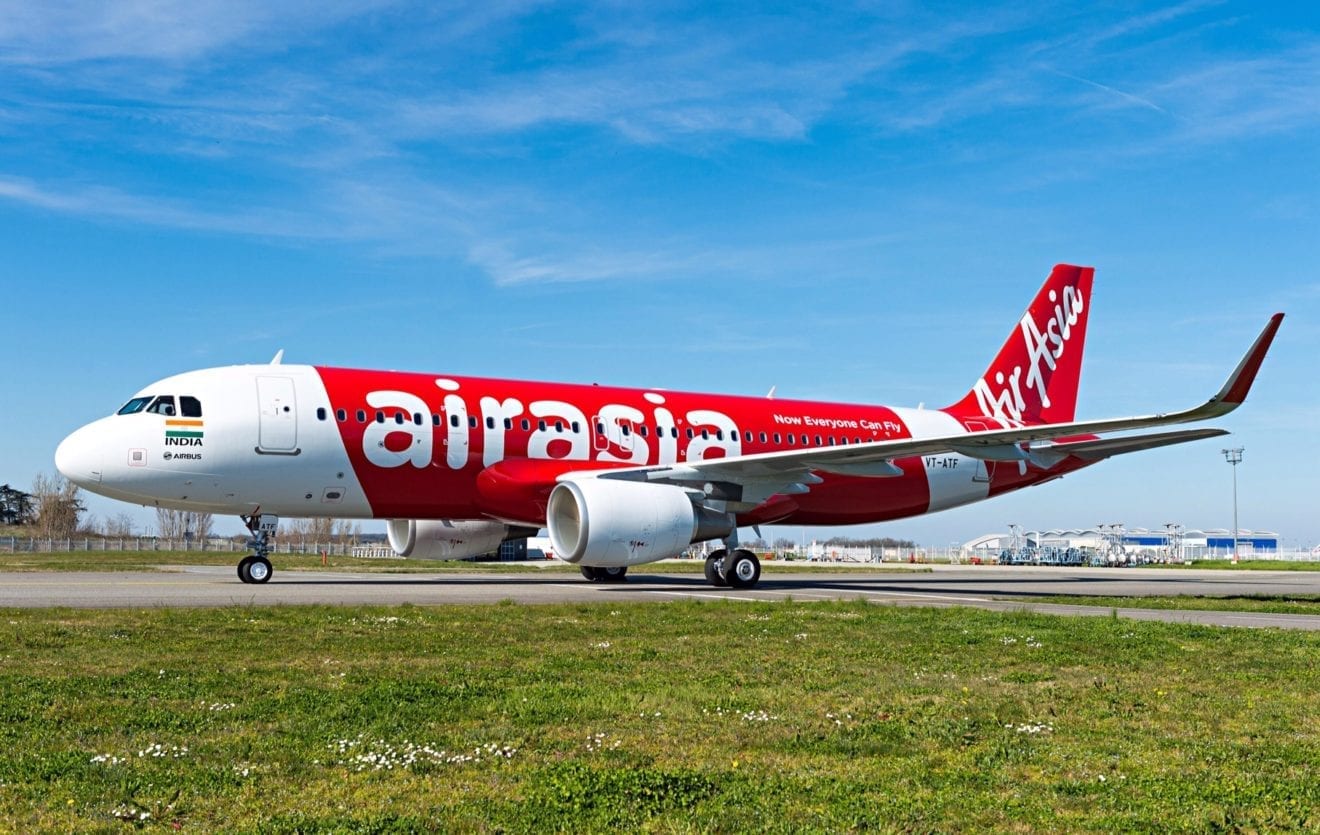
    In a statement, Philippines AirAsia said it will start the three flights weekly from Clark to Kalibo on March 27. The budget carrier will mount flights every Monday, Tuesday and Friday.

    “AirAsia has constantly dedicated itself to make air travel more affordable, convenient, and accessible to all and we are reaffirming this commitment with our newest Clark-Kalibo route. We are thrilled to provide the much needed connectivity at affordable fares for travellers from Central and Northern Luzon,” Philippines AirAsia CEO Captain Dexter Comendador said.

    To recall, AirAsia introduced commercial flights from Clark in 2012 before moving to the main gateway Ninoy Aquino International Airport.

    With the resumption of Clark flghts, AirAsia is offering promo fares to Kalibo from as low as P699 until Feb. 5. Travel period is between March 27 and Nov. 30, 2017.

  • Vietnamese crazy about cars, manufacturers rush to sell

    Vietnamese crazy about cars, manufacturers rush to sell

    Car trading in 2016 saw the number of projects in the sector increasing sharply. About 505 projects in the field were licensed, ranking second in terms of foreign direct investment (FDI), just after real estate, according to the Ministry of Planning and Investment (MPI).

    The representative of a foreign-invested automobile manufacturer said previously, FDI capital flowed into production and assembling, but now, it pours into retail and post-sale services.

    He said foreign investors all can see great potential in Vietnam, where the demand has been increasing rapidly. There is a big wave of foreign investors coming to Vietnam to work as distribution agents for manufacturers.

    Sources said some auto manufacturers have finalized the list of distributors for the years from now to 2023, i.e that from 2017, they will only consider appointing distributors for the years from 2024.

    From January 1, 2018, the tariff on the imports form ASEAN will be cut down to zero percent. Under free trade agreements, the tariffs on CBU (complete built unit) imports will also be decreasing step by step. By 2026, nearly all the tariffs will be lowered to zero percent before Vietnam fully opens its market by 2029.

    About 30 leading brands are present in Vietnam. However, most of them still don’t have large distribution networks. The biggest brand has 40 sales agents throughout the country. The Central Highlands and the western part of the southern region –  potential market areas – still have not been exploited.

    Automobile manufacturers understand that expanding distribution networks is the best solution to improve revenue. Therefore, they applaud the FIEs joining the distribution market.

    Mercedes Benz, Audi, BMW, Toyota, Honda, Mazda, Ford, Hyundai, Kia and Mitsubishi  have opened a series of authorized distribution agents recently.

    It is expected that by 2029, Vietnam market scale would be about 1 million brand-new cars a year with revenue of $12 billion.

    Vietnam is among the fastest growing markets in the region. Over 300,000 cars were sold in 2016, an increase of 24 percent over 2015. Experts have predicted the growth rate would be 20 percent in 2017 thanks to the tax cut and lower car prices.

    An analyst said there were clear opportunities to make money from selling cars as import tariff cuts would make cars cheaper and more affordable to Vietnamese.

  • Cebu Pacific planes use world’s lightest aircraft seat

    Cebu Pacific planes use world’s lightest aircraft seat

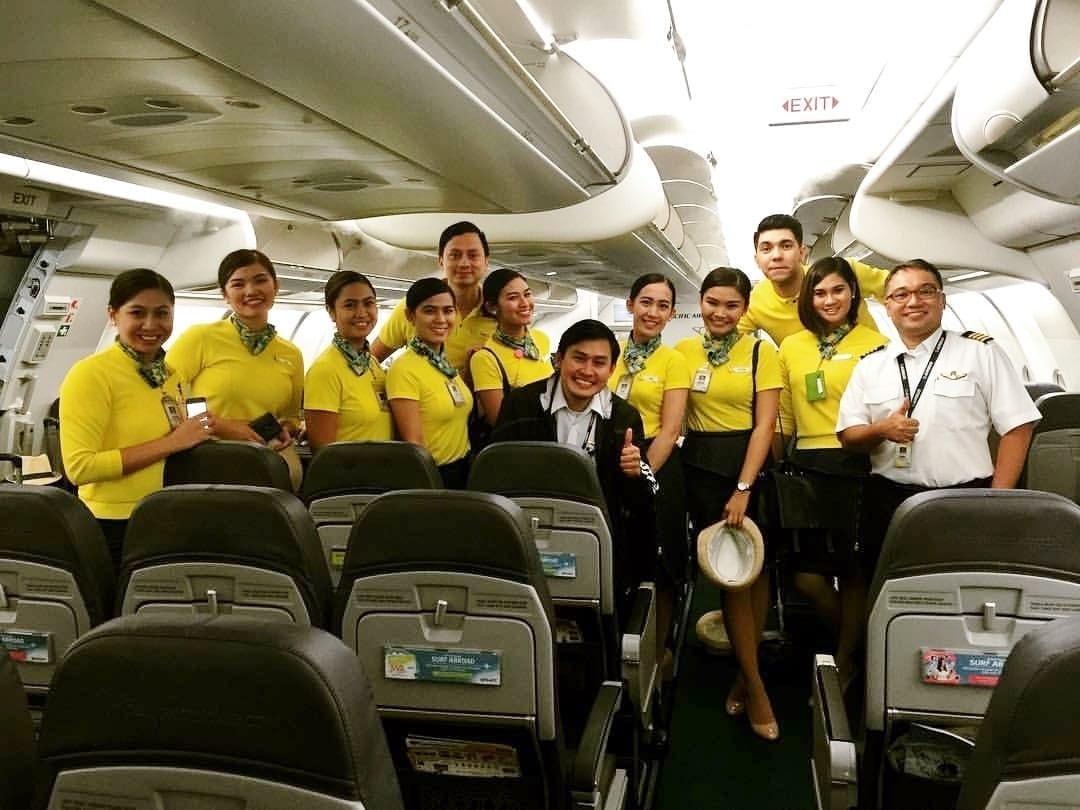
    Cebu Pacific, through its wholly owned subsidiary Cebgo, has chosen the world’s lightest aircraft seat, Expliseat, for its ATR 72-600 aircraft.

    The Titanium seat will be installed on all 16 aircraft, two of which are already being utilized by Cebu Pacific. The lighter seat is expected to help decrease fuel burn while allowing the carriage of more guests and cargo on board.

    Expliseat Titanium seat / CREDIT: Expliseat / Manila Bulletin

    Expliseat Titanium seat / CREDIT: Expliseat / Manila Bulletin

    “With Expliseat’s ultralight seats, Cebu Pacific is able to provide comfortable seating to its guests while allowing for a more fuel-efficient operation which will lead to more affordable fares.  With the airline’s low fare offer, we hope to further stimulate inter-island connectivity and contribute to the economies of the destinations we operate in,” said Alexander Lao, president and CEO of Cebgo.

    “Expliseat is proud to announce its collaboration with Cebu Pacific Air. This agreement confirms the unique balance between passenger comfort, high reliability and weight savings that can be offered by the Titanium Seat,” said Benjamin Saada, chief executive officer of Expliseat.

    The Titanium Seat is a technological breakthrough registered under 16 patents, made of ultralight materials such as titanium and carbon composite resources.

    CEB offers flights to 37 domestic and 29 international destinations, covering an extensive network that spans Asia, Australia, the Middle East, and USA.

  • Thailand readies for shopping mall boom in 2017

    Thailand readies for shopping mall boom in 2017

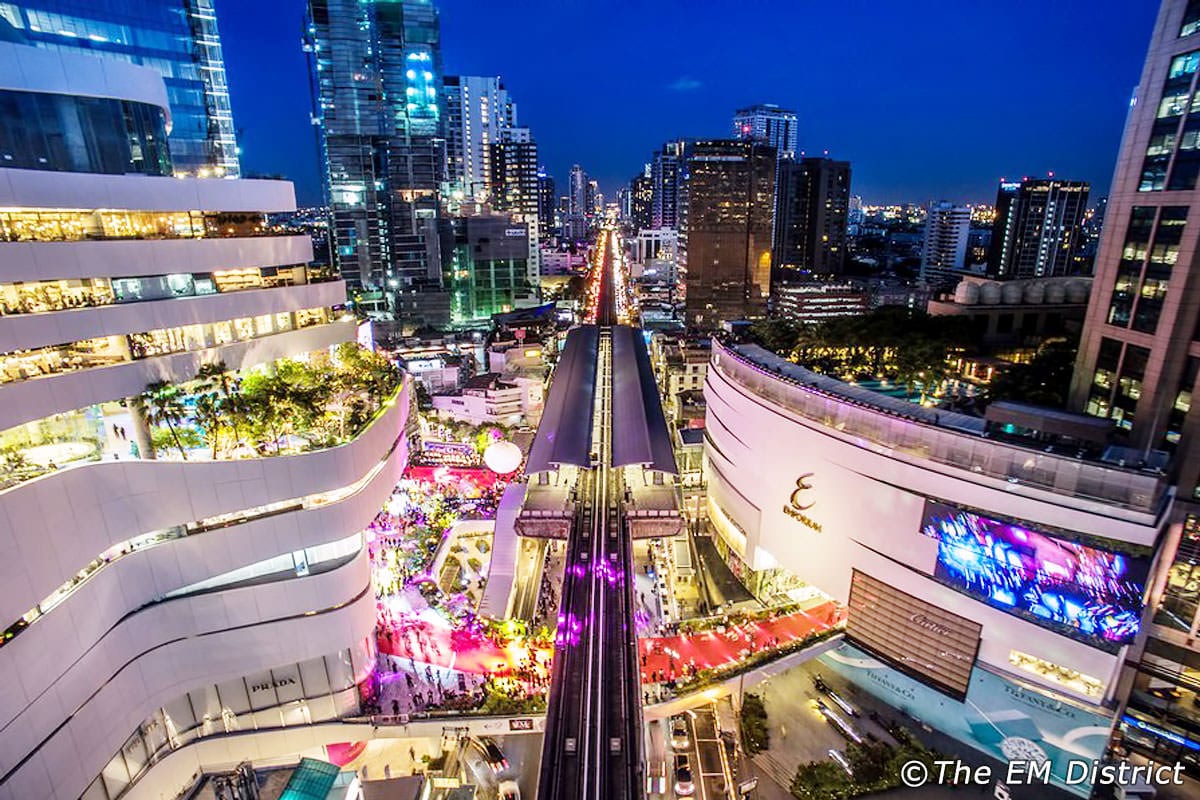
    Thailand can expect a slew of shopping mall openings in 2017, according to retail experts, as more international fashion brands and retailers look to take advantage of the evident mall culture in the Southeast Asian market.

    Japanese bank and consulting group Nomura said in a new research report that Thailand, and Southeast Asia as a whole, is experiencing rapid retail growth and increased store openings, which analysts expect will continue over the next twelve months.

    Moreover, demand for shopfronts in malls and retail spaces will outstrip retail supply in Thailand, according to report author Peerawat Dentananan.

    “We anticipate a rise in shopping mall-related investments driving near-term growth, and environmental improvements set in motion to boost longer-term growth,” said Dentananan in a note.

    The report estimates that Bangkok’s retail occupancy rate will stay above 97%, This follows the evidence that the supply of retail space in Bangkok has registered 6% compound annual growth between 2007 and 2015.

    Meanwhile, Nomura said Southeast Asian country’s bricks and mortar store are more secure to withstand current online shopping threat other markets are experiencing, because the consumers in these markets have embraced a mall culture.

    “Despite rapid growth, we believe e-commerce in Thailand is unlikely to overtake malls as reversing the trend in China, the [U.S.] and Singapore, given that malls in Bangkok are better developed and are usually located close to home,” Dentananan wrote.

    “We see shopping malls as a choice for [socializing] and/or taking care of personal lifestyle needs for Thai people, due to year-round hot weather (driving the demand for air conditioning) and the lack of nature parks.”

  • Top 30 Chinese global brands: Lenovo, Huwaei, Alibaba rank first

    Top 30 Chinese global brands: Lenovo, Huwaei, Alibaba rank first

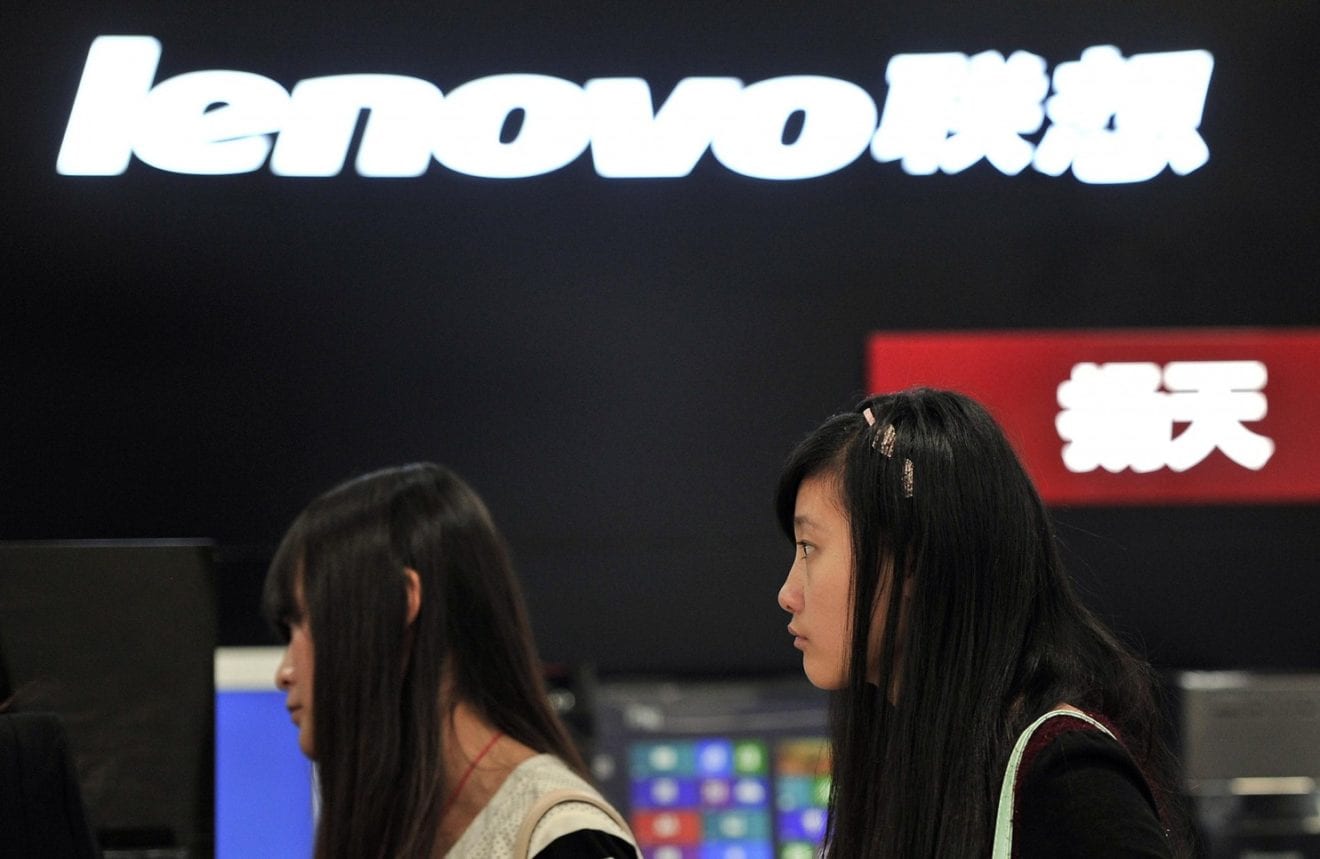
    Lenovo is the most powerful Chinese global brand builder, followed by Huawei and Alibaba, according to new research released this week.
    The first “Brand Top 30 Chinese Global Brand Builders”, released by WPP and Kantar Millward Brown in collaboration with Google, said the personal computer and mobile technology firm is the most powerful Chinese export brand with a Brand Power score of 1,682. Lenovo was followed by consumer electronics brand Huawei (1,256) the e-commerce marketplace giant Alibaba (1,047).

    Kantar Millward Brown calculated the Brand Power (the BrandZ measure of consumer predisposition to choose a particular brand) of Chinese brands outside of China across seven countries, supported by research conducted using Google Surveys in September 2016, to find the ranking. The evaluation looked at 167 Chinese brands, the median Brand Power score of which is 85.

    The biggest find was how the Made in China brand is shifting. While established brands currently have an edge over the emerging internet-lead brands, with 57% of the total Brand Power in the ranking, digital brands were the biggest winner.

    Collectively, consumer electronics and mobile gaming lead the ranking, both in terms of the number of brands in the ranking (17) and combined Brand Power (59%). The result reflects the transformation of Chinese brands, which consumers abroad increasingly associate with innovative digital devices and services.

    One challenge facing Chinese brands is that international consumers are generally less aware of, and less likely to consider purchasing, a Chinese brand than a local or globally recognised one, said the research.

    However, awareness and consideration gaps vary, with consumers in France, Germany and Spain more aware of and likely to consider Chinese brands than consumers in Japan, Britain or America, said report authors.

    “The study shows that the movement of ideas and product leadership has expanded globally, with consumers increasingly looking to China as a potential source for the newest and most innovative products and brands,” said David Roth, CEO of EMEA & Asia, The Store WPP.

    “This is the opportune time for Chinese brands to expand abroad, despite the many obstacles and this is why in collaboration with Google we have produced the ground-breaking “BrandZ Top 30 Chinese Global Brand Builders 2017” report. By analysing consumer perceptions of Chinese and non-Chinese brands, we have been able to identify gaps in Chinese brand performance and provide recommendations for brand building strength.”

  • Korean duty free shops rely on online Chinese celebs

    Korean duty free shops rely on online Chinese celebs

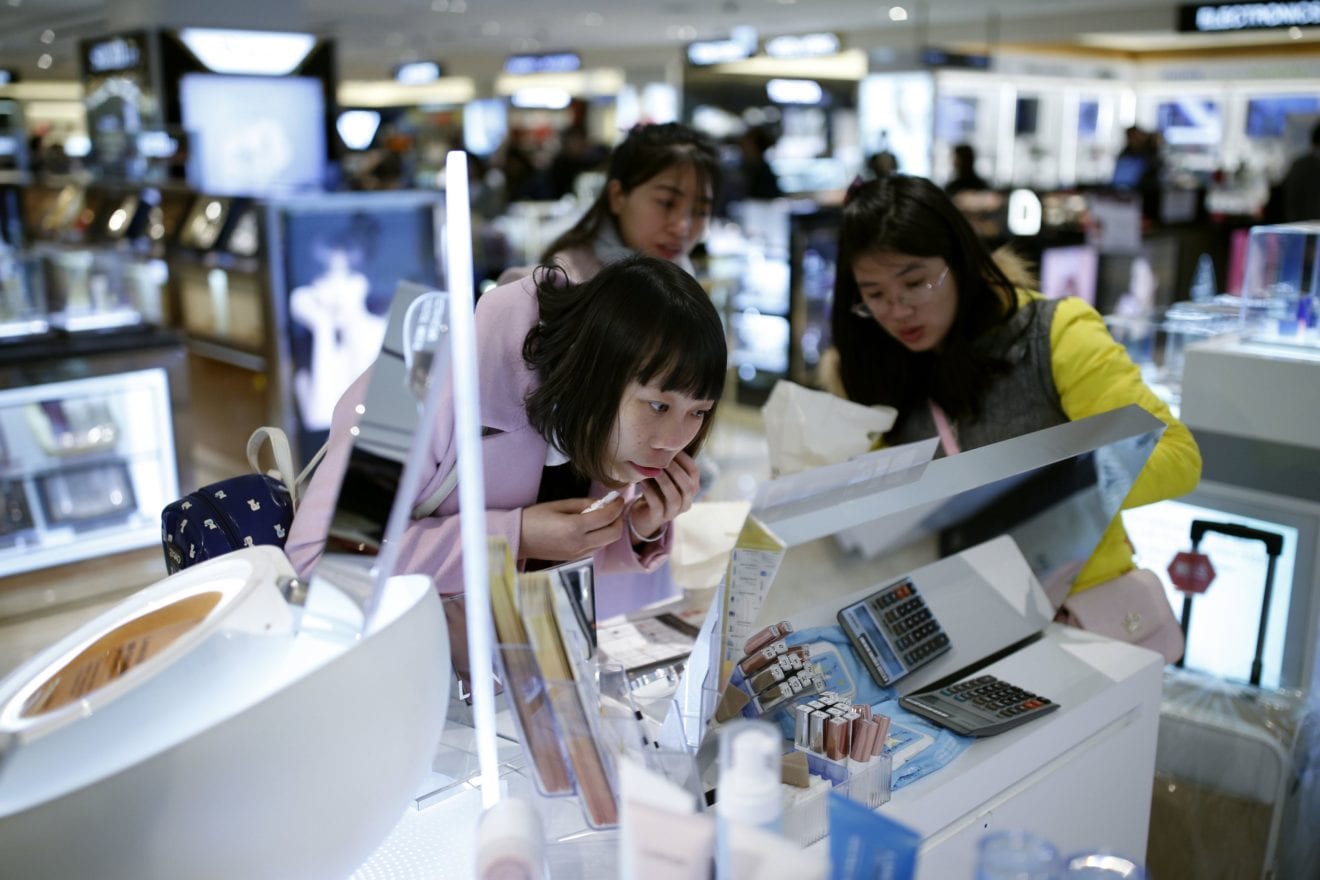
    Duty free shops in Korea have begun to invite internet celebrities from China, better known as “Wang Hong” there, to attract Chinese tourists during the upcoming holiday season.

    The shops are seeking to break through Beijing’s economic retaliation against Seoul’s decision to deploy a U.S. Terminal High Altitude Area Defense (THAAD) battery here.

    Last Wednesday, HDC Shilla invited four Chinese internet celebrities to HDC I’Park Mall and Shilla I’PARK Duty Free in Yongsan, central Seoul.

    The online stars, who have millions of followers on social media such as Weibo, broadcast their shopping for two hours to China through their smartphones.

    At toy store Toys & Hobby in I’Park Mall, the four introduced “kidult culture” in Korea, which has yet to be seen in China. They introduced Korea’s fashion and beauty brands as well at The Handsome and 3 Concept Eyes outlets in Shilla I’PARK Duty Free.

    “The promotional video broadcast by the four celebrities will likely get more than 5 million views within a week,” an HDC Shilla official said.

    The Shilla Duty Free also invited 15 Chinese internet celebrities to Korea to offer them a trip for five days and four nights from this Monday to Friday. The affiliate of Hotel Shilla plans to give them various experiences beyond shopping.

    Image result for shilla duty free korea

    Traveling from Seoul to Jeju, the 15 will visit hidden local restaurants and a tangerine farm on the island. They will also enjoy make-up sessions, a tea ceremony and pop arts, according to The Shilla Duty Free.

    An official said, “We expect more Chinese tourists, who are interested in beauty, food and experiences, to come to Korea.”

    The duty free shops want the celebrities to attract more Chinese tourists to Korea during the Lunar New Year festival from Jan. 27 to Feb. 2, which is regarded as one of the most lucrative times of the year in the industry.

    Last year, Lotte Duty Free and The Shilla Duty Free posted 10 per cent more in sales during the festival.

    However, duty free shops this year are facing a gloomy outlook due to Beijing’s order to regulate group tours to Korea.

    According to the Korea Duty Free Association, the number of foreign shoppers last November declined 17.8 per cent from a year earlier. The total sales of duty free shops also fell 8 per cent year-on-year, as sales to foreigners decreased 9.6 per cent.

    Observers said the recent invitations of Chinese celebrities are targeting non-group tourists, who visit Korea individually without travel agencies and who can replace the group tours.

    “The non-group tourists are not regulated by the Chinese authorities,” another HDC Shilla official said. “So, we want those tourists to visit Korea more, after watching promotional videos filmed by Chinese celebrities.”

    The Shilla Duty Free also said the itinerary of celebrities was arranged to help non-group tourists who are considering visiting Korea.

  • Mainland China accounts for 28m of 30m Macau visitors

    Mainland China accounts for 28m of 30m Macau visitors

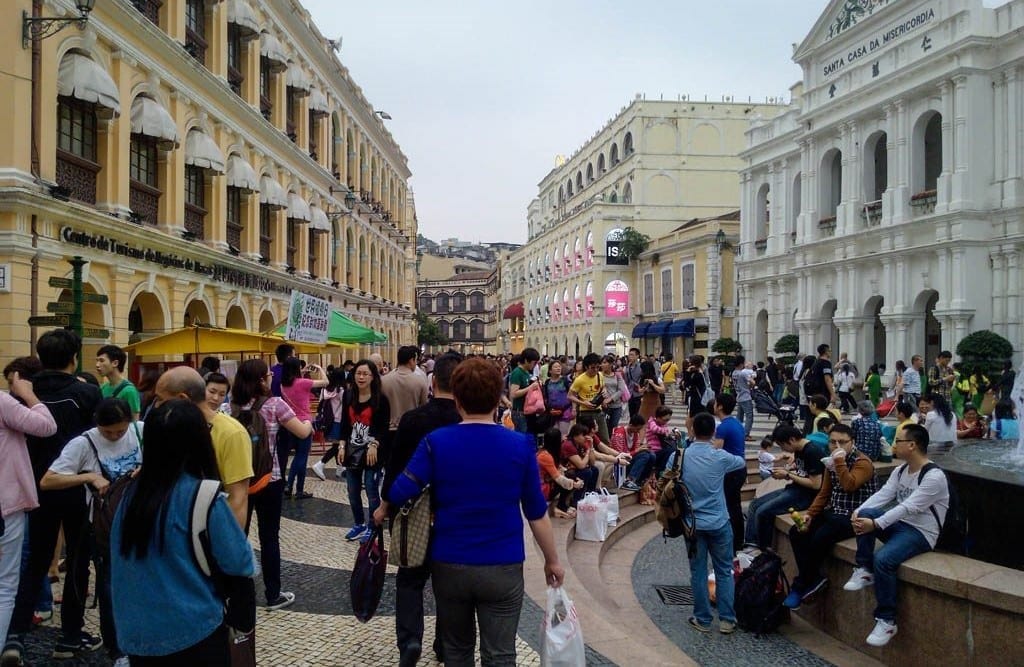
    Macau’s total visitor arrivals rose a nominal 0.8% to a new record 30.95m in 2016, with nearly 28m travelling from Greater China markets (+0.1%), a slight increase of 0.1%, whereas the much smaller international visitor arrival total grew by 7.9%.

    This will be encouraging news for DFS Macau in particular, plus Duty Free Americas, Dufry and many other standalone retailers currently operating shops in Macau’s hotels and tourist district.

    MACAU GAMBLING ON CASINO RECOVERY

    The increase also comes at a time when Macau’s casino business appears to be recovering some of its big spenders, with last December’s revenue up an impressive 8%.

    Most of these big ’high rollers’ were put off visiting the location, following Beijing’s crack down on irresponsible gambling by some mainlanders three years ago.

    Having said that, there was still a 3% fall in Macau’s overall gambling revenue to $28bn last year and this is still the Special Administrative Region of China’s biggest source of revenue by far [three times the gambling revenues generated in Las Vegas-Ed].

    Macau also continues to be only territory anywhere in China that is allowed to operate casinos.

    MACAU STILL NEEDS A LOT MORE HOTEL ROOMS

    The huge new bridge being constructed to link Hong Kong and Macau and the planned expansion of ferry operations to Macau are also expected to greatly increase visitor arrivals – although this expansion will only as good as the number of hotel rooms that are available – around 35,000 at present.

    In the meantime, the MGTO says it continue to work towards completing the tourism development goals in the 5- year development plan formulated by the SAR Government aimed at turning Macau into a World Centre of Tourism and Leisure.

    Macau welcomed more than 20m Mainland visitors last year, up by 0.2%, with 44% from Guangdong Province. There were also nearly 9.56m ‘independent’ visitors from the Mainland. An increase of 8.8% was recorded for the Taiwan market, whereas the sum of Hong Kong visitors dropped by 1.8%.

    HALF A MILLION KOREANS VISITED MACAU LAST YEAR

    As for international markets, South Korea still ranked highest, contributing over 660,000 visitors to Macau last year (+20%). Southeast Asian markets also performed well, with visitors from Thailand registering the largest growth of over 30% among the top ten source markets.

  • Cost savings to boost mobile wallet business

    Cost savings to boost mobile wallet business

    In the mobile wallet business, volume business and long-term supplier contracts can deliver cost savings for buyers, according to market research firm Technavio.

    According a new report from the company, cost savings can be achieved through adoption of technology, supplier competition, adoption of negotiation strategies, optimization of procurement practices and bundling of services.

    In terms of technology, the researcher points to adoption of NFC, HCE, BLE and QR codes through the efforts of Apple, Google and Samsung.

    Consumers need to perceive mobile payments as an easy and convenient mode of payment via the integration of the mobile banking and payment experiences.

    Consumers are comfortable making financial transactions using mobile channels developed by trusted financial institutions such as banks. Converging these two into one seamless experience is crucial to bridge the gap and push consumers into making mobile payments online or at POS.

    A fast, simple, and seamless mobile payment process can enhance brand reputation and differentiation in the market. Customers consider personalized user experiences on payment interfaces, fast and efficient check-outs, and multiple payment options (debit/credit cards, internet banking) as important features in mobile wallets. A 2016 market study on mobile commerce predicts about two billion mobile phone/tablet users will make mobile commerce transactions globally in 2017.

    Beyond basic P2P money transfers and bill payment services, Technavio says suppliers are strategically partnering with network operators and banks to provide localized and real-time offerings such as loyalty points, discounts, and ratings and reviews across popular retail, entertainment, and hospitality businesses.

    Technavio says suppliers must offer mobile wallet services that can smoothly process financial transactions and possess fast, secure user interfaces with relevant communication on discounts, loyalty, and re-purchase benefits to meet the requirement of procurement professionals. They must also enhance the safety and security of personal and financial data of the customers with multi-layered mobile technology.

  • French fashion labels to establish joint online presence in China

    French fashion labels to establish joint online presence in China

    Twenty French fashion labels are taking their business to China, through the ‘French Boutique’ launched by the French Federation of women’s ready-to-wear apparel (FFPAPF) on Alibaba’s Tmall Global website. Participating labels include Teddy Smith, IKKS, Ateliers de la Maille, Ollygan and Bensimon.

    Labels Prêt pour Partir, Nathalie Chaize, Groupe Mado, Mât de Misaine, Urbahia, Daniel Faret, Zyga Lin’n Laundry, Les Petites Bombes, Lab Dip, Europann and Rica Lewis will also take part in the initiative. They will all be featured on a website that claims it draws 439 million active Chinese customers per year. The market is expected to grow even further, given that only 50% of Chinese consumers currently have internet access.

    The online ’boutique’ will be launched next March, with the support of DEFI. The brands featured on ‘French Boutique’ will be assisted locally by the FFPAPF’s Chinese office, established at the end of 2015 in Hangzhou, also home to the Alibaba Group‘s headquarters.

    FFPAPF President Pierre-François Le Louët underlined how the objective is to introduce a “French multi-brand” presence, presenting Chinese consumers with “the best that French ready-to-wear [labels] can offer.” “The FFPAPF has carried out research work to simplify logistics, and handling social media presence,” said Marion Bayle, Asia business representative for IKKS, which established a foothold in China five years ago through a local partner. The French label is planning to expand internationally, and the initiative is expected to allow IKKS to learn more about its Chinese customers through the information on consumer preferences yielded by the online presence.

  • Mobile wallet spending set to grow 32% in 2017

    Mobile wallet spending set to grow 32% in 2017

    Global mobile wallet spending is on track to grow nearly 32% in 2017 to reach $1.35 trillion, a new study from Juniper Research predicts.

    Although at the moment transactions are concentrated in China and East Asia, the research firm predicts that brands such as PayPal and Apple wallets which can be used both instore and online means that wallets will increasingly become the default payment mechanism in other markets.

    The study found that mobile spend is currently concentrated in China and East Asia owing to the success of Alipay and WeChat.

    The report claims that PayPal’s choice to use a HCE (Host Card Emulation) NFC solution to enable POS payments is a key disruptive moment in the wallet wars. It also attributes Paypal’s future mobile wallet success to the on-going success of its social payments subsidiary Venmo.

    Research author Dr. Windsor Holden noted that “Network operators remain wedded to offline payments based on an NFC SIM card, at a time when more agile competitors are deploying integrated HCE wallets that also enable online usage.”

  • XL Axiata swings back to profit in FY16

    XL Axiata swings back to profit in FY16

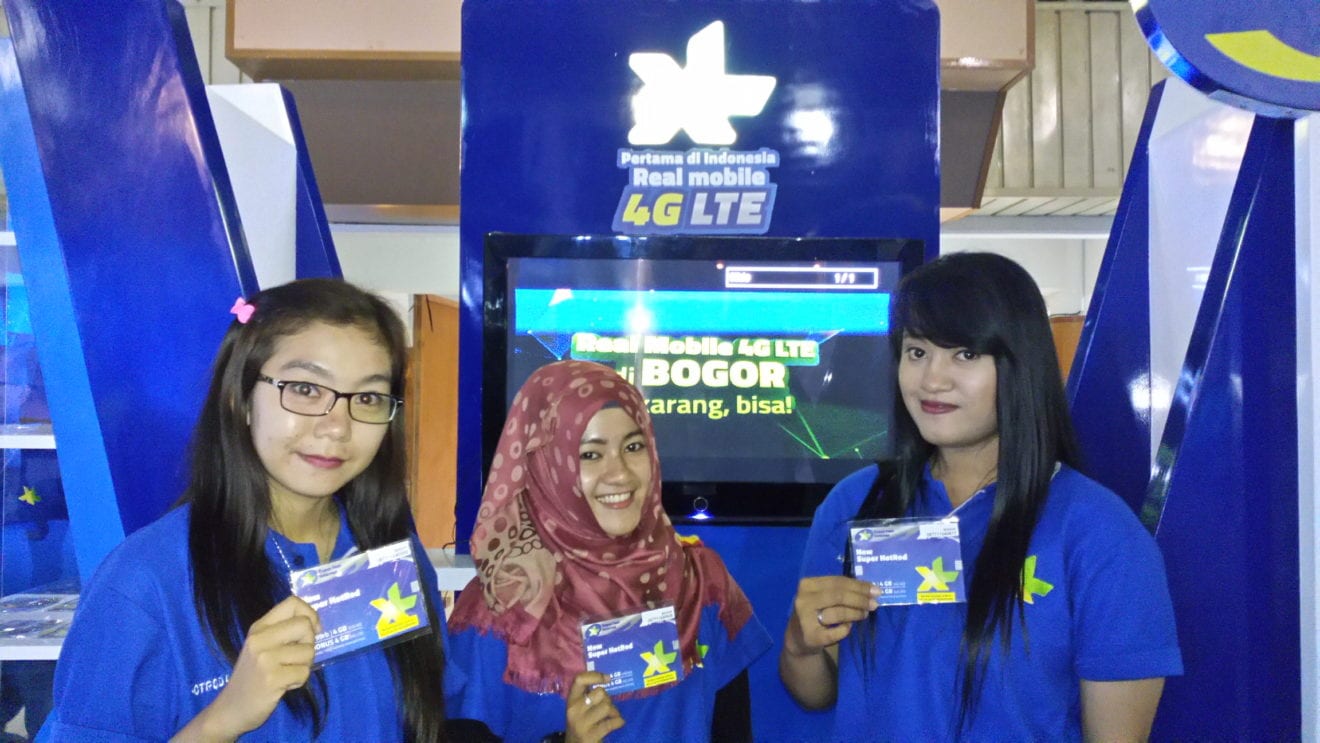
    Indonesia’s XL Axiata swung back to a 376 billion rupiah ($28.1 million) profit in 2016, as the company benefited from its $250 million tower sale and a stronger rupiah.

    The sale of 2,500 telecoms towers to local tower operator Protelindo, announced in March, helped the operator recover from a 25 billion rupiah loss the year before.

    But service revenue declined 4% to 19.19 billion rupiah due to the ongoing shift from legacy services to data. As a result of this rebalancing, data grew to account for 53% of the operator’s service revenue as of the fourth quarter, up from 35% a year earlier.

    Data traffic also surged to 515,304 terabytes, up from 196,341 terabytes a year earlier. The surge was driven by a 21 percentage point increase in smartphone penetration among XL’s subscribers to 63%, totalling 29 million customers at the end of FY16.

    During the fourth quarter, service revenue grew for a second consecutive quarter, albeit a slim 1% sequentially.

    XL Axiata’s results show that the company rolled out over 25,000 new base stations during the year, taking its total to 84,484 by the end of the year. Of these, 8,204 are 4G e-Node base stations, 38,731 are 3G node base stations and 37,549 are 2G sites.

  • E-commerce in Japan: 20% of retail by 2022

    E-commerce in Japan: 20% of retail by 2022

    While the U.S. and China are already known as global e-commerce markets, it’s Japan that boasts the largest e-commerce potential, especially over the next three to five years, say two separate consultant groups.

    In 2015, Japan generated roughly $80 billion in e-commerce sales. This compares to some $350 billion of e-commerce sales in the U.S. and China’s whopping e-commerce sales result, which exceeded $650 billion in 2015.

    Yet, e-commerce will be Japan’s largest single retail channel by 2022, according to a recent report produced by JapanConsuming.

    Having overtaken convenience stores to become the second biggest already in 2015, the firm has forecast that Japan’s e-commerce share of retailing will reach 20% by 2022.

    “This is a forecast that few would challenge, although there are plenty of traditional retailers who are in deep denial,” said report authors, of the predictions.

    “The only point of contention is just how far ahead e-commerce will be by then. Given the sea-change in consumer preferences and shopping behaviour already visible, the coming change will be profound,” added the group.

    Japan’s demographic is ripe for e-tail. Approximately 93% of the total Japanese population (126 million) is urban, giving it the highest urban population of the top 10 e-commerce markets, according to e-commerce consultancy PFS. Much like JapanConsuming, PFS predicts Japan’s e-commerce sales to increase almost 40% by 2018, for a market total of over $122 billion.

    Japan also has the highest digital buyer percentage in the Asia-Pacific region, with 77 million digital buyers last year, said PFS, in its Global E-Commerce Report.

    As well as computers, mobile shopping is quickly growing, with half of all e-commerce transactions being conducted via mobile devices in 2015, a trend set to continue by 2022.
    In terms of payment, debit and credit cards are the most popular payment methods when shopping online, with over 66% of shoppers conducting transactions utilising this method.

    As for what online stores are attracting the Japanese e-shopper, marketplaces continue to dominate the e-commerce landscape. Japan’s three big sites, in order of market share, are Rakuten, Amazon Japan and Yahoo Japan Shopping. Collectively, these sites accounted for around 50% of total Japanese annual e-commerce revenue in 2015.

  • Brandline – Bring Your Brands to Life

    Brandline – Bring Your Brands to Life

    Consumers are exposed to more than 3000 messages a day. The real question now is, what will make your brand stands out? As consumers only spend a few seconds in front of retailer shelf, are the in-store messages targeted properly and relevant? Hence, design solutions that boost the traffic and sales potential in retail environments are sorely needed.

    As the expert in merchandising and in-store communication, HL Display Thailand has the most innovative design and ideal solutions to create a more desirable shopping experience and brand awareness that includes

    • Creating a place where the consumers want to shop
    • Developing impulse buying and customer loyalty
    • Making differentiation from competition
    • Increasing basket size and footfall

    Communicate the brand values and product benefits with Brandline™, the collection of shelf liners, highlighters and accessories, specifically designed to create highly effective on-shelf communication and segmentation. Extending the message areas with additional accessories such as lighting is also reinforcing brand awareness and instantly adding positive disruption visually.

    https://www.youtube.com/watch?v=DUECYwjKfjA

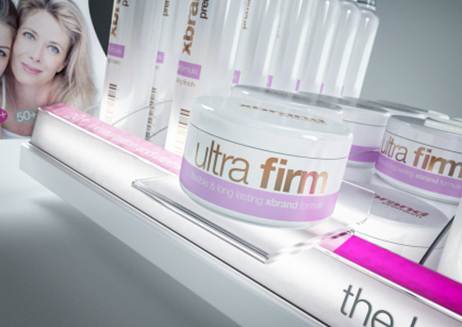
    Health and Beauty category for instance, is a category characterized by many new products introductions coupled to variety of pack sizes and shapes. State of the art message conveyer, cosmetic front rails, sample tester holder, lighting accessories are becoming a must have in store environment, and this is when Brandline™ becomes even more important than ever.

    For further information, Bangkok based HL Display Thailand can be directly contacted during office hour at +66 2276 2445 with the attention to Mr. Thanasun Sakchuenyod, or e-mail to thanasun.sakchuenyod@hl-display.com or info.asia@hl-display.com. Visit the company website at www.hl-display.com/asia

  • Cosmetics sales surge as Korean duty free market rockets

    Cosmetics sales surge as Korean duty free market rockets

    The Korean duty free market surged by 33.5% year-on-year in 2016 to KW12.2 trillion (US$10.5 billion), according to new figures from Korea Customs Service.

    The results reflect a strong bounce-back from the MERS-ravaged 2015, allied to booming Chinese visitor numbers last year.

    Chinese arrivals for 2016 rose +34.8% to 8,067,722, according to Korea Tourism Organization figures published today, a 46.8% share of total visitors. Japanese arrivals also rose sharply, up +25% to 2,297,893, a 13.3% share of total arrivals. Korean departures rose +15.9% in the year to 22,383,190

    Duty free sales to foreigners (dominated by the Chinese followed by Japanese) rose +44.1% to KW8.8 trillion (US$7.5 billion)

    Cosmetics, driven by booming sales of skincare (particularly Korean brands), accounted for 51.2% of turnover. Here are the leading categories:

    Korea_Table_600

    Lotte Duty Free stretched its lead as the dominant force, racking up a +26% increase in sales to KW5.973 trillion (US$5.1 billion), a stunning performance given that the retailer had to close down its Lotte World Tower Duty Free store in late June.

    Lotte’s nearest rival, The Shilla Duty Free, posted a +31.5% increase year-on-year to KW3.405 trillion (US$2.9 billion). Its Seoul flagship generated revenues of KW1.739 trillion (US$1.49 billion) while its Incheon International Airport stores posted sales of KW0.697 trillion (US$596.7 million)

    Fast-rising Shinsegae Duty Free posted sales of KW0.9608 trillion (US$822.4 million). Its new store in Myeong-dong, Seoul, which only opened on 1 May, generated sales of KW0.349 trillion (US$298.7 million). Its downtown Busan store (relocated in March to Centum City) posted revenues of KW0.336 trillion (US$287.8 million). Dongwha Duty Free in Seoul posted sales of KW0.3547 trillion (US$306 million)

    Of the recent sector newcomers HDC Shilla generated sales of KW0.3971 trillion (US$340 million); Galleria 63 Duty Free reached KW0.224 trillion (US$191.7 million), Doota Duty Dree KW0.111 trillion (US$95 million) and SM (Hana Tour) KW0.056 trillion (US$47.9 million).