Tag: asia

  • India, Myanmar top Consumer Confidence rankings

    India, Myanmar top Consumer Confidence rankings

    India tops the Mastercard Index of Consumer Confidence rankings as the most optimistic market in Asia Pacific, with Myanmar, Vietnam, Philippines and Bangladesh rounding off the top five.

    Overall, consumer confidence in Asia Pacific continues to hold steady, showing stability (within plus or minus five points from the previous survey) in nine out of 17 markets. With an increase of 1.2 points in the overall score from the first half of 2016 to 60.9 points in the second half, Asia Pacific sits just above the 60 point optimistic mark.

    However, the overall stability masks some significant movements across five markets in the region compared to the previous six months. Hong Kong, Thailand and Bangladesh saw more than 10 point improvements, while Malaysia and Taiwan saw more than 10 point decreases.

    Bangladesh recorded the largest gain of 11.2 points to 82.8 points – a significant improvement in overall consumer confidence compared to the first half of 2016 where it saw a relatively smaller increase of 4.2 points. Bangladesh’s increase in score was backed by an improvement in all components, the largest coming from heightened expectations in stock market movements (+24.6 points). Both Thailand and Hong Kong also saw a large improvement of 10.1 points, putting Thailand in optimistic territory and Hong Kong in neutral territory.

    On the other hand, eight of the 17 markets saw a deterioration in confidence levels. The biggest decline in optimism levels was observed in Taiwan, followed by Malaysia, and Myanmar. According to the survey, prospects for the stock market was the key driver of the decline.

    Between November and December 2016, 8723 respondents, aged 18 to 64 in 17 Asia Pacific markets, were asked to give a six-month outlook on five economic factors including the economy, employment prospects, regular income prospects, the stock market and their quality of life. The Index is calculated on a scale of 0 to 100, with zero as the most pessimistic, 100 as the most optimistic and between 40 and 60 as neutral.

  • Greenpeace Claims HSBC Helped Financing Deforestation

    Greenpeace Claims HSBC Helped Financing Deforestation

    Greenpeace International launched a new report on Tuesday, January 17, 2017, accusing British HSBC of supporting deforestation. The report stated that British HSBC provided financial services to palm oil companies that are causing rainforest destruction and human rights abuses in Indonesia.

    The report titled “Dirty Bankers: How HSBC is financing forest destruction for palm oil“, claimed that HSBC has been involved in arranging US$16.3 billion of loans and credit facilities to six palm oil firms. In addition, the is also said to have raised US$2 billion bonds for these firms.

    The palm oil companies listed in the report are Malaysian firm IOI; Indonesian Bumitama Agri and Salim Group; Singapore incorporated Goodhope Asia; Hong Kong-based and Singapore-listed Noble Group; and Korea’s Posco Daewoo Corporation.

    Greenpeace argued that HSBC has violated its policies of responsible lending by helping to finance the above-mentioned companies.

    Annisa Rahmawati, Greenpeace Southeast Asia senior campaigner said that although HSBC claimed to be a respectable bank with responsible policies on deforestation, “somehow these fine words get forgotten when it’s time to sign the contracts.”

    Not only HSBC, the report also listed several other banks claimed to be related to case studies in the report, including Japan’s Sumitomo and Tokyo Mitsubishi banks; Singaporean bank DBS; and the Australia and New Zealand Banking Group (ANZ).

    Despite the heavy criticism, the report did acknowledge HSBC as a “relatively progressive” bank that has shown a willingness to engage with criticism, and noted that the bank has a responsibility to set high standards for the rest of the sector.

  • EazyDiner plans to dig into online restaurant booking in Indonesia, Thailand

    EazyDiner plans to dig into online restaurant booking in Indonesia, Thailand

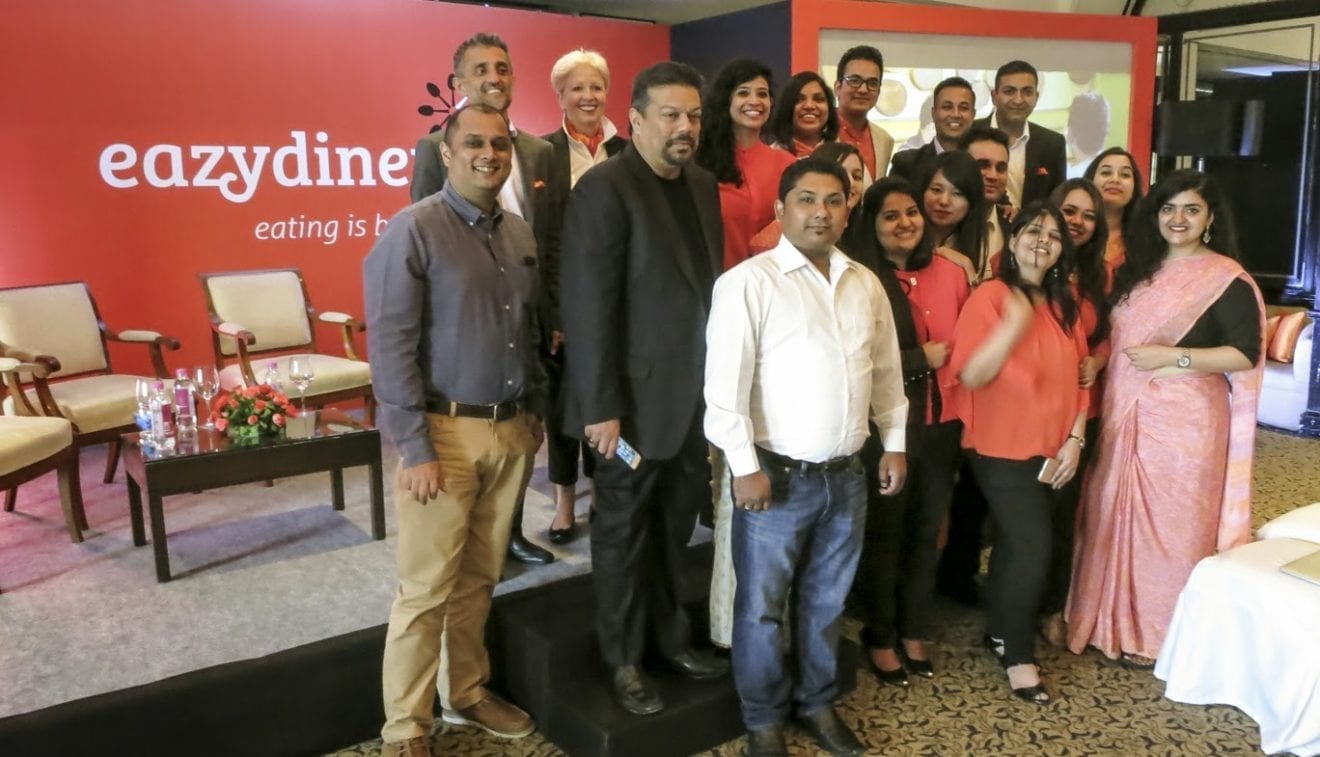
    EazyDiner, a restaurant booking and reviews platform, is in talks with potential investors to raise a fresh round of funding to expand its international footprint in the New Year.

    The two-year-old company, which was co-founded by media personality Vir Sanghvi and six professionals with a background in food, beverages and hospitality sectors, has targeted Indonesia and Thailand as its next two markets.

    While company officials declined to share details of the upcoming equity financing round, they confirmed plans of entering the South East and South Asian markets over the next 12 months.

    EazyDiner launched services in Dubai in December. The startup, which combines the services of Google-owned dining guide Zagat, NYSE-listed restaurant review firm Yelp and Priceline-owned restaurant booking service OpenTable, is also backed by two consumer-focused venture capital firms, DSG Consumer Partners and Saama Capital.

    The funding and expansion come when investor interest in India’s broader foodtech space has waned, with the startup ecosystem littered with the still-smoking embers of ventures that promised to deliver exceptional dining experiences to the notoriously fickle-minded and priceconscious Indian consumer.

    The combination of wafer-thin margins on offer, coupled with low entry barriers and lack of sustainable business models, saw investors curtail their appetite for the ventures.

    EazyDiner has charted a different path for itself. The platform, which also provides content and reviews, operates one of the country’s largest dining loyalty programmes as well. “We were never, and in fact, will never get into food delivery. The economics just don’t make sense, at least in a market like India…We believe it requires a very different skill-set,” pointed out Aman Kapur, one of the cofounders.

    EazyDiner has raised about $4 million in funding till date and counts Gurpreet Kohli, former managing director of Chrys Capital, as one of its early backers. The company operates in seven locations – the National Capital Region, Mumbai, Bengaluru, Kolkata, Pune, Chennai and Goa.

    “The focus is to go deeper into our existing markets and really establish our footprints in each of them rather than just go on an unrestrained growth across geographies,” pointed out Shruti Kaul, another cofounder.

    The platform lists about 2,000 restaurants, with more than 500 spread across NCR. EazyDiner has provided most establishments with its proprietary SaaS-based table reservation platform and has a guaranteed inventory with the rest, enabling them to provide bookings to consumers on an immediate basis.

    Gurgaon, where the company is headquartered and where it first launched operations, has played a critical role. The NCR’s startup hub, which rivals Bengaluru in its concentration of the country’s new economy ventures, has played a significant part in its growth.

    “Gurgaon, possibly, deserves its own mention alongside Mumbai and Delhi. It’s the third-largest contributor after the two metros,” said Kaul. According to her, Gurgaon contributes 15% of the company’s business across the country, outpacing Bengaluru. “For a small suburb, it’s huge. We have about 275 restaurants in Gurgaon on our platform, ranging from luxury establishments to budget restaurants,” Kapur said.

    According to both founders, emergence of the Haryana city as a startup destination has played a role in defining, as well as evolving, consumer behaviour, particularly when it comes to dining habits. “The ability to experiment there is phenomenal and probably much more than the other metros… We also see that people living to working in Gurgaon, while traveling, indulge in a lot more cross-dining than any other city in India,” Kaul said.

    Analyses drawn from consumer behaviour in one of its earliest markets has prompted the founders to look for similar characteristics in every new area it enters. “We’ve actually learned alongside the consumer and the company’s grown even as the consumer has evolved and experimented,” Kapur said.

  • Indosat Ooredoo ready to launch 4.5G technology

    Indosat Ooredoo ready to launch 4.5G technology

    PT Indosat Ooredoo is ready to launch its 4.5G technology in 2017 that is two times faster than its 4G predecessor, said a company spokesman.

    “We have been developing the 4.5G technology since 2012 and we are ready to launch this year, starting with the introduction of new technological infrastructures such as modernized BTS (Base Transceiver Station) in several regions,” according to its Group Head of Network Strategy and Solution, Yune Marketatmo, on Wednesday.

    Singapore and Malaysia are already ahead of Indonesia in launching the 4.5G technology, along with some European and Middle Eastern countries.

    Marketatmo also noted that in order to prepare for its introduction, the company has been working to place 4.5G data centers in several areas around Java since 2016, while the headquarters will be in Jakarta.

    “The data centers will be built in strategic locations close to customers so they can communicate easily and take advantage of this new technology,” he added.

    Marketatmo further explained that existing customers who are currently using 4G would be automatically upgraded to 4.5G. This will also apply to mobile devices that are compatible with the 4.5G technology.

    Indosat Ooredoo currently has 81.6 million customers and the company saw an increase of their data usage by 114.2 percent compared to previous years.

  • KBank keen to buy Indonesian banks

    KBank keen to buy Indonesian banks

    The regulations require foreign banks to buy more than one bank, and that the targets must not be strong institutions.

    KBank president Pipit Aneaknithi said yesterday that the bank currently had partnerships with two banks in Indonesia, and was prepared in terms of facilities and capital to establish its own footprint in the Indonesian market.

    While Indonesia has very high potential for KBank and the takeover of local banks is an option, the requirement that foreign banks have to purchase more than one bank is something that it might not be particularly comfortable with, he said.

    The Bank of Thailand acknowledges this concern, he said, adding that market entry via the Qualified Asean Banks (QAB) scheme is another potential solution for KBank.

    The bank is therefore interested in applying for QAB status if the scheme’s framework is implemented.

    Meanwhile, the establishment of a physical branch in Indonesia is likely to be more difficult than doing so in Vietnam, which is another focus country for KBank, the president said.

    The best solution right now for KBank is therefore seen as the continued partnership with two local banks in Indonesia, he explained.

    Elsewhere in Asean, KBank currently has physical branches in two markets, one each in Cambodia and Laos.

    The Cambodian branch will be officially opened on February 8, with the Vientiane branch in Laos due to be opened later this year.

    With the presence of a physical branch in a foreign market not always the best solution, and the cost of establishing such an operation today a major matter, partnering with local banks is a tangible way to conduct business, he said.

    However, the difficulty is whether the bank and its partners have the same policy direction and share a similar interest in accommodating clients, he added.

    KBank, meanwhile, has been active in terms of international banking business in the past seven years by focusing on China, where it is upgrading to local banking this year.

    The market share of KBank in trade finance between Thailand and China has risen from 5 per cent to 15 per cent in seven years, Pipit said.

    He said the next step for KBank in tapping a regionalised trade-finance market dominated by China would be for the bank to facilitate financial services to Thai clients for business between one foreign country and another. “We should open a letter-of-credit service to our clients in China who want to run a business in Myanmar,” he said by way of example.

    Furthermore, KBank must embrace the digital platform in order to integrate its regional operating model.

    Under its banking-platform plan for 2016-2017, KBank must be able to service cross-border mobile transfers, multicurrency transactions and cross-border direct settlement, he stressed.

    KBank yesterday reported a 2016 net profit of Bt40.17 billion, some 1.77 per cent higher than the previous year’s level.

    The bank and its subsidiaries set aside a loan-loss reserve of Bt33.75 billion at the year’s end, up 28 per cent from Bt26.37 billion the year before.

    The higher reserve reflects the rise in non-performing loans last year, from 2.7 per cent to 3.32 per cent.

    Lending growth, meanwhile, supported net interest income, for which KBank recorded year-on-year growth of 5.5 per cent to Bt89.67 billion.

  • Tax office to summon Google to clarify data on revenue

    Tax office to summon Google to clarify data on revenue

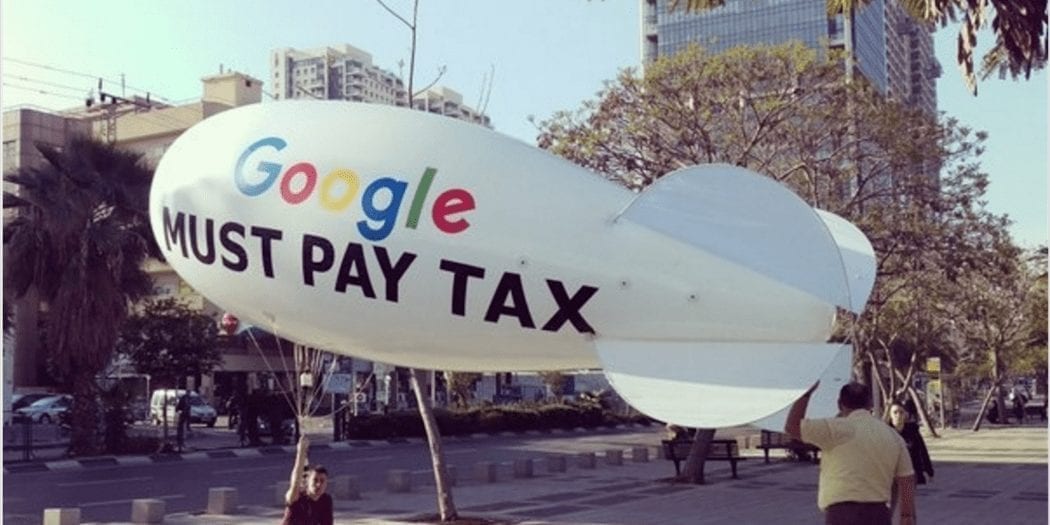
    Director General of Tax Ken Dwijugiasteadi gave an assurance on Wednesday that he would summon Google representatives to confirm data that it submitted regarding the companys revenue in Indonesia.

    “I have the data, so I will ask for their confirmation on whether the figures that they submitted are accurate,” said Dwijugiasteadi.

    He did not mention when the summons would be made, but the agenda for the meeting has been decided due to Googles history of tax avoidance. The authorities have requested for a copy of electronic data relating to revenues from advertisements.

    He also hoped that Google will respond to the summons so the process of paying income tax on their revenues, which had already been significantly delayed, can be completed quickly.

    Dwijugiasteadi said that every company that operate and collect revenues in Indonesia are obliged to meet their tax obligations and contribute appropriately by paying the correct taxes to the state.

    “Regulations must be met and my job is to enforce them accordingly. I do not threaten or use force,” he added.

    The head of the Jakarta regional office of the Directorate General of Tax, Muhammad Haniv, said that Google has yet to submit additional financial reports that they requested regarding revenue collected in Indonesia.

    “We cannot fully trust their statements as we are still waiting for further supporting documents. Their income from sources such as pay per click and other applications are yet to be accounted for,” he added.

    He further questioned Googles reluctance to be listed as a permanent company in Indonesia as the company is already operating many of its servers in the country.

    “They already have servers in Indonesia. That is the physical evidence. Being permanently established requires a physical presence,” said Haniv.

    According to the Directorate General of Tax, Google was registered as a legal entity in Indonesia at Tanah Abang Tax Office III in Central Jakarta as a foreign investment company in September 15, 2011 as subsidiary of Google Asia Pacific in Singapore.

    Based on Indonesian income tax law, Google must be declared as a permanent company and all its revenue or income within Indonesia must be taxed.

    However, Google has rejected further tax inspections from the authorities and it will not take the status of a permanent company, despite its revenue being in the trillions with the majority coming from advertisements.

  • South Korean home appliance and IT giant opens new store in Genting

    South Korean home appliance and IT giant opens new store in Genting

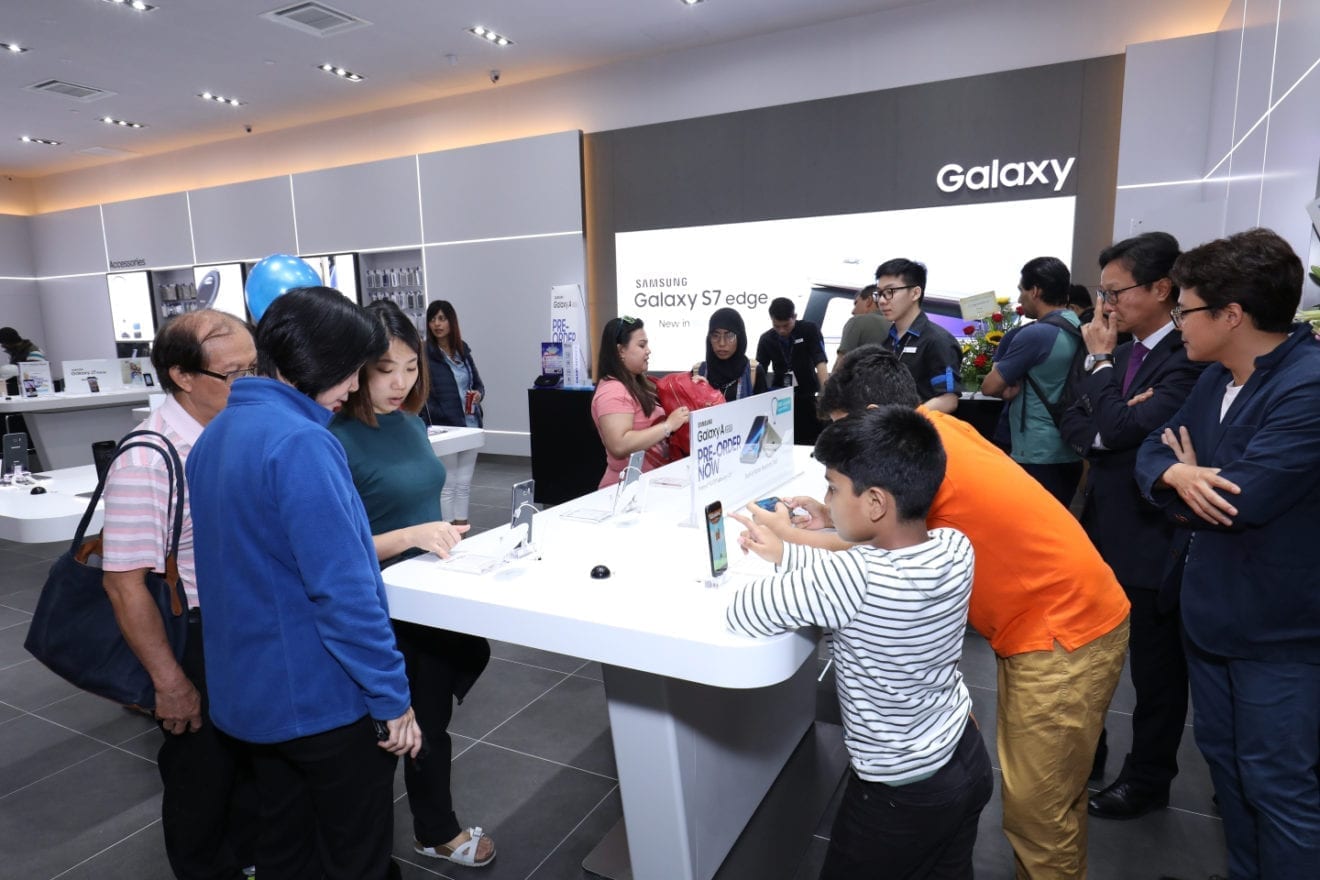
    Samsung Malaysia Electronics has launched its first Samsung Experience Store (SES) in Genting Highlands at the Sky Avenue mall, offering a wide range of the Samsung Galaxy mobile phones as well as a variety of wearables.

    The SES outlet is a one-stop shop that provides customer satisfaction with the best products and services.

    “The opening of the SES is another step forward in our expansion plans to different regions of Malaysia,” said Samsung Malaysia Electronics IT & mobile business unit vice-president Lee Jui Siang.

    “Our aim is to continuously expand our channel coverage, providing consumers a revolutionary digital convergence experience.

    Visitors to Genting Highlands can now experience the full Galaxy ecosystem at the newly opened Samsung Experience Store in the prestigious Sky Avenue mall.

    “With this expansion to Genting Highlands, we want to bring our innovations closer to locals as well as those visiting the country,” he said.

    In celebration of the store’s opening, Samsung offered customers a chance to take home a personalised caricature mug specially drawn using a Galaxy Note5 with purchase of any Samsung product on Jan 14.

    The company also gave away a special edition umbrella for the purchase of any Samsung product.

    Located at Lot T2B-57, Level T2B, Sky Avenue, Genting Highlands Resorts, the SES is now open every day from 10am to 10pm.

    Samsung Malaysia Electronics president Lee Sang Hoon (right) presenting a specially designed caricature mug, drawn using the Galaxy Note5, to Netcom Mobility Sdn Bhd director Elvis Chew as a token of appreciation.

    Samsung Malaysia Electronics president Lee Sang Hoon (right) presenting a specially designed caricature mug, drawn using the Galaxy Note5, to Netcom Mobility Sdn Bhd director Elvis Chew as a token of appreciation.
  • Celebrate Chinese New Year with Festive Promotions at  Hong Kong International Airport

    Celebrate Chinese New Year with Festive Promotions at Hong Kong International Airport

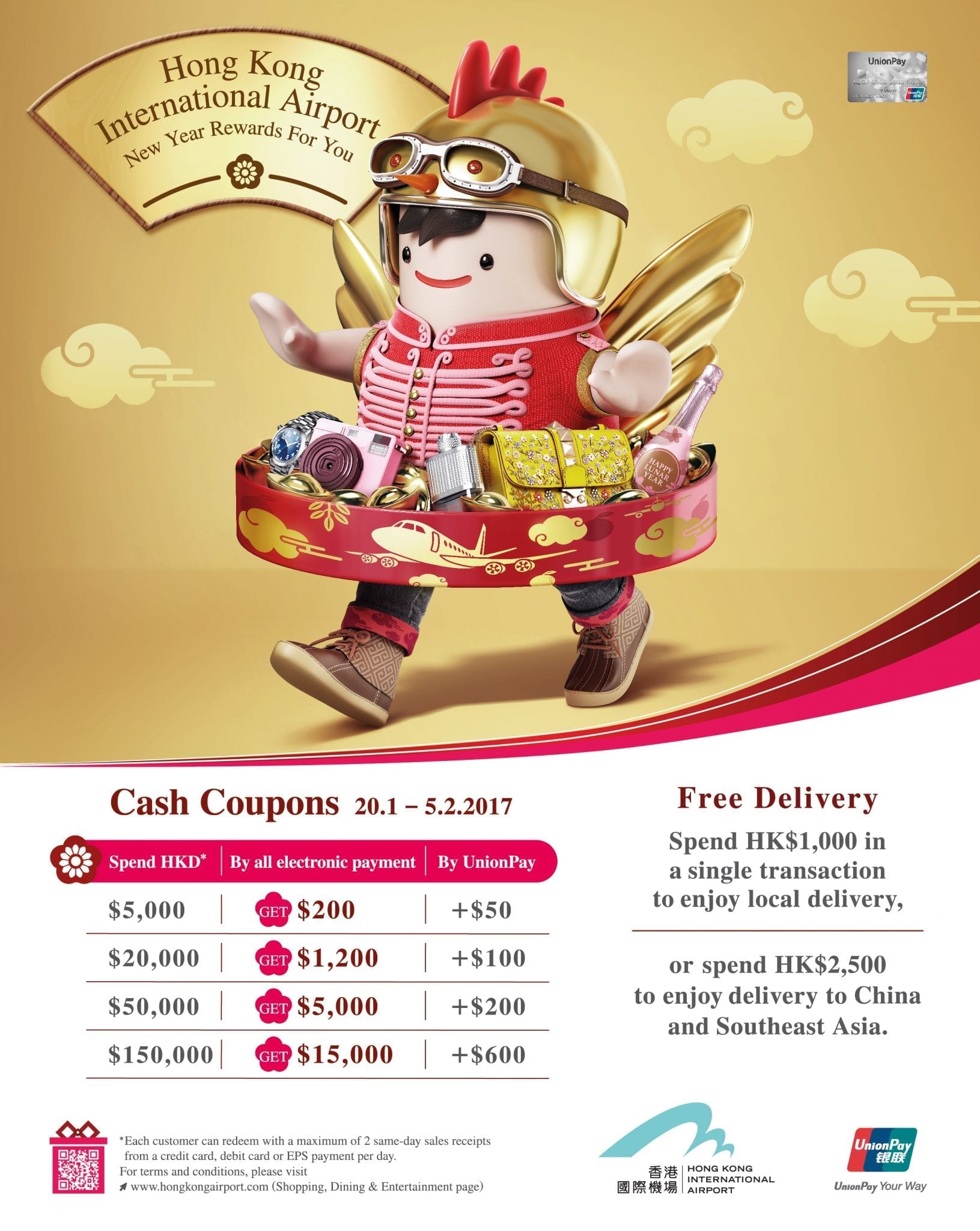
    To welcome the Year of the Rooster, Hong Kong International Airport (HKIA) is launching a series of Chinese New Year promotional activities and offers, including an instant rebate of HKIA cash coupon worth up to HK$15,600.

    Instant Rebate Promotion: From 20 January to 5 February 2017, travellers spending a specific amount by electronic payment at HKIA can redeem cash coupons worth up to HK$15,600. UnionPay cardholders, who make purchases with their cards, can enjoy additional rebates.

    Please refer to the following table for details:

    Spending by Electronic Payments of  

    HKIA Cash Coupons Redemption

    By UnionPay card

    HK$5,000

    HK$200

    Additional HK$50 HKIA Cash Coupon

    HK$20,000

    HK$1,200

    Additional HK$100 HKIA Cash Coupon

    HK$50,000

    HK$5,000

    Additional HK$200 HKIA Cash Coupon

    HK$150,000

    HK$15,000

    Additional HK$600 HKIA Cash Coupon

    Chinese New Year Promotions

    During Chinese New Year, shoppers can enjoy complimentary gift wrapping services at the Departures East Hall redemption counters in the restricted area (near Tiffany & Co.) and take red packets at redemption counters. To heighten the festive spirit, HKIA’s mascot will tour around the seasonally decorated airport in full Chinese New Year attire to meet and greet travellers and take snapshots with them. In addition, a lion dance extravaganza will be held on 1 February, featuring impressive lion dances and showcasing traditional Chinese culture and tradition.

  • Korea Grand Sale promises deals for travelers

    Korea Grand Sale promises deals for travelers

    Starting Friday, the Visit Korea Committee is holding another round of the “Korea Grand Sale,” one of the major sale events in Korea. The event is set to encourage those with foreign passports in Korea to get more discounts so that they can have a chance to buy more within their budget. The sale will last until Feb. 28, so those who haven’t planned a trip to Korea can hurry and book a ticket.

    Asiana Airlines will give an up to 60 percent discount on flights flying from and to cities in China and Europe, and Jeju Air will provide an up to 91 percent discount on flights to Korea from cities overseas.

    Lodging will be more affordable as hotels also offer discounts. Shilla Stay is giving out an up to 50 percent discount on its rooms and some of the first ones to make a reservation will get a free upgrade.

    Many retail companies, especially cosmetic brands, give out discounts on items that have been popular among foreigners. Lotte Mart, where foreigners often buy Korean snacks, will have a buy one get one free promotion.

    To entertain visitors even after all the shops are closed, many ski resorts in Korea will provide discounts on tickets for lifts and rental fees for necessary gear. For more detailed information about the discounts across Korea, go to www.koreagrandsale.co.kr/en/. Information on the website is available in English, Japanese, Chinese and Korean.

    Korean nationals looking to get some benefits during this foreigner-targeted sales event can recommend their favorite shopping items online and win a variety of gifts including a hotel voucher. Locals can go to www.vkc.or.kr and post items with the reasons why those are their favorites and must-buy items for visiting travelers until Friday. Non-Koreans can also participate by posting items on the website as well. The website will announce winners on Jan. 24.

  • Azoya Launch Satisfies Chinese Shoppers’ Cravings for US Products

    Azoya Launch Satisfies Chinese Shoppers’ Cravings for US Products

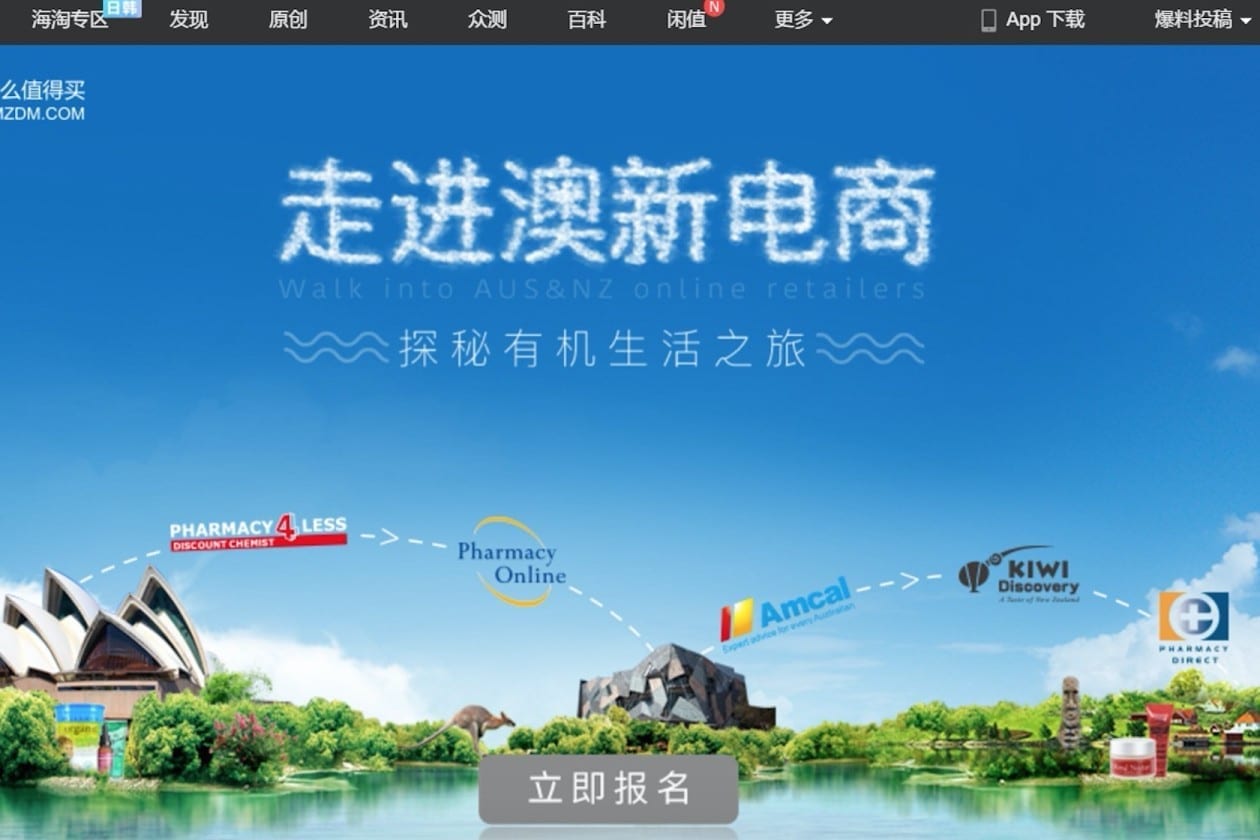
    Today marks the official U.S. launch of Azoya, an integrated turnkey e-commerce solution provider, which will help U.S. retailers and manufacturers break into the Chinese market with less risk in 2017 through fully-managed cross-border e-commerce. Azoya made the announcement to open the National Retail Federation (NRF) annual Big Show, January 15-17, 2017, at Jacob K. Javits Convention Center, New York City, Booth #344.

    As the world’s largest e-commerce market, China is lucrative, growing and ravenous for U.S. products. In 2015, cross-border consumer e-commerce reached $40 billion in 2015 with an annual growth rate of 50 percent.1 Top-selling categories include cosmetics and skincare, baby and mom products, healthcare products, fashion apparel, and groceries.

    “To simplify foreign expansion and ensure long-term growth in China, we build an e-commerce ecosystem for U.S. retail companies,” says Franklin Chu, Managing Director, Azoya International. “Our behind-the-scenes work means Azoya is invisible to Chinese customers who prefer to buy products directly from the U.S. retail company.

    Established in 2013, Azoya International is a leading solutions provider in cross-border e-commerce to China. To date, over 35 retailers in 12 countries have partnered with Azoya to expand into China with ease, including French fashion retailer La Redoute and Feelunique, the largest online beauty retailer in Europe.

  • Vietnam airport operator misses out on retail business opportunities

    Vietnam airport operator misses out on retail business opportunities

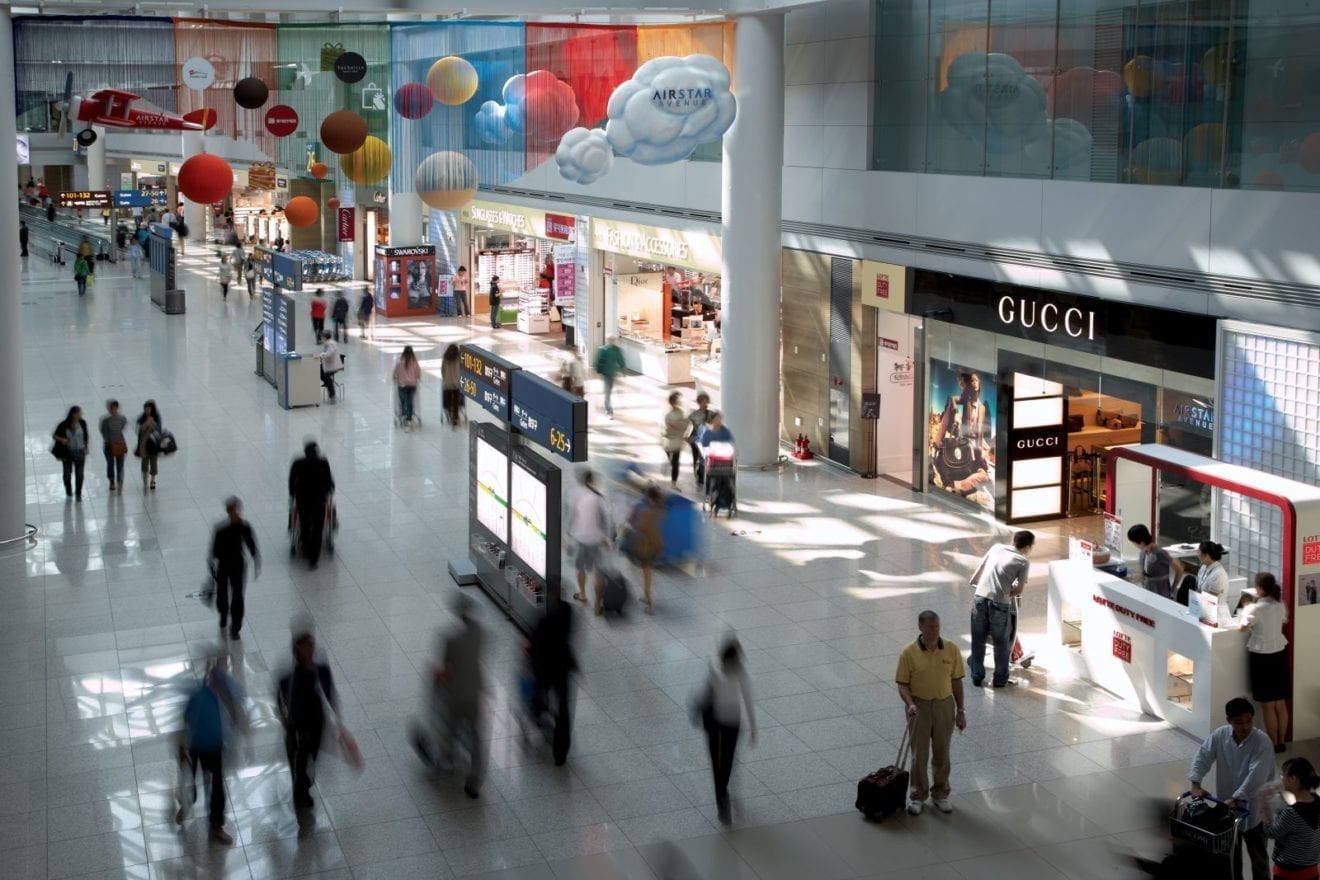
    Despite robust growth in passenger numbers, the state-owned Airports Corporation of Vietnam (ACV), which operates the country’s civilian airports, generated only $81 million from non-aeronautical businesses such as airport retail in 2016, or 15 percent of the annual target.

    Industry experts said the airport operator’s revenue mainly comes from the aeronautical sector such as landing fees and passenger service charges. Meanwhile it hasn’t focused enough on non-aeronautical business, especially the airport retail business.

    The operator estimated its revenue from retail at $1 per passenger last year, far below the average of other airport operators in Asia that reached up to $12.

    Thailand’s AOT and Malaysia’s BHD raked in $4-5 per passenger last year.

    The ACV, which operates 22 civilian airports in Vietnam, recorded significant growth in passenger traffic in 2016 to an estimated 81 million, with Vietnam’s airline market developing at the third-fastest pace in the Asia-Pacific region.

    According to market research group Nielsen, Vietnam’s airline market will be fueled by the middle and affluent class which is forecast to rise from 12 million people in 2014 to 33 million by 2020.

    However, ACV revenue lags behind it’s Thai counterpart even after factoring differences in passenger traffic. As of the end of the third quarter of 2016, the ACV’s annual revenue was only equal to 40 percent of Thailand’s airport operator AOT while passenger traffic made up as much as 68 percent.

    The proportion of international arrivals at Vietnam’s airports is about 30 percent of total passenger traffic, compared to 58 percent in Thailand and 48 percent in Malaysia, while service charges on international travelers are higher than those for domestic passengers. That partly explains why the ACV is so far behind many of its competitors in the region in terms of revenue.

    Airports Corporation of Vietnam, which is currently valued at $1.2 billion, is one of Vietnam’s biggest state-owned enterprises.

    Last year, the ACV raised $51.6 million by selling a 3.47 percent stake in an initial public offering where foreigners snapped up 82 percent of the shares on offer.

    France’s Aeroports de Paris SA has emerged as the front-runner to buy a 20 percent stake in the Ho Chi Minh City-based company, according to the Transport Ministry. The deal is scheduled to take place in March.

  • University of Hong Kong sees increase in Indonesian student applications

    University of Hong Kong sees increase in Indonesian student applications

    Shopping, entertainment and leisure may be the three words synonymous with Hong Kong. However, those are no longer the only reasons for Indonesians to visit the region as it has become a destination to pursue higher education.

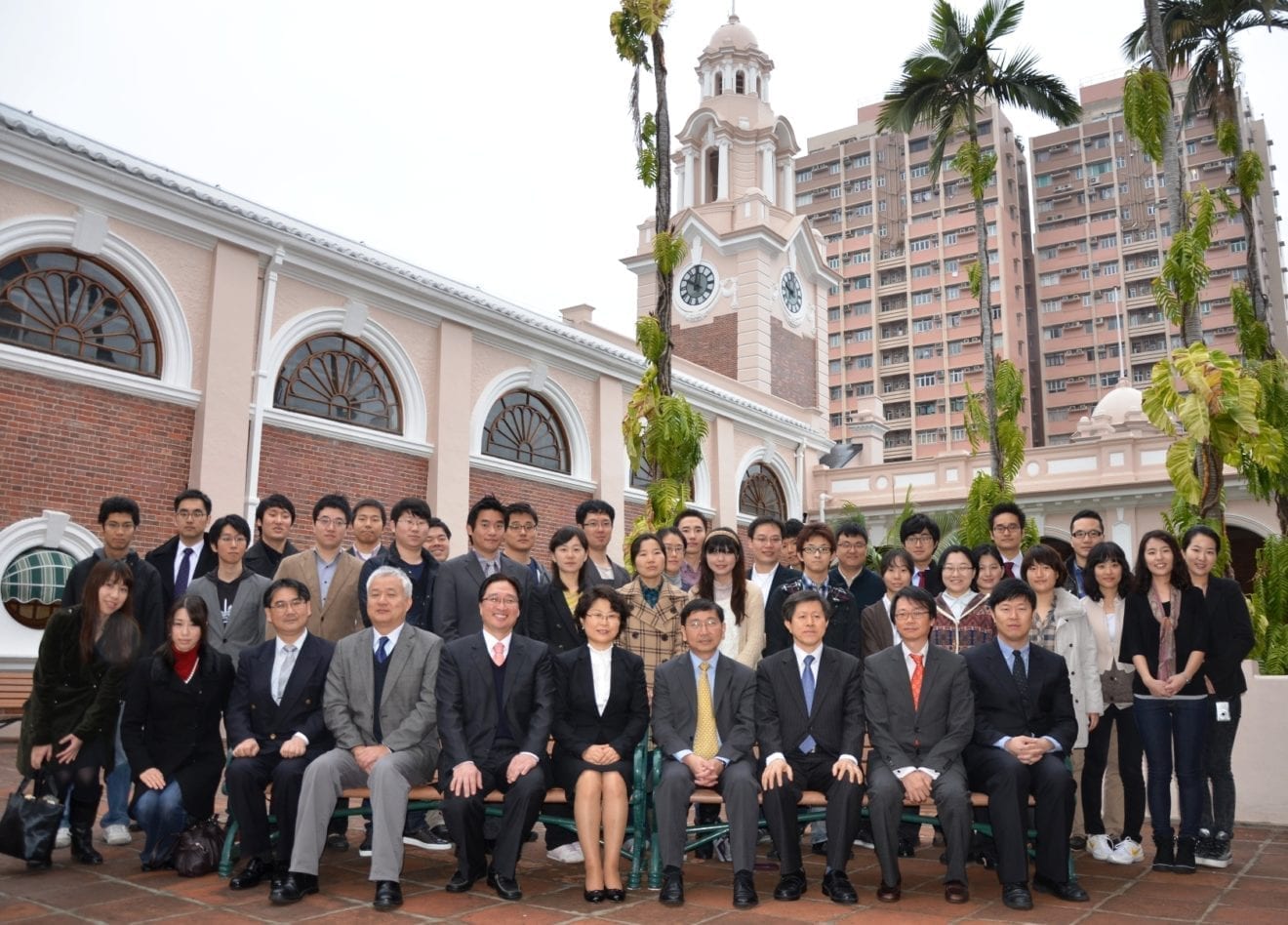
    Phillip Beh, chairman of the University of Hong Kong (HKU) Undergraduate Admissions Committee told on Saturday that the university had seen an increase in applications from Indonesian students since it opened its first undergraduate admission interviews in Indonesia in the academic year of 2014/15.

    Beh said on average 200 applications are received from Indonesian students annually. However, applicants face tight competition as only 400 international students are accepted into the university each year. At present, there are about 90 Indonesian students enrolled in HKU, mostly majoring in Food and Nutritional Science and Risk Management.

    Pinto ‘Pipin’ Rasika Tasdyata (center-left) and Jelita Amidjaja (center-right) talking with other Indonesian students who act as observers in HKU’s open house, undergraduate admission interviews at South Jakarta, Saturday.(JP/Masajeng Rahmiasri)

    Jelita Amidjaja, alumni of BPK Penabur 1 High School Jakarta currently studies Actuarial Science in HKU. She chose Hong Kong mainly because of its reputation as the melting pot of Asian and Western culture, besides its proximity to mainland China which allows her to study Chinese culture. “Right now, China is a strong country, so you would want to learn about the culture,” she said.

    Pinto “Pipin” Rasika Tasdyata studies Business Administration (Internal Business and Global Management) in HKU.  She said that what appealed to her about Hong Kong apart from its culture was the business prospects of the region. “It is the business hub that people recognize. I know Hong Kong and China will grow,” she said.

    Global university ranking publication, QS World University Rankings ranked HKU at 27th place in its 2016 world rankings, while UK-based education publication, Times Higher Education puts HKU in third position in its international outlook in 2016. Apart from its academic reputation, Indonesian students Pipin and Jelita also aim to gain future opportunities via HKU’s connections.

    “It is a very connected university. There are opportunities that I can get from there, from internships, overseas partners, and many more,” Pipin said, adding that the university also sends daily emails to students containing news about internships and various opportunities.

    Indonesian parents who send their children to HKU take into consideration the relative tuition fees. Taman Djojomitro, a parent who accompanied his son to HKU’s open house last Saturday highlighted the study cost comparison with the United States, “It’s quite expensive to study in America, especially when the exchange rate is Rp 13,000 to the dollar now.”

    Yearly tuition fees for international students in HKU start from HK$146,000 (US$18,824). With accommodation fees within the range of HK$12,000 to HK$26,000 plus living costs of approximately HK$40,000 per year, it is a significant difference to what normally constitutes average spending when studying abroad. According to QS World University Rankings, the average total cost of studying in a public university in the US currently averages $39,890 for international students.

  • CapitaLand Vietnam to build Ho Chi Minh City mall

    CapitaLand Vietnam to build Ho Chi Minh City mall

    Singapore developer CapitaLand plans to build a 240 metre tall office tower in downtown Ho Chi Minh City, apparently anchored by at least four storeys of shopping mall.

    artists_impression_of_capitalands_first_grade_a_office_development_in_hcmc

    While CapitaLand has already established a strong presence in Vietnam in the accommodation and serviced apartment sectors, this tower would mark its first foray into retail. Fellow Singapore developers Keppel and Mapletree have both built shopping centres in Ho Chi Minh, Vietnam’s most-populated city.

    CapitaLand Vietnam released an artist’s impression of the new building on Tuesday which clearly shows a strong retail component. In the statement it said the building would incorporate “exciting retail offerings, including some of the city’s best restaurants and cafes, lifestyle and entertainment outlets” on levels above and below ground.

    But when approached for more details, a CapitaLand spokesman declined to reveal further details.

    Also apparently secret is the precise location of the new development, other than it is in the heart of District 1, the CBD, and on the riverfront. CapitaLand says construction will commence in the first quarter – but refused to reveal the exact location of the 0.6ha site it has acquired.

    The development – of an unspecified number of storeys – will be built by CapitaLand’s wholly-owned subsidiary CapitaLand Vietnam Holdings. It will be the company’s first international Grade A office tower in Vietnam and connected with the metro railway line currently under construction. Both are expected to open in 2020.

    Lim Ming Yan, president & group CEO of CapitaLand said in a statement that the acquisition and development of the project serves to diversify CapitaLand’s portfolio and strengthen its foothold in Vietnam.

    “It is also in line with our plan to establish a US$500 million investment fund to focus on commercial properties in Vietnam. CapitaLand has a 22-year track record in Vietnam which has delivered to-date, 22 serviced residences, nine residential developments and now, a prime commercial property. Given its strong growth outlook and positive market sentiments, we are excited to be a long-term player in Vietnam’s growth story and will continue to look out for opportunities to grow our footprint.”

    An eye-catching feature of the building will be lush open terraces towards the top of the tower, “bursting with greenery where tenants can meet, network or relax while enjoying unobstructed views of the Saigon River and the city”.

    It is within walking distance to the city’s vibrant shopping and entertainment area, and CapitaLand’s Ascott Waterfront Saigon – a 222-unit luxury serviced residence due to open in July 2017.

    Vietnam is CapitaLand’s third largest market in Southeast Asia, after Singapore and Malaysia. Last November, CapitaLand announced plans to set up a US$500 million fund to invest in commercial properties in Vietnam; its second one after a US$200 million fund launched in 2010 which has been fully invested in the development of three residential projects in Ho Chi Minh City and Hanoi.

  • Stadium Goods finds growth in China

    Stadium Goods finds growth in China

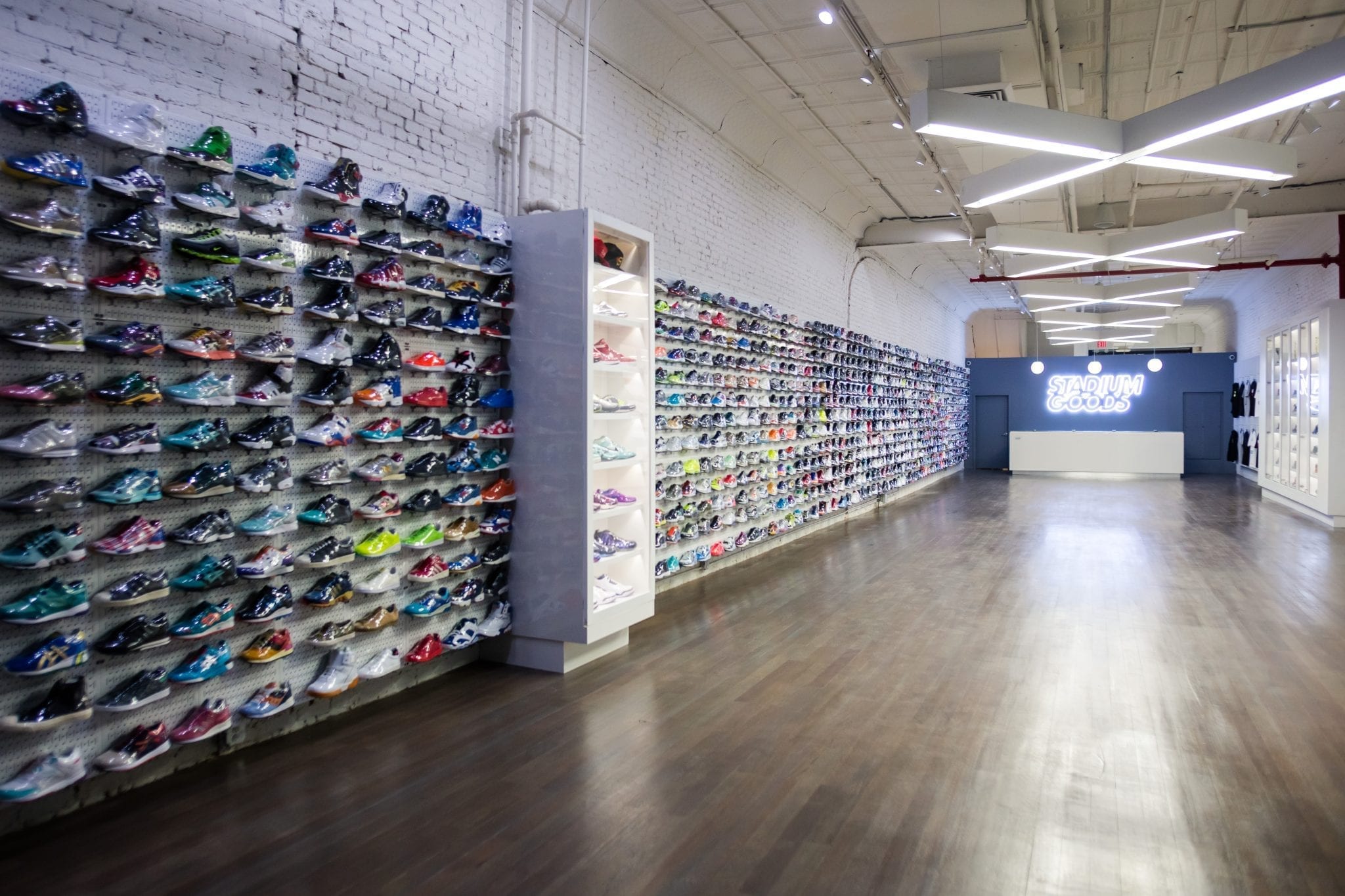
    With ambitions to “scale rapidly”, US sneaker and apparel marketplace Stadium Goods has expanded into China through an exclusive partnership with Tmall Global, an extension of Alibaba Group’s B2C Tmall.com business.

    Stadium Goods co-founder/MD Jed Stiller says the company had already had “tremendous growth” in China.“More importantly, we have helped legitimise the resale model by making it more relevant and accessible to all types of consumers.

    “We’re thrilled to have found the perfect partners in Forerunner Ventures and The Chernin Group, among others, to build on our successes to date as we look to innovate and scale rapidly.”

    Meanwhile, Stadium Goods has just raised more than $4.6 million in fresh equity funding. This will help fuel its expansion into the mainstream footwear market.

    Founded by Still and John McPheters in late 2015, Stadium Goods unveiled StadiumGoods.com and its Soho retail location in New York City, offering sneaker consumers around the world a service-focussed approach to buying and selling collectible footwear, apparel and lifestyle goods.

    “Stadium Goods has transcended a seemingly niche market, proving it can be a critical player in the larger global athletic footwear retail market,” says Forerunner Ventures founder Kristen Green. “There hasn’t been a company of its kind offering this level of aesthetic, product mix or services to date, so we’re very excited to partner with it.”

  • Five E-commerce Business Models Destined to Rule Thailand in 2017

    Five E-commerce Business Models Destined to Rule Thailand in 2017

    2016 predicted Thailand’s e-commerce boom and it has been forecasted that in 2017, internet users in Thailand will make up 50 percent of the population compared to last year’s 43 percent.

    Once plagued by a shaky foundation of uncertain payment settlement systems and a faltering mobile infrastructure, it seems Thailand has overcome that hurdle and in 2016 became Southeast Asia’s fastest growing e-commerce market.

    With a retail market that is expected to reach 3.21 billion by 2020 – according to Euromonitor International, Thailand is without a doubt carving its niche within the world of e-commerce.

    Fueled further by the launch of 4G services, it seems a path has been paved for numerous online retailers to up their game and offer greater formats of product distribution to an internet-savvy pool of consumers.

    Here are five types of e-commerce business models that are currently taking Thailand by storm.

    Meal Delivery Sites

    With the clean eating craze going strong – particularly in cities – healthy food delivery websites are becoming an increasingly popular business model. Offering healthy alternatives that run from organic to vegan to low-calorie and non-processed foods, the success of these websites can be attributed to the fact that they offer to take away the hassle thought to encompass healthy eating, aka grocery shopping etc. By eliminating these factors, the popularity of meal delivery sites can only grow exponentially.

    Online Deal Platforms

    Capitalising on the Thais’ love for a great deals, the humble coupon is back and stronger than ever. With online deal platforms such as Saleduck offering coupons and deals from powerhouse retail websites like Lazada and Expedia, consumers are able to find money-saving deals on everything from electronics to groceries to first-class airline tickets going for up to 80% off. To set themselves apart from competition, deal and couponing platforms often work closely with their partners to release exclusive codes to provide even greater savings to their customer base and the fact that most of these codes can be accessed without a fee is the icing on the cake.

    Social Media Shopping

    In 2016, PWC’s Total Retail survey noted that 51 percent of online shoppers in Thailand shopped directly through social media platforms such as Facebook and LINE citing interactivity as a strong motivator. Whilst price and convenience play a significant role, the driving force behind social media shopping can be linked to the stream of human connectivity that takes its form in reviews, comments and feedback that comes via social media. 53 percent of social media consumers said that customer reviews are what influences their buying decision.

    C2C Mobile Shopping

    Following in the same vein as social media shopping, C2C is also cited as one of the next big things to emerge in Thailand’s e-commerce ecosystem. The person to person interaction is an element that serves as the heartbeat of successful C2C platforms such as Pantipmarket and Tarad.com. Over 50% of online transactions being performed via mobile phone in Thailand, this is expected to further push consumer-to-consumer shopping further into the limelight.

    Digital Content Websites

    From mobile gaming to SVOD, Thailand’s digital revolution has certainly altered the ways in which people consume content. With over 10 different paid platforms for Thais to choose from including iflix and Doonee, Thailand’s affinity for mobile internet use plays a role in how we choose to consume content via digital platforms. In the world of gaming alone, major telecom operators in Thailand have announced strategies in acquiring digital content and games in an effort to meet the rise in demand.