Tag: asia

  • Pilot shortage puts Vietnamese airlines on standby

    Pilot shortage puts Vietnamese airlines on standby

    Big bonuses are being offered by airlines to woo more pilots. Vietnamese airlines are grappling with what they believe to be a serious shortage of professional pilots, so to keep the pilots they currently have on their payrolls and to lure new ones, they are offering hefty bonuses.

    “Vietnam’s airline market is growing rapidly, so there’s a huge demand for qualified professional pilots,” Lai Xuan Thanh, the director of the Civil Aviation Administration of Vietnam, said at a recent meeting of transport authorities.

    He added although salaries in the airline industry have increased significantly in recent years and many airlines have even offered fat bonuses to attract and retain professionals, the supply remains below the demand. According to the aviation administration, that demand is growing at 5 percent per year.

    The CAAV has mainly blamed the shortage on the fast-growing airline market.

    Vietnam’s airline industry is growing at the third-fastest pace in the Asia-Pacific region with the number people traveling by air in 2016 jumping by 29 percent from 2015 to about 52 million.

    To meet the demand, local carriers have expanded in recent years, buying more planes, opening new routes and increasing the number of flights.

    “At present, the shortage of pilots is endemic throughout the airline industry,” Thanh said. “For example, only 30 percent of national flagship Vietnam Airlines’ pilots are Vietnamese. The figures at low-cost carriers Vietjet Air and Jetstar are much lower.” he said, implying that domestic airlines are having difficulties hiring enough pilots to replace retirees and to support expansion.

    The aviation administration suggested that airlines could offer more bonuses and even set up partnerships with flight centers.

    “The CAAV will not issue executive orders to help ease the shortage. Airlines will have to transform themselves to retain workers,” said Thanh.


  • LG U+ deploys Korea’s first NFV routing system

    LG U+ deploys Korea’s first NFV routing system

    South Korea’s LG U+ has deployed the nation’s first carrier-grade virtual routing system using technology from Juniper Networks, as part of efforts to prepare its network for the 5G evolution.

    LG U+ is deploying Juniper Networks’ Ethernet switches and its vMX virtual router for the upgrade project.

    The operator selected Juniper due to its prior experience with the vendor’s routing equipment, as well as the vendor’s support for OpenStack-based NFV orchestration and expertise in the NFV segment.

    Juniper was also able to meet the operator’s resiliency requirements with its virtual routing solution’s  auto recovery and auto healing functions.

    Juniper worked closely with LG U+ on the integration of the system with existing infrastructure and devices. The operator also enabled IPv6 routing, anti-hacking and anti-DDoS attack services in LG U+’s NFV infrastructure, and additional features may be aadded in the future.

    “We are very excited about Korea’s first commercial launch of a carrier-grade NFV-based router,” LG U+ GM for transport platform development Jae-ho Choi said.

    “I believe this will enable us to not only drastically improve our routing performance, but provide greater stability and a more diverse range of services for our customers. As a leader of the 5G era, LG U+ plans to expand the adoption of NFV equipment in close, continued cooperation alongside Juniper Networks.”

  • Electrolux names DHL as top logistics partner after 13 years of outstanding services

    Electrolux names DHL as top logistics partner after 13 years of outstanding services

    When assessing its relationship with DHL, Electrolux found 13 years of excellent service, competitive costs, and a willingness to go beyond the call of duty in even the most urgent logistics emergencies.

    Those factors led to Electrolux naming DHL Global Forwarding as its Global Logistics Supplier of the Year – making the leading international provider of air, sea and road freight services the first ever third party logistics provider to receive the award, now in its 4th year. DHL Global Forwarding supplies every Electrolux business sector worldwide with a range of services including Less-than-Container Load (LCL) ocean freight, air freight, customs brokerage, and freight consolidation.

    “DHL has truly distinguished themselves in supporting Electrolux’s global growth, bringing not only exceptional service quality but a true spirit of collaboration to our supply chain operations in more than 45 countries for 13 years running,” said Bjorn Vang Jensen, VP of Global Logistics, Electrolux. “The breadth and flexibility of the forwarding network under DHL have helped us maintain consistent and cost-effective shipping all over the world, and have also helped us manage through numerous logistics-related crisis situations over the years.”

    “DHL has proven its commitment through all seasons, no matter how complex or urgent the logistics situations we may face: this award highlights the immense value they have delivered for Electrolux over more than a decade of service.”

    The emergency shipments undertaken by DHL Global Forwarding have helped Electrolux maintain continuous production in even the most pressing of circumstances, ranging from major sales events to sudden changes in government regulation standards. Apart from standard air, ocean, and multimodal freight, Electrolux also uses LCL services from DHL Global Forwarding to deliver special high-value cargo in a cost-effective manner, including made-to-measure kitchen appliances and other bespoke orders.

    “Coordinating the numerous parts, part sizes, and supplier locations involved in the home appliance manufacturing process is no mean feat,” said Kelvin Leung, CEO, DHL Global Forwarding Asia Pacific. “We have been extremely privileged to work with Electrolux across its entire supply chain, combining fast and cost-effective services with customs clearance, order consolidation, and even last-mile solutions to make the entire process as smooth and durable as the appliances we ship.”

    “This award truly honors our team’s commitment to supporting Electrolux in even the most extraordinary circumstances – not to mention 13 years of enthusiastic collaboration which shows no sign of waning.”

  • Chinese tourists visiting Bali up 41.28 percent in number

    Chinese tourists visiting Bali up 41.28 percent in number

    The number of visits by Chinese tourists to Bali rose 41.28 percent to 907,028 in the first 11 months of 2016 from 642,000 in the same period in 2015.

    “Most of them flew directly to Bali via the Denpasar International Airport of Ngurah Rai with only 886 of the visits by sea as passengers of tourist boats, head of the Provincial Central Bureau of Statistics (BPS) Adi Nugroho said here on Thursday.

    He said Chinese made up 20.22 percent of the total number of 4.48 million visits by foreign tourists to Bali in the January-November period of 2016.

    China is now the second largest country of origin of foreign tourists to Bali after Australia.

    Adi Nugroho said the number of visits by Australian tourists to Bali in the same period totaled 1.04 million, up 19.46 percent from 876,748 visits in the same period in the previous year.

    Australia accounted for 23.35 percent of the total number of visits by foreign tourists to Bali topping other countries, he added.

    Meanwhile, tourism observer Tjokorda Gde Agung said Chinese, who had come in throngs for holidaying in Bali could soon overtake Australians in number.

    “It is very likely especially with the growing number of direct flights between Denpasar and Chinese cities,” Tjokorda said.

    The nations flag carrier Garuda Indonesia itself already served regular flights directly between Bali and China, he said.

    “The direct flights would certainly contribute greatly to growing number of Chinese tourists to Bali,” he said.

    The 41.28 percent increase was the second highest after a 60.59 percent increase recorded in the number of Indian visitors to Bali in the same period.

    The number of visits from 10 largest countries of origin all increased excepting from Malaysia and South Korea.

    With the trend , the target of 5.5 million visitors to Bali set for 2017 is expected to be easily reached.

    Indonesia hopes to draw more Chinese tourists to meet its target of 20 million visits by foreign tourists in 2019 from the target of 12 million in 2016.

    China has become a potential tourism market. A record high of 133 million Chinese tourists were estimated to make outbound trips by the end of 2016, according to the report released by the China Tourism Academy and the financial services company UnionPay International.

    The figure would mark an 11.5 per cent rise from 2015.

    Hong Kong, Macau and Taiwan remain the top choices for mainland tourists, according to a report.

    Chinese tourists are increasingly getting involved in leisure activities and learning about local lifestyles when traveling overseas rather than just shopping, according to the report.

    Chinese tourists spent US$104.5 billion overseas in 2015, up 16.6 per cent from 2014, and a growing number of foreign countries including Indonesia are relaxing their visa requirements for Chinese tourists to tap their purchasing power.

    Tourists from China along with many other countries are offered visa free travel by Indonesia.

  • Spotify launches programmatic audio campaigns in APAC

    Spotify launches programmatic audio campaigns in APAC

    Spotify and Rubicon Project have launched programmatic audio advertising campaigns in APAC for the Australia, New Zealand, Hong Kong and Singapore markets following the music streaming service’s foray into global programmatic audio solution earlier this year. With the launch of the campaigns, brands will be able to target audiences based on Spotify “moments” such as commute, party and workout.

    Spotify users do not just browse for music by genres or artists, but also playlists that express the moods of those moments. Programmatic audio advertising allows buyers to target those moments based on users’ age and gender in real time. Its audio inventory is traded programmatically via private marketplaces on Rubicon Project’s platform.  In a statement, Joanna Wong, head of business marketing at Spotify for APAC, said the campaign presents advertisers with a new channel to reach consumers.

    “Since the launch of our programmatic audio campaign in August we have seen an incredible response in APAC,” said Wong. “Programmatic audio advertising means that buyers can reach individuals at scale based on not just the usual age, gender and geographical identifiers, but on a whole new data trove–their taste in music,” she added.  “Spotify’s programmatic audio proposition demonstrates the future of all media going programmatic.

    Our recent ventures into out of home, TV and now audio are all a part of this broader automation trend, and we look forward to continuing to collaborate with innovative partners like Spotify to offer buyers innovative ways to engage with consumers,” said Rick Mulia, managing director of JAPAC at Rubicon Project. A Tech Navio report mentioned that APAC will be the fastest-growing region in the music streaming market with around 21 percent compound annual growth rate by 2020.

    Widespread smartphone penetration and high speed data connectivity are expected to further augment the growth of the music streaming market in APAC over the next four years.

  • Habeco to debut on Hose in Jan

    Habeco to debut on Hose in Jan

    Hà Nội Beer Alcohol and Beverage Joint Stock Corporation (Habeco) will start trading with code BHN on the HCM Stock Exchange (HOSE) on January 19, the southern bourse announced on Wednesday.

    Habeco will list its entire 231.8 million shares, equivalent to the total listing value of nearly VNĐ2.32 trillion (US$103 million), at the reference price of VNĐ127,600 ($5.65) per share, the bourse said in a statement. The share price is allowed to fluctuate +/-20 per cent on the first trading day.

    Shares of the North’s largest brewer are trading at some VNĐ128,000 per share on the Unlisted Public Company Market (UPCoM), which is under the management of the Hà Nội Stock Exchange.

    HCM City’s exchange on December 30, 2016, approved the company’s filing to move its listing from the UPCoM to HOSE.

    By changing its listing to HOSE, which is the main bourse in Việt Nam, with total market capitalisation of some $68 billion, Habeco is expected to improve its reputation and draw more investments.

    The company has become a ‘phenomenon’ on the UPCoM since its debut on October 28 last year, when its price shot from an initial VNĐ39,000 per share to a peak of VNĐ225,800 per share on December 16.

    Headquartered in Hà Nội, it is the largest beer producer in the North and the third-largest beer company in Việt Nam, with popular brands such as Hanoi Beer and Truc Bach Beer. It owns 17 subsidiaries and six affiliated companies, with total production capacity of over 800 million litres of beer per year.

    Ending September 2016, Habeco reported total combined revenues of nearly VNĐ7.65 trillion, down 5 per cent year-on-year. Its net profit declined by a steeper 23.5 per cent year-on-year to VNĐ960.5 trillion.

    The company has not increased its charter capital from the 2008 initial public offering, which remains at over VND2.3 trillion. Its cumulative annual profits are mainly distributed to its investment and development fund, which amounted to VNĐ2.54 trillion until September 30, 2016.

  • Apple may produce original TV and movie content

    Apple may produce original TV and movie content

    Apple has reportedly become the latest technology company to plan a foray into producing original television and movie content.

    Sources told that Apple is preparing to produce original content for its $10 per month music streaming service, to help it better compete against Spotify.

    Apple Music has been testing the water with some documentary content about musicians but now plans to make the jump into premium programming.

    According to the report, Apple hopes its content could prove to be as internationally popular and critically loved as programming such as Netflix’s Stranger Things.

    But the company does not appear to be planning to spend the vast sums that would be required to become a direct competitor to Netflix and comparable services or premium cable networks such as HBO. Instead, Apple has firmly set its sights on Spotify, which currently has around twice the paying subscribers as Apple Music, at around 40 million to around 20 million.

    Apple has been exploring directly entering the entertainment business for years, but nothing has yet eventuated, the report states.

    But with the smartphone market rapidly maturing and competition intensifying in key markets such as China, the company needs to find replacement revenue streams to compensate.

  • AirAsia to list in Hong Kong

    AirAsia to list in Hong Kong

    AirAsia Group is looking at a secondary listing of the airline, AirAsia Bhd, on the Hong Kong Stock Exchange (HKSE) and hopes that it can take place before the middle of this year.

    Towards this end, it is believed that China Merchants Bank, an investment bank from China, is likely to get the job to advise and make the relevant submissions for the dual listing.

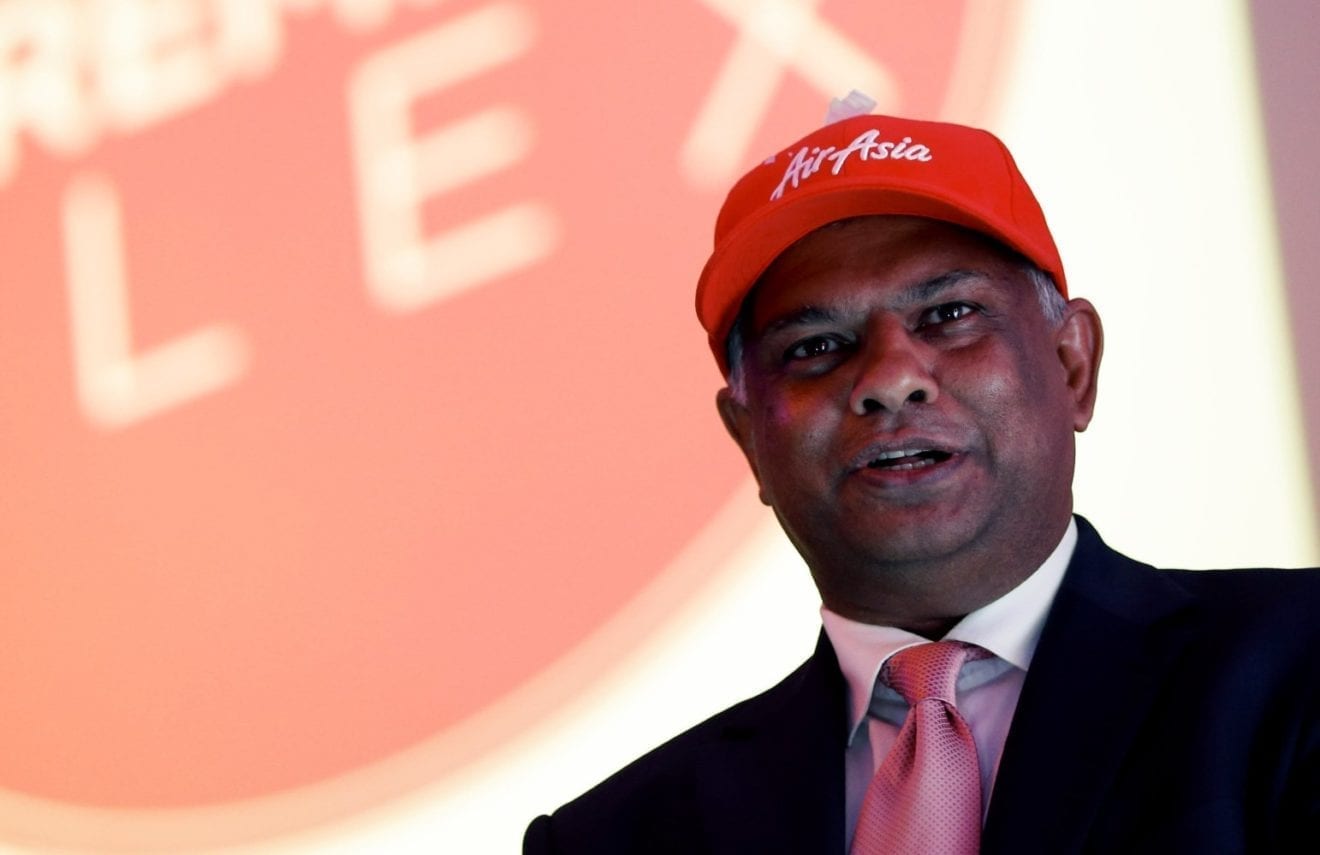
    Tan Sri Tony Fernandes, when contacted, confirmed that there are plans to seek a listing on the HKSE.

    “The plan is to list a portion of AirAsia Bhd shares in our Hong Kong-listed vehicle. This provides us access to new capital if required.

    “We have a large pool of investors in North Asia, while China is a large part of our market. So, we decided on a dual listing in Hong Kong.

    “I am hoping the listing will be in April or May this year … It would be a great day if it can get listed on April 30, as it is also my birthday,” he said.

    Fernandes said that AirAsia was working towards listing a holding company for all its airline operations that span the region.

    “However, Hong Kong (exchange) will presently not be the vehicle used for this purpose,” he said. “I have spent the week meeting the various leaders of Asean and the overall response has been positive (towards setting a holding company).”

    Apart from a dual listing in Hong Kong, AirAsia’s other units, especially in Indonesia and the Philippines, are slated to be listed this year. Thai AirAsia is already listed on the Thailand Stock Exchange.

    “I am confident these units in the Philippines and Indonesia will be listed this year,” Fernandes said.

    The listing in Hong Kong is designed to give AirAsia more depth and flexibility in raising capital if required, while at the same time allowing investors an option to benefit from being invested in the vibrant Hong Kong exchange. It also allows investors to arbitrage their investments.

    “The exact form is not decided yet, as it has to go to the board. But the bankers have been appointed, they will present the details to the board soon and then we will make the announcement,” Fernandes said.

    Dual listings are preferred for companies with cross-border businesses and AirAsia has operations in several countries in Asia, including Japan and India.

    How much AirAsia will fetch in valuations for the dual listing is not clear, but locally, its stock closed 13 sen higher to RM2.51 a share, giving it a market capitalisation of RM6.99bil.

    Last year, the world’s largest glove maker, Top Glove Corp Bhd, made its debut on the Singapore Exchange Securities Trading Ltd (SGX-ST) with a secondary listing, but it did not involve any issuance of new shares.

    Its rationale was to create liquidity and trading activity, enhance investor reach and diversify its investor base, and enable the company to tap into a new platform for potential future fund-raising.

    Others on the SGX-ST include IHH Healthcare Bhd and Malaysia Smelting Corp Bhd, while Media Chinese International Ltd is listed in Hong Kong.

  • Trump’s Indonesian Business Partner to Attend Inauguration

    Trump’s Indonesian Business Partner to Attend Inauguration

    The Indonesian business partner of President-elect Donald Trump will be attending next week’s inauguration and also plans business meetings with Trump family members, his spokesman said Friday.

    Trump’s ties to Hary Tanoesoedibjo are among the many conflicts of interest he could face as the 45th U.S. president. The property billionaire’s presidency is shaping up to have unprecedented potential to muddy U.S. national interests with his personal business interests.

    Tanoesoedibjo, usually known as Tanoe, is the founder of media and real estate conglomerate MNC Group and also has political aspirations in Indonesia.

    The ethnic Chinese and Christian businessman has founded a political party and has said he wants to be president, though that is unlikely in Muslim-majority Indonesia because of historical antipathy to its tiny Chinese minority and the country’s current climate of rising religious intolerance.

    MNC’s corporate secretary Arya Sinulingga said that Tanoe and his wife were invited to the Jan. 20 inauguration and before that will have business meetings including with Trump’s two oldest sons.

    “He will meet his business partners ahead of the inauguration to bolster some business deals,” Sinulingga said.

    Tanoe’s company plans to start building two resorts in Indonesia this year that Trump’s business is associated with through management and licensing deals.

    A planned “six star” luxury resort on the tourist island of Bali would be the first hotel in Asia under the Trump Hotel brand. The second planned resort is in West Java’s Sukabumi, about 100 kilometers (62 miles) southwest of the capital Jakarta.

  • Thai NBTC to relax per-second 4G billing condition

    Thai NBTC to relax per-second 4G billing condition

    Thailand’s telecoms regulator has relaxed an earlier directive requiring per-second billing for 4G services to only require operators to bill half of a service on a per-second basis.

    The National Broadcasting and Telecommunications Commission’s (NBTC) telecoms committee has decided to change the directive to no longer require operators to charge entirely on a per-second basis.

    Although the initial per-second requirement was introduced May last year, the NBTC has yet to enforce it because it has proven unpopular with affected operators.

    Operators have been resisting the move to per-second billing on the grounds that it would unfairly penalize customers that have signed up to fixed allocation or unlimited call or data plans, stating that charging per second would cost heavy usage customers more than the bucket plans.

    The NBTC requirements would cap 4G tariff rates at 1.13 satang ($0.0003) per second. The requirements were a condition of the 4G mobile broadband licenses issued to AIS and TrueMove last year. Second-ranked Dtac is not required to comply.

    AIS has reportedly warned that the company would have to abolish their existing tariff plans if the directive is enforced, while True Move is appealing the directive in court.

  • Central province boosts tourism

    Central province boosts tourism

    The central province of Thừa Thiên-Huế expects to see a surge of investment in tourism this year in light of interest expressed by investors last year.

    Lê Văn Thu, director of the investment promotion and support centre of Thừa Thiên-Huế, said the province will conduct  more investment promotion to attract investors in 2017.

    In 2015, the province granted only nine Foreign Direct Investment (FDI) projects for a total of $451 million. In all, the province attracted 88 foreign direct investment projects with total investment capital of US$2.1 billion from 2000 to 2016.

    Thu said the PSH Group from Spain is eyeing development of a resort in Vinh Thanh with a registered capital of $145 million, while the BRG Group has approached authorities with plans to develop a resort and golf course complex in Vinh Thanh-Vinh Xuân with an investment of VNĐ2 trillion ($88.5 million).

    Bitexco also plans to invest VNĐ545 billion ($24.1 million) in the hot-spring resort in Mỹ An.

    According to the centre, Bitexco Group was granted an investment license for an eco-resort and an urban project in Lập An lagoon with a registered capital of VNĐ3.3 trillion ($146 million).

    The My Way Hospitality company also plans to invest in Bạch Mã resort with an estimated investment of VNĐ1.5 trillion ($66.4 million).

    Thu said the province is seeking investment in high-tech, tourism, logistics, health care and high-tech agriculture, offering competitive labour and land costs.

    Several financial incentives have been provided to attract investors, such as tax exemptions for the first four years of operation, a 50-per cent tax reduction for the next nine years, and a 50-per cent tax rate reduction for high-income employees, according to Thu.

    He said one of the largest planned tourism projects is a $875-million complex being financed by the Banyan Tree Group of Singapore.

    The Huế City area has 128km of coast and 22,000ha of lagoon for tourism development in connection with UNESCO-recognised world heritage sites in the central region.

    The province has developed six industrial zones to attract garment, industry, food processing and mining, projects and create nearly 14,000 jobs.

  • Household consumption key to achieving economic growth in 2018

    Household consumption key to achieving economic growth in 2018

    The head of Indonesias National Development Planning Agency (Bappenas), Bambang Brodjonegoro, has said household consumption and inflation will be the key to achieving higher economic growth in 2018.

    “To ensure consistent growth, the best recipe is to maintain the rise in household consumption, while keeping the growth at five percent or more,” Bambang said as he provided directives at a Bappenas consultation gathering in Jakarta on Friday.

    According to Bambang, household consumption will rise only when consumers have confidence about economic outlook and spend money.

    Bamang stressed that the central and regional governments should be able to ensure a perception of a normally-running economy so that people are willing to spend money.

    “If people spend money (to shop), it means household consumption is increasing, which boosts economic growth. When people shop, retail trade increases, large trade also rises, and the economy registers growth,” explained Bambang.

    Meanwhile, inflation itself should be kept as low as possible. According to Bambang, controlling inflation was the most effective way of maintaining purchasing power.

    If inflation is allowed to erode purchasing power, he added, the growth in household consumption will also be affected.

    When it comes to inflation itself, three factors can have an impact. These are a rise in food prices, change in government-set (administered) prices and core inflation. As far as core inflation is concerned, it is the task of Bank Indonesia to control the availability and demand for money. The administered price falls under the central governments authority.

    Bambang reminded that at times, two aspects can be controlled but food prices can become volatile. As a result, inflation seems higher than it should be.

    “This becomes a matter of concern in the region. Of course, there are no specific instances in the region about dealing with inflation, and response should be coordinated. But it needs to be consistently ensured that inflation should be kept as low as possible by maintaining food price stability and meet the peoples food needs,” Bambang concluded.

  • Internet in Việt Nam expected to be slow until Tết

    Internet in Việt Nam expected to be slow until Tết

    Internet connectivity in Việt Nam will remain slow for the next two weeks. The Asia-America Gateway (AAG) submarine cable broke once again on Sunday, causing bandwidth loss from Việt Nam to Hong Kong, Singapore and the US.

    The line that snapped on Sunday was 98 kilometres off the coast of southern Bà Rịa-Vũng Tàu Province.

    The repair ship will not be able to access the waters where the damaged cable is located till January 23, VietnamPlus reports.

    Welding is expected to start on January 25 and last until January 28.

    The cable will be buried and the connection will recover by January 29. However, the repairs may last longer if the weather is bad.

    In 2016, the 20,000km-long AAG cable was disrupted four times and maintenance work had to be undertaken in March, June, August and September.

    The AAG, one of the four intercontinental internet cable systems of Việt Nam and the largest, is used by major local providers, namely, FPT Telecom, VNPT, Viettel and SPT.

    The AAG cable came into use in November 2009, directly connecting Southeast Asia and the United States. It also links Southeast Asia with Europe, Australia and Africa.

    Previously, the Intra Asia cable system snapped and the damage was spotted near Hong Kong on Tuesday. However, the issue was resolved the same day.

    However, the system faced trouble again on Wednesday causing discontinuation in connection from Việt Nam to Hong Kong, Singapore and the US, affecting Internet speed in Việt Nam.

    Network providers will expand transmission channels to ensure connectivity this year. The Asia-Pacific Gateway undersea cable system is expected to help double the country’s internet traffic to other countries.

    The Asia Africa Euro 1, connecting Asian countries to Europe and Africa, is also under construction and is expected to become operational this year.


  • DHL named Dell EMC 2016 Best Global Innovative Partner

    DHL named Dell EMC 2016 Best Global Innovative Partner

    DHL, the world’s leading logistics provider, announced it has been named a winner in Dell EMC’s 2016 Partner of the Year Awards.

    Presented by Dell EMC, the annual awards honor Dell EMC channel partners for delivering commendable solutions for their customers and were presented at the Dell EMC Global Partner Summit in Austin, TX. Award winners are selected from a group of nominations, based on their dedicated use of Dell EMC technologies to provide solutions for their customers’ needs.

    “We are extremely excited that our regional and Singapore teams have been presented with the Dell EMC 2016 Best Global Transport Logistics Partner and Best Global Innovative Partner of the Year awards respectively,” said Terry Ryan, CEO, DHL Supply Chain Asia Pacific. “It is an honor for our warehousing and transport solutions, including bulk transportation capability, to be recognized for excellence in quality and cycle time performance. At the same time, the recognition for our innovative solutions – from an advanced storage and retrieval system to award-winning design, construction, operation and maintenance of ‘green buildings’ – is further acknowledgement of our efforts toward innovation and sustainability.”

    “We congratulate DHL on receiving Dell EMC’s 2016 Best Global Innovative Partner and Best Global Transport Logistics Partner of the Year Awards, which recognizes partners that have exhibited an exemplary commitment to Dell EMC and our joint customers throughout the year,” said John Byrne, President, Global Channels, Dell EMC. “Dell EMC’s partners are an important part of the Dell EMC ecosystem and provide customers deep expertise and exemplary support on their Digital Transformation journey.”

    As a Dell EMC Innovative and Logistics Partner, DHL provides a robust transportation and logistics infrastructure, which in tandem with Dell EMC’s expertise in hardware, software and services, helps to eliminate IT complexity for customers and create greater efficiencies.

    Through its partner program, Dell EMC offers partners like DHL greater value and choice to their customers, while rewarding investment in key Dell EMC solutions that will help drive business growth.

  • 1-Net, Burst plan Singapore-Myanmar DC corridor

    1-Net, Burst plan Singapore-Myanmar DC corridor

    1-Net and Burst Networks are collaborating to develop network connectivity between 1-Net’s data center in Singapore and Burst’s data center in Myanmar.

    The two data centers will be connected by a network operated by Campana Group consisting of two subsea and terrestrial routes.

    “This high-speed data center corridor is unprecedented and will support many value-added services on this platform. With this seamless connection and one network model both Burst and 1-Net are able to achieve the lowest latency and highest quality link for their customers,” Campana Group CEO Dr Myo Ohn said.

    Burst will also serve as Myanmar’s first Internet Exchange, connecting international networks to local operators and ISPs.  This exchange known as “Burst Connectivity Hub” will also support a Transmission Facility designed to host satellite and cable termination facilities and fully redundant systems as well as C-Band and Ka-Band satellite facilities.

    The projects form part of a wider agreement for 1-Net to provide operational support for Burst Networks’ Uptime Institute certified Tier IV data center at Thilawa Special Economic Zone (SEZ) on the outskirts of Yangon, the largest city in Myanmar.

    The aim is to support Burst Networks by providing the highest level of data center security, network best practices and reliability when they deliver their services to their clients’ mission-critical operations.

    “We are glad to work with Burst Networks to support their data center operations in Myanmar. It is 1-Net’s inaugural collaboration in Myanmar and we see the immense potential for data center business in this emerging market,” 1-Net Singapore managing director Wong Ka Vin said.