Tag: asia

  • Dachser India upgrades offices in Mumbai

    Dachser India upgrades offices in Mumbai

    Dachser India has moved to a new regional office in a thriving business area in Mumbai, to be closer to its brand named customers and enable staff from different departments to communicate more effectively.

    “With India’s strong developing manufacturing, automotive, FMCG and e-commerce market, there is an increasing need for quality and integrated logistics solutions. As we focus on India’s positive economic growth and upcoming favorable government reforms, we are very excited about our strategic investment in the new Regional Office in India and look forward to offering more efficient support and promote Dachser’s brand promise to our customers in India,” says Huned Gandhi, Managing Director Air & Sea Logistics India.

    The new open plan office is located in Sakinaka a leading commercial district in the city with easy access to public transport links.

    In another development Dachser incorporated its air, ocean, customs and operations staff under one roof in a new operational office in Mumbai. In total 100 employees will work in the new office which is close to the international airport and its customers in the western region of the city.

    “The western region has always been a consistent market with strong potential and demand. The new office will enable us to gather all our sea and air freight staff in one office thereby strengthen the effectiveness and efficiency of the branch operations. ”

    Dachser now has 25 offices across the subcontinent with one of the largest country wide logistics networks of any international company.

  • Aussie mobile customers’ private data up for sale

    Aussie mobile customers’ private data up for sale

    Private information on Australian mobile subscribers are being sold off by unscrupulous members of offshore call centers, according to an investigative report.

    The private details of customers from the market’s three operators – Optus, Telstra and Vodafone – are being offered for sale by a call center business named AI Solutions, run by Indian businesman Imran Khan.

    Information including home addresses, dates of birth, alternative numbers, billing statements and call history are being offered for between A$350 ($260) and A$1,000, the report states. Prices are higher for VIPs , politicians, police and celebrities.

    Security industry sources spoken to for the report say the practice of call center workers selling off Australian customer details has been long-standing, and potentially involves more than one company.

    In a press statement, a Vodafone Hutchison Australia spokesperson said the company is “aware there are individuals who do attempt to illegally access data through various channels from companies and organisations which hold customer information,” and has “invested millions of dollars over recent years in security systems and processes, and have a number of safeguards in place to prevent unlawful access of customer information.”

    For offshore call centers, security safeguards include paperless offices, a no mobile phone policy, no access to third party websites, email monitoring, role based systems access, continuous agent training and disciplinary process.

    An Optus spokesperson said the company has referred the matter to federal police, and Telstra said the company does everything it can to protect customer data.

  • Volkswagen aims to sell 400,000 new energy vehicles a year in China by 2020

    Volkswagen aims to sell 400,000 new energy vehicles a year in China by 2020

    Volkswagen aims to boost new energy vehicle sales in China to 400,000 units a year by 2020, the automaker’s China chief Jochem Heizmann said, as Beijing pushes automakers to sell low-emissions cars via incentives and friendly regulations.

    It aims to eventually sell 1.5 million new energy vehicles (NEVs) annually by 2025, Heizmann told reporters ahead of the Guangzhou auto show, which opens on Friday.

    “We have to do more in the NEV area. The government is pushing, the general environment in China is pushing that,” Heizmann said.

    Overall sales of NEVs in China more than quadrupled last year with rapid growth continuing in 2016.

    Volkswagen will deliver its first locally produced NEVs, as battery electric and plug-in hybrid cars are referred to in China, under its Audi brand this year.

    Audi AG manufactures the vehicles in a joint venture with China FAW Group.

    Volkswagen also has a JV with SAIC Motor (600104.SS), and the two companies have plans to sell plug-in hybrid cars in China in the future.

    Global auto brands are only allowed to manufacture cars domestically in China through ventures with local partners, with automakers typically limited to two JV partners.

    Volkswagen said in September that it had signed a preliminary deal to explore making electric vehicles in a new joint venture with China’s Anhui Jianghuai Automobile.

    The deal is not final and is subject to approvals.

    “We are making good progress in our feasibility study with JAC,” Heizmann said.

    He said he was hopeful the government would allow what would be Volkswagen’s third JV in China, with the government pushing for less-polluting vehicles.

    “Normally the legal framework is you are only allowed to have two joint ventures. There is a special chance to have this additional joint venture just on pure battery cars,” Heizmann said.

  • Indonesia ships first containers of timber under EU legality scheme

    Indonesia ships first containers of timber under EU legality scheme

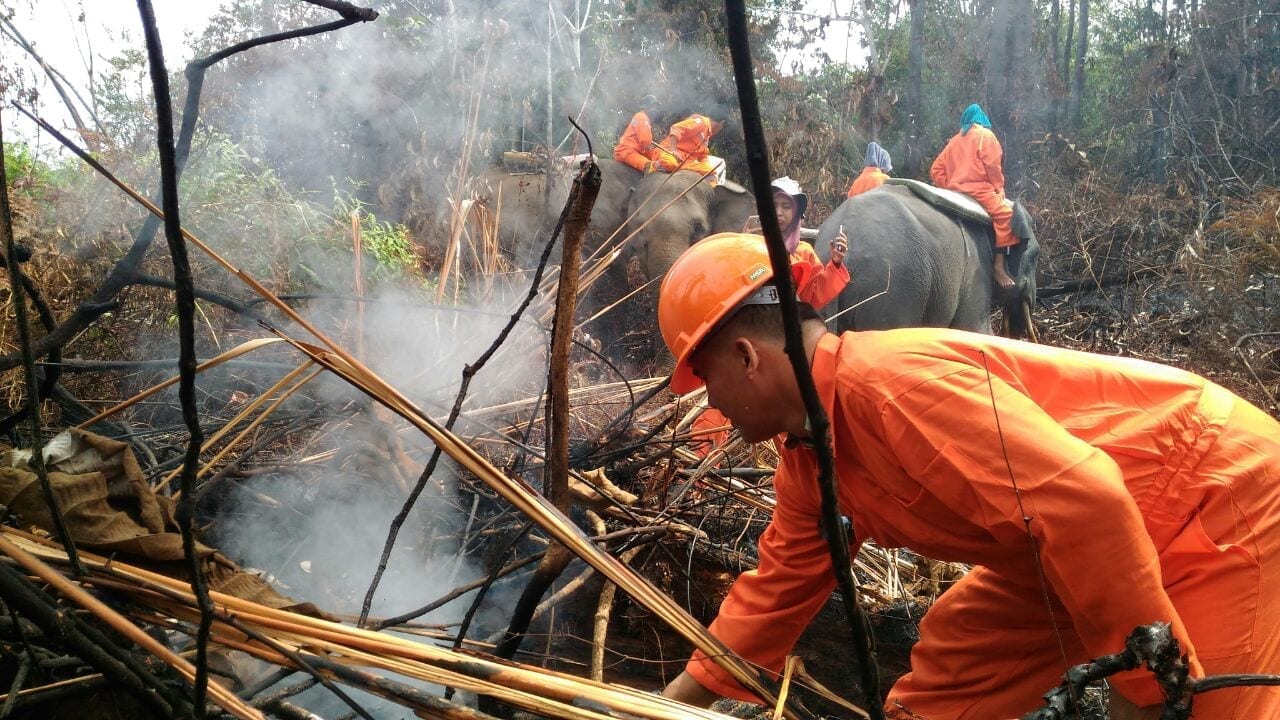
    Tesso Nilo National Park, Riau Province, Indonesia. This patch of forest is supposed to provide a habitat for tigers and elephants, but is constantly under threat of fire, illegal logging and encroachment. Image:

    The first containers of plywood certified as legal under the EU’s anti-illegal-logging action plan were shipped out of the Indonesian capital on Tuesday, a milestone in the fight against blackmarket timber in one of the world’s most heavily forested countries.

    Of the 15 nations that have agreed to take part in the scheme, Indonesia is first to succeed in establishing a national system for verifying the legality of its timber — a considerable achievement for a country where unscrupulous loggers pocketed a presumed $60.7-81.4 billion from illicit sales between 2003 and 2014, according to the nation’s antigraft agency. Indonesia lost nearly $9 billion in state revenue from unreported timber sales during the same period.

    “This signifies Indonesia’s commitment to combat illegal logging and the illicit timber trade,” said Rufi’ie, a director at the Ministry of Environment and Forestry.

    Rufi’ie, who like many Indonesians goes by one name, added that 36 certifications had already been issued under the scheme, known as Forest Law Enforcement, Governance and Trade (FLEGT). He said he hoped Indonesia’s compliance with the program would increase the value of its exports.

    With the adoption of the scheme, EU timber importers will not have to perform their own due dilligence on certified shipments from the archipelago country, increasing the competitiveness of Indoensian timber vis-a-vis other producers.

    Vietnam appears likely to be the second country receive the EU’s blessing to issue FLEGT licenses.

    A board member of the Indoesian Wood Panel Association (Apkindo), Gunawan Lim, said he expected plywood exports to jump 20 percent next year on the strength of the new certification, largely because not just Europe but other developed countries were also concerned with legality.

    Aida Greenbury, the head of sustainability at Asia Pulp & Paper, Indonesia’s largest pulp and paper company, agreed: “As nations around the world from Japan to Australia look to tackle illegal logging, Indonesia will benefit from major first-mover advantage for buyers looking for legal products.”

    The focus now shifts to maintaining the credibility of Indonesia’s Timber Legality Assurance System (SVLK), on which the issuance of FLEGT licenses is based.

    Indonesia is home to hundreds of thousands of forestry enterprises, many of which operate informally and on a small scale, and which can be difficult to monitor.

    Large companies break the law, too. On Wednesday, the Supreme Court convicted PT Merbau Pelalawan Lestari of logging outside the boundaries of its permit area on Indonesia’s main western island of Sumatra.

    NGOs called on the Indonesian government to make sure the scheme was properly enforced and monitored.

    Faith Doherty, forest campaign leader at London-based the Environment Investigation Agency, urged the EU to “swiftly [follow] up information on illegal timber trade entering the EU, including information submitted by independent investigators.”

    The WWF urged greater transparency, calling on the Indonesian government to ensure that civil society groups “will be granted full access to information including relevant data and planning documents,” Aditya Bayunanda said. “Holding up such information would greatly decrease the credibility and transparency of the system.”

  • Indonesia holds rate steady after six cuts

    Indonesia holds rate steady after six cuts

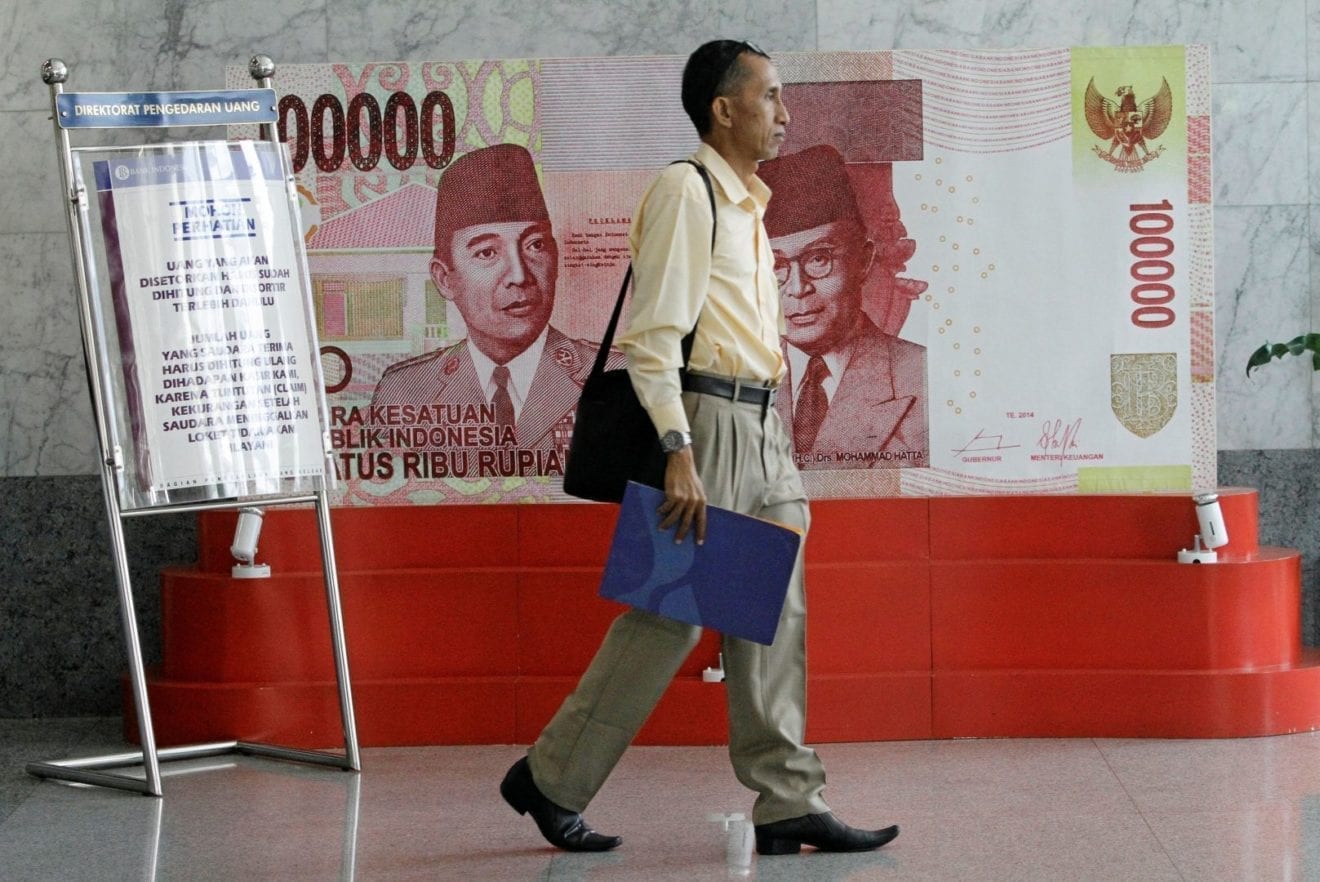
    Indonesia’s central bank kept its benchmark interest rate unchanged after six cuts this year, seeking to calm financial markets in the wake of the United States presidential election results.

    Governor Agus Martowardojo and his board held the seven-day reverse repurchase rate at 4.75 per cent yesterday. Analysts had said market volatility following Mr Donald Trump’s victory meant Bank Indonesia (BI) could not cut its benchmark rate for a seventh time this year.

    The rate hold “is in line with BI’s cautiousness in responding to the escalating uncertainty in the global financial market after the US election”, the central bank said in a statement.

    The central bank had reason to pause after taking aggressive action this year to boost growth amid a benign inflation environment.

    Expectations of more US interest rate increases caused the rupiah to plunge as much as 3.7 per cent against the US dollar last week, prompting BI to intervene to stabilise the Indonesian currency.

    “While BI is chasing for faster growth, one cannot be too complacent of the risks involved and how the rupiah traded post-US elections is a timely reminder of this,” DBS Group Holdings economist Gundy Cahyadi said before the rate decision.

    BI has cut its main policy rate this year by a total of 150 basis points. Despite the rate cuts, loan growth has continued to weaken.

    As of September, annual expansion of outstanding loans was at 6.47 per cent, its weakest in nearly seven years, as commercial banks grappled with increased levels of bad loans.

    The government is forecasting growth of about 5 per cent for this year, well below the 7 per cent targeted by President Joko Widodo when he came to office two years ago.

    Inflation remained subdued at 3.3 per cent in October, close to the lower end of the bank’s 3 per cent to 5 per cent target.

    “BI faces a difficult balancing act,” Capital Economics said. “Despite having cut interest rates six times this year, the domestic economy could clearly do with some additional support… But the threat of further falls in the rupiah means that BI is likely to act with caution.”

  • Cashless society push will speed smart city development in Malaysia

    Cashless society push will speed smart city development in Malaysia

    Malaysia’s Malaysian Global Innovation & Creativity Centre (MaGIC), smart city enabler Cyberview and Mastercard have signed an agreement to support the Malaysian government’s push towards a cashless society.

    During the recent signing of the memorandum of agreement at the Smart City Expo World Congress in Barcelona, Cyberview’s managing director Dato’ Faris Yahaya said that a cashless society drive would help to strengthen smart city development in Cyberjaya.

    Faris said the agreement is the latest in a series of milestones achieved by Cyberjaya in its continued evolution as a Smart City.

    Recent achievements include the deployment of a city-wide long range (LoRA) network to offer an IoT lab and the establishment of its City Innovation Council (CIC) to allow startups to test out prototypes.

    “Cyberview has spearheaded the continued development of the city under its Smart City and Living Lab initiatives – development pillars designed to increase its operational efficiency, improve the quality of life for the people of Cyberjaya and contribute to growing the local economy,” added Faris.

    “We continue to do this by incorporating technology into every facet of the township through collaboration with our many partners, and this is eminent from our push in transforming Cyberjaya into a cashless city by working hand in hand with MaGIC and Mastercard,” he said.

    Cyberview, MaGIC, Mastercard
    (From left) Carlos J. Menendez, President Enterprise Partnership, MasterCard; Dato’ Faris Yahaya, Managing Director, Cyberview Sdn Bhd; Tan Sri Dr. Mohd Irwan Serigar, Secretary General of Treasury, Ministry of Finance Malaysia; Perry Ong, Country Manager for Malaysia and Brunei, MasterCard and Mr. Ashran bin Dato’ Ghazi, Chief Executive Officer, Malaysian Global Innovation & Creativity Centre (MaGIC) during the Memorandum of Understanding Ceremony at the Smart City Expo World Congress in Barcelona.


    “The reason why we’re doing this is because we understand that payments are the heart of a city’s economic activity – forming the core of every economic flow including salaries, consumer spending, business procurement, and taxes,” said Faris.

    Cashless ecosystem

    This latest agreement lists several initiatives to be rolled out by the partners to develop a cashless ecosystem in Cyberjaya.

    He said some of these include integrating Mastercard’s digital payments service Masterpass to make everyday transactions for consumers faster, simpler and more secure as well as providing city authorities and urban planners actionable data-driven insights into the retail industry and to better inform their marketing campaigns for visitors.

    These activities are in line with the government’s Economic Transformation Programme and Bank Negara Malaysia’s (BNM) vision to transform Malaysia into a cashless society.

    Ashran Dato’ Ghazi, chief executive officer of MaGIC said: “MaGIC will support the Cyberview Smart City initiative in a collaboration with both Cyberview and Mastercard. Through the Corporate Entrepreneurship Responsibility (CER) platform, MaGIC will play a key role to facilitate the partnership between players in the corporate sector like Mastercard and local entrepreneurs to design and build smart city infrastructure, services and solutions in Cyberjaya.”

    Perry Ong, country manager for Malaysia and Brunei of Mastercard, said, “Through the Economic Transformation Program, an electronic payments agenda is embedded through a structural reform known as the Payment Card Reform framework where the payment industry is working together in efforts to broaden market access and to dampen cash transactions. It is imperative that we recognise the great control, transparency and efficiency electronic payments offers to society.”

    Ong added that Mastercard will be providing the horizontal payment construct across all the vertical clusters in the Smart City including urban mobility, lifestyle, finance, health, supply chain and education among others.

    He said this will  ensure an integrated payment ecosystem for a better commerce experience with digital solutions such as “Masterpass,  which helps Malaysians to enjoy simpler, safer and smarter digital payments across any device and channel anywhere  – be it online, in app and in-store with contactless.”

    “By embedding digital payments into our core infrastructure and harnessing the data that electronic payments generate, cities can deliver on their promise to create smarter, more welcoming spaces, and empower their citizens to lead greater, more rewarding lives,” said Cyberview’s Faris.

    He said an AllianceDBS Research report earlier this year projected that the ‘cashless’ system in Malaysia will grow by 15 per cent, five-year compounded annual growth rate (CAGR), as Bank Negara Malaysia (BNM) pushes for reform in the country’s payment system.

    “We will continue to collaboratively work with our numerous ecosystem partners, including MaGIC and Mastercard to enhance the liveability of the city and provide the people of Cyberjaya with everything they will need to improve their lives,” Faris said.

  • Causeway Bay and Tsim Sha Tsui retain allure for retailers in spite of sluggish times

    Causeway Bay and Tsim Sha Tsui retain allure for retailers in spite of sluggish times

    The prime shopping hubs of Causeway Bay and Tsim Sha Tsui, among the most expensive in Hong Kong in terms of rental costs, remain attractive for retailers amid overall sluggishness in the sector.

    Retail rents in Causeway Bay fell 8 per cent in the rental index in the third quarter and 10 per cent in Tsim Sha Tsui, and they are expected to decline further next year, according to a Colliers International report.

    These declines came amid a 19-month drop in retail spending in the city, with overall sales dropping 9.6 per cent year on year in the first nine months of the year.

    Spending in Hong Kong has been depressed by an 8.7 per cent fall in mainland tourist arrivals during the period.

    The retail industry in the city as a whole is undergoing a consolidation as tourist traffic from the mainland continues to thin, pushing down shop rents in the near term, according to David Ji, the head of research for greater China at Knight Frank.

    In Hong Kong, the four major retail districts of Causeway Bay, Central, Tsim Sha Tsui and Mong Kok had all seen rental corrections, said Terence Chan, the head of Hong Kong retail at JLL.

    While Mong Kok has experienced less pressure from the flight of luxury brands, the property consultancy sees a 15 per cent correction for retail rents in the city as a whole this year.

    The decline was likely to bottom out next year with a correction of about 5 to 10 per cent, Chan added.

    He said that among the four major shopping districts, Tsim Sha Tsui would command the highest average rents in terms of gross floor area, at HK$2,000 per square foot per month. It was followed by Central, with an average monthly rent of HK$1,400 per square foot.

    Causeway Bay ranked third with an average of HK$1,200 per square foot.

    Chan said that while overseas brands would continue to focus on these four districts, established ones might seek to diversify their footprint with outlets in secondary areas such as Yuen Long.

    According to Ji, retailers will continue to favour Causeway Bay and Tsim Sha Tsui, but the trend of high-end luxury brands being ­replaced by sports, lifestyle and food and beverage outlets will continue.

    With Adidas leasing the space formerly occupied by a Coach store in Central and footwear outlet Joy & Mario replacing jewellery store Folli Follie in Causeway Bay, rents will inevitably continue to come under downward pressure.

    “We are now facing a ‘new normal’ trend,” Ji said. “It’s safe to say we are not going to see a drastic improvement. If retailers can hold their ground for the better part of next year, then it’s already a good situation.”

  • The rise and rise of property management firms in China

    The rise and rise of property management firms in China

    Virginia Huang has amassed nearly 20 years of top-level commercial real estate industry knowledge, and is the longest serving member of the CBRE team in Beijing.

    After joining the firm in 1997, she is now the firm’s managing director, and head of advisory and transaction services for Greater China

    A specialist, particularly, in the office leasing market, Huang has been involved in some of the Chinese capital’s highest profile transactions, dealing with top-tier Chinese and international developers.

    She shares her thoughts on the sea changes that have happened in China’s commercial real estate landscape, the recent rise in the amount of retail space being converted into offices, and the emergence of Beijing’s decentralised markets.

    What major changes have you seen during your 20 years in the commercial real estate sector?

    When I first entered the industry in the late 1990s, Chinese companies basically wouldn’t use our services. Our customers were primarily foreign corporations whose own corporate real estate teams were small and much more used to outsourcing.

    The traditional perception about CBRE as a company was that we were classy but aloof, dealing only with foreign clients. But we set out to convince people that was not the case, that we were straight forward, humble and down to earth, and that we had and in-depth understanding of Chinese companies and the Chinese market.

    Our domestic client base, as a result, has grown rapidly in the past few years, very much in line with the rise in size and number of many Chinese companies. There has also been a change in mindset, that they increasingly recognise the value of a professional international firm, as many are looking overseas for business.

    How can companies ensure their real estate requirements match their overall growth strategy?

    Many Chinese companies, especially technology firms, have grown so fast that often their property planning procedures has failed to keep pace, even if they do have procedures in place. But the same is often true in many mature multinationals, who might not have clear procedures in place to make these types of decision. It’s a universal problem.

    Chinese firms in this aspect do face a gap, especially when it comes to decision making: who, at what stage should they be involved? Often that is unclear. That fits their early-stage nature. But when start-ups grow larger and larger, as some now do, they will naturally shift to see leasing more as a means to attract and retain talent and improve working efficiency. In that way they would be less likely to compromise quality simply for cost.

    Workplace management should be aligned more with other departments from the start, especially with the top management and the overall strategy of the company. In terms of leasehold or freehold, there is no fixed solution. Each company has to make its workplace strategy in line with its overall strategy.

    A lot of companies have reported that finding good office space in Beijing’s central business district(CBD) is becoming increasingly difficult, and expensive – but many are unwilling to locate to less popular and cheaper sites away from the city centre. How can the problem be solved?

    Contrary to popular perception, there is plenty of supply in Beijing CBD, a lot more in fact than in the city’s Financial Street or Zhongguancun, where an office can be really hard to find.

    Also contrary to perception is that emerging markets, such as Wangjing area, have a high vacancy ratio. The vacancy ratio in Wangjing is low, and rents are not low any more.

    The problem some of these areas have in filling their space is to do with infrastructure

    Office workers in Wangjing, particularly, complain it’s hard to get to by public transport. Services and amenities, such as convenience stores, restaurants and hotels are rare.

    These types of out-of-town areas used to attract tenants with cheap rents and favourable policies. But office owners are becoming increasingly aware they cannot attract firms just by offering generous discounts. They have to do more complete the surrounding amenities, the soft environment of their markets, and more will be willing to move into them.

    With an oversupply of retail space in China, many underperforming malls are being converted into offices. Is there a danger of that too becoming oversupplied if the trend continues?

    There are two types of retail space being converted into offices: complementary retail space in bigger complexes, and whole retail buildings that are underperforming due to their poor location or poor management.

    On the first type, often their small size and flaws in design make them difficult to attract tenants. Ideally owners should be converting the second, third and fourth floors into offices, especially if higher floors are already offices.

    Whole underperforming retail buildings can be more be difficult to convert, because of their design, the position of their escalators, windows and so on. It can also be hard for there types of building to attract traditional tenants such as financial and law firms.

    I don’t think there’s an oversupply issue for now, because the trend is exclusively robust in Beijing. There is an acute supply issue in the capital, because it is nearly impossible to find new office projects in the downtown area because of policy regulations. Demand for offices here continues, unabated.

    If retail property owners invest in converting the lower levels of their buildings into office space, they will be able to earn much higher rents, than if for instance the site was leased as a restaurant. So there is a strong incentives to do so.

  • Vietnamese consumers prefer the ‘Made in Thailand’ label

    More than ever, consumers in Vietnam are looking for the ‘Made in Thailand’ label when purchasing consumer goods, and they’re willing to pay a premium for these products, according to experts.

    The high domestic demand for Thai products, they say, was the driving factor that resulted in the Thai Central Group earlier this year acquiring a controlling interest in 33 Big C Vietnam supercenters (and 10 convenience stores) and later Thai BCJ Group’s purchase of 19 Metro Vietnam superstores.

    The majority of Vietnamese consumers are willing to pay more for many key product categories, from baby food and appliances to electronics and apparel, as long as these goods were produced in Thailand, say the experts, reported Thai News Bureau.

    In each of the key categories, they say, at least 50% of domestic consumers are willing to pay a premium of more than 10%.

    More surprising, however, is the fact that the prices of Thai products are often lower than the prices of Vietnamese products of similar size and quality.

    Vu Dieu Thuan, a customer at Metro Ha Dong, says after careful consideration she chose to buy 5kg of Thai rice at US$4.71 (VND105,000) over Dien Bien rice at US$4.93 (VND110,000) because it tastes better.

    Experts say, many Vietnamese consumers report they regularly choose Thai made products over Vietnamese goods regardless of price on a regular basis.

    An assistant at the Metro in Ho Chi Minh City, points out that customers regularly purchase condensed milk from Thailand, which is US$.27 (VND 6,000) less expensive per can than Vietnamese milk.

    Only Thai clothing items are routinely more expensive than similar items made in Vietnam, says the assistant.

    Experts express the view that Thai products are positioned well in the domestic market. On the one hand they are less expensive than Japanese and Korean products of equivalent quality. On the other hand, they are of much better quality than Chinese products.

    To top it all off, they are aesthetically more appealing than Vietnamese products say the experts, adding that domestic consumers on the whole perceive Thai-made products as being of higher quality than local products. In fact, even when comparing Vietnamese and Thai products of similar price and quality, the majority of domestic consumers would still buy the Thailand-made items, they say.

    Still other experts disagree vehemently and say not so fast. Vu Vinh Phu, president of the Hanoi Supermarket Association, says Thai products are benefiting from better placement in stores like Big C and Metro.In these supercenters, says Mr Phu, the placement of retail products on shelves favors Thai products over Vietnamese products. One commonly used phrase in retail is “eye level is buy level”.Meaning that products positioned at eye level are likely to sell better. Stores like Big C and Metro are putting Thai products at eye level or just below, which is the best location and this explains in part why their sales are better.

    The location of goods within an aisle is also important, says Mr Phu. Vietnamese goods are being placed at the start of an aisle and don’t sell as well as Thai products placed in the center of the aisle. As well items placed at the end of aisles sell better because of higher visibility and Thai products are given these choice locations as well, says the Vietnam Association of Seafood Exporters and Producers (VASEP). The battle between supercenters and their placement of Vietnamese produced goods continues, says VASEP, adding they are urging Big C and Metro to give better visibility and placement to Made-in-Vietnam products.

  • Mazda Unveils the All-New CX-5

    Mazda Unveils the All-New CX-5

    Mazda Motor Corporation today unveiled the all-new Mazda CX-5 crossover SUV. The fully redesigned model, which refines every element of Mazda’s design and technology to offer new dimensions of driving pleasure, will be launched in Japan in February before being rolled out to global markets.

    The slogan for development of the all-new CX-5 was “an SUV all customers will enjoy,” and Mazda aimed to add a new dimension by offering driving pleasure that everyone on board can enjoy—not just the driver. The model is engineered in line with human sensibilities to deliver responsive performance that conforms to the driver’s expectations. It also prioritizes passenger comfort, with a quiet cabin and pleasant ride feel, and adopts G-Vectoring Control, the first of the SKYACTIV-VEHICLE DYNAMICS vehicle motion control technologies. Designed under the KODO—Soul of Motion design theme, the exterior is both bold and sensual, and the interior has been crafted to give occupants a pleasant feeling. The body color lineup includes the newly developed Soul Red Crystal, which highlights the beauty and quality of Mazda’s KODO designs.

    The powertrain lineup comprises the SKYACTIV-G 2.0 and 2.5 gasoline, and SKYACTIV-D 2.2 diesel engines. All three options offer powerful, linear driving performance and outstanding environmental performance.

    The all-new CX-5 will be on display at the Los Angeles Auto Show, open to the public Nov. 18-27.

    Launched in 2012, the CX-5 was the first new-generation model featuring SKYACTIV technology2 and KODO design. It has since grown into a core model that is sold in over 120 countries and accounts for approximately one quarter of Mazda’s global sales volume.3 It has won around 90 awards worldwide, including 2012-2013 Japan Car of the Year.4

    By providing driving pleasure to everybody who drives or rides in one of its vehicles, Mazda aims to enrich people’s lives and become a brand with which customers feel an emotional connection.

  • New Phuket boutique opens for Furla at Shilla Duty Free

    New Phuket boutique opens for Furla at Shilla Duty Free

    The new boutique was officially opened last Saturday ^ featuring Furla’s Autumn and Winter 2016 Collection.

    The outlet is well lit and easily browsed with aisle room for customers to browse the wall-mounted leathergoods collections, as light boxes reinforce the brand’s product presentation and lifestyle.

    Gerry Munday, Furla’s Global Travel Retail Director said: “We thank Shilla Duty Free for their continued support of the brand.”

    Furla Phiket November 2016 Shilla
    The new boutique offering at Shilla Duty Free’s downtown store in Phuket.

    BACKGROUND TO PHUKET STORE OPENING

    It is first reported this new downtown duty free store development back in July of this year when Shilla Duty Free joint venture partner GMS Duty Free talked directly with our Asian Correspondent David Hayes.

    GMS Duty Free is the joint venture company formed by Shilla Duty Free with local partners, Gems Gallery Group and The Mall Group, to operate the store.

    The Mall Group is one of Thailand’s leading shopping mall operators with six malls, five of which are in Bangkok and one in northeast Thailand. The Gems Gallery Group is a leading Thai jewellery retailer and wholesaler with four showrooms in Bangkok, Chiang Mai, Pattaya and Phuket.


  • PCCW Global connects to Djibouti Data Center

    PCCW Global connects to Djibouti Data Center

    PCCW Global, the international operating division of Richard Li-owned HKT, has selected Djibouti Data Center (DDC) to facilitate network expansion and the provision of colocation and undersea fiber cable access services in East Africa.

    The Djibouti Data Center has been built to Tier III data center standards and serves as a major meeting point for undersea fiber cable systems including the new Asia-Africa-Europe-1 (AAE-1) submarine cable designed to connect Asia, the Middle East, Africa and Europe.

    The AAE-1 system, of which PCCW Global is a founder consortium member, will employ 100Gbps technology, with a capacity of more than 40 terabits to provide customers with low-latency and direct connectivity around the world.

    The 25,000km-long submarine cable is expected to be ready for service by early 2017, connecting Djibouti with Hong Kong, Vietnam, Cambodia, Malaysia, Singapore, Thailand, Myanmar, India, Pakistan, Oman, UAE, Qatar, Yemen, Saudi Arabia, Egypt, Greece, Italy and France.

    “The addition of AAE-1 to PCCW Global’s existing undersea fiber cable assets in the region will enable us to provide even more robust services, along with lower latency and increased diversity, boosting services levels for our customers,” said Jordick Wong, senior vice president of product and vendor management at PCCW Global.

    Wong said the partnership with DDC is an important element of its wider pan-African development and expansion plans.

    It enables PCCW Global to establish cross-connect and colocation facilities directly adjacent to Djibouti Telecom’s cable landing stations. In addition to supporting AAE-1 in the near future, the DDC provides access to fiber-cable systems such as EIG, EASSy, Aden-Djibouti, and Ethiopia-Djibouti, Wong added.

  • Chinese Ride-Hailing Company Ucar Partners with BitTiger

    Chinese Ride-Hailing Company Ucar Partners with BitTiger

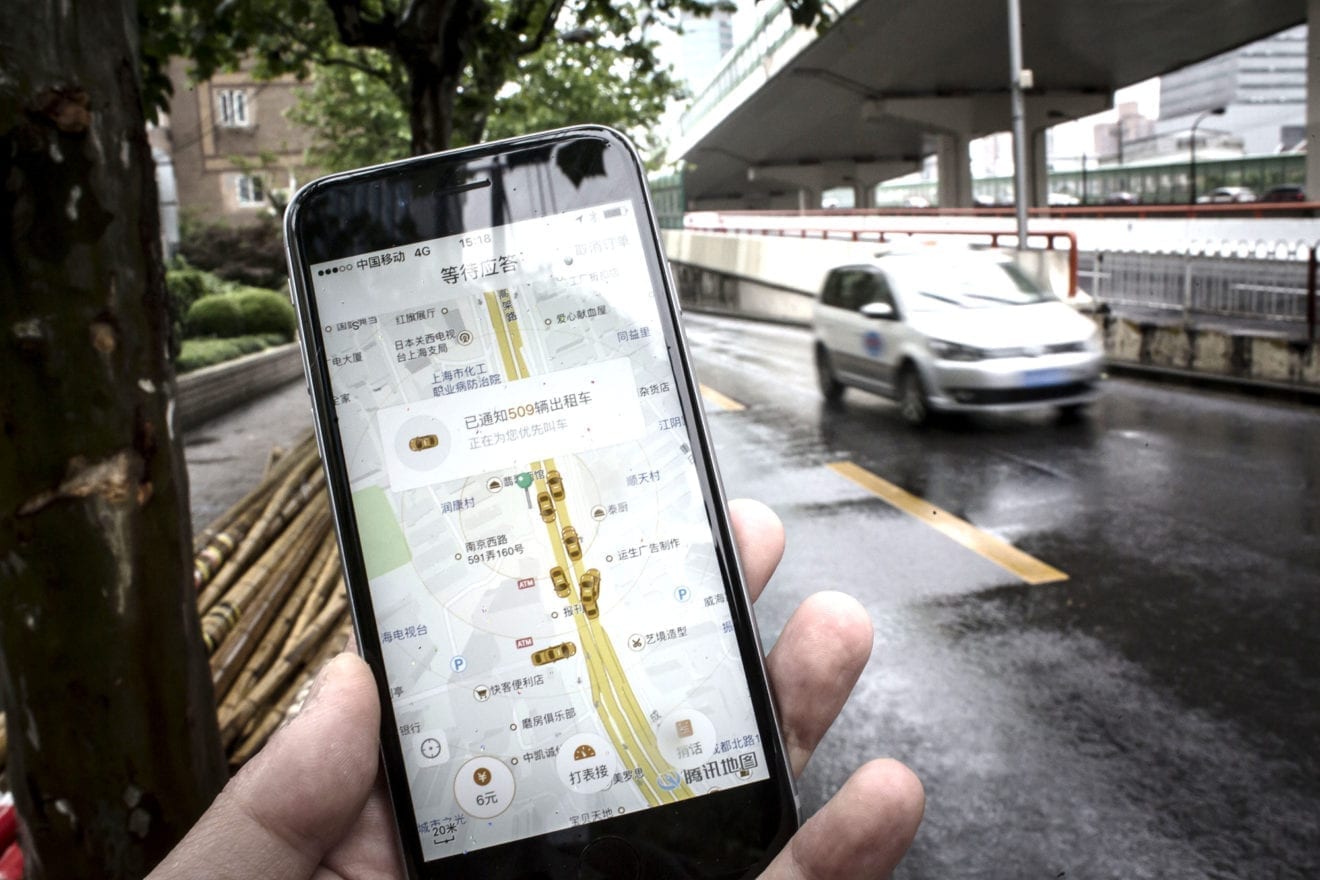
    Ucar, a major player in the Chinese ride-hailing and car rental market, has joined the global race to develop a road ready self-driving car. To compete for the best international talent, Ucar has opened a research outpost in Silicon Valley and partnered with online education platform BitTiger to host a deep-learning coding class and competition that offers winners cash prizes and a chance to interview with the company.

    Ucar (神州专车) booked approximately 15%1 of car chauffeur services in China in 2015, and are backed by Alibaba. They are based in Beijing, China and began aggressively expanding their research center in Silicon Valley last year by hiring experienced engineers from major Bay Area tech companies. The research center is part of a larger trend among Chinese companies, including tech giant Baidu, that are creating research outposts in Silicon Valley to gain a competitive talent advantage over domestic rivals.

    Ucar is responding to the huge market opportunity for self-driving cars in China where crippling traffic jams can keep city streets gridlocked for days2. Principal engineer of the Ucar Silicon Valley based research center, Zhong Hua, explains that Ucar’s self-driving car technology aims to “minimize traffic related deaths, reduce commute times, and make better use of cars left idly parked most of the day,” all goals that would have a big impact in China’s mega-cities.

    BitTiger is a US-based online learning platform for Chinese engineers that gained experience at elite tech companies to share their knowledge with Mandarin-speaking students around the world. These students are eager to gain access to a top education taught by industry experts not otherwise available to those outside of the best university programs.

    The course being launched by Ucar and BitTiger will provide candidates with fundamental knowledge of image recognition and deep learning techniques. Upon completion of the course, students will be challenged to accurately identify pedestrians, cars, and bicycles among images collected by Ucar’s test vehicles. The top three teams that most accurately and consistently identify these target objects will receive cash prizes and an opportunity to interview for a position at the Ucar Silicon Valley research center.

  • CASBAA confab debuts in Macau

    CASBAA confab debuts in Macau

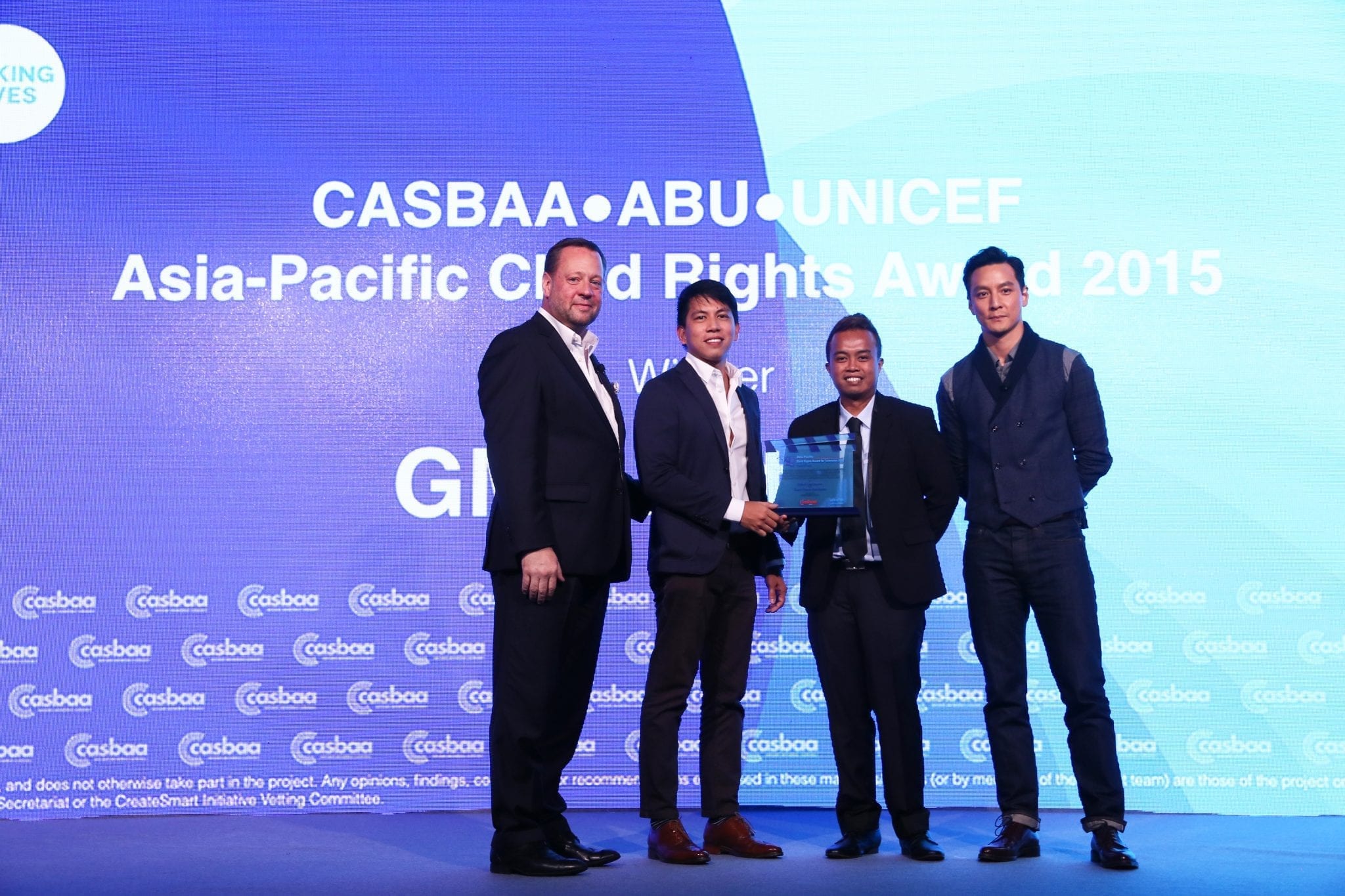
    The CASBAA Convention annual conference debuted in its new venue, Studio City, Macau, marking the 25th anniversary of CASBAA which is dedicated to representing key players from the cable and satellite broadcasting industry under the motto ‘represent, inform, connect’.

    Irwin Gotlieb, the Global Chairman for GroupM, was first to take to that stage to discuss the changing nature, and measurement of viewing behaviors. He also touched upon how the way to reach audiences via the marketing funnel is the same but a granularity of data can now inform decisions for each stage of the funnel. He underscored how media will continue to play a role becoming more targetable, addressable and eventually part of the transaction process.

    Also on the subject of measurement, Ben Reneker of S&P Global Market Intelligence highlighted how machine-driven predictive measurement models are now able to inform strategic decisions on marketing and investment.

    Oliver Wilkinson, managing director for PricewaterhouseCoopers, provided statistics to illustrate that pay TV is not dead, despite what the headlines say, and that it remains a primary form of entertainment.

    Doing deals in China was the topic for Bennett Pozil, EVP of East West Bank, who discussed the migration of content both ways as well as some of the pros and cons of doing business in China.

    Reaching a vast audience through tailored video and gaming content was the topic for Chad Gutstein, CEO of Machinima who highlighted that their most valued content was when viewers felt they had a connection to the creation of it. On a video note, Ricky Ow from Turner International predicted that Machinima’s e-Sports will be as successful as the English Premier League.

    James Schwab, co-president of VICE announced the opening of the company’s first full-service office in Jakarta, Indonesia.  He discussed how their local content policy over digital channels has helped the company grow exponentially over the last few years. The recent move into TV has been important for VICE as it gives them the ability to invest more in content.

    On the second day, Dave Downey, CEO of INVIDI Technologies, illustrated how “addressable” advertising could be used to predict viewing behaviors. Basil Chua, CEO from AsiaMX, talked about the need to understand viewer habits, flagging that they are watching content not devices. Both believed that the advertising formats would result in big wins for operators.

    Intrinsically linked to the advertising discussion is the subject of measurement and Craig Johnson, Nielsen’s media managing director for South East Asia, Pacific and India, highlighted some of the current challenges OTT has presented with measurement, suggesting that viewership on other devices could represent an additional 15% to 20% of media usage that is not accurately measured yet. The introduction of smart-meters could help more accurately chart multi-device viewership and content sources.

    Content from Japan took the spotlight with Eriya Kawachi, director of sales and promotions at Club TV Japan, showcasing some platforms that have been winning in popularity outside of Japan with Club TV. Richard Woo, consultant for WAKUWAKU JAPAN, discussed how Japanese content is well known for its creativity, uniqueness and a certain wackiness.

    Korean content also featured on the agenda with Miles Ki Young Choi, founder and CEO of Bethel Group Media Contents, talking about how interactive content was key to the future, flagging interactive drama as something they were championing. Byeong-Joon Song, CEO Group 8, saw simultaneous distribution as important for Korean content, highlighting difficulties with penetrating the Chinese market and Tom Taehyun Kim, CEO and executive producer at K Production, confirmed that superb storytelling was of course essential for content to have wider appeal.

  • Global 5G subscribers to reach 500m by 2022

    Global 5G subscribers to reach 500m by 2022

    Global 5G subscriptions will grow rapidly once the technology is available, Ericsson has forecast, with the vendor predicting that subscriptions will reach 500 million by 2022.

    North America is expected to lead the way in 5G uptake, with 5G projected to account for 25% of subscriptions in the region by 2022. But APAC will be the second fastest growing region, with 5G accounting for 10% of subscriptions.

    Ericsson’s latest Mobility Report also projects that global mobile subscriptions will grow to 8.9 million, with 90% of these for mobile broadband, and 6.1 billion unique subscribers in 2022.

    As of the third quarter of this year, there were 84 million new mobile subscriptions being added per quarter, for a total of 7.5 billion. India had the most net additions for the third quarter of 15 million, followed by China’s 14 million, Indonesia’s 6 million and Myanmar and the Philippines’ 4 million each.

    By the end of 2016 there will be 3.9 billion smartphone subscriptions worldwide, Ericsson said, with nearly 90% of these registered on WCDMA/HSPA and LE networks. This is expected to grow to 6.8 billion and 95% of subscriptions by 2022.

    The report also shows that mobile video is projected to grow by 50% annually through to 2022 to account for nearly 75% of all mobile data traffic. Increased use of live video streaming to contact friends, family and followers is meanwhile expected to contribute to a 39% annual growth in social media traffic.

    Finally, the report suggests that IoT will account for around 18 billion of the 29 billion connected devices forecast by 2022.