Tag: asia

  • Lotte Shopping profit soars 203 per cent

    Lotte Shopping profit soars 203 per cent

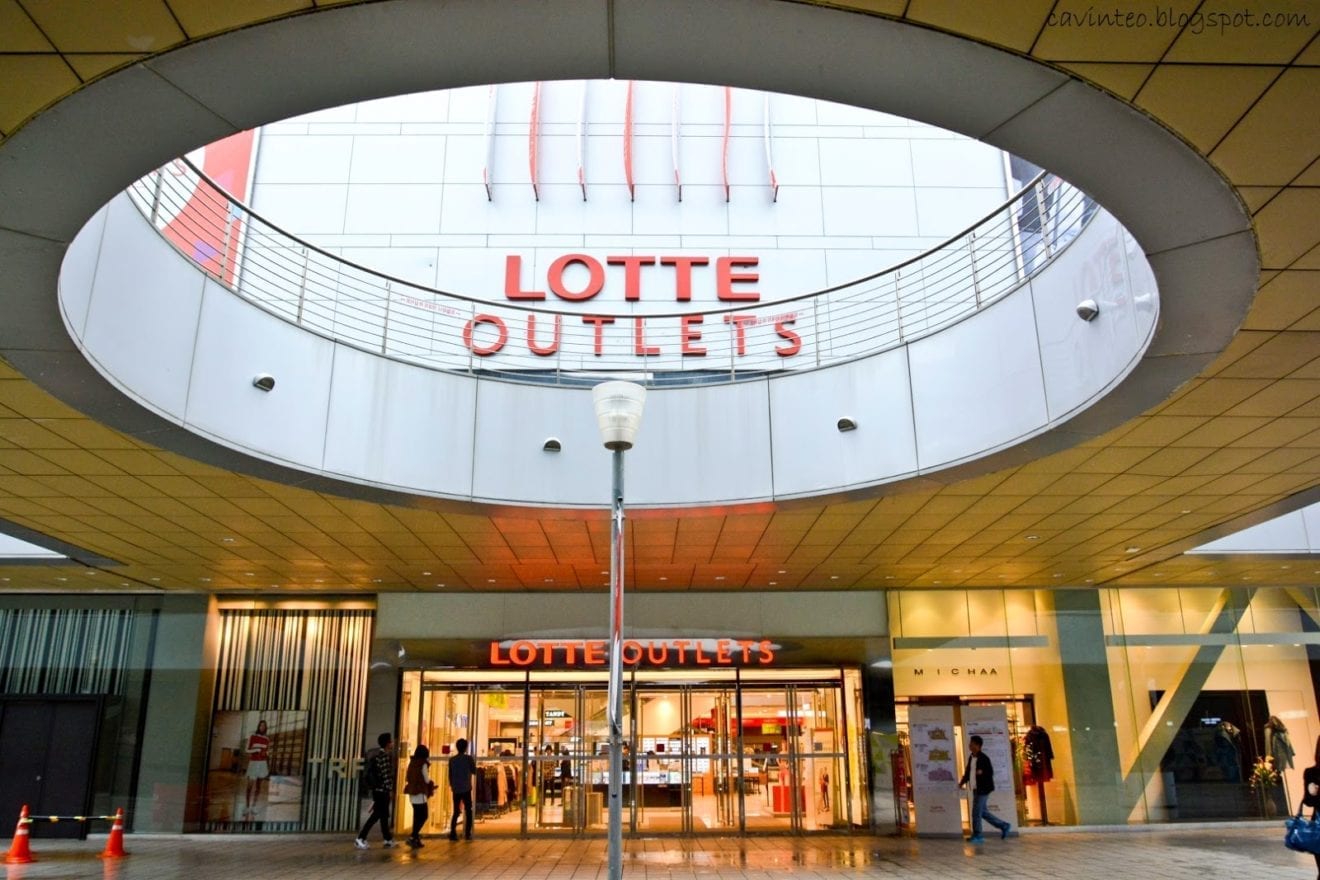
    While revenue for its third quarter rose 2 per cent year-on-year, South Korea’s Lotte Shopping Companysaw its net profit soar 203.9 per cent to KRW78.2 billion (US$68 million).

    The retail giant says these are preliminary figures yet to be independently audited.

    Third-quarter revenue rose 2 per cent to KRW7.9 trillion. Domestic department stores maintained solid same-store sales growth (SSSG) of 2.2 per cent, while hypermarket SSSG faded 2.4 per cent in the face of a sluggish industry and the impact of renewal construction.

    Internationally the company had strong sales growth, apart from weakness for its China hypermarkets because of competition. Department store SSSG rose 9.2 per cent while hypermarkets declined 5.1 per cent.

    Lotte’s third-quarter operating profit dipped 10.1 per cent to KRW176 billion, both for department stores and hypermarkets domestically.

    On the international market there was an improvement in operating loss thanks to enhanced efficiency in all stores, plus there was an increased profit contribution from its cinema and electronics businesses.

    There was an increase in labour costs because of a one-off special incentive paid to all Lotte employees.

  • Milk tea chain plans Asian expansion

    Milk tea chain plans Asian expansion

    After early success in the Philippines, Khun Thai Tea is now eyeing three more Asian markets.

    The milk tea concept was co-founded by Bronze Media LLP Singapore owners Jeremy Lee and Elis Chai.

    Lee says the company is about to open its third store in Metro Manila, at MegaMall, with plans for a new kiosk every month moving forward. It is looking for partners in other Southeast Asian markets.

    “We are going to take Khun Thai Tea to Jakarta in Indonesia, Kuala Lumpur in Malaysia, and Taipei in Taiwan,” he says. “Plans to start outlets in these cities are already underway.”

    Local Filipino partner Nancy Padilla says the chain’s drinks are based on an original recipe for a refreshing black iced-tea (‘cha-yen’ in Thai) that dates back to 1955. First created by a Thai native fondly known as Auntie Marlee, the strongly brewed Ceylon tea has since been modernised with a switch from Ceylon to a Thai-grown assam tea known as ‘Bai Miang’. Infusion with spices maintains the headiness of the original recipe and bring out its complex flavours.

    The traditional sugar, condensed milk and evaporated milk-heavy Cha-Yen recipe has also been updated to better suit the tastes of modern health-conscious consumers.

    In addition to the original recipe, says Padilla, Khun Thai Tea outlets also offer variations of the concoction inspired by drink recipes from around Asia, such as a mix of coffee and tea (‘Yuan Yang’), which was first brewed in Hong Kong.

    Drawing inspiration from Taiwanese bubble milk tea recipes, Khun Thai Tea also comes with small chewy tapioca balls (‘boba’, or bubbles) added, to infuse new textures and experiences to the drink.

    The newest menu item, Ice Bandung, is inspired by the original popular Malaysian beverage recipe which combines the alluring taste of rose syrup with the velvety smoothness of milk.

  • Skechers in Korea joint venture

    Skechers in Korea joint venture

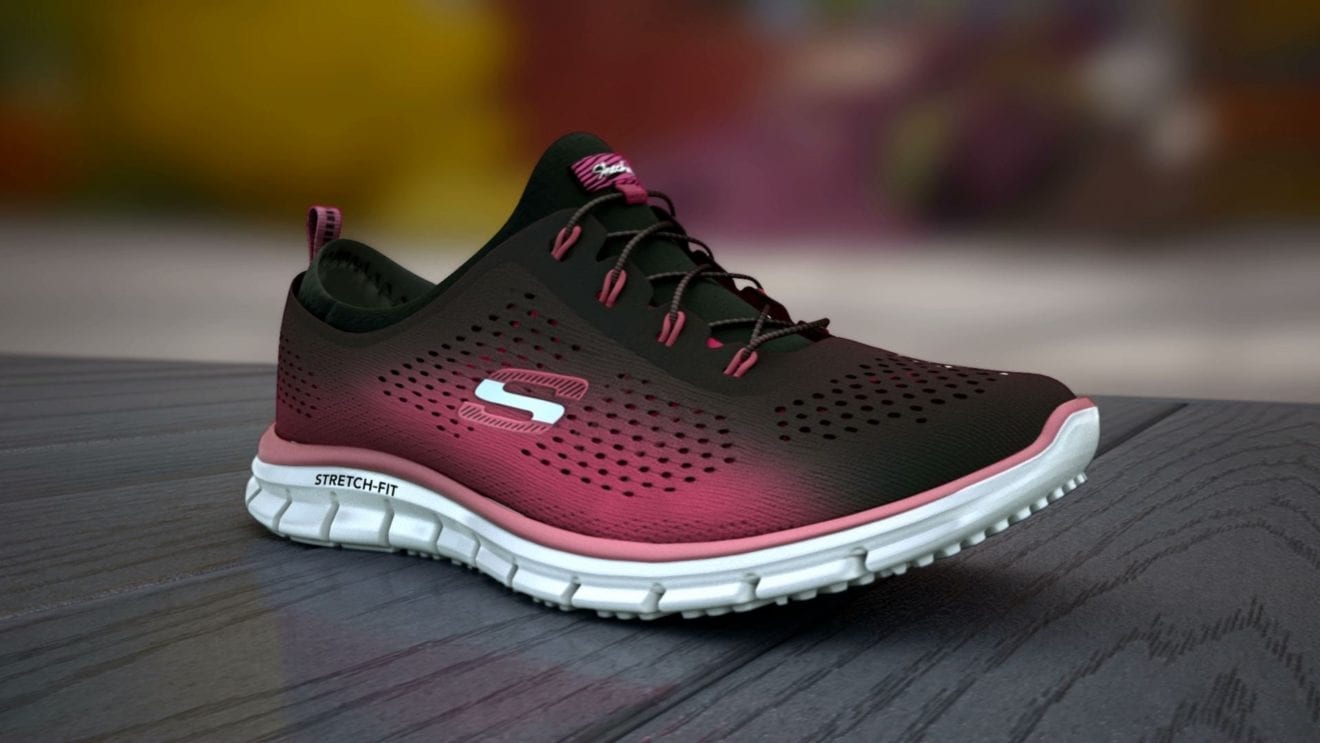
    Skechers in Korea will now be managed by a joint venture with the parent company.

    Previously imported and distributed by a third-party company, Skechers head office in the US has confirmed it has partnered with Luen Thai Enterprises in a new business called Skechers Korea Co.

    “This will enable Skechers to use its proven sales and marketing strategies to further expand the brand in one of our key international markets,” the company said in a statement released in the US.

    “With a dedicated team from our previous distributor, LS Networks, and the knowledge and acumen of our Skechers China team, we believe we can profitably grow our business in South Korea and truly penetrate the region with a strong presentation from our vast collection of men’s, women’s and kids’ footwear.”

    Skechers footwear has been available in South Korea for more than 15 years.

    “ In that time, we have developed a great footprint with a network of more than 55 Skechers stores and built the brand through strong marketing campaigns, including using the talents of exceptionally popular endorsees like K-Pop stars Sistar and EXO in Skechers marketing campaigns,” said David Weinberg, COO and CFO of Skechers.”

    LS Networks distributed Skechers in South Korea from 2009 to 2016.

    “We’ve been very pleased with the consumer response to the Skechers product in South Korea,” added Sung Hun “Scott” Lee, previous senior GM of Skechers’ Korean distribution partner and now president of Skechers Korea Co. “Through my time with LS Networks, I’ve seen firsthand how Skechers has grown in Korea, most recently through the Skechers D’Lites craze that started here in 2015 and spread through Asia and then around the globe.

    “Now as part of the Skechers global team and with key members of my previous team transitioning with me, we’ll have the direct resources, support and insight to really take the business to the next level.”

    Willie Tan, CEO of Skechers Asia joint ventures, said forming a JV with Skechers that combines its global expertise with the local partner’s unique insight in this market “we’ll be able to more efficiently build the brand and more effectively directly target merchandising to the unique tastes of consumers across South Korea”.

    “We expect this will strengthen our business not only in South Korea but further synergise the business across Asia.”

  • US$1 billion in first five minutes of 11.11

    US$1 billion in first five minutes of 11.11

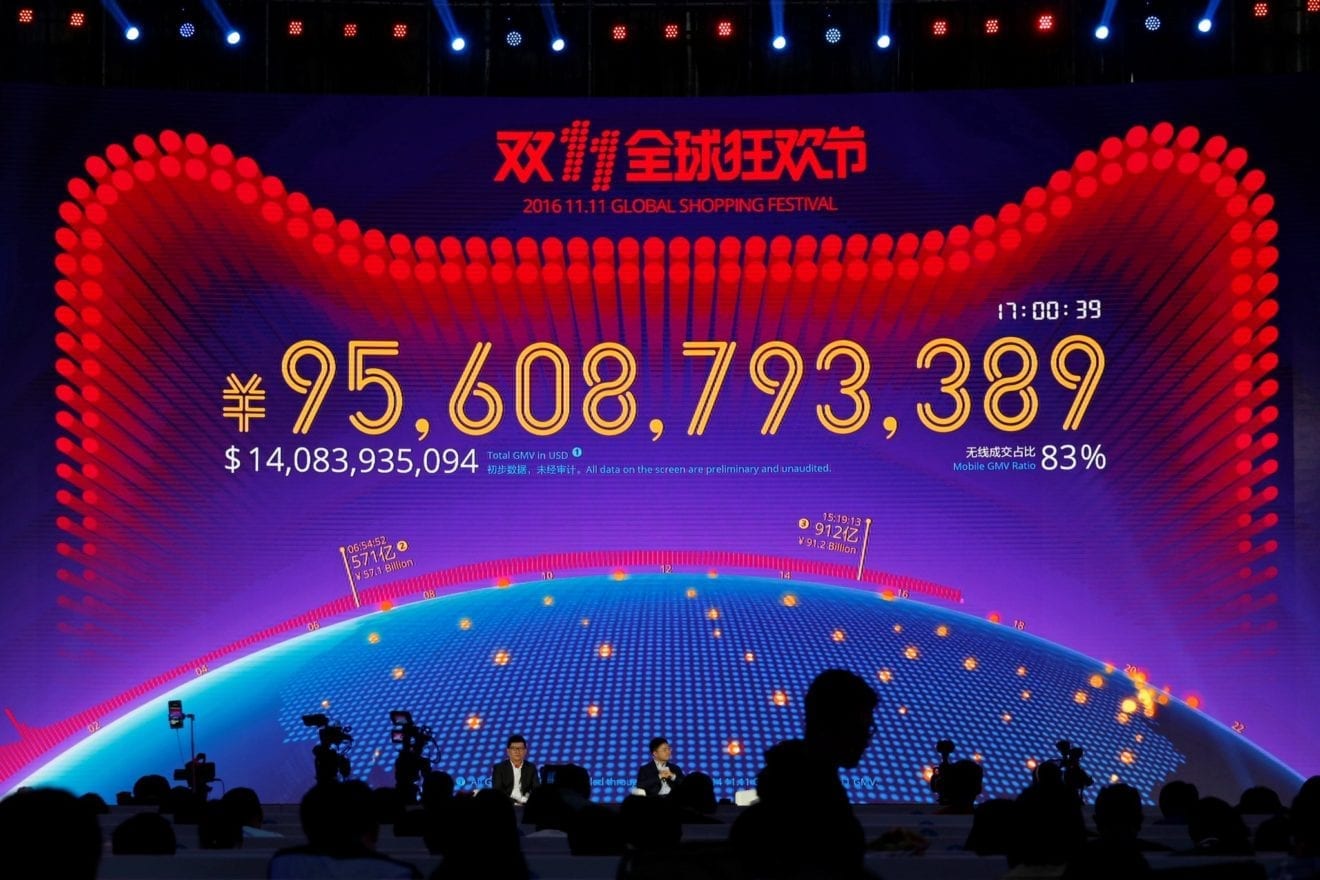
    Alibaba Group says more than US$7 billion (RMB 47.5 billion) of gross merchandise volume (GMV) was settled through Alipay on Alibaba’s China and international retail marketplaces within the first two hours of the 2016 11.11 Global Shopping Festival.

    And more than $1 billion was transacted in the first five minutes – from 12 midnight.

    “Chinese consumers purchased more in the first hour of 11.11 this year than the entire 24 hours in 2013, reflecting the incredible evolution of our global shopping festival,” said Daniel Zhang, Alibaba Group CEO. “This unprecedented level of engagement demonstrates both the consumption power of Chinese consumers and their embrace of online shopping as a lifestyle.”

    In the hours leading up to the official midnight start of November 11, millions of viewers watched the Alibaba Group 11.11 Global Shopping Festival Countdown Gala live online and on mobile devices via Youku Tudou, and the Tmall and Taobao apps. The gala was televised live across China through Zhejiang Satellite TV, as well as in Hong Kong and Macau for the first time.

    “This year, we innovated new ways for consumers watching the live broadcast of our countdown gala. Viewers were able to influence the production of the show in real-time through their mobile phones,” said Chris Tung, chief marketing officer, Alibaba Group. “Consumers in front of their televisions were shaking, tapping, scanning, chatting, browsing and buying with their mobile devices, creating a seamless and truly immersive entertainment experience.”

    VR drives surge

    International think tank Fung Global Retail & Technology predicts sales of $20 billion during the full 24 hours, up an extraordinary 40 per cent over last year’s total of $14.3 billion, thanks in part to the introduction of Buy+, the world’s first-ever end-to-end virtual reality (VR) shopping experience.

    “Buy+ will enable global retailers (even those without a physical presence in China) to offer an engaging, virtual in-store experience to Chinese consumers,” writes Fung Global Retail & Technology MD Deborah Weinswig in Singles’ Day Online Shopping Festival Could Also Benefit Retailers’ Physical Stores, a new report.

    The platform features eight virtual stores: Macy’s, Target, Costco, P&G, Chemist Warehouse, Freedom Foods, Tokyo Otaku Mode and Matsumoto Kiyoshi. Using cardboard VR headsets distributed in October, consumers can virtually walk around Macy’s Herald Square flagship in New York City to find products and, with just a nod of the head, confirm payment to purchase an item they see.

    “One of Alibaba’s strategies for Singles’ Day is to merge gamification with online shopping. The company will leverage its media and entertainment assets to drive increased online consumption,” says Weinswig.

    These include a televised countdown gala event and fashion show that was held last evening. In addition, the company is promoting products on TV screens, allowing viewers to scan QR codes for a real-time purchase.

    The concept has expanded beyond Alibaba, with chief rival JD.com, Gome and Suning also creating promotions. International retailers will target Chinese shoppers, and Chinese retailers target international shoppers. In 2015, Newegg, OTTE New York and Nasty Gal, all launched Singles’ Day promotions.

    “A year ago, Alibaba promised that Singles’ Day will be a true omni-channel event, and this year the company seems dedicated to continue delivering on the promise, armed with more technological innovations that bridge the gap between the virtual and physical worlds,” Weinswig writes.

  • Enjoy Attractive Discounts at Over 300 Stores in Asia When You Shop with UnionPay Cards

    Enjoy Attractive Discounts at Over 300 Stores in Asia When You Shop with UnionPay Cards

    This year-end, UnionPay International (UPI) has teamed up with over 300 stores in Hong Kong, Macau, Singapore and Thailand, to offer UnionPay Cardholders attractive discounts for the festive season. These exclusive discounts are offered as part of U Plan – UnionPay’s latest cross-border marketing initiative – launched in July this year. 

    U Plan is the world’s first open cross-border marketing platform launched by UnionPay, specially for UnionPay Cardholders. By bringing together service providers in the finance, tourism and retail industries, U Plan provides a one-stop marketing platform for UnionPay and its partners to market products and services to Cardholders collectively across geographical borders.

    Through the use of mobile applications and location services, U Plan can enable a high-level of precision for UnionPay and partners to reach out to potential travelers prior to their travels, to promote special privileges and discounts that UnionPay Cardholders can enjoy at their travel destinations. In addition, UnionPay Cardholders can also enjoy the exclusive U Plan perks at participating merchants in their local markets.

    From now till February 28, 2017, UnionPay Cardholders in Singapore can look forward to enjoying up to 30% in savings at Bath & Body Works, Kate Spade New York, Michael Kors, Tumi and Victoria’s Secret outlets in Singapore with U Plan. This includes:

    Up to 25% in savings at Kate Spade New York, Michael Kors and Tumi: With every S$200 spend, UnionPay Cardholders can enjoy S$50 off.

    >Up to 30% in savings at Bath & Body Works and Victoria’s Secret: With every S$100 spend, UnionPay Cardholders can enjoy S$30 off.

    Traveling UnionPay Cardholders can also look forward to enjoying exclusive privileges at popular merchants such as Sasa, Prince Jewellery & Watch, ISA and Lukfook Jewellery in Hong Kong, as well as at King Power Duty Free in Thailand. 

    To improve the accessibility of U Plan privileges to Cardholders, information and transaction platform – Dianping.com – has come on board as a UnionPay U Plan partner to offer quick access to the available discount coupons via its platform. With this, DianPing.com’s 600 million users will be able to access the coupons easily via the Hong Kong, Macau, Phuket and Singapore specific sections on Dianping.com’s website and mobile app, when searching for information related to their travel destinations.

    Since the launch of U Plan in July this year, over 100 million discount coupons have been downloaded from the mobile apps. Moving forward, UnionPay has plans to expand the programme to markets such as Australia, Japan, South Korea and the United States, as well as include a wider range of partners and merchants on U Plan.

    UnionPay International focuses on supporting the growth of UnionPay’s global payments business. With an acceptance footprint covering 160 countries and regions globally, UnionPay serves the world’s largest cardholder base by providing quality, cost-effective and secure payment services to over 5.4 billion Cardholders worldwide.

    In Singapore, UnionPay enables efficient and cost-effective payment services that are tailored to the needs of local businesses and consumers. UnionPay cards are issued by Bank of China (BOC), DBS Bank (DBS), Industrial and Commercial Bank of China (ICBC) and United Overseas Bank (UOB) in Singapore, and are accepted at over 80 percent of retail, lifestyle and food and beverage establishments locally, as well as at almost all automated teller machines (ATMs) across the island.

  • V-Key Partners with Ant Financial To Secure Mobile Payments

    V-Key Partners with Ant Financial To Secure Mobile Payments

    V-Key, a global leader in digital security, and Ant Financial Services Group, the leading global tech company that provides online and mobile financial solutions, have entered into a collaboration. Under the partnership, V-Key will provide a virtual software solution called V-OS for Ant Financial to help secure transactions on AliExpress, one of Alibaba Group’s international retail ecommerce platforms. (Ant Financial is a related company of Alibaba Group). V-Key will also provide cryptographic services and trusted environments to help secure payments processed by Alipay on AliExpress, along with risk management for each transaction.

    V-OS, which is currently deployed by top banks, mobile payment providers, and governments globally, is the world’s first virtual secure element. With V-OS, card and cardholder data will be encrypted, providing for more secure user authentication. V-Key’s solutions allow businesses to roll out cloud-based payments, trusted digital identity and authentication necessary for mobile banking and other secured mobile applications. V-Key brings advanced user data protection to its partners, without the need to use any form of hardware secure elements, which can be less secure. Its mobile security solution works on both iOS and Android devices. 

    Speaking on the pressing need for V-Key’s fast-growth, as well as its mission to work with its partners to secure mobile transactions against fraudulent activities, Benjamin Mah, co-founder and Chief Executive Officer of V-Key said: “With the rapid uptake in mobile payments, e-commerce threats are becoming smarter, bigger, more sophisticated. They pose a threat not just to end-users, but also to the reputation of our partners. To stay ahead, V-Key has invested considerable time and effort to build the world’s leading virtual mobile cybersecurity suite of solutions. With our all-in-one virtual element V-OS, we look to future proof mobile wallets against advanced threats by protecting end-user information. In doing so, we look to create a safer transaction environment for our fast-growing number of partners.” 

    V-Key’s solutions are certified by leading industry bodies including FIPS 140-2 (USA) and Info-communications Media Development Authority of Singapore. It has been rigorously stress tested by the likes of global analysts, e-commerce players, government agencies and regulatory bodies globally, including Ant Financial, Core Security Technologies, UL Transaction Security, MWR InfoSecurity, Quarkslab, Upyun, Vantage Point Security, Resolvo Systems among others.

    Jason Lu, Vice President of Fraud Risk Management at Ant Financial, said,”As more users opt for mobile payments, account safety assumes utmost importance. V-Key’s unique technology helps us deploy our risk engine to enhance mobile security. The partnership is part of our commitment to secure our services. In the process, we are enabling more and more businesses and partners to expand their global market reach.”

    V-Key was founded in 2011, and has services in Singapore – where it is headquartered – as well as key markets across Asia-Pacific and the US. Through its partners, including Ant Financial as well as some of the leading banking and financial institutions and government agencies, it has already amassed over 30 million end-users.

  • LifeProof Announces FRE for iPhone 7, iPhone 7 Plus Available Now

    LifeProof Announces FRE for iPhone 7, iPhone 7 Plus Available Now

    Adventure calls, and for iPhone fans, LifeProof FRĒ has been there to answer, year after year. Take iPhone 7 and iPhone 7 Plus wherever the action leads in absolute confidence and bring back the living proof with incredible photos shot on iPhone’s best cameras yet. FRĒ for iPhone 7 and iPhone 7 Plus select color are available at LifeProof.asia now.

    LifeProof FRĒ for iPhone 7 and iPhone 7 Plus

    For those looking for the best in screenless waterproof technology, NÜÜD for iPhone 7 and iPhone 7 Plus are also coming soon.  

    “LifeProof helps you get the most out of your iPhone and our latest designs incorporate some exciting changes that make the user experience the best we’ve ever delivered,” said LifeProof CEO Jim Parke. “Apple has set the bar high with these iPhones, and we’re helping bring it to places you’ve never before thought possible.”

    LifeProof allows smartphone users to dive head-first into the action at a moment’s notice. The super slim designs are waterproof to 6.6 feet, drop proof to 6.6 feet, dirt proof and snow proof. FRĒ features a built-in screen protector, while NÜÜD leaves the screen uncovered for the truest touchscreen experience. Every device feature remains accessible and fully functional, making LifeProof cases a necessity when intentionally taking on water, drops, dirt or snow.

    Price listings as follow —


    LifeProof FRĒ

    LifeProof NÜÜD

    iPhone 7

    RM 329 (include GST)

    RM 359 (include GST)

    iPhone 7 Plus

    RM 359 (include GST)

    RM 399 (include GST)


    LifeProof FRĒ for iPhone 7 and iPhone 7 Plus in Black are available at selected retail, while NÜÜD for iPhone 7 and iPhone 7 Plus are coming soon. For more information and product availability, please visit www.lifeproof.asia

  • Singapore’s IMDA plans Li-Fi trials

    Singapore’s IMDA plans Li-Fi trials

    The Infocomm and Media Development Authority (IMDA) of Singapore has invited companies to participate in planned trials of Light-Fidelity (Li-Fi) technology.

    The authority will waive frequency fees associated with Li-Fi trials, and will offer companies interested in conducting the trials the ability to use an existing technical trial framework.

    Li-Fi is being developed as a potential Wi-Fi alternative capable of delivering speeds up to 100 times faster than the radio technology. The technology uses the visible light portion of spectrum between 400-THz and 800-THz.

    But unlike WI-Fi, Li-Fi cannot penetrate objects such as walls, so it would most likely serve as a complementary rather than a replacement technology.

    IMDA said there is a growing awareness of and interest in the technology in Singapore. In July, Temasek invested in Edinburgh-based pureLiFi, and companies including StartHub are working with pureLiFi to explore bringing the technology to the city state.

    As well as the potential in home and enterprise networking, Li-Fi opens up significant location-based advertising and navigational opportunities for businesses, IMDA said. Users of future Li-Fi enabled devices would be able to be beamed relevant information based on their locations.

  • Despite Climate Agreements and Court Decisions, Indonesia Keeps Betting Big on Coal

    Despite Climate Agreements and Court Decisions, Indonesia Keeps Betting Big on Coal

    Though Indonesia has one of the world’s fastest-growing economies, its electrical grid is faltering, with blackouts common and many factories and homes relying on expensive diesel-powered generators as backup. In 2011, Indonesian coal mining magnate Samin Tan and his company, Borneo Lumbung Energi & Metal, stepped into this energy void. Tan hoped to acquire the rights to a potentially rich coal mine in Borneo, one of the more heavily forested of the islands comprising the 3,000-mile-long tropical archipelago. But he needed $1 billion to do it. That deal’s unraveling reveals how years of effort by environmentalists and regulators may in the end have proved less effective at limiting greenhouse gas emissions in Southeast Asia than was a pistol-packing attorney, with enormous potential ramifications for how the fourth-most-populous nation on Earth develops its energy sector—and for the global climate.

    Tan’s company found itself in trouble when the price of coal crashed last year, driven by falling demand from China, where manufacturing has cooled and the government has ordered cuts to imports to protect its mining industry. One of Indonesia’s most important markets for its abundant coal was flagging. In April, the British bank Standard Chartered, the largest investor in a group that loaned Tan $1 billion to finance the mine, suddenly worried Tan wouldn’t be able to sell the coal and called in the paper. Tan refused to repay the bank.

    Coal projects in Indonesia have been able to race ahead not only because the country needs the energy but because investors outside the country have been happy to provide the funding and often receive help from their home governments’ export credit agencies. “National export agencies can support export of technologies,” said Jan Vandermosten, sustainable finance policy officer at World Wildlife Fund’s European Policy Office in Brussels. For example, Indonesian coal mining companies lacking the capital or a key technology to build a coal-fired electrical plant often strike deals with partners overseas, whose home governments help finance the investment, assisting companies in their country to get lucrative deals over foreign rivals. “It’s not about mining coal. It’s about companies that go to developing countries and construct coal plants, importing technology like boilers or other equipment,” said Vandermosten.

    In January, a $3.4 billion coal power project financed in large part by Japan’s public export credit agency, the Japan Bank for International Cooperation, moved forward in Central Java, a large province on Indonesia’s most populous island, where it will provide electricity for nearly 13 million people. JBIC is providing $2 billion, or nearly 60 percent of the project’s capital, and it will be operated by a partnership of Japanese and Indonesian energy companies. The 1,900-megawatt installation is slated to come online in 2020, when it will be the largest coal-fired plant in the country of 250 million people. Elsewhere in Asia, new coal plants in Bangladesh and India have been made possible with American and European financing and expertise.

    Coal’s share of Indonesia’s electrical portfolio has been climbing over the last decade, from 36 percent in 2007 to 41 percent in 2015, according to Kurnya Roesad and Frank Jotzo, climate researchers at Australian National University. In September, they reported that 55 percent of Indonesia’s new electricity will be from coal by 2025, if the expansion of the grid continues at its current pace—despite the government’s pledge to get 23 percent of all electricity from renewable sources by then. But the financing behind complex, expensive coal projects is proving a weak spot in the country’s energy plans.

    In January 2017, a new agreement among Organisation for Economic Co-operation and Development member countries will curtail many coal projects’ ability to receive necessary financing from overseas. Negotiated before last year’s Paris climate talks, the deal could restrict as much as three-quarters of the world’s coal energy pipeline, though early estimates are untested. Indonesian miners may be able to avoid the agreement’s most stringent restrictions, said Vandermosten, who was involved in its conception, by opting for cleaner coal technologies. But they would nevertheless crowd out funding for renewable technologies.

    Where financing can’t be publicly backed, that will drive Indonesian miners and their foreign partners to private financing like the deal with Standard Chartered.

    Which is where a flamboyant attorney named Hotman Paris Hutapea comes in. Hutapea became famous during a high-profile drug smuggling trial a decade ago for sporting a hairstyle reminiscent of mid-1980s Van Halen, keeping a white-handled pistol in a holster in his suit, and flaunting romantic relationships with local celebrities.

    Tan hired him to fight Standard Chartered’s insistence that it be paid. The trial quickly became a test case for a string of other coal projects in Indonesia, including the Japanese-backed project. If digging up coal to fire power-generating plants using 19th-century technology was to be Indonesia’s energy policy of the future, the industry would need to show—even more than that it had the coal—that it could finance the multibillion-dollar infrastructure projects needed to dig it up and turn it into electricity.

    Reports vary, but the British bank’s liability on just the single loan is usually estimated to fall between $630 million and $750 million. That’s a large enough amount that a problem with just this one client could kneecap a major London institution’s stock price and send the rest of the coal market tumbling. The overall package of loans to Tan was the largest debt extended to a single person in all of Asia that year.

    Other large multinationals not in the habit of throwing away millions had been minority partners in the deal, and if the Indonesian court invalidated the terms of the loan—blocking Standard Chartered’s attempt to collect from a company Tan said was not bankrupt—they too would lose between tens and hundreds of millions. Among the investors was Caterpillar, the Peoria, Illinois–based manufacturer of bulldozers and other heavy equipment used in the mining industry, which was in for just over $100 million.

    The trial would take place in Jakarta, and a better place for a show trial about a coal mine may not exist. The capital of a nation of coral reefs and dense rainforest, Jakarta is home to 20 million residents surrounded by toxicity. It’s hard to take a walk along Jalan M.H. Thamrin, the heart of the business district, without the risk of stepping into an open sewer. “The combination of untreated domestic sewage, solid waste disposal, and industrial effluents has led to a major public health crisis” along Jakarta’s main river, the soupy Ciliwung, the Asian Development Bank found in 2012. (ADB helps arrange funding for many public works projects, such as water treatment plants, in Indonesia and elsewhere. Little evidence exists for any improvement in water quality or sanitation since the ADB’s report.) Air pollution—mainly from vehicle exhaust—is so bad that in May, U.S. Ambassador Robert Blake proudly announced that two air quality meters had been installed in a complex housing American diplomatic staff, whose worries about the city’s pollution had converted it into a hardship posting. Sixty percent of people in Jakarta had seen their health harmed significantly by the smeary air, said Blake, citing results of a 2013 joint Indonesian-American study. If a lawyer ever wished to argue against a coal mine by bringing the judge to the courthouse steps to sniff the air, Jakarta was the place.

    As the trial got under way in March, Hutapea was preparing to argue that a bank enabling a coal mine should not be allowed to collect on a $1 billion loan. It wasn’t his first time arguing in court that an Indonesian company working in an environmentally shady industry shouldn’t have to pay back a foreign partner: In 2001, he represented local companies in a $14 billion case brought by American creditors against Indonesian logging company Asia Paper & Pulp, which owned plantations in Borneo. Hutapea argued that the contracts establishing the loans had been invalid. He won.

    His argument in the Standard Chartered case: There had never been a loan to Borneo Lumbung in the first place, the $1 billion that changed hands notwithstanding.

    The Standard Chartered–led consortium had lent Tan the money so he could buy a stake in a rival mining company called Bumi Resources (“bumi” means “Earth” in Indonesian). Tan used mines owned by his company as collateral. But Hutapea argued that Indonesia’s coal is a state asset, even if mined privately. So Tan needed the Indonesian government’s approval to use his own coal mines as collateral for the loan—and he hadn’t requested that. Standard Chartered hadn’t either. The loan, Hutapea maintained, was therefore invalid. There was nothing to collect.

    In April, the court ruled in Tan’s favor. As with the Asian Pulp & Paper case 15 years earlier, Hutapea had saved a company led by an Indonesian oligarch hated by local environmentalists. “You screw my country’s laws, my country’s laws will screw you,” he told a finance industry newsletter.

    Yet Hutapea became the environmentalists’ most unlikely ally, because the victory fouled the entire Indonesian coal economy as badly as the air above Jakarta.

    The world of energy finance, predictably, went nuts. “Any creditor on the hook to Indonesia’s coal mining industry will not be sleeping easily these days,” wrote International Financing Review, a trade publication. Like most commentators, IFR seemed unclear why Indonesia wanted to continue digging coal mines in the first place. Despite plans to expand the country’s coal portfolio, wrote credit analyst Jonathan Rogers, “the fact is that Indonesia’s coal sector is a sunset industry that is likely to shrink substantially in size in the face of collapsing demand from China, its biggest client.”

    China was shifting to wind and solar power, another reason it was buying less Indonesian coal.

    Hutapea’s victory has been closely watched beyond Jakarta and London. In Tokyo, where $3.4 billion was riding on the Central Java coal-powered electrical plant, JBIC issued a statement saying it intended to stick with the project and had faith its loan would be repaid even if the plant went bankrupt. The announcement had the effect, presumably unintended, of telling the world that the Japanese interest was worried. By persuading an Indonesian court to approve what appeared to be an Indonesian company’s swindle of $1 billion from Standard Chartered’s consortium, Hutapea sent a chill across every banking office from New York to Tokyo with a bet on a coal mine in Indonesia, one of the places still aggressively courting those bets.

    Will that money dry up? So far, it hasn’t. But if Indonesia keeps investing in coal, it may not be the environmentalists fighting hardest against it. It’ll be the bankers. It’s hard to breathe most days in Jakarta. But lose your shirt in London, and you’ll end up twice as sick.

  • Nokia to deploy first LTE-R network in Korea

    Nokia to deploy first LTE-R network in Korea

    Nokia has secured a contract to deploy the world’s first LTE-R (LTE-railway) LTE network in South Korea.

    The vendor will deploy the network on a railway line between Wonju and Gangneung as part of a line extension to prepare for next year’s Winter Olympics in PyeongChang.

    The network will support both operational and maintenance services on a high-speed commercial railway line operating at speeds of up to 250 km/h, providing high-speed connectivity between trains, stations and other railway facilities.

    Nokia said the project is intended to serve as a model for future deployments of LTE-R technology and help further define LTE-R standardization efforts.

    “South Korea has been a world leader in the use of mobile broadband technology to make public services of all kinds safer, more efficient and reliable,” Nokia head of Korea Andrew Cope said.

    “With a thirty-year history in the delivery of GSM-R mobile networking technology for railways, and as a pioneer in the development of LTE-R solutions, we are pleased to partner with KRNA to bring these cutting edge capabilities to the country as they prepare to host one of the world’s premier sporting events.”

  • Rimowa wins lawsuit against Korean copycat

    Rimowa wins lawsuit against Korean copycat

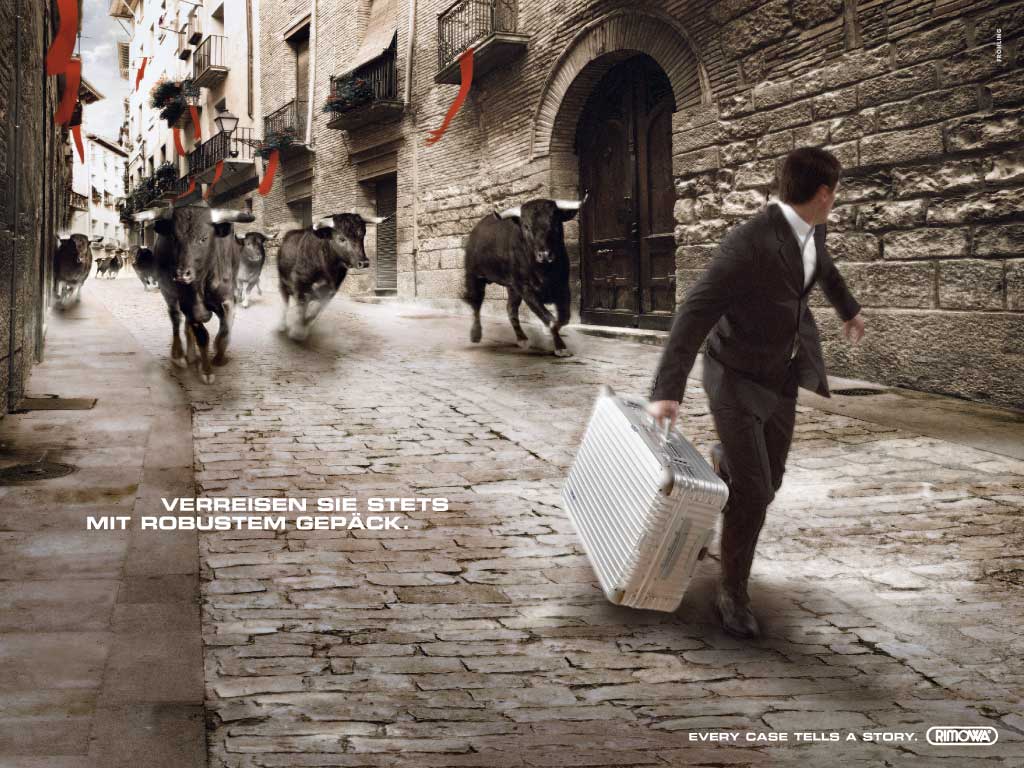
    Luggage manufacturer Rimowa has won a lawsuit against the owner of the Holly brand in South Korea.

    A Seoul court has acknowledged that the grooved design is a defining characteristic of Rimowa products so deserves to be protected from imitation.

    Saying the Holly suitcase has a similar grooved design and could be mistaken for a Rimowa product, the court slapped a ban on further distribution or sale of the Holly suitcase to protect consumers from confusion.

    “We couldn’t be happier that the court acknowledged the brand character of our grooved design,” says Rimowa president/CEO Dieter Morszeck.

    Rimowa’s first aluminum suitcase with the signature grooves was produced in Germany in 1950.

  • Continental Named as CES 2017 Innovation Awards Honoree

    Continental Named as CES 2017 Innovation Awards Honoree

    International automotive supplier and technology company Continental today announced that is has been named a CES 2017 Innovation Awards Honoree in the Vehicle Intelligence category for its Short Range Radar with Trailer Merge Assist and Trailer Length Detection technology. Products entered in this prestigious program are judged by a preeminent panel of independent industrial designers, independent engineers and members of the trade media to honor outstanding design and engineering in cutting edge consumer electronics products across 28 product categories.

    “Technologies that are selected as CES Innovation Honorees demonstrate an incredible level of innovation and engineering in an industry where the bar is set remarkably high,” said Samir Salman, CEO of Continental, North America. “Continental is honored to receive this award which exemplifies our commitment to safety by engineering leading automotive technologies.”

    Continental’s state-of-the-art Short Range Radar with Trailer Merge Assist and Trailer Length Detection is a “black box” sensor mounted in the rear/side area of the vehicle. The radar uses intelligent sensing with a new software feature allowing for the blind spot detection to be enhanced and extended by sophisticated object tracking, measurement and length detection algorithms allowing for the extended warning.

    “The intelligent radar detects the trailer, automatically measures its length and extends the warning zone to the area beyond the trailer,” said Lutz Kuehnke, Head of Advanced Driver Assistance Systems, Continental, North America. “These features reduce the risk of accidents and increases driver confidence while towing and merging a vehicle with a trailer.”

    This is the first blind spot warning system that allows a driver to enjoy the function without driver input even while towing a trailer. Systems without this feature either disable the warning while towing a trailer or experience unintended or false warnings from the trailer.

    The Short Range Radar is just one environmental sensor within Continental’s comprehensive product portfolio of future-oriented advanced driver assistance systems (ADAS). Continental offers ADAS safety products and functions, as well as system solutions for assisted and automated driving including Long Range Radar, Camera, Surround View, High Flash 3-D Lidar and electronic control units.

    Continental’s Short Range Radar with Trailer Merge Assist and Trailer Length Detection will be displayed at CES 2017, which runs January 5-8, 2017, in Las Vegas.

    The prestigious CES Innovation Awards are sponsored by the Consumer Technology Association (CTA)™, the producer of CES 2017, the global gathering place for all who thrive on the business of consumer technologies, and have been recognizing achievements in product design and engineering since 1976.

    Entries are evaluated on their engineering, aesthetic and design qualities, intended function and user value, unique features present and how the design and innovation of the product directly compares to other products in the marketplace. Products chosen as CES Innovation Honorees reflect innovative design and engineering in some of the most cutting edge tech products and services coming to market.

    CES 2017 Innovation Honoree products are featured on CES.tech/Innovation.

    Continental at CES

    Visit Continental at CES 2017, Thursday, January 5 through Sunday, January 8, at North Hall Booth #3128. Continental will also showcase its latest automotive innovations and technologies in a private exhibit at the Renaissance Hotel. An invitation only media event has been scheduled on January 5. Please contact Mary Arraffor details.

  • Indonesian government taking steps to tackle growth of e-commerce industry

    Indonesian government taking steps to tackle growth of e-commerce industry

    The volume of e-commerce transactions in Indonesia is still relatively small but the government is taking anticipatory steps in the face of e-commerce industry growth as it is developing as a global trade model.

    Indonesias e-commerce transactions still account for about one to two percent of retailer transactions or much lower than the global average of eight percent. However, it is predicted that e-commerce transactions in Indonesia will increase drastically from US$12 billion in 2014 to about US$24.6 billion this year.

    Therefore, the government sees that the e-commerce industry is one of the business sectors that has good prospects in the future, and for this it is issuing an e-commerce development roadmap through an economic policy package.

    The roadmap is appearing in the 14th economic policy package announced by the government on Thursday, November 10, 2016.

    “The policy package is aimed at encouraging people all over Indonesia to expand their economic activities efficiently and to connect them to the rest of the world. With this roadmap, they will be able to enhance their business in a better way,” Coordinating Minister for Economic Affairs Darmin Nasution said while announcing the package at the Presidential Office along with Communication and Information Minister Rudiantara and Cabinet Secretary Pramono Anung.

    Therefore, the next economic policy package is expected to sufficiently address the issue.

    “E-commerce should not be treated as a general form of trading. The tariff should be lower as it is a fledgling industry, an early adopter,” Industry Minister Airlangga Hartarto underlined while speaking on the sidelines of the launch of a book on “Developing Populist Economy and Winning ASEAN Economic Community” recently.

    Indonesian businesses hope that the tax tariff for e-commerce business will be lower than that of the non-e-commerce industry.

    The Indonesian Employers Association (Apindo) hailed the issuance of the package. Businesses badly need the governments support, particularly on the fiscal system with regard to the issuance of the economic policy package on e-commerce, Fredy Ongko Saputro, chairman of Apindo for East Nusa Tenggara, said.

    “The tax tariff should be lower than non-e-commerce because this is a new industry. We hope the tax traffic is set at a modest rate,” the Apindo chairman for East Nusa Tanggara, said.

    The regulation to be issued would determine the success of e-commerce in Indonesia as it has the potential to guarantee the survival of fledgling businesses using e-commerce, economic observer Agustinus Prasetyantoko said, elaborating the point.

    Agustinus is also of the opinion that tax exemption would help boost e-commerce in the country.

    “In certain cases, tax could even be abolished during the start-up phase,” he underscored.

    Singapore could be used as the reference country to study ways to develop and expedite the expansion of e-commerce. It provides tax facilities and a low tax for start-ups in addition to assistance in the form of access to cheap capital.

    The e-commerce market has begun to grow in Indonesia. In 2014, transactions were valued at $12 billion. E-commerce spending in Indonesia was only 1 to 2 percent of the total retail sales as against 16 percent in South Korea, 12 percent in the United States and the world average of 8 percent.

    However, it is worth noting that the performance in 2014 represented a significant increase from $8 billion in 2013. In 2016, the value of transactions is predicted to rise to $24.6 billion.

    Therefore, it is being predicted that Indonesia would be among the top ranked countries in e-commerce in the future after China and India in Asia, which is why the government drew up a roadmap.

    Chief Economic Minister Darmin Nasution expressed the hope that the roadmap for the development of e-commerce industry will encourage younger generations to come up with new and innovative products and services.

    The roadmap is also expected to induce certainty in business besides facilitating the e-commerce industry. Therefore, with strategic direction and guidance, the electronic-based national trade system can be put in place during the 2016-2019 period, he noted.

    The roadmap is also expected to accord priority to and protect the national interests, particularly the interest of small and medium entrepreneurs and startups, he commented.

    “It will also help the human resources and e-commerce agents to improve their knowhow. Also, it will provide terms of reference to the government and all stakeholders for determining or adjusting sector-based policies as part of the effort to develop the e-commerce industry,” he explained.

    Darmin pointed out that the policy package deals with at least eight issues, including funding, taxation, consumer protection, human resource development and education besides cyber security.

    Meanwhile, Communication and Information Minister Rudiantara underlined that digital economy has a huge potential in Indonesia.

    “The Indonesian digital economy is so huge that all transaction services using digital technology will continue to develop,” he observed.

    He reminded that the package also covers several provisions to address seven key issues, including human resources and education, access to capital, tax incentives, consumer protection, cyber security, logistics and communication infrastructure.

  • Porsche Customers Most Satisfied Overall

    Porsche Customers Most Satisfied Overall

    The Porsche brand has ranked highest among all nameplates, according to the latest J.D. Power 2016 U.S. Sales Satisfaction Index (SSI) Study released today. The brand also placed higher than all other luxury manufacturers for the second consecutive year. Porsche improved upon its 2015 standing by 72 points to capture the overall ranking for the second time in the 30-year history of the SSI Study.

    The SSI Study measures satisfaction with the sales experience among new-vehicle buyers and rejecters — those who shop a dealership and purchase elsewhere. Buyer satisfaction is based on four measures: working out the deal (25%); salesperson (19%); delivery process (16%); and facility (15%). Porsche ranked highest among all automotive brands across all four categories. Rejecter satisfaction is based on five measures: salesperson (10%); fairness of price (4%); experience negotiating (4%); facility (3%); and variety of inventory (3%). Porsche improved this year in the areas of price, facility and inventory.

    “Customer satisfaction is our highest priority in our endeavor to deliver a unique and rewarding Porsche experience,” said Klaus Zellmer, President and CEO, Porsche Cars North America, Inc. “We pride ourselves on building exciting and innovative sports cars, but our success is ultimately measured by the approval and appreciation of our customers. I would particularly like to thank our dealer partners who have made it their mission to provide a benchmark experience for their clients who are purchasing a Porsche.”

    The 2016 SSI Study is based on responses from 28,979 buyers who purchased or leased their new vehicle in April or May 2016. The study is a comprehensive analysis of the new-vehicle shopping and purchasing experience and measures customer satisfaction at U.S. dealerships.

  • Indonesian markets panic over Trump’s policies

    Indonesian markets panic over Trump’s policies

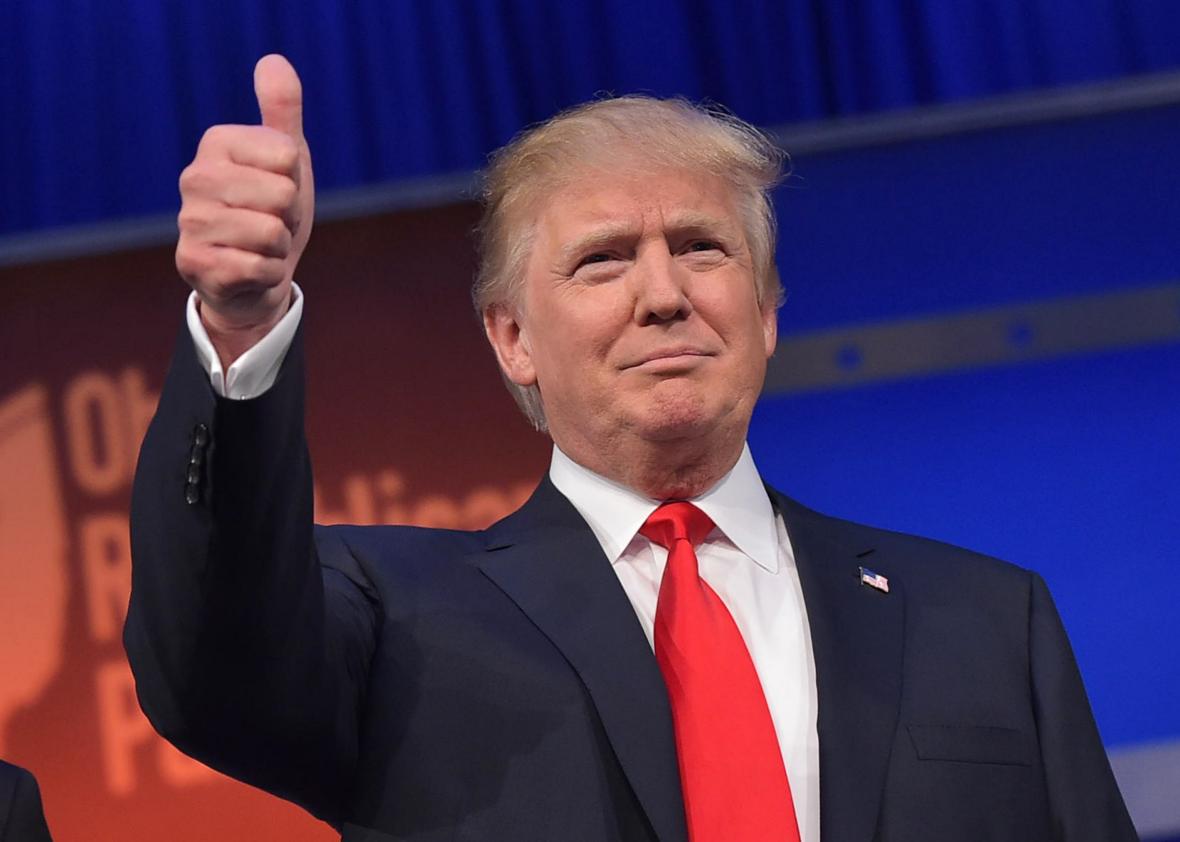
    Panic hit domestic financial markets on Friday as investors showed concern over the anticipated policies of US president-elect Donald Trump that may negatively affect Indonesia’s economy.

    The Jakarta Composite Index (JCI) — the benchmark of the Indonesia Stock Exchange (IDX) — ended in the red on Friday after falling 4 percent to 5,231.97 points, its lowest level in the past two months.

    Almost all sectors ended in negative territory, as investors sold a net of Rp 2.46 trillion (US$184.27 million) worth of securities throughout the trading day.

    Net sales jumped more than eightfold from the previous day, when investors ditched less than Rp 300 billion worth of securities.

    The situation was just as bad in the foreign exchange (forex) market, with the rupiah sinking as low as Rp 13,865 per US dollar, the lowest point since June 24. Market intervention by Bank Indonesia (BI) propped up the currency, enabling it to end at Rp 13,383 to the greenback.

    Friday’s development sent the government, financial authorities and analysts rushing to calm panicked investors.

    They attributed the market rout to speculation that Trump might push up fiscal spending after taking office.

    Higher spending may translate into higher inflation and interest rates in the US, which is not good news for Indonesia and other emerging markets that rely heavily on foreign funds, as some of those funds would return to the US.

    “Up to this day, the developments of the rupiah, the JCI and securities are greatly affected by regional and global sentiment impacted by the US political situation,” Finance Minister Sri Mulyani Indrawati said Friday.

    “It is natural to see that every decision made in the US, as the world’s largest economy, even in the form of a statement, can have a significant impact.”

    She said investors, including those holding government debt papers (SUN), did not have to be worried, as Indonesia had a low debt risk with a relatively long maturity profile and a relatively small state budget deficit.

    Moreover, with various fiscal measures to control the state budget deficit, spending and tax revenues, government debt papers had a very low risk profile.

    “There is no need to be trapped in groundless fear,” she stated.

    The IDX and the Financial Services Authority (OJK) also tried to calm investors, saying any impact of Trump’s policies would be temporary.

    BI senior deputy governor Mirza Adityaswara admitted the central bank had intervened in local forex and sovereign bond markets to stabilize the rupiah.

    Selling by forex traders, particularly in non-deliverable forward (NDF) derivative contracts, he went on, had triggered the market volatility.

    NDF contracts, unlike forex forwards, are settled in dollars determined by reference to a daily fixing, which in some jurisdictions is set by a survey of lenders.

    “The NDF market weakened and affected traders without considering Indonesia’s economic fundamentals. That’s why the rupiah was traded at Rp 13,400 [per US dollar] during opening, because the market followed what occurred in Mexico, Brazil and other places,” he said.

    Mirza emphasized that the country’s fundamentals remained strong, with economic growth of 5.02 percent in the third quarter, higher than in most of Indonesia’s Southeast Asian peers.

    Meanwhile, stock market analysts deemed investors’ reaction exaggerated and urged a more cautious manner. They said the market should actually have priced in the expectation of a December rate increase in the US, with further increases in 2017 and 2018.

    Separately, Trade Minister Enggartiasto Lukita said investors should wait until Trump formed his team. He expressed optimism that economic relations between the two countries would remain positive, despite Trump’s seemingly protectionist stance.

    “But we also need to keep our market strong. With a population of 250 million people, we have enough bargaining power,” he said.

    We’ll push local industries here, so that money circulation will happen much more domestically,” he added.