Tag: asia

  • AirAsia launches Santan Combo Meal

    AirAsia launches Santan Combo Meal

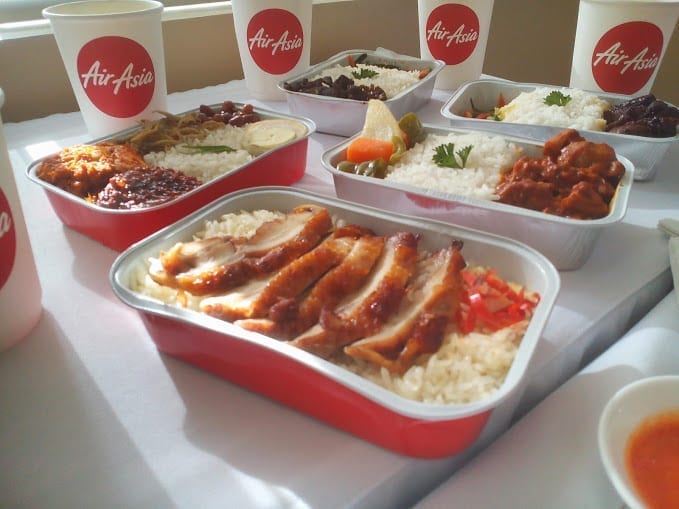
    AirAsia has launched its latest Santan Combo Meal, available for pre-booking, from RM10 on AirAsia Bhd (AK) flights and from RM15 on AirAsia X Bhd (D7) flights.

    In a statement today, AirAsia said the Santan Combo Meal has a selection of 15 meals ranging from local Asean delights to international cuisines.

    “Guests who pre-book the combo meals can choose from a selection that includes coffee (only available for flights above 90 minutes), carbonated drinks and mineral water,” it said.

    AirAsia Commercial Head Spencer Lee said guests would be happy to know that the new price offers a RM5 discount off the in-flight ticket price.

    “When they pre-book their meals online, not only they enjoy discount prices and have a wider selection of meals to choose from, but also have the privilege of being served first,” he said.

    Lee said among the new items on the menu was the festive Christmas treat of Southwest Stuffed Chicken Meal on AK flights for RM10.

    “This meal consist of roasted chicken breast stuffed with capsicum and onions and served with a special jalapeno cream sauce on a bed of roasted potatoes,” he said.

    Meanwhile, those travelling on D7 flights can enjoy the new combo meal of Grandma’s Chicken Pie for RM15, which is minced chicken baked with a layer of creamy mashed potatoes, complemented with broccoli and carrots.

    Guests can pre-book their meals up to 24 hours before their scheduled departure time on www.airasia.com via the Manage My Booking tab.

  • ‘World’s saddest bear’ reflects sorry state of China malls sector

    ‘World’s saddest bear’ reflects sorry state of China malls sector

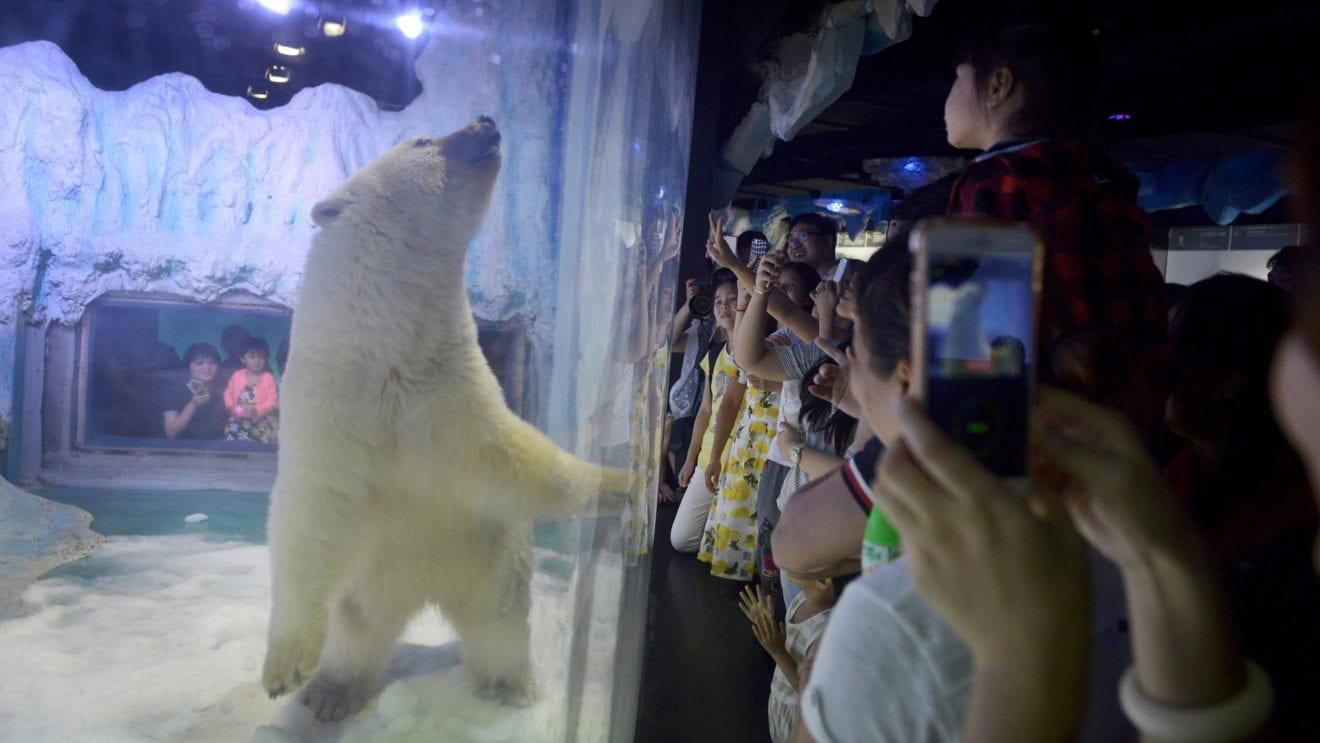
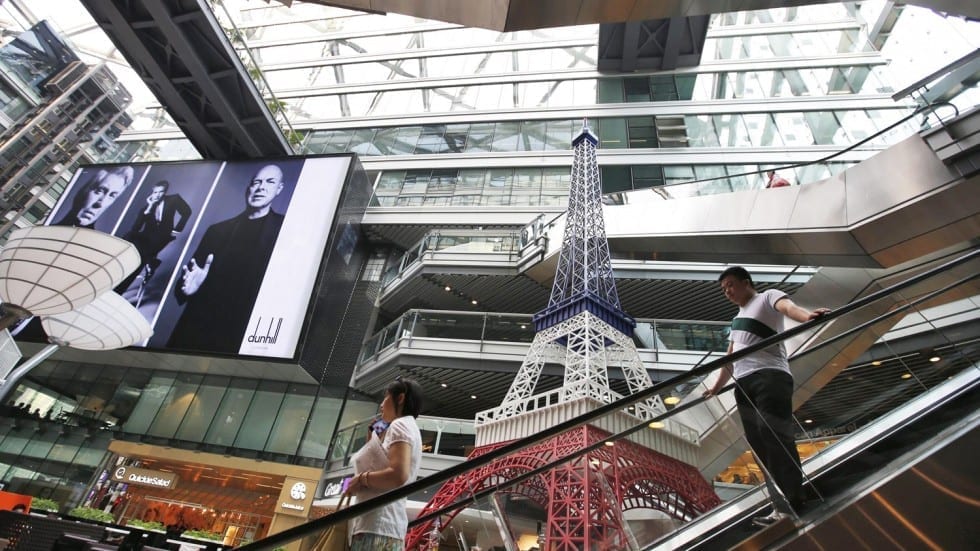
    Pizza, a polar bear notorious in China as being the “world’s saddest”, has been removed from his cramped enclosure and placed in an animal reserve after months of controversy that have highlighted the sorry state of Chinese shopping malls.

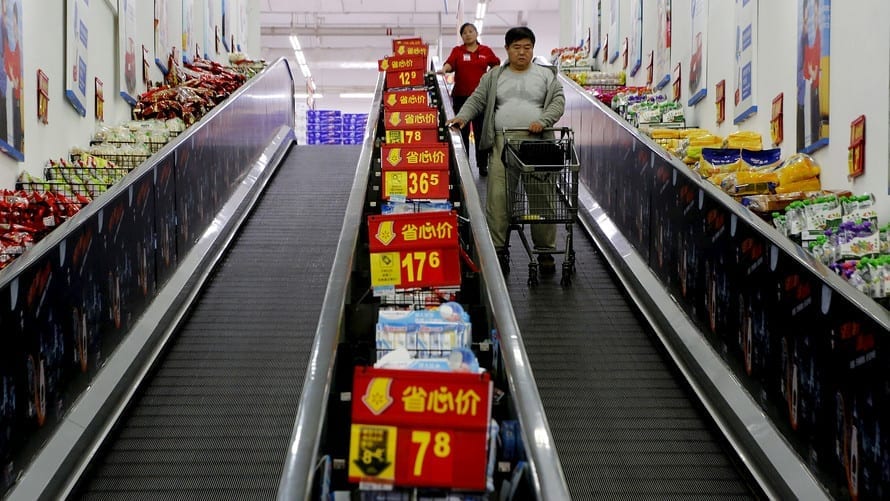
    Pizza’s plight was the result of a trend for using animals, entertainment and children’s playgrounds to pull customers into China’s giant shopping centres and department stores, which have been built in their thousands despite the nation’s growing preference for buying online.

    Bricks-and-mortar stores are grappling not just with ever-greater competition from online retailers such as Alibaba and JD.com, they must also contend with an underlying slowdown in the retail sector. Sales growth, which in 2008 reached an annual rate well above 20 per cent, has been falling steadily in recent years and hit 10 per cent in October, according to National Bureau of Statistics data released on Monday.

    Pizza became an internet celebrity in July when a shopper uploaded a photo of the three-year-old bear in an enclosure at the Grandview Mall in the southern city of Guangzhou. The country’s nascent animal rights community launched a rescue campaign and cheered when the Grandview said over the weekend that it would “temporarily” return him to the ocean park in northern China where he was born.

    Other Chinese netizens have outed an elephant used to attract mobile phone buyers to a Suning electronics outlet in Beijing and a “sad tortoise” housed alongside reptiles in grimy tanks in a mall in the northwestern city of Xi’an.

    The use of animals and other attractions comes as malls combat overcapacity, a problem immediately apparent to anyone who has turned up at a dusty, half-vacant shopping centre in China’s provincial cities. The country has an estimated 4,000 malls, more than the US, and plans to reach 7,000 by 2025, according to Mall China, an industry organisation.

    “Foot traffic is dropping dramatically,” said Shaun Rein, founder of Shanghai-based China Market Research Group, describing “a lot of panic” as e-commerce decimates mall sales. “Shops are becoming more choosy. Before, they said: ‘Who cares which mall?’ Now they are looking at the mall’s business and its other attractions.”

    “Malls are starting to bring in a lot more entertainment and a lot more food,” he added. “There is also a big focus on children — playgrounds, learning centres, even museums.”

    Last year 83 shopping malls gave up the fight and closed, according to a blue book on the commercial sector by the Chinese Academy of Social Sciences. They will be joined this year by Marks and Spencer, which announced last week it would close several stores in China in an effort to boost its flagging fortunes.

  • China retail sales grow 10% on-year in October

    China retail sales grow 10% on-year in October

    China’s retail sales growth rose to 10.0 per cent on-year in October, missing analysts’ forecasts of 10.7 per cent growth — the rate sales grew at the previous month. Thus there was a slowdown in retail sales despite the growth.

    Industrial output rose 6.1 per cent in October from a year earlier, the National Bureau of Statistics said, again below analysts’ estimates of 6.2 per cent.

    The world’s second largest economy has been facing slowing growth of late.

    China is predominantly an export-led economy but with global demand falling, the country needs to re-work its growth strategy. The country has been trying to move towards consumption-led growth but the transition has been bumpy.

    Recent data points to the fact that China’s growth is increasingly dependent on government spending and ballooning debt as private investment hovers around record lows.

    Last week, Alibaba’s Singles’ Day festival posted record sales of $17.73 billion.

    While sales were good, the day-long shopping gala saw slow growth as Chinese shoppers searched for heavier discounts and lower price tags.

    China’s fixed asset investment rose by 8.3 per cent in the first ten months of the year, slightly higher than market expectations.

  • Starbucks announces the introduction of Nitro Cold Brew in China

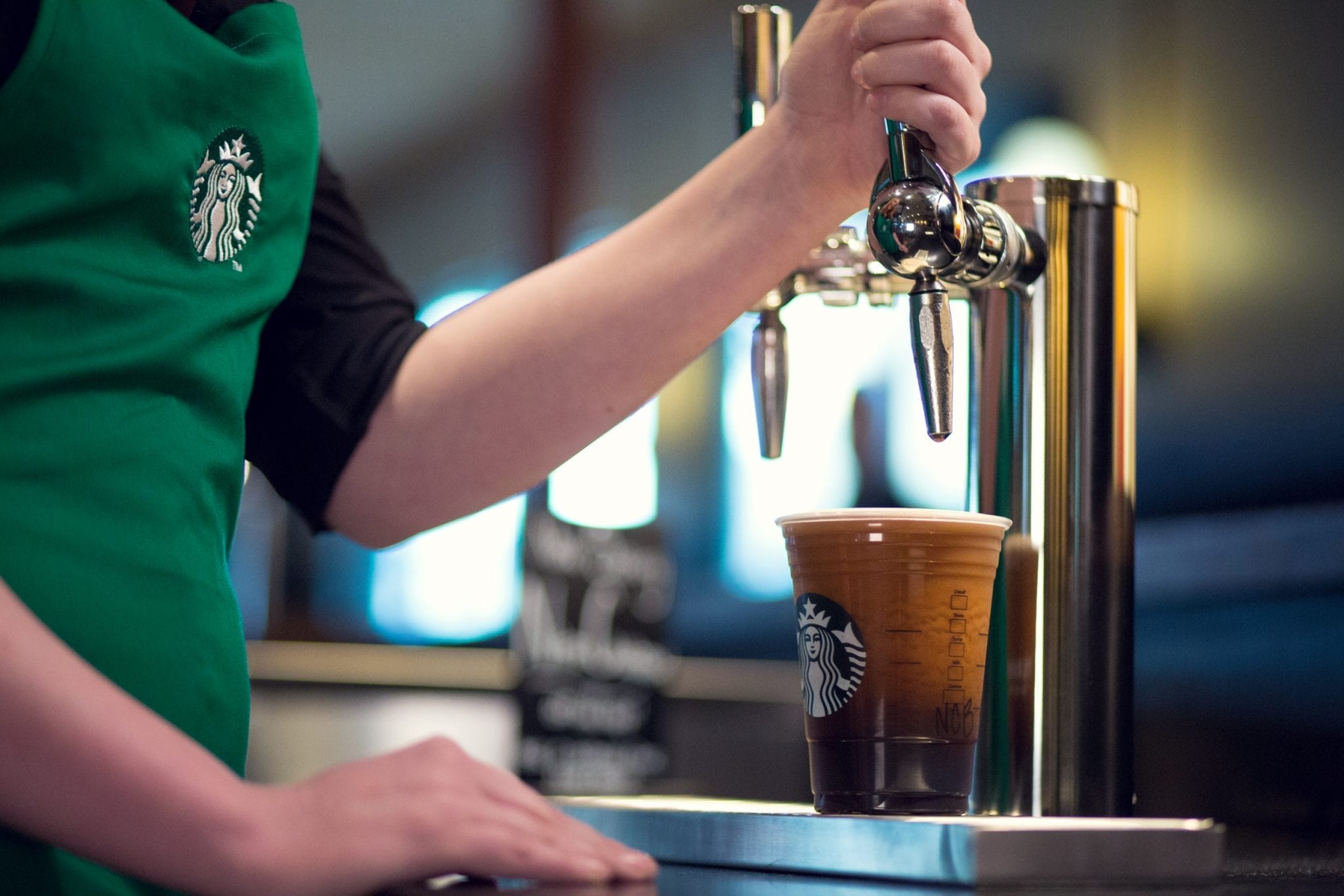
    Starbucks announces the introduction of Nitro Cold Brew in China

  • Apple, Nike and Playboy among most popular US brands on Alibaba’s Singles Day

    Apple, Nike and Playboy among most popular US brands on Alibaba’s Singles Day

    Alibaba Group Holding Ltd. says sales from its massive Singles Day shopping event totaled $17.8 billion, up more than 24% from the record $14.3 billion sold last year.

    (This year’s total is RMB 120.7 billion, up 32% year-over-year due to fluctuations in the Chinese currency.)

    The most popular U.S. brands as of about 10:30 p.m. CST were, in order: Apple Inc. Nike Inc. New Balance, Playboy, and Skechers USA Inc.

    “Alibaba is using this year’s Singles Day to showcase the number of international brands participating, everyone from Apple, Victoria’s Secret, Burberry, Gap, [and] Nike, acting as the gateway to China for these brands and fulfilling Chinese consumers’ insatiable demand for Western products,” said Danielle Bailey, head of Asia-Pacific research for L2 Inc.

    Victoria’s Secret is in the L Brands Inc.  portfolio.

    Singles Day started strong, with sales of $1 billion recorded in the first five minutes.

    Alibaba Offers Virtual-Reality Shopping on Singles’ Day

    Alibaba is hoping to boost sales from China’s biggest annual online-shopping event–Singles’ Day–with what it claims is the world’s first virtual-reality shopping experience.

    Many U.S. brands have tried and, so far, failed to find success in the Chinese market. Recently, Netflix Inc. said it would abandon efforts to launch a full-service offering in China.

    Wal-Mart Stores Inc.  announced in June that it would partner with Alibaba rival JD.Com Inc. to grow its China business. The partners announced new initiatives in October.

    Apple and Nike are popular in China irrespective of the day, with Nike reporting 21% revenue growth in China in fiscal first-quarter 2017. The U.S. and China are Nike’s two biggest basketball markets, Trevor Edwards, Nike brand president, said on the Sept. 27 earnings call, according to a FactSet transcript.

    The Playboy brand is also popular in China, with items like jewelry and fragrances selling well.

    Starbucks Corp. seized the opportunity to get into the Singles Day festivities, offering a Cocoa Java Mocha beverage exclusively for the day at locations across China. The company also sold gift sets, exclusively-designed gift cards, and limited-edition My Starbucks Rewards Cards 11/11.

    Forty-seven million users purchased international brands, led by U.S. brands, according to L2 data, and 82% of sales were made on a mobile device.

    “With Alibaba distributing different deals across different devices, they have encouraged devoted savings seekers to keep separate shopping carts on their desktops and mobile phones,” said Tim Barrett, retail analyst at Euromonitor International. “Alibaba is grooming a generation of mobile-first shoppers, a move which will pay off greatly when the entire world is addicted to their mobile devices.”

    For Alibaba Chief Executive Daniel Zhang, this integration of sales across different platforms is critical.

    “If you look at this as an online game, people see you will have less margin in the future,” Zhang said, according to the Alibaba live blog of the Singles Day event. “But when we look at the entire landscape, only 10% of China’s total retail is online. What we believe is that at the end of this, online and offline… should be fully integrated.”

    This year, Alibaba introduced virtual reality into the 11.11 experience, as well as games, with 2.6 billion games played, according to L2.

    “Alibaba is blurring the lines between entertainment and e-commerce and extending technologies thought to be simply gimmicks in the West,” said Bailey.

    Even with the eye-popping sales numbers, popular brands and new technologies, Alibaba shares are down 1.4% in Friday trading.

    “In keeping with the de-emphasis of GMV [gross merchandise value] as a reported metric, we expect sales volume to become but one of many focuses of the event, with others being new mobile functionality, innovations and improvements in logistics, new partnerships,” said Deutsche Bank in a note published Tuesday, which calls Singles Day “a PR exercise.” Analysts there expected 35% year-over-year growth.

    Deutsche Bank rates Alibaba shares buy with a $138 price target.

    Alibaba shares are up 14.4% for the year so far while the S&P 500 is up 5.7% for the same period.

  • #Double11 2016 Singles Day Record Proves China’s E-Commerce Might

    #Double11 2016 Singles Day Record Proves China’s E-Commerce Might

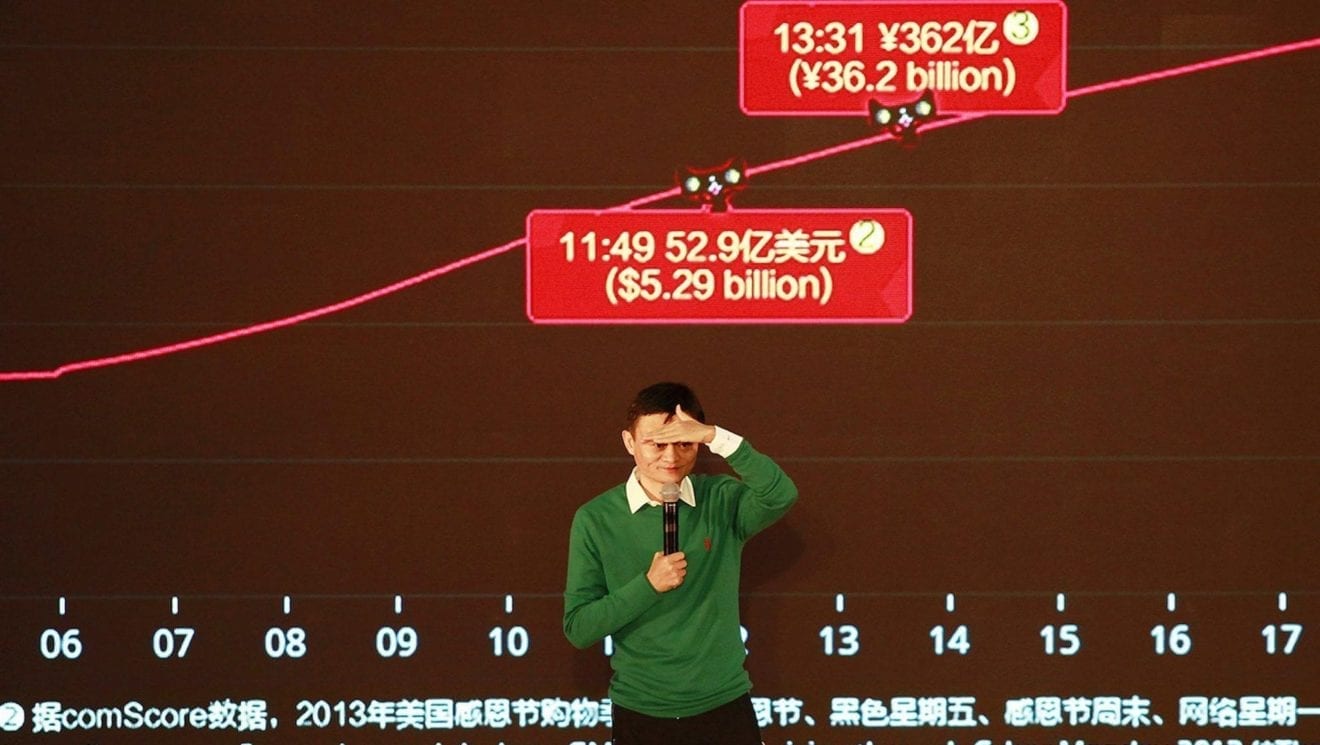
    Chinese e-commerce giant Alibaba Group has tallied more than US$1 billion in the first five minutes and US$5 billion in transactions in the first hour of its annual Singles Day sales blitz. That means China’s 2016 Singles Day shopping fest—aka Shuangshiyi or Double Eleven, since it takes place each November 11—retains its title as the world’s biggest online shopping event.

    The final sales tally for the 24 hour global shopping spree: US$17.8 billion in GMV (gross merchandise volume) sales, or in China’s yuan or renminbi currency, RMB 120.7 billion. The vast majority (82%) of that shopping frenzy took place on mobile phones and devices, with $14.6 billion (RMB 98.97 billion) on mobile.

    Last year, Alibaba’s digital shopping platforms racked up a total US$14.3 billion in sales, bypassing the $9.3 billion in #Double11 Singles Day sales in 2014 — meaning the 24-hour shopping spree has almost doubled in two years.

    It’s also a proof point for Ant Financial Services Group, Alibaba’s fintech arm that operates its Alipay mobile payments platform. “The excitement around online shopping continues to build year after year, and it’s emblematic of the way that e-commerce is changing, giving consumers incredible access to products around the world,” said Ant Financial SVP Douglas Feagin to the South China Morning Post.

    Ant Financial this year says it processed 1.05 billion transactions, an increase of 48 per cent from last year. At the peak of the madcap shopping within the first hour, as many as 120,000 transactions per second were processed, Feagin said. Ant brought innovation and speed to the online sales crush. Just as importantly, it helped finance merchants and consumers alike.

    As SCMP reports, “Before the start of the so-called Singles’ Day shopping gala on November 11, Ant Financial’s MYbank unit granted over 50 billion yuan of loans to 1.33 million merchants to help them put their products online.Ant Financial’s Ant Credit Pay was also on hand to grant more than 100 million customers credit to finance their online shopping, Feagin said.”

    At the half-way mark, it was clear that 2016’s event would surpass last year’s record, according to Alizila’s coverage:

    At the 12 hour, 29 minute mark of the sale, total GMV had exceeded RMB 82.4 billion ($12 billion), with mobile accounting for 83.55 percent of the total.  Alibaba Group President Michael Evans had this to say: “With roughly 11 hours to go, we’re in a good place.” More than 14,000 international brands are participating in the sale, he said, and sales from international brands have so far accounted for about 30 percent of total GMV.

    Alibaba #Double11 Singles Day sale

    Virtual reality also played a role this year, with Tmall’s Buy+ billed as the world’s first virtual reality shopping experience. For the price of a 15 cent cardboard VR headset, shoppers could slip their smartphone into the headset and browse products from handbags to shoes to lingerie, and even have virtual models showcase the apparel and accessories on a catwalk.

    Shoppers could browse eight digital stores using VR to assess the goods before buying them. Participating retailers include Macy’s, Target, Costco, P&G, Chemist Warehouse, Freedom Foods, Tokyo Otaku Mode and Matsumoto, part of the over 11,000 international brands that join in the fair.

    The global online shopping event also introduced interactive games and partnerships with over one million brick-and-mortar shops, including a Pokemon Go-like mobile application to catch the Tmall cat mascot in offline locations of Tmall merchants in shopping malls to spur foot traffic to the merchants. In return, consumers can earn special prizes such as free subscriptions to Alibaba’s Youku TV.

    It also teased this year’s 11.11 with teasers including an eight-hour live-streamed “see now buy now” fashion show from Shanghai, where consumers can order anything they see on the catwalk in real time from brands including Victoria’s Secret.

    The goal of this technology is to “improve [the] consumer retail experience, I would say you’re looking at the future of retail. The future of retail is in China, not anywhere else,” Alibaba Group’s co-founder and vice chairman Joseph Tsai told a media briefing on Thursday in Shenzhen, China.

    Leading the 11.11 international sales brigade this year were merchants from the US, Japan, South Korea, Australia and Germany. Most countries have already exceeded the volume of sales recorded for the entire sale last year.

    It’s another astonishing Singles Day,  an annual promotion inviting consumers who are not in relationships to cheer up with some retail therapy — an anti-Valentine’s Day “treat yourself” event invented by Alibaba’s Tmall head, Daniel Zhang, in 2009 to rival America’s Black Friday and Cyber Monday shopping events, and now surpasses both of them combined.

    While 11.11 started with discounts, it has morphed into an event featuring global brands such as Apple and luxury brands such as Burberry and Maserati, which both operate branded Tmall stores.

    As Teng Bingsheng, Associate Professor of Strategy at the Cheung Kong Graduate School of Business (CKGSB) in Beijing, stated in a pre-event press release, “To some extent, people remember that Alibaba initiated the 11.11 shopping festival. However, other brands are quickly gaining their fair share as well. But as long as the whole pie – and Alibaba’s own business – both get bigger, it’s still good news.”

    CKGSB Associate Professor of Accounting Zhang Weining added, “Double Eleven used to last for 24 hours, but this year it will stretch for 24 days. I think Alibaba foresaw that the sales growth rate would slow down this year, in part because more and more e-commerce platforms are running these campaigns and consumers are increasingly attracted to promotions offered prior to the day itself. This new strategy will also ease the pressure on delivery logistics, since sales will be more spread out.”

    Jack Ma Kobe Bryant Alibaba Singles Day 11.11Chairman Jack Ma—who welcomed David and Victoria Beckham and Kobe Bryant (while Katy Perry dropped out for a family emergency) as ambassadors for this year’s event at its countdown gala—said Alibaba’s cloud computing system is “[by] far the most advanced that human beings can realize.”

    Last year, the company processed 140,000 transactions per second via its cloud arm Aliyun during the shopping peak, while payment arm Alipay processed an additional 86,000 transactions per second at peak sale time.


    The company reportedly plans to list in 2017 in either Shanghai or Hong Kong, making it China’s largest IPO since 2010 when the state-owned Agriculture Bank of China offered $22.1 billion worth of shares.

    Brand partners were also vocal about what propelled Single’s Day sales this year: mobile (as Gap attested), personalization (such as Oreo) and virtual reality:

    For its part, Walmart kicked off its Black Friday sales event today, along with Target, in a bid to attract shoppers in the mood for deals. Both retailers’ official in-store Black Friday sales begin at 6 p.m. on Thanksgiving, reprising last year’s schedule despite murmurings that consumer interest in deal blitzing on Turkey-day may be waning.

    While Office Depot and Mall of America announced they’ll be closed on Thanksgiving, Macy’s, Kohl’s and Toys R Us are joining Walmart and Target. Walmart will be “dramatically increasing” inventory to offer nearly 50 percent more Black Friday merchandise this year online than last year.

    Walmart US CMO Steve Bratspies said that “We really pride ourselves on not being the retailer who advertises a great price but then only has a few available for the customers.”

    Walmart deals include a Samsung 50-inch 4K television for $398 and movies that cost $1.99. Target is touting deals like an iPad Air 2 for $274 and 30 percent off apparel and the giant teddy bear for $10 that hijacked social media last year is back with 20 percent more bears!

    Both big-boxers will start with offers over the next two weeks seeding the way for customer engagement as holiday spirit.

    Target returns to its “10 days of deals” program, touting a single big promotion daily starting the weekend before Thanksgiving, while Walmart is offering limited-time Black Friday discounts and holding further price cuts for into December.

    Still, some rang a cautionary note about Alibaba’s sales reporting, as the BBC reported: “Some have questioned the accuracy of the numbers, amid claims of inflated sales data at online retailers across China. Merchants passing off counterfeit goods as genuine is also an industry problem. Alibaba reported 85% of purchases had been made on mobile phones during Singles Day.”
  • Neo Group’s 1H net profit soared 65.7% to $0.4m

    Neo Group’s 1H net profit soared 65.7% to $0.4m

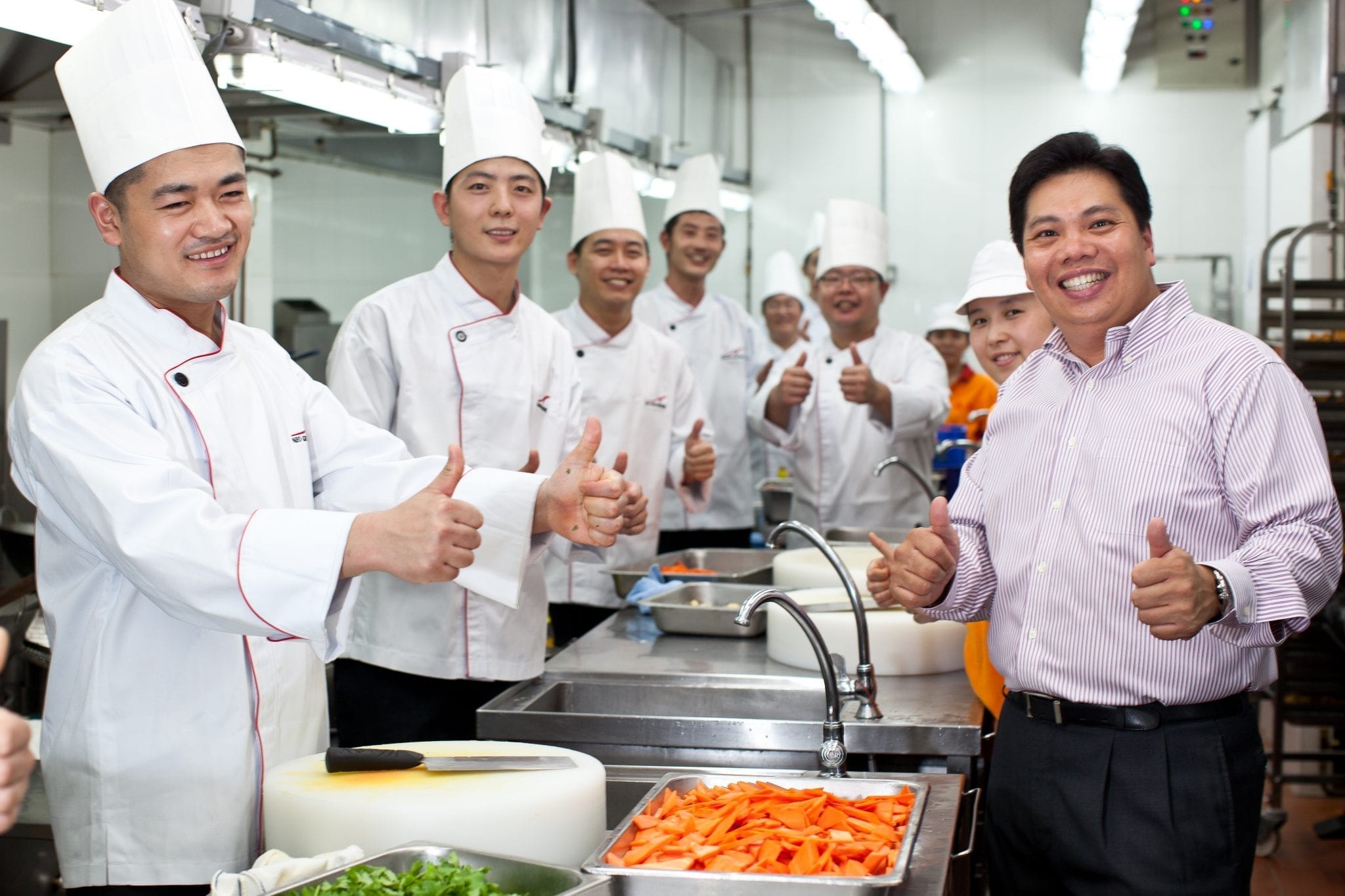
    Singapore’s food catering group, Neo Group announced that its revenue for the six-month period ended 30 September 2016 (1H2017) grew 29.6% to S$67.4 million from S$52.0 million in the equivalent period last year.

    Improved performance across most business segments and a S$7.7 million revenue contribution from the Food Trading business segment lifted the integrated catering solutions provider’s 1H2017 topline performance.

    Food Retail grew 11.7% to S$9.8 million in 1H2017 from S$8.8 million on an increase in number of stores and effective promotions launched during the period under review.
    Similarly, Food Manufacturing reported a 45.9% growth in revenue of S$21.9 million compared to S$15.0 million across the comparative periods.

    Impacted mostly by seasonality due to the lack of festivities and in the absence of SG50 celebrations that lifted catering volumes last year, the Food Catering segment
    slid marginally by 1.2% to S$27.3 million in 1H2017 from S$27.6 million in 1H2016.

    In tandem with the stronger topline performance, coupled with other income earned of S$3.0 million, consisting mainly of a S$1.8 million one-time gain on disposal of a noncore
    property, Neo Group reported 1H2017 net profit attributable to owners of the parent (net profit) of S$0.4 million, a 65.7% rise from S$0.3 million in 1H2016.

    For the three-month financial period ended 30 September 2016 (2Q2017), Neo Group reported a 40 times increase in net profit of S$2.9 million compared to S$0.07 million a year ago (2Q2016) on a 13.4% rise in revenue to S$35.5 million from S$31.3 million across the same comparative periods.

    Removing the impact of the one-time gain on disposal, which amounted to S$1.8 million in 2Q2017, the Group reported an operational profit of S$1.1 million, turning
    around from an operational loss recorded in the preceding quarter.


  • Mobile money halves overseas remittance costs

    Mobile money halves overseas remittance costs

    The average cost of sending international remittances with mobile money is less than half that of using global money transfer operators (MTOs), a new GSMA report reveals.

    Such lower prices contribute directly toward achieving targets within United Nations sustainable development goal (SDG) 102. Lower transaction fees also translate directly into additional income for remittance recipients.

    “Through mobile money services, the industry is directly supporting the goal of expanded financial inclusion for migrants and their families by reducing international remittance costs,” GSMA Chief Regulatory Officet John Giusti said. “The potential gains of achieving this target could be as high as $20 billion in additional income for remittance recipients.”

    The report noted that if people were able to send remittances from a mobile money account, the average cost of sending $200 was 2.7%, compared to 6% when using global MTOs.

    GSMA estimates that there are more than 400 million registered consumer accounts for mobile money across over 90 countries.

    “While today mobile money services are largely used for domestic transactions, international transfers represent the fastest-growing segment of mobile money services. In just a few years’ time, mobile money has moved from a purely domestic service to one that allows migrants to send remittances between more than 20 countries globally,” Giusti explained.

    World Bank data shows that more than 250 million people live outside their country of birth and regularly send money home, providing a financial lifeline to their families and contributing to the economies of their home countries.

    In 2015, global remittances totalled $581.6 billion, of which $431.6 billion, or nearly 75%, was sent to the developing world. However, the cost of international transfers remains high and directly impacts the income of remittance recipients.

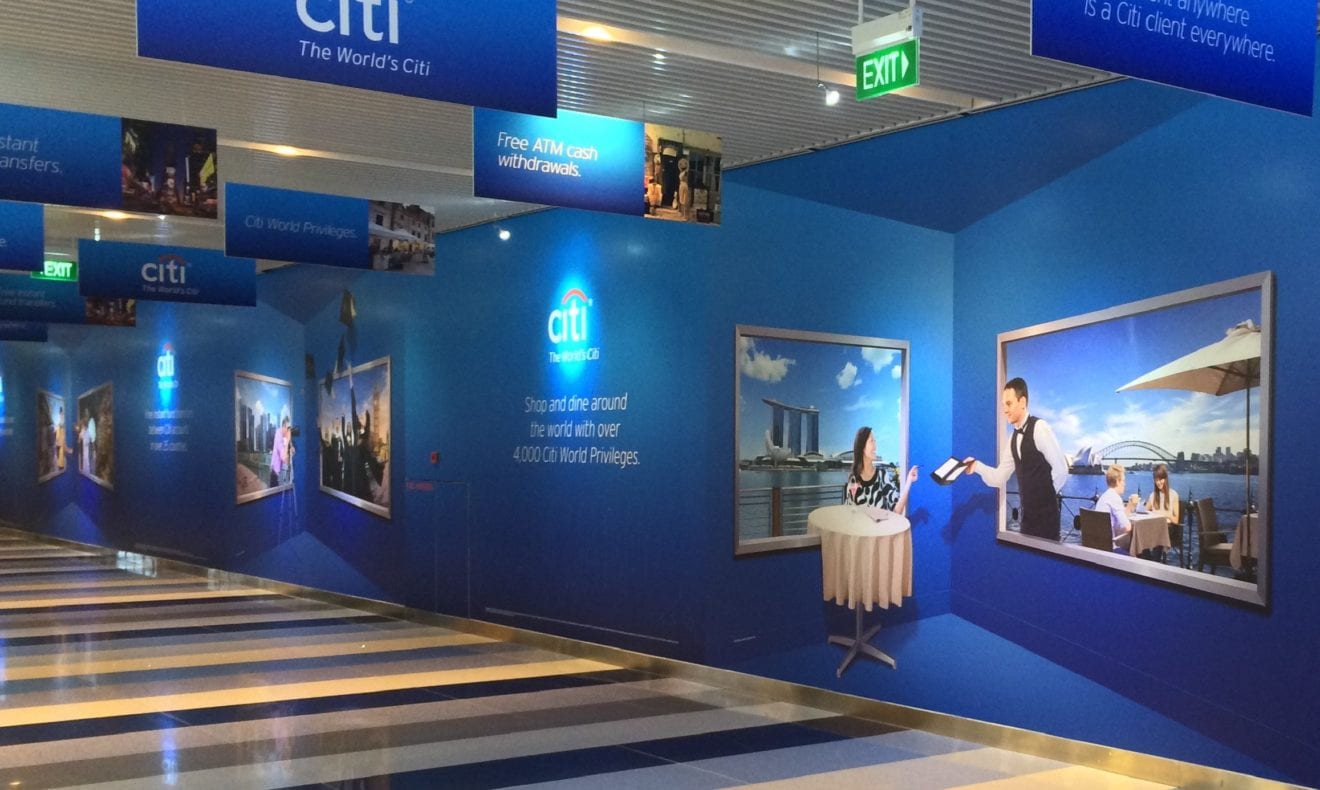
  • Citibank Indonesia reaps high profit growth in Q3

    Citibank Indonesia reaps high profit growth in Q3

    The Indonesian branch of US-based Citibank saw its net profits rise in the third quarter of this year despite the ongoing global economic downturn and sluggish domestic demand.

    The bank’s net profits surged by 64 percent year-on-year (yoy) to Rp 1.9 trillion (US$142.32 million) during the January-to-September period, according to a statement issued on Sunday.

    The profit growth was mainly driven by a 15.5 percent yoy increase in net interest income to Rp 3.05 trillion, along with a 2.79 percent yoy hike to Rp 1.51 trillion in its fee based income.

    “These results reflect the strong momentum of our business, both in institutional banking and consumer banking,” said Citibank Indonesia CEO Batara Sianturi in the statement.

    The bank introduced some initiatives for its institutional and consumer banking businesses in the third quarter, namely Citi Virtual Card Accounts (VCA) for treasury and trade solutions, Citi Priority for wealth management as well as Citi Indonesia Facebook to support the digitization of its cards and retail banking.

    However, it saw its loans decrease by 7.3 percent annually to Rp 39.07 trillion in the first nine months from Rp 42.1 trillion in the same period last year.

    The deceleration in loans was in line with data from the Financial Services Authority (OJK) that show that overall lending in the Indonesian branches of foreign banks dropped by 6.61 percent yoy to Rp 253.1 trillion as of August.

    Bank Indonesia (BI) deputy governor Erwin Rijanto attributed the situation to falling foreign-denominated, or forex, loans, which only grew by 2 percent yoy as of July.

    “This is closely related to global economic conditions. We see that a lot of companies with high exposure to forex loans have temporarily reduced their credit demand. Some of them even decided on early termination of their loans,” he said recently.

    The drop in global commodity and oil prices as well as weak trade are among the factors impacting the banking industry, particularly on forex loans, which are mostly utilized to support the financing of exports and imports.

    This portion of forex lending is also particularly big in Indonesian branches of foreign banks as they are supported by their overseas headquarters.

    Meanwhile, Citibank Indonesia’s report also show that its third-party funds declined by 6.6 percent yoy to Rp 5.25 trillion from January to September.

    Despite the decline in the third-party funds, Batara said the bank managed to grow the portion of current accounts and savings accounts (CASA) — consisting of low-cost funds — to 73.9 percent of its total third-party funds.

    The increase in CASA helped jack up its net interest margin (NIM) to 6.1 percent from 5.3 percent in September last year.

    With an increase in revenue, the bank managed to improve its cost-to-income (BOPO) ratio—which measures efficiency—to almost 80 percent in the third quarter of this year from 91.2 percent a year ago.

    The latest performance was translated into an increase in return on assets (ROA) to 4.4 percent from 2.7 percent in the same period last year, while its return on equity (ROE) rose to 16.5 percent from 10.6 percent.

    The bank’s capital adequacy ratio (CAR) also increased to 29 percent in the third quarter of 2016, from 25.3 percent in the same period last year.

    “As we enter the final quarter of 2016, we believe that the progress we have made in the past three quarters will enable Citibank Indonesia to accelerate its growth imperative and commitment to its stakeholders,” Batara said.

  • Dialog Axiata revenue grows 19% in 9M16

    Dialog Axiata revenue grows 19% in 9M16

    Sri Lanka’s Dialog Axiata has reported a 19% increase in revenue for the first nine months of the year to 64 billion rupees ($430.9 million) as a result of a temporary suspension of value-added tax (VAT) and strong growth momentum across the operator’s business.

    Net profit for the period grew 71% to 7.8 billion rupees as a result of improving profit margins and significantly lower forex losses.

    Dialog Axiata increased its mobile subscriber base by 10% year-on-year to 11.3 million, mostly from prepaid services. The company also recorded 43,000 net additions to its subscription TV service.

    Broadband revenue for the nine-month period grew 27% to 6.76 billion rupees, but the broadband segment recorded a net loss of 62 million rupees due to aggressive fixed LTE and fiber expansion.

    Total group capex for the nine months reached 12.7 billion rupees, with the high-speed broadband investments dominating spending.

    Blended ARPU grew 3.8% during the third quarter to 406 rupees, while average minutes of use edged up by 1 minute to 133.

  • BMW eyes 100,000 electric car sales in 2017

    BMW eyes 100,000 electric car sales in 2017

    BMW wants to boost sales of electric cars by two-thirds next year to 100,000 vehicles as the luxury automaker is offering more battery-powered models, citing Chief Executive Officer Harald Krueger.

    Munich-based BMW expects to increase its deliveries of fully electric and hybrid vehicles to around 60,000 units this year, Krueger said. Sales of battery-powered BMW models have totaled about 100,000 cars since 2013, he noted.

    “Electric mobility will come, but demand is not going through the roof at the moment,” the newspaper quoted Krueger as saying.

    To help improve sales, BMW is also increasing the battery range of its i3 city vehicle by 50 percent this year. The i3, BMW’s only fully battery-powered car, sold only 25,000 units last year.

    The company, which has dropped behind Daimler’s Mercedes-Benz in global luxury-car sales rankings, wants to expand the share of electric cars and hybrid models to between 15 percent and 25 percent of sales by 2025, the newspaper reported.

  • Indonesia`s wheat flour consumption expected to increase steadily

    Indonesia`s wheat flour consumption expected to increase steadily

    Indonesias wheat flour consumption is expected to increase steadily with favorable growth of wheat-based culinary business, a businessman said.

    “The increased consumption of wheat flour is correlated to the increased number of cafes. In a cafe, usually customers would not order for rice but cakes that use wheat flour as its basic material,” Marketing Manager of Interflour Indonesia, Dhanny Widjaja, said.

    Indonesian Wheat Flour Producers Association (Aptindo) expected the wheat flour demand in the country to grow by five to six percent with the national economic growth in 2015.

    “We believe that the future trend would be positive, as culinary business is a relatively endurable one,” he said, pointing to its potential in breads, biscuits and noodles industries.

    His company has targeted to increase its market share by 10 percent in 2019.

    “This year (the market share) has reached 8 percent with a total production of 2,800 tons per day from two factories in Makassar and Cilegon,” he said.

    The company has focused on cakes, biscuits and noodle industries in its efforts to expand its product distribution, in addition to its retail markets.

    “We focus on expansion, especially to southern Sumatra,” he said.

    The company would also renew one of its factories in Cilegon, which will be inaugurated in 2017 and will have a production capacity of 400 tons per day.

  • FinTech hub opens in Singapore

    FinTech hub opens in Singapore

    LATTICE80, a not-for-profit FinTech Hub, has opened an innovation facility in Singapore’s central business district.

    The new two level facility has been established with the aim of supporting FinTech firms with product development, testing and go-to-market strategies.

    LATTICE80 measures more than 30,000 square feet and features an open event space with the capacity to host 250 people, a private and public lounge, semi-open and open-plan offices, a cafe, boardrooms, meeting rooms, a podcast studio and a nursing room.

    To date, more than 20 foreign and local FinTech companies and associations at varying stages of growth have signed up to be based at the facility. Solution types being worked on by these firms include blockchain, robo-advisors, trading systems, online marketplaces, financial education, cognitive computing, big data analytics and fund management.

    LATTICE80 has partnered with key financial and technology players such as IBM, UOB, KPMG, MatchMove, EZ-Link, Singapore Fintech Consortium, Femtechleaders SG and Metropolitan Management Services to provide solutions and services like APIs, cloud technology and blockchain to support companies.

    Additionally, the National University of Singapore will work hand-in-hand with LATTICE80 to shape the curriculum for FinTech. It will also involve roll outs of training and capability development programmes particularly in the areas of cybersecurity, payment gateway and developing dynamic mobile applications.

    “We want to create a platform that can support the FinTech ecosystem in Asia and form bridges that link to global players. We’re serious about fostering connections with the technology and financial communities here in Singapore and globally,” LATTICE80 CEO Joe Seunghyun Cho said.

    “We’re co-creating the future of innovation, banking and finance in Singapore and considering the enthusiastic group of start-ups we have today, I’m very confident that we have the foundation to create a truly unique world-class community.”

    Companies onboard LATTICE80 include Spark Systems, which is building new generation trading platforms for hedge funds, banks, financial institutions and other high volume institutional participants in the foreign exchange market, and Percipient, a Singapore-based startup which has developed a customized digital solution for the State Bank of India.

  • Volkswagen’s Audi in talks with China’s SAIC Motor on tie-up

    Volkswagen’s Audi in talks with China’s SAIC Motor on tie-up

    Volkswagen’s Audi premium brand is in talks with China’s largest automaker, SAIC Motor, on a potential long-term collaboration, Audi said in a statement on Monday.

    Reuters reported on Saturday, citing a source familiar with the matter, that the two had signed an agreement that could pave the way for Volkswagen’s joint venture with SAIC to make Audi brand cars.

    An early entrant to China, the world’s largest car market, Audi is the best-selling premium car brand although it is rapidly losing ground to newer car models from Daimler’s Mercedes-Benz and non-German automakers like Toyota’s Lexus and General Motor’s Cadillac.

    Audi cars are now only made in China through a joint venture with China FAW Group, providing a lifeline to a state-owned company whose own brand cars have struggled with falling sales.

    Audi reaffirmed its commitment to FAW in the release announcing the talks with SAIC, saying it had outlined growth plans with FAW for the next 10 years that include making green energy SUVs and sedans in every major segment.

    Audi will also form a new joint venture company with FAW to be based in Beijing and focus on mobility and digital services, according to the statement.

  • BHG Retail REIT beats 3Q 2016 DPU forecast by 4.9%

    BHG Retail REIT beats 3Q 2016 DPU forecast by 4.9%

    China-focused BHG Retail REIT has reported a DPU of 1.29 Singapore cents for its 3Q 2016, beating forecast made at listing by 4.9%.

    However gross revenue for the period came in 6% lower than expected at SGD15.4 million (USD10.9 million), while net property income missed its target by 3.5% at SGD9.5 million.

    The REIT has attributed the lower figures to new taxes imposed by the Chinese government, and a weaker RMB against the SGD.

    Distributable income for the period came in at SGD4.5 million, beating expectations by 5.1%.

    “Portfolio occupancy remained high at 97.4%, rents for new and renewed leases turned in another quarter of healthy reversions”, said Chan Iz-Lynn, CEO of the REIT’s manager, in a statement on 11 November.

    The REIT’s gearing was at 30.5%, with weighted average term to maturity of 2.2 years.

    Moving forward, BHG Retail REIT pointed to China’s growing retail sales figure, which expanded by 10.4% year-on-year for the first three quarters of 2016 despite a slowing global economy, as reasons to be optimistic.

    “The higher demand for mid-range retail brands is expected to continue, and will move in tandem with China’s rising middle income population”, said Chan, underscoring her confidence that the REIT’s properties are well positioned for this growth.

    Units of BHG Retail REIT finished trading trading day about 0.8% higher from its previous close on the Singapore Exchange to end at SGD0.59.