Tag: asia

  • DLF Brands quits luxury sector

    DLF Brands quits luxury sector

    India’s DLF Brands, which runs high-street fashion brands mall Emporio in Delhi, is quitting the luxury business.

    It has just shut down two of the seven stores of US fashion brand DKNY after parting ways earlier with such brands such as Giorgio Armani, Mango, Salvatore Ferragamo and Sephora.

    “We don’t have any plans to open more DKNY stores,” says DLG Brands MD Timmy Sarna. “And we don’t want to be in the high-fashion business. It’s difficult to scale up that business because there aren’t too many locations in the country where you can sell luxury.”

    Instead, DLF Brands, the retail arm of real-estate company DLF, wants to focus on mass brands. “We have profitable businesses in Kiko, Mothercare and Sunglass Hut,” says Sarna.

    DLF Brands has bought the franchise rights of UK-based Mothercare for 15 years, and plans to launch smaller stores, even in community-based markets, selling value-added products.

    “From 109 stores at present, we want to increase the number to 300. A major part of production is happening here now, so prices will eventually come down,” Sarna says. “Apart from this, our other brands such as Sunglass Hut, Claire’s and make-up brand Kiko are doing extremely well and are profitable.”

    DLF Brands started its exit from the luxury market in 2012, quitting its joint ventures with Ferragamo and Giorgio Armani. In 2014, it shut down stores of Italian menswear brand Boggi Milano, then last year parted with LVMH’s make-up and skincare brand Sephora, which was taken over by Arvind Lifestyle Brands.

    “You can either be in the fashion business or in the mass-brand business. You cannot have your finger in too many pies,” says Sarna.

  • Karl Lagerfeld Macau hotel planned

    Karl Lagerfeld Macau hotel planned

    Fashion designer Karl Lagerfeld has announced plans to launch his own branded hotel chain.

    He has already taken a first step in signing on to design a tower for the Lisboa Palace Hotel, planned to launch in Macau in 2018. Besides the Karl Lagerfeld Macau hotel, another tower in the complex is being designed by fashion peer Donatella Versace.

    Lagerfeld’s company says it “in the process of studying other opportunities to open other properties around the world”.

    Under the banner of Karl Lagerfeld Hotels & Resorts, his properties will include members’ clubs, restaurants and residential buildings, all under a licensing agreement with Amsterdam-based Brandmark Collective.

    Lagerfeld’s contribution to the Lisboa complex features a statue of his cat Choupette at the entrance, while his own silhouette graces the room keys. In comparison, Versace’s design is more low key with the lobby decked out in gold trim and white marble, while the pool has mosaic tiles.

    Both designers feature Chinese elements in their designs, with Lagerfeld weaving in Phoenix and peony emblems, and Versace focussing on dragon and chrysanthemum details.

    Born in Germany 83 years ago, Lagerfeld has already collaborated with luxury Parisian hotel Le Crillon and the Metropole in Monaco, but his new business will involve his company designing entire hotels.

  • TWG Tea makes debut in Canada

    TWG Tea makes debut in Canada

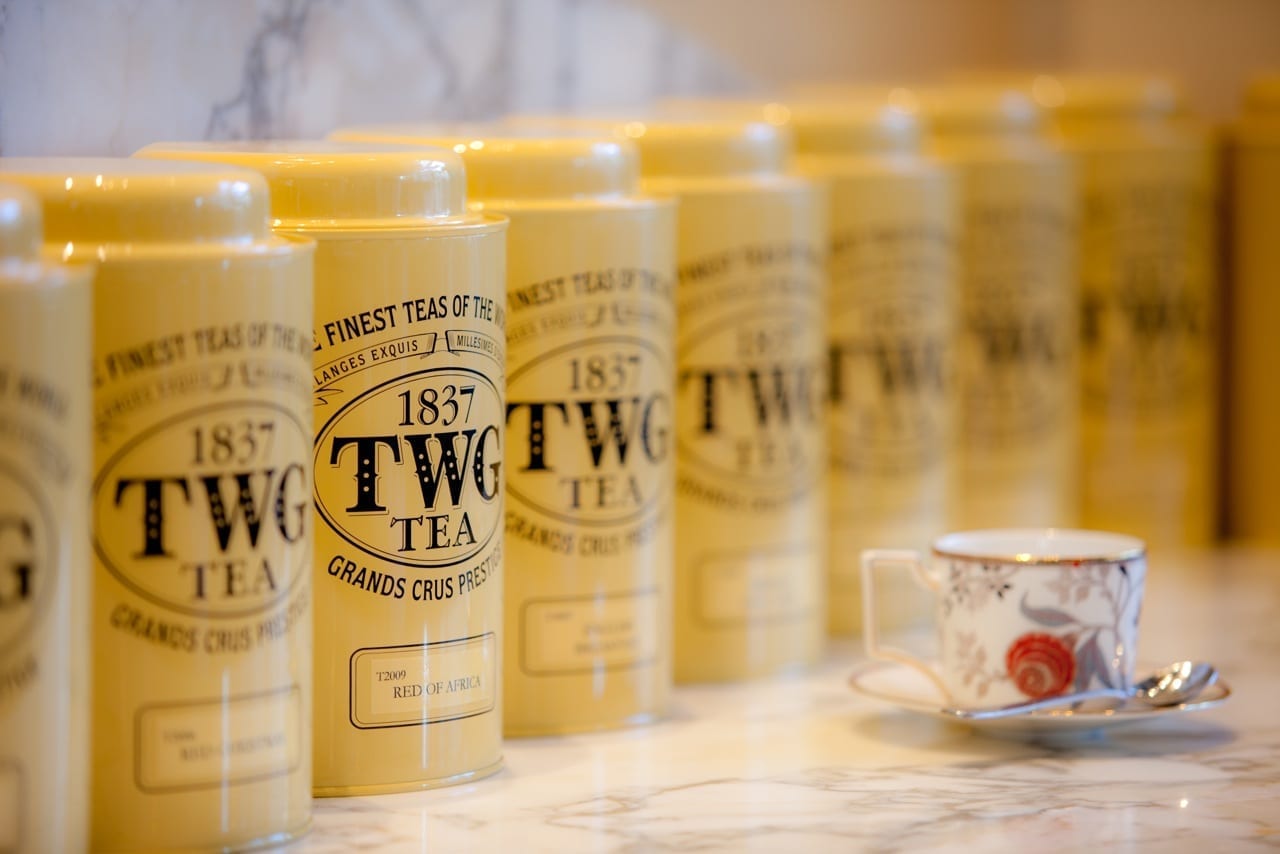
    Singaporean brand TWG Tea has entered the North American market with a store in Vancouver.

    In its eight years, TWG Tea has opened 56 owned and franchised boutiques and salons in 17 cities including Dubai, London and Shanghai.

    In Canada, its franchise and distribution rights have been bought by Tom and Karinna James, who previously owned Urban Tea Merchants in Vancouver. The city is ideal for TWG’s North American debut because of its tea culture, large Asian population and local appreciation for niche and artisanal beverages.

    “Our Asian population are very sophisticated tea drinkers,” says Tom James, thanks to the introduction of tea concepts such as Davids Tea and Starbucks’ Teavana.

    Tea sales in Canada reached $1.3 billion last year, with 40 per cent growth by 2020 predicted.

    Tom and Karinna James opened luxury tea house Urban Tea Merchant in 2004. The shop has been closed and will reopen as TWG next month with a boutique, salon and small wholesale component focussing on hotels and gourmet stores.

    Tea will be served in 18-carat gold-plated teapots, says James, who plans to open several stores in Canada.

  • Chow Tai Fook sales plummet

    Chow Tai Fook sales plummet

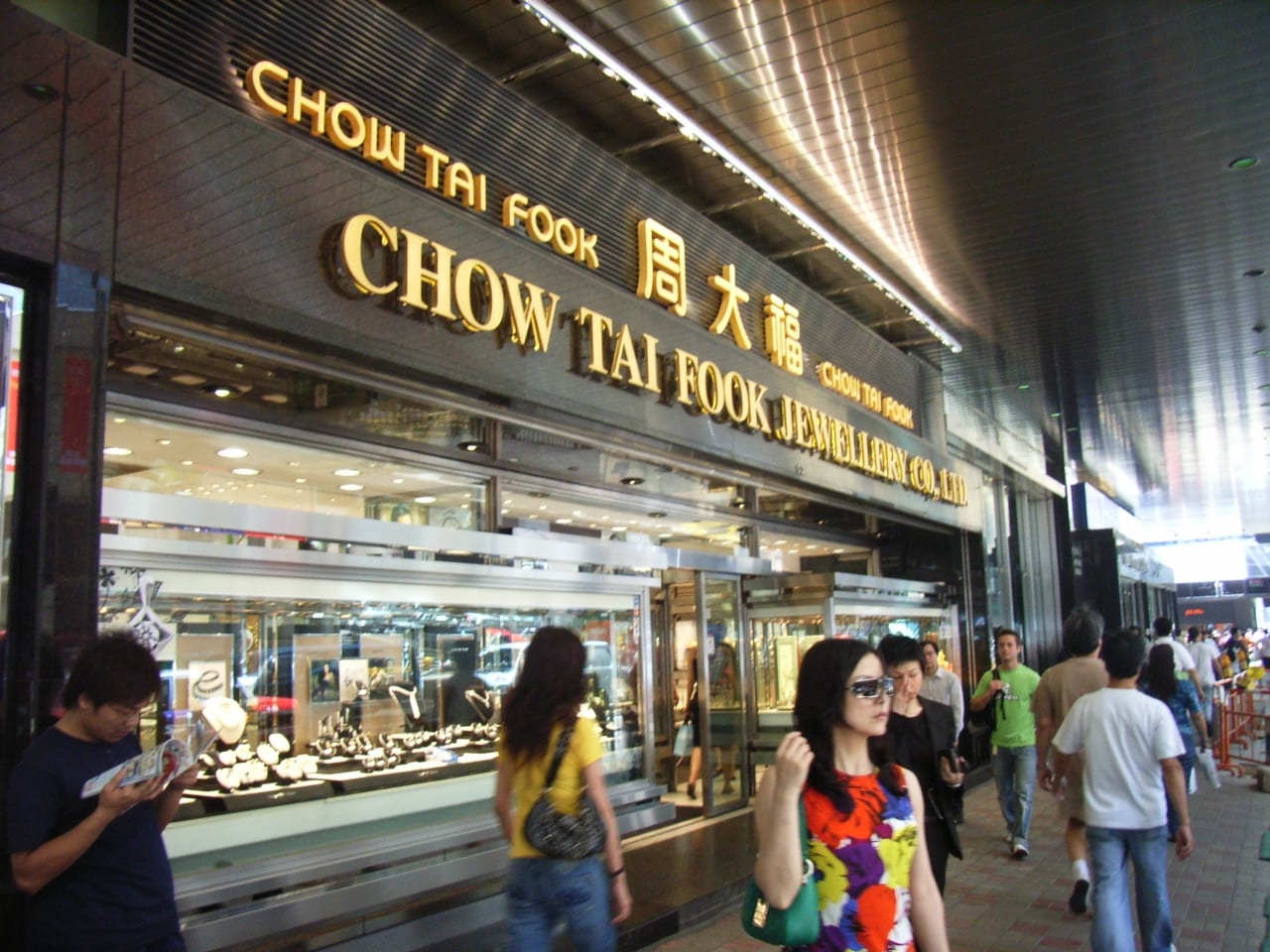
    Chow Tai Fook sales plunged in both Hong Kong and Mainland China markets in the quarter to September 30.

    By value, same-store sales fell by 30 per cent in Hong Kong and Macau and by 22 per cent on the mainland. By volume, same-store sales in Hong Kong fell 39 per cent, and on the mainland by 32 per cent, compared with the same quarter last year.

    Sales of gold products, which account for about 53 per cent of total sales, fell by 23 per cent in Hong Kong and Macau and by 27 per cent in the mainland. Gem set jewellery sales were down 23 per cent and 17 per cent.

    In a statement, the company said its figures in both markets were affected by the high base of 2015, when there was a surge in sales of gold as the price fell.

    But the changing buying behaviour of Mainland Chinese tourists also took its toll, evidenced by the percentage of total sales settled by China UnionPay of in RMB falling from 57 per cent to 43 per cent year-on-year.

    Chow Tai Fook opened a net 11 points of sale during the quarter: 12 jewellery stores and one watch store opened in Mainland China, while its Hong Kong store count dropped by two. At the end of September, Chow Tai Fook had 2326 points of sale.

  • Global m-banking userbase to hit 2b by 2021

    Global m-banking userbase to hit 2b by 2021

    Over 2 billion consumers worldwide will have used their mobile devices for banking purposes by the end of 2021, up from 1.2 billion this year, Juniper Research predicts.

    Growth in mobile banking is being driven by consumer adoption of banking apps the changing way consumers manage their finances, the research firm said.

    The study found that the number of mobile banking logins are now exceeding that of internet banking logins in many markets. For example, the BBA (British Trade Association for Banking) announced that banking app logins in the UK reached a record 11 million per day during 2015, compared to 4.3 million internet banking logins during the same period.

    Meanwhile, a recent consumer survey conducted by Juniper Research found that around 65% of mobile banking customers in the US and the UK use an app to conduct banking services.

    The report found that banks are becoming increasingly concerned that their market position is being undermined by tech companies and pure-play vendors enabled by technology and regulations to enter the marketplace.

    Additionally, by 2017, banks in the EU will be compelled to open their APIs. This will result in many innovative new products that analyze (with permission) user data to create more attractive financial services for customers.

    “Recent industry shifts highlight why traditional banks must respond rapidly to retain market share by cultivating new revenue channels and enhancing existing base through sustained innovation,” research author Nitin Bhas said.

    “However the challenge here for new players is to increase market share and maintain profitability in the long-run.”

  • Cashless push stimulating APAC m-payment market

    Cashless push stimulating APAC m-payment market

    A top down regulatory push toward cashless societies will stimulate exponential growth in the mobile payment market in Asia-Pacific (excluding China and India), which will surge from $71.92 billion to $271.47 billion by 2021, research from Frost & Sullivan indicates.

    According to the research firm, the number of active customers will also double to 130.8 million users by this time.

    With standardization and increasing openness toward FinTech, competition is intensifying for the entire supply-side ecosystem. Mobile payments solution providers will need to fully understand the mobile payments market in the region to gain an edge.

    Asia-Pacific is expected to continue to lead the world in mobile payment developments as smartphone penetration here is the highest. Apple, Samsung and Google with Apple Pay, Samsung Pay and Android Pay have also addressed existing security concerns through tokenization in the payment infrastructure, supplemented by biometrics on the smartphone.

    “The mobile payments market in Asia-Pacific, however, is guided by local preferences and considerations,” noted Frost & Sullivan Digital Transformation Industry Principal Analyst Quah Mei Lee.

    “For instance, in Indonesia and the Philippines, telcos lead with their e-money products whereas in Japan, South Korea and Australia, credit card is the key payment method. Understanding these dynamics is critical for mobile payments solution providers to succeed.”

    Mobile payment in Asia-Pacific is being led by developed countries such as Japan, South Korea, Australia and Singapore. Japan and South Korea has dominated since the early days of near-field communications (NFC) in 2011 and continues to account for 89.2% of market revenue share in Asia-Pacific.

    Among mobile payment market segments, m-commerce dominates despite the rapid increase in point-of-sale (POS) payment transaction volumes. The strong deployment of NFC in some countries is expected to help expand POS payment shares.

    For now, the mobile payment market has the most promise in countries that have a mandate to go cashless, like South Korea, Australia, Singapore and Malaysia. These will be followed closely by countries such as Thailand and Vietnam which are slowly transitioning to cashless.

    “The opportunities are limitless and mainstream integration of mobile payments into everyday life is already underway,” said Quah. “Even beyond this, there is tremendous potential for growth alongside connected devices in the Internet of Things era.”

  • Ooredoo Maldives signs deal with Thuraya

    Ooredoo Maldives signs deal with Thuraya

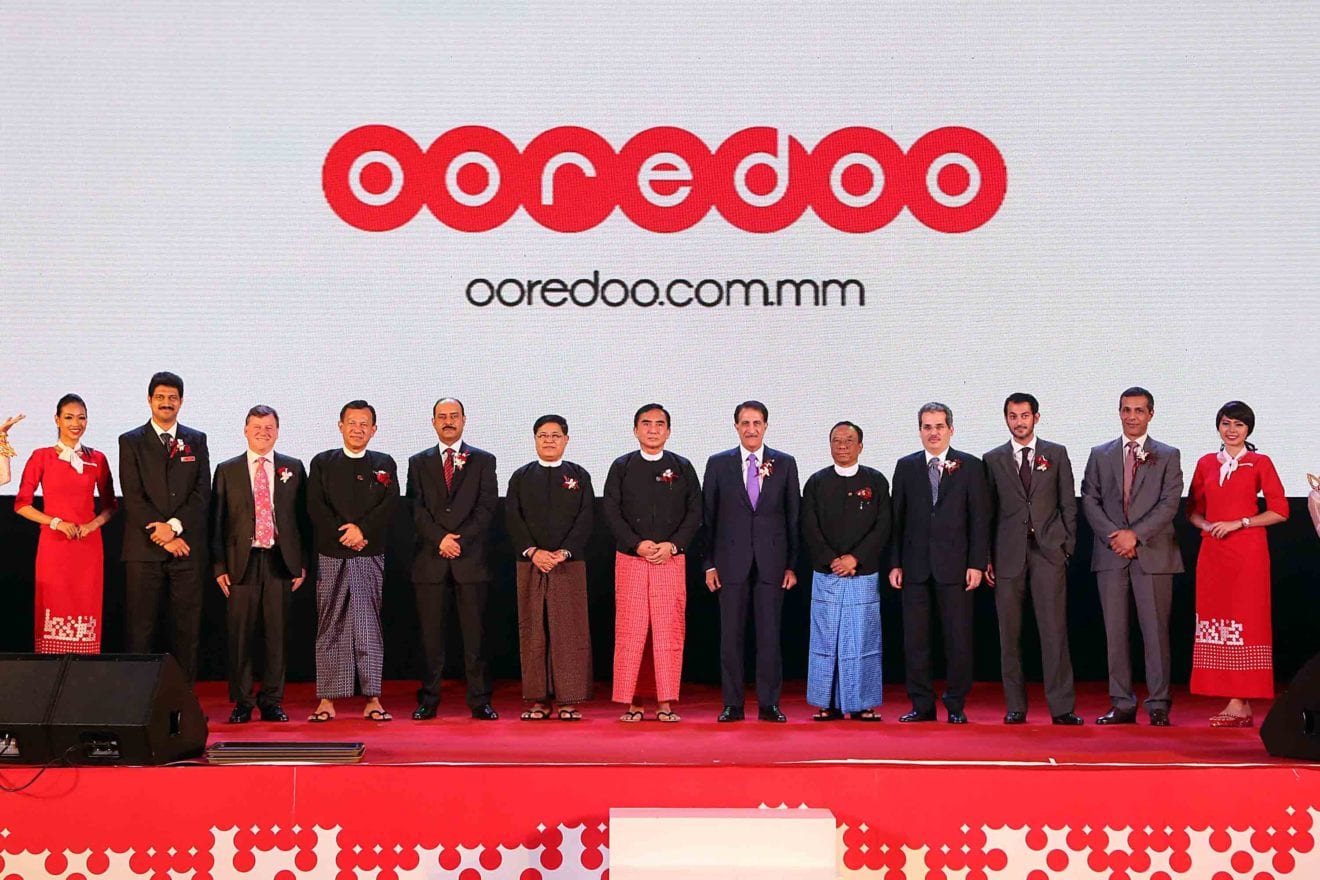
    Ooredoo Maldives has contracted mobile satellite services provider Thuraya to supply fisheries and resorts in the tropical nation with satellite-based voice and broadband connectivity.

    The operator yesterday launched Thuraya SatSleeve+ and SatSleeve Hotspot devices and accompanying data packages at its retail outlets.

    In the first phase of the partnership, Ooredoo is offering the devices and services to fisheries under a two-year contract.

    The agreement addresses a mandate from the Maldives government requiring commercial fishing operators to outfit their vessels with satellite equipment and supply anglers with satellite phones, to address requirements including worker safety.

    Ooredoo’s Hussain Niyaz commented that “traditionally, fishery is the main occupation and major source of livelihood in the Maldives. It is also the second largest industry in the country. Safety is an important driver in this sector, where there are many accidents.”

    In the second phase of the agreement, which will come into effect later this year, the operator will market the services to the Maldives’ 105 plus resorts.

    This too will fulfil a mandate by the government requiring all resorts and tourist facilities to install satellite communications equipment as an additional safety measure.

  • RFID market is growing

    RFID market is growing

    IDTechEx Research has tracked the RFID market since 1999. IDTechEx find that in 2015, the total RFID market is worth $10.1 billion, up from $9.5 billion in 2014 and $8.8 billion in 2013. This includes tags, readers and software/services for RFID cards, labels, fobs and all other form factors, for both passive and active RFID. IDTechEx forecast that to rise to $13.2 billion in 2020.

    In retail, RFID continues to be adopted for apparel tagging – that application alone will demand 4.6 billion RFID labels in 2016 – which still has some way to go with RFID penetrating about 15% of the total addressable market for apparel in 2016. RFID in the form of tickets used for transit will demand 800 million tags in 2016. The tagging of animals (such as pigs, sheep and pets) is substantial as it continues to be a legal requirement in many more territories, with 420 million tags being used for this sector in 2016.

    In total, IDTechEx expects that 8.9 billion tags will be sold in 2015 and 10.4 billion in 2016. Most of that growth is from passive UHF RFID (RAIN RFID) labels. However, in 2015 UHF (RAIN RFID) tag sales by value will only be 11% of the value of HF tag sales, mainly because HF tags where used for security (such as payments, access etc) have a higher price point versus the cheaper, usually disposable UHF (RAIN RFID) tags used for tagging things.

  • Lenovo launches transit app in China

    Lenovo launches transit app in China

    Lenovo has commercially launched its transit application in China with the electronic payment and settlement service provider BMAC (Beijing Municipal Administration and Communications Card).

    The service is supported  on Lenovo X3 smartphones driven by the eSE PEARL by OT (Oberthur Technologies).

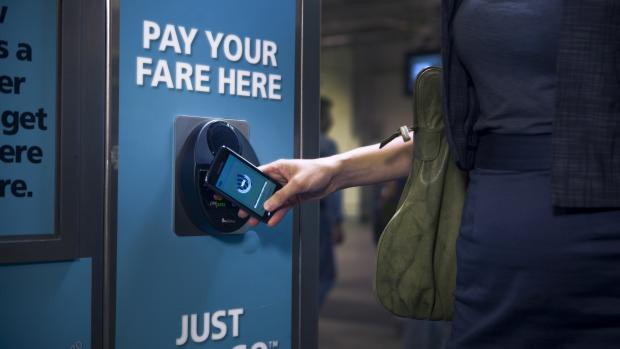
    Thanks to OT’s NFC embedded Secure Element, end-users can now use their Lenovo X3 smartphone to install the Beijing Municipal Administration Traffic Card in their Lenovo Transit application and commute simply by waving their phone in front of contactless transit terminals.

    PEARL by OT is described as  the most advanced embedded Secure Element on the market, offering a yet unattained level of security and the largest memory on the market. It allows easy deployment of secure mobile contactless payment, transit, governmental and automotive applications, as well as secure access to online services for enterprise and consumer markets.

    In addition to its eSE, OT provides its Key Management System to Lenovo to manage security domains on the eSE in which partners can securely load, install and run their applications.

    Via its China Secure Hub, a platform used to connect handset makers and their partners in different cities in China, OT also securely ensures the connectivity between Lenovo and BMAC’s TSM provider, Beijing eNFC science and technology.

    “China is often at the forefront of new technologies and we are happy to offer Lenovo users with a convenient, secure and easy-to-use way of commuting with the BMAC application” said Viken Gazarian, deputy managing director of the connected device makers business at OT.

    “PEARL by OT is the best eSE on the market to address the fragmented market of transport systems throughout the world and is the sole component to support international as well as Chinese transit technologies,” said Gazarian.

  • ‘Tremendous challenges’ for Chinese eCommerce

    ‘Tremendous challenges’ for Chinese eCommerce

    Chinese eCommerce companies could face “tremendous challenges” as Alibaba aims to transform the the mainland’s traditional retail industry, worth an estimated US$4.5 trillion.

    In a letter to shareholders, CEO Daniel Zhang says the company hopes to “upgrade” traditional retailers through improvements to distribution, service and product manufacturing.

    “The most important opportunity on the horizon is not growing online sales in isolation but rather helping traditional retailers upgrade into a brand-new retail model,” he writes. “The consumer retail industry as a whole is experiencing radical disruption driven by digital transformation.”

    Alibaba chairman Jack Ma has set a target of 20 years to attain 2 billion customers and support 10 million profitable businesses globally.

    Zhang cites cloud-based infrastructure and data as two areas where Alibaba sees future growth.

    “Cloud computing and big data will become ubiquitous,” he says. “Data has already become the new ‘natural resource’ that is as vital as oil and electricity. Cloud computing is the new ‘engine’ powering commerce.”

  • Zurich Insurance has launched a solution in Hong Kong and Singapore

    Zurich Insurance has launched a solution in Hong Kong and Singapore

    Zurich Insurance has launched a solution in Hong Kong and Singapore which provides risk-assessment services and protects businesses against the risks associated with supply chain disruptions.

    Called Zurich Supply Chain Insurance, the product is the first-of-its-kind in the Asia-Pacific region and is now available to qualified customers based in the two markets.

    “Increasing globalisation, improved transport and logistics through to technological advancements have enabled companies to source materials from virtually anywhere in the world,” said Keith Thomas, chief executive officer of Zurich’s Global Corporate in Asia Pacific business unit. “While this provides increased flexibility and cost savings, it can also result in complex supply chains that are highly interconnected, more exposed and difficult to manage.”

    According to Zurich, the new solution helps reduce supply chain failures and provides cover if delayed or undelivered supplies result in a financial impact on a company’s operations. Supply Chain Insurance consists of two components. In the first phase, risk engineers carry out a risk assessment to identify and evaluate customers’ exposure to critical risks throughout their supply chain, and recommend prioritized mitigation actions. In the second phase, the risk assessment is combined with other sources of data to underwrite and price the risk.

    “Many organizations are not aware who their key suppliers are, especially in the lower levels of the supply chain, and very few have visibility over their entire supply chain,” said Hassan Karim, technical underwriting manager of Zurich Asia Pacific. “Half of supply chain disruptions occur beyond the preliminary supplier of goods, therefore making it extremely difficult to establish where an organization lies within its suppliers’ priorities.”

    Karim added that it is essential to take a holistic approach and to identify critical supplies when working with customers to manage their exposures.

    “Effective supply chain risk management can present significant benefits to businesses and is becoming an increasingly important driver of their profits,” he said. “Every customer’s supply chain is different so we work with them to shape the appropriate solution and offer an individually tailored policy to meet their specific needs.”

    The Supply Chain Insurance solution has been available in Europe and North America for the past six years, according to Zurich.


  • Vodafone plans to launch world’s first NB-IoT networks

    Vodafone plans to launch world’s first NB-IoT networks

    Vodafone has revealed plans to launch what it expects will be the world’s first live commercial narrowband IoT (NB-IoT) networks in early 2017.

    The operator will launch LPWA NB-IoT networks in Germany, Ireland, the Netherlands and Spain during the first three months of the year.

    Vodafone said it will be able to implement the NB-IoT rollout by way of a software upgrade to its existing 4G base stations, allowing the company to deliver nationwide coverage almost immediately in the four markets.

    The operator plans to roll out the technology to additional markets later in the year, and provide full coverage of the operator’s global network by 2020.

    In preparation for the launch Vodafone has been conducting testing of the technology. Last week Vodafone Spain completed the first test of an NB-IoT connected product on a commercial network, by burying a parking sensor in a space within Madrid’s Vodafone Plaza. A smartphone app was able to display that the space was occupied when a car was parked in it.

    “The questions of battery life and deep in-building penetration have now been answered by NB-IoT,” Vodafone’s director of IoT Ivo Rook said.

    “The low cost of the modules means we can expect a new wave of connected devices and soaring market demand. Vodafone’s world leading expertise and experience in IoT will prove invaluable in shaping this exciting market.”

    Singapore’s M1 has also announced plans to deploy a commercial NB-IoT network in 2017, but did not specify the time during the year that the company plans to launch.

  • Vodafone Australia to offer fixed broadband services

    Vodafone Australia to offer fixed broadband services

    Vodafone Australia has revealed plans to branch out into offering fixed broadband services over the national broadband network (NBN).

    The operator plans to extend into fixed-line broadband to give its mobile customers more access to data both at home and on-the-go.

    While the NBN rollout is not scheduled for completion until 2020, around three million premises have access to the network and more than 1.1 million have signed up.

    At a press briefing, Vodafone Australia CEO Inaki Berroeta said the move into fixed broadband is a “natural progression” for the company, and it’s the right time to make the move because the NBN project is reaching the scale required to deliver an NBN service that complements its mobile network. It is expected that 4 million premises will be NBN-ready by the end of the year.

    Vodafone plans to make its first commercial NBN services available next year.

    Market research from Roy Morgan indicates that 550,000 of Vodafone’s mobile customers already intend to switch fixed broadband provider over the next 12 months, giving the operator a large potential market at the ready.

    Vodafone’s customers are also over 50% more likely than average to be dissatisfied with their current fixed broadband provider, and are statistically 10 percentage points less likely than the national average to have market leader Telstra as a fixed broadband provider.

  • How to make the most of the Asian food retailing boom

    How to make the most of the Asian food retailing boom

    Asia’s consumers are expected to spend US$5.9 trillion on food, beverages, and tobacco by 2018, making up 60 per cent of global expenditure in this category.

    This means retailers need to expand aggressively, scaling up in new markets and keeping their supply chains adaptable to target more customers to make the most of the Asian food retailing boom. The middle class population in Southeast Asia is projected to grow to 400 million by 2020 and businesses that fail to scale will miss out on this tremendous market opportunity.

    Food retailing is all about delivering the best customer experience through high on-shelf availability (OSA), wide stock variety, and immaculate product quality to drive sales. Whether you are a convenience store chain, supermarket, or hypermarket, the goal is to build and retain a loyal customer base while keeping operating costs low to ensure prices remain competitive. However, food retailers in Asia Pacific face a unique set of roadblocks.

    Countries across the region are at different stages of development. With geographic diversity, companies face significant challenges when it comes to taking advantage of the growth possibilities. This will prove problematic, especially with Asia Pacific’s status as the world’s largest and fastest growing B2C eCommerce region. Consumers will expect faster, better services from food retailers as their threshold for waiting times lower in the “on-demand” age.  A recent announcement by Kantar Worldpanel forecast online grocery sales will be worth US$150 billion by 2025 – currently South Korea and Japan hold the first and second spots on the global e-commerce grocery market with Taiwan in the fifth position and China coming in sixth.

    The Four Ingredients of Supply Chain Success

    Asian food retailers , especially those selling fresh or frozen products, face issues due to the time-sensitive nature of the products which spoil quickly if not kept in the right conditions. Delivering chilled or frozen food across long distances is difficult due to infrastructure and asset availability, with options such as local sourcing or storage not always feasible. In light of these factors, it is critical to change the mindset to view the supply chain as a strategic business enabler driving competitive advantage, rather than a backend function focused on transport and storage. Here are four key ingredients to get you on your way.

    1. Take a fresh look at your supply chain

    Make a commitment to review your supply chain from end to end. What you need to look out for are potential cost inefficiencies and gaps in service performance, and understand the underlying reasons why these occur to help identify appropriate new solutions. For example, can you automate packing processes to speed up your deliveries down the line? Are you facing over- and under-stocked inventories because you cannot accurately anticipate supply and demand? Getting these questions answered is vital to your success. One route is to engage a consultant to assist. However, a specialist supply chain partner with extensive expertise will not only help with the review and design, but also has the capability to deliver. But also think about the long-term strategy and predicted expansion so that the new design is fit not just for today, but for your future business.

    1. Streamline your operations end to end

    Facilities, people, transportation, and technology are the ingredients within your supply chain that influence your overall business performance. Hence, it is important to make the right investments and realise the maximum benefits through continual review and optimisation.

    You can begin by analysing your truck fleets and find ways to fully use their capacity and improve routing. New designs and technologies enable delivery trucks to have different temperature zones to transport ambient, chilled, and frozen products in the same vehicle – enabling food products to be consolidated and transported using a single vehicle rather than needing to run multiple vehicles to the same location. And to accelerate deliveries, transport management systems provide insight and data analysis to determine the quickest and most cost-effective routes – incorporating telematics and real-time tracking gives full visibility throughout the journey which can lead to far more efficient unloading processes at the receiving end. Often, retailers can leverage a specialist 3PL like DHL and its existing investments in resource, technology, facilities and assets, such as trucking, to reduce retailers’ cash outflow and deliver a competitive cost-per-unit. In addition, a good supply chain management (SCM) partner with inroads in emerging markets can offer effective consultation on building delivery networks in new territories.

    1. Add visibility and control

    Gaining more control over your supply chain empowers you to navigate and anticipate any potential disruptions to food product deliveries. The first step is to improve visibility over inventory levels to maximise OSA whilst minimising spoilage – it’s a fine balance to manage and focus on the detailed insights of supply and demand patterns. Inventory optimisation manages stock cost effectively, balancing stock holding with customer service levels by taking into account availability, requirements, and lead time variability.

    A high level of inventory is not only capital intensive but also expensive to service through increased indirect spend, such as warehousing, transport, and procurement. Hence, not only will inventory optimisation reduce logistics costs, but drive excellent service to create satisfied customers by having the right stock at the right location.

    By looking at inventory holding, you can then make informed decisions about your storage requirements, and whether other options are more suitable. For instance, instead of using a conventional warehousing model, you can complement it with cross-docking for fast-moving goods. This speeds up distribution and reduces warehousing space as stock is not moved into storage. You can also consider hybrid inventory models to make the most of your existing warehouse facilities. Effective solutions can help you achieve an average inventory age of between 15 and 30 days which brings the additional benefit of improving cash flow. Achieving these metrics is not easy but specialist knowledge, experience, and sophisticated systems are the catalysts to creating a lean and responsive operation.

    1. Innovate to deliver

    Innovation has become a critical differentiator for food retailers in recent years. Automated sorting and storage retrieval solutions can speed up picking processes and shrink warehousing footprints; packaging technologies can quickly create promotional packs with minimal labor requirements; and IT system development will enhance customer experience should shoppers switch from purchasing in-store to online, where they will have home delivery or “click and collect” options. These are just a few developments and there are many more taking place to help meet the ever-increasing customer expectations when making decisions.

    Get Your Supply Chain Right

    Supply chains are no longer just “part of the organisation” for today’s food retailers. An adaptive and flexible supply chain is the difference between winning and losing the market – given the escalating demands of customers. You must understand your customers, and then focus on those elements which are most important to them to drive sales. Whether you are competing on price, convenience, or quality or even a combination of all three, these best practices will give you a head-start in creating an integrated supply chain that will bring advantages now and into the future.

    If you are part of the Asian food retailing industry, you need to start re-thinking your supply chains today to meet the challenges of tomorrow.

    -Dean Eichorn-

  • FPT Retail Vietnam sets up milk store chain

    FPT Retail Vietnam sets up milk store chain

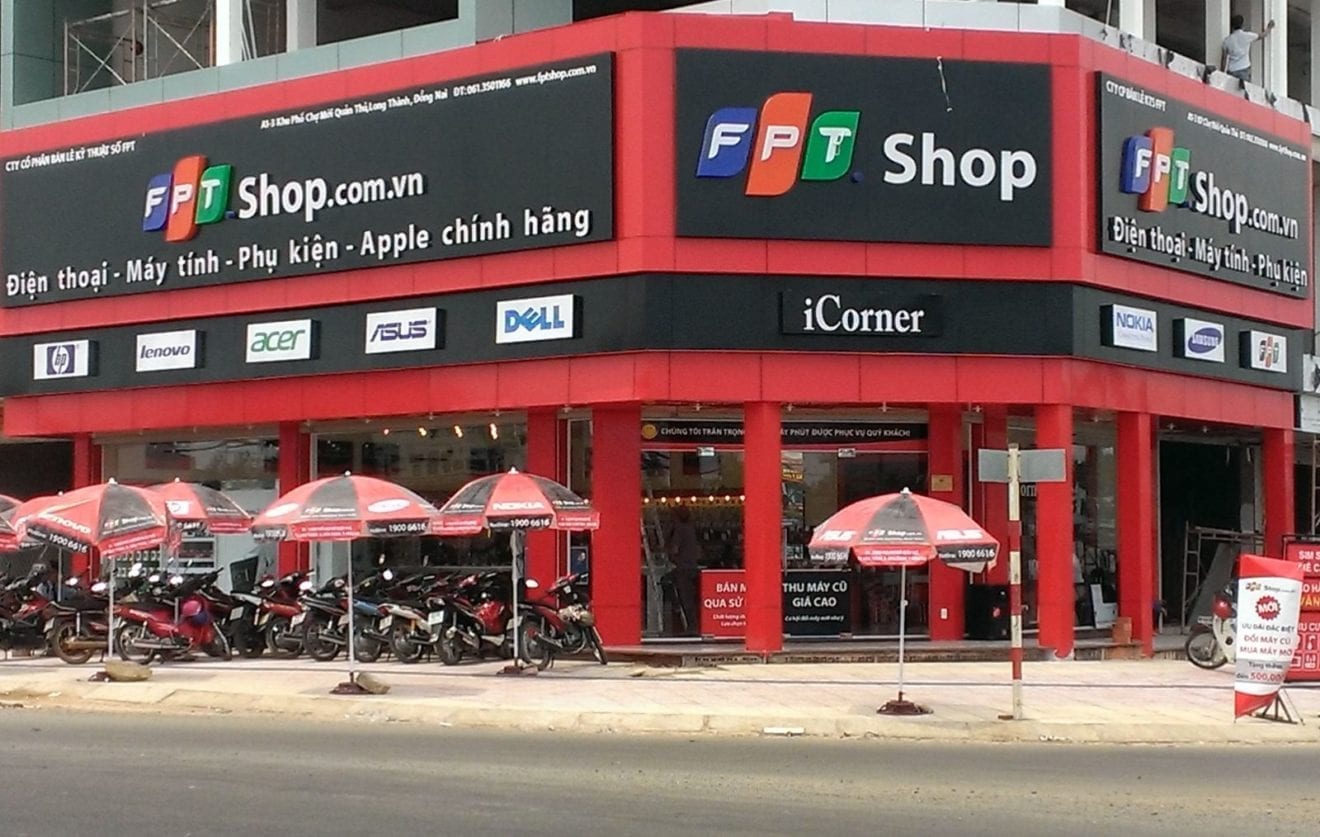
    Vinamilk and FPT Retail Vietnam have entered a joint venture to open a chain of stores specialising in dairy products.

    This “uncommon partnership” is hoped to bring benefits to both parties, FPT adding extensive retail industry experience and insight, Vinamilk a household name and favourite brand.

    A six-month pilot program will see the concept trialled at two of 200 FPT stores in Ho Chi Minh City, with a nationwide rollout to follow if the trial proves a success. Most of the stores will be located alongside an FPT store.

    Vinamilk-FPT instore

    The two sides hope this ‘win-win partnership’ will maximise their own strengths in manufacturing, distribution and retail.

    Shoppers at the Vinamilk stores will have access to product information, direct or online consultation, delivery and other promotions and offers.

    Vinamilk started selling dairy products online earlier this month to compete with new players in the dairy market, including Dutch Lady, Mead Johnson, Nestle, Abbott and TH True Milk.