Tag: asia

  • ASEAN e-commerce market keeps booming

    ASEAN e-commerce market keeps booming

    The ASEAN region (The Association of Southeast Asian Nations) is emerging as one of the most promising e-commerce markets in the world to replace the saturated Chinese market.

    Following the establishment of the ASEAN Economic Community (AEC) at the end of 2015, e-commerce is providing huge opportunities for Korean retailers seeking new customers abroad.

    Most member states of ASEAN, including Indonesia, Thailand, Malaysia, Singapore, the Philippines and Vietnam, are experiencing an e-commerce boom.

    The Internet-based retail market has been relatively underdeveloped in Southeast Asia due to low Internet penetration and lack of customers with purchasing power.

    However, with the middle class growing and Internet penetration spreading, the number of online and mobile shoppers in the region is rising fast.

    Still, it is fragmented and Internet users account for only around 40 percent of the total population of Southeast Asia, indicating that the region has much room to grow.

    According to the 2016 report “E-Conomy SEA (Southeast Asia)” released jointly by Singapore’s sovereign fund Temasek and Google, the average annual growth rate of Internet users in the region is forecast to reach approximately 14 percent by 2020, well above 4 percent for China and 1 percent for the United States.

    Online shoppers, accordingly, are also on a sharp rise.

    According to Bain & Company, the number of digital consumers, or those aged over 16 and using e-commerce, reached 150 million in 2015. Of them, around 100 million or 75 percent actually purchased goods online.

    By nation, Indonesia ranked at the top with 51 million digital consumers, followed by Vietnam (31 million), the Philippines (28 million), Thailand (23 million), Malaysia (14 million) and Singapore (3 million).

    “Chinese and global Internet companies should look at Southeast Asian e-commerce as their next potential gold rush,” reported IT-specialized media TechCrunch in June, 2015.

    In particular, ASEAN’s e-commerce has a special feature that sets itself apart from other countries.

    For example, the online retail market in the U.S. and Korea first grew with expansion of PC-based shopping. However, Southeast Asia experienced the e-commerce boom with more consumers accessing Internet via smartphones.

    In 2015, e-commerce in the ASEAN is estimated at $5.5 billion (6.06 trillion won), and the amount is expected to rise to $8.78 billion by 2025, according to E-Conomy.

    The portion of e-commerce to retail sales in the region stood at only 0.8 percent in 2015 but is forecast to jump to 6.4 percent by 2025.

    Global players eye ASEAN

    Against this backdrop, global players are making fast forays into the ASEAN e-commerce market.

    In April, Alibaba, China’s largest e-commerce company, purchased a controlling stake in Southeast Asian online retailer Lazada Group for $1 billion, its largest overseas investment.

    Lazada was started by Germany’s Rocket Internet in 2012 with headquarters in Singapore. It is operating in Malaysia, Indonesia, the Philippines, Thailand and Vietnam. It is the number one e-commerce player in Philippines, Malaysia, Thailand and Vietnam.

    In June, U.S. retail giant Amazon also decided to invest $600 million to open an e-commerce platform in Indonesia, according to Daniel Tumiwa, chairman of the Ecommerce Association of Indonesia (IDEA).

    Japanese SoftBank and Silicon Valley venture capitalist Sequoia Capital acquired a $100 million stake in Tokopedia, the biggest startup investment in Indonesia. eBay, another U.S. e-commerce giant, currently owns Qoo10, the online shopping mall based in Singapore.

    Korean companies are also expanding their operations in the region to capitalize on the rising popularity of hallyu or the Korean Wave.

    On Sept. 20, CJ Korea Express, South Korea’s largest parcel delivery service company, signed an international delivery service contract with Lazada. Under the deal, CJ would deliver goods made in Korea purchased by customers via Lazada’s website.

    On the same day, KOTRA, Korea’s trade-investment promotion agency, joined hands with Qoo10 to start an online support program and help Korean small firms export their goods to Southeast Asia. Qoo10 has a total of 300 million online members in Singapore, nearly 60 percent of its population.

    SK Planet opened 11th Avenue, its online shopping mall, in Indonesia in 2014 and Malaysia in 2015.

    Korea is now focusing on expanding exports of consumer goods to ASEAN as it has faced limitations to increase external shipments of parts and intermediary products.

    “With more Korean firms entering the ASEAN e-commerce network, including Lazada, exports of Korean consumer goods, such as mobile phones, cosmetics, food and fashion items, are on a sharp rise,” Roh In-ho, KOTRA’s Asia Regional Director based in Singapore, said.

    For sustainable growth, Korean firms need to make more effort to come up with localized strategies that meet demands from local customers.

    “If diversifying marketing strategies, ASEAN e-commerce will offer good opportunities for small Korean exporters,” Roh said. “It is very important to develop designs and products that locals would like.”

  • LIU JO Open at Paragon Mall in Singapore

    LIU JO Open at Paragon Mall in Singapore

    Italian fashion brand Liu Jo is pleased to announce the opening of its new boutique in the prestigious Paragon Mall in Singapore. It is also the key flagship boutique for South East Asia region.

    The impressive vast 3,305 square feet boutique marks an important milestone in Liu Jo’s fast-growing expansion in the Asia region and continues the new exciting Curiosity retail concept which aims to create an exclusive but warm and homely ambience for its shoppers. The new layout highlights precious metals in a modern, intriguing design, presenting a minimalist, sleek and sophisticated décor to give pride of place to its collections. Complemented with the recognisable Liu Jo brand codes and signature eclectic style, the new boutique presents a refreshed expression of the brand’s mission to celebrate feminine elegance and quality.

    Previously located at Wisma Atria Mall, loyal followers of the brand will be pleased to know that the new Paragon boutique boasts a larger retail space, and will house an extensive selection of the Italian brand’s ready-to-wear and accessories offering. Liu Jo Black Label Collection, Liu Jo White Label Collection, Liu Jo Blue Denim Collection, Liu Jo Gold Label Collection, Liu Jo Sport, Les Plumes de Liu Jo, Liu Jo Accessories, Liu Jo Shoes and the Liu Jo Eyewear and, Liu Jo Fragrances will be available at this flagship boutique.

    This new Paragon boutique is a key step to the development of the Italian company to increasing and strengthening its global market share. Singapore will play a strategic key role: it will be a key platform for further focus on the rapid growth of the South East Asia market.

    Presenting a new interpretation of accessible luxury shopping, this new boutique marks the continuation of the steady success and popularity the brand enjoys in Asia. The international fashion brand currently has presence in 50 countries and 3 different continents – Europe, Africa and Asia – through a distribution network including over 350 mono-brand points of sales and 5000 multi-brand points of sales world-wide.

  • The first ever SPAR China Congress

    The first ever SPAR China Congress

    The first ever SPAR China Congress kicked off in Weihai, in the Shangdong Peninsula yesterday. The three-day long Congress is being attended by SPAR International Board members, SPAR colleagues from across China and international retail experts as well as guest speakers and strategic partners.

    The Congress gives SPAR China Partners the opportunity to share best practice with each other and international SPAR Partners. Also in attendance are Graham O’Connor, Chairman of SPAR International & SPAR South Africa; Peter Blakemore, Chairman of A F Blakemore UK, Tobias Wasmuht, Managing Director of SPAR International, Paul Klotz, Chairman of SPAR Italy and Knut Johansson, Chairman of SPAR Norway. Over 200 delegates representing more than ten nationalities are gathered in the city.

    Delegates will visit a number of SPAR stores and the food production centre in Weihai, which offers a unique opportunity to see the rapid expansion of retail formats and instore product offerings which are inherent to the market.

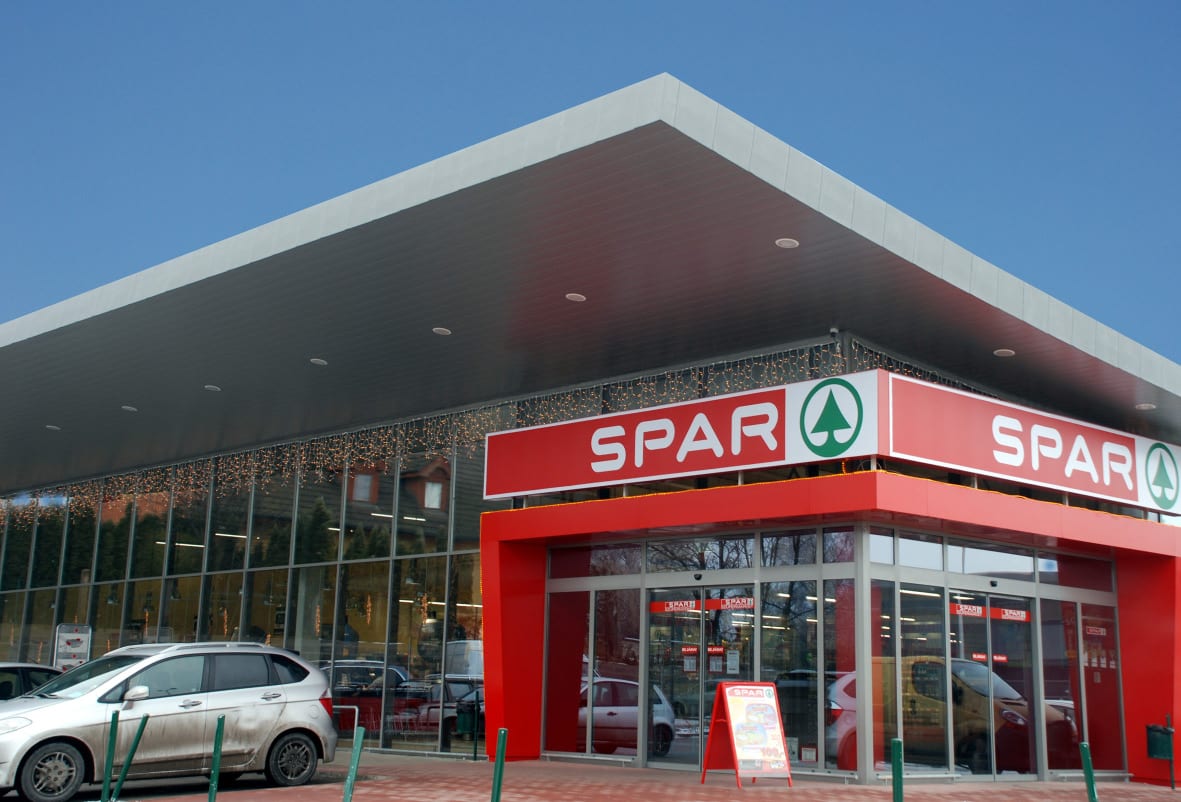
    Since entering China in 2004, SPAR now has a presence in the provinces of Shandong, Guangdong, Shanxi & Inner Mongolia, Beijing (city), Sichuan, Henan and Hebei and a central office located in Shanghai. SPAR China has adhered to the brand philosophy of freshness, choice, value and service, focusing on the development of the SPAR Hypermarket, SPAR Supermarket, SPAR Neighbourhood and SPAR Express formats. 

    Great support has been received from many of the SPAR Partners around the world during the development of the strong SPAR operation in China which has continued to show excellent results year-on-year and is ranked fifth amongst global SPAR Partners in turnover terms reporting €1.9 billion in the 2015 results. Investment continues not only in retail with 360 stores trading today, but also supply chain expansion across all of the regions in which SPAR trades.

    “We seek to grow and expand in unity with all our SPAR Partners by sharing our resources and knowledge, ‘Better Together’, just like the theme of the SPAR China Congress. The success of the Congress will help drive the booming growth of our partners and the retail market in China,” said Yoep Man, SPAR China Managing Director.

    A SPAR International Board meeting is also taking place this week in Weihai, enabling the Board of Directors to meet with the Partners from SPAR China and to at see first-hand the development of the brand in this high potential market. 

  • DHL Express has inaugurated its South Asia Hub at Singapore Changi Airport

    DHL Express has inaugurated its South Asia Hub at Singapore Changi Airport

    The €85 million (US$85.5 million), 23,600-square-metre facility is located at the Changi Airfreight Centre and features the first fully automated express parcel sorting and processing system in South Asia.

    “Over the years, we’ve invested significantly to bolster our network and services in Asia Pacific,” said Ken Allen, CEO of DHL Express. “Our investment in the DHL South Asia Hub is the most recent in a series of global network investments made, and is the largest infrastructural investment made in Singapore to date. The country’s strategic location not only boosts our operational network capabilities, but also supports growing trade in the region aided by a stronger global economy.”

    According to DHL, the 24-hour facility is 33 percent larger than the previous hub. It is also six times faster, being capable of processing up to 24,000 shipments and documents per hour and handling more than 628 tonnes of cargo during the peak processing window.

    “The DHL South Asia Hub is a significant milestone in further enhancing our multi-hub strategy in the region,” said Ken Lee, CEO of DHL Express Asia Pacific. “With four hubs in Asia Pacific — Hong Kong, Shanghai, Singapore and Bangkok — this links over 70 DHL Express Gateways located throughout the region. Together, these facilities reinforce our customer commitment to provide the most efficient international express connectivity between key markets in the region. This will also allow us to add more network flights in and out of Singapore, such as the recent introduction of the Phnom Penh-Bangkok flight that adds to our existing Bangkok-Singapore service, as regional trade continues to grow.”

    Between 2012 and 2015, the average number of shipments per day grew by 50 percent for Oceania, 30 percent for South Asia and 25 percent for Southeast Asia, according to DHL.

  • Indonesian herbal medicine to be marketed abroad

    Indonesian herbal medicine to be marketed abroad

    An original Indonesian herbal medicine, Jamu, will be marketed abroad in the Middle Eastern and ASEAN regions, the chairman of the Jamu Association of Central Java, Nyoto Wardoyo, said here on Wednesday.

    Jamu is made from natural materials, such as roots, bark, flowers, seeds, leaves and fruits.

    “Indonesias ambassadors in various countries have started to introduce Jamu to other countries, such as Arab nations and Hongkong,” he informed.

    According to him, Jamu is in demand in many countries because they have realized that its health benefits.

    “Jamu is well known for its nutritional value. Demand for the product is rising and the exports have increased,” he reiterated.

    He also appreciated the fact that the government is encouraging the herbal medicine industry to progress.

    “Entrepreneurs expect expeditious grant of a license. Once we complete all the requirements, we want the government to immediately issue a permit,” he stressed.

    He hoped for better synergy between farmers, entrepreneurs and university researchers to develop Jamu products.

    He also hoped that Jamu products could be a part of the BPJS health program.

    “When people suffer mild colds, coughs or flu, the doctors can treat them with Jamu,” he underlined.

    Thanks to these efforts, the usage of Jamu is expected to rise at home as well as abroad.

  • Beware the Internet of Unpatchable Things: Akamai

    Beware the Internet of Unpatchable Things: Akamai

    A recent spate of attacks involving attackers using IoT devices to remotely generate attack traffic by using a 12-year old vulnerability in OpenSSH have been discovered by researchers at Akamai Technologies.

    Akamai notes that the research and subsequent advisory do not introduce a new type of vulnerability or attack technique, but rather a continued weakness in many default configurations of Internet-connected devices. These devices are now actively being exploited in mass-scale attack campaigns against Akamai customers.

    The Threat Research Team said it has observed incidents of what it has called SSHowDowN Proxy attacks originating from the following types of devices:

    • CCTV, NVR, DVR devices (video surveillance)
    • Satellite antenna equipment
    • Networking devices (e.g. Routers, Hotspots, WiMax, Cable and ADSL modems, etc.)
    • Internet connected NAS devices (Network Attached Storage)

    Compromized devices are being used for mounting attacks against a multitude of internet targets and internet-facing services, such as HTTP, SMTP and Network Scanning. It is also being used to launch attacks against internal networks that host these connected devices.

    Once malicious users access the web administration console, they have been able to compromise the device’s data and, in some cases, fully take over the machine.

    “We’re entering a very interesting time when it comes to DDoS and other web attacks; ‘The Internet of Unpatchable Things’ so to speak,” explained Ory Segal, senior director for threat research at Akamai.

    “New devices are being shipped from the factory not only with this vulnerability exposed, but also without any effective way to fix it. We’ve been hearing for years that it was theoretically possible for IoT devices to attack. That, unfortunately, has now become the reality.”

  • Indonesia’s logistic sector lags behind other ASEAN countries

    Indonesia’s logistic sector lags behind other ASEAN countries

    Indonesia needs to work harder to improve its logistic sector because its performance lags behind those of other ASEAN countries such as Singapore, Thailand and Malaysia, Finance Minister Sri Mulyani said on Wednesday.

    “On the Logistics Performance Index (LPI), according to the World Bank, Indonesia stood at 63rd place of the 160 countries surveyed,” the minister said in her opening speech during the Jakarta International Logistics Summit and Expo in Jakarta.

    Singapore topped the list of ASEAN countries, ranking fifth globally, while Malaysia ranked 32nd and Thailand 45th, she added.

    The LPI is a benchmarking tool created to help countries recognize challenges and opportunities they face in their performance on trade logistics and improve it.

    She said there were aspects affecting the competitiveness of logistics in Indonesia, namely a lack of infrastructure and complex customs and excise procedures.

    “To realize this, the government has utilized the state budget and funds from the private sector to develop infrastructure across Indonesia,” she said.

    Besides improving infrastructure, another important measure is to fix the quality of regulations and simplify bureaucracy, she said.

  • KDDI, Toyota develop app to reduce road accidents

    KDDI, Toyota develop app to reduce road accidents

    Toyota Motor, Komeda and KDDI in September have jointly developed a smartphone application called Driving Barista, aimed at reducing the number of traffic accidents in Aichi Prefecture caused by drivers using their smartphones while driving.

    This is the first traffic safety initiative in Japan involving a smartphone application, which is to be carried out and jointly promoted by an automobile company, a communication company, and a food and beverage company.

    For thirteen consecutive years, Aichi Prefecture has had the highest rate of traffic fatalities in Japan. Furthermore, there were also 50,101 arrests involving the use of smartphones while driving, and the increase in violations of this nature has also intensified the problem.

    Toyota, Komeda, and KDDI will promote traffic safety in Aichi Prefecture through an educational initiative where participation is accessible for all, and can lead to a reduction in traffic accidents.

    The Driving Barista application can only be used within Aichi Prefecture. By using the gyro sensor to sense the tilt of the smartphone body, and the GPS to determine the distance driven, this application measures the distance the driver has driven while leaving the smartphone face down. When the cumulative distance reaches 100 km, the driver can receive a coupon for a cup of blended or iced coffee at a Komeda Coffee Shop.

    According to one survey, approximately 60% of respondents said they use their smartphones while driving, with approximately half of these respondents keeping only one hand on the steering wheel. Therefore, the companies hope that the new application will raise drivers’ awareness about not using smartphones while driving.

    “We have already been carrying out educational activities to prevent the use of smartphones while driving, and we hope that this initiative between the three companies will help solve the problem facing Aichi prefecture,” said Akira Dobashi, director in charge of CSR and environment at KDDI.

    “We developed the Driving Barista smartphone application as a fun way to help prevent traffic accidents,” said Dobashi. “We hope to contribute to accident prevention by providing a new experience for drivers.”

  • Hotel occupancy rates increase in Bali

    Hotel occupancy rates increase in Bali

    The occupancy rates of star rated hotels in Bali averaged 72.40 percent in August or an increase of 1.76 percentage points from 70.62 percent in the previous month.

    “The occupancy rate was quite encouraging when visits by foreign tourists shrank 9.52 percent in Bali compared with the previous month,” head of the Bali branch of the Central Bureau of Statistics (BPS) Adi Nugroho said here on Wednesday.

    Adi said the occupancy rates would boost hotel operators as an occupancy rate of 50 percent is enough to cover operating cost including salaries of employees.

    In August, 2016, Bali recorded 438,135 visits by foreign tourists including 437,929 arrivals recorded by the Ngurah Rai airport and 206 arrivals at seaport.

    The number of arrivals dropped 9.52 percent in August from July but an increase of 44.3 percent year-on-year, Adi said.

    Adi said most foreign tourists stayed at star rate hotels in six of nine regencies in the province.

    The highest occupancy rate was recorded by hotels in the regency of Badung averaging 75.38 percent or up from July, followed by hotels in the city of Denpasar averaging 66.34 percent though declining from the previous month.

    Hotels in the regency of Gianyar followed in the third place with occupancy rate averaging 60.01 percent , down from 66.84 percent in July , the regency of Buleleng recorded an occupancy rate of 57.69 percent up from 52.23 percent and the regency of Karangasem 47.45 percent, down from 50.92 percent.

    Three other regencies – Jembrana, Bangli and Klungkung – have no star rated hotels . They have only inns or non standard hotels.

    Four star hotels recorded the highest occupancy rate averaging 78.16 percent, followed by five start hotels averaging 77.31 percent, one start hotels 64.96 percent , three start hotels 58.55 percent and two star hotels with occupancy rates averaging 56.31 percent.

    Adi Nugroho said despite the significant increase in the occupancy rate. the increase was recorded only in the regencies of Badung and Buleleng.

    In three other regencies, hotel occupancy rates declined including in the city of Denpasar, regencies of Gianyar and Karangasem, Adi Nugroho said.

  • Telstra close to launching Gigabit-class LTE

    Telstra close to launching Gigabit-class LTE

    Telstra has worked with Qualcomm, Ericsson and NETGEAR to develop the world’s first Gigabit-class LTE mobile device and Gigabit-class commercially ready LTE network.

    A new NETGEAR mobile router based on Qualcomm’s Snapdragon X16 LTE modem and Wi-Fi equipment will enable download speeds of up to 1Gbps over Telstra’s upgraded LTE network, which uses equipment supplied by Ericsson.

    Telstra now plans to conduct device, network and user testing ahead of a commercial launch, which is expected within the next few months.

    Combined, the equipment is capable of delivering Gigabit-level LTE speeds through a combination of 3x carrier aggregation, 4×4 MIMO on two aggregated carriers and 2×2 MIMO on the third, as well as 256-QAM.

    “We pride ourselves on our connectivity expertise and we continue that tradition today by completing the first commercialization of a Gigabit Class LTE network and device,” Telstra group managing director of networks Mike Wright said.

    “With the world’s first Gigabit Class LTE network, we have substantially improved our network capacity and increased real-world LTE download speeds, while also gaining a distinct advantage over competitors as we can now offer an entirely new class of LTE service.”

    Ericsson head of RAN products Per Narvinger added that “Telstra’s commercial ready Gigabit Class LTE network and device is an important milestone as it paves the path to 5G.”

  • Renault launches two new cars in Indonesia

    Renault launches two new cars in Indonesia

    Despite a bleak forecast for the automotive market in Indonesia, French carmaker Renault and its local partner PT Auto Euro Indonesia launched two new products in Jakarta on Wednesday: the KOLEOS and KWID.

    Serge Yoccoz, Renault ASEAN director of operations, said Indonesia was one of only a few countries to see the launch of the KOLEOS, a medium sport utility vehicle (SUV), ahead of Europe.

    “The new KOLEOS will be [Renault’s] flagship for the Indonesian market,” he said. “It has been redesigned to have unique features and has the ability of an SUV.”

    As for the KWID, Yoccoz added, the mini crossover would be offered for consumers eyeing high fuel efficiency and low maintenance costs. “The KWID will be able to address Indonesian customers’ [demand] for a stylish car,” he said.

    The KOLEOS is offered at Rp 460 million for its standard version and Rp 495 million for the panoramic sunroof version. Meanwhile, the KWID is tagged at Rp 117.7 million and is expected to be able to compete in the compact car segment, which accounts for 16.3 percent of the whole automotive market, according to 2015 data from the Association of Indonesian Automotive Manufacturers (Gaikindo).

    Bambang Subijanto, director of Indomobil Sukses International–an umbrella company of Auto Euro Indonesia, said the Renault-Nissan and Indomobil partnership would create good business synergy and respond to customers’ demands, especially in after-sales services.

    The sales target for both models is set at 1,000 units, until 2017.

  • Vietnam grants 4G licenses to three cellcos

    Vietnam grants 4G licenses to three cellcos

    Vietnam has granted 4G licenses to three of the market’s major mobile operators – MobiFone, military-run Viettel and state-owned VNPT.

    The operators have been granted permission to roll out LTE services over the 1800-MHz band.

    Each of the three operators have been piloting LTE and LTE-Advanced services in multiple cities, with Viettel launching a trial in late 2015, VNPT testing services since January this year and MobiFone commencing a pilot in July.

    The licenses will be allocated as part of Vietnam’s government-approved telecommunications development plan, which includes a target of covering 95% of the population with 3G and 4G services by 2020 as part of efforts to ensure nationwide coverage of broadband infrastructure.

    According to the report, major operators have indicated they will be ready to launch LTE soon after receiving the licenses. They will be valid until 2024.

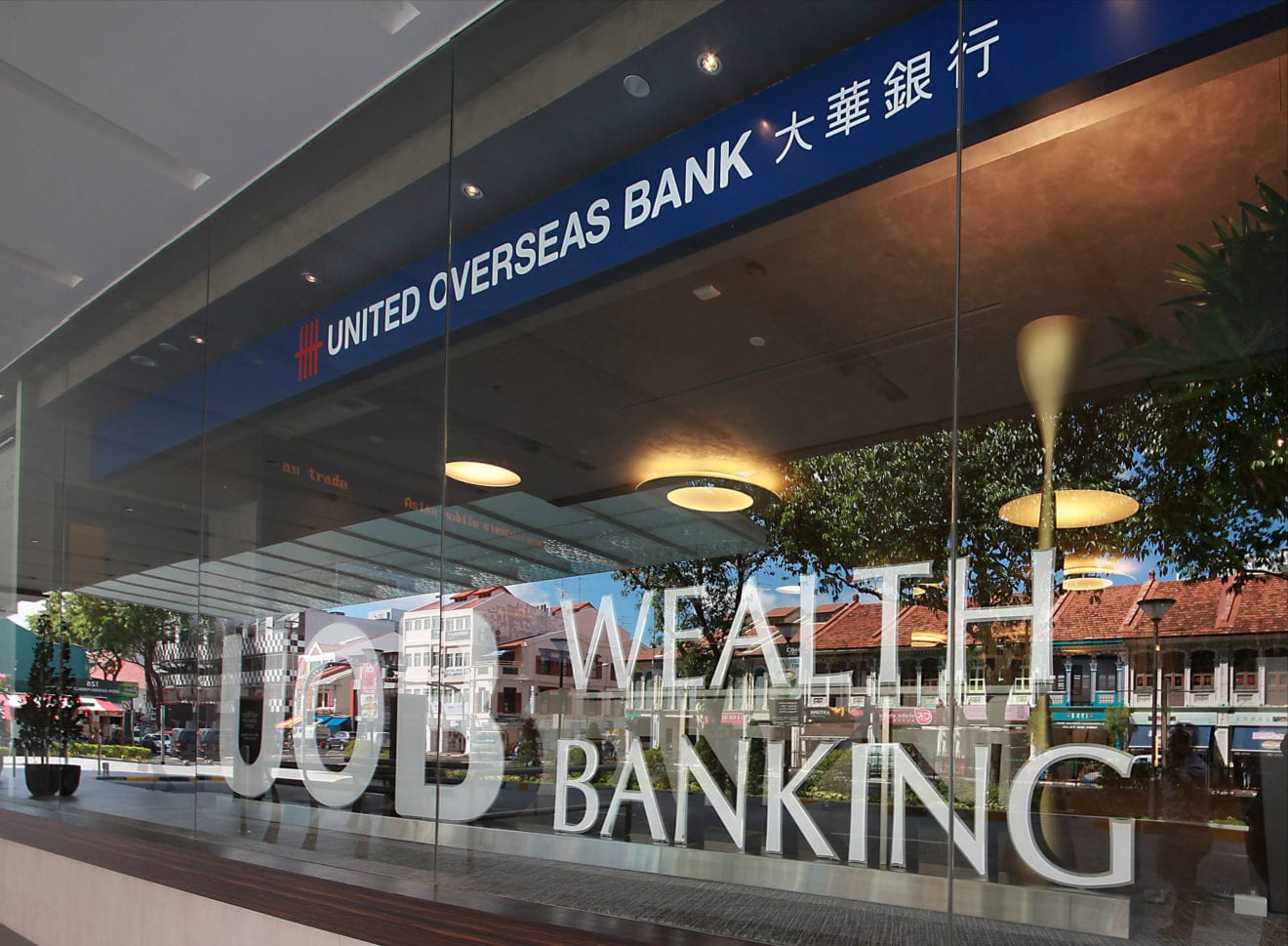
  • UOB Indonesia offers Rp 1.1 trillion in bonds to strengthen lending

    UOB Indonesia offers Rp 1.1 trillion in bonds to strengthen lending

    United Overseas Bank (UOB) Indonesia plans to issue Rp 1.1 trillion (US$84.5 million) in bonds in November. The issuance hopes to raise cash to support the bank’s lending capacity next year.

    UOB Indonesia president director Kevin Lam said Rp 1 trillion in proceeds would come from the senior bond while the remaining Rp 100 billion would come from the subordinated bond. Both will be offered from Nov. 17 until Nov. 22.

    “The bond will enable us to maintain solid funding as we help our customers seize business opportunities arising from increased infrastructure development and consumer demand,” he said during a public expose in Jakarta on Wednesday.

    The senior bond is divided into three series with a buy-back option, he further explained.

    Series A is offered with 370 days of maturity and a 7.4 percent coupon rate per annum. Series B will mature in 3 years with an 8.25 percent coupon rate. Series C will have a 5-year tenor with a coupon rate of 8.5 percent.

    Meanwhile, the subordinated bond has a 7-year tenor with a 10 percent coupon rate. All the coupons will be paid every three months.

    In the first half of 2016, UOB Indonesia saw its interest income increase by 22.32 percent year-on-year (yoy) to Rp 1.73 trillion.

    Net profits rose by 86.81 percent yoy to Rp 281.69 billion.

  • China Mobile Hong Kong to upgrade network to 4.5G

    China Mobile Hong Kong to upgrade network to 4.5G

    China Mobile Hong Kong has contracted Huawei to fully upgrade the operator’s FDD/TDD converged LTE network to a 4.5G LTE-Advanced Pro network.

    The upgrade is aimed at offering customers a superior user experience and laying the groundwork towards a future 5G network evolution.

    In October last year, the 3GPP formally named LTE-Advanced Pro as the new LTE standard with the designation of 4.5G. China Mobile Hong Kong has commenced its network upgrade following a series of network optimization projects this year.

    “After stringent selection processes, we firmly believe that Huawei’s world leading network technology and equipment have made it the ideal partner for CMHK’s 4.5G network upgrade,” China Mobile Hong Kong director and CEO Sean Lee said.

    “We are very pleased to work with Huawei to upgrade our 4G mobile network to 4.5G for significant network capacity optimization and speed improvement, as well as achieving superior user experience for consumers and commercial customers.”

    Huawei president of carrier business Zou Zhilei added that the upgrade is aimed at reinforcing the operator’s market leading position.

    “Our advanced 4.5G technology will enable CMHK to capitalize on the emerging new devices, new businesses and new experiences, offering an excellent mobile video experience for customers in Hong Kong, as well as enhancing its capability in expanding enterprise and industry (B2X) segment,” he said.

  • Qualcomm unveils 5G modem chipset solution

    Qualcomm unveils 5G modem chipset solution

    US chipset maker Qualcomm has announced what it says is the world’s first commercial 5G modem chipset solution to help accelerate the deployments of 5G networks globally.

    Announced at the Qualcomm 4G/5G Summit in Hong Kong on Tuesday, Qualcomm said the Snapdragon X50 5G modem is designed to support original equipment manufacturers (OEMs) in building 5G smartphones and other devices, as well as aid mobile operators with early 5G trials and deployments.

    The solution, with 800MHz bandwidth support, works in the millimetre-wave (mmWave) spectrum in the 28-GHz band and supports a peak download speed of 5Gpbs. It employs MIMO antenna technology with adaptive beam-forming and beam-tracking technology.

    “The Snapdragon X50 5G modem heralds the arrival of 5G as operators and OEMs reach the cellular network and device testing phase,” said Cristiano Amon, executive vice president at Qualcomm Technologies.

    “Utilizing our long history of LTE and Wi-Fi leadership, we are thrilled to deliver a product that will help play a critical role in bringing 5G devices and networks to reality. This shows that we’re not just talking about 5G, we’re truly committed to it.”

    The Snapdragon X50 5G platform includes the modem, the SDR051 mmWave transceivers, and the supporting PMX50 power management chip.

    The modem can be used for multi-mode 4G/5G mobile broadband, along with fixed-wireless broadband devices, when paired with a Qualcomm Snapdragon processor with an integrated Gigabit LTE modem and interwork cohesively via dual-connectivity.

    Sampling for the Snapdragon X50 5G modem is expected to begin in the second half of 2017, with the first commercial products integrated the modem expected in the first half of 2018.

    The company also introduced three new processors for mobile devices – the Snapdragon 653, Snapdragon 626 and Snapdragon 427 processors.

    The Snapdragon 653, Snapdragon 626 are expected to be available in the market by the end of this year, while the 427 processor will appear in commercial devices by early 2017, Qualcomm said.