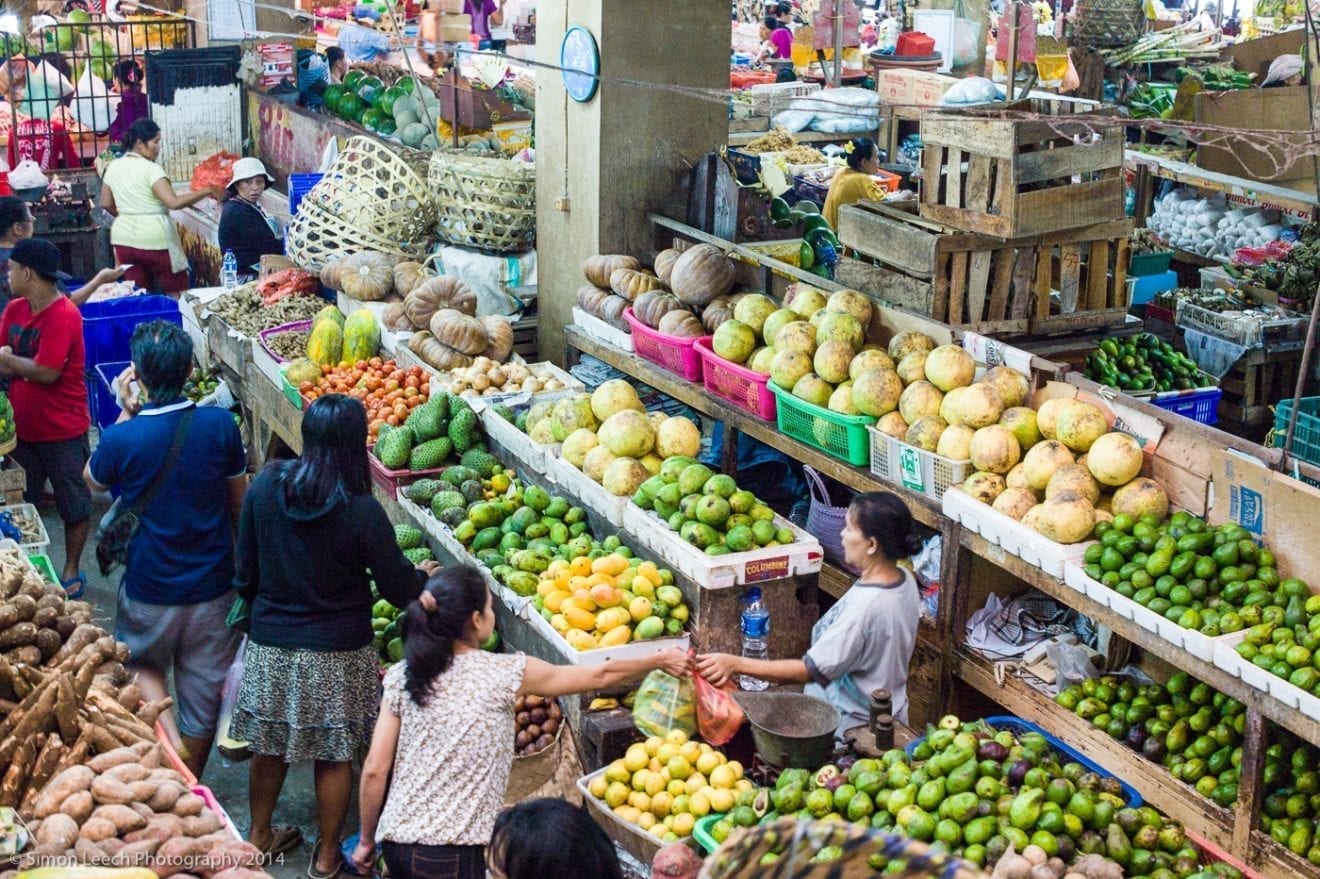
The government will build and revitalize 1,000 traditional market centers in 2017 at a total cost of Rp3.7 trillion Fund.
The Trade Ministry would build and revitalize 272 of the markets with the Aid Task Fund and 52 carry over project from 2016, Trade Minister Enggartiasto Lukita said.
The remaining 728 units would be built and revitalized with the Special Allocation Fund (DAK) and fund from the Ministry of Cooperatives and Small and Medium Enterprises..
Enggartiasto said the trade ministry had carry over projects to be implemented in 2017 was as a result of the cut in the budget for all ministries and government agencies including the trade ministry.
“We will give priority to development of small traditional markets . The development and revitalization program would follow standardization of market and system of management,” he said.
With the system the markets would be well maintained, he added.
“Currently the traders pay fee but there is no accountability of the fee from the market management. The market management charges fee but the fund is not used to improve the service and for the maintenance of the market,” the minister said.
In 2015, the government plans to build and revitalize 1,017 traditional market centers, including 182 units to be financed with TP fund, 770 units with DAK and 65 units with fund from the the Ministry of Cooperatives and Small and Medium Enterprises.
Implementation of the plan in 2016 reached 99 percent with 1,002 units of market built and revitalized.
In 2016, development of traditional markets with TP fund, 168 units with a budget of Rp1.46 trillion and 710 units within DAK of Rp1.006 trillion.
Ericsson has signed a slate of deals with leading content distributors for its subscription video on demand (SVOD) service Nuvu, acquiring more than 2,500 hours of content from international distributors including Viacom (MTV, BET, Nickelodeon), MGM, CBS, Al Jazeera, DHX Media and Mattel.
Titles include globally recognized hit TV franchises such as Hawaii Five-O, Next Top Model, CSI: Miami, Being Mary Jane, SpongeBob SquarePants, Bob the Builder, Vikings and many others along with a raft of premium Hollywood movies.
Ericsson has also licensed dozens of pan-regional and local African TV series and movie content from distributors such as iRoko, Trace and Agwhyte International along with hundreds of music videos from the 960 Music Group, which is home to some of West Africa’s most influential music artists including P-Square, 2Baba and Yemi Alade.
“We created Nuvu to help mobile operators in emerging markets to address a significant untapped market for video content,” said Thorsten Sauer, head of broadcast and media services at Ericsson. “Africa has some of the highest mobile adoption rates globally and there is a high demand for quality content from consumers.”
Nuvu is a complete end-to-end SVOD service developed by Ericsson for mobile operators in emerging markets, which spans both the technology platform and the content licensing. The service leverages the company’s extensive over-the top capabilities based on Ericsson Managed Player and components of Ericsson MediaFirst TV Platform.
Alibaba Cloud announced at its recent Computing Conference that it will provide its AI, deep learning and data analytics capabilities for two new cutting-edge developments in China.
Initiated by the Hangzhou government, the “Hangzhou City Brain” is set to address the city’s urban living challenges. As the hub to consolidate data and provide real-time analysis, the “Hangzhou City Brain” will rely on Alibaba Cloud’s AI program ET and big data analytics capabilities to perform real-time traffic prediction with its video and image recognition technologies.
The project will support transportation departments’ efforts to ease traffic congestion and provide users with real-time traffic recommendations and travel routes.
“By establishing the Hangzhou City Brain, Hangzhou is taking the lead in harnessing artificial intelligence and deep learning technologies to promote greater sustainability and improve the quality of urban living for Chinese citizens. Alibaba Cloud is proud to support and be part of this important development, “said Dr Jian Wang, chairman of Alibaba Group’s technology steering committee.
With automated traffic system capabilities, intelligent adjustments of traffic lights will be performed on the spot; when a vehicle changes direction, the green light will automatically be extended. The pilot of world’s most advanced smart traffic management system in the Hangzhou’s Xiaoshan District, which started in September this year, has since seen an increase in traffic speed by 11%.
The project is being led by the Hangzhou government in coordination with 13 firms including Alibaba Cloud. As part of the project, a research and development team of scientists from various companies has been formed.
Forming the backbone of the “Hangzhou City Brain” data processing and analysis capabilities is Apsara, Alibaba Cloud’s large scale computing operating system, which is able to cluster millions of servers into a super computer and to support a multitude of cloud-based services by analyzing terabytes of data points. This computational engine is one of the largest of its kind in the world and uses propriety algorithms.
Paving the way for astronomical data storage and analytics
Aiming to leverage its technologies for astronomical data collection and analysis, Alibaba Cloud also announced at the Computing Conference its research collaboration with the National Astronomical Observatory of China (NAOC) on deep space exploration.
The plans are to set up a data and research centre for astronomy, as well as a virtual solar observatory which will be supported by Apsara’s massive scalability and advanced capabilities to process astronomical data.
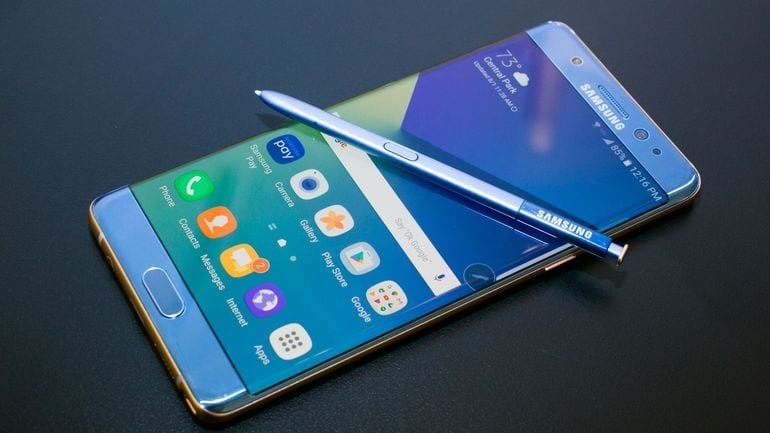
Garuda Indonesia has issued a ban on the Samsung Galaxy Note 7 for all its flights starting from Monday due to safety issues.
This move ensues the recent ban by US Department of Transportation on the device, including its recalled and replaced units, after reports of the smartphone catching fire.
Garuda Indonesia VP corporate communications Benny S. Butarbutar said in a press release Monday that passengers in possession of a Samsung Galaxy Note 7 would not be permitted to board the aircraft. Bringing the device through carry on baggage, checked-in luggage, or cargo was also strictly prohibited.
This is the second ban issued by the airline regarding Samsung Galaxy Note 7. In early September, it banned the use of the device during flights as well as warned passengers not to charge the battery or store the smartphone in checked baggage.
Samsung has already been forced to recall more than 2.5 million devices due to faulty batteries. The company has instructed users to “power down and stop using the device”, and announced the permanent end of its production last week.
Indian startup incubator T-Hub has joined hands with ride sharing pioneer Uber and TiE Silicon Valley to launch a program that will connect Indian startups with global market opportunities and help bring global new-age companies to the country.
A press release issued by the startup incubator T-Bridge said that the program will enable startup communities in India and globally to cross-pollinate ideas, innovate and create channels for knowledge transfer. It will also create a network of mentors, VCs, incubators and accelerators that will support the Indian startup ecosystem.
K T Rama Rao, Telangana Minister for IT on Saturday inaugurated T-Bridge at Uber’s headquarters in San Francisco.
T-Bridge will provide a platform for such fast-track tech companies looking to tap into India’s huge consumer market for technology and help startups access UberExchange-Uber’s flagship startup mentorship program and TiE Silicon Valley’s mentor network.
“We have a strong vision to make Hyderabad one of the top 10 startup cities in the world. T-Bridge is one such move towards opening a channel of investment from the world to the state of Telangana. I am proud to open our first outpost in the US in association with Uber and TiE Silicon Valley and believe that this association will forge new partnerships and spur investment and innovation between the two countries,” Rama Rao said at the launch.
Rachel Whetstone, Uber’s senior vice president for policy and communications, said, Telangana is one of the most progressive states in India; and it has set up a culture of ‘regulatory incubation’ – allowing new ideas and business models to thrive.
“Today more and more people around the world want to build something themselves. Through initiatives like UberExchange, our mentorship program for Indian startups, we hope to spur entrepreneurship. Creative partnerships like T-Bridge will continue to strengthen ties between India and the global startup scene,” Whetstone said.
BlackBerry’s decision to license software and outsource handset production globally represents a win for the Canadian company’s biggest market, Indonesia, which is seeking a larger share of the smartphone value chain.
BlackBerry’s new venture signed last month with an affiliate of PT Telekomunikasi Indonesia, the country’s largest wireless carrier, will see its Indonesian partner produce, promote and distribute all BlackBerry-brand devices in Indonesia.
The venture comes as international phone vendors gear up to comply with the latest “made in Indonesia” regulations to tap growth in what is poised to become the world’s fourth-largest smartphone market by 2020, with total annual sales of nearly $US1 billion ($1.31bn) by then, according to research firm Euromonitor International.
Adopted in July, the latest rules give producers more options when it comes to meeting next year’s 30 per cent quota for “local content” — which previously focused on local manufacturing but can now include software or investment — in their 4G-enabled tablets and smartphones sold in Indonesia, up from 20 per cent this year. The requirement will rise to 40 per cent in 2018.
BlackBerry’s joint venture was “created in support of the Indonesian government’s effort to promote manufacturing of locally sourced products”, said Ralph Pini, general manager of devices at the Waterloo, Ontario-based firm, which said last month it would stop making phones and focus on software.
Indonesia is a crucial market for BlackBerry. Its BBM messaging service is the top messaging platform in the country of 250 million people with nearly 60 million monthly active users as of June, BlackBerry said. WhatsApp and Facebook Messenger trail with about 50 million active users for each app, according to estimates from Britain-based social media consultancy We Are Social.
In 2012, Indonesia introduced regulations requiring importers of mobile phones to set up assembly plants in the country by the end of 2015. In September 2014, the government issued regulations requiring all 4G devices sold in Indonesia to include at least 30 per cent locally-sourced components by 2017.
Analysts say the more-flexible regulations passed in July make it easier for handset makers to meet requirements, given that they allow the quota to be reached via other options in addition to manufacturing.
Alibaba Cloud has selected Datapipe as a global managed service provider partner, to help organizations entering China or Chinese companies venturing abroad adopt cloud environments.
Under the partnership, Alibaba Cloud customers can look to Datapipe to plan, build and run their cloud environments. Datapipe will provide migration, management, and security of Alibaba Cloud solutions for computing, storage, database, CDN and big data.
China-based Joyful Journey Travel is Datapipe’s first managed Alibaba Cloud client and is the first company to provide financial services to travelers in China.
Datapipe’s team worked with Joyful Journey Travel to develop a solution based on Alibaba Cloud services including Elastic Computer Service instances, AsparaDB for Relationship Database Systems and Alibaba’s Cloud based CDN.
“As a pioneer in managed cloud services the addition of Alibaba Cloud to Datapipe’s supported platforms and service capabilities was a natural step,” Datapipe VP of Asia Colin Chan said.
“We look forward to working closely with Alibaba Cloud to help drive the global adoption of best practice enterprise cloud solutions.”
“We’re pleased to welcome Datapipe as our global managed service provider partner,” Alibaba Cloud director of global marketplace alliances Unique Song added.
“Datapipe’s experience in managing cloud environments for customers around the globe makes them well-positioned to help drive Alibaba Cloud deployments for customers in both China and overseas.”
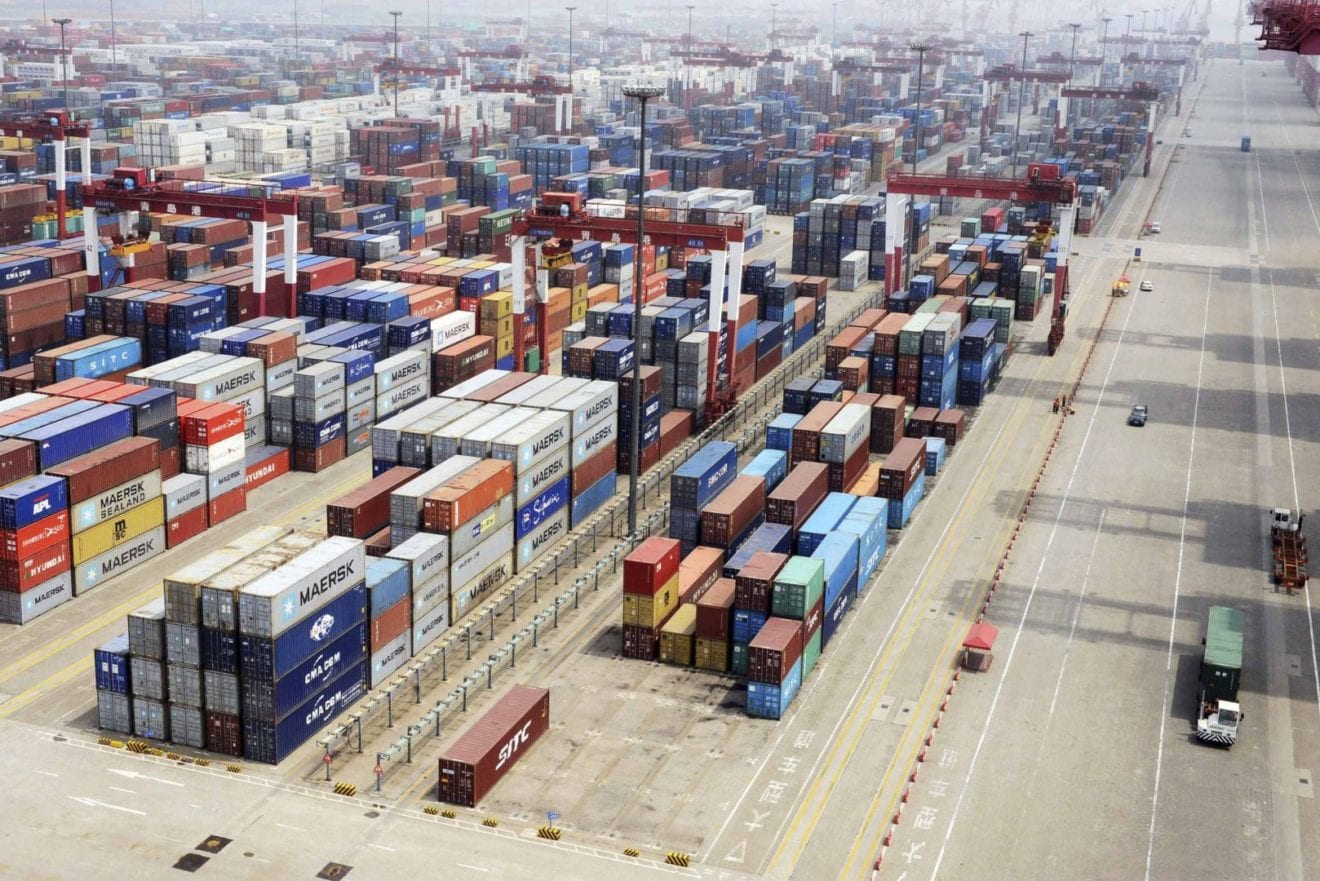
The value of imports in September, which amounted to US$11.30 billion, has dropped by 8.78 percent compared with the previous month, which was US$12.38 billion, the Central Bureau of Statistics (BPS) has said.
“Indonesias imports in September 2016 amount to US$11.30 billion, down 8.78 percent from August, or down 2.26 percent if compared to September 2015,” BPS chief Suhariyanto said at a press conference in Jakarta on Monday.
Suhariyanto said non-oil-gas imports in September were valued at US$9.55 billion, down 9.77 percent compared to the previous month. Compared to September 2015, these imports dropped by 0.95 percent.
Oil and gas imports in September stood at US$ US$1.74 billion, down 2.97 percent compared to the previous month, and down 8.88 percent compared to last September.
In September, cereal commodities such as wheat touched the highest value in import items at US$39.0 million, or 19.17 percent, while the steepest drop was in the machinery and mechanical equipment category, whose value was US$98.9 million or 5.17 percent.
The cumulative value of imports from January to September crossed US$98.69 billion, down 8.61 percent compared to the same period last year. The cumulative value of oil and gas imports was US$13.74 billion, down 29.19 percent; non-oil imports were valued at US$84.95 billion, down 4.10 percent.
The top three countries for non-oil imports in the January-September period were China with a value of US$21.99 billion, or 25.88 percent; Japan with US$9.48 billion, or 11.16 percent; and Thailand with US$6.64 billion or 7.81 percent. “Non-oil imports from ASEAN countries touched 21.82 percent, while from the European Union it was 9.17 percent,” Suhariyanto said.
The import values of auxiliary raw materials from January to September decreased by 9.8 percent and capital goods by 12.66 percent. However, imported consumer goods shot up by 12.80 percent.
Asia is home to more than half the world’s most dynamic retail hubs, according to new research that reinforces images of the region’s mall-strewn megacities.
The research, by professional services and investment management company JLL, says 12 of the fastest-growing retail cities are in Asia, with eight in China alone — another indication that global economic growth is increasingly driven by the Asia-Pacific region.
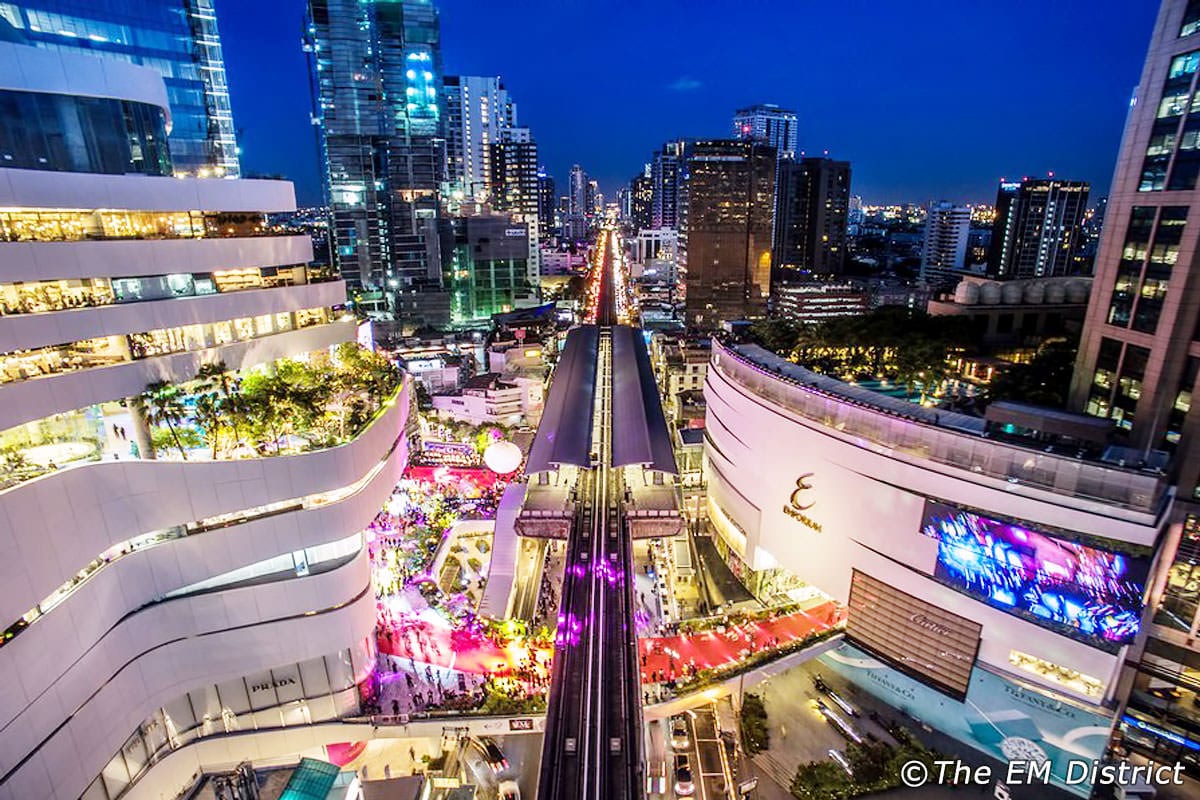
JLL lists Dubai as the world’s fastest-growing retail destination, with Shanghai second and Beijing third. Places 9 to 13 are occupied by Bangkok, Chengdu, Kuala Lumpur, Jakarta and Manila, respectively. Only two European cities make the top 20 — Moscow and Istanbul — with none from Africa. Mexico City is the sole city from the western hemisphere, sitting at number 19.
Overall, JLL lists London as the “most attractive” city for retailers, with Hong Kong second and Paris third. Dubai, Singapore, Shanghai, Tokyo and Beijing all make the top 10, with Bangkok, Taipei, Seoul and Osaka in the top 20.
Shanghai at night. The Chinese megacity is projected to be one of the world’s retail hubs in the coming years (Photo: Simon Roughneen)
The study looks at the presence of 240 international retail brands in 140 cities — which altogether make up 36% of the world’s gross domestic product, 13% of the global population and a third of total worldwide consumer spending.
“The search for growth is escalating the penetration of international brands across the world’s most attractive retail cities, especially in Asia,” said David Zoba, chairman of JLL’s Global Retail Leasing Board.
Asia catching up
Many Western economies continue to suffer from slow growth — in stark contrast with Asia, where the International Monetary Fund predicts overall growth of more than 5% in 2016-17 and describes the region as “the engine of the global economy.”
Asia is urbanizing rapidly as economies develop and incomes rise, meaning that big global brands will increasingly look to Asia as a source of consumers. World Bank research shows that nearly 200 million people in the East Asia and Pacific region –excluding India and its heavily populated neighbors such as Pakistan — moved from the countryside to cities during the decade after 2000.
In 1800, only 3% of the world’s population lived in cities, a figure that rose to 13% by 1900. Now more than half the world’s population is urbanized, with projections that 70% or more of the world will live in urban areas by 2050. And while in the 19th and 20th centuries urbanization was mainly a Western and Japanese phenomenon, developing countries are catching up fast, particularly in Asia.
Despite the steady rural-urban shift, only 36% of East Asia’s population had moved to urban areas by 2010, with only Japan, Malaysia, South Korea and Taiwan having larger urban than rural populations.
While China had by far the largest absolute numbers of people moving to cities, smaller countries such as Cambodia, Laos and Vietnam showed higher rates of urbanization. Laos more than doubled its small urban population, while high-growth economies such Cambodia and Vietnam both had between 4% and 4.5% annual urban population growth rates. Retail investors are noticing opportunities even in smaller cities such as Phnom Penh, where Japanese mall operator Aeon opened the city’s first large shopping mall in 2014.
Asia’s cities will continue to grow over the coming decades as the region becomes wealthier. McKinsey Global Institute expects that in the next 15 years, “the center of gravity of the urban world will move south and, even more decisively, east.” According to MGI, half of global GDP in 2007 came from 380 developed world cities, with the 22 biggest cities in developing countries contributing a mere 10%.
However, MGI predicted that by 2025 half of the cities in its 2007 rankings will not make the list, with 136 developing world cities entering its ranking of the 600 biggest urban economies — including 100 from China alone.
“By 2025, developing-region cities of the City 600 will be home to an estimated 235 million middle-class households earning more than $20,000 a year at purchasing power parity (PPP),” MGI reported. The figure is larger than the 210 million such households expected in the cities of developed regions.
Thinktank Oxford Economics said that cities such as Chengdu, Hangzhou and Wuhan “will become as prominent in 2030, in economic terms, as cities like Dallas and Seoul are today.”
Shift east
The thinktank predicted that by 2030 eight European cities will drop out of the global top 50 cities ranking, measured by GDP, while nine Chinese cities will join that group, taking the Chinese total to 17, which will be more than North America and four times more than Europe.
In turn, the thinktank said, this will mean more Asian consumers with money to spend. “Starting from a comparatively low base today, China will boast some 45 million high-income urban households (exceeding $70,000 per annum at 2012 prices and exchange rates) by 2030, putting it well ahead of Europe and hot on the heels of North America. Shanghai will jump from a rank of 69th today to 8th for its number of high-income households in 2030,” Oxford Economics said.
Otherwise, however, the seven megacities with the most high income residents will remain the same as today, with Tokyo leading New York, London, Osaka, Los Angeles, Paris and Chicago.
But Asian cities are set to add tens of millions of middle-income households (incomes between $10,000 and $70,000) to their ranks by 2030. Jakarta will be home to 9.4 million, with 7 million to 9 million more in each of Chongqing, Shanghai, Tokyo and Beijing, the projected top five cities ranked by population of middle-income households, according to the thinktank.
JLL said that for retailers, vying for market share in emerging economies is sometimes risky, but the potential prize — market access to vast populations and rapidly expanding middle classes — outweighs any perils.
For example, China’s anti-corruption crackdown has had “a knock-on effect” on the luxury goods market in the world’s second-biggest economy, said James Hawkey, JLL’s head of retail for China. But retailers are nonetheless “increasingly comfortable dealing with these risks, and generally have their eyes on the long-term prize of establishing a strong position in major world markets.”
Although incomes and spending power remain lower in many Asian countries and cities than in the West, part of the attraction of smaller, less-developed markets is relatively low rental costs.
“Places like Ho Chi Minh City, Jakarta and Bangalore present an opportunity for retailers to establish their brands at rents of less than $2,000 per square meter per year with projected in-store sales increasing by 8% to 10% until 2019,” JLL reported.
Wealthy mid-sized cities or trade-oriented city-states such as Singapore and Hong Kong also benefit from high numbers of visitors such as tourists or business travelers.
But Asia’s urbanization will not mean that rural dwellers will be ignored by retailers, particularly in China.
“Retail potential in Asian hubs is strongly influenced by what is happening in their hinterlands — what is happening in nearby provinces and/or countries,” Steven McCord, JLL’s head of research for northern China, told the Nikkei Asian Review.
“Shanghai exerts a ‘gravity effect’ over its surrounding cities and provinces due to its size and the wealth of its retail offer. Therefore, close to 80 million people within day-trip distance to Shanghai will regularly travel to that city for large shopping sprees,” McCord added.
Malaysia Milk has fully recalled its Marigold HL milk products from Malaysia retail outlets following customer complaints, the company said on Monday (Oct 17).
The quality of the milk had been compromised due to bacterial contamination, but this has since been rectified, Malaysia Milk added. “Side effects of consuming the compromised quality of milk may include mild stomach discomfort. There are no long-term side effects,” it said in a statement.
New batches of milk have been delivered to retailers, the company said.
Malaysia Milk announced on Saturday that all Marigold HL milk products expiring before Nov 7 for Peninsular Malaysia and before Nov 11 for the Sabah, Sarawak and Labuan markets are being recalled, in response to customer feedback that the viscosity of its Marigold HL chocolate milk was higher than usual. Viscosity refers to the “thickness” of a liquid.
“While customer feedback is specifically on the Marigold HL chocolate milk, nevertheless Malaysia Milk is taking proactive measures to recall other products which include Marigold HL plain milk (200ml and 1L), Marigold HL strawberry milk (200ml and 1L) and Marigold HL with plant sterols (1L),” it said over the weekend.
Malaysia Milk stressed that customers’ health and safety is its top priority. “We have taken proactive measures and have successfully recalled all our products from retail outlets. An additional and more stringent Quality Control is now in place on finished products to keep a daily check on products to ensure conformity with the highest international standards,” said Malaysia Milk general manager Poh Eng Lip.
Customers who have purchased the affected products should return them to Malaysia Milk for a replacement or contact its customer service team at 1800-885587 or feedback@mmsb.com.my.
The recall does not affect the company’s products in Singapore, local manufacturer Malaysia Dairy Industries said.
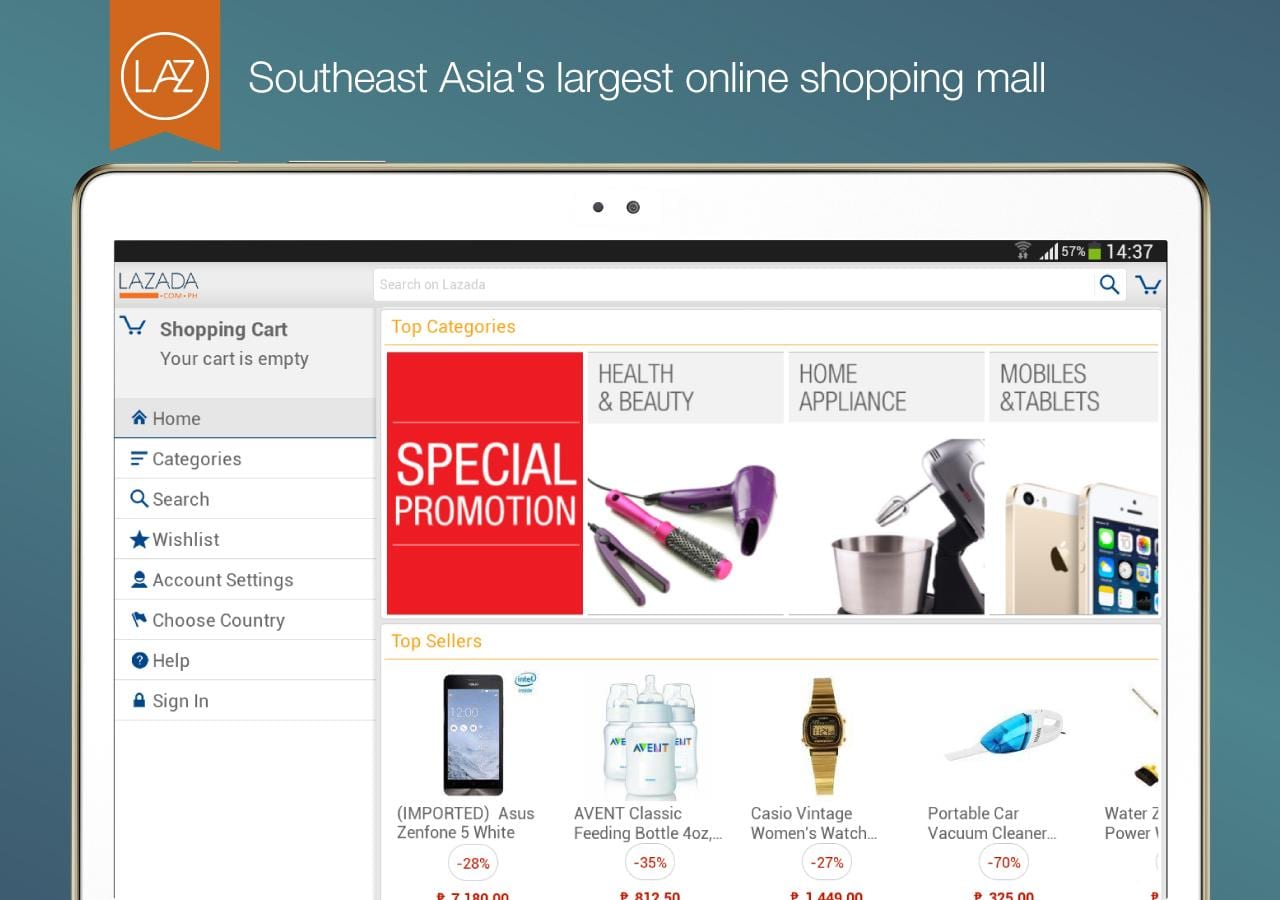
While some global e-commerce giants, including Amazon Inc, are planning to build brick-and-mortar convenience stores, Lazada Malaysia will focus on things it does best — selling inventory to customers from its warehouses through its online platform.
Its chief executive officer (CEO) Hans-Peter Ressel said Lazada Malaysia will concentrate on strengthening its online shopping business, rather than building physical stores to complement its online services.
“We can’t comment on their (Amazon’s) strategy because we focus only on our products,” Ressel said in an interview last week. “We have decided to go this way, and if other players are doing other things, I’m happy to learn and observe how this works for them, but it doesn’t change our strategy.”
Citing unnamed sources, The Wall Street Journal last week reported that Amazon stores will sell perishable goods, including milk and meats. The Seattle-based retail giant will also build drive-in locations for consumers in a rush where online grocery orders will be brought to the car, the newspaper said.
Lazada Malaysia, which has achieved more than five million app downloads, is part of the Lazada Group which operates online shopping platforms in Indonesia, the Philippines, Singapore, Thailand and Vietnam. Its product offering covers diverse categories, including electronics, fashion, health & beauty, sports & travel, and groceries.
Vienna-born Ressel, who is of Austrian and Filipino descent, had served as Lazada Malaysia chief commercial officer and chief operations officer since August 2012, before he became its CEO in March 2015.
Lazada Malaysia, he said, would continue to collaborate with brand retailers, hypermarkets and offline flagship stores to sell their products.
“If you want [to operate your own] store, how many stores do you need? What do you want to put on these stores? We don’t believe in doing everything by ourselves. We have partners; we have brands, and it is crucial to have their collaboration, that’s our focus,” he said.
Notably, Lazada Malaysia this year brought in top brands such as L’oreal, Levi’s and Samsung. It also formed partnerships with giant retailers such as Tesco, Watsons and Senheng.
Ressel believes e-commerce is the way forward, considering that two-thirds of Malaysians have Internet access, with most of them spending more than four hours a day online.
“If we didn’t believe in the future growth of e-commerce, we won’t be here. Today, 20 million out of 30 million Malaysians are online. The [Malaysian] e-commerce market will definitely grow towards a size that is similar to Western countries, China and Korea. It’s just a matter of time,” he said.
According to an estimate by statistics portal Statista, total revenue for the Malaysian e-commerce market this year will hit US$894 million (RM3.75 billion) and revenue is expected to see an annual growth rate of 23.7% in the next five years, to reach US$2.58 billion by 2021.
Currently, the market’s largest segment is electronics and media, with a market volume of US$380 million. User penetration is at 61.7% this year and is expected to hit 76.8% in 2021.
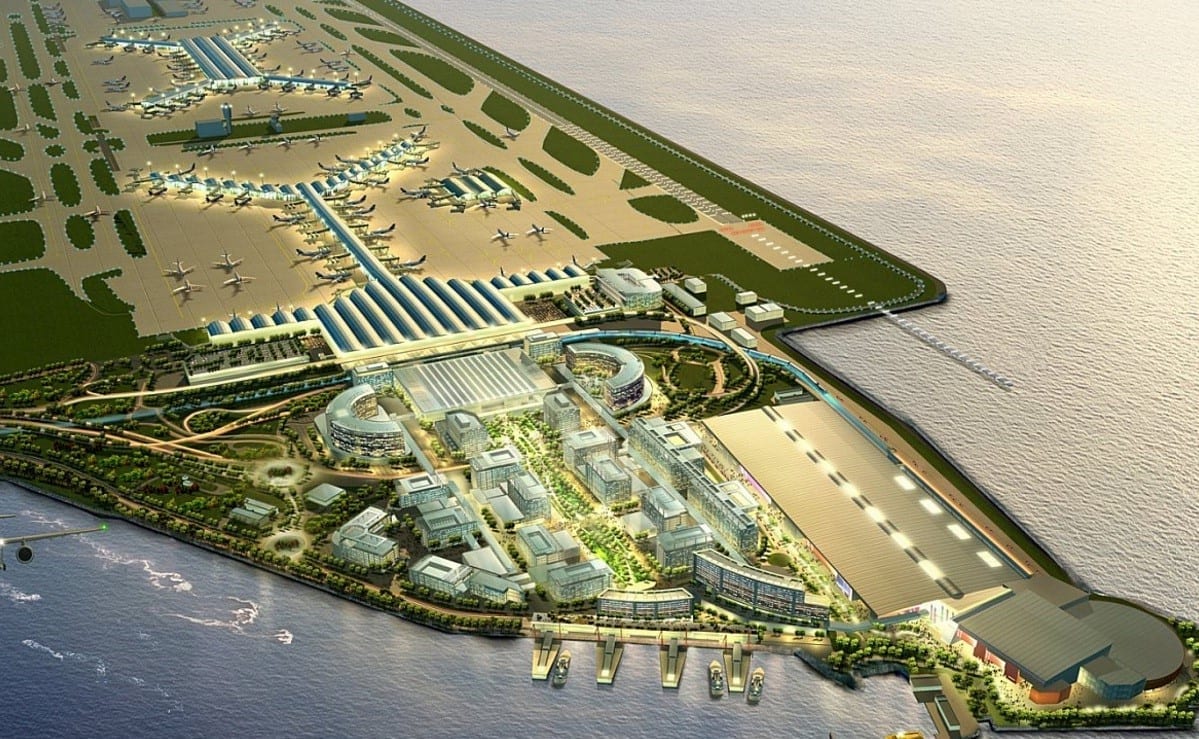
SkyCity will feature retail complexes, entertainment facilities, dining space, hotels, and office towers in approximately 25 hectares of land at the north of the airport island.
The SkyCity plan was unveiled at “The Future of Shopping Malls” Business Conference and Exhibition hosted today by the AA. More than 300 senior executives from the property development and investment sectors of Hong Kong and major overseas markets, as well as representatives from the HKSAR government, business associations and professional bodies, attended the event.
Mr Jack So Chak-kwong, chairman of the AA said: “Our vision is to create a new destination that goes far beyond the traditional notion of a shopping mall. Located right next to the airport, SKYCITY aims to capture broad opportunities in tourism and business, while also providing a dynamic lifestyle and family entertainment hub for Hong Kong residents and visitors alike.”
HKIA’s passenger traffic is projected to rise to more than 100 million by 2030 with the completion of the three-runway system. SkyCity will make use of the Tuen Mun-Chek Lap Kok Link and the Hong Kong-Zhuhai-Macao Bridge, strategic road links.
Phase 1 of the project will comprise a retail, dining and entertainment (RDE) destination of 195,000 sq. metres, scheduled to open in 2021, and a hotel providing 450 to 750 rooms, expected to be completed in 2020. Invitations for tender submissions for the hotel and RDE developments will be issued in November 2016 and early 2017 respectively.
JLL released a brief report on Asian and European retailers ready to penetrate the market of more than 90 million people.The report pointed out evidence of the expansion of foreign retailers in Vietnam’s market.
At the end of 2014, Berli Jucker Plc (BJC) acquired Metro Cash & Carry Vietnam at the cost of 655 million euros, the largest ever M&A deal at that time, which signaled the penetration into Vietnam’s retail market of Thai groups.
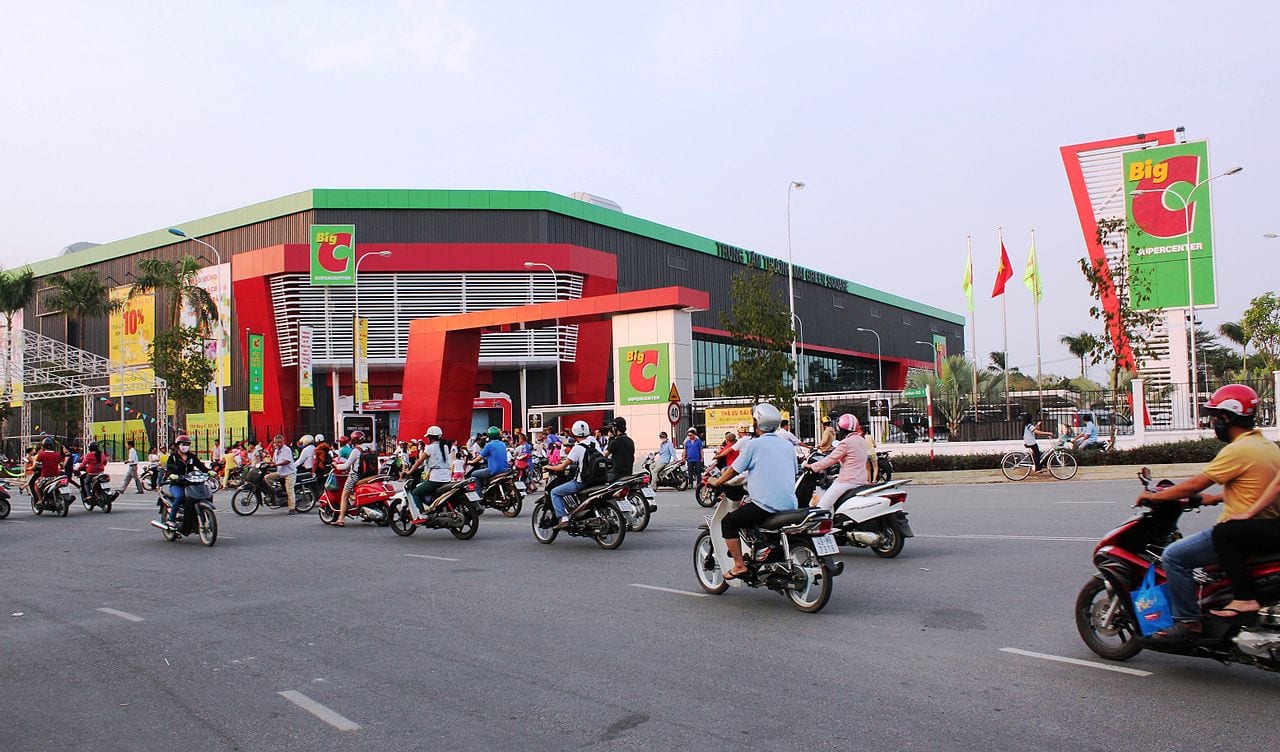
Shortly after, another giant from Thailand – the Central Group – acquired Nguyen Kim – one of the leading electronics retailers in Vietnam and then Big C.
In October 2015, Emart – Korean leading retailer – inaugurated a $60 million shopping mall in north Saigon, where another Korean retailer – Lotte Mart – has been successful with 11 supermarkets and expects to increase the number to 60 stores by 2020.
Most Japanese investors see the success of Aeon in Vietnam as a positive sign for foreign projects. Aeon has opened four trade centers in Vietnam and aims to increase the number to 20 in 2020. By July 2016, another retail giant from Japan – Takashimaya – opened at Saigon Centre.
Simply Mart openedthree more stores in Saigon; AuchanSuper – the retail brand from France – also plans to launch another 17 supermarkets by the end of next year in HCM City and 20 stores by 2020 in the north.
Major fashion brands like Gap, Mango, and Topshop have become the first choice of many young people in Vietnam. In early September this year, Zara opened its first flagship store in HCM City. At the same time, H&M is completing procedures to open its first store in Vietnam early next year.
According to JLL, a young demographic and high growth potential are the factors attracting foreign investors to Vietnam’s retail market.
With a population of over 90 million people and 70% of people aged from 15 to 64 and the anticipated annual growth rate of urban population of 2.6% in 2015 – 2020 period, the highest growth rate in Southeast Asia, Vietnam’s retail market is very attractive to foreign investors.
Increasing disposable income, urbanization rate and living standards have made Vietnam one of the most most dynamic emerging economies in Southeast Asia.
According to Boston Consulting Group, the upper and middle class in Vietnam are growing at the fastest pace in the region and this number is expected to double from 12 million in 2014 to 33 million in 2020. With income of VND15 million ($700)/month, the consumers of these classes are potential customers for retailers.
In addition, Vietnam’s e-commerce boom has also contributed to the growth of the retail market.
A Nielsen report said that that 9 out of 10 consumers in Vietnam (91%) owned smartphones, compared to 82% in 2014.
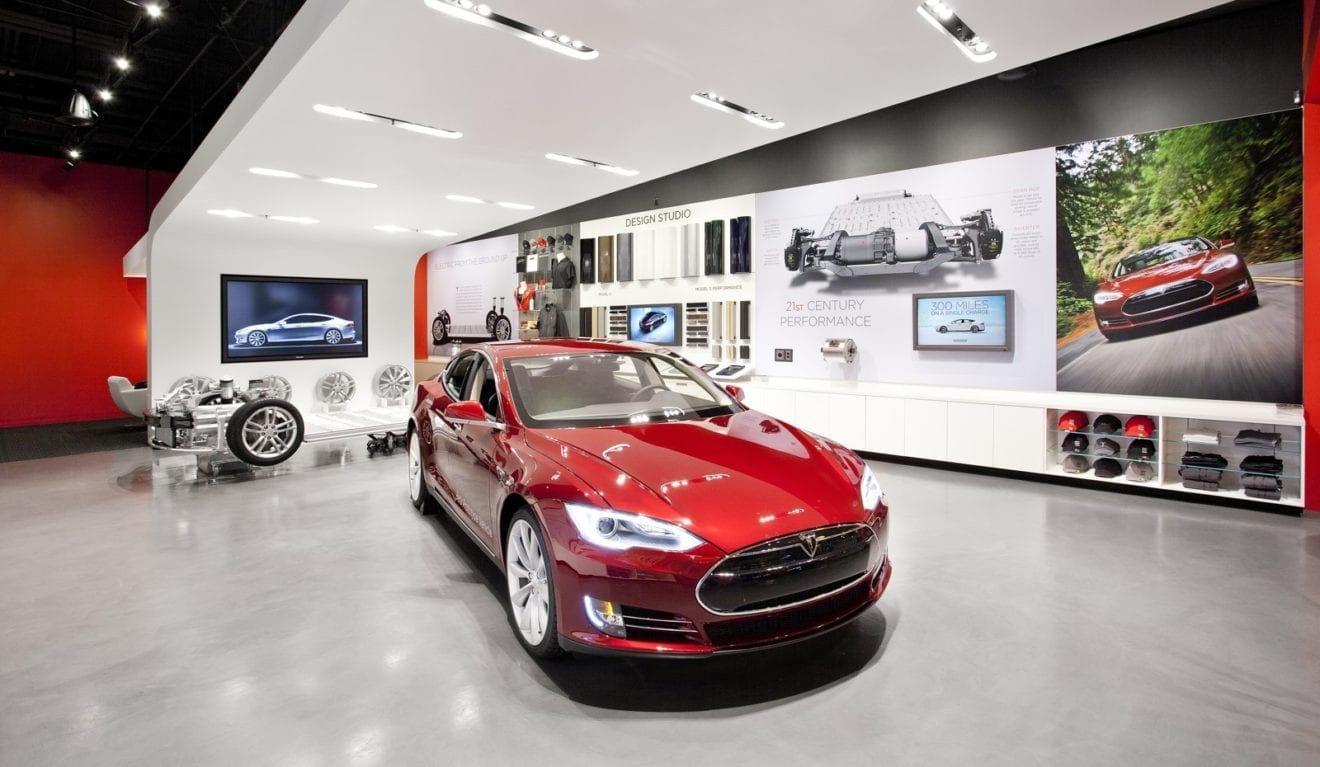
Tesla Motors is preparing to open a second showroom in Korea in Gangnam, southern Seoul. Its first will open in the Starfield Hanam shopping mall in Gyeonggi in less than two months.
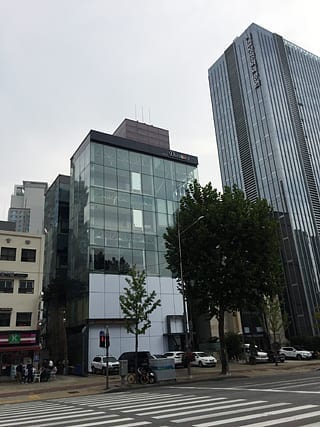
A lease on three floors of a five-story building in Cheongdam-dong, 131-11, known as Yeongdongdaero 730 under the new address system, was signed by Tesla Motors Korea on Sept. 1. Tesla will rent the building’s basement, first and second floors through Aug. 31, 2021. The rent is 500 million won ($439,059) for the entire period, the document shows.
The landlord is Bora Trading, a Seoul-based importer of Italian food products including the De Cecco pasta brand.
Tesla made it official Sept. 2 that it would open its first Korea showroom in Starfield Hanam, a shopping mall that was opened Sept. 9 by retail giant Shinsegae, by December. The announcement came 10 months after the American electric vehicle pioneer opened an office in Samseong-dong, southern Seoul.
Second showroom for Korea in a building in Cheongdam-dong, 131-11,
Tesla confirmed its rental in Gangnam.
“We have just registered a building on Yeongdong Boulevard,” said Atsuko Doi, Tesla’s head of communications for Asia Pacific, in an email. She added the company hasn’t “planned in detail how we use it.”
Regarding rumors among auto enthusiasts in Korea that Tesla may choose not to open the showroom in the 212-square-meter (2,281-square-foot) space in Starfield Hanam, she described them as “incorrect.”
When visited on Monday by the Korea JoongAng Daily, the space Tesla has rented from Bora Trading was already under remodeling. Previously an Italian restaurant, the old interior was torn down completely. One of the workers on the scene said they are working on an automobile showroom without elaborating further. The process is expected to be finished in a month, which would indicate it could open in November at the earliest.
There is speculation Tesla will open two showrooms simultaneously. The one in Gangnam will be more symbolic of Tesla’s attempt to be considered a luxury brand.
Cheongdam-dong is Seoul’s swankiest area full of luxury-brand stores including Dior, Cartier and Hermes. Showrooms for Lamborghini, Ferrari and Bentley are less than 1 kilometer from Tesla’s space. Korea’s top automaker, Hyundai Motor, is scheduled to complete by 2021 a 105-story new headquarters just 1.6 kilometers farther down Yeongdong Boulevard.
The building in Gangnam has been optimized to serve as a car showroom. It was established in 2004 by KUZ Plus, which was the official importer of Ferrari and Maserati until 2006. The floors are framed by huge glass windows to display vehicles.
In Asia, the California-based company led by business magnate Elon Musk opened its first showroom in October 2010 in Tokyo’s trendy Aoyama district. Now there are three in Japan. Tesla runs 21 stores in China, three in Hong Kong and one in Taiwan, which opened in July.
By the end of this year, China’s digital travel sales will amount to more than $95 billion, according to eMarketer. That’senough to rival the revenue of Fortune 500 giant Microsoft. By 2020 this figure will have doubled to around $200 billion.
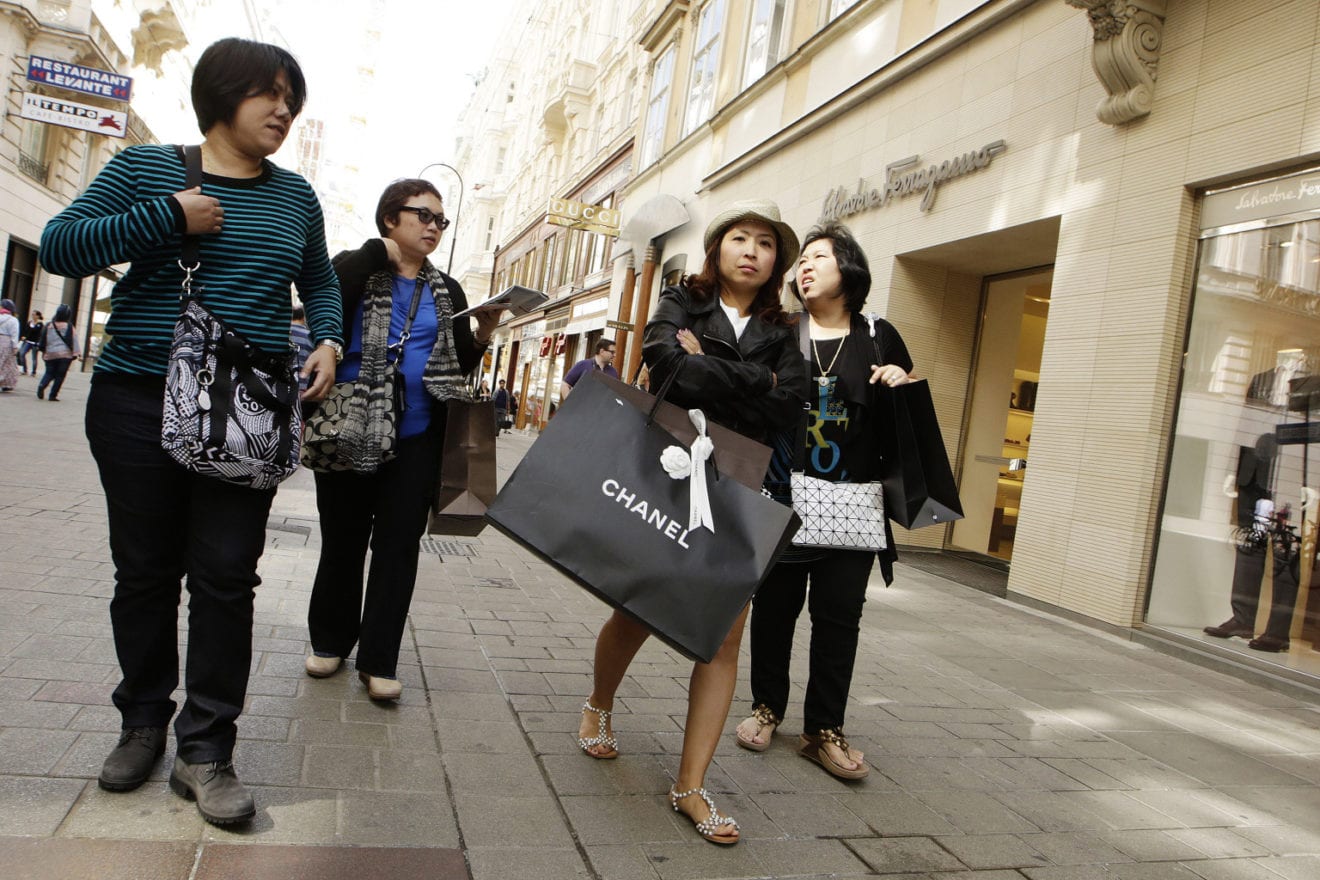
Retailers and tourism operations globally have been rolling out the red carpet for Chinese shoppers over the past few years. The Australian government introduced a “China 2020” plan in the hopes of bringing $7 billion revenue from Chinese tourist spending.
In Southeast Asia, the top source of tourism receipts in Singapore and Thailand come from China, as the region remains a top destination due to the historically low prices and geographical proximity.
With this expected growth, the days of broad-based marketing are over. Competition for the savvy Chinese shopper is more fierce than ever — without personalized and insightful advertising, the shopper would be overwhelmed with companies vying for their attention. Brands that can deliver the best mobile user experience at the heart of their campaign strategy will be the most trusted among these consumers.
Mobile-first means user-first Mobile is the most effective channel to reach Chinese shoppers abroad. The IAB reports that 47 percent of Chinese shoppers made purchases with a mobile wallet this year.
That’s the highest in the world, second only to Norway (42 percent) and the UK (24 percent). The same report reveals APAC has the highest usage of mobile wallet for purchasing products and services of any region in the world.
To better understand the Chinese consumer, advertisers can analyze their daily habits on their mobile devices. An audience cluster employing real-time and historical data can pinpoint the most receptive users and find the best time to engage them.
There are many platforms that are more popular in China than other regions—such as WeChat and Weibo — and analyzing this historical data can help isolate the behavior on these devices. Combining real-time data such as device language, network carrier, and operating systems will give a more holistic view of the shopper.
For example, to profile a Chinese luxury consumer traveling in Singapore, advertisers can identify and group together key indicators, such as the latest iPhone 7 model, connecting through a Chinese mobile carrier and using traditional Chinese language settings.
Add the potential to pair that with historical location behavioral data identifying them as frequently visiting Singapore, and you can start to build out powerful audience segments. Audience segmentation is becoming increasingly sophisticated and can help advertisers push their branded messages even before the intended customer has departed from China.
Personalized mobile marketing also allows brands to deliver tailored and timely messages to serve the consumer on their shopping journey. Let’s say, for example, an ideal time to send out an advertisement is in the morning before a shopper heads out of their hotel.
A helpful campaign indicating the nearest store location and opening hours, combined with a daily coupon, has a higher chance of converting than a non-targeted advertisement.
With the wealth of mobile data available, advertisers can go one step further and deliver creative campaigns based on device operating system. Most of the time, iPhone ads will lead to a landing page in Safari, and an Android system will take the user into Google Chrome. The ability to tailor each creative format for different user devices can help retailers win over the highly-desired Chinese tourist dollar.
Brands that want to wow Chinese tourists need to have full visibility of their intended consumers and engage with precise timing to truly encourage purchasing decisions. Given the availability of today’s data, brands that fail to customize their creative message and user experience will only stand to lose out.