Tag: asia

  • TrueMoney Transfer is Thailand’s first affordable remittance solution for migrant workers

    TrueMoney Transfer is Thailand’s first affordable remittance solution for migrant workers

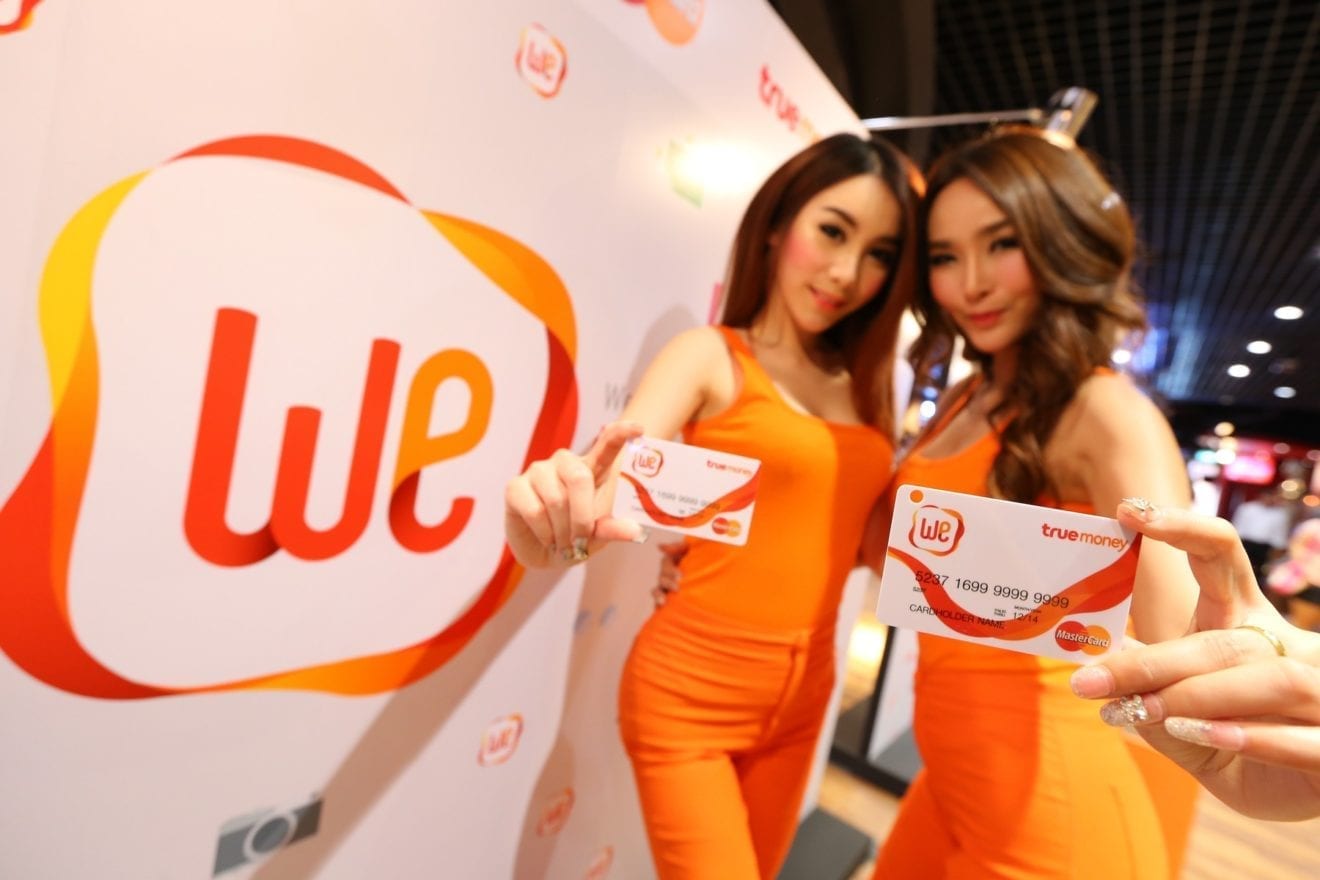
    TrueMoney, a subsidiary of Ascend Group, announces the launch of TrueMoney Myanmar and the launch of its fund transfer solution, TrueMoney Transfer.

    TrueMoney Myanmar aims to be a leading financial service provider, offering bill payment, mobile topup, remittance, and cash collection services. With two offices, one in Yangon and one in Mandalay and a network of 3,000 agents nationwide, TrueMoney Myanmar is working  continuously to expand its services and agent network to fulfill its mission of enabling everyone access to innovative financial services, leading to better lives because we believe that financial access should be a basic right for everyone.

    TrueMoney is also launching TrueMoney Transfer, the company’s first international money transfer solution. Fast, easy, safe, and affordable, TrueMoney Transfer enables real-time fund transfers from Thailand to Myanmar, allowing Burmese migrant workers to significantly reduce the expense and risks associated with sending money to family back home.

    Fast with real-time fund transfers, easy with 250 transfer spots in Thailand by end-2016 and 681 transfer spots in Myanmar, safe with a passcode to receive the money that only the sender knows, and affordable with transaction fees starting at 50 Baht. To celebrate the launch of the TrueMoney Transfer service, TrueMoney is waiving the transfer fees for all transactions until October 31, 2016. Transfer fees usually start at only 1,818 MMK  per transaction.   

    Migration within and across Myanmar’s long borderline has been long-standing. In an aim of improving relatives’ standard of living, many Burmese have chosen to cross borders in search of decent work and income. To date, according to the United Nations (UN), Thailand is home of almost 2 million hard working Burmese sending 2,8 billion Kyat back home annually, namely 1 million Kyat per person per year. 

    Transferring money to loved ones has undoubtedly become a crucial need for Burmese migrants and their families. However, a large number of Myanmar workers remain unbanked, due to a variety of reasons such as, but not limited to legal status, language barrier, and access to banking services. We have developed TrueMoney Transfer to give a faster, safer, more secured and affordable alternative to the commonly used informal channels”, said Ms. San Thaw Da Wun, Country Director of TrueMoney Myanmar. 

    Indeed, sending money from Thailand to Myanmar can be very expensive and uncertain. Because no other options are available to date, Myanmar migrant workers are placing their trust and savings within informal networks, which are complicated, time-consuming – it can take up to 4/5 days to send funds –, and unsafe – there is no guarantee that the intended receiver will ever receive the money.

    Mr. Lawt Aung, Senior Product Executive of TrueMoney said, “TrueMoney Transfer will deeply change the lives of millions of hard-working people who do not have access to proper banking services. The network we have built throughout Myanmar is the stronger existing. Our 681 TrueMoney Transfer spots in Myanmar cover 91 percent of migrant workers hometowns such as Mon, Tarintharyi, Kayin, Shan, Yangon, and Bago, bringing services for money transfer in rural areas where banks don’t even have a representation. The solution will enable money transfer from Thailand to Myanmar only. By end of 2016, the 250 transfer spots in Thailand will be concentrated in areas with a large population of Myanmar migrant workers such as Bangkok, Samut Sakhon, Samut Prakarn, Tak, Ranong, Kanchanaburi, and Phuket.

    Ms. San Thaw Da Wun added, “It has never been that simple to transfer money internationally”.

    Users can simply register a user account at one of TrueMoney’s official agent shops in Thailand, show their ID, and instantly transfer funds to Myanmar. After informing the agent of the receiver’s name and mobile number and the amount to be transferred, the sender will be told the exact amount the receiver will receive. The sender will also receive an 8-digit code via SMS. The receiver can immediately use the given code, in addition to their identification and mobile phone number, to receive cash at any of the TrueMoney Transfer spots in Myanmar.

    TrueMoney has developed this new innovation to offer a cross-border remittance service that is fast, easy, safe, and affordable to upgrade the standard of living of everyone.

    TrueMoney Transfer – Fact Sheet


    TrueMoney – Key information

    About TrueMoney Thailand Company

    TrueMoney is an Ascend Group subsidiary and the first epayment provider in Thailand that has been granted a license from the Ministry of Finance and the Bank of Thailand to offer cross-border remittance service

    About TrueMoney Transfer solution

    TrueMoney has been developing the TrueMoney Transfer solution to help unbanked individuals as well as migrant workers to safely send money to their loved ones and to give them an alternative to costly and unsecured informal money transfer solutions

    Key information about TrueMoney Transfer

    • TrueMoney Transfer, Thailands first fast, easy, safe, and affordable remittance solution for migrant workers
    • With 250 TrueMoney Transfer spots in Thailand by end- 2016 and 681 in Myanmar, a very affordable cost as well as no fee applied for receiving money, this is the most accessible platform available to date
    • You can transfer up to 30,000 Baht per transaction and up to 200,000 Baht per day
    • The transfer fee is waived until October 31, 2016 (normally 50 Baht for 100-5,000 Baht transferred)
    • TrueMoney Transfer is available for individual customers only

    Process to setup an account

    • To use TrueMoney Transfer simply register for the service by showing your ID and mobile phone number at one of TrueMoneys official agent shop. This process is one time will take just a few minutes.
    • Then, youll need to give the receivers details and mobile phone number before handing over the money you wish to transfer. The TrueMoney Transfer officer will let you know exactly how much money the receiver will get in the destination currency.
    • You will then get an 8digit transaction code via SMS to your registered mobile phone number.
    • The receiver simply need to show the 8digit transaction code, ID, and their mobile phone number to any TrueMoney Transfer spot in Myanmar to get the cash right away.

    Target users

    Unbanked individuals and migrant workers who wants to transfer money back to Myanmar


    Transaction fee (Conditions as stipulated by the company)

    Remittances from 100 Baht to  5,000 Baht

    Transaction fee at 50 Baht

    Remittances from 5,001 Baht to  10,000 Baht

    Transaction fee at 100 Baht

    Remittances from 10,001 Baht to  15,000 Baht

    Transaction fee at 150  Baht

    Remittances from 15,001 Baht to  20,000 Baht

    Transaction fee at 200 Baht

    Remittances from 20,001 Baht to  25,000 Baht

    Transaction fee at 250 Baht

    Remittances from 25,001 Baht to  30,000 Baht

    Transaction fee at 300 Baht


    TrueMoney Transfers user profile

    Myanmar migrant workers Key data

    Number of Myanmar workers in Thailand to date

    2 million workers, 50% nonregistered

    Gender

    • 57% male
    • 43% female

    Age

    • 1624: 21%
    • 2534: 52%
    • 3555: 27%

    Location

    • Bangkok Outskirts: 38%
    • South: 27%
    • North: 16%
    • Central: 13%
    • Bangkok: 6%

    Occupation

    Fishing worker, Farm worker, Factory worker, Rubber worker, Construction worker, Housekeeper


    Myanmar’s remittance market

    Average number of fund transfers per individual per year

    6 times a year

    Average amount sent per transfer per individual

    6,650 THB

    Total number of transactions per year

    12 million THB

    Total amount of money transferred per year

    77 billion THB

  • World’s Largest Electronics Marketplace Opens in Hong Kong

    World’s Largest Electronics Marketplace Opens in Hong Kong

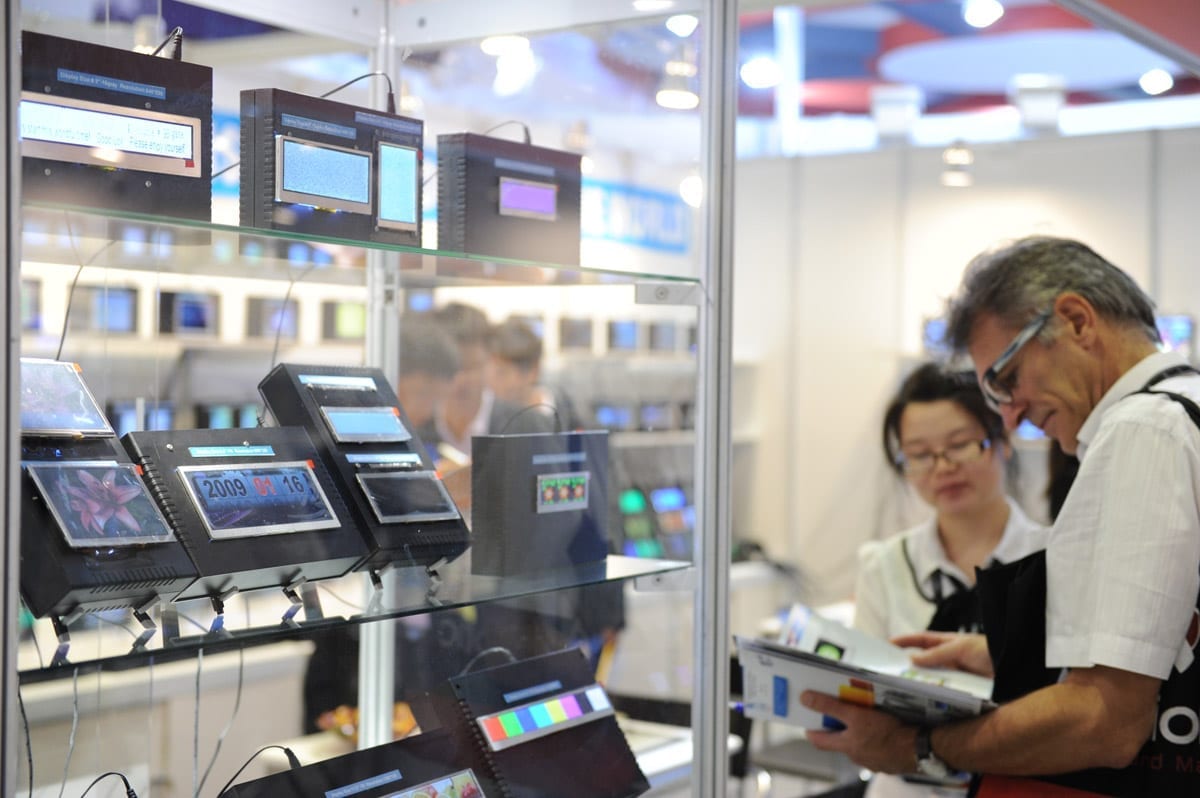
    The Hong Kong Electronics Fair (Autumn Edition) and electronicAsia opened today at the Hong Kong Convention and Exhibition Centre (HKCEC) and continue through 16 October. The 36th Electronics Fair (Autumn Edition) is organised by the Hong Kong Trade Development Council (HKTDC), while the 20th electronicAsia is jointly organised by the HKTDC and MMI Asia Pte Ltd.

    “As the world’s largest electronics marketplace, the Electronics Fair and electronicAsia gather around 4,200 exhibitors from 29 countries and regions,” said Benjamin Chau, Acting Executive Director, HKTDC. “The exhibits this year include smart tech, virtual reality, wearable electronics and more, demonstrating the industry’s ability to keep abreast of the technology trends and launch products that match the market’s demand. We hope they will be received well during the fairs.”

    The HKTDC has organised more than 140 buyer missions this year representing more than 12,000 global buyers from over 8,000 companies to the two fairs. These include major international retailers, importers and distributors such as TDL from Canada, Product Group from Australia, Casino from France, Casanova from Spain, Mad Robots from Russia, Mobibox from Brazil, Sound Village from Argentina, LehuMall.com from the Chinese mainland, Croma from India, ICST from Japan, Signeo from Singapore and Matahari Mall.com from Indonesia.

    Debut Virtual Reality and Startup zones showcase innovative technology and ideas

    Adopting smart and high-tech solutions has become a prevailing trend across virtually all sectors. To effectively showcase the latest technologies and products, the HKTDC has introduced a new Tech Hall at the Convention Hall, clustering five thematic zones including the inaugural Virtual Reality and Startup zones, as well as Smart Tech, Robotics & Unmanned Tech and 3D Printing. This assemblage will help buyers source high-tech electronic products with ease while investors can explore investment and partnership opportunities in a range of new technologies developed by startups.

    Startups are a growing force in driving economic diversity. The new Startup zone gathers close to 50 startup companies from Hong Kong, Canada, the Chinese mainland, Taiwan and the US to showcase new technologies. A Canadian exhibitor is presenting an in-vehicle diagnostic and monitoring device that can transform a conventional car into a smart vehicle. Its nine-axis sensor can gather data to reconstruct the car’s motion path if it is involved in an accident. A local startup exhibitor is introducing an electronic smart price tag equipped with a high-definition colour display and Wi-Fi, allowing pricing information to be updated wirelessly in real-time.

    To stand out in the marketplace, startups need suitable opportunities to explain their ideas and showcase their products to potential investors. To this end, the Electronics Fair provides an excellent platform with a series of startup-themed events on the programme. These include the “First Step of Your Startup Project” seminar, which features Ben Bateman, Senior Director of Strategic Programs of the US crowdfunding platform Indiegogo, a pitching session where startups can pitch solutions or product ideas to potential investors on the spot, as well as “Startup, Smart Launch” where newly developed technology and products can be introduced to buyers. Entrepreneurs behind successful startups are also on hand to share their experiences with visitors.

    Virtual Reality zone energises the tech craze

    Many industry players in the technology and online gaming sectors are investing in the development of virtual reality (VR) applications. The new Virtual Reality zone at the Electronics Fair is showcasing a range of VR headsets and related technology as well as VR video cameras. One of the Hong Kong exhibitors is using the fair to parade its 360-degree VR drone, a professional grade system for filming 360-degree panoramic scenes and VR videos. It is compatible with action cameras, enabling all-direction aerial spherical photography. A company from Taiwan has brought its 3D video camera module that enables users to capture 3D videos on a mobile phone with the module and an app.

    Launched last year, the Smart Tech and Robotics & Unmanned Tech zones continue to be popular with fair visitors keen to view the latest creative products and future technologies including robots with IoT technology, luggage tracking bands, drones and electric scooters. Meanwhile, the 3D Printing zone features 3D printers and related materials and technology. A local exhibitor is presenting a 3D printing education kit for use at home or in a professional learning setting. Users can assemble the printer themselves to print directly and, in the process, learn more about 3D printing technology.

    Hall of Fame presents branded products

    The brand of an electronic product is one of the key factors influencing consumer purchasing decisions. The Hall of Fame at the Electronics Fair gathers electronic products from some 550 brands, covering digital entertainment, home tech, wireless and communications, power and accessories. Buyers can choose from a wide variety of respected brands at the fair, including Desay, Goodway, GP Batteries, Haier, Intel, Motorola and VTech.

    electronicAsia offers cutting-edge electronic parts and components

    Held concurrently with the Electronics Fair, electronicAsia is an important sourcing platform for electronic components and production technologies. The fair gathers cutting-edge innovations from the US, Germany, France, Singapore, Taiwan, Japan and Korea, providing the industry with new product design ideas and materials. One of the highlight zones is World of Display Technology, which features products such as a LCD display suitable for outdoor use under direct sunlight. The product features a wide-viewing angle, high-resolution display and can also be used as a touch-screen panel.

    electronicAsia is also showcasing other components such as printed circuit boards, keyboards, switches, integrated circuits as well as parts, modules and technology for solar and photovoltaic energy. Key components for smart devices such as display backlight and smart switch modules are also on show, targeting mobile device manufacturers.

    Symposium on Innovation & Technology discusses IoT and smart devices

    Besides being an annual sourcing event for the industry, the Electronics Fair and electronicAsia also provide insights into market trends and industry intelligence. As smart devices and IoT technology continue to gain attention, the HKTDC is nurturing these trends by jointly organising today’s Symposium on Innovation & Technology with the Hong Kong Electronics & Technologies Association. Representatives from the world’s leading tech companies including Tesla, Amazon Web Services, HP and Qualcomm are among those sharing their expertise on smart tech and IoT trends.

    During the two fairs, a number of buyer forums and seminars are organised to address hot-button issues in the electronics sector such as virtual reality, augmented reality, wearable technology and integrated circuits among other industry developments. Meanwhile, TEDxHong Kong will be held on Saturday (15 October). TED, which stands for “Technology, Entertainment, Design”, is a forum for thought leaders from various sectors to share their views on future technological advancements. The winning products of The Electronic Industries Awards (EIA) 2016, jointly organised by the HKTDC and the Hong Kong Electronic Industries Association (HKEIA), are displayed at the fairground (booth no.: 1CON-00B). This year, there are 21 award winners from 13 product categories. The EIA aims to stimulate creative design and innovation within the electronics industry, as well as recognise and award exhibitors for their outstanding performance.

    Big business through small orders

    In view of the keen demand for small order sourcing, the hktdc.com Small Orders zone returns to the fair, featuring a total of more than 330 counters offering over 2,900 products for buyers looking to source products in minimum quantities of between five and 1,000 pieces. With the increasing popularity of e-commerce, the Small-Order Online Transaction Platform (https://smallorders.hktdc.com) enables global buyers to complete transactions with suppliers online. The platform is displaying more than 120,000 products from over 10,000 suppliers.

  • Bank Saint Petersburg to Start Accepting JCB Cards

    Bank Saint Petersburg to Start Accepting JCB Cards

    JCB International Co., Ltd. (JCBI), the international operations subsidiary of JCB Co., Ltd. announced that Bank Saint Petersburg (BSPB), the leading bank in North-West Russia, started accepting JCB cards at POS terminals and ATMs.

    The bank network includes 7,100 POS terminals and 700 ATMs located not only in Saint Petersburg but also throughout the Leningrad region, in Moscow and Kaliningrad. JCBI started card issuing business with local banks in Russia in 2015 and cardmember base has been expanding. The partnership with BSPB will make JCB cardmembers feel more comfortable to use their cards, and enhance JCB presence in the market and increase JCB brand awareness.

    Commenting on the announcement, Kimihisa Imada, Deputy President of JCBI, said: “With this launch, JCB expands card acceptance in one of the most popular and famous destinations in Russia. Saint Petersburg has been recognized as Europe’s Leading Destination for the second consecutive year by the World Travel Awards and we are proud that JCB cardmembers from all over the world will be able to use their cards while travelling and sightseeing in the area.”

    Pavel Filimonenok, Deputy Chairman of the management board of BSPB, added: “It is very important for us that our bank is among the top ten banks in Russia certified by one of the leading worldwide payment brands – JCB. We highly evaluate the potential of our collaboration with JCB as the payment brand is actively growing and the global volume of transactions made by JCB cards has nearly doubled over the past 3 years.”

  • Franchising and Licensing Awards 2016, a testament to the growth in internationalisation

    Franchising and Licensing Awards 2016, a testament to the growth in internationalisation

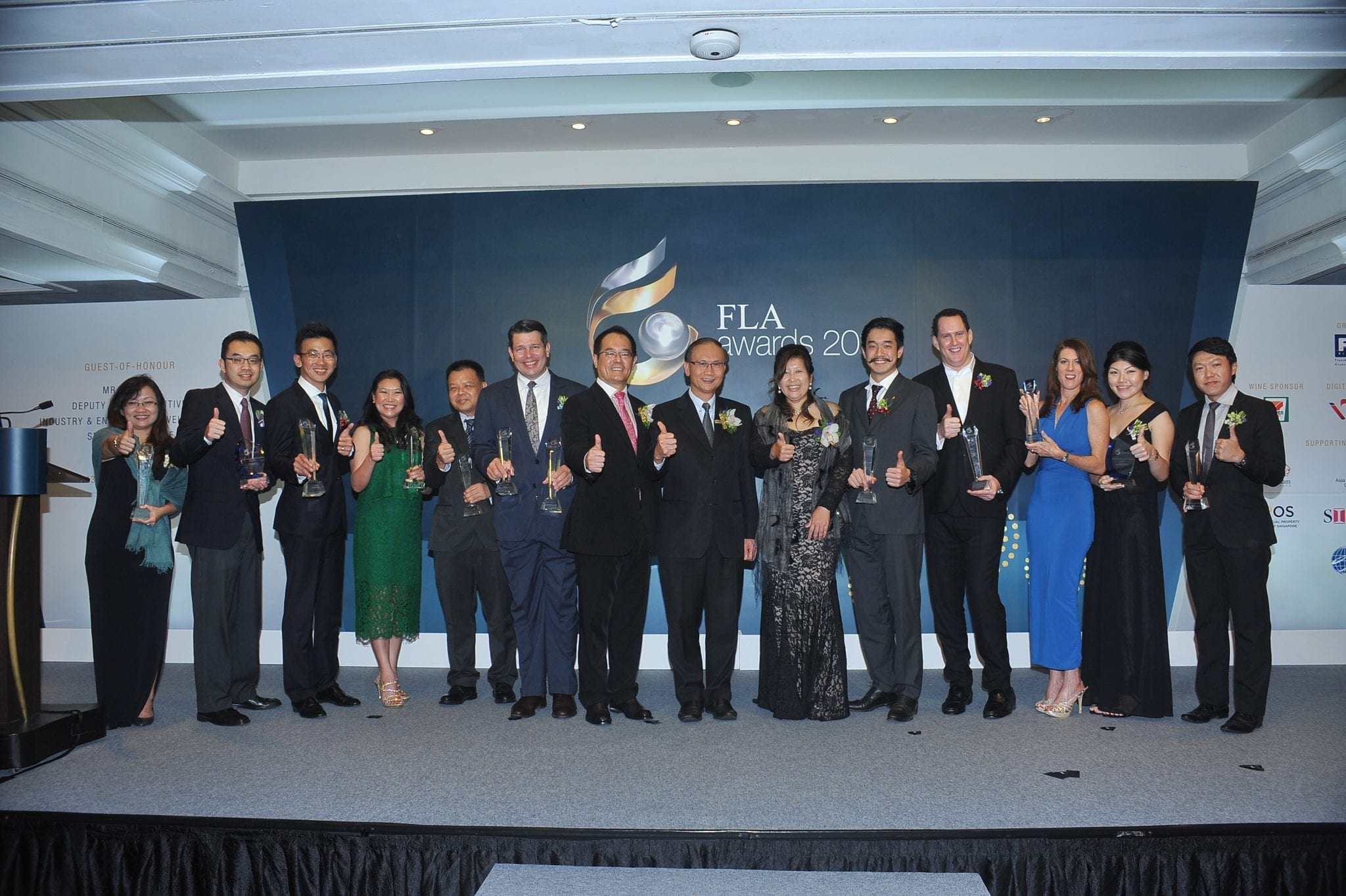
    Singapore’s top achievers in the franchising and licensing industry were recognised at the annual Franchising and Licensing Association (FLA) Awards 2016 held at the Marina Mandarin Ballroom last night.

    Currently in its 12th year, the FLA Awards continues to provide a formidable platform for successful franchise concepts and businesses to be showcased in the international arena. It also serves as a regional benchmark for franchise concepts aspiring to greater heights. The Awards, made up of both Competitive and Recognition Awards, comprises eight different categories that recognise and honour the various players in the industry – Franchisors, Licensors and Franchisees. 

    The 2016 Awards, which saw Sunflower Childcare clinching the title of ‘Overall Winner, Promising Franchisor of the Year’, had increased participation from the education sector. This reflects the continued growth of the education industry within the franchising and licensing scene. In line with the global trend of innovation, the Singapore-headquartered childcare group’s success can be attributed to its unique customisation model and record of constant innovation and development. Since starting its franchise business in 2005, Sunflower Childcare has opened 20 centres in total; 18 in Singapore and 2 in China.

    Sharon Lee, Director of Sunflower Childcare, said, “It is our first year participating in the awards and we are thrilled to have gotten the title of ‘Overall Winner, Promising Franchisor of the Year’. At Sunflower Childcare, we pride ourselves in the stringent process of acquiring franchisees and ensuring that they are well taken care of. We are looking to expand into international shores and FLA has been fundamental in enriching us with the relevant insights for expansion into our potential markets.”

    According to Donna Lee, Chair of FLA (Singapore), “The encouraging progress of our franchisors is a reflection of how companies can leverage on intangible assets like strong branding and innovative technology to penetrate new markets successfully. With the franchising and licensing landscape becoming increasingly diversified, it is key for companies to constantly innovate and expand into the global market in order to keep up with market trends and to remain competitive. FLA Singapore prides itself in equipping companies with the right toolset for internationalisation and we look forward to working with more businesses to help them successfully expand across markets and the region.”

    Earning the title of ‘Overall Winner, Franchisor of the Year’, veteran establishment 7-Eleven has constantly been at the forefront in the franchising and licensing playing field. Since opening its first franchised store in 1988, 7-Eleven has been offering entrepreneurs the unique opportunity to leverage on a renowned global platform to start a business. To date, it has a total of 207 franchised stores, forming 47% of its expanding network of 441 stores island-wide.

    David Goh, CEO of 7-Eleven, said, “Despite being in the franchising and licensing scene for more than three decades, we are continually learning and growing with the industry. Over the last few years, 7-Eleven has been constantly innovating and transforming its business model to be more relevant to its consumers and to add value to its franchisees. Our advice to franchisors looking to enter the industry would be to communicate with your franchisees, build a solid foundation of trust and constantly innovate your business model.”

    Traditional sectors like the Food & Beverage industry remained strong, with Thailand-established food service chain, The Pizza Company, being crowned ‘Overall Winner, International Franchisor of the Year’. Having adopted a master franchise model internationally, The Pizza Company has opened over 400 outlets in 9 countries in a span of 12 years.

    John Heinecke, Chief Operating Officer of Minor Food Group, said, “We are excited that The Pizza Company has been awarded ‘Overall Winner, International Franchisor of the Year’. This award showcases and recognises the systems that we have been building for the last 16 years to where it is today. With many of our brands operating in Singapore, we strongly believe in teaching our franchisees the art of learning to create wealth as we strive together towards success.”

    Donna Lee added, “FLA is proud to be able to bridge the gap between the global and local market with its strong government ties and prominent memberships in the World Franchise Council and Asia Pacific Franchise Confederation. Over the years, Singapore has been seen as a model test-bed and we are glad that we are able to assist international companies looking to penetrate the Singapore and Asian market.”

    The Awards were held in conjunction with FLAsia – an industry exhibition and conference, running from 13th to 15th October, showcasing both home-grown franchises and franchise opportunities from around the world. The exhibition this year saw participation from 17 countries, with international brands such as Swarovski, Delifrance, Gloria Jean’s Coffee and Coca Restaurant exhibiting. More information of the exhibition can be found on https://franchiselicenseasia.com/.

    Other Winners at the FLA Awards 2016 include Japan IPL Express, Mulberry Learning Centre, Anytime Fitness, Seoul Garden and Dancing Crab. The full winner list is attached separately and more information and images can be found on the FLA Awards website: https://www.flaawards.com/.

  • ASN, Bell Labs set 65Tbps subsea cable speed record

    ASN, Bell Labs set 65Tbps subsea cable speed record

    Alcatel-Lucent Submarine Networks and Nokia Bell Labs have set a new transmission record over a 6,600km single mode fiber for transoceanic cable systems.

    The lab trial achieved a total transmission speed of 65Tbps using submarine grade dual band erbium doped fiber amplifiers.

    The trial used Bell Labs’ new probabilistic constellation shaping (PCS) modulation technology. PCS is designed to maximize the distance and capacity of high-speed transmission in optical networks, by using non-uniform transmission of constellation symbols to increase resilience to noise and other impairments.

    “The future digital existence where everyone, everything and every system and process is connected will require a massive increase in network capacity and the ability to dynamically optimize this capacity,” Nokia CTO and Bell Labs president Marcus Weldon said.

    “Probabilistic constellation shaping extends the limits of current optical transmission by utilizing novel modulation techniques to dramatically improve the performance and capacity needed for the new digital era that will be enabled by the Future X Network.”

    The same technology was used in September to achieve speeds of 1Tbps per channel https://www.telecomasia.net/content/bell-labs-achieves-1tbps-over-fiberover Deutsche Telekom’s terrestrial optical network during trials with the operator’s T-Labs and the Technical University of Munich.

    A capacity of 65Tbps is 13,000 times the capacity of the first subsea amplified transatlantic system in 1995.

  • CITIC Telecom to acquire Acclivis

    CITIC Telecom to acquire Acclivis

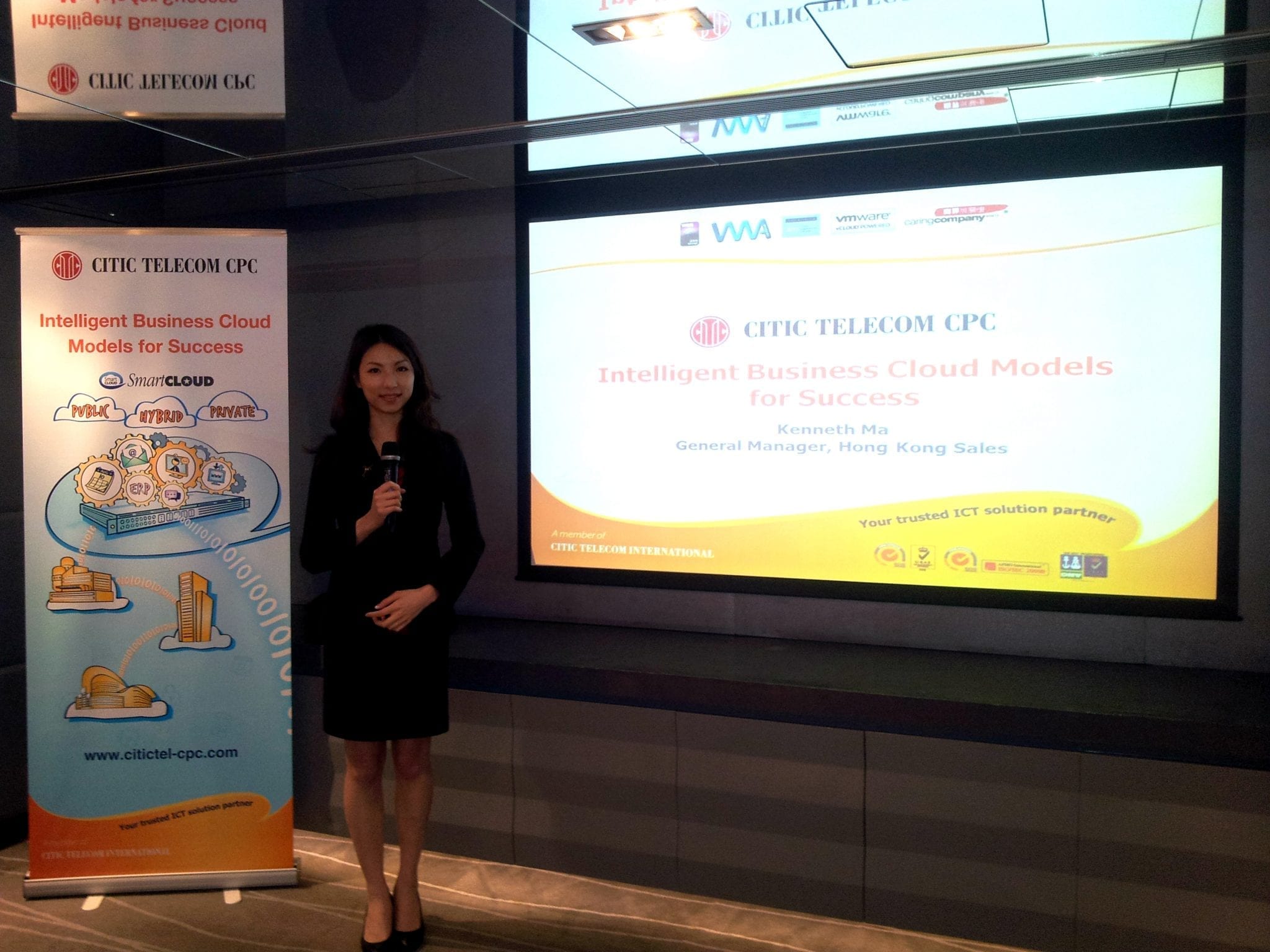
    Hong Kong’s CITIC Telecom International has expanded its presence in Southeast Asia with the acquisition of a 100% stake in cloud infrastructure services provider Acclivis.

    Acclivis mainly operates cloud facilities in the markets of Singapore, Indonesia, Malaysia and Thailand. The company also owns the ISP Pacific Internet in Singapore and Thailand.

    CITIC Telecom said the acquisition will transform the company into one of the few trans-regional one-stop ICT services providers in Southeast Asia, and will create synergies with the company’s subsidiaries including CITIC Telecom CPC.

    “Acclivis is a technology company that has strong technological capabilities and unique advantages. It operates internet service via Pacific Internet in the region and its businesses and the services we offer to our corporate customers have apparent strategic synergies,” CITIC Teleom CEO Dr Lin Zhenhui said.

    “The acquisition will enable us to expand our services to internet service, cloud computing and management services, support our transformation geared towards the mobile and internet arenas and expansion of the Southeast Asia market, giving us another rapid growth driver.”

    The deal still requires the approval of Acclivis parent DeClout, but pending this is expected to be completed by the end of the year.

    CITIC’s current development strategy is focused on “taking roots in the Mainland market while accelerating expansion and geographic coverage in the international market with Hong Kong and Macau serving as bases and connections.”

  • Pandora goes online in China on Alibaba’s Tmall

    Pandora goes online in China on Alibaba’s Tmall

    PANDORA announced that the Company has launched on Alibaba Group’s business to consumer platform, Tmall.com, providing a further avenue for Chinese consumers to purchase PANDORA jewellery. The launch on Tmall.com is PANDORA’s first online presence in China, which will be followed by the launch of the Company’s own eSTORE in December, 2016.

    Internet retailing in China is becoming increasingly popular amongst consumers, driven by faster internet, greater payment security and increasing convenience. In 2015, internet retailing in China generated sales of CNY 1,795 billion (approximately DKK 1,785 billion), corresponding to an increase of 53% compared to 2014.

    In connection with the launch, Kenneth Madsen, President, PANDORA Asia Pacific, said: “The launch of PANDORA jewellery on Tmall.com is another important step in establishing the PANDORA brand amongst Chinese consumers. Tmall is a clear leader in China’s internet retail space, and is the right business partner for PANDORA to get the broadest approach to the Chinese consumer.”

    The jewellery market in China is the largest jewellery market in the world, which in 2015 had a value of CNY 607 billion (approximately DKK 600 billion), corresponding to an increase of 7% compared to 2014. In the period 2016-2021, the Chinese jewellery market is expected to grow with a compound annual growth rate (CAGR) of 6%.


  • Embassy ties up with Hilton for star hotel in Bengaluru

    Embassy ties up with Hilton for star hotel in Bengaluru

    Leading property developer Embassy Group has tied up with international hospitality major Hilton to build a 586-room dual branded star hotel in this tech hub, said the realtor on Tuesday.

    “As per the agreement signed recently, the twin hotel will be developed and owned by our group, while Hilton will manage it,” said Embassy in a statement.

    Set to be located in the Embassy Manyata Business Park in the north-east suburb, the hotel will have 250 rooms at Hilton and 336 rooms at Hilton Garden Inn, with 46,000 sq.ft. of meetings and events space that can accommodate up to 1,500 people.

    “The hotel complex, when completed by 2020, will have a food and beverage hub and two commercial towers. It will also sport an iconic design drawn by Singapore-based Andy Fisher workshop,” said Embassy Chairman and Managing Director Jitu Virwani.

    The star hotel will offer the rooms at two price points to serve the needs of global firms located in and around the sprawling park.

    Both the partners, which run a brand hotel-cum-resorts at Embassy GolfLinks in the city’s eastern suburb, plan to build a mega hospitality project at the 100-acre Embassy Tech-Village in the nearby suburb.

    “Partnering with Hilton in developing two more hotels is part of our strategy in the hospitality business as it’s a global leader in the sector and known for quality service and attention to detail,” noted Embassy Chief Executive Mike Holland.

    The partnership will also help Embassy in providing synergy with its 175 international corporate occupier clientele across its commercial parks.

    “We see growing awareness of our global brand in the sub-continent and our partnership with Embassy reaffirms our commitment to India as an important market where we operate 15 hotels in 11 cities across the country,” said Guy Phillips, Hilton senior Vice-President for Asia.

    The three decades old realty group, which has an extensive land bank, developed a whopping 37-million square feet prime commercial, residential and retail space across the country and in Malaysia and Serbia.

    The US-based 97-year-old Hilton has 4,700 managed, franchised, owned and leased hotels and timeshare properties, with 775,000 rooms in 104 countries the world over.

  • Testing times: Singapore’s retail scene shows four signs of weakness

    Testing times: Singapore’s retail scene shows four signs of weakness

    Rents in the Central region may fall 6-8% in Q4.

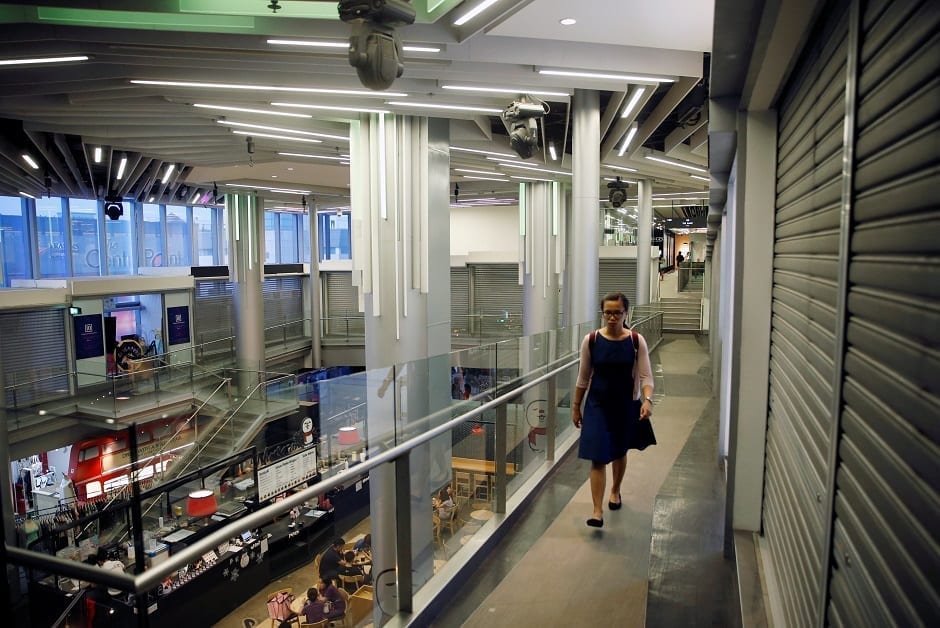
    The outlook for Singapore’s retail sector for the last three months of the year remains subdued, with weak retail rents made worse by retailers consolidating outlets to streamline cost.

    Average island-wide prime retail rents moderated in Q3 2016, with that of Orchard Road falling for the first time since Q2 2015 on the back of the tougher retail climate, reports Knight Frank (KF).

    The average gross rents for prime spaces was $31.20, which represents 2.2% decline YoY and 0.2% dip on a quarterly basis. Average Orchard Road prime rents, meanwhile, declined by 0.1% YoY and 0.5% QoQ.

    According to KF, average rents in the Central Region are envisaged to fall by 6.0% to 8.0% y-o-y by Q4 2016, while the more resilient prime rents to moderate downwards by up to 3.0% y-o-y in the same period.

    “The expected fall in rents takes into account not only the projected weakened demand from retailers, but also the likelihood of landlords readjusting the rental structures to help their tenants tide over down cycles of the market in order to maintain healthy occupancy status,” it said.

    An estimated 1,072,000 sq ft of net lettable major retail space is slated for completion in the whole of 2016. KF noted that out of this, 38.2% (409,000 sq ft) was ready in the first half of 2016, with the remaining 663,000 sq ft to be completed in H2 2016.

    “In addition to this is the cautious stance taken by retailers towards business expansion, and island-wide occupancy is likely to fall from 92.8% in Q4 2015 to between 90.0% and 92.0% in Q4 2016,” said KF.

    KF’s bearish outlook on Singapore’s retail sector is supported by the following indications of weak overall spending:

    1. Singapore’s consumer confidence entered the pessimistic range.

    According to the Mastercard Index of Consumer Confidence, Singapore saw a significant decline of 10.7 points in H1 2016 from H2 2015. The degree of decline lagged behind only Indonesia (-14.7 points) and Hong Kong (-12.4 points), of the 17 countries within the Asia Pacific region tracked by Mastercard.

    2. The overall Retail Sales Index (excluding motor vehicles)(seasonally adjusted, at constant prices) improved by 3.5% m-o-m in July 2016 compared to the preceding month. All retail trades saw improvement with the exception of Food & Beverages, which declined by 1.5% monthon-month (m-o-m) over the same period. However on a year-on-year (yo-y) basis, the overall retail sales (at constant prices) declined by 3.7% in July 2016, with Computer & Telecommunication Equipment (-18.7% y-oy), Watches & Jewellery (-16.6% y-o-y) and Food & Beverages (-9.7% yo-y) trades seeing the steepest falls.

    3. Employment in the wholesale and retail trade declined by 1.8% in H1 2016 compared to H2 2015. This could be attributed to the weaker retail sales and greater caution in manpower deployment by retailers.

    4. Total visitor arrivals for the period of January to July 2016 increased by 11.5%, compared to the same period last year, to reach 9.8 million. While visitors from China and Indonesia rose by 49.2% y-o-y and 6.8% y-o-y respectively in the first seven months of 2016 compared to the same period in 2015, visitors from Malaysia dropped by 1.6% y-o-y.

  • Guocoland secures temporary occupation permit for Guoco Tower

    Guocoland secures temporary occupation permit for Guoco Tower

    The property has already seen 80% commitment from tenants.

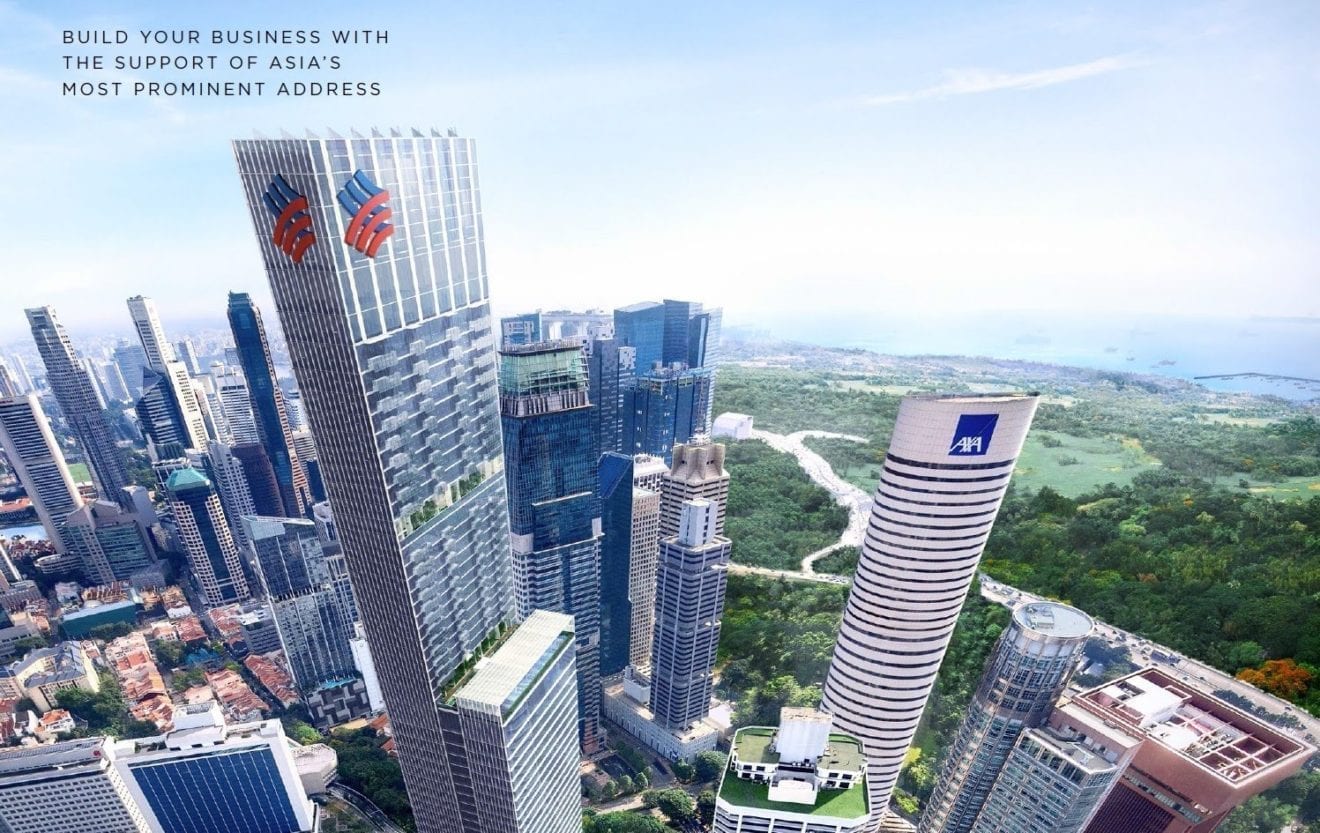
    Prospective tenants of Guoco Tower should be ready to move in anytime as Guocoland secures temporary occupation permit for the office and basement retail component of the building.

    In a statement, GuocoLand claimed the Grade A office tower has already seen a remarkable 80% commitment moving into October despite a highly competitive office leasing market. This has significantly spiked up from 10% at the beginning of the year.

    Guocoland Singapore Managing Director Cheng Hsing Yao said the 890,000 sq ft office tower has attracted demands from a broad range of industries. Some of the companies in the list of committed tenants include Agoda, Amadeus, ASICS, Danone, Straits Trading and Teva Pharmaceutical Industries.

    “Guoco Tower’s ‘liveable vertical city’ concept whereby workplace is integrated with lifestyle amenities makes it attractive to tenants who care for the welfare of their staff. In addition, the prime location, seamless access to the MRT station and its prestige as the tallest building in Singapore also appealed to tenants,” he said.

    Guoco Tower is inside the Tanjong Pagar Centre, an integrated commercial, retail, and lifestyle complex with 181 luxury apartments in Wallich Residence, the 222 room Sofitel Singapore City Centre hotel, and a 150,000 sq ft. Urban Park.

    The complex will commence its operations in phases from November this year.

  • StanChart, Uber launch multi-market partnership

    StanChart, Uber launch multi-market partnership

    Standard Chartered Bank and Uber announced a partnership that offers all Standard Chartered credit cardholders in six markets (Singapore, Indonesia, Malaysia, Vietnam, India and the United Arab Emirates) across two continents up to 25% cashback for all global Uber rides. This is the first ever multimarket partnership for both Standard Chartered Bank and Uber, the world’s most popular transport app.

    Collaborating with Uber is part of Standard Chartered’s digital agenda to deliver simple and convenient banking through digital channels for increasingly tech-savvy clients. To meet clients’ needs in the new digital ecosystem, the Bank believes that collaboration between the financial and technology sectors will lead the way forward. Ride hailing service providers such as Uber are fast becoming a mainstream feature of transportation globally, and continue to gain popularity exponentially. This collaboration between Standard Chartered and Uber capitalises on key areas of synergies, which are mainly an extensive geographical network, highly-mobile client base and the desire to provide innovative offerings to clients.

    Sebastian Arcuri, Regional Head, Retail Banking, ASEAN and South Asia, Standard Chartered Bank said:

    “There has been a dramatic shift towards digital and cashless payments across the region and we are seeing success in the seamless integration of the Bank’s services in our clients’ everyday life. As a global bank with a focus on Asia, Africa and Middle East, we are pleased to partner Uber, a transport network operating in more than 425 cities, to engage our clients for both their local and overseas transport needs.”

    Commenting on the partnership, Chan Park, Uber’s Regional General Manager for Southeast Asia, said:
    “We are thrilled to partner with Standard Chartered Bank, one of the region’s longstanding and illustrious banks. Together, we will bring to life our shared passion for delighting customers and bring even more value to riders. We also look forward to welcoming cardholders as first-time Uber riders to join over 50 million riders globally to experience the ridesharing revolution.”

    VisaNet data reveals that in Singapore, in-app payments account for around one third of total card spend under the transportation category. The overall consumer spend in transportation witnessed a healthy growth of 35% year-on-year, driven primarily by a growth in spend for in-app merchants. On the average, third party transportation booking apps account for more than 1.5 million transactions every month.

    Andrew Chia, Head of Retail Banking, Standard Chartered Bank Singapore, said:

    “We constantly seek new ways to delight our clients and are excited to partner Uber in delivering greater value and a more seamless travel experience for our cardholders. Given the shift towards a cashless society in Singapore, there is strong demand for more accessible digital payment options. With this partnership, our cardholders are rewarded with convenience and cashback when they go cashless with Uber.”

  • Skytrain ticketing goes smart

    Skytrain ticketing goes smart

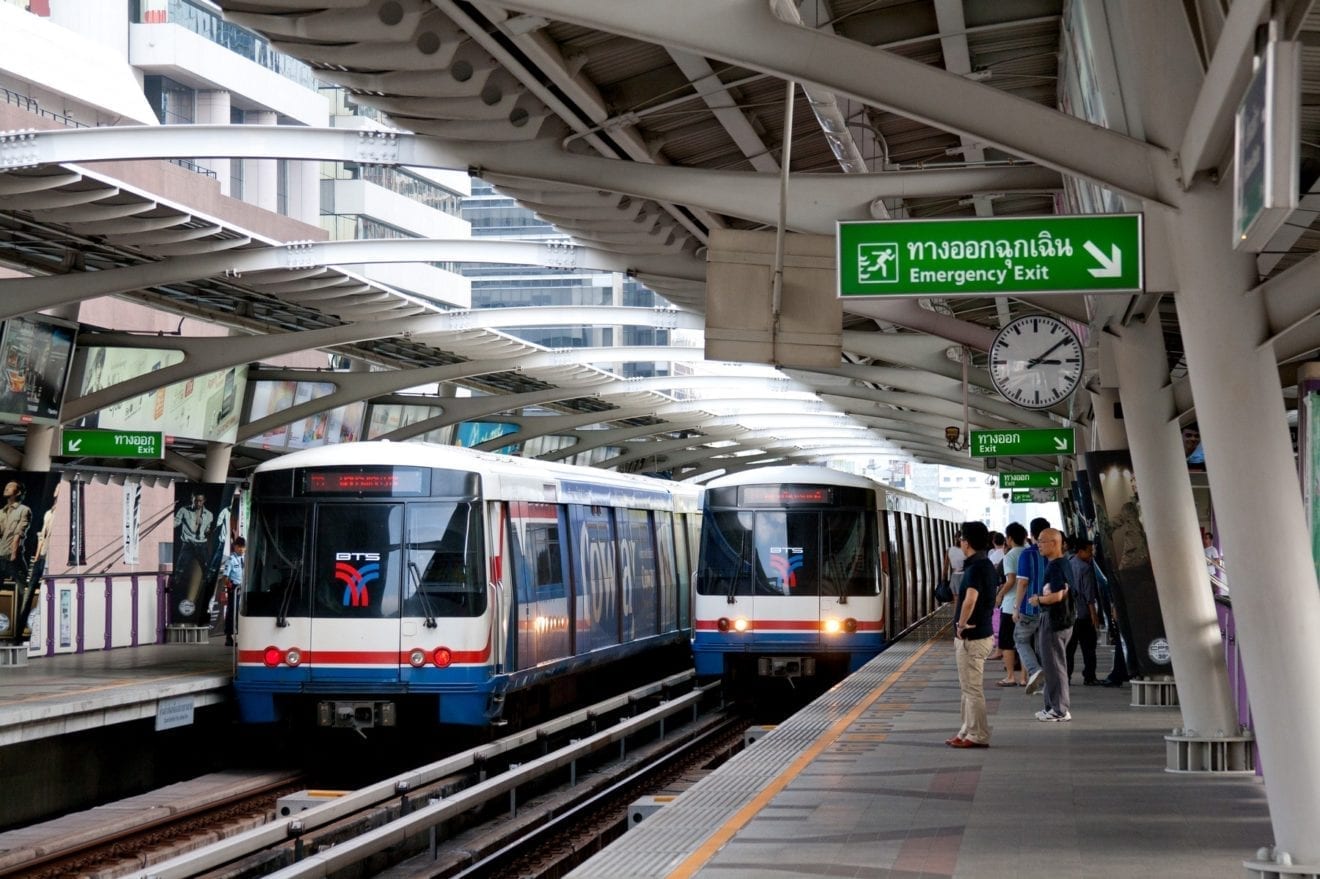
    The little tokens and even plastic smart cards now used in the mass transit systems will soon be outdated once the media business unit of BTS Group Holdings introduces new services that will enable skytrain fares to be paid with a smartphone.

    By the first quarter next year, BTS commuters will just have to swipe the barcode embedded in the Rabbit Line Pay application at the turnstile. No more queues to get change, tokens or cards.

    With the new mobile service, you just swipe your Rabbit Line Pay card and walk through the turnstile, says Mr Kavin.

    “Next year, we’re going to change the entire BTS system, enabling users of Rabbit Line Pay [a function embedded in the Line app] to cover skytrain fares via smartphones or mobile devices,” says Kavin Kanjanapas, chief executive of BTS Group, which owns a majority stake of VGI Global Media Plc.

    Line is the most popular instant messaging platform in Thailand with more than 33 million active users.

    “The new mobile ticketing service will be a great convenience to commuters and perfectly serve modern Bangkok lifestyles, as you just swipe your barcode embedded in the Rabbit Line Pay application and walk through the turnstile,” says Mr Kavin, also chairman of VGI’s executive committee.

    The innovative mobile ticketing service shows just how far VGI has come since its humble beginnings. Founded in 1995 with initial registered capital of only 1 million baht, the company was intended to provide marketing and advertising services for the Bangkok Mass Transit System Plc (BTSC), which operates the skytrain.

    The company’s registered capital today is 858 million baht, with 686 million in paid-up capital. VGI is now Thailand’s major provider of out-of-home (OOH) media solutions, having more than 10,000 large still-image screens installed in the BTS skytrain network and at large retail stores nationwide.

    It also has more than 11,000 square metres of advertising space in the product display zones of large, modern stores and around 5,000 digital screens and other types of OOH advertising at BTS stations, Tesco Lotus, Big C and Watson stores, along with large office towers throughout Bangkok.

    It further holds licences to manage various forms of advertising at 13 airports operated by Airports of Thailand Plc and the Civil Aviation Department.

    In addition, the company runs retail shops in 23 BTS stations, on top of radio networks covering nearly 2,000 stores in Thailand.

    Like the BTSC, whose situation became critical in the wake of the 1997 financial crisis when passenger number was low due to a sharp decline in purchasing power, VGI struggled during its first three years of operations.

    After seeing low ridership number of fewer than 100,000 a day (in contrast with original projections of 600,000 a day), almost every advertiser who had booked space with VGI asked to scrap their deals and withdrew their deposits.

    As with the BTSC, VGI spent nearly 10 years battling financial constraints. It started seeing a glimmer of hope after the BTSC, which shared a huge portion of the group’s debt, exited its rehabilitation plan in 2008 and merged with Tanayong, the property development firm Mr Kavin’s father, Keeree Kanjanapas, founded in 1968.

    The merged company became BTS Group Holdings in 2010, which focuses on four core businesses: mass transit, property, media and services.

    After the group’s strong business revival, VGI itself has been successful in developing its lifestyle media network, mainly through active mergers and acquisitions (M&A) over the past couple of years, acquiring stakes in SET-listed Master Ad Plc, the country’s largest OOH advertising company, aviation media company Aero Media, and most recently Rabbit Card and its related online business.

    The latest acquisition will enable VGI to enter into an e-payment business that offers Rabbit Card as a payment tool for travelling on the skytrain and for purchasing merchandise from leading retailers nationwide.

    Rabbit Line Pay will also enable users to buy goods online and from brick-and-mortar retail stores. It also lets VGI extend its services to cover online payment for skytrain fares and retail purchases within Rabbit Card’s network of merchants nationwide through their mobile devices.

    Additional Rabbit businesses comprise other online ventures operated by Rabbit Internet, including Rabbit Daily, which provides lifestyle content through a web portal, and Rabbit Finance, which is a licenced, leading online financial products comparison website previously known as ASK Hanuman.

    This strategic move will allow VGI to raise the effectiveness and measurability of its advertising campaigns.

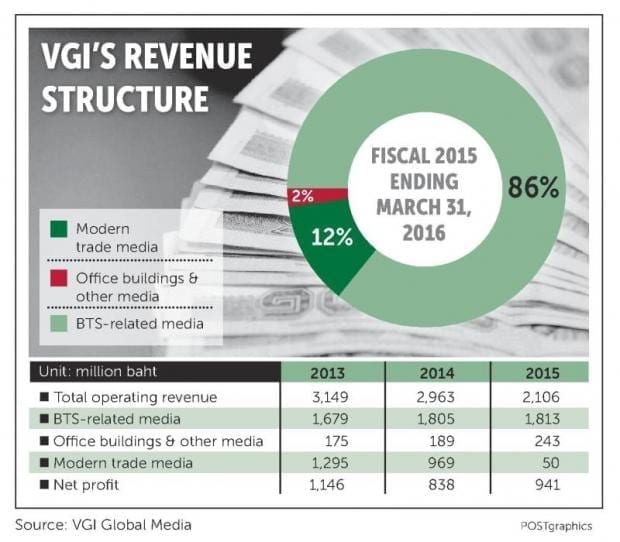
    VGI aims to create a new media advertising platform, Data-Centric Media Hypermarket, that can directly reach targeted audiences. It is projected to bring VGI’s daily audience from 1.9 million people to 25 million (mostly active Line users). It has also set a long-term revenue target of 8.2 billion baht over the next five years, up from 3.9 billion in 2015.

    To fulfil the ambitious new media advertising platform, Mr Kavin says VGI still needs to complete two to three acquisition deals.

    “Over the last 3-4 years, we’ve spent more than 3 billion baht on M&A, mainly on Master Ad, and most recently Rabbit Card,” said Mr Kavin. “From next year onwards, M&A will no longer be our focus. Rather, we will look to the integration of all our businesses to create the best synergy within VGI,” he says.

  • Reits: An attractive alternative form of property investment

    Reits: An attractive alternative form of property investment

    In just 14 years, the real estate investment trust (Reit) industry in Singapore has drastically transformed the country’s investment property landscape, making it one of the most admired in the Asia Pacific.

    The Singapore Reit industry now ranks third in size in the region, behind Japan and Australia. S-Reits have been actively contributing to the improvement of properties in Singapore, practically in all sectors of the rental market: retail, office, and industrial.

    As landlords, Reits are committed to maintaining and improving their properties and have consistently demonstrated this commitment by investing in extensive asset enhancement initiatives to refurbish and upgrade older properties in their portfolios, including introducing eco- technology into their properties.

    Such improvements have led to improved offerings for tenants and raised the quality of real estate in Singapore as a whole.

    The motive for Reits to continually upgrade their investment assets is driven by commercial interest doubtlessly, to generate return on investment for unitholders.

    But the resultant benefit is not confined to Reits, or else the progress could not be sustained.

    The other three key players in the game are tenants, consumers, and the Singapore economy at large.

    Unfortunately, this aspect of the impact of Reits has tended to be overlooked; instead, fingers have been pointed at Reits as the culprit causing the plight of tenants, especially the smaller enterprises, who bow out of the business citing rising high rent as a key reason.

    This has in fact caused the resurgence of the classic landlord/ peasant conflict.

    There will continue to be murmurings, especially from the quarter that has been ousted from their comfortable rented nests of many years until rentals made it untenable for them to continue with their business.

    Their lamentation is that Reits which appear to have taken over “most” of the rental properties in the country, have been regularly raising rental rates to maximise their yields and keep up with their distribution per unit (DPU) growth.

    Look at the big picture

    To be objective, one needs to look at the big picture.

    Many rental buildings here (both office and retail) have remained in the same state for 20-30 years and maybe even longer.

    Fortunately, many of the tired-looking buildings have also been rejuvenated and given a new lease of life after they were acquired by Reits.

    Someone once told me Singapore needs Reits to transform the investment property market the way the Urban Redevelopment Authority (URA) did the Singapore landscape over the last few decades; the difference is that Reits will have to do it on a fully commercial basis.

    The benefits of developing the Reit industry to the economy is perhaps more obvious in that it enables developers to recycle their capital for other investments, creates specialist professional jobs, generates high-value supporting services, etc.

    The best evidence of this are the aggressive measures many of our neighbours are taking to develop their own Reit industry.

    S-Reits are here to stay. S-Reits are celebrating their 14th anniversary since the first Reit, CMT, was listed in Singapore in 2002. Today, Singapore has succeeded in having 38 Reits listed on our stock exchange, with a total market capitalisation of S$74 billion.

    What is interesting is that, according to estimates, about 25 per cent of the shares of Reits are in the hands of retail investors. (The sponsor groups and controlling shareholders are estimated to hold some 35 per cent, while institutional investors own 40 per cent.)

    Assuming most of these retail investors are Singaporeans, the 25 per cent translates to a whopping S$18 billion in investment money.

    The government has put in measures to regularly improve the operating and regulatory environment for Reits, so that they can continue to grow, and at the same time operate under good corporate governance, and embrace best industry practices.

    We are fortunate that the listed Reits here are under the prudent supervision of the regulatory authorities, which should instil confidence among investors, both here and overseas.

    A stable and transparent tax infrastructure to support S-Reits helps to advance the goal of establishing Singapore as a fund management and asset management hub, and continue to fuel demand for expertise in these high-value financial areas.

    Specifically, it will allow S-Reits to maintain their competitive advantage over other regional markets and allow the Republic to position itself as the pre-eminent global hub for the listing of S-Reits.

    It will also allow Singapore to attract foreign capital and investment in S-Reits.

    Many Singaporeans are eager to find investment alternatives that give higher returns than banks’ fixed deposits or their CPF ordinary accounts. Reits are perhaps one such alternative.

    Some investors may have discovered that it is possible to turn Reits into personal ATMs that they can “withdraw” money from regularly.

    This is what Reits are in a nutshell: giving the investors a stable income on a regular basis (every three or six months), with potential upside that their price will go up over time.

    The ability to enter and exit Reits easily is another big contrast to direct investment in physical assets. Another benefit is the affordability of Reits, with outlay as low as a few hundred dollars.

    Perhaps the next exciting phase in Reit development here is brewing.

    This is the rising use of CPF and Supplementary Retirement Scheme (SRS) money for Reit investments – something that may significantly affect the growth of the Reits industry over the next few years.

    Looking at CPF statistics, as at March 31, 2016, Singaporeans had about S$308 billion in their CPF.

    This is after deducting the S$190 billion drawn down for housing purchases.

    Of the S$308 billion, S$113 billion is in the Ordinary Account, S$78 billion in the Special Account, and the rest is in Medisave and Retirement accounts.

    If we focus just on the Ordinary Account which CPF rules currently allow to be used for investments after setting aside S$20,000, the investible amount is estimated to be about S$73 billion. Since the rules allow up to 35 per cent of the investible money for share investment, this means a potential pool of S$25 billion available for investing in shares, including Reits.

    This is an enormous sum of money which is looking for higher returns than the 2.5 per cent that CPF gives.

    Over time, as people become more aware of the relative attractiveness of Reits, more of such CPF monies will flow into Reits.

    And that will be interesting because it will mean that more Singaporeans will be owners of investment properties both here and overseas.

    Even investing abroad

    Singaporeans, like most Asians, traditionally prefer to invest in brick-and-mortar assets.

    Some even venture to buy overseas properties.

    Reits present a new form of investment tool to meet such aspirations of Singaporeans to own investment properties with regular rental income, without having to deal with all the problems associated with investing directly in a property, especially in unfamiliar overseas markets.

    It is interesting that, currently, CPF rules do not allow Singaporeans to use their CPF money to buy overseas properties directly.

    But with Reits, one can effectively do that.

    For example, one can invest in German office buildings by buying IReit Global shares.

    One can own a stake in shopping malls or hospitals in Indonesia through Lippo Mall Trust and First Reit respectively.

    For exposure to China and Hong Kong properties, there are Mapletree Greater China Commercial Trust, EC World Reit, CapitaLand Retail China Trust and BHG Retail Trust to choose from.

    One can also access the US, India and Japan markets through Reits listed here.

    Today, some 30 per cent of the Reits’ assets are outside Singapore.

    Effectively, this means that the Reits are bringing properties from all over the world to the doorstep of Singaporeans for them to pick and invest in, with the added comfort that these overseas assets are owned and managed by Reits which are under the regulatory oversight of our government authorities.

    We may therefore see a stronger trend of Singaporeans sinking more of their excess investment money (including CPF and SRS money) into Reits, instead of pursuing the traditional approach of buying a physical property asset for investment.

    Best of all, one gets to keep 100 per cent of the dividends received from Reits without having to worry about the taxman’s share.


  • Equinix completes second phase of TY5 data center in Tokyo

    Equinix completes second phase of TY5 data center in Tokyo

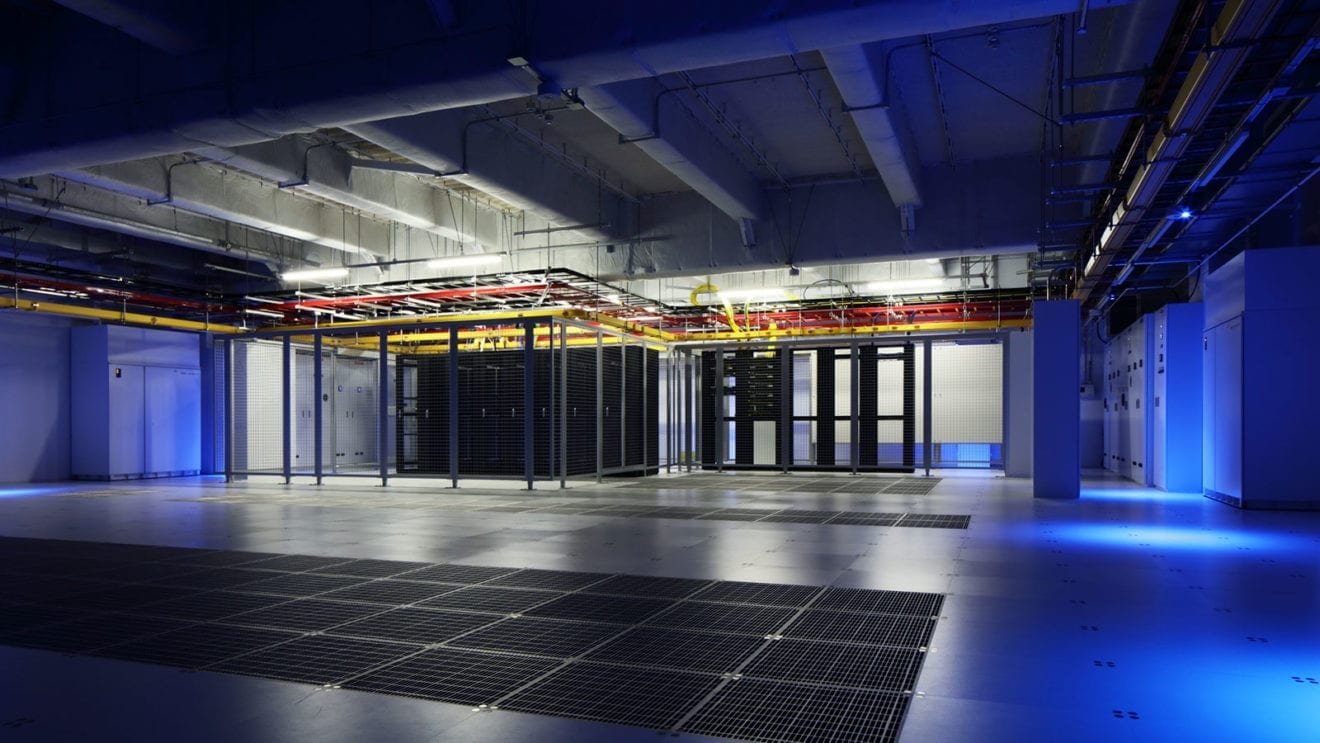
    Equinix has completed the second phase expansion of its 10th International Business Exchange (IBX) data center in Tokyo, the TY5.

    Phase two adds an additional 375 cabinets to the facility, bringing the total capacity of the data center to 725 cabinets. The second phase expansion follows the opening of TY5 in March of this year and brings the total investment in the facility to $43 million.

    This announcement highlights Equinix’s continued investment in Asia-Pacific, as well as demand from local and global companies wanting to benefit from leading interconnection services in Japan, particularly across the cloud and financial sectors.

    Equinix plays a critical role in supporting the interconnected era, underpinning digital economies and enabling businesses to accelerate their performance for continued success and growth. In 2016, it has opened four new IBX data centers in Dallas, São Paulo, Sydney and Tokyo, creating more capacity for global companies to connect with their partners, customers and employees.

    The expansion of TY5 follows Equinix’s acquisition of Bit-isle, a leading Japanese data center and managed service provider, which more than doubled the company’s footprint in Japan. The move means both domestic and international enterprise customers can now benefit from Equinix’s increased presence in the country, spanning 10 data centers in Tokyo and two in Osaka.

    The completion of the phase two expansion will support growing customer demand for carrier neutral data centers with direct connectivity to Equinix’s financial ecosystem in TY3. TY5 is in close proximity to the Japan Exchange and Tokyo Commodity Exchange, providing financial services companies with reliable, low-latency connectivity to key financial institutions and business partners.

    TY5 enables domestic and multinational companies to expand into the growing Japan market, providing them with access to over 1,400 domestic and international network providers within Platform Equinix.

    Platform Equinix now includes over 146 data centers in 40 markets around the world.

    TY5 was recently awarded the LEED Green Building Rating System Gold Certification for its high building standards.

    The award recognizes best-in-class building strategies and practices across seven categories: sustainable sites, water efficiency, energy and atmosphere, materials and resources, indoor environmental quality, innovation in design and regional priority.

  • Axiata has no plans to downsize regional operations

    Axiata has no plans to downsize regional operations

    Axiata Group has no plans to downsize its operations in any of its eight markets, according to CEO Jamaludin Ibrahim.

    Last months, reports suggested that the company is considering selling stakes in its Indonesian, Cambodian and Sri Lankan operations, leading to speculation that the company may seek to exit the markets.

    But Kamaludin said Axiata Group is a long-term investor in each of its operating countries, the Khmer Times reported. Regardless of if the company does plan to reduce its stakes in the regional operations, the group will maintain majority ownership.

    He also told  that if the company does decide to reduce its 83.3% stake in Sri Lanka’s Dialog Axiata, money raised will be reinvested back into Sri Lanka for another venture.

    We quote Axiata’s group chief strategy officer repeating the same sentiment for funds raised through any divestment of Cambodia’s Smart Axiata.

    According to last month’s reports, Axiata was said to be seeking buyers for stakes worth up to $700 million in the regional subsidiaries. The reports indicated that the potential sales are part of efforts to reduce the group’s debt, although Axiata executives are declining to comment on this aspect.

    But Kamaludin said Axiata Group invests around $600 million to $700 million per year in expanding its regional operations.