Tag: asia

  • Global e-commerce grocery market has grown 15% to $48bn North Asia

    Global e-commerce grocery market has grown 15% to $48bn North Asia

    Sales of groceries through e-commerce platforms reached $48 billion in the 12 months to June 2016, according to a new report by Kantar Worldpanel, published today.

    The third annual Future of E-commerce in FMCG study shows that e-commerce now accounts for 4.4% of all FMCG sales. Whilst the e-commerce channel is growing, the FMCG market as a whole is flat, increasing just 1.6% during the same period.

    Stéphane Roger, Global Shopper and Retail Director at Kantar Worldpanel, comments: 

    “FMCG growth is slowing, but our data shows that people are looking for more convenience, which can be met by shopping online. Grocery e-commerce, although currently small, with only one in four people shopping online, is growing fast. We forecast it will grow to 9% of the market and be worth $150bn by 2025. With new entrants such as Amazon expanding rapidly, the industry is facing a shake-up.”


    “Although online sales have the potential to cannibalise in-store sales, it is vital that retailers act quickly to develop a strong e-commerce presence.  The retailer that goes online first in each market can enjoy a far higher market share – this can be a difference of at least 40% in France and up to three times more in the UK. In this report we’ve looked at how retailers and brands are finding ways to work across all channels.” 

    Rank

    Country

    E-commerce share of market 2016 (value)

    1

    South Korea

    16.6%

    2

    Japan

    7.2%

    3

    UK

    6.9%

    4

    France

    5.3%

    5

    Taiwan

    5.2%

    6

    China

    4.2%

    7

    Czech Republic

    2.1%

    8

    Spain

    1.7%

    9

    The Netherlands

    1.7%

    10

    USA

    1.4%

    Key findings from the report include:

    Global hotspots: a puzzle of performance

    E-commerce growth is not equal around the world and is not explained by connectivity.  It might not be surprising that digitally developed South Korea is the world’s largest online FMCG market by value share (16.6%). In the USA however, only 1.4% of groceries are bought online. China is the market which saw the biggest growth in the last 12 months, 47% – to a value share of 4.2%.  Europe has a relatively low adoption of e-commerce in all countries except the UK with 6.9% of the market and France which has 5.3%. France is a relatively unique e-commerce market as their success is with the Drive model whereby the online shop is collected from the store. Adoption across Latin America is currently very low with the exception of Argentina at 1%.

    Online generates more loyalty

    Once shoppers have begun shopping online they are more likely to continue doing so. Among this group in the UK, almost a quarter (23.3%) of all spend is through e-commerce, resulting in fewer trips to physical stores. 

    Impulse needs encouraging

    Comparative research across the UK, France and China has shown that one year after starting to shop online, shoppers in the UK and France spent less overall (-2.4% and -1.4% respectively), this is because there is less impulse shopping.  Brands need to work on driving impulse purchase online – for example by making suggestions for complementary products. In China, 50% of FMCG’s online sales is beauty, it is seen as a prestige occasion and they actually had an increase in sales after one year (+8.1%).

    Online shopping baskets are usually bigger

    Shoppers generally spend more per trip online than they do offline, so potentially this could be a lucrative group to win.  In the UK for example, the average shop online is $59 compared to $15 in-store.

    Brands that make it onto online shopping lists are more likely to stay there

    Kantar Worldpanel data shows that 55% of online shoppers use the same shopping list from one purchase to the next.  Brands need to focus their efforts on getting onto that list.
  • Unicom to deploy Nokia CR-B in more provinces

    Unicom to deploy Nokia CR-B in more provinces

    China Unicom has arranged to deploy high-capacity Nokia metro core routers in four additional provinces.

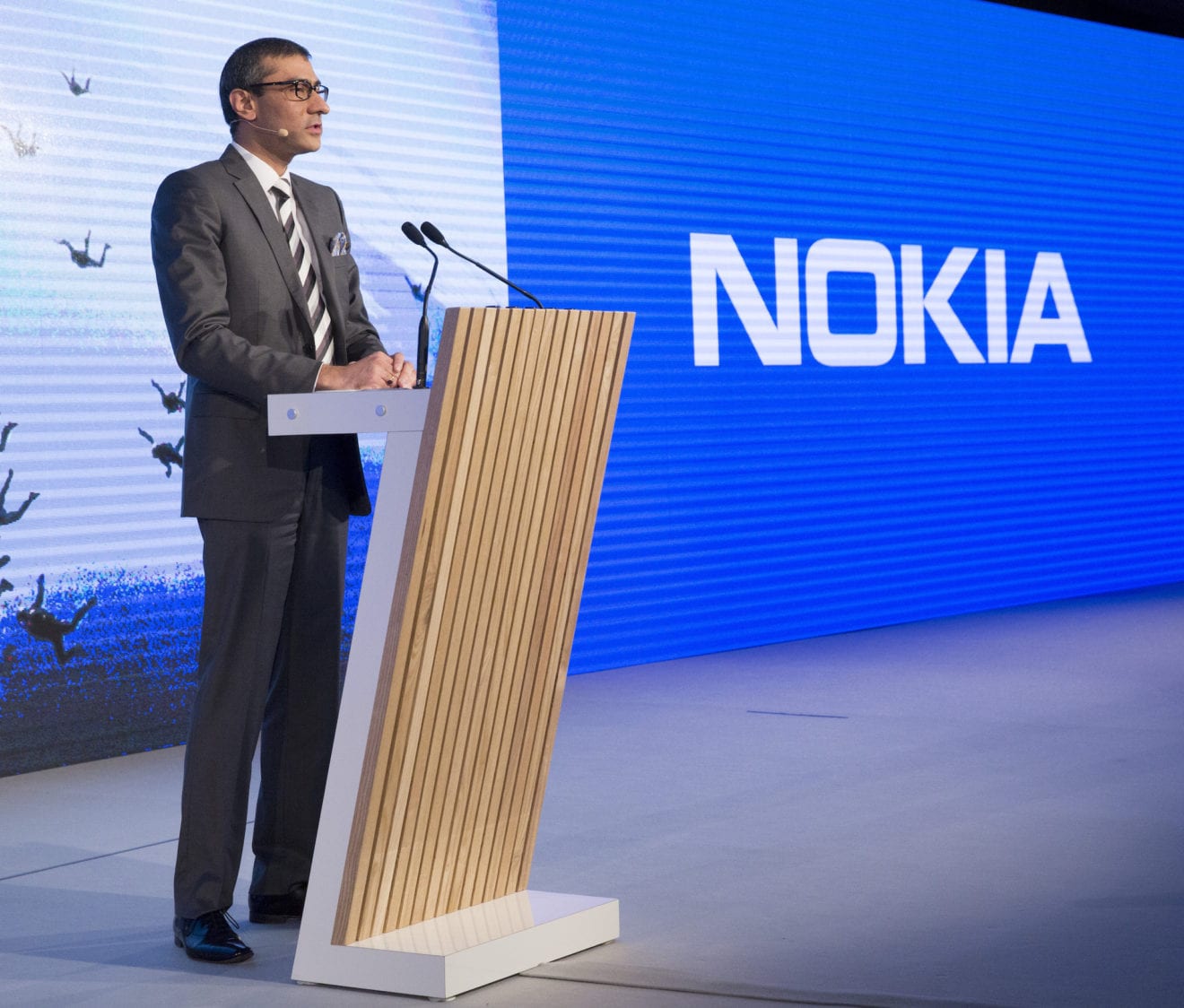
    Unicom is deploying Nokia’s high-end core router CR-B, powered by the extensible core routing system (XRS) platform, to help meet China’s future capacity demands.

    The expanded agreement now covers the provinces of Heilongjiang, Henan, Zhejiang and Hunan. Unicom has already deployed the technology in Beijing, Shandong, Jiangsu, Jiangxi, Inner Mongolia and Qinghai

    The deployment also forms part of the $182 billion Broadband China project to improve the speed and quality of internet service nationwide. The project aims to reduce the digital divide and provide national broadband coverage by 2020.

    “We are honored to continue our work with China Unicom in the CR-B core router segment,” said Mike Wang, head of the joint management team of Nokia Networks China and ASB .”Leveraging the Nokia 7950 XRS platform, China Unicom gains the bandwidth, flexibility and programmability necessary to manage its growing networks and to better meet the needs of the country’s ambitious broadband strategy.”

  • Philippines interested in Indonesian medical support ship

    Philippines interested in Indonesian medical support ship

    After purchasing two Strategic Sealift Vessel (SSV) warships from PT PAL Indonesia, the Philippine government is considering putting in another order for a medical support vessel from Indonesia’s state-owned shipbuilder.

    During the 2016 Asian Defense & Security (ADAS) exhibition in Manila, Philippine Secretary of National Defense Delfin Lorenzana held a discussion with Brig. Gen. Jan Pieter Ate from the Indonesian ADAS delegation on Indonesian defense products.

    “The Secretary of National Defense and the Philippines Navy chief of staff are impressed with the medical support vessel that will be fit for humanitarian assistance and disaster relief (HADR) operations,” Jan Pieter, the Defense Ministry’s director of the defense industry and technology.

    According to Jan Pieter, the Philippine secretary of defense had shown a deep interest in the 123-meter vessel and spent a lot of time looking at the vessel’s mock-up.

    It was reported that the Philippines had also put in an order for the CN235-200 and N212i aircraft from state-owned airplane maker PT Dirgantara Indonesia in 2015.

    The three-day ADAS 2016 exhibition ends on Friday.

    According to its official website, ADAS 2016 attracts exhibitors from around the world and works closely with the Armed Forces of the Philippines (AFP), the Office of Civil Defense (OCD) and the Philippine Coast Guard (PCG).

  • Foreign guests of star rated hotels in Manado stay longer

    Foreign guests of star rated hotels in Manado stay longer

    Foreign guests of star-rated hotels stayed longer in Manado, North Sulawesi, the provincial office of the Central Bureau of Statistics (BPS) said on Friday.

    In July, 2016, the length of stay of foreign guests of star rated hotels averaged 3.81 days , up from 3.25 days in the previous month, head of the provincial BPS Moh Edy Mahmud said here.

    Edy said the steady increase in the length of stay from month to month indicated growing number of foreign visitors to the province.

    “The more foreign visitors to the province the better for us,” he said, adding, the trend is expected to continue as the impact would be positive for the economy of the province.

    Spokeswoman of the Sintesa Peninsula Hotel Julita Wowor said the number of foreign visitors to Manado was growing especially from China.

    The number of foreign guests in the city center in Manado remained low but the length of stay is higher, she said.

    Most visitors chose to stay in suburban areas where they enjoy the natural beauty, she added.

  • Indonesia Sees Decline in Number of Cigarette Factories

    Indonesia Sees Decline in Number of Cigarette Factories

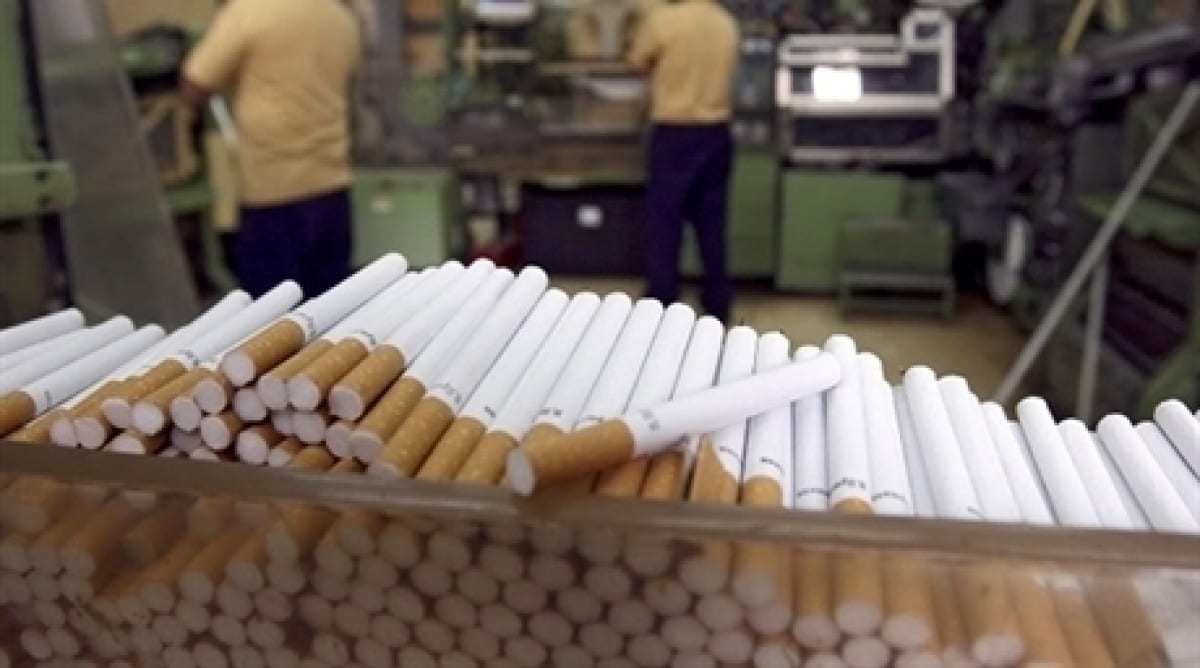
    The Director General of Customs and Excise for the Finance Ministry, Heru Pambudi said the number of cigarette factories in Indonesia continues to fall significantly over the past years. There were 4,669 cigarette factories in 2007, which had fell to 754 by 2016

    According to Heru, the better tobacco control measures taken by the Directorate General of Customs and Excise has resulted in the decline of cigarette factories. “Both through administrative and physical control [measures],” he said in a written statement Wednesday, September 28, 2016.

    Heru said the Directorate General of Customs and Excise has been taking rigorous approach to issuing permit to manufacture tobacco products. In addition, the Directorate General had shut down the non-compliance factories. “Non-compliant factories will be closed,” he said, adding that the measure will be continued.

    The measure, according to Heru, aims to improve compliance of cigarette factories, as well as to supress illicit tobacco trade, which is one of the directorate’s remit which include monitoring tobacco distribution.

    Indonesian Cigarette Manufacturers Association (GAPPRI) chairman Ismanu said strict tobacco control policies by the Directorate General of Customs and Excise have been adequate, “GAPPRI fully supports the measures taken by the government in developing tobacco industry,” he said.

  • Maison Margiela Japan opens in Ikebukuro

    Maison Margiela Japan opens in Ikebukuro

    Maison Margiela Japan has opened a new boutique in the Seibu Department Store in Ikebukuro, Tokyo.

    Customers of the fifth-floor store are greeted with marble flooring and walls adorned with lush cotton drapery.

    In between merchandise displays are silver chrome and clear glass furniture.

    Margiela says its latest Tokyo store combines “Ottoman architectural influences with modernist, industrial furnishing”.

    maison-tokyo

    The French luxury fashion house, headquartered in Paris, was founded in 1988 by Belgian designer Martin Margiela. It is known for its luxury Italian-made avant garde and deconstructed ready-to-wear and leather accessories.

    It has stores in 11 major cities of Japan, along with Hong Kong and Mainland China, South Korea, Thailand and Taiwan.

  • FJ Benjamin posts third loss in row

    FJ Benjamin posts third loss in row

    Singapore-listed lifestyle brand FJ Benjamin has posted notice of its third consecutive year of losses.

    The listed company made its announcement after Tuesday’s market closing, saying its latest six-month average daily market capitalisation was S$38.8 million (US$28.5 million).

    FJ Benjamin says it will make an immediate announcement should it be placed on the Singapore Exchange watch list.

    Companies are placed on the list if they record pre-tax losses for the three most recently completed consecutive financial years, and an average daily market capitalisation of less than S$40 million over the previous six months.

    Dating back to 1959, FJ Benjamin Holdings specialises in brand building and management through distribution and retail. With offices in Indonesia, Malaysia and Singapore, it manages more than 20 brands and has 226 stores. In August it announced it had secured the Singapore and Malaysian rights to Marc Jacobs.

  • DHL rolls out global augmented reality program

    DHL rolls out global augmented reality program

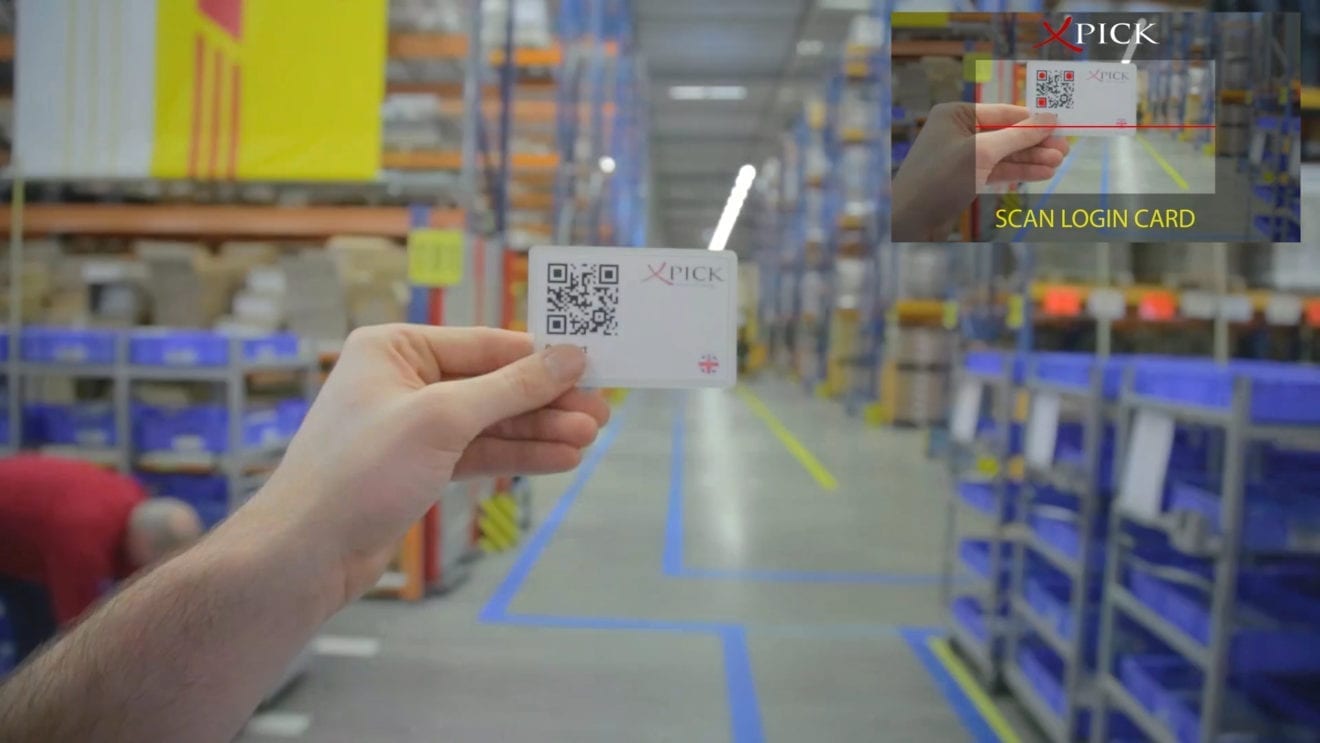
    DHL Supply Chain is rolling out the next phase of its Vision Picking Program following a successful trial of the augmented reality technology in the Netherlands. Since the trial, DHL and partners Google, Vuzix and Ubimax have refined the vision picking solution and DHL is now expanding the program across different industry sectors on a global scale, forging another step forward for augmented reality solutions in logistics.

    “We are excited to further test and develop vision picking as a solution that can be readily available to our customers. More importantly, this technology is not just one step towards digitalizing manual processes on the shop floor, it also takes us one step closer towards Industry 4.0. Testing technologies like augmented reality, robotics and Internet of Things will continue to be a big part of our DNA,” said John Gilbert, CEO Supply Chain.

    Pickers are equipped with advanced smart glasses which visually display where each picked item needs to be placed on the trolley. Vision Picking enables hands free order picking at a faster pace, along with reduced error rates. Throughout 2016, the smart glasses will be piloted across various industries such as technology, retail, consumer and automotive industries. The data available from these pilots will further determine the technology’s potential for broader implementation. The pilot sites are spread across the United States, Mainland Europe and the United Kingdom, with the Ricoh facility in Bergen op Zoom, the Netherlands, where the solution was first tested, being the launch site for this new exploration phase.

    “The Vision Picking Program is DHL Supply Chain’s first translation of what augmented reality solutions can look like for supply chains. The broad spectrum in which the technology can be applied across various sectors is exciting to us, and the potential of this technology for business is still largely untapped. We believe this program is a game changer in how we run our supply chain operations and deliver added value to our customers,” states Markus Voss, CIO Supply Chain.

    Augmented reality market with exceptional potential growth

    The augmented reality and virtual reality market is said to be the next big thing after smartphones, although estimates vary significantly. Goldman Sachs estimate in their base case $80 billion for both virtual and augmented reality by 2025, while M&A advisory firm Digi-Capital predicts a total volume of $150 billion by 2020. Regardless of the actual size, exceptional growth seems to be certain if the current success of mobile app Pokémon Go is anything to go by. Investors are also convinced of the technology’s prospects, having made 225 venture capital investments worth $3.5 billion in the last two years.

    DHL Supply Chain will be one of the first companies to widely implement the technology into their operations. The initial 2014 test in the Netherlands showed a significant increase in productivity, reduced error rates and overall rise in employee satisfaction, proving that augmented reality can make an impactful difference in reality.

  • Changi Airport Infrastructure Aimed at Competitiveness

    Changi Airport Infrastructure Aimed at Competitiveness

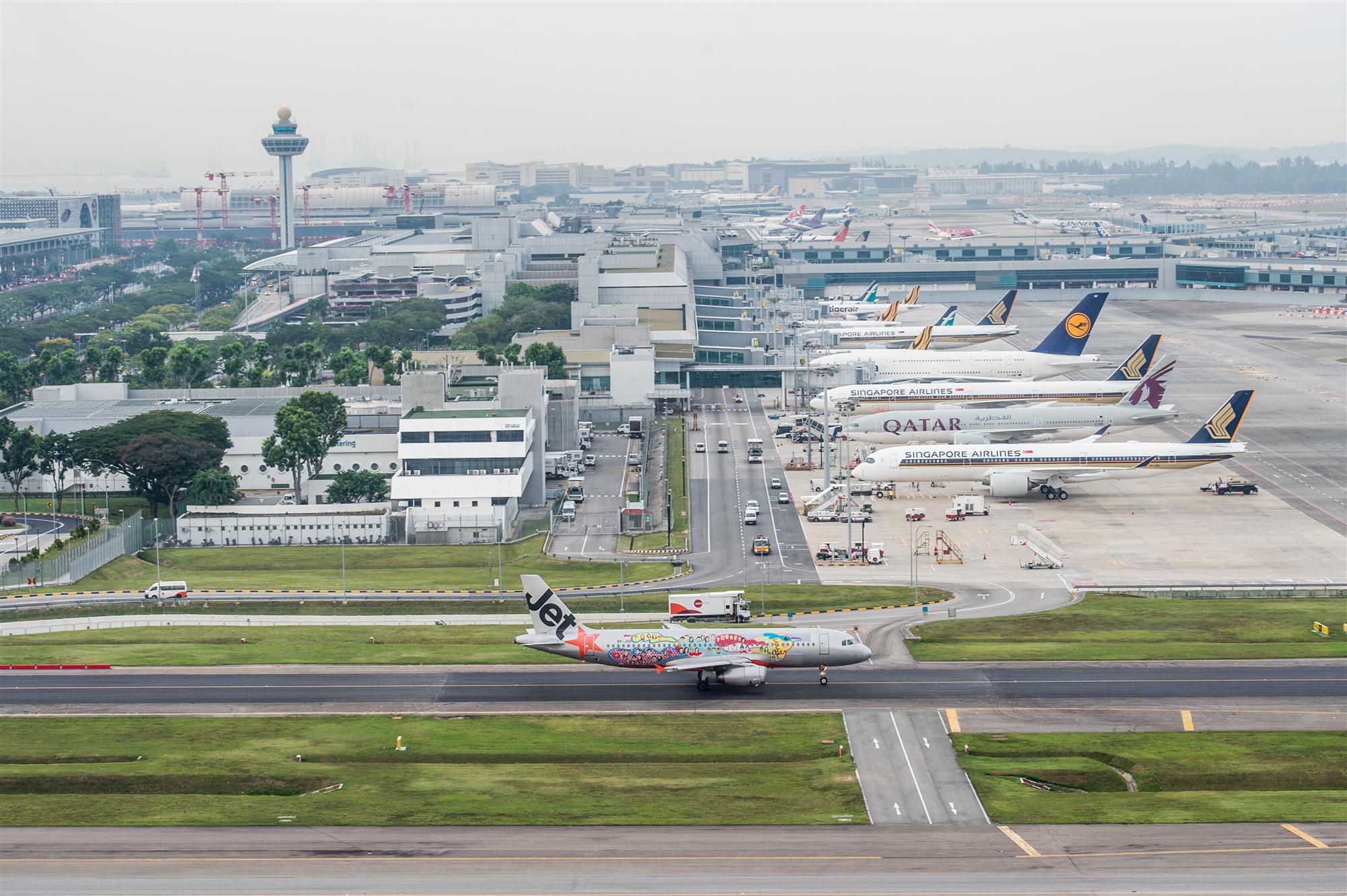
    Singapore’s Changi Airport is already one of the leading aviation hubs in the world, but to help keep it competitive against the current backdrop of sluggishness, overcapacity and decreased yields, the airport has several large-scale infrastructural upgrades in the pipeline, in both the short and the long term.

    “We look forward to two new facility openings – the DHL Express South Asia Hub and the SATS eCommerce Hub in the fourth quarter of 2016,” says Hui Hoon Phau, assistant vice president of the cargo and logistics development division at Changi Airport Group. “DHL’s 24-hour express facility will be able to support five times more flights in Singapore and three times more tonnage per day with their new hub. SATS will be the first ground handler in the world to own such an airside facility, with automated processes for single scanning and sorting to save cargo-processing time and increase efficiency.”

    Announced in March 2015, DHL’s new €85 million (US$94.8 million) express facility occupies a total land area of approximately 26,000 square metres. It will also feature DHL’s first fully automated express-parcel sorting and processing system in Singapore and South Asia.

    CAG also announced in March 2016 that it was launching a cargo community which would pursue the International Air Transport Association’s Center of Excellence for Independent Validators on Pharmaceutical Handling certification, similar to the approach adopted by Amsterdam and Brussels. Changi will be the first airport in Asia to implement such a community.

    According to CAG, it will support six companies from different parts of the supply chain to undergo the certification process: Singapore Airlines Cargo, dnata Sinagpore, Global Airfreight International, Expeditors Singapore, CEVA Logistics Singapore and Schenker Singapore.

    The Civil Aviation Authority of Singapore and the Singapore Development Workforce Agency will also jointly provide assistance grants to the company for the certification process, which includes training and independent assessments of requirements such as the capability of maintaining a cargo hold temperature range of 10-25°C, and the execution of appropriate temperature-controlled handling.

    Phau says that the pioneer group of companies is on track to complete the IATA CEIV Pharma certification by next year.

    Self Photos / Files - SIN

    Overall, air cargo traffic at Singapore has been relatively stagnant of late, at 1.83 million tonnes in 2012, 1.84 million tonnes in 2013 and 2014, and 1.85 million tonnes in 2015.

    But that could change this year. “Although cargo traffic at Changi has remained stable over the past few years, this should be viewed against the backdrop of a slowing global economy which had in turn depressed air cargo demand,” says Phau. “That being said, air cargo volume at Changi had a healthy performance in the first six months.”

    Boosted by strong performances in March, April and June, Changi handled 950,250 tonnes of air freight in the first half of 2016, a 4.2% increase compared to the same period in 2015.

    “Double-digit growth was recorded by niche cargo segments such as perishables and pharmaceuticals, continuing the strong growth from previous years,” says Phau. “With Changi’s excellent facilities and connectivity in the region, there remains potential for carriers to tap into the global demand for such niche cargo by leveraging on Changi as a transhipment hub.”

    Despite the sluggish growth of the global air freight market, the airport still managed to attract the arrival of two new freighter operators in June 2016, which saw the launch of K-Mile Air’s five-times weekly services between Bangkok and Singapore using a Boeing 737-400F, as well as Silk Way West Airlines’ commencement of twice-weekly 747-400F services between Singapore and Baku, with stopovers in Kuala Lumpur and Dubai.

    There have been new passenger flights with bellyhold cargo too, such as United Airlines’ launch of a non-stop from San Francisco with a 787-9 in June and Singapore Airlines’ launch of Airbus A350-900 flights to Dusseldorf in July 2016.

    “We remain confident in the long-term potential of the cargo business at Changi Airport,” says Phau. “To support the long term growth of Singapore’s cargo and logistics sectors, dedicated facilities for air freight and air express services, as well as MRO activities, will be developed as part of the Changi East development.”

    According to CAG, the project involves the development of a 1,080-hectare plot of reclaimed land to the east of the current airport. It will include a fifth passenger terminal, a large air freight centre and a third runway, which is currently used by the military and is to be repurposed for civilian use. The entire project is estimated to be completed in the second half of the 2020s.

    With all this investment, CAG feels that the airport is in a solid position to solidify its status as one of the major aviation hubs not just in the region, but across the world.

    “Notwithstanding the healthy air cargo performance at Changi during the first six months, we remain cautiously optimistic in the short term, given the sluggish economic growth of world trade and the uncertainty of the Brexit impact on the air freight industry,” she says. “We continue to work with our partners to strengthen Changi’s capabilities, such as our pharmaceutical handling capabilities, and pursue growth in niche segments to ensure that we are well-positioned for future growth.”

  • Audi Q5 gains size, power

    Audi Q5 gains size, power

    Audi aims to retain its leadership position in luxury crossovers with a second-generation Q5 that adds size, technology and power to the outgoing model.

    The redesigned Q5 shown Thursday at the Paris auto show is longer, wider and taller with a longer wheelbase, but still lighter than the outgoing model, Audi says. The Q5 rides on Audi’s next-generation platform for vehicles with longitudinally mounted engines, known as MLB Evo.

    More than 1.6 million Q5s have been sold globally since the crossover debuted in 2008, and the stakes are high for the second generation. Audi has a new assembly plant in Puebla, Mexico, to build the Q5.

    “The first Audi Q5 was for many years the world’s best-selling SUV in its class. It was no easy task to design its successor, but that is precisely why it is so very exciting,” Audi AG Chairman Rupert Stadler said in a statement. “With the new Q5 we are setting the bar a notch higher.”

    The Q5 in Europe will be offered with four diesel options and one turbocharged gasoline engine. In the U.S., the Q5 gets a 252-hp turbocharged 2.0-liter four-cylinder engine, adding 32 hp from the outgoing Q5’s 2.0-liter mill.

    The same complement of technology and driver assist systems Audi offers on the A4 sedan and Q7 large crossover will be added to the Q5, including Audi’s virtual cockpit digital instrument cluster, its latest MMI infotainment system and driver aids such as adaptive cruise control, lane assist and traffic-jam assist, which allows for limited hands-free driving at slow speeds.

    A sportier SQ5 model with a 3.0-liter turbocharged V-6 will also be offered to American consumers, according to an Audi spokesman.

    U.S. sales will begin in the first half of 2017, likely in the second quarter after European deliveries begin early next year.

  • Indian, Australian satellites to launch next week

    Indian, Australian satellites to launch next week

    Arianespace will launch two satellites next week that will provide communications capacity in Australia and India respectively.

    In the early hours of October 5, Arianespace will launch Sky Muster II, the second communications satellite for Australia’s national broadband network (NBN), and the GSAT-18 for the Indian Space Research Organization (ISRO).

    Sky Muster II will be used to provide NBN services in particularly remote and rural regions of the country. The satellite – along with the Sky Muster I, which launched in September last year – will be used to cover roughly 3% of the population.

    GSAT-18 will be used to provide telecommunications services in India, along with ISRO’s current fleet of 14 telecoms satellites.

    In other satellite news, Singtel has completed one of the first commercial installations in the APAC region for Inmarsat’s maritime-focused high speed satellite broadband service Fleet Xpress.

    Singtel completed he installation on “K” Line Ship Management Singapore’s massive container ship Houston Bridge, the companies announced. The ship management company will use Fleet Xpress for big data analysis to improve operational efficiencies such as monitoring engine performance.

    “The launch of Fleet Xpress marks a new page in maritime communications with continuous connectivity and guaranteed performance across the world’s oceans,” Inmarsat Marine chief sales officer Gerbrand Schalkwijk said.

    “We have a long standing relationship with Singtel, who are one of our leading partners in Asia, and we look forward to continuing this partnership for many years to come.”

  • Hawaiki picks US landing partner for subsea cable

    Hawaiki picks US landing partner for subsea cable

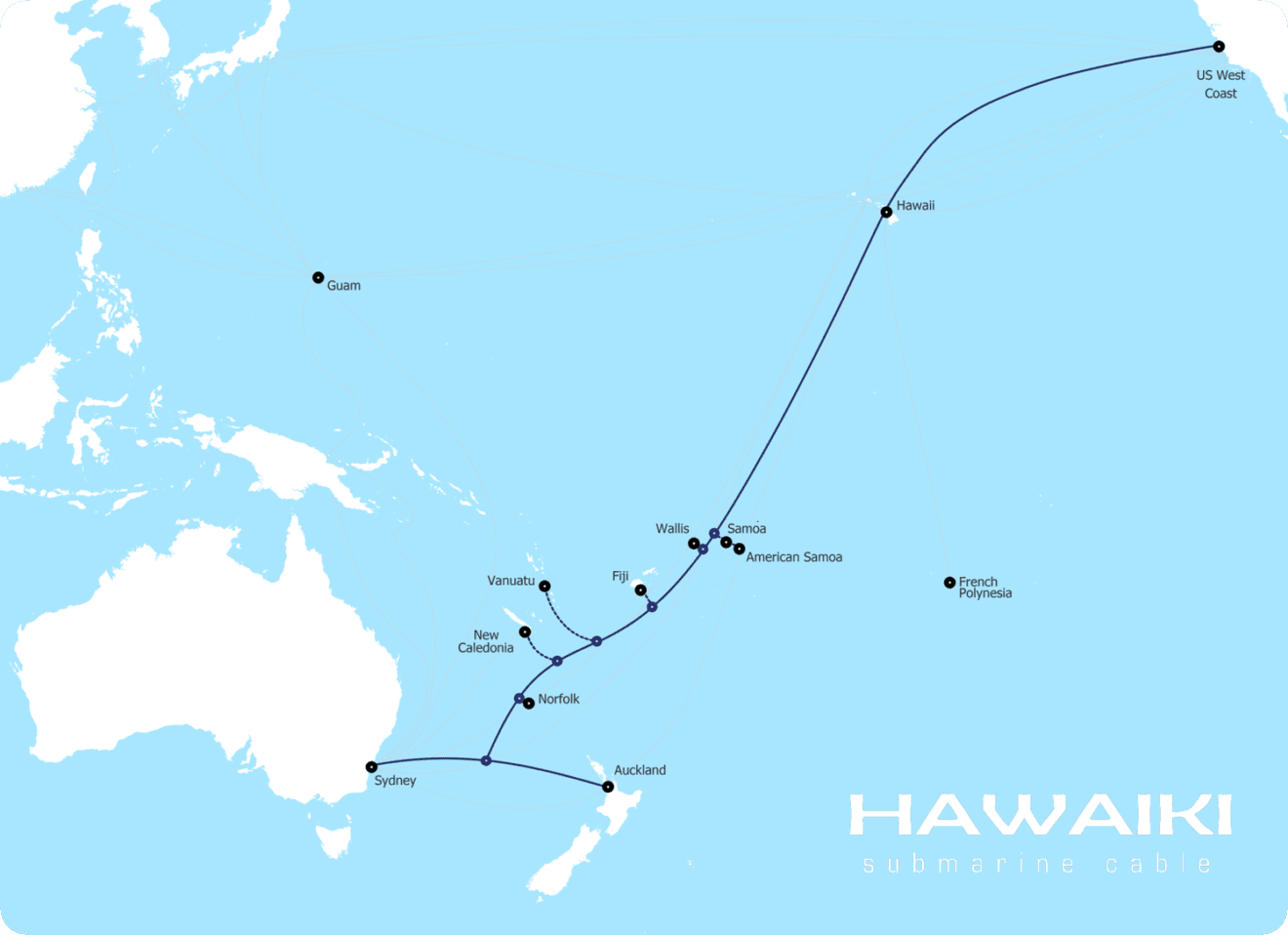
    Hawaiki Submarine Cable, the New Zealand based company building a cable between Australia, New Zealand, Hawaii and the continental US, has selected its landing and operating partner in the US state of Oregon.

    Hawaiki has signed a landing party agreement with Alaska Communications after completing the maritime survey of the 4,000km segment between Oregon’s Pacific City and Honolulu.

    The completed cable will span 14,000km and deliver more than 30Tbps of total capacity, making it the largest link between the US and Australia/New Zealand.

    “Oregon is probably the best state on the US West Coast to land a submarine cable. The

    coast is relatively safe, the state permitting process is efficient and most importantly, our

    customers like Oregon’s diversity and easy access to US networks and data centers,” Hawaiki SVP for Noth America Gina Bohreer said.

    “As part of the US permitting process for international submarine cable, Hawaiki has

    subsequently submitted its application to the Federal Communication Commission.”

    The company has already signed on anchor customers including AWS  and major Australian fixed-line ISP group TPG Telecom.

    Construction of the Hawaiki cable is expected to be complete in mid-2018.

  • Wal-Mart Stores mulls Flipkart ownership

    Wal-Mart Stores mulls Flipkart ownership

    Wal-Mart Stores is seeking to pay as much as US$1 billion for a share of India’s Flipkart Online Services to counter Amazon’s foray into the fast-developing eCommerce market.

    Under a proposed agreement, reported by both Bloomberg and the Wall Street Journal, the world’s largest retailer would take a minority Flipkart ownership. Insiders say the terms have not yet been finalised for the deal, which follows on the heels of Amazon CEO Jeff Bezos announcing plans to spend a further $3 billion in India.

    India’s largest online retailer, Flipkart is worth about $16 billion, according to research firm CB Insights.

    India’s online market will expand at an average of 45 per cent annually in the next four years and reach $28 billion by 2020, according to estimates from Kotak Institutional Equities.

    Wal-Mart first established a retail joint venture in India with Bharti Group, which runs the country’s largest telecommunications organisation, Bharti Airtel. Eventually Wal-Mart sold its stake to its partner.

    Meanwhile, Amazon has been making major investments in infrastructure and partnerships in India, so far costing about $2 billion.

    Wal-Mart last month agreed to buy US eCommerce company Jet.com for about $3.3 billion, and put founder Marc Lore in charge of the combined company’s online business.

  • BlackBerry exits hardware business

    BlackBerry exits hardware business

    BlackBerry has announced it will no longer design its own smartphones in house, concentrating on software while outsourcing hardware development to partners.

    After 14 years as a smartphone manufacture, BlackBerry has implicitly raised the white flag against rivals including Apple and Samsung.

    The company aims to drive efficiency by concentrating on its enterprise software. The decision follows a year-long review of the potential profitability of the company’s hardware business by CEO John Chen.

    BlackBerry sold just 400,000 smartphones in the second quarter. The vendor’s plan to turn around its hardware operations involved designing an Android phone with the distinctive BlackBerry physical keyboard, but this plan failed due to a high price tag limiting the device’s mass-market appeal.

    BlackBerry has also announced its first deal under its new software licensing model, covering the Indonesian market, where BlackBerry smartphones are disproportionately popular.

    The company has entered an agreement with newly-formed joint venture PT BB Merah Putih to license BlackBerry software and services for the production of BlackBerry-branded handsets for the Indonesian market.

    The devices will use BlackBerry’s Android software and applications. The joint venture is being led by a subsidiary of Indonesia’s largest mobile operator PT Telkom.

    “BlackBerry is no longer just about the smartphone, but the smart in the phone. Working with trusted partners to extend the reach and availability of our secure mobility software remains a key focus for the Mobility Solutions unit and this joint venture is just one of our next steps in making our software licensing strategy successful,” Chen said.

    “BB Merah Putih is comprised of companies with extensive background in providing innovative mobile services to their customers, making the newly formed joint venture the perfect partner to offer trusted BlackBerry secure mobile software that is available exclusively to Indonesian customers.”

  • Superdry India to roll out more stores

    Superdry India to roll out more stores

    British fashion brand Superdry is set to expand its store network in India.

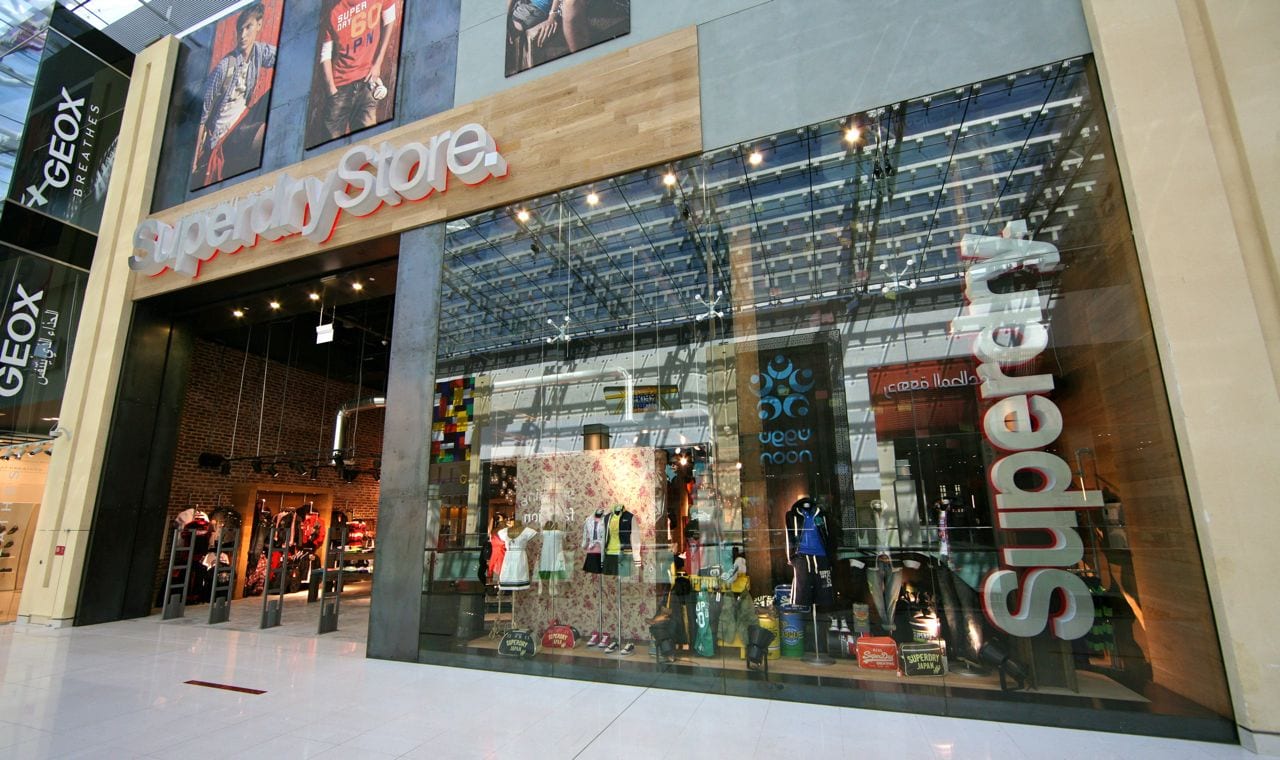
    Superdry India, a joint venture with Reliance Brands, currently operates 21 stores across the country.

    “We want to grow to 28 to 29 outlets by this fiscal year,” Manu Sharma, business head of Reliance Brands told the Economic Times. “We are expanding in India.”

    The new outlets are targeted for the nation’s east, where it recently opened its first store, at the Sohum Emporia in Guwahati. Stores are planned now for Ahmedabad and Kolkata.

    Currently, most Superdry India stores are located in New Delhi, Chennai and Pune.

    Meanwhile, Superdry is continuing its aggressive store roll-out in China and North America.