Tag: asia

  • Pupuk Indonesia intensifies research to strengthen food security

    Pupuk Indonesia intensifies research to strengthen food security

    State-owned fertilizer producer Pupuk Indonesia is intensifying agriculture research through its subsidiary, Pupuk Indonesia Pangan, in its effort to strengthen national food security.

    Pupuk Indonesia investment director Gusrizal said his office had contributed to food security through its research and development programs nationwide since 2013.

    “We have conducted research programs in Kapuas [Central Kalimantan], Ketapang [West Kalimantan] and Merauke [Papua],” Gusrizal said in a statement on Monday.

    He further said Pupuk Indonesia had prepared Rp 30 billion (US$2.3 million) to conduct research on upstream product development and fertilizing, land cultivation and for marketing programs conducted under the assistance of agriculture experts from various institutions this year.

    “The research has helped farmers increase their harvest yields for the last three years,” Gusrizal claimed.

    He further said the company would focus on researching downstream products, such as ammonia and urea fertilizers.

  • Thailand may toughen tax rules for ICTs

    Thailand may toughen tax rules for ICTs

    The Thai government is considering toughening tax rules for international internet and technology companies, including mobile and internet commerce companies.

    The head of Thailand’s Revenue Department told that the government has set up a working committee for finding solutions for collecting tax from Google and other technology giants.

    Laws and regulations that haven’t been updated in 50 years could be amended to address the digital economy, the report states. The working committee is expected to report by the end of the year.

    Countries in Southeast Asia are increasingly pursuing higher taxes from large internet and technology companies, with Indonesia pursuing the company for five years of back taxes, and Australia recently getting stricter on companies with annual earnings of over A$100 million ($76.4 million).

    Large multinationals have been booking their regional profits in Singapore to take advantage of the city state’s lower tax rate and incentive programs. But Singapore’s finance ministry recently stated that it does not condone the artificial shifting of profits.

  • Australia Introduces Premium Dairy Products to Indonesian Chefs

    Australia Introduces Premium Dairy Products to Indonesian Chefs

    Australia’s Victorian Agricultural Minister Jaala Pulford collaborated with Podomoro University’s culinary students, Indonesian vocational schools and Dairy Australia to showcase Victorian  premium dairy products during a cooking demo held at Podomoro University in Jakarta.

    Victoria State’s Commissioner to Indonesia Brett Stevens said that Indonesian chefs are expected to acquire skills to creatively and innovatively process dairy products since demands on such products from domestic and foreign markets are increasing.

    “Therefore, we are happy to support this event,” Stevens said in a press release received by Tempo on Tuesday, September 27, 2016.

    The event was held as a part of Victoria State administration’s commitment to work with Indonesia’s education and hospitality sectors to develop both sides’ competitiveness and to transfer skills and knowledge.

    Minister Pulford’s visit to Indonesia was aimed to strengthen trade cooperation and investment between the two countries, in addition to improve cooperation in major sectors, such as education and professional service.

    Victora State is the largest Australian dairy producer well-known for its safe and high-quality products.

    The cooperation is expected to improve the quality of Indonesian professionals in the culinary sector by introducing them to new culinary techniques.

  • Indonesian minister encourages digital-technology based railway operations

    Indonesian minister encourages digital-technology based railway operations

    Indonesia needs to focus on exploring new digital technologies in its railway operations to make its services more accessible.

    The railway management needs to work towards more efficiency, higher productivity and better security for both, the industry and passengers.

    “Indonesias railway industry has a long history, going back over 150 years. It significantly contributed to the countrys development and growth, especially in the Java and Sumatra areas. Now, it needs to focus on developing digital technologies,” Minister of Transportation Budi Karya Sumadi told a symposium organized by PT Kereta Api Indonesia (Indonesian Railway Corp.) and GE Transportation in Jakarta on Monday.

    The symposium, held to boost the countrys railway operations, was attended by over 200 senior executives and officials from the Ministry of Transportation, the Ministry of Trade, the Ministry of Industry, the Indonesian Railway Corp, GE Transportation, Jakarta Mass Rapid Transit, PT Transportasi Jakarta (TransJakarta), the Transportation Organization Board for the Jakarta, Bogor, Depok, Tangerang and Bekasi (Jabodetabek) Area and the Mandiri Bank.

    “Indonesian railway has become the backbone of the land transportation system in the country, carrying over 200 million passengers and almost 30 million tons of cargo every year,” the minister revealed.

    As per available data, Indonesia currently operates approximately 5,000 kilometers of active railway tracks.

    As part of the National Railway Master Plan, Indonesia will extend its railway tracks for another 12,100 kilometers by 2030, including 3,800 kilometers dedicated solely to the urban railway network, serving Bali, Batam, Kalimantan, Papua and Sulawesi.

    “With an abundance of natural resources, massive population and solid economic foundation, Indonesia is predicted to become one of the seven countries in the world with the strongest economy by 2030. To actualize that vision, Indonesias railway system surely needs to be expanded and modernized to make it much more efficient,” the minister remarked.

    Meanwhile, the President of the Indonesian Railway Corp, Edi Sukmoro, pointed out that in todays world, all means of transport, including land, water and air, need to be optimally operated to provide high quality services to the customers while, at the same time, offering a high investment value for the stakeholders.

    “For the Railway Corp, this means optimizing the use of all of our assets from railway tracks to rolling stocks and other supporting facilities. We believe that the digital technology will help us in reaching that goal,” Sukmoro stated.

    In terms of technology utilization, the Railway Corp has also undergone various innovations to maximize services made available to the customers including a renewal of the ticketing system. Customers no longer need to queue up at the station to obtain their railway passes as the company makes use of information technology.

    The facility of e-ticketing and e-gate as well as the railway restoration services have also seen technology based solutions being applied.

    The passengers will be able to pre-order tickets through a website.

    CEO of GE Indonesia Handry Satriago said the company has helped resolve the toughest challenge in the global railway industry through the use of software and data analysis, bringing down locomotive emissions, ensuring lower fuel consumption and enhancing speed and security.

    GE Transportation networks software is able to optimize the mainline train network, classification yard and inter-model terminal in such a significant way that it boosts the railway systems efficiency and productivity to a level like never before.

    On top of that, GE Transportations software solution helps its customers in optimizing the railways operations while at the same time lessening the use of energy. This ultimately leads to lowering of emissions and fuel costs.

    “Our digital technology has been successfully implemented by our customers, despite the fact that some of them are operating in economically and geographically challenging conditions. The same technology can also be implemented in Indonesia to boost the countrys railway operations to the next level,” he concluded.

  • CDL Is Ready To Launch Forest Woods In Singapore

    CDL Is Ready To Launch Forest Woods In Singapore

    Forest Woods is a new launch residential development from City Developments Limited (CDL) located along Lorong Lew Lian. The project is targeted for people who prefer a serene and tranquil environment to live in but that comes with the benefit of modernized and unique communal facilities.

    While speaking about the project location, a prominent realtor Michael said, “Convenience and ease of access are just some of the benefits that will be coming with Forest Woods. The development is located just a few minutes away from the Serangoon MRT station and one can easily walk there. It can also be easily accessed via the Serangoon Bus Interchange and MRT station which are a walking distance away. There will be easy access to the major expressways including the Pan Island Expressway, Kallang-Paya Lebar Expressway and Central Expressway.”

    “In today’s world of heavy traffic jams and tight schedules, people are without doubt looking for convenience. They do not want to be spending hours on end on the road commuting from home to work and vice versa. They are also not looking for to have to sit in traffic jams for several hours just to be able to do their shopping. They would like to be able to shop stress free and also move around easily and conveniently. These are all factors that Forest Wood has taken into account,” spokesperson at City Developments Limited explained. True to City Development’s word, Forest Woods condo is located very close to major shopping malls including Hougang Mall, Heartland Mall, Upper Serangoon Shopping Centre and NEX Mega Mall.

    The strategic location of the projects makes it close to many other retail entertainment amenities like Maplewood Park, retail outlets and dining options including Chomp Chomp Food Centre and Serangoon Gardens. “The project takes care of the family with kids and is close to reputed schools including Cedar Girls’ Secondary School, St Andrew’s Junior College, Xinghua Primary School, Nanyang Junior College, Zhonghua Primary & Secondary School and Yangzheng Primary School just to mention a few,” adds Michael.


  • Auction houses lose Hong Kong watch department heads as sales collapse

    Auction houses lose Hong Kong watch department heads as sales collapse

    After five years of exceptional watch sales at auction houses in Hong Kong, a recent sharp downturn has coincided with resignations and job moves, leaving Sotheby’s and Christie’s without permanent department heads and Bonhams with no regional department at all.

    In early 2016, the head of Sotheby’s Asian watch department, Sharon Chan, announced her resignation along with other members of her team, making the department rudderless at a time of significant difficulty in the market. New York-based Katharine Thomas is serving as acting head.

    Christie’s, meanwhile, is also without a Hong Kong watch department head after Frederic Watrelot moved to the firm’s Los Angeles office to focus on building the US business.

    And following the departure of Nick Biebuyck — who quit to join Christie’s as a senior specialist — Bonhams’ watch department in Hong Kong has disappeared.

    The fall in auction sales preceding these moves has been precipitous. Sotheby’s sales in Hong Kong declined from HK$221.5m ($28.6m) in April 2013, a global record for the house, to HK$65.6m three years later. Christie’s most recent Asian watch sale in May grossed HK$99.3m, compared with a high of HK$186.3m in November 2012.

    Auctions can be much smaller too. Bonhams’ last event had 68 lots in June and realised less than HK$5m. Typical sales a few years ago featured 120-plus lots worth nearer HK$15m.

    These poorer results may in part be driven by the severe downturn in the retail market. A glut of leftover product is now being offered at significant discounts at retail outlets in Hong Kong, negating the inclination for buyers to seek out pieces in the salerooms.

    Swiss watch exports to Hong Kong were down 29 per cent year-on-year to August, according to the Federation of the Swiss Watch Industry. This is part of a worldwide trend — 2.1m fewer watches were sold from January to August 2016 than the year before.

    A glut of leftover product is negating the inclination to seek out pieces in the salerooms

    The fall in retail sales has been prompted by, among other factors, competition from smartwatches, the Chinese crackdown on bribery and a trend for Asian watch-buyers to shop abroad — especially in London, to take advantage of the post-Brexit fall in the value of sterling.

    Watch specialist Charles Tearle, a Los Angeles-based consultant with watch-focused auction house Antiquorum, says collectors are now travelling from the US to Hong Kong to snap up bargains from retailers instead of auctioneers. “There is so much inventory there that supply is far exceeding demand. One client of mine recently flew to Hong Kong to buy a Breguet tourbillon and paid 20 per cent less for it than the last example sold for at auction,” says Mr Tearle.

    One watch expert believes auctioneers are facing additional competition from the growing number of private collectors’ clubs. “I really think the traditional watch auction model which was previously so successful in Asia is no longer viable,” says the expert, who asked not to be named.

    Huawei has entered a market dominated by Apple, but its vice-president thinks it can compete in the US

    “Collectors are starting to trade watches privately among themselves, which enables them to avoid auctioneers’ premiums and to cut better deals. The likes of Christie’s and Sotheby’s need to change their game plan if they are to win back buyers.”

    Asian auction-goers also appear to be moving towards rarer, harder-to-source vintage pieces, turning away from the contemporary watches that made up the bulk of what has lately crossed the block in Hong Kong.

    Phillips is one example of an auction house thriving in Hong Kong in part because of its focus on vintage items. Having re-established its international watch sales department only two years ago after a 10-year hiatus, it now holds the number-one spot not only in Europe but also in Asia.

    In May, the house staged its second Hong Kong auction, grossing HK$150.7m and setting a world record for any watch sold at auction in the region for a 1968 Patek Philippe Reference 2499 (HK$19.7m).

    Auctioneer Aurel Bacs, the consultant who organises the sales in association with Phillips, believes the firm has been successful because it realised early on that the Hong Kong watch auction market could not sustain bulk sales of contemporary, widely-available pieces. “I have felt for a long time that the days of staging auctions for the sort of watches sold tax-free at airports have been numbered,” says Mr Bacs.

    To that end, Phillips and Mr Bacs have put together a groundbreaking event scheduled for November 28. Hong Kong’s first-ever auction of solely vintage watches will comprise 38 lots with an overall value of around US$5m. It aims to tell the history of Rolex by featuring one example of every model made since the name was registered just over a century ago.

    The other houses say they intend to rebuild their departments and change strategies. “A head of department leaving does have an impact on sourcing and I understand that people might have felt less confident in consigning [watches to auction],” says Maria Kelly, Sotheby’s international divisional director for jewellery and watches.

    Sotheby’s has put together a 290-lot sale through its regional and international offices scheduled to take place on October 5 in Hong Kong. It has a presale estimate of US$4.8m-$6.9m. “If we don’t have a great sale in October then we will just have to accept that — but the [auction] market in Asia has changed, and my priority now is to rebuild the team and develop a strategy based on that,” says Ms Kelly.

    “Despite less than stellar news on luxury in Asia, we see the watch market there as very much alive and well,” says John Reardon, international head of Christie’s watch department, who adds that the house will announce a new specialist in Hong Kong. He also says that “our November Hong Kong sale will include our most diverse selection of vintage watches yet.”

    “We will continue to have a watch department in Hong Kong and are currently looking to recruit a team,” says Jonathan Darracott, global head of watches at Bonhams. “We did see the change coming — the market was simply being flooded with too many modern pieces.

    “But the beauty of auction houses is that we can bend to the trend, and Bonhams will certainly stage another Hong Kong watch sale in the first quarter of next year.”

    However, Julien Schaerer, managing director in Geneva of Antiquorum, does not see a simple switch to selling vintage pieces as a panacea.

    “Vintage is growing in Asia, but it remains a very small market. Modern pieces still represent an important part of the business and I don’t think we can start to disregard that.”

  • Half Of Rolling Stone Sold To Singapore Music Company

    Half Of Rolling Stone Sold To Singapore Music Company

    Rolling Stone is teaming up with the son of an Asian business giant.

    Wenner Media, which owns the nearly 50-year-old music magazine, will sell a 49% stake in the publication to Singapore-based social music company BandLab Technologies.

    BandLab was created by Meng Ru Kuok, the son of the billionaire founder of the world’s biggest palm oil company.

    Though BandLab’s signature product is its eponymous music making and sharing app, the business also has ties to retail. It recently bought MONO, a music instrument accessories company. Gus Wenner, head of digital at Wenner Media, said the company sees “enormous opportunity” for Rolling Stone to enter “new areas of business.” Wenner’s father, Jann Wenner, is the magazine’s co-founder.

    The deal is being positioned as a chance for Rolling Stone to move into digital and retail, and to expand its influence in Asia.

    In its announcement Sunday, Rolling Stone said an international subsidiary will be created and headquartered in Singapore.

    The magazine has been embroiled in controversy recently.

    The magazine retracted a 2014 piece called “A Rape On Campus,” about an alleged frat house gang rape at the University of Virginia, after doubts surfaced about the veracity of the primary source’s claims.

    An administrator at the university is suing the magazine for defamation, seeking millions in damages. A separate lawsuit brought by members of the fraternity was dismissed.


  • Cost-cutting isn’t cutting it anymore for Singapore’s struggling retailers

    Cost-cutting isn’t cutting it anymore for Singapore’s struggling retailers

    Profits plummeted by 30% over the last 5 years.

    Retail firms have been thinking out of the box in terms of cost-cutting to constrain cost growth, but they can only do so much on back of the struggling retail industry.

    According to a report by BNP Paribas, retail trade firms have seen persistent erosion of profit margins.

    “Aggregate revenue growth for the roughly 22,000 retailers has been hard to come by (5-year nominal CAGR of 1.2%). This likely reflects slower domestic growth and the impact of macro-prudential tightening,” the report noted.

    Additionally, retailers have also grappled with labour market policies spurring strong wage gains (5Y CAGR of 7%) and, more recently, rising debt service.

    “As a result, we estimate industry-wide pre-tax profits fell by 30% over the last 5 years,” the report added.

    Meanwhile, similar sinking trends in profit margins are also manifest in the services sector, as labour market data indicates firms are now attempting to pass the problem on to households by shedding jobs.

    “In turn, these developments allude to slower wage income growth and a potential vicious cycle as highly-indebted households struggle with their own debt service,” the report noted.

  • Terry O’Connor courting omni-channel future for Courts

    Terry O’Connor courting omni-channel future for Courts

    Cashing In on the demand for Apple’s latest product, the iPhone7, retail giant Courts Asia recently announced that it would offer a competitive one-year service package that covers accidental damage and data recovery and a guaranteed 50 per cent trade-in value, if customers buy the phone from its shops.

    This is one example of efforts being made by the furniture-to-electronics departmental store to differentiate itself and be the “store of choice” for Singaporeans. It also fits into its long-term objective of transforming itself into an omni-channel retailer.

    Mainboard-listed Courts has a long relationship with Singapore, particularly in the heartlands. With roots as a furniture retailer in the UK, Courts was established here in 1974. It opened its first store in Malaysia in 1987 and recently started operations in Indonesia in 2014. In the three countries, Courts operates more than 80 stores in multiple store formats spanning over 1.6 million sq ft of retail space.

    In the first quarter which ended on June 30, 47.8 per cent of its revenue came from electrical products, which included major white goods, audio and small appliances. IT products, including computers, smartphones and cameras, made up 27.7 per cent of its sales while furniture accounted for 17.9 per cent. Services, such as warranty sales and telecommunication subscription plans, accounted for the remaining 6.6 per cent of its revenue, which was S$196.3 million for the quarter. The company’s last reported full year revenue was S$770.4 million, with two-thirds (S$505 million) of that coming from Singapore.

    Speaking to The Business Times, Terry O’Connor, Courts Asia’s executive director and group chief executive officer, says the departmental store looks to provide low prices, large ranges, full service and financial options “in terms of any way to pay from every credit card in the market to cash; to our own payment plans and an extensive loyalty programme which is being boosted with the NTUC link points partnership”.

    Giving an example of how Courts is trying to differentiate itself, Mr O’Connor cites the iPhone. He notes that buyers can choose to buy online or go to a exclusive Apple retailer if they are sure that’s the phone they want.

    At other times, buyers may not be sure whether the choice is the iPhone or a phone made by some other manufacturer, Mr O’Connor says. Maybe they want to compare the iPhone with Samsung’s offerings but at the same time they want a full customer experience in which an agent will show them how to use both phones and discuss the merits of both, he says.

    “An Apple store can do that for only Apple products but they don’t do that for Samsung products or the other brands in the market. We want to be that player in the market which can do that for all major brands,” Mr O’Connor says.

    He acknowledges the fact that many technology savvy Singaporean shoppers are shopping online and Courts needs to have a strong online presence as well.

    Courts Singapore relaunched its online store in 2012 with 7,000 product offerings, which has grown to more than 14,000 today. Both the online and physical stores are at the centre of Courts’ omni-channel retail offerings, which also include the deployment of tablets and digital kiosks on the shop floor, use of QR codes and “click and collect” counters in-store.

    Despite this, Mr O’Connor is sure that physical stores will still remain an important component of the shopping experience. “The overall shopping experience will have to be an omni-channel experience.”

    Noting that the mass middle income market is the core customer group for Courts, Mr O’Connor observes that shoppers feel “we are local and, therefore, there is a deeper relationship, maybe because of our history in the heartlands. We have been serving multi-generation of families and we reinvented ourselves just as Singapore has done so over the years.”

    This has ensured that Courts is more connected to customers than many of the international players, he adds. “We ourselves have been thought to be an international player but now headquarters is effectively here and we are listed here.”

    Mr O’Connor adds that the megastore’s approach is to “outrange” and “outprice” its competition. “I think that’s what kept us ahead of the pack. When I look back, I’ve been here for 23 years and virtually none of the competitors I started with exist anymore.

    “Many of them have changed hands, many have been subsumed in other organisations and others have gone out of business.

    “The point is retailers always have had to deal with disruption, generally it’s disruption from other retailers. Now pure plays are just another form of retail.” Pure play stores are those which only have an online presence with no physical brick and mortar outlets.

    Mr O’Connor adds that Courts will “move with the speed and agility” of a pure play online store. “At the same time, we want to develop our physical stores as experience centres.

    Mr O’Connor says that market factors are helping Courts’ push to reinvent itself.

    “We didn’t ask for the Funan Centre to close but it did. We didn’t ask the Sim Lim centre to get the reputation it did, but it got it. And so we think there is an opening in the market and we are pushing hard into services and the store experience.

    Mr O’Connor notes that many international retailers are seeing increased business online. “John Lewis (departmental store) in UK is doing 25 per cent of their business online but in Singapore it’s only 3-5 per cent. When you talk about shopping online it somehow conjures up an image of somebody sitting at home with a laptop on the coffee table. But fundamentally it’s not that. It’s increasingly people on their mobile devices. This is the first year mobile has overtaken computers as the online shopping platform of choice,” he notes.

    He is confident that the share of online sales in Singapore will go up significantly and Courts would be ready to cash in on that.

    Mr O’Connor notes that the Singapore online purchasing market is skewed by international purchase of apparel and products that are not sold in Singapore. “If you actually look at the goods that are bought online and shipped within Singapore, we are a market leader among regular stores. Citing a Bain report, he says that the top 10 online stores in Singapore by number of visits were all pure plays but Courts was number 11 on the list. This makes Courts the top omni-channel player in the Republic.

    Courts is also looking at upgrading its stores with digital features that help shoppers go online and make it easy to shop. “At the moment we have digital kiosks but I wouldn’t say they are popular; they have become a bigger phenomenon in other markets. I think in the future they will become more popular in the same way that people initially didn’t like to use digital checking counters at airports, but eventually got used to it.”

    He adds that one could envisage a situation where 100 per cent of the business is online. “Maybe 50 per cent was physically transacted in the store. I think what’s key is making sure that stores are still relevant. And I think that there are lots of changes coming in terms of disruption in the real estate sector. I think the real estate will be more disrupted than the retail sector.

    “So fundamentally in the future do we say I have a 20,000 sq ft store? Or do I go for 10,000 sq ft for my store, where I pay a retail rent and the other 10,000 sq ft is a fulfilment centre where I pay warehouse rent?”

    He adds that such shifts are already happening in the UK. “That’s going to happen here and that has implications for Reits; it has implications for how malls set themselves up. Do they have two-thirds of the mall as retail space and the rest as a combination of fulfilment centres? And POP (pick your own parcel) stations for the entire mall?

    “We have to be fluid and agile in our thinking and be led by the consumer.”

  • Fifth Tokyo outlet for Dolce & Gabbana Japan

    Fifth Tokyo outlet for Dolce & Gabbana Japan

    Special lighting helps create atmosphere in the new store opened in the upmarket Aoyama neighbourhood of Tokyo by Italian fashion brand Dolce & Gabbana Japan.

    Dolce-Gabbana-new-store-Aoyama-Tokyo-4

    Gwenael Nicolas of Curiosity came up with the retail design concept with the brief being to transport the brand’s creative soul and its Sicilian roots. Both the architectural design and decor of the 550 sqm store express Sicily’s distinctive and vibrant luminosity through chiaroscuro effects, contrasts and perspectives.

    Dolce-Gabbana-new-store-Aoyama-Tokyo-1

    The boutique space resembles a compact black volume with the displayed collections illuminated in sequence. The 400 spotlights on the ceiling move around and switch on and off, making the products immersed in shadow burst with colour at regular intervals.

    Featured are women’s and men’s ready-to-wear, shoes, handbags, eyewear, accessories and fine jewellery.

    Dolce-Gabbana-new-store-Aoyama-Tokyo-2

    Dolce-Gabbana-new-store-Aoyama-Tokyo-3

    Outside, the store is coated in Arabescato marble, which also backgrounds the display windows and display cases. A majestic panel at the entrance with the Dolce & Gabbana sign is in black Carnico marble.

    dolce-gabbana-new-store-aoyama-tokyo-5

    It is the brand’s fifth outlet in Tokyo.

    Photos: CPP Luxury

  • Sunway Malls recruiting flight attendants

    Sunway Malls recruiting flight attendants

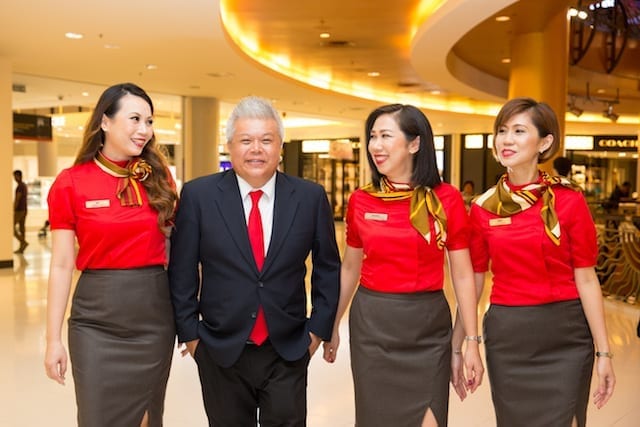
    In a bid to soar above the growing competition in the Malaysian mall industry, Sunway Malls is hiring former flight attendants to work in customer service.

    As well as experience in delivering quality service, the former flight attendants have training and experience in safety and handling emergencies.

    Customer care - Sunway Pyramid 3

    So far nine former flight attendants have been recruited from a local carrier to work in both Sunway Pyramid and the soon-to-be-opened Sunway Velocity Mall. Similar recruits are also being sought for Sunway Putra Mall in Kuala Lumpur and Sunway Carnival Mall in Penang.

    “With increasing competition, it is imperative the creation of good customer-service experience in malls takes precedence as both a strategic differentiator and a loyalty tool in a saturated market,” says Sunway Malls COO Kevin Tan.

    customer-care-sunway-pyramid

    Earlier customer-service initiatives have included a carpark guiding system, powered wheelchairs and child distance monitors. Sunway Pyramid received a My Branded Service Award for outstanding customer service in 2009.

    Customer care - Sunway Pyramid 2

    Tan says the company still welcomes others who have not been flight attendants, with the most important criteria being passion and willingness to serve customers.

    Competition is expected to intensify in Malaysia’s mall industry as another 27.28 million sqft (2.5 million sqm) of new retail space is about to enter the market, according to data from the National Property Information Centre.

  • Bank of Bhutan to Start Accepting JCB Card

    Bank of Bhutan to Start Accepting JCB Card

    JCB International Co., Ltd. (JCBI), international operations subsidiary of JCB Co., Ltd., and Bank of Bhutan Ltd. (BOBL), the first and largest scale commercial bank in Bhutan, today announced that BOBL started accepting JCB cards at the bank’s merchants.

    Bhutan is popular destination for people in Asia Pacific. According to Tourism Council of Bhutan, over 150,000 travelers visited the country in 2015, which has more than tripled over the past 5 years. Most of the travelers are from regional countries in Asia, where JCBI focuses on for its business. BOBL, established in 1968, is the first bank of the country and currently has about 45 branches throughout Bhutan. With this launch, JCB cards are accepted at more than 480 locations and it covers 90% of POS terminals and ATMs in the market.

    JCBI Deputy President Kimihisa Imada said, “This year is the 30th anniversary of the establishment of diplomatic relations between Bhutan and Japan and it is my pleasure to announce the launch of business cooperation of BOBL and JCB in such a historic year. South Asia is an emerging market and Bhutan is located in the middle of East Asia, Southeast Asia, and South Asia. Through the bank’s nationwide merchant network, we can meet JCB cardmember demand while travelling and sightseeing in Bhutan, especially cardmembers from neighbor countries, such as China, Bangladesh, and Thailand, which have about 13 million cardmembers.”

    Pema N Nadik, Chief Executive Officer of BOBL, said, “The introduction of JCB card acceptance has been long awaited given the popularity of Bhutan as a destination for Japanese travelers. With JCB cards now being accepted in Bhutan through the network of Bank of Bhutan’s ATM and POS terminals, visitors holding JCB cards have the option of making payments securely through this payment channel.”

  • Despite problems at home, SMRT eyes Indonesian market

    Despite problems at home, SMRT eyes Indonesian market

    Transport operator SMRT has been awarded the tender for the construction of a public rail project in Bandung, the Mayor of Indonesia’s third-largest city said, a development that has elicited a thumbs-up from analysts.

    Local media in Indonesia had reported in recent days that SMRT will be the project operator for the Light Rail Transport (LRT) in Bandung. Bandung Mayor Ridwan Kamil was quoted in the reports as saying that in the initial stage, SMRT will build the LRT Corridor 1, a 10.2km route from Babakan Siliwangi to Leuwipanjang.

    In a Facebook post last Monday (Sept 19), Mr Kamil wrote SMRT had been awarded the tender for Corridor 1 and that construction would begin by next year if everything went well.

    In the wake of those reports, SMRT on Monday (Sept 26) said in a regulatory filing with the Singapore Exchange (SGX) that its wholly-owned subsidiary, SMRT International, had on Sept 9 submitted together with T-Files Indonesia a formal bid to participate in a tender for the construction of a public rail project in Bandung, about 180km from Jakarta.

    SMRT said in its filing that it had not received official notification of the tender award and that no agreement had been reached on any of the terms with regard to the construction and implementation of the project. It declined to comment beyond the SGX filing.

    Assistant Professor Yang Nan, Department of Strategy & Policy at NUS Business School, said: “Obviously this is an interesting project. Even if it doesn’t promise immediate high returns, SMRT is eyeing the future. As the largest economy in Asean, Indonesia has very underdeveloped transport infrastructure but is ready to catch up quickly.”

    He added: “Getting an early and strong foothold in these new markets is crucial for rail expansions and SMRT’s move is in this direction. I’m optimistic about SMRT’s perspective in winning this and future tenders, for its specialties and experiences operating in the Asean market.”

    CMC Markets Singapore analyst Margaret Yang said: “Indonesia is a fast-growing emerging economy, with a large population and high demand for infrastructure upgrading. This would be a good opportunity for SMRT to explore new business in Asean’s largest economy.”

    The latest development comes two years after SMRT International joined a consortium to provide consultancy services and secured first rights to operate and maintain the Jakarta Eco Transport monorail, due to commence operations next year.

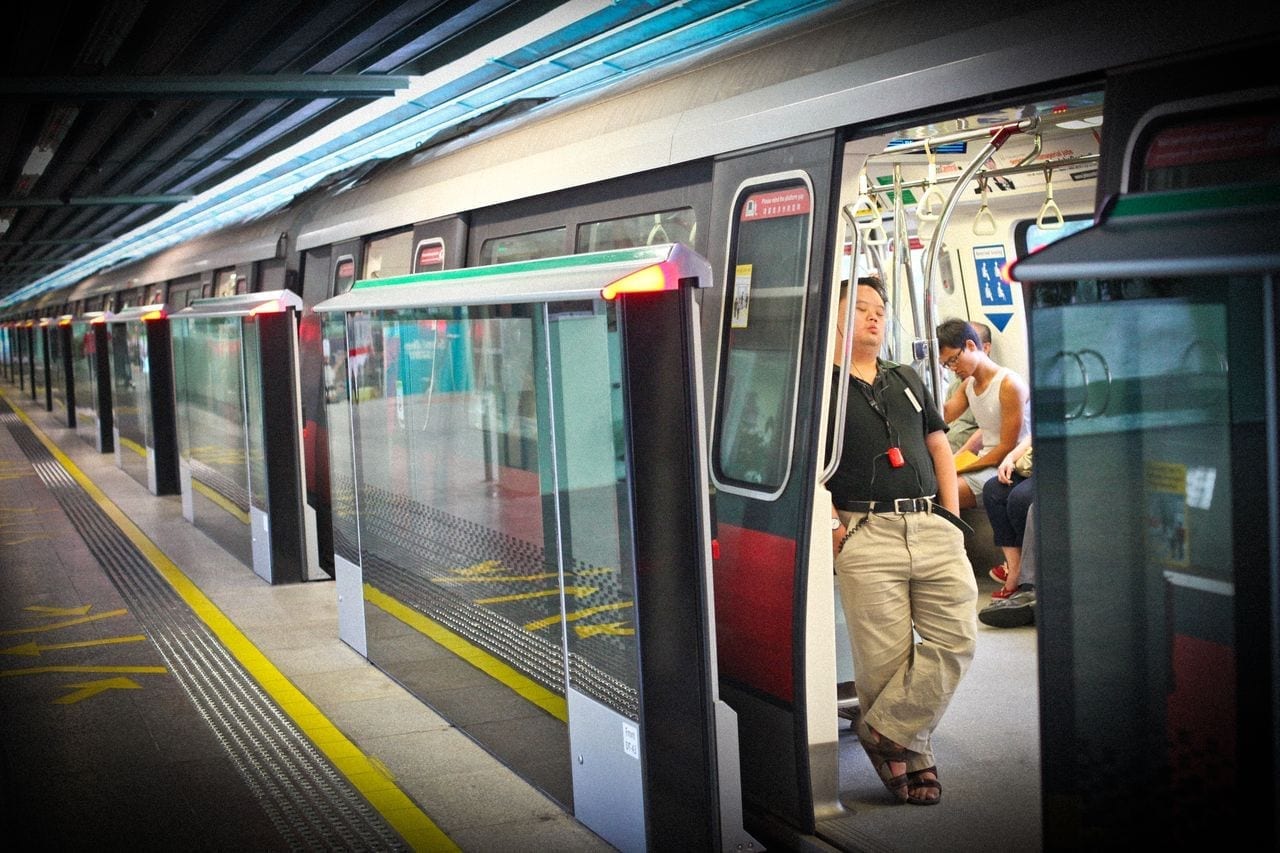
    At home, SMRT has come under heavy criticism in recent years as frequent train disruptions and delays on its various lines held up passengers on their daily commutes.

    In March, two employees carrying out routine maintenance work on a track near Pasir Ris MRT Station were killed after they were hit by a train approaching the platform. In July, SMRT said it had sent back 26 China-made trains to the manufacturer for repairs after cracks were found in them.

    Earlier this month, SMRT said it had not been able to determine the source that caused the intermittent loss of signalling communications on the Circle Line last month, which led to days of train service delays.

    Transport analyst Park Byung Joon, who lectures at SIM University, said that any operator with a long-enough history in operations will have its own record of mishaps. “As a train operator, it has a responsibility to the public, of course, but as a commercial entity there is nothing wrong for a business expansion opportunity,” he said.

    “Despite some recent operational hiccups suffered by SMRT, it is still a very strong operator of trains. As an operator of trains, it can bring in its knowledge on how to oversee the construction project and what kind of considerations you have to have for safety concerns. This kind of knowledge can be very useful for the consortium.”

    This Thursday, SMRT shareholders will vote on state-owned investment fund Temasek Holdings’ proposed buyout of the public transport company and experts have mixed views on how news of the Indonesian tender will affect the vote.

    Temasek’s wholly-owned subsidiary Belford has proposed to buy the 46 per cent of SMRT shares that the state-owned fund does not already hold, by way of a scheme of arrangement at S$1.68 per share.

    More than 50 per cent of shareholders present in person or by proxy must vote to approve, and they have to hold at least 75 per cent of the value of SMRT shares among those present. This excludes shares held by Temasek, which is not eligible to vote.

    SMRT said in Monday’s filing that the company does not expect the Indonesian bid to have a material impact on its net tangible assets per share or earnings per share (EPS) for the current financial year.

    “There shouldn’t be a material impact on shareholder’s decision due to the uncertainty surrounding the bid, and no material impact on its tangible assets or EPS in the near term,” said Ms Yang.

    However, Mr Yang disagreed.

    “The shareholders may vote for SMRT to remain publicly-listed as they see this announcement as something that can boost the future stock value of SMRT, and an opportunity to receive higher future dividends,” he said.

  • Indonesia’s health care industry is on the rise

    Indonesia’s health care industry is on the rise

    Data from WHO Global Health Expenditure Database has revealed that, in 2014, Indonesia’s spending on health care totaled only 2.8 percent of GDP. Compared to the global average of 9.9 percent, it goes without saying that our nation’s total expenditure for health is among the lowest in the world.

    Full implementation of National Health Insurance (JKN) is targeted for 2019 and was initially been seen as the main catalyst to the country’s growth in the health care industry.

    Nevertheless, the initiative saw a challenging launch and, thanks to regulation disparities, poor infrastructure, inadequate medical staff and ultimately funding shortfalls, many analysts maintain their doubts that the program can achieve its main objective, covering 260 million Indonesians by 2019.

    While the pain experienced by the majority of Indonesians dealing with Indonesia’s health care may continue to grow for some time, this is a necessary journey toward success and all the bumps can be read as signposts on the road that the nation must travel to higher-income status.

    The government has maintained the JKN program as a top priority; hence, the challenges will eventually be overcome.

    Moreover, the spark generated by the government’s boost to the health care sector is creating abundant opportunities for all to prosper.

    Substandard health care service in Indonesia represent investment opportunities and records have shown surging demand for health and medical services since the JKN program rolled out.

    In recent years, Indonesia’s conglomerates have started consolidating and investing heavily in the hospital business.

    The likes of Siloam (backed by Lippo Group) and Mitra Keluarga (affiliated with Kalbe Farma) are leading players in Indonesia’s hospital industry. Both have aggressive growth strategies.

    According to a report by the Oxford Business Group, Siloam plans to reach total capacity of 10,000 beds with 22 new hospitals coming online by 2017, while Mitra Keluarga has raised US$372 million through one of the largest initial public offerings (IPO) in recent years, the funds will be used to expand its hospital network to 18 by 2020.

    Foreign players also find Indonesia’s market very captivating. Foreign investment limits in the hospital business have recently been revised to a level of 67 to 70 percent, so more international hospital groups can be expected to leave their footprint in Indonesia soon.

    The limits in the pharmaceutical industry are even higher: 85 percent, and given the estimation that 20 percent of total health expenditure will be allocated to pharmacy products, it was not an exaggeration when in 2015 Frost and Sullivan named Indonesia as “the most promising emerging market for pharma”.

    Another area that represents an exciting prospect for investment is stem cell therapy, already an important health commodity in countries like Russia, China and India.

    While this is certainly a new area for most investors, the potential revenue is huge, surpassing $18 billion according to a study by the Prodia Group.

    Along with economic incentives, this area will promote greater international collaboration that will be useful in the advancement of medical technology in Indonesia.

    Perhaps the talk of positioning Indonesia as one of the world’s leading destinations for medical tourism is not a wild dream anymore.

    Indonesia may be playing catch up for now to the likes of Singapore and Malaysia in ASEAN, nonetheless, it is not too late to start gaining credibility in international markets like Australia, where higher medical costs may force patients to search for more affordable, but still reliable, treatment overseas.

    Indonesia’s health care providers, hence, must prepare themselves to conform to international standards in order to win the hearts of potential foreign patients.

    Indonesia’s health care industry is expected to be worth more than $50 billion by 2020. With the influx of foreign players and the race of local players to shift gear in preparation for faster growth, the government must take an active role to ensure the upgrades to the nation’s health care are beneficial for all people of all statuses.

    Various investments in the industry must make health care more affordable and accessible, especially for those in less developed parts of Indonesia.

    In addition to the primary benefit of delivering adequate health care to the people, the government must also ensure the “side effects” that could potentially also have a larger impact on society in the long run.

    Multinational medical companies operating in the domestic market should be persuaded to develop in-country research and development centers and collaborate with local universities to train capable future human resources.

    Even the tech and startup industry can make the most of this bloom by exploring various value-added services that offer faster information access, easier interaction, better and strong enough to disrupt the industry.

    This wave has already started with the creation of medical portals, real-time health trackers and even the utilization of artificial intelligence that can help medical practitioners diagnose patient health.

  • Nissan returns to Japan’s most exclusive address

    Nissan returns to Japan’s most exclusive address

    Nissan Motor Co.’s flagship showroom has returned to Japan’s most exclusive, priciest address — Tokyo’s glitzy Ginza district, flush with department stores and geisha clubs.

    A sleek new two-story showroom sits at the shopping district’s main neon-soaked intersection, with the brand’s signature models such as the GT-R sports car and Leaf electric vehicle looking down on the well-heeled throngs through floor-to-ceiling glass walls.

    Nissan is back at the landmark locale after a two-year hiatus.

    Japan’s No. 2 automaker had had a showroom at the intersection since 1963, when models of a different kind — women in swimsuits — helped christen the gallery and show off the Fairlady 1500 convertible then on display. Nissan later moved across the street to another building owned by Sapporo Beer, which still manages the property.

    The showroom was shuttered in 2014 to renovate the entire building. Nissan offered a sneak peek of the new digs to journalists Friday, ahead of its public opening this weekend.

    Reborn as “Nissan Crossing,” the revamped gallery boasts two floors of displays featuring concept cars such as the IDS Concept and more pedestrian fare such as the Serena family van.

    The goal is to showcase how Nissan is repositioning of itself as a global leader in next-generation mobility, from EVs to self-driving cars. The Serena, for example, is the first vehicle featuring Nissan’s new ProPilot semiautonomous driving technology.

    To make sure passersby don’t miss the cars, the picture-window facade embedded with LED lights grabs their attention with colorful light shows. Once inside, Nissan invites them to stay awhile at a trendy cafe, where visitors can indulge in custom latte art that features cocoa-powder images of their own face dusted on top of their foamed milk.