Tag: asia

  • FedEx has rolled out its Delivery Signature Options in the Asia-Pacific region.

    FedEx has rolled out its Delivery Signature Options in the Asia-Pacific region.

    FedEx has rolled out its Delivery Signature Options in the Asia-Pacific region.

    According to FedEx, the new service allows customers to decide how they want their customers to confirm receipt of their shipments. Four options are available, under which FedEx can either release the package without a signature; with a signature from a neighbour; with a signature from any person at the recipient’s address; or with a signature from an adult at the delivery address.

    FedEx expects the service to be of particular benefit to retailers and their end-customers.

    The four options are available for outbound shipments in all Asia-Pacific markets where FedEx International First, FedEx International Priority and FedEx International Economy are available, according to FedEx.

  • Singtel expands collaboration with Palo Alto

    Singtel expands collaboration with Palo Alto

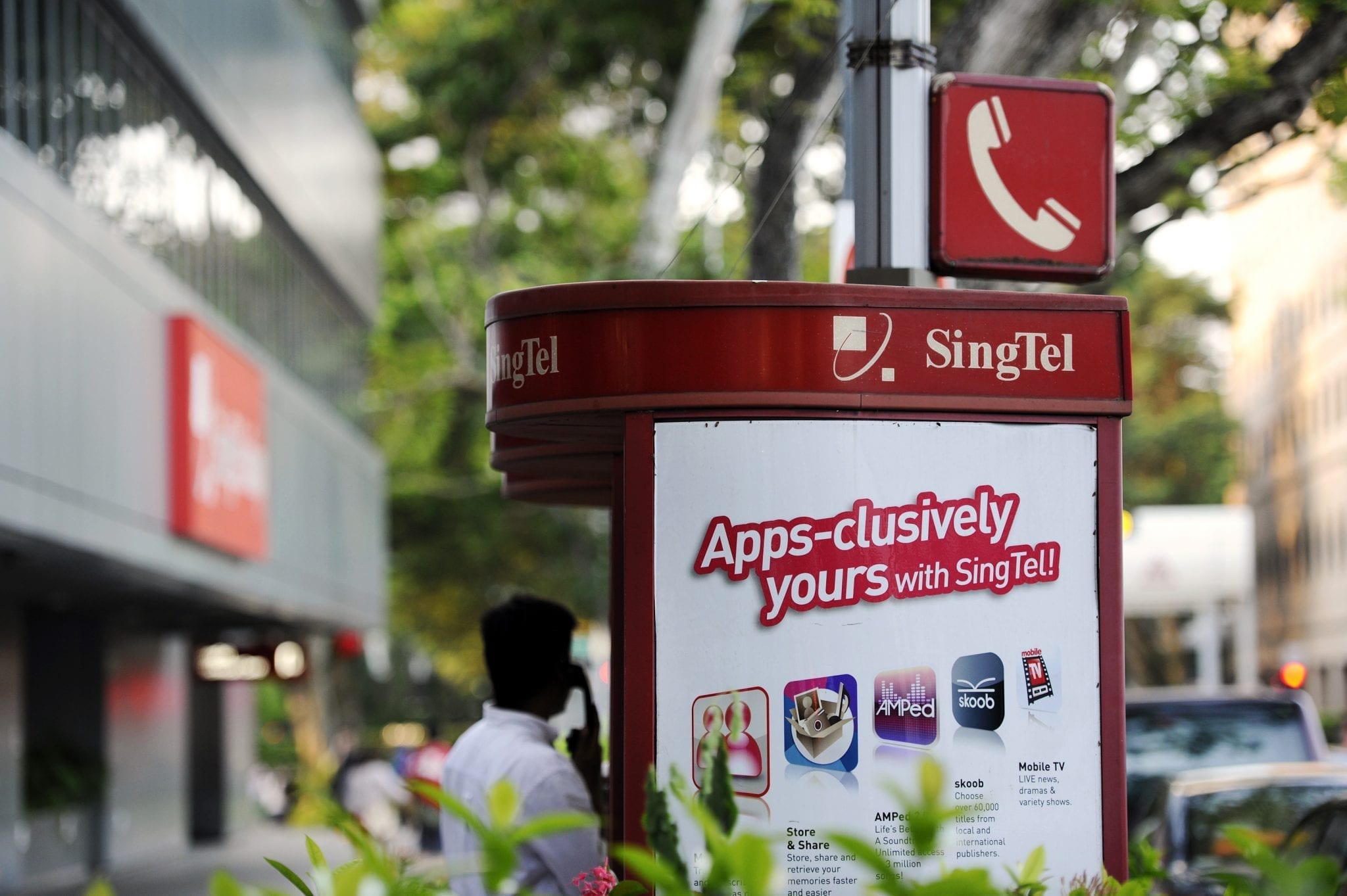
    Singtel and Australian subsidiary Optus have expanded their respective managed security services portfolios with a managed advanced threat protection service using Palo Alto’s security platform.

    The new services are designed to monitor, isolate and prevent suspicious applications from breaching an organization’s networks or endpoint devices, and to provide advanced threat intelligence capabilities for enterprise customers.

    Singtel’s managed security services business unit Trustwave provides services through a global network of eight security operations centers, integrated with Singtel’s Global Threat Intelligence.

    Singtel employs 2,000 security professionals worldwide, including its SpiderLabs cyber response team.

    “As a leading global Managed Security Services Provider, we are committed to strengthening our capabilities to protect organisations against sophisticated, evolving cyber threats. Through our collaboration with Palo Alto Networks, we have developed an innovative cyber security service which takes a holistic and preventive approach towards cyber threats,” Singtel CEO group enterprise Bill Chang said.

    “Together with our Trustwave managed security service, the trained cyber security experts at our Advanced Security Operations Centre can forestall cyber attacks and use the information of any neutralised malware to update our global threat intelligence to benefit other regions.”

    Optus’ enterprise unit Optus Business meanwhile plans to launch its own managed advanced threat protection services over the Palo Alto platform.

  • AIS to roam on TOT’s 2100-MHz spectrum

    AIS to roam on TOT’s 2100-MHz spectrum

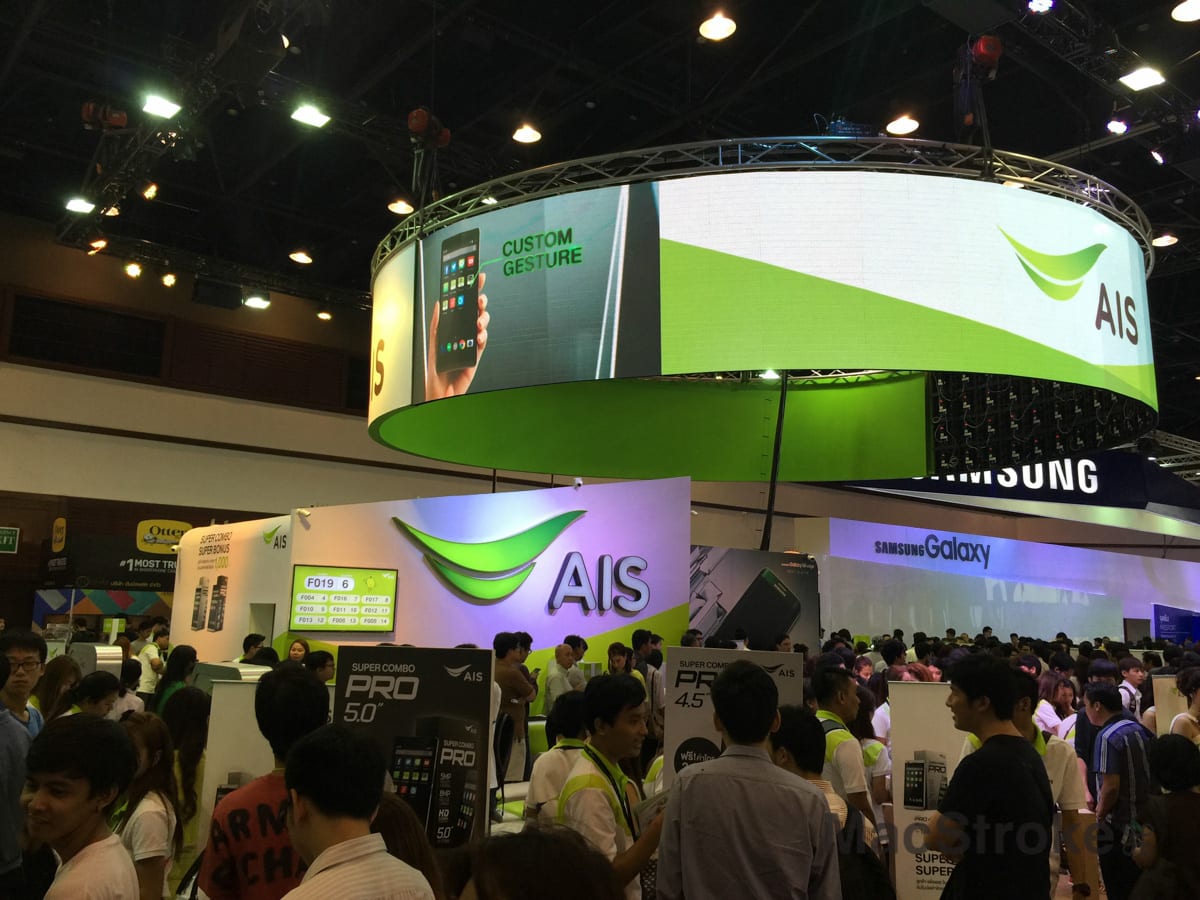
    Thai state-owned operator TOT has reportedly signed a six-month trial contract with AIS subsidiary Advanced Wireless Network (AWN) covering roaming on TOT’s 2100-MHz spectrum.

    A TOT source told that AWN has agreed to pay a 325 million baht ($9.4 million) monthly roaming fee for use of 80% of TOT’s 2100-MHz spectrum allocation.

    The six-month trial is being conducted with a view to potentially entering into a permanent arrangement. AWS is expected to pay a 3.9 billion baht annual roaming fee under such a deal.

    TOT plans to allocate the remaining 20% of its 2100-MHz spectrum to other interested operators, according to the report. AIS already holds 15MHz of spectrum in the 2100-MHz band.

    State-owned TOT has been steadily losing 3G subscribers to its 2100-MHz service, and is under pressure to find new revenue streams following Thailand’s transition from a concession model for spectrum allocations to a more conventional auction model.

    In June, AWN also agreed to lease TOT’s 900-MHz network and towers for a combined 5.6 billion baht annually.

    TOT also holds 60MHz of 2300-MHz spectrum, and plans to use this to offer a wireless broadband service in conjunction with a strategic partner. The partner is due to be selected shortly.

  • DTAC service center flagship store ‘dInfinite’ at Siam Paragon

    DTAC service center flagship store ‘dInfinite’ at Siam Paragon

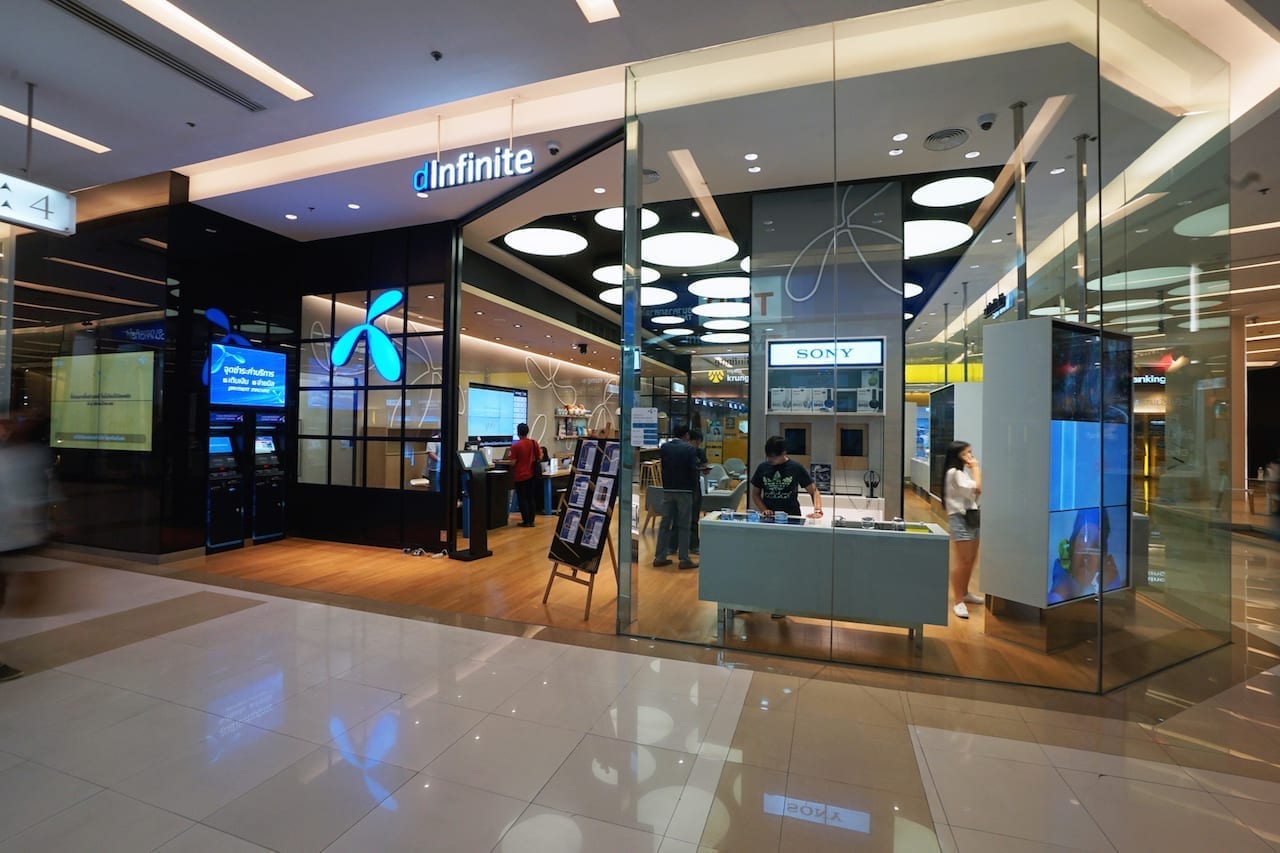
    The new dtac service center flagship store, dInfinite, was launched at Siam Paragon Department Store with the concept ‘the endless digital experiences’. The store has been re-designed to enhance the customer experience through the use of digital services.

    The service center was designed by Whitespace Ltd., a professional retail design company. The key service area has been arranged to serve two main functions: counter service and consultation. The layout reflects of how retail stores have changed overtime; the transaction counter is no longer a key area as e-service, Speedy Queue, allows customers to easily queue online and to check out anywhere in the store.

    dsc00985edit-copy_s

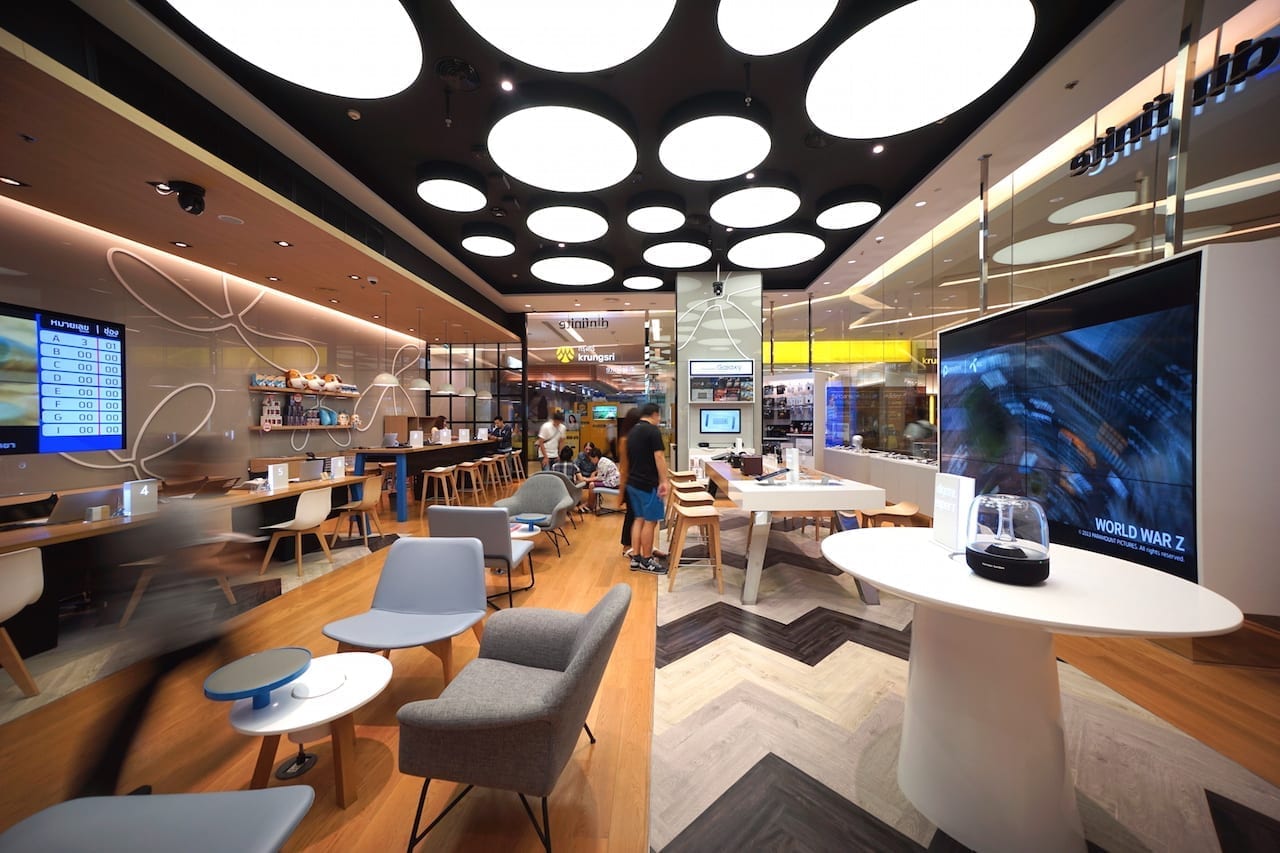
    Rather than waiting in line to pay ones bill, customers are urged to spend their time discovering, testing, and experiencing dtac’s newest devices. Cutting-edge smart phone models are available for customers to interact with at the Smart Table. The latest trends of gadgets and accessories are also available for customers to tryout in the Experience Corner.

    Moreover, the dInfinite flagship store delivers convenience and entertainment through the use of digital devices including a touchscreen e-brochure wall with the most up-to-date dtac promotions and at the Knowledge Table big screen tablets are used to live-stream entertainment via dtac Music Infinite and Primetime apps.

    When customers walk into dInfinite, they will feel at home and welcomed by the casual and warm ambience of the store. The cozy mood and tone is enhanced by custom-made wood furnishings, comfortable seating, wood floors and a black and gray color palette. Circular lights on the ceiling and the use of the dtac logo symbol on the walls throughout the store adds a sense of energy and excitement as well as reinforces the brand.

  • Revenue up 36pc for Zalora parent

    Revenue up 36pc for Zalora parent

    The Lazada and Zalora parent is paring back its losses after divesting operations in two markets.

    With operating losses nearly halved and excluding disposals in India and Southeast Asia, Global Fashion Group (GFG) has reported a 36.3 per cent rise in net revenue.

    Backed by Rocket Internet and comprising online fashion retail businesses in emerging markets, GFG says net revenue in constant currency rose 47.5 per cent to 456 million euros (US$512.73 million).

    GFG sold interests in Thailand and Vietnam for an undisclosed amount to retailer Central Group in April. It also sold its Indian fashion business Jabong to Flipkart for $70 million in cash in August.

    GFG raised 330 million euros in funding from existing investors in July, cutting the holding of Rocket Internet to 20.4 per cent.

    The company says adjusted losses before interest, taxes, depreciation and amortisation (EBITDA) narrowed to 67.6 million euros in the first half of this year from 120.5 million euros in the same period last year. The EBITDA margin improved to a negative 14.8 per cent in the first half from minus 33.4 per cent, which the company says was driven by tighter inventory management and cost-cutting.

  • Antonia debuts in Asia at Macau

    Antonia debuts in Asia at Macau

    Multi-label Italian luxury fashion retailer Antonia has opened its first store in Asia, at The Parisian Macao in Macau.

    Designed by architect Vincenzo de Cotiis, the 3000 sqm store features such brands as Gucci, Rick Owens, Sacai, Saint Laurent, Valentino and Versace.

    The store is run in partnership with Modern Avenue, formerly the Canudilo Group. Ten other stores are planned for greater China.

  • Bangkok tops Global Destinations Cities Index

    Bangkok tops Global Destinations Cities Index

    Bangkok is the top-ranked destination city by international overnight visitor arrivals, according to the annual Mastercard Global Destinations Cities Index.

    Ranking 132 cities, the index projects visitor volume and spend estimates while delivering insights into how people travel and spend around the world.

    As cross-border travel and spending continue to grow at a faster pace than the world GDP, the world’s cities continue to be engines of broader economic growth, says Mastercard.

    According to the study, Bangkok is projected to receive 21.47 million international overnight visitors this year, just ahead of London (19.88 million visitors).

    Also in the top 10 cities are:

    • Kuala Lumpur, 12.02 million visitors

    • Paris, 18.03 million visitors

    • Istanbul, 11.95 million visitors

    • Dubai, 15.27 million visitors

    • Tokyo, 11.70 million visitors

    • New York, 12.75 million visitors

    • Seoul, 10.20 million visitors

    • Singapore, 12.11 million visitors

    Hong Kong was 11th.

    “The way people travel and spend across borders indicates just how interconnected and important the world’s cities are,” says Mastercard president of international markets Ann Cairns.

    As well as the top 10 cities, Mastercard names the top 10 fastest-growing destinations, which indicates the increasingly importance of Asia Pacific to the global economic landscape.

    Osaka new star

    Osaka has shown the strongest growth in international visitors (24.15 per cent) over the past seven years. Other cities that make the fastest-growing list:

    • Chengdu, 20.14 per cent

    • Taipei, 14.53 per cent

    • Abu Dhabi, 19.81 per cent

    • Xi’an, 14.2 per cent

    • Colombo, 19.57 per cent

    • Tehran, 12.98 per cent

    • Tokyo, 18.48 per cent

    • Xiamen, 12.93 per cent

    • Riyadh, 16.45 per cent

    For the first time, the index explores whether visitors travel for business or leisure, giving broader insights into spending on dining, lodging and shopping. The index shows that more people are travelling to the top 20 cities for leisure with Shanghai being the sole exception.

    Visitors to the top 20 cities overwhelmingly spent more on shopping, as opposed to dining, says the index.

    Asia Pacific dominates both the global top 10 (five cities) and top 10 fastest-growing destination cities (seven cities).

    Public data is used in deriving the international overnight visitor arrivals and their cross-border spending in each of the 132 destination cities for the index. Mastercard volumes or transactional data is not considered.

    The full report can be downloaded here.

  • Bangkok’s Greyhound Cafe heads to Singapore

    Bangkok’s Greyhound Cafe heads to Singapore

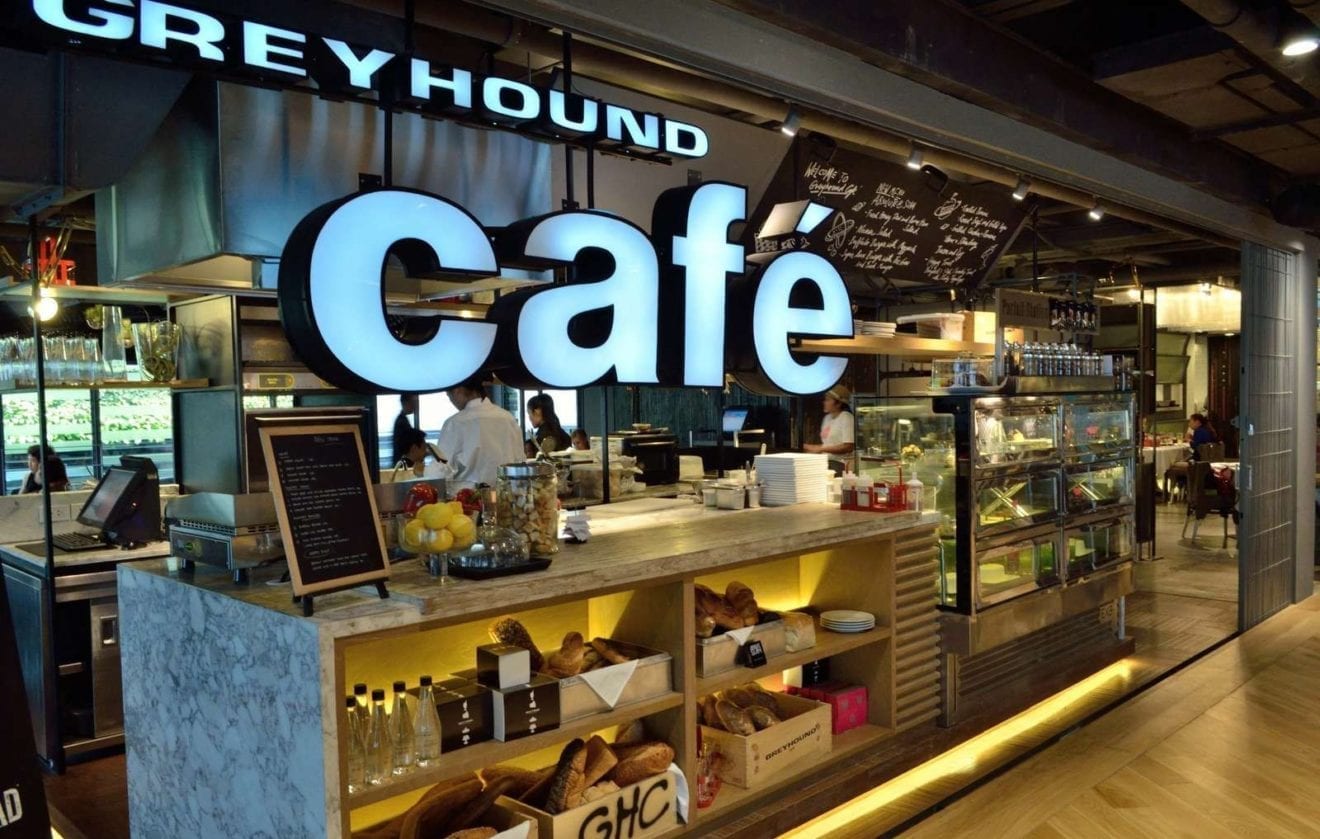
    From Bangkok, fashion and lifestyle venue Greyhound Cafe will open in Singapore in November.

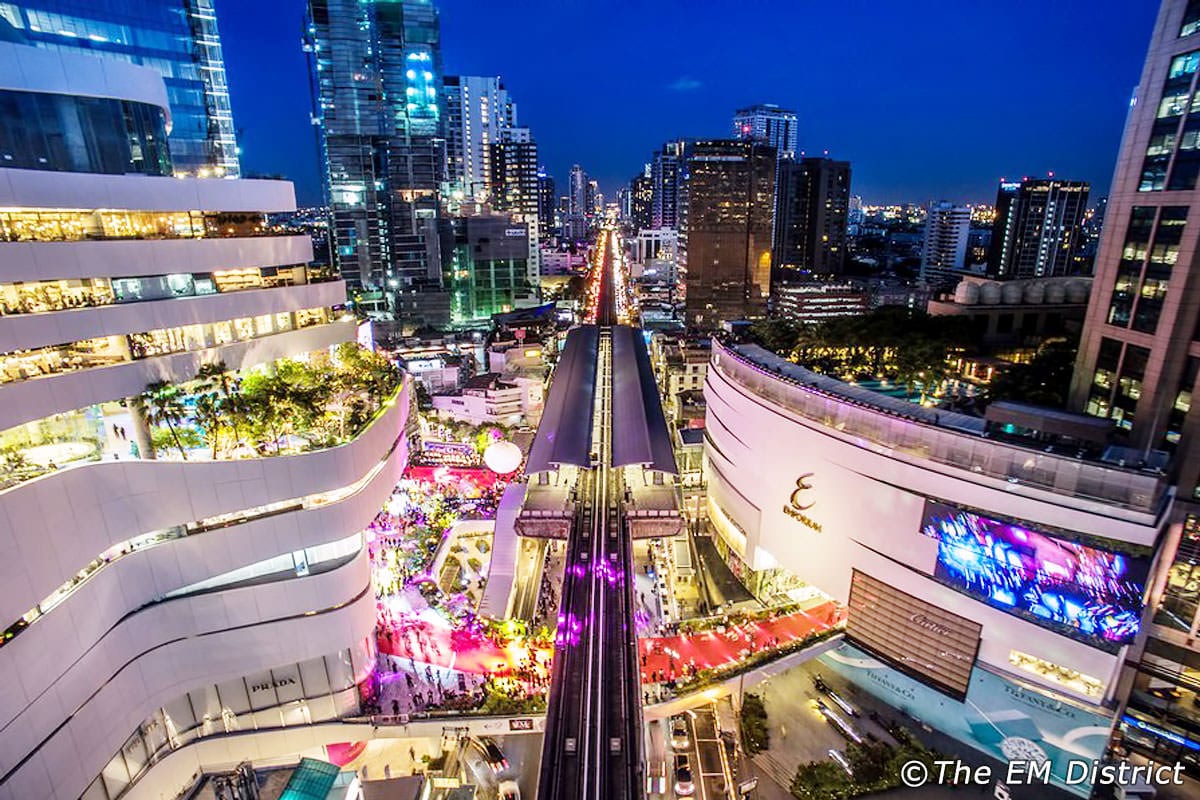
    Greyhound started as a fashion brand in 1980 with a casual menswear outlet. In 1997 it decided to bring together fashion and lifestyle by opening its own cafe in the Emporium Shopping Complex in Bangkok.

    Design is a strong element in its cafes, with its seven outlets in Bangkok all featuring such modern touches as murals and monochromatic furnishings, as well as specially designed staff uniforms.

    Greyhound is known for its fried wings, Thai iced tea granita and coconut crepe cake, and has been described by Fortune magazine as “the hottest seats in Bangkok”. Signature dishes include Complicated Noodle (a self-assembled dish), Fried Rice Noodle with Chicken and Dried Squid, and Spaghetti with Crab Meat and Prawn Cream Sauce.

    Singapore’s Greyhound Cafe will be in Paragon on Orchard Road.

    Early this month, Greyhound Thailand’s parent, Mudman, launched an IPO to raise capital for further investment at home and abroad.

  • Benoy Shanghai reveals design for Lujiazui

    Benoy Shanghai reveals design for Lujiazui

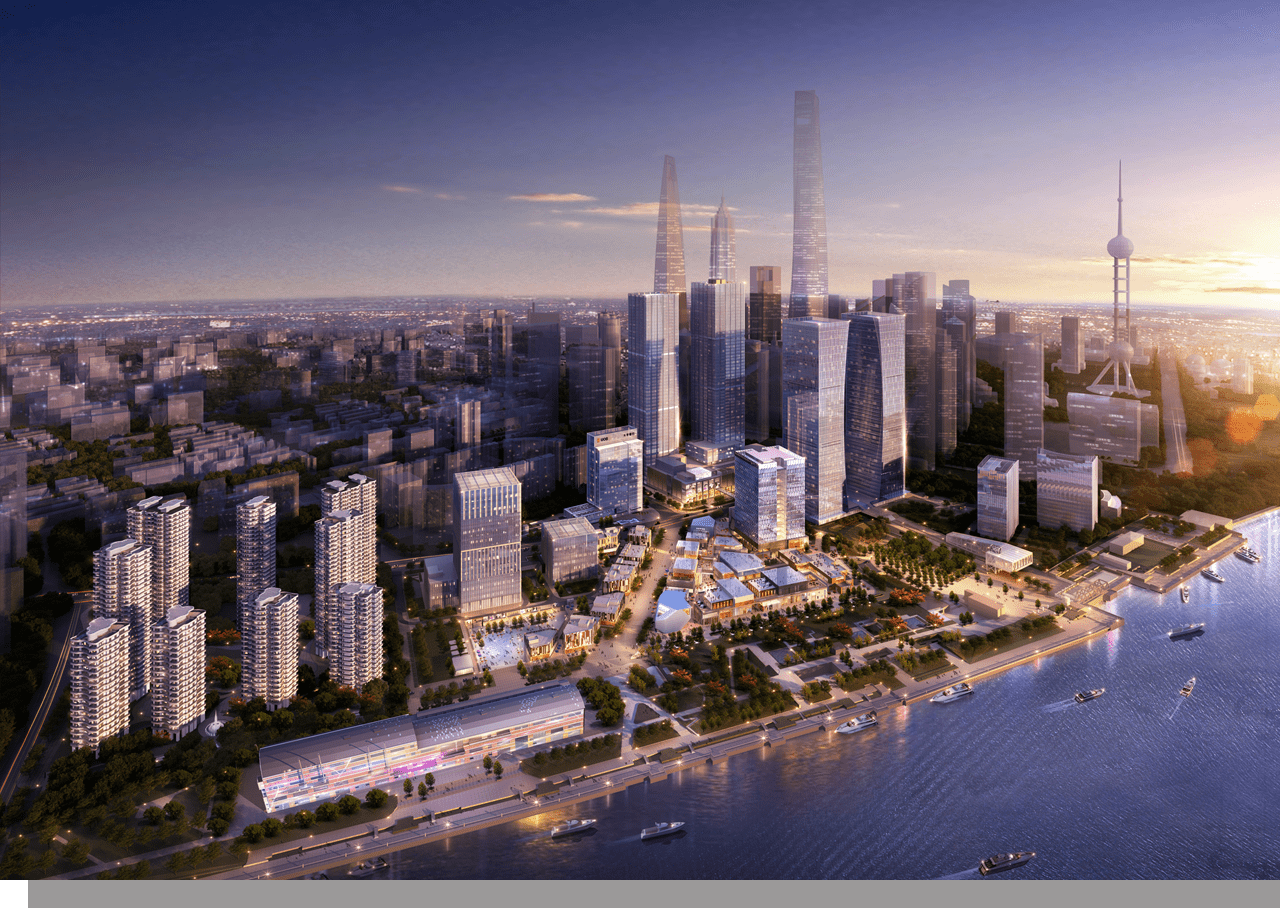
    Appointed as the masterplanner, architect and interior designer, Benoy Shanghai has revealed its design for the mixed-use Gala Avenue Westside development in Shanghai.

    The project is part of the major Lujiazui Harbour City development, scheduled to be complete in 2018. It covers 250,000 sqm of riverside land being redeveloped into an iconic future destination.

    Combining offices, high-end shopping and entertainment, as well as public space, Gala Avenue Westside is on a site previously run as a shipyard by the Shanghai Ship Company since the 1800s.

    “We have embraced the history of the site and built upon this,” says Benoy Shanghai studio director Qin Pang. “Our design celebrates the themes of ‘New and Old’, ‘East and West’ and ‘Traditional and Modern’.”

    Gala Avenue Westside comprises a 100m office tower and 12 interconnected retail hubs spanning two to three storeys. A chain of squares will form an internal streetscape linking the buildings, both above ground and below, along with a network of green spaces.

    The development has been positioned for maximum retail exposure, with views of the Huangpu River and the Pudong cityscape.

    Benoy’s Shanghai portfolio already includes Mango West Bund Plaza of the wider DreamCenter development along the Huangpu River, and Vanke Xuhui Center, a large-scale, mixed-use development connected to the city’s South Railway Station.

  • Singapore Golden Week targets shoppers

    Singapore Golden Week targets shoppers

    Singapore Retailers Association (SRA) is launching the inaugural Singapore Golden Week (SGW), a lifestyle event to be held over three weekends from September 30  to October 16.

    Its aim is to heighten Singapore’s appeal as a lifestyle destination with a suite a retail privileges, shopping reward and pampering experiences as enticement.

    Global payment network UnionPay is the official card for the event, with special privileges for cardholders across more than participating outlets including retail, F&B, beauty and wellness, and hotels and attractions.

    As well as exclusive discounts, cardholders are offered gifts when making purchases at participating merchants using their cards. The merchants involved include department stores Isetan Scotts, Metro and Robinsons, clothing labels Dockers, Dorothy Perkins, Karen Millen, Levi’s, TM Lewin, Topman, Topshop and Warehouse; and attractions such as the Alive Museum.

    There is also a game in which cardholders can win shopping vouchers and prizes worth more than S$10,000 (US$7388) in all, based at Ion Orchard.

    Visitors – not just cardholders – are also welcome at the UnionPay Golden Pampering Lounge in Ion Orchard’s atrium, which offers gourmet coffee and free-flow gourmet cookies.

    Cardholders can access the VIP area, which has massage chairs plus gourmet coffee sprinkled with edible gold dust.

  • Nike India closes more than one third of stores

    Nike India closes more than one third of stores

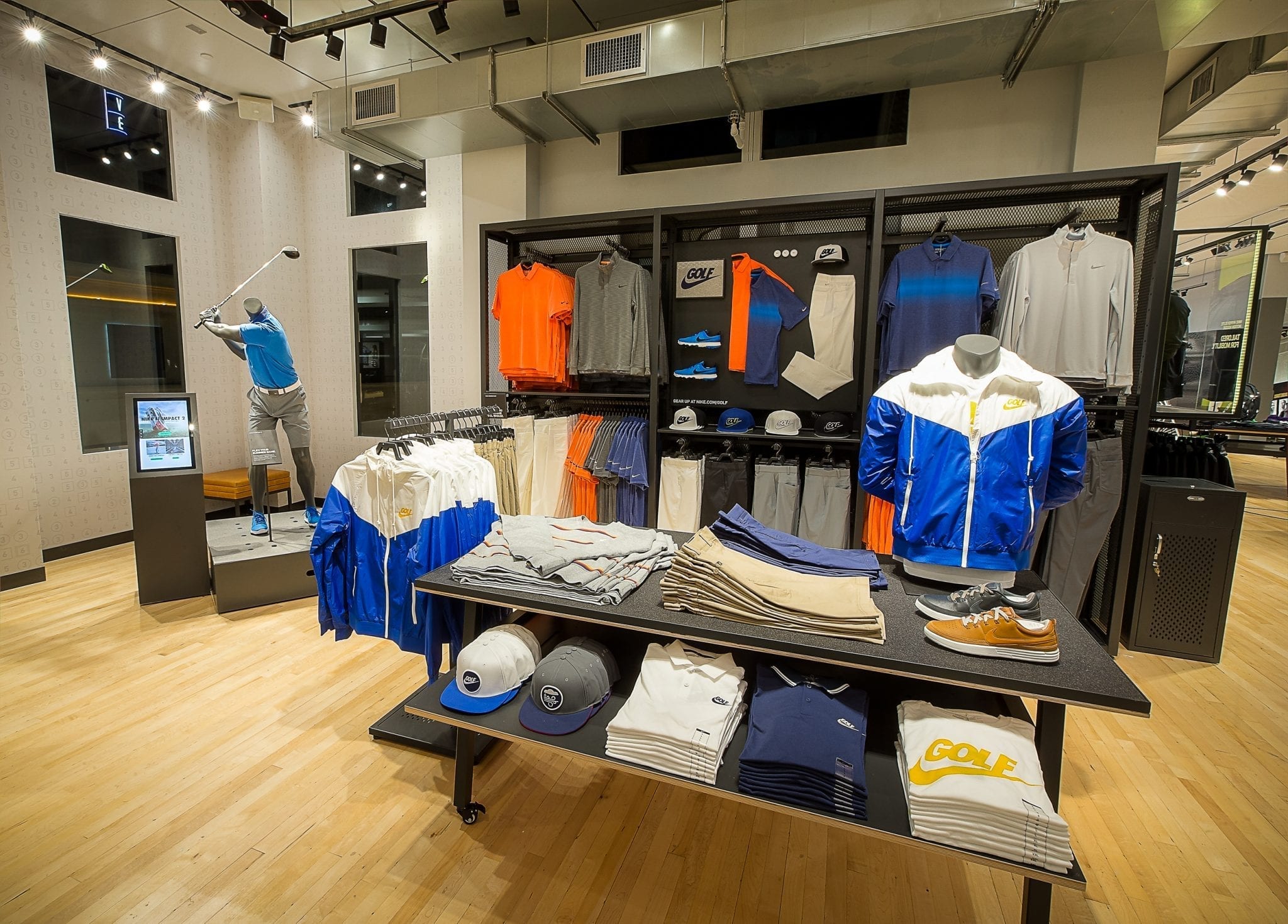
    To cut losses, US sportswear maker Nike India has closed about 35 per cent of its stores.

    This has left it with about 200 stores, say observers.

    Nike’s accumulated losses were around US$81 million, according to data filed with the Registrar of Companies. Its sales over 2014-15 were about US$120 million for a loss of $15 million.

    Its rivals have also accumulated losses – Adidas losing about $10 million and Reebok $328 million. However, German sportswear maker Puma bucked the trend with accumulated profit of $7 million.

    Nike is believed to be also rethinking its strategy of sponsoring bats for top Indian cricketers. Nike’s largest partner in India is SSIPL (formerly Moja Shoes), which runs 80 per cent of the brand’s stores. Its second-largest partner is soft-drink mogul Ravi Jaipuria’s RJ Corp. Many of the closed Nike outlets have been converted into multi-brand stores by its partners.

  • CJ pulls out of McDonald’s Korea race

    CJ pulls out of McDonald’s Korea race

    CJ Group says it has withdrawn from the bidding process for franchise rights for McDonald’s Korea.

    The Korean multinational gave no reason for its loss of interest.

    McDonald’s US is seeking buyers for 20 year franchise rights for its business in China, Hong Kong and Korea as it moves to a franchise partnership model outside the US.

    CJ Group, whose interests include cinema chains in Asia and the Tous Les Jours bakery chain, said this week it had not entered the latest round of bidding for the business.

    That leaves a consortium including Maeil Dairy Industry and another group with KG Group and NHN Entertainment Corp as the last two potential buyers on the shortlist.

    McDonald’s hopes to earn about US$280 million from the Korean master franchise rights.

  • Multi Bintang Cancels Factory Expansion

    Multi Bintang Cancels Factory Expansion

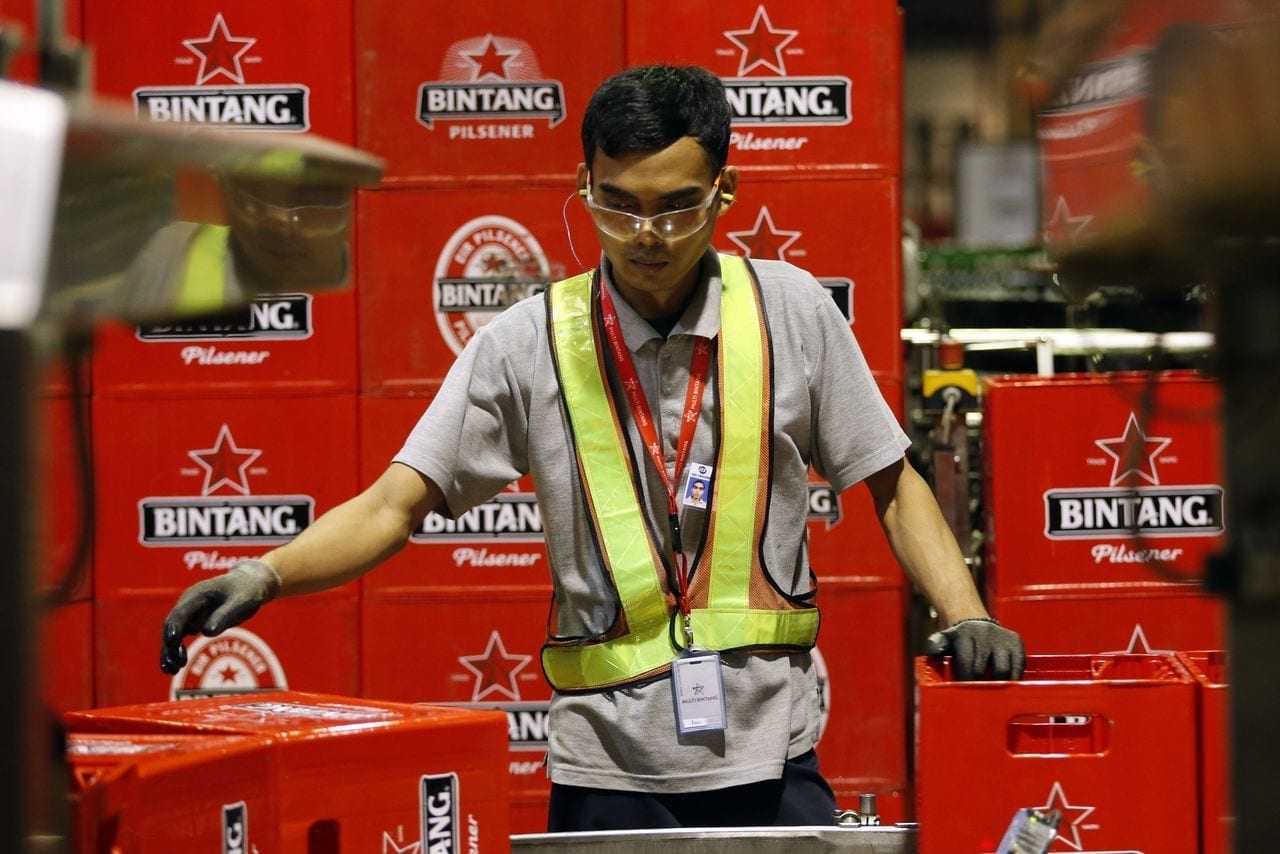
    PT Multi Bintang Indonesia (MLBI) has decided to postpone plans to expand its factory in Mojokerto. The decision was made as the company faced difficulties with Trade Minister Regulation on the distribution of alcoholic beverages and the Draft Bill on alcoholic beverages, which is still being discussed by the House of Representatives.

    Bambang Britono, Director of Corporate Relationship of the company said that the Trade Minister Regulation No. 6/M-DAG/PER/1/2015 on the Control and Supervision on Procurement, Distribution and License for Alcoholic Beverages have forced the company to reschedule its plant to expand production facilities.

    “It is actually depends on time and supply. Previously [our sales] had dropped because of the Trade Minister Regulation. So we have decided to do a reschedule,” Bambang said on Friday, September 23, 2016.

    In addition, the government’s plan to pass the Draft Bill on Alcoholic Beverages, which bans the production, distribution and consumption of alcoholic beverages with an alcohol level of one up to 55 percent have disrupted the company’s distribution activities. Nevertheless, Bambang is certain that the government will be able to come up with a just policy for alcoholic beverages company.

    “Because the [alcoholic beverages] industry has quite large [contribution], not only in terms of levy and taxes revenue, but also multiplier effect on other industries, such as tourism. So the government will consider its own discretion,” Bambang said.

  • Aceh wins three prizes in halal tourism category

    Aceh wins three prizes in halal tourism category

    Aceh Province has won three prizes in the National Halal Tourism Competition (KPHN) 2016, an official said.

    The three awards were in the categories of Muslim Friendly Airport–given to Sultan Iskandar Muda International Airport in Banda Aceh, as well as best Muslim friendly cultural destination, and best tourist attraction for Baiturrahman Grand Mosque, said Reza Fahlevi, head of the Aceh cultural and tourism office, on Thursday.

    He expressed his gratitude to the people of Aceh for helping develop halal tourism in the province, and to the Central Government for supporting Aceh in its participating in the World Halal Travel Awards 2016 in Abu Dhabi, the United Arab Emirates.

    “Alhamdulillah (Thank God), Aceh won prizes for three categories in competition with 117 nominees in 15 categories,” he remarked.

    The results of the competition were announced in Jakarta on Wednesday.

    The Aceh provincial administration seeks to improve its tourism industry to meet its 3As – Amenity, Accessibility, and Attraction– in order to transform the province into a world-class tourism destination.

  • Marketers prefer prudent spending on mobile advertising

    Marketers prefer prudent spending on mobile advertising

    While penetration of smartphones and mobile services continues to increase in Asian markets, mobile advertising is not as prevalent as is assumed. Brand owners still allocate a substantial amount of money to advertise on conventional media.

    According to data from the Asia Pacific branch of the Mobile Marketing Association (MMA), the average company in Asia will spend only 7 to 10 percent of their marketing budgets on mobile advertising despite rising smartphone usage across the region.

    This is particularly apparent in Indonesia as some companies increase focus on mobile advertising, but it does not necessarily translate to higher marketing dollars.

    MMA Asia Pacific managing director Rohit Dadwal explained that despite an increased percentage in mobile ad spending, the format would likely end up as the third-largest ad platform in Indonesia after television and radio in the coming years due to the size and reach of conventional media in the country.

    Dadwal explained that the average brand in Indonesia allocated between 14 and 15 percent of their marketing budget for mobile-based advertising and spent the remaining budget on broader platforms, such as television, which is considered the most popular advertising platform in Southeast Asia’s largest economy.

    Currently, in terms of an overall advertising budget, not a lot of local brands have moved into mobile marketing, as the share has yet to reach 5 percent of the marketing industry.

    “The main effect of the rise of mobile usage is that companies will start to allocate more money for mobile advertising from their budgets little by little, from 10 to 20 percent currently to about 30 percent in the near future,” Dadwal said during a recent discussion in Jakarta.

    A suitable strategy for mobile marketers, he added, is not to look at the landscape as a place where mobile advertising will triumph over other media but to see both mobile and more traditional media as integrated platforms where marketing campaigns can run parallel with each other.

    “It’s no secret that mobile advertising poses a threat to other forms of advertising. However, to succeed in marketing today, you shouldn’t use a completely mobile strategy. You need a marketing strategy that includes mobile because it will help you with your overall marketing objectives in the end,” Dadwal said.

    Previously, client leadership partner of Mindshare Indonesia media agency Wendy Soeweno commented that brands, conventional or digital, would still focus on television and radio advertising because of the scope and range television and radio provide in Indonesia.

    Television and newspapers used to be the biggest recipients of advertising spending. The tide is turning. Digital ads are poised to take 25 percent of ad spending in Indonesia by 2019 from 7.3 percent in 2015, according to forecasts by eMarketer.

    Digital ads almost tripled to US$835 million in 2015 from $234.2 million in 2013 and the figure is expected to increase more than four times to $4.9 billion by 2019.

    “We believe that communicating with consumers through the digital world is significant to building our brand,” corporate secretary of Unilever Indonesia Sancoyo Antarikso said recently.

    Unilever, one of the country’s biggest spenders on advertising, has been intensifying the placement of its product commercials through Google’s video sharing platform YouTube.

    In terms of strategies, Dadwal elaborated on how the integrated mobile-conventional approach was working currently and acknowledged that there could be a major shift to mobile marketing happening in the future.

    According to a joint study by Google and Singaporean investment company Temasek, Indonesia is poised to have the fourth-largest amount of internet users in the world with 215 million people connected by 2020. Meanwhile, smartphone usage in Indonesia currently includes approximately 43 percent of the population.