Tag: asia

  • Ooredoo plans stake sale in Indonesian unit Indosat

    Ooredoo plans stake sale in Indonesian unit Indosat

    Ooredoo plans stake sale in Indonesian unit Indosat. Ooredoo is exploring options including a sale of its controlling stake in Indonesia’s phone carrier PT Indosat as the Qatari phone company seeks to raise cash and focus on its more profitable Middle Eastern markets, according to people familiar with the matter.

    The carrier could sell its 65 per cent stake in Indosat to another phone company willing to expand in the region, the people said, asking not to be identified because the deliberations are private. The holding has a market value of about $1.4 billion. No final decision has been made and deliberations are still at a preliminary stage, the people said.

    Ooredoo said it has no intention of selling its interest in Indosat, according to a statement dated September 20 on its website. Indosat shares rose as much as 2.9 per cent, the most in a week, in Jakarta trading on Wednesday.

    Ooredoo, which has operations spanning Algeria to Myanmar, is also considering a sale of its indirect stake in Singapore’s StarHub, people with knowledge of the matter said in July. Ooredoo is majority owned by the Qatar Investment Authority sovereign wealth fund and other government related entities. Investment funds in many Middle Eastern countries are raising cash through asset sales to combat declining oil prices.

  • South Korea to explore halal food market in Indonesia

    South Korea to explore halal food market in Indonesia

    The South Korean Ministry of Agriculture, Food and Rural Affairs, through the Korea Agro-Fisheries and Food Trade Corporation, will explore the possibility of entering the halal food market in Indonesia.

    Lee Kyu Baek from the Korea Agro-Fisheries and Food Trade Corporation made the statement in Jakarta, Tuesday, during a press conference about the upcoming Korean Festival, scheduled to begin on Sep 30.

    As a part of the month-long festival, the Trade Corporation will hold a Korean food fair themed Safe and Healthy Lifestyle with Premium K-Food from 6 to 9 October.

    “This effort is being made to increase the demand for Korean foods, as well as heightening its recognition in Indonesia,” he said.

    Lee further explained that the halal food industry in Korea is still small, which is why the Korean government has launched a Moslem friendly policy to ensure the convenience of Moslem tourists who come to visit.

    It has been reported that some 740,000 Moslem tourists have visited South Korea, as of last year, and the Indonesia K-Food Fair 2016 event is seeking to further promote both Korean cuisine and tourism to the Indonesian public.

    The cuisine-based fair will be divided into two segments, one being an export conference, scheduled to be held at the Ritz-Carlton Hotel on Oct 6 and 7.

    “We will be holding a seminar in which representatives from Korea will explain halal policies, as well as the steps to obtain halal certification in detail,” he said.

    The business-to-business conference will see 20 Korean exhibitors and 40 Indonesian buyers participating, he remarked.

    In addition, a consumer experience event (B2C) will be held in Kota Kasablanka from October 8 to 9, where visitors can taste traditional Korean foods being promoted in separate halal, easy products and healthy food zones.

  • Kumho Tire auction to start in November

    Kumho Tire auction to start in November

    Creditors of Kumho Tire gave formal notice this week that they will hold an open auction for their respective holdings in the South Korean tyre manufacturer with preliminary bidding scheduled to start in early November.

    The creditors involved are eight financial institutions including Woori Bank, state-owned Korea Development Bank and KB Kookmin Bank. Together they own 42% of the equity in the tyre manufacturer, worth some KRW760bn (US$680m) based on the current share price.

    Kumho Tire graduated from a four-year creditor-led debt restructuring programme at the end of 2014 after it suffered a severe liquidity crisis in 2009.

    The 50 year-old tyre manufacturer currently employs around 5,000 people in South Korea. It has nine tyre plants worldwide, three in South Korea, four in China and one each in Vietnam and the US. It generated global sales of KRW3.04 trillion (US$2.7bn) last year.

    In the first half of 2016, the company generated revenues of KRW1.45trn and earnings of KRW55.8bn.

    The auction will be organised by Credit Suisse bank which expects the final round of bidding to take place in January 2017 with a buyer expected to be selected shortly after that. The controlling equity stake is expected to cost around KRW1trn, including fees.

    Park Sam-koo, the current chairman of the former owner of the company,Kumho Asiana Group, will have the right of first refusal to buy back the shares by matching the highest bid in the final auction. He has previously indicated that he would be interested in taking back control of the tyre manufacturer but it is unclear whether he has the financial backing to do so.

    Other global tyre companies will be given the chance to bid and private equity companies are also expected to feature in the auction.

  • Kewill Prepares To Join WCA E-Platform

    Kewill Prepares To Join WCA E-Platform

    Supply chain solution provider Kewill has begun the process to integrate the WCA’s WIN e-platform to its MOVE forwarding platform.

    “With over 6,000 independent forwarder members in 180 countries, many of whom already use Kewill solutions, our partnership with WCA will help us to grow our customer base,” said Doug Braun, CEO of Kewill. “MOVE’s architecture already supports seamless connectivity and the new connection to WIN will give our customers broad reach to reduce their reliance on email and redundant data handling by exchanging shipment data, documents, and milestones with their WCA agency partners.”

    According to the WCA, WIN allows independent forwarders to connect with partner agents, airlines, container lines and other logistics service providers for secure digital collaboration.

    “I am delighted that yet another leading freight forwarding software company has given the go ahead to partner with WIN,” said John DeBenedette, managing director of WIN. “We are very pleased to welcome Kewill to the network. Independent forwarders already have an edge on service and local expertise but lag behind their multinational rivals on seamless IT connectivity. WIN makes the systems of forwarders anywhere in the world interoperable so they can work on a level playing field with multinationals who have more homogeneous IT landscapes.”

  • UPS to open 3D printing factory in Singapore with Fast Radius

    UPS to open 3D printing factory in Singapore with Fast Radius

    Package delivery company United Parcel Service Inc said on Monday it will expand its 3D printing services to Asia with a new facility in Singapore run by its partner Fast Radius that will open by the end of 2016.

    UPS rolled out a similar service in May in the United States. The company owns an undisclosed stake in Fast Radius, which has a 3D printing factory at the Atlanta-based package delivery company’s hub in Louisville.

    In the United States, UPS customers can have parts printed at the Fast Radius factory or at one of 60 UPS Stores equipped with 3D printers and then shipped to them.

    UPS also plans a 3D printing hub in Europe. The company sees 3D printing as a potential threat to its warehousing business where it stores parts for manufacturers, so its strategy is to embrace the new technology and incorporate it into its business model instead.

    Also known as additive manufacturing, 3D printing works by laying down successive levels of material, mostly plastics at this point, to create an object.

  • India’s Jio fights with incumbents over PoIs

    India’s Jio fights with incumbents over PoIs

    India’s Reliance Jio Infocomm is in an ongoing battle with the nation’s three incumbent operators over interconnection capacity.

    Jio, a newcomer to the mobile scene, is accusing Bharti Airtel, Vodafone and Idea Cellular of refusing to provide enough PoIs to handle the volume of calls between Jio customers and those of the incumbents.

    The operator said that as of mid-September, Airtel had provided just 651 operational E1s, Vodafone just 467 and Idea just 526. In the past 15 days, Airtel had provided one new E1 to Vodafone’s five and Idea’s three.

    Jio said based on industry practices, the operator estimates it requires an interconnection capacity of 4,000 to 5,000 E1s per operator. The shortfall is resulting in over 100 million call failures per day between Jio and the three incumbent operators combined.

    “The continued denial of requisite PoI’s is in clear violation of the License conditions and TRAI regulations on quality of service by the incumbent operators,” the company said.

    “The deliberate move to not provide sufficient interconnection capacity, as is apparent from the above numbers, is clearly aimed at hindering RJIL’s entry into the sector and is depriving Indian customers from enjoying superior HD voice services being offered by RJIL.”

    But in an interview with the Hindu Business Line, Bharti Airtel chairman Sunil Bharti Mittal has insisted  that the company has already provided 2,100 PoIs, and said the process is ongoing.

    He also downplayed the conflict with Jio, stating that the fight between the disruptive start-ups and the incumbents has already been de-escalated.

  • Korean bank deploys optical encryption from Ciena

    Korean bank deploys optical encryption from Ciena

    KB Kookmin Bank, Korea’s largest financial institution, is deploying Ciena’s encryption capabilities for secure, high-capacity data centre interconnect (DCI), in a bid to better protect customer data.

    The encryption solution protects KB Kookmin Bank’s data transmissions from its offices and enables secure data centre interconnect (DCI) between its data centers.

    Several security solutions exist to protect data at-rest that secure servers, databases, routers, and switches by managing user access and credentialing. However, large amounts of critical data are in-flight and transported beyond the walls of the data center, traversing a larger, wide area network. Ciena’s optical-layer encryption solution gives KB Kookmin Bank an additional level of protection and protects data in flight as it leaves the private cloud and is transported between locations and data centers. Ciena’s solution adheres to local and international regulations and legislations, including the Federal Information Processing Standard (FIPS) 140-2 encryption certification.

    Additionally, Ciena’s software-based MyCryptoTool gives KB Kookmin Bank a dedicated management user portal that allows end-users to remotely control all of the security parameters associated with their encrypted services.

    “We are committed to providing the best possible service to our customers, which includes data protection and security. Ciena’s optical encryption solution provides an extra layer of protection and gives our customers the confidence to know their personal information is safe,” said Kim Ki-Hyun, CIO of KB Kookmin Bank.

  • Huawei Marine sets unrepeatered distance record

    Huawei Marine sets unrepeatered distance record

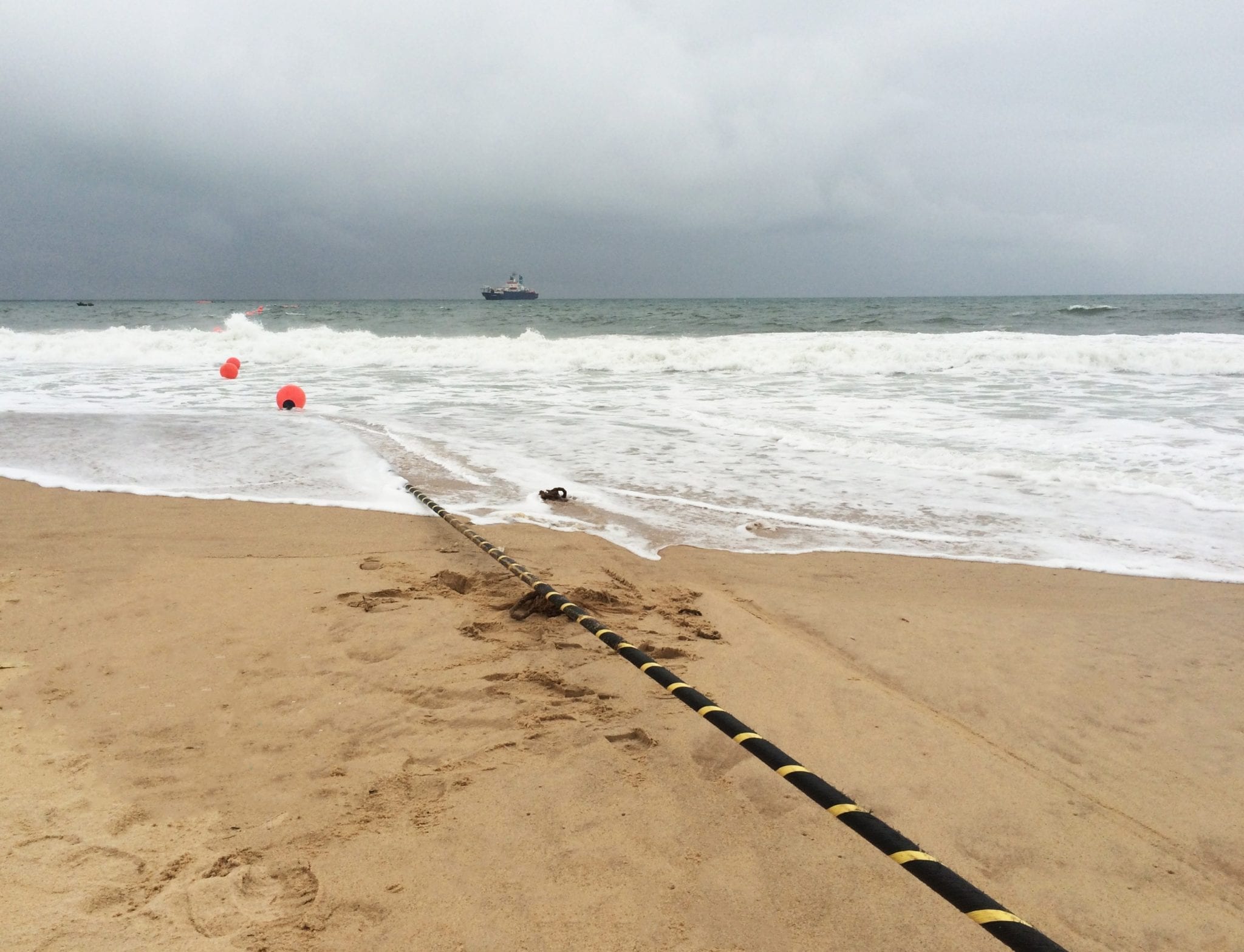
    Huawei Marine Networks has announced it has achieved another distance record over unrepeatered systems, achieving a transmission distance of 648.5km during a laboratory trial.

    During the trial in Beijing, Huawei used its self-developed enhanced raman amplifier (ERPC) and remote optical pump amplifier (ROPA) technology on a 100G channel over an ultra-low loss optical fiber, to improve pump optical power and performance.

    Huawei Marine used the same technology to set an unrepeatered distance record of 627km in April, but has now pushed this further using coding gain optimizations.

    The operator’s 100G transmission technology combines new technologies including polarization mode dispersion combined with single-carrier binary phase shift keying (PDM-BPSK) and third-generation soft decision technology.

    “Huawei Marine has achieved another breakthrough in unrepeatered system design which demonstrates our continuous commitment to investing in high-performance technology,” Huawei Marine VP of technology Zhang Shigui said.

    “When used commercially, this technology will broaden the range of unrepeatered system applications and create value for our customers.”

  • Telstra conducts Australia’s first live 5G trial

    Telstra conducts Australia’s first live 5G trial

    Australia’s largest operator by subscribers Telstra has teamed up with Ericsson to conduct the nation’s first live 5G trial.

    The trial in Melbourne used a combined 800MHz of spectrum, achieving aggregate speeds of more than 20Gbps in a real-world, outdoor environment.

    Telstra said the trial used 10 times more spectrum than the operator currently uses with its 4G service.

    Ericsson’s 5G radio prototype equipment was used for the demonstration, which also achieved an indicative latency of at least half of that seen in current 4G networks.

    In a blog post,Telstra group managing director for networks Mike Wright said the tests also served to demonstrate the accuracy and improved signal quality of beam steering technology.

    Beam steering involves antenna arrays tracking a user’s location and sending data directly to the device, instead of out in all directions.

    “But what made this trial really significant is we took the test bed out of the laboratory and into real world, outdoor conditions,” he said.

    “Australia’s environment, size, and population density is unique, and it means we need to consider different things to other countries. We’re even trying to understand how radio signals propagate in through gumtrees.”

  • McDonald’s Follows Yum Brands, Prepares China Exit

    McDonald’s Follows Yum Brands, Prepares China Exit

    McDonald’s is finalizing a sale of the right to operate its China and Hong Kong restaurants. Prompted by stagnating market share and an increasingly challenging operating environment, the move allows McDonald’s to keep a presence in China without the burden of ownership.

    The world’s biggest fast-food chain is considering final offers from three leading groups, believed to be U.S. private equity firm Carlyle Group and Chinese investment firm CITIC Group, U.S. private equity firm TPG Capital and Chinese retailer Wumart Stores, and a group led by Beijing Tourism Group and Chinese retail giant Sanpower Group, according to Reuters.

    With the sale, McDonald’s Corp. joins fast-food rival Yum Brands Inc. in making the decision to sell its China business. Yum, which owns China’s biggest food chain KFC, and McDonald’s are currently the No. 1 and No. 2 fast-food chains in China. Both arrived on the scene in the 1980s—KFC opened its first outlet in Beijing’s Tiananmen Square in 1987, and McDonald’s opened its first store a few years later in the southern city of Shenzhen.

    Their decision to abandon one of the world’s biggest fast-food markets marks a dramatic about-face for the two fast-food giants, once hailed as prime examples of how American companies can succeed in the communist country.

    But the companies diverge in their methods of exiting China.

    Yum chose to spin off Yum China as a separately listed company on the New York Stock Exchange. Yum China recently secured prominent Chinese investors Primavera Capital and Ant Financial Services Group as anchor investors ahead of the listing in November. Primavera was founded by the former head of Goldman Sachs Group Inc.’s Greater China business, and Ant is a subsidiary of internet giant Alibaba Group. Well-known anchor investors are common in Chinese IPOs, and their presence can help drum up interest from retail investors ahead of the listing.

    McDonald’s, meanwhile, chose a different path. Instead of selling the business altogether, McDonald’s is converting its corporate-owned outlets to the franchise model by selling a 20-year franchise operating agreement to run all of the stores to potential bidders. This ensures that McDonald’s will hold branding and product development rights over existing and new restaurants, similar to its relationship with franchisees in the United States.

    The 20-year operating license for McDonald’s Chinese outlets could fetch as much as $3 billion, analysts predict.

    Declining Market Share

    Both McDonald’s and Yum have lost their early luster and are facing declining market share in China.

    MDC_market

    China market share of McDonald’s and KFC. Data source: Euromonitor. (Epoch Times)

    Since 2010, Yum’s share of China’s fast-food market has declined from 39 percent to 23.9 percent in 2015. During the same period, McDonald’s market share dropped form 15.1 percent to 13.8 percent, according to market research firm Euromonitor.

    Yum has about 8,000 outlets in China, mostly consisting of KFCs and Pizza Huts, contributing to half of its global revenues and profit. McDonald’s has 2,200 locations in China. While both companies opened new locations last year, their market shares have dropped.

    Unfriendly Operating Environment

    Employees work at a McDonald's in in Beijing in 2007.  (FREDERIC J. BROWN/AFP/Getty Images)

    Employees work at a McDonald’s in Beijing in 2007.

    McDonald’s and Yum are two of the world’s most successful fast-food chains and have around 30 years of experience in China. So what’s causing the market share decline in recent years?

    The main challenge is shifting consumer taste. During McDonald’s and Yum’s early years in China, Western cuisine was scarce, and unlike in the United States where fast food is cheap and low-quality, McDonald’s hamburgers and KFC fried chicken were considered gourmet fare. Chinese consumers visited these restaurants during special occasions, and their prices were comparatively high.

    In recent years as median Chinese income has risen, consumers have also developed more selective tastes and are increasingly moving upmarket in their restaurant preferences. American fast-food brands now operate in the price segment of the casual-dining restaurants. On the lower end of the market, however, the fast-food segment is increasingly being occupied by a new wave of local competitors selling Chinese food, Japanese food, and fried chicken at lower prices than American fast food.

    Another significant hurdle facing McDonald’s is the Chinese Communist Party’s economic and competition policy, which in recent years has favored domestic businesses while marginalizing foreign competitors.

    In 2014, an undercover reporter for state mouthpiece CCTV reported that meat supplier Shanghai Husi Foods allegedly sold expired meats to several American restaurant brands, including McDonald’s, KFC, Papa John’s, and Burger King.

    Restaurants owned directly by foreign companies also face challenges in finding suitable real estate for new stores. Negotiations are often done face-to-face with local powerbrokers, and U.S. listed companies operating under the Foreign Corrupt Practices Act often cannot compete with local competitors.

    For McDonald’s and other foreign companies, outsourcing the operational aspect of running the business resolves most of these issues inherent in China. The same factors are also major drivers behind Wal-Mart’s sale of its Chinese e-commerce business Yihaodian to JD.com, and Hewlett-Packard’s sale of a majority stake of its Chinese networking business to local state-owned H3C Technologies.

    Given this backdrop, McDonald’s is wise to cede ownership of its Chinese stores to local partners. The move could bring stable income from royalties, higher growth potential, and better treatment than it would otherwise be able to manage on its own, while the company still enjoys prominent brand presence.

  • Sunway Malls Adopt New Strategy in Elevating Customer Service

    Sunway Malls Adopt New Strategy in Elevating Customer Service

    Malaysia’s mall industry, already faced with stiff competition is expected to intensify as another 27.28 mil sq ft of new retail space will be entering the market according to National Property Information Centre (Napic) data.

    Of the 27.28 mil sq ft supply, 16.2 mil sq ft is at various stages of construction while the remaining 11.08 mil sq ft is are being planned. This will add on to the 148.85 mil sq ft of existing retail space in the market and brings Malaysia’s total retail space supply to 178.13 mil sq ft.  

    The increase in retail space comes at a time when retailers are already hard pressed with slower retail sale growth and lower margin amid weak consumer sentiments.

    In the latest quarter results by Retail Group Malaysia (RGM), Q2 2016 registered a growth rate of 7.5% against the forecast of 9.9% – 24% lower than expected. RGM termed the results as ‘below market expectation’. In contrast, retail sales fell 4.4% in Q1 2016.

    In a bid to increase, sustain and retain footfall and sales, Sunway Malls re-strategise their human capital enhancement by recruiting ex-flight attendants into the customer service division to better serve its shoppers.

    While known for delivering quality service, the hiring of ex-flight attendants also allows Sunway Malls to leverage on the crew’s training and experience in safety and emergency handling which serves as an added advantage for group’s front-line service.

    The initiative has so far seen the recruitment of nine ex-flight attendants from a local carrier in both Sunway Pyramid and soon- to-be-opened Sunway Velocity Mall. Recruitment effort is also underway to place more ex-attendants in Sunway Putra Mall in Kuala Lumpur and Sunway Carnival Mall in Penang.

    “With increasing competition, it is imperative that the creation of good customer service experience in malls takes precedence as both a strategic differentiator and a loyalty tool in a saturated market,” says Kevin Tan, Chief Operating Officer of Sunway Malls.

    “From the moment a customer steps into the mall, we strive to provide world class service through our touching hearts philosophy to create a warm, welcoming and wholesome lifestyle experience. We value the different needs of each and every customer in spite of background, gender and age hence we are creating diversity in the Concierge so they can engage with the various shopper profiles we have and extend assistance every time it’s necessary,” he continues.

    The group’s effort in delivering good customer service was also acknowledged by Professor Philip Kotler, the Father of Modern Marketing when he awarded Sunway Pyarmid with My Branded Service Award in recognition of its outstanding customer service back in 2009.

    Its earlier customer service initiatives among others included carpark guiding system, powered wheelchairs, child distance monitors and auxiliary police force were known as the mall industry’s firsts.

    Although Sunway Malls is hiring ex-flight attendants as part of their new retail strategy, the brand still welcomes all who have interest in the service line.

    “Some of our best customer service employees are not from the airline industry but they have the passion and the willingness in serving customers and that’s the most important criteria of all,” says Kevin.

  • “20 -30% growth year on year in China”

    “20 -30% growth year on year in China”

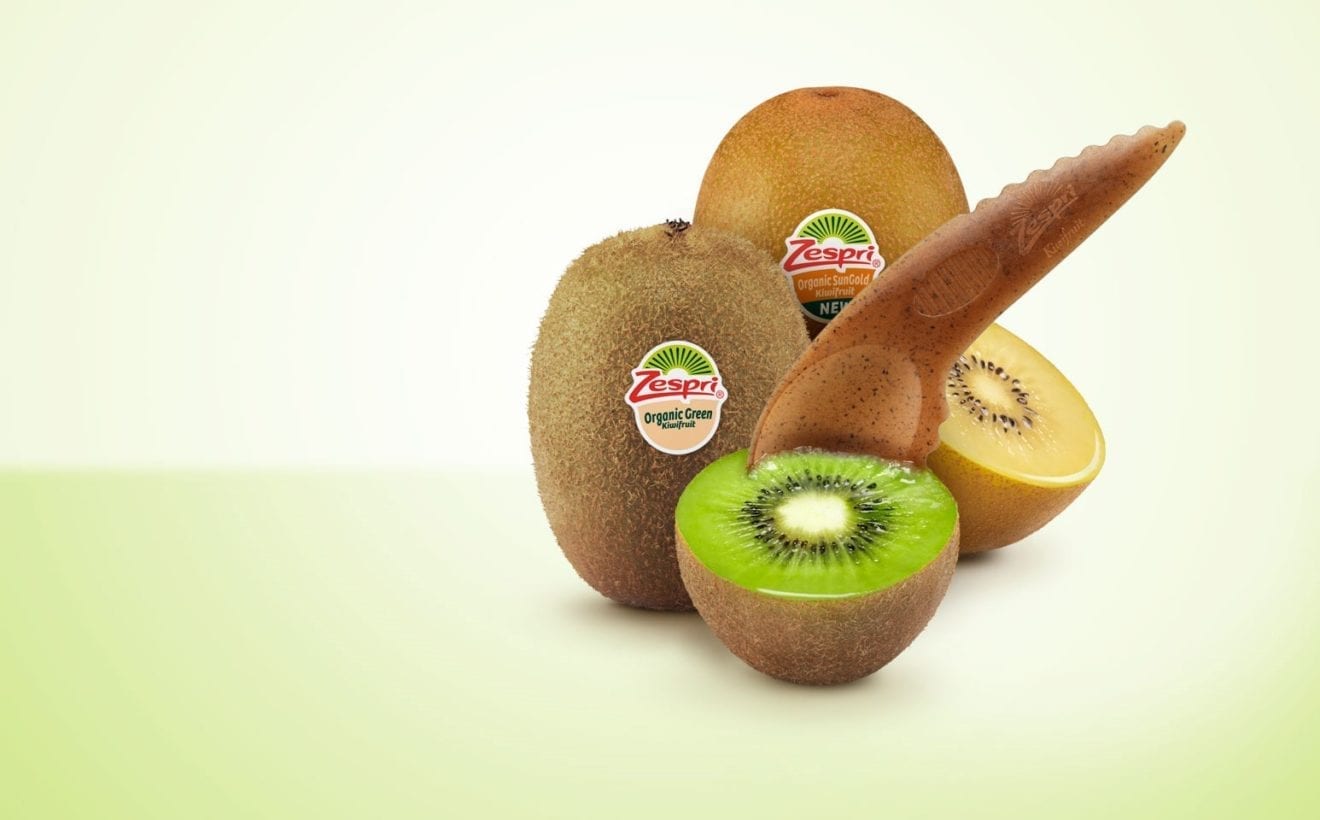
    As many companies are looking to Asia for the first time, some have been in these markets for a while and are strengthening ties within the region. Zespri is one of these companies and have made big in roads into Asia in recent years and are continuing to expand in current markets while exploring new ones.

    “We continue to see significant growth in China, with increases in volume of 20 to 30% year on year for several years now, there a good rise in the volumes of SunGold being sent there as well. But Japan, the cornerstone for New Zealand for many years, is showing growth as well which we expect to continue for the coming years,” explains Mr Simon Limmer, COO of Zespri.

    Besides Japan and China, which are similar in terms of volume, Limmer says that prospects are positive overall in SE Asia, “There are exciting opportunities in a handful of different markets such as South Korea, where we have recorded an amazing season this year. We are starting to see the benefit of the free trade agreement now that the playing field has been levelled with other countries such as Chile, who have had zero tariffs for a few years. Taiwan has also shown great growth.”

    Zespri are making further in roads into China with new relationships with Chinese importers, this week they announced a collaboration with Fruitday who will now become a direct retail customer, giving them the position of being the Zespri’s largest direct retail customer in China.

    Zespri is still a while away from actually growing any kiwifruit in China.

    “We are still involved in the preparation process,” acknowledges Limmer. “We are working with partners in China trying to raise the standard of domestic kiwifruit. This is also allowing us to build relationships from a scientific perspective in trying to understand the growing environment and finding the most suitable varieties. In short, not only do we need to be convinced that the quality is sufficient for the brand, but we also need to make sure that Chinese consumers who are already buying the imported product will be open to a ‘Made in China’ fruit.”

    Zespri has long been aware of the growing volumes and quality of domestic kiwifruit; “The branding is also becoming more sophisticated and for us this is both an opportunity and a threat,” explains Limmer. “We have the benefit of the counter seasonality of fruit out of New Zealand and we are no stranger to competition throughout the year where ever we are in the world.”

    Although red kiwis have been in trials for a few years, Zespri has not produced commercial volumes as yet. “We need to make sure we have all the attributes and characteristics right before we launch a new kiwi on the market – agronomically, yield, size, storage and cost of production for example. Reds are particularly susceptible to Psa and also have storage issues, but we clearly acknowledge and understand the opportunity for a red in the market.”

    Another challenge in the Chinese market has been protection of the intellectual property, as the image and reputation of the brand is strongly linked to the product’s quality. “There have been some developments in this regard in China and certainly willingness and motivation to shift, but it’s taking time,” admits Limmer. “Most importantly, the consumer needs to be educated on what’s genuine, giving them comfort with the knowledge that what they are buying has all the guarantees regarding quality or safety, something in which social media can play a decisive role.”

  • Chuseok sales weren’t as terrible as expected

    Chuseok sales weren’t as terrible as expected

    Going into last week’s Chuseok holidays, expectations were low in the retail sector due to a prolonged economic slowdown and a soon-to-be-implemented anti-graft law that will make expensive presents unlawful.

    Against all odds, however, four major department stores in Korea enjoyed growth in the sales of holiday gift sets. To skirt an anti-graft law known as the Kim Young-ran Act, which goes into effect Sept. 28 and bans the exchange of gifts costing more than 50,000 won among civil servants and even journalists, the stores offered lower-cost gift sets.

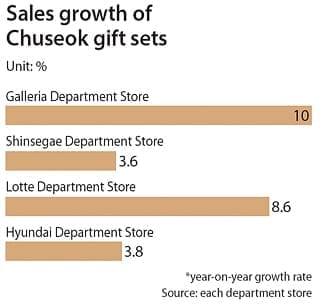
    Galleria Department Store said sales of holiday gift sets rose 10 percent between Aug. 26 and Sept. 14 compared to the same period last year.

    The proportion of products that were cheaper than 50,000 won was 26 percent – the highest share and 6 percentage points more than last year. Products that cost more than 300,000 won accounted for 14 percent, 1 percentage point lower than last year.

    Galleria Department Store expanded gift options that cost less than 50,000 won from last year’s 56 items to 478. As a result, revenue generated from 50,000-won-or-less products rose by 47 percent year-on-year.

    Lotte Department Store said sales of holiday gift sets between Aug. 26 and Sept. 13 rose 8.6 percent year-on-year. Sales of processed food products and daily necessities – which usually cost less than 50,000 won – rose by 16.5 percent. But sales of meat and gulbi (dried corvinas) – relatively expensive holiday gifts – only increased by 6.5 and 3.8 percent respectively.

    Hyundai Department Store said its holiday gift set sales between Aug. 29 and Sept. 14 rose by 3.8 percent.

    Shinsegae Department Store saw a sales increase of 3.6 percent in Chuseok gift sets sold between Aug. 26 and Sept. 13. Products or sets cheaper than 50,000 won saw an increase of 7.8 percent while more costly items only rose 2.9 percent.

    The Kim Young-ran Act was not the only factor in holiday spending.

    An unprecedented heat wave during the summer on top of a prolonged economic slowdown prompted many consumers to buy health supplements, which are cheaper than agricultural and marine products.

    The most popular product was red ginseng extracts or pills. Health-related products saw a sales surge of 26 percent year-on-year at branches of Galleria Department Store. The top seller in the health category was red ginseng extract, which is in the 80,000-won price range.

    Shinsegae, which is known for its extensive and affordable wine selection, said sales of wine rose the most – 40.5 percent – followed by health-related items, which rose by 20.8 percent year-on-year.

    Health-conscious products were the most popular at Lotte as well, enjoying a 28 percent year-on-year increase in sales.


  • Napa cabbage prices skyrocketed last month

    Napa cabbage prices skyrocketed last month

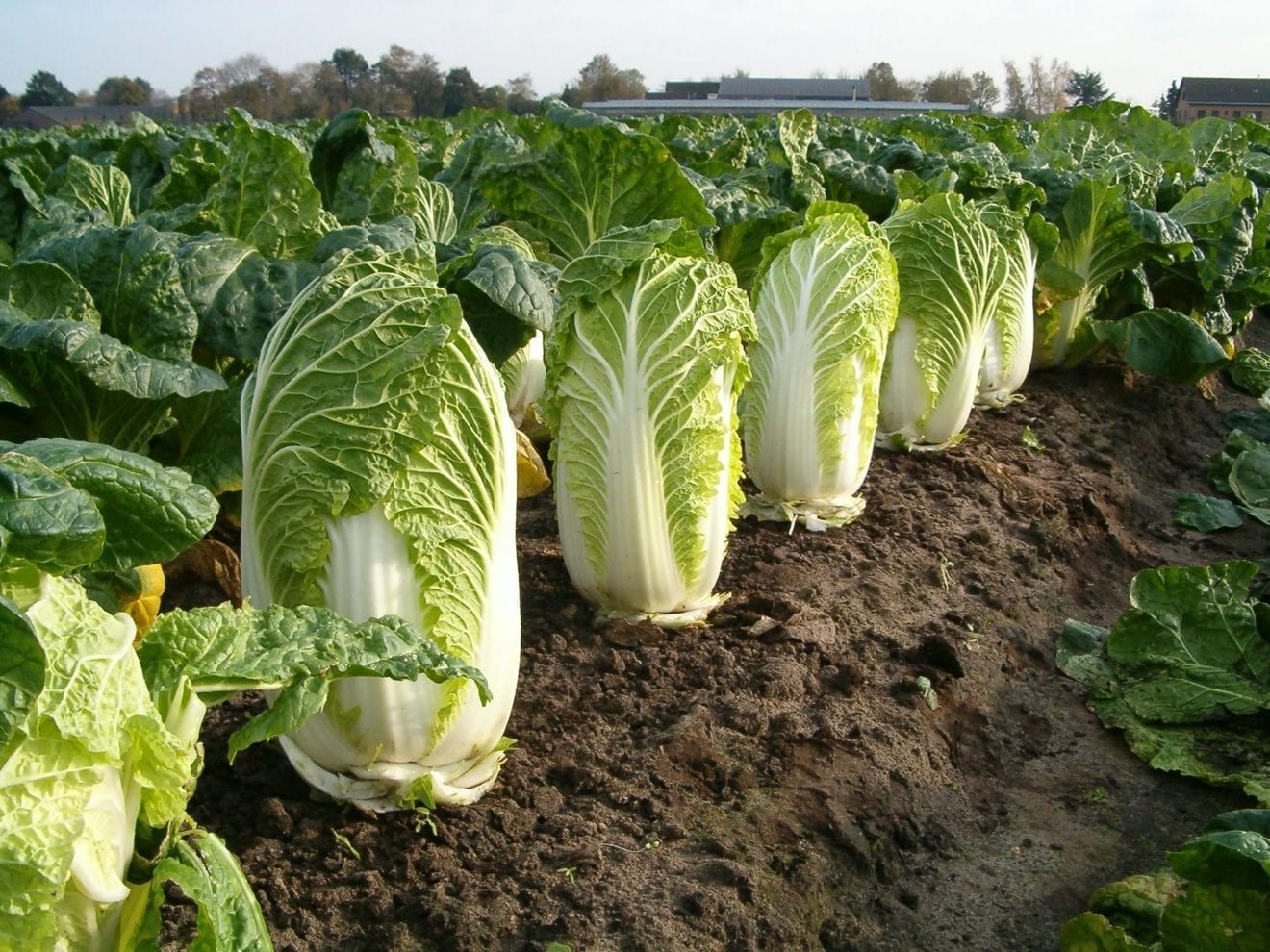
    The average price of napa cabbages at local retail stores rose significantly last month compared to the previous month as the supply likely dropped due to the abnormally hot weather that hit the country this summer.

    Prices of napa cabbage, a Korean staple and key vegetable for making kimchi, rose 63.7 percent month-on-month to a record 5,303 won ($4.73) a head, the Korea Consumer Agency (KCA) said Monday. The price of 1.5 kilograms (3.3 pounds) of white radishes rose 29.2 percent to 2,279 won and 1.5 kilograms of onions rose 5.3 percent to 3,217 won.

    “We don’t know the exact reason for the rise in some vegetable prices, but we believe that the supply in general dropped due to the high temperature and drought,” said KCA researcher Kim Eun-ji.

    Additionally, a recent report by the Bank of Korea attributed the long-term rise in cabbage prices to Chinese imports of kimchi.

    Samgyeopsal, or pork belly, one of the most popular meats among Koreans, was 11.2 percent cheaper at 2,005 won per 100 grams, while beef prices rose 3.8 percent to 8,601 won. The fall in pork prices is mainly due to the base effect from June, when prices rose 22.2 percent month on month, ahead of the summer vacation season in Korea.

    The KCA analyzed the price of 402 major products in 373 stores across the country, and the agency found that the price varied by types of stores.

    In fact, the average price of napa cabbage sold at corporate run retail stores was the highest at 6,965 won, and was lowest at large discount chains at 3,702 won.

    Onion prices had a 77.2 percent gap by store type, KCA said. The price of 1.5 kilograms of onions was 2,429 won at traditional markets and 4,303 won at department stores.

    Beef, napa cabbages, radishes and onions were some of the products that were cheaper at large discount stores and traditional markets in July.

    Meanwhile, the year-on-year growth rate for napa cabbage was 84.5 percent, the highest among major products sold in retail stores and traditional markets. It was followed by beef (25.5 percent) and radishes (15.6 percent). The price of pork, on the other hand, fell 14.2 percent year on year, and onion prices dropped 13.2 percent during the same period.

    “The price varies by the store types and the government will provide the retail prices online [www.price.go.kr] so that people can research the price and promotion events ahead of their shopping,” said Kim at the KCA.


  • China’s H3C launches SDN suite

    China’s H3C launches SDN suite

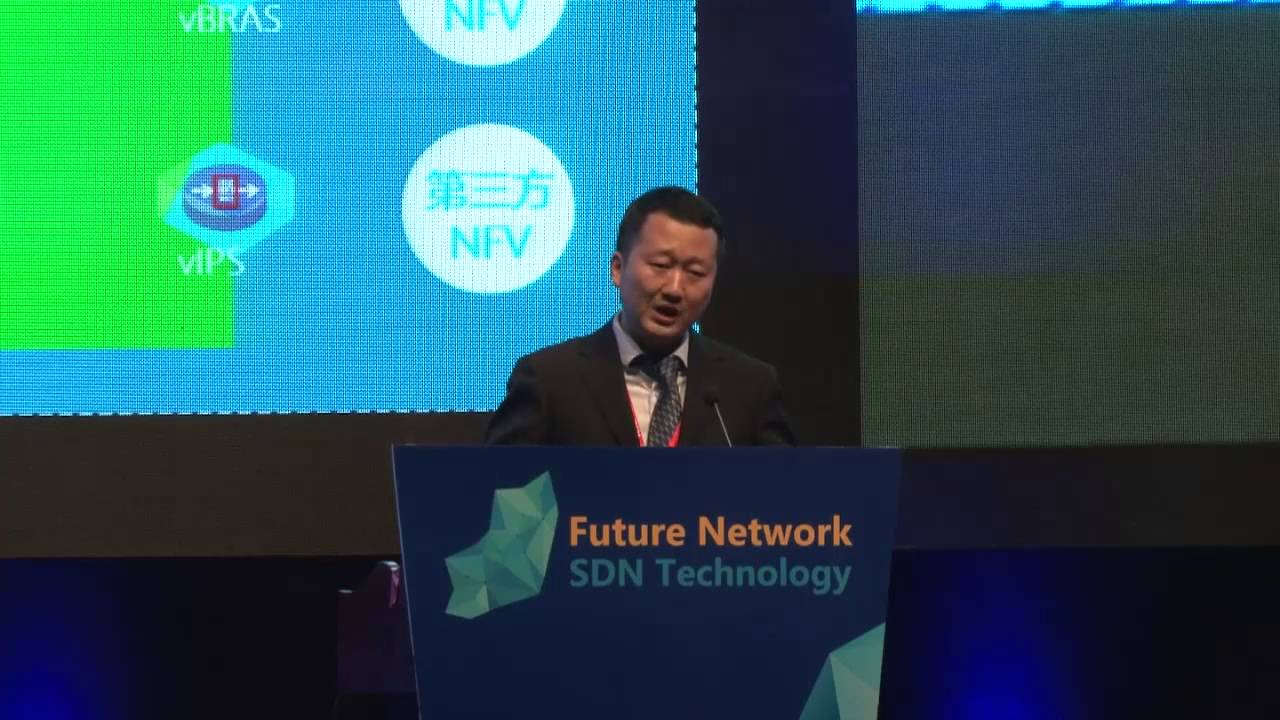
    H3C has introduced a series of SDN software and hardware products to help enterprises in Hong Kong and China take full advantage of private or hybrid clouds.

    H3C Hong Kong product director Joseph Lee warned that many Hong Kong companies may not have fully advanced the potential of cloud services due to a lack of scalability, agility and flexibility in their networking resources.

    “SDN and NFV offer a solution to this cloud challenge. They contribute to a simplified network and make multi-platforms within an enterprise network easy to manage centrally,” Lee said.

    He said SDN and NFV are critical components for private clouds and implementing genuine cloud networking infrastructures.

    “H3C is helping businesses in Hong Kong – especially in the public sector, institutes of higher education, service providers and large enterprises – to establish efficient and effective private clouds with our comprehensive end-to-end SDN and NFV solutions.”

    H3C’s new SDN solutions include an SDN controller as well as physical and virtual switches. The technology supports on-demand provisioning of network services including bandwidth allocation, routing and security capabilities.

    The offerings support native integration with OpenStack cloud platforms and an API for programming integration with third party cloud and management platforms.

    Data from the Hong Kong Government Census and Statistics Department show that as of last year around 159,268 businesses were using cloud services – nearly half of Hong Kong’s total business sector.