Tag: asia

  • Coach Tmall flagship abandoned

    Coach Tmall flagship abandoned

    The official Coach Tmall flagship shop has been abandoned.

    Luxury bag brand Coach Inc says it will replace its shop on Alibaba Group Holding’s business-to-consumer sales site by selling directly through its own website and on its WeChat account, the social-media app run by Alibaba rival Tencent Holdings. Coach has offered coupons and launched a media campaign on WeChat.

    A Coach spokeswoman says the company wants to consolidate resources and will continue to look for innovative ways to leverage digital and social platforms.

    Alibaba says Coach products are still available on TMall from other merchants.

    Selling shoes, purses and accessories, Coach was one of the first US luxury brands to launch an official store on the TMall. It started with a temporary pop-up store from December 2011 to January 2012, opening a full store in 2015.

    Early this month, nearly a dozen trade groups wrote to Alibaba complaining that it was not doing enough to combat counterfeits. And the loss of Coach comes as Alibaba faces added scrutiny from a US trade agency as to whether it should be added to a list of marketplaces that are known for selling counterfeits.
    Alibaba’s Taobao consumer-to-consumer marketplace was on the list years ago, but was removed in 2012.

    Meanwhile, LVMH Moët Hennessy Louis Vuitton SE’s Guerlain has just opened a flagship store on TMall, and MakeUp Forever and Sephora, two other brands under the LVMH umbrella, also have TMall stores. Also, the cosmetics unit of Salvatore Ferragamo will launch its store later this month.
  • Huawei unveils newest security solution for SDN

    Huawei unveils newest security solution for SDN

    Huawei has unveiled its latest SDN security solution which promises to “guarantees the security of enterprise tenants’ applications hosted on the cloud”.

    Based on the core component Agile Controller, the solution virtualizes hardware security devices and offers a variety of services for online subscription.

    The automated security deployment capability also greatly improves cloud service protection efficiency.

    While more and more enterprises are using cloud services to reduce costs and improve flexibility, enterprises seldom consider security before this change. As storage, computing, and network resources all become virtualized, manual configuration and adjustment of security resources can no longer adapt to quick service development in a flexible and cost effective way.

    Moreover, cloud-based service deployment eliminates network security boundaries. Virtual networks, especially the virtual machine (VM) layer, urgently need effective security protection.

    As common threats have evolved to advanced persistent threats (APTs) that can hide for a longer period of time and are more difficult to detect, traditional APT defense methods also need to adapt to software-defined network (SDN)environments.

    “As more services are migrating to the cloud, the boundary of security threats becomes blurred,” said Liu Lizhu, GM of Huawei Enterprise Network Product Line’s Security Gateway Domain.

    “Data center services are facing more severe security risks after SDN technology is used, as such no companies, regions, or organizations are free from such risks. Huawei Software-defined Security Solution will guarantee innovative, scalable, and efficient cloud services for tenants and help enterprises accelerate business transformation and upgrade.”

  • Huawei, ZTE launch pre-5G network components

    Huawei, ZTE launch pre-5G network components

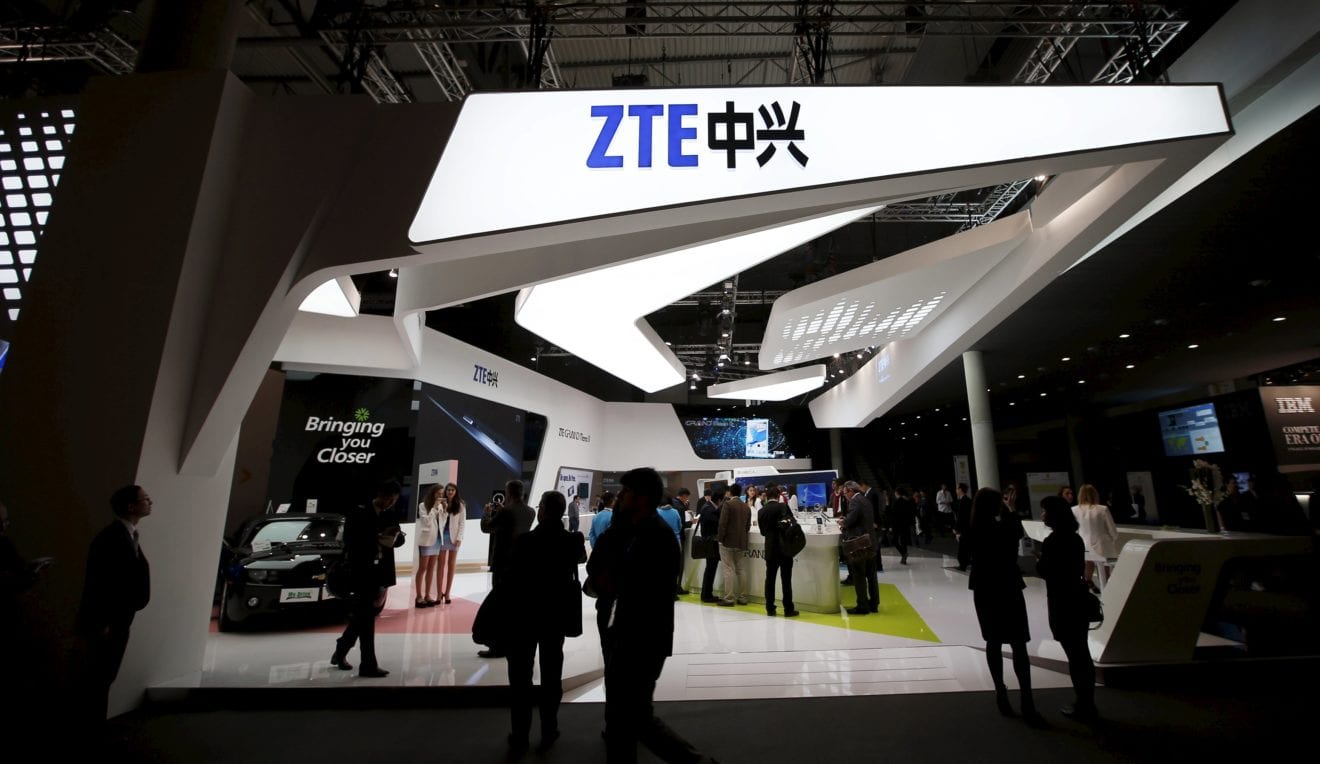
    Huawei and ZTE have both announced the launch of pre-5G products to help operators prepare for the new technology.

    ZTE released its new Pre5G MIMO 2.0 product at the China International Information and Communication Exhibition in Beijing yesterday.

    The new product is aimed at the high-end market to help operators in developed countries meet the challenges of surging traffic demand and limited spectrum resources, by improving single-station spectral efficiency.

    ZTE announced it has started pre-5G network deployment for more than 20 operators in China and other counties.

    Huawei meanwhile unveiled what it said is the industry’s first 5G-oriented mobile edge computing (MEC) offering, MEC@CloudEdge.

    The vendor said the technology is designed to equip today’s mobile networks to meet the requirements of extremely low latency, content localization and ultra-high bandwidth that will need to be met in the 5G era.

    It relies on a cloud-based network architecture to optimize the user experience during activities such as augmented and virtual reality and ultra-HD video streaming

    “MEC@CloudEdge is the first 5G-oriented MEC solution emanating from our R&D labs. It uses new technologies that will enable operators to deploy 5G-oriented networks for sustainable development and to achieve best user experience and faster service innovation,” Huawei president of cloud packet product line Dai Jisheng said.

  • GM Korea to sell 10 Chevrolet Aveo compacts online

    GM Korea to sell 10 Chevrolet Aveo compacts online

    GM Korea said on Sept. 19 it will sell 10 units of its new Chevrolet Aveo compacts via Auction, a local online shopping site affiliated with eBay Korea, on Sept. 26.

    This is the first time in Korea that a carmaker has decided to sell vehicles online.

    Even though the unprecedented online car sale seems more like a marketing activity, industry watchers say other carmakers could follow suit considering consumer reaction, especially among youngsters who prefer online shopping rather than visiting physical shops.

    “Through the collaboration with Auction, we hope to appeal to female drivers in their 30s and 40s, the new Aveo’s target customers,” a GM Korea official said.

    In August, Ticket Monster, a daily-deal site, stirred controversy after it sold 20 Jaguar XF sedans via its website without consulting the carmaker’s UK headquarters. Jaguar Land Rover Korea at the time hinted at a legal action for damage to its brand value and creating confusion.

    The retail price of the Aveo is 17.79 million won (US$16,000). GM Korea plans to offer diverse benefits to those who purchase the car online, including online cash points worth 5 million won.


  • Philippines raises 100 bln pesos through retail T-bond sale

    Philippines raises 100 bln pesos through retail T-bond sale

    The Philippines raised 100 billion pesos ($2.1 billion) from the sale of retail treasury bonds, the government said on Monday.

    The nine-day public offer for 3.5 percent 2026 bonds closed on Sept. 16.

    Proceeds from the sale will be used to finance the government’s plan to increase infrastructure spending.

    ($1 = 47.9100 Philippine pesos)


  • Retail sector jobless rate rises to 5.4pc

    Retail sector jobless rate rises to 5.4pc

    Retail sector jobless rate rises to 5.4pc

    The Secretary for Labour and Welfare, Matthew Cheung Kin-chung, said today that on a year-on-year comparison, Hong Kong’s unemployment rate was 0.3 percentage point higher, with employment dipping for the 16th consecutive period.

    He was responding to the June to August period when both the seasonally adjusted unemployment rate and the underemployment rate was unchanged at 3.4 percent and 1.4 percent.

    Cheung said the retail sector was particularly hard hit by the fall in tourist spending and lackluster local consumption, with its unemployment rate up by 0.9 percentage point over a year earlier to 5.4 percent.

  • China eyes Vietnam’s hundred-billion dollar retail market

    China eyes Vietnam’s hundred-billion dollar retail market

    Miniso has been mentioned repeatedly in local newspapers. The retailer has announced its official presence in Vietnam through a franchise contract signed with Le Bao Minh Group.

    Le Bao Minh’s representative said it plans to open 13 shops in large cities in 2016. Miniso’s official website shows that the company was established by a Japanese named Miyake Junya and a conglomerate from China.

    In April, Alibaba, China’s biggest e-commerce group, spent $1 billion to obtain the right to control Lazada, a well-known e-commerce website.

    Alibaba has shown strong determination to expand its business in SE Asia.

    According to the US Securities And Exchange Commission, Alibaba has outstripped Walmart to become the world’s largest retailer. Its online transaction value accounts for 10 percent of retail transactions in China.Analysts commented that with the investment from Alibaba, Lazada Vietnam would have more opportunities to develop because it would be able to spend more money on advert campaigns and increase goods supply from China.

    While foreign retailers flock to Vietnam, Vietnamese retailers are not yet ready for competition. Some retail chains have been either shut down or sold to foreign partners. There are only several Vietnamese brands still existing, such as Vinmart, Co-op Food and Satra Foods.

    Meanwhile, Vietnamese e-commerce firms, though having been operational for 10 years, still cannot hold the upper hand over Lazada.

    According to Vu Vinh Phu, chair of the Hanoi Supermarket Association, the Vietnamese consumer market is attractive to foreign retailers, as retail turnover was $100 billion last year.

    Vietnam has a large population (over 91 million people), of which 60 percent are young consumers, per capita income at $1,890 in 2015, fast pace of urbanization, and growing middle class.

    Phu noted that retailers now pay special attention to the rural market which is large and unexploited. Online sales have become a growing tendency, which gives goods suppliers opportunities to approach consumers more easily.

    Chinese goods have been mostly penetrating the Vietnamese market across border gates. However, they now have to compete fiercely with Thai and Japanese goods.

    Le Phung Hao, chair of the Vietnam Marketing Association, anticipated that more Chinese goods would be brought to Vietnam thanks to the presence of retail groups from China.

    Instead of dealing with low-quality and smuggled goods flown from remote areas, Vietnam will have to compete with Chinese goods available at luxury shops in large cities.


  • LeCloud, Cisco team up to secure OTT video services

    LeCloud, Cisco team up to secure OTT video services

    Cisco is teaming up with LeCloud Computing to drive the development of Digital Rights Management (DRM) through its leading VideoGuard Everywhere DRM solution.

    The two companies have built a DRM cloud platform that makes cloud services global. It is compatible with multiple DRM protocols and able to provide one-stop solutions.

    With this, the two companies are working together to promote the disruptive transformation of DRM business models and innovation in the global video cloud service ecosystem.

    Cisco VideoGuard Everywhere, an end-to-end video service protection and monetization solution, enabled LeCloud to comply with content protection requirements from English Premier League (EPL) and to meet its aggressive deadline for service launch following a short phase of only eight weeks from project inception to launch, as well as to secure EPL content distributed through its LeSports OTT service.

    VideoGuard Everywhere, which was deployed on LeCloud’s cloud infrastructure and integrated with its cloud-based video services, is also enabling LeCloud’s global efforts to roll out a Video-as-a-Service (VaaS) offering.

    The DRM cloud solution from Cisco and LeCloud helps to optimize the operating cost of business clients and simplify complex IT infrastructure and operation. During the broadcast of this year’s Premier League games in Hong Kong, the excellent performance of the DRM cloud platform was already highly recognized by the IP holders of the Premier League.

  • Ericsson, Google partner on pay TV

    Ericsson, Google partner on pay TV

    Ericsson and Google are partnering to extend the reach of the Ericsson cloud-based MediaFirst TV Platform into the Android TV ecosystem, Google’s operating system for the set-top-box.

    Ericsson MediaFirst is a software-defined, media-optimized end-to-end portfolio suite for the creation, preparation, management and delivery of next generation pay-TV to any screen with an immersive TV viewing experience.

    The integration of Ericsson MediaFirst TV Platform with Android TV will provide an additional pathway to extend MediaFirst cloud-based TV services, including 4K-UHD live TV channels, video-on-demand, catch-up TV and cloud DVR to an even wider subscriber base.

    According to Ericsson, the partnership with Google will give operators the opportunity to benefit from Android TV’s growing presence on connected TV operating systems, without the need for additional hardware costs.

    Operators will be able to partner with manufacturers of Android TV devices to deliver new hardware-based functionality as well as niche over-the-top programming, or deploy additional applications within the Android operating system.

    Additionally, the collaboration will enable Ericsson to deliver multiple, flexible, pre-integrated set-top box solutions that support hybrid configurations for satellite, cable, terrestrial, and fixed and mobile broadband TV.

    “By expanding our range of set-top box options, we are giving Ericsson MediaFirst TV customers the opportunity to deliver cutting-edge, large scale video services and respond to the surge in adoption of smart devices, broadband connectivity and cloud-based delivery,” said Shiva Patibanda, head of business line TV platforms at Ericsson.

  • ZTE launches Smart DVB-T2 Hybrid STB

    ZTE launches Smart DVB-T2 Hybrid STB

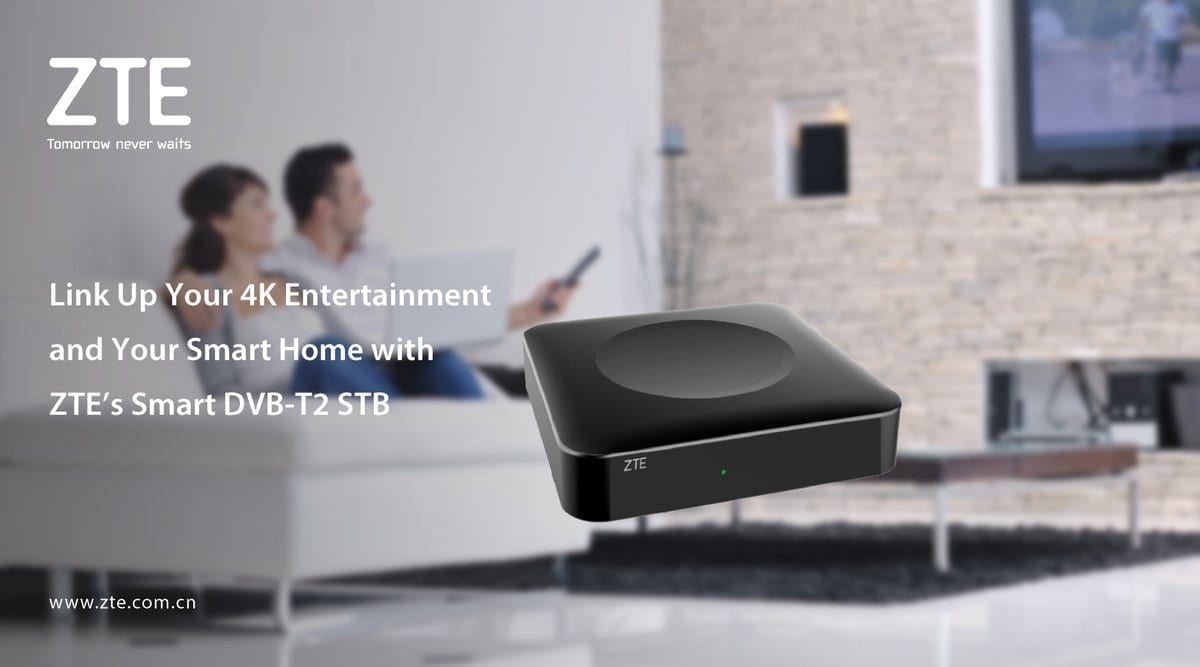
    ZTE has unveiled its ZXV10 B820T2-A14 set top box (STB) to deliver an enhanced viewing experience to homes around the world.

    Integrating 4K ultra high definition (UHD) and over the top (OTT) services, the set top box has received favorable praise and recognition from the industry to date.

    The B820T2-A14 is an advanced STB, which integrates an industry-leading super 4-core central processing unit (CPU) and 5-core graphics processing unit (GPU) to realize UHD 4K (3840×2160@30 frames per second 10-Bit color) and provide users with an excellent overall video experience.

    The STB uses Google’s Android TV system and JVM in order to achieve compatibility and interoperability with other Android applications, which also integrate with ZTE’s Smart Home, such as multi-screen, HD video calls, family album, home IoT network and voice assistant.

    ZTE’s B820T2-A14 STB adopts Amlogic system on a chip (SoC) with a 64 bit CPU architecture, 16GB EMMC Flash, 2GB DDR3, which guarantees that the system and applications run smoothly, provides 802.11AC 2*2 Wi-Fi wireless and RJ-45,10/100M wire access and supports Bluetooth 4.1, which enables Bluetooth remote and D-PAD connection.

    ZTE said that if traditional digital video broadcast (DVB) service providers (SPs) want keep pace with the growth of 4K and OTT services, 4K DVB-T2 hybrid STBs are a strong choice for them, as they can significantly reduce the cost of the operator’s deployment.

  • Amdocs enhances personalized mobile video experiences

    Amdocs enhances personalized mobile video experiences

    Amdocs has made available new capabilities within the Amdocs Omni-Channel Experience solution to allow mobile service providers to connect to content and application providers (CAPs) to deliver new and creative digital services to users.

    Via integration with Google’s publicly available mobile data plan application program interface (API), the Amdocs Omni-Channel Experience solution has been initially deployed to interoperate with Google’s YouTube app, and in the future may be able to be deployed to support other Google services and CAPs who are using the same API.

    The interoperability of the Amdocs solution with YouTube’s mobile app allows improved in-app data transparency and data transactions. YouTube will be able to offer customers the ability to view YouTube videos offline at reduced rates during off-peak hours, thereby allowing service providers to shift traffic from peak hours to times when their network is underused, providing dynamic pricing opportunities and ensuring better viewing quality.

    Data balance and rate information will be provided by the Amdocs Omni-Channel Experience solution, enabling service providers to present this information in a consistent way across different customer touch points, including YouTube’s mobile app.

    “Working together with Google, we are offering service providers innovative ways to cater to the digital lifestyle of today’s Generation C consumers and power their businesses with new, digitally-enabled capabilities, building customer trust through data transparency and increasing business value through network traffic optimization,” said Chris Williams, head of global marketing at Amdocs.

  • Keppel Land China, Alpha divest stakes in Sparkle Bright for $516.9m

    Keppel Land China, Alpha divest stakes in Sparkle Bright for $516.9m

    Keppel Land China and Alpha signed an agreement with Star Champ Development Ltd, a wholly-owned subsidiary of the Chongbang Group (Chongbang), for the transaction.

    Sparkle Bright owns retail mall Life Hub @Jinqiao (Life Hub), a mixed-use development in Shanghai, China. Chongbang owns the other 20 per cent stake in the development.

    Keppel Land China holds a 42.5 per cent interest, while Alpha Asia Macro Trends Fund II and a co-investor hold the remaining 57.5 per cent in the 80 per cent stake in Sparkle Bright.

    Keppel Land China and Alpha are wholly-owned subsidiaries of Keppel Land Limited and Keppel Capital Holdings, respectively.

    Life Hub features about 114,730 sm gross floor area of retail shops spread over 10 low-rise retail buildings as well as a 10-storey office tower with a retail podium. It has been one of the popular attractions in Shanghai’s Pudong District since 2009.

    The retail mall is currently 97 per cent leased while the office tower is fully occupied.

    The divestment is expected to be completed by the end of September 2016. The Group expects to recognise a gain of approximately S$73 million from the divestment.

    Keppel Land CEO Ang Wee Gee said the divestment is in line with Keppel Land’s strategy to continually recycle assets to seek higher returns.

    “Keppel Land China’s collaboration with Alpha reflects how different business units are working closely together to harness the collective strengths of the Keppel Group,” Gee said.

    Since the acquisition of the property in 2013, Keppel Land China and Alpha have been working with the mall operator to continuously enhance the tenant mix and shopping experience.

    Christina Tan, CEO of Keppel Capital and managing director of Alpha, disclosed they have been able to realise an internal rate of return of over 20 per cent on the sale of the development.

  • Mobiles, internet vital to refugees’ security

    Mobiles, internet vital to refugees’ security

    Access to a mobile phone and the internet are as vital as food, water, or shelter to refugees and critical to maintaining their safety and security, according to UN research.

    A study conducted by the United Nations High Commissioner for Refugees (UNHCR) and Accenture also showed that refugees see a connected device as a lifeline and a critical tool for self-empowerment.

    The report, “Connecting refugees: How internet and mobile connectivity can improve refugee well-being and transform humanitarian action,” is based on research undertaken in 44 countries on four continents.

    “In the world we live in today, internet connectivity and smartphones can become a lifeline for refugees, providing an essential means for them to give and receive vital information, communicate with separated family members, gain access to essential services, and reconnect to the local, national and global communities around them,” said Filippo Grandi, United Nations High Commissioner for Refugees.

    “Most importantly, connectivity can help broaden the opportunities for refugees to improve their own lives and pursue a vision of a future that would otherwise be denied to them.”

    Affordability, however, is often a barrier to connectivity. Refugees living in urban areas tend to have similar access to mobile networks as other urban populations, but for refugees in rural locations the picture is very different, with only one in six refugees located in areas with 3G access, and one in five rural refugees having no mobile coverage at all – significantly lower than for the population at large.

    This effectively prevents many refugees from participating in the cultural, educational, and economic activity that connectivity affords.

    The report recommends additional investments in three main areas, which together form the basis of a new UNHCR Global Strategy for Connectivity for Refugees – increasing the availability of mobile networks, improving affordability, and providing access to training, digital content, and services.

    The report likewise identifies a number of strategic interventions to help ensure connectivity, ranging from partnering with Mobile Network Operators (MNOs) and other technology/communications companies to improve infrastructure, making targeted investments in infrastructure, and enabling an environment and system for digital service delivery.

    “Especially critical to this effort will be the engagement of the private sector, especially technology companies, and mobile network operators,” said Dan London, group chief executive of Accenture’s Health & Public Service business.

  • Telstra expands professional media portfolio

    Telstra expands professional media portfolio

    Telstra has unveiled its new Global Media Network, a professional media contribution solution which enables broadcasters and content developers to take their content global.

    Custom-built for the media industry, the Telstra Global Media Network promises simple and efficient delivery of live and file-based video content by combining Telstra’s world class network of global submarine cables, satellite stations, and broadcast operations into one solution.

    Trevor Boal, head of Telstra Broadcast Services, said that by using the Telstra Global Media Network customers can quickly deliver content across the world – whether it’s a broadcaster wanting to source a time critical sports event or content producers that need to deliver a television program between production facilities.

    “The rapid growth of video on-demand consumption, particularly in Asia, has triggered a surge in demand for content with the number of unique channels estimated to reach nearly 30,000 globally by 2023, a more than 400% increase from 2013,” said Boal.

    “With the Telstra Global Media Network customers can easily book services online and choose the level of support they need from self-service to dedicated 24/7 monitoring provided by our dedicated Broadcast Operations Centers in Sydney and master control rooms in Hong Kong, London, New York and Los Angeles,” added Boal.

    The Global Media Network is built on Telstra’s global infrastructure, which combines its high capacity submarine fiber cable network, with access to four teleports and over 40 satellites covering strategic media hubs across Asia, Europe, the United States and Australia.

  • The iPhone 7 hits stores, some models are already sold out

    The iPhone 7 hits stores, some models are already sold out

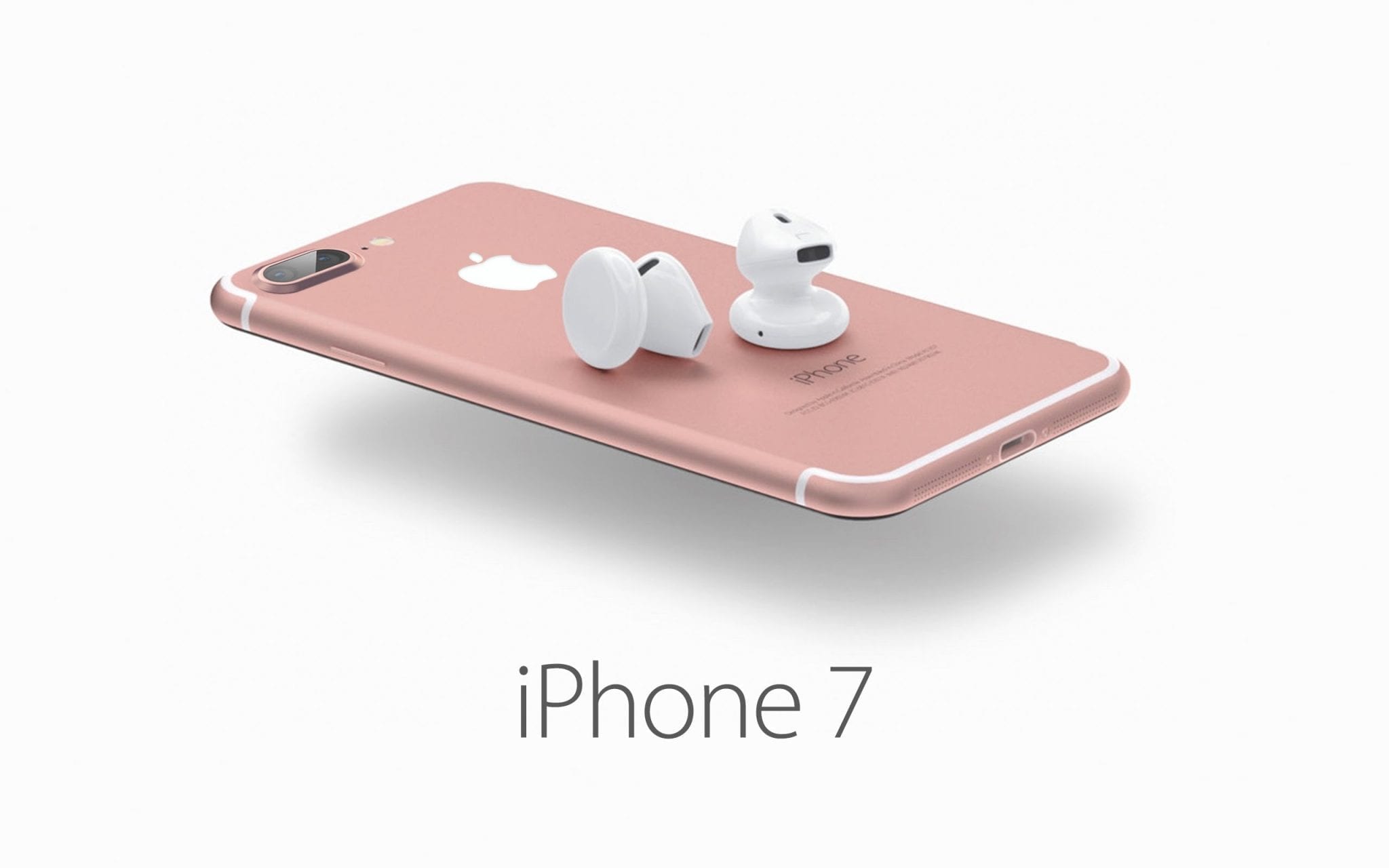
    Starting bright and early on Friday, September 16, you can get your hands on a brand new iPhone 7 or iPhone 7 Plus.

    Apple fans are finally laying their hands on the brand new iPhone 7 and iPhone 7 Plus.

    Eager customers joined long lines in cities like Sydney, Hong Kong, London, New York, Boston and San Francisco on Friday as the new models went on sale, more than a week after they were unveiled.

    Apple is releasing the phones, which are water resistant and feature beefed-up cameras, in more than 25 countries around the world. But people who haven’t reserved one in advance won’t be able to be too picky about the color — or get the larger model. Apple said earlier this week that the iPhone 7 Plus is completely out of stock online.

    “During the online pre-order period, initial quantities of iPhone 7 Plus in all finishes and iPhone 7 in jet black sold out and will not be available for walk-in customers,” the company said in a statement.

    However, some consumers who thought carriers might have the larger model in stock were disappointed as the day progressed.

    “The iPhone 7 Plus is not available in stores this morning, so customers who wish to get iPhone 7 Plus should go [online] to place an order,” a Verizon spokeswoman said.

    Meanwhile, T-Mobile said its stores had “limited inventory at launch,” with shipping dates as far away as the end of November for black iPhone 7 Plus devices.

    Your best bet of finding an iPhone 7 Plus may be directly through Sprint. A spokesperson said “most of our retail stores have [the iPhone 7 Plus] going into [today].”

    An AT&T spokesperson has not yet responded to a request for comment.

    Many customers who couldn’t get a device aired their complaints on Twitter.

    If you’re not in a rush and don’t fancy spending your morning waiting on a sidewalk, you can order an iPhone 7 or 7 Plus online through Apple or a number of retailers.

    According to Apple’s website, the jet black version of the iPhone 7 Plus won’t ship until November in the U.S. All other colors, including matte black, will ship in two to three weeks if ordered online directly from Apple. Those wait times could change.

    The 4.7-inch iPhone 7 starts at $649 and the 5.5-inch iPhone 7 Plus starts at $769.

    Outside an Apple Store in Hong Kong, sports coach Kala Singh said he’d reserved his matte black iPhone 7 a week ago. “I always upgrade my phone when they change the number,” he said.

    Singh opted not to go for a jet black version because he said he’d heard it’s easy to get finger smudges on them.

    But at the same store, Tsang Yan-yee said she was “a little bit upset” that she’d had to settle for a rose gold iPhone 7 instead of a jet black one. She also said she was disappointed with Apple’s controversial decision to remove the phone’s headphone jack.