Tag: asia

  • Burberry posts disappointing second-half sales

    Burberry posts disappointing second-half sales

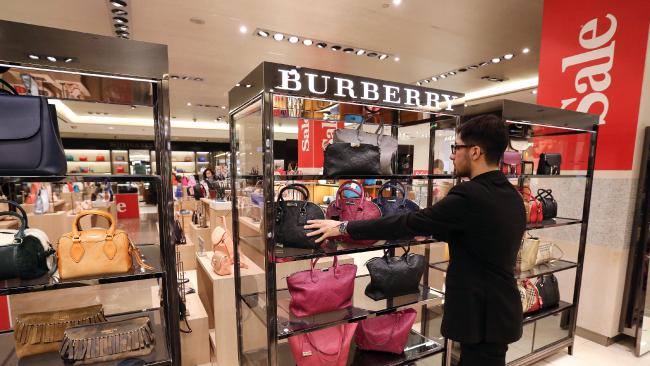
    Burberry posted disappointing fiscal second-half sales and warned on profit for the current fiscal year, sending its shares lower and highlighting the pressure on chief executive Christopher Bailey to turn around the British luxury retailer’s performance.

    Burberry reported a 2 per cent decline in comparable sales, a closely watched figure that excludes store closings and new store openings, that missed analyst estimates. Results were hurt by a 5 per cent decline in its fourth quarter ended March 31 amid a poor performance in Hong Kong, the US, Europe and Britain.

    Shares fell as much as 7 per cent before retracing some of the loss to close nearly 70 pence lower at 1275 pence in London.

    “Sales look to have been under pressure in all areas,” said Liberum retail analyst Tom Gadsby.

    Burberry isn’t alone in struggling against headwinds in global luxury. LVMH Moet Hennessy Louis Vuitton earlier this week reported first-quarter sales rose 4 per cent, below what analysts were expecting, as the company grappled with sluggishness in France following the Paris terror attacks.

    Mr Bailey took Burberry’s helm in May 2014, shortly before currency gyrations and political unrest hammered sales in greater China, a typically high-margin region for the company.

    Mainland China is now bouncing back, but sales have stayed weak in Hong Kong — where Burberry has 14 full-scale stores and a number of concessions — in the wake of tighter visa policies for residents in nearby Shenzhen, previously frequent visitors to Hong Kong.

    Mr Bailey has moved to renegotiate rents and reduce store space in Hong Kong, along with tweaking marketing and product assortments to better appeal to local shoppers. Sales in Hong Kong nevertheless fell more than 20 per cent in the fourth quarter.

    Beyond Asia, Thursday’s results showed broad-based weakness, indicating that Mr Bailey is struggling on a number of fronts.

    The US, the world’s largest luxury market, has been particularly difficult for Burberry. The company’s long-term push to burnish its brand there hasn’t yet gained enough traction.

    “We are focused on elevating our brand in the US longer-term,” said chief financial officer Carol Fairweather, describing choppy demand from US shoppers as “perplexing”.

    As with LVMH, the terror attacks in Europe took their toll on Burberry. Comparable sales in Europe weakened in the fourth quarter as tourism declined in recent months. “Clearly, events in Paris and Brussels do have an impact on sentiment,” Ms. Fairweather said.

  • China first quarter GDP growth slowest since 2009

    China first quarter GDP growth slowest since 2009

    The pace of China’s economic growth decreased to its lowest since the global financial crisis in the January to March period, official figures show. Gross domestic product expanded 6.7% from the same period a year ago, in line with market expectations but the slowest pace of growth recorded since the first quarter of 2009.

    The world’s second largest economy grew 6.9% last year – its weakest expansion in a quarter century – falling short of Beijing’s target of 7%. But the first quarter number falls within the range of Beijing’s growth target of 6.5% to 7% for 2016.

    Other data for March released by the National Bureau of Statistics suggested that the Chinese economy was stabilising, with industrial output, retail sales and urban fixed-asset investment all beating analyst forecasts.

    Industrial production rose 6.8% from a year earlier following a 5.4% increase in January-February, while retail sales jumped 10.5%. Fixed-asset investment expanded 10.7% in the three months to March period compared to the same period a year ago, beating expectations for a 10.5% rise.

    ‘Robust growth’

    The GDP data comes two days after China’s customs agency said exports increased 11.5% from a year earlier in March, the first positive growth in overseas shipments in nine months. Imports were down a less-than-expected 7.6% following a 13.8% drop in the previous month, while the trade surplus came in at $29.9bn (£21bn; €26.3bn).

    Yuan Banknotes
    China’s central bank says it will target stability in the yuan exchange rateReuters

    Meanwhile, a Chinese deputy central bank governor said the economy had performed robustly in the first quarter but admitted that it faced several headwinds.

    “I’m pretty confident that we are going to have between 6.5% to 7% growth this year,” Yi Gang said. He reiterated that the central bank would target stability in the yuan and not allow the currency to “overshoot” its exchange rate by too much.

  • Garuda Indonesia Holds Travel Fair on April 29

    Garuda Indonesia Holds Travel Fair on April 29

    Flag carrier Garuda Indonesia will hold the Garuda Indonesia Travel Fair (GATF) event starting from April 29 until May 1, 2016 at the Jakarta Convention Center. The event will be held in cooperation with Bank Nasional Indonesia (BNI).

    “Garuda wants to help passengers prepare their trips with an affordable price,” said A. Toni Soetirto, Garuda Indonesia Commerce Director at Plaza Arcadia Senayan on Tuesday, April 19, 2016.

    Toni said that the GATF will also be held to support the government’s effort in promoting Indonesia’s tourism sector by providing flights to newly developed tourism destination.

    Selfie Dewiyanti, Garuda Indonesia’s Marketing Vice President said that all flight routes will be made available throughout the event. “We guarantee that ticket prices sold in the exhibition will have the best price throughout the year,” Selfie said.

    In addition to Jakarta, the GATF event will be held simultaneously in 14 other cities, including Bandung, Medan, Pekanbaru, Jambi, Semarang, Solo, Yogyakarta, Surabaya, Denpasar, Makassar, Manado, Timika and Jayapura.

  • Unilever Indonesia set to enjoy stronger performance

    Unilever Indonesia set to enjoy stronger performance

    Unilever Indonesia’s net profit fell 1.2%; however, the media outlet predicts that as the economy now picks up, so too will the multinational’s performance in the country.

    Unilever is the “undisputed leader in bath and shower” in Indonesia, according to market research firm Euromonitor International, and it looks set to maintain and strengthen this position.

    “In addition to heavy investment in new variant launches and promotions, Unilever benefits from its brands also having a good reputation in the marketplace, and the company has an extensive distribution network to also reach consumers in rural areas,” Euromonitor observed in its most recent report on the country.

    Seeking opportunities

    According to Euromonitor, the bath and shower category in Indonesia is currently saturated, so innovation will be key to driving future growth for Unilever.

    “New and creative approaches by manufacturers are crucial to retain customers and develop the consumer base, especially in products with more potential to grow such as body wash/shower gel,” the firm asserts.

    It singles out additional formulation benefits and novel packaging formats as key areas for development in the category up ahead.

    Tackling deforestation

    Indonesia is also one of Unilever’s key regions for its focus on reducing its environmental footprint, which forms a central part of its ongoing Sustainable Living Plan.

    Last year, the company announced that along with Brazil, Indonesia would form the key focus of an ongoing, year-long partnership with WWF International to tackle deforestation.

    These two countries have historically had the highest rates of deforestation in the world and have some of the largest areas of intact forest globally.

    “Stopping deforestation is an urgent priority in tackling climate change. Forests are second only to the oceans as the largest global store of carbon and support 80 percent of terrestrial biodiversity across the globe,” says Paul Polman, CEO of Unilever.

  • Virgin Mobile Australia launches unused data ‘auction’

    Virgin Mobile Australia launches unused data ‘auction’

    Australian MVNO Virgin Mobile has launched a publicity stunt to promote its new data rollover postpaid plans by hosting an auction allowing local consumers to ‘bid’ for items using unused data allocations.

    The company will auction off 30 items over 30 days, with the top prize being an A$43,000 ($33,000) vacation package to the private Wadigi Island in Fiji.

    Consumers can place ‘bids’ on Virgin Mobile’s Facebook page by posting their most recent mobile bill showing how much unused data was left over. The person with the highest amount of unused data wins the prize for that day, or in the event of a tie whoever placed a bid first will win.

    Virgin Mobile Australia head of brand and consumer marketing Philippa Duant commented that the stunt aims to raise awareness of the company’s data rollover plans, that are designed to give subscribers a second chance at using their allocation.

    “Terabytes upon terabytes of unused mobile data are being taken back from consumers every month by other telcos,” she said.

    “At Virgin Mobile we don’t think it’s fair that something they’ve paid for is snatched away – they should get a second chance to use it and what better way than through a unique auction that offers the opportunity to live like [Virgin Group co-founder] Sir Richard Branson on your own private island.”

  • M1, IDA launch trial Wi-Fi service for public buses

    M1, IDA launch trial Wi-Fi service for public buses

    The Infocomm Development Authority of Singapore (IDA) and M1 have launched a trial Wi-Fi service for public buses.

    Commuters on selected SMRT Service 176 buses can now use Singapore’s first WiFi-On-The-Go service, as part of the heterogeneous network (HetNet) trials.

    The HetNet Trials are meant to validate advanced telecommunication technologies, and a network’s capabilities in providing pervasive and seamless connectivity in a real-life setting.

    Each connected bus is linked to M1’s 4G+ network through an intelligent in-vehicle unit that boosts the bandwidth available to the on-board wireless network.

    Commuters on the buses, a trunk route service linking Bukit Merah Interchange and Bukit Panjang Temporary Bus Park can go online by connecting to the “Wireless@SG” network on their smart devices. Commuters will be able to identify the two WiFi-enabled buses through on-board signages highlighting the service.

    M1’s carrier WiFi service will also be available on the buses by end-April. The M1WiFi service, with download speeds more than ten times faster than available through Wireless@SG, will seamlessly handover customers between M1’s mobile network and the WiFi-On-The-Go service before, during and after their journey, to enable them to able to enjoy activities such as streaming HD video content without interruption.

    In addition to passenger benefits, WiFi-On-The-Go can help business by enabling new applications. For instance, inbound tour operators can now provide tourists with WiFi on board their tour buses. Vehicle fleet operators can also use the enhanced connectivity to stream live video and collect other relevant information from the vehicle, as well as provide transactional services.

    “HetNet technological innovation is expected to bring about immediate and long term benefits for citizens. With the enhanced infrastructure, as a start, users in trial areas such as MRT stations and selected buses powered by M1, can now experience better coverage with seamless connectivity, IDA assistant CEO Khoong Hock Yun said.

    “Beyond the trials, we look forward to working closer with companies in the tech, engineering and R&D space to develop solutions that can meet pressing connectivity challenges.”

  • Malaysia’s P1 rebrands as webe

    Malaysia’s P1 rebrands as webe

    Malaysia’s Packet One Networks (P1) has rebranded as webe as part of its transformation into a digital mobility service provider.

    But the operator has not yet announced when it plans to launch mobile services or provide details on any mobile plans.

    The operator, which was acquired by Telekom Malaysia in 2014, plans to differentiate from its established rivals in the mobile network services market with a focus on being a community-driven brand.

    To support these ambitions the company has launched a mobile app to promote community projects. The initial seven projects include an app to highlight and alert uses on dengue prone areas, a project to create additional ICT classrooms for disabled students and the first Malaysian-made feature length zombie movie.

    Announcing the rebranding, webe CEO Puan Chan Cheong said the operator is last to market in the mobile industry and therefore needs to stand out by being significantly different.

    “Being last to market means we are also able to learn from mistakes – some our own, and some from others we’ve seen in the marketplace,” he said.

    “The past two years have been hard work for us as we sought to understand how we could build a better company and a brand you could love. The answer we arrived at: by having a higher purpose and a deeper connection with our communities.”

    He said the decision not to provide details on plans or products at the launch of the new brand was intentional as part of these promotional efforts.

    The launch will mark Telekom Malaysia’s re-entry into the mobile market following the demerger of its mobile unit (now Axiata Group) in 2008.

  • TOT to take charge of Thai rural broadband project

    TOT to take charge of Thai rural broadband project

    Thai state-owned operator TOT has been instructed to go it alone in a project to build a national broadband network connecting 30,000 villages across the nation.

    TOT will take sole responsibility the project to bring broadband to the majority of Thailand’s villages that currently lack broadband connectivity.

    Initially the government had planned to have TOT and CAT Telecom jointly oversee the 15 billion baht ($427.5 million) project, but the ICT ministry decided that given TOT should take control of the project due to its existing extensive infrastructure.

    CAT has been told to focus on further investment in international internet gateway infrastructure to support the government’s policy of promoting Thailand as a digital hub for the Asean region.

    Construction of the network is expected to be complete by May 2017. The state will use the network to provide free broadband connectivity in public places in all villages, while TOT plans to offer at least 20Mbps plans with affordable tariffs.

    The national broadband project is expected to be partly funded from private sector investments. It forms part of the government’s five year master plan that aims to improve Thailand’s telecom infrastructure to lift the minimum standard for broadband speed across the nation.

  • Yooya exceeds 4b views

    Yooya exceeds 4b views

    Yooya said it has achieved over four billion lifetime views, with more than 2.75 billion added in the last seven months, driven by a combination of an increasing number of distribution partners and a growing stream of compelling new content.

    This development coincides with Yooya securing $3 million at a post-money valuation of $13 million in its Series Seed financing round.

    FastForward Innovations led the latest investment round, with previous investor Dream Incubator of Tokyo also joining the round.

    Yooya has been instrumental in helping content producers monetize China’s fragmented online video market by providing a single platform for content distribution, rights management, and advertising solutions.

    Yooya brings together many key components essential to the equation, including licensing at scale, automated ad sales, consolidated data and analytics, and simplified content distribution.

    For advertisers looking to tap into the large-scale engagement online video in China offers, Yooya provides a single point of contact to access distribution across all major video platforms and access to hundreds of channels, covering key advertising demographics and interest categories.

    “This growth means that finally there is a viable managed platform on which to build better monetization and more effective video-based advertising,” said Yooya CEO Rick Myers.

    Currently with over 200 million network views on average per month, Yooya predicts it will hit more than 800 million video views per month before the end of 2016, representing month-on-month growth of 40%.

  • Globe’s GCash adapted for tax payment

    Globe’s GCash adapted for tax payment

    The Philippines’ Bureau of Internal Revenue (BIR) has teamed up with Globe Telecom to improve tax collection via the GCash mobile money service.

    Under the partnership, Globe’s GCash and the BIR have relaunched the Philippines’ first electronic tax filing and payment system.

    Together with the USAID Facilitating Public Investment Project and the USAID E-PESO Activity, Globe relaunched the electronic filing and payment system on Tuesday with more enhanced features.

    The goals of the project are to improve tax collection and administration, curb corruption, and strengthen the business climate in the country.

    “The continuous payment of right taxes will continue and sustain the growth of the Philippines,” said BIR Commissioner Kim Henares in a statement. “The bureau aims to increase funding contribution for the country’s growing needs for basic infrastructure and social programs necessary to reduce poverty, thus, the government continues to push for the growth of the country’s fiscal space.”

    GCash was first introduced for national tax payments in 2005 when BIR’s thrust was to expand the provision of electronic services, most notably with the release of eBIRForms v6, an improved e-filing software that can serve all taxpayers.

    The use of GCash has now been expanded to allow payments for all types of taxes and also works with local and national government agencies to increase public’s awareness through the e-Bayad campaigns and enable usage of electronic payments in government transactions.

    GCash President Albert Tinio said GCash also helps the government utilize mobile money for collections and disbursements of social welfare benefits, government fees, and taxes. By limiting face-to-face transactions, the service is able to increase access to government services and reduce potential leakages especially in hard to reach areas.

    With the partnership in place, all Philippine taxpayers can use their mobile phone to pay for all types of taxes instead of going to BIR regional district offices or authorized agent banks with their cash or check.

    The Gcash mobile app can be downloaded from the Google Play Store for Android. Users need to register for the service and fund their Gcash account in any partner outlet.

  • Viettel to roll out 3G-only network in Myanmar

    Viettel to roll out 3G-only network in Myanmar

    Vietnamese military-run operator Viettel has provided details of its plans for entering the Myanmar mobile market, including a goal of connecting 95% of the country’s population within three years.

    Viettel was recently selected as the international partner for a consortium of 11 local technology and other companies selected to become Myanmar’s fourth mobile operator.

    As part of this consortium, Viettel announced plans to roll out a 3G-only network on the 900-MHz and 2100-MHz frequency bands. The operator also aims to launch 4G services on the 1800-MHz bands if it secures the required licenses.

    The consortium will have a total investment of $1.5 billion, and Viettel will take a 49% stake in the venture.

    “We enter Myanmar at this historic phase in the country’s reform era, when the country is forecast to witness accelerated economic growth, enhanced also through increased foreign direct investment,” Viettel deputy general director Le Dang Dung commented.

    “Advancing the country’s telecom infrastructure will help us drive a surge in mobile and smartphone subscription penetration, to achieve the government’s target of reaching 90% of the population by 2020. We believe that the role of telecommunications is fundamental in driving Myanmar’s next phase of economic growth.”

    The consortium will be competing with Telenor Myanmar and Ooredoo Myanmar, as well as the joint venture between Myanmar Posts and Telecom and Japan’s KDDI.

  • Why online retailers are opening Hong Kong pop-up stores

    Why online retailers are opening Hong Kong pop-up stores

    Numerous reports have been written on how eCommerce spells the death for brick-and-mortar stores in the retailing industry.

    But others have written on how the preference of customers taking in the whole in-store shopping experience will ensure that there will always be a need for real world stores.

    Unlike in other markets, eCommerce in Hong Kong has yet to gain a strong foothold. According to Euromonitor International, online retail sales accounted for only 3 per cent of the city’s total retail sales in 2015. The insignificant share of online sales has even seen the tables being turned, with online retailers opening offline stores to communicate brand value and as a means to convert bricks and mortar store shoppers to online platforms.

    Online fashion retailer Zalora is just one brand which opened Hong Kong pop-up stores last year to test the waters without committing to a long-term lease. Other than cost concerns, the use of a pop-up store also allowed the retailer to move the store around various shopping centres in the city to maximise exposure.

    Real world stores opened by online retailers are generally designed for experience and as a place to educate potential customers to buy online. Similarly, Line – the mobile social networking platform – also opened a pop-up store last year, before opening a more permanent store to sell Line character merchandise as well as build its brand image and customer base.

    While pop-up stores are the preferred format for Click-to-Brick retailers (at least at the market entry stage), when it comes to setting up a more permanent store, the overwhelming preference is to be located in prime shopping centres in core locations since they provide an all-weather shopping environment, controlled trade mix and a more focused customer base.

    For landlords, the allure of pop-up stores is that they can better utilise space within the shopping centre and minimise void periods; an important consideration given the current challenges facing the city’s retail sector. The ever changing goods offered by different pop-up stores can also freshen the shopping experience of customers.

    The Click-to-Brick trend is still at a nascent stage, hence it is too early to conclude whether it will establish as a key driver of demand in the city’s retail leasing market over the longer-term. In the interim, it will be a welcome addition to shopping centre landlords who continue to look for new means to differentiate against their competitors amid an increasingly challenging retailing environment.

  • Uniqlo Philippines to open six new stores

    Uniqlo Philippines to open six new stores

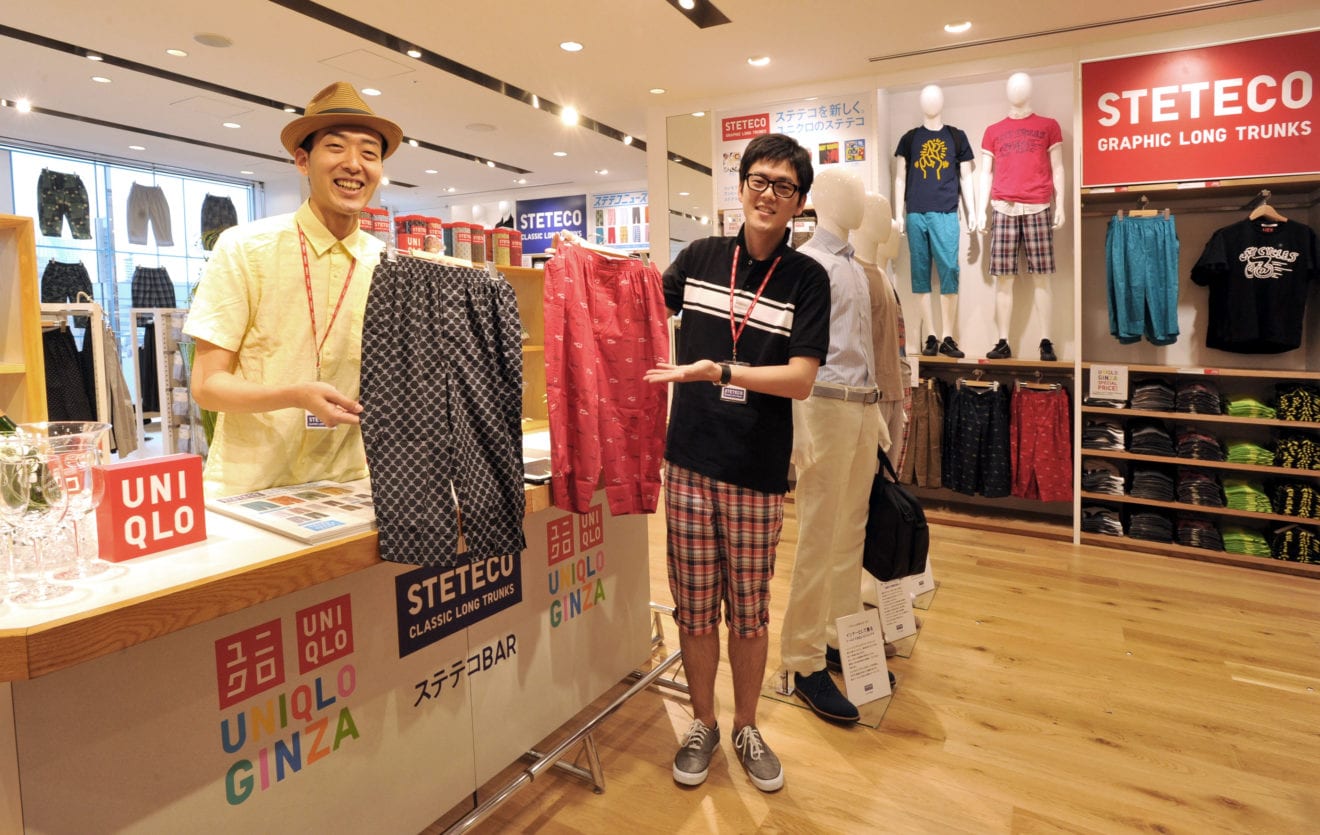
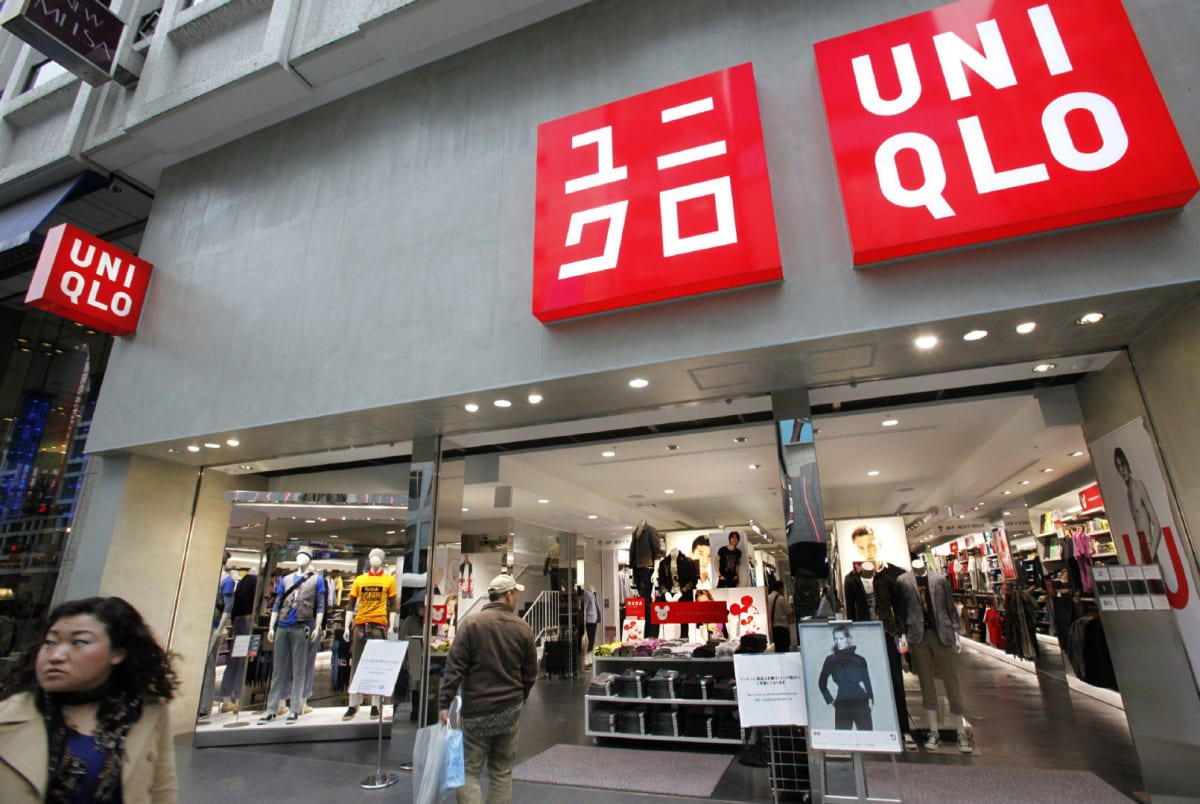
    Japanese fashion brand Uniqlo is opening six stores in the Philippines by June 2016.

    “We are thrilled to announce that Uniqlo will open four new stores in Luzon by May and two new stores in the Visayas by June, as we continue to bring high-quality and innovative clothing to Filipinos,” said Katsumi Kubota, COO of Uniqlo Philippines.

    The Luzon branches of Uniqlo Philippines will be in UP Town Center in Quezon City; Solenad 3 in Nuvali, Laguna; Evia Center Vista City in Daang Hari Rd, Cavite City; and SM City Cabanatuan in Nueva Ecija.

    The Visayas stores will be in Iloilo City and Bacolod City, adding to the existing outlets in SM City Cebu and SM Seaside City Cebu.

    Uniqlo is a brand of Japanese global retail holding company Fast Retailing, which designs, manufactures and sells clothing under seven main brands: Uniqlo, GU, Comptoir des Cotonniers, GU, Helmut Lang, J Brand, Princessetam.tam and Theory. It has global sales of about US$13.88 billion.

    There are more than 1700 Uniqlo stores in 17 markets, including Australia, China, Hong Kong, Indonesia, Malaysia, Philippines, South Korea, Taiwan and Thailand.

  • FamilyMart Malaysia rollout confirmed

    FamilyMart Malaysia rollout confirmed

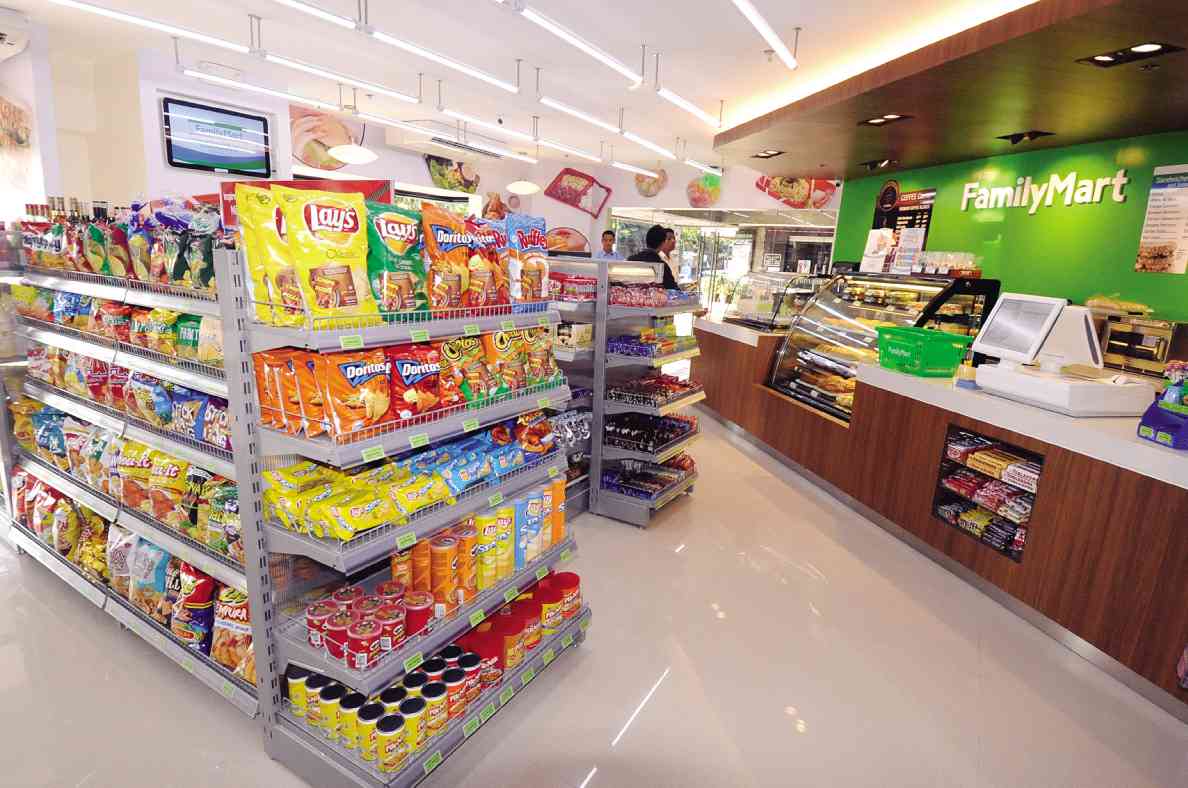
    QL Resources, which produces chicken eggs and seafood surimi, is set to launch a MalaysiaFamilyMart network.

    The company says it plans to open 300 outlets within five years, with the first to be up and running by the end of this year. That will trigger a battle with fellow Japanese convenience store chain 7-Eleven and local startup Bison Incorporated which plans to use the funds from an upcoming IPO to open 150 new stores by 2017.

    QL Resources says its wholly owned subsidiary Maxincome Resources has signed the area master franchise agreement for the development and running of FamilyMart convenience stores in Malaysia. The 20-year agreement is renewable for subsequent periods of 20 years, each at Maxincome’s option, and becomes conditional once the company has registered as a franchisee with Ministry of Domestic Trade, Co-operatives and Consumerism.

    FamilyMart sees the move into Malaysia as an “exciting opportunity” given the country’s growing economy and consumer spending.

    Both parties seem to agree the launch will have a long gestation period, understandable given the current state of the convenience store industry in Malaysia.

    7-Eleven Malaysia dominates the market, with a share of around 82 per cent, through  more than 1900 stores nationwide and with an expansion rate of about 200 annually at present..

    Smaller rival Bison has about 240 newsstands and convenience stores under its brands, which include myNews, Newsplus, MagBit and The Front Page. It also runs WHSmith outlets in Malaysia, in a joint venture with UK’s WH Smith Plc.

    QL Resources says the launch of FamilyMart will open up bigger growth opportunities in the consumer market for the whole group. “It fits into our strategy of strengthening and expanding integration of the group’s value chain.”

    It cites such favourable factors as Malaysia’s increasing urbanisation and per-capita consumption, young population demographic, and a growing trend of proximity and convenience retail.

    Globally, FamilyMart had 17,540 stores in seven countries as at March 31, and is known for its range of ready-to-eat food and beverage offerings as well as convenience items.

    “FamilyMart’s philosophy and values resonate with QL Resources’ mission of providing nourishing agro-based products,” QL Resources says in a statement. “Their emphasis of delivering quality food is also a value that QL Resources, as a food company, values and sees synergy in.”

  • Uniqlo profit drops

    Uniqlo profit drops

    Uniqlo profit has plummeted in the Japanese fast fashion chain’s first half year.

    Parent Fast Retailing has revealed a 33.8 per cent decline in year-on-year surplus, despite a 6.5 per cent increase in sales from September 2015 to February 2016.

    Consolidated revenue reached JP¥1.0116 trillion (US$9.385 billion) and profit ¥99.3 billion (US$1.535 billion).

    While Global Brands reported a rise in both revenue and profit, Uniqlo Japan reported declines in both revenue and profit, and Uniqlo International reported a rise in revenue but a decline in profit.

    The company blamed the Japanese decline on poor sales of winter ranges and lower gross margin, with same-store sales down 1.9 per cent.

    “Subsequent stronger discounting in January and February contributed to a 3.5 per cent fall in the first-half gross margin.

    Uniqlo profit was down on weaker sales in Greater China, South Korea and the US in the company’s international division. However sales and profit rose in Southeast Asia, Oceania and Europe.

    In the Global Brands division, revenue and profit both rose on strong sales of GU ranges. “GU’s widely advertised campaign items such as knitwear and trendy bottoms such as wide pants and jogger pants all generated strong sales, fueling double-digit growth in same-store sales,” Fast Retailing reported.

    The company is predicting a better second half but has revised its earnings forecast to a 7 per cent rise in revenue and a 27 per cent decline in operating profit.