Tag: asia

  • Nok Air plans big push in Phuket

    Nok Air plans big push in Phuket

    Low-cost carrier Nok Air hopes to better tap into the potential of Phuket’s large foreign market over the next high season, an executive told the Phuket Gazette recently.

    Pinyot Pibulsongkram, a Nok Air Vice President, told ‘Up in the Air’ that Nok currently has five daily flights between Bangkok and Phuket, with six flights on Fridays and Sundays. Nok plans to increase these services for the upcoming high season.

    Operating out of Don Mueang Airport in Bangkok, Nok offers flights to Phuket from the capital aboard its fleet of 189-seat Boeing 737-800s.

    The load factor on the Phuket flights has been consistently strong at about 90 per cent, even in the aftermath of the Erawan Shrine bombing, Mr Pinyot said.

    The effect of the tragedy on its Phuket service was largely mitigated by the fact that as much as 95 per cent of its passengers to Phuket are Thai, he added.

    “Usually after an event like that one would expect to see an immediate drop in bookings, but that was not the case. We were all really surprised by it, to be quite honest.

    “We expected a slight seasonal dip in September followed by demand rising in October and into the high season.”

    Nok plans to increase the number flights to Phuket even further after the current airport expansion project is completed. Work on the mega-project is on schedule and should be finished by mid-February. Nok deems six or seven flights daily as ‘manageable’ after the work is finished.

    Seasonal demand for flights to Phuket has changed a great deal over the past five years and the island is now much more of a year-round destination. Nok uses a variety of advertising campaigns to remind its main client base, Thais living in metropolitan Bangkok, that it does not rain continuously in Phuket during the monsoon season.

    Load factors on the Bangkok-Phuket route have consistently been among Nok’s highest in recent years.

    “In the mechanics of low-cost carriers, we do not typically push promotions on flight routes that are doing well. But the downside of this is that we have not directed much promotion effort to foreigners.

    “Our passengers to Phuket are about 95 per cent Thai, but in a market like Phuket where as much as 80 per cent of passengers in transit are foreigners, we need to do a better job capturing that market,” Mr Pinyot said.

    Nationwide, Nok Air and Thai AirAsia are neck-and-neck in terms of market share, each with about one-third of the domestic market. The final third is divided among other carriers including Lion Air, Bangkok Airways and Thai Smile.

    “But it varies from city to city. For Phuket, AirAsia has greater market share because they offer more flights,” he said.

    When asked about the rapid expansion of Indonesian carrier Lion Air into the Thai market, Mr Pinyot said, “Luckily, Phuket has quite a high demand, so the market is huge. Lion Air is in direct competition with us and their rates are really low – ridiculously so, on some routes.”

    He cited the Hat Yai-Bangkok route as an example. Pre-booked flights start at about 1,400 baht on Nok; about 700 to 800 baht for AirAsia. Lion Air now offers flights on the route for as low as 350 baht.

    Such low fares pull down the low-cost air carrier market overall, but it also puts Lion Air in direct competition with land transport services offered on trains, vans and buses which still dwarf air traffic in terms of volume.

    “It does have an effect when the price difference on the route is over 1,000 baht. It is affecting us in terms of fares because we cannot push fares up as much as we would like to, but it does not affect us so much in terms of passenger numbers,” he said.

    Competing with Lion Air differs from doing so with AirAsia, he noted.

    “Lion completely ignores the low-cost model. You can go to the airport, pay 350 baht, and fly the same day, which is a complete ‘no-no’ under the standard low-cost model. So the nature of the competition is very different. We see the competition with AirAsia as more of a fair fight. With Lion, it’s more like a street fight.”
    – See more at: https://www.phuketgazette.net/phuket-lifestyle/Up-the-air-Nok-Air-plans-big/62021#sthash.n2nHaDgK.dpuf

  • Philippines AirAsia plans 2016 growth as it establishes new secondary hubs

    Philippines AirAsia plans 2016 growth as it establishes new secondary hubs

    AirAsia’s operation in the Philippines is entering a new phase which the group hopes will lead to profitability in 2016 and eventually an initial public offering. Growth is also expected to resume in 2016, ending a phase of consolidation and fleet reductions.

    The AirAsia Zest brand will be retired by the end of 2015 in favour of the Philippines AirAsia brand. AirAsia has already completed the transition to a single operating certificate in the Philippines, following a complicated and costly two years of maintaining two separate affiliates.

    AirAsia’s Philippine operation has been highly unprofitable since it was launched in 2012. Turnaround efforts are banking on cost reductions driven by the transition to a single airline and higher yields that will be generated by a more international focused network. The network will be expanded to include several new routes from secondary hubs, in line with a new AirAsia Group strategy to open new unique point to point routes from secondary hubs throughout Southeast Asia.

    AirAsia has struggled in the Philippine market since 2012

    Philippines AirAsia (PAA) launched in Mar-2012 with a fleet of two A320s based at Manila alternative airport Clark. The initial operation struggled, leading PAA to pursue in early 2013 a quasi-merger with Zest Airways, a much larger LCC which was based at ManilaInternational Airport. Zest adopted the AirAsia Zest brand in late 2013.

    PAA and AirAsia Zest had to initially maintain separate operations and refrain from pursuing a complete merger due to regulatory obstacles although the two carriers were able to cooperate closely. PAA moved its fleet of two A320s in Oct-2013 from Clark to Manila, where it was able to use Zest slots that opened up after Zest phased out its turboprop fleet.

    Over the last two years AirAsia’s operation in the Philippines has been in an almost constant state of restructuring. Currently the operation consists of only 12 active aircraft, which are used to serve seven domestic and seven international destinations.

    As CAPA has previously highlighted, AirAsia’s operation in the Philippines has been consistently unprofitable, posting unsustainably high negative margins. Operating losses narrowed by 62% in 1H2015 to PHP1.083 billion (USD24 million) but this is still a dismal performance as the revenue base was only PHP4.425 billion (USD99 million) and the traffic base was only 1.82 million passengers.

    Improved load factor and single AOC brightens PAA’s outlook

    But the outlook for AirAsia’s Philippine operation is starting to brighten.

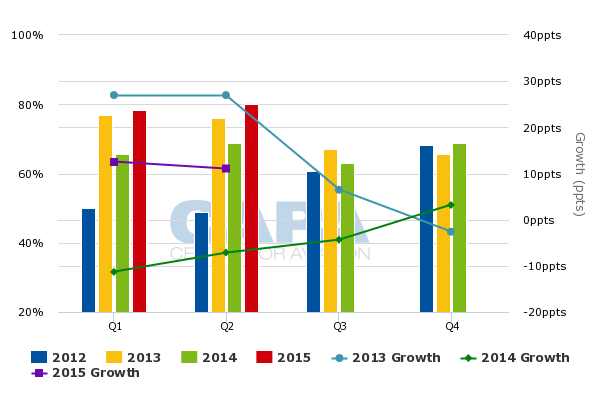
    The load factor of AirAsia’s Philippine operation improved to 78% in 1H2015 compared to only 67% in 1H2014. Passenger traffic was flat despite a 10% reduction in seat capacity as unprofitable routes were cut.

    Philippines AirAsia/AirAsia Zest combined operating highlights: 1H2015 vs 1H2014

    1H2015  1H2014  y-o-y change 
    Passengers (millions) 1.82 1.82  0%
    Seats (millions) 2.31 2.55  -10%
    Seat load factor 79% 71% +8pps
    RPKs (millions) 1,703 1,770 -4%
    ASKs (millions) 2,186 2,632 -17%
    Load factor 78% 67% +11pps

    Also, quarterly seat load factor exceeded 80% for the first time in 2Q2015.

    Quarterly load factor of AirAsia’s Philippine operation: 1Q2012 to 2Q2015

    Since the beginning of the current quarter PAA and AirAsia Zest have transitioned to a single air operators’ certificate (AOC), which the carriers were unable to pursue initially due to the long process of securing required approvals. Streamlining the operation under the AOC of PAA should facilitate efforts to reduce cost.

    AirAsia is now ready to transition to one brand in the Philippines

    AirAsia currently still has two brands in the Philippines with Philippines AirAsia and Zest AirAsia. PAA CEO Josephine (Joy) Caneba told CAPA on the sidelines of the 22-Sep-2015 CAPA LCC Airports Congress in Bangkok that final approval to merge the brands was recently secured and the Zest AirAsia brand will soon be phased out.

    A brand campaign is expected to be rolled out over the next couple of months throughout the Philippines aimed at cementing the PAA brand.

    The fleet is also now in the final process of being streamlined

    Ms Caneba said PAA still has 15 aircraft on its books but is in the process of selling older aircraft and aircraft powered with V2500s that were inherited from Zest. PAA will be left with 12 newer model CFM56-powered A320s, giving it one type of aircraft that is consistent with the rest of the AirAsia Group and generating operational efficiencies.

    Philippines AirAsia CEO Joy Caneba discusses the transition to a single AOC and brand, the streamlining of the fleet and opportunities for international growth including to China.

    Ms Caneba told CAPA that PAA aims to resume fleet growth in 2016 and has a fleet plan that envisions three additional A320s per annum.

    The new phase of fleet and network growth is made possible as a long restructuring phase is now nearing completion. Unviable routes have been cut and unit costs have been reduced by streamlining the fleet, transitioning to a single AOC and pursuing other cost saving initiatives.

    USD50 million in new capital has been raised from the five existing shareholders

    Expansion is also now possible as USD50 million in new capital has been raised from the five existing shareholders, which include four Filipino investors (with 15% stakes each) and Malaysia-listed AirAsia Berhad (with a 40% stake). Ms Caneba expects the recapitalisation exercise will be completed by the end of 2015.

    Strategically, PAA needs to resume expansion as it cannot afford to be stuck at its current modest capacity level. Cutting capacity and the fleet over the last year was necessary but is seen as a temporary measure to position the airline for future growth.

    PAA has already developed Kalibo as an alternative international hub

    PAA has been working on a network expansion plan which focuses on opening new unserved routes from secondary gateways such as Davao, Iloilo, Kalibo and Puerto Princesa.

    Kalibo is now one of three PAA bases along with Cebu and Manila, which are the largest two cities in the Philippines. Kalibo is currently linked with Manila and five international destinations including three in China (Beijing, Hangzhou and Shanghai Pudong) and two in South Korea (Busan and Seoul Incheon). PAA also operates seasonal services from Kalibo to a fourth destination in mainland China, Wuxi.

    Cebu is a smaller base with just one international and two domestic routes. From Manila, PAA currently has six domestic and five international routes, according to OAG data.

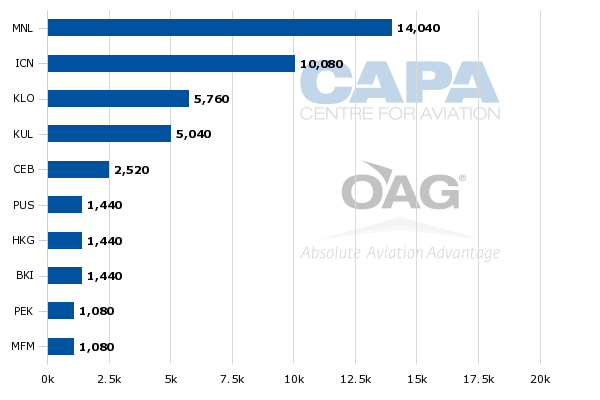
    While it has the same number of international routes from Manila and Kalibo most of PAA’s international capacity is at Manila as its Manila routes are generally served with more frequencies. PAA even has more international capacity at Seoul than at Kalibo as Seoul is served with three daily flights (one each from Cebu, Kalibo and Manila) while Kalibo overall has only 16 weekly scheduled international flights.

    Philippines AirAsia scheduled international seat capacity by hub/base/station: 21-Sep-2015 to 27-Sep-2015

    Kalibo is a gateway to the popular resort island of Boracay in the central Philippines. PAA is now looking at launching flights to Caticlan Airport, which is much closer to Boracay, after a runway extension is completed in early 2016.

    But Kalibo Airport will remain a gateway to China as PAA expects to only be able to operate domestic and potentially some shorter international flights from the upgraded Caticlan Airport.

    PAA plans to develop more secondary gateways

    Davao, Iloilo and Puerto Princesa would be new gateways for PAA with international routes initially operated using A320s from the existing bases. But PAA plans to establish new aircraft bases within the next couple of years at Puerto Princesa and potentially other secondary airports.

    PAA is discussing with the airport operating international flights from Puerto Princesa before the new terminal is completed

    As CAPA previously highlighted, PAA has been looking at operating international flights from Puerto Princesa, which is located on the western resort island of Palawan, to China and Malaysia. Puerto Princesa is planning to open a new terminal with upgraded international facilities in late 2016 or early 2017. But Ms Caneba said PAA is discussing with the airport operating international flights from Puerto Princesa before the new terminal is completed.

    See related report: AirAsia to drive growth at Philippines’ Puerto Princesa Airport as Palawan visitor numbers surge

    Iloilo, which is located south of Kalibo in the central Philippines, is also planning terminal expansion with upgraded international facilities. PAA now only serves Iloilo with domestic flights from Manila. The only scheduled international services at Iloilo currently consist of three weekly flight to Hong Kong and two weekly flight to Singapore operated by Cebu Pacific.

    Davao is the largest city in the southern Philippines but only has one international service – a link from Singapore operated by SilkAir.

    Domestic and Manila growth to slow

    PAA will continue to pursue some expansion at its main base in Manila, including a new flight to Singapore which is included in the 2016 network plan. But the main focus will be on secondary hubs in part because Manila is capacity constrained and PAA is now fully utilising its Manila slots.

    PAA is also not planning significant growth at Cebu, where it recently cut capacity. PAA currently has nine daily flights at Cebu, including seven to Manila, one to Davao and one to Seoul. Cebu-Davao, which connects the second and third largest cities in the Philippines, is PAA’s only remaining point to point domestic route.

    PAA is now focusing more on the international market as domestic routes are generally lower yielding and in some cases oversupplied. The Philippine Airlines (PAL) Group has resumed domestic capacity expansion in 2015 and relaunched several secondary domestic routes. PAA has sensibly determined is it better off redeploying some if its domestic capacity to the higher yielding international market.

    Over the last couple of years AirAsia has discovered that battling against PAL and much larger LCC Cebu Pacific in the domestic market is generally a losing proposition.

    AirAsia will pursue growth in Philippines-China market

    PAA is particularly now focusing on the Philippines-China market. It sees opportunities to add several destinations in China from multiple Philippine gateways. Ms Caneba told CAPA that PAA will probably launch Guangzhou in 2016, as well as other cities in mainland China.

    The Philippines is emerging as a popular tourist destination for Chinese residents despite some political tensions between the two countries. China is also a relatively big outbound market as there is a large Filipino Chinese population.

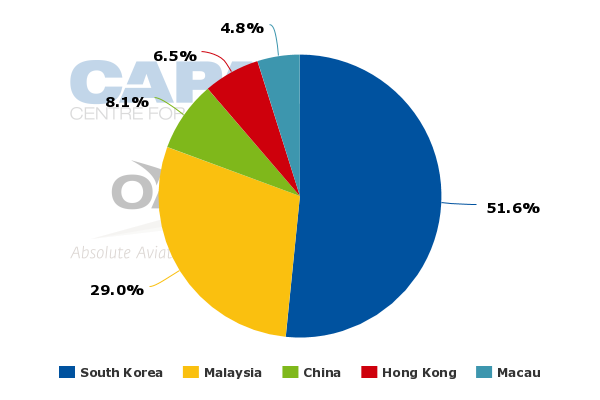
    PAA has ample room to grow in the Chinese market as it currently has only 900 weekly one-way seats to China, according to CAPA and OAG data. China accounts for only about 8% of PAA’s total international seat capacity.

    Philippines AirAsia international capacity share (% of seats) by country: 21-Sep-2015 to 27-Sep-2015

    PAA is particularly keen on linking Chinese cities with secondary gateways in the Philippines including additional routes from Kalibo andnew routes from Puerto Princesa. The routes under consideration are currently not served by any carrier, which makes them particularly appealing to PAA.

    PAA to pursue niche routes not served by its largest local competitors

    PAA is keen to expand under the radar screen of its much larger local competitors, PAL and Cebu Pacific, while exploiting network synergies with the AirAsia Group. AirAsia already serves most of PAA’s potential Chinese destinations, reducing the risk for PAA as it can leverage its parent’s experience operating and selling in China.

    PAA sees a potentially lucrative niche by pursuing interconnectivity with other AirAsia carriers and stimulating demand on new international routes from the Philippines which have never been served previously.

    As CAPA highlighted in the first two Parts in this series of analysis reports on the AirAsia Group, developing new international routes from secondary gateways is also part of a new broader strategy at AirAsia.

    Part 1 examined the upcoming opening of a new base by Thai AirAsia at U-Tapao Airport near Pattaya as well as plans to open two more new secondary bases in 2016. Part 2 examined similar plans for expansion at secondary airports by Malaysia AirAsia, including a planned new hub at Langkawi.

    2016 will be a critical year for Philippines AirAsia

    The focus on secondary international routes is logical as PAA needs to differentiate itself from its larger competitors. There should be room for three local players in the Philippine market but PAA will never have the scale to outmuscle the PAL and Cebu Pacific on trunk routes.

    PAA has had a rough initial three and a half years and still faces major challenges. 2016 will clearly be a critical year for PAA.

    If it meets its 2016 goal of becoming profitable aspirations for an initial public offering within two years will become realistic, providing a foundation for consistent growth. If the newly restructured PAA remains loss-making its long-term survivability – and the AirAsia Group’s need for a Philippine affiliate – will again be questioned.
  • AirAsia Now Offers Tickets at Rs 1,290 All-Inclusive

    AirAsia Now Offers Tickets at Rs 1,290 All-Inclusive

    AirAsia India has come up with yet another promotional offer and is offering tickets for Rs 1,290, inclusive of taxes.

    The travel period to avail the AirAsia offer is between January 15, 2016 – April 14, 2016 and tickets must be booked by September 27, 2015.

    While tickets from Bengaluru to Goa or to Kochi are available for Rs 1,290, fares from the IT capital to Delhi are priced at Rs 3,490. The AirAsia promotional offer is valid across its flying network.

    Airlines have been announcing with slew of offers almost every other week in a bid to garner market share in a fiercely competitive environment.

    These promotional schemes by airlines have ensured a spike in the number of people travelling by air. Passengers carried by domestic airlines during January to August 2015 were 523 lakh as against 433.24 lakh during the corresponding period of the previous year – a growth of 21 per cent.

  • MAS outlines new safeguards for retail investors

    MAS outlines new safeguards for retail investors

    Retail investors will enjoy a boost in protection with new rules for investments linked to gold and other physical assets. The enhancements also allows flexibility for accredited investors (AIs) to decide on the level of regulatory protection they want to be entitled to.

    The enhancements to its regulatory framework for safeguarding investors’ interests were announced by the Monetary Authority of Singapore (MAS) on Tuesday. They take into account feedback received on its consultation paper published in July last year.

    AIs include individuals whose net personal assets exceed S$2 million or whose income in the preceding 12 months is not less than S$300,000.

    MAS said that consumers should enjoy the regulatory safeguards for non-conventional investment products that are similar to existing capital markets products. The non-conventional investment products – previously not in MAS’ regulatory scope – will be regulated either as debentures or investment funds, depending on their features.

    Precious metals buy-back arrangements involving gold, silver and platinum with guaranteed buy-back at an agreed price will be regulated as debentures. This is because they are widely regarded as financial assets and are commonly used as collateral for such arrangements.

    Collectively-managed investment schemes intended for retail investors will require authorisation from MAS and be restricted to investments in securities or other assets that are liquid (for example precious metals), or have stable income-generating ability such as completed real estate.

    Arrangements that exist before the legislative changes will not be affected, unless additional funds are raised from retail investors after the new laws are in place.

    In the high net worth space, (AIs) will have the option to benefit from the stronger and full range of regulatory safeguards available to retail investors.

    As part of the changes, financial institutions will have to treat new customers who are AI-eligible as retail investors by default, unless the customers choose to “opt-in” to AI status. The latter could be those who wish to retain their easier access to a wider range of complex and risky products.

    For existing AIs, FIs can continue to treat them as AIs, unless they choose to “opt-out” of AI status to benefit from the full range of capital markets regulatory safeguards available to retail investors.

    Mr Lee Boon Ngiap, assistant managing director, capital markets, MAS, said that while the regulatory measures will strengthen regulatory safeguards for retail investors, they are “not a substitute for investor responsibility”.

    “All investments carry risk, so investors should buy only products that they understand and have a level of risk that they are comfortable with. In addition to seeking advice from regulated financial advisers, we encourage investors to visit the MoneySENSE website, which has a wealth of financial educational information to help investors manage their money and better understand financial products,” he said.

    MAS is still reviewing feedback on the remaining proposal to introduce a framework to rate retail investment products on their complexity and risk, and will issue a separate public response later.

  • Shinsegae joins race for duty-free shop in Seoul

    Shinsegae joins race for duty-free shop in Seoul

    Shinsegae said it will apply for the highly competitive bid as three duty-free operating licenses are set to expire within the year. The deadline is set for Friday and the Korea Customs Service will announce the result in November.

    Currently, Lotte Duty Free, the nation’s No. 1 operator, has two stores in Myeongdong, a major shopping district, and the affluent Gangnam region, and SK Networks Co., a trading and hotel unit under SK Group, has a store in the Sheraton Grand Walkerhill Hotel in the southeastern part of the capital.

    Separately, Shinsegae will renew its operating license for Paradise Duty Free in the southern port city of Busan as its current license also expires in December.

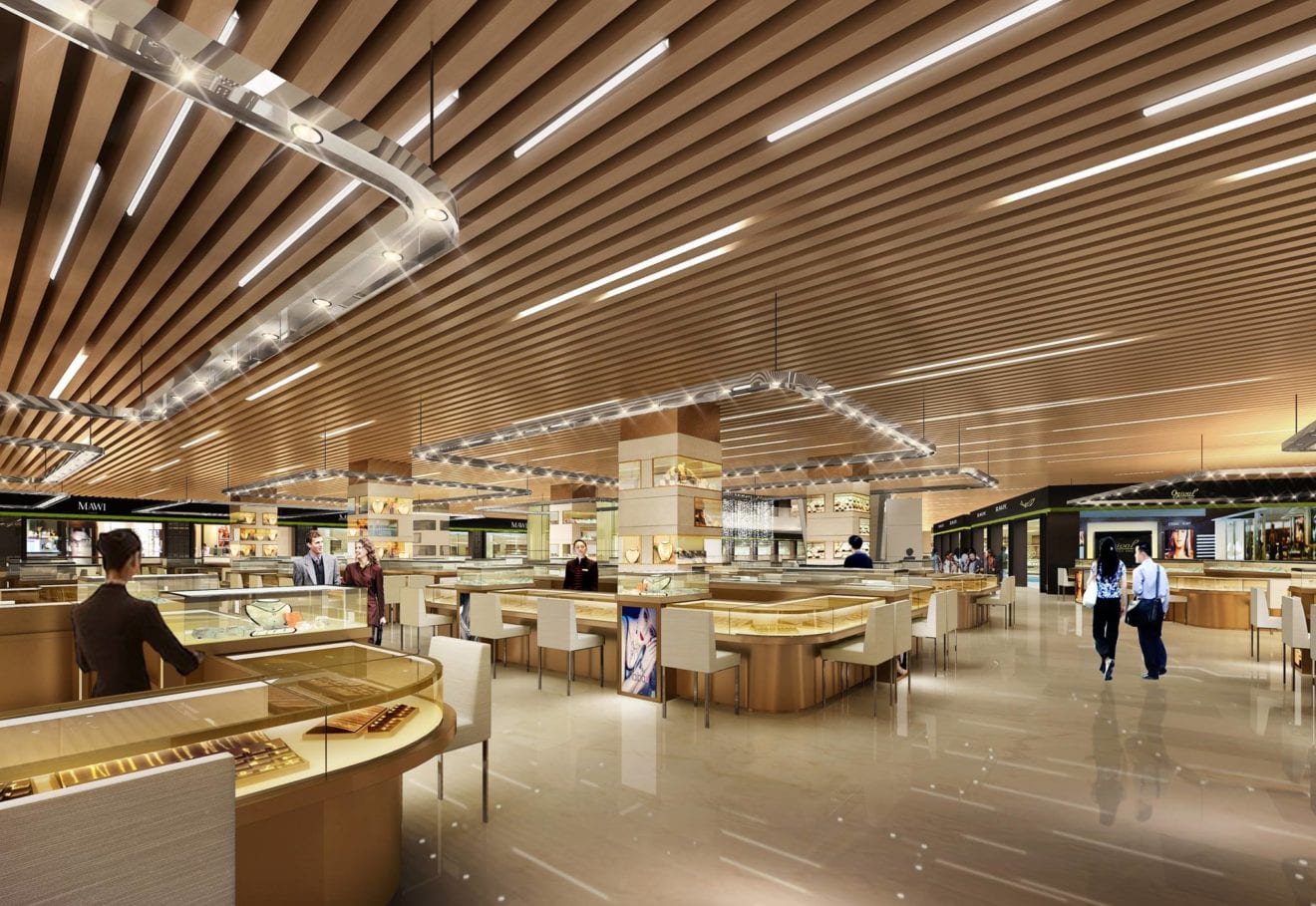
    “We will propose a multi-complex shopping mall in Myeongdong, the nation’s No. 1 tourist attraction,” said Sung Young-mok, who is in charge of Shinsegae’s duty free business. “For Busan, we will relocate the duty-free shop to Shinsegae Centum City to recreate it as Busan’s tourism icon.”

    It is the second bid this year after Shinsegae applied for a new license in May, proposing to renovate its landmark outlet in Myeongdong. The building, established in 1930, was home to the country’s first department store.

    If it wins the bid, the retail giant will be opening its first duty-free store in downtown Seoul.

    The bid is seen as a major opportunity for local retailers who are in search of new cash cows amid lackluster domestic demand. Duty-free stores have emerged as one of the most lucrative retail channels in tandem with a sharp influx of deep-pocketed shoppers from China.

    Last year, the six duty-free stores across the capital, mostly dominated by Lotte, posted combined sales of 4.4 trillion won (US$4 billion). Sales by a Lotte Duty Free branch in the Myeongdong area accounted for a whopping 45 percent of the total.


  • Hong Kong and Macau – Bundy’s new export destinations?

    Hong Kong and Macau – Bundy’s new export destinations?

    BUNDABERG Regional Council continues to engage with senior representatives of the Hong Kong Food Association with a view to establishing trade links to supply Hong Kong and Macau with locally grown produce.

    A delegation from the Hong Kong Food Council, Hong Kong Food Hygiene Administrators Association and Food Professionals Association visited Bundaberg from September 9 to 11 at the invitation of Mayor Mal Forman to meet with local horticultural experts and educators.

    Acting Mayor David Batt said the Bundaberg Horticultural Forum provided an exceptional opportunity to showcase the regions extensive produce portfolio.

    “The meeting in Bundaberg has since been followed up by a presentation in Hong Kong with the Hong Kong Trade and Investment Queensland (TIQ) Commissioner, Angela To presenting a detailed overview of opportunities in the Bundaberg Region.

    “It is important that as a region, we access every opportunity that comes our way regarding promoting our potential for investment, development and export.”

    Cr Batt said discussions would be ongoing between the two parties.

    “Hopefully, a further meeting may be organised for later in the year to build on the momentum these recent meetings have established,” he said.

    “The connections we have established with Nanning through our sister city relationship and now the opportunities that are being presented through this growing association with Hong Kong certainly add an exciting dimension to the expansion of horticultural activities through the Bundaberg region.”

    According to Cr Batt any return visit would be held in November to coincide with the 2015 Hong Kong Food Fiesta which runs from November 27 to December 1.

    “This would present an incredible opportunity for local producers who may wish to display their products in such a vibrant marketplace environment,” he said.

    Council economic development spokesman Greg Barnes said council’s economic development unit will continue to nurture the emerging relationship and work closely with TIQ to assist businesses interested in export opportunities with Hong Kong.

    “Anyone interested in promoting their products to the retail and wholesale sectors of the Hong Kong food industry can contact Council’s Economic Development team on 1300 883 699 or email info@investbundaberg.com.au.

    “Alternatively, contact Dion Taylor (0448 197 835) who has been instrumental in co-ordinating and organizing the business to business meetings between local producers and Hong Kong food industry professionals,” said Cr Barnes.

  • Jazz promotion hits road in Thailand

    Jazz promotion hits road in Thailand

    Jazz apples have quickly built up a niche following in Thailand over recent years, driven by the extensive marketing efforts of importer Vachamon and its supply partner T&G/Enza, which owns the rights to the variety.

    But Vachamon is not resting on its laurels. By its own admission, sales of Jazz are heavily concentrated on Bangkok and cities within a three-hour reach of the Thai capital, and the importer recently took a roadshow promotion to key regional provinces to expand the apple’s profile.

    “We want to sell Jazz on a national scale and boost our import volumes,” Vachamon’s managing director Wipavee Watcharakorn told Asiafruit. “Volumes have been quite stable for the past couple of years, with around 300 container loads coming in from New Zealand, and 100 container loads from France and the US.”

    Accompanied by Jazz ambassador – Thai actor Lek Teeradetch – Vachamon’s roadshow targeted three key regions during August: Chiang Mai, Udonthani and Phuket.

    Chiang Mai, the largest city in northeast Thailand, has a population of 1m in the metropolitan region.

    Udonthani, another major official and commercial centre in the northeast of the country, is a gateway to Laos and southern Vietnam. The city has population of almost 400,000 while the province is home to more than 1.5m people.

    Meanwhile, popular tourist destination Phuket is Thailand’s largest island. Its population of 600,000 people, a mix of international expats, migrants and locals, has significant buying power.

    In each region, Vachamon has adopted a three-pronged marketing campaign with activities spanning morning, afternoon and evening.

    “In the morning, we visited the wholesalers at the wholesale market and went to the popular wet markets in each city. We introduced Jazz to the merchants and handed out free samples for tasting,” said Watcharakorn.

    “In the early afternoon, we held retail promotions at Big C in Chiang Mai, Makro in Udonthani and Tesco in Phuket. We worked with all of the retailers to host activities and games in their fresh produce departments and run consumer promotions,” she continued.

    “In the evening, we visited the walking streets (pedestrian areas) of each city to meet and greet local consumers.”

    On the back of the roadshow activities, Vachamon has also put systems in place further support the campaign and expand sales.

    In Chiang Mai, Vachamon has recruited a regional manager to build a continuous business for the company in the city. “Our manager visits the market every week, bringing regular samples to the merchants for free tastings and getting the promotions set up with retailers,” said Watcharakorn.

    Vachamon’s new distribution hub in Khonkaen, located two hours from Udonthani, is due to open soon, and Watcharakorn says it can also be utilised to serve the wholesale market in Udonthani.

    In Phuket, Vachamon is focused on working with key distributors as well as cash and carry chain Makro to ensure smaller merchants have access to its fruit.

    Vachamon has set up a redemption programme with Makro stores in all three regions. Under the promotion, which is due to kick off next month, customers who purchase 300 cartons of Jazz apples within a month receive a free Jazz apple suitcase.

    With such operations and activities in place to support sales, Watcharakorn is confident the provincial regions can help to grow Jazz volumes in Thailand by around 30 container loads per year.

  • Hooters Bangkok’s delightfully tacky launch party

    Hooters Bangkok’s delightfully tacky launch party

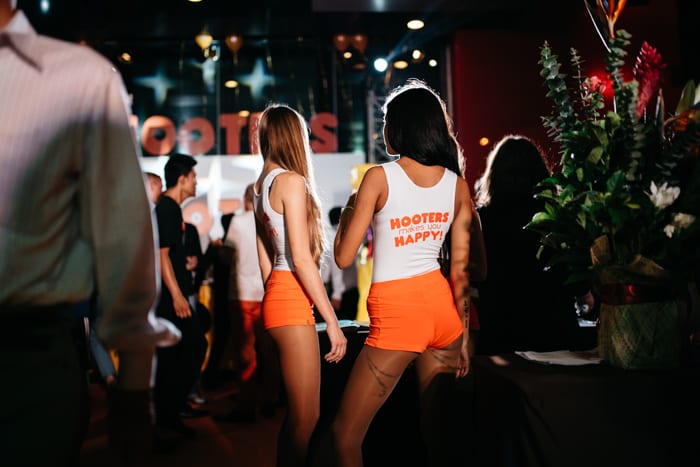
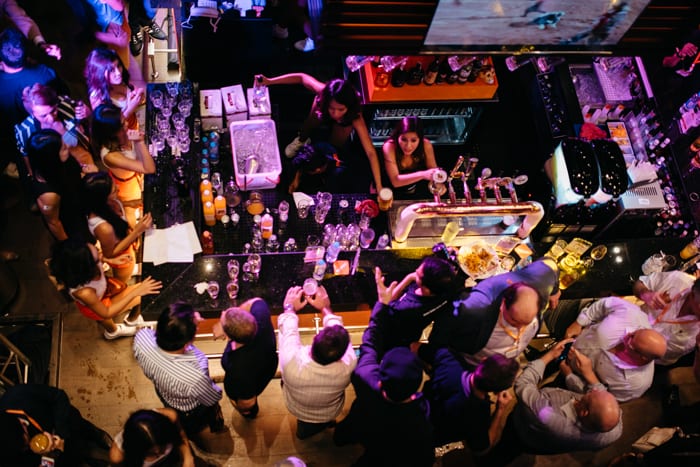
    Hooters, the long-admired American chain restaurant famous for tackiness and large-breasted female servers, opened its first Bangkok branch on Friday night.

    “Damnnnnnnnn. Look at that thang!” was the emotion on most of the (mostly male) guests who showed up at the Four Points by Sheraton hotel to get their first taste of Hooters magic.

    Of courses, they totally lost their cool because of the variations menus and breast portion sizes available.

    The very ambitious Hooters “job fair” was announced in June, and the Bangkok ladies who made the cut reportedly received training by original American Hooters gals on how to strut their stuff and serve fried chicken.

    One of the trainers commented at the party that the Bangkok Hooters girls did a phenomenal job, despite the fact some ladies looked a bit annoyed as they had to squeeze through a packed crowd to serve the food

    Besides local Hooters girls, some Euro models were hired to look hot and tell the guests that they didn’t work there.

    The highlight of the night had to be an adorable cupid-shuffle dance from the waitresses, continuing Hooters’ wonderful tradition of family friendliness.

    dsc_6895

    dsc_6941

    dsc_6799

    dsc_6825

    dsc_6709_0

    dsc_6749

    dsc_6732_0

    dsc_6698-2_0

    dsc_6779

    dsc_6844

    dsc_6820

    dsc_6800

    dsc_6805

    dsc_6753

    dsc_6774

    dsc_6773

    dsc_6893

  • The Philippines-headquartered BDO Unibank Sets up Representative Office at DIFC

    The Philippines-headquartered BDO Unibank Sets up Representative Office at DIFC

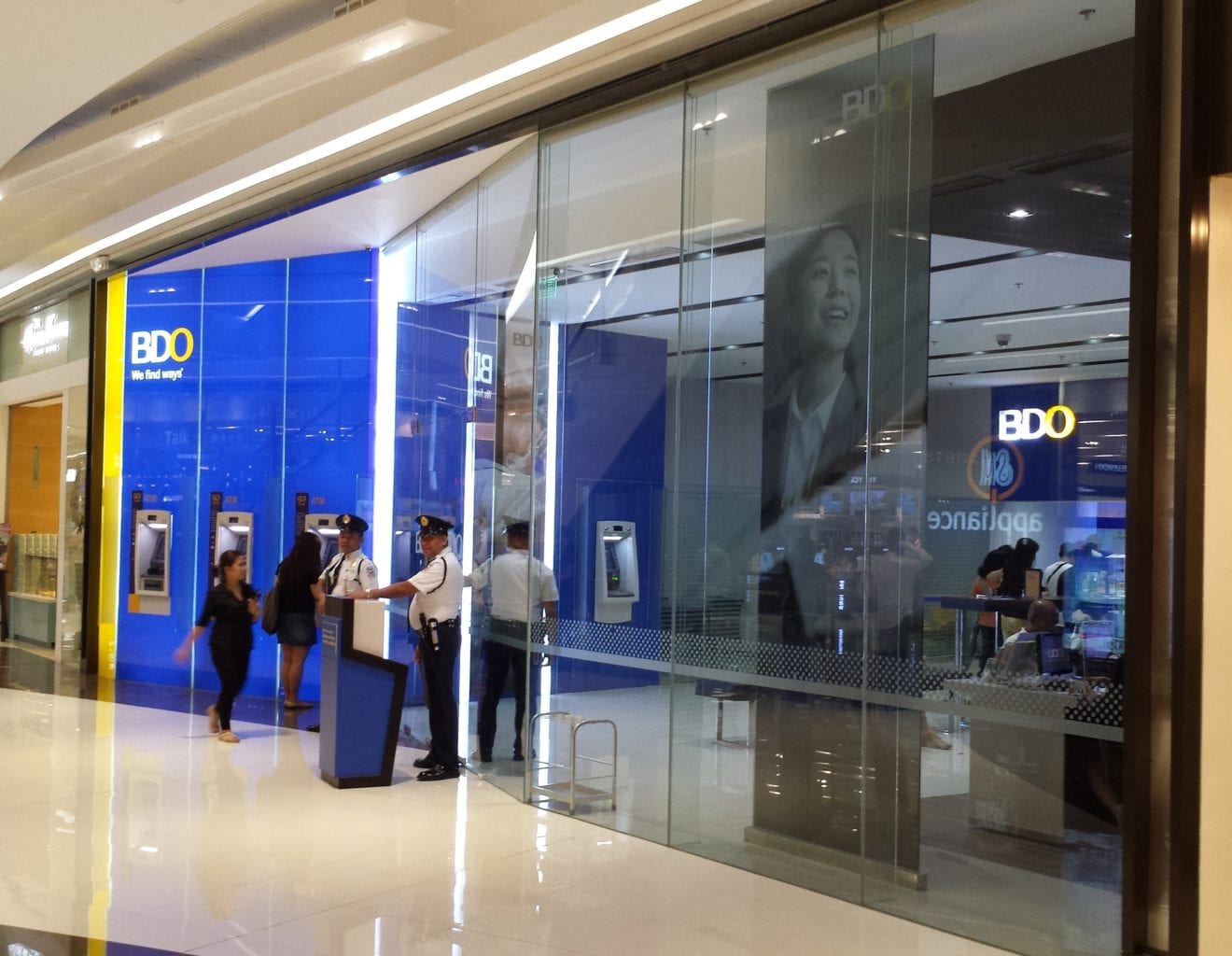
    Dubai International Financial Centre (DIFC), the financial and business gateway between the Middle East, Africa and Asia, today welcomed BDO Unibank – the first Philippine bank to operate in its premises.

    The UAE is home to an estimated 700,000 Filipino expatriates and BDO Unibank’s objectives include supporting them, while facilitating investments and money flow to the Philippines.

    Arif Amiri, Deputy CEO of DIFC Authority , said: “We are pleased to welcome BDO Unibank, a leader in the financial services field from the Philippines. This is a direct outcome of our overall strategy to facilitate integration between the Asian and Middle Eastern companies.”

    “We remain conscious of the diverse demographic constituents of the UAE and are committed to catering to the evolving requirements of each population segment,” Amiri added.

    BDO Unibank, the largest bank in the Philippines, provides a variety of corporate, commercial and retail banking services, including traditional loan and deposit products. This is in addition to treasury, trust banking, investment private banking, cash management, leasing and finance, remittance, insurance, retail cash cards and credit card services.

    Commenting on the decision to set up base in DIFC, Nestor V Tan, President and CEO – BDO Unibank said: “BDO Unibank’s establishment of a representative office in Dubai is driven by its objective to further widen our overseas network to provide support to the Overseas Filipino Workers (OFWs) and residents. This expansion into Dubai will boost our capability to service the needs of our countrymen in the entire Middle East and, hopefully, make the bank a catalyst for the progress of financial inclusion of the expatriates in the Philippines.”

    Committed to concretising its position as one of the world’s top five financial hubs, DIFC announced its 10-year growth strategy in June this year, aiming to maximise symbiosis amongst clients and further expand the Centre’s regulatory and physical infrastructure.

    Asia remains a key strategic focus for DIFC. As part of this priority, the Centre has been proactively engaging with players in the region through roadshows in China and India.

    DIFC aims to grow the financial sector’s share of the UAE economy to 18 per cent of the GDP by 2024, compared to its 12 per cent share in 2013.


  • Apple IPhone 6s, IPhone 6s Plus To Be Available At Retail Stores From Friday

    Apple IPhone 6s, IPhone 6s Plus To Be Available At Retail Stores From Friday

    Apple Inc. said Monday that its latest smartphones, the iPhone 6s and iPhone 6s Plus, will be available at the technology giant’s retail stores at 8 a.m. local time on Friday, September 25.

    The company also noted that more than 50 percent of existing devices have upgraded to iOS 9, its newest mobile operating software that was rolled out last week, marking the fastest iOS adoption ever.

    Apple said its retail stores will have the new iPhones available for walk-in customers, who should arrive at a store early. Both models will also be available on Friday from AT&T Inc. ( T ), Sprint Corp. ( S ), T-Mobile US Inc. ( TMUS ), Verizon Wireless, additional carriers and select Apple authorized resellers.

    Philip Schiller, Apple’s senior vice president of Worldwide Marketing said, “Customer response to the iPhone 6s and iPhone 6s Plus has been incredibly positive, we can’t wait to get our most advanced iPhones ever into customers’ hands starting this Friday. iOS 9 is also off to an amazing start, on pace to be downloaded by more users than any other software release in Apple’s history.”

    In early September, Apple unveiled its iPhone 6s and iPhone 6s Plus smartphones with a faster processor, new 3D Touch capabilities and an improved camera, seeking to woo customers ahead of the holiday season and to assuage investors that its flagship device still has the mojo to sustain growth.

    The phones, which look like their predecessors, are powered by A9 chip, have a new feature called 3D Touch that lets users make commands as well as avail shortcuts and menus by pressing down on the screen.

    Last Monday, Apple said it is on track to beat last year’s record for first weekend sales of iPhone 6 and 6 Plus, when sales breached the 10 million mark within just three days of its sales launch on September 19, 2014.

    The iPhone 6s and iPhone 6s Plus will be available in gold, silver, space gray and the new rose gold metallic finishes for $0 down, with 24 monthly installment payments that start at $27 and $31 respectively, from Apple’s retail stores in the U.S., Apple.com, select carriers and Apple authorized resellers.

    Both the smartphone models will also be available from Friday in Australia, Canada, China, France, Germany, Hong Kong, Japan, New Zealand, Puerto Rico, Singapore, the UK and the U.S. The iPhone will be available by reservation only in China, Hong Kong, Japan and U.S. stores in tax-free states.

    Starting this Saturday, September 26, customers will be able to visit Apple.com to reserve their iPhone for pick-up at their local Apple Store, based on availability. Apple noted that most Apple stores will also have iPhone available for walk-in customers each day.

    Every customer who buys an iPhone 6s or iPhone 6s Plus at an Apple retail store will be offered free Personal Setup to help them customize their iPhone by setting up email and show them new apps from the App Store.

    Apple-designed accessories, such as leather and silicone cases in different colors and Lightning Docks in color-matched metallic finishes, will also be available.

    While unveiling the iPhone 6s and iPhone 6s Plus earlier in September, Apple had said that the devices will come with iOS 9, which would be available as a free software update.

    iOS 9 brings more features to iPhone with a Proactive assistant that is similar to Android’s Google Now service, powerful search and improved Siri features, along with an improved security feature.

    Built-in apps on iOS 9 feature redesigned Notes app, detailed transit information in Maps, and a new News app that displays news from several sources.

    AAPL is trading at $114.33, up $0.88 or 0.78 on a volume of 4.44 million shares.


  • Myanmar retail sector ringing up sales

    Myanmar retail sector ringing up sales

    Rising incomes, an expanding economy and changing consumer patterns are attracting a growing number of international brands to Myanmar. By fuelling competition amongst existing players, their presence is expected to trigger an improvement in the range and quality of products and services on offer.

    International attention has been driven by bullish retail growth, which has expanded by an average rate of 7-15% per annum since 2011.

    Daw Win Win Tint, managing director of leading retailer City Mart Group and president of the Myanmar Retailers Association, told OBG international bands are attracted to Myanmar’s strong economic growth and increasing consumer purchasing power.

    “The average basket of goods continues to grow by around 10% per year mainly due to increasing spending power in urban cities, especially Yangon, where salaries have risen significantly,” she said.

    Fast moving

    Several international brands have made forays elsewhere the retail supply chain, making strategic greenfield investments in local processing. In the fast-moving consumer goods (FMCG) segment, Carlsberg and Heineken both opened brewing factories in Myanmar earlier this year through joint ventures with local partners, and Japan’s Kirin acquired a 55% stake in market leader Myanmar Beer for $560m in August.

    While modern retail currently accounts for just 10% of the FMCG segment, Daw Win Win Tint expects restrictions on foreign retail chains entering the Myanmar market to be lifted sometime in the future. As local purchasing power grows and Myanmar consumers have greater exposure to foreign brands via the internet and international travel, demand in the FMCG segment in particular is expected to rise.

    “There needs to be more awareness of the potential of the FMCG sector, as Myanmar has a population of approximately 51m and the prospects of becoming a manufacturing hub for South Asia,” she told OBG.

    Rising tide of consumerism

    Industry observers forecast a surge in consumer activity in the coming years, with the McKinsey Global Institute predicting in mid-2013 that Myanmar’s GDP would expand by more than four-fold by 2030, from around $45bn to $200bn. The group also predicted that rising incomes would fuel expansion of the country’s consumer class, jumping from 2.5m to 19m over the period, with consumer spending to triple to $100bn per year.

    As the country liberalises its retail market, the division of consumer spending between domestic and international retailers could see a shift. Local consumption habits continue to favour local products, though this is largely due to availability. In the beer segment for example, Myanmar Brewery accounts for more than 80% of sales.

    Though Myanmar consumers may welcome the entry of new brands and chains, such a transformation is likely to be a strain on current operators, who will have to contend with high-profile rivals with international experience and economies of scale. This will force local retailers to adapt to the changing market, which should bolster the portfolio products on offer and promote market efficiency.

    Consumer spending

    In addition to the prospect of greater competition, a decline in consumer confidence has the potential to cool sales in the shorter term. Though consumer sentiment in Myanmar remains among the most positive in the region, according to the most recent MasterCard survey, there has been a recent dip in the outlook of shoppers.

    Myanmar’s rating on the latest consumer confidence index, issued at the end of July, slipped from a regional high of 97.2 in mid-2014 to 81.6. Although still ahead of the South-east Asian average of 71 – second only to Vietnam – the 15.6-point drop was one of the sharpest recorded over the period. Although Myanmar’s position on the MasterCard index may have eased somewhat, any rating above 50 suggests that consumers remain optimistic.

    Weaker sentiment could be due in part to upcoming elections, scheduled for November, though increasing inflation is also likely to be a factor. According to the IMF, inflation reached 8% at the end of May. While low compared to an average of 23% between 2001 and 2010, this represents an increase from the 5% and 6.1% registered in FY 2011/12 and FY 2012/13, respectively.

    The ongoing depreciation of the kyat and crackdown on dollarisation could also be impacting consumer confidence, with the currency falling some 25% year-to-date against the US dollar in August. In addition to affecting the price of foreign goods, this downward movement has also increased the cost of local goods that rely on imported components.


  • Best Western Unveils First Hotel in Surabaya, Indonesia

    Best Western Unveils First Hotel in Surabaya, Indonesia

    Best Western International has unveiled its first hotel in Indonesia’s second largest city, Surabaya.

    The new BEST WESTERN Papilio Hotel is a modern midscale hotel conveniently located just 20 minutes’ drive from Juanda International Airport and close to popular attractions including Suroboyo Carnival Night Market and the MAS Mosque.

    Set in an eye-catching glass and steel building, the hotel offers a choice of spacious guest rooms, all of which come equipped with amenities designed to help guests unwind and stay productive. These include comfortable beds, ergonomic work desks, 32-inch LED TVs and complimentary Wi-Fi.

    Guests can take a cooling dip in the outdoor swimming pool, indulge in a sumptuous massage at the spa, or work up a sweat in the fitness center, while kids can make splash in the children’s pool.

    BEST WESTERN Papilio Hotel also serves up excellent local and international cuisine at the Mariposa Restaurant, and whatever the time of day, guests can relax and enjoy a drink in the lobby lounge and bar.

    And meeting planners will be able to choose from a variety of flexible function spaces, all equipped with the latest audio-visual equipment and served by a dedicated events team.

    “As Indonesia’s second largest city, Surabaya was the logical next step for Best Western International’s Indonesian expansion,” said Ron Pohl, Best Western International’s Senior Vice President of Brand Management.

    “BEST WESTERN Papilio Hotel will be an excellent addition to our rapidly growing portfolio in Indonesia, bringing modern midscale comfort to the rising number of domestic and international travelers Surabaya is now attracting,” he added.

    Olivier Berrivin, Best Western International’s Managing Director of International Operations – Asia, commented; “With its ideal location close to Surabaya’s main business district and attractions, yet away from the worst of the city’s traffic, BEST WESTERN Papilio Hotel truly offers the best of both worlds.

    “In addition to this, the hotel’s vast array of amenities exceeds its midscale status, offering guests an elevated experience at a reasonable price point. I am confident this exceptional hotel will become a firm favorite among travelers to Surabaya,” Mr. Berrivin concluded.

    The launch of BEST WESTERN Papilio Hotel increases Best Western International’s Indonesian portfolio to 15 hotels, spread across eight popular destinations.

    Best Western Unveils First Hotel in Surabaya, Indonesia

    Best Western Unveils First Hotel in Surabaya, Indonesia
    Best Western Unveils First Hotel in Surabaya, IndonesiaBest Western Unveils First Hotel in Surabaya, Indonesia

    Best Western Unveils First Hotel in Surabaya, Indonesia

  • Eslite Hong Kong adds second store

    Eslite Hong Kong adds second store

    The ranks of English language bookshops in Hong Kong may be dwindling, but someone forgot to tell Taiwanese retailer Eslite.

    The second store will be themed ‘Travellers, Taiwan, Diversity and Culture’, spread over two floors of Star City at 3 Salisbury Rd. It will feature more than 25,000 titles in Chinese and English and trade 12 hours a day, from 10am to 10pm.

    The doors will open on October 1 with an official launch planned for October 9.

    Eslite has enjoyed huge success with its Hysan Place store, a multi-storey venue which is as much a place to dwell as to buy books. While it cut back its trading hours from 24-seven to a late night closing, its customer numbers and sales turnover have clearly proven there remains a place for the megastore format. Reports suggest the store sold 706,000 books last year and on average its customers buy three books per visit.

    Smaller rivals like Australian chain Dymocks have closed the doors of at least three stores since 2014 and the iconic design and arts-focused Page One closed its Times Square branch last February after 18 years.

    Eslite, which has 48 stores in Taiwan, has a strategy in overseas markets of building a small number of large format stores with broad selection in major cities. It opened in Causeway Bay in August 2012. Besides books, it sells stationery and gift wares created by Taiwanese artists, and includes a cafe.

  • China’s shopping mall operators struggle against e-commerce

    China’s shopping mall operators struggle against e-commerce

    “The supply of mall space in China is outpacing demand, as growth in retail sales slows because of the country’s lower GDP growth, and in cities where mall space is abundant, vacancy rates have risen substantially,” Marie Lam, an associate managing director with ratings agency Moody’s, said in a report.

    A raft of figures pointed to waning demand at home. China’s retail sales for the first half of the year grew by just 10.4 per cent from a year earlier, the lowest rate since 2004, data released by the National Bureau of Statistics showed.

    Although acknowledging that the outlook will continue to be murky for China’s traditional retailers, Bank of China International analysts led by Tang Jiarui noted consolidation may sweep across some of the major players in the sector, discarding the weak players and leaving the stronger ones as the survivors. “The distress, on the other hand, may give birth to a mergers-and-acquisitions boom. We see some of the leading regional shopping mall operators, including Wuhan-based Zhongbai Holdings, the potential buying targets of industrial powerhouses eyeing expansion,” she said.

    Unfazed by a flagging economy, Chinese developers’ headlong rush to branch out and build more shopping malls show no signs of dying down.

    China made up of 44 per cent of total global shopping mall completions in 2014, data from real estate consultancy CBRE said. The amount of mall-space in the pipeline is even more massive, representing 60 per cent of the total worldwide.

    In 2014, the retail space under construction in China soared by more than 50 per cent year-on-year, compared with a 21.8 per cent rise of the global total for the same period.

    “Demand for mall space from retailers in China is not catching up with supply,” Lam said.

    Adding to the burden on those brick and mortar retailers are their e-commerce rivals that managed to post robust results even as the economy grew at its slowest pace in a quarter century. Online retail sales registered a 48.7 per cent jump in the first six months of 2015 from a year earlier, according to the China e-Business Research Centre.

    A study by Fung Business Intelligence Centre found department stores in China were the worst performers among all retail formats last year with many forced to close shop.

    “Fragile global and domestic economies …competition from speciality stores and online retailers were major reasons for stores’ weak performances,” the Fung report said.

    Many of traditional retailers have been shifting to asset-light business models or exploring the online-to-offline business mode to get by.

    But a transformation can be painful for any company with more uncertainty the rule going forward.

    “Success also depends on whether the changed mall can differentiate itself from other malls that have also undergone facelifts,” said Lam, who saw rising difficulty for some shopping mall property developers in refinancing the loans they took out to shift gears.

  • Buy discounted BHPetrol E-voucher at 11street

    Buy discounted BHPetrol E-voucher at 11street

    Boustead Petroleum Marketing Sdn Bhd (BHPetrol) continues to provide convenience to its customers through another great collaboration.   Beginning 28th September onwards, customers who purchase BHPetrol vouchers from 11street.my will be entitled for a special discount. The vouchers can be claimed for petrol purchases at selected BHPetrol stations in the Klang Valley.

    Limited to maximum 3 vouchers per day of RM10 per piece, the vouchers are made available on first come first serve basis to 11street.my members.  Customers will just have to redeem the vouchers via their smartphones.

    “We choose 11street.my as our partner because of its popularity in the online marketing platform.  By having BHPetrol vouchers in their marketplace at special discounted price, we hope to reach their customers as our potential customers too” said Baba Tan, BHPetrol Senior Marketing Manager. During the soft launch of the promotion, Mr Bruce Lim, 11street Vice President of Merchandising were also present.

    Lim added, “We are pleased to offer our shoppers the opportunity to be the very first in the country to purchase discounted petrol vouchers from BHPetrol. This collaboration reinforces not only that we are continuously enhancing the variety of our products and services, but also highlights our commitment to offer customers with great savings via price competitive deals at 11street.”

    The offer on the discounted BHPetrol voucher at 11street.my starts from 28th to 7th October 2015 and the redemption at selected BHPetrol stations is until 23rd October 2015.