Tag: asia

  • Ikea bets on China with $772 million investment

    Ikea bets on China with $772 million investment

    Ingka Group, the parent group of Swedish home furnishing giant Ikea, will invest 5.3 billion yuan (RM3.5bil) in China in the fiscal year 2023.

    The investment will be used for further business digitalization, construction of new stores and shopping malls and integrating multiple distribution channels, CEO and president of Ikea China Anna Pawlak Kuliga told a press conference yesterday.

    Lydia Song, vice-president of Ikea China, said the company would announce the investment of a wind power project in China later this year.

    As for the store expansion plan in China for the fiscal year 2023, which will start on Sept 1, Ikea will open a smaller scale store in Hefei, the capital city of East China’s Anhui province. It will also launch a second store in Xi’an of Shaanxi province.

    In early July, Ikea shut down its 8,500-sq-m store in northeast Shanghai’s Yangpu district.

    The major purpose is to realize more effective mapping in the city.

    While Ikea will remain “agile” in China over the next few years, Shanghai will remain as one of the key investment destinations for Ikea.

    Ikea announced a three-year strategy in 2019, especially for the Chinese market, which included 10 billion yuan (RM6.5bil) of investment.

    The company said it has fulfilled that investment target, with which Ikea developed more products and solutions for Chinese consumers, set up an omnichannel distribution network and offered more discounts.

    Over the past three years, Ikea’s services have extended to nearly one billion Chinese consumers with the online platforms such as the Tmall store and online shopping mall on WeChat.

  • Gentle Monster invests $15 million in Chinese AR startup

    Gentle Monster invests $15 million in Chinese AR startup

    Augmented reality headsets have been around for years, but none of the market players has really expanded beyond the techy demographic and broken into the mainstream. An AR startup hopes to change that by partnering with an eyewear fashion brand.

    Nreal, the well-funded Chinese AR headset maker that’s been making aggressive global expansion, said Thursday that it has raised $15 million from Korean sunglasses brand Gentle Monster’s parent company, IICOMBINED.

    The investment, which came just five months after its $60 million Series C extension, boosts its total raised to $240 million since its inception in 2017.

    The fresh capital will enable Nreal to accelerate its global expansion and double down on the company’s consumer business in the U.S., the company said.

    Neither Nreal nor Gentle Monster said much about how they might work together, but it’s almost certain that the single-investor capital infusion marks a step toward a strategic partnership. It won’t be surprising that Nreal’s glasses — aimed to be fashionable and lightweight from the outset — would hit the shelves of Gentle Master’s global retail stores someday.

    Indeed, Nreal’s co-founder Peng Jin said the firm’s goal for the next twelve months is to “scale and reach more audiences and aggressively grow adoption for AR technology starting with our latest AR glasses, Nreal Air.”

    Nreal has already carved out a global distribution network, much of it through its enterprise partners like Qualcomm and LG, in countries including the U.S., U.K., Japan, South Korea, Spain and Germany. It only debuted in China, where it’s based, in August.

    Nreal’s demand is currently the highest in the U.S., Japan and Korea, though the company expects China to grow soon to be one of its top markets.

    Earlier this week, Nreal unveiled an array of its products, including AR glasses such as Nreal Air and Nreal X (Chinese version) and an AR adapter for Apple devices in its home market.

    “Fashion and design will be important aspects in the future development of AR glasses as we continue to expand the sector’s consumer base,” said Jin. “As such, having Gentle Monster as our investor will open up interesting opportunities not just for Nreal, but also for the wider AR industry as a whole.”

    Gentle Monster, which entered China in 2016 and partnered with Huawei in 2019 to make smart glasses, opened its seventeenth store in Beijing in early August for further expansion in China.

    “This investment is exciting for the combination and exploration of the boundary of fashion and tech,” said co-founder of Gentle Monster and CEO of IICOMBINED Hankook Kim. “We will leverage both parties’ strength and make joint efforts to create more possibilities.”

  • Singapore-based e-commerce firm Qoo10 to acquire Tmon

    Singapore-based e-commerce firm Qoo10 to acquire Tmon

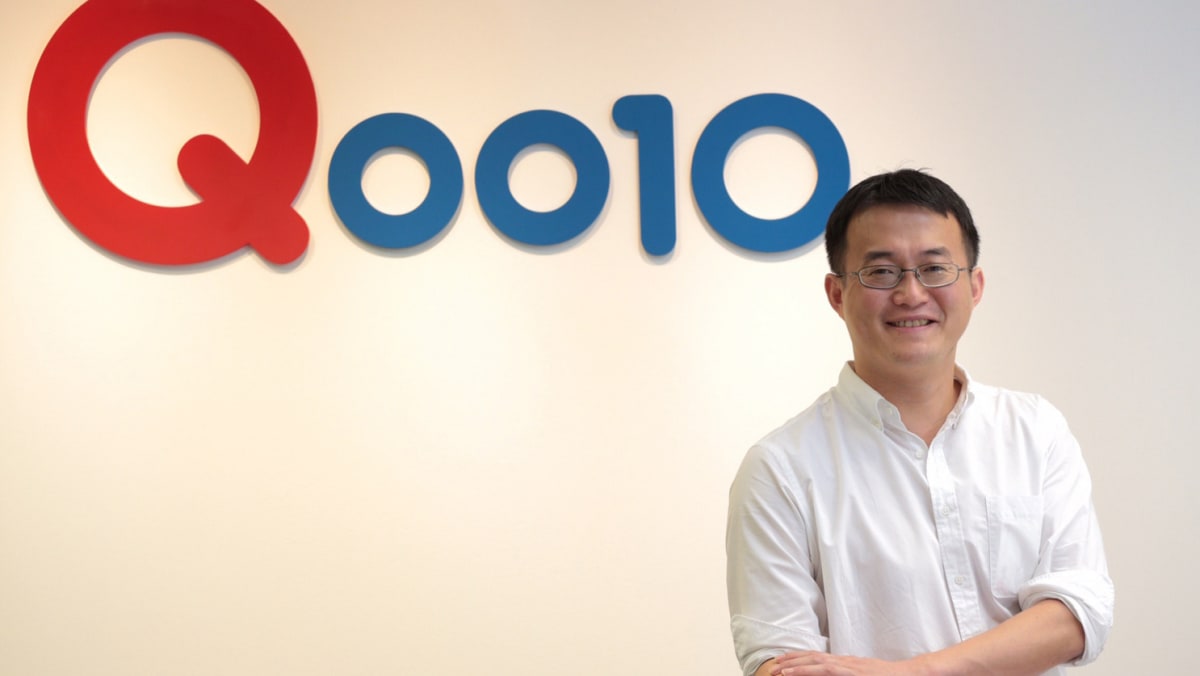
    Singapore-based e-commerce firm Qoo10 plans to acquire TMON through a stock swap deal, industry sources said Thursday.

    TMON’s two major shareholders — Anchor Equity Partners and Kohlberg Kravis Roberts & Co. — have agreed on the stock swap deal with Qoo10, according to the sources.

    Under the deal, the two shareholders will trade their 81.74 percent stake in TMON with new shares issued by Qoo10’s logistics affiliate, Qxpress. The remaining amount will be paid in cash, sources said.

    The remaining stake in TMON is owned by a consortium led by Poongsung Group, a Korean car parts maker.

    Qoo10 is also pushing to buy ecommerce platform Interpark from travel platform operator Yanolja, which bought a 70 percent stake in Interpark worth some 294 billion won ($220 million).

    Based in Singapore, Qoo10 is an ecommerce platform founded by eBay and GMarket founder Koo young-bae. The site operates localized marketplaces across five Southeast Asian countries, including Indonesia, China, Hong Kong and Malaysia.

    Its affiliate, Qxpress, reported around 150 billion won in sales in 2020. It is pushing for an initial public offering on the tech-heavy Nasdaq, and is currently under review by the U.S. Securities and Exchange Commission.

  • Thai Airasia X to Fly to Australia

    Thai Airasia X to Fly to Australia

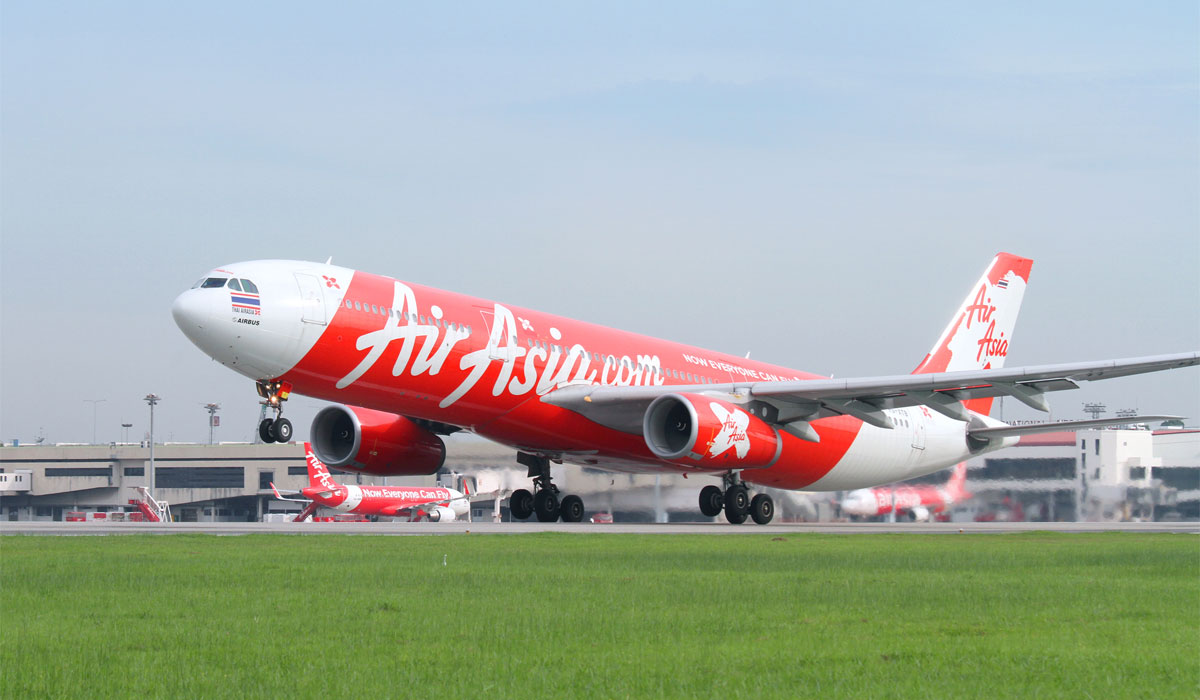
    Thai AirAsia X (XJ) will launch new services from Bangkok (Suvarnabhumi Airport) to Melbourne and Sydney commencing 1 and 2 December 2022.

    Four weekly flights direct from Bangkok to Sydney Airport depart on Mondays, Tuesdays, Fridays and Saturdays, and to Melbourne Airport (Tullamarine) three times a week on Wednesdays, Thursdays and Sundays.

    The return flights on the same days from Australia to Thailand, start from just A$299.

    Premium flatbeds on both routes are now on sale from A$1,199.

    Thai AirASia will operate 377-seat Airbus A330 aircraft with 12 business-class reclining seats and 365 economy seats, including a quiet zone from rows 7 – 14.

    Mr Tassapon Bijleveld, Acting Chief Executive Officer of Thai AirAsia X, explained that Thailand and Australia have maintained strong relations for over 70 years, noting Australia is among the

    top three educational destinations for Thai students as well as a leading travel destination for Thai tourists.

    “Thai AirAsia X is very excited to be adding Sydney and Melbourne as two key destinations in Australia this year.

    “Thais love Australia and Australians love Thailand and we are confident that these new and direct services will prove popular.

    Mr Bijleveld added that other Australian destinations such as Perth were on the airline’s radar.

    Australia remains a key market for the AirAsia brand. Malaysia-based AirAsia X, the affiliate long haul sister airline of Thai AirAsia X, has also recently announced new direct services from Kuala

    Lumpur to Sydney commencing 9 September and to Perth, Melbourne and Auckland (via Sydney) which begin in November this year.

  • Filings in multiple countries reveal possible name for Apple’s mixed-reality headset

    Filings in multiple countries reveal possible name for Apple’s mixed-reality headset

    Apple’s AR/VR mixed-reality headset is now at the point where there is always speculation that the device will be introduced at the next Apple event. For example, on September 7th, Apple will introduce the iPhone 14 range, the new Apple Watch Series 8 models, and more. Some tipsters have said that Apple’s expensive $2,000-$2,500 headset will show up at the upcoming event during a “One more thing..,” moment.
    Perhaps the biggest reason not to expect that to happen comes from the man who knows so much about what is going on at Apple, he can tell you what the soup of the day will be in the company cafeteria a year from today. Of course, we are talking about TF International’s Ming-Chi Kuo. The reliable analyst says that Apple will lift the curtains on the product during an event in January.
    Apple could be deciding among several possible names for the headset. Using a process that the tech giant has employed before, possible names for the device were filed by law firms used by Apple in the past to protect the names of its devices. In the U.S., EU, U.K., Canada, Australia, New Zealand, Saudi Arabia, Costa Rica, and Uruguay, the Apple-related law firms filed applications for “Reality One,” “Reality Pro” and “Reality Processor.”

    Bloomberg discovered that the three trademarks were filed with a shell company called Immersive Health Solutions LLC, just incorporated this past February. That company in turn was registered by another shell corporation named the Corporation Trust Company. Apple’s RealityOS trademark was applied for by the same firm. That happens to be the expected name of the operating system Apple developed for its mixed-reality headset and the AR Apple Glasses.

    While January 2023 is still months away, the headset is supposedly having issues with the camera sensor and with software. The device is also overheating in testing. The product has a codename of N301 and a sequel model is said to have a codename of N602. The AR glasses, which many feel will be Apple’s next big thing, have a codename of N421 although both the sequel AR/VR headset and the AR glasses both might not be ready for years.

    The “Reality One” and “Reality Pro” names could indicate that Apple will release two different variants of the headset including a premium “Pro” version that will have more features and cost more money. The “Reality Processor” name could refer to the M2 Apple Silicon chipset that will power the headset. The device is expected to come with 16GB of RAM and will run VR versions of some Apple apps like Maps and FaceTime.
    The device will allow users to play games with other headset wearers and Apple will focus on providing streaming content for the headset including movies and games. In case you’re not familiar with Virtual Reality (VR), it allows the headset wearer to interact with a world that is not real. Augmented reality (AR) takes a real-life feed and superimposes a layer of data over it.
    A good example of AR is Google Maps Live View which can be used when using walking directions. The phone’s rear camera delivers a live feed while arrows are overlaid on that feed to show you the direction to walk. In addition, landmarks are named on the screen. Apple has already disseminated its RealityKit to developers to help them build AR apps for the headset.
    With Apple about to unveil its next iteration of the iPhone with the iPhone 14 series, the company might not want to have its new handsets share the spotlight with the long-awaited mixed-platform headset. So if you’re dying to own Apple’s next big thing, you’ll have to wait five months before this product sees the light of day. But all of this waiting will make the actual unveiling much sweeter, right?
  • Seafood exports growth slows due to global inflation

    Seafood exports growth slows due to global inflation

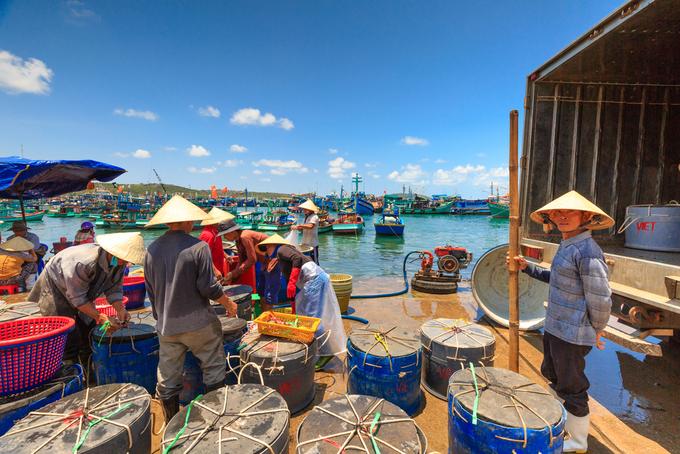
    Vietnam’s seafood exports have been slowing down since July as inflation takes a toll on consumption in the U.S., E.U. and U.K.

    Exports to the U.S. declined by 30.5% year-on-year in July after inflation in that country hit a 41-year high the previous month, according to the Vietnam Association of Seafood Exporters and Producers (VASEP).

    Black tiger shrimp exports were down 69% and that of pangasius fish, 4%. But tuna shipments increased by 34% and that of squid by 90%. But exports were up 30% in the year-to-date.

    Exports to the E.U. rose by 18% year-on-year in July, well down from the 31% in the second quarter.

    Inflation has been skyrocketing in the bloc, with the Russia – Ukraine tension causing food prices to climb, VASEP said, adding that the falling euro also contributed to declining consumption.

    Exports to the U.K. fell by 12% year-on-year in the second quarter and 18% in July, as inflation raged at a 40-year high.

    Shrimp and tuna exports were down 27% and 54%.

    Exports to China rose by 25% in July, but authorities there are still monitoring the spread of Covid-19 closely at the border and will ban any exporter whose cargo is found infected.

    With seafood exports reaching nearly reached $6.7 billion in the first seven months, VASEP is optimistic about achieving $10 billion for the year.

  • iPhone sales more than double in Q2

    iPhone sales more than double in Q2

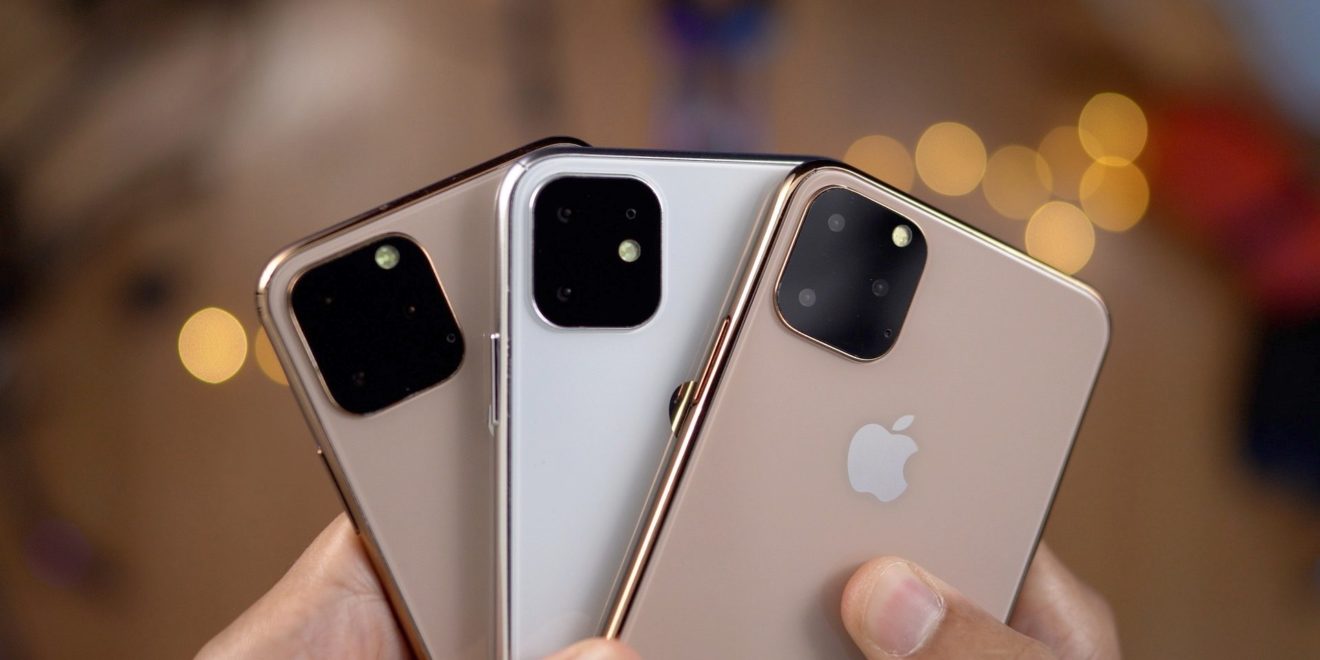
    iPhone increased its market share in Vietnam to 15.4% in the second quarter from 7.1% a year earlier to become the third largest seller in the country.

    Its year-on-year growth of 115% was the highest among all manufacturers, Hong Kong company Counterpoint Research said in a report.

    Sales from 230,000 devices in Q2/2021 to nearly 500,000. But overall smartphone sales fell by 0.9% to 3.2 million units.

    Apple was behind Samsung (38.4% share) and Oppo (20.7%), but surpassed Xiaomi (13.2%) and Vivo (4.4%).

    Vietnamese buyers’ preference for high-end devices and price cuts on older iPhone models drove Apple’s sales up, with two of its products being best-sellers, the report said.

    “The premium price band (>US$400) grew by around 75% year-on-year driven by the iPhone 11, iPhone 13 Pro Max and Galaxy S series,” Counterpoint analyst Akash Jatwala said.

    Apple also increased the number of its stores in Vietnam via official distributors, helping further expand its customer reach as offline remains the key sales channel in the market.

    Vietnam is one of the emerging markets with “very strong double-digit growth” that have contributed to the company’s success in the second quarter of 2022, Apple CEO Tim Cook said recently.

    Xa Que Nguyen, CEO of smartphone store chain Hnam Mobile, said: “This is not surprising as Apple is paying more attention to Vietnam. Second quarters are normally low seasons, but Apple’s price drops have stimulated demand.”

    The Counterpoint report had “moderate expectations” of Vietnam since demand could be affected by macro issues and consumer preference could shift to other essentials.

  • NOW Telecom’s Equity Restructuring Gets Nod

    NOW Telecom’s Equity Restructuring Gets Nod

    NOW Telecom Company has announced it was granted the approval of the Philippines’ Securities and Exchange Commission (SEC) for the increase of NOW Tel’s authorized capital stock, the quasi-reorganization of its equity and a stock split.

    Following the approval, the company increased the number of its authorized common shares from 14.59 million to 952.09 million and lowered its par value from Php100.00 per share to Php1.00 per share.

    Previously, the stockholders of NOW Corp approved the increase of the company’s stake in NOW Tel, for a total of Php600 million which was part of the proceeds from the placement received from the equity subscription of Velarde, Inc. to NOW Corp. The additional subscription from NOW Corp and other shareholders supported the increase in the authorized capital stock of NOW Tel.

    In addition, the SEC also certified the approval of the equity restructuring to fully expunge NOW Tel’s deficit as of December 31, 2020. The quasi-reorganization has allowed NOW Tel to eliminate its deficit, which will allow the company (NOW Tel) to declare dividends to its shareholders from its unrestricted retained earnings that may be generated subsequent to the quasi-reorganization.

    “This strategic initiative of NOW Tel is envisioned to support its growth plans. The three-step equity restructuring better positions NOW Tel for investors both domestic and foreign to participate in its equity. With the amended Public Services Act allowing up to 100% foreign ownership in public utility companies and this recent approval from SEC, NOW Tel can now proceed in its growth plans starting with its fundraising efforts including but not limited to tapping either the debt market or equity market, or both.” says Rene Rosales, NOW Telecom president and COO.

    Former President Rodrigo Duterte, in 2018, signed into law the proposed extension of NOW Tel’s franchise for another 25 years or until 2043.

  • ZTE Reports Double-Digit Gains in Revenue and Profit in H1

    ZTE Reports Double-Digit Gains in Revenue and Profit in H1

    ZTE has posted its financial results for the first half of 2022. According to the results, for the six months ended 30 June 2022, ZTE achieved operating revenue of RMB 59.82 billion, 12.7% higher than a year earlier. During the period, net profit attributable to holders of ordinary shares of the listed company reached RMB 4.57 billion, an increase of 12.0%, and net profit after extraordinary items attributable to holders of ordinary shares of the listed company amounted to RMB 3.73 billion, representing a year-on-year increase of 65.8%. Basic earnings per share was RMB 0.96.

    In the first half of 2022, ZTE, despite the challenges of the pandemic and complex external environment, has ensured the security and stability of its own supply chain, realized continuous delivery to its global customers and continuously improved the company’s operational quality and efficiency, leveraging its advantages of being an ultimate cloud company, rich experience in digital transformation, mature business continuity system, and its own self-developed cloud platform that can support tens of thousands of people across the globe to work online.

    ZTE has been committed to strengthening its end-to-end R&D investment and innovations. In the first half of 2022, the company’s R&D spending reached RMB 10.15 billion, accounting for 17.0% of its total operating revenue.

    From January to June of 2022, ZTE’s operating revenue in both domestic and international markets and its three major businesses (carriers’ networks, government and enterprise, and consumer business) all achieved double-digit increase year on year. For the domestic market, the operating revenue reached RMB 40.60 billion, a year-on-year increase of 12.9%, accounting for 67.9% of the total operating revenue, while for the international market, the operating revenue amounted to RMB 19.22 billion, a year-on-year increase of 12.3%, covering 32.1% of the total operating revenue.

    In terms of carriers’ networks, ZTE achieved an operating revenue of RMB 38.72 billion yuan, an increase of 10.5%, compared with a year earlier. In the operators’ traditional network market, ZTE proactively participated in the global 5G constructions including 5G network, Gigabit fiber network and 5G transport network, and continuously strengthened the competitiveness of its products and solutions, building excellent cost-effective networks for its customers and optimizing the market structure accordingly.

    To date, ZTE has entered into 5G cooperation with over 110 operators across the globe, covering major markets including Europe, Asia Pacific and the Middle East. Meanwhile, the company has actively seized the opportunity of domestic operators’ cloud-network transformation, and deeply integrated its own capabilities with their requirements while providing its well-matched products and solutions. ZTE has secured the domestic operators’ centralized procurements for multiple years.

    In terms of government and corporate business, ZTE’s operating revenue increased by 18.3% year on year to RMB 6.71 billion during the period. Focusing on the internet, finance, electric power, transportation, government affairs and the industry, and relying on its “Precision Cloud Network” and “Digital Nebula”, the company has deeply cultivated the digital transformation of the industry, promoted the deep integration of 5G and the industry, and fully participated in major projects such as the east-data-west-computing project in China. In addition, ZTE’s core products and solutions such as server and storage, data center, enterprise network, video conference, cloud computer and distributed database were widely applied in the government and corporate markets, gradually forming a good cloud network ecosystem.

    In consumer business, ZTE harvested revenue of RMB 14.39 billion, a year-on-year increase of 16.5% in the first half of 2022. ZTE, committed to offering its global users a seamless digital lifestyle in all scenarios, continued to make efforts in branding, products and channels to promote the sales of personal and household products.

    During the period, ZTE, while consolidating the businesses in the first curve represented by wireless and wired products, has been rapidly expanding its businesses in the second curve, including server and storage products, terminals, 5G industry applications, automotive electronics, and digital energy. In H1, the company has achieved around 40% increase year on year in terms of the operating revenue from its second curve business.

    Moving forward, ZTE, adhering to the positioning of “a driver of digital economy”, will keep continuously promoting its own digital transformation. The company will stay committed to building a highly resilient organization and implementing the “dual-carbon” strategy to achieve sustainable development. In addition, the company will actively strengthen cooperation with its customers, industries and ecological partners to jointly advance the development of the global digital economy.


  • India’s 5G to Rollout by October 12

    India’s 5G to Rollout by October 12

    India is expected to roll out 5G services by October 12, according to Ashwini Vaishnaw, union communication, electronics and information technology minister.

    Vaishnaw revealed that 5G prices will be reasonable for users and that 5G services will be scaled up after launch to reach more parts of the country in the coming two to three years, with a focus on delivering 5G connectivity to both urban and rural areas.

    India has entered its final stage of rolling out 5G services, with the government having issued spectrum allocation letters to telecom operators in preparation for the impending 5G rollout

    During the initial phase of rollout, 5G will reach 13 cities, namely Ahmedabad, Bengaluru, Chandigarh, Chennai, Delhi, Gandhinagar, Gurugram, Hyderabad, Jamnagar, Kolkata, Lucknow, Mumbai and Pune.

    Separately, PM Modi said during the Grand Finale of Smart India Hackathon 2022 that India is preparing to launch 6G by the end of the decade – which will be a boost to sectors such as gaming and entertainment.

  • M1 Onboards ZΩH as New MVNO Partner

    M1 Onboards ZΩH as New MVNO Partner

    M1 has announced ZΩH as its latest Mobile Virtual Network Operator (MVNO) partner. As a telecommunication service offering from enterprise network and ICT provider Lifeway Singapore, ZΩH will leverage M1’s advanced mobile network infrastructure to offer mobile services specifically to enterprise customers.

    ZΩH provides a diverse range of mobile and data roaming plans to corporate as well as SMEs. For M1, the collaboration gives it access to ZΩH’s customer base and enables the telco to expand its reach within the enterprise ecosystem.

    “M1 is proud to be the platform of choice for MVNOs in Singapore. We are delighted to be hosting ZΩH’s services on our network and ensuring that their customers are able to receive excellent coverage, reliability and speed. With our 5G roll-out, we look forward to supporting ZΩH’s enterprise customers and bringing state-of-the-art features to them,” said Alen Ng, head, corporate development, M1.

    “Partnering with M1 is an exciting step forward for Lifeway Singapore, to broaden customer reach and footprint as well as to improve customer experience in today’s digital world. Beyond that, the partnership gives us an opportunity to provide exciting offers and innovative bundles to meet customers’ specific needs,” added head of sales & marketing, Chris Loh, Lifeway Singapore.

    M1 continues to support MVNOs with new and unique value propositions that add to the telco industry’s overall development and infrastructure. M1 is the first telco in Singapore to establish a series of successful partnerships with MNVOs, beginning with Circles.Life in 2015 and more recently with Changi Recommends, MyRepublic and Geenet, enabling the MVNOs to deliver quality network services and experience.

  • Citi Shutting Consumer and Commercial Units in Russia

    Citi Shutting Consumer and Commercial Units in Russia

    After failing to find buyers, Citi has decided to close its consumer and commercial banking businesses in Russia.

    Citi will shut down its Russian consumer and commercial banking businesses starting this quarter, it said in a statement Thursday. The closure will result in about $170 million in charges over the next 18 months and affect 2,300 out of 3,000 employees across 15 branches in the country. Deposit accounts, investments, loans and cards will also be affected.

    The decision follows failed attempts to find a buyer for either business amid an ongoing Russia-Ukraine conflict.

    We have explored multiple strategic options to sell these businesses over the past several months, said Titi Cole, Citi’s chief executive of legacy franchises. It’s clear that the wind-down path makes the most sense given the many complicating factors in the environment.

    The bank’s Russian exposure totaled $8.4 billion as of the end of the second quarter, down from $9.8 billion compared to end-2021, with around $1 billion linked to the consumer and commercial banking businesses, it said.

  • Singapore Considers More Tightening for Retail Crypto

    Singapore Considers More Tightening for Retail Crypto

    The Monetary Authority Singapore is reeling back on retail access to cryptocurrencies with the latest consideration for more curbs.

    The MAS is considering tightening crypto rules for retail investors by «adding friction» to mass access, according to managing director Ravi Menon in a speech published online. This includes the possible addition of suitability tests as well as restrictions on the use of leverage and credit.

    Market volatility this year has led a number of crypto players in the city-state to suffer including exchange Zipmex and lender Hodlnaut. In the latest, fallen Singapore hedge fund Three Arrows’ co-founder Su Zhu reemerged in public to deliver an affidavit defending himself against liquidator claims.

    Despite its concerns, Menon notes that a regulatory ban is not a viable option as it is «not likely to work».

    The cryptocurrency world is borderless. With just a mobile phone, Singaporeans have access to any number of crypto exchanges in the world and can buy or sell any number of cryptocurrencies, Menon said in the opening address of a seminar held today.

    Singapore continues to rethink mass access to cryptocurrencies following guidelines issued in January to limit trading services providers from public promotion.

  • Ediya Coffee to open in Guam this year

    Ediya Coffee to open in Guam this year

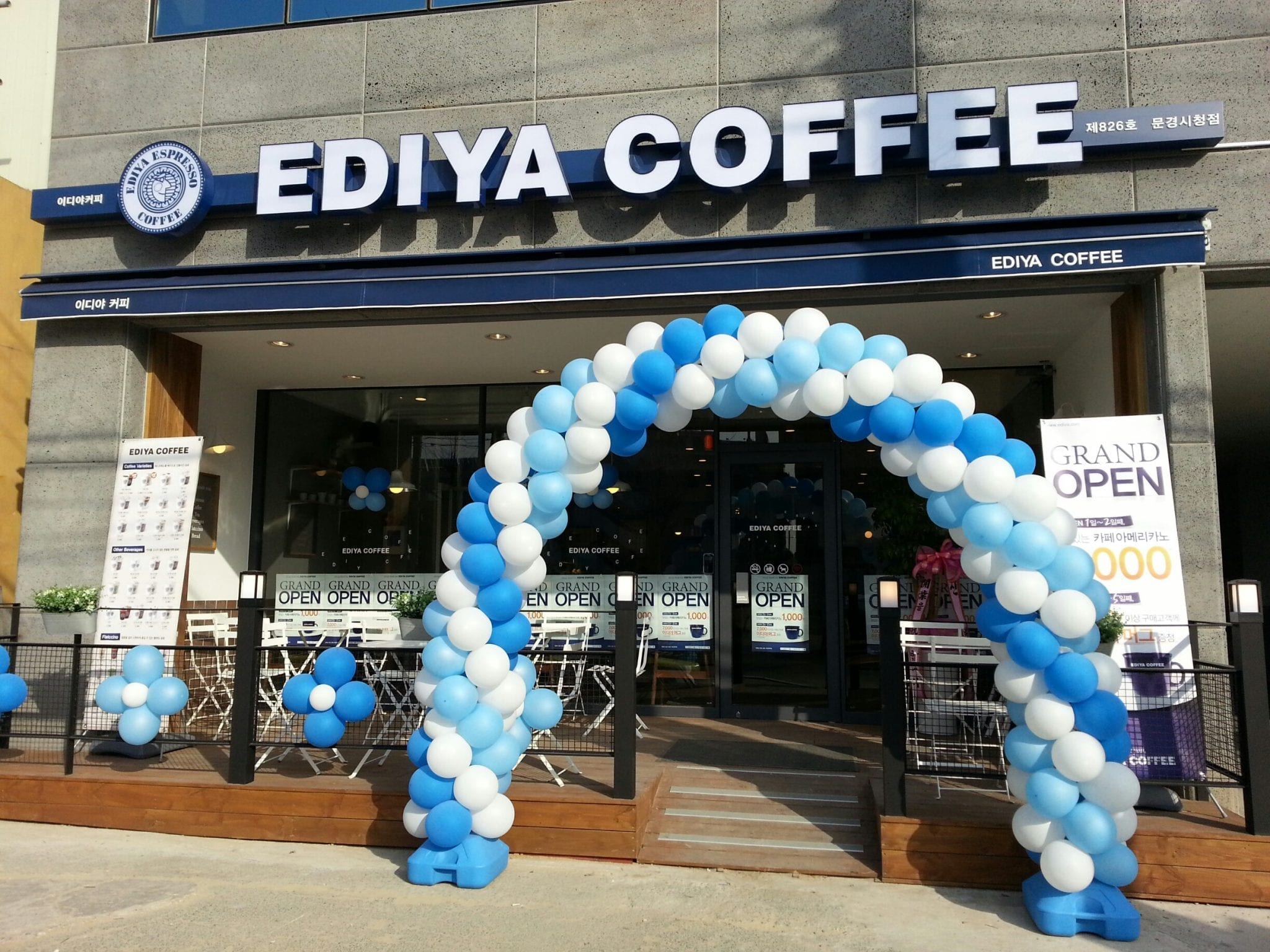
    “Ediya Coffee will open an Ediya Coffee store in Guam, the U.S. autonomous territory, in December this year,” said Chairman Moon Chang-ki on Aug. 23. This is the company’s first overseas store. Ediya currently operates about 3,000 coffee shops in Korea.

    Chairman Moon said, “We will make it possible to taste Ediya Coffee anywhere in the world through Dream Factory, its own production base established in Pyeongtaek, Gyeonggi Province 2020.

    Chairman Moon Chang-ki of Ediya Coffee speaks at a press briefing held at the Ediya Dream Factory in Pyeongtaek, Gyeonggi Province, on Aug. 23, 2022.
    Meeting with reporters at Ediya Dream Factory, he said, “The Guam store has not been able to confirm the opening date due to a lack of electricity and other facilities, but it will open within December. The interior of the store is finished.”

    Introducing the Dream Factory as “the cradle of Ediya’s dream,” Chairman Moon said, “We built a production facility on a 4,000 pyeong (13,223㎡) site for the dream of allowing people to taste Ediya coffee wherever they go around the world.”

    He also said that the company purchased an additional 4,000 pyeong of land near the plant and now has a production base of 8,000 pyeong (26,446 square meters).

    Chairman Moon said, “The Taegeukgi (the Korean national flag) is hung in front of the Dream Factory. I will try until the day comes when everyone in the world can enjoy our Korean coffee.”

    Dream Factory, which Ediya Coffee first unveiled on the same day, is a production base established in 2020 at a cost of about 40 billion won.

  • Amazon Signs Green Hydrogen Supply Deal With Plug Power

    Amazon Signs Green Hydrogen Supply Deal With Plug Power

    Plug Power Inc has signed a deal with Amazon.com Inc to supply liquid green hydrogen, the companies said on Thursday, sending the hydrogen fuel cell maker’s shares up over 12% in early trade.

    Green hydrogen is often touted as the future of energy, as the flexible and zero-emission fuel can be used for transportation and electricity generation.

    Amazon said Plug Power will supply 10,950 tons of green hydrogen every year starting 2025 that it will use to replace grey hydrogen, diesel, and other fossil fuels. The companies, however, did not divulge the supply pricing specifics.

    Grey hydrogen is made from natural gas, without the carbon sequestration, and makes up the bulk of the 90 million tonnes of hydrogen produced globally every year.

    The green hydrogen deal will provide enough annual power for 30,000 forklifts or 800 heavy-duty trucks, Amazon said.

    The world’s largest online retailer said that it uses hydrogen to power over 15,000 fuel-cell propelled forklifts, and plans to increase that number to 20,000 units in three years.

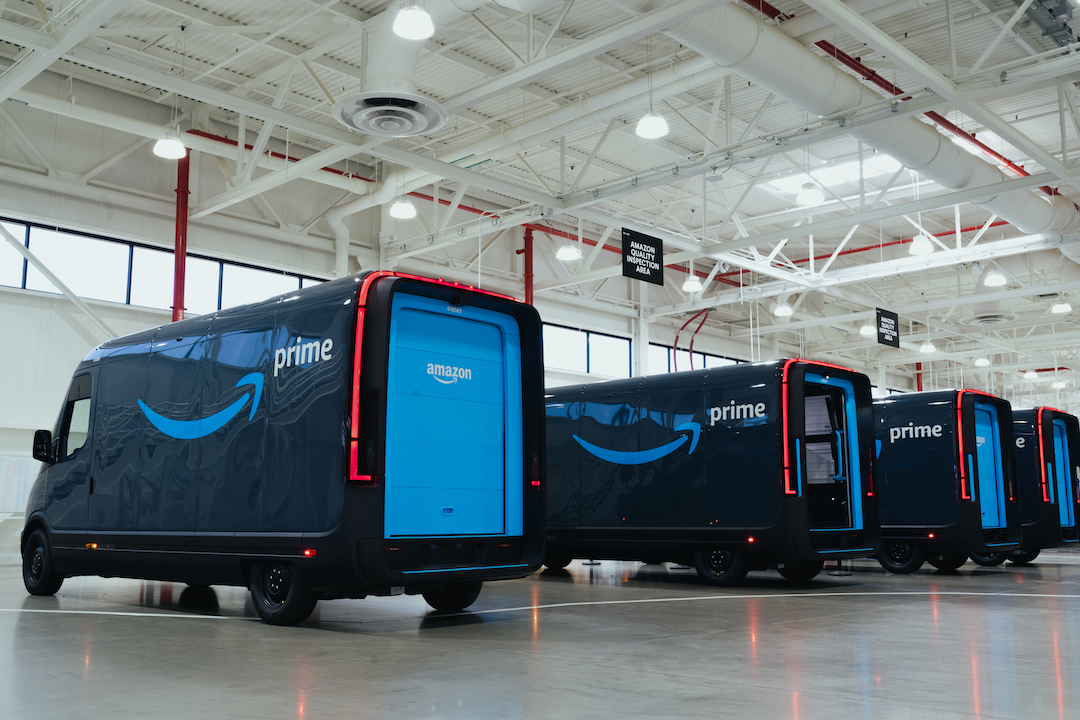
    The company also has an order for 100,000 electric delivery vehicles with Rivian Automotive Inc, in which it is the largest shareholder, according to Refinitiv.

    Plug said the Amazon deal will help the company grow towards its goal of $3 billion in revenue in 2025.

    It also said it has granted Amazon a warrant to buy up to 16 million of its shares at an exercise price of $22.9841 a unit for the first 9 million shares.

    Amazon would vest the warrant in full if it spends $2.1 billion over the seven-year term of the warrant across Plug products, it added.