Tag: asia

  • Vietnam imposes anti dumping duty on Thai-origin sugar

    Vietnam imposes anti dumping duty on Thai-origin sugar

    Vietnam has imposed an anti-dumping and anti-circumvention levy on Thai sugar imported via 5 ASEAN nations.

    The final verdict was made Monday, and the duty of 47.64 percent will become effective between Aug. 9 and June 15, 2026.

    The probe was launched last September after local firms reported sugar products imported from Laos, Cambodia, Indonesia, Malaysia, and Myanmar did not originate in those countries.

    Sugar imports in Vietnam jumped five times year-on-year to 527,200 tons in the period between October 2020 and June 2021, according to the Ministry of Industry and Trade.

    Imports from Thailand, however, slumped 38 percent in the same period.

    This was the period that Vietnam was investigating Thai sugar for dumping and subsidizing.

    “The sugar industry has provided evidence showing signs of Thai sugar’s trade remedies evasion through five countries mentioned above, especially the sudden jump in sugar imports,” the trade ministry said in a statement.

    Last June, Vietnam imposed an anti-dumping levy of 47.64 percent on some sugar products from Thailand for five years.

    Around 3,300 Vietnamese farmers lost their jobs, and 93,225 farming households were affected due to difficulties in the domestic sugar industry, according to the trade ministry.

  • Shipping firms report double-digit growth

    Shipping firms report double-digit growth

    Shipping companies have had one of their best quarters in years with most reporting double-digit growth thanks to high rates.

    Vinalines, the country’s biggest shipper, saw a near doubling of its profits year-on-year to VND1.43 trillion (US$61.19 million) in the second quarter.

    Private player Gemadept reported an 87 percent increase in profits to VND334 billion, the highest since the second quarter of 2018.

    Hai An Transport and Stevedoring made it to the top three after profits rose 3.3 times to VND324 billion.

    It was its most profitable quarter in nearly six years.

    Vietnam Ocean Shipping JSC (Vosco)’s profits were only up 7.5 percent to VND260 billion, but it was its most profitable quarter in 14 years.

    The Petrovietnam Transportation Corp (PVTrans)’s gross profit rose to a 15-year high of VND440 billion, but net profit fell 16 percent to VND265.5 billion as financial income decreased.

    The industry attributed growth to high freight rates, which have quadrupled since 2020 to $8,000 for a 40-feet container, according to data brokerage Bao Viet Securities compiled from Bloomberg.

    But market research firm FiinGroup warned that in the second half of this year the rates would fall and costs, especially of fuel, would rise.

    It also expected China to continue with its zero-Covid strategy, which could drag demand down.

    China accounted for a fourth of global goods throughput last year, according to data from its Ministry of Transport and German data portal Statista.

  • WhatsApp working on a new feature for group admins

    WhatsApp working on a new feature for group admins

    WhatsApp is constantly getting updates and new features, and we usually get a glimpse thanks to our friends at WABetaInfo. The app is working on a new voice note option for status updates, as well as the ability to hide your online status from prying eyes.

    Now there’s another slew of new features being developed mainly to help group administrators do their job more efficiently. The first one is set to allow admins to delete messages in groups for everyone. This was spotted in the WhatsApp beta v2.22.17.12 and according to WABetaInfo will be rolling out to the masses pretty soon.

    When an admin deletes a group message it will disappear for everyone, leaving a notice that it has been deleted by an admin (It says “you deteleted this message as admin” if you’re the one doing it).

    Another cool new feature that’s in the works is a chatbot that will blast users with in-app announcements. These announcements will include notifications about new WhatsApp features, tips and tricks, and possibly messages about paid promotions (hopefully not, but it’d be a missed opportunity).

    Earlier this year, WhatsApp started to test another feature to improve the user experience – the ability to edit your messages.

  • Maxis Records Strong Q2 Performance

    Maxis Records Strong Q2 Performance

    Maxis recorded a strong second quarter performance, delivering solid growth across all segments within its core consumer business as well as good momentum in its enterprise business.

    Service revenue increased to RM2,084 million, up 4.3%. Of which, revenue for the consumer business grew 4.4% to reach RM1,698 million, while the enterprise business yielded RM386 million in revenue, up 4%.

    With more Malaysians increasingly relying on converged connectivity and digital experiences at home, work and on the go, Maxis continues to attract customers with highly relevant solutions to meet their digital lifestyles. This resulted in increased revenue across the company’s mobile and fixed offerings, with market leadership in both postpaid and prepaid mobile.

    Concurrently, Maxis’ enterprise business maintained its growth momentum this year on the back of its core mobile strength. Maxis has been focused on playing a key role in supporting SMEs and enterprises in their digitalization ambitions through holistic converged ICT offerings and strategic collaborations.

    With a strong commitment to supporting the nation’s digital ambitions, Maxis continued to invest in its All-Ways Connected network (Maxis’ Rangkaian Menyeluruh) during the quarter, with a significant portion of these investments going toward fulfilling Jalinan Digital Negara (JENDELA) aspirations, upgrading its core network capacity and providing the best network experience for its customers. This has resulted in higher customer satisfaction levels than the previous quarter, with a touchpoint Net Promoter Score (TP-NPS) of +64 points.

    “Our solid performance across all segments underlines our sharp focus on our strategy and agility, and we are well-positioned for continued growth in a rapidly changing and competitive telco landscape. We are focused on continuously improving our converged network performance and leveraging our strong talent pool in striving to deliver the best innovation and services to our customers,” commented Gökhan Ogut, CEO, Maxis.

  • Peroni re-launches its low and no-alcohol brews

    Peroni re-launches its low and no-alcohol brews

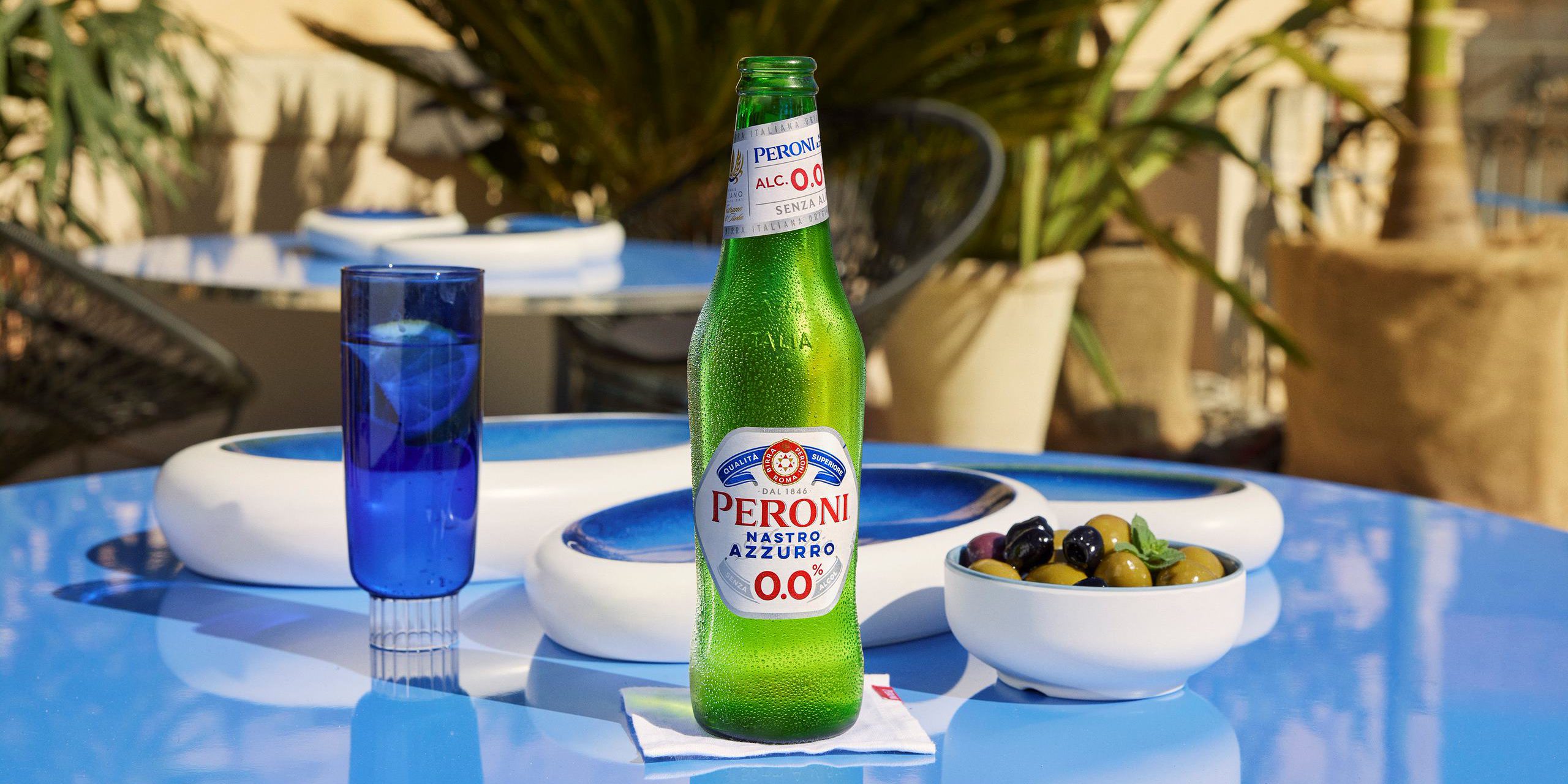
    This July, Peroni will relaunch its moderation portfolio of non-alcoholic (0.0%) and mid strength (3.5%) beers in Australia, under the Masterbrand of Peroni Nastro Azzurro, continuing to deliver the same Italian passion and flair to customers.

    Launching in Europe in April this year, Peroni Nastro Azzurro 0.0% and Peroni Mid Strength 3.5% are crafted using the signature Nostrano dell’Isola maize, grown exclusively for Peroni in the north of Italy, creating the same uplifting Italian taste.

    Birra Peroni has implemented technology in its Rome brewery to enable Peroni Nastro Azzurro 0.0% to match the flavour profile of signature beer, Peroni Nastro Azzurro, which has been brewed since 1963. This technology allows the signature base recipe and ingredients of Peroni Nastro Azzurro to be used, and only after the characteristic aroma and taste profile of Peroni Nastro Azzurro is fully developed, is the alcohol  gently removed to deliver the crisp and refreshing Italian taste.

    Australians still love a drink but are consuming beer in an increasingly responsible way, with Australian alcohol consumption at historic lows. These new Peroni beers cater to Australia’s evolving tastes, allowing lovers of premium beer to moderate their alcohol consumption while still enjoying the full and distinctive Peroni flavour.

    Kym Bonollo, Head of International & Craft at Asahi Beverages, says: “Peroni Nastro Azzurro 0.0% and Peroni Mid Strength 3.5% will replace Peroni Leggera and Peroni Libera throughout Australia, giving beer lovers a more authentic Peroni taste.

    “This launch has been a true global partnership between the local Australian team, our global team in London and our home team at Birra Peroni, Italy to develop these incredible and, might I say, refreshing brews. More than ever, we are all moderating our choices, but we shouldn’t have to compromise on taste. The redevelopment of our moderation portfolio to bring the uplifting taste of Peroni Nastro Azzurro to more consumers is a simple but positive one for our future.”

    Peroni Nastro Azzurro 0.0% will also replace Peroni Libera 0.0% in partnering with the Aston Martin Aramco Cognizant Formula One™️ Team and will appear across the car and all team kit, with the all-new 0.0% beer set to be served at prestigious events across the global Formula One™️ calendar.

    The Peroni Nastro Azzurro 0.0% launch in the Australian market will be supported by a campaign above the line across TV, video on demand, out of home, digital and social channels from September 2022. The beer will be available through retail and on premise venues.

    Asahi Beverages is committed to providing more options for beer drinkers to moderate their alcohol consumption. Already, 29% of Asahi Beverages’ beer sales are from no, low, and mid-strength beer.

  • Tourism recovery dogged by lack of staff

    Tourism recovery dogged by lack of staff

    The number of new hospitality businesses is rising, but a shortage of staff and tourists from pre-Covid major markets are hampering the tourism industry’s revival.

    The number of foreign tourists rose 582 percent year-on-year to 602,000, while over 3,000 new accommodation and hospitality businesses were registered, up nearly 28 percent year-on-year, according to the General Statistics Office.

    However, as 60.8 million domestic tourists started to travel after two years of Covid-19 constraints, businesses are struggling to recruit enough staff to cater to the surging demand in many localities.

    “Recruitment is difficult for the whole industry. In our hotel chain, each staff has to undertake several different jobs,” said Vo Thi Thien Huong, director of business and marketing at Fleur De Lys Hospitality hotel chain.

    Jakob Helgen, Marriott International area vice president for Thailand, Vietnam, Cambodia and Myanmar, said many companies are experiencing a labor crisis as employees were forced to quit in droves during the Covid-19 restrictions.

    Other hotels have reported staff shortage in the reception, housekeeping and food and beverage departments.

    The reason for the shortage is erstwhile staff had left for other jobs over the last two years, said Le Thi Ngoc Cuong, director of business and marketing at The Secret Con Dao hotel.

    “Many former tourism staff have found other stable jobs and so it is unlikely that they will return.”

    Phan Trong in Ho Chi Minh City is one of the former tourism staff who is unlikely to return.

    The 33-year-old had worked as a tour guide for five years before leaving for a new job last year, when most tourism activities were shut down.

    He now works as a group leader for a call center with a salary of VND13 million ($556) a month.

    “My salary is the same as before. Even though the new job is a little bit more demanding, I have settled down with it and do not want to go back.”

    Le Nguyen Ngoc Thanh, country director at headhunting platform Adecco Vietnam, said that demand for tourism, hospitality and accommodation staff has increased since the first quarter, but many companies were struggling to fill the empty positions.

    Adding to the shortage is the lack of skill among workers, with many receiving no training or the last two years and fresh graduates having no experience, she added.

    In addition, many workers who left for their hometowns are reluctant to return to major cities because of high living costs and inadequate salary offers, she said.

    Missing tourists

    Another key problem for the industry is the lack of foreign tourists.

    The 602,000 foreign tourist arrivals in the first six months marked a decline of nearly 93 percent over the same period in 2019, when the pandemic had yet to hit the world.

    The four major markets of China, South Korea, Japan and Taiwan together accounted for 66 percent of foreign tourists in the first six months of 2019, but as these countries and territories still maintained quarantine policies for returning tourists, people were not eager to fly.

    The Russia-Ukraine crisis has also blocked Russian tourists, who used to pack Nha Trang and Mui Ne beaches.

    The Russia-Ukraine tension and China’s ‘zero Covid’ policy has had a major impact on Vietnam’s tourism recovery, said HSBC’s country head of markets and securities services Ngo Dang Khoa.

    Inflation and Covid-19 are other factors that keeps tourists from traveling globally, he added.

    One of the solutions the Vietnam National Administration of Tourism has proposed is better utilization of the markets that Vietnam has resumed air travel with, such as South Korea, Japan, Western Europe, Australia and ASEAN.

    New markets that should be focused are India, U.S. and the Middle East, it has said.

    Thanh suggested that tourism companies provide trading for college graduates and employ part-term workers.

    “Businesses should conduct surveys on workers’ expectations in terms of salary and benefits and make necessary changes.”

    Thanh also proposed that companies try to reach out to former employees and convince them to come back.

    Trong said scenario was unlikely, at least for now.

    “There are still so many global issues like geopolitical tensions, diseases and natural disasters. If I go back and the industry freezes again, that would be a tragedy.”


  • Grocery chain Bach Hoa Xanh revenues drop on store closures

    Grocery chain Bach Hoa Xanh revenues drop on store closures

    Grocery chain Bach Hoa Xanh suffered an 8 percent fall in sales year-on-year in the second quarter to VND6.76 trillion (US$289.47 million) following its closure of hundreds of outlets.

    The subsidiary of electronics retailer Mobile World closed 251 unprofitable outlets in May and June as it restructured and also changed the layout of the remaining stores.

    It has so far renovated nearly 1,500 outlets and it plans to close down more this quarter, keeping only 1,700-1,800 stores open.

    Nguyen Duc Tai, its chairman, has said there will be no expansion this year to focus on improving efficiency and customer service.

    The company is preparing for nationwide expansion in 2023 from its current predominant presence in the south.

    Bach Hoa Xanh reported revenues of VND12.8 trillion for the first half, accounting for 18 percent of Mobile World’s revenue.

    Mobile World’s revenues rose 13 percent to VND70.8 trillion, while profits were up 1 percent at VND2.68 trillion.

  • Used O2O motorbike trade debuts in Vietnam

    Used O2O motorbike trade debuts in Vietnam

    OKXE has pioneered the online to offline (O2O) sale of used motorbikes, rejuvenating the market.

    The inadequacies and bad experience of users when buying used motorbikes are the reason why Wooseok Kim, CEO of OKXE launched an online platform trading used motorbikes in Vietnam.

    “We want to solve the inconvenience of users when trading used motorbikes, providing an easier, safer and more enjoyable online platform,” said the OKXE CEO.

    Founded in August 2018, the initial goal of this start-up is to create a more explicit and secure second-hand motorbike market for users. At the time, OKXE was one of the first mobile platforms in Vietnam in the field. However, a lot of Vietnamese still consider motorbikes to be assets of great value, and online transactions can be problematic due to fraud, subpar autos, and inaccurate prices. The company’s CEO admitted his online platform has only met about 50-60 percent of the original target.

    Operational for more than five years, OKXE Vietnam opened a motorbike service station, put into operation at the end of May 2022, creating a complete O2O model.

    This was a bold strategy, because the O2O model has not been applied by many in the field, said a company representative. “While focusing on the new model, OKXE maintains investment in expanding the market. This is a dual goal that we want to achieve in future.”

    The OKXE service station is expected to provide users with a more comprehensive experience based on the expanding and evolving ecosystem. The service station offers extra services in addition to its online offerings, including quality checks on used motorbikes, price recommendations, consignment acceptance, and sales negotiations.

    The first OKXE Station covers 500 square meters, including: service reception, motorbike wash, refurbishment repair, quality inspection, consignment display, cafe counter…

    This company’s research indicates the majority of Vietnamese frequently pick traditional motorcycle marketplaces or secondhand motorbike shops. By cooperating with this trading approach, OKXE opted to create a national network of collaboration rather than viewing it as a rival.

    To be more precise, this business leverages a plentiful source of clients and used vehicles from its partners, gradually enhancing and perfecting its service chain. On the other hand, OKXE uses a platform with millions of users to assist partners in selling motorbikes more quickly. Additionally, the service center aims to help partners with financial assistance packages for motorbike purchases, warranties, after-sales, photography support, and online sales.

    According to an OKXE representative, the company’s platform has experienced steady growth from the time of launch until now and is always improving. “Currently, the OKXE app has reached seven million downloads on iOS and Android platforms. More than 500,000 motorbikes have been registered and sold successfully through the application”, it was added. “As of July 2022, OKXE Vietnam has nearly 2,000 partner stores nationwide.”

  • Stores’ claims of accepting Pi payment turn out to be misleading

    Stores’ claims of accepting Pi payment turn out to be misleading

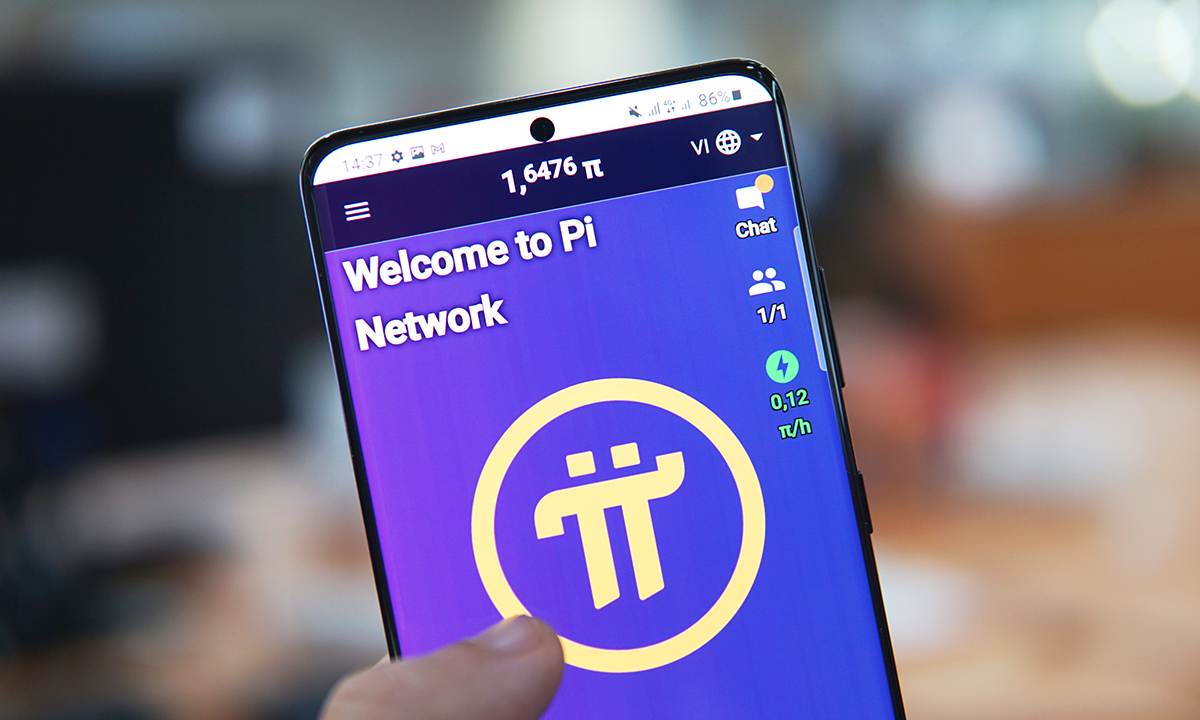
    Some stores accept payment in cryptocurrency Pi but only partially and require buyers to pay mainly in cash.

    “I saw a post selling a used iPhone 11 and thought I could buy it with a dozen Pi tokens,” Thanh Son of HCMC said.

    But it turned out he could only pay 10 percent with Pi and the remaining VND12.5 million ($535) had to be paid in cash.

    “I can easily buy the same phone for VND12.5 million without spending a single Pi,” he said wistfully, adding it was a trick sellers used to entice Pi owners.

    He later contacted some other sellers and got pretty much the same answer.

    “Some places require a smaller proportion of cash but they undervalue Pi.”

    Some investors had begun to claim they bought food and equipment using Pi on social media since July 13 when the cryptocurrency’s developers allowed it to be traded.

    Cryptocurrencies are not legal tender in Vietnam, and issuing, trading or using one for payment attract fines of up to VND100 million.

    Sellers try to avoid legal risks by calling deals using Pi “exchanges” rather than “transactions.”

    A person who asked not to be identified said they had put down a VND10 million deposit for a car after the dealer made an offer “exclusively for the Pi owner community.”

    But the seller actually does not accept payment using Pi.

    He reportedly told the person: “Once Pi enters the open mainnet phase, you guys, Pi owners, can offer it for legal tender. Then you bring the legal tender to us and take your car.”

    The dealer claimed over 100 people had deposited. It is far from clear when, and if ever, the crypto will become legal tender.

    There is a chance the people would lose their deposits, an expert warned.

  • Gasoline prices fall fourth consecutive time

    Gasoline prices fall fourth consecutive time

    Vietnam gasoline prices on Monday dropped 1.8 percent to the lowest since Feb. 21 as global rates declined.

    A liter of popular RON 95 gasoline now costs VND25,600 ($1.10), while that of biofuel RON 92 E5 costs VND24,620.

    This means prices have fallen 21.3-22.1 percent since this year’s peak on June 21.

    On the global market, gasoline prices have decreased by 1.22-1.54 percent in the last 10 days, according to data from the Ministry of Industry and Trade and the Ministry of Finance.

    WTI crude futures fell over 2 percent to below $98 barrel Monday as fears of a global slowdown outweighed continued supply disruptions and market tightness.
  • Vinamilk profits continue to fall

    Vinamilk profits continue to fall

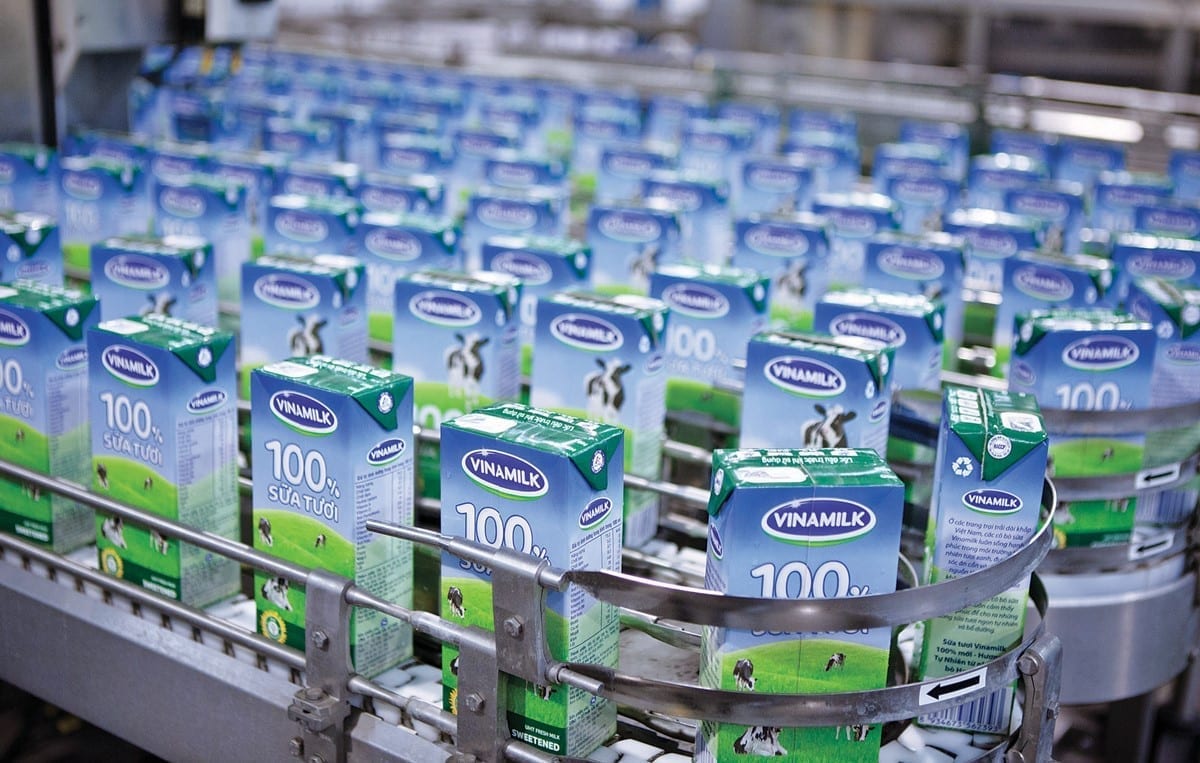
    Vinamilk reported a 26-percent year-on-year fall in second-quarter profits to VND2.1 trillion (US$89.97 million), and blamed it on inflation driving demand down and costs up.

    The dairy giant’s revenues fell by 5 percent to VND14.93 trillion.

    In the first five months sales of fast moving consumer goods fell by 2 percent, according to data from market research firm Nielsen.

    Vinamilk also struggled to maintain its dominance in the domestic market and saw exports drop by 12 percent due to lower global demand and higher transport costs.

    However, its profit margin rose by 0.2 percentage points from Q1, the first increase since 2020.

    Besides, its U.S. and Cambodian subsidiaries, Driftwood and Angkormilk, reported sales growth of 40 and 20 percent.

    This year it expects profits to decline by 7 percent, a second straight year of falling profits, due to rising costs of raw materials and transportation.

    But securities brokerages said lower milk powder prices would increase the profit margins for the dairy industry this year, including for Vinamilk.

    SSI Securities expects the company’s net profits to rise by 11 percent, while VnDirect Securities forecast a 7.5-percent increase.

  • Apple will ‘soon’ inundate the App Store with more ads

    Apple will ‘soon’ inundate the App Store with more ads

    While Apple froze third-party advertising cookies on its platform, resulting in the first revenue dip of Facebook since its inception, the App Store application shop has been showing ads in its search results as well as the respective tab for a while now.
    Brace yourselves, because these ads are now coming throughout the App Store, starting with the Today homepage tab, but they could also appear on each individual app page in the You Might Also Like section. The advertisement will allow developers to be promoting their own apps and Apple its own stuff as it sees fit according to its own privacy ground rules.
    The visible ads will be denoted as such and Apple won’t be targeting users below eighteen for personalized advertising, plus it won’t employ granular targeting by using your sensitive data like the other two ad behemoths Facebook and Google. That’s all part of Apple’s privacy and transparency policy, as it said in a dedicated statement:

    App Store developers are also happy with the ad development, as Ron Schneidermann of the app AllTrails states that “Apple Search Ads helped us attract new, more engaged customers across markets. We rely on Apple Search Ads for cost-effective customer acquisition – it’s a critical component of our growth strategy. As they become available, we plan to invest in new placements to reach even more customers on the App Store and continue to drive our business growth.”

    As for when will the new App Store advertising spree happen in earnest, Apple only said that the ad locations are now in their alpha state and it will “soon” start rolling out the testing phase, so don’t be surprised if ads appear on your iPhone application store in tabs where there were none of those pesky little nuggets were present before Apple’s move.
  • Fitbit Luxe and Charge 5 updated with much

    Fitbit Luxe and Charge 5 updated with much

    Last month Fitbit quietly rolled out an update for Charge 5, one of its most advanced fitness trackers. Although it didn’t say anything about what the update should change, we did learn that the Google-owned company added the ability to find your phone via the fitness tracker.

    Today, Fitbit confirmed that the update not only introduced the much-needed feature, but also added a few clockfaces. The above image shows one clockface in two color variations – Boom, plus an additional clockface for another Fitbit wearable device, the Luxe.

    Just to be clear, Fitbit Luxe owners will get all three clockfaces, while Charge 5 will only receive the Boom clockface available in two versions. Besides these new customization options, Luxe users will also get the option to find their phones via the wearable device, just like the Charge 5.

    To do that, you’ll have to install the new Find Phone app, open it on your tracker, tap Find Phone, and your phone should start to ring loudly, even if it’s set on the DnD (Do Not Disturb) mode. If you successfully locate your phone, you can tap Cancel to stop it from ringing.

    Fitbit says the update is now available, although Charge 5 users might have already picked this one up more than a week ago when it surfaced for the first time.

  • Spotify launches individual buttons for Premium users

    Spotify launches individual buttons for Premium users

    Not a week goes by without Spotify launching a new feature for its customers. The music streaming service announced gains in both paid and free customers back in April, so the new often-released new features are meant to keep subscribers loyal and turn free customers into paying ones.

    The most recent new feature announced by Spotify is exclusively aimed at turning free users into subscribers. The music streaming service revealed plans to launch individual buttons for Shuffle and Play, which will only be available for Spotify Premium users.

    Spotify has a single button for that merges these two important options – Play and Shuffle, but an upcoming update will separate the two for Spotify Premium users. It will make it clearer and easier to choose the mode that a user prefers at the top of playlists and albums.

    According to Spotify, the new feature will be rolled out on iOS and Android mobile devices for Spotify Premium users worldwide over the coming weeks, so look for the two new buttons as soon as you see an update for your Spotify app. Don’t bother though if you’re using Spotify’s free tier.

  • PLDT’s Trans-Pacific Cable System Is Now Activated

    PLDT’s Trans-Pacific Cable System Is Now Activated

    The last test 14,000-kilometer cable system is the fastest in the country, enabling direct data cable link to the US and Japan. It’s also expected to improve the Philippines’ international data capacity and boost its digital infrastructure.

    PLDT and Smart President and CEO Alfredo Panlilio said, “The PLDT Group takes pride in leading our nation’s digital advancement, made possible through dynamic synergies with government and private sector partners.”

    He added, “Our investment in Jupiter will exponentially boost the Philippines’ international capacity, ramp up the global trade of digital services and propel the nation’s digital economy, while increasing internet speed and reliability for Filipinos.”

    The company also said that this new system will triple PLDT’s international capacity to about 60 Terabit/s, which will be beneficial for the country since a large volume of Internet content and services consumed by Filipinos goes through servers from the US and Japan.

    Currently, PLDT has extensive participation in 16 international submarine cable networks and is set to expand further with the completion of two more major international cable systems, namely Asia Direct Cable (ADC) and the APRICOT cable system, set to be completed in the next two years. It also operates the most expansive fiber optic network among local ISPs at 803,000 kilometers, linking all islands in the archipelago with fiber connectivity and powering local economies and communities in the cities and regions.