Tag: asia

  • Elevating Customer Experience in the Telecom Sector

    Elevating Customer Experience in the Telecom Sector

    Communication service providers (CSPs) understand the value of elevating customer experience and digital engagements to stand out from competition. This shift to an increased focus on digital customer experiences is essential to CSPs’ transformational journeys.

    Customer experience is a critical aspect in every service business and a main differentiator in a competitive telecom landscape. Instead of merely being focused on upgrading network capabilities, CSPs are increasingly challenged to prioritize intuitive, seamless designs that simplify customer engagement in order to provide what they want and need. For instance, a single mobile app can serve as a  one-stop platform for myriad services, even billing.

    As CSPs reinvent their relationships with customers, cloud capabilities and features such as virtual assistants or chatbots are also becoming commonplace to streamline customer service processes. Looking ahead, customer experiences can be enhanced with augmented reality to support user functions across markets.

    In a report specific to the Indian market, KPMG cited that improving customer experiences can help companies, including telcos, raise their valuation by 125% to 400%. Enhanced customer experience is key to building long-term customer relationships and creating sustained value to help companies grow.

    Personalization Key to Evolving Customer Experiences

    Personalization in services is important in elevating customer experiences. Big data and analytics are instrumental in creating tailored and specific experiences based on the characteristics of customers. They provide useful metrics that allow operators to track customer satisfaction and more.

    Round-the-clock and consistent, reliable services add value to an omnichannel customer journey that facilitates meaningful touch points. Building from past behaviours and patterns, customer engagement is advanced to a new level that allows customers to access a multitude of services across multiple channels whenever desired, ensuring that an end-to-end experience is created for customers.

    Multi-Faceted service assurance is key, as customers expect more from their voice, text and mobile services. With pay TV growing, operators need to have a unified view of customers wants and needs, leveraging real time analytics to achieve relevant breakthroughs.

    In order to capture more subscribers, billing and payment is another area to target improvements. In one such example, countries such as Indonesia and the Philippines have implemented staggered mobile data plans so that subscribers who tend to spend in small amounts are not bound by long-term data plans. This includes giving postpaid pay-as-you-go subscribers the option to switch to volume-based plans should their data limit be exceeded, or a “pay-to-boost” option where needed.

    SaaS to Gain Competitive Advantage

    Traditional legacy models are giving way to engagement-centric SaaS models for customer engagement functions as one way to achieve scalability and quicker . Another benefit is lower set cost and increased IT cost savings, estimated by Analysys Mason to amount to as much as approximately 25% IT cost savings over the course of five years. The value of the global SaaS market for OSS and BSS is estimated to be at $10.7 billion by 2023, representing a 29.5% compound annual growth rate since 2018.

    As CSPs continue to digitally transform, SaaS spending has been growing. In 2019, SaaS accounted for 5% of CSP’s operational expenditure. This figure is expected to reach at least 11% by 2023.

    In Singapore, Circle Global recently completed the acquisition of the mobile virtual network enabler (MVNE) business, a US-based cloud software, communications platform company. With this strategic move, Circle Global aims to expand its SaaS and 5G capabilities.

    Service providers are also capturing growth opportunities in this market, as they roll out more SaaS in their service portfolios targeting CSPs that will need to update processes in the 5G era. As a cloud-first strategy takes root in the industry, CSPs step forward with a suite of easy-to-adopt solutions to take customer experience to the next level.

    Since “one” makes a “w” sound, the article is “a”

    Not sure about this: “turnaround” is a more natural process of services or fulfillment whereas “turnabout” is a more sudden move in a different direction. A turnaround is smoother and a turnabout is a sudden reaction

  • SES and AXESS Networks Partner for Smart Mining

    SES and AXESS Networks Partner for Smart Mining

    SES and AXESS Networks (AXESS), a leading provider of satellite connectivity solutions, are accelerating the digital transition of the mining industry with SES’s second-generation medium earth orbit (MEO) system O3b mPOWER. Under this multi-year, multi-million agreement, the mining sector users will be able to benefit from the cutting-edge low-latency Onshore Energy & Mining mPOWERED connectivity service.

    SES’s Onshore Energy & Mining mPOWERED service will provide the highest throughput available from a satellite system and deliver dedicated and carrier-grade networks to AXESS’ customers reliably, regardless of their remote locations. O3b mPOWER can deliver multiple gigabits per second per site, enabling AXESS’ customers to accelerate the digitalization of their operations and sites globally, boosting profitability through access to new applications and efficiency, as well as improving staff safety and welfare. SES’s second-generation MEO connectivity service also brings the cloud closer to end customers and can enable edge computing to support the use of 5G and IoT in the mining industry.

    Simon GattySaunt, Vice President of Networks Sales, Europe, at SES, said, “Transition towards smart mining is already turbocharging profits, and revolutionizing industry’s environmental and societal impact. We are proud of the success our partnership with AXESS has already had in facilitating this change, thanks to our multi-orbit GEO and MEO network, and are excited to further accelerate it with the O3b mPOWER service.”

    Guido Neumann, President AXESS EMEA, said, “This agreement builds on a long and successful relationship with SES, which has helped us to provide our customers with the best-in-class, reliable and resilient connectivity for their operations. As we are seeing a considerable uptake in demand for the carrier-grade solutions globally, but especially in the EMEA and APAC region, we are honored to play an active role in scaling the digital transition in the mining sector through introducing O3b mPOWER and the Onshore Energy & Mining mPOWERED service.”

  • UBS Appoints Hong Kong Asset Management Head

    UBS Appoints Hong Kong Asset Management Head

    UBS has named a new head for its Hong Kong asset management unit, succeeding Adolfo Oliete who will relocate to London.

    Hayden Briscoe has been appointed as UBS Asset Management head for Hong Kong, according to an internal memo, reporting to APAC asset management head Raymond Yin.

    Briscoe started his career in Sydney before moving to Hong Kong in 2013 and joining the asset management unit in 2016. He will also retain his existing role as head of GEM and APAC for fixed income.

    Briscoe succeeds Adolfo Oliete who will return to London over the summer and continue his role as hedge fund solutions (HFS) head of APAC investments and a member of the HFS global business’ senior leadership team. Oliete will relocate following a 14-month stint as asset management head of Hong Kong.

    A spokesperson for the bank confirmed the contents of the memo.

  • Long Chau Pharmacy sees revenues triple in H1

    Long Chau Pharmacy sees revenues triple in H1

    Long Chau Pharmacy tripled its revenues year-on-year in the first half-year to VND4 trillion ($171.38 million) and opened hundreds of new stores.

    It increased its contribution to FPT Retail’s revenues from 15 percent to nearly 30 percent in the period.

    At the end of June, Long Chau had 678 pharmacies, 278 more than at the beginning of the year.

    FPT Retail, a subsidiary of tech giant FPT, expects the pharmacy chain to make a profit of VND50-100 billion this year.

    Another major contributor to FPT Retail’s revenues is electronics retailer FPTShop, which saw revenues rise by 31 percent to VND10 trillion.

  • YouTube Music app adds useful new feature for Android

    YouTube Music app adds useful new feature for Android

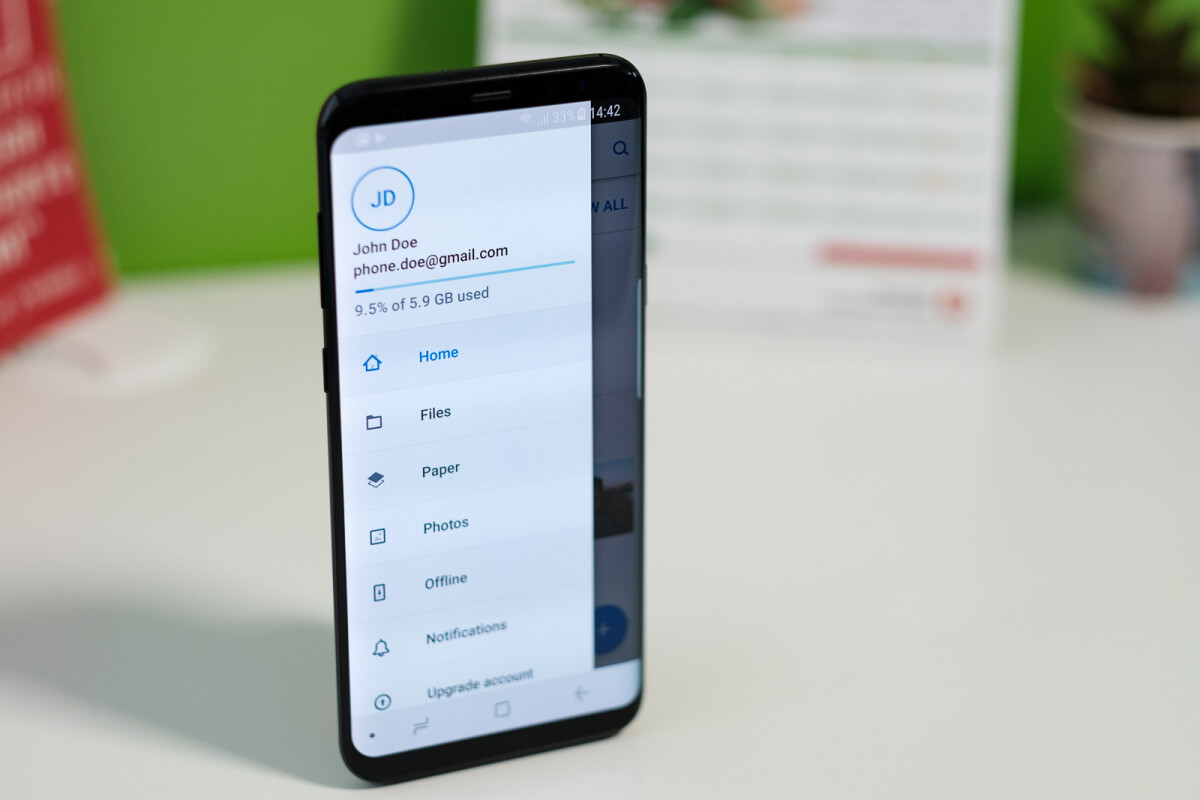
    If you like music, you probably use the YouTube Music app often. You can go to the app and find the song you want using the app’s search tool, or you can ask your digital assistant to play a specific song by a specific artist (for example, “play Revolution Number 9 by the Beatles on YouTube Music”). You might be asked to unlock your phone first. Besides its vast library of original performances, YouTube Music has a wide selection of covers which allows the app to recommend a selection of them along with alternative takes, live versions, and more.
    Depending on the song, while you are playing the tune, directly from the Now Playing screen you can find a list of covers for the song you are currently streaming. Again, let’s use the Fab Four for this example. So you’re listening to Come Together and you are curious to listen to alternative versions of the song. From the Now Playing screen, tap the Related tab on the bottom right of the screen.
    Scroll down to Other performances and you’ll see cover versions of Come Together from the likes of Ike and Tina Turner (!) and Jennel Garcia. There is also a live version sung by the late John Lennon (who of course wrote the tune and recorded it with the rest of the Beatles). Speaking of the latter, there is also an alternative take recorded by the Liverpudlians included in this list.
    The covers, live performances, and alternative takes listed under Other performances will change each time you look it up as you can see from the embedded screenshot included in this story. That list of covers for Come Together includes one performed by the unlikely trio of Steven Tyler, Alice Cooper, and Marilyn Manson

    Scrolling down past the Other performances reveals a carousel titled Similar artists. Below that, the More From carousel lists additional songs available from the same artist or group. That is followed by a biography of the artist or group listed under About the artist. Some YouTube Music users spotted the new features as early as a month ago while other iOS and Android users are just getting them now.

    You can load the YouTube Music app on your phone from the Google Play Store for Android handsets, and the Apple App Store for iOS.
  • HDBank reports $227 mln profit in first half

    HDBank reports $227 mln profit in first half

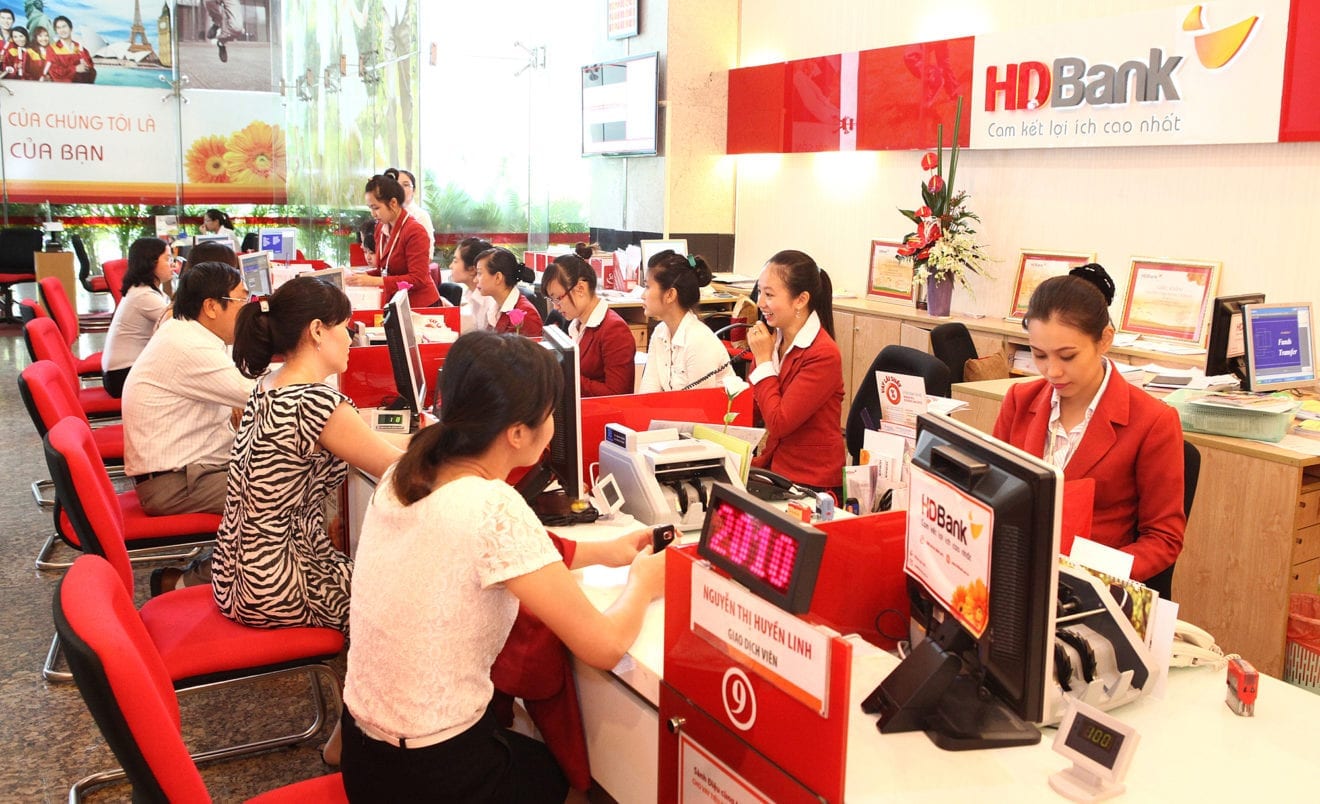
    Ho Chi Minh City Development Joint Stock Commercial Bank (HDBank) has announced business results for the first half of 2022 with profit before tax of VND5.304 trillion ($227.25 million), up 26.5 percent year-on-year.

    First-half profit completed 54 percent of the annual budget. The parent bank’s fee income rose 113 percent year-on-year while the separate NPL ratio was 0.93 percent.

    In the second quarter, all key performance indicators rose significantly. Consolidated total operating income in the second quarter reached VND5.582 trillion ($239 million), up 31.2 percent year-on-year. Profit before tax reached VND2.776 trillion, up 32.6 percent year-on-year.

    Total operating income reached VND10.704 trillion, up 27.1 percent year-on-year, in which net interest income rose by 25.8 percent, and non-interest income, by 32.6 percent year-on-year. Bancassurance and other cashless payment services achieved growth with net fee income double that of the same period last year.

    HDBank has implemented technologies to improve productivity and enhance risk management, resulting in the modest increase of 19.4 percent year-on-year in operating expenses. Cost-income ratios improved to 37 percent from 39.4 percent a year earlier. Profitability ratios including ROAE and ROAA were 25.6 percent and 2.24 percent respectively, both higher than those last year.

    Prudential ratios are at healthy levels with CAR (under Basel II) reaching 14.9 percent – the market-leading level. The parent bank’s NPL ratio was 0.93 percent while its loan loss reserve ratio reached the comfortable level of 109 percent.

    HDBank is implementing a plan to raise charter capital as approved by AGM by issuing about 503 million shares to distribute 2021 dividend by stocks, at the payout ratio of 25 percent. Upon completion, charter capital will increase to VND25.303 trillion from VND20.273 trillion. The re-investment of retained earnings into the bank’s business activities will further strengthen the bank’s financial capability, preparing it for strong business growth and profit generation according to the strategy approved by shareholders.

    As of June 30, total mobilized funds exceeded VND340 trillion. Total consolidated lending reached over VND245 trillion, up 14.8 percent from that of Dec. 31, 2021. Customers including those in rural areas, exporters, supply chain clients, household businesses, micro-businesses and those eligible for green finance programs all enjoyed HDBank’s favorable lending programs.

    HDBank is also paying great attention to its corporate social responsibility. The bank collaborated with Tuoi Tre (Youth) Newspaper to launch a cashless payment fair for workers in industrial zones, providing them with the chance to experience cashless payment solutions and online account opening.

    HDBank also contributed to the financing of gratitude house construction to honor and show appreciation to families who made great contributions to the revolution, supported localities vulnerable to floods and storms in central Vietnam, and awarded scholarships to underprivileged students who achieved good performance at universities.

  • Nowhere to hide for online sellers as taxman catches up

    Nowhere to hide for online sellers as taxman catches up

    Many individuals who have been earning thousands of dollars from Facebook, Google, YouTube, and other online platforms have been taxed in recent years, officials said.

    The HCMC Tax Department for instance said at a forum Friday that it collected over VND8 billion ($342,759) each from two individuals last year and this year on their earnings from YouTube and TikTok.

    In 2018 it collected VND4 billion from a man who earned VND41 billion from Google, it said.

    It also found a person in Quang Nam Province earning nearly VND17 billion from Google and passed on his details to authorities there.

    In 2017 it discovered a woman had sold cosmetics worth over VND499 billion through live streams between 2013 and 2016.

    She had to pay over VND9 billion in taxes and fines.

    An individual who supplied the goods to her had to pay over VND1.7 billion.

    The Hanoi Tax Department said it has discovered at least 1,194 people with incomes from foreign entities like Google and Facebook and collected VND129.3 billion last year and VND134 billion in 2020 from them.

    Last year it set up a database, which now has 32,084 online shops and 2,307 online property landlords, for collecting taxes.

    There are 139 companies operating e-commerce platforms in Vietnam, and they record an average of 3.5 million visits a day, according to the General Department of Taxation.

  • Vietnam Airlines cuts losses by nearly half

    Vietnam Airlines cuts losses by nearly half

    Vietnam Airlines managed to cut its losses by 44 percent year-on-year in the second quarter to VND2.48 trillion ($106.25 million), thanks to soaring summer travel demand.

    Its revenues nearly tripled to VND18.43 trillion, exceeding its target by 35 percent.

    This was the highest quarterly revenue since 2020 when travel was yet to be affected by Covid-19. But the high fuel prices remain a sore point for the carrier.

    At the end of June, JetA1 fuel was above US$160 per barrel, double the average price last year.

    International travel demand has not fully picked up, especially in Northeast Asian countries, which were a major source of tourists for Vietnam pre-pandemic.

    The airline also saw sales expenses double to VND660 billion.

    First half losses were down 39 percent to VND5.1 trillion.

    Its accumulated losses have climbed to VND28.9 trillion. The airline expects the summer travel season to last until the end of August and the relaxed entry restrictions in other countries to help boost its revenues.

    Vietnam Airlines and its low-cost subsidiaries Pacific Airlines and Vietnam Air Services Company together transported nearly 9.5 million passengers in the first six months, 24.6 percent higher than targeted.

    Vietnam Airlines accounted for eight million.

  • Bamboo Airways appoints new general director after predecessor quits

    Bamboo Airways appoints new general director after predecessor quits

    Bamboo Airways appointed new general director Friday night after Dang Tat Thang, who helped set up the airline in the early days, resigned as its chairman and general director.

    Nguyen Manh Quan took the new position after having served as the carrier’s deputy general director.

    Quan joined Bamboo Airways in July 2020 and has 30 years of experience in aviation, service, and commerce. He used to work for the Ministry of Industry and Trade, Vietnam Airlines, Noi Bai Airport Services Company, and Vinpearl.

    Bamboo Airways said in a statement Friday: “The transition of the general director position is part of the work to consolidate the high-ranking management system to speed up the process of restructuring of and selecting strategic investors for FLC and Bamboo Airways.

    After leaders of property group FLC, the parent company of Bamboo Airways, got into legal trouble earlier this year, the airline has been in the process of looking for new investors to accompany and serve its future development needs.

    Thang said in his resignation letter that for some personal reasons, there were many things that he needs to sort out, therefore he could not arrange to continue his current positions. He also resigned as FLC’s vice chairman.

    Thang, 41, was appointed chairman of FLC and Bamboo Airways after former chairman Trinh Van Quyet was arrested at the end of March for allegedly manipulating the stock market.

    He served as FLC’s vice chairman from early this month after the group elected Le Ba Nguyen as its new chairman for until 2026 at an extraordinary shareholders’ meeting.

    Thang started working at FLC in 2014 as deputy general director, in charge of investment and project development. He was the leader of Bamboo Airways from the early days of its establishment in 2018.

    Under his management, Bamboo Airways has generated rapid development with a roster of 30 aircraft and became the first private airline in Vietnam to operate wide-body aircraft. After over three years, Bamboo Airways is operating nearly 60 domestic routes and 12 international routes, including routes to the U.K., Germany and Australia.

    In his most recent public appearance in July, Thang said that Bamboo Airways aims to increase its roster to 100 aircraft by 2028.

  • 7 days left to register for Startup Viet 2022

    7 days left to register for Startup Viet 2022

    Startup Viet 2022, an annual event hosted by VnExpress to promote entrepreneurship, closes registration in seven days.

    The sixth edition of the competition, themed “the New Era of Innovation,” has received dozens of registrations since it opened June 13.

    The startups are from various sectors including e-commerce, logistics, fashion, manufacturing, agriculture, customer service, business management and software development.

    The contestants will be evaluated based on revenue growth, organization, sustainability and international prospects by startup experts, investors, venture fund representatives and other successful businesspeople.

    To register, click the link below:

    Startup Viet 2022 Registration

  • SpaceX To Roll Out Starink Satellite Internet Services by Year-End

    SpaceX To Roll Out Starink Satellite Internet Services by Year-End

    The Philippines’ Department of Information and Communications Technology (DICT) has announced that SpaceX’s Starlink satellite internet services will start to be available by the end of this year.

    A press conference was held to update the media on the latest developments in this much-anticipated project to address the digital gap in the country.

    In a press release, DICT chief Ivan John Uy said, “The DICT is closely following the directives of President Ferdinand Marcos Jr., that is to provide digital connectivity across the many islands of the Philippines by building the country’s digital infrastructure, that will also lead to effective e-governance.”

    He added, “This will bridge the digital divide in the country especially in an archipelagic country like the Philippines where laying fiber cables or establishing cell towers in mountainous areas can be challenging.”

    Starlink is expected to connect the rural and remote communities in the country, which are underserved by major telecom operators. This breakthrough is a response to the new government’s call for digitalization of the country, wherein Filipinos from remote areas can have access to education, health services and online banking, among other digital needs.

    SpaceX Executive Rebecca Hunter said that Starlink’s entry to the country does not mean competition with existing telecom players, but rather it will be a complementary connectivity solution to bridge the digital divide in the country.


  • New management To Steer UBS Hedge Funds Business

    New management To Steer UBS Hedge Funds Business

    The Swiss bank’s cherished hedge fund boutique O’Connor is reshuffling its top management at a time when the industry is seeing significant outflows.

    UBS is naming Blake Hiltabrand as global head of UBS O’Connor business, and is appointing Bernard (Bernie) Ahkong and Casey Talbot as co-CIOs of the unit, it said in a statement Friday.

    All three will replace Kevin Russell, who carried out the roles of CEO and CIO at the bank’s hedge fund business and looks back on a 29 year career in the industry, it said.

    Hiltabrand, who currently co-heads event driven strategies will assume his new role on October 1. Hiltabrand has worked at UBS O’Connor for over 15 years and is a senior member of UBS O’Connor’s management team and capital allocation forum.

    Talbot currently heads of credit strategies for the global multi-strategy portfolio and will assume the additional role of co-CIO for the portfolio. Casey joined UBS O’Connor in 2013 from Deutsche Bank and is a senior member of the UBS O’Connor capital allocation forum.

    Ahkong, who heads UBS O’Connor in Europe and is the portfolio manager for the European long/short equity team, re-joined the firm in 2016 from BlueCrest Capital, having previously been a portfolio manager at UBS O’Connor from 2006-2013. He is also a senior member of the UBS O’Connor capital allocation forum.
    Hedge funds have seen huge outflows this year, with institutional investors withdrewing an estimated $27.5 billion from hedge funds in the second quarter as they position themselves for global inflation and a recession.

  • Are We Heading Towards Passwordless Log-In?

    Are We Heading Towards Passwordless Log-In?

    Technology is constantly evolving, and new innovation is taking place. Firstly, the users had a password to protect their accounts; multi-factor authentication was created to give an extra layer of protection. However, with time, new requirements emerged. For instance, keeping a strong password or changing the password at regular intervals which then became a matter of inconvenience. Now with new changes, we are heading towards passwordless sign-in. 

    Why Passwordless Log-In?

    Passwords once considered secure are no longer secure enough to protect different accounts. Passwords can be guessed and hacked. For instance, a laptop whose password is guessable can be operated by anyone, which can have many dangers, especially when IP addresses can be easily tracked. If you do not know the IP address of your device, use What Is My IP platform. Finding the IP address can be this easy!


    Also, most users do not follow any digital hygiene while creating or securing their passwords. It is common to find users one or two passwords for all the accounts simply because it is easier to remove. The downside is that if one account is compromised, all accounts are at risk. 

    Therefore, big companies like Google, Apple and Microsoft are moving towards Fast ID Online Alliance (FIDO) or passwordless sign-in, which is considered both secure and convenient for everyone, especially if it becomes industry standard. 

    The Problem With Passwords 

    Every account requires a password. An average internet user will have plenty of accounts, a few important ones like an online bank account and a few unimportant ones like a gaming account. However, the accounts’ passwords are almost similar for easy remembrance. This makes passwords extremely unsafe. 

    There are plenty of other issues with passwords. With the brute force method, it is easy to generate a common username and password combination that can compromise an account. With credential stuffing, the information available in one account can be used to compromise another account. Phishing, one of the most common ways of carrying out a cyberattack, can leak a victim’s credentials. Keylogging can capture the username and password keystrokes of the users. Hence, there are many problems, which is why passwordless log-in is in the picture now. 

    Passwordless Log-In And Its Types

    Passwordless log–in allows passwordless authentication. In other words, it can verify the identity of the user without the need of the password. There are plenty of ways through which password log-in can be supported. 

    Firstly, biometrics like fingerprint or retina scans and behavioural traits will play a key role in identifying a person without needing a password. We already have a fingerprint and face scanner that enables the user to login into a device like a laptop or a smartphone without entering a password. However, its application is not still widely used in the software. 

    A second way to support passwordless log-in is through the possession factor. In this approach, the identity can be verified with authentication of something the user carries. It can include OTP through SMS and even codes generated by a smartphone authenticator app. We mostly see its usage in multi-factor authentication. 

    Further, there is an option of running magic links to the users. In this method, the user receives a magic link in their email address through which they can access their account. 

    The Benefits Of Passwordless Log-In 

    Passwordless log-in is beneficial, especially for the users who use risky passwords for their accounts. Further, it enhances the user experience by eliminating the need to keep and remember different passwords. This increases the convenience of the users. Few of the major benefits of password-less authentication come in the form of improved user experience, strengthened security and simplification of IT operations. 

    Apple, Google And Microsoft Are Supporting FIDO 

    All three prominent companies have joined together to show their support for FIDO. With the development in this segment, it will become possible for consumers to engage in passwordless sign-ins across all platforms and devices. If implemented, the user will need to sign into different services individually, on their devices. This will also enable switching passwords. 

    With the expansion of the services, the users will further be able to sign in without passwords both in their new and old devices via FIDO. it will eliminate the need for individual login to the different accounts. FIDO is further trying to enhance the smartphone sign-in option. If the development follows the plan, the smartphone will act as a universal key for all the users’ accounts. 


  • Why We Need To Say Goodbye To Fast Fashion?

    Why We Need To Say Goodbye To Fast Fashion?

    The fashion industry is all about glamour, and being fashionable. Most of the time, it comes at the expense of the environment, especially when it is all about fast fashion. Fast fashion borrows the name from the fast food industry that is all about cheap, in-season and fast-moving products. Fast fashion is trendy, but it is not long lasting. Therefore, it is essential to take care of fast fashion. 

    Fashion is cheap and disposable, which is why it is a part of modern life, especially amongst the young people who can purchase such items. However, investing in fast fashion is similar to investing in Lottery Sambad and recklessly spending the winning amount after winning the Dhankesari ticket. It might give temporary benefits, but in the long run, it is harmful in several ways.

    The Impact Of Fast Fashion 

    Most fast fashion clothing is designed to last for a short period. Therefore, most of these clothes are thrown away after a short interval of time. Such garments end up in landfill and create nuisances for the environment. Not only does it pollute the land, but it also emits greenhouse gasses. The fashion industry is the second biggest consumer of water. Further, it is responsible for about 9% of global carbon emissions. To give you an idea, this is the carbon emission produced by combined international flights and maritime shipping. 

    Also, the process involving the creation of fast fashion products results in water pollution and further dries up the water sources. According to the UN Framework Convention on Climate Change report, textile emissions will increase by 60% in 2030. Therefore, now is the right time to say goodbye to fast fashion to avoid this damage. 

    It is common for fast fashion to use synthetic fibres like acrylic, nylon and polyester to create clothes. These fibres generate microplastics that often end up in the ocean. Microplastics are non-biodegradable plastic that can tragically harm the marine ecosystem. 

    Not only the impact of fast fashion is high on the environment, but also, it has many societal problems. Most fast fashion production occurs in developing countries where there has been evidence of forced and child labour. Now that we know the impact of fast fashion, here are a few ways to engage in a responsible fashion. 

    Invest In High-Quality Key Pieces Of Clothing 

    The sure shot way of eliminating fast fashion from life is by investing in high-quality key pieces of clothing. Not only will it last long but also, it ensures that it stays fashionable. The consumer can identify the key pieces of clothing that they wear the most and invest in it to stay fashionable. 

    Further, one can work out different permutations and combinations to create a wide variety of designs from the key pieces alone. Buy less and always invest in high-quality products. 


  • How To Ensure A Balance Between Inventory And Sales?

    How To Ensure A Balance Between Inventory And Sales?

    With the recession taking place, many businesses that deal with physical products are considering overstocking the items to cut higher costs in the future. However, blindly overstocking the products can expose the businesses to the changes and further mercy of the consumer behaviour. Therefore, inventory management is a crucial part of businesses right now. There is a need to maintain a perfect balance between inventory and sales.

    With inventory management, the business can increase and improve customer service, cash flow cycle, resource capacity utilisation and supply chain efficiency. Furthermore, it reduces working capital requirements and inventory loss. Listed below are few tips for proper inventory management.

    Anticipating Customer Demand Is Essential 

    Consumer demand is dynamic; it keeps changing according to the economic condition. Even though it might seem a good idea to overstock the items and ship them through Ninja Van and other prominent shipping services like Shopee Xpress, it is essential first to ensure that there will be consumer demand. Overstocking inventory can put the business at risk as the inventory value has a chance to drop, and the business will be forced to push out the stock at heavy discounts. 

    Sales forecast plays a vital role in inventory management. It is essential to conduct thorough market research and collect all the necessary data to check whether the sales will be high or low. It is only through this information that it is possible to create the perfect inventory balance. 

    Identify The Risk Inventory And Get Rid Of It 

    Even though inventory acts like a shock absorber, it is critical to identify the risk inventory and eliminate it for its proper functioning. Identifying the risk inventory enables the business to reduce the cost of inventory management. Dead and obsolete inventory should be removed to ensure that the businesses have more cash on hand. 

    Alignment Between Sales And Stock

    When you keep the sales and stock levels in alignment, it is possible to ensure that you do not undertake or overstock the inventory. Keep real-time stock level data and adjust it whenever a transaction happens. There are plenty of tools out there that provide good recommendations about the items that need restocking. Further, keep the past trend in check to predict what you can consider in the future by considering the necessary variables. 

    Analyse Supplier Performance 

    A reliable supplier makes it easy to take care of the stock whenever it is required. On the other hand, an unreliable supplier can create plenty of problems. Keep the supplier’s performance in check and ensure that they are reliable. Further, the businesses should switch if the supplier is unreliable. Not only a reliable supplier is vital, but it is also essential to ensure that it provides the stock at competitive pricing. 

    Keep 80/20 Inventory Rule In Mind 

    The items that fetch the most money for a business should always stay in stock. In business, 80% of the company’s profits come from 20% of the stock. A business should identify this 20% of the stock and prioritise them in the inventory. Further, a complete understanding of the sales lifecycle of these items is important. Developing this understanding is possible when these products are closely monitored. 

    Track Sales And Understand The Pattern 

    During tough times, like the current recession, tracking sales daily is essential. Further, not only tracking the sales is important, but it is also crucial to understand the underlying pattern of the sales too. Analysing the sales data will shed light on the bestselling products and, further, identify the seasonal trend too. It will give the business the understanding that is required to restock the inventory at the right amount. 

    Inventory management might look tough, but it is not always tough with the right analysis and understanding. Keeping a tab on the inventory-to-sales ratio is vital to ensure that the inventory management is doing okay. Most of the time, the amount of inventory that needs to be kept is guesswork. However, it is possible to make intelligent guesswork with the right tool. 

    During the recession, taking inventory management seriously is extremely important. The items should neither be overstock nor understock. With proper planning, analysis and work, it is possible to engage in efficient inventory management that can ensure business profit even during tough times.