Tag: asia

  • Eat more avocados, as supplies soar

    Eat more avocados, as supplies soar

    Australia’s avocado glut is “just the beginning” with domestic production tipped to jump by 40 percent in the next five years.

    A supply boom means households have been enjoying more avocados at cheaper prices.

    But agribusiness bank Rabobank suggests Aussies will need to eat and export even more, as growers grapple with soaring production growth over the next five years.

    This year alone, the per capita supply of avocados is estimated to be up 26 percent on the previous year, equating to 22 avocados for every Australian, according to the bank’s analysis.

    A bumper crop, mainly in Western Australia and Queensland in 2021-22, caused a national oversupply which led retail prices to plunge to a record low $1 each in June last year, and again in early July.

    Retail prices this year are 47 percent below the five-year average for the fruit, putting pressure on farmers already dealing with rising production costs and labor shortages, RaboResearch associate analyst Pia Piggott said in the report.

    The volume of avocados eaten by Aussie households jumped 31 percent in 2021-22 compared to the previous year, while they spent 29 percent less on them due to the lower prices.

    At the same time, export volumes rose by more than 350 percent in the past year, the Rabobank report said.

    Domestic production will expand by 40 per cent, or 50,000 tonnes in the next five years, industry forecasts suggest, with all of Australia’s avocado regions expecting growth.

    It means Aussies and overseas markets will need to love locally grown avocados even more to use up the extra production in coming years.

    “Ramping up exports will be critical in ensuring the market finds a better balance to support sustainable prices for growers,” the report said.

    The representative body for Australia’s avocado industry has urged people to stock up on the fruit, which is rich in healthy, good fats.

    “Like all growers, avocado growers have also been experiencing high input costs from increases in the cost of fertiliser, fuel and labour shortages,” Avocados Australia CEO John Tyas said last month.

    “Despite this, avocados are being sold at prices that are offering excellent value for shoppers at the moment.

    “While households are feeling the pinch with inflation, we recommend that shoppers take advantage of the health-giving properties of avocados.”

  • Luxury bakery chain Lady M shuts stores in Mainland China

    Luxury bakery chain Lady M shuts stores in Mainland China

    Luxury confections brand Lady M will close all outlets on the Chinese mainland by September 10 but plans to return with a new business strategy later.

    The New York-based patisserie brand has 27 licensed stores in Chinese cities including Shanghai, Beijing, Shenzhen and Xiamen, as well as three food-processing plants.

    Customers who own prepaid cards and vouchers can still use them to make offline and online purchases before September 10.

    They can also claim a refund between September 1 and September 15 through its mini-program on WeChat mini program.

    The company announced earlier this month that it plans to pursue a direct company-owned strategy in China to strengthen business and drive growth.

    Lady M did not renew the license agreement with Shun Lee Shanghai Commercial Management Co for five provinces, which expired on April 9.

    “We have built up a significant business presence in the past five years and regret any inconvenience caused by the closing of the license stores,” Shanghai Muxin Catering Service Management Co, a wholly unit of Shun Lee, said in an announcement on Wednesday.

    Lady M’s stores at high-end shopping malls and popular areas always attract large crowds, with people queuing up for a taste of its handmade multi-layered crêpe cakes and gourmet desserts.

    The first Lady M boutique store in China was launched at the IFC Mall in the Lujiazui area of ​​​​Shanghai in September 2017.

    Microblog user “Lovley Butter” has been ordering birthday cakes from Lady M for the last few years as an avid lover of its signature multi-layered crêpes.

    But new bakery and dessert stores have continued to emerge in recent years, which have done better at catering to local tastes and providing seasonal offerings.

    Lady M said it is looking forward to taking a direct role in elevating the China business, a market that is pivotal to its growth strategy, said CEO of Lady M, Ken Romaniszyn, in a press release on July 14.

    It plans to focus on developing the China market with new concept boutiques and innovative product offerings, allowing the company to maintain the highest quality and consistency for its customers.

  • KFC operator in Thailand explores sale of business

    KFC operator in Thailand explores sale of business

    Restaurants Development Company is exploring the sale of its KFC franchise business in Thailand, valued at roughly $300 million, as revenue rebounds with a recovery in Southeast Asia’s second-largest economy, three sources aware of the matter said.

    The Bangkok-based firm, backed by a consortium led by Southeast Asian focused private equity firm AIGF Advisors Pte Ltd, is in talks with at least one advisor on the potential sale, said the sources, who asked not to be named as they were not authorised to speak to the media.

    Restaurants Development was considering the sale of its KFC business in 2020 but the process was shelved due to the impact of the coronavirus pandemic, two of the sources said.

    Restaurants Development and AIGF did not respond to a request for comment.

    The revival of the sale comes with a pick up in Thai consumer confidence in June, for the first time in six months, boosted by improved economic activity following an easing of COVID-19 curbs.

    Restaurants Development recorded its highest ever quarterly sales in the first three months of 2022, it said on its website, and also the highest annual same-store sales growth rate.

    Its KFC business is expected to grow further over the next few quarters on the back of the economic recovery and easing of travel restrictions, one of the sources said.

    Two sources said potential suitors could include Central Restaurants Group and The QSR of Asia Co Ltd, a unit of Thai Beverage, which run the other KFC franchises in Thailand.

    Thai Beverage declined to comment and there was no response from Central Group to a request for comment.

    Founded in 2016, Restaurants Development employs more than 5,000 people and operates more than 240 restaurants across Thailand. This compared with the 4,000 people and 200 restaurants it employed and managed two years ago.

    It currently owns 236 KFC stores, according to its website.

    As in other markets, Southeast Asian mergers and acquisitions activity is going through a soft patch, hit by high inflation, rising interest rates and weak equity markets.

    Last week, Thailand’s central bank chief said the central bank will ensure the recovery is not interrupted by efforts to tackle higher inflation, amid expectations of an increase in interest rates.

  • India’s Zomato shares tumble to record low

    India’s Zomato shares tumble to record low

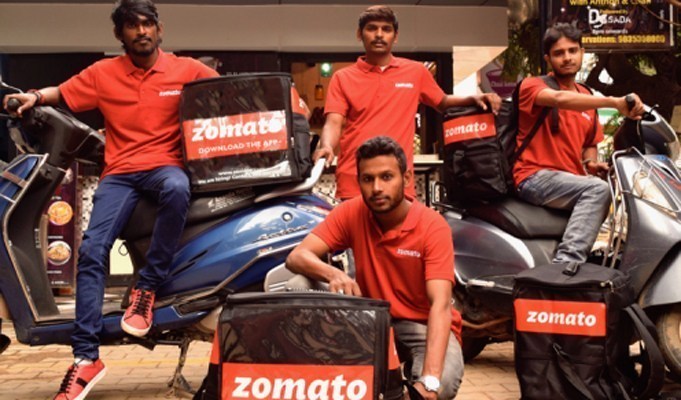
    Shares of Indian food-delivery company Zomato plunged 14.3 per cent to a record low today, as a one-year lock-in period for promoters, employees and other investors came to an end following last year’s listing.

    Zomato made a stellar debut on July 23 last year in the Mumbai market, but its shares have lost more than 60 per cent of their value since then.

    “Investors are concerned about the sell-off through employees and promoters,” said Prashanth Tapse, VP of research at Mehta Equities.

    Investors are also not comfortable with the acquisition of Blinkit, he said, adding that the fundamentals of the company were still good.

    Including Monday’s losses, Zomato shares have lost nearly 30 per cent since the company announced its deal to buy local grocery delivery startup Blinkit in June.

    Today, the stock posted its biggest intraday percentage drop since Janaury 24 in heavy-volume trade of 2.7 times the 30-day average.

    The company now has a market value of 366 billion rupees ($4.58 billion), compared with 1.29 trillion rupees at its peak in November.

    Analysts say Zomato needs to pump more money into Blinkit as the quick-commerce sector grows at a rapid clip, with rivals Swiggy, Reliance Industries-backed Dunzo, Tata-backed BigBasket and Zepto making big investments.

    Zomato is scheduled to report its first-quarter results on August 1. The company had reported a 75 per cent jump in fourth-quarter revenue in May, while gross order value – or the total value of all food delivery orders on its online platform – surged 77 per cent year-on-year to a record high.

    On Friday, Reuters reported that Domino’s Pizza’s India franchise will consider taking some of its business away from Zomato and Swiggy if their commissions rise further.

    In February, Zomato reported a smaller third-quarter loss, helped by a one-time gain from a stake sale, while revenue jumped due to increased demand for restaurant meals.

    Zomato’s dining out business, which offers customers discounts and offers when they eat out at partner restaurants, strengthened as eateries and bars reopened following a drop in Covid-19 cases during the quarter, while the company’s core food delivery business continued to grow.

    “The revival of in-restaurant dining (in the third quarter) led to some green shoots in our dining-out ad-sales business,” the Gurugram-based firm said in a regulatory filing.

  • Starbucks plans rapid expansion in Thailand

    Starbucks plans rapid expansion in Thailand

    Starbucks Thailand has announced an expansion strategy, which calls for opening 30 new coffee shops in Thailand every year until 2024 – 90 in all – according to Bangkok Post.

    The company claims to be prepared to expand again this year, after sales improved during the first half of this year. In addition, Starbucks Thailand also says it will concentrate on expanding its digital platform channels, add more drive-thru locations, and introducing novel beverages.

    Nednapa Srisamai, MD of Starbucks Thailand, told the Bangkok Post that the brand’s well-known profile in the country created an opportunity to expand the network. While a major regional tourist destination, Thais also have a coffee-drinking culture.

    Starbucks began its operation in Thailand by opening its first coffeehouse in July 1998 and was acquired under the joint venture between Dairy Farm subsidiary Maxim’s and Singapore-headquartered Fraser & Neave (F&N) in 2019 in a deal valued at US$500 million.

    Last year, the brand introduced its largest store in the region, Starbucks Reserve Chao Phraya Riverfront, located at IconSiam in Bangkok.

    Starbucks also plans to strengthen its digital presence after partnering with Grab earlier this year to launch Starbucks Rewards aiming to enhance the customer experience in Southeast Asia’s six largest markets – the Philippines, Thailand, Singapore, Malaysia, Indonesia and Vietnam.

  • SEBA to Add More Than a Dozen Staff in Asia

    SEBA to Add More Than a Dozen Staff in Asia

    Julius Baer-backed crypto bank SEBA will reportedly take advantage of the selloff as a buying opportunity, with plans to add more than a dozen staff in Asia.

    SEBA will grow its headcount in Hong Kong and Singapore from around seven to more than 20, according to a report citing its Asia head of corporate development Eugene Sun. The Zug-headquartered crypto bank will hire legal, compliance, and relationship manager staff alongside plans to also obtain licenses in both cities.

    We are finding the selloff to provide an opportunity commercially and in the war for talent, as clients and talent alike seek a more secure and more regulated platform for the promising future of digital assets, Sun said.

    One of SEBA’s headline partners is LGT which announced a partnership in pay to provide crypto to clients domiciled in their home market of Liechtenstein or Switzerland. SEBA is also preparing to launch with LGT in Asia, according to the report which did not provide additional details.

    Private banks generally are going to start to embrace crypto, said Sun.

    SEBA Bank was founded in 2018 and now supports 25 markets worldwide with financial backers that include Julius Bear and DeFi Technologies.

  • Asia Pacific Spotlights on 5G for Growth

    Asia Pacific Spotlights on 5G for Growth

    As a region, Asia Pacific is poised to become the fast-growing in terms of 5G adoption. Representing two-thirds of the global population, GSMA reports that 5G mobile connections will grow by about 150 million to reach 1,789 million subscribers in 2025. Of which, South Asia will account for the largest growth.

    During this time, GSMA reports that 4G will remain the dominant technology in the region, while 5G takes off, propelled by national digital strategies that have identified digital transformation as a key pillar for economic growth. For instance, Indonesia has launched the Indonesia Digital Roadmap for 2021 to 2024.

    In the region, 14 markets have already launched 5G commercial services, namely Australia, Bhutan, Guam, Indonesia, Japan, Laos, Malaysia, Maldives, New Zealand, North Mariana Islands, Philippines, Singapore, South Korea and Thailand. On the other hand, 5G is still undergoing planning for countries including Nepal, Bangladesh, Brunei, Cambodia, Myanmar, Vietnam, Sri Lanka, Samoa, Pakistan and India. South Korea takes the lead in terms of average and peak 5G download speeds according to market research firm Statista.

    The Bangladesh Telecommunication Regulatory Commission (BTRC) for instance, is preparing to launch 5G after holding its auction for licenses in 2.3 GHz and 2.6 GHz bands in April 2022. In India, spectrum auctions will be held in late July, with spectrum to be allocated not only for telecom operators Reliance Jio, Airtel and Vodafone Idea, but also for private networks to enable enterprise 5G to address demands in Industry 4.0 applications.

    Also gearing up for 5G momentum after months of tussle, six of Malaysia’s telecom operators have finally reached a consensus with stated-owed Digital Nasional Bhd (DNB) to collectively own a 70% equity stake in the country’s 5G network infrastructure. As part of the nation’s digital ambitions, Malaysia plans to extend 5G nationwide to 80% in populated precincts by 2024. In Thailand, the Digital Economy Promotion Agency (DEPA) has recently established the Thailand 5G Alliance to promote commercial 5G use and grow the country’s 5G ecosystem, aimed to elevate Thailand to become a digital hub for ASEAN.

    Growing 5G Revenue with More Commercially Viable Solutions

    According to Frost & Sullivan, 5G revenue in the region is expected to grow from $2.13 billion in 2020 to $23.89 billion in 2025, representing a 62.2% CAGR, attributed by accelerated 5G connectivity. Network slicing will play a big part in growing 5G capabilities and delivering 5G services for enterprises.

    A notable trend is the rise of 5G private networks to ensure enhanced security and control, especially critical in growing smart factories and furthering Industry 4.0. In Southeast Asia, 5G private networks are expected to grow from $83.35 million in 2021 to $1,93 billion by 2030, at a CAGR of 41.9%, based on an analysis by Allied Market Research. In the region, mobile operators have embarked on commercial 5G private networks to capture new market opportunities created by growing demands for low latency, high-speed connectivity, as well as increased usage of artificial intelligence and other smart connected devices. In 2020, Indonesia contributed the highest market share in terms of revenue, accounting for 40% of Southeast Asia’s private 5G market. Being the fast-growing digital economy, Indonesia is projected to maintain its lead in the private 5G market until 2030, with Malaysia forecasted to report the largest CAGR of 48.6% during this period.

    In Malaysia, for instance, Cisco will be partnering with Telekom Malaysia to build a 5G-as-a-service center to springboard 5G adoption and develop proof of concepts for enterprises and vertical industries to help them gain strategic and competitive advantages. This is in line with the country’s digital goals to grow 5G adoption among Malaysia’s SMEs to positively impact the digital landscape.

    Offloading Towers to Grow High-Cost 5G

    A growing trend in the past couple of years, some operators are offloading towers to raise capital for high-cost 5G investments. For instance, PLDT in the Philippines has received six bids to sell off half of its mobile towers, amounting to 6,000 towers. In Singapore, Singtel sold off 70% sale of Australia Tower Network, a wholly-owned subsidiary that operates Optus, to raise funds for 5G rollout and growth. Elsewhere, New Zealand’s Spark finalized a deal to sell 70% stakes in its tower business to raise $900 million.

    In Australia, Telstra and TPG have struck a network sharing deal over 10 years to share RAN for both 4G and 5G services. This has since been hotly contested by Optus, as well as Commpete, a telco industry alliance that advocates greater industry competition, with claims by Commpete that the agreement can be perceived to be a merger of sort. As of the end of June 2022, Telstra is Australia’s incumbent with a 5G network that covers about 80% of Australia’s population.

    Regarding the adoption of 5G mobile services, Moodys’ revealed in a report that its adoption will be uneven across the region, with 5G frontrunners including China, South Korea, Australia and Japan forging ahead in their 5G pursuits, and pioneer 5G markets able to boost revenue with the launch of 5G services. In China, the country’s fourth carrier, China Broadnet debuted 5G mobile services in June 2022 after being granted a 5G commercial license by the Ministry of Industry and Information Technology.

    Moving forward, mobile operators will stay focused on growing 5G capabilities and services to monetize and ensure competitiveness.


  • Ooredoo Plans To Exit Myanmar

    Ooredoo Plans To Exit Myanmar

    Qatari telecoms giant Ooredoo is considering selling its Myanmar unit, a source with knowledge of the matter told Reuters, following the exit of Norwegian carrier, Telenor, in March this year.

    Ooredoo is now the only foreign telecoms service provider operating in Myanmar amid the increasing pressure on the local industry, the result of the military coup launched in February 2021.

    According to sources cited by Reuters, Ooredoo has notified the local regulator, Myanmar’s Posts and Telecommunications Department (PTD), of its plans to sell its Myanmar unit for an undisclosed amount.

    One insider also told Reuters that potentially interested investors could include local conglomerate Young Investment Group, Singapore-headquartered network infrastructure operator Campana Group, and telecoms company SkyNet.

    No final decision has yet been made regarding the potential buyers.

    Reuters said the Doha-based telecom firm did not immediately respond to its emailed inquiry. The news agency also said it tried to reach the interested investors, but no immediate comment has been given.

    The departure of Telenor earlier this year took place after Reuters last year reported that the PTD has issued a directive, which bans senior foreign executives of major telecommunications firms from leaving Myanmar without permission. After this ban, the junta then released a second order instructing telecoms firms to fully implement an intercept surveillance technology, enabling authorities to monitor various communication channels.

  • Huawei Joins Sisvel Wi-Fi 6 Patent Pool as Founding Member

    Huawei Joins Sisvel Wi-Fi 6 Patent Pool as Founding Member

    Huawei has joined Sisvel Wi-Fi 6 patent pool as one of its founding members. This new patent pool provides an avenue for Wi-Fi 6 standard essential patents of Huawei and other innovators to be shared. Huawei has also concurrently become a licensee of the pool.

    “Huawei is excited to share our innovative Wi-Fi technologies with the industry,” said Alan Fan, Head of Huawei’s Intellectual Property Rights Department. “Wi-Fi technologies are widely used in fields like consumer electronics, smart homes and industrial enterprises. The patent pool will increase the transparency of patent licensing and reduce licensing disputes. Implementers can obtain a license under all patents in the pool at one time, which increases licensing efficiency and reduces licensing costs.”

    Fan added that Huawei has long advocated for innovations to be properly rewarded. Patent pools can help companies, especially SMEs, license their patents and invest licensing revenue into more innovation activities. Huawei hopes the successful operation of this patent pool will encourage more companies to invest in the next-generation Wi-Fi technologies.

    Mattia Fogliacco, President of Sisvel International, commented, “We are thrilled to welcome Huawei among the patent owners of our new pool. During the past two years of facilitation, we have created a framework that we feel will benefit the markets for technology as a whole, removing friction and aligning interests of innovators and implementers: Huawei accepting to become a founding member and a licensee/licensor offers a strong validation for this approach. We trust that this, together with the quality of the IP contributed by Huawei and the other participating patent owners, will quickly attract additional licensees and possibly additional patent owners.”

    Huawei remains open to entering direct licenses with other companies through bilateral discussions, thus giving implementers the choice of obtaining the license of Huawei’s Wi-Fi 6 patents through either the Sisvel Wi-Fi 6 patent pool or a direct license with Huawei.

  • Bank of America eyes Vietnam return

    Bank of America eyes Vietnam return

    Bank of America is seeking permission to set up a $50 million branch in Ho Chi Minh City, its executive vice chair of global corporate and investment banking Madhu Kannan has said.

    In a meeting with HCMC Chairman Phan Van Mai who is visiting the U.S., Kannan sought support for the bank’s return to Vietnam after closing its Hanoi office in 2002 when the parent company initiated systemic reforms.

    In response, Mai said that inviting Bank of America to HCMC was one of his goals during this trip. He said he was committed to helping the bank establish a branch in the city. He noted that HCMC planned to become an international financial hub, Mai said.

    The city also welcomes U.S businesses to invest in the financial, technology, education and healthcare sectors, he added.

    Kannan said that his bank’s activities would align with the city’s development path.

    Founded in 1904, Bank of America is the second largest U.S. lender.

  • Vietjet Air, Boeing restructure 200 aircraft deal

    Vietjet Air, Boeing restructure 200 aircraft deal

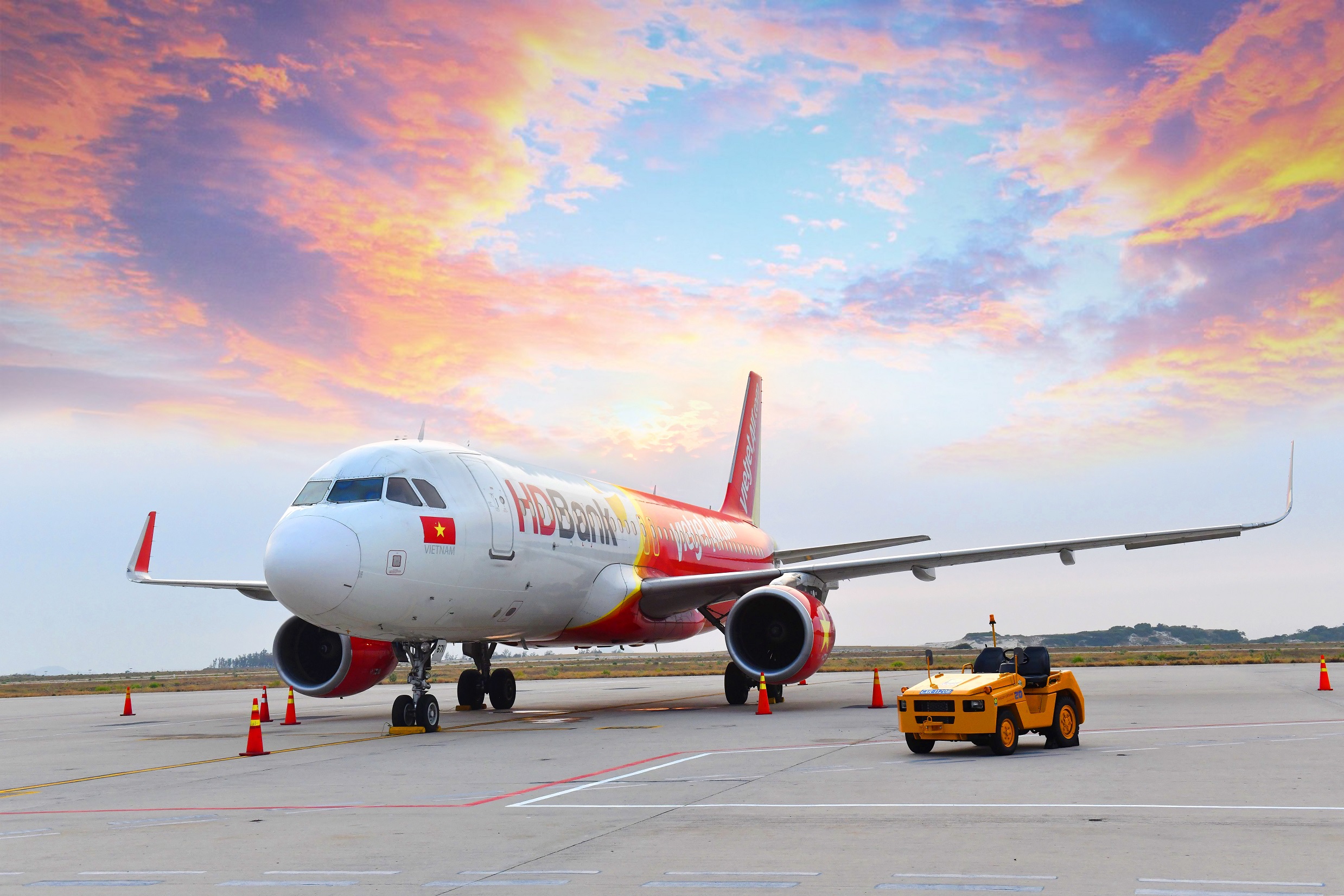
    Vietjet Air and Boeing have officially signed a restructuring agreement to continue a contract to purchase 200 Boeing 737 aircraft.

    Under the agreement signed at the 2022 Farnborough International Airshow from July 18-22, Boeing and budget carrier Vietjet Air have agreed on a flexible delivery schedule in line with Vietjet’s global business plan to complete this important deal.

    The first aircraft of the deal will be delivered to Vietjet Thailand, the Vietnamese carrier’s Thai subsidiary.

    The agreement affirms Boeing’s commitment to support Vietjet with training, technical services, technology transfer, research and investment, facilitating long-term development and sustainability of both corporations.

    In 2016, Vietjet signed a deal to purchase 100 Boeing aircraft when the then US President Barack Obama was visiting Vietnam. Three years later, both sides agreed to raise the total number of aircraft to 200 when the then US President Donald Trump visited Hanoi.

    The deal is being resumed this year after the hiatus triggered by an unexpected incident with the Boeing 737 Max aircraft and the Covid-19 pandemic.

  • EU warns Vietnamese instant noodle products contain banned substance

    EU warns Vietnamese instant noodle products contain banned substance

    Germany has issued warnings about certain imported Vietnamese instant noodle products that contain heightened levels of ethylene oxide, a banned substance.

    The Vietnam Sanitary and Phytosanitary Notification Authority and Enquiry Point (SPS), under the Ministry of Agriculture and Rural Development, said it had received warnings from the EU regarding certain instant noodle products exported by Vietnamese businesses.

    Germany issued warnings about a chicken-flavored instant noodle product by Asiafoods Corporation for containing ethylene oxide levels higher than EU standards. Malta meanwhile issued a warning for a pho product by Nguyen Gia because it uses genetically modified rice.

    A representative of the Department of Science and Technology under the Ministry of Industry and Trade said the department is still verifying the food batch that drew warnings in Germany. The batch might have been exported since last year, when batches had yet to be imposed an ethylene oxide limit standard upon export, the representative said.

    Since Feb. 17, the EU has demanded certificate requirements for instant noodle batches imported into the region. These batches would be checked for their ethylene oxide level after export, and so far, no batch has been returned.

    Germany said the ethylene oxide level in the instant noodle products was two to three times the maximum standard allowed, according to the representative. The current ethylene oxide limit as required by the EU is 0.01 milligrams per kilogram.

    In future, the department would take instant noodle product samples from the Vietnamese market to evaluate the presence of ethylene oxide and create a limit standard for the substance.

    Last August, several batches of instant noodle products by Vietnamese businesses were also recalled by the EU for heightened levels of ethylene oxide.

    Ethylene oxide is an organic compound with various applications, including disinfection and sterilization.

  • LNG power developers in troubled waters

    LNG power developers in troubled waters

    Liquefied natural gas (LNG) power has been considered a major part of Vietnam’s solutions for reducing carbon emission, but the country is facing several hurdles in using it.

    LNG emits half the amount of carbon compared to coal in electricity production, therefore several experts recommended that Vietnam focuses on it alongside renewable sources to achieve net zero carbon emissions by 2050, as Prime Minister Pham Minh Chinh committed at the COP26 late last year.

    Vietnam’s Power Development Master Plan 8 targets converting 18 gigawatts (GW) of coal-fired power into 14 GW generated from LNG and 12-15 GW from renewable sources.

    But for this, the country will have to import all of the LNG for generation – around 14-18 billion cubic meters in 2030 – at a time prices have it record highs following the Russia-Ukraine crisis.

    LNG prices have tripled in a year, according to the Institute for Energy Economics and Financial Analysis.

    In Europe, S&P Global Commodity Insights assessed LNG prices on a delivered ex-ship (DES) basis into north-west Europe (NWE) at $38.233/mmBtu on July 21.

    The competition between Europe and Asia at a time when global LNG supply is tight has recently pushed Asian LNG prices to a four-month high and close to record level seen in December at $44.35/mmBtu, according to Reuters.

    Nguyen Ngoc Hung, head of Energy Economics at the Vietnam Institute for Energy, cited international sources as saying prices would peak in 2023 before settling down.

    “LNG power plants will start operating in 2026-2030. Prices will be stable, and fall in the long term due to lower demand,” he said.

    The average LNG price for September delivery into north-east Asia was estimated at $38 per million British thermal units (mmBtu), down $2.5 or 6.2 percent, from the previous week, industry sources said.

    The Ministry of Industry and Trade has said the price rise would be manageable, with a 10-percent price hike only causing a 1.1-1.5 percent cost overrun.

    Determining prices to reach a power purchase agreement (PPA) is one of the key steps in developing a LNG power plant, but the unpredictability of prices is muddling the process.

    Half of the LNG projects under consideration in Vietnam are being delayed by unfinished PPAs.

    Responding to this situation, the Ministry of Industry and Trade said a few requests by LNG power developers are not in alignment with current regulations.

    It cited as an example the Bac Lieu gas plant, invested in by Singapore’s Delta Offshore Energy, which wants the state-owned utility Vietnam Electricity (EVN) to buy all the energy generated, apart from other incentives.

    Several LNG project developers have also said they are finding it difficult to mobilize capital with lenders focused on minimizing risks.

    Investors of the Hai Lang LNG power plant said the credit crunch was happening because projects implemented by independent power producers can only sell a limited output to EVN, making them less appealing in terms of profitability.

    Vietnam, a manufacturing powerhouse that currently generates most of its electricity from coal, is drafting a new national power development plan that includes 22 LNG-fired power plants. These will have a huge combined potential capacity of up to 108.5 gigawatts.

  • Tumbling stock market makes a dent in company earnings

    Tumbling stock market makes a dent in company earnings

    Investment in securities, a major source of income for many companies during the two years of Covid-19, has become a financial burden this year after markets plunged.

    Da Nang Housing Investment Development reported losses of over VND90 billion ($3.85 million) for the first six months “due to negative market factors,” it said in its earnings report.

    Last year it reported profits of VND130 billion from stock trading.

    The VN-Index has fallen by over 20 percent this year due to geopolitical tensions and rising inflation.

    Mining company Hoa An said its profits dropped by 90 percent year-on-year to VND2 billion in the second quarter following a mark-to-market decline of over VND20 billion in steelmaker Hoa Phat Group’s stocks.

    HPG has been hovering around a 17-month low as steel prices dropped due to declining construction activity and a surge in costs.

    At the end of June Hoa An was holding over 2.5 million HPG shares.

    Construction firm Licogi 14 said it had to mark to market its “financial investment” in the previous quarter.

    It lost over VND346 billion during the quarter though revenues from its main businesses soared by 45 percent to VND88 billion.

    Seafood processor Vinh Hoan Corporation invested VND200 billion in stocks in the second quarter but made mark-to-market losses of nearly VND63 billion.

    Its main business thrived meanwhile with revenues jumping by over 80 percent year-on-year to VND4.22 trillion.

  • Textile and garment firms fear drop in profit as orders slow down

    Textile and garment firms fear drop in profit as orders slow down

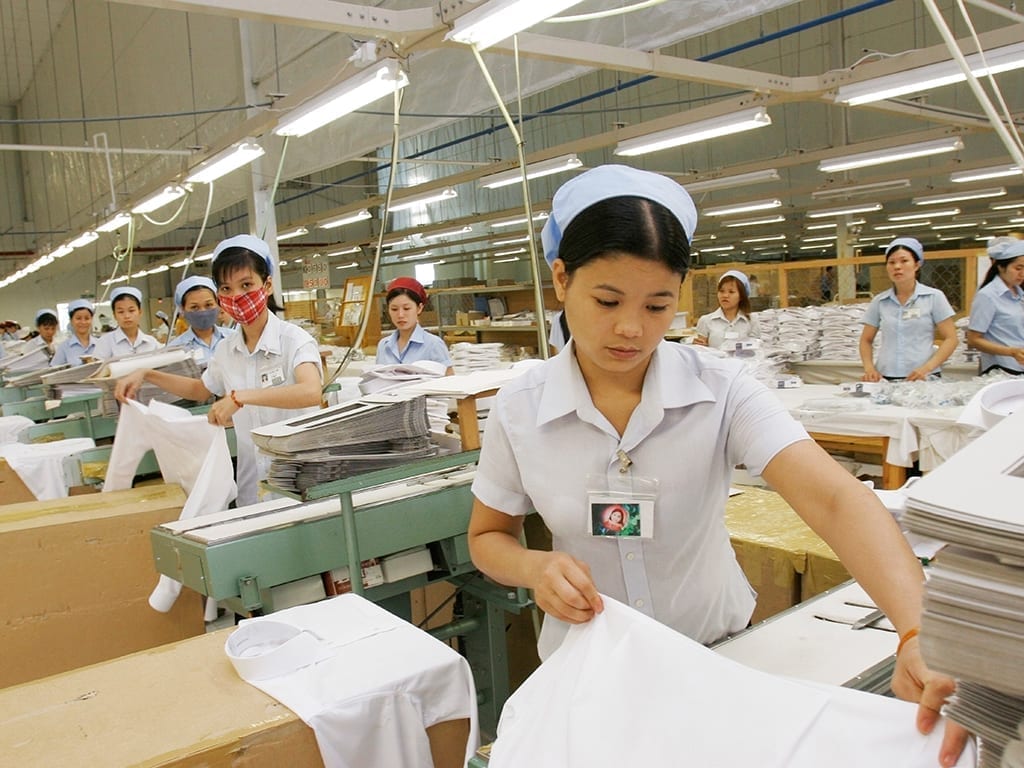
    Most garment and textile enterprises have received orders for production until the third quarter or October, according to the Ministry of Industry and Trade.

    However, the industry’s growth momentum showed signs of slowing down from the middle of the second quarter when major export markets such as the U.S. and EU fell into an inflationary spiral.

    As a result, new orders have decreased and customers have shortened the order period from 6 months to 3 months.

    A company specializing in the production of children’s fashion clothes in Dong Nai used to get new orders of 80,000 – 100,000 garments every month from US partners.

    The company’s manager, Thai Minh, said that over the past two months, the number of new orders has fallen by 20-30 percent.

    Minh said the situation will not improve in the short term if the inflation issue in the U.S. remains serious, forcing people to tighten spending on non-essential goods.

    “We are promoting our products to Canada and Mexico that have many similar consumption characteristics. We hope to get a few new contracts for the year-end season,” she said.

    The decrease in textile and garment orders was mainly due to the slow consumption in large markets, especially the U.S. and EU, the increase in inventories of importers and high inflation pressures in the second half of 2022 and early 2023.

    “At the beginning of the year, after the pandemic situation was under control, countries reopened and our partners urged us to deliver goods quickly, but now they are very indifferent,” Minh said.

    The Vietnam Textile and Garment Group (Vinatex) and Rong Viet Securities Company (VDSC) have forecast that the demand for textiles and garments in the second half of the year will decrease due to “overbuying” and inflation that prompts belt-tightening for non-essential products like fashion.

    In addition, the double impact of post-pandemic supply chain disruptions and the Russia-Ukraine conflict have pushed the price of raw materials for the garment industry, especially fabric and cotton, up by about 7-10 percent compared to the same period in 2021.

    Post-pandemic labor shortage, increasing transportation charges and labor costs triggered by fuel price hike have negatively affected the entire textile and garment supply chain from manufacturers to retailers, industry insiders said.

    “Increasing fuel, freight and logistics prices will greatly affect business performance in the last six months of 2022 and possibly until 2023,” said Duc Viet, CEO of leading garment firm May 10.

    Textiles are also indirectly affected when the euro depreciates against the USD. The EUR dropped to the lowest in 20 years last week at roughly the same as USD, with the greenback surging this year amid global economic uncertainties.

    Vinatex general director Cao Huu Hieu said that a weakening euro will reduce the profit margin of buyers in EU countries.

    VDSC forecasts that the profits of Vietnamese textile and garment companies will be hit hard in the second half of the year as new orders decrease.

    Some leading garment firms have adjusted this year’s business performance targets.

    The Song Hong Garment Jsc estimates its pre-tax profits at VND500 billion ($20.83 million) down 8 percent from a year ago.

    Nguyen Van Thoi, Chairman of TNG Investment and Trading Joint Stock Company, said that the impacts will be uneven among enterprises in the same industry.

    He said the industry can recover if inflation is brought under control and consumer purchasing power increases.

    According to data from the Ministry of Industry and Trade, textile and garment exports hit $22.3 billion in the first six months of the year, an increase of over 20 percent year-on-year.