Tag: asia

  • Whatsapp is adding more privacy options

    Whatsapp is adding more privacy options

    The next WhatsApp update is rolling out and if you’re participating in the Google Play Beta Program, chances are you already have the version 2.22.16.12 of the popular chat app. If not, the guys at WABetaInfo have dissected the package and found out what this update is all about.

    It turns out that a feature that was under development for the iOS version of WhatsApp is now coming to Android as well. This feature is the ability to hide your online status from prying eyes. There will be a new section under Privacy Setting inside WhatsApp that will allow you to choose from two available scenarios – “everyone,” and “same as last seen.”

    The first option is self-explanatory but the second will take your “last seen” settings – more specifically “Nobody,” and “My contacts except.” This will basically make your online status invisible for everyone or a select group of your contacts.

    Even though WABetaInfo shared a screen of the new feature, it’s not available in the latest beta – there’s just a hint that it’s under development. Fortunately, rolling it out to the general public won’t take much time, as it’s an easy update, and one that’s been already under development for iOS.
  • Netflix escapes Apple Tax at last as app links to streamer’s own subscription site

    Netflix escapes Apple Tax at last as app links to streamer’s own subscription site

    As Bob Dylan once sang, “The Times They Are A-Changin.” iPhone and iPad users looking to subscribe to Netflix from the video streamer’s App Store app are now being directed by Netflix to an external website. From the site, iOS and iPadOS users can sign up for service from Netflix. This is in line with Apple’s recent decision to allow what are known as “reader apps” (apps that deliver digital content) to link to their own external websites to help subscribers sign-up and manage their accounts.
    Apple announced last September that it would allow reader apps to include a single in-app link to their own websites. Tapping on the “subscribe” button in the Netflix app brings up a message that says “you’re about to leave the app and go to an external website.” The app also points out that any transaction will not be Apple’s responsibility and that all subscription management should be handled through Netflix’s platform.
    More specifically, reader apps are those that provide content that was previously purchased or content available from an app that users pay for on a recurring basis such as music, video, digital magazines, newspapers, books, and audio.
    The message also states that “Any accounts or purchases made outside of this app will be managed by the developer ‘Netflix.’ Your App Store account, stored payment methods, and related features, such as subscription management and refund requests, will not be available. Apple is not responsible for the privacy or security of transactions made with this developer.”

    If you continue the process you are sent to a Netflix website from where you can subscribe to the service bypassing Apple’s in-app payment platform. As a result, Netflix doesn’t have to give Apple the 30% cut of the transaction price on initial subscriptions and as much as 15% for recurring subscriptions made after one year.

    The so-called Apple Tax has been a controversial lightning rod for politicians, developers, and others. Companies like Spotify and Netflix prevented subscribers from signing up for certain subscriptions directly from the App Store so that they wouldn’t have to pay Apple. And nearly two years ago, Apple kicked Epic and its popular Fortnite game out of the App Store after Epic offered game players a link to its own in-app payment platform.
    Without having to pay Apple its cut, Epic offered currency to Fortnite players at a lower price. This led to an epic lawsuit (sorry) which resulted in a ruling from Judge Yvonne Gonzalez Rogers who wrote, “The Court concludes that Apple’s anti-steering provisions hide critical information from consumers and illegally stifle consumer choice. When coupled with Apple’s incipient antitrust violations, these anti-steering provisions are anticompetitive and a nationwide remedy to eliminate those provisions is warranted.”

    Rogers did say that Apple was not a monopolist and that there was nothing illegal about the success of the App Store. She did rule that Apple would have to allow developers to redirect users to developers’ own websites to manage their subscriptions. Other countries have gone after the Apple Tax and developers in South Korea can promote alternative payment methods in the App Store, although Apple will still hit up the developers for 26% of the transaction value.

    In the Netherlands, some dating apps will be allowed to embed alternative payment methods inside these apps after Apple was fined $52.58 million by the Netherlands’ antitrust watchdog, the Authority for Consumers and Markets (ACM). With the recent approval of the European Union’s (EU) Digital Markets Act (DMA), Apple might be required to offer third-party payment platforms for the App Store in Europe, allow iPhone users to sideload apps (in other words, install apps from third-party app stores) on the continent, and add support for iMessages in competing operating systems in Europe.

    All together, pressure from lawsuits, developers, lawmakers, and the media combined to produce the first cracks in Apple’s in-app payment platform which includes the Apple Tax. Apple still has a set of rules that developers of reader apps must follow. The link published on the app cannot contain pricing information, and each developer must submit an “entitlement” to obtain permission from Apple to include a link on their app.

  • Preventing Money Laundering Risks of E-Commerce

    Preventing Money Laundering Risks of E-Commerce

    The development of technology and growing internet presence have created a lot of opportunities for modern-day businesses. There is hardly an industry sector left that hasn’t experienced the benefits, but among them, ecommerce has benefited the most. Considering it hasn’t even existed until the nineties, ecommerce has revolutionized how we shop during this short time. In 20 years, ecommerce has reached $5 trillion in sales, and the industry will continue to grow with the help of new technological developments. As reported by Australia Post on growth in online shopping, Australians have even set a new online shopping record with 9.3 million online purchases made by March.

    Unfortunately, even the ecommerce sector hasn’t managed to escape the dangers of the internet, such as cyber-attacks, fraud attempts, and money laundering. Criminals always look for new opportunities for exploiting people and companies, and their growing internet presence has given them a chance to reach more individuals and organizations than ever before. While in the past, ecommerce hasn’t been targeted by money laundering as much as with other types of fraudulent attempts, the situation is turning. Their usual hunting ground, financial services, has updated their cybersecurity strategy, making it easier to prevent money laundering, but leaving criminals looking for a new solution. It is time to step up and learn what you can do to prevent it from ever affecting your business and customers.

    Money laundering in ecommerce

    Money laundering is nothing new in the retail industry. Physical stores had to deal with it for a long time before ecommerce was even present, from overpaying retail cards and asking for refunds or purchasing high-end goods. But, eCommerce development has allowed criminals to update their malicious activity and move money faster and simpler. Money laundering happens when cybercriminals and fraudsters use your businesses to process their illegitimate funds and, by doing so, convert them into “clean money.”

    According to the SEON’s guide on AML fraud, the global anti-money laundering (AML) record was set in 2020, with $706m in fines handed out by authorities. In order to avoid them, you should start taking proactive steps to prevent money laundering risks.

    How can you stop money laundering from affecting your business?

    As ecommerce continues to grow in popularity, so will the threats it faces, from ecommerce fraud to money laundering. They no longer have the option of ignoring the dangers, hoping it won’t affect them, as every business faces the real danger of becoming a victim. This is why ecommerce businesses must start taking proactive steps and set up their defense strategies, from identifying risks to preventing them. Just imagine the consequences you would face if your business were involved in money laundering. Not only that you would be helping criminals to continue with their horrible actions, such as human trafficking, organized crime, or terrorism, but you would also have to pay anti-money laundering fines. Luckily, that can be prevented.

    Technology is a big part of our lives today. A report by Monterail explains that frontline workers believe technology plays a critical role in customer service today. Why not use it to protect us from criminals and fraudsters?

    1.   Implement AML solution

    In today’s world, implementing AML solutions is essential for any business dealing with financial transactions. These solutions can handle a higher volume of transactions, helping you to determine the legitimacy of the transactions efficiently. Thanks to the machine learning aspect of it, it does it while causing minimal user friction. They can also help you to follow AML regulations and remove compliance risks. While implementing an AML solution is a step in the right direction, for the best results, it should be combined with anti-fraud solutions and KYC (Know Your Customer). This allows you to prevent fraudsters from even attempting their malicious activities.

    2.   Comply with regulations

    Any business dealing with payment information needs to ensure they stay compliant with the Payment Card Industry Security Standard (PCI DDS). This set of requirements ensures that companies securely store clients’ credit card information and keep them safe from fraudsters.

    3.   Employee awareness and training

    Your employees are one of the biggest elements in your business, and they can help you fight against criminals and fraudsters. Educating them about recognizing signs and red flags connected with money laundering and what to do when they encounter it will significantly increase your chances of stopping it.

    4.   Conduct regular risk assessments

    Your journey to a protected company doesn’t end with implementing a cybersecurity policy. Fraudsters are continuously updating their efforts, trying to exploit any weakness they find, and it is up to you to ensure that doesn’t happen. By conducting regular risk assessments of your business, partners, customers, and third parties, you will be able to patch any vulnerability as it arises.

    Conclusion

    While the growth of ecommerce has offered numerous benefits to businesses, it also brought the risk of money laundering. If companies want to remain successful and compete in the busy market, they need to stay a step ahead of fraudsters and protect their business.



  • Discovered code reveals that YouTube Music could soon add a much wanted feature

    Discovered code reveals that YouTube Music could soon add a much wanted feature

    The original goal for YouTube Music was for the app to offer the same exact features as Google Play Music before migrating users from the latter to the former. But before that could happen, Google shut down Google Play Music. But one particularly well-received feature from the now defunct Play Music app is apparently going to make its way to YouTube Music.

    After looking through the latest version of the YouTube Music app, which supports the media player that will be found in the upcoming Android 13 update, 9to5Google came across the following code: “res/layout/timer_status_bottom_sheet.xml” which hints that a sleep timer is coming to the YouTube Music app.

    In Google Play Music, setting the sleep timer meant going into the main settings list to set the feature. Hopefully, the sleep timer will be quicker to enable/disable in YouTube Music. The strings of code found do reveal that a countdown timer will be visible to the user who will also have an option to add five additional minutes to the timer or cancel. The report says that the timer could be similar to the sleep timer found on the Android version of the Apple Music app (seen in the screenshot embedded in this article).
    A sleep timer is useful if you don’t want your phone or tablet to run all night after you fall asleep. At the most, if you’re running your device using its battery, you can prevent the battery from draining while you are sleeping. You also might not awaken in the middle of the night because a particular song interrupted your dreams.
    When YouTube Music might add a sleep timer is anyone’s guess and there is always the possibility that Google doesn’t add one at all despite the discovery of the code.
  • Instagram now helps you find popular places more easily

    Instagram now helps you find popular places more easily

    Instagram now offers a new map experience for Android and iPhone users, which should allow you to rediscover local businesses and find popular locations around you more easily. As the social media announced, you can now tap on location tags inside a post in your feed or in a Story of a friend to find places around you.

    However, the most interesting part is that you can now manually find locations via the Explore tab as well. You can search for a place in the search bar and tap on the search result, which will open the establishment in question, or you can just type the name of your city or neighborhood, and the app will show you what popular locations are around you.

    Instagram also added filter options that allow you to find places by category. At the moment, there are six filter categories: Restaurants, Cafes, Sights, Hotels, Parks & Gardens, and Bars. You just need to tap on the type of location you want to visit, and Instagram will list all the places around you that fall into that category.

    Although the new map feature on Instagram will undoubtedly let you find more places easily, we should point out that Instagram isn’t the only social media platform that has such a function. For quite some time now, Snapchat has been offering pretty much the same feature. You can go to Snapchat’s map and basically find various establishments around you. Also, just like Instagram, Snapchat offers six filter options that will help you find the place you are looking for more easily.

  • Samsung executive says foldable phones are about to go mainstream

    Samsung executive says foldable phones are about to go mainstream

    Whether it’s because of the abrupt and satisfying way that you can hang up on someone who is being a pain in the ass, or because of the pocketability of such a device, consumers favor flip-style foldables like the Galaxy Z Flip 3 and the upcoming Galaxy Z Flip 4. In Roh’s blog post called “The Mainstream Moment for Foldable Smartphones Is Here,” the executive pointed out that last year 70% of Galaxy Z foldable phone buyers voted with their own money and picked the Galaxy Z Flip while the remaining 30% chose the Galaxy Z Fold.
    Of course, it did help that the Galaxy Z Flip 3 was priced at $999 and up, a nice-sized discount from the $1,380 price for the basic version of its predecessor. Samsung might not get as aggressive when pricing the Galaxy Z Flip 4 although a smaller decline to $899 is possible.

    While the Galaxy Z Flip can open from a device that fits comfortably in your pocket to become a tall and thin 6.7-inch handset. Roh writes that “Flip users love owning a device built for self-expression, whether choosing bold color options for their device or taking pictures in a new way with Flex mode.” He says that Galaxy Z Fold users also have their reasons to buy that model. “Fold users love the multitasking capability of a screen that doubles in size, so they can be more efficient and get things done faster,” Roh said.

    With the next Unpacked event taking place on August 10th, the Samsung executive states that the thing to watch is not what the latest technology can do. It is all about what you can do with the latest technology. He adds that Samsung customers are the muse that the company draws from to develop innovative new ideas for the company’s foldable handsets.
    Roh says, “I can’t wait to show you the potential of our new Samsung Galaxy foldables as the ultimate tool for both productivity and self-expression. Now, you can do more than you ever thought possible, all at once, on one device.”

    It seems that the head of Samsung’s Mobile Experience Business is happy to spread the credit for the success of Samsung’s foldable phones. Roh even called out Google and Microsoft as “industry leaders that are helping to expand the experiences that are now being made possible throughout the foldable ecosystem.”

    Samsung’s goal is to take the Galaxy Z Flip 4 closer to being a mainstream phone, something that seems much more possible with the Galaxy Z Flip 4 than the Galaxy Z Fold 4. Yeah, some of it is the pricing which is why the manufacturer is reportedly looking at building another line of foldable Flip and Fold handsets for its budget-priced Galaxy A line. But based on last year’s sales, the flip build is overwhelmingly the favorite foldable among consumers.
    Will there be a day when foldable smartphones dominate the landscape? It’s hard to see how until the most influential smartphone brand, the Apple iPhone, has its own foldable device. However, even Apple won’t be able to ignore the trend if foldables continue to be bought up by consumers. Last year 10 million foldable phones were shipped, up 300% year-over-year. Numbers like that cannot be ignored for long.
    As Roh writes in his post, “We are reaching the moment where these foldable devices are becoming widespread and staking a bigger claim in the overall smartphone market.” Consumers, keep your eyes on this area of the industry to find the fastest growing sector of the smartphone industry.
  • Google’s VR/AR headset set to enter the fray

    Google’s VR/AR headset set to enter the fray

    Virtual/Augmented reality is commonly viewed as the next frontier in mobile technology. Hence, many companies are making efforts to engage with it sooner rather than later, so as to ensure that they beat the competition to the punch. And while many are just now entering the market like Apple, some are already veterans in VR/AR… in a way.

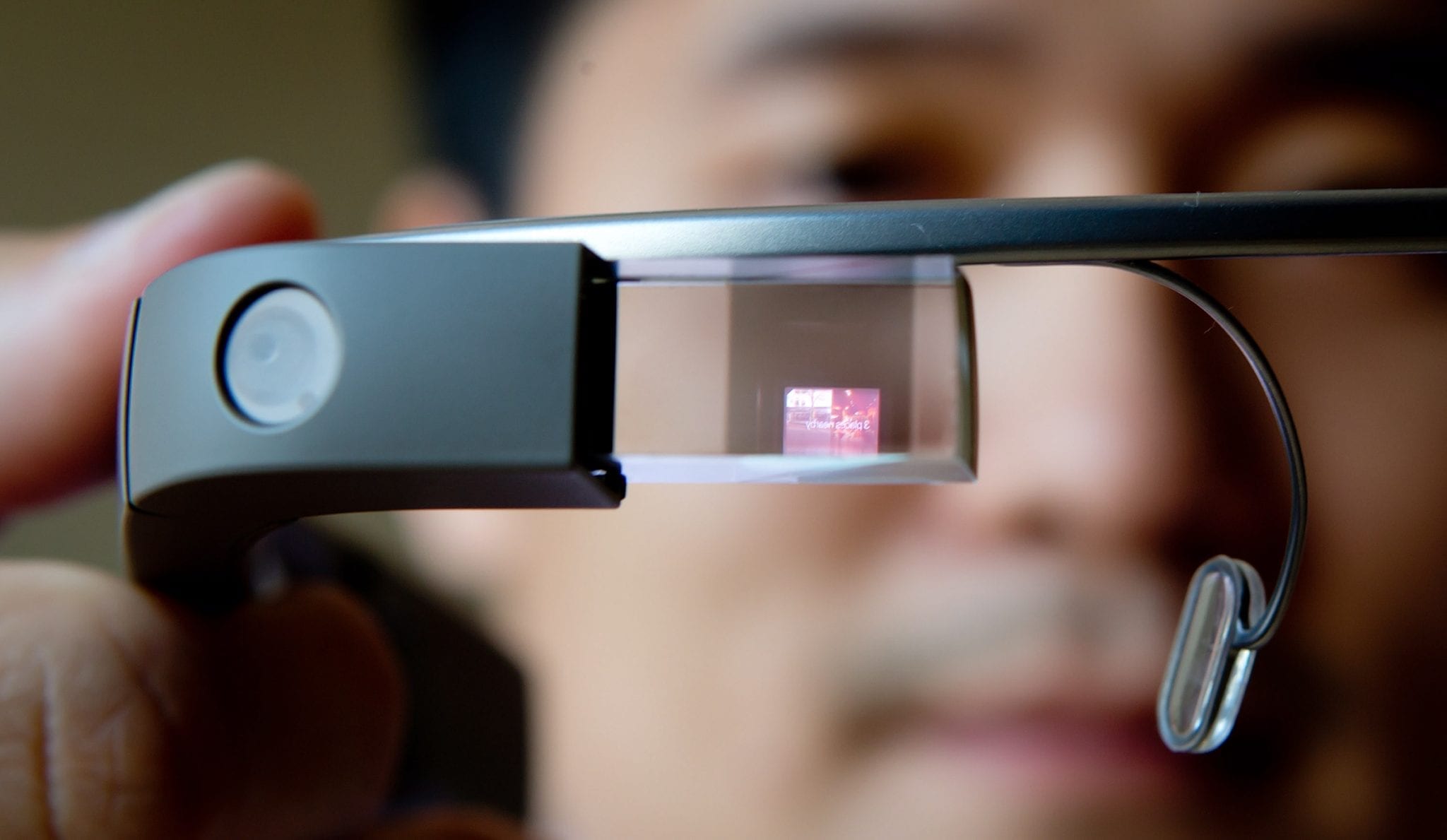
    We are of course referring to Google. The company notoriously flopped nearly a decade ago with Google Glass, but this time around the tech giant is doing its best to get VR/AR right. Some time ago, the first bits of information concerning Google’s “Project Iris”, the codename for the company’s upcoming VR/AR headset.

    In its original report, where we disclosed a number of interesting details about Project Iris, which was then in its early stages of development. It seems that Google’s VR/AR headset has come a long way since, given that field testing is already underway

    Google will be testing a small number of prototype units to better understand how the headset fares under everyday circumstances. Google even published a blog post on the matter. The main features that will be tested are “translation, transcription and navigation”.

    The tests will be conducted according to a set of strict privacy guidelines. The prototype units will resemble ordinary glasses and the testers will have to undergo special training and comply with a number of privacy measures.

    These steps show a decisive move on Google’s part to learn from its mistakes with Google Glass. Whether it will be enough to make Project Iris a success remains to be seen. For reference, most pundits expect Google to release its VR/AR headset sometime around 2024. Hence, there is still a long way to go. We will have to wait and see.

  • Gasoline price plunges to 5-month low

    Gasoline price plunges to 5-month low

    Vietnam gasoline prices on Thursday fell to the lowest in five months as global rates decline.

    The Ministry of Finance and Ministry of Industry and Trade adjusted RON95 prices down 12.1 percent to VND26,070 ($1.11) per liter.

    This means RON95 is now 20.7 percent lower than this year’s peak on June 21.

    E5 RON92 gasoline prices dropped 9.8 percent to VND25,070, down 19.9 percent from this year’s peak. The government also brought diesel prices down 7 percent to VND24,850 per liter.

    Global oil prices fell Thursday for a second straight session, as demand concerns outweighed tight global supply after U.S. government data showed tepid gasoline consumption during the peak summer driving season.

    Brent crude futures dropped 33 cents, or 0.3 percent, to $106.59.

  • Intel vPro platform accelerates business productivity

    Intel vPro platform accelerates business productivity

    The Intel vPro platform offers a comprehensive solution for businesses to increase productivity, protect business assets and maintain business organizations to get over the Covid-19 pandemic.

    The long term effects of Covid-19 have forced the world to quickly find new ways to live safely with it while maintaining stable socio-economic activities.

    With the development of technology, online has become the mainstream form of activity, e-commerce has grown rapidly, while the digital platform has become the main communication channel. Nowadays, many employees are gradually choosing to work from home. IT organizations are going to control the changes between “Work from home” and “Work in the office.” Business leaders need security features as well as productivity improvement during Covid-19. That’s why Intel has released its 11th Gen Intel vPro platform.

    Intel vPro is a platform “built for business,” using 11th Gen – 12th Gen Intel Core. It is a set of hardware and firmware technologies utilized to build business computing endpoints.

    Intel vPro value proposition spans four pillars, and business decision-makers who standardize on the vPro platform can benefit from hardware-enhanced protection, advanced maintenance, and validated platforms, all with the performance headroom to handle a wide range of business workflows.

    The 11th Gen processors feature the all-new Intel Iris Xe graphics processor that delivers a huge jump in performance. These processors also have integrated both Intel Wi-Fi 6 and Thunderbolt 4, so users get the latest wireless and cable connectivity standards built-in. They also deliver an exceptional performance for workers who need to collaborate and be productive.

    Intel Hardware Shield enabled hardware-enhances security features with advanced threat protection, application and data protection and below-the-OS security. Advanced threat protection uses aggressive memory scanning and artificial intelligence to detect new threats like ransomware and crypto-mining.

    Application and data protection includes encryption acceleration along with other features to protect applications and login credentials from attacks. Below-the-OS security prevents attacks against the BIOS and other firmware to enable a secure hardware and firmware foundation for the operating system.

    Intel vPro Platform comes with Intel Active Management Technology (Intel AMT) that allows IT to establish a secure connection between IT and a vPro-based PC. Once that secure connection is established, IT can perform a lot of different tasks as part of AMT.

    Remote power control continues to be one of the most used features of Intel AMT. With this, IT is able to remotely control the power state of a PC. Businesses use this to automate afterhours patching while keeping energy costs down. They can turn PCs off at the end of the day, yet wake them during the night to perform security updates without impacting productivity. Once they complete the patching they can put the PCs back to sleep to save energy. Lastly, before the workday begins, they can wake those PCs so everything is running and ready when employees arrive.

    The other most popular feature is hardware KVM. We’re all familiar with software based tools that we can use to take control of PCs and see the screen and move the mouse to help fix a system. It’s a very powerful tool, but only if the software can run. When a PC can’t successfully boot, those software based tools are powerless. That’s where Active Management Technology really shines, because it has a hardware KVM built into the chips. Even if the PC cannot boot, IT can connect with full KVM support to remotely remediate the PC, even entering the BIOS while maintaining the KVM connection.

    Intel Endpoint Management Assistant extends the power of Intel AMT beyond the firewall. By using cloud-based management infrastructure, devices don’t need a functional VPN to receive support from IT. As long as the AMT-enabled PC can reach the cloud, IT can securely connect to and remotely control that PC. This also allows IT technicians themselves to do their job either onsite or remotely.

    The cloud-based infrastructure is also easier to deploy and scale than traditional on-premise infrastructure and can be controlled using a simple web interface. When you’re running Intel EMA combined with Intel AMT, not only can you fix corrupted applications but a corrupted VPN is no problem at all, and a corrupted OS can also be remediated remotely.

  • China scraps Covid bans on Vietnamese seafood

    China scraps Covid bans on Vietnamese seafood

    Chinese authorities will no longer penalize Vietnamese seafood exporters with a temporary ban if their containers are found contaminated with Covid-19, that country’s embassy in Hanoi has said.

    Exporters used to face a seven-day ban for every container of theirs found contaminated with the coronavirus. A seafood exporter who was once banned for three weeks said shipments have returned to normal.

    “China is trying to reduce the damage caused by its zero Covid strategy, and so exporting to the country has now become easier.”

    Dozens of Vietnamese exporters suffered from the ban, some for weeks and even months due to the large number of containers infected.

    Vietnam exported US$427.6 million worth of seafood to China in the first six months, up 107 percent year-on-year, according to the Vietnam Association of Seafood Exporters and Producers (VASEP).

    VASEP expects exports to China to boom in the second half of this year following the easing of the draconian safety measures.

  • WhatsApp adds ability to transfer chat history and more from Android to iPhone

    WhatsApp adds ability to transfer chat history and more from Android to iPhone

    Switching from an old phone to a new one has become a very mundane process in the last several years, but things are a bit more hectic when it comes to switching platforms. Ever since Android and iOS existed, both Google and Apple have done everything they could to make switching from one platform to another as painful as possible. Very subtly, of course.

    Since many of us want to keep as much of the information we have stored on a phone as possible when we buy a new one, it’s very important for apps like Messenger, Telegram and WhatsApp to provide users with a hassle-free way to transfer their data not just between phones, but also between ecosystems.

    WhatsApp announced this week that it’s now making it much easier to migrate data from an Android phone to an iPhone and vice versa. Regardless of what phone you’re switching to, you’ll now be able to transfer your account information, profile photo, individual chats, group chats, chat history, media and settings.

    However, you will not be able to transfer your call history or display name if you’re moving from an Android phone to an iPhone. The same goes for peer to peer payment messages, although personal messages can be transferred from an Android phone to an iPhone.

    It’s important to mention for iPhone users that transferred data won’t go to cloud storage after migration, at least not until you specifically create an iCloud backup.

    As far as Android users go, the data transferred will remain on the Android phone unless WhatsApp is deleted or you completely wipe your phone. Here what the full process of migrating your data from Android to iPhone looks like:

    • Open the Move to iOS app on your Android phone and follow the on-screen prompts.
    • A code will be displayed on your iPhone. When prompted, enter the code on your Android phone.
    • Tap Continue and follow the on-screen prompts.
    • Select WhatsApp on the Transfer Data screen.
    • Tap START on your Android phone, and wait for WhatsApp to prepare the data for export. You’ll be signed out from your Android phone once the data is prepared.
    • Tap NEXT to return to the Move to iOS app.
    • Tap CONTINUE to transfer the data from your Android phone to your iPhone and wait for Move to iOS to confirm the transfer is complete.
    • Install the latest version of WhatsApp from the App Store.
    • Open WhatsApp and log in using the same phone number used on your old device.
    • Tap Start when prompted, and allow the process to complete.
    • Finish activating your new device and you’ll see your chats waiting for you.

    Make sure you meet the requirements

    To successfully migrate date between Android and iPhone and vice versa, your phone must run Android 5/iOS 15.5 or above, Move to iOS app installed your Android phone, and the latest version of WhatsApp. Also, your iPhone must be factory new or reset to factory settings to pair with the Move to iOS app and move data from your Android phone.

    Finally, both devices must be connected to the same Wi-Fi network. Another option would be to connect the Android phone to an iPhone’s hotspot. Of course, you must use the same phone number as your phone on your new device to be able to transfer your data.

    Every process that involves more than 10 steps would probably not be considered convenient, but the alternative would be to remain stuck with a phone and OS that you no longer love, or risk losing all your WhatsApp data. Despite requiring a little bit of knowledge before attempting to migration process, this is actually a very cool feature that will probably be fine tuned in the years to come.
  • Globe Telecom Earns MEF 3.0 Ethernet Services Certification

    Globe Telecom Earns MEF 3.0 Ethernet Services Certification

    Globe Telecom announced that it has passed the MEF 3.0 Carrier Ethernet services certification for transformative ethernet services.

    In a company press release, it said that the award was given for its “conformance to rigorous specifications established by MEF.”

    MEF’s President, Nan Chen, extended his congratulatory message to the Philippine’s telecom operator. He said, “Companies who purchase from a certified MEF 3.0 service provider can have confidence that they will receive services which conform to MEF’s industry-leading global standards. Companies like Globe understand the value that certification provides—simplified, pre-validated functionality for buyers and simplified, frictionless implementation and partnering.”

    MEF 3.0 Carrier Ethernet certified services indicate the benchmark for connectivity, delivering the maximum level of performance, assurance and agility offered in the market.

    Globe had earlier achieved MEF CE 2.0 certifications for its E-Access, E-LAN and E-Line services. Raymond Policarpio, the Vice President for Product Management and Marketing at Globe Business, Enterprise Group said that this new recognition shows their commitment to providing maximum connectivity solutions to their users. “As network transformation continues at a rapid pace, these MEF industry standards eliminate confusion regarding service components, core capabilities and concepts.”

    He added, “We’re especially honored to be the first in Asia to achieve a MEF 3.0 Certification for Globe’s 100G E-Line services. Meeting these standards allows us to become a trusted partner in network-based enterprise services. Access to MEF’s ecosystem of frameworks, training programs and expert partners empowers us to provide quality services to businesses as we guide them through their digital transformation.”

  • China Now Has More Than 1.85 Million 5G Base Stations

    China Now Has More Than 1.85 Million 5G Base Stations

    China’s Ministry of Industry and Information Technology said that the country has now deployed more than 1.85 million 5G base stations nationwide as it pushes for its target of a total of 3.64 million by the end of 2025.

    According to the government website, fixed asset investment in the telecommunications industry has also increased by almost 25% year-on-year, now reaching 189.4 billion yuan during the first six months of the year.

    Data from the industry regulator shows that as of June, the country has deployed more than 1.85 million 5G base stations, and the number of 5G mobile users was at 455 million.

    The spokesman and chief engineer of the Ministry of Industry and Information Technology, Tian Yulong, stressed that initiatives should be undertaken to immediately begin a series of crucial projects in 5G, gigabit optical networks, the industrial internet and other new information infrastructure to both broaden investment and boost consumption.

    Officials also said that China is seeking to add 600,000 5G base stations this year and speed up their upgrade of the industrial internet.

  • Facebook starts rolling out chronologically ordered Feeds

    Facebook starts rolling out chronologically ordered Feeds

    Facebook is gaining a new way for users to consume content from friends, Favorites, Pages and groups – a chronologically ordered Feed tab. Mark Zuckerberg posted a short demo of the feature on Thursday, saying it is one of the most requested features on Facebook.

    “One of the most requested features for Facebook is to make sure people don’t miss friends’ posts. So today we’re launching a Feed tab where you can see posts from your friends, groups, Pages and more separately in chronological order. The app will still open to a personalized feed on the Home tab, where our discovery engine will recommend the content we think you’ll care most about. But the Feeds tab will give you a way to customize and control your experience further,” posted Zuckerberg on Facebook.

    Furthermore, people will be able to create a Favorites list inside the Feeds tab, consisting of friends, pages and groups, in order to get to their favorite content faster and easier. This change is similar to what Meta has done with Instagram – the company announced a chronological Feed back in January, and rolled out the feature a couple of weeks later.

    The new Feed tab in Facebook is already rolling out to some users on Android and iOS. There’s a slight difference between the two operating systems – on Android the tab can be found at the top of the UI, while on iOS it is at the bottom. The fill rollout should take place over the course of next week.


  • SK Telecom to Spearhead Global Standardization of Quantum Cryptography Technologies

    SK Telecom to Spearhead Global Standardization of Quantum Cryptography Technologies

    SK Telecom announced that its two technologies related to the control and interworking of quantum cryptography communication networks were adopted as new work items at the ITU-T meeting held in Geneva, Switzerland.

    The South Korean telecom service provider said in a press release that these latest solutions will be given international certification standards through its talks among member countries of the ITU-T.

    SK Telecom’s two technologies chosen as work items are: Quantum Key Distribution Network Interworking – Software Defined Networking Control; and Framework of Quantum Key Distribution Network Federation.

    The company said these latest innovations serve as an important tool for the popularization of quantum cryptography communication technologies.

    One of these technologies, the Software Defined Networking Control System for Interworking of Quantum Key Distribution Networks, enables telecommunication operators to run their existing communication networks and QKD networks holistically and efficiently.

    Meanwhile, the company compares the Quantum Key Distribution Network Federation to international roaming between mobile operators. This technology enables the delivery of quantum-safe communication services no matter whose QKD network they are on by “supporting interworking/federation between QKD networks of different service providers.”

    SKT’s Chief Development Officer Ha Min-yong, said, “The approval of these two items by ITU-T carries a significant meaning as they will serve a pivotal role in accelerating the adoption of quantum cryptography communication throughout the globe.”

    He added, “We will continue to drive the growth of the quantum ecosystem by taking an active part in the international standardization of quantum technologies and developing attractive services and business cases.”

    Furthermore, SKT has also employed projects for the Ministry of Science and ICT, in partnership with the SK Broadband consortium and Swiss-based firm ID Quantique. These projects focus on creating pilot QKD infrastructure and advancing application services for 17 different institutions from the public, medical and industrial sectors.