Tag: asia

  • Apple looking to further diversify chip suppliers, reportedly finding new partner for the iPhone 14 Pro

    Apple looking to further diversify chip suppliers, reportedly finding new partner for the iPhone 14 Pro

    Apple is gearing up for the launch of the iPhone 14 series (which is inching ever so closely as we approach the fall), and it now seems Cupertino is set on not allowing any supply chain shortages to create issues. Reputable industry insider Ming-Chi Kuo now reports that Apple is looking to further expand its suppliers for the iPhone 14 series and has now added a new partner.

    According to Kuo, SG Micro (headquartered in China) has now passed quality certification for chips for the higher-end iPhone 14 models (meaning the iPhone 14 Pro and Pro Max). The company is likely to take orders for PMICs (power management integrated circuitry – basically a chip to manage power) in the second half of this year for the upcoming iPhones.

    This is the first time that said company would supply components for higher-end iPhones. According to the industry insider, this partnership will continue in the future, so that Apple can avoid future supply chain risks.
    Recently, Kuo said that some iPhone 14 display panel suppliers, as well as memory suppliers, have had supply issues; however, he doesn’t believe this will make a big impact on mass production. It seems that, at least according to Kuo, Apple is on track with the iPhone 14 production.
    As a quick recap, this year we expect there to be a more significant gap between the non-Pro iPhone models and the Pro versions. The iPhone 14 Pro and the iPhone 14 Pro Max are expected to be the only models to come with Apple’s latest processor (the A16), while the non-Pro variants are said to come with this year’s iPhone 13 chip.

    On top of that, the Pro iPhone 14 models will come with a new design for the Face ID sensors and the selfie camera, getting rid of the notch which will remain for the non-Pro iPhone 14 and iPhone 14 Max. We also expect the Pros to come equipped with an always-on display.

    The four phones are to be unveiled sometime in the fall, probably September.

  • ZTE Signs Partnership with Two Philippine Universities

    ZTE Signs Partnership with Two Philippine Universities

    ZTE announced that it has entered strategic partnerships with two well-known universities in the Philippines as it aims to cultivate young talents in the telecom industry under its program called the “Ultimate Service, Leading Ecosystem”.

    The global telecommunications giant has signed an agreement with the University of Santo Tomas (UST) and Polytechnic University of the Philippines (PUP).

    In a press release, ZTE said that this cooperation involved a wide range of programs including internships, faculty immersion, career consultancy and campus recruitment, online seminars and forums, training camps, a scholarship program and joint research exploration in emerging technology fields, among others.

    UST’s President and Rector, Richard G. Ang said that they look forward to this partnership with ZTE as it fits in line with the university’s future development. He added, “We hope that our partnership will set up a new model for the Industry-Academe Linkage Program.”

    Meanwhile, PUP’s President, Dr. Muhi said, “I am very happy that PUP is the first university in the Philippines to sign a strategic cooperation with ZTE. This can enhance the accessibility to the telecommunication knowledge for our college students and provide them with financial support to continue their studies.”

    ZTE said that this collaboration with the two Philippine universities serves as an essential component in the company’s ecosystem plan in the country, and can also allow the company to broaden this ecosystem and boost its competitiveness with its partners in the industry to deliver better services and products.

  • Australia and Singapore to Jointly Fight Against Scam Calls and Messages

    Australia and Singapore to Jointly Fight Against Scam Calls and Messages

    Australia and Singapore will unite in the fight against unsolicited telemarketing, spam and scams, following an agreement between the Australian Communications and Media Authority (ACMA) and the Info-communications Media Development Authority of Singapore (IMDA).

    The new strategic agreement will promote further engagement and information-sharing between the two agencies and assist with both investigations and compliance with telecommunications laws in both countries.

    This memorandum of understanding (MOU) complements the 2020 Australia-Singapore Digital Economy Agreement to expand trade and economic ties in our region. It follows similar agreements the ACMA has made with its regulatory counterparts in the USA, Canada and New Zealand.

    Research conducted by the ACMA in 2021 found that 98% of Australians received some form of unsolicited communication. Scam calls were the most prevalent type of unwanted communication, with 4 in 10 Australians receiving them at least weekly.

    ACMA Chair Nerida O’Loughlin said she was pleased to further strengthen the ACMA’s strong working relationship with the IMDA.

    “Almost every Australian is impacted by unwanted calls, SMS and emails, and we know that many of our international colleagues are dealing with the same issues,” O’Loughlin said. “This agreement will see us building stronger ties with our Singaporean counterparts to crack down on unsolicited calls and messages, particularly when cross-border issues are involved.”

    Lew Chuen Hong, Chief Executive of IMDA said, “Scams is [sic] a global issue that do not respect geographical boundaries. This MOU is an important step for the international community to join forces and tackle this issue decisively. I am happy to join in this partnership with our Australian counterparts and together, the MOU will benefit the citizens of our both countries and increase trust in our telecommunication systems.”

  • Ecommerce Business Lifecycle Technology Requirements

    Ecommerce Business Lifecycle Technology Requirements

    Every business is different. From its launch to its maturity or failure, businesses go through many stages. There are ups and downs, barriers and successes, all that mark the uniqueness of a business and the strategies used in it.

    Just like that, there are many differentiations for the business life cycle of ecommerce stores these days. According to Gartner’s Identify Small Business Opportunities by Understanding Business Life Stage Requirements, there are four key stages that influence the technology requirements of businesses. His differentiation is between startup, expansion, establishment, and business maturity.

    That’s just one point of view, really. The Corporate Finance Institute differentiates between launch, growth, shake-out, maturity, and decline.

    Before we get too far in the differentiations of life cycle events, it’s important to understand that your business strategy is different from that of anyone else. Reality is, the different phases demonstrate your start, your ups and downs, as well as your successes.

    While we cannot tell you what exactly will happen to your business, there are some things that we can help with. In this article, you will learn about the technology requirements that come with the three most commonly defined stages of your ecommerce store life cycle.

    The first is your launch and your business’ growth.

    The second is the period of slowing growth.

    The third is the renewed growth that leads to your business’ maturity.

    Whether you find yourself in all these stages or not, this article will help you determine what technology you need to keep your business afloat.

    1.  Launch of New eCommerce Businesses and Their Initial Growth

    This stage would be your early period, the moment when your ecommerce business is considered ‘a startup’. In most cases, new businesses are subject to an early, sometimes very rapid growth. Everything is better than zero, so whatever you succeed at the start is a growth for your new business.

    At this point, you need technology to get your business up and running and get your products to your customers. For that purpose, you’ll need to decide what platforms you’ll use. Whether you’ll use WordPress or a different platform, pick between Shopify and WooCommerce, and choose between traditional or headless commerce.

    This particular phase is full of experimentation and comes with big costs unless you take wise and well-thought actions. At this stage, we can recommend to make your choices tactfully and take your time while considering what you’ll invest in.

    Keep in mind that, the big choices you make now such as what platform you’ll use for your site, what you’ll use for hosting, or what type of ecommerce you’ll opt for – will determine a lot in the future.

    For starters, we’d like you to think about whether you’ll go for headless commerce or traditional commerce. The first is a big buzzword in this business world because of the flexibility it offers, while the latter is used by most of the older stores and comes with ready templates and fewer customization options.

    Next, we’d like you to consider your hosting options. Will you go for the hosting that your web builder offers or another one that integrates with it?

    Of course, at this point you should also consider things like the SSL certificate and how you’ll protect your customers, data, as well as plugins and tools you’ll use to present your products to your audience. You’ll also need to consider things such as payment methods you’ll offer to customers, delivery options, etc.

    While you can adjust most of this later on, the technology you use now can help you jump into the ecommerce world with full power and get to that growth stage faster.

    2.  Slowing Growth of Your Business

    As we mentioned, businesses have their ups and downs. If you survive the first stages and start making sales and creating customers, chances are you’ll get to this stage sooner or later. It happens to everyone. This is the stage that will challenge your business and determine whether it will keep existing or not.

    Many businesses panic and start searching for some quick-fix technology solutions when this point comes. They invest in things that aren’t effective or long-term, which soon leads to the end of their business.

    It is important to understand that the growth of a business will slow down at some point. It is your job to figure out why and find a way to stop declining.

    At this point, the technologies that can help you with your decisions and actions are mostly research-based. You are looking at research and analytics tools, fierce marketing and retention programs, and many surveys and customer insights.

    3.  Renewed Growth and Business Maturity

    Every phase of slowing or staggering growth makes your business more mature. Successful businesses overcome many such stages, after which this particular period comes – renewed growth.

    This happens when the stagnant phase ends and you start getting new or returning customers i.e. when your business’ success starts growing again. If you overcame the second stage we listed here, this is what comes next.

    However, this doesn’t mean that your job ends here or you don’t need technology to keep going. You can easily get back to the ‘slowing growth’ stage again if you don’t tread carefully.

    That being said, some technologies that are good for this stage include research tools, which you’ll need to use on a regular basis. It is important to keep track of how your business is progressing and which of your strategies are showing good or bad results.

    Research will steer your strategy in this stage, too, which means more customer experience and user testing, optimization of your mechanics for conversions, etc.

    And, of course, getting to this stage means that you’ll have more revenue. At this point, you should re-evaluate your investments and, if possible, invest in more versatile, feature-rich tools to replace the simpler ones you had to use before.

    Wrapping Up

    Strategic planning is vital for the success and survival of an ecommerce business, but so is technology. Since these businesses operate online, they need a variety of technology tools to achieve their goals. If you use the right tools and strategies at different stages that your business is in, you can get it to a more mature state and keep it successful.


    @[email protected] Approved, aside from one comment below

  • Gold plummets to 8-month low

    Gold plummets to 8-month low

    SJC’s gold price plunged by 3.1 percent to VND62.5 million (US$2,667.18) per tael Tuesday, the lowest in eight months, after recording a historic decrease Monday.

    The drop was the second biggest single-day decline for the safe haven metal after the 6 percent fall Monday.

    A tael equals 37.5 grams or 1.2 ounces.

    Global gold prices fell to their lowest in 11 months last week as the U.S. dollar has been gaining this year amid concerns of inflation and geopolitical tensions.

    But they rose by 1.1 percent Monday to $1,708.18 per ounce.

  • Northern power output rises to new peak

    Northern power output rises to new peak

    Power output in the northern region topped 22,800 megawatts at noon on Monday, 9 percent higher than last year’s peak, amid an ongoing heatwave.

    Hanoi and 14 provinces in the northern and central regions have been recording temperatures of up to 38 degrees Celsius (100 degrees Fahrenheit), and the heatwave is likely to continue for another day or two, according to the National Center for Hydro – Meteorological Forecasting.

    Some thermal power plants that have a combined output of 1,555 MW are reporting technical issues with turbines, according to national utility Vietnam Electricity (EVN).

    Hanoi and some other localities recorded a power outage for around two hours on July 4 due to high demand.

    EVN estimated earlier that the northern region would face a shortage of 1,500-2,400 MW during peak hours or extreme weather conditions this year.

    The state utility has called on people to reduce power usage from 11 a.m. to 2.30 p.m. and form 8 p.m. to 10 p.m.

    It also encouraged people to set their air-conditioner temperature at 27 degrees Celsius or higher and use it in combination with a fan.

  • Swire Pacific acquires Coca-Cola bottling business in Vietnam, Cambodia

    Swire Pacific acquires Coca-Cola bottling business in Vietnam, Cambodia

    Hong Kong-based conglomerate Swire Pacific is offering $1 billion for Coca-Cola’s bottling operations in Vietnam and Cambodia, a move to expand its presence in the Southeast Asian market.

    Swire Pacific will pay Coca-Cola Indochina, which produces and sells Coca-Cola products in both countries, $1.015 billion in cash, South China Morning Post cited its filing to the Hong Kong stock exchange Monday.

    The transactions “will expand the group’s beverages business into one of the most rapidly growing beverages markets,” the company said.

    It is expected to be completed within the next six months, subject to antitrust approval, Bloomberg cited the filing.

    Swire, a Hong Kong- and London-based British conglomerate, was founded over 200 years ago in 1816. It has been redirecting investment into key operations of beverages and property, as well as emerging sectors like healthcare.

    It is also the principal shareholder at Hong Kong flag carrier Cathay Pacific Airways, one of Asia’s best-known airlines.

    Back in 2016, the group bought a Coca-Cola’s bottling facility in southern China. Its beverage arm operates one of the largest Coca-Cola plants in the world.

    In Vietnam, Coca-Cola has three factories, currently under the control of Coke’s Bottling Investment Group.

  • The thought process behind the small changes made to the icon for the Chrome Browser

    The thought process behind the small changes made to the icon for the Chrome Browser

    It was back in February when we told you that Google was going to change the icon for the Chrome Browser. The changes that were proposed at that juncture included eliminating the shadows between the colors. This had the effect of removing the 3D effect that made the red-colored area look as though it was “floating” above the yellow-hued part of the Chrome icon.
    Google today printed the results of an interview with user experience interaction designer Elvin Hu and visual designer Thomas Messenger that discusses the origin of the Chrome icon and gives more details about what it originally supposed to be (a soccer ball?) and what it represents.
    Messenger said that the original design was going to be a rocket ship with a red lightning bolt. This was created to represent how fast Chrome could take users from website to website. However, the rocket ship design was dropped and Messenger explained that “…our team decided to move away from a literal rocket ship in the end, and came to a design that looked approachable and clickable that still captured the spirit of Google.”

    The recent update was necessary, said Hu, because eight years had elapsed since the last icon change and the Chrome team wanted to give Chrome “a refreshed and modern look to reflect how Chrome has evolved as a product. We also noticed that the visual design of modern operating systems was becoming more stylistically diverse, so it was important that the Chrome icon felt more adaptable, native and fresh no matter what device you used.”

    Hu added “We simplified the main brand icon by removing the shadows, refining the proportions and brightening the colors, to align with Google’s current brand design. We also found that placing certain shades of green and red next to each other created an unpleasant “glow” between the two colors, so we introduced a very subtle gradient to the main icon to make the icon easier to the eyes compared to using flat colors.”

    While the changes made by Google to the Chrome icon wouldn’t stand out to the average user, Messenger noted that Google considered a more complex change to the Chrome icon. “In the exploratory phase, we tried all kinds of ideas; softening corners, different geometries, whether or not to separate the colors with white. We also tried options that further departed from the overall shape we’ve been using for the past 12 years. But we knew how well the four Google colors and circular composition are recognized, so we decided not to deviate too much from that.”
    The process was “fun” according to Hu and he noted that the brainstorming sessions led to multiple possibilities for a new Chrome icon. Google stress tested many of the colors to make sure that any changes wouldn’t result in the Chrome icon getting lost. The change also allowed the icon to be more easily viewed even when small.
    The Chrome Browser is the default browser on many Android phones (this writer prefers the Samsung Internet Browser on his Pixel 6 Pro, and the Opera Browser on iOS). It can be downloaded from the Google Play Store and the Apple App Store. Chrome does come with Google Search and Google Translate built-in. Since it is the default browser on Android, many with Android-powered devices never bother to consider using other options which is why the app has been installed over 10 billion times according to the data found in the Google Play Store.
  • Netflix plans to build brands that span far beyond streaming

    Netflix plans to build brands that span far beyond streaming

    Netflix broke Hollywood’s rules to create a US$82 billion global streaming colossus that the rest of the entertainment industry rushed to copy. But as growth slows, it is looking backwards for a way forward, borrowing a page from Walt Disney’s playbook.

    The company that changed the way we watch television and movies aims to emulate the success of Mickey Mouse and “Star Wars,” by trying to build brands that traverse film, television, games and consumer products, executives told Reuters in recent interviews.

    Netflix teams are plotting ways to milk more from Netflix’s bigger shows and movies with universes and characters they can return to again and again. The franchise strategy, details of which are reported here for the first time, is meant to complement Netflix’s efforts to build a vast library of original programming with something for every taste.

    “We want to have our version of ‘Star Wars’ or our version of ‘Harry Potter,’ and we’re working very hard to build that,” said Matthew Thunell, the Netflix vice president credited with finding “Stranger Things.” “But those are not built overnight.”

    Netflix’s franchise initiative comes at a critical moment, following two rounds of layoffs amid subscriber losses. It is racing to build a lower-cost, advertising-supported version of the service, which it once vowed never to do. On Tuesday, the company is expected to report losing 2 million more subscribers when it announces quarterly earnings. Its shares have sunk 70 per cent this year.

    Some of Netflix’s current partners, who requested anonymity to protect their ongoing business relationships, said they have been frustrated by what they see as a lack of collaboration between the film and television groups. This has stymied efforts to capitalize on success through sequels, spin-offs or film adaptations of a hit series, they said.

    “It feels as if you have to fight your way into building a franchise there,” said one studio executive.

    Thunell offered a different view. He and a corporate spokesperson described an environment of close collaboration among creative executives, who may independently greenlight projects but work toward the same goals.

    “At a traditional studio, there are these big walls between the feature team and animation team and series team,” he said. “Because Netflix is a very young organization, those walls just never had time to be built.”

    ‘STRANGER THINGS’ TREATMENT

    Netflix executives point to “Stranger Things” as a model. The science-fiction series, now in its fourth season, has inspired merchandise from a Surfer Boy frozen pizza at Walmart to Magic 8 Ball toys from Hasbro, plus live experiences. A “Stranger Things” spin-off series and stage play are in the works.

    On its heels, Netflix executives said they plan to or are in the process of giving at least a dozen series and films the “Stranger Things” treatment.

    The Spanish series “La Casa de Papel” has been remade in Korean and has a spin-off in the works. A prequel to the Regency-era period drama “Bridgerton” has been ordered, as was a reality competition in which nobody dies inspired by South Korean drama “Squid Game.” “The Witcher” fantasy series spawned an animated film and is getting a prequel.

    The company also identified three coming shows as potential franchises because the stories are well known, bringing built-in audiences.

    “The Three-Body Problem,” an adaptation of the first book in a Chinese science-fiction trilogy, is in production with “Game of Thrones co-creators David Benioff and D.B. Weiss as executive producers. “One Piece,” based on a Japanese Manga series, is shooting, and a live-action adaptation of animated series “Avatar: The Last Airbender” just completed filming.

    To be sure, not every story works as a franchise.

    Executives aim to produce franchises from Millarworld, the comic book publisher Netflix acquired in 2017. The first Millarworld series, “Jupiter’s Legacy,” was canceled after the first season. There are currently six new projects in development, and another in production, said a spokesperson, who added that Netflix has plans to explore the villains of “Jupiter’s Legacy” in a new series.

    “It has to start with the story itself. Does it sustain that kind of expansion?” Thunell said. “There are some series like ‘Stranger Things’ that are wildly successful, that do have the depth of mythology, and additional stories that allow you to move into animation or features or anime.”

    EMERGING FILM FRANCHISES

    The film studio, started from scratch five years ago, sees a handful of budding franchises: “Enola Holmes,” about Sherlock’s teenage sister, “Knives Out,” an Agatha Christie-style mystery, “Old Guard,” about a team of immortal mercenaries, action-thriller “Extraction” and zombie tale “Army of the Dead.”

    Spy thriller “The Gray Man” debuts Friday. Directors Anthony and Joe Russo, whom film chief Scott Stuber hailed as “franchise builders” at the movie’s Los Angeles premiere, said they created a rich world with expansion in mind.

    “We’ve definitely specifically designed and thought of this narrative in a way to carry it forward in other forms,” co-director Anthony Russo said in an interview.

    Netflix bolstered its franchise-building efforts through an October 2020 restructuring under new global TV chief Bela Bajaria, a former Universal Television executive who developed such Netflix comedies as “Unbreakable Kimmy Schmidt” and “Master of None.”

    As subscriber growth slowed in fall 2020, Bajaria sought to extract more from pricey deals with such producers as “Bridgerton’s” Shonda Rhimes. She also formed a team to develop prestige series and spectacles (often big, effects-driven fantasy series) that could grow into franchises.

    SCOUTING MATERIAL

    Netflix added consumer products staff and hired in-house book scouts to find works to adapt, rather than waiting for outside agents or publishers to bring material to its executives. Thunell called this step a “game changer.” It also created a video games unit.

    The company has begun involving marketing and consumer products staff early in the franchise-building process. These teams, for example, recently traveled to London to meet with Benioff and Weiss on the “Three-Body Problem” set.

    “Army of the Dead” producers Zack and Deborah Snyder provided input on a virtual reality experience while they were filming, according to Josh Simon, head of Netflix’s consumer products and live experiences division. His team is now working with the Snyders on ideas tied to their next movie, “Rebel Moon.”

    “We’re really deeply immersed in production meetings,” Simon said. “We can work years ahead because we have that level of trust and collaboration with the creators.”

    Steven Ekstract, CEO of Global Licensing Advisors, said “Stranger Things” alone has the potential to generate $1 billion in annual retail sales starting in 2025 from products, events and possibly a theme park ride or digital avatars.

    Netflix would reap royalties of about $50 million to $75 million from those sales, plus free advertising from merchandise. To reach that level, Netflix needs to keep people engaged with the “Stranger Things” world, he said.

    The streaming service has considerably less experience in erecting franchises than its century-old Hollywood rivals, noted Julia Alexander, director of strategy at entertainment research firm Parrot Analytics.

    “Do we have the same confidence in the Netflix machine as we do the Disney machine? No, but in part that comes from Disney spending years determining what that machine looks like,” Alexander said. “For all of Netflix’s dominance in the streaming space, they’re still relatively new to building out these types of worlds.”

  • AirAsia X adds three new routes

    AirAsia X adds three new routes

    AirAsia X confirms its latest services to Melbourne (Tullamarine), and Perth in Australia and Auckland in New Zealand will launch on 1 November 2022.

    The three new services boost the airline’s routes to 13. It is already serving  Sydney, New Delhi, Seoul, Tokyo, Sapporo, Osaka and Honolulu, as well as London, Dubai and Istanbul.

    AAX will recommence its services to Melbourne (Tullamarine), Perth and Auckland (via Sydney) with three weekly flights starting in November and gradually increasing to daily flights by the first quarter of 2023.

    On the AirAsia Super App and website, the starting fare to Perth is MYR 499, to Melbourne  MYR699 and Auckland MYR999 (inclusive one-way economy). Premium Flatbed fares start from MYR1,999 to Perth, MYR2,999 to Melbourne and MYR5,999 to Auckland.

    Guests flying to Kuala Lumpur can also enjoy all-in value fares one way from AUD209 from Perth, AUD359 from Melbourne, and NZD499 from Auckland in economy class.

    AAX also flies from Kuala Lumpur to Sydney with all-in fares from MYR899 (economy) and MYR2,799 (Premium Flatbed) one-way.

  • WinMart Vietnam parent plans 720 new stores by Christmas

    WinMart Vietnam parent plans 720 new stores by Christmas

    Vietnamese supermarket and minimart operator, WinCommerce, says it will boost its WinMart store network by 720 more stores this year.

    The plan includes 700 new WinMart+ stores – a hybrid minimart or convenience store format – and more than 20 WinMart supermarkets and hypermarkets. Deputy GM of operations at WinMart+, Nguyen Van Quy, told local media the company is on track with its expansion plan with more than 300 new stores opened already this year.

    With the retail market now in a post-Covid era, the Masan Group-owned retailer is also shifting its focus on developing a multi-utility business model and franchised stores, which it expects to become a retail trend in the near future.

    The company said it will work closely with local suppliers and producers to create a closed-loop supply chain and provide goods to customers quickly and affordably.

  • Nestle launches Milo flavoured KitKat

    Nestle launches Milo flavoured KitKat

    It’s official, the KitKat team is launching its biggest collaboration ever with the NEW KitKat packed with MILO – an iconic pairing bringing KitKat and MILO together for the ultimate Aussie break.

    Set to satisfy all chocolate-lovers, KitKat packed with MILO combines the classic crisp wafer and smooth milk chocolate Australians know and love, with a delicious MILO choc-malt fudge filling. The new range will be available in three mouth-watering formats for your break – block, bar and chunky – each boasting a memorable MILO flavour.

    Nestlé Head of Marketing (Confectionery), Joyce Tan said: “We’re beyond thrilled and proud to announce KitKat’s biggest ever collaboration with KitKat packed with MILO.”

    “We know KitKat lovers are passionate about how they eat their KitKat and similarly, MILO fans have unique ways of enjoying their hot or cold MILO. So now, we can’t wait to see how Aussies enjoy their KitKat packed with MILO!”

    KitKat packed with MILO is available from late July available in three formats: KitKat packed with MILO Block (170g, RRP $5.00), KitKat packed with MILO Bar (45g, RRP $2.00) and KitKat Chunky packed with MILO (47g, RRP $2.00. You can also pre-order now at www.kitkat.com.au/milo

  • Slendier unveils Instant Soybean Noodles range

    Slendier unveils Instant Soybean Noodles range

    Health-food company Slendier has launched Instant Noodles made from soybean and “authentic” seasoning.

    Available online and in Woolworths (RRP $5.25), the low-carb, low-calorie, vegan meal alternative is promoted as the “most nutritionally rich” instant noodles on the market. The product is claimed to be free from oils, chemicals and artificial flavours.

    Slendier Managing Director Erica Hughes says the new range has a host of health benefits compared with other instant noodles and is perfect as a guilt-free snack or meal on the run.

    “There’s no denying regular instant noodle products are a quick and easy solution for many Aussies, but they’re often packed with sodium and have little nutritional value,” she says.

    “At Slendier, we identified a gap in the market to offer people the same convenience, without the nasties.

    “Not only are Slendier’s instant noodles great tasting, but the range has twice as much protein, half as much fat and a third less calories when compared to other instant noodles on the supermarket shelves.”

    Slendier’s noodles are available in the flavours of Masala, Tom Yum and (soon-to-be-released) Vegetable Ramen.

    The flavour, according to Slendier, comes from “real” vegetables that have been washed, dried and ground into a fine powder – one that’s low in salt and entirely plant-based.

    “Paired with Slendier’s innovative nonfried soybean noodles,” says the brand, “it requires no cooking and can be ready in just four minutes.”

    BACKED BY A NUTRITIONIST

    Nutritionist Jacqueline Alwill says the product hits the mark for a filling yet healthy food solution.

    “As a nutritionist, I’m always on the lookout for simple, nourishing, convenient alternatives for meals and snacks and Slendier Instant Noodles definitely tick the box,” she says.

    “They’re high in protein, yet lower in calories, carbs and fats than a traditional instant noodle.

    “Using soybean noodles, Slendier Instant Noodles deliver close to 30g protein and 12g fibre per serve, two important macronutrients to support our body’s growth and repair, gut health and of course to help keep appetite at bay.

    “They’re delicious and ready within four minutes – a perfect snack or meal option for anyone wanting to maximise time and of course great nutrition in their day.”

  • Tuna exports jump by 56 percent in H1

    Tuna exports jump by 56 percent in H1

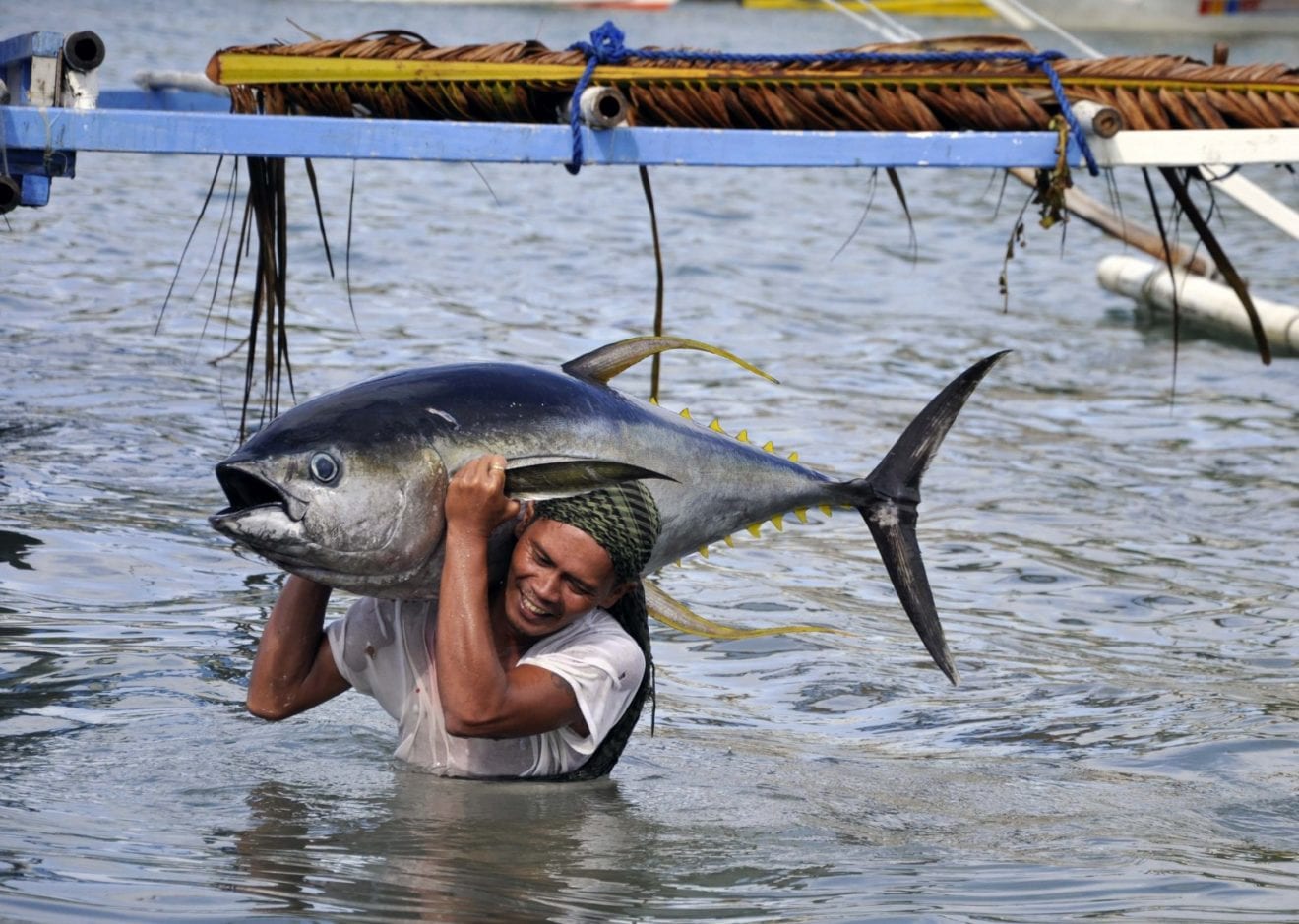
    Tuna exports in the first six months were worth US$553 million, a 56 percent rise year-on-year, according to data from the Vietnam Association of Seafood Exporters and Producers.

    Exports to the U.S. all but doubled thanks to higher demand, especially for canned tuna.

    Exports to members of the Comprehensive and Progressive Agreement for Trans-Pacific Partnership (CPTPP) also rose sharply, especially to Canada (up 68 percent), Japan (up 26 percent) and Mexico (up 30 percent).

    The EU market grew the slowest at 7 percent.

    The association expected high growth for tuna export in the second half of the year, with export rising 45 percent from 2021 to $1.1 billion.

    It warned rising fuel prices, which have kept fishing boats on shore, would affect supply.

  • Gold prices see historic one-day drop

    Gold prices see historic one-day drop

    Vietnam’s gold prices saw one of the deepest daily plunges in their history, going down by VND4 million ($170) a tael Monday.

    The Saigon Jewelry Company (SJC) sold its gold at VND64 million Monday afternoon, down almost 6 percent from the weekend. A tael equals 37.5 grams or 1.2 ounces.

    The gold prices were down on dollar appreciation, with investors selling assets, including gold, to buy the greenback, said chairman Tran Thanh Hai of SJC Phu Tho.

    Strong selling pressure following an announcement by the central bank on looking at the possibility of reducing SJC’s monopoly on gold saw people sell gold bullion and stockpile on gold jewelry.

    Currently, a tael of gold bullion and jewelry in Vietnam costs VND17.5 and VND5 million more than global prices, respectively.

    Hai expected prices to fall further the next few days, tracking drops in the London and Chicago exchanges.

    “Prices may fall below the $1,700 threshold [per ounce],” he added.

    Spot gold rose 0.9 percent to $1,722.88 an ounce by 10:34 a.m. Monday in London. Prices dipped below $1,700 last week for the first time since August. The Bloomberg Dollar Spot Index slipped 0.5 percent after hitting a record last week. Silver, platinum and palladium all advanced.