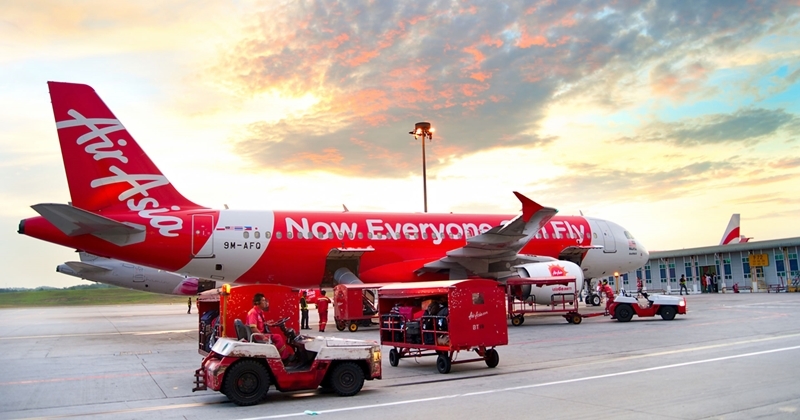
AirAsia announced it will be installing an innovative aircraft software modification known as Descent Profile Optimiser (DPO) on its A320ceo aircraft commencing from June in conjunction with the World Environment Day. This upgrade will help to generate fuel savings and significantly reduce carbon dioxide (CO₂) emissions. The enhancement to the aircraft’s onboard Flight Management System (FMS) performance database allows the aircraft to optimise the descent phase of the flight which subsequently minimises the amount of time spent at an inefficient level off.
The new initiative is set to reduce fuel consumption and improve the fuel efficiency by up to 0.75 percent of fuel burn which is equivalent to saving 101 kgs of CO₂ emissions per flight. This could reduce CO₂ emissions by over 221 tonnes per aircraft per year, representing a considerable contribution to more sustainable Flight Operations. Once installed initially on 17 aircraft, it would save 3,764 tonnes of CO₂ per year or the equivalent of 62,700 urban trees planted based on the US EPA’s Greenhouse Gas Equivalencies Calculator.
Bo Lingam, Group CEO of AirAsia Aviation Group Limited (AAAGL) said: “As the travel industry begins to recover and we expect to get back to pre-pandemic levels by the end of this year, it is important that we review our climate strategy and put in place new mechanisms and processes that will help to minimise the environmental impact of our flight operations. Installing the new flight operations optimisation solution for our current A320ceo aircraft allows us to reduce our carbon footprint for the short and medium-term as we continue to gradually upgrade our fleet to the higher capacity and more fuel-efficient A321neo in the longer term. Given the reality of climate change and the airline industry’s contribution to emissions, reducing our carbon footprint is currently one of our top sustainability priorities and we look forward to further reducing an additional 221 tonnes of CO₂ emissions per aircraft each year with the DPO system we are implementing. We remain committed to ensuring not only that we build a sustainable airline but also align with the aviation industry’s sustainability goal to reach net-zero by 2050.”
Besides the DPO, AirAsia has implemented several other key efficiency initiatives to reduce fuel consumption and carbon emissions such as One Engine Taxi (procedure to operate one engine during the taxi phase of flight instead of both engines), Idle Reverse Landing (a procedure that uses idle engine thrust upon landing instead of powered thrust to reduce noise and fuel burn) and the Required Navigation Performance-Authorisation Required (RNP-AR) approach (a procedure that uses the aircraft’s advanced navigation capabilities instead of conventional ground-based equipment for the shortest landing approach). In 2021, these measures enabled AirAsia to avoid emitting 11,175 tonnes of carbon dioxide, which is equivalent to planting 186,250 urban trees.
Vietnam’s benchmark VN-Index rose 0.16 percent to 1290.01 points Monday with a double-digit surge in trade as blue chip stocks climbed to the highest in weeks.
The index closed two points higher after losing nearly one point on Friday. Trading on the Ho Chi Minh Stock Exchange (HoSE) increased by 31 percent to VND16.94 trillion ($730.64 million).
The VN-30 basket, comprising the 30 largest capped stocks, saw 11 tickers gained. GAS of state-owned Petrovietnam Gas rose 4.6 percent to a new peak, having increased by 37 percent in the last three weeks. MSN of conglomerate Masan Group went up 3.7 percent to the highest in over a month.
PLX of fuel distributor Petrolimex gained 3.2 percent to the highest in over a month. Sixteen blue chip stocks fell, with TPB of private TPBank losing 3.6 percent. STB of Ho Chi Minh City-based lender Sacombank dropped 3.1 percent, while NVL of real estate developer Novaland Group lost 1.5 percent.
Foreign investors were net buyers to the tune of VND44 billion, mainly buying DPM of Petrovietnam Fertilizer & Chemicals Corporation and Binh Son Refining and Petrochemical Jsc (BSR).
The HNX-Index at the Hanoi Stock Exchange, where mid and small caps list, was down 1.18 percent while the UPCoM-Index at the Unlisted Public Companies Market fell 0.29 percent.
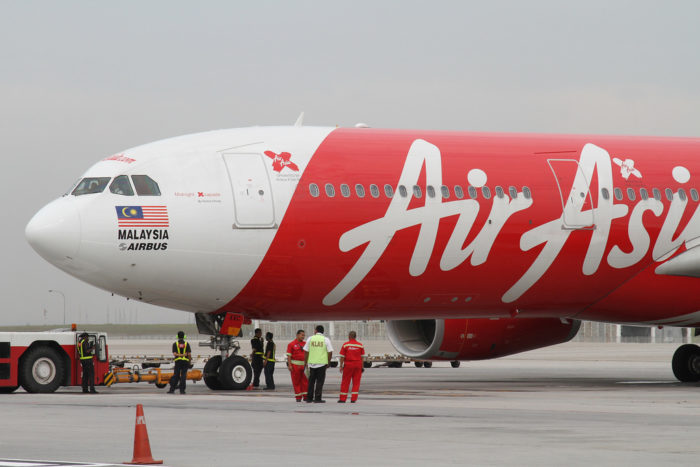
Malaysia’s AirAsia is facing a wave of complaints from customers who say they have still not been refunded for flights that were cancelled or rescheduled during the pandemic.
AirAsia and its subsidiary AirAsia X (AAX), both owned by Capital A Berhad, grounded thousands of flights in 2020 and 2021 after the Malaysian government shut state and international borders to curb the spread of COVID-19.
But months after the low-cost carrier resumed flights following the lifting of interstate and international border restrictions for Malaysians in October, hundreds of customers have taken to social media to complain of poor customer service and long waits for refunds.
Rohana Betak, 60, said she requested a refund of 4,000 Malaysian ringgit ($911) after the airline cancelled her flights between Senai and Kota Kinabalu, the capital of Sabah state, following the introduction of a nationwide lockdown in March 2020.
Betak, who planned to visit the area around Mount Kinabalu, Southeast Asia’s highest peak, with her family in October 2021, said the airline’s automated online customer service only offered her the option of travelling on different dates. Betak decided against accepting the offer due to uncertainty over when restrictions would be lifted and concerns about catching COVID-19. Two years later, she says she is still waiting for her money back.
“In my request, I said it was fine to refund me credits for the booking but instead I was reminded in June 2020 that I must board the flight to Sabah on a different date and there would be no refunds,” Betak told Al Jazeera.
“It was not helpful because instead of offering me at least credit in refunds, it told me I had no other choice but to travel on different dates.”
Rohana Betak, pictured in a pink hat in the back row, says she has been waiting two years for a refund from AirAsia [Courtesy of Rohana Betak]
Travel to Sabah before October 2021 was strictly limited to certain categories of travellers, including those travelling for work and those born in the state. Rohana and her family did not fall under any exempted category.
“When it demanded I get on another flight, I asked if they wanted to send me and my family to our deaths?” Betak said. “It’s so frustrating and I am so tired of trying to get my money back so I’ve accepted that I might not get my money back at all.”
Many of the complaints have been directed towards AVA, AirAsia’s online chatbot, which is the only line of communication between customers and the airline for issues involving bookings or flights.
In particular, some have questioned why it is so difficult to reach customer service to request a refund, even for flights booked since the lifting of pandemic restrictions.
Customer Aulia Chaerisa Salleh said she is waiting for a refund for a flight between Batam and Jakarta that was booked earlier this month after she was informed no seat was available.
“I paid for my ticket and it did not register in the system so I tried to get my refund for my tickets. I tried the AVA live chat but it is not helpful at all. It has been days, I haven’t heard from them,” she said.
Under AirAsia’s current refund policy, the airline offers customers a refund, credit or a new travel date whenever a flight is cancelled or postponed.
AirAsia told Al Jazeera the airline is engaged in ongoing dialogue with consumer regulators across the region to ensure compliance with all local regulations.
“AirAsia Group’s policies are in line with many low-cost operators in the travel industry worldwide and are fully compliant with all regulatory requirements and as a customer-centric airline, we have focused on resolving all customer queries during the pandemic as soon as possible,” a spokesperson said.
The airline group said it has resolved more than 90 percent of refund requests and is committed to resolving a small number of outstanding claims as soon as possible.
“In Malaysia for example, our current refund progress is only left with 0.03 percent of the refund requests we received and we are looking forward to completing the refunds exercise for all outstanding queries within the next few months,” the spokesperson said, adding that the past two years had been the most challenging in the history of commercial aviation.
The spokesperson added that “our passengers remain our number one priority” and the airline will “continue to enhance our services to deliver the very best in terms of safe, affordable and reliable air travel”.
Tan Kok Liang, president of the Malaysian Association of Tour and Travel Agents (MATTA), said the refunds backlog is a short-term issue and its 3,100 members will continue to book with AirAsia as long as requested by customers.
“The problem child is AAX and while air connectivity is crucial for tourism recovery, based on media reports, AirAsia should be held more accountable to all stakeholders,” Tan told Al Jazeera.
The hefty compensation paid out to airline co-founders Tony Fernandez and Kamarudin Maranun, who took home close to 30 million ringgit ($6.8m) combined last year, has also raised eyebrows.
Following the release of Capital A’s Annual Report 2021 last month, some social media users vented their frustrations on Fernandez’s personal Instagram accounts, with one comment slamming AirAsia as “the one and only airline that does not have a customer service phone number.”
Despite the generous executive compensation, AAX, the group’s long-haul carrier, was last year forced to undergo debt restructuring to save itself from liquidation after racking up huge debts during the pandemic.
In March, AAX announced it had completed its debt restructuring after creditors earlier agreed to a deal under which the airline would pay just 0.5 percent of outstanding debt and terminate existing contracts to restructureRM33.65 billion(US$8.1 billion) of liabilities.
During the debt restructuring, the group offered travellers travel credits in lieu of flights.
The Malaysian Aviation Commission (MAVCOM), however, urged the airline to reimburse customers for tickets purchased while threatening to exercise its powers under the Malaysian Aviation Commission Act 2015.
Capital A posted revenue of 1.7 billion ringgit ($387m) in the 2021 financial year, down 47 percent from the previous year, as capacity sank to just 36 percent of 2020 levels.
Discover the current and upcoming shopping behaviours that will shape the future of cross-border commerce, and emerging trends that will help integrate and bring seamless shopping experiences to your customers.
During the pandemic, 10 years of forecasted growth happened in the span of 90 days. This year, the global e-commerce market is expected to be valued at US$5.55 trillion and will reach $6.17 trillion by 2023, making up nearly a quarter of total retail sales. Though retailers have often shied away from expanding into new markets due to their complexity, closed borders pushed businesses to venture beyond their native markets, supported by the advancement of merchant tools. In a recent webinar hosted by Inside Retail Asia, luxury flash sale showroom OnTheList shares its international expansion journey amidst the pandemic, with global payments provider PayPal advising strategic tips for merchants looking to enter foreign markets.
The pandemic impact
The fight for survival spurred by product shortages and in-person shopping safety accelerated consumers’ digital adoption, as countries with the lowest e-commerce penetration saw the largest migration to online shopping with Southeast Asia welcoming 70 million new shoppers since the beginning of the pandemic with no signs of slowing down. As shoppers become more comfortable with the online environment and shopping globally, consumers’ expectations have increased, urging retailers to keep up and meet their demands in competing with new entrants. Having the wealth of product options suddenly available (albeit faced with shipping challenges) has lured shoppers away from brick-and-mortar to the world wide web.
Despite national campaigns and broad sentiment to support local retailers, consumers are choosing to shop outside of their home countries for numerous reasons. A study by PayPal revealed that Japanese consumers favour shopping abroad due to price sensitivity and unique products available. Equally, businesses have been casting their net beyond their home markets in hopes of recapturing lost businesses overseas. Cross-border merchants have found new revenue opportunities abroad and larger audience reach, all the while competing with local sellers. One in two surveyed e-commerce merchants in Hong Kong had been actively looking to reach new customers in other markets as part of their efforts to recapture lost businesses.
Originally starting with a 7000sqft physical showroom in Central, Hong Kong, the space had been temporarily shut during lockdowns. Shifting from a 90 per cent offline presence to online, members were pushed to snatch Jimmy Choo flash sales online, all the while inventory build-up became a problem for luxury retailers.
“Many of them (brand partners) were impacted at different stages with regards to traffic in their stores or even stores being closed, so this posed an opportunity for OnTheList to step in and partner with them to find solutions for their inventory”, shared Adele Leong, SEA MD at OnTheList. The organic transition to online catapulted OnTheList’s digital transformation to scale and expand to Australia, Malaysia and South Korea all within a short period.
What normally was recognised as slow sales seasons in the months of March and April, PayPal equally witnessed a volume uptake in transactions and merchant sign-ups as more consumers turned online for products and services overseas that were not available locally due to supply shortages.
“A lot of businesses had to look for new ways of survival; they have to think about being agile and responding to new ways of catering to consumer demands” explained Syd Wong, head of enterprise sales at PayPal (Hong Kong, Taiwan, Korea). As new consumers migrated from traditional in-store experiences to online, more than 67 per cent of transactions were also taken on mobile rather than desktop, prompted by the government’s push to use digital payments and wallets during subsidy payouts in an attempt to reignite the retail economy.
Entering new markets
The challenges of global expansion and localisation cannot be tackled with just one global site and a currency converter widget. Truly understanding customers abroad is the key to every successful market entry, where localisation plays a huge part in connecting and retaining local consumers through understanding cultural nuances and adapting content appropriately. E-commerce marketplace Techsembly identified localisation can increase a site’s conversion rate by up to 70 per cent, where consumers are more likely to purchase if the retailer’s website is displayed in their native language with their preferred local payment options available.
“We just couldn’t make that trip to each market to see what has happened to find opportunities, particularly for offline. We had to really depend on the local teams to maximise our operational expertise,” said Leong.
From an organic China expansion to cross-border scaling, OnTheList is a successful case study of a retailer’s international growth during the pandemic, all the while remote. The brand relied on brand partners and members as the main basis to explore new market openings.
“There’s really no big secret. We took the time to understand all the localisation factors that were important for us to be successful. For example, the type of brands that we worked with, the way we communicated with our members and understanding the types of shopping habits, cultures and payment methods” revealed Leong. OnTheList expanded into new markets as pure online retailers, all the while dabbling with physical pop-ups to test market potential to expedite expansion.
The long-standing debate between outsourcing to service providers or building in-house for cross-border retail and payments stands to benefit retailers without remote resources abroad.
“One of the barriers to think about is the sensitivity to some of the local country’s consumer behaviours and their types of payment preferences,” commented Wong, noting specific local payment behaviours vary from Octopus-loving Hong Kongers as opposed to consumers in Europe in comparison.
PayPal prides itself on its flexibility, being able to work with local partners and shopping cart solutions to integrate payment options for a seamless checkout experience, with language and customer support provided.
“Work with a global partner with experience and feet on the street of each market that you’re actually expanding into so you can actually leverage some of the expertise and experience in the local markets” suggested Wong. “We have actually started to work with local partners to accept local payment types to cater towards local consumer preferences to help merchants go into new markets easier” he adds.
With over 180 fiat currencies available, it is suggested at least 30 to 40 currencies need to be available in order to be recognised and supported in order to gain substantial sales benefits. Offering multiple payment options may be complex, but payment technology providers such as PayPal have simplified cross-border payments, allowing merchants to scale into new markets with ease.
Future payment trends
With the rise of social commerce, consumers have higher expectations for convenience and seamless checkout experiences. Retailers like OnTheList are pressured to invest in improving their e-commerce platform and apps to cater to the demand and new expectations. Mobile payments are deemed a must-have as 99 per cent of Gen Z have the highest smartphone usage compared to all generations.
“You need to present a smooth user interface across all devices for consumers, especially the ability to checkout and pay, regardless of what devices you’re actually on,” emphasised Wong.
As Gen Z and Gen Alpha enter the workforce with new spending power, young and aspiring professionals wanting to spend more at certain times have prompted the uptick of ‘Buy Now Pay Later’ schemes. Though more prominent in Western countries such as the US, UK and Europe, the trend is also seen catching up in Asia.
Leong reports: “This for us has been particularly interesting because it brings us a very new and interesting pool of aspiring customers, people that are in the earlier stages of their career who may not be able to afford full-price luxury. But by having Buy Now Pay Later, they can experience luxury brand products before becoming a full-price customer eventually.”
As Asia adapts to the new normal, so are solutions and services that have been evolving ever since to better serve the various different markets and changing consumer behaviours. Brands are to face the latest demands with agility to cater for the future generation of consumers under new opportunities, across the borders.
Alibaba’s Southeast Asian e-commerce arm, Lazada, has named James Dong as its new group CEO as the region’s Shopee-dominated competition steps up.
In his new role, Dong wil oversee Lazada’s expansion plan into Euroupe. The 42-year-old CEO will succeed Chun Li, who will continue serve as adviser to the group’s chairman Jiang Fan and member of Lazada’s board of directors.
Formerly with McKinsey & Co, Dong was head of globalisation strategy and corporate development role at Alibaba Group before joining Lazada as CEO of Lazada Thailand and Vietnam in 2018.
He has subsequently handed up the leadership of Vietnam unit to Kaya Qin, who has been chief operating officer of Lazada Vietnam since 2018, while remaining in his role as CEO of Thailand.
Retail sales in Singapore surged 17.4 per cent in April (excluding motor vehicles), faster than the rate of 13.6 per cent in March.
Statistics Singapore said the increase was driven by sales of apparel, food & liquor – up by 46.6 per cent year on year – and improved supermarket turnover.
Retail sales in Singapore, excluding motor vehicles, were estimated at S$3.3 billion (US$2.4 billion) in April, with online retail sales accounting for 14.2 per cent of that. Online sales of computer & telecommunications equipment comprised 48.2 per cent of the category’s turnover, while 28.3 per cent of furniture & household equipment was sold online.
Statistics Singapore said the growth in apparel sales was due to increased demand for bags and footwear, partly fuelled by increased tourist spending as border restrictions were eased. Sales of food & alcohol, in department stores, and of watches & jewellery, increased by between 28.4 and 35.6 per cent.
However, sales at mini-marts & convenience stores fell by 5.5 per cent.
H&M Group is piloting tech-enabled shopping solutions across its US Cos stores as part of its strategy to tap into the in-store technology-driven retail experience, to deepen its customer relationships.
The initiatives include seamless payment options, personalised styling recommendations, faster checkout and upgraded delivery and return options.
“We are developing and imagining how Cos retail spaces can inspire our customers, both now and in the future,” said Lea Rytz Goldman, MD at Cos. “Our ambition is to pilot new technologies that allow us to meet and exceed our customers’ in-store shopping expectations.”
The program was first tried at the Cos Beverly Hills store, where fitting rooms are equipped with smart mirrors that recognise products brought into the room and allow customers to request items without having to leave the room. Meanwhile, there are other types of mirrors used for virtual try-on and styling.
“With Cos Beverly Hills, we have seen first-hand how our customer experience can be elevated with tech enhancements. As a result, these innovations will be rolled out in more Cos’ US stores this year,” Goldman added.
Chief technology officer at H&M Group, Alan Boehme, said the group will test a new frictionless and personalised shopping experience throughout this year.
For years we have heard talks about the European Union enforcing a common charging port for all phones, even tablets and headphones. Reuters now reports that those talks are probably about to become reality, citing unnamed sources.
Oh my – we may finally be witnessing the end of the Lightning port (at least in Europe), if the proposal for a common charging port gets finalized and accepted as law. As you may already imagine, the common charging port will be USB-C.
On June 7, EU member countries and EU lawmakers are reportedly going to meet and discuss the proposal in question. You may have heard (or you may suppose, rightfully so) that Apple has been criticizing this proposal.
It may come as a surprise to some, but this single mobile charging port proposal was first introduced by the European Commission more than a decade ago. Its introduction was due to iPhone and Android users complaining about having to use different chargers for their phones.
And it seems this proposal is on its way to become law. According to Reuters’ sources, next Tuesday will mark the final meeting between EU countries and EU lawmakers on this topic. One of the issues is whether or not to include laptops to this proposal. If this happens, it may impact Samsung and other device makers as well.
On top of that, EU lawmakers are striving to include wireless charging systems to be ‘harmonised’ by 2025, but some EU countries and the European Commission demand a longer period for technical reasons.
As for Apple, the company has previously criticized this proposal, underlining that if the proposal becomes law, it could cause more electronic waste. Why? Well, such a law could cause iPhone users to ditch their current Lightning accessories. Additionally, forcing users to change to new chargers would also create a mountain of e-waste.
But Apple may actually be moving towards USB-C connector anyway. Recent rumors about the iPhone 15 (yes, the iPhone 14 is not yet out, but nothing stops rumors about the iPhone 15 to surface anyway) indicate the 2023 iPhones may ditch the Lightning connector in favor of USB-C.
With Apple’s Worldwide Developers Conference (WWDC) set to kick off on Monday, we will soon get a look at what to expect from the newest builds of Apple’s operating systems such as iOS, iPadOS, watchOS, and the others. Speaking of iOS, 250 days after the release of iOS 15, we have the latest look at the operating system’s adoption rate from business analytical company Mixpanel.
The data shows that close to 90% of those with an iPhone that supports iOS 15 have indeed installed the software on their handset. Over the last ten weeks, iOS 15 adoption has risen 10%. Keep in mind that Mixpanel gets the data it uses by keeping track of the number of visits made to apps and websites that use its analytical software development kit (SDK); thus the figures discussed are not official numbers computed or released by Apple.
The latest official iOS 15 adoption numbers were released by Apple in January of this year and it showed that 72% of iPhone models launched over the previous four years were running iOS 15. At that time, 26% were running iOS 14 and 2% had an earlier OS build installed.
When iOS 15 was first released on September 24th of last year, there were quite a few bugs including one that falsely told users that their storage was almost full. Some had issues with audio when iOS 15 was first launched. The bugs kept some iPhone users from updating their handsets to iOS 15. Eventually, many of these iPhone users did make the switch.
Some of the new features found on iOS 15 include Focus which is designed to allow iOS users to focus on work and the task at hand without getting distracted by the phone. Live Text allows phone numbers printed on a business card or scribbled on a note to be recognized and a call to that number can be made. Similarly, Maps will be able to show you directions to an address found on a business card, written on a post-it note, or seen on a street sign.
According to Bloomberg’s Mark Gurman, iOS 16 will feature new widgets that might allow users to customize them. There also will be new ways for users to interact with the operating system, possibly a refresh to the look of Apple’s own iOS apps,” and a new updated notifications system.
WWDC starts Monday, June 6th, at 10 am PT (1 pm ET) and you can stream it on YouTube, view it via the Apple Developer app in the App Store, or watch it from the Apple.com website on your browser.
Kacific has launched its first Kacific Gigstarter mobile app for all end-users on the Kacific Gigstarter service, across 25 markets it operates in. The mobile app is the next step in helping its Internet Service Providers (ISP) and Kacific Authorised Distributors (KADs) add value and understand their customers better. The app simplifies the end-user experience by providing the ability to track data usage, upgrade their Gigstarter plans, request support and more.
With the Kacific Gigstarter app, end-users under the respective ISPs and KADs can easily track and manage their data usage on a daily, weekly and monthly basis. It provides details on different tiers of broadband plans, driving the opportunity for end-users to upgrade their plan as their needs grow.
Thoughtfully designed to offer the best possible user experience, the app ensures a consistent service standard for end-users and makes it even easier to contact their service provider for on-ground 24-7 support at the touch of a button.
The app will also drive business to the local KADs by providing prospective end-users with the ability to locate the nearest ISP or KAD in their area.
“We’re focused on providing our channel partners with everything they need to be the most competitive brands in the broadband market. The Gigstarter mobile app adds to the marketing and sales support we provide, giving our partners the user-friendly tools to keep their customers satisfied and informed,” said Brandon Seir, Chief Commercial Officer, Kacific.
“With the app, we can drive new end-users to our customers, promote and upsell services, and provide responsive customer service – ultimately streamlining the end-users’ day-to-day experience with the Gigstarter product.”
To respond to the high retail demand created by the Covid-19 pandemic, Kacific diversified its business model – adding a franchise retail broadband model to its traditional wholesale model. The flagship product for the retail arm is Gigstarter, a pre-packaged, prepaid, monthly broadband service, delivered over small, light, and easy-to-install VSAT terminals.
Apple has agreed to make work schedules at its retail stores more flexible, according to employees with knowledge of the plans, part of a push to improve conditions in the face of unionisation efforts.
The company informed staff at some stores that scheduling changes will take effect in the coming months, according to the workers, who asked to not to be identified because the plans aren’t public.
Some retail employees have voiced their frustrations with managers and labour groups about their schedules, and Apple’s retail chief recently signaled that changes could be coming.
“I am deeply committed to making Apple the best it could be for you, from scheduling to pay and benefits to development to the experience and environment in the stores,” Deirdre O’Brien told staff in a recent video message.
The company is planning the following changes, according to the employees: A minimum of 12 hours in between shifts, an increase from the current minimum of 10 hours.
A maximum of three days per week when employees can work past 8 pm, unless they choose to work late shifts.
According to Instagram, using Reels can significantly increase the number of your followers on the platform. The social media says that, during a 60-day period, public accounts with over 10,000 followers that uploaded at least five Reels got more followers than those in the same category who did not post Reels at all. And, to help you make even more amazing short videos, Instagram announced that it is adding some new features to its Reels.
You can now add sound effects to your Instagram short videos. As the social media shared, you can use its refreshed collection of sound effects to “inject humor” into a Reel or “help your audience get into their emotions while watching one.” Furthermore, if the video is at least five seconds long, you can now record your voice-over and add the recording to your Reel. However, Instagram warns that others could use the sound bite as well, so take that in mind if you decide to record your voice.
The social media also announced that you can now use some of the Stories stickers in your Reels. You can now add:
Polls to let your followers vote on a subject
Quiz which lets you, as Instagram said, “put your audience’s skills to the test”
Emoji Slider that lets your followers show how they feel about something
With this update, Instagram has also extended the length of its short videos. You can now “tell deeper stories with 90-second Reels.” And to make it even easier for you to fill these 90 seconds, Instagram now lets you use templates to create a Reel by using another one. The app “pre-loads the audio and clip placeholders,” and all you have to do is “add and trim your unique clips.”
The Vietnamese steel industry was expected to benefit from the Russia-Ukraine crisis, but stocks of companies have been plunging due to rising input costs and declining demand.
The shares of industry leader Hoa Phat Group fell Thursday to a 14-month low. HPG has dropped by over 27 percent this year as against a 14 percent fall for the VN-Index.
Hoa Sen Group’s share price fell to its lowest in 15 months in May and has barely risen since. It has lost 42 percent this year. Nam Kim Steel is down 23 percent and Pomina Steel Corp, 40 percent.
After Russia launched military operations in Ukraine in February, some top Ukrainian steel manufacturers said they would have to cut production to a minimum this year, while Russian producers face an embargo from western countries.
The two together exported 57 million tons of steel last year, or 3.1 percent of global demand, and there was an expectation that Vietnamese manufacturers would fill the gap.
Stock brokerage VNDirect said in March, “We believe that top Vietnamese exporters have the opportunity to increase their production in the near future.”
Steel stocks soared in February, with NKG rising by 60 percent that month even as the VN-Index inched up by less than 1 percent.
HSG rose by 36 percent, POM by 21 percent and HPG by 17 percent.
But after reaching a new peak of nearly US$1,600 a ton in early April, steel prices have dropped to around $1,160 now.
Analysts blamed this on slower than expected economic recovery and the resultant drag on demand.
In its latest forecast, the European Steel Association said consumption could fall by 1.9 percent this year instead of rising by 3.2 percent as it projected in February.
This is because high energy prices, disruptions in the supply chain and the Russia-Ukraine crisis could lead to a slump in demand for cars and consumer electronics, and lockdowns in China’s major cities are likely to have negative impacts on the global economy, it said.
In a double whammy, production costs are surging.
Analysts at KIS Vietnam Securities expect the rising costs to drag Hoa Phat Group’s profit margin down by 4.4 percentage points this year to 23 percent.
In the first quarter its pre-tax profits were nearly 14 percent lower than in thesecond quarterlast year when steel demand was booming.
Hoa Sen saw profits decline for a fourth quarter in a row, while Nam Kim’s fell by 40 percent from the second quarterof last year.
“Shareholders will see dreadful earnings figures in the second quarter,” Hoa Phat chairman Tran Dinh Long said at the company’s annual general meeting on May 24.
HPG dived by 5 percent that day.
But analysts at SSI Research expect the steel industry to begin recovering when China eases its Covid restrictions.
Telecom giant Mobifone has named Nguyen Hong Hien as its new chairman until 2027.
Hien, 48, replaces Nguyen Manh Thang, who becomes a board member at the state-owned Vietnam Posts and Telecommunications Group (VNPT).
Prior to joining Mobifone, he was head of the technology and infrastructure department at the Commission for Management of State Capital at Enterprises, and worked at State Capital Investment Corporation from 2007.
In 2021, Mobifone posted pre-tax profits of VND4.96 trillion ($213.8 million) on revenues of VND31 trillion.
It expects revenues to slightly increase to VND31.36 trillion this year, but profits to drop to VND4.7 trillion.
Starbucks has announced a first look into a new drive-thru store, opening on 1 June within a bustling rest stop in Togane City, Japan. The store is the second in Japan to be certified under the Greener Stores Framework, aimed at accelerating the transformation of retail towards lower-impact stores that achieve reductions in carbon emissions, water usage and landfill waste.
The store plays a key role in a community collaboration between Starbucks Japan, Togane City and Sanyu Plant Service Corporation, a local manufacturer, which aims to promote circularity and reduce waste, while making a positive impact for the local community. As part of the collaboration, used coffee grounds from the new store will be recycled into cattle feed, and through Starbucks coffee grounds circularity loop, milk from participating dairies is then used to create handcrafted beverages at around 200 Starbucks stores across the Kanto and Kansai areas, including the new drive-thru. In addition, other food waste from the store will be turned into compost to grow produce directly at the rest stop in Togane City, in cooperation with Chiba Prefectural University of Agriculture.
Designed inside and out to reflect the area’s proud local industry, the store features local Sambu cedar and Japanese yew trees, the official trees of Togane City. As part of Starbucks’ global efforts to reduce carbon by 50% by 2030, the store is powered by solar panels on the roof and locally-generated renewable energy. The solar system will include batteries that can provide backup power in the event of an outage.
Connection with the community is also central to the new store’s operation and design. “I believe that even if the actions of each of us are small, each step we take will become a path leading to the future,” says Ayumi, store manager. “Starting with what we can do, we would like to build the future together with the community.”