Tag: asia

  • WhatsApp has a message edit feature in the works

    WhatsApp has a message edit feature in the works

    Texting with an out-of-control auto-correct is hilarious sometimes (we have all had our fair share of funny auto-correct situations, don’t pretend like you didn’t have any!), but other times, making an error in your text message can actually even cause trouble or misunderstandings. Well, for that, WhatsApp is working on allowing you to edit your message, and this very helpful feature has been spotted under development for WhatsApp for iOS, Android, and desktop.

    The popular chat app has previously tested an edit feature back in 2017, but that one never made it to a stable version of the app. Now, however, and it is currently under development. This means it is not yet available for beta testing, but it might be soon.

    As you could probably imagine, the feature will allow you to edit your text message. The preview that WABetaInfo shared about the feature shows you can tap and hold on to a message, select the three-dotted icon on the top and choose Edit.

    For now, it seems the Edit history of a message won’t be displayed, but as we already stated, given the fact that this feature is still under development, changes to how it functions are possible. At the moment, there’s no information about the time frame you have to edit a message after it’s been sent

    So far, there’s no specific date disclosed yet as to when it will make it to the public. Before that, it will first appear to WhatsApp beta testers to iron out any issues with it, before getting an official release.

    WhatsApp has recently been all about improving the experience you have on the chat app. It has now launched message reactions, as well as the possibility to send larger files in chat, and the edit feature the company is currently working on will hopefully complement this great feature set soon. When we know more, we’ll let you know, so stay tuned!

  • TikTok testing a Clear mode experience with fewer distractions when scrolling

    TikTok testing a Clear mode experience with fewer distractions when scrolling

    Popular short video sharing platform TikTok has been recently working on some new features for its ever-growing user base. Now, a new feature that will make your TikTok binge experience a more distraction-free one, so you can focus on the content you’re viewing at a given moment.

    TikTok’s Clear mode has been spotted by Matt Navara, and it seems the social media platform is currently testing it with some users. When you decide to go for Clear mode, it removes all usernames, captions, and other buttons from the interface for distraction-free content consumption and scrolling experience.

    The test is running with a limited amount of users right now. If you’re one of the users the test is available for, you can access Clear mode when you tap and hold on the screen in the app. The feature will then appear under the ‘Add to Favorites’ option.

    For now, the feature is in limited testing and there’s no official date as to when it will be released to everyone. However, once it gets released, it will make the TikTok experience a better one, given the fact that the majority of distractions will be cleared from your view. Yes, that means it will be even harder to stop watching those cute cat videos while you’re supposed to be working…

    But that’s not all. TikTok has also been testing a number of new changes it plans to implement. One of those is a live mobile gaming feature that will allow content creators to better engage with their viewers while live streaming. Additionally, TikTok is working on a way to let you identify comments you think are irrelevant via a private dislike button. Worry not, the dislike button won’t be visible to the commenter or the public, so nobody’s feelings would get hurt.

  • New Google TV app now available for iPhone and iPad users

    New Google TV app now available for iPhone and iPad users

    Google has just announced that one of its apps that was initially only available for Android users is finally coming to iOS. The Google TV app allows users discover what to watch with recommendations from across all apps installed, thus making it easy to start watching movies and shows.

    The Google TV app is available for iOS from the App Store, starting today. Both iPhone and iPad users who already have the Play Movies & TV app installed on their iOS devices will now be able to update it to the new Google TV app.

    Besides getting recommendations from across your apps, the Google TV app also allows you to create a Watchlist for your discoveries. Rating movies and shows within the app is also possible, so you can get even better recommendations based on your interests on both the app and your Google TV devices.

    Regardless of whether you’re using an iOS or Android devices, the Google TV app will enable you to use your phone as your remote. Of course, this feature will only work with a Google TV or other Android TV OS devices; just make sure to click the remote button in the app and connect to your TV to control it with your phone and use Google Assistant.

  • The Best Digitalized Swiss Private Banks

    The Best Digitalized Swiss Private Banks

    There is a large gap between private banking and your average smartphone app, according to a new study. But a small avant-garde makes headway.

    Swiss traditional private banking pure-play Julius Baer seems to be the grand citadel of Insta-bankers. That is the surprising conclusion of a study by consultancy Columbus Consulting.

    It ranked 27 of the larger Swiss private banks based on how they did in both digitalization and client experience.

    According to Columbus, Julius Baer is the most digitalized private bank in the country. «It made the top in 2022 based on a strong showing in social networking and good results for its website and digital marketing», the team around partner Rémi Chadel indicated.

    The bank showed a sharp increase in YouTube subscribers, good engagement on Instagram, and had the second-largest Linkedin community among Swiss private banks surveyed.

    But the experts also maintain the bank lags others when it comes to a mobile smartphone app.

    In any case, it was enough to bunt local investment house Vontobel out of first place. They didn’t make the grade as a result of a «weak social networking performance», the study says. And that is exactly where Julius Baer scored highly. Lombard Odier, which came in third place, managed to outdo the others in social media and in digital marketing. But the Geneva-based private bank did not do as well when it came to its website and mobile apps.

    Pictet came in fourth, as it tested best for client experience based on a sample test. Others in the top ten include Union Bancaire Privée, EFG, Banque Cantonale Vaudoise (BCV) unit Piguet Galland (which jumped up five places), Zurich-based private bank Bergos, J. Safra Sarasin and Banque Edmond de Rothschild.

    Even though the rankings did not change that much last year, investments still rose substantially. According to the study’s authors, spending on digital marketing alone was up 15 percent at 2.9 million francs while their websites drew 31 percent more views than they did in 2020.

    In total, the institutes get about 525,000 visits a month on their diverse channels. That means that the digitalization drive prompted by the pandemic shows little signs of ebbing.

    But activity levels are uneven. The three leading banks in the ranking make up 85 percent of all internet consumption of all the 27 banks reviewed. About 30 percent of those surveyed did not offer a mobile app. That is not much of a change from a year earlier, the authors maintain, somewhat laconically. But that nonchalance could turn on them quickly given the current pace of progress and change.

    The private banks are also dwarfed when it comes to digitalization by the retail banks. Swiss postal unit Postfinance, which emphasizes TikTok, has 14 times as much traffic as all the 27 private banks do together.

    Some have been trying to catch up by experimenting. Apparently, Linkedin has become a preferred meeting site for new, highly affluent clients. It is also the leading social outlet for private bankers, with the highest overall engagement at 78 percent, and 72 percent of bankers being subscribers.

    Some institutes have made it a habit to communicate digitally, much as they did during the pandemic. Private banks have also been invested heavily in digitalizing their client relationships and integrating that with their needs and demands.

    That means that some of the institutes are starting to understand what they want through data. Digital marketing has become a new tool in the advisory arsenal and the Columbus consultants are certain it will help them introduce new services in future.

  • UOB appoints new Vietnam CEO

    UOB appoints new Vietnam CEO

    Singaporean bank UOB has named Victor Ngo its CEO in Vietnam.

    The 30-year banking veteran replaces Harry Loh, who returns to Singapore to lead group non-financial risk management, according to a statement.

    He started working for UOB in 2004 and has occupied several key positions, including head of group internal audit and head of group compliance.

    Since 2015 he has been active in Vietnam, including helping establish the bank’s first foreign subsidiary in 2017.

    “With Ngo’s extensive experience in the banking industry and within UOB Group, he is well placed to drive our Vietnam franchise to new heights,” UOB deputy chairman and CEO Wee Ee Cheong said.

    UOB, which opened a representative office in Vietnam in 1993 and a branch in HCMC two years later, is the sixth largest foreign-owned bank in the country by charter capital (VND5 trillion, US$215.5 million).

  • Xiaomi starts smartphone production in Vietnam

    Xiaomi starts smartphone production in Vietnam

    Xiaomi has delivered the first batch of its made-in-Vietnam smartphones, the Chinese electronic giant announced Monday.

    Its smartphones are made in Vietnam by DBG Technology, a subsidiary of Hong Kong’s DBG Electronics Investment Limited, at a factory in northern Thai Nguyen Province.

    Besides supplying to the local market, those devices will also be exported to some Southeast Asia markets including Malaysia and Thailand, a representative of Xiaomi Vietnam said.

    The DBG Technology factory only manufactures certain models, it was added.

    Nguyen Duc Trong of Digiworld, a Xiaomi authorized reseller in Vietnam, said producing smartphones in Vietnam would help solve issues caused by Covid-19 disruption on the global supply chain.

    “[Vietnamese] consumers will have a more stable supply, while the country will solidify its position in the race for smart manufacturing.”

    Xiaomi is the second largest smartphone maker in Vietnam, accounting for 20.6 percent of market share in the first three months this year, according to data from industry analysis firm Counterpoint.

    Xiaomi smartphones are mostly made in China and India by its manufacturing partners, including Foxconn, DBG, BYD and Flex.

  • Deutsche Bank Raided Over Alleged Greenwashing

    Deutsche Bank Raided Over Alleged Greenwashing

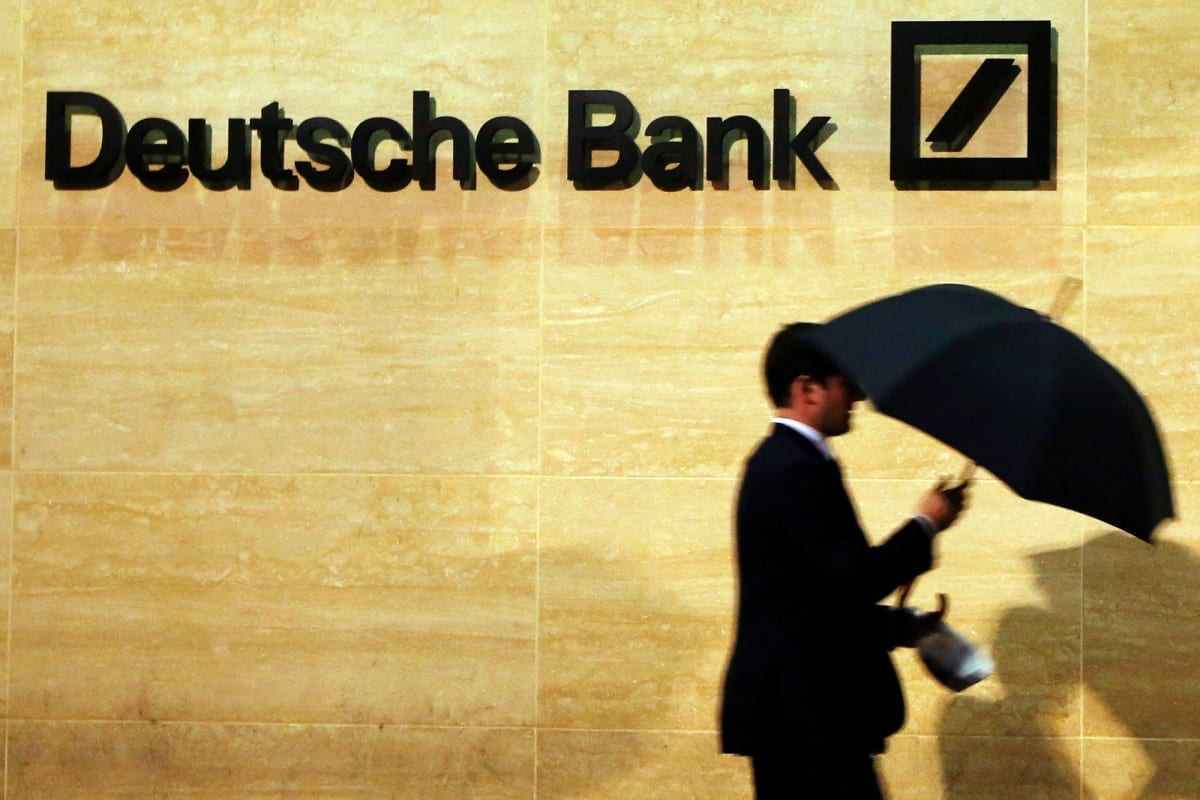
    German prosecutors raided the offices of asset manager DWS and its controlling shareholder Deutsche Bank over allegations of greenwashing, according to media reports.

    Deutsche Bank and its around 80 percent-owned asset manager DWS were raided over allegations DWS misled investors about how green the investments marketed as green or greener really were, the reports said.

    The move may send shivers down the spine of investors globally as green investments, or investments marketed as using environmental, social and governance (ESG), indicators have surged in popularity. In early 2021, global ESG assets were projected to top US$53 trillion by 2025, or more than a third of the projected total of assets under management of US$140.5 trillion in that timeframe.

    The German authorities said they were responding to news reports and a whistle-blower’s allegations about DWS’ marketing tactics greenwashing its offerings, adding sufficient factual evidence has emerged» about how little ESG factors were allegedly used to determine investments.

    In a statement, DWS said it has fully cooperated with authorities in the matter and will continue to do so. DWS has previously denied the allegations.

    We understand a variety of actions are required to ensure a thorough and complete investigative process. We remain committed to working with any authorized bodies to clarify any and all queries they may have, DWS said.

    Deutsche Bank has previously said they would cooperate with authorities. Deutsche Bank said the raid was directed at «unknown people» in connection with the DWS allegations.

    DWS has stopped using the label ESG integrated, in a move that came after DWS’ former sustainability head, Desiree Fixler, alleged the label didn’t result in meaningful moves by fund managers. Fixler was fired last year, and lost her unfair dismissal case in Frankfurt in January.

    Both U.S. and German regulators had begun investigations in 2021 into allegations from Fixler over potential greenwashing, noting both U.S. and EU regulators are working to create rules to define greenwashing.

  • Deutsche Bank Raided Over Alleged Greenwashing

    Deutsche Bank Raided Over Alleged Greenwashing

    German prosecutors raided the offices of asset manager DWS and its controlling shareholder Deutsche Bank over allegations of «greenwashing,» according to media reports.

    Deutsche Bank and its around 80 percent-owned asset manager DWS were raided over allegations DWS misled investors about how green the investments marketed as green or greener really were, the reports said.

    The move may send shivers down the spine of investors globally as green investments, or investments marketed as using environmental, social and governance (ESG), indicators have surged in popularity. In early 2021, global ESG assets were projected to top US$53 trillion by 2025, or more than a third of the projected total of assets under management of US$140.5 trillion in that timeframe.

    The German authorities said they were responding to news reports and a whistle-blower’s allegations about DWS’ marketing tactics greenwashing its offerings, adding sufficient factual evidence has emerged about how little ESG factors were allegedly used to determine investments.

    DWS and Deutsche Bank have previously said they would cooperate with authorities, and DWS repeated its denial of the allegations. Deutsche Bank said the raid was directed at unknown people in connection with the DWS allegations.

    DWS has stopped using the label ESG integrated, in a move that came after DWS’ former sustainability head, Desiree Fixler, alleged the label didn’t result in meaningful moves by fund managers. Fixler was fired last year, and lost her unfair dismissal case in Frankfurt in January.

    Both U.S. and German regulators had begun investigations in 2021 into allegations from Fixler over potential greenwashing, «Reuters» said, noting both U.S. and EU regulators are working to create rules to define greenwashing.

  • Tesla Could Adopt Apple’s AirPlay To Improve In-Car Audio

    Tesla Could Adopt Apple’s AirPlay To Improve In-Car Audio

    Tesla has often bashed Apple with Elon Musk claiming that the Cupertino-based tech giant is a graveyard of ex-Tesla engineers. Tesla has also famously not adopted Apple’s phone streaming technology called CarPlay, but Elon Musk could be warming up to the idea of Apple’s Airplay audio streaming technology which works over Wi-Fi for gadgets like the Apple TV and HomePod.

    Tesla’s audio system has often been well received by car enthusiasts and reviewers alike. Musk himself has claimed that many of the audio engineers at the company come from the iconic Danish audio company Bang & Olufsen (B&O) and said that sound systems have been engineered in such a way that they cost a fraction of what an actual B&O system would cost.

    When a Twitter user asked the world’s wealthiest human if Tesla would consider adopting Apple’s AirPlay protocol which streams audio via Wi-Fi rather than Bluetooth opening avenues for high-resolution audio as the protocol has more bandwidth, Musk seemed open to the idea.

    “Tesla audio engineers come from B&O & many other companies. They literally rock. Our system is highly programmable, so we keep improving it via OTA codec updates,” he said.

    “Will discuss this and other improvements with Tesla audio engineering. The new Model S and X sound system is incredible,” he added.

    Apple only recently opened up AirPlay for third party devices as now it doesn’t only have Apple Music as an audio streaming service, but it has a video service called Apple TV+ which works on Android TVs by brands like Samsung and Sony.

    Tesla was also rumoured to be building a native app for Apple Music in 2021 but that never surfaced. Automakers have been often cagey about adopting platforms by tech majors as they feel the data they will share will eventually enable those majors to enter the auto industry as a rival as cars become more like computers with the advent of electrification, autonomy and connected car trends.

  • Thailand’s Big C buys Cambodian retailer Kiwi Mart

    Thailand’s Big C buys Cambodian retailer Kiwi Mart

    Big C Supercenter Plc, a leading retail operator in Thailand, has acquired Kiwi Mart — a convenience store chain in Cambodia — via its Cambodian subsidiary to strengthen its retail business in the neighbouring country.

    According to Gary Hardy, an adviser of Big C Supercenter, Big C Supercenter (Cambodia) reached an agreement to acquire Kiwi Mart in Cambodia last week.

    The acquisition was effective as of May 17, but the value of the deal has not been disclosed.

    “The acquisition of Kiwi Mart is an important opportunity for both Big C and its parent firm, Berli Jucker Plc, to expand business in the Asean region, including Cambodia,” he said.

    The deal allows Big C to own 18 Kiwi Mart stores in Cambodia, 17 of which are in Phnom Penh, with the other branch located in Kampot province.

    Big C has had a presence in Cambodia since 2019, with the first Big C hypermarket opening in Poipet, with a total space of 8,000 square metres.

    Currently, Big C operates two branches in Cambodia — one branch of Big C Mini and one branch of Big C hypermarket.

    Kiwi Mart was established in 2017 as a 24-hour convenience store, selling a variety of products, including French, Thai and local brands, targeting domestic and foreign customers.

    “Big C realised an opportunity to expand our business to cover all areas of Cambodia via online and offline platforms, making our products easy to access and come closer to Cambodian consumers,” he said.

    Aswin Techachareonvikul, chief executive of Big C Supercenter, said Big C plans to continuously expand its branches in Cambodia to tap into the country’s consumers whose purchasing power keeps increasing.

    The company expects its business expansion in Cambodia to be able to create job opportunities for up to 1,200 local people over the next few years.

    In March, Big C’s parent company Berli Jucker unveiled plans to spend 60-70 billion baht under a five-year business plan running from 2022 to 2026 to double the size of its modern retail business across Southeast Asia with an anticipated doubling of sales to 270 billion baht.

    Some 12-14 billion baht will be earmarked annually for the next five years as it plans to expand its business and develop an Asean trading platform, customer data platform, supplier management platform and product and service development platform to sustain its sales and profits.

    Of the total, 70% of the budget will support retail business, while 30% is slated for packaging, consumer products and healthcare business.

    The firm will open 2,091 modern retail stores across Southeast Asia during this period, increasing the number of its modern retail stores to 3,739 stores from 1,648 at present.

  • Chinese hot pot chain Haidilao to launch in the Philippines

    Chinese hot pot chain Haidilao to launch in the Philippines

    Haidilao, the largest hot pot restaurant chain in China, will open its first store in the Philippines next month, the Department of Trade and Industry (DTI) said Friday.

    The DTI said Haidilao International Holding Ltd. would continue to open more restaurants within the year, creating at least 400 jobs. The DTI has yet to divulge further details, such as the number of stores and locations of Haidilao.

    According to the agency, the expansion plans of Haidilao in the Philippines took two years.

    The Philippine Trade and Investment Center in Hong Kong (PTIC-HK) and the restaurant chain owner started discussions on the latter’s plan in the first half of 2020.

    PTIC in Hong Kong and Guangzhou both assisted Haidilao to open its first branch in the country.

    In a virtual meeting with the Board of Investments (BOI) last month, Haidilao executives discussed the details of their operations here.

    “The intention of Haidilao is to present a superior dining experience and offer quality food for Filipinos at a reasonable price. In addition, Haidilao intends to fuse the Filipino taste into its menu and integrate Filipino core values in its service,” the DTI said in a statement.

    Haidilao was founded in 1994 in Sichuan, which is known for its extremely spicy food, particularly hot pot.

    The company now has over 1,000 restaurants in China, Hong Kong, Macau, Singapore, Malaysia, Taiwan, Australia, United States, United Kingdom, Canada, Thailand, Indonesia, South Korea, and Japan among others.

  • Nuvei eyes the rise of local payment systems among key e-commerce trends

    Nuvei eyes the rise of local payment systems among key e-commerce trends

    The general shift in retail towards e-commerce transactions and online payments – broadly accelerated by the pandemic – has been evident for quite some time. Industry observers who have been watching the rise of digital transactions have universally been encouraging retailers to undergo their digital transformation at speed if they want to survive well into the coming era – and at the very least, to set themselves up to receive payments online in the many convenient forms now available to customers.

    These trends are something that Praful Morar has been carefully monitoring in his capacity as chief expansion officer, digital payments (Apac) for global payments technology firm Nuvei. Founded on the belief that payment barriers can be turned into accelerants, Nuvei helps propel merchants’ businesses forward with powerful, tailored payment solutions. Nuvei connects businesses to their customers in more than 200 markets, with local acquiring in 45+ markets, 150 currencies and more than 550 alternative payment methods, including cryptocurrencies – all on one powerful platform.

    Nuvei offers its merchants connectivity with more global alternative payment methods (APMs) than anyone on the market. But why are local, alternative payment methods becoming so impossible to ignore in today’s payment ecosystem?

    APMs are closely related to customisation, which can ultimately help merchants drive more revenue out of their payments. Consumers have come to expect payments to be secure, frictionless, and fast. They want to pay using their preferred currency and payment method, and these often differ, depending on where they are in the world. Merchants, on the other hand, can have their own needs – often based on their business model. Some may need recurring billing, while others may wish to expand into specific territories. All these differences point to the sophisticated needs businesses have when it comes to offering optimal payment experiences – and they make the case for customisation.

    The ‘one size fits all’ approach made popular by incumbent payment providers a decade ago no longer suits the need of the modern business. Merchant needs are far from being ‘one size’ and therefore their payment solutions shouldn’t be either. It all comes back to profitability – payment providers who refuse to customise to meet their merchant’s needs are depriving them of incremental revenue.

    So, at a table stakes level, payment providers wishing to succeed in today’s increasingly digital payments world must be flexible, nimble, and innovative to keep pace with shifting business and consumer expectations for secure, frictionless and fast payments. They will succeed by working in close partnership with their merchant clients and customizing their solutions to fit the needs of their clients and their customers. That’s why at Nuvei, we’re always looking for new ways to customise our offering to suit our client’s needs across the different regions in which they operate.

    The rise in popularity of APMs is also a key reason why customisation is so important to helping merchants drive revenue through payments.

    There are a few changes that directly contributed to the rise of APMs in the global payment ecosystem.

    1. Growth in domestic schemes: Born out of a desire for governments around the world to gain independence from card networks, domestic schemes are a key driver of APMs. Domestic payment schemes accounted for 12 per cent of all global payments last year – and they’re adapting strongly to the digital environment. (1).
    2. The rise of open banking: Underpinning much of the innovation we are witnessing in payments today, including the rise of real-time payments, open banking provides a secure and frictionless alternative to paying by card. Open banking enables anyone with a bank account and a mobile phone to make a payment.
    3. Growth in cryptocurrencies: While still nascent and not yet a widely adopted payment method, cryptocurrency is slowly gaining traction as major brands like Microsoft, Home Depot and even Starbucks (2) are leading the charge in accepting crypto payments.
    4. The rise of Buy Now Pay Later (BNPL): The flexibility and convenience of BNPL have already enjoyed initial success, particularly in the retail sector and with younger shoppers. The BNPL payment adoption is expected to grow steadily over the forecast period, recording a CAGR of 24.5 per cent during 2022 to 2028 (3). On the topic of BNPL, Praful comments: “I’m also starting to see consumers picking what they want to do when it comes to purchases – they could use a credit card and then pay later, but they may also want to use a BNPL option because the local payment method is cheaper, faster and more flexible.”
    5. Growth of digital wallets: With more and more consumers being accustomed to living life through the digital lens of a mobile phone, this has translated into the payment space as well. A report by Mordor Intelligence published last year estimated that between 2021 to 2025 the adoption of digital wallet apps will increase by a compound annual growth rate of 26.93 per cent (4).

    The rise and growth in popularity of these methods have helped shape consumer attitudes toward using alternatives when paying for goods and services. But an increase in trust brought on by strong data protection capabilities is another reason consumers today are more susceptible to using APMs.

    “More and more consumers have confidence in the merchants they’re dealing with,” says Morar. “Data protection is paramount, it’s virtually sacred that people want to assure that their card, account and personal data are assured and managed. And I think the growth of data protection practices will really drive volumes on the e-commerce side, certainly beyond 2025. So, more countries will have to start to provide that. I think this is a key growth point.”

    But what makes APMs tricky for merchants? This lies in the lack of uniformity when it comes to processing and accepting preferred payment methods globally.

    Across APAC for example, most consumers use WeChat and AliPay but in Brazil, it’s Pix or Boleto and some of those payment methods are completely based on offline dynamics. The US is largely dominated by ACH, RTP and cards – but even cards are complicated because not all cards are created equal. So, merchants wishing to operate in more than one territory globally must seek out relationships with domestic schemes.

    This is important because if merchants can’t accept payments using methods their customers know and trust in the countries they operate in or wish to expand to, those transactions are ultimately lost. So, payment localisation ultimately makes good business sense, and it is paramount for payment partners to be able to connect with multiple APMs globally.

    For Nuvei – whose strategy going forward relies on further expanding its capacity to process payments across these localised next-gen platforms – the goal is to allow its merchants to take payments from consumers at any time and any place, via any payment method that the consumer prefers to accept. Through its vast capabilities in the realm of APMs, the company aspires to drive higher acceptance amongst merchants of these different payment forms that already have strong user bases in the local areas where they operate. This, in turn, will help accelerate their merchant client’s business and drive incremental revenue.

    “It’s built for the future,” says Morar as he sums up how Nuvei’s proprietary technology platform is built to service international retailers at a time when digital payments of all forms are starting to indicate how the character of global markets will evolve over the next decade. “We monitor our services constantly, we’re flexible, and we’re agnostic – which basically means we can sell our own services, but if a merchant wants to partner with multiple providers, we have a solution that connects with all of them, which is a key differential because it allows the merchant to operate with whoever they want. And we’re a fully licensed, fully regulated provider, including all of the security data protection requirements that you would need as a global processor of payments.”


  • Neso Brands appoints CEO after $100 million funding round

    Neso Brands appoints CEO after $100 million funding round

    Neso Brands, a subsidiary of eyewear manufacturer Lenskart, has raised $100 million in a seed funding round, which will enable the firm to create a house of brands catering to the global market.

    The company did not divulge the details of the investors involved. However, Lenskart, which owns Singapore-headquarted Neso, has earlier raised large sums in funding from prominent investors such as KKR, SoftBank, Alpha Wave Global and Temasek.

    Founded in 2022, Neso Brands is an eyewear manufacturer and retailer that leverages analytics, tech, and its own supply chain and distribution, to create a large network of co-owned direct-to-consumer (D2C) brands.

    Based out of Singapore, Neso Brands plans to sell its eyewear products to a global market by partnering up with the top entrepreneurs in the industry. It plans to invest in consumer eyewear brands around the world and grow these brands by leveraging synergies across the Lenskart group to accelerate international expansion.

    Neso Brands will utilise e-commerce and technologies such as AR and AI for eyewear brands as a strategy to capture global market share. Neso Brands will house these brands and enable a quicker global rollout by giving the brands access to shared resources – particularly technology, supply chain, distribution, capital and best practices.

    Neso Brands also said Bjorn Bergstrom has joined the founding team as the CEO.

    Bergstrom is an experienced investor and D2C operator, having most recently served as chief growth officer and interim chief product & technology officer for the global fashion brand NA-KD. Bergstrom’s experience prior to that includes working as a venture capital investor focusing on early-stage growth startups, management consulting as well as operational roles at consumer startups.

    “Today, there is a perfect storm in the eyewear industry that makes it ripe for disruption. Consumers have increasingly high demands when it comes to customer experience, branding, and choice, but incumbent players have been unable to keep up. By investing in the most promising new brands in the industry and leveraging centralised resources across technology, manufacturing and distribution, Neso Brands will be uniquely positioned to scale the eyewear brands of the future,” Bergstrom, CEO of Neso Brands, said in a statement.

    “With this investment in Neso Brands, we want to accelerate our mission of transforming the way people see and experience the world. Consumers want better and better every day and while people’s quality of life has been uplifted through all other lifestyle products such as shoes, apparel and wearables, eyewear products are the same old with no innovation, just more expensive. And Neso is our initiative to partner with founders globally to help create eyewear brands of the future,” Peyush Bansal, CEO of Lenskart, said.

  • India’s Imports Of Cheap Russian Crude Surge Since Ukraine Invasion

    India’s Imports Of Cheap Russian Crude Surge Since Ukraine Invasion

    India has received 34 million barrels of discounted Russian oil since Moscow invaded Ukraine on Feb. 24, according to Refinitiv Eikon data, more than trebling the value of total imports from Russia, including other products, compared with the same period of 2021. The volumes of India’s seaborne oil imports from Russia exclude CPC Blend oil, which is also exported via Russia’s Black Sea port, but mostly supplied by Kazakhstan’s subsidiaries of western countries as transit volumes.

    India’s oil imports from Russia have been rising since February, as Asia’s third largest economy and the world’s third biggest oil importer, turned to deeply discounted Russian oil, mostly Urals crude, to cut its imports bill.

    The country received more than 24 million barrels of Russian crude this month, up from 7.2 million barrels in April and about 3 million in March, and is set to receive about 28 million barrels in June, according to Refinitiv Eikon oil flows.

    Surging energy imports helped push India’s total goods imports from Russia between Feb. 24 and May 26 to $6.4 billion, compared with $1.99 billion in the same period last year, according to government figures seen by Reuters.

    India’s exports to Russia, however, fell nearly 50% to $377.07 million over that period, as its government is yet to set up a formal payment mechanism.

    As the West responded to the invasion with a barrage of sanctions, India has come under fire for its continued purchases of Russian energy. New Delhi has brushed off the criticism, saying those imports made only a fraction of the country’s overall needs and has said it will keep buying “cheap” Russian oil, arguing a sudden stop would drive up costs for its consumers.

    Russian and Indian energy companies have also been discussing term supply agreements and possible acquisitions of stakes in Russian oil and gas projects.

  • U.S. Agency Asks Tesla For Information On Canadian Fire Incident

    U.S. Agency Asks Tesla For Information On Canadian Fire Incident

    The National Highway Traffic Safety Administration said on Thursday it has asked Tesla for information about a recent 2021 Tesla Model Y fire in Vancouver, British Columbia, in which a driver reported struggling to exit.

    The NHTSA told Reuters the agency “is aware of the incident and has reached out to the manufacturer for information.”

    Electrek posted a video of the incident in which the owner said he received an error notification and then saw smoke. The driver said that to get out he “had to smash the window. … I kicked through the window because everything stops. The power didn’t work. The door didn’t open. The windows didn’t go down.”

    Tesla did not immediately respond to a request for comment.