Tag: asia

  • Global Enterprise WLAN Continues Strong Momentum

    Global Enterprise WLAN Continues Strong Momentum

    The enterprise segment of the worldwide wireless local area network (WLAN) market continued its strong growth in the first quarter of 2022 (1Q22) with revenues increasing 17.1% year over year to $1.95 billion, according to results published by the International Data Corporation (IDC).

    The 17.1% annualized growth builds on the enterprise WLAN market growing 20.4% in 2021 compared to 2020. Growth in the enterprise WLAN market continues to be driven by the latest Wi-Fi standard, known as Wi-Fi 6 or 802.11ax. Wi-Fi 6 access points made up 70.3% of the revenues in the Dependent Access Point (AP) segment and accounted for 59.3% of unit shipments within the segment. Wi-Fi 5 products, also known as 802.11ac, made up the remaining balance of Dependent AP sales.The consumer segment of the WLAN market declined 3.6% in 1Q22 with the quarter’s unit shipments declining 2.2% on an annualized basis. Adoption of Wi-Fi 6 continues in the consumer segment of the WLAN market too: In 1Q22, Wi-Fi 6 made up 31.4% of the market’s revenues, up from 28.2% in the fourth quarter of 2021.

    “In the first quarter of 2022, enterprises around the globe continued to invest in WLAN technology as a key component of their network and digital transformations. Meanwhile, the Wi-Fi 6 standard continues to be a significant driver of growth in the enterprise WLAN market as enterprises deploy in the newest Wi-Fi technology,” said Brandon Butler, Research Manager, Network Infrastructure at IDC. “After a rocky macroeconomic environment over the past two years due to the COVID-19 pandemic, the enterprise WLAN market continues to be resilient as organizations invest in wireless connectivity.”

    From a geographic perspective, the enterprise WLAN market grew across most regions of the world. Growth was particularly strong in Asia/Pacific, where the market in the People’s Republic of China grew 55.6% year over year in 1Q22. In the broader Asia/Pacific region (excluding Japan and China) (APeJC), the market increased 22.3% in the first quarter; Japan’s market declined 4.8% in 1Q22.

    The enterprise WLAN market in the US rose 8.8% year over year in 1Q22. Canada’s market declined 2.5%, while the market in Latin America rose 27.6% in the quarter. In Western Europe the market grew 20.6% in 1Q22; in Central and Eastern Europe the market grew 2.1% in the quarter and in the Middle East & Africa, the enterprise WLAN market rose 19.5% year over year. At the country level, Germany was the largest market in Western Europe, making up 21.2% of the region’s revenues. In Germany, the market grew 37.6% year over year in the first quarter, propelling growth for the broader Western European region.


  • US waives tariffs on Vietnam solar panels

    US waives tariffs on Vietnam solar panels

    Joe Biden has waived tariffs on solar panels exported from Vietnam and three other Southeast Asian countries for two years amid rising demand for renewable energy in the U.S.

    The tariff exemption will also apply to panels from Cambodia, Malaysia and Thailand and serve as a “bridge” while U.S. manufacturing ramps up, the White House stated Monday.

    Solar energy is among the fastest growing sources of new electric generation in the United States, and Southeast Asia made up around three-quarters of solar modules imported to the U.S. in 2020, the White House said.

    Vietnam has risen as a solar power hotspot in recent years thanks to the government’s incentive feed-in tariffs to attract investors.

    In the first four months this year, solar plants accounted for 10.9 percent of total power production, according to state-owned utility Vietnam Electricity.

    Hong Kong-based Jinko Solar, one of the largest solar panel manufacturers in the world, received an investment license for its $498 million project in northern Vietnam last year and launched its plant in January.

  • Rice export prices continue to drop

    Rice export prices continue to drop

    Average rice export prices fell for a second straight month to US$415-420 a ton, resulting in a marginal year-on-year decline in revenues for Vietnam despite higher volumes.

    The country exported 2.86 million tons for $1.39 billion in the year to date, up 10.3 percent in volume but down 1 percent in value, according to data from the Ministry of Agriculture and Rural Development.

    Global prices have been falling due to abundant supply, with Thai 5 percent broken rice becoming $5 per ton cheaper at $445.

    The Philippines remained Vietnam’s top market, importing 915,000 tons for $422.2 million, up 28.3 percent and 11 percent.

    But domestic prices rose slightly in early June as there was a drop in supply between the winter-spring and summer-autumn crops.

  • FJ Benjamin to manage Cole Haan in Singapore, Malaysia

    FJ Benjamin to manage Cole Haan in Singapore, Malaysia

    Singapore-listed fashion retail group FJ Benjamin has added American footwear label Cole Haan to its portfolio, starting retailing and distributing the brand in Singapore and Malaysia from next month.

    Under the partnership, FJ Benjamin will roll out a series of Cole Haan brick-and-mortar stores in the second half of the year and a local e-commerce site for the brand. The move follows FJ Benjamin’s acquisition of luxury skincare brand MZ Skin’s rights in three Southeast Asia markets announced last week.

    “As an established manager of global fashion brands, FJ Benjamin is confident that we can deliver what the Cole Haan brand stands for and take it to the next level of growth in these two markets,” said Nash Benjamin, group CEO of FJ Benjamin.

    Cole Haan will join FJ Benjamin’s portfolio of more than 20 brands including Guess, Marc Jacobs, Superdry and Rebecca Minkoff. The Singapore retailer currently operates 158 stores.

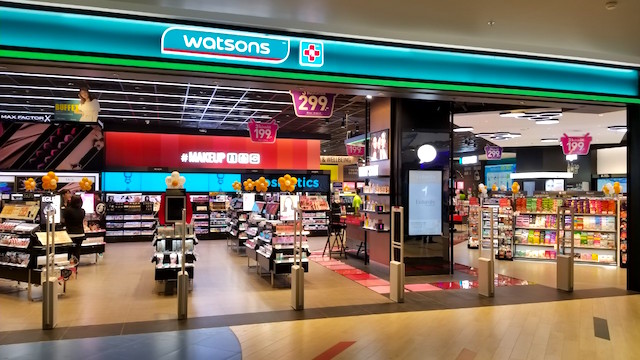
  • Watsons and L’Oreal launch Hong Kong-wide recycling program

    Watsons and L’Oreal launch Hong Kong-wide recycling program

    L’Oreal Hong Kong has partnered with Watsons and recycling social enterprise V Cycle to launch the recycling program ‘Beauty for the Future’.

    The campaign aims to encourage customers to recycle their empty cosmetics and skincare containers – from any brand – at Watsons stores.

    Customers can hand over their washed beauty containers including foundation bottles, mascara wands, skincare tubs, and lipstick tubes, at any Watsons store in Hong Kong in exchange for rewards on the platform MoneyBack.

    People can also return the empties to any of L’Oreal Hong Kong’s more than 100 free-standing outlets or department store counters. V Cycle will break down the wastes, sort them by material, and work with local partners to turn them into new raw materials once they’ve been gathered.

    The scaled-up campaign’s target is to collect 250,000 containers in the year following the formal launch – equal to the height of two Mount Everests when piled.

    “Our goal is to meet it head-on with the first cross-brand recycling programme involving 18 of our beauty brands in 2021,” said Eva Yu, president & MD of L’Oreal Hong Kong.

    “With the scaled-up recycling campaign as part of our ‘L’Oreal for the Future’ sustainability program, we want to further inspire and influence how our consumers think and what they do about packaging wastes – not as something to toss out, but as a resource that can be recycled and used again, and sustainably, reducing the impact on our environment. Our partnership with Watsons and V Cycle will help make this a reality.”

    L’Oreal Hong Kong and Watsons have collected over 6300 beauty containers and diverted them from landfills during the trial program launched between April to May.

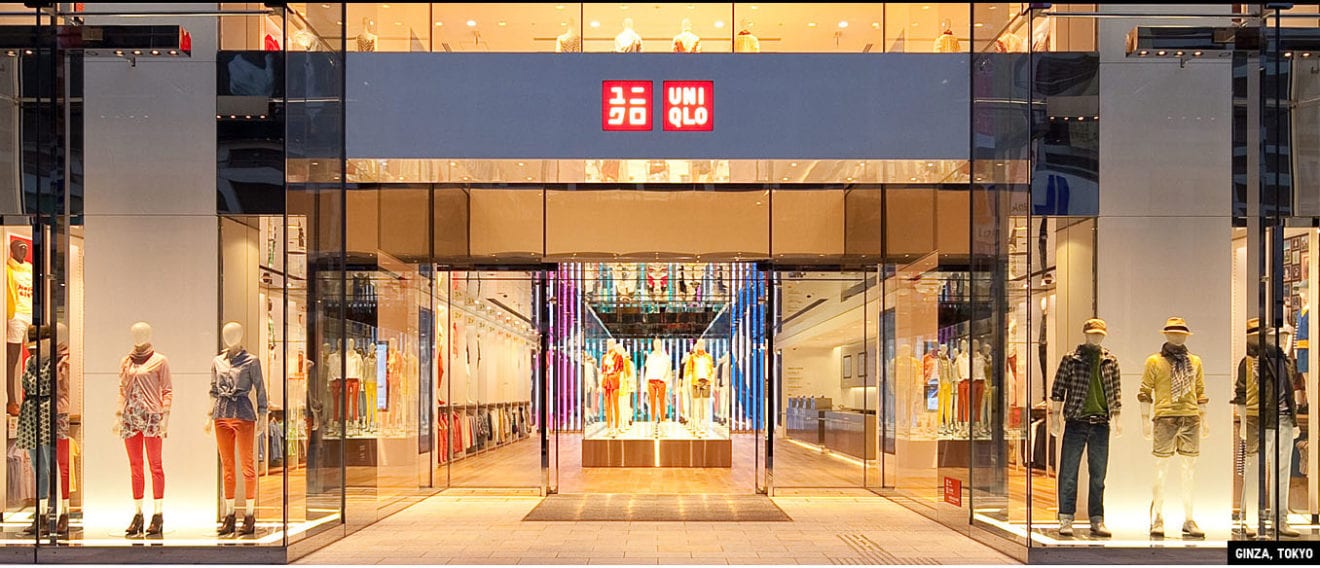
  • Uniqlo owner to raise prices on fleece products due to weak yen

    Uniqlo owner to raise prices on fleece products due to weak yen

    The owner of Japanese clothing brand Uniqlo said on Tuesday it will raise prices on some goods this fall, reflecting increasing cost pressures from the weak yen and logistical hurdles.

    Prices on fleece goods and down jackets in the fall/winter product lines will go up by 1,000 yen (US$7.54), a spokesperson confirmed, after an earlier report by the Jiji news service. The company is also increasing the use of recycled polyester in its fleece products to keep costs down.

    Consumer prices are surging in Japan after decades of deflation, driven by the yen’s drop to a 20-year low against the dollar and soaring energy costs.

    Fast Retailing has competed on low-cost basics like socks and underwear for decades, but its executives have warned recently that rising production costs would necessitate price hikes.

    Founder Tadashi Yanai in April railed against the decline in Japan’s currency, saying there was “absolutely no merit” in a weak yen.

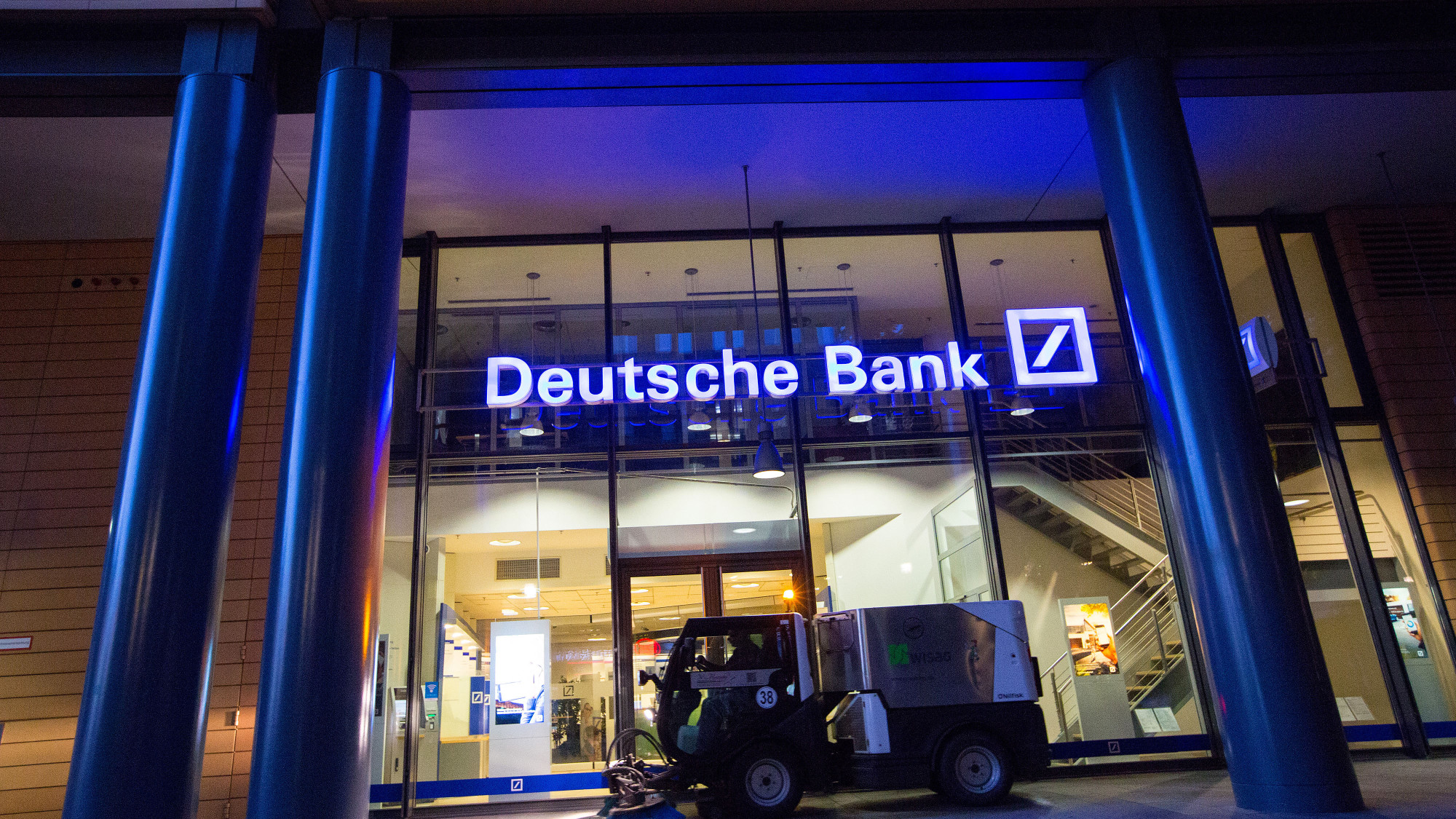
  • Deutsche Bank Calls Russia IT Staff to Germany

    Deutsche Bank Calls Russia IT Staff to Germany

    Having a large IT center in St. Petersburg leaves Deutsche Bank highly exposed to Russian sanctions. As a result, it has decided to take a bold action.

    Deutsche Bank brought several hundred Russian computer scientists to Berlin, as reported by Germany’s citing anonymous sources.

    The bank operated a large technology center in St. Petersburg, Russia, for years. With Russia’s war of aggression against Ukraine and the West’s sanctions, the hub comprising some 1,500 programmers, previously made headlines.

    The number of staff there represents about a quarter of investment banking IT specialists.

    At the time, the report stated there was no code or data housed in the Russian Technology Center (RTC), and after a three-day stress test last week, Deutsche Bank told regulators there was no immediate systemic risk to its IT infrastructure.

    A failure of the center would be a major blow to Deutsche Bank. By moving to Berlin, Deutsche Bank reduces the risk of losing an enormous amount of expertise. In the meantime, the major Swiss banks UBS and Credit Suisse have also moved to withdraw staff from Russia or put them on leave.

  • Costco to invest $150m in three new Victoria stores

    Costco to invest $150m in three new Victoria stores

    Costco plans to open three new stores in Melbourne and Geelong within the next two years, investing up to $150 million.

    CEO Patrick Noone told The Australian in an interview that potential sites were identified near Melbourne’s CBD, and at Officer and Geelong. Each store will be allocated $50 million, with the projects now depending on zoning and council approvals.

    “We are growing quite nicely, and Melbourne is a big city. For us, business isn’t slowing down in Melbourne,” said Noone.

    “Melbourne is a growth area and we’d like build there as soon as we get the approvals.”

    During the Covid lockdowns, Costco remained a ‘destination shop’ for Melbournians as members travelled long distances to shop at the store, buying in bulk when regulations allowed.

    Costco currently boasts 200,000 members and sells a mix of goods from fresh food, groceries, meat, consumer electronics, clothing, diamonds and even coffins.

    According to The Australian, Costco Australia’s sales in the year to August rose from $2.6 billion in 2020 to $2.8 billion last year. Strong online growth helped the company double its profit to $46.39 million.

  • Korean chicken chain Mom’s Touch seeks investors

    Korean chicken chain Mom’s Touch seeks investors

    South Korean chicken chain, Mom’s Touch, is seeking a new owner after voluntarily delisting from the Kosdaq stock market, according to The Korea Herald.

    KL & Partners’ investment arm, Korea F&B Holdings, which is the chain’s largest shareholder, proposed to purchase shares for the next six months in order to protect minority investors.

    As of the first quarter of this year, Mom’s Touch has 1352 stores across its home country. The company’s value is estimated at about US$804 million – nearly three times the amount Korea F&B Holdings invested to acquire the chain in 2019.

    The chain expanded to the US late last year with the ambition to open 100 stores in the country by 2025. On the other hand, Mom’s Touch Singapore, operated by No Signboard Holdings’ wholly-owned subsidiary Hawker QSR, ceased its operations at all outlets last February.

    Meanwhile, its rival, Popeyes, is making a return to South Korea through an exclusive master franchise agreement with Silla Group, after exiting the country in 2020. The chain will open its first store by the end of this year.

  • Reebok adaptive range designed for people with restricted mobility

    Reebok adaptive range designed for people with restricted mobility

    Adidas-owned Reebok has launched a range of adaptive trainers for people with restricted mobility. Called Fit to Fit, the sneakers can be easily put on and removed.

    The shoes were created in partnership with Zappos’ adaptive department, the two companies aiming to create shoes that are inclusive in performance and lifestyle. They interviewed people with mobility issues as part of the product development process.

    “We created the Reebok Fit to Fit adaptive footwear collection to champion Reebok’s mission of inspiring human movement for all,” Reebok product manager Dan Buonomo said in an interview with Dezeen.

    “The collection’s goal is to provide functional products for everyone, while still holding true to Reebok’s iconic design heritage.”

    Key to the range is the absence of buttons and buckles which can be a challenge for people with restricted mobility. A zip on the side ensures the shoe fits, but the laces remain so the shoes retain the style and look of those made for typical consumers. Once tied to fit, they don’t need to be retied each wearing.

    Removable insoles accommodate prosthetics and a low-cut design aids mobility. A sports shoe based on Reebok’s Nanoflext TR features a pull tab in the heel making it easier for people using wheelchairs to remove the shoes from behind.

    Another shoe, the Club MEMT Parafit, based on the tennis shoe of the same name, has a removable insole and comes in wider sizes to accommodate prosthetics.

    Initially available in pairs, Reebok and Zappos plan to sell single shoes for people who have only one foot.

  • APAC AR/VR Spending to Reach $16.6b by 2026

    APAC AR/VR Spending to Reach $16.6b by 2026

    Asia/Pacific (excluding Japan) (APEJ) spending on augmented reality (AR) and virtual reality (VR) technologies will grow with a CAGR of 42.4% from 2021 to 26 and reach $16.6 billion by 2026, according to a report by the IDC. The penetration of the wireless-first strategy amongst enterprises, industries, and public sector organizations will drive AR/VR technology investment. However, from a retail consumer perspective, there is a lack of consumer-friendly AR/VR technology, which will change over the next couple of years. Vendors will improve VR goggles and AR for smart glasses and phones, and disrupt augmented audio technology, thereby offering promising growth opportunities to the consumer market.

    “The impressive market growth for AR/VR technologies is driven by organizations’ demand for a new immersive experience in the way they do business and interact with clients and employees. But vendors also need to respond to AR/VR consumer applications to not miss out on high growth opportunities in the next few years,” says Dr. Lily Phan, Research Director for Future of Work, IDC Asia/Pacific.

    Education, healthcare, discrete manufacturing, process manufacturing, and professional services are the highest spending industries, and will dominate over the forecast period. These five industries registered 65% of 2022 spending for commercial use cases among the 19 industries covered by IDC. Training emerged as one of the top three investment priorities for four out of five industries listed above. Collaboration is gaining incremental impetus, with education, discrete manufacturing, and professional services being the forerunners in adopting AR/VR technologies.

    “Customer agility is one of the primary aspects driving investment in AR/VR technology. It helps in improving the customer journey by offering an immersive experience,” says Abhik Sarkar, Market Analyst at IDC Asia/Pacific IT Spending Guides, Customer Insights & Analysis.

    The top five use cases captured nearly 60% of the total 2022 investment. Training captured the largest revenue share in 2022 and grew by 44.7% from 2021. With collaboration, it will capture a spending share of 30.1% in 2022. For the enterprise VR users, metaverse will act as a collaborative space for partners, employees, and customers. VR gaming is the most significant contributor to the consumer industry owing to users’ immersive and enhanced gaming experience.

    Investments in VR contributed to around 66% of the total market in 2022. It is driven primarily by the growth of consumer market adoption of virtual reality games. Spending on VR training and collaboration will also lead to VR technology investments during the forecast period. As far as AR is concerned, training, retail showcasing, and industrial maintenance will lead to increased investments. In both the reality types, hardware showcases maximum investment in 2022 followed by software, and services. This trend is expected to stay the same over the forecast with hardware growing at a CAGR of 48.1%, software at 47.1%, and services at 20.8%.

  • Helicopter operator profits up 11 percent

    Helicopter operator profits up 11 percent

    Vietnam Helicopter Corporation’s profits rose by 11 percent to VND263 billion (US$11.3 million) last year despite the severe impact Covid-19 had on the aviation industry.

    It saw a 6.7 percent drop in revenues to VND2.08 trillion.

    The company transports cargo and people, trains pilots, imports aviation devices, and offers firefighting services.

    Owned by the Ministry of National Defense, it has seven affiliates and subsidiaries and a charter capital of VND3.98 trillion.

    It charges $3,650-7,300 for an hour of chartered flying.

  • Push for Sustainability and Governance in Space

    Push for Sustainability and Governance in Space

    On one hand, the satellite communications industry is pressured to deliver universal connectivity. On the other, the industry has a part to play in mitigating potential damage of uncontrolled growth in space. Telecom Review Asia Pacific interviews Peter Hadinger, Chief Technology Officer, Inmarsat during Asia Tech Singapore 2022 to learn about the pressing need for governance in space, as well as the future outlook of the GEO satellite operator.

    Why is it important to ensure sustainability at the forefront of satellite network design and deployment?

    When you start off small, you don’t always pay attention to the environment that you’re working in. This has been true for humanity over the millennia, when people didn’t have to worry as long as the environment is big and their impact is small. This leads to the ‘tragedy of the commons’ when everybody assumes that somebody else will take care of the problem.

    This is why for a long time, satellites have been a rare thing. You didn’t have many of them and as space is big, there were no problems and not many rules. Similar to when aviation just started, there was no air traffic control. But when air traffic became more congested, mechanisms were needed to ensure that everyone was following the same rules. This is also true for maritime.

    However, space has been an open territory without a lot of rules, even though there are bodies like the International Telecommunication Union to coordinate on spectrum. Some large countries—the United States in particular—have had some rules about orbital debris for a number of years. But it’s not about satellites running into each other ­– it’s more about ensuring that satellites do not leave a lot of debris behind.

    But now, in an era of mega-constellations, we feel that it’s incumbent on space operators to do what all other industries have done over time, which is to establish rules to ensure that space is collectively taken care of.

    For geostationary satellite operators, this has been going on for a long time. There’s one very narrow space which is the geostationary arc, and in that arc, there are essentially informal rules that govern how operators move around and coordinate positions with one another.

    But once you enter the lower orbit, where there are more players and a far greater number of assets that are going every which way. Becoming disconnected from each other, it’s important to ensure that we have rules in place to address conflicts when they occur — when satellites are decommissioned or if we lose control of them, or to ensure that we can avoid one another in space.

    Today, we have to launch through the LEO belt to get to GEO. Our early operations of getting into the GEO orbit involve looping, in and out of the LEO space. We, as GEO operators, are very concerned about what happens in LEO because we cannot afford to have an accident that spreads debris, which has occurred in the past. 

    Can you tell us about Inmarsat’s commitment to ensuring continued growth and innovation in space?

    Inmarsat has always been on the leading edge as we are the first to introduce activities in a variety of frequency bands, as well as the first to debut new technologies for combining space-and-ground networks like what we do with the European Aviation Network.

    We integrate these capabilities into new, innovative systems. For example, Iris is a system we’re deploying in Europe to support air traffic navigation, with manned and unmanned platforms working side-by-side. The same problem that we’re talking about in space is being addressed in Europe’s aviation environment because they have too many planes and are getting into things like drones which have to operate in that same space.

    They need to have a common communications infrastructure to share information on where they are and to reach where they’re going safely.

    Moving into an era where we are addressing the hotspots of the world, there’s a combination of both satellite and terrestrial technologies, comprising mixed frequency bands and different kinds of satellites (GEO and LEO). However, end users do not need to understand these complexities – all that matters is that they are connected.

    But for us, we must ensure that they receive the best possible service everywhere, independent of all the magic that goes on behind the scenes. This is our motivation for investing hundreds of millions of US dollars a year to stay at the forefront of mobility and safety. Since Inmarsat’s inception, we have been offering transport mechanisms for global safety critical industries, starting from maritime and now aviation. We’re also the largest supplier of communications services to governments worldwide. With more than 40 years of global satellite communications leadership, we recognize the ability to not only facilitate air traffic and maritime navigation, but also space traffic navigation.

    Recently, the trials for the terrestrial element of Inmarsat ORCHESTRA have just ended in Singapore. Can you tell us why was Singapore picked as the destination?

    There are three reasons why. Firstly, you can’t find a denser maritime environment than in Singapore – undeniably the world’s most dense shipping route and a place that challenges capacity.

    Secondly, Singapore has a very challenging radio environment impacted by the weather, where its humid and rainy climate adversely affects radio links. With our proofs-of-concept, we couldn’t find a more challenging venue than Singapore. We knew that if it was going to work in Singapore, it would work anywhere else.

    Thirdly, we receive tremendous support in Singapore. As these tests were conducted during the height of the pandemic, it was great that we have a local office in Singapore, with engineers and staff that supported us in placing our equipment in ships to run the trials. We also have had the support of the Maritime Port Authority (MPA) which saw the value in introducing new technologies in this dense environment.

    How do the trial results support better connectivity solutions for Inmarsat in the future?

    The fundamentals of ORCHESTRA are using different communication mechanisms to support a given user, which in this case is a ship. Because we have so many ships in a dense environment like Singapore, being able to take some of that traffic off from the satellite and connect it directly to shore frees up satellite capacity for other applications.

    To deliver a huge amount of capacity domestically, we wanted to test a bunch of technologies to determine how they would work in this challenging environment. We used the results to refine our technical approaches that will then bring the market ultimately to the terrestrial element of ORCHESTRA, not just in Singapore but everywhere else, targeting dense hotspots such as ports, straits, canals, airports, with high traffic.

    We’re also looking at future LEO satellites forming small constellations of fewer than 200 satellites to address mobility and sustainability. We’re also investing in LEO satellites as they make financial sense in the long run.

    Fortunately, we are not time-pressed to achieve this as we already have the world’s best global network and a roadmap that goes well beyond 2030. In the near future, I foresee LEO playing a significant role. Our upcoming LEO capabilities would build on the foundation we’ve established, which is essentially core to ORCHESTRA to uniquely integrate LEO and terrestrial networks at hotspots to support sustainable satellite communications.


  • Waze starts offering new celebrity in-car experience

    Waze starts offering new celebrity in-car experience

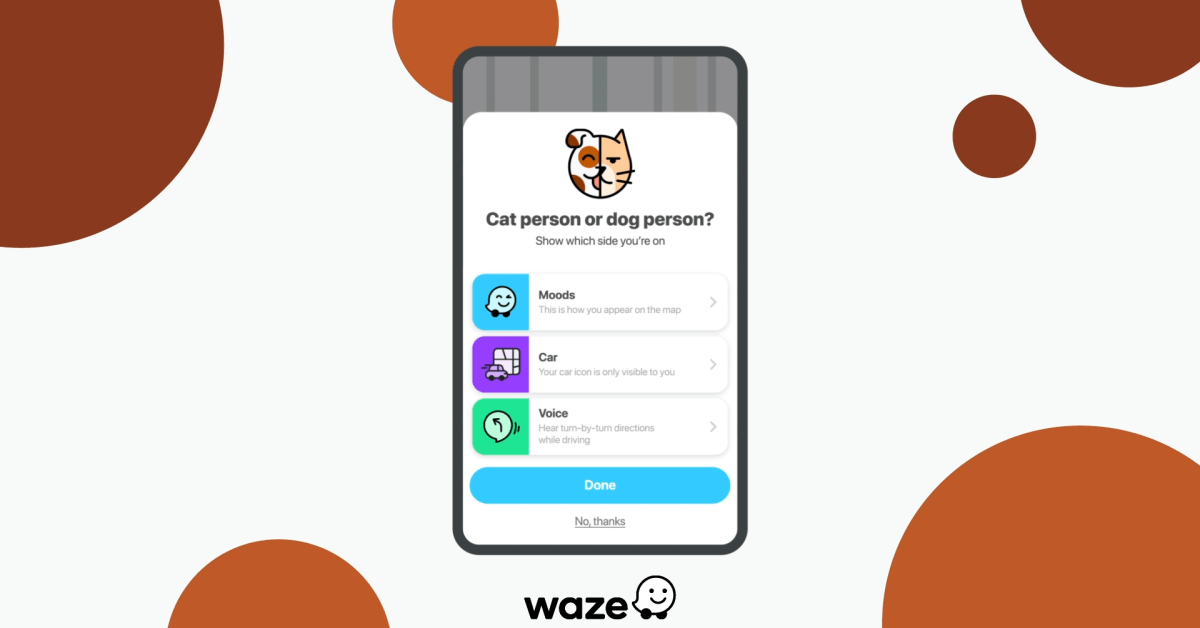
    Waze runs all sorts of collaborations to bring its customers different content each month. This time around, the navigation app is bringing Waze users a new celebrity in-car experience that puts famous singers front and center.

    This particular collaboration is aimed at Kehlani fans, as the American singer, songwriter and dancer is now bringing their music to Waze users all over the world. The new Kehlani experience includes two Moods that are inspired by the singer’s music and road-trip musts.

    The first one is called Flowing Mood and is inspired by Kehlani’s latest album, Blue Water Road, while the second is the Captivating Mood, which is said to represent the camera Kehlani keeps close all the time while on the road.

    Additionally, the new in-car experience features Kehlani’s signature vehicle, El Kehmino, which is inspired by their own ’81 El Camino. Finally, Kehlani curated a Spotify playlist that users can stream through the Waze Audio player.

    The celebrity in-car experience is now available on Waze for a limited time with voice navigation in English. To install it, tap “My Waze” in your app to find the “Drive with Kehlani” banner.

  • The Roku Channel adds 50 free Live TV channels

    The Roku Channel adds 50 free Live TV channels

    The Roku Channel is adding new content all the time, which is probably one of the reasons it’s one of the most popular providers of live TV channels. Today, the service announced that no less than 50 Live TV channels will be available for free via The Roku Channel.

    The new Live TV channels will be available as part of a new category of entertainment called Espacio Latino, a brand-new Spanish language hub in the United States, which offers thousands of hours of content to Spanish-speaking audiences in one easy location.

    Apart from sports, news entertainment, telenovelas, movies, and music, Espacio Latino will also feature thousands of free, original, and exclusive movies and TV shows in Spanish, plus popular English titles dubbed and subtitled.

    Out of the 50 Spanish language Live TV channels available through Espacio Latino, over 25 are brand-new to The Roku Channel. Keep in mind that all channels will be accessible via Espacio Latino and The Roku Channel’s Live TV Guide. Also, content from Premium Subscriptions will be available for streamers to enjoy in the category.

    According to Roku, some of its original titles will be available on Espacio Latino too, including the recently released title Mamas (narrated in Spanish by Zoe Saldana), as well as Natural Born Narco, which will debut on July 8.

    Last but not least, fans of Espacio Latino should expect even more content, as Roku is working with multiple content partners, including NBCUniversal Telemundo, Hemisphere Media Group, Eurochannel, Weather Group, BBC Studios, Lionsgate, Sony Pictures Television, A+E Networks, and more.