Tag: asia

  • Vietnam’s Luna investors face turbulence

    Vietnam’s Luna investors face turbulence

    The ‘revived’ Luna cryptocurrency has dashed many investors’ hopes by falling to an all-time low. Hoang Anh, a marketer in Hanoi, said he owns both the new and old versions of Terra’s cryptocurrency, Luna and Lunc, or Luna Classic.

    He had viewed Lunc, whose market cap has fallen to less than a billion dollars from US$40 billion a couple months ago, as a gamble, but was hopeful about the new version.

    Like many other amateur investors, he too bought Luna in early June at $8 a token after it had doubled to over $11 on May 31. But it has since plummeted to $2-3 despite a rebound in most large-cap cryptocurrencies.

    Anh said he had to sell to cut a portion losses, but kept the rest in the hope the price would recover following measures by the development team.

    Another Hanoian investor, Duc Duyet, bought $1,000 worth of Luna on May 31 as a long-term investment and also bought some Lunc to try bottom-fishing.

    But Luna has lost over 70 percent of its value since, while Lunc has fallen close to his cost price after making some gains.

    “Perhaps I should delete the trading app so that I don’t have to worry about it any more.”

    The Luna investor community in Vietnam is in pain. Some bought not only Luna and Lunc but also some other Terra-related cryptocurrencies like ANC and USTC. Overall, their values have fallen by at least 20 percent.

    “Are we being scammed for a second time, everyone?” Ngoc Bach, an investor, posted in a cryptocurrency group.

    In those groups, members are divided into two camps: some still have faith in the development team and are holding on to the tokens, waiting for prices to surge, but others have thrown in the towel and sold out.

    Nguyen Tien Bac, an administrator of a group, said many Vietnamese investors are still looking to profit from Luna and Lunc.

    They believe Lunc, once among the top 10 cryptocurrency by market cap, is “too big to fail” while the new Luna reached the billion-dollar mark immediately after listing.

    But Bac warned that prices are unlikely to climb any since supply of tokens in the trillions now.

    “Gains, if any, will possibly be because of manipulation.”

    A recent expose and the development team’s silence have dragged Luna’s price down, according to the blockchain-focused website CryptoSlate.

    On June 6, a Twitter-based Terra community whistleblower known as “FatMan” revealed that Terraform Labs, developer of Luna, and its founder Do Kwon had other secret and shadow wallets holding at least 42 million LUNA tokens, worth over $200 million.

    This went against their claim of only issuing to the community and not holding any Luna.

    Terraform Labs has yet to respond to FatMan’s allegation.

    Do Kwon’s Twitter account has also been silent about future plans recently, and even went private for some time, heightening investor fears over crypto rug pulling.

    CoinDesk reporter Krisztian Sandor said investing in either Luna or Lunc was “highly risky at this point”.

    “It’s like purchasing a house burned down to ashes or putting money upfront for plans that only exist on paper, respectively.”

    He called Lunc’s prospect “uncertain”, as developers now have little incentive to build any project on top of it.

    For the newer cryptocurrency, the challenge is how many of the numerous protocols and development teams that were building on old Terra would stick around to develop applications.

    Therefore, activity and user numbers pertaining to the new blockchain “would ultimately determine how much Luna is worth and if it will succeed,” he said.


  • Vietnam ranks 5th globally in NFT users

    Vietnam ranks 5th globally in NFT users

    Vietnam ranks fifth globally in the number of non-fungible token users at over two million as of last year, a study has found.

    The country had 2.19 million users last year, behind Thailand, Brazil, the U.S. and China, according to the Digital Economy Compass 2022 study by Germany-based data portal Statista.

    In terms NFT penetration rate, it also ranked fifth at 2.24 percent, behind Thailand, Canada, Australia and Brazil.

    The penetration rate is the share of active paying customers (or accounts) from the total population last year.

    Another recent survey by Australian data research company Finder revealed Vietnam ranks fifth globally in the ratio of non-fungible token game players.

    Twenty-three percent of respondents in Vietnam said they play NFT games, according to the survey conducted between March and May.

    It was ranked behind India, Hong Kong, the United Arab Emirates and the Philippines.

    Vietnam has made headlines in the non-fungible token world in recent years with Axie Infinity, one of the most popular NFT games globally.

  • Hong Kong Must Reopen to Remain a Financial Hub

    Hong Kong Must Reopen to Remain a Financial Hub

    Outgoing city chief executive Carrie Lam makes frank comments to CNBC before her departure at the end of the month.

    Hong Kong’s embattled chief executive Carrie Lam, who has faced a difficult, tempestuous five-year term that included the 2019 pro-democratic protests, the subsequent introduction of the city’s National Security Law, and the Covid-19 pandemic, appeared to be more forcefully speaking her mind than had previously been the case in an interview with CNBC on Friday.

    She apparently indicated to viewers that the city could not continue to function as a financial hub if the current border controls remain in place, as this has made people impatient.

    The border control measures have really made people very impatient. Of course, they’ve undermined Hong Kong’s status as a hub. If you cannot travel freely to other places and into the mainland, how could you be a hub?

    Despite recent steps to relax some pandemic restrictions, Hong Kong continues to require a 7-day quarantine for any foreign arrivals. It also continues to employ extensive contact tracing and testing requirements city-wide, among other measures.

    Lam discussed the departure of foreigners and expatriates, saying that this was not due to the National Security Law, but the extent and duration of the strict pandemic controls. Other topics that were discussed included the one country, two systems governing principle in Hong Kong, which she believed had been mischaracterized by overseas media.

    I sometimes find it very disturbing that a lot of Western media try to portray Hong Kong as just another Chinese city and have no proper recognition or understanding of one country, two systems, Carrie Lam said.

    She maintained that freedom of expression, assembly and media continued to be upheld in the city.

  • Mongolia to Take Digital Development to a New Level

    Mongolia to Take Digital Development to a New Level

    At Asia Tech Singapore 2022, HE Bolor-Erdene Battsengel, State Secretary, Ministry of Digital Development and Communications, Mongolia, took to the stage to share her views on the changing roles of women in tech with fellow guest panellists.

    Digital governance is a key agenda for many countries. What have been some initiatives rolled out?

    Mongolia aims to build a digital nation. In this context, a number of basic system and structural changes have been made. For example, to accelerate digital transformation, the former agency named Communication and Information Technology Authority was reorganized this year into the Ministry of Digital Development and Communications. E-Mongolia platform has successfully launched an integrated e-government system. The E-Mongolia academy has also been established to further develop, improve and maintain the E-Mongolia System. The fundamental laws of digital governance, such as the Law on Public Information, the Law on Digital Signatures, the Law on the Personal Data Protection, and the Law on Cyber ​​Security, have also been approved by the Parliament of Mongolia.

    Mongolia implemented the e-Mongolia platform a couple of years ago to digitalize public services. Can you tell us about the progress of this initiative and how this has impacted the lives of Mongolians?

    We first introduced the E-Mongolia system on 1 October 2020. The main achievement is that today, it has become a large system that includes 656 services from 61 government organizations. In total, more than 12 million services have been provided online through this system. The system currently has 1.3 million users. That means one-third of the adult population uses the E-Mongolia platform. A total of 656 most demanded public services can be obtained from this system, from applying for a driver’s license to applying for a passport. Features such as offering services based on customer behavior have recently been added.

    Mongolia is a vast and one of the least densely populated countries in the world. Can you tell us how this has been a challenge for 5G adoption and what is the 5G journey like so far?

    Our country has approved a policy to introduce 5G networks in 2020. In 2021, 5G pilot tests were successfully conducted twice. This year, the Ministry of Digital Development and Communications and the Communications Regulatory Commission are preparing the spectrum management for the introduction of 5G in Mongolia. In addition, mobile operators are preparing to invest in 5G. It has also successfully completed a 5G readiness assessment with the support of the International Telecommunication Union (ITU).

    Our country has a large territory and a sparsely populated region. This situation poses the biggest challenge when building a 5G network. In other words, the investment for establishing a 5G network will require a lot. In addition, 5G requires more robust fiber optic infrastructure. The next big challenge is a small, but highly competitive market. For instance, Mongolia has more than 3 million citizens served by 5 mobile operators.

    What are some plans in the pipeline for the Ministry of Digital Development and Communications of Mongolia?

    As I mentioned, our country aims to become a digital nation. The government has announced that information technology is one of the priorities of the economy. The Ministry of Development was implemented within the government, and the Parliamentary Standing Committee on Innovation and Digital Development was established. Our ministry has also approved a digital nation strategy. The strategy has six sub-objectives: digital infrastructure, e-governance, cybersecurity, digital literacy and inclusion, innovation and production, and national development accelerator.

    As I have said before, we have passed laws to accelerate the nation’s digital development to a new level. Emphasis will be placed on the implementation of these laws and the approval of compliance regulations.

  • Banana exports to China boom despite Covid restrictions

    Banana exports to China boom despite Covid restrictions

    Banana exports to China increased by 10 percent in the first five months though total vegetable and fruit exports to that country were down 28 percent.

    Vietnam was China’s largest supplier of bananas at 742,000 tons or 43 percent of its total imports, according to the Vietnam Fruit & Vegetables Association (Vinafruit).

    Vo Quang Huy, director of agriculture firm Huy Long An Co. Ltd, said his company’s banana exports to China were up almost 30 percent year-on-year despite the Covid-19 restrictions and safety measures in place there.

    Nguyen Van Cu, director of a northern exporter, agreed, saying his company’s exports doubled to around 500 tons.

    “Prices have surged from VND3,000 (13 U.S. cents) a kilogram last year to VND5,000-8,000.”

    Vinafruit chairman Dang Phuc Nguyen attributed the rise to falling output in China, where banana farms have been plagued by Fusarium wilt, a lethal fungal disease that has no cure, and rising input costs.

    But packaging and logistic costs of up to VND13,000 a kilogram eat up profits, exporters said.

    They expect exports and prices to rise sharply in the second half of this year.

    Vietnamese exports need to improve their quality and origin traceability to increase their chances of entering the Chinese market, Nguyen added.

  • Delivery work most lucrative among 5 largest job categories

    Delivery work most lucrative among 5 largest job categories

    Delivery workers earn the highest salaries among the five largest groups of workers as companies compete with each other amid a shortage of candidates, a study has found.

    They get an average post-social distancing salary of VND10.1 million ($435.82) a month, 11 percent more than the next group, factory workers (VND9.1 million), according to recruitment platform Viec Lam Tot.

    Their salary also increased the most in March — 11.2 percent — indicating high demand as delivery companies competed to hire drivers.

    Salesclerks had an average salary of VND8.1 million per month this year, followed by security guards (VND7.1 million) and hotel and restaurant staff (VND6.7 million).

    Viec Lam Tot said there is a shortage of delivery staff as e-commerce demand remains high.

    E-commerce had grown by over 20 percent last year, according to the Vietnam E-commerce Association.

    Nguyen Hoang Trung, CEO of delivery app Loship, said people have picked up the habit of ordering things online.

    An average delivery person could make VND400,000-600,000 a day if they work for eight hours, and some work for up to 18 hours, he added.

    The report also said the highest salary for drivers is paid in the southern province of Binh Duong at VND11.72 million, followed by Dong Nai Province (VND11.6 million) and HCMC (VND9.78 million).

    Factory workers, waiters and salesclerks in the two provinces also get higher salaries than their counterparts in HCMC.

    The exodus of over 500,000 workers from HCMC to their hometowns at the end of last year partly explain these figures, the report said, citing data from the General Statistics Office.

  • U.S. Agency Asks Tesla For Information On Canadian Fire Incident

    U.S. Agency Asks Tesla For Information On Canadian Fire Incident

    The National Highway Traffic Safety Administration said on Thursday it has asked Tesla Inc for information about a recent 2021 Tesla Model Y fire in Vancouver, British Columbia, in which a driver reported struggling to exit.

    The NHTSA told Reuters the agency “is aware of the incident and has reached out to the manufacturer for information.”

    Electrek posted a video of the incident in which the owner said he received an error notification and then saw smoke. The driver said that to get out he “had to smash the window. … I kicked through the window because everything stops. The power didn’t work. The door didn’t open. The windows didn’t go down.”

  • Ferrari Teases 2023 Le Mans Challenger, To Begin Testing Soon

    Ferrari Teases 2023 Le Mans Challenger, To Begin Testing Soon

    Almost 49 years after Ferrari last participated in the 24 Hours of Le Mans, the Italian carmaker is back as it teased its latest challenger before testing starts for the 2023 edition of the French endurance race. Ferrari unveiled the first details of the Le Mans Hypercar that will compete in the FIA World Endurance Championship from 2023 and shows strong design references to the stylistic features that distinguish the models in the Prancing Horse range. Additionally, the design and the parts used for the 2023 Ferrari Le Mans challenger would make way for the company’s road car range as well.

    The last time team from Maranello took part in the Le Mans was in 1973, while the last win came in 1965 with the Ferrari 250 LM, before the run of six consecutive victories ended in 1966 by Ford GT40. We still don’t know the name of the new hypercar for Le Mans but do know that the new prancing horse would join the Hypercar class of the FIA World Endurance Championship. The teaser image of the new Ferrari Le Mans hypercar shows off blade-thin DRLs connected by an illuminated red highlight, to a deep lip spoiler angled down at the edges. We expect that the new hypercar would be mid-engine driven, built on a completely new chassis, and hybrid system, as well as new parts that would eventually trickle down to the company’s road car range.

    The hypercar is in the prototype stage and is early in the day to announce the drivers and the official crews that would be part of the team. But if we had to speculate, then the bets are high on Callum Ilott, Alfa Romeo driver Antonia Giovinazzi and perhaps even former F1 champion Kimi Raikkonen. Then there are rosters like Pier Guidi, Calado, Serra and Davide Rigon, Miguel Molina, and Sam Bird.

  • Sony says smartphone cameras will soon produce better images than DSLR cameras

    Sony says smartphone cameras will soon produce better images than DSLR cameras

    When it comes time for you to capture an important event by snapping a photograph of it or recording it on video, do you tend to use the camera array on your smartphone or do you turn to a dedicated SLR camera to handle these tasks? Smartphone photography has come such a long way that these days most consumers are willing to trust their handsets to deliver outstanding family photos.
    One executive who has a great vantage point showing him the future of smartphone photography is the President and CEO of Sony Semiconductor Solutions (SSS), Terushi Shimizu. The executive runs the team that is the leading supplier of image sensors for smartphones and as a result, Shimizu has a unique look at what is happening in the industry. Shimizu says that “still images (from smartphones) will exceed the image quality of single-lens reflex (SLR) cameras within the next few years.”

    An SLR camera uses a combination of mirrors and prisms so that the image seen through the viewfinder is the same image that will be captured by the photographer. DSLR cameras are Digital Single Lens Reflex cameras that use image sensors rather than film. Sony’s Shimizu made his comment during an industry conference and a slide from that event shows that Sony expects that the quality of smartphone camera images will start to exceed those of interchangeable lens cameras (ILC) in the calendar year 2024.

    That is the same as saying that images from smartphone cameras will start to surpass those achieved by DSLR and mirrorless cameras in as soon as two years. One of the reasons for the improvement will be an increase in the size of image sensors to over one inch in size allowing them to capture more data.. Sony also has created a new structure that saturates each pixel with twice as much light to create more dynamic range while reducing noise on pictures snapped in low-light.
  • Google Tasks gains an important new feature for mobile and desktop

    Google Tasks gains an important new feature for mobile and desktop

    Google has added a new feature to its Google Tasks app. Tasks allow you to make reminders and create to-do lists and a simple but powerful new feature is being added to Tasks that frankly, should have been on the app before. This new feature will allow you to put a star on any task to highlight the importance of a particular task. For example, you can use the star to designate tasks that you consider to be a higher priority.

    Other similar apps such as Microsoft To-Do also allow users to put a star next to a particularly important task in order to help the user quickly find those that are more important than others. Google said in announcing the new feature, “We hope this update makes it easier for you to prioritize your tasks and quickly navigate to important tasks across your projects.” It will be offered to users of both the desktop and mobile versions of Google Tasks.

    On the Google Workspace blog the company wrote, “In Google Tasks, you can now mark important tasks with a star. This is similar to functionality that already exists in Drive today.
    Google started rolling out the feature on Wednesday, June 8th. Still, it might take 15 days or more to arrive to everyone so don’t start freaking out if it hasn’t landed on your phone by the time June 23rd comes around. Sometimes it takes a little bit longer for an update to arrive at its destination.
  • TikTok wants you to stay away from the app some time

    TikTok wants you to stay away from the app some time

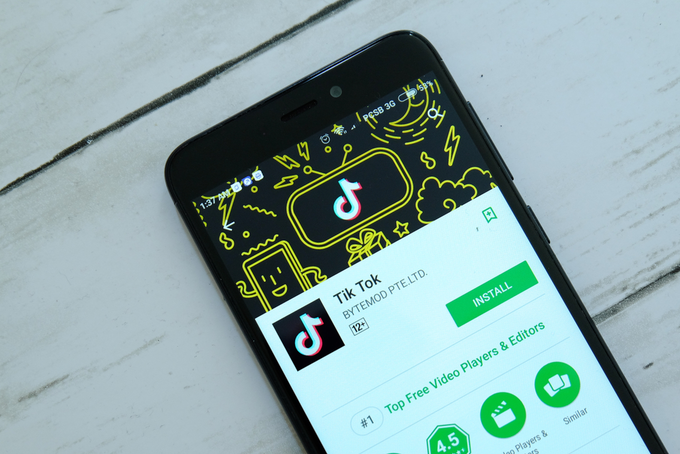
    TikTok wants its users to find other things to do instead of spending all day creating short-form videos and browsing through the app. In a message to the TikTok community that the company disseminated on Thursday, TikTok announced some steps it is taking to help users develop positive digital habits. Users can already set daily screen time limits and in a few weeks, they will be able to control the amount of time that they spend on TikTok in a single setting by enabling regular screen time breaks.
    These prompts will remind TikTok users to take a break from the app after a certain amount of uninterrupted screen time has passed. The amount of screen time can be set as long or as short as the user desires. TikTok members aged between 13 and 17 who have used the app for more than 100 minutes in a single day will be reminded the next time they open TikTok that they can use the screen time limit tool.
    Carolyn Bunting MBE, CEO of Internet Matters, said, “The research showed that younger users would welcome the introduction of built-in features and settings that prompt them to both think critically about the time that they are spending online, but also encourage them to use settings to actively manage the time they spent on the app. It is important that they feel in control of their online experiences and are helped to make considered choices. We look forward to TikTok developing further features that will put children’s wellbeing at the heart of their design choices.”

    The Digital Wellbeing screen time summary shows the amount of time users spent on TikTok during the daytime and during the night. As TikTok recently stated, “We love working with talented creators to educate the TikTok community about online safety, wellbeing, and the tools and options available to them. The energy and enthusiasm these creators have for their community helps them connect with other users and leads to a better understanding of the platform.”

    TikTok was the most downloaded app globally during the first quarter of 2022. It also was just the fifth app in history to record lifetime installations of more than 3.5 billion; the other four apps were all developed by Meta (Instagram, Facebook, WhatsApp, and Messenger).
    Earlier this year, TikTok made some major changes to its short-form video platform. Looking to take on YouTube, TikTok increased the length of its maximum videos from 60 seconds to 180 seconds (or from one minute to three minutes). It then increased the video length once again from 180 seconds to six hundred seconds (3 minutes to ten minutes). Now, the more than one billion monthly active users on the app have a reason to spend some more time on TikTok.
    On August 1st, 2020, then President Donald Trump, in the middle of his trade war with China, announced that “We’re looking at TikTok, we may be banning TikTok. We may be doing some other things. There’s a couple of options. But a lot of things are happening, so we’ll see what happens. But we are looking at a lot of alternatives with respect to TikTok.”
    Eventually, Trump decided that he wanted TikTok to be owned by a U.S. company and said that for the app to be allowed to be used in the states, it would have to have U.S. ownership. Three U.S. firms appeared to be interested including (quite surprisingly) Oracle and Walmart. Microsoft also had a strong interest in buying the U.S. version of TikTok.
  • Why E-commerce Is the Future of Retail

    Why E-commerce Is the Future of Retail

    Over the past few years, the growth of mobile technologies and a shift to remote work caused a significant increase in the global adoption rate of e-commerce strategies. Retail businesses found themselves having to adapt to these transformative changes or face the prospect of being left behind.

    Transformation is never easy, and the shift to customer-oriented, mobile service is a costly investment that can only be made after careful deliberation. Choosing e-commerce can be a risky move at the best of times, but the potential for profitability is well-documented at this point.

    Whether it’s social media campaigns, fashion Influencers, digital storefronts, or mobile app development, e-commerce strategies can be used simultaneously. These strategies define the current era, but what does this mean for the future of retail?

    Will brick-and-mortar establishments continue to decline in popularity? Or is there a chance that we’ll reach an inflection point and find a better balance between e-commerce and on-premise shopping? Let’s take a look at three factors that can inform our understanding of this unprecedented situation.

    New normals

    Unfortunately, there’s no way of knowing when dramatic changes in consumer behavior will occur. The amount of people who prefer online shopping has risen faster than anyone could expect, and the survival of the retail industry has largely depended on its ability to respond to these changes timeously.

    Reaction speed has become paramount to commercial success in an age defined by fast service and modern conveniences. Online shops are open around the clock, facilitating the sale and delivery of an astonishing amount of goods every second of every day.

    In 2021, e-commerce profits in the US amounted to over $850 billion. Compared to 2019, that’s over 50% growth in less than two years. Clearly, consumers are drawn to the convenience and simplicity of online retail, and the simple truth is that traditional retail is incapable of meeting this demand.

    To make the most of this thriving market, forward-thinking retailers have found that a combination of on-premise and e-commerce is the most effective strategy. Each strategy is able to function independently, which gives consumers the ability to follow their preferences freely.

    Accessibility

    It’s hard to overstate how important convenience is. Everyone wants fast service and premium quality, and no one wants to have to leave home to experience that quintessential shopping experience.

    Desiring that level of convenience doesn’t mean we shouldn’t have physical storefronts. In fact, it means quite the opposite. Both forms of retail have to work in unison, and the extent to which each is applied should be based on the target market’s needs and preferences.

    By prioritizing consumer-centric strategies, retail companies can ensure that they provide the best in service delivery. Failing to implement these services in time will likely result in a loss of market share, and there are many well-established companies that had to learn that lesson the hard way.

    Contrary to popular belief, e-commerce strategies aren’t meant to replace the traditions of brick-and-mortar shopping. They add to established infrastructure, essentially creating a network of access points for consumers to get what they want when they want it.

    Much like courier and delivery services, the technology behind e-commerce merely allowed us to fill a gap in the retail market. Consumers will always want on-premise shopping, as the experience of physically going out to buy a product is a need that commerce isn’t able to meet.

    Data-driven solutions

    Looking at the evidence is a key factor for success. This is another way in which technology can give retailers the upper hand. Mobile and analytics technologies have advanced in leaps and bounds, and scalable cloud platforms open up a world of possibilities for dynamic market influencers.

    At this point, you may have noticed that a combined strategy will likely be the best solution for most businesses. After all, time and time again, analyzing consumer behavior shows that profitability is the result of being able to provide the type of experience your target market seeks.

    From rewards-based behavior to online browsing habits, we have access to the kind of data marketers could only dream of back in the day. Retailers should use this knowledge to their full advantage, reacting to consumer attitudes instead of trying to manipulate them.

    For the retail industry to attain the best possible outcome, a combination of technology and tradition must be implemented as early as possible. The signs of this inevitability are all around us, and no matter which way you look at it, all clues point to e-commerce being a fundamental influence on the retail industry for a long time to come.

  • New TikTok update brings screen time dashboard and additional time limit settings

    New TikTok update brings screen time dashboard and additional time limit settings

    Popular video-sharing social media website TikTok is now following in Instagram’s footsteps by introducing ways to remind users to take breaks from their TikTok binge. Engadget reports that the app is getting more screen time controls and a new in-app dashboard for tracking how much you spend watching videos on there.

    The social media app is now getting a dedicated dashboard where you can monitor the time you spend on the app. The page shows statistics that can help you better manage your time on TikTok and understand what your habits with the app are.

    On top of that, the dashboard will allow you to set a time limit for how much time you want to be spending on TikTok in any one sitting.

    Before this update, TikTok had screen time controls, but those timed out after a set daily limit. This new setting allows you to choose the app to remind you to take a break if you’ve opened it for an extended period of time.

    The thing is, apps such as TikTok and Instagram have been under scrutiny for the impact they have on the mental well-being of their users, especially teenagers.

    To address those concerns, TikTok is also introducing additional screen time restriction options for teens (between the ages of 13 to 17). Teens will now be getting digital well-being prompts and additional screen time reminders for any given day.

  • Fruit exports to China slump on tightened Covid-19 restrictions

    Fruit exports to China slump on tightened Covid-19 restrictions

    Vietnam’s vegetable and fruit exports to China fell 28 percent year-on-year to $625 million in the first four months as the major importer extended its zero Covid strategy.

    The plunge resulted in a 14 percent drop in total fruit and vegetable export value, as China accounts for over 50 percent of Vietnam’s $1.17 billion worth of fruits and vegetables export.

    China has been tightening control over imported agro products through stricter monitoring of farm and packing facilities, said Le Thanh Tung, deputy head of the Department of Crop Production under the agriculture ministry.

    Its stringent lockdowns have also lengthened the export negotiation process, with Chinese experts unable to inspect farming areas in person.

    Chinese authorities have also strengthened quarantine regulations and clearance procedures, causing congestion of fruit trucks at border gates.

    On May 23, some 815 and 287 trucks were stuck in the northern provinces of Lang Son and Quang Ninh, respectively, with 35 percent of them carrying fresh fruits.

    Tung also pointed out that Vietnamese farmers were suffering skyrocketing input costs, driven by higher fertilizer and pesticide prices.

    Vietnam mainly exports fresh fruits and other agricultural produce due to limited domestic capacity in processing, so the sector has been severely impacted by adverse conditions.

    Tung called on the agriculture ministry to restructure the production chain of agro produce, including issuing guidelines on building chain-based logistical supply systems.

    It is also necessary to boost cooperation with global partners to open up new markets, he said.

  • Cult skincare brand MooGoo launches into New Zealand

    Cult skincare brand MooGoo launches into New Zealand

    As of this month New Zealanders are now able to walk into pharmacies across the country and buy one of Australia’s most popular skincare lines, MooGoo, as the number of Kiwis with skin disorders is on the rise.

    New Zealand has one of the highest incidence of eczema in the world, with the skin condition now affecting one in three Kiwis, and around 15% of children.

    MooGoo CEO Melody Livingstone says the brand’s expansion into New Zealand was driven by strong interest from local customers.

    “Given the climate in New Zealand, with so many people suffering from skin conditions, we fast-tracked our entry,” says Ms Livingstone.

    “The climate is very similar to Ireland, which per capita is our biggest market outside of Australia,” she added.

    MooGoo has more than 45 natural products that help a range of skin problems, including eczema and psoriasis. All of them are now available online in New Zealand, and more than half the range will be stocked on shelves.

    In Australia demand for the products has skyrocketed, with the company seeing some 30% growth and it’s now stocked in just about every pharmacy across the country.

    “Consumers are becoming a lot more knowledgeable about product ingredients and are increasingly seeking natural and eco-friendly treatments and remedie,” explains Ms Livingstone.

    “There’s also been a lot of anxiety surrounding the pandemic, which seems to have caused an increase in eczema, psoriasis and other skin flare-ups.

    “We’re also hearing a lot of people talking about acne and perioral dermatitis, caused by heat, moisture, friction, trapped dirt and bacteria from wearing a mask for long periods of time and also suffering with painful cracked hands from continuous hand sanitising and washing.

    “The crazy weather conditions haven’t been helping either.”

    In Australia, MooGoo products are also used in neonatal, paediatric and oncology wards and in the UK the business is supported by the British equivalent of the Medicare – the NHS.

    “At MooGoo, our ingredient philosophy is simple – to make effective products with healthy ingredients for you, your loved ones and the environment,” adds Ms Livingstone.

    “We understand all consumption has an impact, and our goal has always been to minimise our impact on the environment.”

    MooGoo products can now be purchased at 58 New Zealand pharmacies and health stores, it is also available online at www.moogoo.com.au