Tag: asia

  • Apple supplier eyes Vietnam expansion

    Apple supplier eyes Vietnam expansion

    Apple iPhone assembler Pegatron Corp emphasizes its expansion in other countries, including Vietnam, to reduce its dependence on China following the strict Covid-19 lockdowns there.

    “We faced Covid controls for two months. We couldn’t have assessed that in advance, so that makes me emphasize our expansion in Vietnam, India, Indonesia, and North America, Liao Syh-jang, as saying at the company’s annual general meeting in Taipei Wednesday.

    The company is seeking to address labor shortages and the gap between peak and low seasons and increase capacity utilization, he said.

    Pegatron is one of Apple’s three iPhone suppliers along with Foxconn and Wistron.

    In April, the Taiwanese company suspended operations at its Shanghai and Kunshan plants in China due to strict Covid-19 protocols, impacting production and deliveries.

    China has since lifted the restrictions, but still faces a labor shortage that was sparked by the restrictions.

    Chairman T.H. Tung said the company’s customers had “different reasons” for setting up factories in Vietnam, India and Mexico.

    “But one shared factor is the ability to reduce concentration in Shanghai, Suzhou and Chongqing.”

    He added that hiring staff in China has become increasingly difficult over the past seven to eight years.

    Pegatron has mulled expanding to Vietnam since 2020, and is building a factory in the northern city of Hai Phong.

    Several Apple suppliers already have factories in Vietnam, including Foxconn, Luxshare and Goertek, and mainly make AirPods earbuds and HomePod speakers.

    Earlier in June, China’s BYD, one of the leading iPad assemblers, had helped Apple build production lines in Vietnam and could soon start to produce the tablet there.

    It attributed the move to China’s lockdown in and around Shanghai, which disrupted the supply chain for months.

  • Huawei plans to launch coffee chain

    Huawei plans to launch coffee chain

    Telecommunication giant Huawei Technologies Co’s recent plan to enter the on-premise coffee market in China has triggered heated discussions on the beverage’s role in rejuvenating established non-food brands among younger consumers.

    Huawei has applied for two trademarks related to coffee. The registered name of one trademark is “One Cup of Coffee Absorbs Cosmic Energy”. The name is classified into the category of convenience food and the application is waiting for acceptance, according to Qichacha, a data bank that tracks business registrations.

    The other trademark is classified into the category of catering and accommodation, covering services including cafes, restaurants and mobile food supply. The application is waiting for review.

    The move is a follow-up to the company’s management interests in the coffee sector.

    In August, Ren Zhengfei, founder of Huawei, said that the company plans to open more than 100 coffee stores in the company’s Qingpu base in Shanghai to attract young people to work for the company.

    Before Huawei, domestic leading sportswear brand Li-Ning recently started its own freshly brewed coffee as it has applied to register its brand as “Ning Coffee”.The sportswear company already operates coffee services in Beijing, Xiamen in Fujian province, and Zhanjiang in Guangdong province. The company runs coffee as an innovation and added value to its in-store shopping experiences, according to Li-Ning, which owns more than 7,000 stores in the country.

    Li-Ning is one of the large-scale retail networks that have banked on the beverage to get closer to younger consumers. Beijing TRT Group, a traditional Chinese medicine pharmacy, China Post, Petro-China, Sinopec Group and even Goubuli-an iconic Tianjin-based bun specialist-have opened their own coffee units. The list of brands entering the coffee sector goes on.

    Zhu Danpeng, a food and beverage analyst, said the recent cross-sector marketing events, which have involved business extension into the coffee sector, have shared one identical aspiration-to get engaged with the younger generation, which has become a dominant consumer group, playing a crucial role in a brand’s future. “To make a brand younger is more or less about how to grow loyalty and frequency with the Gen Z consumers,” said Zhu.

    The capital market and investors have also been drawn to the fast-rising coffee industry, pushing the growth of on-premise coffee niche brands including Manner Coffee, M Stand and Seesaw as well as those internet-based packaged instant coffee brands such as Saturnbird Coffee.

    According to a report by Jiemian, the domestic coffee sector received financing of more than 4 billion yuan ($594 million) in 2021. In March, Canadian coffee group Tim Hortons in China announced it had received an investment of 1.2 billion yuan, propelling the chain to grow from the current 410 stores in the country to 2,750 stores by 2026.

    According to research institute iiMedia Research, in 2021, the coffee market has been valued at 381.7 billion yuan and is estimated to grow to 1 trillion yuan in 2025, with an average annualized growth rate of 27.2 percent.

    By comparison, milk tea, a darling among Chinese youth, has been gradually losing its appeal. According to Nayuki Tea’s annual financial report for 2021, the milk tea maker has seen a loss of 145 million yuan in net profit, which was 16.6 million yuan a year earlier.

  • Disruption is the new normal – How automation builds business resilience

    Disruption is the new normal – How automation builds business resilience

    We are constantly being reminded that we are living through one of the greatest periods of disruption in history. Working and shopping patterns have changed, and supply chain disruptions affecting on-shelf availability and lead times have practically become commonplace throughout the pandemic.  In Southeast Asia, the recent eCommerce boom has seen an influx of 70 million new online shoppers since the pandemic, contributing to a total increase of USD $266 billion in online sales.  As a result, supply chains have been underpinned to cater for a new era of overflowing demand and ongoing disruption.

    The fact that these unexpected supply chain interruptions occurred during a period of wider disruption for businesses has underlined that the pandemic isn’t the only unforeseen challenge or crisis impacting supply chains. Those organisations that view the current period of challenging operating conditions as being temporary, are being overly optimistic, if not unrealistic. What is far more likely is that disruptions are the now the norm, not the exception, whether it be from a new variant of a global virus, natural disasters, or geopolitical or economic events.

    So, how can companies and their supply chain organisations manage their businesses under such challenging operating conditions? And how can they utilise new technologies to build resilience and agility into their supply chains to meet customer and business demands?

    Technology solutions for the new normal

    The current pandemic has shown that businesses who have invested in automation are more resilient to unforeseen disruptions. Automation has enabled these businesses to maintain and manage operations during difficult circumstances, and deliver customer orders with limited staff, whilst also facilitating social distancing. Automation has also equipped these businesses with the capacity, flexibility, and responsiveness to handle spikes in order volumes and changes to order profiles, such as an influx of online orders.

    Of these pioneering retailers choosing to automate operations, many stated that their highly automated order fulfilment system ideally positioned them to maintain high customer service levels, with rapid, error-free order fulfilment, as online orders spiked at the start of the pandemic. This has allowed these retailers to gain not only a greater market share, but also customer loyalty, providing them with a stronger foundation for future growth. Likewise, other large retailers with both automated distribution centres and manual warehouses in their extensive supply chain network reported significantly lower operational disruptions in their automated DCs compared to their manual warehouses. This allowed them to effectively maintain store replenishment activities and avoid undue stockouts from their automated operations.

    These stark experiences have underlined that businesses need to consider automation technology throughout their end-to-end supply chains to ensure they have the right capacity and flexibility to navigate unexpected events and manage periods of disruption as best as possible. Even before the pandemic, grocers and food and beverage manufacturers in Asia were struggling to achieve sustainable and profitable order fulfilment in an industry with notoriously tight profit margins. Now, with unprecedented pressures on global supply chains, this task has been made even more difficult.

    Intelligent Software: The Foundation for Resilience and Agility

    Logistics software integrated across sites can also provide a holistic, end-to-end view of an entire supply chain. Retailers, as well as manufacturers, can utilise connected data, smart algorithms, and data-driven intelligence and decision support tools to optimise operations and make more effective decisions based on a wide variety of factors including consumer behaviours — such as panic buying — to determine inventory needs, address major peaks in demand, and manage unexpected supply chain interruptions.

    Hedging against the unexpected  

    Given the ongoing global supply chain issues, many manufacturers and retailers are looking to increase inventory levels as a hedge against future disruption. However, this is leading to entirely new challenges with the shortage of commercial warehouse and industrial space in key fulfilment areas. Even pre-pandemic, warehouse and land space in Southeast Asia was extremely limited. This shortage of readily available facilities is leading many retailers and logistics companies to rethink their approach to commercial warehouse space.

    In this environment, businesses are increasingly investing in solutions like Automated Storage and Retrieval Systems for pallets and Multishuttle systems for cartons, cases, and totes to maximise storage capacity in a smaller footprint, while providing them with secure inventory management, improved traceability, and increased productivity.

    These space savings allow for the better utilisation of existing facilities beyond warehousing, and some customers have used this newly created space to expand manufacturing capacity or to free up space for other value-adding tasks such as kitting or custom build areas.

    Managing staff shortages

    Finding and retaining labour is a key issue facing many supply chain operations today. Indeed, the need to attract and retain staff is creating real business pressures due to a shrinking pool to hire from, as well as rising staff costs.

    Automated systems can help reduce a business’ reliance on manual labour, while also enhancing health and safety protocols for workers in the warehouse. Innovations such as Automated Guided Vehicles, for example, provide fully automated unit transport between subsystems, as well as automated storage for block stacking and rack storage.

    Moreover, Automated Storage and Retrieval systems (AS/RS), such as the Dematic Multishuttle, work to not only expand storage capacity but reduce a reliance on labour. As the storage engines for goods-to-person systems – where product cases or items are delivered automatically to pickers at ergonomically optimised high-rate pick stations – these work to optimise fulfilment operations, and to streamline efficiency levels with accelerated order responsiveness, be it for single item or case picking. With productivity gains of up to 500% over manual systems, goods-to-person systems significantly reduce the reliance on labour, and as stations are physically separated, they also support social distancing protocols for operators.

    Likewise, because all these automated systems are separated from employee working areas, workplace accidents are far less likely to occur. Automation enables businesses to continue operations during a period of massive disruption where labour is scarce or worker density limits are enforced, while maintaining employee safety protocols.

    Optimising the ‘last mile’ of eCommerce fulfilment

    With the ever-increasing growth in online orders and a downturn in business for physical stores, many retailers and even some food producers are now adopting micro-fulfilment solutions to implement online order fulfilment operations close to customers, addressing the challenge of last-mile deliveries.

    In markets such as the grocery sector, for example, which has forever been a stronghold for in-store only commerce – the influence of the pandemic saw an unprecedented increase of consumers shopping online for their groceries. Now, after being comfortable with the process and convenience of online grocery shopping, more consumers are likely to keep doing so beyond the pandemic.  With these prevalent changes to consumer shopping habits in the grocery market, it is expected that they will have a long-lasting impact – with many consumers unlikely to change their pattern of behaviour as they are already very in sync with the process of online shopping.  Online retailers recognise the ongoing repeat orders they receive from new customers once they have ordered 4 or 5 times, however, supporting this requires a distribution network that can reliably deliver on-time and in-full.

    While these extra online shoppers cause added pressure on supply chains and fulfilment operations, there are innovative technological solutions available to address them. For example, micro-fulfilment solutions comprised of highly compact Multishuttle goods-to-person systems tailored for eCommerce order fulfilment can be installed either in the back of existing store locations, in nearby distribution centres, or even in dedicated online fulfilment ‘dark stores’ to serve nearby consumers. Micro-fulfilment solutions are highly flexible and can serve or complement in-store fulfilment, click-and-collect, and support other stores nearby – making them ideal for hybrid or omnichannel sales.

    Automation is the future

    Now, more than ever, retail, wholesale, and manufacturing businesses should be evaluating automation technology and software to provide their supply chains with the flexibility to be able to adapt quicker and more proactively to changes in the market, ensuring long-term resilience and agility to any anticipated and unanticipated disruptions – and there’s never been a better time than now to start this transition into future-proof business operations.

    By Michael Bradshaw, Director, Southeast Asia, Dematic

    For more information on how your business can improve its supply chain resilience, please visit: https://www.dematic.com/en-au



  • UBS Adds Private Banking Trio for Southeast Asia

    UBS Adds Private Banking Trio for Southeast Asia

    UBS’ global wealth arm has expanded its coverage of Southeast Asian high net worth individuals with the appointment of three new private bankers.

    Maria Lourdes Kristen Quintos joins UBS as a senior client advisor focusing on ultra-high net worth (UHNW) clients, according to an internal memo.

    Quintos has over 35 years of banking experience, most recently at Maybank ATR Kim Eng Capital Partners Inc. where she was its president and chief executive officer. Previously, she was also a chief representative at Bank of Singapore in Manila serving high net worth (HNW) clients, institutions and pension funds.

    In addition, Nicolo Nicandro and Natalie Boey have also joined UBS as client advisors focusing on HNW and UHNW clients in the Philippines.

    Nicandro was previously a senior associate and investment counselor at Bank of Singapore in Manilla where he advised and managed global multi-asset portfolios for private clients. Boey held a similar role at Citi where she spent nearly 15 years, including 10 years of focus on Philippines market coverage.

    The three new additions join the bank’s global wealth management APAC Thailand and Philippines business sector.

    A spokesperson for the bank confirmed the contents of the memo.

  • Kacific Deploys Over 2,500 Sites for Indonesia’s Government

    Kacific Deploys Over 2,500 Sites for Indonesia’s Government

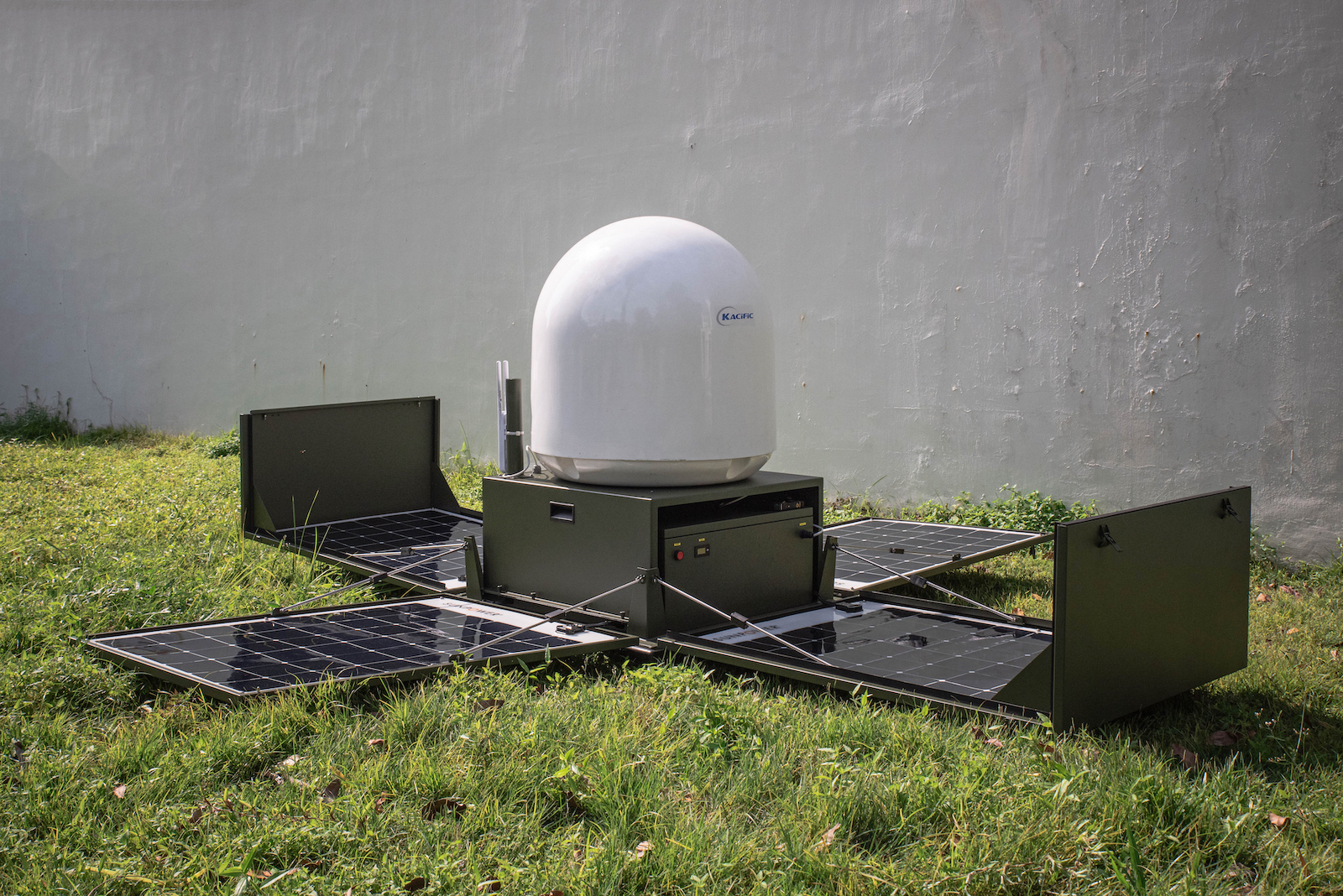
    Kacific Broadband Satellites Group, along with local partners PT Bis Data Indonesia (BIGNET) and PT Primacom Interbuana (PRIMACOM), has completed the deployment of over 2,500 sites, in a record five month timeframe, to provide satellite internet access to government infrastructure in remote areas of Indonesia. This project is led by the nation’s Telecommunication and Information Accessibility Agency (BAKTI) using funds from the Universal Service Obligation.

    BAKTI manages the Universal Service Obligation (USO) fund and the provision of telecommunications infrastructure and services. One of its major projects is to provide public internet access, through satellite services, in areas that have little or no access to affordable internet services: the 3T (disadvantaged, frontier, outermost) areas, border areas and other areas that are not considered economically viable by terrestrial service providers.

    Under this extensive and rapidly completed project, Kacific, BIGNET, and PRIMACOM worked with BAKTI to provide high-speed internet access to schools, vocational training centres, community health centres, tourist locations, village halls and government offices. The deployment of sites at remote destinations in multiple islands throughout the length of Indonesia was a logistical challenge.

    Kacific is one of the largest service providers for BAKTI’s project, due to its ability to meet demand in terms of high-speed bandwidth at the most competitive price. It is the only provider offering high-throughput Ka-band satellite services.

    The Kacific sites are pooled, allowing BAKTI to secure guaranteed bandwidth at every single site. Each terminal can achieve fast speeds of over 85 Mbps, easily meeting BAKTI requirements of 10 Mbps speeds from operators. Satellite services will also be used to support an improvement in the quantity and quality of transmission services for BAKTI’s Lastmile BTS program and other programs.

    “The Government of Indonesia display great leadership in their vision to connect all Indonesians. They are swiftly executing their impressive planning for nationwide connectivity with BAKTI successfully managing connectivity projects. Many countries would greatly benefit if they had a similar approach to addressing the digital divide,” said Christian Patouraux, CEO, Kacific.

    “BAKTI’s project aligns with Kacific’s mission to bridge the digital divide by providing access to affordable, high-speed internet in the most remote and under-served areas. The agency has made an excellent choice to use satellite technology to rapidly connect these communities, because of its ability to reach pockets of population in challenging geographies.”

    “I’d like to recognise the work of our local partners, BIGNET and PRIMACOM, who have been crucial in successfully delivering this project. They have expertise in managing large-scale telecommunications projects, but most importantly, they too want to increase the quality of life for Indonesian communities by allowing them to participate in the digital world,” said Patouraux.

    “With this satellite connectivity project, we take a significant step forward to our goal of the equal distribution of information and communication technology, to strengthen national unity, fuel economic growth and strengthen national resilience for disasters and emergencies,” said Bambang Noegroho, the Director of Infrastructure from BAKTI.

    “Kacific and its partners have completed a large-scale deployment in a very short timeframe, building a comprehensive network of satellite connectivity across Indonesia. This partnership connecting previously unserved or underserved communities is already benefiting hundreds of thousands of Indonesians. It will continue to improve education, health and security of our people into the future,” Bambang Noegroho also added.

    “BIGNET has become a partner of Kacific in 2015 long before its first satellite was launched. From the very beginning, I believed that Ka-Band HTS would be a game changer in Indonesia satellite industry. It was proven that in 2020, BAKTI awarded BIGNET a contract over 4 Gbps that covers over 2000 sites all over Indonesia, mostly in eastern part of Indonesia where is the internet connectivity is lowest compared to the western part of Indonesia. I’m proud to say that now Kacific has contracted nearly 100% of its capacity that cover Indonesia archipelago. It gives a huge impact to hundreds of thousands of people of Indonesia through education, health care and government offices in the area,” said Nicolas Tannady, CEO, BIGNET.

    “Satellite broadband is an increasingly important part of the telecommunications services PRIMACOM provides as it allows us to reach new markets and to provide specialised services in any location within Indonesia. We have been impressed with the speed, reliability and ease of deployment of Kacific’s satellite services,” said Domy K. Santoso, Marketing Director, PRIMACOM.

  • Singtel Further Decentralises Business Structure with Optus Decision

    Singtel Further Decentralises Business Structure with Optus Decision

    In a move to further decentralise its organisational structure, the Singtel Group has announced that its Australian subsidiary Optus will directly oversee its Optus Enterprise division with effect from 1 July 2022. This move to transfer the management of this division to Australia will effectively give Optus more operational autonomy and direct accountability.

    Singtel Group CEO Yuen Kuan Moon said, “Since our strategic reset a year ago, we’ve been evolving our operating model to stay relevant and maximise shareholder returns and this is another step in that direction. By adopting a decentralised opco-driven structure, we can empower our businesses to exploit commercial synergies and capabilities to drive growth. This is all the more important in today’s volatile macro-economic environment where business units need greater independence and agility to better navigate the market.” He added, “Optus has been part of the Singtel stable for two decades and a leading player in the Australian consumer market. Given the hyper digitalisation that enterprises are currently experiencing, this is also timely as Optus can focus on advancing its growth as a B2B player.”

    Optus CEO Kelly Bayer Rosmarin said, “This change is about delivering better outcomes for all our customers, whether they are consumers, small business, enterprise customers or wholesale customers. With a more unified and collaborative approach across Optus, we will be able to better meet the localised need of our business customer and bring solutions to market more quickly. Importantly, we still will be able to leverage the insights and global reach of Singtel, while having the autonomy to make decisions quickly.”

    Optus’ enterprise business revenue was A$1.21 billion in the financial year ended March 2022.

    Decentralisation underway 

    This decentralised organisational structure was first adopted in 2021, when ICT arm NCS was spun off from Singtel’s enterprise business and recast as a B2B digital services champion in Asia. The move has facilitated the transformation of NCS as well as its regionalisation. NCS has since expanded into Australia, a market that is key to its strategic growth. It has also diversified from its public sector client base and seen digital revenues jump to almost half of overall revenue in the last financial year.

    Yuen said, “With NCS scaling its business in Australia, we expect the combined synergies and capabilities of NCS and Optus to be mutually beneficial as both companies respond more easily to the specific needs of that market.”

    CEO appointed for regional data centre

    In 2021, the Group set up another new company under this decentralised model – a regional data centre business that builds on Singtel’s data centre operations in Singapore. Today, the Group announced the appointment of Bill Chang as CEO of this venture, with effect from 1 July 2022. Chang will assume this position in addition to leading Singtel’s enterprise portfolio as CEO, a role he has held since 2012.

    Chang said, “I’m very excited to lead the regional data centre growth business for the Group. This leverages our world class data centre expertise, excellent digital infrastructure and track record as Asia’s leading network connectivity provider to offer an integrated proposition to enterprises. With companies racing to digitalise and transform their business models and processes in the wake of the pandemic, and consumer lifestyles getting ever more digital, the growth in data traffic and demand for data centres will be unrelenting. We’re well-placed to capture the exciting growth opportunities across this region.”

    Singtel Group’s long-time business associates, Telkom in Indonesia and Gulf and AIS in Thailand are among the business’ first partners.

    The regional data centre business and NCS were identified as new digital growth engines under Singtel Group’s strategic reset announced in May 2021.

  • India Approves 5G Spectrum Auction, Includes Bandwidth for Private Networks

    India Approves 5G Spectrum Auction, Includes Bandwidth for Private Networks

    India will be holding a 5G spectrum auction by the end of July, with frequencies set aside for private mobile networks.

    This was announced by the Union Cabinet chaired by Prime Minister Narendra Modi. 72 GHz of spectrum will be auctioned for a 20-year tenure across frequency bands including 600 MHz, 700 MHz, 800 MHz, 900 MHz, 1800 MHz, 2100 MHz, 2300 MHz, 3300 MHz, and 26 GHz. According to the Department of Telecommunications (DoT), 5G will be rolled out first in 13 major cities including Ahmedabad, Bengaluru, Chandigarh, Chennai, Delhi, Gandhinagar, Gurugram, Jamnagar, Hyderabad, Pune, Lucknow, Mumbai, and Kolkata.

    All three telecom operators, Reliance Jio, Vodafone Idea and Bharti Airtel are expected to participate in the upcoming auction. In addition, enterprises can acquire spectrum directly from the DoT to set up private networks to support applications in IoT and AI.

    Bandwidth reserved for private networks has been met with mixed sentiment. On one hand, the Cellular Operators Association of India (COAI) argues that this could diminish revenue. On the other hand, the Broadband India Forum (BFI) claims that this is a misconception.

  • HSBC lowers Vietnam inflation forecast

    HSBC lowers Vietnam inflation forecast

    HSBC has cut its inflation forecast for Vietnam from 3.7 percent to 3.5 percent, thanks to stable food supply and weaker than expected impacts of fuel costs.

    Food and gasoline prices are two main drivers of inflation in ASEAN, but are likely to hit Vietnam less hard than other countries, the bank said.

    According to the General Statistic Office, the consumer price index (CPI) rose by 2.25 percent in the first five months this year as against 1.29 percent last year, driven by the prices of gasoline, food and some other goods.

    HSBC said Vietnam’s energy inflation has gained further momentum, with transportation, one of the items in the basket of goods and services that make up the CPI, seeing the biggest jump last month of 2.34 percent.

    The rise in global fuel prices, and reduced production by Vietnam’s biggest refinery, Nghi Son, has worsened a shortage in the country.

    The government on Monday adjusted gas prices up by 2.5 percent to VND32,370 ($1.39) a liter. It has hiked prices by over 35 percent so far this year.

    Vietnam started to feel the rising food costs, but the pressure has eased thanks to steady domestic supply, HSBC said.

    It expected inflation to temporarily surpass the government’s target of 4 percent if gas prices keep rising.

    The State Bank of Vietnam could raise interest rates by 50 percentage points in the third quarter, and another 75 points next year to cope with inflationary risks, it said.

  • Meta expands parental control tools for Instagram and in VR

    Meta expands parental control tools for Instagram and in VR

    Back in December last year, Meta announced it will bring new parental controls to its social network products. The first set of those parental control tools launched back in March, 2022, allowing parents to view how much time their teens spend on the social network, set time limits, and be notified when their teen reported someone.

    Today, Meta has announced on its blog that the company is releasing the second batch of parental control tools, this time both for Instagram and in VR. Instagram already has a solid slew of options in the Parent Dashboard, but the new features will allow parents to:

    • Send invitations to their teens to initiate supervision tools. Initially, only teens could send invitations.
    • Set specific times during the day or week when they would like to limit their teen’s use of Instagram.
    • See more information when their teen reports an account or post, including who was reported, and the type of report.
    • Approve their teen’s download or purchase of an app that is blocked by default based on its IARC-rating.
    • Teens 13+ can submit an “Ask to Buy” request, which triggers a notification to their parents.
    • The parent can then approve or deny the request from the Oculus mobile app.
    • Block specific apps that may be inappropriate for their teen, which will prevent the teen from launching those apps. Apps that can be blocked include apps like web browsers and apps available on the Quest Store.
    • View all of the apps that their teen owns.
    • Receive “Purchase Notifications,” alerting them when their teen makes a purchase in VR.
    • View headset screen time from the Oculus mobile app, so they’ll know how much time their teen is spending in VR.
    • View their teen’s list of Oculus Friends.
    • Block Link and Air Link to prevent their teen from accessing content from their PC on their Quest headset.

    It’s worth noting that in order for parents to gain control of their little ones, they have to link both accounts together – a process that requires approval from both the parent and the teen. We see a lot of potential for tension at home with these new features but at the end of the day, it can save our kids from a lot of trouble, so it might be worth it. It’s down to negotiation skills and positive reinforcement.

  • Apple Watch will soon help patients with Parkinson’s

    Apple Watch will soon help patients with Parkinson’s

    The Apple Watch might be one of the most popular wearables out there, and there’s no denying that it actually makes people’s lives better. You can say whatever you want about Apple and its gadgets but all the success stories surrounding the Apple Watch deserve some attention.

    Now there’s another potential use case for the wearable, as the FDA has granted approval for the Apple Watch to be used to monitor Parkinson’s patients. The approval has been granted to Rune Labs – a San Francisco-based health startup – to run a special software on the watch to track symptoms of Parkinson’s.

    The software in question can discern and track common symptoms of the disease such as tremors, involuntary or slow movement, rigidity and poor balance, etc. Apple added hard-fall detection software to its Watch Series 4 back in 2018, and subsequently released the software as a part of its open-source ResearchKit.

    This allowed developers to use the Movement Disorder API to create watchOS apps and solutions to track various diseases that manifest themselves with symptoms that involve movement abnormalities.

    Using wearables to track such disorders isn’t new but Rune Lab’s solution is the first designed for commercial applications. The idea is to track the patient’s condition over a certain period and give physicians and medical specialists access to this data.

    Of course, the app has its limitations but it is designed to serve as a supplement to the regular full-blown in-person medical exam. This isn’t the first Apple Watch feature to be cleared by the FDA – earlier this month the administration approved the watchOS’s AFib History feature, allowing people 22 and older to use the watch to monitor their heart condition.

  • Telegram founder publicly attacks Apple’s Safari browser for iOS for its restrictions

    Telegram founder publicly attacks Apple’s Safari browser for iOS for its restrictions

    Currently, there’s an investigation by a UK agency on Apple and Safari. And, it seems the UK is not the only one raising its brows when it comes to Apple’s web browser. Telegram founder Pavel Durov has now publicly criticized the iOS version of Safari, accusing it of restricting developer options for the web.

    Durov has shared his criticism on his public channel on Telegram. He claims that Apple is intentionally restricting web app features and that this limits developers from what they can do in iOS. The restrictions that Apple currently has for web apps impact the web version of Telegram too.

    Additionally, he suspects Apple’s reasoning behind this is to force users to download native apps from the App Store, and he brings up the 30% commission fee that Apple takes on purchases made via the App Store. Many developers have had issues with the infamous ‘Apple Tax’, as this 30% cut has unofficially been called.

    Telegram is available in the App Store; however, not everything was sailing smoothly for the company. In the past, Telegram has reportedly faced some issues with Apple’s review process because of its public channels (where there are no content restrictions). Telegram has a web version with all the same features – but it is also limited on iPads and iPhones.

    “Safari is killing the web” points out Durov, citing developers complaining about Apple’s native browser and a blog post on HTTP Toolkit, which lists multiple ways in which Safari is not helping the web. The blog post lists reasons such as Safari omitting features, many bugs present and the slow speed at which those are fixed, and ignoring proposed APIs by the Chrome team.

    Apart from citing the mentioned above article, Durov also highlights that Telegram developers have signaled a list of 10 issues they have with Safari on iOS. Among those, there is the lack of push notifications, random reloading, slow application of blur effects, and sometimes appearing visual artifacts. The post also includes a few more development-related things missing from Safari’s toolkit.

    The UK investigation, which we mentioned in the beginning of this article, is also highlighted in Durov’s post. He hopes that the investigation will lead to regulatory action against Apple Safari’s restrictions and shortcomings.

    The investigation he is talking about is actually going to be led by UK’s CMA, a watchdog who’s recently found Apple and Google to have an “effective duopoly” in the mobile tech market because of Safari and Chrome. The agency is now going to look at Safari’s WebKit restrictions under a microscope, to determine whether or not those are harming competition and innovation.

  • Vietnam’s hassles in developing offshore wind power industry

    Vietnam’s hassles in developing offshore wind power industry

    Unclear regulations, low prices and an insufficient grid are hampering efforts to develop offshore wind power, experts and industry insiders have said. By 2030 offshore wind power capacity would be 7,000 megawatts (MW), envisages the Power Development Master Plan VIII for 2021-30.

    But Nguyen Thi Thanh Binh, deputy director of conglomerate T&T Group, said at a conference last week that ambiguous regulations are the biggest hurdle to achieving the government’s goal.

    “A policy framework, construction roadmap or pricing mechanism for offshore wind power plants has yet to be drawn up, and there is also a lack of specific, clear instructions.”

    Offshore wind farms usually take six to nine months before commercially operating, and so it is a huge risk for investors if the mechanism is unclear, she added.

    Bui Van Thinh, chairman of the Binh Thuan Wind and Solar Energy Association, spoke about another problem: Vietnam’s power grid.

    “The country’s grid for renewable sources is already overloaded, and so it cannot benefit from more supply.”

    Upgrading the power system to cope with the targeted load requires a huge investment, and national utility EVN has no incentive to do it as it buys renewable energy at a loss.

    Meanwhile, the newly amended Law on Electricity allows private investors to fund power grids, but lacks specific instructions for implementation.

    Last October the Ministry of Industry and Trade stopped the feed-in-tariff (FIT) incentive price for wind power projects. It is now seeking feedback on bidding mechanisms for renewable energy prices.

    But Binh warned against doing that now, saying both investors and the market would be hurt.

    “Offshore wind power is a relatively new sector in Vietnam, and some investors are considering them test runs.

    “Bidding in this case will disrupt the market, and investors may decide to forfeit them after winning bids.”

    Mark Hutchinson of the Global Wind Energy Council pointed to the fact that no country has been able to install 3,000 MW of offshore wind power through bidding in early stages.

    Citing the experiences of the UK, the Netherlands and Taiwan, he said investors need to have a buffer time before bidding starts. FIT prices could be offered for the first 4,000 MW, and the next 3,000 MW could be priced through bidding, he said. He also suggested qualification-based selection to fast-track planning and construction.

    Doan Ngoc Duong, vice chairman of the Institute of Energy (IEVN) agreed, saying many countries have adopted similar policies to incentivize investors in early phases.

    “We need a pioneering project as a pilot for choosing investors and mechanisms.”

    Too many investors

    Nguyen Thanh Huyen of the Vietnam Administration of Seas and Islands said the number of companies seeking to invest in offshore wind farms has skyrocketed.

    “Over the last year and a half 35 firms have asked to explore 41 locations to build wind farms, up from the previous three.”

    Nguyen Manh Cuong of the IEVN said 22 projects have registered in the north and 74 in the south with a total designed capacity of over 156,000 MW.

    This is much higher than the government’s target of 7,000 MW.

    In the northern province of Nam Dinh, for instance, only one project is registered, but with a capacity of 12,000 MW.

  • EU lifts safety restrictions on Vietnamese noodles

    EU lifts safety restrictions on Vietnamese noodles

    Starting July 3, the EU will remove Vietnam’s rice noodles, glass noodles and vermicelli from the list of goods subjected to safety controls.

    Announcing this, the Ministry of Industry and Trade said Vietnamese exporters will no longer have to provide safety certificates for these products.

    However, some local herbs including coriander, mint and parsley will be subjected to a temporary increase in safety controls at border posts.

    Vietnamese dragon fruit and instant noodles containing spices/seasonings or sauces will also be subjected to special entry conditions in the EU market to check for contamination risks.

    Vietnamese instant noodles have been under the EU scanner since January after some were found containing ethylene oxide, a substance banned in the union.

  • Vietnam Airlines expects financial difficulties until 2023-end

    Vietnam Airlines expects financial difficulties until 2023-end

    Vietnam Airlines expects financial difficulties to last until the end of 2023, amid aftermath of the Covid-19 pandemic.

    The flag carrier targets to be profitable and turn around its negative equity this year, it said in a filing to the Ho Chi Minh Stock Exchange, on which its stock HVN is still restricted to trading in the afternoon due to loss reports.

    The airline has recorded an accumulated loss of over VND24.5 trillion ($1.05 billion) as of March, and it wants to turn this situation around and become profitable by 2024 onward.

    It had recently sold a 35 percent stake in Cambodia Angkor Air for $35 million and will sell the remaining stake (14 percent) this year.

    It is set to issue more shares to pump up its capital in 2023 or 2024. In September last year, it raised nearly VND8 trillion by share issuance. The airline said it has been benefiting from a strong rebound in domestic travel.

    Last month, it operated nearly 12,000 flights and transported two million passengers, exceeding its plan by 42 percent.

    International travel, however, has been affected by the Russia-Ukraine crisis and rising fuel prices, the airline said.

    The Vietnamese government owns a more than 86 percent stake in Vietnam Airlines through two entities. Japan’s ANA Corporation owns a 5.6 percent stake.

  • Finance ministry seeks further gasoline tax cut

    Finance ministry seeks further gasoline tax cut

    The Ministry of Finance is set to propose a further environment tax reduction on gasoline amid surging prices.

    It wants to scrap the tax altogether after the National Assembly approved a 50 percent reduction to VND2,000 ($0.086) per liter starting April. The finance ministry on April 21 sought official feedback on a proposal to lower gasoline import prices from 20 percent to 12 percent.

    Although such a reduction won’t bring down gasoline prices, it will help to diversify gasoline import markets and avoid dependence on South Korea and ASEAN, which are offering incentive import taxes.

    These proposals show the effort of the Vietnamese government in containing inflation, which has become a topic of concern this year as prices of key commodities surged globally.

    The World Bank has recently slashed global growth forecast by nearly a third to 2.9 percent for this year due to concern of elevated inflation.

    Vietnam’s Consumer Price Index (CPI), which measures inflation, in the first five months rose 2.25 percent year-on-year, compared to 1.29 percent in the first five months of last year.

    Standard Chartered Bank expects Vietnam’s inflation to be at 4.2 percent this year, slightly higher than the central bank’s cap of 4 percent.