Tag: asia

  • New CarPlay Update Is Classic Apple Before It Invades A New Product Category

    New CarPlay Update Is Classic Apple Before It Invades A New Product Category

    The funny thing about Apple’s World Wide Developer Conference (WWDC) was that the most interesting piece of software the Cupertino-based giant showcased may not reach the hands of consumers till 2024. And no, it isn’t the much-talked-about VR and augmented reality headset it has been working on. It is the new expanded version of CarPlay it showed off which showcased a wild new interface for cars that extended beyond the infotainment screen to the instrument cluster.

    Apple says that this new CarPlay will show up in partner cars in late 2023. It lined up a show of force with brands like Mercedes Benz, Volvo, Volkswagen, Audi, Porsche,  Honda, Ford, Jaguar Land Rover and Renault. But when some of these brands were asked independently, it seemed that they didn’t know much about what Apple was doing and sounded cagey about confirming or denying that Apple’s new CarPlay would show up in their product line in the future.

    Apple’s gambit is also one that is predicated on the iPhone remaining the centre of the experience. The Volkswagen group on some level has made a tacit admission that its clientele is an iPhone crowd. That’s why the deep integration with Apple Music has been added to Porsche and Audi models while audio streaming services like Spotify and YouTube Music have been left behind in the dust. But this is also a scary proposition for auto companies as it creates a layer of dependence on a tech giant like Apple which seemingly has unlimited resources.

    Tesla has famously left both Apple and Google out of its infotainment experience. But then there is pragmatism at places like Ford and Volvo who have wholeheartedly adopted Google’s Android Automotive embedded OS for cars. They believe that Google is better at software and they could save the extra cash as they spend the next decade during a once-in-a-lifetime power train transition towards electric.

    However, in the case of Google, Android Automotive is at the heart of the car and is not beamed off an Android phone. OEMs get a say in what apps are being approved. For instance, the Vivaldi browser is on Renault and Polestar cars with Android Automotive but not in the Volvo XC40 Recharge.

    Apple’s interface doesn’t look just gorgeous and simple – more so than what Google has cooked up, but it will be also very private following one of the principles of the Tim Cook-led gadget-making titan. This would scare the bejesus out of an automaker as not a lot of data would be forthcoming. Apple could leverage the App Store on the iPhone to extend apps to the car via CarPlay which would help it create a bigger and better store faster. This would entrench a carmaker’s dependence on Apple.

    Already CarPlay and Android Auto have become table-stakes as phone beaming technologies. But they also visually break the experience one has in the car. Even with the latest lot that features digital instrument gauges – even on the best of the best – the Mercedes S-Class, you see MBUX that looks like something from the mid-2000s designed for Windows and then when you turn on CarPlay you see a simple and functional UI. Apple extends that elegance with the new CarPlay with gauge clusters designed using the ideas from the Apple Watch complications and widgets for iOS.

    Siri may not be as good as the Google Assistant but remains light years ahead of anything an automaker has including the “Hey Mercedes” voice command in the new C-Class and S-Class. Apple will certainly be able to enhance Siri and basically help decimate any of these software ventures that Mercedes and some of the European automakers are developing. No wonder, Mercedes hasn’t come out wholeheartedly and said that “we are adopting the new CarPlay”.

    Apple hasn’t revealed much about any specific hardware requirements. In fact, Apple says that this new system can scale to multiple screens and sizes seamlessly. Apple has shown a penchant for supporting multiple screen sizes and resolutions better than Google with less fragmentation in the user experience, but it will come with some strict hardware requirements something the company isn’t talking about right now. This is a technical eventuality.

    All of this also is also in line with how Apple enters a new product space. It does a taster. It launched iTunes before the iPod. It partnered with Motorola for the iPod phone before the iPhone. It spent more than a decade perfecting its own designed semiconductors before it added it to the Mac a year and a half ago. Likely, it will do the same with AR and VR with iOS and all of its platforms being ready for the technology for now more than five years since when AR Kit was launched.

    It is perhaps the auto industry’s worst-kept secret that Apple has been developing an electric self-driving car. It has been a rocky journey which has a number of executives coming in and leaving the tech giant. Now with operations of the Apple Car being under the care of John Giannandrea and Kevin Lynch – the leads for AI and Apple Watch, the new CarPlay shows signs of their touch quite succinctly.

    But with an actual Apple Car still, years away or perhaps a pipe dream like the so-called Apple TV that many expected after the death of Steve Jobs, this new CarPlay is certainly a way for Apple gets a hang of the auto industry – what works, what doesn’t. It also gets a consumer touch point and potentially it could be another hook for revenues either by licensing this interface to automakers or through App Store fees or both.

    It also flexes why Apple’s software chops are far beyond any automaker perhaps outside of Tesla. If this works – everyone wins – but in the long run, if Apple is able to get its self-driving car project off the rails, then this could also mean trouble for everyone who adopts it. But automakers also don’t have much choice here – they aren’t as good as Apple or Google with software and nor are remote as cash-rich as the two. At the same time, their lunch is being had by Tesla quarter by quarter as the world increasingly moves towards electric cars, so they can best hope – Apple doesn’t have their breakfast, lunch and dinner with this invasion via CarPlay.

    And oh, while this happens, Apple is continuing to develop the basic phone beaming CarPlay. So either way, Apple wins and the iPhone remains the centre of yet another experience.
  • Tesla Sued By Former Employees Over ‘Mass Layoff’

    Tesla Sued By Former Employees Over ‘Mass Layoff’

    Former Tesla Inc employees have filed a lawsuit against the U.S. electric car company alleging its decision to carry out a “mass layoff” violated federal law as the company did not provide advance notice of the job cuts.

    The lawsuit was filed late Sunday in Texas by two workers who said they were terminated from Tesla’s gigafactory plant in Sparks, Nevada in June. According to the suit, more than 500 employees were terminated at the Nevada factory.

    The workers allege the company failed to adhere to federal laws on mass layoffs that require a 60-day notification period under the Worker Adjustment and Retraining Notification Act, according to the lawsuit.

    They are seeking class action status for all former Tesla employees throughout the United States who were laid off in May or June without advance notice.

    “Tesla has simply notified the employees that their terminations would be effective immediately,” the complaint said.

    Tesla, which has not commented on numbers of layoffs, did not immediately respond to requests for comment about the lawsuit.

    Musk, the world’s richest person, said earlier this month he had a “super bad feeling” about the economy and that Tesla needed to cut staff by about 10%.

    More than 20 people identifying themselves as Tesla employees said they were laid off, let go or had positions terminated this month, according to online postings and interviews with Reuters.

    The action filed by John Lynch and Daxton Hartsfield, who were fired on June 10 and June 15 respectively, seeks pay and benefits for the 60-day notification period.

    “It’s pretty shocking that Tesla would just blatantly violate federal labor law by laying off so many workers without providing the required notice,” Shannon Liss-Riordan, an attorney representing the workers told Reuters.

    She said Tesla is offering some employees only one week of severance, adding that she is preparing an emergency motion with a court to try to block Tesla from trying to get releases from employees in exchange for just one week of severance.

    The suit was filed in the U.S. District Court, Western District of Texas.

  • Fuel price hikes a great burden on transport businesses

    Fuel price hikes a great burden on transport businesses

    It is among many businesses that are suffering due to the surge in fuel prices, which threatens to cause inflation and eventually slow down the recovery of the economy hit by two years of Covid-19.

    RON95 gasoline saw its price increased by another 2.5 percent to a new peak of VND32,370 ($1.39) on June 13.

    This means it has risen by nearly 39 percent since the beginning of this year. For Tuan Duyen bus company, which operates on the Hanoi-Ho Chi Minh City route, this means diesel costs have doubled since before the pandemic to VND30 million for a round trip.

    But the number of passengers has fallen by 40 percent in the two years, Dao Ngoc Tuan, the owner of the company, said.

    He said he is considering selling the buses but it is difficult to get reasonable prices as there are few buyers amid the rising gasoline prices.

    Raising prices is an option, but business owners are concerned about its effect on sales.

    Some companies have however decided they cannot sustain losses any more.

    Viet Tan Phat bus company this week raised fares on routes between HCMC and Central Highlands provinces by 29 percent to VND400,000.

    Another transport company, Vintrans, sold some of its buses that require a lot of fuel and bought 20 new fuel-efficient ones.

    The company is also increasing the number of deliveries per trip to lower costs though this means speed is reduced.

    Airlines are set to face continued difficulties with rising fuel prices.

    Dang Anh Tuan, Vietnam Airlines’ communications head, said at a recent event in Thailand that oil prices have surged to $120-160 per barrel as against $80 the company had budgeted for.

    This means expenses could be VND8 trillion higher than estimated, and fares have been hiked as a result, he said.

    Companies are doing all they can to ensure smooth operations amid inflationary pressures.

    Ride-hailing firm Gojek, which has seen its drivers’ operating costs rise by 10-15 percent, is offering new bonuses to the most productive drivers to offset their increasing expenses.

    It has been seeking to increase recruitment of drivers to ensure demand is met during peak hours.

    Between April and May, its number of car drivers increased by 20 percent in HCMC and doubled in Hanoi.

    Transport industry insiders are seeking further tax cuts to help reduce their costs.

    Bui Danh Lien, deputy chairman of the Hanoi Transport Association, said fuel costs used to account for 40 percent of expenses, but have now risen to 50 percent for many companies.

    They could hike prices but end up losing passengers, he said.

    The government should further cut taxes such as the special consumption tax to bring down fuel prices, he said.

    Nguyen Duc Nghia, deputy director of the HCMC Business Association’s small and medium enterprises support center, proposed a tax break on gasoline for three to six months.

    Meanwhile, the government has been saying the increase in gasoline prices in Vietnam is lower than in other countries, only rising by 24-62 percent since the beginning of this year, while in Singapore, which Vietnam often uses as a benchmark, they have risen by 41-84 percent.

    This is because Vietnam has used its fuel stabilization fund and cut environmental tax on gasoline by half to VND2,000, Le Viet Nga, deputy head of the Ministry of Industry and Trade’s domestic market department, said recently.

    The ministry has proposed scrapping the tax altogether to bring prices down further.

    For now companies are caught between a rock and a hard place as continued operations means accepting low profits or even losses while increasing prices could mean losing customers.

    Tu of Nhat Tin Logistics said his company is doing all it can to ensure prices are not raised, but if inflation continues, it would have no choice but to make further adjustments to prices.


  • TWE plans Australia’s largest winery solar installation

    TWE plans Australia’s largest winery solar installation

    Iconic Australian wines including Penfolds, Wolf Blass, Wynns, Squealing Pig and Pepperjack will be produced using 100% renewable electricity by 2024, with Treasury Wine Estates (TWE) announcing Australia’s largest winery solar installation across its Barossa and Karadoc wineries.

    Around 9,500 solar panels will be installed by the end of 2022 at Barossa Winery and Production Centre in South Australia, and Karadoc Winery in Victoria. The installations, which include solar powered employee carparks, are expected to generate more than 5,500 megawatt-hours of electricity per year, the equivalent of powering 900 homes.

    TWE Chief Sustainability and External Affairs Officer Kirsten Gray said moving to 100% renewable electricity was the most significant contribution the company could make on its journey to net zero direct emissions. The initiative was developed in partnership with Shell Energy and is part of TWE’s broader plan to make wine sustainably.

    “Electricity makes up about 70% of our Scope 1 and 2 emissions, so switching to renewables is the single biggest and quickest action we can take to reduce emissions. It paves the way to meet our target of net zero direct emissions by 2030 and forms the foundation for future innovation and resilience,” Ms. Gray said.

    “Sustainability is front of mind for our consumers, customers, and our employees globally, and we’re proud to be making progress towards our bold targets. Cultivating a brighter future for everyone means taking action and leading the industry to produce cleaner, greener wine that’s enjoyed by consumers all over the world.”

    Shell Energy Australia CEO Greg Joiner said TWE’s commitments in renewable electricity were an important step in becoming a sustainability leader in the global wine and beverages sector.

    “With nearly 13,000 hectares of vineyards all over the world, TWE has an opportunity to shape how the wine industry navigates the energy transition,” Mr. Joiner said.

    “TWE’s investment in renewable energy and emissions reduction roadmap ensures it has a clear and considered pathway to achieving its global sustainability goals. Shell Energy’s expertise in end-to-end low carbon solutions means the plan incorporates emissions reduction across the wine company’s operations: from the cellar door to offices, packaging centres and vineyards.”

    The Barossa and Karadoc installations are part of TWE’s wider plans to install more than 29,000 solar panels at its wineries and vineyards across the globe and purchase offsite renewable electricity. At the start of 2022, the company’s Melbourne, Victoria and Napa Valley, California headquarters became the latest of its corporate head office sites to become powered by 100% renewable electricity. Last year, the company also joined RE100 – a global renewable power initiative that aims to accelerate the transition to a clean economy.

  • AirAsia X Eyes A Return To London After 10 Year Break

    AirAsia X Eyes A Return To London After 10 Year Break

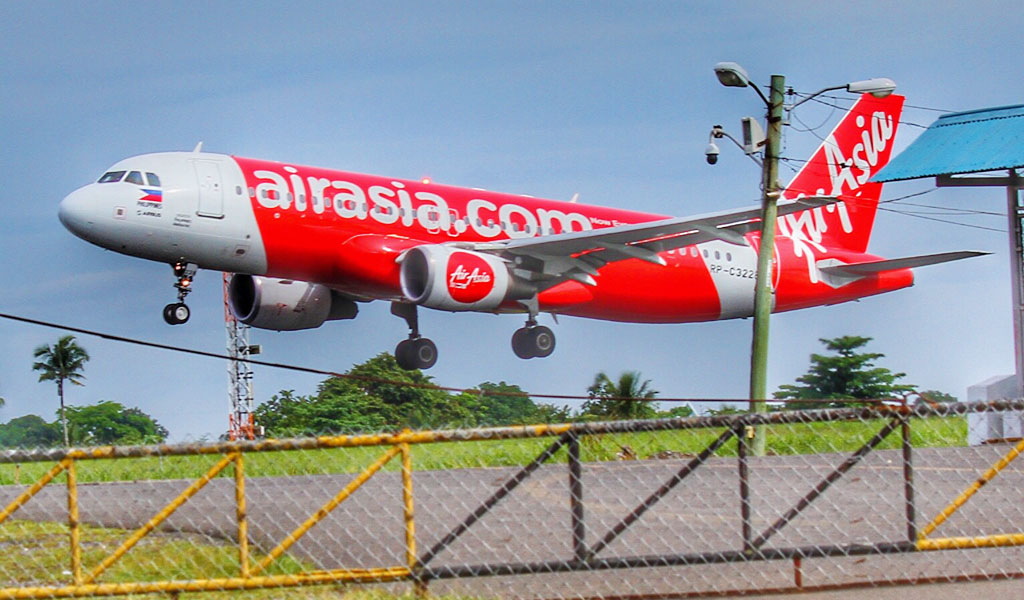
    The Malaysia-based low-cost long-haul carrier has stated its intention to resume services between Kuala Lumpur and London later this year, after a decade away. Let’s look a little deeper into the airline’s latest announcement.

    In what the airline is calling “a new era for low-cost, long-haul travel”, AirAsia X (IATA D7 / ICAO XAX) has announced that it will resume flying from Kuala Lumpur to London later this year.

    Along with other new services to Dubai and Instanbul, the decision to resume flying between the capital cities of Malaysia and the UK comes as the airline gears up following several years of stagnation and a suspension of flights. The announcement comes hot on the heels of the airline celebrating the launch of four other new routes to Japan and Hawaii, which are all on sale from today.

    AirAsia X now offers flights across seven routes from Kuala Lumpur to New Delhi, Sydney, Seoul (Incheon), Tokyo (Haneda), Sapporo (Chitose), Osaka (Kansai), and from Osaka (Kansai) to Honolulu. All flights are operated by the carrier’s fleet of 13 Airbus A330-300s, which offer both economy and premium class cabins.

    Although the exact start date and timings are yet to be revealed for the newly-announced London services, they are expected to be in late 2022. The airline previously served London up until 2012, serving London Stansted Airport. The airline has not disclosed its preference for which London airport it will serve at this stage for the new services.

    The additional flights to London, Dubai, and Istanbul will bring the total number of destinations served by the carrier into double figures for the first time. It is also widely expected that the airline will announce new services from Malaysia to both Perth and Melbourne in Australia in the near future.

    Commenting on the latest announcement regarding the new services, the CEO of AirAsia X, Benjamin Ismail, said,

    “We are back, better and stronger than ever. We have spent the downtime in flying reviewing every aspect of the operation to deliver even greater value and choice for medium and long-haul travel. Now that international borders are reopening across the world, we are able to resume operations to our most popular destinations, including Australia, Japan, Hawaii, India, and South Korea first.

    Today’s announcement of the resumption of four routes to Japan and Hawaii and to launch flights to London, Istanbul, and Dubai is just the beginning. We have many more destinations in the pipeline, which we will announce soon, to meet strong pent-up demand.”

    With the backing of principal investor Capital A behind it, AirAsia X appears to have an exciting few years ahead after a two-year hiatus. There are also plans to expand further. The airline also has an outstanding order with Airbus for 15 A330-900 Neo aircraft, which will provide the airline with additional payload and range capabilities going forward.

    Speaking about the rebirth of the carrier and its future aspirations, Capital A President (Commercial) Colin Currie said,

    “Today’s announcement marks a new era for our long-haul affiliate AirAsia X which is resuming operations after a two-year hiatus, with refreshed branding to signal a fresh new start. The relaunched AirAsia X stands for maximum value, maximum experience, and maximum destinations.

    However, the ethos of AirAsia – delivering low-cost, high quality will continue to underpin the new-look AirAsia X, providing maximum opportunity for everyone to go to their dream destinations. Capital A will support AirAsia X moving forward as a conduit to leverage synergies within our broad ecosystem of travel and lifestyle products.

    e will use our full resources, including the AirAsia Super App, our cargo business Teleport, fintech arm BigPay, and all of the other airlines in the AirAsia Aviation Group to take AirAsia to new heights.”

    The last couple of years have been tough for AirAsia X and its investors. Its fleet was effectively mothballed while its finances were reorganized and the COVID-19 pandemic spread across the globe.

    However, the airline is bullish about its future and product offerings with new investment, new branding, and a clear desire to return to its former heydays as a low-cost, long-haul pioneer.

    Speaking of the optimism he holds for the airline from this point, Benjamin Ismail added,

    “The return to London and first-time flights direct to Dubai and Istanbul will be a gamechanger for great value long-haul travel, and these will be on sale soon for travel later this year. As our services grow, we will continue to bring our fleet of aircraft out of hibernation, and we can look forward to gradually bringing our valued pilots and cabin crew who were on furlough back.

    I am confident that our resumed or new services will prove very popular and that we will return to pre-Covid capacity on some of our core routes within the next 12 months. Our strategic new model, combining cargo and passengers, enables AirAsia X to fly profitably where other airlines may not be able to, which makes operations to longer-haul routes like Dubai, Istanbul, and London commercially viable and more affordable for our guests at the same time.”

    As demand for low-cost, long-haul travel appears to be on the rise, it will be good to see a former trailblazer of the model return to form. AirAsia X and others such as Norse Atlantic and Scoot will be working hard to carve out niches as a new age of travel emerges post-pandemic.

    Having traditionally been a difficult market to crack, only time will tell whether the appetite for low-cost, long-haul travel is robust enough to sustain operations in the long term. But with more and more operators willing to give it a go, there are certainly signs that momentum is growing for such services. It is this momentum that AirAsia X, with today’s announcement, is showing a great deal of enthusiasm to exploit.
  • Vietnamese lychees aim to expand global footprint

    Vietnamese lychees aim to expand global footprint

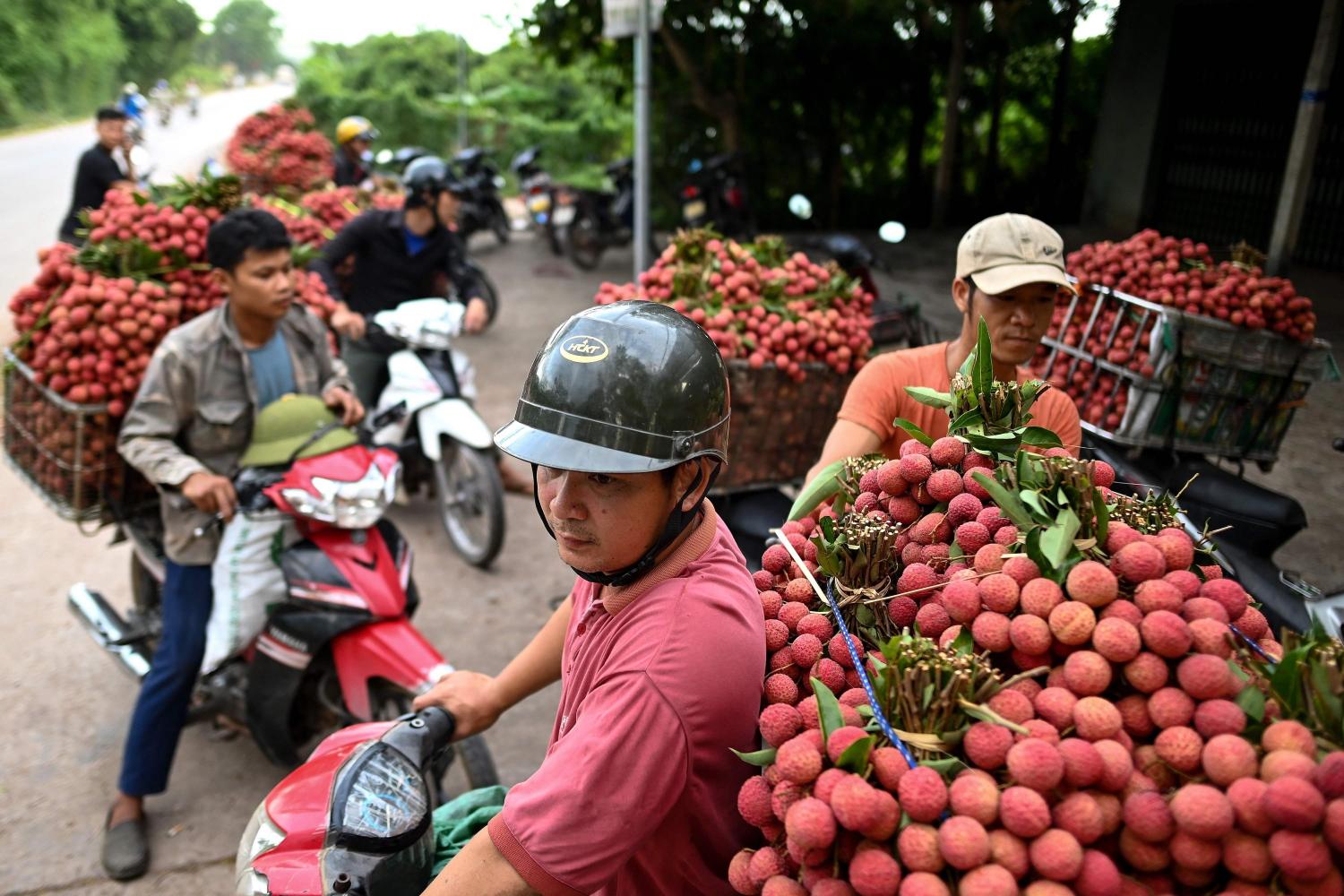
    The “Vietnamese lychees go global” forum was held on June 16 to promote lychee exports and take the brand name of the Vietnamese fruit to the next level.

    Vietnamese lychees have made a name for itself in many international markets. According to Le Hoang Tai, deputy director of the Trade Promotion Department, Ministry of Industry and Trade, China accounts for 91 percent of Vietnam’s total lychee export volume. Other markets include Japan, Korea, Australia and the United Arab Emirates.

    Hai Duong, home to Thanh Ha lychees, currently has over 9,000 hectares under cultivation, producing 60,000 tons of lychees every year, of which 50 percent is consumed domestically, 40 percent is exported to traditional markets, and 10 percent to high-end markets including the U.S., Japan, and EU.

    “We aim to build a global brand of high-quality lychees,” Tran Van Quan, vice chairman of Hai Duong Province People’s Committee, said.

    Bac Giang, another leading area for lychee production, has 28,000 hectares of lychee-growing land, providing 25,000 tons of lychees exported to 30 countries. Most meet VietGAP and Global GAP standards.

    “The province will continue to boost lychee exports to high-end markets, and new markets including Canada and Thailand,” Phan The Tuan, vice chairman of Bac Giang, said.

    Palestinian Ambassador to Vietnam, Saadi Salama, said: “Lychees have gradually become the pride of Vietnam.”

    George Burchett, a journalist from Australia, said: “Lychees are both eye-catching and delicious, suitable for everyone’s taste, not only contributing to Vietnamese exports but also enhancing Vietnam’s image to the world.”

    Pham Van Dung, director of Hong Xuan Cooperative, Bac Giang, admitted that the preservation process is one of the challenges for Vietnamese lychees. “Ripe lychees that have not been consumed yet need more intensive solutions like freeze-drying or high-tech drying, so that there are still products for the market even when the harvest ends,” said Dung.

    Director of Toan Cau Company, Nguyen Duc Hung, admitted that Vietnamese enterprises focus on exporting fresh lychees, but fresh lychees can be preserved for 40 days at most, “so it is difficult for lychees to reach far-flung markets.”

    He suggested new products like frozen lychee, with long-term preservation capacity, should be offered so that the fruit could reach global customers with diverse tastes.

    The Palestinian ambassador noted Vietnamese lychees are facing difficulties in reaching far-flung markets because of logistics. “In a short time of two months, to export lychees to global markets in fresh conditions is a challenge.”

    He suggested agencies prepare in advance to facilitate lychee transportation.

    Tai of the Trade Promotion Department recommended that while aviation costs are high, lychees should be transported via railways to cut costs and avoid delays in shipment, which takes about only 15-21 days.

    Salama said that products on sale in the Middle East normally have Halal marks on their packages as a sign of a trustworthy or superior product. He hoped that more Vietnamese lychee products are Halal-labelled to reach consumers here.

  • Vietnam’s largest rubber firm expects profit to go sideways

    Vietnam’s largest rubber firm expects profit to go sideways

    The Vietnam Rubber Group (GVR) expects revenues to rise by 5 percent year-on-year this year, but estimates profit will stay unchanged due to rising costs.

    Its overheads, including wages, fertilizer, logistics and electricity, have been surging, board member Pham Van Thanh said. Rubber, accounting for half of GVR’s profits, were most affected by price surges, he added.

    Low rubber prices despite recent input hikes, fierce competition affecting rubberwood sales and legal issues relating to land use would also drag profits down, the group’s management said in a document submitted at its annual shareholders meeting Friday.

    The group expected huge profits from converting rubber farms into industrial zones, but this has run into legal hassles, Thanh said.

    “If the legal problems can be solved, our profits will likely surpass plans.”

    The group also plans to sell stocks in two subsidiaries, VRG of Vietnam Rubber Industrial Zone and Urban Development and SIP of Saigon VRG Investment, but is yet to do so in the current bearish market.

    Stock sales usually account for 15 percent of profits, Thanh said.

    GVR’s pre-tax profits in the first quarter rose 15 percent year on year to VND1.5 trillion ($64.6 million).

    Last year, it posted VND28.35 trillion in revenue, and VND5.34 trillion in profit; and reduced dividend from 6 to 4.1 percent to reinvest in an industrial zone in the southern province of Tay Ninh.

  • Baidu’s Electric Vehicle Firm Jidu Unveils First ‘Robot’ Car

    Baidu’s Electric Vehicle Firm Jidu Unveils First ‘Robot’ Car

    The concept car, which is free of door handles and can be fully controlled via voice recognition, was launched through an online press conference held on Baidu’s metaverse-themed app Xirang.

    Jidu, an EV venture controlled by Baidu and co-funded by Chinese automaker Geely, plans to mass produce the model, which would be 90% similar to the concept car, in 2023.

    The ‘robot’ EVs will possess autonomous Level 4 capabilities that need no human intervention as well as utilize Qualcomm’s 8295 chips, which will enable users to access voice assistance offline when internet connection is poor.

    Baidu’s EV-making plan comes as tech companies around the world race to develop smart cars after Tesla’s success in commercializing electric vehicles.

    Besides equipping the vehicle with autonomous driving software technology powered by Baidu, Jidu will also build two lidars and 12 cameras alongside the car. Lidars are detection systems, similar to radars, which use pulsed laser light rather than radio waves.

    “The Jidu robocar aims to meet users’ needs for intelligent travel … and intelligent cabin in the new era,” said Joe Xia Yiping, Jidu chief executive, adding “the ultimate goal is to realize a fully driverless transportation experience.”

    Jidu cars will target users who like cutting-edge technologies, Luo Gang, head of operations at Jidu, told Reuters in an interview on Wednesday.

    The EVs will be manufactured in Hangzhou Bay in China’s eastern city of Ningbo, where Geely has several plants.

    Jidu has hired ex-Cadillac designer Frank Wu as its head of design, and Wang Weibao, a former member of Apple Inc’s EV initiative Project Titan, as its head of intelligent driving.

    Jidu’s first model will be priced above 200,000 yuan ($29,914.59), Baidu chief executive Robin Li said on a conference call last month.

    Smartphone maker Xiaomi Corp and Didi Global are among other Chinese tech giants who are pursuing auto-making ambitions.

  • TikTok seeks to protect the security of its U.S. platform

    TikTok seeks to protect the security of its U.S. platform

    In a move designed to handle questions about the storage of data belonging to U.S. TikTok users, the short-form video app is believed to have completed the migration of data related to its U.S. customers to servers at Oracle. This move could satisfy the demands of U.S. regulatory agencies who had concerns about the integrity of the data collected on the app.
    This move comes a couple of years after a national security panel ordered TikTok parent ByteDance to divest Itself of TikTok in order to prevent the communist Chinese government from collecting U.S. user data. But that order was never completed after Joe Biden defeated Donald Trump to win the U.S. presidency. The national security panel, known as the Committee on Foreign Investment in the United States (CFIUS), continues to mention its fears over data security at TikTok.
    The U.S. has been focusing on app developers and the personal information that they keep an eye on, especially data that belongs to U.S. military or intelligence personnel. In the blog post it published on Friday, TikTok wrote that it has “long stored U.S. user data in its own data centers in the US and Singapore. In the blog post, TikTok notes that “our Virginia data center includes physical and logical safety controls such as gated entry points, firewalls, and intrusion detection technologies.”
    TikTok added that “It’s also important to maintain backup data storage locations to guard against catastrophic scenarios where user data could be lost. The company added that “our data center in Singapore serves as the backup data storage location for our U.S. users.”
    You might recall that Oracle was once one of three American companies involved in talks to purchase the popular app. The other two firms included Microsoft and Walmart. TikTok’s proprietary servers eventually will be deleted and as the company said, “Today, 100% of U.S. user traffic is being routed to Oracle Cloud Infrastructure. We still use our U.S. and Singapore data centers for backup, but as we continue our work, we expect to delete U.S. users’ private data from our own data centers and fully pivot to Oracle cloud servers located in the states.
    TikTok has also set up a dedicated U.S. data security team known as “USDS” to act as a gatekeeper for U.S. user information. The USDS team seeks to protect the data collected from U.S. users. “We know we are among the most scrutinized platforms from a security standpoint, and we aim to remove any doubt about the security of U.S. user data,” the social media firm said. “We’re dedicated to earning and maintaining the trust of our community and will continue to work every day to protect our platform and provide a safe, welcoming, and enjoyable experience for our community.
    Commerce Department secretary Commerce Secretary Gina Raimondo said last year that the administration is “very serious about protecting Americans’ data,” but criticized Trump’s approach. “Doing some executive order that’s meaningless on TikTok is not the way to force change on the platform,”Raimondo said.”
    TikTok has over one billion active users globally and the U.S. is its largest market. During the first quarter of 2022, TikTok was the most downloaded app world wide becoming just the fifth app in history to have lifetime downloads over 3.5 billion. The other four apps to reach this figure are all owned by Meta. Since the start of 2018, no app has been installed on devices more than TikTok.
  • Multi-million dollar apartments catch super-rich’s eyes

    Multi-million dollar apartments catch super-rich’s eyes

    Wealthy people are splurging millions of dollars to buy ultra-luxury apartments mostly as second homes. Hoa, owner of a house and a villa in HCMC’s Thu Duc City, said she recently bought a VND30-billion (US$1.3 million) apartment.

    Located on the 27th floor of a luxury project, the 200-square-meter unit offers unobstructed views of the Saigon River.

    It had four bedrooms, but Hoa took one down to expand the kitchen and living space.

    She topped it off with bespoke interiors at a cost of over VND5 billion, including a VND1 billion lighting system imported from Italy, two exotic paintings that cost hundreds of millions of dong and a $20,000 speaker system.

    It took her over a year to finish decorating, she said.

    “The apartment’s beautiful views, convenient car parking and relaxing atmosphere make it the ideal place for me to entertain friends and guests,”

    A broker has asked to buy her apartment for VND35 billion, but she refused.

    “I want to keep it for myself,” she said.

    Truong, an experienced investor, bought a penthouse in the heart of District 1 as a second home besides his 300 sq.m villa in the south of the city.

    The 200-sq-m unit cost him VND25 billion and another VND8 billion for decoration and interiors, he said.

    “I spent VND33 billion on this unit because of its amenities, security and views. I can watch firework displays right from here, something that townhouses and villas cannot provide.”

    Rising trend

    Luxury apartments have recently become very popular with successful businesspersons, NeloDécor, an architecture and interior design firm specializing in high-class properties, said.

    The company has just finished decorating a $2-million sky villa for an entrepreneur for VND12 billion.

    Previously it designed and built the interiors for a penthouse for an affluent family, which cost $2.5 million to complete and another $1 million for interiors and smart devices.

    It is not uncommon for affluent people to spend $1-2 million for buying an apartment in the central business district and hundreds of thousands or millions of dollars more for decorating and doing the interiors, NeloDécor CEO Le Duy Van said.

    They are mostly super rich and already own multiple properties, and so have extensive demands, he said.

    Amenities, security and views are key factors for them while choosing to buy, he said.

    Most of them hire designers, but some design on their own, and are ready to knock down and rebuild multiple times until they are happy.

    Pham Lam, CEO of property consultancy DKRA Vietnam, agreed that demand for luxury apartments is rising.

    In some cases, properties serve the same purpose as expensive jewelry and supercars, he said.

    Rising supply

    Consultancy Cushman & Wakefield expects supply of luxury apartments in HCMC to rise this year, especially in the central business districts and Thu Thiem Peninsula.

    Their prices will surge, too, with new projects constantly rising to record levels, it said.

    Average price tags for luxury apartments surged by 23 percent year-on-year to VND143.6 million per square meter in the last quarter of 2021. For ultra-luxury properties, they went up to VND400 million.

    Eddie Lim, CEO of real estate developer Viva Land, said the number of rich people in Vietnam is rising faster than the global average.

    Vietnam is expected to have 1,551 ultra-high net worth individuals (UHNWIs) by 2026, compared to 1,234 last year, according to an estimate contained in a Wealth Report released by U.K. property consultancy Knight Frank.

    The company also predicts that the number of rich people, or those with a net worth of $1 million or more, including their primary residence, will rise sharply by more than 59 percent from last year to 114,807 in 2026.

    The Vietnamese luxury apartment market is also promising for foreigners, especially rich Asians, thanks to the country’s rapid economic growth and more competitive pricing than Singapore, Hong Kong, Japan and China.

  • Bamboo Airways awarded best cabin crew, most improved airline in Asia

    Bamboo Airways awarded best cabin crew, most improved airline in Asia

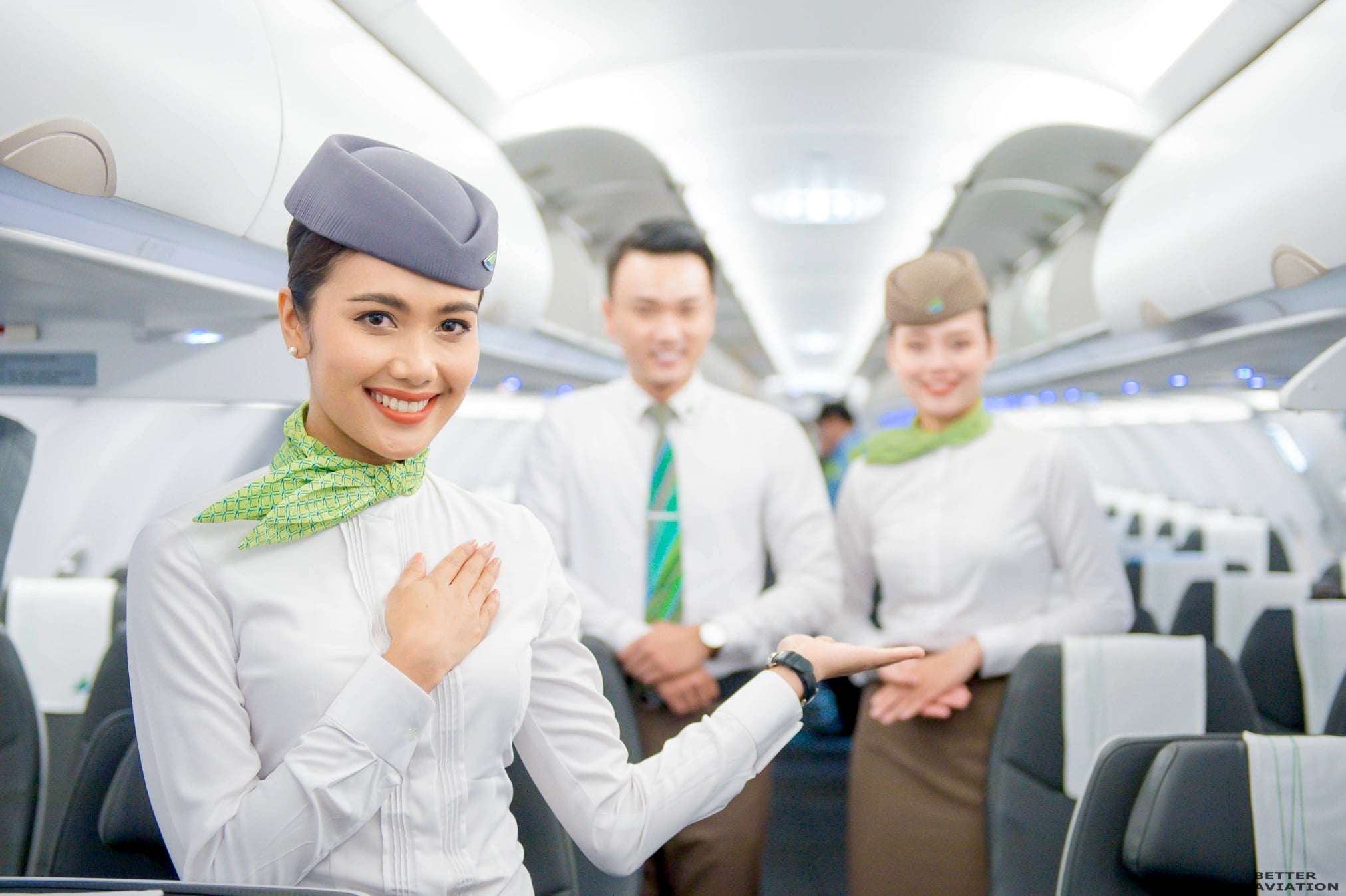
    Bamboo Airways won the “Best Cabin Crew in Asia” and “Most Improved Airline in Asia” awards at the PAX Awards 2022 ceremony in Hamburg, Germany.

    PAX Awards 2022 was held on June 15 (Hanoi time) by the Canadian leading magazine covering cabin services industry PAX International.

    Truong Phuong Thanh, deputy general director of Bamboo Airways, said: “PAX Awards 2022 provides precious recognition by domestic and international customers and experts of Bamboo Airways’ efforts in upgrading service quality. We see this as a great motivation and encouragement to gear up our roadmap towards 5-star oriented services that we have determined to achieve since the earliest days.”

    PAX Awards is held annually by PAX International magazine based on online voting from around the world. PAX Awards is recognized among prestigious aviation awards honoring excellent service quality and development efforts of the world’s leading airlines and aviation service suppliers.

    This year’s ceremony was held within the framework of World Travel Catering and Onboard Services Expo – WTCE 2022 and Aircraft Interiors Expo – AIX 2022.

    At the previous PAX Awards ceremony, many prominent names in aviation including Qatar Airlines, Air Canada, Emirates Flight Catering… were honored for Outstanding Food Service by a Carrier, Airline Caterer of the year, Best Inflight Duty Free Program, Best Cabin Interior Experience and Best Lounge.

    Bamboo Airways has transported over 10 million passengers safely and led on-time performance across the Vietnamese aviation industry since its establishment.

    Adding to PAX awards, Bamboo Airways continues to grow its footprint in this key market with the launch of a second regular nonstop route to Germany from June 16, connecting Ho Chi Minh City and Frankfurt with one return flight per week.

    With this nonstop service, Bamboo Airways is showing determination in gearing up international network expansion in general and route operation to Europe like the U.K., Germany…in particular. The airline targets a network of 120 routes, including 40 international routes in 2022 to meet heavy travel demands after pandemic.

    The airline has been focusing on methodical training for cabin crew in 5-star service orientation. Bamboo Airways also constantly organizes many global events to recruit flight attendants, attracting a large number of potential candidates from many countries, thus adding qualified personnel and creating opportunities for passengers to experience 5-star oriented services.

  • VN-Index plunges with rising trade

    VN-Index plunges with rising trade

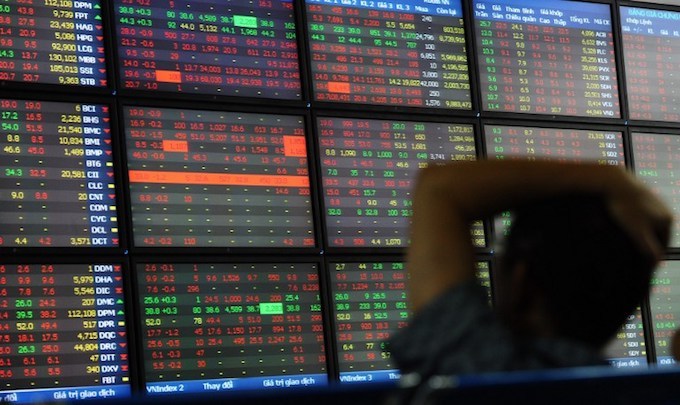
    Vietnam’s benchmark VN-Index dropped 1.56 percent to 1217.30 points Friday with trading value rising double-digit.

    The index closed 19 points lower after gaining nearly 23 points on Thursday. It has lost 67 points this week as global markets plunged due to concerns of inflation and disrupted supply chains.

    Trading on the Ho Chi Minh Stock Exchange (HoSE) increased by 17.5 percent to VND17.33 trillion, highest in four sessions. The VN-30 basket, comprising the 30 largest capped stocks, saw 22 tickers dropped.

    SSI dropped 7 percent to the lowest since March last year in its seventh losing session in a row.

    It was followed by eight banking stocks, losing between 6.4 percent and 3.6 percent, including MBB of lender MB, TPB of private TPBank and CTG of state-owned lender VietinBank.

    Five blue chips rose, with MSN of conglomerate Masan Group rising 5.7 percent and GAS of state-owned Petrovietnam Gas gaining 4.7 percent.

    Foreign investors were net buyers to the tune of VND309.68 billion, mainly picking up HPG of steelmaker Hoa Phat Group and VND of brokerage VNDirect.

    The HNX-Index at the Hanoi Stock Exchange, where mid and small caps list, was down 2.68 percent while the UPCoM-Index at the Unlisted Public Companies Market was down by 2.41 percent.

  • My Car was totaled: Tips for auto insurance claims

    My Car was totaled: Tips for auto insurance claims

    As soon as you’ve recovered from the trauma of being in a car accident, your insurance company deems your vehicle a total loss. The last time you’ll see your vehicle before it’s dragged away to the junkyard in the sky is when you gather your personal belongings.

    But there is a silver lining to this bleak tale of absolute devastation.

    You’ll be able to move past the accident and get back on the road with the correct form of auto insurance.

    What does “total” mean?

    Your car’s market worth will be compared to the insurance provider’s repair cost. In some cases, an insurance company may deem your car as totaled if the repair costs are equal to or greater than the vehicle’s value. Some insurance companies may total your car even if the repair costs are less than what they estimate. You can inquire about the source of the insurance company’s determination of the worth of your vehicle.

    When an insurance company declares your vehicle a write-off

    It is ultimately up to your insurance carrier whether or not your car is deemed a total loss following an accident. When the repair expenses for damages exceed 51 percent of the car’s pre-accident worth, they usually declare the vehicle a total loss. However, some insurers will increase that limit to 80 percent. State insurance authorities set the proportion, which may vary depending on where you live.

    Assume you were involved in an accident. The car is 12 years old and, as a result, has lost a lot of its monetary value over time. When a car’s worth is already low, even a small amount of repairable damage can cause your insurer to declare it a total loss. Another scenario: you own a brand-new luxury SUV and are involved in an accident that causes significant damage and renders the car unusable. A certain proportion of the car’s worth must be damaged before it can be considered an outright total loss.

    Once your car is totaled, you have a few options

    Car Insurance Quotes in Chicago, IL claim for total loss is usually more complicated than repairing a vehicle. It is feasible to expedite the insurance claim process and achieve the best potential outcome if you know what to do and what your options are.

    After Your Car Is Totaled, Here Are Five Things to Do Right Away

    In most total-loss incidents, the consequences can be rather severe. After an accident, what matters most is ensuring your physical health and well-being. Once you’ve recovered from the shock of the incident, you should:

    File a claim as soon as possible

    Insurance companies might be slow to process total loss claims, so contact yours and the other parties’ insurance companies immediately. Contact your insurance company as well as the insurance company of the other driver if you were involved in an accident with someone else’s vehicle.

    Tow your vehicle to a reputable auto repair facility

    The claim procedure will go more smoothly if you tow your car to a shop approved by the insurance adjuster managing your claim. You’ll need to contact your insurance company’s adjuster to get an estimate for repairs from the shop.

    Gather all of your necessary documents

    The title to your vehicle must be provided to the insurance company. Request a copy from your state’s Department of Motor Vehicles if you don’t have one. If your automobile is totaled, the insurance company will likely need you to hand over the title.

    The ACV of your vehicle should be researched

    Before agreeing to an insurance payout for a totaled car, perform your research on your car’s actual cash value (ACV). Find out the current market worth of similar vehicles to yours by consulting auto websites, newspapers, and local car dealerships and using online tools.

    Review the terms of your auto loan

    Your auto loan repayments will affect how much you can afford for a new vehicle. Your lender will get the settlement funds first from the insurance company. After that, you’ll get the rest of the money.

    Conclusion

    You may be able to manage your insurance claim on your own, depending on your policy. Consult a lawyer if you have queries about your legal rights. The services of a lawyer include more than just legal advice. When you don’t feel the insurance company is making a fair compensation for your totaled car, it’s worth the cost to hire a lawyer.


  • UBS to Stand Trial in French Harassment Case

    UBS to Stand Trial in French Harassment Case

    The French subsidiary of UBS must stand trial on suspicion of harassment. The focus is on the French subsidiary’s alleged crackdown on whistleblowers.

    UBS has suffered a defeat in France before the country’s Court of Cassation, one of the four courts of last resort in the country. The French branch of Switzerland’s largest bank must now stand trial for the alleged harassment of two whistleblowers who revealed tax fraud. The focus is on the French subsidiary’s alleged crackdown on whistleblowers.

    The decision of the court was viewed by the «AFP» news agency on Thursday. In a ruling on Tuesday, France’s highest court rejected appeals by the bank against its summons to appear before the Paris criminal court, according to Swiss news agency AWP.

    The former head of internal audit, Nicolas Forissier, as well as former event and communication manager Stéphanie Gibaud, helped get the tax fraud case against the major Swiss bank rolling in France, resulting in UBS being investigated for tax fraud.

    A lawyer for UBS France did not respond to inquiries from the French news agency AFP.

  • Thai PM Announced Thailand 5G Alliance

    Thai PM Announced Thailand 5G Alliance

    At the Thailand 5G Summit 2022, Thailand’s Digital Economy Promotion Agency (DEPA) announced the establishment of the Thailand 5G Alliance with the support of Thai Prime Minister H.E. General Prayut Chan-o-cha. The summit was co-hosted by Thailand’s Ministry of Digital Economy and Society (MDES), DEPA, GSMA APAC 5G Industry Community, and Huawei.

    Over 1,000 government officials attended the event’s opening ceremony, including researchers, partners, and journalists who came to experience and explore the possibilities of 5G-powered digital transformation created by the alliance’s partners like Huawei. Participants focused on the business potential and application cases of 5G and the efforts that have already been made to promote commercial 5G use and benefit the 5G business ecosystem in Thailand.

    During his “5G Leader in the Region” keynote at the event, the Prime Minister explained the alliance would be to help Thailand become a digital center for the entire ASEAN region. He said, “The government has assigned MDES to lay down the policy framework and action plans to promote applications of 5G technology and manage the telecommunication infrastructure that supports 5G technology. This framework will also encourage new product and services development based on 5G infrastructure and will promote continuing usage and a digital industry ecosystem from infrastructure deployment. Additionally, it will also promote collaboration between the public and private sector, through companies such as Huawei, to commercially drive Thailand’s 5G technology development in every industry and elevate Thailand’s competitive advantages towards the Thailand 4.0 era.”

    The alliance will include DEPA, and representatives from multiple Thai government agencies, the private sector, as well as industry associations such as the Office of the Digital Economy and Society Commission (ONDE), the Office of The National Broadcasting and Telecommunications Commission (NBTC), the Federation of Thai Industries, Advanced Info Service plc (AIS), True Corporation plc (True), the Thai IoT Association and the Telecommunications Association of Thailand Under the Royal Patronage. As a founding member, Huawei will also play an important role. The Thailand 5G Alliance’s main goal will be to increase the country’s economic value by promoting the use of industrial 5G applications to achieve service system upgrades in public health, security, education, transportation, factory management and modern agriculture. Ultimately, these advancements will elevate quality of life, equally, and economic efficiency in Thailand.

    The Prime Minister continued on saying, “The Thailand 5G Summit 2022 will be the starting point for domestic and international collaboration. It also showcases the telecommunication infrastructure that supports 5G technology in Thailand, which contributes to the development of digital startups and a digital workforce. This collaboration will expand technology and digital innovation, drive economic competitiveness and the digital economy, which will promote Thailand as an investment hub, and the 5G technology leader in the region – with telecommunication infrastructure that supports 5G applications.”

    Chaiwut Thanakmanusorn, Minister of Digital Economy and Society, also spoke at the event on the broader benefit industry collaboration in this field, “Technology development and digital innovation play a pivotal role in increasing digital applications in various sectors. 5G technology is a key infrastructure component for the country’s future economic and social transformation. The Ministry of Digital Economy and Society, through DEPA, is happy to be joining forces with partners like Huawei to organize events like this Thailand 5G Summit 2022.”

    Nuttapon Nimmanphatcharin, DEPA President and CEO, continued, “5G technology is an important digital infrastructure component. DEPA predicts that the Thailand 5G Summit 2022 will create up to 5 billion baht in economic value. It is an important collaboration between the public and private sector, including private supply chains and more than 60 domestic and international investors to help support the country’s development. This summit will coordinate between the government, the private sector, and educational institutions to set regulations for 5G applications and support the country’s development.”

    Simon Lin, President of Huawei Asia Pacific, praised this newest announcement, saying, “We are truly inspired by how Thailand has rapidly emerged as a 5G leader in the ASEAN region… 5G technology is a critical element in digital transformation, but it’s not a full solution in and of itself. So, beyond connectivity, Huawei will work with the industry to build a range of capabilities in areas like industry application, end-to-end system integration and innovation ecosystem.”

    Julian Gorman, Head of GSMA, Asia-Pacific Region, also noted that, “The establishment of the 5G Alliance is a significant milestone for Thailand as it is the first alliance to develop a 5G ecosystem in Southeast Asia. The GSMA APAC 5G Industry Community is pleased to collaborate with Huawei, the leading global ICT company, to drive applications of 5G technology in the Thai industrial sector to the maximum potential.”