Tag: asia

  • Deliveroo set to deliver MasterChef treats in TV tie-in

    Deliveroo set to deliver MasterChef treats in TV tie-in

    Food delivery company, Deliveroo, in partnership with MasterChef Australia, delivers an Australian first integration campaign via Mediabrands Content Studio.

    Deliveroo will deliver 21,504 mini bacon me go nuts choc-tops – inspired by last night’s episode of MasterChef Australia – for customers to enjoy from the comfort of their couch.

    Mediabrands Content Studio handled the partnership, choc-tops production, packaging and distribution to 128 Deliveroo restaurant partners nationally.

    Olivia Warren, managing director of Mediabrands Content Studio said: “Every year clients want bigger and better integrations when sponsoring TV properties.

    “The ask to do something no other brand has done and create an amazing customer experience for Deliveroo’s 3rd year sponsoring MasterChef was just the sort of problem we love to tackle.

    “It’s always amazing when clients are not afraid of brave ideas – this has been months in the planning and it’s extremely exciting to see this partnership truly come to life and connect with the viewer like never before.”

    Laura Wilson, head of marketing at Deliveroo, said: “MasterChef’s bacon me go nuts choc-top creation is adding a delicious twist to this much-loved treat.

    “So we are very excited to partner with them and enable our customers to enjoy this exclusive experience, Deliveroo’d straight to their couch.”

    Tamar Hovagimian, head of effect at Paramount ANZ, said: “We’re excited that viewers can, for the first time ever, experience a dish inspired by what they have seen in the show immediately after the winner has been announced!

    “All without having to leave the comfort of their living room – it’s the magic of television come to life and Deliveroo and MBCS have made that possible.”

    To get your hands on the limited edition bacon me go nuts choc-tops, you’ll just need to search MasterChef on Deliveroo platforms and spend over $20 with participating restaurants from Thursday 9 June while stocks last.


  • Netflix could buy the streaming service Roku

    Netflix could buy the streaming service Roku

    It’s tough times to be in the video streaming business. Netflix, the company that, as we may say, pioneered the whole thing, is now rapidly losing subscribers and is trying to find as many ways as possible to keep its users.

    The streaming giant is under such pressure from its competitors that it revealed its intentions to launch an ad-supported plan soon, despite refusing to do so for years. And now, a new report hints that Netflix might use the streaming service and TV box manufacturer Roku for its new ad-supported tier. But how? Well, by just buying Roku.

    In recent weeks, employees at Roku have been discussing the possibility of Netflix buying the smaller streaming service. This “possibility” comes after Roku’s stock dropped by 80% since July last year.

    Interestingly, according to people inside Roku, the company has prohibited its employees from selling their company stock. Of course, the reasons for doing that could be many, but usually companies do that before releasing important information to prevent inside trading. Could that be because of a potential buyout? It’s a possibility, yes.

    However, it should be noted that there is no official word about Netflix acquiring Roku to back up the claim of a possible acquisition. But according to experts, this is precisely the perfect time for a buyout.

    First of all, Roku’s valuation is now below $13 billion, which makes it very attractive for a buyout. Also, Roku’s video-advertising platform generated $647 million in first-quarter revenue. To understand how big of a deal that is, Roku’s video advertising generated seven times more profit than its video-streaming boxes and other devices that the company sells. In a potential acquisition, Netflix could use Roku’s know-how and video-advertising platform to improve its ad-supported plan, thus generating more profit.

    Of course, with buying Roku, Netflix will also get Roku’s hardware business. In previous years, Reed Hastings, a Netflix co-founder and co-CEO, has said that selling hardware is not something Netflix wants to do. However, as Business Insider pointed out, Roku has access to more than 61 million active accounts through its TV boxes. This will give Netflix the ability to know what users prefer to watch, which could then be used to create better strategies against the competition.

    Although it sounds like a great deal, some experts don’t think that Netflix will actually buy Roku. According to some of them, since investors are currently pressuring Netflix to find a way to increase revenue growth and keep its subscribers, buying such a company at this time won’t be a wise move. Furthermore, according to one industry analyst, Netflix could have problems with antitrust regulators if it tries to buy Roku.

    Also, according to one expert, Netflix hasn’t decided yet what it intends to accomplish in terms of advertising and may not know at this moment if it needs to acquire Roku or not. Furthermore, it looks like Netflix prefers to keep its distance from large buyouts. It acquired a few video game developers, but that was it.

    It will be interesting to see if Netflix will indeed buy Roku or if these were simply empty words from people who wish for a potential Netflix-Roku merger.

  • Spotify will try to conquer the audiobook market

    Spotify will try to conquer the audiobook market

    Audible, you should start preparing for a serious competition because Spotify is eager to conquer the audiobook market as well. Yes, as the streaming service firmly stated at its Investor Day 2022, from now on, one of its main goals will be to increase its share in the audiobook market.

    Spotify’s CEO, Daniel Ek, stated that the global size of the book market is around $140 billion, with audiobooks having only about a 6%-7% market share. But, in the markets where audiobooks are more popular, they represent around 50% of the market. Also, the audiobook category is growing by 20% every year. This is why, according to Ek, the audiobook industry is an “annual opportunity of $70 billion dollars” for Spotify to expand and “eventually compete for.”

    Nir Zicherman, Spotify’s head of Audiobooks and Gated Content Vertical, stated that an expansion in the audiobook market “presents a really unique opportunity” to “drastically expand” that industry and to “introduce music and podcast listeners around the world to audiobooks.”

    Zicherman added that Spotify will soon be a place where you can buy and listen to your favorite audiobooks directly on the platform. This offering, as he stated, will reach Spotify’s global audience of over 422 million users.

    You can currently listen to audiobooks on Spotify, but until recently, they didn’t seem like that big of a priority for the streaming service. However, in 2021, Spotify purchased the audiobook platform Findaway, implying that it may be considering expanding in that segment as well. The streaming service is convinced that it can not only just grow the audiobook industry but also significantly innovate it and even transform it. As to whether Spotify will be able to do what it says, only time will tell, but it sure sounds promising.


  • Goodyear To Recall Over 1.7 Lakh Recreational Vehicle Tyres In The US

    Goodyear To Recall Over 1.7 Lakh Recreational Vehicle Tyres In The US

    Tyre firm Goodyear on Tuesday said that it would be recalling 1.73 lakh G159 recreational vehicle (RV) tyres in the US. As per a report by Reuters, the recall was issued because of the potential for catastrophic tread separations and after mounting pressure from the U.S. auto safety regulator, the National Highway Traffic Safety Administration (NHTSA). Under the recall, Goodyear dealers will be replacing the tyres installed on RVs along with providing consumers with $60 vouchers. The company is also offering a refund of $500 for tyres not installed on vehicles. The recall only applies to the firm’s G159 tyres of the size 275/70 R22.5.

    The NHTSA opened a preliminary investigation into the tyres in 2017 to review allegations raised in lawsuits that some of the tires had defects causing RV (motorhome) crashes resulting in deaths and injuries. The safety regulator had asked the company to recall the tyres earlier this year though the company had declined the request at the time.

    The company in a filing now said that it had now agreed to recall the tyres “to address concerns that some of these tires may still be in the marketplace or in use.” The company though has said that there were no safety defects in its product and cited that few if any remained on the road with the affected tyres last manufactured in 2003.

    “While these tires are no longer being produced, some RV owners may have the tires on their vehicle, or set aside as a spare, and do not know. NHTSA urges anyone who owns, rents, or uses an RV or truck with 22.5-inch rims to ensure these tires are not in use on their vehicle,” the safety regulatory body said in a statement.

    Additionally, in a separate recall demand latter, the NHTSA said that the company knew of the defect as far back as in 2002 but did not issue a recall.

  • H&M, Lululemon back $250 million Fashion Climate Fund

    H&M, Lululemon back $250 million Fashion Climate Fund

    Lululemon Athletica and H&M Group are among backers of a $250 million fund aiming to speed up efforts to cut carbon emissions in the fashion industry’s supply chain, non-profit group Apparel Impact Institute said on Wednesday.

    Bringing together clothing brands, philanthropic donors and other industry stakeholders, the institute’s Fashion Climate Fund also hopes to unlock a further $2 billion in funding once effective solutions have been found and scaled up.

    Other early backers include the H&M Foundation and the Schmidt Family Foundation. More are expected to be announced in the coming months, with the fund hoping to raise $10 million from each.

    “The urgency to address the climate issues has never been more acute. Early-stage innovations and new solutions play a critical role, but the impact does not happen before they can be scaled, and the industry starts adopting and implementing them,” said the H&M Foundation’s Christiane Dolva.

    “The Fashion Climate Fund will support new programmes and solutions with a structured pipeline for getting from pilot to scale. We believe it provides a powerful mechanism to overcome the challenges of getting new solutions implemented by the industry, and thereby accelerate the progress on climate action.”

    While many of the world’s leading companies have committed to reaching net-zero emissions across their businesses by mid-century and to halving emissions by 2030, the Apparel Impact Institute said many large barriers remain.

    A recent study it conducted with the World Resources Institute found 96% of the fashion industry’s emissions come from third-party farms and factories used by multiple firms.

    The fund will help finance a range of initiatives including expanding the use of renewable energy, developing next-generation materials, ditching the use of coal in manufacturing and improving energy efficiency.

    It hopes that the use of philanthropic capital to help fund early stage projects and the forging of partnerships with retailers to scale up successful initiatives will encourage other industry participants to help meet future funding needs.

  • Nike says to end run club app in China

    Nike says to end run club app in China

    Nike is deactivating its Run Club app in China, becoming the latest Western company to reconfigure its business in the world’s second largest economy.

    The US sportswear giant posted a notice to runners in mainland China, saying the app will “cease service and operation” there starting July 8. A Nike spokesperson said that it would roll out a “localized” platform for Chinese runners in future, and continue to invest in updating its digital platforms in China.
    “We are creating an ecosystem from China for China, specifically catered to the region’s unique consumer needs,” the representative said.
    China is one of Nike’s top markets. The company made nearly $8.3 billion in revenue in Greater China, which includes Hong Kong and Taiwan, in the last fiscal year, according to its most recent annual report. That was more than its sales in the rest of Asia Pacific and Latin America combined.
    China is also a key manufacturing hub for the brand, with about a fifth of Nike’s footwear and apparel being made there.
    Nike Run Club, which allows users to track their runs and perform challenges with friends, has more than 8 million users in China who have collectively covered more than 600 million kilometers (nearly 373 million miles), according to a company statement on the app.
    Local users will be able to export their fitness data, Nike said.
    The move is the latest in a series of changes big Western companies have made to their businesses in mainland China in recent months. Last week, Amazon announced the closure of its Kindle bookstore in the country, as well as the discontinuation of Kindle device sales to retailers.
    This summer, Airbnb will take down all its listings in the country and concentrate instead on outbound travelers. The company made the decision because of mounting costs that were worsened by Covid-19.
    Last October, LinkedIn said that it would shut down the local version of its platform in China, citing a “significantly more challenging operating environment” and compliance hurdles. The platform, which is owned by Microsoft has decided to introduce an all-new, even more localized service, called InJobs.
  • E-commerce, online services strip Vietnam of tax revenues

    E-commerce, online services strip Vietnam of tax revenues

    Vietnam is failing to effectively tax e-commerce and online services as it struggles to make tech giants set up abroad fulfill their taxation duties.

    “Taxing e-commerce and digital platforms is a new and difficult challenge. There is huge loss of tax in this area as servers are placed abroad,” Minister of Finance Ho Duc Phoc told the National Assembly on Wednesday.

    E-commerce sellers are based both in Vietnam and other countries, and it is difficult to locate and tax them, he added. Phoc was responding to lawmakers’ concerns about tax avoidance in online business.

    Nguyen Thi Le Thuy, a lawmaker from the southern province of Ben Tre, estimated that around 85 percent of tax from digital giants like Facebook and Google are lost annually.

    Other lawmakers said that the tax that Vietnam has been able to collect from these tech firms recently is not appropriate to their revenues in the country.

    Cross-border platforms like Facebook and Google have paid VND5.1 trillion ($220 million) in taxes for the period between 2018 and 2021, according to the finance ministry.

    Phoc said that his ministry has set up payment portal and explained to e-commerce platforms and tech giants their tax duties, but taxing them remains a difficult task.

    The ministry is considering the best method to tax e-commerce trade, and the long-term goal is to establish an online automatic taxing system.

    Vietnam has over 100 e-commerce platforms, including 41 that sell goods and 98 providing services.

  • Vietnam urges banks to merge, become more competitive

    Vietnam urges banks to merge, become more competitive

    The Vietnamese government is urging banks to merge and increase their scale toward becoming more competitive. It wants to make Vietnam an ASEAN leader in the banking sector.

    The government wants banks to have a capital adequacy ratio of at least 10-11 percent by 2023, and 11-12 percent by 2025, according to a recent plan to restructure credit organizations and handle bad debts during the 2021-2025 period.

    The capital adequacy ratio is a measure of how much capital a bank has available to handle a certain amount of loss before facing the risks of becoming insolvent.

    The government has said it wants Vietnam’s banking sector to become a top four leader in the ASEAN bloc. It has asked banks to make plans to increase their charter capital and improve their management.

    Big banks should have a minimum charter capital of VND15 trillion by 2025, and small and medium banks, VND5 trillion, it said.

    The government also wants banks to have a bad debt ratio of under 3 percent by 2025.

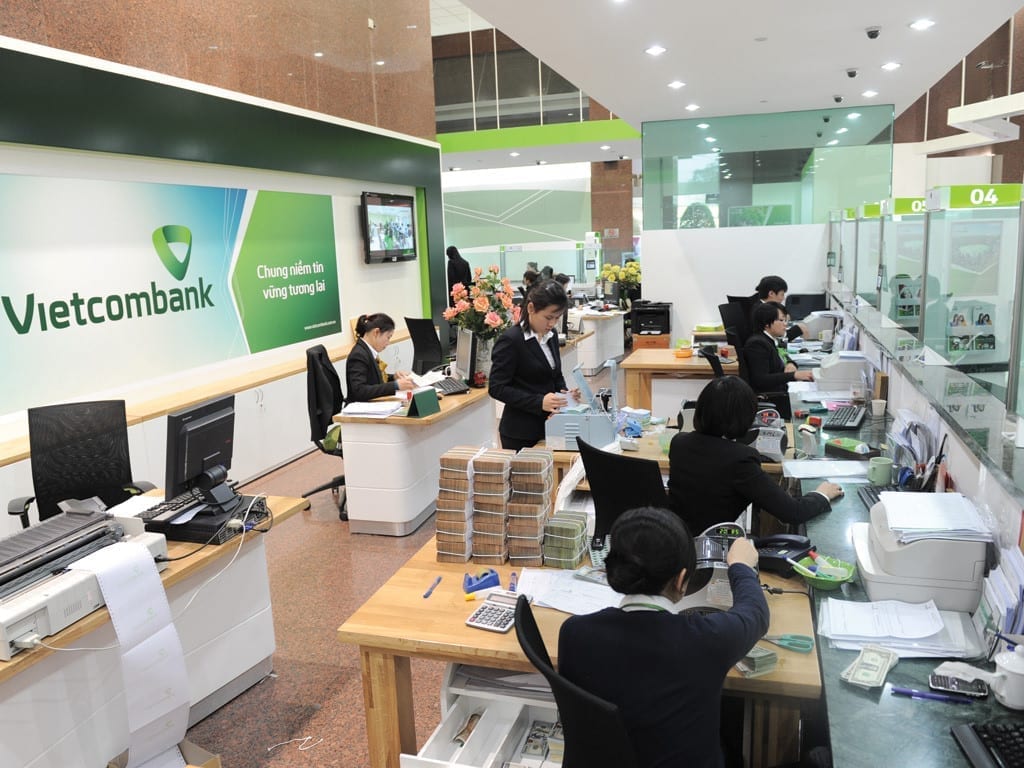
    Vietnam has 31 domestic commercial banks, with the biggest in terms of charter capital being state-owned lenders BIDV, Vietinbank and Vietcombank, according to the State Bank of Vietnam.

  • Instagram now lets you pin posts and Reels to your profile

    Instagram now lets you pin posts and Reels to your profile

    On Twitter and TikTok, you have this cool feature to ‘pin’ certain posts on your profile. The pinned items will stay on top of your posts, and whenever a user visits your profile, these will be the first items they see. So, you get to present your profile with the exact highlights you want people to notice. And now, this cool feature just came to Instagram as well.

    As Instagram announced, it’s rolling out a “pin” option, which will enable you to pin up to three posts or Reels on your profile. The pinned objects will appear at the top of your profile grid and will remain over the rest of your posts.

    But how to pin a post or a Reel to your Instagram profile? Well, to do that, simply choose what you want to pin and tap on the three dots located at the top-right corner of the publication. After that, tap on “Pin to your profile.”

    Now, if you return to your profile, you will see the post at the top-left corner of your grid with a white pin on it. Keep in mind that if you pin more posts, the already pinned ones will be shifted to the right, so the order of attachment matters.

    However, Instagram introducing such a feature doesn’t come as a surprise. We already knew that such an option was coming.

  • WhatsApp working on showing when your friends update their status right in your chat list

    WhatsApp working on showing when your friends update their status right in your chat list

    WhatsApp is on the updates accelerator once again and is working on another feature to make your life easier. WABetaInfo has unearthed a feature to display your status update directly on the Chats page in WhatsApp for Android, and this handy feature is currently under development.

    Roughly a month ago, the company was reported to be working on a similar feature for iOS. But WhatsApp has not forgotten about Android users. We now see the social media platform is working on displaying status updates in the chat list for WhatsApp Android as well.

    So far, the feature has been spotted during a WhatsApp desktop beta, and it is under development for Android and iOS.
    The thing with WhatsApp status updates is currently that they are, in a way, quite invisible. You need to know specifically to look for someone’s status update, in order to find it. When this new feature is completed, you will be able to see who published a new status update directly in your chat lists. That way, you won’t miss important status updates from your friends.

    This feature was first spotted, as we already mentioned, on the desktop version of the popular chat app. Here’s a screenshot preview from when the change was first spotted:

    According to WABetaInfo, if you chose to click on the chat cell, WhatsApp will open the conversation, and if you click on the profile pic of the contact, the app will show you the status update itself. On this screenshot, the first contact has published a status update. It seems that it will look quite like someone who has published a story on Instagram, for example.
    Reportedly, the feature cannot be disabled from WhatsApp Settings, so once it becomes official, you are probably stuck with it. The publication, however, is not currently giving any time frame for the release of this quite useful feature. Android and iOS users will both have to wait for now until they can enjoy being up to date with all your chat friends at a glance (and a tap — but way easier than what it is now!).

    For those of you who are curious about the process: we know that once the feature is developed, it comes first to those chosen ones before making its way to the general public. With that being said, it might be some months before we see the feature live.

  • Vietnam to promote electronic bills via lottery

    Vietnam to promote electronic bills via lottery

    Vietnam is set to use lottery prizes to promote the use of electronic bills as the country seeks to boost digital transformation.

    Since April, seven billion electronic bills, or 93 percent of the total, have been recorded, and starting July 1 all businesses in the country will have to utilize electronic billing, Minister of Finance Ho Duc Phoc told the National Assembly on Wednesday.

    To promote electronic bills, the ministry will use lottery service Vietlott to award random people using the electronic billing code submitted to the national database whenever a customer purchases a product or service.

    Promoting electronic bills is among Vietnam’s latest efforts to create an e-government as its leaders have vocalized the need to digitally transform the country to boost economic growth.

    Deputy Head of the General Department of Taxation Dang Ngoc Minh said earlier this month that tax payers can now scan a QR code to have tax bills delivered to their smartphone within 10 seconds.

  • EU Sets Women Boardroom Quota at 40 Percent

    EU Sets Women Boardroom Quota at 40 Percent

    After ten years the EU has reached a landmark decision to achieve corporate gender equality. The move will put pressure on Swiss companies both in the EU and at home.

    The EU is introducing a legally binding 40 percent quota for women in non-executive positions and a 33 percent quota for women in executive roles of companies operating in the European Union from mid-2026, it said in a press statement late Tuesday.

    Currently, only a third of boardroom members in the EU are women and the number of female senior managers is lower, it said. The new directive aims to help companies listed on EU stock exchanges accelerate their progress in reaching gender equality.

    While Swiss companies listed in the EU will have to comply with the new European law, companies listed in Switzerland are being put «indirectly» under pressure to follow suit by this decision, Fabienne Meier partner at executive search firm Knight Gianella & Partner, said.

    Last year Swiss law determined a 30 percent quota for women on the board of directors of Swiss listed companies within five years and a 20 percent quota for women in executive management positions within ten years.

    For Meier, the boardroom targets are realistic, but the pool of female talent for the executive level is too small, as it was not nurtured enough in the past. Some sectors will struggle to close the gender gap as they look for top female executives with (rare) technical profiles, she said.

    The Commission first proposed gender balance on company boards in November 2012, but it has taken ten years for all decision-makers to reach an agreement on the matter with some member states previously opposing binding measures at the EU level.

    Although 60 percent of current university graduates are female, women are underrepresented in high-level positions and progress is very slow. Countries with national quotas have the highest share of women sitting as board members of listed companies, according to the statement.

  • A German Bank Wants its Customers to go Cashless

    A German Bank Wants its Customers to go Cashless

    In a country where cash has been king for decades, Deutsche Bank will stop allowing customers to pick up cash at its counters.

    There is a German adage that Geld Stinkt Nicht, which translates into money doesn’t stink, and helps to explain the country’s strong, and perhaps a stereotypical, preference for cash over the years. Deutsche Bank is seeking to change that.

    In tapping into another German trait, that of frugality, Lars Stoy, who heads domestic retail banking operations of Germany’s largest commercial bank said at an investor conference that «In the future, I don’t want to offer cash in the branches anymore, because holding cash incurs costs.

    While not specifying a timeline for the changes, Stoy said that cash would only be offered in a few large centers and that generally, he wants to further reduce the number of branches in Germany.

    The main task of the branch is sales along with “advising customers on investments, mortgages, to a certain extent on consumer loans and insurance. Once that is the case, then the branches will be profitable again, Stoy said.

    Moreover, the plans are in response to changes in customer behavior, with the trend toward cashless payments significantly increasing, while at the same time demand for personal advice is also on the rise, Stoy said.

    In terms of cash supply, Deutsche Bank will maintain a nationwide network of ATMs adding that money can also be withdrawn at supermarkets or gas stations.

  • Sunbutter Skincare becomes world’s first certified palm oil-free sunscreen

    Sunbutter Skincare becomes world’s first certified palm oil-free sunscreen

    The innovators behind Australia’s first reef safe sunscreen is packaged in reusable and recyclable tins and Australia’s first vegan surf zinc, SunButter Skincare, have announced they will become the first sunscreen company in the world to be certified palm oil free.

    Working closely with International Palm Oil Free Certification Trademark (POFCAP) SunButter has removed palm oil from its supply chain ensuring none of the ingredients used in any of its sunscreen or skincare products is derived from palm oil.

    “At SunButter we’re all about protecting people and the planet and if we’re including palm oil as an ingredient then we’re not protecting the planet, we wanted to make sure we live up to our ethos and mantra,” said SunButter Skincare Founders Sacha Guggenheimer and Tom Hiney.

    Typically, consumers won’t see ‘palm oil’ listed as an ingredient on the back of their sunscreen bottle, it’s usually hidden behind the name caprylic/capric triglyceride, cetostearyl alcohol, glycerin and glyceryl caprylate.

    “Sadly, it’s super complicated, because palm oil and palm oil derivatives are disguised under hundreds of different names,” said Hiney.

    To complicate things further, finding transparency when it comes to supply chains is difficult and this might partly explain why no Australian company is currently able to say that their sunscreen is certified as free of palm oil.

    “It’s really about encouraging brands to go palm oil free and support other palm oil free brands, we’ve been fortunate enough to go to Sumatra and see the devastating effects palm oil plantations have on the planet from deforestation and the disruption of soil carbon to the decimation of local animal populations, so talking about this certification is a great exercise in raising awareness about the use of palm oil in the cosmetic industry,” said Guggenheimer

    SunButter encourages consumers to do their research, looking for items with a ‘palm oil free’ logo from the POFCAP, Orangutan Alliance, Go Palm Oil Free or POI Approved, which means they’re certified (rather than just labelled as ‘palm oil free’ by the company, which can be inaccurate and misleading).

    “While the palm oil issue is a big one, there is a string of organisations doing really good work to get us back on the right path, and it’s important that we take personal responsibility and become more conscious in our buying habits as the less demand there is for products containing palm oil, the fewer products “While the palm oil issue is a big one, there is a string of organisations doing really good work to get us back on the right path, and it’s important that we take personal responsibility and become more conscious in our buying habits as the less demand there is for products containing palm oil, the fewer products containing palm oil there’ll be on the market.” said Hiney.

  • Snack chain Aji Ichiban closes all Hong Kong stores

    Snack chain Aji Ichiban closes all Hong Kong stores

    Hong Kong snack food franchise Aji Ichiban has closed all of its stores in the territory after suffering significant losses as Covid-19 caused a slump in overseas visitors, The Standard reports.

    The company’s website and phone numbers were reported not to be working since Monday, which is presumed to have been the chain’s last trading day. A spokesperson told The Standard the company might resume its operations in future if circumstances change.

    Despite its Japanese name, the snack food chain was established in Hong Kong by Lai Chan Yuk Hing and Lai Hin Tai. The brand opened more than 90 stores in Hong Kong and expanded its business internationally with more than 150 franchised shops, including in the US, the Philippines and Canada. However, most of its international stores have been closed since 2013.

    Aji Ichiban is known among tourists for its wide selection of dried snacks, such as beef jerky, dried apricots, Skittles, chocolates, nonpareils, spicy dried fish, plum tablets, nuts, chilli olives, fried and shredded squid.