Tag: asia

  • Apple releases minor updates that could fix major iPhone and Apple Watch issues

    Apple releases minor updates that could fix major iPhone and Apple Watch issues

    Two weeks after updating iOS to 15.4, iPadOS to 15.4, watchOS to 8.5, and tvOS to 15.4, Apple dropped a minor update meant to exterminate bugs on the iPhone, iPad, the Apple Watch, and Apple TV. Right off the bat, we can think of some bugs that might be exterminated by these updates including one for the Apple Watch that broke fast charging on the Series 7 timepiece once watchOS 8.5 was installed.

    Apple iPhone users complained about the battery on their phones draining rapidly after iOS 15.4 was downloaded and installed. Naturally, we would expect Apple to fix this issue with a software update as fast as possible. Apple made some huge improvements to the battery life on the iPhone 13 Pro and iPhone 13 Pro Max, but the batteries went from hero to zero after iOS 15.4 was installed on these models. So once you have iOS 15.4.1 driving your iPhone, you might want to check to see if your battery life has returned to normal.

    Another problem that iOS 15.4.1 might repair is one that affects the quality of webcam images from Apple’s Studio Display. As many have noticed, the Studio Display runs a full version of iOS 15.4 which means that problems with Apple’s expensive display can be fixed with a software update. That certainly beats lugging the product on the subway and taking it back to the store to fix the hardware.

    With the updates, the build number for iOS and iPadOS moves from 19E241 to 19E258. The build for watchOS goes from 19T242 to 19T252, and with tvOS, the OS build goes to 19L452 from 19L440.

    To update your iPhone or iPad go to Settings > General >Software Update. To update the Apple Watch, open the Watch app and go to Settings > General > Software Update. Most updates will automatically be taken care of overnight which is when typical Apple Watch users have their timepieces on the charger.

    To install tvOS on Apple TV, follow these directions:

    • Click on the Settings app from your Apple TV Home screen.
    • Click on System.
    • Click on Software Update.
    • Click on Update Software.
    • Click on Download and Install.
    • Click on Update Now.
    • Wait for your Apple TV to finish the update.

    Hopefully, the major issues affecting the iPhone and the Apple Watch are now a thing of the past. Let us know by dropping your comments in the box below.

  • Swiss Re, Baidu Team Up In Autonomous Driving Business

    Swiss Re, Baidu Team Up In Autonomous Driving Business

    Swiss Re and Chinese tech group Baidu are teaming up to help advance autonomous driving, the Swiss reinsurer said on Friday.

    Swiss Re will provide risk management expertise and insurance products for Baidu’s autonomous driving business, it said without giving any financial terms.

    “This partnership will advance risk management research and insurance protection for autonomous vehicles, representing an important step forward in building a comprehensive ecosystem of mobility services,” Swiss Re said in a statement.

  • Tesla, Lucid Supplier LGES Plans To Build $1.4 Billion Battery Factory In Arizona

    Tesla, Lucid Supplier LGES Plans To Build $1.4 Billion Battery Factory In Arizona

    LG Energy Solution (LGES), a supplier for electric car makers Tesla and Lucid, said on Thursday in Korea it plans to invest 1.7 trillion Korean won ($1.4 billion) to build a battery factory in Arizona by 2024 to meet demand from “prominent startups” and other North American customers.

    This will be its first U.S. factory to make cylindrical cells, a type of battery that has been used in Tesla and Lucid vehicles, LGES said. Construction will begin in the second quarter of 2022, with mass production to start in 2024 with production capacity of 11 gigawatt hours, LGES said in a statement.

    Earlier, Reuters reported that potential customers would include EV makers Tesla, Lucid and Proterra and Philip Morris, maker of IQOS heated-tobacco sticks, among others. The report cited people familiar with the matter.

    LGES said in a statement that it plans to consider securing additional production capacity at its Arizona factory in the future.

    “The Arizona factory could add further production capacity in the future as we are seeing growing demand for cylindrical batteries from various customers, including automakers and power tool makers,” said an official at LGES.

    On Tuesday, Tesla Chief Executive Officer Elon Musk said battery production would be “the limiting factor” for vehicle production in two to three years. He has called on suppliers to raise production, while Tesla starts making cells itself.

    Tesla, Lucid and Proterra did not immediately respond to requests for comment. Philip Morris declined to comment.

    Japan’s Panasonic Corp, a Tesla supplier, along with Contemporary Amperex Technology Co Ltd, is also looking to invest billions of dollars to build a factory to make a new type of electric vehicle (EV) battery for Tesla, public broadcaster NHK reported this month.

    Panasonic is looking at building the factory in either Oklahoma or Kansas, not far from Tesla’s new Texas vehicle plant, NHK reported.

    Lucid Chief Financial Officer Sherry House told Reuters last month the company, which has a car factory in Arizona, had signed multi-year supply agreements with two battery suppliers, and the agreement “does have some capacity coming from state-side cell lines.”

    She did not identify the companies. Lucid sources batteries from LGES and Samsung SDI.

    LGES, which raised more than $10 billion in its initial public offering in Korea in January, has announced a flurry of battery joint ventures with GM and Stellantis in the United States and Canada.

    In August, U.S. President Joe Biden signed an executive order aimed at making half of all new vehicles sold in 2030 electric.

  • VW To Give Its Green Light For Audi, Porsche To Enter F1

    VW To Give Its Green Light For Audi, Porsche To Enter F1

    Audi and Porsche owner Volkswagen is likely to give the green light for the two brands to make their entry into motor racing’s Formula One at a meeting next week, two sources familiar with the matter said on Thursday.

    “We will hopefully be able to communicate our intention to enter into Formula One then,” one of the sources said, with the second adding there was a “good chance” of a positive decision.

    Volkswagen declined to comment. The news was first reported by Business Insider.

    There has long been a talk of Audi and Porsche forming partnerships with existing Formula One teams, their most likely method of entry into the highest class of international racing.

    Audi and McLaren denied reports last year that a partnership between the two brands had already been formed but said that it was under discussion, with a decision to be expected this year.

    Audi will offer around 500 million euros ($556.30 million) for McLaren, one source said, while Porsche intends to establish a long-term partnership with racing team Red Bull starting in several years’ time.

    Volkswagen has not previously been involved in Formula One but has worked with Red Bull, notably in the world rally championship. McLaren and Red Bull were not immediately available to comment.

    A source told Reuters in November that Volkswagen’s ultimate decision will rest on whether Formula One follows through on its plans to switch to synthetic fuels by 2026, and on McLaren’s progress regarding electrification of its vehicles.

    Volkswagen has invested the most of any global carmaker by far in electric vehicle production and batteries in an attempt to clean up its image from the Dieselgate emissions scandal and remain in line with governmental carbon reduction targets.

    The decision comes as Volkswagen grapples with the uncertainty of the impact of the Ukraine war on its finances, which will also be discussed at next Thursday’s meeting.

  • Kerry Logistics Network posts 102% growth in Core Net Profit

    Kerry Logistics Network posts 102% growth in Core Net Profit

    Kerry Logistics Network Limited (‘Kerry Logistics Network’ or together with its subsidiaries, the ‘Group today announced the Group’s annual results for 2021.

    Group’s Financial Highlights

    • Revenue (including revenue generated from discontinued operations) increased by 53% to HK$81,771 million (2020: HK$53,361 million)
    • Core operating profit increased by 88% to HK$6,229 million (2020: HK$3,320 million)
    • Core net profit increased by 102% to HK$3,692 million (2020: HK$1,828 million)
    • Profit attributable to the Shareholders was HK$7,939 million (2020: HK$2,896 million), which represents a year-on-year growth of 174%
    • Integrated Logistics (IL) business recorded a segment profit of HK$1,868 million (2020: HK$2,642 million), which represents a decrease of 29%, partly due to the disposal of the Group’s Hong Kong Warehouse and the Taiwan businesses during the year
    • International Freight Forwarding (IFF) business recorded a segment profit of HK$4,860 million (2020: HK$993 million), which represents a growth of 389%
    • Proposed final dividend of 50 HK cents per Share, to be payable on Wednesday, 8 June 2022

    William MA, Group Managing Director of Kerry Logistics Network, said, “In 2021, supply and demand mismatch, logistics bottlenecks, congested ports, labour shortage and pandemic related lockdowns and measures continued to cause endless disruptions in the global supply chain. Thanks to the unwavering support from our colleagues and partners, we managed to deliver efficient and consistent services to our customers in the face of complex and relentless challenges. We achieved a record-high revenue of HK$81.8 billion and a core net profit of HK$ 3.7 billion in 2021.”

    IL Shrank

    The segment profit of KLN Group’s IL business did not grow in line with the other segment, mainly due to a weak Asian market brought about by a series of prolonged lockdowns and other pandemic measures across Southeast Asia, severely disrupting both manufacturing and consumption related activities, as well as the required disposal of the Group’s Hong Kong Warehouse and businesses in Taiwan.

    In Hong Kong, the Group’s IL business reported a 14% contraction, with logistics operations decreasing by 4%. This was mainly due to the disposal of warehouses in Hong Kong at end-September 2021 as well as the implementation of pandemic-induced social distancing measures which has caused a depression in particular retail activities.

    In the Mainland of China, the Group’s IL business grew by 33%, mainly from the increase of manufacturing activities as purchase orders shifted back to the Mainland from many Asian countries, boosting its production and export of both components and finished products.

    In Asia, the IL division went down by a large extent. This was mainly due to prolonged lockdowns across many countries in Asia, which depressed manufacturing activities. Furthermore, pricing pressure and fierce competition experienced by Kerry Express Thailand in Thailand have also impacted on the Group’s results. The Group is expected to reclaim its dominance in key Asian markets, where profitability will gain traction starting in 2022 2H.

    Strategic Partnership with S.F. Holding

    KLN Group’s strategic partnership with S.F. Holding will give it an unparallelled advantage as Asia’s largest 3PL provider to tackle the uncertain market challenges ahead. The two parties are already collaborating in the Mainland of China to serve S.F. Holding’s clients’ overseas business needs. By 2022 Q2, KLN Group will serve as the exclusive cargo General Sales Agent (GSA) for S.F. Airlines, as well as the principal service provider outside the Mainland of China for S.F. Holding’s international express business, firmly establishing KLN Group’s position as S.F. Holding’s international arm.

    William Ma concluded, “The complex dynamic system of the global supply chain will remain sensitive to an array of different pandemic responses and measures as well as geopolitics. International freight will face another year of price, volume and capacity volatility. Inflationary pressures and material shortages along the supply side will continue to disrupt global trade for a prolonged period. Although onshoring and reshoring have been discussed widely, it is highly likely that Asia, the manufacturing base of the world, will continue to hold its ground in the next five years. KLN Group and S.F. Holding’s strategic cooperation has opened a new page for both sides. Unique yet competitive service offerings have been co-developed through the ongoing business and operation integrations. As the world is moving faster and further away from the pre-COVID market conditions, we are confident that the new KLN Group is empowered to advance through it.”

  • AirAsia ready for border reopening, expects 250 international flights weekly by end-April

    AirAsia ready for border reopening, expects 250 international flights weekly by end-April

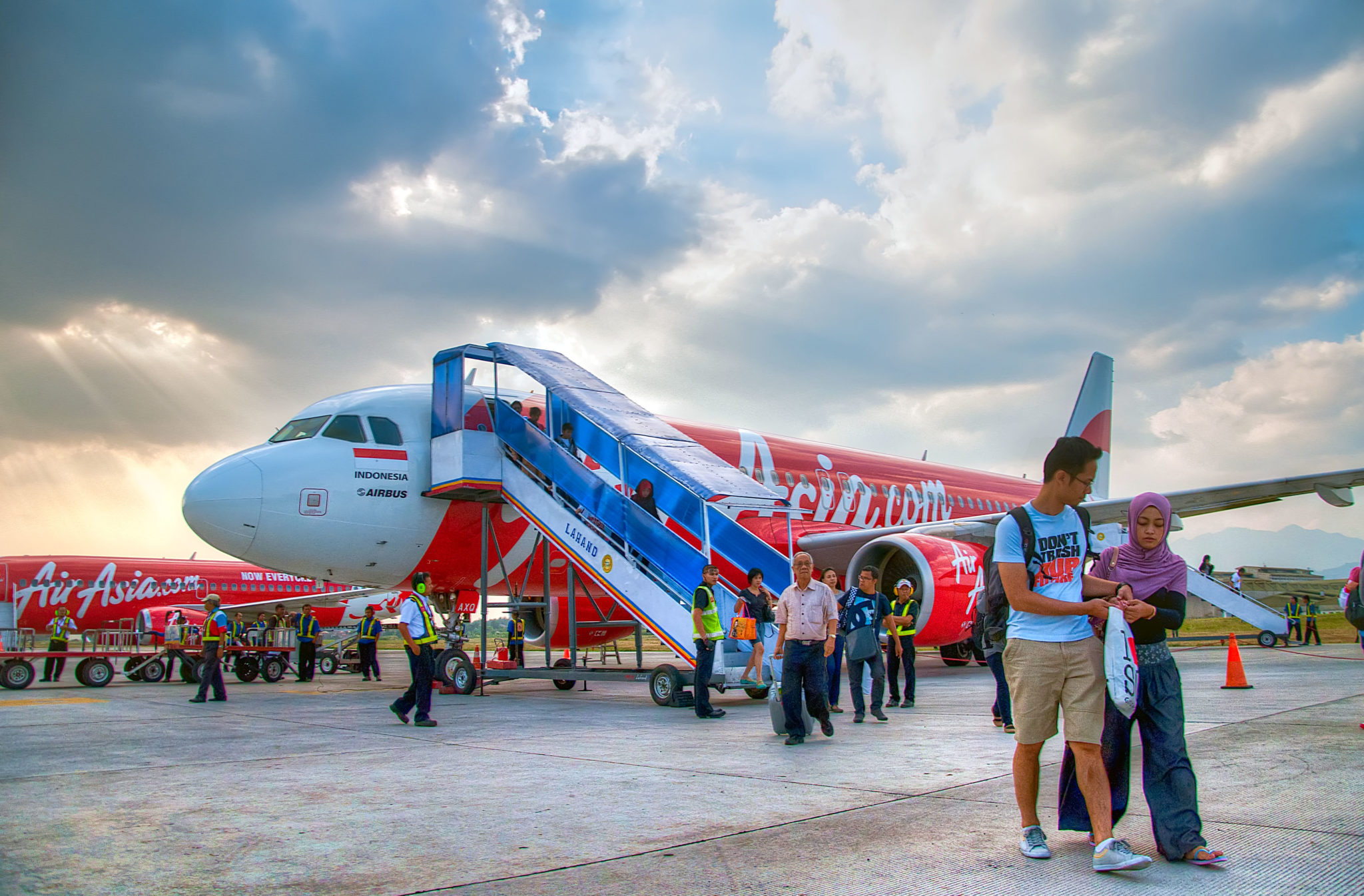
    AirAsia is expecting an increase of more than 70 international flight volumes per week for the first week of border reopening starting on April 1.

    AirAsia Malaysia chief executive officer Riad Asmat said the international flight number is expected to reach 250 weekly by the end of April.

    “AirAsia welcomes the announcement by the Malaysian government to fully open international borders on April 1, we are ready.

    “I believe the seamlessness of travel will happen sooner than later,” he told reporters in a media briefing on the airline’s preparation for border reopening here today.

    He said since resuming its operations with travel bubbles and a focus on domestic services, the gradual resumption of international flying is already well underway in tandem with borders gradually reopening around the world.

    With the continued easing of travel restrictions, the airline group has increased its domestic flight capacity by 156 percent since October 2021 kickstarted with the Langkawi travel bubble, and by 50 percent for international flights since the announcement of borders reopening in April is made by the government on March 8, 2022.

    A total of 75 aircraft are operating currently group-wide, he said. This is also supported by the reopening of other countries like Thailand, the Philippines, Indonesia, Cambodia, Singapore and Vietnam, said Riad.

    While the airline currently has a number of international services already operating, the announcement of the nation’s reopening will provide a welcome boost to support additional capacity in many of its core international markets in line with significant pent-up demand.

    Meanwhile, AirAsia Aviation Group Ltd chief executive officer Bo Lingam said the airlines earnings is expected to go back to pre-Covid level presumably by the end of the year with the hope that the fuel price goes down by then.

    “AirAsia applauds the governments around the region for their decision to reopen borders and remove travel restriction with minimal testing requirements.

    “We are thrilled to be resuming more flights in all of our core markets in Malaysia, Thailand, the international destinations including Bali, Manila, Bangkok, Ho Chi Minh City, Phuket, and more, starting in April.

    Domestic flying also continues to soar across the group with four new domestic routes launched in Malaysia, from Kuching to Langkawi, Penang to Sibu, Johor Bahru to Bintulu, and Kota Kinabalu to Kuala Terengganu this year, he said.

    “Regionally, we have seen similarly encouraging developments for domestic and international services in Thailand, the Philippines and Indonesia. We will continue to review our network which evolves based on a number of factors including demand,” he said.

    He added that new services will be announced in due course as the world continues to gradually reopen.

    “While our domestic services across the group have grown by 156 per cent in recent months due to significant consumer demand, and by 50 per cent for international, we expect to return to 100 percent or more of pre-COVID domestic and international flying by the end of this year,” he said.

  • WhatsApp finally improves voice messaging experience, adds new features

    WhatsApp finally improves voice messaging experience, adds new features

    As people start using voice messaging more and more, apps like WhatsApp must fine-tune the experience provided by their services. Initially introduced back in 2013, WhatsApp’s voice messaging service hasn’t evolved too much over the years, despite its userbase becoming larger.

    Today, WhatsApp announced plans to improve the voice messaging experience on its platform with the addition of several nifty features:

    • Out of Chat Playback: Listen to a voice message outside of the chat so you can multitask or read and respond to other messages.
    • Pause/Resume Recording: When recording a voice message, you can now pause the recording and resume when ready, in case you’re interrupted or need to gather your thoughts.
    • Waveform Visualization: Shows a visual representation of the sound on the voice message to help follow the recording.
    • Draft Preview: Listen to your voice messages before sending them.
    • Remember Playback: If you pause when listening to a voice message, you can pick up where you left off when you return to the chat.
    • Fast Playback on Forwarded Messages: Play voice messages at 1.5x or 2x speeds to listen to messages faster on both regular and forwarded messages.

    While these new features may not be available for everyone right away, WhatsApp announced that they will be rolled out to users in the coming weeks, so be patient if you don’t see them on your phone yet.

  • VinFast to build $2-bln electric auto plant in US

    VinFast to build $2-bln electric auto plant in US

    Automaker VinFast has signed a deal with North Carolina state in the U.S. to build a $2-billion plant to make electric buses, cars, and auto batteries. It is set to finish by July 2024, when it will have a capacity of 150,000 units a year, VinFast said in a statement Wednesday. Investment in the plant will eventually double to $4 billion.

    U.S. President Joe Biden claimed in a statement Tuesday that the plant, which will create more than 7,000 jobs and hundreds of thousands of electric vehicles and batteries, is the latest example of his economic strategy at work.

    “Our efforts to build a clean energy economy are driving companies to make more in America, rebuild our supply chains here at home, and ultimately bring down costs”.

    The announcement is the latest move by VinFast, a subsidiary of Vietnam’s biggest private company, Vingroup, in its efforts to become a global electric vehicle manufacturer.

    It is targeting sales of 42,000 this year after starting to deliver cars in the U.S., Canada, France, Germany, and the Netherlands in late 2022.

    Outside of North America, it is looking to set up a plant in Germany, the company had said in January.

    VinFast’s VF8 and VF9 electric SUVs cost from $41,000 to $61,000 in the U.S. By comparison, a Tesla SUV sells for around $63,000.

    The company became Vietnam’s first indigenous car manufacturer in 2019 and plans to transition completely to electric vehicles this year.

  • Huawei reports record-high net profit, solid growth in digital power, cloud and carrier businesses

    Huawei reports record-high net profit, solid growth in digital power, cloud and carrier businesses

    Huawei’s net profit recorded an all-time high in 2021, increasing 75.9% year-on-year to reach 113.7 billion yuan. However, revenue declined by 28.6% from the preceding year, totaling 636.8 billion yuan. The company’s R&D expenditure reached 142.7 billion yuan, accounting for 22.4% of total revenue, and the highest R&D amount the tech giant recorded in the past decade.

    Despite a decline in revenue, Huawei reported an increased cash flow totaling 59.7 billion yuan, while the liability ratio dropped to 57.8%.

    Speaking at Huawei’s 2021 annual report press conference, Meng Wanzhou, Huawei’s chief financial officer noted that Huawei has a sound financial standing, where higher profitability and operating cash flow can be attributed to improved management and product portfolios.

    “The value of a company is not reflected in its financial performance, especially for a high-tech company like Huawei. Future-oriented, long-term investments can better reflect the real value of a company,” said Meng. “The real value of Huawei lies in the capabilities of the teams and platforms built with our long-term R&D investments. They are key to Huawei’s long-term sustainability and competitiveness.”

    In 2021, Huawei’s carrier business generated 281.5 billion yuan in revenue, accounting for 44.2% of total revenue. Of which, more than half of its carrier business took place outside of China. Notable growth in Huawei’s carrier business can be attributed to 5G networks deployed for carriers in 13 countries, including Switzerland, Germany, Finland, the Netherlands, South Korea, and Saudi Arabia.

    In terms of industrial 5G applications, Huawei has signed more than 3,000 commercial contracts, with many large-scale commercial deployments across industries including manufacturing, mining, steel, port, chemical, cement, power grid, and healthcare. Leveraging its simplified site solution, renewable energy, and intelligent technologies, Huawei has helped carriers in more than 100 countries, including the Netherlands, Indonesia, Poland, and the UAE, deploy green sites.

    “Major trends such as digitalization, intelligence and carbon neutrality are the directions that will define our ongoing development,” said Guo Ping, Huawei’s rotating chairman. Citing Huawei’s recent wins for its innovative products and solutions at the MWC Barcelona, Guo added that Huawei’s digital innovations are recognized by carriers and industry peers.

    Owing to accelerated digital and intelligent transformation across industries, Huawei’s enterprise business also witnessed rapid growth. Revenue for enterprise business reached 102.4 billion yuan, accounting for 16.1% of total revenue. Specifically, new businesses including cloud services, digital power, and intelligent automotive components experienced robust growth of more than 30% in 2021.

    According to Gartner’s report on the global IaaS public cloud services market in 2020, Huawei ascended to the second spot in China, and successfully ranked 5 among the top global IaaS vendors ­– therein becoming the fastest-growing of all major vendors in Asia Pacifc and globally.

    At present, Huawei cloud spans 61 availability zones within 27 geographical regions, covering more than 170 countries. A platform used widely by both the public and private sectors, Huawei cloud reaches more than 2.3 million developers, 14,000 consulting partners, and 6,000  technological partners, serving over 4,500 cloud products in the market.

    As one of the most populous and diverse regions in the world, Asia Pacific presents huge prospects for digital transformation and digital economy growth. With more countries embracing digitalization as a national agenda, Jun Zhang, director of Huawei Asia Pacific public relations reiterated Huawei’s ambition to ramp up on delivering connectivity and intelligence, and advancing low carbon and digital inclusion initiatives.

    Addressing Huawei’s commitments to the region, Jun noted that a key priority is expanding network coverage to bridge the region’s digital divide. For instance, Huawei has deployed a new system in the Philippines, leveraging mobile devices and AI to protect rainforests from illegal logging and animal poaching. In the high-altitude and isolated Papua region, Huawei has also successfully delivered 4G connectivity to a million residents.

    In terms of providing low carbon solutions, Huawei Digital Power has helped customers in the region reduce up to 17 million tons of carbon emissions. In Singapore, for instance, Huawei supported Sunseap Group with industry-leading solar inverters to build one of the world’s largest offshore floating farms.

    To address an ICT talent shortage, Huawei will invest $50 million over the next five years to train 500,000 ICT talent in the region. In Malaysia, Huawei will establish the Women’s Leadership Foundation (WLF) to impart skills in business analytics, AI, big data and blockchain to 2,500 women. In the next three years, Huawei will also commit about $100 million to its Spark program to grow the region’s start-up ecosystem.

    Recognizing that innovation is key to maintaining Huawei’s competitiveness, about 10% to 20% of total revenue goes into R&D each year. In the past decade, Huawei has since amassed over 845 billion yuan in R&D investments. To date, Huawei has built three research centers and five labs and innovation centers in the region.

    “We will keep investing heavily in R&D to stimulate innovation and cultivate Asia Pacific talents to continuously provide the most advanced and high-quality products and services for our clients,” Jun said. “We will continue to deliver industry-leading 5G solutions and work with our customers to build high-quality 5G networks.”

    Especially in Southeast Asia, where digital economies have been forecasted in the e-Conomy SDEA 2021 report to reach $1 trillion by 2030, Guo expressed that Huawei will invest heavily in technologies including 5G, AI, cloud, deepening cooperation with more governments and stakeholders to accelerate countries’ digital transformation journeys.

    Elaborating on Huawei’s partnership with Indonesia, the largest economy in ASEAN, Guo said, “In spite of the ongoing pandemic, Indonesia’s Coordinating Minister for Maritime and Investment Affairs Luhut Binsar Pandjaitan took the time to visit Huawei in person at the end of last year. During our meeting, we discussed areas in which Huawei can work with Indonesia, like ICT infrastructure and digital transformation, particularly 5G, cloud infrastructure, and the construction of its new capital city.”

    Elsewhere, Huawei has invested approximately $15 million to develop a 5G ecosystem innovation center in Thailand. More notably, Huawei jointly launched Thailand’s Siriraj World Class 5G Smart Hospital, ASEAN’s first 5G smart hospital. This year, Huawei and Siriraj Hospital will establish a joint innovation lab to incubate over 30 innovative 5G applications.

    Huawei will channel investments in three key areas, namely system architecture, architecture optimization and software performance improvement, and theoretical exploration. Establishing a highly trustworthy and reliable supply chain is also important in today’s challenging climate.

    For its global carriers and enterprise customers, Huawei will work toward building green, simplified, and intelligent ICT infrastructure and facilitate digital transformation in all industries. ICT technologies will be integrated across industry scenarios to meet differentiated customer requirements.

    Moving forward, Guo stressed that “Huawei will advance its journey of digitalization, intelligent transformation, and low carbon.

  • Aeon Hong Kong looks to its Daiso network to restore profit

    Aeon Hong Kong looks to its Daiso network to restore profit

    AEON Stores Hong Kong have lost HK$470 million in 2021, but the retail group is still planning to expand its footprint in the city by launching more retail stores under the brand Daiso Japan.

    In the recent announcement of its annual result for the financial year ended on 31 December, AEON Stores (Hong Kong) said it lost HK$470 million (US$60.04 million), representing an increment of HK$433.2 million (US$55.34 million) compared to 2020. The company said in the year 2021, the group’s revenue decreased by 4.1% year on year to HK$9.56 billion (US$1.22 billion). Moreover, the group received fewer government subsidies from the Hong Kong government and municipal governments in China in 2021. The amount of subsidies decreased from HK$146.4 million (US$18.7 million) in 2020 to only HK$10.0 million (US$1.27 million) last year.

    The group added that as the pandemic was gradually brought under control in 2021, daily social, business and economic activities resumed, resulting in the decreasing sales performance of some merchandise spurred by the pandemic including food and cleaning products. At the same time, due to the prolonged pandemic and its subsequent disruption, the local economy was slowly recovering, and the sentiment among citizens was generally cautious about consumption. As a result, the group’s apparel merchandise demand did not improve significantly.

    In the third quarter of 2021, with the assistance of the launch of the consumption voucher scheme and a relatively stabilised pandemic environment, sales performance recorded a slight improvement but such improvement were relatively weaker in the subsequent rounds of consumer voucher scheme launched in the fourth quarter of 2021. To strengthen this company’s position in the Hong Kong market, in February, AEON Stores (Hong Kong) February 2021, the group partnered with foodpanda mall to provide Topvalu food products, HÓME CÓORDY household products and frozen food products. By June, the whole line of supermarkets was online, offering sales and home delivery services for a variety of supermarket items.

    Moving forward, the group will open stores in accordance with its preset investment plan. In February 2022, the group opened its fourth “AEON STYLE” store at Domain Mall, Yau Tong to meet the demand of customers in the district.

    When it comes to this new store, the company previously said that due to the nature of its retail businesses, the group has to enter into tenancy agreements for the leasing of retail stores from time to time. According to AEON, the retail fronts contribute to and maintains the group’s scale of operation which in turn benefits the group in lowering the overall operation costs. Along with the store space, the company has also rented one internal advertising light box on the ground floor and two outdoor advertising banner spaces outside the building facades for the display of the company’s name and advertising of the company’s business at the premises.

    At the same time, the group will further expand the business of small specialty stores under the brand Daiso. When it comes to digitalisation, to improve operational efficiency and control costs, the group will optimise its mobile assistant for employees and increasing the utilisation rate via “Mobile Assistant”. In addition to strengthening the use of the self service cashier system “POS Express”, the group will further deploy cashiering machines to accept and change cash to customers, reducing the workload of cashiers and using its resources better.

  • South Korea’s retail sales rebounded in February

    South Korea’s retail sales rebounded in February

    Sales at South Korea’s top department stores rebounded sharply in February from the previous month, government estimates showed on Tuesday, reflecting this year’s change of timing for the Lunar New Year holiday.

    Combined sales last month at department stores run by Hyundai Department Store, Lotte Shopping and Shinsegae Co rose 7.1 percent from a year ago, the finance ministry said.

    This was the fastest gain for department store sales since a 10.5 percent rise seen in August last year and compared to a 11.0 percent drop in January, which was the steepest contraction on record.

    Retail numbers are usually distorted at the beginning of the year as the Lunar New Year holiday, when consumers tend to splurge, can fall either in January or February. This year the holiday was in February while it was in January last year.

    Sales at the country’s top discount stores also showed a sharp gain in February, jumping 30.5 percent on-year and bouncing back from a 18.3 percent drop in January.

    The January decline was the sharpest fall seen since February 2014.

    Meanwhile, the same data showed annual sales of locally produced automobiles last month slipped 3.8 percent, undermining a 3.9 percent gain in January.

    Gasoline sales by volume last month rose 12.5 percent in annual terms, rising for a third straight month and picking up the pace from a 5.3 percent rise in January the finance ministry data showed.

  • Lulu Group’s India ambitions get closer with a $463 million deal

    Lulu Group’s India ambitions get closer with a $463 million deal

    UAE-based retail major Lulu group on Monday announced an investment of Rs 3,500 crore in Tamil Nadu to set up shopping malls, hypermarkets and a food-logistic park.

    A memorandum of understanding (MoU) to this effect was signed on Monday by Pooja Kulkarni, Managing Director and CEO of Tamil Nadu Industrial Guidance & Export Promotion Bureau and Ashraf Ali MA, Executive Director of Lulu Group, the company said in a statement.

    The MoU was signed in the presence of Tamil Nadu Chief Minister MK Stalin; Industry Minister Thangam Thenarasu; Yusuffali MA, Chairman of Lulu Group; other officials and dignitaries at the Abu Dhabi Chamber of Commerce HO in Abu Dhabi.

    As per the MoU, the first shopping mall will come up in Chennai by 2024, while the first hypermarket is expected to open by this year-end itself at the Laxmi Mills compound in Coimbatore.

    Lulu Group will also set up food processing and logistics centers for procuring and processing agri-produce for exports to middle eastern countries.

    A high-level delegation from Lulu will soon visit the state to finalize locations and related formalities.

    “State of Tamil Nadu provides excellent infrastructure and support to the investors and we are very happy to explore bigger investment opportunities not only in Chennai but also in tier two cities such as Coimbatore, Salem, Madurai, Trichy.

    “Our aim is to provide more than 15,000 direct and indirect job opportunities to Tamil youth in the next 3 years,” Yusuff Ali said.

    Lulu Group currently operates more than 225 hypermarkets and shopping malls in the Middle East, Egypt, Indonesia, Malaysia and India.

    The group employs more than 57,000 people globally. Lulu Group has announced an investment of Rs 2,000 crore near Ahmedabad to set up a modern shopping mall. It has committed an investment of Rs 500 crore to set up a food processing plant in Greater Noida, Uttar Pradesh.

    In India, Lulu Group already has four operational shopping malls in Kochi, Thrissur, Trivandrum and Bengaluru. The mall at Bengaluru is not owned by the Lulu group but it is managing and operating the property.

    The group’s business portfolio ranges from hypermarket operations to shopping mall development, manufacturing and trading of goods, food processing plants, wholesale distribution, hospitality assets and real estate development.

  • Gross margin growth helps Esprit produce first profit in five years

    Gross margin growth helps Esprit produce first profit in five years

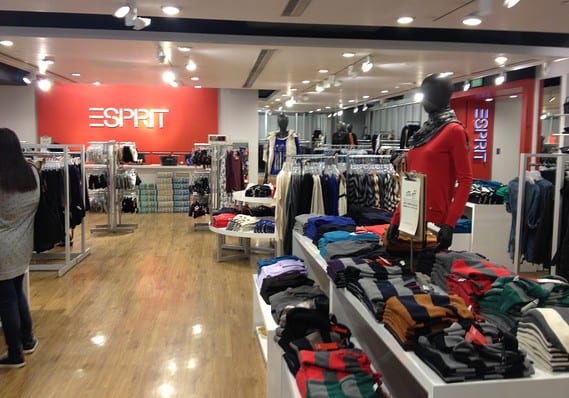
    After flagging an expected return to profitability for the full year earlier this month, Esprit on Wednesday announced its final results and said that revenues rose to HK$8.3 billion (€953m/£808m/US$1bn) in 2021.

    It didn’t give a comparable revenue figure but said that net profit surged “significantly” to $381 million. The company had made a $414 million loss in the final six months of 2020, the closest comparable period after it changed its financial year-end date.

    Revenue in the year was affected by lockdowns in the company’s major European markets in Q1 and further restrictions in Q4, but the group still generated strong revenue across all three of its channels combined (e-commerce, wholesale, and owned retail stores).

    Of course, a big chunk of sales came online — both its own and third-party sites — during lockdowns, helping it to make up for some of the negative impacts as far as physical stores were concerned. Another driver of growth came from selling fewer discounted products from the company’s retail business compared to 2020.

    Looking ahead, it expects to be negatively affected by the “lingering effects of the pandemic and the conflict in Ukraine”. The “already unstable logistics industry and disrupted supply chain” will also likely be further issues that will result in higher costs.

    But it believes it’s “on track to ongoing profit growth” nonetheless.

    CEO and COO Pal William Eui Won said: “The remarkable results are definitely a testament to the company’s collective efforts by devoted staff at Esprit, including the successful migration of selected strategic functions from Germany back to Hong Kong, Esprit’s new global headquarters.

    “Combining expertise from the two offices has created a stronger organizational balance and workplace synergy. It is also evident that the current management team has crafted the correct infrastructure to re-establish Esprit to become a market leader. We will continue to strengthen it by becoming a truly omnipresent brand and enhancing our product portfolio that fits with the company’s mission of making our customers ‘feel good to look good’.”

  • UBS Announces Share Repurchase

    UBS Announces Share Repurchase

    Switzerland’s largest bank announced it will commence a new share buyback program starting March 31.

    UBS announced it is moving ahead with plans to purchase up to $6 billion of its shares over the next two years starting tomorrow, the bank said in a statement released today.

    In conjunction with a share buyback program launched in February 2021, UBS intends to purchase up to $5 billion by the end of this year.

    As part of the 2021 repurchase program, UBS bought back over 240 million of its shares, representing 6.5 percent of current registered capital at the time. The value of the transaction was 3.8 billion Swiss francs of which 1.5 billion francs ($1.6 billion) took place in 2022, the bank said.

  • Uber, BP partner in global grocery delivery partnership

    Uber, BP partner in global grocery delivery partnership

    Convenience giant bp is teaming with Uber Technologies on a new global strategic convenience delivery partnership, extending their existing local arrangements to reach more consumers across the world, the companies announced Tuesday. Together, bp and Uber Eats will offer an extensive range of quality convenience products, including fresh and prepared foods, from select retail locations in parts of the United States and globally.

    bp is the first convenience retailer to team up with Uber Eats on a global level and aims to have more than 3,000 retail locations available on the delivery platform over the next three years. The partnership supports bp’s goal of growing its access to customers and expanding its delivery footprint, in response to soaring demand for food, groceries, and everyday essentials brought to the door.

    The new partnership covers retail sites on the West Coast of the United States as well as Australia, New Zealand, Poland, and South Africa. Sites in the eastern United States and UK will be added to the app for the first time this year, with plans to launch in other European markets beginning in 2023.

    “We’re thrilled to team up with Uber Eats globally giving us the opportunity to reach many more consumers online in addition to those who currently visit our retail sites,” said Emma Delaney, executive vice president of customers & products for London-based bp. “We’ve seen how the pandemic has accelerated customer demand for delivered convenience and this partnership will allow us to scale up quickly on the Uber platform. And for the first time, we will be able to offer delivery options to existing customers on our own BPme app by the end of 2023.”

    With 20,500 bp retail sites across the world and 550 million customers living within 20 minutes of a bp retail site, bp and Uber see enormous opportunities for growth. bp sites offer a range of products tailored to local markets that include hot and cold drinks, prepared food options, grocery staples, fresh produce, as well as wine, beer, and flowers.

    As part of the agreement, Uber Eats and bp will work to introduce delivery options onto bp’s own app, BPme — initially planned to be available in the U.S., UK, and Australia by the end of 2023 — powered by Uber Direct. This new offer will allow bp to directly connect its customers to delivery riders, making Uber Eats the select partner in fulfilling these orders. Since 2019, bp has seen a three-fold increase in users of the BPme app, with 16 million active loyalty users worldwide.

    In the U.S., Uber Eats will be made available to bp’s network of independently owned retail locations with the goal of making it easy for these partners to sign up to the Uber Eats platform and access benefits based on bp’s scale.

    “With more than 20,500 locations around the world, bp’s reach is enormous — making them critical partners as we pursue our ambitions of helping consumers across the world get what they need delivered to their doorsteps,” said Pierre Dimitri Gore-Coty, Uber’s senior vice president of global delivery. “We are proud to support this next phase of the company’s convenience growth through this delivery partnership and look forward to deeper collaboration in the future.”

    bp and Uber already work together in mobility with bp providing electric vehicle charging for Uber’s ride-hail drivers. The companies will explore other areas for future cooperation in convenience, including opportunities to utilize low carbon delivery methods to fulfill orders from bp sites.

    The bp partnership falls in line with Uber Eats’ plans to add more grocery delivery options. Since launching grocery delivery in July 2020, Uber has seen consistent growth in the U.S. for the category. The San Francisco-based tech company partnered with Southeastern Grocers, operator of Winn-Dixie and Fresco y Más stores, in September 2020, and last summer expanded its home delivery reach with the addition of 1,200 Albertsons Cos. stores, began a pilot program with Costco in Texas, expanded on-demand delivery to pharmacy chains Walgreens and Rite Aid and partnered with the Smart & Final grocery warehouse chain in January of this year.