Tag: asia

  • Shopee to shut down India operations

    Shopee to shut down India operations

    E-commerce and gaming firm Sea said on Monday it is withdrawing from India’s retail market just months after starting operations there, the second pullback this month in an overseas expansion drive, as the loss-making firm faces a weak growth outlook.

    The withdrawal, effective beginning March 29, comes weeks after its e-commerce arm Shopee said it was pulling out of France and after India banned Sea’s popular gaming app “Free Fire”.

    After the ban, the market value of New York-listed Sea dropped by $16 billion in a single day, leading some investors to cut holdings in the Singapore-headquartered company.

    Shopee said in a statement its withdrawal came “in view of global market uncertainties” and that the company would make “the process as smooth as possible”.

    Sea earlier this month said revenue growth of its e-commerce business was expected to halve to around 76 percent this year from a blistering 157 percent in 2021, amid fewer online purchases and engagements as more countries emerge from the pandemic.

    “Due to a drastic shift in the market sentiment towards growth stocks, all these e-commerce companies are under real pressure to at least break even as soon as possible,” said LightStream Research equity analyst Oshadhi Kumarasiri, who publishes on the Smartkarma platform.

    Sea’s U.S.-listed shares fell 3.2 percent to $112.35 in afternoon trading.

    The company’s shares had already dropped 11 percent in January after Chinese tech giant Tencent announced it was selling 14.5 million shares in the group.

    There is no clear evidence that the decision to withdraw from India is based on government pressure or other operational decisions, Citi analyst Alicia Yap said.

    Reuters was the first to report Sea’s decision on its Indian operations.

    Shopee’s India business began in October 2021 as part of an aggressive international push that saw it expand into Europe. Sea’s market cap at the time was as much as $200 billion. It has since dropped to $64.76 billion in March 2022.

    The local unit, Shopee India, recruited local sellers and launched a shopping website and app. India’s fast-growing e-commerce market was already dominated by such players as Amazon.com Inc and Walmart’s Flipkart.

    One person with direct knowledge of the company’s thinking said Shopee’s decision to exit from India was sparked in part by stricter regulatory scrutiny that saw Sea’s gaming app Free Fire banned as part of a crackdown on companies allegedly sending data to servers in China.

    Sea said earlier in March it does not transfer or store data of Indian users in China.

    The person said Shopee had been planning to invest up to $1 billion in India, and that the pullback would hurt Indian logistics firms with whom it had signed lucrative contracts.

    The company, asked to comment on the figure, disputed the number as “not accurate”, without giving details, saying “the decision regarding Shopee India has nothing to do with regulatory matters”.

    “We continue to work on addressing the situation with Free Fire in India,” the firm added.

    Reuters reported in February, citing sources, that Singapore authorities had raised concerns to India over the ban, asking why Sea had been targeted.

    E-commerce players face a strict regulatory environment in India. New Delhi has for years imposed restrictions to protect smaller brick-and-mortar retailers.

    Offline retailers in India have often alleged foreign companies bypass regulations and offer deep discounts that hurt their business, allegations the companies deny. Shopee had in recent months faced boycott calls from such traders in India.

  • China EV Maker Nio Says It Has No Plans To Raise Prices In Short Term

    China EV Maker Nio Says It Has No Plans To Raise Prices In Short Term

    Chinese electric vehicle (EV) manufacturer Nio said on Monday that it had no intentions to raise prices in the short term, but that it would be flexible on its decision making given evolving circumstances.

    Nio said in a statement that raw material prices and chip supply and demand were causing large changes to supply chain costs.

  • Taobao creates 10-yuan store for online bargain hunters

    Taobao creates 10-yuan store for online bargain hunters

    Alibaba Group’s marketplace Taobao Deals launched a 10-Yuan Store this week for China’s bargain hunters seeking daily necessities.

    Goods are priced below RMB10 (US$1.57) each at the digital stores, which are similar in concept to dollar stores in the US or pound shops in the UK.

    Taobao Deals also unveiled 100 Store, a marketplace for higher-value products, ranging from cosmetics, fashion accessories to kitchen utensils and toys, but still at a more affordable price point than many name brands.

    The launches are part of Taobao Deals’ efforts to appeal to a variety of shoppers in China’s lower-tier cities in China while streamlining supply chains. In both of the new store concepts, the platform is directly involved in sourcing, quality control, storage and delivery.

    Established in 2020, Taobao Deals had 280 million annual active users in the 12-months ended Dec. 31 last year. Paid orders on the platform grew over 100 per cent year-on-year in the third quarter, according to the group’s latest earnings report.

    “We’ve already reached many consumers in lower-tier cities…our mission is to serve consumers’ needs and create value for consumers,” said Wang Hai, president of Taobao Deals, at an online event held on Wednesday.

    The platform has three product categories: fresh produce sourced directly from farms, daily essentials and household items direct from factories, and trendy apparel direct from brands. 10-Yuan Store and 100 Store on Taobao Deals. Photo credit: Alibaba Group

    Powerful Partnerships

    Taobao Deal’s unique production model is best seen in an ultraviolet toothbrush head sanitizer now available on the 100 Store.

    As sales of electric toothbrushes surged in lower-tier cities in China, the operation team at Taobao Deals reached out to a manufacturer. It partnered to design a sanitizer that uses ultraviolet to sterilize the toothbrush.

    These devices tap the consumption upgrade wave washing across lower-tier cities and rural areas, which masses of merchants are surfing with the help of bargains app Taobao Deals.

    Most of the sellers that co-design products with Taobao Deals are top suppliers from Alibaba’s B2B purchasing and wholesale marketplace 1688.com. They hand over all the sales, marketing, storage and delivery work, cutting operational costs and thus passing this discount on to customers.

    “We pooled our strength to create products that cater to consumers’ needs…while manufacturers are good at production, we have consumer insight and a strong fulfillment network,” said Wang.

    More than 500,000 factories and two million merchants from China’s major manufacturing bases are collaborating with Taobao Deals as of December 2021.

  • Ford Says European Production Hit By Chip Shortage, Ukraine Conflict

    Ford Says European Production Hit By Chip Shortage, Ukraine Conflict

    Ford Motor said on Monday vehicle production and orders in Europe have been hit by the global semiconductor shortage as well as the conflict in Ukraine.

    The U.S. automaker said it will idle its German plants in Saarlouis and Cologne, mostly due to the global chip shortage. That also led it to stop taking new orders for the S-Max and Galaxy vehicles built in Valencia, Spain. Ford said it has orders for both products that take it beyond September and that existing orders will be fulfilled.

    Russia’s invasion of Ukraine also has caused parts shortages at a Volkswagen plant in Poland that builds Ford’s Tourneo Connect vehicle, leading to a temporary halt of production, Ford said.

    “We continue to monitor the situation on a daily basis in conjunction with our partners at VW and will have more to say on this at a later date,” Ford said in a statement.

    The Ukraine conflict has also led to supply issues that have forced Ford to offer consumers the Focus car with a smaller, 8-inch dashboard screen, instead of the 13.2-inch SYNC4 screen that was part of the updated vehicle’s introduction, the company said, without providing details.

  • Chinese Automakers See Thailand EV Boost From Government Incentives

    Chinese Automakers See Thailand EV Boost From Government Incentives

    Chinese automaker Great Wall Motor has signed an agreement with Thailand’s government to slash retail prices of its electric vehicles, an executive said on Tuesday, a move aimed at boosting domestic EV sales and production.

    The agreement, which involves a government subsidy and reduction in value-added tax, could save customers up to 160,000 baht ($4,779) per unit, Michael Chong, General Manager of Great Wall Motor Thailand told Reuters.

    That would apply to vehicles typically priced 1 million baht, representing a saving of about 13-15%.

    “This is very beneficial for our customer because this price is more affordable,” he said at the annual Bangkok International Motor Show.

    A similar agreement has also been signed with the rival automaker, SAIC-CP Motor, the Thai unit of SAIC Motor Corp, the finance ministry said on Monday.

    Those come as Thailand tries to incentivize EV use and preserve its status as a major regional automaker. The government is targeting the production of 725,000 EV units a year, or 30% of the output by 2030.

    Chong said other factors like rising energy prices were also driving EV demand.

    “Oil prices keep increasing, so people who buy ICE (internal combustible engine) will feel it’s more expensive,” Chong said, adding that EVs would help make air cleaner, something Thailand’s capital has struggled with.

    Great Wall Motor in 2020 took over the General Motors plant in Thailand, Asia’s fourth-largest auto assembly and export hub.

    Auto manufacturing accounts for about 10% of Thai gross domestic product and manufacturing jobs.

    This year the firm plans to sell 20,000 units in Thailand between its two brands, the BEV Ora Good Cat and Haval SUVs, Chong added. It plans to locally produce EVs in 2024.

    But the transition will take time, however, with less than 4,000 fully-electric vehicles registered in Thailand last year, and manufacturing investments still being made in conventional engines.

    These include U.S. automaker Ford, which invested $900 million to upgrade its Thai factories to build its Ranger pickup truck and Everest SUV.

    “ICE is going to be around for a while,” said Andrea Cavallaro, Ford Operations Director, International Market Group, adding EV technology and infrastructure has yet to be adopted across Southeast Asia.

  • L’Occitane buys Australian skincare brand Grown Alchemist

    L’Occitane buys Australian skincare brand Grown Alchemist

    Hong Kong-listed beauty giant L’Occitane Group has acquired a majority stake in Australian-based clean skincare brand Grown Alchemist for an undisclosed sum.

    Grown Alchemist was founded in 2008 by Melbourne siblings, Jeremy and Keston Muijis, with a focus on futuristic anti-aging technology and unique botanical skincare formulas for optimal skin health. The brand opened a flagship store in Melbourne in 2020, “gearing for the next phase of [our] journey with a full-scale omnichannel presence to further augment global sales”.

    “With a unique and inspiring brand story and international fan base, Grown Alchemist is poised for international scalability and rapid growth,” said Andre Hoffmann, vice chairman & CEO of L’Occitane Group.

    The acquisition of Grown Alchemist is part of L’Occitane’s plan to further broaden its health-conscious beauty portfolio, attracting influential millennial and Gen Z customers.

    The deal follows L’Occitane’s acquisition of Sol de Janeiro’s 83-per-cent stake last November, which is known for the Brazilian Bum Bum Cream brand.

  • Google will soon allow you to book a healthcare appointment using search

    Google will soon allow you to book a healthcare appointment using search

    Google announced today that it is making it easier and faster to find appointments for healthcare providers. A new feature will allow users to check the availability of appointment openings at certain medical facilities and book an appointment. Google says that it is in the early stages of rolling out this feature and is working with its partners which include quick care provider MinuteClinic at CVS.

    Google says, “We hope to expand features, functionality, and our network of partners so we can make it easier for people to get the care they need.” Imagine how fast and easy it will be to use your phone to look up MinuteClinic in your city and tap on the Appointments tab. That will bring up a list of appointments available for certain conditions that you can book immediately from the display.

    Today is Google’s second annual Health event that it calls The Check-Up. Teams from Search, YouTube, Fitbit, Care Studio, Health AI, Cloud and Advanced Technologies and Projects will be making presentations about their latest healthcare initiatives. For example, starting this week in Japan, Brazil, and India, YouTube is adding health source information panels on videos to help viewers differentiate between real factual medical information and made-up phony misinformation that you see on social media.

    Also involved is the Fitbit team. During today’s event, Fitbit co-founder James Park explained how wearable devices can help those with chronic conditions including heart problems such as atrial fibrillation (AFib). A study conducted by Fitbit has been able to identify undiagnosed AFib 98% of the time.

    Google has submitted its algorithm to the FDA for review and going out on a limb here, we would imagine that this algorithm could end up on a Fitbit wearable helping ordinary consumers learn whether they have AFib. This algorithm also could make its way to Wear OS in the future.

    So if you’re fed up playing phone tag with your doctor’s office, or are not feeling well enough to sit on hold and listen to muzak so bad that even elevators can’t stand hearing these tunes, relief is on the way from Google.

  • Global broadband less affordable in 2021

    Global broadband less affordable in 2021

    Internet connectivity became less affordable around the world in 2021, according to the latest statistical analysis by the International Telecommunication Union (ITU) and the Alliance for Affordable Internet (A4AI).

    The share of people’s incomes spent on fixed broadband and mobile Internet services increased globally last year, in parallel with upticks in demand and usage compared to 2020, reveals an ITU-A4AI policy brief, “The affordability of ICT services 2021”.

    Relative prices of fixed broadband services climbed to 3.5% of gross national income (GNI) per capita globally in 2021, up from 2.9% in 2020. The relative prices of mobile broadband services around the world also edged up to 2% of GNI per capita, from 1.9% a year earlier.

    Yet people have sacrificed other goods and services to maintain reliable Internet access during the COVID-19 pandemic. Those who can have largely stayed connected, even at relatively higher prices.

    “Broadband services have ceased to be a mere luxury,” said ITU secretary-general Houlin Zhao. “They are a necessity for communication, teleworking, online education, and other essential services. Still, we must urgently address the issue of affordability if we hope to achieve our goal of universal and meaningful connectivity.”

    Affordability gaps have persisted or widened over the past year. Fewer economies now meet the affordable cost target of 2% of monthly GNI per capita for entry-level broadband service, as set out by the United Nations Broadband Commission.

    Consumers in low- and middle-income economies typically paid five to six times more, relative to their income, to use information and communication technology (ICT) services than consumers in high-income economies did in 2021.

    At the regional level, users in Africa paid more than three times the global median price for mobile broadband services, and over five times the global median for fixed broadband.

    “The affordability gap for Internet access between those living in low- and middle-income countries and those living in high income countries is inexcusably high,” said Sonia Jorge, executive director of A4AI. “Moreover, people in rural areas, and women everywhere, are disproportionately affected. A continued failure to address this worsens the situation for those who need help the most. The public and private sectors must work together to connect humanity with affordable and meaningful access.”

    Worldwide, only 96 economies met the UN Broadband Commission target for the prices of data-only mobile broadband prices in 2021, seven fewer than in 2020. At the same time, only 64 economies met the Commission’s target for fixed-broadband prices, down by two from 2020.

    “These findings are a warning sign, and significant improvement is needed as the Broadband Commission’s 2025 target date for achieving global broadband affordability edges ever closer,” said Doreen Bogdan-Martin, director of ITU’s Telecommunication Development Bureau. “The past few years have proven that connectivity is vital. As we move to post-pandemic recovery, we need to make connectivity affordable for everyone to ensure that we leave no one behind in this digital era.”

    Among the world’s 46 least developed countries, entry-level fixed or mobile broadband Internet costs less than 2% of GNI per capita in only four cases: Bangladesh, Bhutan, Myanmar, and the Republic of Nepal.

    Fixed broadband services saw the highest jump, with prices increasing by 8% last year (as measured in US dollars, adjusting for inflation).

    This meant fixed broadband became less affordable for many users, with relative prices climbing from 2.9% of GNI per capita in 2020 to 3.5% in 2021. The price of mobile broadband services also increased slightly, from 1.9 to 2.0% of GNI per capita worldwide.

    Historically, global demand for broadband services and their overall affordability have appeared to climb hand in hand, with price drops typically prompting more subscriptions.

    Even with last year’s price rises, both data usage and the number of fixed and mobile broadband subscriptions continued growing globally, suggesting people were cutting other expenses to be able to keep using the Internet.

    To some extent, the relative price increase for broadband services reflects a global economic downturn triggered by the COVID-19 pandemic. Many countries have seen GNI reductions, offsetting gains for consumers even where prices declined.

    On the positive side, broadband operators in many countries increased the data allowance included in their benchmark baskets. Users who could afford those baskets, therefore, received greater value for money.

  • EU wants to force iMessage and WhatsApp to be able to chat with smaller chat apps

    EU wants to force iMessage and WhatsApp to be able to chat with smaller chat apps

    In the last couple of years, lawmakers, especially in the European Union, have been scrutinizing big tech companies. The latest proposal this time is related to instant messaging apps like iMessage, WhatsApp, and Facebook Messenger. The EU wants to make those apps forced to send and receive messages, calls, videos, and files from smaller chat apps.

    As you can see, this is a part of the European Union’s attempts to give space to competition in the tech world, as the EU Parliament has several antitrust proposals going on right now that address this issue. This rule is actually a part of a larger proposal for legislation that is called the Digital Markets Act (DMA) that we’ve reported on previously.

    Interestingly enough, the DMA wants major messaging platforms (like the ones we listed above) to allow their services to work with smaller messaging platforms – pretty much like Google Messages and iMessage can receive and send texts between Android and iPhone users.

    This rule, if the DMA gets accepted and turned into law, would apply to any company that sports at least 45 million monthly active users, and 10,000 annually active corporate users. Of course, this is only going to apply in Europe.

    And, when we’re talking about legislation, it’s also key to address what happens to companies that choose not to comply with it (if it becomes law). Pretty much, companies like Apple and Meta, among other tech giants, could be fined up to 10% of their global annual turnover if they fail to comply. If they continue to not comply, the fine can get up to a staggering 20% for repeated violations.

    Okay, that’s all fine but you may be asking yourself how can an interoperable platform like that address the issue of security. Well, the European Union thinks that this can be done safely, at least so does Andreas Schwab, the European Parliament’s Rapporteur for the file believes.

    He stated that the Parliament had always envisioned interoperability for messaging. He adds that if the Telecoms Regulators say that it is not possible to deliver end-to-end encrypted group chats within a certain time frame, it will come as soon as it becomes possible. Basically, the EU is willing to wait until end-to-end encryption is put in place to ensure the security of different messaging apps when they exchange messages, photos, videos, and files.

    But, as many of you may know, the DMA is not only about messaging. It would also force platforms to give users choice in terms of web browsers, search engines, and even virtual assistants that they use on their devices.

    So far, the DMA has not been made final yet. However, it is progressing to becoming law. The act is now awaiting approval for the legal text by the European Parliament and Council, and so far, there is no concrete timeline for when the messaging changes we mentioned above would occur.

    In 2020, the EU Parliament invited tech giants such as Apple and Google to participate in talks about the Digital Markets Act.

    All in all, the DMA aims to fight against anti-competitive practices that limit innovation and aims to give smaller developers more chances in competing with the big boys. Another thing that the legislation suggests is for Apple to allow alternate app stores on iPhones and iPads, again, for the sake of fair competition.

    Recently, there were expectations that the DMA will make it into reality by the end of March. We might be seeing what will happen and if the proposal will become law pretty soon.

  • Spotify is now testing a new Car Mode UI for safer music listening while driving

    Spotify is now testing a new Car Mode UI for safer music listening while driving

    Driving is always more fun when you’re enjoying your favorite music, or listening to a podcast while you’re stuck in a traffic jam. Now, iMore reports about a new Car Mode look that Spotify is working on, designed especially to make it easier and safer for drivers. Check it out.

    The new Car Mode is a feature that will make it safer to use when you’re driving. This new feature comes after Spotify abandoned Car View, which actually was doing something similar.

    For now, the feature is not official, but the new look has been showcased on Android, and you can see what it will look like once it gets officially released. Most likely the feature will also have its testing period on iOS devices as well, and some might have gotten to test it already.

    What it is is bringing larger buttons that are easier to tap on while you’re busy looking at the road, and as a whole, the interface of the popular music-streaming app is simpler. However, it does have more options than what Car View had, as Car View was quite simplistic.

    Killing Car View was actually in order to have Spotify users look into the Car Thing accessory that the company released recently.

    Spotify is now prompting some users to “test drive” the new feature when they connect their phones to their car. One of the best features Car Mode brings is that you can easily browse and search for different music to play in your car, something that the old version, Car View, didn’t have.

    You get to have a home screen, a library view, and a voice control button so you can just give it commands and have your hands on the steering wheel. Of course, you get also simple media controls like play/pause, and others.

    The Library tab gives you a glance at the music you’ve listened to most recently. This feature is still in testing for Android (and probably soon for iOS users), and no official release date has been announced as of yet.

  • Vietnamese co-living startup raises $1.7 mln from Singapore fund

    Vietnamese co-living startup raises $1.7 mln from Singapore fund

    M Village, an accommodation startup in co-living spaces, has received funding of US$1.7 million led by Singaporean venture fund Simple Tech Investment.

    The money will be used for expanding the number of rooms the startup has in Ho Chi Minh City from the current 300 to 1,000 this year.

    Its founder, Nguyen Hai Ninh, is also the founder and ex-CEO of The Coffee House, a HCMC-based coffee chain that has over 140 stores across Vietnam.

    He said: “The fund-raising process started late last year and it has worked out pretty well. Simple Tech Investment agreed on investing after a month of getting to know each other”.

    Simple Tech has previously invested in digital transformation by some Vietnamese businesses, including online advertiser 24h, human resources service SieuViet Group, and leading barbershop chain 30Shine.

    M Village has also received funding from Singapore’s Vulpes Venture, Japan’s Genesia Ventures, and some angel investors.

    Founded in October 2020, M Village operates five locations in Ho Chi Minh City with their occupancy rates exceeding 90 percent.

  • Fruits, meats buck trend of surging prices

    Fruits, meats buck trend of surging prices

    While the prices of many consumer goods are rising sharply, some have bucked the trend as their supply remains strong while demand, especially for exports, is weak. Looking for a place to eat dinner at a traditional market, Huong, a garment worker in Tan Binh District, said it is fortunate that the price of pork, popular among most Vietnamese families, has fallen slightly.

    This has relieved some of the financial pressure on low-income workers like her as the prices of many goods have been rising.

    Imported beef prices are down 10-20 percent, and farmed fish prices have fallen even more sharply.

    A recent survey found that the prices of many agricultural, fishery and livestock products have dropped, with most of them seeing double-digit declines.

    “I suffered heavy losses as production costs doubled from last year but prices are lower”.An, who has a jackfruit orchard in the southern province of Long An, said merchants have halved their buying price and even stopped buying due to high transport costs and export challenges.

    Hung, a farmer in the central coastal province of Binh Thuan, said several tonnes of dragon fruits have ripened on his farm but there are no buyers.

    Citing export issues, merchants buy the fruit in small quantities at around VND2,000 per kilogram (8.7 US cents).

    Pham Thanh Mai, an agricultural products trader in the Central Highlands, said difficulties with exports are the main reason for the price drops.

    “Usually off-season fruits always fetch higher prices because of limited supply. Prices have now fallen sharply since demand is lower as fruits cannot be exported”.

    As of March 21, around 1,000 trucks remained stranded at at border gates with China in the northern province of Lang Son, 660 of them laden with fresh fruits. According to Vietnam Customs, 80 percent of the country’s dragon fruit is exported to China. But after that country imposed stringent Covid-19 safety measures, Vietnam’s exports have stalled, causing demand for many fruits to dry up.

    Le Xuan Huy, deputy director of leading pork producer CP Vietnam, said meat prices have dropped generally due to higher supply and fall in demand to 80 percent of pre-pandemic levels.

  • Raiffeisen Planning Digital Services Expansion

    Raiffeisen Planning Digital Services Expansion

    The Swiss cooperative bank plans to spend a significant portion of its 500 million Swiss franc strategy budget on digitization by 2025.

    Over the past several years, Raiffeisen Switzerland was replacing outdated banking systems which had taken up numerous resources. With that project now completed, the bank can proceed with its digitalization plans.

    Raiffeisen has attached great strategic importance to digitalization even before the group strategy. Our digital channels, especially our e-banking, have enormous significance. However, we want to position our digital solutions more broadly and continue to drive digitization as a complement to our physical branches, interim CIO Robert Schleich said in an interview with inside-it.ch

    With the foundation now in place for implementing digital products, Raiffeisen has reached a comfortable starting position from which digital services can be expanded, Schleich said.

    But the bank is not starting completely from scratch. Its mobile e-banking app has over one million users and, according to Schleich, is gaining ground among competitors. He admitted the bank was lagging behind competitors, but now that the core banking system has been renewed it can be built upon.

    Process efficiency is also an important element, Schleich said. For the core mortgage lending business, it’s not just about digitizing the existing process, but also improving it. That means the ability to conveniently apply for mortgages online and to be able to check the application more quickly.

    We’re spending 500 million francs on the entire group strategy by 2025. There’s more to it than digitization. For example, new customer business or the diversification of income. However, a significant portion of the overall budget is reserved for digitization itself, Schleich said.

    Schleich will be handing the CIO reins to Niklaus Mannhart in September 2022 at the latest, but cannot discuss issues with him since he is still under contract at his current employer.

    For now «I’m concentrating fully on the interim management of IT at Raiffeisen Switzerland. We are currently discussing what will happen after that. There are more than enough exciting tasks at Raiffeisen,» he said.

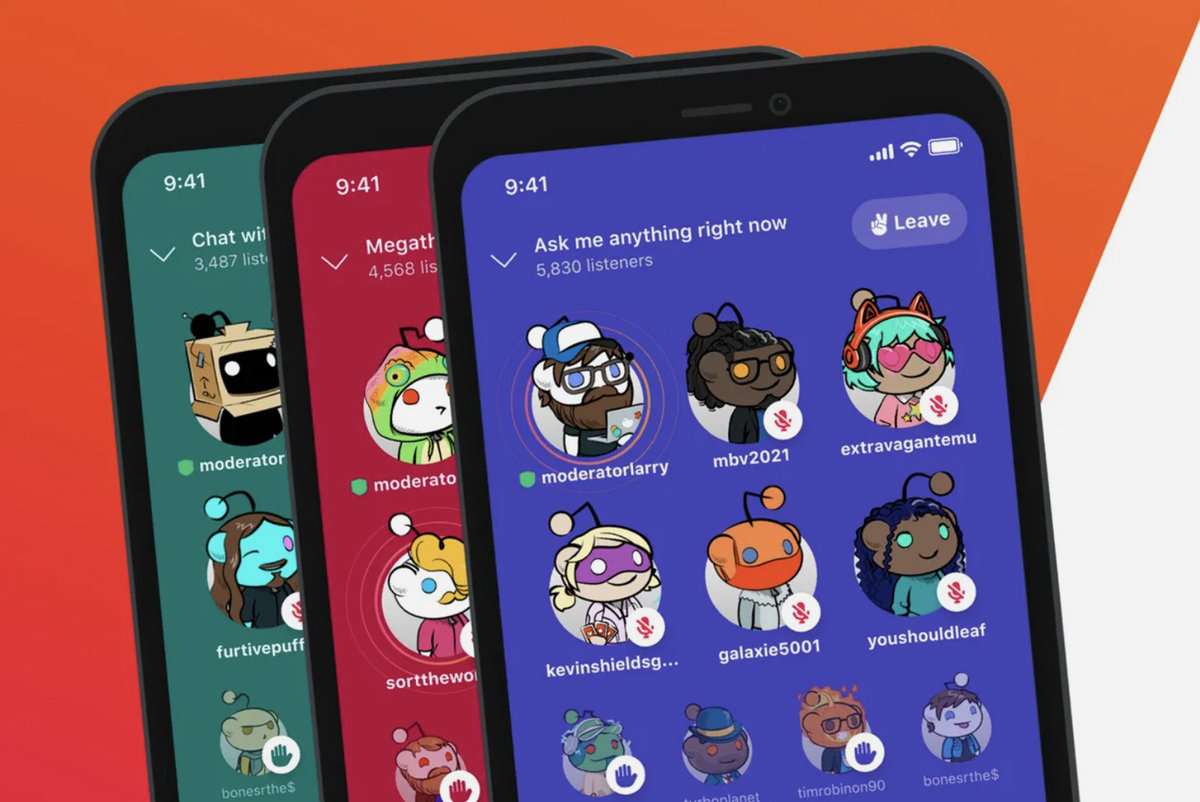
  • Reddit could introduce a TikTok-like video feature

    Reddit could introduce a TikTok-like video feature

    Reddit is allegedly thinking of introducing a TikTok-like video feature. As TechCrunch first reported, Reddit is “exploring the idea” of introducing TikTok-like video editing tools with the option for Redditors to react to videos uploaded on the platform. The feature will be similar to TikTok’s Duet and Stitch features.

    If you are not much of a TikTok user and don’t know what the Duet and Stitch features are, Duet allows you to play your video alongside someone else’s, while Stitch allows you to incorporate up to 5 seconds of another person’s video into your own.

    But the goal of this possible TikTok-like video feature won’t be for Reddit to become a TikTok competitor. According to the report, Reddit is considering implementing such a feature only to provide a better way for Redditors to further participate in discussions that they are passionate about.

    It must be noted that, at the moment, Reddit is only thinking about implementing this TikTok-like video feature, but the company hasn’t yet begun working on it. Before deciding if the feature is worth it or not, Reddit will ask users in various subreddits, which are different online communities on the platform, to determine if such a tool would be interesting and beneficial to them.

    According to the report, Reddit will specifically ask subreddits where it thinks that the video feature would be most beneficial to them. However, it should be noted that community testing has not yet started.

    A Reddit spokesperson told TechCrunch, “In line with our work to help people engage in the topics that matter to them through social audio, video, text, memes, and more, we’re in the process of reaching out to a few Reddit communities to see if a new video feature we’re working on is something they find useful and fun.”

  • Apple’s plan to allow alternative payment platforms for Dutch dating apps is reportedly rejected

    Apple’s plan to allow alternative payment platforms for Dutch dating apps is reportedly rejected

    Apple could be fined this coming week by the Netherlands’ ACM (Authority for Consumers and Markets) for continuing to take a cut of 15% to 30% of in-app payments for dating apps in the country that are downloaded from Apple’s App Store. Apple does not allow developers to offer alternative payment platforms for their apps and any developer that does faces expulsion, along with their related apps, from the App Store.

    By failing to fully comply with the ACM, Apple currently owes over 45 million euros ($49 million) in penalties. The watchdog agency has charged Apple 5 million euros weekly since January for continuing to block alternative payment platforms for dating apps from the App Store. This past week was the ninth that saw Apple fined for failing to follow the order and once the amount Apple owes reaches 50 million euros, subsequent fines could be higher.

    Reuters reports that Apple submitted a new proposal to the ACM last week hoping to get the weekly fines halted. However, an unnamed official at the ACM told the news agency that Apple’s proposal does not comply with its order. Earlier this month Apple told the agency that it was following the agency’s request by telling developers of Dutch dating apps that they could provide users with a third-party in-app payment platform.

    However, Apple wants the developers to essentially create a separate app for the Dutch App Store and another for the App Stores used in other countries. Apple felt that this request was fair and would make sure “that Apple complies with its legal obligations in the Netherlands while at the same time having the ability to maintain its standard terms and conditions in the rest of the world.”

    The ACM begged to differ responding that Apple’s plan created an unnecessary barrier. Back in 2019, the watchdog agency started an investigation to determine whether Apple was abusing its dominant market position. That investigation was later reduced in scope to cover dating apps only, including Tinder.

    Apple, according to the agency, abuses its domination of the market and has been ordered to revise its ban on third-party App Store payment platforms. Apple says that it does not abuse its position in the marketplace.

    Last week we told you that if the Digital Markets Act (DMA) becomes law in the EU, Apple may be forced to allow iPhone users to sideload apps from third-party app stores which is a practice it currently does not allow anywhere due to security concerns.

    If the DMA does become law in the EU, Apple will also have to allow alternative payment platforms to collect in-app payments in the App Stores found in member countries. EU’s antitrust chief, Margrethe Vestager says that the Act could become law as soon as this coming October, or it could take until 2023 to pass.

    Apple is also caught up in Epic’s appeal of the aforementioned court case that saw Judge Yvonne Gonzalez Rogers release a 185-page decision that said Apple is not a monopoly, and that the company cannot be punished for being successful. The judge did order an injunction that prevents Apple from blocking the use of third-party app payment platforms, but the tech giant won a last second stay blocking that injunction from the Ninth U.S. Circuit Court of Appeals.

    So for now, at least in the U.S., Apple can continue to block alternative app payment platforms from entering the walled garden. In other regions of the world, Apple might have to make some changes.