Tag: asia

  • VN-Index slips after gaining streak

    VN-Index slips after gaining streak

    Vietnam’s benchmark VN-Index dipped 0.1 percent to 1,502.34 points Wednesday after six gaining sessions.

    The index climbed by 10 points in the morning but strong selling pressure in the afternoon pulled it down by 1.4 points after rising nearly 58 points in the last six sessions.

    Trading value on the Ho Chi Minh Stock Exchange (HoSE), on which the index is based, declined marginally to VND28.04 trillion ($1.23 billion).

    The VN30 basket, comprising the 30 largest capped stocks, saw 22 tickers in the red, with GAS of state-owned Petrovietnam Gas falling 2.3 percent after three sessions in the red.

    PNJ of Phu Nhuan Jewelry dropped 1.8 percent, and PLX of fuel distributor Petrolimex, down 1.4 percent.

    Other losers included HDB of HDBank and PDR of Phat Dat Real Estate Development, both down 1.1 percent.

    Seven blue-chip tickers gained, with POW of electricity producer Petrovietnam Power Corporation rising 2.4 percent and SAB of brewer Sabeco gaining 2.3 percent.

    Foreign investors were net buyers to the tune of VND1.02 billion, with focus on DGC of Duc Giang Chemicals Group and MSN of conglomerate Masan Group.

    The HNX-Index for stocks on the Hanoi Stock Exchange, home to mid and small caps, rose 0.16 percent, while the UPCoM-Index for the Unlisted Public Companies Market fell 0.19 percent.

  • Leading miner fears coal shortage may affect power plants

    Leading miner fears coal shortage may affect power plants

    Vietnam’s biggest coal miner Vinacomin is struggling to provide enough coal to thermal power plants due to shortage of workers and surging costs.

    The state-owned company provided 6.3 million tons of coal to power plants from the beginning of the year to March 14, 31 percent short of what it promised.

    One of the reasons is that half of its miners contracted Covid-19 in the first two months, and some mines saw only 20 percent of workers showing up at the end of last month.

    Another reason is import value so far has met only 7 percent of that planned for the first three months, which has led to the company’s delivery of coal mixed between foreign and domestic sources falling 69 percent short of target.

    The delay of the national utility Vietnam Electricity (EVN) in approving price tags for mixed coal also made Vinacomin miss opportunities to import more coal.

    Now that EVN has approved the price tags, the miner has struggled to import due to surging prices globally amid the Russia-Ukraine crisis.

    Vinacomin also said that many thermal plants tend to buy coal from other sources when their prices are low, and only buy from it in surging amounts when its competitors raise prices, which make the miner struggle to fulfill its commitments.

    It requested the Ministry of Industry and Trade to order thermal plants to purchase according to contracts.

    The company also proposed that the government increase coal prices, as dwindling resources has made mining more costly, while coal prices for power plants have remained unchanged for the past two years, dragging the company’s profit down.

    Vinacomin estimates that it would lose VND1.39 trillion ($60.76 million) in coal mining this year.

    Coal-fired plants accounted for 43.6 percent of total power generation in February, according to EVN.

  • The Technologies that Changed Online Casino Gaming

    The Technologies that Changed Online Casino Gaming

    According to Statista, the global online gambling market is expected to grow to more than $92.9 billion by 2023. As of 2021, the total market size is valued at $59 billion, meaning the industry’s size will double in the next few years. So, what sustains the popularity and growth of the online casino industry? Aside from the growing interest from experienced and casual players, the casino’s popularity is due to new technologies and innovations. With new technology and innovations, players enjoy better, lucrative, and more immersive games. Here’s a look at the best technologies that redefine the online gambling landscape.

    Mobile gambling and mobile casino apps

    The use of smartphones to play online casino games is not new. But the current generation of casino apps offers players a more immersive mobile casino experience. Using these apps, players can enjoy a wide range of games from slots, table games to live dealer selections. Also, players can now choose between native apps and web apps. Both work on phones that run on the latest iOS and Android operating systems.

    AR and VR technologies that improve players’ engagement

    Augmented Reality (AR) and Virtual Reality (VR) are popular technologies that improve the overall casino experience. With these technologies, players enjoy ultra-realistic images and sounds for an immersive experience. A VR allows a player to enter a virtual casino, navigate the virtual game landscape or even enjoy the games with other players.

    Netent is one of the pioneers in the industry that invested in technology through its Gonzo’s Quest VR. Introduced in ICE Totally Gaming in London in 2017, this VR-powered game is an improvement on the classic Gonzo’s Quest online slot. Instead of a passive player, this game lets a player enter the virtual world and join the playful Gonzo in search of the lost gold. Aside from slots, these technologies are now used in designing poker and blackjack tables.

    Blockchain technology and the rise of cryptocurrencies

    If there’s one technology that’s been dominating the internet right now, then it’s cryptocurrency. Whether it’s in investing or in business transactions, these digital currencies reshape online payments. Blockchain technology is a distributed database that’s shared among nodes in a computer network. It stores information in digital format and serves as the backbone of the most popular cryptocurrencies today such as Bitcoin and Ethereum.

    With blockchain technology, digital currencies enjoy a secure and decentralized record of transactions. These are the primary reasons why many casinos today welcome and accept cryptocurrencies. By using Bitcoin, Ethereum, or other cryptocurrencies, players can enjoy fast, secure, and instant transactions in an online casino. Thanks to its utility, you players can now find crypto-focused casinos. Its adoption also gives rise to the popularity of provably fair online casino games. These are casino games that run on blockchain and guarantees players the transparency of results.

    Numerous safe and reliable payment methods

    Another development in casinos is the introduction of safe and reliable payment methods. Players can still rely on traditional payments like credit and debit cards and bank transfers, but newer ways to send cash are changing the dynamics. In top online casinos, it’s now common to find several leading e-wallets like Skrill, Neteller, and PayPal. As mentioned, another important innovation is the blockchain technology that paves the way for Bitcoin, Ethereum, and Litecoin. These digital currencies rely on peer-to-peer networks and not influenced by governments and Central Banks. Digital currencies like Bitcoin are known for their fast, instant, and secure casino transactions.

    New technologies mean improved user experience

    Online casino gambling becomes more entertaining with the use of new technologies and innovation. The games’ graphics and visuals are improved, and the math is solid. Also, these new technologies improve the players’ access to games, allowing them to enjoy these in different ways. It’s now possible to enjoy these casino games across devices and playing against a human dealer in real-time is now a reality.

    In short, both the casino players and operators are the winners in an industry that’s dominated and improved by new technologies. Casinos can leverage these technologies to boost their bottom-line, and players enjoy an improved user experience while playing for jackpots!


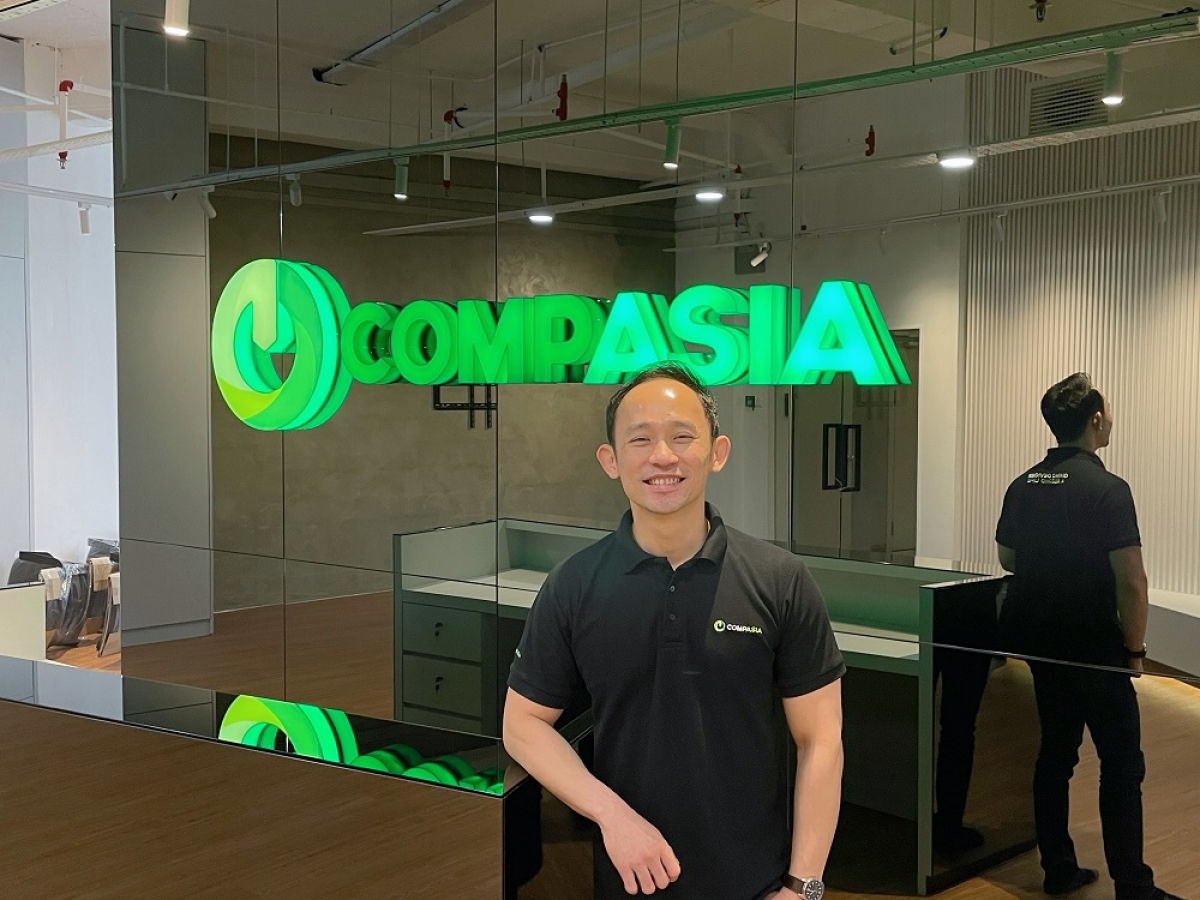
  • CompAsia Opens Latest E-Store In Singapore As It Champions The Recommerce of Mobile Gadgets in Southeast Asia

    CompAsia Opens Latest E-Store In Singapore As It Champions The Recommerce of Mobile Gadgets in Southeast Asia

    There is a new global movement in recommerce, which celebrates the trading of preloved items that extend the lifecycle of these items thus promoting sustainable and responsible consumerism.

    CompAsia, which is championing the recommerce of mobile gadgets in Southeast Asia with unrivalled success in Malaysia, is inviting more customers to consider purchasing second-hand gadgets such as smartphones, laptops, and smartwatches with the opening of new e-stores in Singapore and Thailand, and the promise of high-quality products at affordable prices.

    “We have seen an exponential growth of 2,500% in our e-store business in Malaysia over the last two years largely driven by movement restrictions that amplified the convenience of doing business on the CompAsia platform, and the assurance that we only trade in original products and we offer the highest quality second-hand gadgets,” said Julius Lim, Founder and CEO of CompAsia, which currently operates in nine markets in the region.

    “Customers trust that we are giving them excellent prices both when buying back their devices and selling them preowned ones on our e-stores,” he said, adding that CompAsia’s 32-step quality check that every device goes through, along with the secure data erasure to protect both buyers and sellers alike have also proven to be leading reasons for its growing customer base.

    With deep expertise in the device business, CompAsia provides access to high-quality devices that are backed by responsive after-sales service support, unlike anything you’ll find in regular C2C platforms or second-hand phone retailers. To date, CompAsia has sold over 500,000 devices globally and continues to ramp up sales at a blazing pace.

    “The network upgrading from 4G to 5G is further pushing the sales of smartphones and customers are actively looking for the best deals and reliable trade-in options, which is why we are already seeing increased traffic to our new e-store in Singapore,” Julius said.

    CompAsia.sg, which promises always affordable prices, is offering customers in Singapore an additional 5% discount on all devices as an opening special till 30 April 2022 that translates to almost S$300 off on its highest priced items. Customers will also enjoy CompAsia’s three-month free warranty (extendable up to 24 months) and next day shipping. Payment options in Singapore are supported by GrabPay, MasterCard, Google Pay, Zip, PayNow and Visa.

    “CompAsia is changing customers’ mindsets in buying second-hand gadgets as we are giving them the very best quality in each item and making every brand accessible to everyone,” Julius said. “When you buy on a recommerce site, you are not only extending the lifespan of the item, but you are also diverting waste from landfills, which means a healthier planet.”

  • Vietnam launches website to tax foreign tech giants

    Vietnam launches website to tax foreign tech giants

    The tax department has set up a website for collecting tax from foreign companies to make it easier for tech giants like Facebook and Google to fulfill their duties.

    The Portal of the General Department of Taxation for Foreign Providers (etaxvn.gdt.gov.vn) came online Monday for companies to declare their tax and track their payments.

    Until now foreign companies were paying their taxes through a third party, but now they could pay directly, Nguyen Van Phung, head of the Large Enterprise Taxation Agency, said.

    By filling in their details on the website, businesses could see how much they need to pay and bank account details, he said.

    “Foreign companies can now pay tax at any time, even from an airplane”.

    Generally, foreign firms are required to pay value-added tax and corporate income tax every quarter. Phung said many foreign firms have been leaving their Vietnamese partners with the burden of their tax, he added. There are at least 64 foreign service providers active in Vietnam, according to tax authorities.

    Vietnam taxed cross-border platforms like Google and Facebook a total of VND5 trillion ($218.53 million) in 2018-21. Authorities have been calling for properly taxing tech giants like Facebook and Google, pointing out they account for around 70 percent of the online advertisement market but evade taxes.

  • UBS Named as Bank for Shell Company of Roger Ng’s Wife

    UBS Named as Bank for Shell Company of Roger Ng’s Wife

    In the latest of Roger Ng’s 1MDB trial, an FBI agent claims that his wife played a major role in creating a shell company to open an account with Swiss financial giant UBS.

    Roger Ng’s wife, Hwee Bin Lim, played a central and crucial role» in helping her husband launder illicit payments from the 1MDB bond deals.

    Prosecutors claim that Low and his associates siphoned at least $500 million from the first $1.75 billion bond transactions called «Project Magnolia» with ex-Goldman colleague Tim Leissner testifying that he had received more than $60 million from Low into accounts controlled by his then-wife Judy Chan Leissner before using those accounts to send $35.1 million to Ng through an entity set up by Lim.

    In the latest development, FBI special agent Sean Fern took the stand and testified about Lim’s role in setting the shell entity using a raft of emails as proof.

    According to Fern, Lim inquired about creating a shell entity one day before the first 1DMB bond deal closed. The shell company – first named «Silken Waters» before later being renamed «Victoria Square» – was opened along with a bank account at UBS.

    Although Lim’s mother, Tan Kim Chin, was listed as the beneficial owner, Fern said he traced emails showing that bankers communicated directly with Lim about Victoria Square and the UBS account.

    Ng has argued that the money sent from Leissner’s wife to Lim, who has not been charged, was for an unrelated business transaction.

  • Vietnam is Duolingo’s largest market in region

    Vietnam is Duolingo’s largest market in region

    Duolingo, the world’s leading language learning app, said Vietnam is its largest market in Southeast Asia but it is yet to monetize its products.

    Haina Xiang, its head of marketing for China and Southeast Asia, said the number of active users in Vietnam grew by 67 percent a month in the year since Jan. 2021.

    Vietnam “has far outpaced other markets in a short time,” she said, adding that the number of active users in the country in 2022 has doubled year-on-year.

    Around 6 percent of Duolingo’s 40 million monthly active users have signed up for it to download lessons and skip ads.

    The American company reported revenues of $250 million last year, up 55 percent from 2020, and said gross profits nearly tripled to $60 million.

    According to Duolingo’s statistics, English and Chinese are the most popular courses on its platform in Vietnam.

    Users spend an average of 17.6 minutes a day on the app, usually at 9-10 p.m.

  • 7-Eleven to sell body scrub online made from coffee

    7-Eleven to sell body scrub online made from coffee

    In what’s likely the most unexpected beauty launch of the year, 7-Eleven has officially entered the world of beauty with the release of their $1 coffee body scrub.

    The strictly limited edition scrub, which will be sold exclusively via online retailer Adore Beauty from Tuesday 22 March, is made from the same aromatic Arabica and Robusta beans found in the millions of cups of freshly ground coffee sold each year at 7-Eleven.

    Much like the retailer’s coffee, the product’s very reasonable price tag is sure to excite beauty lovers, with the body scrub retailing for just $1.

    Australian actor Olympia Valance has also been revealed as the face of the new product, saying, “Coffee and skincare products are two things I can’t live without, so being the face of 7-Eleven’s Coffee Body Scrub was a no brainer. Now I can exfoliate, rejuvenate and caffeinate with the same great coffee Australians have been enjoying for years.”

    7-Eleven’s Head of Marketing Communications, Adam Jacka, added that the Coffee Body Scrub is a fun and innovative way to showcase the quality of coffee that Australians enjoy every day.

    “We’re thrilled to be launching 2022’s most unexpected arrival in beauty, the 7-Eleven Coffee Body Scrub. We take great pride in sourcing great quality beans from across the world to provide great coffee to customers every day,” he said.

    The product is made from the same Arabica and Robusta beans found in 7-Eleven’s famous coffee.

    “We wanted to showcase the quality of our coffee beans in new ways. More than 71 million cups are already enjoyed across Australia each year but we know some are still yet to try our iconic coffee. Seriously, our coffee beans are so good we’ve made a coffee scrub out of them!”

    The 7-Eleven Coffee Scrub is produced locally in Australia, is 100% naturally derived, vegan and cruelty-free.

    The limited-edition 7-Eleven Coffee Body Scrub will be available to purchase for $1 with every purchase over $20 via Adore Beauty on 22nd March 2022, strictly while stocks last.

  • Cebu Pacific Equips Airbus A330neo fleet with SITA Swiftbroadband Cockpit Connectivity

    Cebu Pacific Equips Airbus A330neo fleet with SITA Swiftbroadband Cockpit Connectivity

    Cebu Pacific Air, the Manila, Philippines-based low cost airline, will equip its fleet of Airbus A330neo aircraft with an upgraded form of SITA for Aircraft’s AIRCOM cockpit connectivity technology with Swiftbroadband-Safety (SB-S).

    The AIRCOM connectivity is being factory-installed on a fleet of 16 new A330neos from an Airbus order first placed by Cebu Pacific in 2019, that now also includes a Flight Hour Services (FHS) materials management contract signed by the two companies during the 2022 Singapore Air Show last month. SITA first signed a global connectivity services distribution agreement with Inmarsat in 2017 to start leveraging Swiftbroadband-Safety within its suite of cockpit communication applications that it now brands as AIRCOM Cockpit Services.

    SB-S is Inmarsat’s Aircraft Communication, Addressing and Reporting System (ACARS) over Internet Protocol (IP) networking technology that permits previous aircraft data transmissions solely done over the legacy ACARS network to be done faster and cheaper using IP as a gateway for air-to-ground and aircraft-to-controller data transmissions and messaging.

    Sumesh Patel, President of Asia Pacific, SITA, said in a statement that “Cebu Pacific is the first airline to take advantage of these capabilities to boost safety and deliver greater operational efficiencies on their new fleet.”

    Three specific connection types are provided over SB-S, including character-based ACARS data services for Automatic Dependent Surveillance – Contract (ADS-C) and Controller Pilot Data Link Communications (CPDLC). ADS-C, CPDLC, real-time prison reporting, and flight data streaming along with aircraft performance data downloads can also be provided over the SB-S prioritized IP channel. Additionally, the regular IP channel can be used as a voice and data communication channel for Airline Administrative Control (AAC) and Airline Operations Center (AOC) applications.

    According to SITA, some of the specific applications Cebu Pacific can use on AIRCOM with SB-S that are not enabled without Swiftbroadband include real-time updates for flight optimization tools and graphical weather applications.

    The SITA cockpit connectivity agreement for Cebu Pacific comes following the airline’s announcement earlier this month that it will begin expanding its domestic network, including re-starting flights to Siargao, Surigao, and Calbayog after closing those and many other routes due to COVID-19 related travel restrictions.

    Cebu Pacific received its first A330neo in December and now has two of the 459-seat aircraft in its fleet. Mike Szucs, Chief Executive Adviser at Cebu Pacific, expects every Airbus model aircraft in its fleet to feature the new engine option variant by 2027.

    “We turned to SITA given their expertise in the aircraft domain to help us navigate the challenges and complexities of the aircraft communications landscape, and prepare us for that future,” Javier Massot, Chief Operations Adviser, Cebu Pacific Air, said in a statement. “Having high-speed connectivity and greater capacity is essential to access more advanced digital applications that support decision-making onboard. It will enable our pilots and operational staff to access information in real-time and deliver a better service for our passengers.”

  • VietinBank Securities eyes another record year

    VietinBank Securities eyes another record year

    VietinBank Securities eyes record profits again this year through the stock market itself is likely to be down.

    Its board has approved a profit target of VND505 billion ($22 million), 5 percent up from last year.

    Last year pre-tax profits tripled to VND480 billion on revenues of VND1.06 trillion.

    Tran Phuc Vinh, its chairman, said though the stock market is no longer booming like last year and growth is likely to be slower this year, he expected the number of new retail investors to keep rising.

    “We need to invest in technology, and increase salaries, bonuses, and commissions to attract more brokers and collaborators”.

    The brokerage is also set to enter corporate bond consultancy and distribution and step up financial activities by raising its margin rate to 200 percent of shares owned.

  • WhatsApp now lets you react to messages

    WhatsApp now lets you react to messages

    Last month, we reported that WhatsApp was working on several new features, including search message shortcuts, and message reactions, and now the latter has finally started rolling out to users.

    The feature was first uncovered by WABetaInfo, and it seems that WhatsApp is ready to push message reactions to users running version 2.22.8.3. It is worth mentioning that this version is not the official stable one, and it is only available to Beta testers.

    Nevertheless, the fact that the feature is entering the beta version means that we would probably see it in the final stable release pretty soon. The reactions themselves are pretty similar to what other chat apps have been doing in the past couple of years, the likes of Telegram, Discord, and Slack

    According to WABetaInfo, there are six reactions to choose from – Like, Love, Laugh, Surprised, Sad, and Thanks. Even though message reactions are only available to beta testers at the moment, every WhatsApp user should be able to see them in chats.

    Have you noticed these reactions in your WhatsApp everyday chit-chat?

  • Some users are locked out of FB account if they didn’t to set up Facebook Protect

    Some users are locked out of FB account if they didn’t to set up Facebook Protect

    At the beginning of this month, some Facebook users received an email from the company to enable Facebook Protect for their accounts. However, many people seem to have ignored the email, as some generally thought it was just spam, in failing to activate Facebook Protect, some people are now locked out of their accounts.As you may have heard, not everyone has gotten emails urging them to enable Facebook Protect. According to Meta, this feature is specifically targeted at journalists, people who could generally be targeted by malicious users, including human rights activists and government officials. Emails urging them to activate Facebook Protect were coming from security@facebookmail.com and generally could have been ignored as spam.

    However, the emails were legitimate. Users had until March 17 to sign up for Facebook Protect, which is, long story short, a two-factor authentication system to improve the security of Facebook accounts. The emails that were sent had a link to sign up for Facebook Protect.

    And now, it seems some of the users who didn’t sign up (but had received the email) have trouble logging into their accounts and getting back on Facebook. Reportedly, Facebook has given info to the affected users on how to get back to their accounts, but it seems that it is not working for everyone. Some of the users took it to Twitter in order to get a fix for the situation.

    Facebook’s Head of Security Policy at Meta, Nathaniel Gleicher, has acknowledged the issue on Twitter and has announced they are working on the cases where people have been locked out of their Facebook accounts and trying to fix the issues.

    Generally, Facebook (as well as any other platform) recommends every user use two-factor authentication for their accounts for security reasons. However, the Facebook Protect program is specifically designed for people who are more likely to get attacked by hackers in comparison to the average Facebook user.

    For the regular user, no action is required unless you’re prompted by Facebook to enroll in Facebook Protect. It is a program that helps the set group of people to have stronger account security protections, such as two-factor authentication, but at the same time, monitors for potential hacking threats.

    The program was first tested in 2018 and expanded in 2020 in the United States. The global expansion of Facebook Protect started in September of 2021. According to a blog post by Meta on the topic, back in December, around 1.5 million accounts have the Facebook Protect feature enabled.

    Basically, it makes two-factor authentication easier and provides a better user experience and support, according to Meta. A similar requirement is related to Page admins that have enrolled Pages. They are required to go through Page Publishing Authorization to ensure the security of the Page. This process has to be made regardless of whether the individual Page admin has decided to enroll in the Facebook Protect program or not.

    It seems that Facebook is trying to step up its game when it comes to security on the social media platform, but not only that: as we reported recently, it is also actively fighting misinformation in an attempt to make the platform safer. The thing is, you probably have heard that in the past, Facebook has been heavily criticized for allowing misinformation to spread on there, and since then, the company has worked to prevent it.

    The latest step that Facebook has taken in this direction is a new set of group Admin tools aimed at preventing misinformation.

  • Netflix subscribers are getting more free mobile games this month

    Netflix subscribers are getting more free mobile games this month

    Netflix’s games library is getting bigger every month, as the streaming service signs new partnerships with mobile game developers and publishers. The latest batch of games coming to Netflix subscribers include a variety of genres yet are made by just two studios.

    The first two games are hitting Netflix games platform today, while a third title will be available at a later date. Starting today, Netflix subscribers will have access to Shatter Remastered and This Is A True Story, developed by PikPok and Frosty Pop, respectively.

    Shatter Remastered is a brick-breaking game that mixes classic action with interesting twists and challenging boss battles. It seems to draw inspiration from the retro Arkanoid games. As the name suggests, this is an updated version of Shatter, a game that was originally released on PlayStation 3 back in 2009.

    This Is A True Story is a narrative puzzle game that tells the true story of a Sub-Saharan African woman’s daily struggle to get water for her family. According to developer Frosty Pop, the game is based on actual interviews and experiences and has been designed to allow players to explore beautiful scenery while surviving a windstorm or catching poachers.

    Finally, a third title, Into The Dead 2: Unleashed, is coming soon to Netflix. The sequel to hit zombie action game Into the Dead promises multiple chapters, dozens of stages, as well as hundreds of challenges.

    All games can be downloaded directly from the Netflix mobile app or from the Apple or Google app store. Also, all three are available on both iOS and Android platforms.

  • Korea Seven’s takeover of rival Ministop cleared by regulator

    Korea Seven’s takeover of rival Ministop cleared by regulator

    South Korea’s antitrust regulator said Tuesday it has decided to approve a deal by Korea Seven Co., the operator of 7-Eleven convenience stores, to buy its smaller rival Ministop Korea Co.

    In January, the country’s retail giant Lotte inked a deal to acquire a 100 percent stake in Ministop Korea for 313.3 billion won (US$257 million). Korea Seven, an affiliate of Lotte, eventually bought Ministop Korea.

    The Fair Trade Commission (FTC) said it has given the green light to the deal, saying that the takeover is not expected to hamper market competition.

    South Korea’s convenience store market has been dominated by BGF Retail’s CU and GS Group’s GS25, with 7-Eleven, Shinsegae Group’s Emart 24 and Ministop being minor players.

    The FTC said its approval is expected to spur three-way competition in the market as the takeover will help Korea Seven cement its market status as the No. 3 player.

    Korea Seven operates around 11,170 convenience stores across the country.

    Ministop is an affiliate of the Japanese retail group Aeon Group and opened its Korean operation in 1990 via a business tie-up with South Korea’s leading food maker Daesang. Ministop Korea runs around 2,600 convenience stores.

  • Canada Goose ramps up Japan expansion with Sazaby League

    Canada Goose ramps up Japan expansion with Sazaby League

    Canada Goose Holdings Inc. (“Canada Goose” or the “Company”) and longstanding partner Sazaby League Ltd. (“Sazaby League”) have entered into an agreement to create the joint venture Canada Goose Japan, with plans to accelerate DTC expansion, including stores.

    This agreement will replace an exclusive national distributor arrangement between Sazaby League and Canada Goose. Commencing in April, the existing distribution will be assumed by the joint venture, of which each partner will own 50 per cent. Current distribution includes a permanent Canada Goose retail store in Tokyo, a national e-Commerce site, as well as wholesale points of distribution across the country. The new operating model is expected to significantly increase revenue and gross profit per unit from the existing business. Canada Goose Japan is also expected to generate C$60m – C$65m in total revenue in fiscal 2023, which is roughly double the contribution from this market in fiscal 2022.

    “Japan is one of the world’s largest and most influential luxury markets and has long been an important consumer market for Canada Goose,” said Dani Reiss, President & CEO, Canada Goose. “This new agreement sets the stage for the acceleration of our growth in Japan, across both DTC and wholesale. We are excited to expand our existing operations with Sazaby League and know their successful history building strong consumer brands in the market will help drive us forward.”

    “We are proud to partner with Canada Goose and to be part of their continued growth in Japan,” said Yoji Hirai, CEO of Canada Goose Japan. “Canada Goose is a global performance luxury lifestyle brand, known for their unparallel product and industry-leading sustainability commitme