Tag: asia

  • Startups pin high hopes on blockchain, NFT technologies

    Startups pin high hopes on blockchain, NFT technologies

    Vietnamese startups have great expectations of the blockchain technology, envisaging practical e-commerce and entertainment impacts as the country pursues digital transformation.

    “We dream of becoming a billion-dollar company,” said Nguyen Tuan Quynh, chairman of book distributor Saigon Books, as he talked about a new project which uses blockchain in podcast and audiobook production.

    He said he wanted to create a blockchain-based platform for users, including celebrities, to produce audio content and make money. The audios will be distributed as non-fungible tokens (NFT), which are digital assets that represent objects like art, music, in-game items and videos, and have unique identifying codes. They are bought and sold online, frequently with cryptocurrency.

    “It will be a long run but we have taken the first steps. We also aim to have foreign-language to take this platform overseas,” Quynh said.

    Nguyen Tran Phi Yen, communications director of online event hosting platform Fan8.Club, is working on a project in collaboration with a hospitality partner that will create one million booking NFTs at premium hotels in Vietnam.

    “Blockchain is no longer something of the future. It has real products now.”

    Vietnamese startups have made headlines since last year with their use of the blockchain technology. Blockchain games like Axie Infinity and finance apps like Coin98 Finance have raised millions of dollars.

    Vietnam’s blockchain market is set to enjoy double-digit growth in the 2023-2027 period as 5G development across the country facilitates the formation of smart cities, according to a report by TechSci Research.

    Nguyen Thanh Nam, chairman of blockchain solutions provider OneBlock Labs, said that the technology could be used to trace origins of agriculture products, develop web browsers with better privacy protection and facilitate e-governance.

    “The government has made many efforts to create a national database using technology. With blockchain, more potentials can be reached,” he said.

    In 2020, the Vietnamese government listed blockchain a top tech research priority for application in the Fourth Industrial Revolution era.

    The Ministry of Science and Technology plans to let some blockchain companies to use the technology to try out some of their ideas for social benefits this year. Startups say they are aware of the challenges in developing the blockchain technology, high programmer salaries being one of them.

    “Hiring programmers to build a blockchain app costs four to five times that of a normal app,” said Quynh of Saigon Books said.

    Finding a team of experienced blockchain techies who understand the market is very difficult, said Nam of OneBlock Labs.

    “It is therefore crucial to start developing blockchain human resources.”

    Yen of Fan8.Club said that the world will soon have pre-established blockchain platforms for businesses to use and create their own products, and Vietnamese firms can take advantage of these instead of building everything from scratch.

    Some industry insiders have also warned about the potential to misuse blockchain.

    Pham Phuoc Nguyen, digital operations head at Coin98 Finance, said: “Not everything needs blockchain. Some can be done the traditional way.”
  • Vinamilk profits to decline for 2nd year in a row

    Vinamilk profits to decline for 2nd year in a row

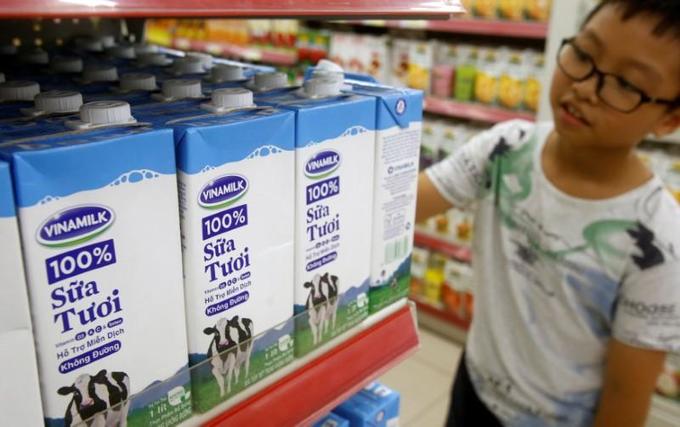
    Vinamilk is set to see profits decline for a second straight year in 2022 due to rising costs of raw materials and transportation.

    Vietnam’s leading dairy company targets pre-tax profits of VND12 trillion ($524.70 million), down 7 percent from last year, though revenue is likely to grow by 5 percent to VND64 trillion. Last year, profits were down 4.4 percent from a record VND13.52 trillion in 2020.

    The company said that last year it faced many challenges including a shortage of raw materials and rising prices of animal feed and transportation.

    Animal feed prices jumped 30-40 percent last year and are set to continue to rise this year, it said. Transport costs rose by 20 percent domestically and 500 percent globally, it said. The Covid-19 pandemic also made milking difficult due to prolonged social distancing, while the rising costs of animal feed forced farmers to switch to other vocations, it added.

    But the dairy giant aims reach a profit of VND16 trillion in 2026, up 33 percent from 2022. It targets revenues of VND86.2 trillion in 2026. Vinamilk plans to achieve these targets by stepping up research into new products and using new technologies for sustainable livestock farming.

    It also eyes new growth opportunities through mergers and acquisitions and new investments. Last year its exports rose 18 percent to VND1.8 trillion and went to 57 countries and territories. Vietcombank Securities said in a recent note that Vinamilk does not have much potential for growth in the next two or three years. The segment with the most growth potential in the next two years is beef, and it plans to start importing the meat from Japan this year.

  • HCMC supermarkets roll out promotions amid rising prices

    HCMC supermarkets roll out promotions amid rising prices

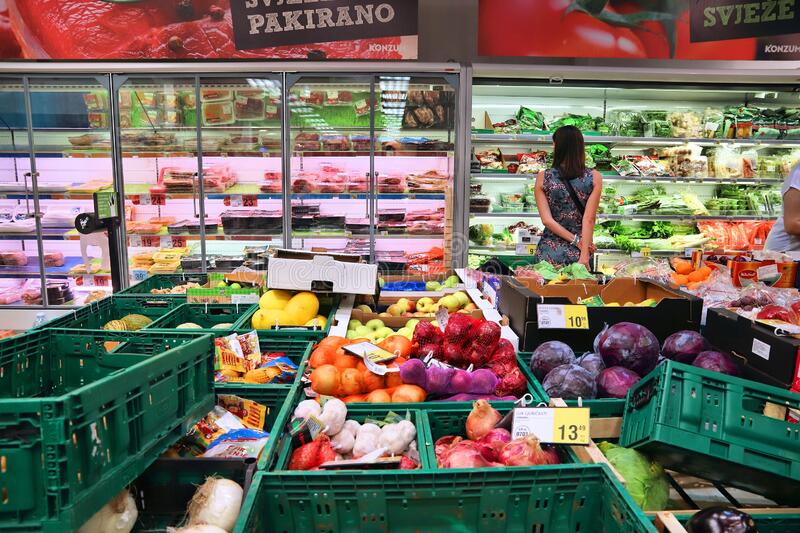
    Supermarkets in HCMC are offering double-digit discounts as food and gasoline prices surge. Central Retail is offering discounts of up to 50 percent on 390 products before 10 a.m. from Monday to Thursday every week. The list of products includes pork, vegetables, and fast-moving consumer goods.

    Co.opmart has announced a cut in prices of 3,000 essential goods until the end of this month. Another promotion is scheduled for next month, a spokesperson said. An MM Mega Market store in Go Vap District has cut the prices of beef by 5 percent, fruits by up to 30 percent, and clothes by 50 percent. Big C, Top Market, and Saigon Co.op are selling beef, chicken wings, and fruits at 10-30 percent discounts.

    Cooking ingredients like oil, chili sauce, and sugar are priced 15-50 percent lower than before. Retail industry insiders say the discounts are being offered as consumers are tightening their purse strings amid a surge in prices. Gasoline prices are up 28 percent since the end of December to a record high of VND29,820 ($1.30) per liter.

    The prices of eight of the nine main consumer products have risen sharply, with seven of them seeing double-digit increases. 50 percent of them have been impacted by food price increases and 40 percent by the increase in gasoline prices.

    This has caused many people to cut spending. Hoa of Go Vap District used to go to the supermarket once a week, but now she only goes twice a month or just once.

    “Prices of everything have risen so I buy in bulk to reduce expenses”.

    Oanh of Tan Binh District recently bought dry products and spices for the next three months in the hope of avoiding further price rises. Though consumers expect further discounts, retail chains say this is unlikely. An executive at a supermarket chain in HCMC, who asked not be named, said the company is also under pressure due to the rising costs, and it has offered the best discounts it could.

  • Telenor Myanmar subsidiary sold to Lebanese M1

    Telenor Myanmar subsidiary sold to Lebanese M1

    Myanmar’s junta has approved the sale of Norwegian telecoms giant Telenor’s Myanmar subsidiary to Lebanese conglomerate M1 Group, in a move activist groups warn could put sensitive customer data in the hands of the military.

    The Southeast Asian nation has been in chaos since a coup last year sparked huge protests and a bloody military crackdown on dissent, sending its economy into freefall.

    In July, Telenor announced that it planned to sell its subsidiary Telenor Myanmar and later cited junta demands that it installs monitoring equipment on the network as a reason for leaving the country.

    After months of stalled negotiations, Telenor and M1 – which is helmed by current Lebanese prime minister Najib Mikati – both said the sale had been approved by junta authorities.

    “M1 Group has been informed that the Myanmar Investment Commission has approved Telenor Group’s application for the sale of Telenor Myanmar to Investcom PTE Ltd, an M1 Group affiliate,” M1 said in a statement.

    A separate statement from Telenor said the sale had been given “final regulatory approval”.

    M1 will partner with local consortium Shwe Byain Phyu to take ownership of the new entity, according to the group’s statement.

    Founded in 1996, Shwe Byain Phyu started out distributing petroleum products for the then-military government, and employs more than 2,000 people in Myanmar.

    It has interests in petroleum trading, manufacturing, commodities trading and marine products, according to its website, which lists no previous telecoms experience.

    “Sanctions screening from external consultants has assured Telenor that Shwe Byain Phyu and its owners are not subject to any current international sanctions,” the Norwegian firm said in a statement.

    Last year, 474 civil society groups in Myanmar called Telenor’s decision to pull out irresponsible, saying it had not sufficiently considered the impact on human rights.

    Activist groups say any new owner could comply with future requests from the junta to provide cellphone data of dissidents protesting against the putsch that ousted Aung San Suu Kyi’s government last year.

    “There are still many things Telenor can do to mitigate harm,” said Joseph Wilde-Ramsing, senior researcher at SOMO, a Netherlands-based non-profit that conducts research and advocacy on corporations.

    “If they won’t take any steps to minimise the data transfer, they can still do things like set up a fund to help victims, remediate some of the harms they are going to be contributing to with the sale.”

  • China Telecom reports record double-digit growth in 2021

    China Telecom reports record double-digit growth in 2021

    China Telecom’s “Cloudification and digital transformation” strategy has paid off. In 2021, China Telecom’s net profit reached RMB25,948 million, representing an increase of 24.5% year-on-year. Operating revenues amounted to RMB439.6 billion, growing by 11.7% over the preceding year.

    In 2021, the company implemented its “Cloudification and digital transformation” strategy, developed integrated intelligent information services with a customer-oriented approach, and built core sci-tech innovation capabilities and the new information infrastructure. The company also established industrial and capital ecologies featuring strong alliances and open cooperation, while carrying out system and mechanism reforms, achieving new results in high-quality development.

    China Telecom continued to enhance its 5G coverage and network quality, innovated e-surfing cloud handset device ecology, enriched the 5G application and privilege portfolio, and launched 5G cloud packages. The company optimized the service experience for users through ultimate convergence, facilitated the upgrade of individuals’ demands for emerging information consumption, continued to unleash the new round of data traffic benefits, and propelled the scale and value enhancement of its mobile subscribers.

    In 2021, mobile communication service revenues reached RMB184.2 billion, representing an increase of 4.9% from the previous year. The total number of subscribers reached 372 million, with subscribers’ net addition maintaining the industry-leading position for four consecutive years. Meanwhile, the penetration rate of 5G package subscribers reached 50.4%, maintaining the industry-leading position.

    Combining cloud, security, 5G, data, and intelligence, China Telecom developed scene-based integrated intelligent solutions and proactively empowered the transformation and upgrades of traditional industries. In 2021, revenue from industrial digitalization reached RMB98.9 billion, representing year-on-year growth of 19.4%.

    On 20 August 2021, the company successfully listed on the Shanghai Stock Exchange, leveraging wider financing channels to expand ecological cooperation and implement more flexible incentive measures.

    Chairman Ke noted that China Telecom has had a promising start under the “14th Five-Year Plan” in 2021. In 2022, the company will seize opportunities arising from the development of the digital economy, putting all efforts into promoting high-quality development and jointly creating a new pattern for the information and communications industry.

  • Malaysia confirms utilizing SWN model for 5G implementation

    Malaysia confirms utilizing SWN model for 5G implementation

    The Malaysian government is sticking to its plan of deploying 5G through a single wholesale network (SWN). In a joint statement from the ministries of finance and communications and multimedia, up to 70% equity in the wholly state-owned 5G company, Digital Nasional Berhad (DNB), will be available to telcos.

    Malaysian finance minister Tengku Zafrul Aziz emphasized that the maintenance of the SWN model is the government’s firm stance on policy continuity. “The implementation of 5G will drive the country’s socio-economic transformation and this is estimated to contribute RM 659 billion to the value of GDP until 2030,” Aziz explained.

    The finalized decision has come in contrast to the concerns among wireless carriers that a single, shared 5G network could hamper digital competitiveness. Nonetheless, the government will retain a 30% equity stake in DNB while the majority of the stakes are intended for operators. It is worthy to note that this special-purpose vehicle company was established in early March 2021 to drive 5G infrastructure development in Malaysia.

    Accessing DNB’s 5G network is estimated to cost less than what major local telecom operators such as Celcom Axiata, Digi, Maxis, and U Mobile have incurred during 4G rollouts. In line with this, DNB has offered free 5G services to service providers until March 31 as part of its commercial trial. Aiming to achieve 80% coverage of populated areas by 2024, the trial is bound to be extended until June 30 to allow more operators to sign up.

    Access to high-quality 5G services would accelerate the recovery of the post-pandemic Malaysian economy. Moreover, “the SWN model will help bridge the urban-rural digital divide to enable all Malaysians to enjoy high-quality 5G services and be widely available to them through telecommunications companies,” said Malaysian communications and multimedia minister Annuar Musa.

    In retrospect, the Malaysian government refused the prior recommendation of having a dual wholesale network (DWN) model and selected Ericsson to develop the country’s 5G network infrastructure.

  • BMW Teases All-Electric iX1 SUV Ahead Of Debut

    BMW Teases All-Electric iX1 SUV Ahead Of Debut

    BMW has confirmed that it will be debuting an all-electric version of the upcoming new X1 before the end of the year. BMW revealed that the new iX1 will debut shortly after the new X1 which is due for a full model change this year. BMW previewed its upcoming compact EV in a teaser image revealing some styling details of the SUV front fascia. Speaking at BMW’s recently held annual conference Oliver Zipse, Chairman of the Board of Management of BMW AG said, “Starting at the end of the year, the new iX1 will be our fully electric offer to customers in the high-volume premium compact segment. The X1 also highlights the potential of modern, flexible BMW architectures with its diversity of different drivetrains – just as you have experienced with iX and i4.”

    Unlike the born-electric iX which gets its own unique design, the iX1 gets a more familial design closer to the likes of the current iX3. The teaser previews an SUV with upright proportions, a prominent kidney grille, inverted L shaped DRLs for the headlamps and large vents on the bumper. Like with the iX3 expect the signature kidney grille to be closed off owing to the lack of a conventional combustion engine under the bonnet. Other EV-specific details are expected to include unique wheel designs and the blue highlights seen on the teaser.

    The iX1 otherwise isn’t expected to stray far from the standard X1 sitting with much of the body paneling and interior to be common between the two.

    For the cabin, the iX1 could follow a similar design as the new 2 Series Active Tourer based on test mules caught on international roads.
    BMW hasn’t confirmed exact powertrain details though it has said that the EV will feature its latest eDrive technology with a range of up to 438km on a single charge. Aside from the all-electric variant, the new X1 will also get conventional petrol and diesel powertrain options including plug-in hybrid technology.

    BMW has also confirmed that the iX1 and X1 will pack in the latest tech including BMW’s latest iDrive with OS8 (Operating System 8).

  • Vietnam launches national pavilion on Alibaba

    Vietnam launches national pavilion on Alibaba

    The Vietnam Pavilion was launched on Chinese e-commerce platform Alibaba.com Friday to globally promote the country’s products and success stories.

    The Vietnam Trade Promotion Agency and the tech giant signed a deal for the purpose. Deputy Minister of Industry and Trade Do Thang Hai said the site would be used for advertising and taking Vietnamese products to customers around the world.

    The pavilion allows visitors to search for Vietnamese suppliers of agricultural and seafood products, furniture, packaging, and home and garden items.

    Vietnam has gained a reputation with global customers thanks to its production capacity, quality of products and competitive pricing, Alibaba deputy director Andrew Zhang said.

    The Trade Promotion Agency said it would coordinate with the platform to organize online advice sessions on exporting via e-commerce sites for over 2,500 Vietnamese small and medium-sized enterprises.

    A similar program was held last year also in partnership with Alibaba for around 2,000 businesses, it added.

    Tran Thi Yen Phi, CEO of Hanoi agribusiness DSW, said her firm’s revenues in the first year after joining Alibaba were US$260,000.

    The business was unaffected by the congestion at the Vietnam-China border thanks to expansion of its market to Japan, the EU and Southeast Asia. “This year we are boosting exports to China under the official quota. Deliveries are delayed by China’s ‘Zero Covid’ policy, but we still be able to operate there,” she said.

    Proline Vietnam, a packaging supplier, said its sales grew by 200 percent last year as it carried out all exports through e-commerce platforms.

  • Thai buyer to snap up another Vietnamese plastics firm

    Thai buyer to snap up another Vietnamese plastics firm

    Plastics manufacturer Ngoc Nghia Industry – Service – Trading Jsc is set to be acquired by a Thai company. Fund management company VinaCapital, which owns a 37.8 percent stake in Ngoc Nghia, recently registered to sell it off. Founder La Van Hoang and his family, who own 58.5 percent, have also registered to sell their stake.

    Earlier Indorama Netherlands B.V., a subsidiary of Thailand’s Indorama Ventures, publicly stated its intention of buying Ngoc Nghia for an unspecified amount. Indorama Ventures is the biggest plastic and polyester yarn manufacturer in Thailand and has made acquisitions in the U.S. and Europe to become one of the biggest players in the world.

    The deal, if successful, would see a Thai company acquiring yet another Vietnamese plastic producer. Last year, SCG Packaging Public Company Ltd bought a 70 percent stake in Duy Tan Plastics, the largest manufacturer of rigid plastic packaging products in Vietnam.

    Most major companies in the plastic and paper packaging industry are foreign-owned, according to FPT Securities.

    Ngoc Nghia was established in 1993 and mostly produces plastic bottles and medical containers, with Unilever, Coca-Cola and Vinamilk being among its top customers.

    The company reported profits of VND103 billion ($4.5 million) last year.

  • Travel firm temporarily stops Russia tourist services

    Travel firm temporarily stops Russia tourist services

    The largest Vietnamese travel agency for Russian tourists has temporarily suspended its services for the market as a fallout of Western sanctions imposed on Russia.Anex Vietnam Travel and Trading announced the suspension after taking more than 300 Russian tourists home Thursday.

    Bui Quoc Dai, Deputy Director of Anex Vietnam, said they made the decision after Russian authorities advised the country’s airlines to halt all international flights (except from and to Belarus) following Western sanctions.

    “We will stop conducting tours for customers from Russia at least until March 28, when Russian authorities are scheduled to announce further changes,” Dai said.

    Earlier this month, the Russian federal agency for aviation transport FAVT told Russian airlines “which have planes registered abroad under leasing contracts with foreign partners” to halt most international flights between March 6-8. It cited the “high level of risk for planes to be detained abroad” as a reason for the recommendation.

    Dai noted that the number of Russian tourists had fallen sharply since the end of February after Russia launched its “special military operation” in Ukraine. He said his firm has racked up losses despite receiving nearly 6,000 Russian visitors since last December, as they were unable to fill charter flights.

    Vietnam tour operators specializing in Russian and Eastern European markets have also warned that the devaluation of the Russian ruble would affect the inbound market.

    In 2019, Vietnam received a record 646,000 tourists from Russia, making it the sixth-largest tourism market after mainland China, South Korea, Japan, Taiwan, and the U.S.

  • Maybe SNB Should Invest in Bitcoin

    Maybe SNB Should Invest in Bitcoin

    It has long been clear to aficionados that crytptocurrencies are a new asset class belonging in portfolios as an inflation hedge. The Swiss National Bank can benefit from this, an industry expert explains.

    The Swiss National Bank has a number of extremely large investments in equities and other instruments, which it has used to counter the strength of an over-valued Swiss franc. In recent years, the SNB has made profits in the billions, but large exposures can also lead to substantial losses, due to rising inflation and higher interest rates taking the steam out of stock markets.

    While the bank has substantial foreign currency holdings which it invests as a passive investor, cryptocurrencies are not currently one of its investment vehicles. Still, there is a great deal of interest in the bank over blockchain and digital currency developments.

    Bitcoin Suisse chair Luzius Meisser, along with thirty other shareholders of the SNB, have requested the central bank invest in Bitcoin, according to an interview in Netzwoche.

    The euro is Switzerland’s main trading currency, and high inflation in the eurozone is contributing to the destruction of value. Investing in cryptocurrencies can contribute to price stability while strengthening Switzerland’s political independence, Meisser said in the interview.

  • Sberbank Approved to Issue Digital Assets

    Sberbank Approved to Issue Digital Assets

    Russia’s largest bank has been approved by the Bank of Russia to issue digital financial assets on its platform starting a month from now.

    Sberbank received regulatory approval to start issuing digital financial assets (DFAs), Russia’s largest bank announced in a statement Thursday. It has been included in the list of information system operators issuing digital financial assets (DFAs) on March 17, 2022, which means it has been approved by the Bank of Russia.

    Companies will be able to issue DFAs using Sberbank’s proprietary platform, proving cash requirements which will, in turn, enable them to attract market investments. Moreover, they can also acquire DFAs on the Sber system where they can invest funds lying idle to generate income.

    Companies will be able to make their first transaction on our blockchain platform one month from now. We are just starting our work with digital assets, realizing that further development requires adaptation of the current regulatory framework. To do that, we are ready to work closely with the regulator and executive bodies, Sergey Popov, direction of Sberbank’s Transaction Business Division, said.

    Sberbank’s license to issue DFA’s comes two month’s after Russia’s central bank warned of the risks of crypto-assets.

    The Bank of Russia issued a consultation paper in January warning that wider adoption of cryptocurrencies creates significant risks for the Russian financial market. As there are no restrictions in place, a further increase in Russians’ cryptocurrency investments and an extensive involvement of banks and other financial institutions in the cryptocurrency market might exacerbate risks inherent in this activity and pose systemic threats.

    The same day as Sberbank’s announcement, European Supervisory Authorities (ESAs comprising EBA, ESMA and EIOPA) issued a warning to consumers that crypto assets are highly risky and speculative.

    With growing consumer interest in crypto-assets, the ESAs warned that most assets are neither suitable for retail consumers as investments nor as means of payment or exchange, warning they could lose all their invested money.

    The ESAs also warned of the dangers of misleading advertisements, particularly on social media and from influencers and, that «should investments fail, there is little recourse available through existing EU financial services rules.

    Commenting on the situation in Ukraine, the ESAs said they welcome the clarification by the Council of the European Union of the scope of the restrictive measures against Russian and Belarusian entities and individuals as regards crypto-assets.

    In 2020, the Swiss subsidiary of Sberbank entered into a partnership with Geneva-based start-up Komogo, a blockchain trade finance platform.

    But earlier this month, the Swiss Bankers Association excluded both Sberbank and Gazprombank from its organization, saying Swiss banks maintain strict compliance with all applicable regulations and measures, including sanctions imposed by Swiss, international and supranational bodies. Integrity and reputation are important key factors for the financial center.

    Both Ukraine and Russia are among the top 20 countries adopting crypto according to the Chainalysis Global Crypto Adoption Index for 2021, coming in at 4th and 18th, respectively. The year before, they occupied the first two spots, although the methodology for 2021 contained one less metric than the year before, with the number of on-chain deposits dropped from the study.

  • UBS Exiting Mitsubishi Venture in Japan

    UBS Exiting Mitsubishi Venture in Japan

    Switzerland’s largest bank is selling its joint real estate venture with Mitsubishi to an investment firm.

    UBS announced it is exiting a 20-year joint real estate venture in Japan, agreeing with its partner Mitsubishi to sell its Mitsubishi Corp.-UBS Realty Inc. (MC-USBR) to investment firm KKR, UBS said in a statement released Thursday.

    UBS said it expects to book a gain in asset management and a CET1 capital increase of $900 million upon finalization of the transaction which is expected to be in April of this year.

    The joint venture between Mitsubishi and UBS Asset Management Real Estate & Private Markets was formed in 2000 and has since grown into one of the largest real estate asset management companies in Japan.

    MC-UBSR manages two Tokyo Stock Exchange-listed J-REITs, the Japan Metropolitan Fund Investment Corporation (JMF) and the Industrial & Infrastructure Fund Investment Corporation (IIF), with assets under management of around $15 billion.

    The sale does not mean that UBS is exiting the Japanese real estate market, UBS Asset Management President Suni Harford said.

    The Japanese market remains a cornerstone of our Real Estate & Private Markets business in Asia Pacific, and we remain focused on serving the needs of our clients and capturing growth opportunities in this strategically important region. Through our rapidly growing real estate investment unit, UBS Japan Advisors, we will continue to advise our clients on Japanese property investments, Harford said.

    UBS’s  said that its asset and wealth management divisions along investment banking businesses operating in Japan are not affected by the sale

  • McKinsey Moves Moscow Staff to Kazakhstan

    McKinsey Moves Moscow Staff to Kazakhstan

    Like many banks, consultancy firms have announced they are pulling out of Russia in response to the country’s attack on Ukraine.

    McKinsey is the next audit firm to announce that it is moving its Russia-based staff out of the country. It will be relocating them to its existing Almaty office in Kazakhstan, citing people familiar.

    Along with KMPG, PricewaterhouseCoopers and EY, McKinsey announced that it was severing ties with Russian business partners soon after the war broke out in Ukraine.

    McKinsey, whose clients included Rosneft and Gazprom, has over 700 staff in Russia, according to the report. Its Almaty office is also strongly focused on the energy sector, it said.

    Furthermore, Boston Consulting Group is looking at relocating staff to Azerbaijan, the report added, citing a person familiar.

  • TSMC continues to dominate the global foundry business with Samsung a distant second

    TSMC continues to dominate the global foundry business with Samsung a distant second

    TSMC’s market share during the fourth quarter of last year was 52.1% based on its revenue of $15.7 billion during the three-month period. That was down from the 53.1% share of gross that the foundry had during the previous quarter, but was still well ahead of the next name on the list.

    Behind TSMC was its biggest rival in the industry (at least for now), Samsung Foundry. The latter had 18.3% of industry revenue at the end of the last quarter of 2021. Even with strong 15.3% growth in its top-line on a quarter-over-quarter basis, Samsung’s gross for the period from October through December was only 35% of TSMC’s.

    And things are about to get worse for Samsung. Low yields on the production of some Application Processors (AP) by Samsung, about half the yield rate achieved by TSMC, has led Qualcomm to move over production of some of its most powerful Snapdragon chipsets to TSMC from Samsung. Additionally, Samsung is investigating the disappearance of funds that the foundry unit had supposedly set aside to improve chip production yields.

    Trend Force notes that while Samsung Foundry is showing strong revenue growth, the bottom line has not been able to stay in gear as “the slower ramp-up of advanced process capacity continues to erode overall profitability.”

    TSMC’s results for the quarter were bolstered by strong growth in revenue connected to the production of 5nm chipsets for the iPhone 13 series. The only TSMC process node that showed a drop in the top line for the fourth quarter was the 7nm/6nm unit which was impacted by a weak smartphone market in China. Samsung’s strong 15.3% hike in sequential revenue came about from the completion of its 5nm/4nm advanced process node capacity.

    After the well-known pair of TSMC and Samsung, Taiwan’s United Microelectronics Corporation (UMC) was next as its Q4 revenue comprised 7% of the industry’s revenue for the three months. For the quarter, it garnered $2.12 billion in gross, up 5.8% from its third-quarter revenue. In fourth place, GlobalFoundries kept the 6.1% share of global foundry revenue that it earned during Q3. At number five was China’s largest foundry, SMIC, with a market share of 5.2% and Q4 revenue of $1.58 billion.

    What holds back SMIC is its inability to compete at the current cutting-edge process nodes of 5nm/4nm with both TSMC and Samsung knocking at the door of 3nm. Like the U.S., China is desperately looking to become self-sufficient in semiconductors, and its failure to do so worries experts who fear that China could use TSMC’s success as a reason to take over Taiwan and capture control of the world’s largest contract foundry.

    The industry is far from balanced in terms of revenue with the top five foundries controlling 90% of global foundry market share. That is understandable though when you consider that TSMC and Samsung are the leaders in advanced process nodes.

    The remaining foundries making up 6-10 on the list and their Q4 market shares include HuaHong Group (2.9%), PSMC (2%), VIS (1.5%), Tower (1.4%), and Nexchip (1.2%). The latter might have reported the lowest market share of global foundry revenue for Q4, but it did show the largest growth rate in revenue quarter-over-quarter at 44.2%.

    For the fourth quarter, global foundry revenue came in at $29.55 billion, up 8.3% from the third quarter.

    One of the reasons for TSMC’s success is its long working relationship with Apple. For every $100 in revenue collected by the foundry, $26 comes from Apple. Just last week Apple announced that by combining a pair of its M1 Max SoCs, it created the M1 Ultra which contains a whopping 114 billion transistors inside.