Tag: asia

  • Sa Sa starts selling 700 products on Foodpanda Hong Kong

    Sa Sa starts selling 700 products on Foodpanda Hong Kong

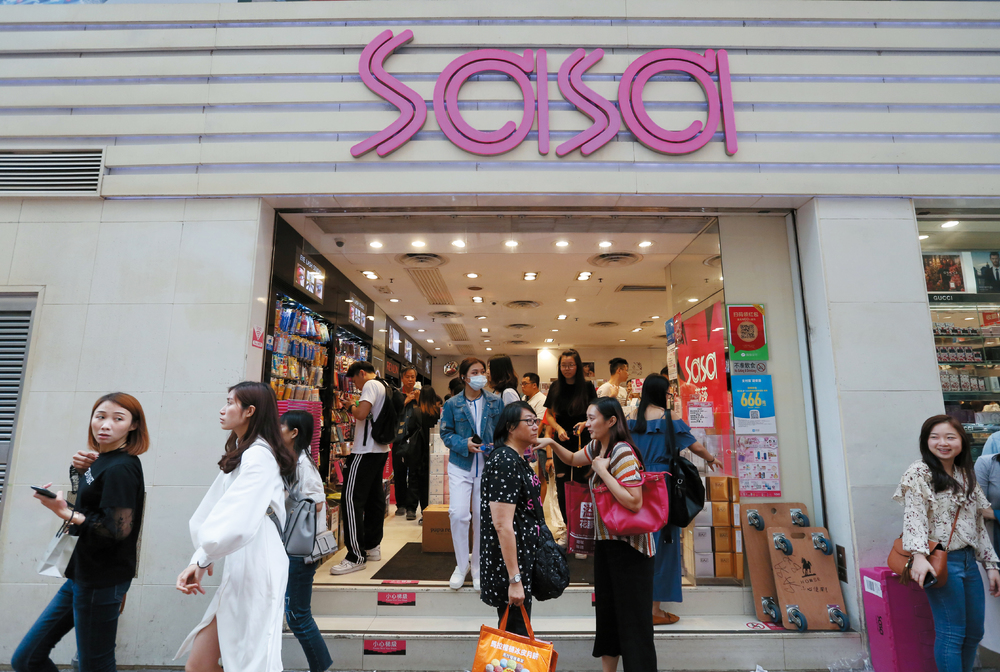
    Sa Sa is pleased to announce today its official entry onto foodpanda mall in Hong Kong, an online grocery and goods shopping mall under foodpanda. Through foodpanda mall’s round-the-clock delivery service, Sa Sa will open up for local customers a more convenient way of shopping to enhance customer experience. The move also marks Sa Sa’s advancement in the development of online-merge-offline (“OMO”) functions.

    Sa Sa is offering about 700 selected products on foodpanda mall, including anti-epidemic products for which Hong Kong citizens have an urgent need, and popular products such as cosmetics, skincare, fragrance, hair care, and body care products as well as health supplements. After customers have placed orders at the online supermarket, foodpanda’s couriers will collect the goods at Sa Sa’s physical stores and deliver them to the customers in as fast as 10 minutes. Customers can thus quickly obtain the products without going out, especially meeting their urgent needs for anti-epidemic products and their favorite items within the cosmetic and personal care categories. This service will initially be piloted at 20 of Sa Sa’s stores and will be rolled out at more stores in the future.

    Following the launch of the “click-and-collect” service, Sa Sa’s partnership with foodpanda mall will further enhance the OMO development of the Group’s physical stores and its online business in Hong Kong. It also provides customers with one more customer-centric and convenient channel for online shopping, complementing Sa Sa’s shopping website.

    Sa Sa and foodpanda mall will be able to manifest their respective advantages in the partnership and generate synergy. As a leading “one-stop beauty product specialty store”, Sa Sa will enrich foodpanda mall’s product assortment with its richly diverse, hot-selling cosmetics, health supplements and anti-epidemic products. Both foodpanda and Sa Sa have large customer bases, which can enable mutual conversion and thus enlarge their respective target customer bases. Sa Sa can also strengthen and expand its own base of young customers by serving foodpanda members who are used to “Quick Commerce”.

    Dr Simon Kwok, SBS, JP, Chairman and Chief Executive Officer of the Group, said, “Sa Sa is honoured to have entered foodpanda’s online platform which is widely popular with consumers in Hong Kong. Online shopping is gaining traction. The trend is especially more pronounced amid the raging pandemic as more consumers would rather stay at home than go out to protect themselves against the disease. We believe that foodpanda’s quick delivery meets our customers’ increasing demand for convenient, fast online shopping service. In the light of the urgent demand for anti-epidemic products, we are offering them at foodpanda mall in the hope of providing citizens one more convenient shopping channel to help fight the pandemic. We also hope to enhance the OMO function at Sa Sa’s operation through the partnership with foodpanda mall so as to provide customers with a more seamless and convenient shopping experience.”

    Ryan Lai, Managing Director of foodpanda Hong Kong, said, “Via our mature logistics infrastructure, our dedicated delivery fleet and ongoing data analysis, we hope to continue to pioneer ‘Q-Commerce’, providing quick and convenient delivery service to meet the needs of Hong Kong people. We are extremely pleased to have Sa Sa as a foodpanda mall retail partner, benefiting from complementary strengths in advancing each other’s OMO business strategy, and elevating customers’ shopping experience for personal care, health and beauty products etc. This partnership also expands and diversifies foodpanda mall’s product offerings, to better satisfy the wants and needs of our customers.”

    To celebrate its partnership with Sa Sa, foodpanda mall launches promotional offers from 15 March to 30 April . Customers will enjoy a HK$50 discount upon spending of HK$400 or above with their first purchase at Sa Sa on foodpanda mall by entering the promotional offer code “SASA” while the offers last.

  • Siam Piwat reports surging sales despite lack of tourists in Thailand

    Siam Piwat reports surging sales despite lack of tourists in Thailand

    Solid economic growth averaging roughly 4% annually since 2000 along with the country’s solid industrial and export base has fuelled a steady rise in domestic income across all income levels over the past decade and a half, leading directly to a rise in consumer spending power. Although the sector has been buffered by several shocks in recent years, including the 2015 bombing in the central Ratchaprasong luxury retail district, political upheaval in 2014 and devastating floods in 2011, the Thai retail market has proved resilient due to these strong underlying foundations.

    Thailand’s retail market has attracted a wide variety of local and foreign retailers all vying for their share of the consumer base, resulting in a highly competitive environment. In 2015 a number of key companies continued to assert themselves as major players within the retail landscape. These include CP All and its ever-expanding national network of 7-Eleven outlets along with Tesco Lotus and network of supermarkets and hypermarkets. Central Retail remains active as well in the hypermarket and supermarket segments while Big C and Home Pro stores operate mostly in upcountry areas.

    Recent Recovery

    Retail sales expansion peaked in November 2012 at 54% year-on-year growth before political turmoil engulfed the country two years later, sending growth into the negative for the entirety of 2014 and most of 2015.

    The downturn was largely the result of widespread protests and an eventual military coup in Bangkok, which effectively restricted the flow of traffic into major commercial and retail districts while also dissuading a large portion of foreign tourists from entering the country.

    As the situation normalised somewhat through 2015, retail sales began to recover late in the year with purchases in September increasing 2.79% over the same month in 2014 followed by a 1.04% bump the following month, according to data from the Bank of Thailand. This translated into consumer spending of B1.21bn ($36.4m) in Q3 2015, up a tick from the BT1.20bn ($36.1m) spent the previous quarter.

    “Retail has remained resilient over recent years of slowing economic growth,” Pascal Billaud, the CEO of Central Food Retail Group, told OBG. “The wholesale segment continues to grow at a rate of around 10% annually, while convenience stores and supermarkets are each posting more than 5% annual growth.”

    Strong Base

    Thailand’s 68m-strong population provides retailers with a substantial domestic market to tap into, and while these numbers are eclipsed by larger populations within the region, Thais are among the more financially well-off within the Asia-Pacific region. The country’s GDP per capita increased to an estimated $6108 in 2015 from $6041 the previous year, according to official data. Strong economic growth over the past decade similarly pushed up the adjusted gross disposable income in Thailand 73% between 2005 and 2014, growing from BT7.4trn ($222.7bn) in 2005 to BT12.8trn ($385.3m) by 2014, according to the Office of the National Economic and Social Development Board, providing a greater cash flow available for the retail sector to tap into.

    Overall individual consumption expenditure of households increased to BT8.69bn ($261.6m) in 2014, up from BT7.58bn ($228.2m) the previous year and BT4.40bn ($132.4m) in 2005.

    Spending is becoming focused on the major population centres around the country as a result of a well-trodden path of urban migration as people from the villages aspire for better jobs and living conditions in the cities. This trend is magnified by another demographic shift which has seen increasing amounts of young city dwellers moving out of the parental homes and into condominiums closer to the central business districts, resulting in a reduction of households composed mostly of working adults and middle-class consumers along with shrinking family sizes in general.

    Trending Upwards

    Strong economic growth over the past decade has resulted not only in a quantitative expansion of the retail sector, but also a fundamental shift in consumer preferences and behaviour, particularly in the major urban areas.

    Once dominated by smaller local shops, these traditional mom and pop stores are now being slowly but relentlessly phased out and replaced by new, modern retail centres and shopping malls. This effect is being compounded by the second wave of smaller convenience stores proliferating across the landscape, led by the ubiquitous 7-Eleven franchise which held a 53% sales market share at the end of 2014, according to PwC’s 2015-16 “Outlook for the Retail and Consumer Products Sector in Asia” report.

    Convenience stores now rank as the fastest-growing retail channel in the country and numbered more than 12,000 outlets nationwide by the end of 2014. This growth is being driven in large part by demographic shifts as the proportion of young city-dwelling adults continues to increase.

    These urban consumers have shown increasing propensity for convenience, frequenting smaller shops, stores and supermarkets near their workplaces or transportation routes to purchase daily necessities and meals rather than less-frequent, higher purchases at larger traditional markets. Preferences among this demographic for predictable, higher-quality branded products and ready-to-eat food, along with a greater acceptance for imported food, are also shifting consumption habits.

    The rise of hypermarkets in Thailand largely follows similar expansions seen across the region as foreign retailers continue to make inroads in the market, although sales growth has lagged behind that of convenience stores and supermarkets. The composition of Thai hypermarkets, however, is somewhat unique in one aspect as their product offerings and atmosphere often seek to replicate those of traditional wet markets such as Khlong Toei, which still hold a strong position within the retail sector. These informal local markets often include dozens of separate stalls with vendors hawking all manner of food ranging from fresh meat and fish to fruits and vegetables and have proven to be stubborn competition for newer hypermarkets. But what they lack in traditional experience and reputation, hypermarkets try to make up for with a wider variety of fresh food while also offering lifestyle and entertainment options.

    The two leading players in the hypermarket segment are Big C, a subsidiary of TCC Group, and Tesco Lotus of the UK. In 2010 Big C acquired more than 40 Carrefour outlets, which have since been rebranded and operate as part of the Big C franchise, while Tesco has countered with its recently introduced Extra lifestyle hypermarket store concept offering a wider range of food and non-food products. The intense battle between the two companies for market share has also driven volume sales growth in recent years.

    Continued economic and population growth are projected to boost cumulative hypermarket sales to BT589.24bn ($17.7bn) by 2017, according to Business Monitor International data, with modest annual sales growth rates of 1.55% and 1.27% in 2016 and 2017, respectively. Supermarket sales are expected to increase at a slightly faster clip, up 3.08% and 2.25% over the same time period with national sales totalling BT187.6bn ($5.6bn) by 2017.

    Bolstered by the strongest growth rates in the retail industry, convenience store sales are on pace to eclipse those of supermarket purchases by 2017, with the sector expected to tally BT188.65bn ($5.7bn) in receipts for the year on the back of strong growth rates of 4.11% and 3.21% in 2016 and 2017.

    Bang For The Buck

    Operating at the forefront of the industry, Bangkok’s retail infrastructure continues to expand dramatically with hundreds of thousands of square metres of new retail space being added every year. In spite of the stagnating retail sales in early 2015, there were more than 1.1m sq metres of new retail space under construction in the capital city slated for completion by 2017, according to property services provider CBRE. Of this supply, nearly 500,000 sq metres is located in suburban areas with 41% situated in midtown and another 15% in downtown. This ratio follows the trend of increased focus on the suburbs by both foreign and domestic retailers, which has pushed occupancy rates in suburban Bangkok to 91.2% in Q3 2015.

    As of Q3 2015, the Bangkok retail supply totalled 7m sq metres, up 2.4% compared to the previous quarter and 6.3% greater than the same quarter the previous year. This expansion was due to the opening of six new retail centres in the city which added a combined 162,058 sq metres of net lettable area to the market. The majority of this space was attributed to the opening of the new 132,000-sq-metre CentralPlaza WestGate shopping centre situated at Bang Yai intersection. Roughly half of the total retail space is spread throughout the Bangkok suburbs totalling 3.5m sq metres, with another 2m sq metres of space situated in midtown and the remaining 1.5m sq metres located downtown. In spite of continuous expansion of stock, demand remains high in the city, with vacancy rates running at 8.7% in Q3 2015, with the more expensive downtown locations posting a slightly more elevated rate of 14%.

    International commercial real estate company Colliers put the figure slightly higher with 7.25m sq metres of retail space located in Bangkok and the surrounding area as of Q3 2015.

    Shopping malls accounted for the largest share in the market with approximately 4.23m sq metres of lettable floor space, followed closely by the rapidly growing community mall segment.

    In addition to the growing stock of retail space slated to open up in the next few years, retail developers are also embarking on a wave of renovation projects in order to attract new brands, more customers and ultimately, higher rents. Some of these refurbishment projects include Siam Discovery, MBK Centre, CentralPlaza Pinklao and CentralPlaza Bangna.

    E-Commerce

    Thailand is becoming increasingly digitally connected since the launch of 3G services in 2013, having achieved 94m mobile phone subscribers by mid-2014, one-third of which used smartphones, according to the Hong Kong Trade Development Council (HKTDC). This connectivity is translating directly into the advertising and sales sector, with 58% of Thais reporting that they shopped online using smartphones in 2014, ranking them in the top 10 markets globally for use of a mobile phone to shop online, according to Nielsen. This growing penetration rate, along with increased credit and debit card circulation, has given rise to a dramatic uptake in online retail sales which have grown at a compound annual growth rate of 21% during the 2009-14 period.

    Companies are beginning to take notice, both in terms of advertising and direct sales, as traditional store-based retailers are shifting towards multi-channel sales strategies to tap into this growing market. Although online sales are still relatively new to the country and currently represent only a small fraction of overall sales, digital advertising is providing new avenues to boost sales in traditional brick-and-mortar outlets as well.

    Key Thai retailers such as the Central Group and The Mall Group have launched mobile applications that include their latest products and promotion activities, while numerous other companies have launched their own marketing-oriented apps to promote products and communicate directly with consumers.

    Moving Upcountry

    Moving outward from the shopping epicentre of Bangkok, retailers have become increasingly eager to tap into the north and north-east regions of Thailand which are home to roughly half the country’s population. Often referred to as the “upcountry”, the economic growth of the region topped 25% from 2007 to 2012, surpassing even the impressive 16% expansion of Bangkok during the time, according to HKTDC data. Although the substantial population base has always been attractive as a relatively underserved market in terms of modern retail opportunities, it has been only recently that accelerating economic growth of the area has drawn more tangible action from retailers. Much of this is driven by the increased trade with the neighbouring countries of Myanmar, Laos, Cambodia and Vietnam as a result of formation of the ASEAN Economic Community at the end of 2015.

    Attracted by the prospects of a free flow of goods, capital and labour across borders, industrial activity has gained traction in the uplands, bringing a surge in investments across a number of industries such as food processing, electronics and rubber products. From 2009 to 2014, the inflow of foreign direct investment (FDI) into the north-east region surged at a compound annual growth rate of 49%, more than double the overall FDI growth of the Thai economy as a whole over the same period. Cross-border trade has likewise increased with the removal of tariffs and other barriers, with bilateral trade with Laos more than tripling between 2006 and 2014 to $5.4bn. This flow of money to the north is fuelling job growth in the area, leading to a labour migration to fill new manufacturing positions along cities near the Thailand-Laos border. This windfall has in turn attracted numerous prominent retailers to the region eager to establish a foothold in the budding market. These players include the Central Group, which has established its Robinson Department Stores in Chiang Mai, Udonthani and Mukdahan, while cash-and-carry chain Makro has bolstered its presence in the border areas by launching six megastores in the north and north-east regions in 2014-15. Other companies including Central Plaza, Tesco Lotus and Big C have also established outposts in Udonthani and Nong Khai, which have become busy transit hubs for travellers moving between Thailand and Laos.

    Food & Beverage

    As the largest single component of household spending, the food and beverage (F&B) sector remains a key factor in Thailand’s retail sector. In 2014 food and non-alcoholic beverage purchases made up a quarter of total household consumption valued at BT1.94trn ($58.4bn) on the year. This was up slightly from the BT1.87trn ($56.3bn) purchased the previous year and nearly double the B1.0trn ($30.1bn) consumed in 2005. Alcoholic beverages, tobacco and narcotics consumption contributed another BT265bn ($8bn) in household consumption in 2014, up from BT205bn ($6.2bn) in 2005.

    The types and quality of food consumed in Thailand are also shifting along with rising incomes and greater economic security. The increasingly urbanised customer base is demanding a wider array of processed foods now available in larger supermarkets and hypermarkets, moving away from traditional unprocessed foods sold in fresh markets. A greater exposure to international cultures and foreign food products is also exerting change within the sector in terms of diversifying the product base while the increase in women entering the workplace is also driving demand for convenient, ready-to-eat meals. Frozen food products, particularly frozen-ready meals, desserts and seafood, have shown the strongest growth in recent years along with Western processed food products, which are perceived as being of higher quality than domestically processed food.

    Thailand’s growth in this area is representative of larger overall global retail trends in which Asia as a whole has emerged as the primary growth driver for consumer expenditure on food, beverages and tobacco. Driven by shifts in consumer preferences across the region towards packaged, processed and value-added food and drink products, nominal growth for the sector is expected to average 9% annually, well above the 6.4% global average, according to the Economist Intelligence Unit (EIU). Customers purchased $3.9trn worth of F&B and tobacco in Asia in 2014, and this figure is expected to surge to $5.9trn by 2018, at which time the region will account for around 60% of global consumer expenditure in this category.

    With a stable and expansive retail base already established for the sector across Thailand, demand growth is expected to continue at a moderate pace over the next few years, increasing by 2.9%, 2.9% and 2.8% annually each year in the 2016-18 period, EIU estimates. If realised, this expansion would exceed average annual demand growth for F&B in the Asia and Australia region, which is projected at 2.0%, 1.9% and 1.9% over the same three-year span.
  • Starbucks CEO Kevin Johnson is retiring, and Howard Schultz is returning as interim chief

    Starbucks CEO Kevin Johnson is retiring, and Howard Schultz is returning as interim chief

    Starbucks CEO Kevin Johnson is retiring after five years on the job. Howard Schultz will return as interim CEO, once again taking the helm of the coffee chain he elevated to a global brand while the company searches for a long-term successor. This will be his third tenure as Starbucks’ chief executive.

    Shares of the company rose 7% in morning trading on the news. Starbucks announced the leadership transition ahead of its annual shareholder meeting later Wednesday.

    “A year ago, I signaled to the Board that as the global pandemic neared an end, I would be considering retirement from Starbucks. I feel this is a natural bookend to my 13 years with the company,” Johnson said in a statement.

    Johnson, 61, joined the board in 2009 while working as CEO of Juniper Networks, and became a member of the leadership team in 2015 as president and COO. In 2017, he was named president and CEO, succeeding Schultz. Wednesday’s annual shareholder meeting marks his 14th with the company, he wrote in his final letter to employees.

    In addition to steering the company through the Covid pandemic, Johnson used his expertise as a former tech executive throughout his tenure to push Starbucks into the digital age, revamping its loyalty program and updating its store footprint to reflect the different ways consumers want to buy their coffee. He also accelerated the chain’s expansion in China, now its second-largest market.

    In his time as head of the company, shares of Starbucks rose more than 50%, including Wednesday’s gains. The stock underperformed compared with the S&P 500, which rose 83% in the same time.

    The chair of Starbucks’ board, Mellody Hobson, said on Wednesday that the company intends to select a permanent successor by the fall.

    “We’re not going to hire over Zoom, I can tell you that,” Hobson, co-CEO of Ariel Investments, said.

    She added the company already has a number of strong candidates in contention for the top job.

    Schultz, 68, said in a statement he previously had no plans to return to the company. He served as CEO from 1986 to 2000, and again from 2008 to 2017. He also weighed a potential run for president ahead of the 2020 elections.

    “When you love something, you have a deep sense of responsibility to help when called. Although I did not plan to return to Starbucks, I know the company must transform once again to meet a new and exciting future where all of our stakeholders mutually flourish,” Schultz said in a statement. “With the backdrop of COVID recovery and global unrest, its critical we set the table for a courageous reimagining and reinvention of the future Starbucks experience for our partners and customers.”

    Schultz’s salary as interim chief executive will be $1, the company said. Hobson said Starbucks wants to lean on “all of Howard’s expertise and all of his brilliance” throughout the transition, but denied he would stay on longer as the company’s next full-time chief executive.

    “We have a great slate of candidates. People want this job, and we’re fully confident we’ll have a new leader in the fall,” she said. “He’s not going to stay for three years…We get him until the fall, full stop. Trust me.”

    Some were caught by surprise that the board knew Johnson planned to retire a year before publicly discussing a transition or a successor.

    “Howard Schultz knows Starbucks. He knows the company’s strategy and goals. And Schultz is in a position to help in ways other interim CEOs could not. But, for a company the size and stature of Starbucks not to have a solid succession plan is surprising,” said Timothy Hubbard, an assistant management professor at University of Notre Dame’s Mendoza College of Business.

    Former Chief Operating Officer Roz Brewer, once thought to be the heir apparent, departed the company in early 2021 to become chief executive of Walgreens Boots Alliance. Starbucks’ CEO shift comes against a backdrop of growing efforts among the company’s baristas to unionize. To date, roughly 140 Starbucks stores in 26 states have petitioned the National Labor Relations Board to unionize, according to organizers Starbucks Workers United. Six locations so far have voted in favor of a union.

    In a move that may have signaled his return to the company, Schultz appeared at Buffalo, New York-area cafes ahead of union elections, along with other top Starbucks executives, to attempt to dissuade baristas from voting in favor of unionizing.

    This week, the National Labor Relations Board filed a complaint over accusations Starbucks retaliated against two employees in Phoenix who were seeking to unionize their store location. On Tuesday, a group of 75 investors in Starbucks sent a letter to Hobson and Johnson urging the company to adopt a policy of neutrality for all current and future attempts by its workers to organize.

    Hobson said Wednesday that Starbucks “made some mistakes” when asked about the union push.

    “When you think about, again, why we’re leaning on Howard in this moment, it’s that connection with our people where we think he’s singularly capable of engaging with our people in a way that will make a difference,” she said.

    Johnson’s retirement announcement marks the fourth notable CEO transition from a publicly traded restaurant company in recent months.

    Domino’s Pizza CEO Ritch Allison will retire at the end of April, and Darden Restaurants’ Gene Lee will do the same the following month. Wingstop announced Monday that CEO Charlie Morrison stepped down to become chief executive of Salad and Go, a much smaller drive-thru salad chain.

  • Li Ning products banned from the US over North Korean slave labour claim

    Li Ning products banned from the US over North Korean slave labour claim

    Merchandise manufactured by Chinese sportswear giant Li Ning has been banned from entering the US with the company accused of using North Korean labour in its supply chain.

    The US Customs and Border Protection announced on Tuesday that – under the terms of Countering America’s Adversaries Through Sanctions Act (CAATSA) – the entry of goods “mined, produced, manufactured wholly or in part by North Korean nationals or North Korean citizens anywhere in the world” is prohibited.

    However, the agency has not yet disclosed where it believes Li Ning uses the North Korean labour or in which part of the rogue state Li Ning sources products or materials.

    “CAATSA is yet another tool in CBP’s trade enforcement arsenal that allows us to uphold the fundamental value of human dignity and to ensure the goods that enter the US are free from forced labour,” said AnnMarie Highsmith, of the Office of Trade Executive Assistant Commissioner.

    Under US law, Li Ning now has 30 days to provide “clear and convincing evidence” that its merchandise was not produced with convict labour, forced labour, or indentured labour under penal sanctions in order to export its products to the US.

    Founded in 1989, Li Ning was named after a former Chinese Olympic gymnast, the brand’s founder. The company reported 4.2 per cent growth with US$2.22 billion in sales in 2020 despite the pandemic. Li-Ning was an official marketing partner of the National Basketball Association and had sponsorship deals with 10 players, including Dwayne Wade.

  • Tim Hortons to enter India, plans 250 stores

    Tim Hortons to enter India, plans 250 stores

    Canadian coffee chain Tim Hortons is set to make its Indian debut, eyeing rolling out more than 250 stores during the next five years.

    The first Tim Hortons store is scheduled to open in New Delhi later this year, followed by Punjab and other parts of the country. The India launch marks the brand’s fourth country in the Asia-Pacific after Thailand, the Philippines and China. The brand was brought into the country under an exclusive partnership with AG Cafe, which is a joint venture owned by Apparel Group and Gateway Partners.

    “The launch will lead to major investments in market-leading talent and innovation, creating new jobs and providing a direct boost to the hospitality sector,” said Navin Gurnaney, CEO of Tim Hortons India, who was previously CEO at Starbucks India.

    As it enters India, the Canadian F&B chain will directly compete with Starbucks, which operates 224 stores in the country as of last August. Currently, Tim Hortons has more than 5100 restaurants across 13 countries, including the Middle East, China, the UK, Mexico, Spain, Thailand and the Philippines.

    “The F&B sector is seeing a revival after a long period of covid-induced lull,” said Nilesh Ved, chairman and CEO of Apparel Group. “We see this as the most opportune time to introduce a new brand and have an aggressive plan to cater to the demand.”

    The move comes after the company’s Chinese subsidiary Tims China announced its $100 million committed equity facility from CF Principal Investments, an affiliate of Cantor Fitzgerald earlier this week.

  • Burberry opens new French flagship store

    Burberry opens new French flagship store

    British luxury brand Burberry has unveiled its new French flagship store on Rue Saint-Honore, designed by architect Vincenzo de Cotiis.

    Located in the heart of Paris, the flagship features the brand’s new global design concept and offers customers what Burberry describes as a chance to experience a space that connects Burberry’s past, present and future.

    “The store represents all that we stand for as a brand – being authentic, bold and creative – and we look forward to inspiring our customers with a truly elevated British luxury experience in this iconic setting,” said Gianluca Flore, chief commercial officer at Burberry.

    The store has three floors. Its design features Burberry’s famous check concept with the main colours of beige, black, white and red. Burberry says it has achieved modernity and openness by using mirrored ceilings with intersecting metallic grids and chequerboard-style tiled floors.

    On the ground floor a hand-painted, recycled fibreglass sculpture by Vincenzo de Cotiis stands at the entrance. The first floor houses menswear.

    The second floor features the brand’s womenswear range. The space is designed with traditional French doors with Haussmann-era glazing, white terrazzo and mirrored elements. A women’s shoe room integrates seating and fixtures into the windowsills that emphasise the view into the city of Paris.

    The third and final floor houses an apartment space, the largest private area of any of Burberry’s stores worldwide, offering a bespoke and elevated in-house experience for VIP customers who prefer to browse goods in privacy.

    “This Paris opening writes a new chapter of Burberry’s timeless story.” said architect Vincenzo De Cotiis.

  • Apple India partner plans 75 new stores

    Apple India partner plans 75 new stores

    Apple premium reseller Unicorn Infosolutions is planning to set up 75 stores in the next three years, a senior company official said on Friday.

    Unicorn Infosolutions director Baljinder Paul Singh said the company is planning to open stores in north and west India, and if iPhone maker Apple recommends then stores will be opened in the southern and eastern region of the country as well.

    “Apple is growing. There is a great aspiration to buy Apple products in the country. We planned flagships two years back. It is just one after the other three flagships have been opened in the last one year. Today we are at 33 stores, then there is a horizon of bold ambition to get to 75 stores in the next 3 years,” Singh said.

    He was speaking at an event to launch the Apple Premium Reseller flagship store for Apple products at CyberHub in Gurugram.

    “This is our first flagship store in the city. Our customers will get to experience a wide range of Apple’s latest products and services and receive technical support from experts,” Singh said.

  • Yum China sales suffer as Omicron cases surge

    Yum China sales suffer as Omicron cases surge

    Yum China Holdings Inc said on Monday a COVID-19 resurgence in the country in recent weeks had dented sales in the first quarter, setting back the revival its KFC, Pizza Hut and Taco Bell joints had last year.

    Same-store sales decreased around 20% from a year earlier for the first two weeks of March and was still trending down in recent days, after falling nearly 4% for the two months combined in January and February, Yum China said.

    “Entering March, the situation has rapidly deteriorated with the highly transmissible Omicron variant causing outbreaks across China, including economically important regions of Guangdong, Shanghai, Shandong and Jilin,” the company said.

    The restaurant chain recorded a 1% fall in same-store sales last year, an improvement from the 9% decline in 2020. However, tight curbs on travel and dining out due to the rapid spread of the Omicron coronavirus variant have hurt sales this year.

    The company projected an operating profit for the first quarter to be in a range of $165 million to $200 million, compared with $342 million a year earlier.

    China has reported more local symptomatic COVID-19 cases so far this year than it recorded in all of 2021, as the highly transmissible Omicron variant triggers outbreaks from Shanghai to Shenzhen.

    Over 1,100 Yum China restaurants were temporarily closed or offering only takeaway and delivery services, as of Sunday. It had more than 12,000 restaurants, as of February end.

    Yum China’s shares, which have taken a beating in recent days due to an auditing dispute between Beijing and Washington, fell as much as 10.5% to $33.55, a three-year low.

  • Shareholders urge Amazon to boost tax transparency

    Shareholders urge Amazon to boost tax transparency

    Twenty-four Amazon investors are urging the tech giant to step up transparency in tax disclosures and adopt a new reporting standard, the Financial Times said on Sunday.

    Asset managers Nordea, Royal London, and several large European and U.S. pension funds are among those pushing for Amazon to issue a transparency report in line with Global Reporting Initiative (GRI) tax standard, the newspaper said.

    They want to bring a shareholders’ resolution demanding the new standard at the company’s annual meeting this year, it said, citing a letter to be sent this week to the U.S. regulator, the Securities and Exchange Commission.

    “Aggressive tax practices can expose a company and its investors to increased scrutiny from tax authorities, adjustment risks, and increase their vulnerability to changes in tax rules,” the investors said.

    These measures come at a time when nations are looking to protect their tax bases from deleterious practices, they added in the letter seen by the FT.

    The 100 groups that signed the letter included several environmental, social, and governance-focused, and religious funds, although not all were investors, the paper said.

    An Amazon spokesperson declined to comment on the resolution but pointed to last month’s no-action request when the company barred a similar shareholder proposal.

    “The proposal implicates exactly the type of ordinary business issues for which resolution should remain with the company’s management and board,” Amazon said.

    It would be impractical for shareholders to exercise direct oversight of such issues, it added.

    Amazon’s current extensive tax disclosures are in line with U.S. generally accepted accounting principles (“GAAP”), it said, adding that it has publicly reported tax payments in the United States, Britain, France, Italy, and Spain.

    A December shareholder proposal by the Greater Manchester Pension Fund and Oblate International Pastoral Investment Trust urged Amazon to adopt the new GRI tax standard, and make public breakdowns of financial, tax, and worker information by country.

  • Lululemon unveils its first footwear range

    Lululemon unveils its first footwear range

    Sportswear brand Lululemon has revealed its first-ever footwear collection for women, with a men’s collection to launch next year.

    The company will launch its debut running shoe called Blissfeel on 22 March online and in select stores across the UK, North America and Mainland China.

    Three additional styles will be released later in the year. Chargefeel – a cross-training shoe designed for gym training and short runs which will be available to buy alongside Restfeel – a post-workout shoe. While in the autumn the retailer will release Strongfeel, a training shoe designed to be used for “multi-directional movement”.

    Lululemon said that it applied insights and expertise gained over its 20 years of designing experience to create shoes that focused specifically on women’s requirements. It added that each design is meant to deliver a specific feeling and aims to create a balance of cushioning and support.

    Lululemon CEO Calvin McDonald commented: “Footwear is the natural next step for us to expand and apply our long history of innovation in fit, feel and performance, and it represents an exciting moment for our brand. We are entering the footwear category the same way we built our apparel business—with products designed to solve unmet needs, made for women first.”

    Sun Choe, chief product officer at Lululemon, said: “We intentionally started with women first because we saw an opportunity to solve for the fact that, more often than not, performance shoes are designed for men and then adapted for women.”

    “That didn’t sit well with us. Innovating for women is in Lululemon’s DNA – now we’re bringing that same expertise to footwear, and women were part of this journey every step of the way.”

  • Samsung Internet browser adds new privacy and safety features, User Experience improvements

    Samsung Internet browser adds new privacy and safety features, User Experience improvements

    Samsung’s internet browser app is about to get another big update that focuses mainly on security and User Experience improvements. Released as Samsung Internet Beta 17, the most recent app build brings new features that further enhance privacy and safety.

    The highlight of Samsung Internet Beta 17 is Smart Anti Tracking, a privacy and security feature that allows smartphones to automatically remove tracking cookies. Everything is possible thanks to the on-device machine learning, which identifies trackers used by a website and removes them.

    The Smart Anti Tracking feature will be turned on by default in regions like Europe, South Korea and the United States, which means users these parts of the world won’t have to worry about enabling it. The rest of the world can look for the new feature in the setting menu and choose to Always enable it or just when Secret mode is active.

    Furthermore, Samsung Internet Beta 17 make HTTPS scheme the default way to browse websites. Unlike the previous HTTP scheme, HTTPS provides a much safer way to transfer data between the browser and a server.

    Another interest new feature is the addition of a new panel to the Quick Access Page called “privacy board.” This is where you can get an overview of your security and privacy settings for easy access, and it also provide the ability to see Privacy reports.

    More importantly, Samsung Internet Beta 17 introduces “Live Text,” a new feature that allows users to copy, translate or web search on text within an image on the internet. To do that, you just have to long press on an image in the web page and a new Live Text UI should pop up to let you choose what you want to do.

    Along with these new features that focus on privacy and safety for the most part, Samsung has included a bunch of UX enhancements. Here are the most important ones:

    • Bottom URL bar: When tapping the URL bar using the ‘bottom layout’, the URL bar will be shown directly above the keyboard when editing. All the basic functions and interactions are the same as the top layout.
    • Shortcut to move to Customize menu: Move to Customize menu when long pressing on any button of Tools menu to make it easier to edit items
    • Drag and Drop in Bookmark: Provides Drag and drop to move bookmark item in the Bookmark bar
    • Video subtitle position enhancement: Subtitle position enhancement of Subtitle extension for Fullscreen video.

    Samsung Internet Beta 17 is available as a separate download via the Galaxy Store. If you don’t feel like testing a non-final version of the software would be a good idea, you can definitely wait for the stable version to come out in the just a few weeks (hopefully).

  • WhatsApp for iOS has a new Contact Info page in the works

    WhatsApp for iOS has a new Contact Info page in the works

    Okay, WhatsApp is looking for ways to further enhance the user experience in its app, and there are many changes coming to the app sooner or later (many of which are currently in beta testing).About one such change the app will be bringing: a revamped Contact Info page, coming to WhatsApp for iOS.

    The redesigned Contact Info page is currently only for WhatsApp on iOS, and it has been rolled out to beta testers. The page is similar to what the app did with Business accounts, but now, it is for personal accounts. The changed Contact Info page was spotted by WABetaInfo with version 22.6.0.73 for WhatsApp for iOS.

    As we already mentioned, this look is still in beta, so it is not available to the general public as of now. Usually, WhatsApp takes its time to release new features, but currently, there isn’t an official timeline as to when this update will be made available to everyone.

    The new Contact Info page brings larger buttons for calls, as well as a new search message shortcut. For Business accounts, there is also a page dubbed Business Info there, which is, quite understandably, not available for personal WhatsApp accounts.

    Interestingly enough, according to WABetaInfo, some users can get access to the revamped Contact Info page even if they are not a part of the beta testers, which means, that for some, it is available on the stable version of the app (including WhatsApp Business users).

    Another useful feature that WhatsApp is planning to implement, specifically for Businesses, is called “Businesses Nearby”, and as its name suggests, it will be able to help you find nearby businesses such as restaurants, grocery stores, shops for clothes, and others.

    And on top of that, WhatsApp is also currently working on its Community feature, something that was previewed by WABetaInfo in November of last year. It is basically a new place where group admins will have control over WhatsApp groups, pretty much helpful if you have many WhatsApp groups and want to have a more simple way to group them together and organize them.

    The company has been working on a lot of new features recently, which are aimed at adding value to the popular chat app. Of course, as the name suggests, the poll feature will allow you to create polls (we don’t know with how many options as of yet), in order to check out the group’s opinion on something or just carry out a regular voting session.

    The poll option will be available only for WhatsApp groups, and it will be end-to-end encrypted, including the answers the other users give to it. As many of you may probably know, end-to-end encryption is something WhatsApp is quite popular with, and it will be present for the poll feature as well. This pretty much means only the people in the group will be able to get access to the poll and its results.

    And as this is a feature in its beta testing period, an official release date is not announced for it yet. As usual, beta testers will get to see how this feature works first, as WhatsApp works to get rid of any bugs and improve on it before it launches it for the general public.

  • Telegram update brings semi-transparent mode to Android, phone number links, new Download Manager

    Telegram update brings semi-transparent mode to Android, phone number links, new Download Manager

    Telegram has a new update that’s bringing a few quite useful features to the popular chat app. The app is now getting a redesigned interface for Android, a new Download Manager, phone links, and more.

    The update was announced in a Telegram blog post. One of the most noteworthy features that the new update brings is the new phone number links feature. Before this update, you could create a username on Telegram and share your t.me/username link with other people so that they can find you on the app without your phone number. However, such usernames are public and people can find you in a global search.

    With this new update, Telegram is bringing the possibility to share a direct t.me link with your phone number that instantly opens up a chat with you. The format for these links is t.me/phone number, and you have to use your full number in the international format, with the code of your country and a + sign in front of it.

    Pretty much, these links do not make you searchable by anyone while still allowing your friends to find you with your phone number more easily. Keep in mind that in order for this to work, you need to set your privacy settings so that others can find you on the app by your phone number.

    With this new update, when you download files, a new icon will appear in the search bar. You can tap on it or go to the “Downloads” tab in Search, where you can view, pause, resume, or prioritize downloads. On top of that, you can use it when sending multiple photos to see a preview of the album, rearrange photos, or remove some before sending it.

    But that’s not all. Telegram for Android is getting a new look, with a new transparency effect. The company calls it a semi-transparent interface for Android. In fact, it is a look that is seen in Night Mode. With this new look, panels and headers become subtly transparent, this way making chat backgrounds, stickers, and media files more noticeable. Another new thing coming to the Android app is a refined login screen which will now have smoother animations.

    Additionally, the update brings support for live streaming with other apps. So far, Telegram Groups and Channels support live video broadcasts with an unlimited number of viewers. However, now you will be able to broadcast from streaming tools like OBS Studio and XSplit Broadcaster, which adds overlays and multi-screen layouts easily. This way, any Telegram channel can be seamlessly transformed into a professional TV Station.

    And last but not least, this Telegram update brings a new look to the t.me link pages. This is the place where anyone can preview profiles, posts, or entire public channels in their browser. The web previews are now getting a new look with chat backgrounds and design elements from the Telegram Web client.

    Back in December 2021, Telegram had another big update that brought Telegram chat reactions with emoji, a feature that’s quite useful and fun to use in chat apps, as well as message translations.

    Additionally, the update back then brought spoiler alerts that can help you hide some text behind a blurry look. Of course, choosing to ignore the spoiler alert will let you tap on the message and view it anyway like it is on other popular platforms such as Reddit.

  • Former Wirecard Bosses Indicted

    Former Wirecard Bosses Indicted

    Three ex-Wirecard bosses could face ten years in prison after prosecutors issue indictments, while one former executive is still on the run.

    In June 2020, German fintech Wirecard was forced to admit that there was a 1.9 billion euros ($2.2 billion) hole in its balance sheet, leading to bankruptcy proceedings. Now, three former heads of the firm have been indicted, according to a story in Germany’s Handelsblatt.

    Prosecutors in Munich accuse former Wirecard CEO Markus Braun of professional fraud, misappropriation of company assets, balance sheet falsification, and manipulation of the company’s stock price, according to the 480-page indictment obtained by the German newspaper.

    Oliver Bellenhaus, who managed Wirecard’s Dubai office, and Stephan von Erffa, responsible for accounting, were charged along with Braun, and could face up to ten years in prison. Bellenhaus, alleged to have embezzled millions, has confessed and is the key witness for the prosecution. Testimony he provided so far has led to the imprisonment of Braun and von Erffa.

    Left out of the indictment is Jan Marsalek, the former Wirecard COO, who is a wanted fugitive, and could currently be in Russia, the paper said.

    Investigators say that Braun and his co-defendants were cooking Wirecard’s books as early as 2015, with fake bookings and revenues with partner companies. As a result, it is very likely the former managers will have to stand trial, Handelsblatt said. They are presumed innocent.

    Wirecards auditors, EY, have been dragged into the proceedings, with insolvency administrator Michael Jaffé exploring claims for damages against the auditor. If it can be established that EY made intentional errors when auditing Wirecard’s books, they would be subject to unlimited liability.

    A report last year from Germany’s Institute of Public Auditors known as the «Wambach Report,» didn’t paint a very flattering picture of EY’s auditing of Wirecards books,  another Handelsblatt report said.

  • Gasoline prices surge 10 pct

    Gasoline prices surge 10 pct

    Vietnam gasoline prices skyrocketed by 10 percent to another new record Friday, after authorities adjusted them upward for the seventh time in three months.

    The price of popular gasoline RON 95 and biofuel E5 RON 92 both rose from VND26,830 per liter to VND29,820 per liter and from VND26,070 to VND28,980, respectively. ($1 = VND22,875)

    The price of other fuels, including kerosene, diesel, and mazut, also climbed by 12-16.5 percent. Friday’s was the seventh hike since Dec. 10, 2021 without a downward adjustment in between.

    Compared to December, RON 95 gasoline prices are already up by over 30 percent, while those of biofuel E5 RON 92 have risen 31.3 percent.

    Global oil prices fell on Wednesday by the most in nearly two years after OPEC member United Arab Emirates stated it supported pumping more oil into a market roiled by supply disruptions due to sanctions on Russia after it attacked Ukraine.

    Its prices settled at $109.3 per barrel Wednesday, down $18.7 or 14.6 percent, their biggest one-day decline since April 2020. At the time of writing, oil prices are hovering above $110 per barrel.

    Recently, the Ministry of Finance has proposed to halve the environmental tax on fuel, from VND4,000 to VND2,000 per liter on gasoline and from VND2,000 to VND1,000 on diesel.

    Environmental tax, together with other taxes and fees, adds up to 43 percent of gasoline retail prices in Vietnam.

    Vietnam authorities make gasoline price adjustments on the 1st, 11th and 21st day of the month; therefore, changes follow global movements after a certain delay.