Tag: asia

  • Contractors fret as Vietnam steel prices scale new peak

    Contractors fret as Vietnam steel prices scale new peak

    With domestic steel prices up nearly 8 percent in 10 days, contractors are caught in a dilemma: continue work and suffer losses or suspend work and suffer fines. The Vietnam Steel Corporation (VNSTEEL) has upped its prices by 7.6 percent for both rolled and bar products.

    Its rolled steel prices reached VND18.57 million ($807) per ton, which is higher than the historic peak of VND18.3 million reached last year.

    Prices have been rising on the back of global price rises. Steelmaker Hoa Phat Group has increased its D10 bar prices to VND18.43 million per ton Mar. 11 from Mar. 1’s VND17.42 million.

    Friday’s was the third hike within over a week without a downward adjustment in between.

    The Vietnam Association of Construction Contractors (VACC) has warned that high construction steel prices will drag the industry down.

    It estimates that steel makes up 18-20 percent of the costs of building high-rise apartments, and the proportion is even higher for bridges and roads.

    Prices of other construction materials have also gone up. The association has asked the authorities to take price stabilization measures, but this has not happened yet.

    “The construction industry makes up for 8-9 percent of Vietnam’s GDP, thus any disruption can affect Vietnam’s growth target,” Nguyen Quoc Hiep, VACC chairman said.

    Many contractors are in a dilemma of whether to keep construction going at losses because of high material prices, or stop working and be penalized for slow progress, he said.

  • Singtel launches industry’s first all-in-one platform for enterprise 5G edge computing and cloud services

    Singtel launches industry’s first all-in-one platform for enterprise 5G edge computing and cloud services

    Singtel expands its offering for the enterprise market with the launch of Paragon, a revolutionary platform that aggregates networks, edge computing, public cloud, and applications ecosystems to accelerate enterprises’ digital transformation.

    Offering an all-in-one solution for digital transformation, Paragon seamlessly aggregates and manages low-latency networks and edge cloud resources, allowing enterprises to tap on Singtel’s 5G network to securely deploy applications across the edge at Singtel MEC and a public cloud of choice. Through a single interface, enterprises can activate network slices on demand, deploy mission-critical applications on Singtel MEC and access a robust ecosystem of partner applications.

    This significantly reduces the complexity and time needed to adopt 5G MEC and low-latency applications and services, giving enterprises the agility, flexibility, and scalability needed to transform operations and adapt to new business models in a digital economy.

    “Many enterprises are undergoing rapid digitalization while exploring and developing tailored 5G solutions for deployment in their industries. We understand the challenges and complexities that they face in managing the various networks, edge cloud applications, and services with the required cyber security, resiliency, and demanding service assurances required, cost-effectively. Paragon was conceived, developed, and delivered to help enterprises meet these needs through a single platform,” said Bill Chang, chief executive officer, group enterprise, Singtel.

    One-stop digital transformation platform and strong 5G MEC ecosystem

    Developed in-house, Paragon empowers enterprises to adopt Singtel’s 5G network to deploy their edge computing applications and services independently, securely, and within minutes. These capabilities are bundled on the platform to provide enterprises a unified experience, delivering always-on connectivity and low latency with high bandwidth throughout to support industry 5G use cases including advanced logistics and manufacturing, smart transportation, and real-time fleet management and monitoring.

    Network 5G slices can be created almost instantly, autonomously, and as many times as needed. A network slice can be utilized only when needed for an intended duration to ensure cost optimization. Since enterprises pay only for what they use, Paragon reduces the operational and costs overhead otherwise incurred by businesses.

    For enterprises, the benefits are a shorter innovation curve and time-to-market, as well as better performance and faster decision-making at the edge, critical for use cases including autonomous systems like robotics, drones, and vehicles, immersive, video-rich experiences and powerful real-time edge AI use cases. Already, Paragon is being deployed for testbeds in the public sector. For instance, 5G trial uses cases are underway at Singapore’s Sentosa to bring the about built environment and tourism transformations.

    Through the Paragon Marketplace, which operates as an app store, Singtel’s ecosystem of partners can integrate their offerings through a robust industry-standard application programming interface (API) to rapidly build and deploy their solutions on the platform. As such, existing cloud-based 4G applications can migrate to 5G with ease. On the other end, end customers can easily source and adopt applications that solve their business challenges.

    Plans are in the pipeline to scale Paragon regionally and globally with other telcos. Partners on board Paragon can extend their solutions to multiple markets. Through the Singtel Partner Programme, Singtel aims to co-create and test more innovative solutions, driving wider 5G adoption across markets to bring forward a 5G future.

  • More Money Reaching Fewer Fintechs

    More Money Reaching Fewer Fintechs

    Although there was a slight slowdown in the Swiss fintech scene last year, there is still much to celebrate.

    In 2021, the number of fintech companies in Switzerland declined for the first time in six years, yet the volume of business increased, according to an industry study by Lucerne University of Applied Sciences and Arts (HSLU)

    At year-end Switzerland was home to 384 fintechs, down by 21 companies in 2020. Since 2015, the number of companies in the sector had grown steadily year on year, with a real boom from 2017 to 2018 when numbers jumped from 220 to 356 firms.

    Despite the decline, the report highlights positive trends such as the increase in employees working at fintech companies and the total amount of funding received by firms.

    Venture capital activity in the Swiss fintech sector reached record levels, while the number of financing rounds increased to 87 from 61 in the previous year. Volume also rose significantly to 446 million Swiss francs from 259 million Swiss francs the year before.Thematically, analytics, artificial intelligence and big data are in the lead, with analytics seen as an area, which will continue to grow.

    The potential of using data in the financial sector is increasingly being recognized, but not yet fully exploited, Thomas Ankenbrand, lecturer and project leader at the university said.

    The number of companies focusing on B2B, i.e., business customers, has also increased, while companies are predominantly internationally oriented, he said. «The low-growth Swiss home market is often too small for fintech companies hungry for growth, Ankenbrand said.

    Open finance is also an important area: «Especially in the area of wealth management, open finance offers good opportunities for success,» he said, pointing to the global market size and Swiss market share.

    Financial ecosystems as a future business model will require the widespread adoption of common standards, something that banks and fintechs are still struggling with, he said.

  • Foodpanda Hong Kong donates HKD3m to Covid-19 community support

    Foodpanda Hong Kong donates HKD3m to Covid-19 community support

    While we all wait for the rollout of the city’s anti-pandemic fund to support residents and businesses affected by the ongoing public health crisis, some of Hong Kong’s biggest companies have also stepped up to help. In a recent announcement, foodpanda, the largest food and grocery delivery platform in Asia, is also rising up to assist those that have been affected by the pandemic.

    Foodpanda is launching a series of support measures, amounting to a total of $3 million, including a donation of 12 thousand food vouchers ($1 million worth) for people in need and investment on initiatives for their restaurant partners, shop vendors, and foodpanda fleet.

    By mid-March, foodpanda food vouchers will be donated to 15 local charities, including Food Angel, Foodlink Foundation, ImpactHK, Hong Chi Association, Concern for Grassroots Livelihood Alliance, Tuen Mun District Women’s Association, Hong Kong Single Parents Association, Hong Kong Women Worker’s Association, Hong Kong Community Network, Chain of Charity Movement, Social Development Practice and Research Centre – Family Mutual Hub, among others. These vouchers may be redeemed on the foodpanda platform for food delivery or pick-up.

    Foodpanda restaurant partners will get a waived monthly listing fee until March 31 and 50 percent discount off paper bags and foodpanda sustainable packaging. Meanwhile, their shop partners will get up to 28 percent reduced commission rate for new small-medium sized local vendors that sell locally produced fresh produce and food ingredients. New vendors to foodpanda mall will get an expedited onboarding process of seven to ten days. The company’s delivery fleet will get free access to 7,000 rapid COVID-19 rapid antigen test kits, an extension of Covid-19 insurance plan coverage, as well as free face masks, hand sanitisers, and durable medical-grade self-sanitising photocatalyst coating for couriers’ thermal bags. The platform is also setting up a dedicated express registration link for F&B staff hard hit by the pandemic who want to apply and join the foodpanda fleet as couriers to gain extra income.

    “As members of the Hong Kong community ourselves, our entire team is dedicated to rallying together to find ways to give back to the local public and support our stakeholders, providing temporary relief measures for some,” shares foodpanda Hong Kong’s managing director Ryan Lai. “Apart from providing additional support through various initiatives, we hope that we can also encourage others within the industry to roll out support measures too, as we all fight to overcome the pandemic together,” he adds.

  • HiLands Foods launches Fijian Lami Kava in Australia

    HiLands Foods launches Fijian Lami Kava in Australia

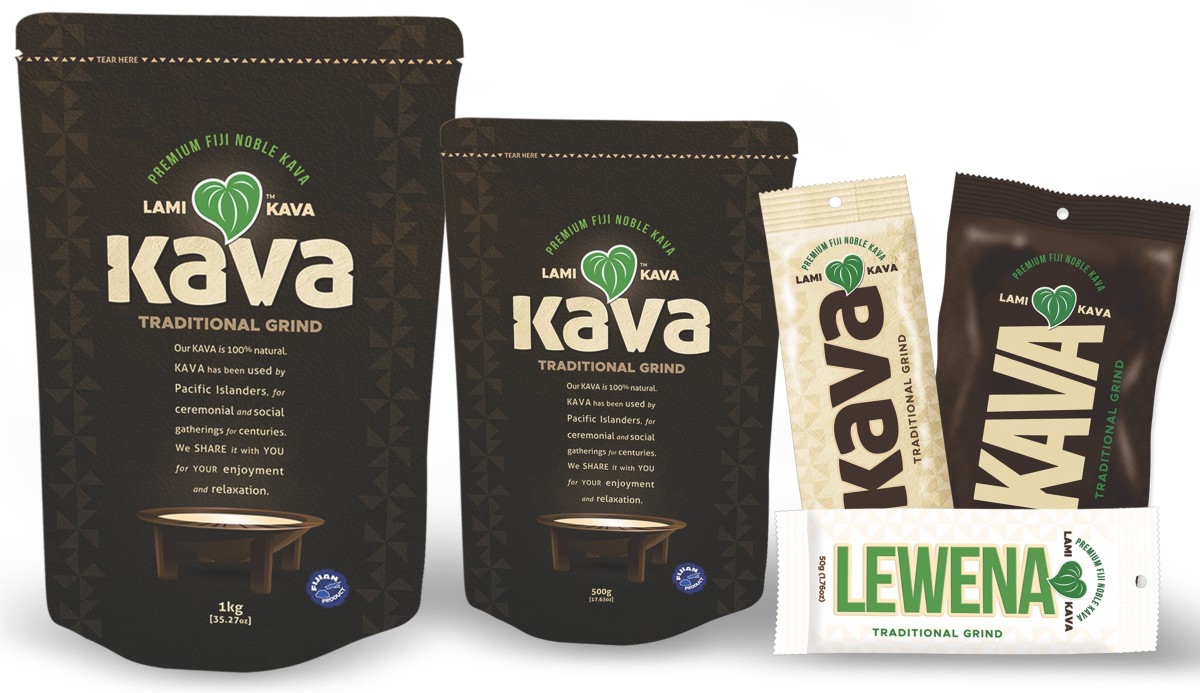
    LAMI KAVA AUSTRALIA is a collaboration between Lami Kava and HiLands Foods. It is a meaningful amalgamation of Lami Kava’s intricate knowledge about noble kava and HiLands Foods’ distribution expertise in the Australian market.

    Today, Lami Kava shares 40 years of experience in the kava industry. Lami Kava was established in 1982 in a little corner shop. It was initially set up as Lami Kava Pounding Shop with a view to facilitating kava pounding for their clients. Over progressive years, by the late 1980s, the company was renamed, Lami Kava. Thus far, over these years, Lami Kava has become a major Fijian brand.

    Lami Kava’s continuous commitment to quality assures consistent and clean products. Lami Kava uses state-of-art machinery and modern commercial food processing technology. They have precise and methodological quality control. Lami Kava engages with proper food safety measures with its certification by HACCP. Thus far, Lami Kava is FDA-registered too.

    HiLands Foods take a lead role to manage LAMI KAVA AUSTRALIA. So, HiLands Foods take full responsibility to promote, market, and protect the Lami Kava brand. Lami Kava will distribute Australia-wide through a network of distributors, wholesalers, and resellers.

    Thus far, HiLands Foods is a reputable, contemporary, and progressive Australian company. It is owned and operated by an Australian family. LAMI KAVA AUSTRALIA leadership team has a wealth of experience in the food, franchise, and distribution business. The leadership team focuses on branding, relationship marketing, and customer excellence. The team’s belief in honesty, credence, and ethics, sets them apart. These traits earn an excellent rapport with the stakeholders. Thus far, combining lateral thinking, the old-fashioned service, and credibility earns an encouraging reputation in the marketplace.

    Kava is a traditional drink throughout the Pacific. Pacific islanders have been enjoying it for centuries. Kava drinking has always been the cornerstone of Pacific tradition and culture. Thus far, it is still central to cultural rituals, especially to honour important guests. Kava is well known in the Pacific region for its calming effects. So far, the western world use kava as s stress reliever. It is now widely known as a kava herbal remedy for anxiety; however, it needs to be scientifically proven.

    Fiji is renowned for the best quality kava product. Lami Kava’s continuous commitment to quality, the company produces the best kava root powders for sale. Thus far, Lami Kava is known for its consistency and quality. It brings great value to your dollar. So, now you can enjoy premium quality Fiji kava for sale in Australia.

  • Danone becomes Australasia’s largest B Corp-certified company

    Danone becomes Australasia’s largest B Corp-certified company

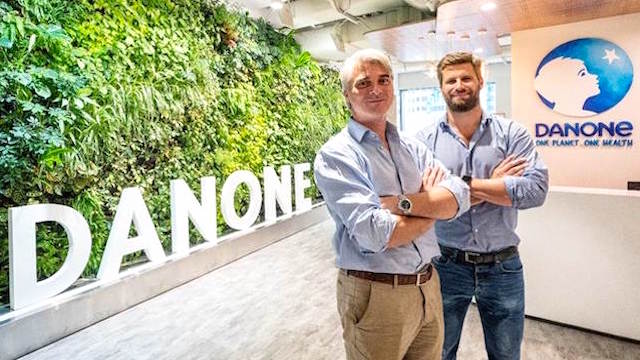
    Danone has become the largest B Corporation (B Corp) certified food and drink company in Australia and New Zealand, joining a growing list of over 400 businesses to achieve the certification in the region and over 4,700 globally. 

    B Corp is a growing global business movement committed to the highest levels of social and environmental performance, accountability, and transparency.

    The rigorous certification is independently administered by B Lab and awarded to companies that can demonstrate verifiable positive impact through policies and practices for employees, communities, customers, and the environment.

    The certification is part of Danone’s broader global commitment for all its business entities to become B Corp certified by 2025. Currently, more than 60 percent of the company’s global sales are covered.

    “We’re thrilled to have achieved B Corp certification across our wholly-owned businesses in Australia and New Zealand,” Danone head of Corporate Affairs Scott Pettet said. “The journey to certification isn’t an easy one and nor should it be. B Lab has rightly set the bar very high, which makes the achievement all the more rewarding for every Danone employee in Australia and New Zealand. We also know that increasingly, employees, customers, consumers, and broader society expect a much stronger stance from businesses and brands on important social and environmental issues.”

    B Lab, a not-for-profit organization, was founded in the US in 2006 with the idea that a different kind of economy was not only possible but necessary — and that business could lead the way towards a new, stakeholder-driven model. Some of the world’s best-known brands such as Patagonia, Inc., The Body Shop, and Ben & Jerry’s count themselves as part of the global B Corp movement.

    “I am so excited to see Danone Oceania joining over 4,700 Certified B Corporations worldwide — a truly diverse group of businesses unified by the idea of using business as a force for good,” B Lab Global co-founder and co-CEO Bart Houlahan said.

    “Globally, the Danone group has been a partner with us for many years, using its profile to add credibility and accelerate the growth of this movement. The success at Danone Oceania is part of this story and I look forward to continuing to work with Danone globally as we work to create an inclusive, equitable, and regenerative economy.”

    In Australia and New Zealand, Danone sells a broad range of specialized nutrition products to support healthy growth and development during the first 1,000 days, as well as products that address some of the world’s biggest health challenges. This includes faltering growth, food allergy and rare metabolic diseases, age-related conditions and chronic disease, frailty, cancer, stroke, and early Alzheimer’s disease.

    “To have a business the size and complexity of Danone achieve B Corp Certification is a huge step for us in Australia and Aotearoa New Zealand. It builds on the work of 400 local B Corps, large and small, who have led the way,” B Lab Australia & Aotearoa New Zealand CEO Andrew Davies said.

    “Danone’s certification also shows it is possible for big business to have a positive impact, to hold themselves accountable, and to grow whilst focusing on the stakeholders it impacts in all aspects of its value chain.”

  • Bamboo Airways signs $110-mln deal with European maintenance firm

    Bamboo Airways signs $110-mln deal with European maintenance firm

    Bamboo Airways has signed a EUR100-million ($110 million) contract with European aircraft maintenance firm Lufthansa Technik AG to service its airplanes.

    Lufthansa Technik would also supply materials for its Boeing 787 and Airbus A320 aircraft, the airline said in a statement.

    It also signed MoUs with two other European firms, AVIAREPS and Airbridge International Agencies for market expansion and cargo transport consultancy.

    One more, with Air France Industries KLM Engineering & Maintenance for engine maintenance, will be signed Thursday.

    The airline launched its first commercial flight between Hanoi and Frankfurt late last month, and plans to operate on the Hanoi-London route from March 22, it said.

  • Apple brings its streaming service to Comcast devices in the US

    Apple brings its streaming service to Comcast devices in the US

    The partnership between Apple and Comcast enters a new era, as the Cupertino-based giant is bringing its streaming service to Comcast’s customers. In a joint statement earlier this week, the companies revealed that Apple TV+ will be available Comcast’s various platforms in the US.

    Starting this week, Apple TV+ will be available on Xfinity X1, Xfinity Flex, and XClass TV, but all eligible devices will be getting the streaming service in the coming days. The move follows Apple TV+’s launch on Sky devices like Sky Q and Sky Glass in the UK and Europe back in December.

    Furthermore, Comcast announced that between March 15 and March 21, its customers will benefit from a special offer, as Apple will provide Xfinity users with a preview of some of its most popular Apple TV+ original series and films across X1, Flex and Stream, no sign-up or sign-in required.

    Additionally, Xfinity customers will be able to watch the first seasons of many of Apple TV+’s popular shows, as well as the Apple Original film “Greyhound.”

    It’s worth noting that Xfinity customers who aren’t Apple TV+ subscribers are eligible for a three-month free trial of Apple TV+ when they sign-up via their Xfinity device by April 25.

    The newly added Apple TV+ service can be accessed by Xfinity customers by saying “Apple TV+” into the voice remote or by saying the name of a desired title from the streaming service.

  • Malaysia’s retail sales record double-digit growth in the fourth quarter

    Malaysia’s retail sales record double-digit growth in the fourth quarter

    Malaysia’s wholesale and retail trade recorded the highest monthly sales value amounting to RM120.5 billion in December, with annual sales recording a four percent growth to reach RM1.3 trillion in 2021 compared with the preceding year, according to the Department of Statistics Malaysia (DOSM).

    On a month-on-month comparison, the sales value of wholesale and retail trade rose 2.5 percent, supported by the reopening of various economic sectors including interstate travels. Recall that sales for the whole of 2020 contracted by 5.9 percent ― a historical low.

    In a statement today, chief statistician Datuk Seri Mohd Uzir Mahidin said 2021’s performance was underpinned by wholesale trade, which increased 6.4 percent to RM641.8 billion, followed by retail trade which expanded 4.4 percent to RM533.6 billion.

    In contrast, the motor vehicles sub-sector recorded lower sales compared with 2020, down by 8.2 percent to RM124 billion. Against 2019 pre-pandemic sales, the sector contracted 2.0 percent.

    On a monthly basis, the 3.5 percent rise in wholesale and retail trade in December was contributed by the retail trade sub-sector, which expanded 3.5 percent to RM48.5 billion, due mainly to the six percent growth in non-specialized stores to RM18 billion.

    However, retail sales in specialized stores remained negative, contracting 3.1 percent. The index for retail Internet sales for December recorded a 20.7 percent growth compared to a year ago.

    On a wholesale level, trade also expanded with a 4.1 percent growth to RM57.6 billion in December 2021 driven by an 8.1 percent expansion to RM11.5 billion in food, beverages, and tobacco, followed by agricultural raw materials and live animals with 14.7 percent growth to RM4.7 billion.

    Similarly, other specialized wholesale increased 2.3 percent to RM22.5 billion.

    On a month-on-month basis, wholesale trade grew 2.2 percent, contributed mainly by household goods which rose 4.4 percent.

    Meanwhile, Mohd Uzir said the 1.5 percent growth recorded in the motor vehicles sub-sector was attributed mainly to car parts and accessories sales which rose 11.7 percent to RM3.5 billion. December motor vehicle sales slipped 4.5 percent.

    On a quarterly comparison, the fourth quarter of 2021 (Q4 2021) saw wholesale trade expanding 5.1 per cent to RM169.7 billion, underpinning the wholesale and retail trade combined. Retail trade saw a 5.0 per cent growth to RM142.6 billion.

    Quarterly motor vehicle sub-sector also grew 5.3 per cent to reach RM42 billion.

    In another statement, Mohd Uzir said volume index of the wholesale and retail trade rebounded 1.4 per cent in Q4 2021, bringing the overall performance of this index for 2021 to 2.1 per cent.

    The increase was attributed to motor vehicles sub-sector, which rose 3.7 per cent, followed by retail trade at 2.0 per cent. However, wholesale trade inched down marginally by 0.03 per cent in the period.

    For quarter-on-quarter comparison, the volume index jumped 16.3 per cent, supported by motor vehicles which surged 136.9 per cent.

    Compared to Q4 2019, the volume index expanded by 2.1 per cent.

    “As for seasonally adjusted volume index, wholesale and retail trade soared 15.3 per cent as against Q3 2021.

    “All sub-sectors recorded positive growth namely motor vehicles (137.1 per cent), retail trade (8.5 per cent) and wholesale trade (6.0 per cent),” he noted.

    Mohd Uzir added that volume index of wholesale and retail ended 2021 with 124.1 points after a 2.1 per cent growth due to wholesale trade and retail trade, which grew 3.8 per cent and 3.4 per cent, respectively.

    As for pre-pandemic comparison, the sector remained below 2019 figure with a negative 4.2 per cent, pulled down by motor vehicles sub-sector, which slipped 10.2 per cent.

  • Facebook fights misinformation with new set of group tools

    Facebook fights misinformation with new set of group tools

    Meta’s Facebook announced that it has taken another step in trying to prevent misinformation from spreading by launching a new set of tools for group admins. These new features are not only meant to identify false information, but they will also help reduce admin workload and, ultimately, make them more efficient while they manage their groups.

    The first and most important new feature introduced this week is the ability through Admin Assist to automatically decline incoming posts that contain false information. Secondly, the “mute” functionality has been further improved and renamed to “suspend,” so admins and moderators can now temporarily suspend group members from posting, commenting, reacting, participating in a group chat, and creating or entering a Room in a group, not just mute them.

    To help admins manage their groups much easier, Facebook added a new feature that enables them to automatically approve or decline member requests, based on specific criteria. Also, the Admin Home design has been updated with a new overview page on desktop, a new layout, and an insights summary on mobile.

    Furthermore, Facebook announced it has added QR codes support, which will allow admins to download or copy/paste from the Share menu and advertise their groups. When scanned, people will be directed to the group’s About game where they can join or request to join. Also, a new option for admins to send invites via email to invite people to join their groups has been added too.

  • Netflix answers whether it will offer an ad-supported subscription plan

    Netflix answers whether it will offer an ad-supported subscription plan

    There is a very small probability that one day, in some possible future, you may be able to watch Netflix through an ad-supported tier. If this ever happens, you might be able to pay less for Netflix and watch your favorite episodes with some ads between them.

    Spencer Neumann, Netflix’s CFO, stated at an investor conference that although Netflix is not currently planning to introduce an ad-supported video on demand (VOD) subscription plan, the option is not fully ruled out either.

    Spencer Neumann said, “It’s not like we have religion against advertising, to be clear. But that’s not something that’s in our plans right now… We have a really nice scalable subscription model, and again, never say never, but it’s not in our plan.”

    Some of Netflix’s competitors are offering ad-supported subscription plans. Hulu, HBO Max, and Paramount Plus already have such a subscription plan. Even Disney Plus will roll out later this year an ad-supported tier.

    In response to a question about whether Netflix is also thinking of introducing an ad-supported tier, Neumann said, “It’s hard for us to kind of ignore that others are doing it, but it now doesn’t make sense for us.” He also stated, “Some other services are going low-price, but I think they’re also losing a lot of money. Netflix is focused on building a profitable business that, in terms of free cash flow, was breakeven last year and is projected to be free cash flow positive this year.”

    So, in other words, don’t expect Netflix to roll out a cheaper ad-supported subscription plan any time soon. Currently, the price of Netflix’s cheapest Basic plan is $9.99 a month, and the top tier Premium plan is $19.99 a month.

  • Samsung Pay’s security receives a “very good” test rating

    Samsung Pay’s security receives a “very good” test rating

    Samsung Pay’s security is in the “very good” category. This was announced by the tech giant in an official newsroom post. According to the post, Samsung Pay scored 450 points out of 500 in a security test conducted by an independent agency called umlaut. Umlaut is part of the Ireland-based IT company Accenture and offers ‘advisory and engineering services to clients all over the world.’

    In its post, Samsung stated that Samsung Pay meets the requirements of umlaut’s test procedure in ‘all tested aspects.’ During the security test, Samsung Pay was tested in four areas:

    • security of data traffic between smartphone and bank
    • compliance with secure programming standards
    • data protection on the smartphone
    • protection against malicious attacks by third parties.

    In the “security of data traffic” tests, testers inspected the types of security algorithms and protocols implemented into Samsung Pay. They also examined how sensitive data is transmitted and if the app has the appropriate measures in place to protect its users from man-in-the-middle attacks, which control and manipulate data traffic.

    In the “compliance with secure programming standards” test, the testers from umlaut checked if Samsung Pay uses secure programming methods and if there is any hidden sensitive information in the app’s source code. During the “checking data protection” tests, the experts tested how securely the Samsung Pay app stores sensitive data and if this data is protected from third parties. The app was also tested against impersonation attacks. These are attacks where the user was tricked into using Samsung Pay on fake apps or websites.

    In regard to Samsung Pay’s good test results, Gerrit Povel, Vice President, Direct to Consumer Division at Samsung Germany, stated, “We play it safe with mobile payment. The result of the independent test by umlaut proves the high priority that security has in the development and operation of the Samsung Pay app. The rating ‘very good’ underlines the role of Samsung Pay as a leading solution in mobile payment.”

  • Russia-Ukraine crisis cuts Vietnam’s seafood exports

    Russia-Ukraine crisis cuts Vietnam’s seafood exports

    Vietnamese exporters of seafood to Russia and Ukraine are in trouble, with some reporting double-digit percentage declines as the military confrontation between the two countries continue.

    Five Vietnamese catfish exporters to Russia have reported a year-on-year drop in export value by 29.8 percent to $2.18 million in January, according to data from the Vietnam Association of Seafood Exporters and Producers (VASEP).

    This is a contrast to a 72.5 percent increase in exports value last year to Russia. Vietnam was Russia’s third biggest importer of catfish last year, behind Argentina and China.

    “Since the beginning of the year, and especially after Russia launched a special military operation in Ukraine, export of catfish to this market has faced disruptions and challenges,” VASEP said in a report.

    Catfish exporters say that the 30 percent plunge in the ruble has made buyers unwilling to pay for their orders. Payment processes have also become difficult as a result of Western nations’ sanctions on Russia.

    Shipping has also become a challenge with transport firms not accepting orders to Russia, given the high chances of having the goods seized on the way.

    Vietnamese catfish exporters have stopped signing new orders to Russia even though importers still want to buy.

    Meanwhile, Vietnamese shrimp exporters have reported a year-on-year decline of 23 percent in Russia exports value to $3.3 million from January 1 to February 15.

    Exporters say there is no certainty that their shipment will be cleared to enter Russia and all transactions are facing difficulties.

    Russia and Ukraine are among the top 20 export markets for Vietnamese tuna, but exporters say several shipments have been returned amid the military conflict, and they are trying to find new markets now.

    Russia’s military operation in Ukraine has entered its 13th day with no rapid end in sight despite the multitude of sanctions that Western countries have imposed on Moscow.

  • Adidas announces new China chief as it looks to revive sales

    Adidas announces new China chief as it looks to revive sales

    Adidas has replaced its China chief, it said on Tuesday, as the German sportswear brand looks to revive sales in the world’s second-largest economy.

    The company has appointed Adrian Siu to take over from Jason Thomas, who became Adidas Greater China’s managing director in 2019, it said.

    Siu has held multiple roles with Adidas in Hong Kong and Shanghai and also served as the chief executive of the Chinese fashion label Cosmo Lady. Thomas will assume the role of senior vice president, global franchise, Adidas added.

    The company did not give a reason for the change, but said it would provide more details on its business during its full-year earnings conference on Wednesday.

    In the third quarter, Adidas saw Greater China sales fall 15%, and the company has launched an action plan to try to revive its fortunes in the country.

    Its Greater China business has been hit by pandemic restrictions and was targeted during a boycott of Western brands by Chinese consumers who criticized companies for saying they would not source cotton from Xinjiang after reports of human rights abuses against Uyghur Muslims there.

  • Boss launches NFT in social impact project

    Boss launches NFT in social impact project

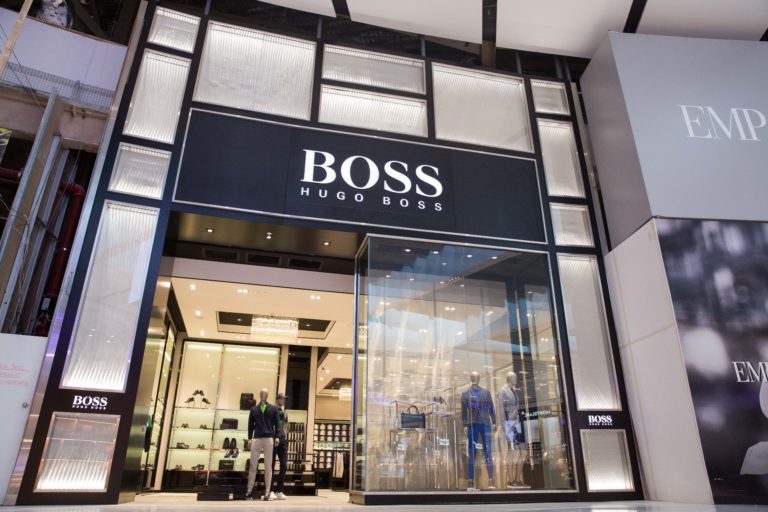
    Premium fashion brand Boss has collaborated with NFT company Boss Beauties to introduce the Boss x Boss Beauties Dream Like a Boss program, which aims to mentor young women.

    One of the Boss Beauties NFTs is on auction until March 12 and the revenue will be donated to the co-created mentorship program. In addition, a limited-edition T-shirt featuring the NFT is being sold on Boss’s website, with a share of sales going to the Dream Like a Boss program.

    According to Boss, the collaboration is an opportunity for both brands “to provide young women from historically marginalised and underrepresented groups with invaluable skills and insights for their professional development.”

    The program will offer mentorship talks, along with real-life business experiences by executives at Hugo Boss and all mentees will be funded by the Boss x Boss Beauties auction.

    “Establishing the Dream Like a Boss program will allow us to give back to our communities, to provide a space for creativity and growth, and to amplify voices that echo our brand values in a supportive and inclusive way,” said Rashmi Verma, head of global diversity and Inclusion at Hugo Boss.

    “Joining forces with Boss Beauties is an important step in creating equal opportunities for all women, and this is just the beginning of many great things to come.”