Tag: asia

  • Reddit is introducing a better way to find new communities and content

    Reddit is introducing a better way to find new communities and content

    If you use Reddit on your Android phone or your iPhone, you will probably notice a new Discover tab within the Reddit app, which strongly resembles an Instagram feed. Yes, it took two years, but finally, Reddit introduced a new significant change to its app. The idea of the new Discover tab is for Reddit users to find new communities and content more easily.

    According to Reddit, if you are logged into your Reddit account, the content in the new Discover tab will be strongly personalized for you. Based on the subreddits and the content you watch on Reddit, the app will recommend content that you may like. Users who are not logged in to the app will see content that is currently trending on the platform.

    As for why Reddit is introducing the Discover tab, Jason Costa, Reddit’s director of product for content and communities, told Engadget, “Discover is more meant to solve the breadth problem and really help people traverse the wide corpus of Reddit.” He also mentioned that during the early testing of the Discover tab, thanks to the new feature, one in five Reddit users joined at least one subreddit.

    Currently, the new Discover tab is available only on the mobile versions of Reddit. But, if the Reddit users like the new feature, Jason Costa said, “I could absolutely see it impacting other surface areas and maybe impacting the design language of Reddit.” This might imply that if Redditors like the new Discover tab, it may ultimately make its way to the platform’s web version.

  • iOS users spend more than double on subscriptions compared to Android users

    iOS users spend more than double on subscriptions compared to Android users

    A new research report has shown that subscriptions made from the App Store are more than double in terms of payment versus Google Play Store. In other words, this means iPhone and iPad users generally tend to spend more on subscriptions and buy more subscriptions in comparison to users on Android phones.

    The information comes from a Sensor Tower report that showcases subscriptions revenue for 2021. In numbers, the App Store subscriptions have generated $13.5 billion in revenue, while Google Play subscriptions — $4.8 billion, despite the fact that Google Play spending is growing at a fast rate.

    Overall, the App Store sees the most money spent on apps and subscriptions, as well as in-app purchases, compared to Google. The record-high $13.5 billion spent us for the top 100 non-gaming subscriptions globally.

    Subscription spending on the App Store grew 31% since last year when it was $10.3 billion. On the other hand, Google Play saw a whopping 78% growth to reach this $4.8 billion mark.

    These are the global numbers. However, US numbers are not that different though. The report is also giving some information on US-only spending, and the App Store has recorded $6 billion, while the Google Play Store, $2.5 billion.
    In terms of specific apps, Alphabet (Google’s parent company) is at the top of the charts with YouTube on the App Store and Google One on the Google Play Store. According to the report, YouTube generated 1.2 billion globally and $566.5 million in the U.S., while Google One achieved $1.1 billion globally and $698 million in the U.S. in 2021.
  • Bosch To Invest Additional 250 Million Euros In Chip Production Capacity

    Bosch To Invest Additional 250 Million Euros In Chip Production Capacity

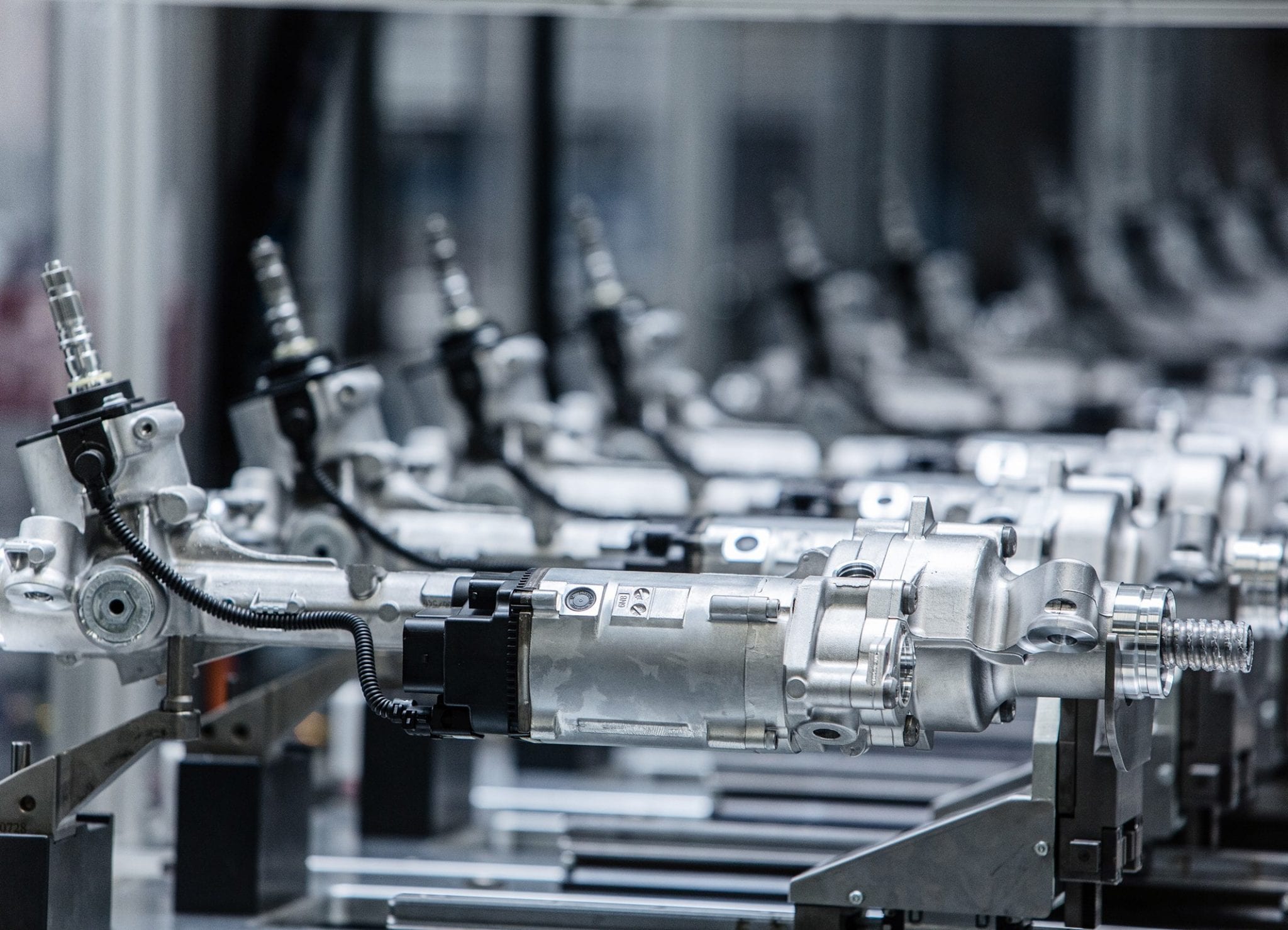
    Bosch is investing an additional 250 million euros ($282.50 million) in extending chip production facilities at its Reutlingen plant in Germany, the company said on Tuesday.

    The Reutlingen site had previously been earmarked for 50 million euros of a total of 400 million that the supplier set aside last year for spending on chip production in 2022 across Reutlingen, Dresden and a testing facility in Penang, Malaysia.

    The largest part of that budget was allocated to expanding its 1-billion-euro Dresden factory producing 300-millimeter wafers, which the group inaugurated in June.

    The extra capacity at Reutlingen will come into force in 2025, Bosch said in a statement.

  • Fourth radio interface technology added to 5G standards

    Fourth radio interface technology added to 5G standards

    Members of the International Telecommunication Union (ITU) have approved the fourth technology as part of ongoing standards development for 5G mobile services.

    Known as “DECT 5G-SRIT”, the new technology supports a range of uses, from wireless telephony and audio streaming to the industrial Internet of Things (IoT) applications, particularly in smart cities. It was added in the first revision to ITU’s key recommendation IMT-2020, which broadly encompasses fifth-generation, or 5G, networks, services, and devices.

    This ITU Radiocommunication Sector (ITU-R) Recommendation – providing a set of global technical 5G standards – reflects continual consultation and discussion among governments, companies, regulators, and other stakeholders dealing with radiocommunication worldwide.

    Along with fostering connectivity across borders, ITU promotes the global rollout of 5G as a key driver to achieve the UN’s 17 Sustainable Development Goals.

    “New and emerging technologies like 5G will be essential to build an inclusive, sustainable future for all people, communities, and countries,” said ITU’s secretary-general, Houlin Zhao. “Under the ongoing International Mobile Telecommunications or IMT program, our diverse global membership continues its long-standing contribution to advance broadband mobile communications, furthering our mission to leave no one behind in connecting the world.”

    ITU – the United Nations agency entrusted with coordinating radio-frequency spectrum worldwide – has published the specifications for the new technology as RecommendationITU-R M.2150-1.

    The technology is designed to provide a slim but strong technical foundation for wireless applications deployed in a range of use cases, from cordless telephony to audio streaming, and from professional audio applications to the industrial Internet of Things (IoT) applications, such as building automation and monitoring.
    The European Telecommunications Standards Institute (ETSI) laid the essential groundwork jointly with the DECT Forum, a worldwide association of the digital enhanced cordless telecommunications (DECT) or wireless technology industry.

    ITU’s radiocommunication director, Mario Maniewicz, said: “The highly collaborative process involves substantial input from and coordination with the ITU Member States, equipment manufacturers, network operators, standards development organizations, and the academic community. ITU provides a unique global framework to discuss the capabilities of new radio technologies.”

    Andreas Zipp, chairman of the DECT Forum, welcomed the addition of the new technology to IMT-2020. “Inclusion as part of ITU’s global 5G standards affirms the significance of this technology moving forward,” he said

    Other candidate radio interface technologies underwent the international mobile telecommunication (IMT) evaluation process over the past year, although only one qualified to be added at this stage.

    The revised IMT-2020 recommendation now includes the new standard, which European standards developers recognized could support 5G uptake everywhere.
    “The ETSI DECT standard received IMT-2000 approval more than twenty years ago,” noted ETSI’s chief technical officer, Adrian Scrase. “5G therefore presented an ideal opportunity to develop this new, non-cellular, radio standard, which is particularly suited for smart meters, Industry 4.0, building management systems, logistics and smart cities.”

    Based on the requirements set out in ITU’s evaluation process, the radio interface technology demonstrates worldwide compatibility in terms of operation, equipment, and roaming. Italso addresses the ultra-reliable low latency (URLLC) capability stipulated by IMT-2020 – the underlying global coordination framework for so-called 5G services.

  • E-commerce startup raises $7 mln

    E-commerce startup raises $7 mln

    Vietnam e-commerce startup OpenCommerce Group has raised $7 million in a Series A funding round led by internet company VNG and venture capital firm Do Ventures.

    The Hanoi-based company, which provides tech solutions for sellers to create and manage their online stores with no inventory costs required, said it has supported 86,700 small and medium enterprises in 195 economies after two years of establishment.

    The company, which also offers print-on-demand services for sellers to create and distribute unique clothing designs, has recorded a gross merchandise value of $670 million to date.

    Quan Truong, co-founder, and CEO, said the company would use the funding to reach new sellers, with a focus on Europe, the U.S., China, and Southeast Asia this year.

    Vietnamese startups attracted investments of over $1.3 billion in 2021, four times the previous year’s figure, according to the National Agency for Technology Entrepreneurship and Commercialization Development.

    The country is set to exceed Thailand by 2025 to become the second-biggest internet economy in Southeast Asia with a scale of $57 billion, behind Indonesia at $146 billion, according to the e-Conomy Southeast Asia 2021 report by Google, Temasek, and Bain & Co.

  • Apple VR headset may come with Micro LED display, M1 chip

    Apple VR headset may come with Micro LED display, M1 chip

    Apple’s VR headset’s due date at the end of the year is inching ever closer, and the rumors surrounding the new device have been flowing in at a faster rate than usual. A mysterious new tip has made its way to us today, supposedly revealing details about the headset’s display and processing chip.

    The leak comes from Korean tech site ET News, and claims it has insider info that Apple is developing a Micro OLED chip for the device with TSMC:

    The parts industry expects Apple to release virtual reality (VR) headset terminal for the metaverse market as early as this year. It was understood that the performance test for VR headset production has been recently completed. Apple VR devices are equipped with micro-organic light-emitting diode (OLED) displays.

    Apple cooperated with Taiwan’s TSMC with developing OLED displays for VR devices. Micro OLED displays do not require color filters since OLEDs are deposited directly on the chip wafer. Micro OLED is smaller, thinner, and more efficient.

    The same article also states that Apple is equipping the VR headset with an M1 chip, which also powers Apple’s latest iPads and MacBooks.

    Although the ET News leak has made its way into the tech mainstream media, it wouldn’t be too fast to put much stock in it. It further claims that Apple will be using the iPhone’s iOS operating system for the headset, despite an earlier fairly credible GitHub code leak showing clear references to a separate “Reality OS” operating system that the company is developing.

    The M1 chipset claim is slightly more credible, as we know that the device has already been tested with the processor Apple designed to replace Intel components on certain Mac models. In power, the M1 processor is comparable to the 5nm-node A14 Bionic chip that powers the iPhone 12 series but is complete with all of 16 billion transistors for maximum compact power and efficiency.

  • Gold prices soar to new peak

    Gold prices soar to new peak

    Vietnamese gold prices hit a new all-time high of VND64.8 million (US$2,838.4) per tael Thursday as global rates skyrocketed amid tensions over the Ukraine situation.

    Saigon Jewelry Company sold gold at VND64.8 million per tael of 37.5 grams or 1.2 ounces, up 1.4 percent from Wednesday afternoon.

    DOJI sold at VND64.7 million, also up 1.4 percent. The previous high in Vietnam was VND62.4 million in August 2020.

    In the global market, the metal rose by 1.7 percent to a nine-month high of $1,930.65 per ounce as geopolitical tensions supported demand for safe-haven bullion.

    Vietnamese prices are VND11.35 million, or 21.5 percent, higher than global rates.

    Gold continued to be the top asset class for 72 percent of Vietnamese investors, the WGC said citing a study of 2,000 investors last year.

  • Rabobank sounds warning of food price inflation

    Rabobank sounds warning of food price inflation

    The current tremendous inflationary pressure on the cost base of virtually every food producer has yet to be absorbed further downstream in the supply chain. Will it be the consumer, the food retailer, or the foodservice operator that ultimately picks up the bill? Or will the problem be pushed back into the chain?

    Inflation in itself is not necessarily a bad thing, according to Rabobank’s chief macroeconomist – as long as everyone expects and calculates with the same inflation rate, that is. Well, the current cost inflation in food was definitely not modeled for and is unprecedented. Apart from maybe depreciation, virtually every cost line in the P&L is experiencing upward pressure. Whether it is agri commodities, packaging, transport, energy, or personnel costs, all have shown a massive price increase. And relief is nowhere in sight in the short term. Part of the cost increases even have a structural nature, as supply chains are shifting from ‘just in time’ to ‘just in case.’

    The exact magnitude of the cost inflation is difficult to gauge. Supplies are often covered by contracts, so the actual contracted prices and timing of contract renewals will differ from company to company. Moreover, the cost inflation a company experience depends on the type of products it produces, which raw materials are used, and where products are sourced. A bakery company will have more issues with the gas price, whereas a beer company will monitor glass and aluminum prices more closely, and a nut trader has to deal with the 822% price hike in container prices from Asia.

    So, rather than focusing on the cost itself, we have asked a broad range of suppliers throughout Europe how much they would have to raise their prices to food retailers and foodservice operators in order to cover their exploded cost base. The answers ranged from 0% up to 30% or more. On average, suppliers are looking for about 9% to 10% higher prices (PPI) toward retailers and foodservice companies to cope with the inflated costs. One thing is for sure, given the average operating margins in food production, not many producers will be able to absorb the cost inflation in their own operation. Many producers made it abundantly clear that subsidizing their products was not an option, so negotiations will be tough this autumn.

    Whatever You Do, Don’t Blink First

    The obvious next question is: What will food retailers do? Given the operational leverage in their business model, passing through any price inflation is in the best interest of supermarket organizations – in theory, that is. Food retailers across Europe are active in highly competitive markets. Being first to raise consumer prices would likely be detrimental to a retailer’s reputation and, if competition holds out long enough, also to sales volumes and market share. Also, the food retailer’s profit margin would not suffice to absorb a 10% higher cost of goods sold bill.

    It will be a matter of closely monitoring competition, timing any consumer price hikes carefully (preferably later than competitors), and weighing how much of the cost inflation can be absorbed without aggravating the stock market, shareholders, or co-op members. History provides ambivalent clues as to how supermarkets have dealt with previous inflation peaks.

    Looking back some 20 years, we have seen the cost base and producer prices in the EU-27 peak before, in 2007/08 and 2010/11. In the first cost rally, food retailers benefited from a favorable economic climate – just ahead of the financial crisis – and clearly decided to pass most of the inflation on to the consumer (CPI) with a limited delay. In 2010/11, the financial crisis and associated tax increases took a toll on consumers’ wallets, and, consequently, food retailers were much more cautious in how much and when they raised the prices on their shelves. Whether the economic climate in today’s market reflects 2007/08 more or the broader inflation experienced outside food more closely resembles the 2010/11 consumer is the million dollar question.

    In order to calculate an index representing the cost inflation of food producers, we have constructed a cost base of a nonexistent, average food company that uses the FAO food stuff index as agricultural raw materials (40% of costs), the Eurostat energy index representing transport, production, and packaging (30% of costs), and the Eurostat labor cost index for all staff-related costs in production, sales, marketing and, administration (30% of costs).

    The Worst Is Yet to Come for the Consumer

    Given that neither the food producer nor the food retailer are able or willing to absorb the cost price inflation in full, the consumer will likely be confronted with higher grocery prices sometime in the early months of 2022, though not necessarily in one go. Food retailers may choose to raise consumer prices in phases in order not to upset the consumer too much.

    The good news for most consumers is that they have means to circumvent that inflation in their budgets by trading down to cheaper products or cheaper channels: buying ground beef instead of steaks, opting for private label products instead of brands, shopping at hard discount instead of full-service supermarkets, or having dinner in a QSR outlet rather than a fast-casual restaurant.

    To make it more complicated, this trading down by the consumer may trigger substantial volume shifts in demand, which both food producers and food retailers will need to factor into their decisions on how to deal with the unprecedented inflationary pressure.


  • Singtel launches industry’s first all-in-one platform for enterprise 5G edge computing and cloud services

    Singtel launches industry’s first all-in-one platform for enterprise 5G edge computing and cloud services

    Singtel expands its offering for the enterprise market with the launch of Paragon, a revolutionary platform that aggregates networks, edge computing, public cloud and applications ecosystems to accelerate enterprises’ digital transformation.

    Offering an all-in-one solution for digital transformation, Paragon seamlessly aggregates and manages low-latency networks and edge cloud resources, allowing enterprises to tap on Singtel’s 5G network to securely deploy applications across the edge at Singtel MEC and a public cloud of choice. Through a single interface, enterprises can activate network slices on demand, deploy mission-critical applications on Singtel MEC and access a robust ecosystem of partner applications.

    This significantly reduces the complexity and time needed to adopt 5G MEC and low-latency applications and services, giving enterprises the agility, flexibility and scalability needed to transform operations and adapt to new business models in a digital economy.

    “Many enterprises are undergoing rapid digitalization while exploring and developing tailored 5G solutions for deployment in their industries. We understand the challenges and complexities that they face in managing the various networks, edge cloud applications and services with the required cyber security, resiliency and demanding service assurances required, cost-effectively. Paragon was conceived, developed and delivered to help enterprises meet these needs through a single platform,” said Bill Chang, chief executive officer, group enterprise, Singtel.

    One-stop digital transformation platform and strong 5G MEC ecosystem

    Developed in-house, Paragon empowers enterprises to adopt Singtel’s 5G network to deploy their edge computing applications and services independently, securely and within minutes. These capabilities are bundled on the platform to provide enterprises a unified experience, delivering always-on connectivity and low latency with high bandwidth throughout to support industry 5G use cases including advanced logistics and manufacturing, smart transportation, and real-time fleet management and monitoring.

    Network 5G slices can be created almost instantly, autonomously and as many times as needed. A network slice can be utilised only when needed for an intended duration to ensure cost optimization. Since enterprises pay only for what they use, Paragon reduces the operational and costs overhead otherwise incurred by businesses.

    For enterprises, the benefits are a shorter innovation curve and time-to-market, as well as better performance and faster decision-making at the edge, critical for use cases including autonomous systems like robotics, drones and vehicles, immersive, video-rich experiences and powerful real-time edge AI use cases. Already, Paragon is being deployed for testbeds in the public sector. For instance, 5G trial uses cases are underway at Singapore’s Sentosa to bring about built environment and tourism transformations.

    Through the Paragon Marketplace, which operates like an app store, Singtel’s ecosystem of partners can integrate their offerings through robust industry-standard application programming interface (API) to rapidly build and deploy their solutions on the platform. As such, existing cloud-based 4G applications can migrate to 5G with ease. On the other end, end customers can easily source and adopt applications that solve their business challenges.

    Plans are in the pipeline to scale Paragon regionally and globally with other telcos. Partners on board Paragon can extend their solutions to multiple markets. Through the Singtel Partner Programme, Singtel aims to co-create and test more innovative solutions, driving wider 5G adoption across markets to bring forward a 5G future.

  • Samsung execs accused of doctoring 5nm chip yield results to hide stolen funds

    Samsung execs accused of doctoring 5nm chip yield results to hide stolen funds

    On the heels of a report claiming that Qualcomm is so upset about the low 35% yield achieved by Samsung Foundry’s 4nm process node that it dumped Sammy for TSMC, another alarming report has surfaced. Samsung is investigating the possibility that fraud occurred inside the company’s foundry business.

    Unnamed Samsung Foundry executives are being accused in the Korean media of fabricating the yield rate data achieved by Samsung Foundry for its 4nm and 5nm process node. This data, expressed as a percentage, shows how many chips in a wafer meet quality testing standards. Yesterday’s report indicated that the yield for Samsung Foundry’s 4nm process node was a poor 35% compared to the 70% yield achieved by rival TSMC.

    The poor yield was mentioned in a report as the reason why Qualcomm supposedly replaced Samsung Foundry with TSMC for the production of next year’s Snapdragon 8 Gen 2 Application Processor. The new report claims that the 4nm and 5nm yields were faked by Samsung Foundry executives to make it seem that everything was going well with the division.

    Samsung officials are trying to track down funds that were supposed to be used to improve the yield at Samsung Foundry. Reports of the poor yields and missing funds at Samsung Foundry come at a poor time for Samsung since it and TSMC are the only two foundries in the world able of churning out chips at a process node of under 5nm. Both are working hard to become the first foundry able to ship 3nm components.

    TSMC already has plenty of business as its customer list includes heavyweights such as Apple, MediaTek, Nvidia, and more. TSMC is believed to be running into yield problems of its own at the 3nm process node although volume production is only supposed to be reached later this year.

    The lower the process node, the higher the number of transistors that can fit in a chip. That is key to the performance of the component since the more transistors used, the more powerful and energy-efficient a chip is.

    A Samsung official familiar with the situation said in a quote translated by Machine Learning, “Since the delivered quantities is struggled to meet the recent foundry order volume, we have doubts about the yield of the non-memory process, which has was known to be achieved.”

    The official added, “The management consulting investigates the claims on the yield of a semiconductor foundry by former and current DS division executives. The consulting will determine whether the claims are false.”

    If this story sounds strange and bizarre, that’s because it is. Frankly, we can’t think of a story that is similar to this one. And that means that until more official statements are issued by Samsung or even the police in Korea, we should take this report with a grain of salt.

Samsung’s foundry business set a company record for revenue during the fourth quarter of 2021. On a sequential basis, profits declined from the third quarter of last year as Samsung had to spend more money to ramp up advanced process nodes such as 4nm and 3nm. Whether some of that money has to do with the funds allegedly missing is not clear.

The increase in revenue to a record high in the foundry business came from increased sales to HPC (High Performance Computing) customers. For the current quarter, the first quarter of 2022, Samsung said that its foundry would “focus on improving its advanced process yield to improve its supply stability. Also, the Company will continue technical leadership through mass production of the 1st generation GAA process in the first half of 2022.”

GAA, or Gate All Around, is a transistor structure associated with Samsung’s 3nm process node. It replaces (for Samsung, anyway) the FinFET structure used presently.

Samsung Foundry says that the chip market will remain “tight” as 5G penetrates more market, and demand from High Performance Computing firms remains solid. Additionally, the need for manufacturers to have more chips than needed just in case there is a supply shock from an external event, and outsourcing demand from integrated device manufacturers (ISDMs) who design and build their own chips (like Intel) will keep the assembly lines humming in 2022.

For this year, Samsung expects supply to remain tight due to rising penetration of 5G, solid HPC demand, growing out-sourcing from IDM players and continued needs for securing safety inventory. The Company aims to exceed market growth by expanding capacity at advanced nodes, adjusting prices and adding new customers.

  • Fashion group Shandong Ruyi’s creditors seek control of Lycra

    Fashion group Shandong Ruyi’s creditors seek control of Lycra

    Creditors of debt-laden fashion conglomerate Shandong Ruyi Technology Group will seek control of Lycra after Ruyi defaulted on a $400 million loan it took from them to buy the fibre maker. A statement from the creditors on Monday said that Ruyi, known for its ambition to become the LVMH of China, has not been able to repay the Lycra loan since May 2019.

    The lenders include Hong Kong-based China Everbright Limited and Tor Investment Management, along with Seoul-based private equity firm Lindeman Partners and its affiliate Lindeman Asia.

    Their steps to assume full equity control of Lycra include the appointment of receivers for the assets of Lycra’s parents. Ruyi and Lycra did not respond immediately to requests for comment on Tuesday. Ruyi bought control of Lycra from U.S. conglomerate Koch Industries for $2.6 billion in 2019, borrowing about $1 billion for the deal.

    Reuters reported in 2020 that some of Ruyi’s creditors had hired a restructuring specialist to sound out potential buyers for Lycra after weakening the financial performance of the manufacturer of the eponymous stretchy material fears of a loan default.

    However, no deal materialised and Ruyi decided to look for alternative means of rescue. Ruyi, the roots of which are in the textiles industry, began a buying spree in 2015 that included SMCP, Aquascutum and Savile Row tailor Gieves & Hawkes, aiming to establish itself as a luxury fashion house.

    But the Chinese conglomerate has struggled under the weight of its debts and its financial difficulties worsened with the COVID-19 pandemic.

    French fashion group SMCP last month removed five board members associated with Ruyi after the conglomerate defaulted on bonds used to acquire shares in the French business.

  • Menulog expands services as demand grows

    Menulog expands services as demand grows

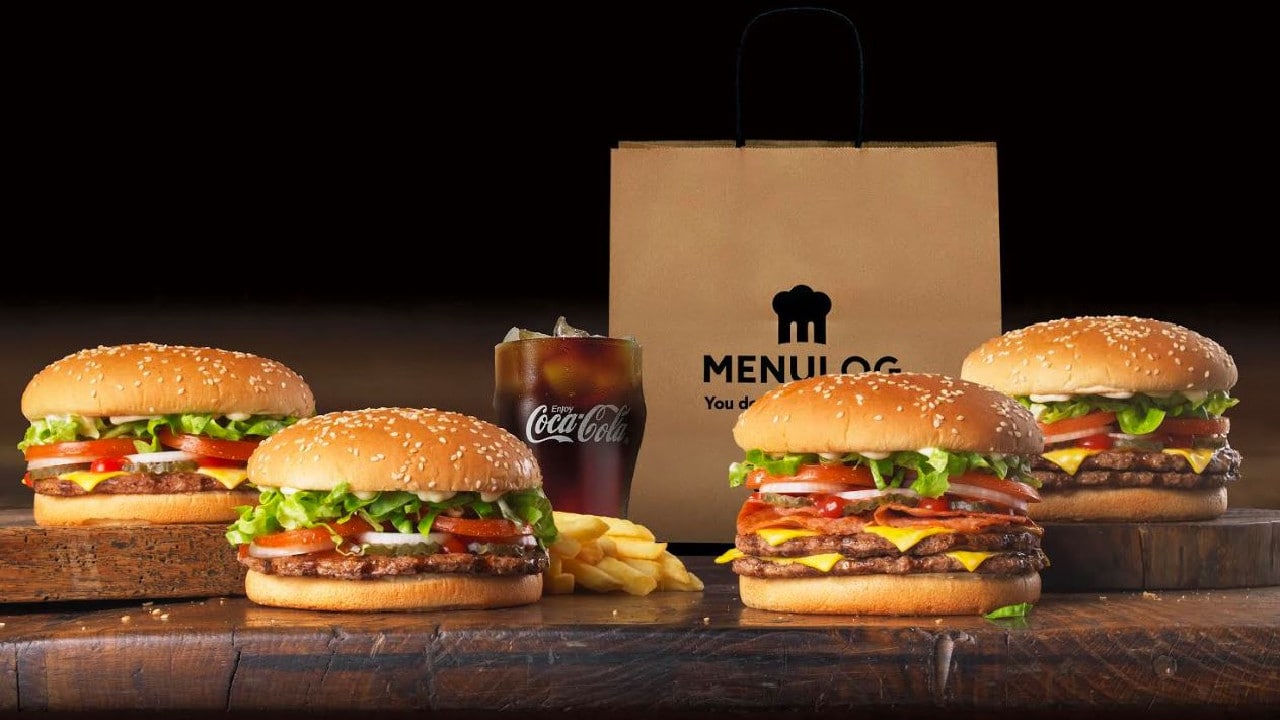
    Australian food-delivery service Menulog has added more than 2200 convenience and grocery partners as demand surges. The company says it has experienced 23-per-cent growth since January last year with demand booming in suburban and regional markets as well as metro cities. Independent businesses represent 37 per cent of Menulog’s grocery and convenience partners.

    Menulog has signed on IGA supermarkets, BP and Quickstop United Petroleum as new trading partners, with plans to add more in the near future as it continues to expand.

    Menulog MD, ANZ, Morten Belling, said Menulog’s point of difference had always been its breadth of coverage across Australia, fully serving metro areas, and with a strong courier and partner network spanning suburban, regional and rural areas.

    “We’re seeing exponential demand for convenience and grocery deliveries across all parts of Australia, in part driven by changes in consumer buying habits that started as a result of Covid restrictions,” said Belling.

    Customer demand is expected to rise this year and Menulog wants to prioritise its grocery and convenience delivery services even though retail trading restrictions have eased.

  • Hong Kong flags tax breaks, handouts for Covid relief

    Hong Kong flags tax breaks, handouts for Covid relief

    Hong Kong will offer tax breaks, handouts, and subsidies to small businesses and residents, to mitigate the impact of a new wave of social restrictions to curb Covid-19 infections, Finance Secretary Paul Chan said in his 2022-23 budget speech.

    The measures were announced as hundreds of bars, restaurants and small retailers warned they were months away from closure, following the imposition of the strictest restrictions since the pandemic began in 2020.

    “Our economy and people’s livelihoods have been under immense pressure in recent months”, Chan told legislators via videoconference on Wednesday. “Economic performance in the first quarter is not optimistic.”

    Chan said “countercyclical measures” in the budget to support the economy totaled more than HK$170 billion ($21.79 billion), with anti-epidemic measures alone worth more than HK$54 billion.

    The global financial hub has doubled down on its “dynamic zero Covid” strategy, which aims to eradicate all outbreaks, following mainland China’s lead even as the rest of the world adjusts towards “living with the virus.”

    Given the city is facing thousands of infections a day and the numbers are growing, some analysts predict at least one or two-quarters of economic contraction after recovering last year from the city’s most prolonged recession in 2019-2020.

    Bars, gyms, beauty parlors and 12 other types of venues are closed, while restaurants cannot operate beyond 6.00 pm. Apart from grocery stores, most shops are deserted as residents are back working from home. The border is virtually shut with the finance sector complaining this has caused an exodus of talent and made operating a regional hub out of Hong Kong difficult.

    The new measures announced on Wednesday include a 100 percent reduction in salaries tax, capped at HK$10,000, handouts of HK$10,000 consumption vouchers, financial aid for the unemployed, and subsidies for directly impacted businesses.

    Hong Kong’s economy is expected to grow 2.0 percent to 3.5 percent this year after expanding 6.4 percent in 2021, Chan said.

  • Amazon sues alleged fake review brokers AppSally and Rebatest

    Amazon sues alleged fake review brokers AppSally and Rebatest

    Amazon is suing two websites that allegedly used their networks of more than 900,000 users to post fake reviews to e-commerce marketplaces.

    AppSally and Rebatest operate as “fake review brokers,” Amazon said in an announcement. In AppSally’s case, the website allows merchants to buy Amazon reviews for as little as $20. Rebatest, on the other hand, asks interested users to first buy a product from Amazon; it’ll then refund the cost in exchange for a review.

    “The lawsuits aim to shut down two major fake review brokers, AppSally and Rebatest, who helped mislead shoppers by having their members try to post fake reviews in stores such as Amazon, eBay, Walmart, and Etsy,” according the Amazon.

    Together, the claim “to have more than 900,000 members willing to write fake reviews,” Amazaon said. Rebatest’s own homepage says over 818,000 members have used the site to save $11 million.

    In investigating Rebatest, Amazon allegedly found the site “will only pay people writing 5-star reviews after their fake reviews are approved by the bad actors attempting to sell those items.”

    Meanwhile on AppSally, merchants were allegedly shipping empty boxes to users willing to write fake reviews, likely as a way to fool Amazon systems into thinking the same users were verified buyers of the actual products. To make the fake reviews seem even more authentic, AppSally would also upload pictures that could be posted alongside the reviews.

    “While we prevent millions of suspicious reviews from ever appearing in our store, these lawsuits target the source,” Amazon VP for Customer Trust Dharmesh Mehta said in the announcement.

    AppSally and Rebatest did not immediately respond to a request for comment. AppSally is based in New Zealand. It’s unclear where Rebatest is located.

    Amazon didn’t say where it’s suing AppSally and Rebatest. But the lawsuits are part of an ongoing effort to stop inauthentic reviews from circulating on the company’s website and app. “Amazon receives more than 30 million reviews each week, and uses a combination of machine learning technology and skilled investigators to analyze each review before it is displayed,” the company added.

  • India Will Not Give Tesla Any Tax Breaks

    India Will Not Give Tesla Any Tax Breaks

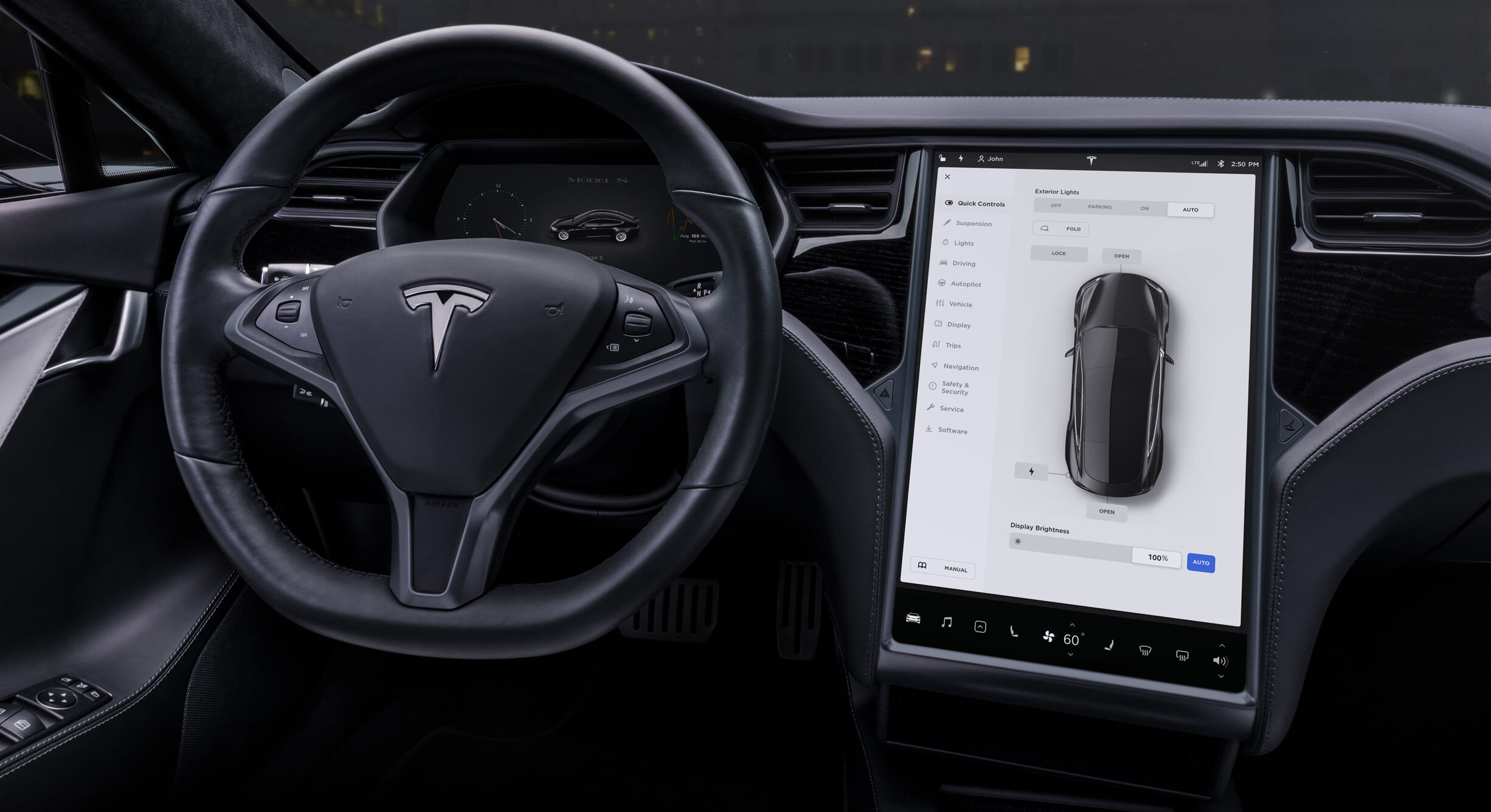
    Any special concessions and tax breaks for the world’s most valuable carmaker and electric car pioneer Tesla have been ruled out by the Indian government. In a report by ETAuto, it has been revealed that the government’s plans for local manufacturing have received an overwhelming response that could generate revenues of over Rs 2.3 lakh crore. Arun Goel, the heavy industries secretary, has revealed companies who have submitted proposals for localization have committed investments in India that go beyond the government’s projections.

    “We have received fresh investment proposals beyond the targeted INR 42,500 crore. The response has been overwhelming and the larger industry has been appreciative of our plan, which explains the robust investment commitment,” Goel said.

    But when asked about potential concessions to facilitate the entry of Tesla in India, he ruled out that possibility. “The concession plan is uniform (for the industry). We are a democracy,” he added.

    Transport minister Nitin Gadkari had also expressed concerns around Tesla’s proposed entry into India where it would start by selling imported vehicles made in its Shanghai Gigafactory.

    “The company (Tesla) wants workers from China and the market of India. This is not possible under the Modi government. Our government’s policy is that if the Indian market has to be used, job opportunities will also have to be given to Indians,” said Minister of State for heavy industries Krishan Pal Gujjar in the Lok Sabha opposing Tesla’s plans for entering India.

    Tesla’s predicament in India is a tricky one – it wants to leverage what will be the third-largest automobile market in the world, but its products aren’t viable for the market. Its cheapest models are vastly more expensive than the cost of the average sedan, which in turn is further hobbled by a potential 100 percent tax duty. Then there is the lack of local charging infrastructure which has been Tesla’s secret sauce.

    India doesn’t want to give Tesla tax breaks for numerous reasons. It has already secured investments from automotive giants like Hyundai and Mercedes who are making their top-tier EVs in India. It will need to extend the tax breaks to every car maker if exceptions were made for Tesla.

    Then there is the issue of Tesla likely importing its cars from China, a country with which India has had strained relations. On top of this, Prime Minister Narendra Modi’s government has championed localized manufacturing with its “Make in India” scheme so Tesla’s plans are at odds with what the Indian government wants.