Tag: asia

  • Hong Kong flags tax breaks, handouts for Covid relief

    Hong Kong flags tax breaks, handouts for Covid relief

    Hong Kong will offer tax breaks, handouts, and subsidies to small businesses and residents, to mitigate the impact of a new wave of social restrictions to curb Covid-19 infections, Finance Secretary Paul Chan said in his 2022-23 budget speech.

    The measures were announced as hundreds of bars, restaurants and small retailers warned they were months away from closure, following the imposition of the strictest restrictions since the pandemic began in 2020.

    “Our economy and people’s livelihoods have been under immense pressure in recent months”, Chan told legislators via videoconference on Wednesday. “Economic performance in the first quarter is not optimistic.”

    Chan said “countercyclical measures” in the budget to support the economy totaled more than HK$170 billion ($21.79 billion), with anti-epidemic measures alone worth more than HK$54 billion.

    The global financial hub has doubled down on its “dynamic zero Covid” strategy, which aims to eradicate all outbreaks, following mainland China’s lead even as the rest of the world adjusts towards “living with the virus.”

    Given the city is facing thousands of infections a day and the numbers are growing, some analysts predict at least one or two-quarters of economic contraction after recovering last year from the city’s most prolonged recession in 2019-2020.

    Bars, gyms, beauty parlors and 12 other types of venues are closed, while restaurants cannot operate beyond 6.00 pm. Apart from grocery stores, most shops are deserted as residents are back working from home. The border is virtually shut with the finance sector complaining this has caused an exodus of talent and made operating a regional hub out of Hong Kong difficult.

    The new measures announced on Wednesday include a 100 percent reduction in salaries tax, capped at HK$10,000, handouts of HK$10,000 consumption vouchers, financial aid for the unemployed, and subsidies for directly impacted businesses.

    Hong Kong’s economy is expected to grow 2.0 percent to 3.5 percent this year after expanding 6.4 percent in 2021, Chan said.

  • Amazon sues alleged fake review brokers AppSally and Rebatest

    Amazon sues alleged fake review brokers AppSally and Rebatest

    Amazon is suing two websites that allegedly used their networks of more than 900,000 users to post fake reviews to e-commerce marketplaces.

    AppSally and Rebatest operate as “fake review brokers,” Amazon said in an announcement. In AppSally’s case, the website allows merchants to buy Amazon reviews for as little as $20. Rebatest, on the other hand, asks interested users to first buy a product from Amazon; it’ll then refund the cost in exchange for a review.

    “The lawsuits aim to shut down two major fake review brokers, AppSally and Rebatest, who helped mislead shoppers by having their members try to post fake reviews in stores such as Amazon, eBay, Walmart, and Etsy,” according the Amazon.

    Together, the claim “to have more than 900,000 members willing to write fake reviews,” Amazaon said. Rebatest’s own homepage says over 818,000 members have used the site to save $11 million.

    In investigating Rebatest, Amazon allegedly found the site “will only pay people writing 5-star reviews after their fake reviews are approved by the bad actors attempting to sell those items.”

    Meanwhile on AppSally, merchants were allegedly shipping empty boxes to users willing to write fake reviews, likely as a way to fool Amazon systems into thinking the same users were verified buyers of the actual products. To make the fake reviews seem even more authentic, AppSally would also upload pictures that could be posted alongside the reviews.

    “While we prevent millions of suspicious reviews from ever appearing in our store, these lawsuits target the source,” Amazon VP for Customer Trust Dharmesh Mehta said in the announcement.

    AppSally and Rebatest did not immediately respond to a request for comment. AppSally is based in New Zealand. It’s unclear where Rebatest is located.

    Amazon didn’t say where it’s suing AppSally and Rebatest. But the lawsuits are part of an ongoing effort to stop inauthentic reviews from circulating on the company’s website and app. “Amazon receives more than 30 million reviews each week, and uses a combination of machine learning technology and skilled investigators to analyze each review before it is displayed,” the company added.

  • India Will Not Give Tesla Any Tax Breaks

    India Will Not Give Tesla Any Tax Breaks

    Any special concessions and tax breaks for the world’s most valuable carmaker and electric car pioneer Tesla have been ruled out by the Indian government. In a report by ETAuto, it has been revealed that the government’s plans for local manufacturing have received an overwhelming response that could generate revenues of over Rs 2.3 lakh crore. Arun Goel, the heavy industries secretary, has revealed companies who have submitted proposals for localization have committed investments in India that go beyond the government’s projections.

    “We have received fresh investment proposals beyond the targeted INR 42,500 crore. The response has been overwhelming and the larger industry has been appreciative of our plan, which explains the robust investment commitment,” Goel said.

    But when asked about potential concessions to facilitate the entry of Tesla in India, he ruled out that possibility. “The concession plan is uniform (for the industry). We are a democracy,” he added.

    Transport minister Nitin Gadkari had also expressed concerns around Tesla’s proposed entry into India where it would start by selling imported vehicles made in its Shanghai Gigafactory.

    “The company (Tesla) wants workers from China and the market of India. This is not possible under the Modi government. Our government’s policy is that if the Indian market has to be used, job opportunities will also have to be given to Indians,” said Minister of State for heavy industries Krishan Pal Gujjar in the Lok Sabha opposing Tesla’s plans for entering India.

    Tesla’s predicament in India is a tricky one – it wants to leverage what will be the third-largest automobile market in the world, but its products aren’t viable for the market. Its cheapest models are vastly more expensive than the cost of the average sedan, which in turn is further hobbled by a potential 100 percent tax duty. Then there is the lack of local charging infrastructure which has been Tesla’s secret sauce.

    India doesn’t want to give Tesla tax breaks for numerous reasons. It has already secured investments from automotive giants like Hyundai and Mercedes who are making their top-tier EVs in India. It will need to extend the tax breaks to every car maker if exceptions were made for Tesla.

    Then there is the issue of Tesla likely importing its cars from China, a country with which India has had strained relations. On top of this, Prime Minister Narendra Modi’s government has championed localized manufacturing with its “Make in India” scheme so Tesla’s plans are at odds with what the Indian government wants.

  • AirAsia India unveils ‘FlyAhead’ service for fliers to take earlier flight

    AirAsia India unveils ‘FlyAhead’ service for fliers to take earlier flight

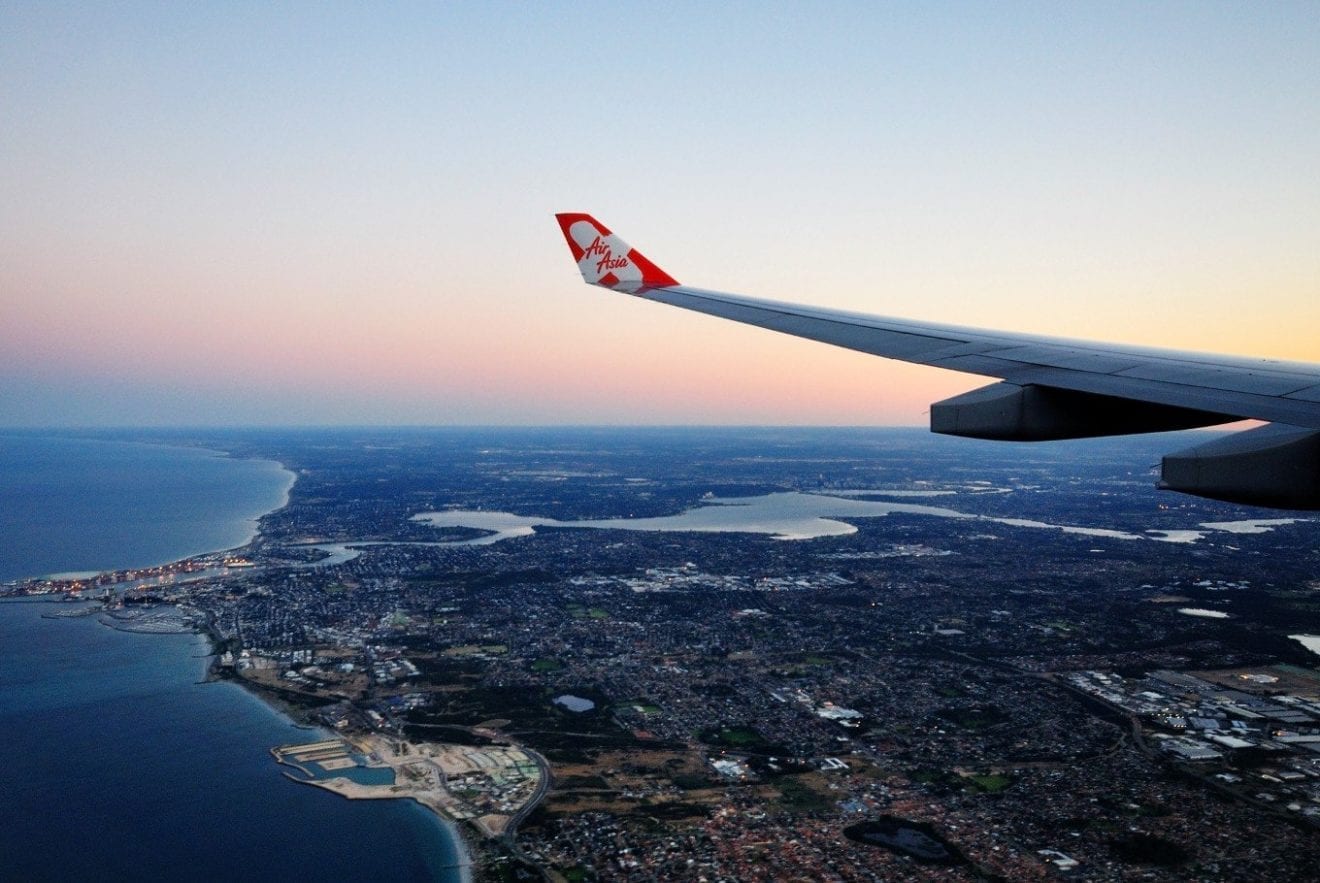
    AirAsia India has unveiled its new ancillary service, ‘FlyAhead’. With the ‘FlyAhead’ service, guests wishing to take an earlier flight will be able to seamlessly opt for this facility.

    The ‘FlyAhead’ service has been launched for a nominal fee of INR 1,500 for guests booked on standard fares and INR 500 for guests booked on Corporate and SME fares. Guests who reach the airport six hours or more prior to their scheduled flight departure can opt for the FlyAhead service at the AirAsia Airport Counter.

    Change fees, which are typically INR 3,000 would be waived for all guests opting for the AirAsia FlyAhead service and fare differences typically charged by airlines would also not be applicable.

    Speaking about the initiative, Dr. Ankur Garg, Chief Commercial Officer, AirAsia India, said: “AirAsia India has consistently developed innovative, future-proof solutions prioritizing the ease and comfort of our guests. Led by our core value of being ‘Guest Obsessed,’ our latest offering ‘FlyAhead’ is a new ancillary service which provides guests a flexible and convenient option to reach their destination ahead of schedule.”

  • Facebook is trying to replace TikTok with new Reels

    Facebook is trying to replace TikTok with new Reels

    When Meta accused Apple of costing the company ten billion dollars a few weeks back, Facebook had also shared some of its growth plans for the coming future. Part of its ten billion-dollar restructuring strategy, Zuckerberg stated, included initiating a “transition on our own services towards short-form video like Reels.”
    This also includes a global launch of Facebook’s own version of Reels, as Meta observed TikTok’s viral success and shifts its focus on promoting similar content. Facebook had recently been trialing “Facebook Reels” with multiple users on the platform, as well as promoting cross-platform video sharing to garner wider interest in this type of content and test the waters. Starting today, Reels is officially becoming its own standalone feature on Facebook, and is rolling out to at least 150 countries over the coming weeks.
    Zuckerberg made the announcement in a Facebook post earlier today: “Reels is already our fastest-growing content format by far, and today we’re making it available to everyone on Facebook globally. We want Facebook Reels to be the best place for creators to connect with their community and make a living, so we’re launching new monetization tools, too.”
    The Reels will begin appearing for everyone right at the top of Facebook users’ Feed. Facebook Stories—another feature stolen off Instagram—will be able to be converted into Reels, and vice versa: Reels will be able to be shared as part of Stories.
    Facebook Reels are also set to become a promoted category on Facebook Watch as well as, surprisingly, Facebook Groups. Users will additionally be shown individually recommended Reels, which the company caters to according to people’s personal taste. In short, Facebook will push the new Facebook Reels to feature quite literally everywhere across the platform.
    To create a financial incentive for bigger creators to focus on Reels, Facebook is also paying up to $35,000 per month to select creators to pump out more Reels content. That particular bonus program has been around ever since Facebook began seriously testing Reels, and is part of the company’s billion-dollar creative investment pledge it made back in July 2021.
  • Qualcomm’s new smartwatch chips will reportedly be built using 4nm process node

    Qualcomm’s new smartwatch chips will reportedly be built using 4nm process node

    Qualcomm is looking to take its Snapdragon Wear chipset to a higher level while replacing the current Wear 4100 platform. Built on the 4nm process node, the Snapdragon Wear 5100 and 5100+ are both expected to improve the performance of Google’s wearable operating system thanks to the manufacturing process being used.

    While Samsung Foundry will reportedly build the chips (it should be noted that Samsung manufacturers the Snapdragon 8 Gen 1 SoC used on most flagship Android devices), this doesn’t mean that they will be used on any Samsung timepiece. Being built on the 4nm process node, the Snapdragon Wear 5100 and 5100+ should be more energy-efficient than the current 4100 chip which is built on the 12nm process node (and compared to the 28nm process node used on the Snapdragon Wear 3100).

    The difference between the 5100 and the 5100+ is in the packaging with the former separating the SoC and the PMIC (power management integrated circuits). The latter is known as a Molded Embedded Package (MEP) where everything is packaged together. The more powerful of the two chips features an “ultra low power deep sleep mode” that will allow for Bluetooth or Wi-Fi connectivity even when employed.

    The “Plus” chip also will include technology from ARM that supports heart rate and fall detection and will deliver improved haptics. Both variants include four Cortex-A53 cores running at a clock speed of 1.7GHz. In addition, both chips will feature the Adreno 702 GPU running at 700MHz.

    The Snapdragon Wear 5100 and 5100+ will both support up to 4GB of LPDDR4X RAM and eMMC 5.1 storage. This happens to be the same core as the Wear 4100+ although it would seem that Qualcomm is counting on the reduced process node to cover some of the improvements found in the newer chips.

    The ISP will support dual cameras in the 13MP and 16MP range and the thought is that watches will be used for video conference calls in the future. The 5100 line of Snapdragon chips can be used not just to power a Wear OS device, but also can drive an Android device as well.

    The 5100+ will include the QCC5100 co-processor which adds a 22nm Cortex-M55 ultra-low-power processor to help reduce the consumption of battery power. Speaking of which, it seems that the move to use a 4nm process node to build the two variants is a recent change from the 5nm that Samsung was going to use to produce the silicon.

    There is no word when the chips will be available for use on consumer devices. It doesn’t appear that the components will be available to be used on the rumored Google Pixel Watch. The rumor mill has worked overtime to produce renders of what is supposedly the Pixel Watch with a circular watch face. The speculation calls for the timepiece to be unveiled in May, possibly during the Google I/O Developer Conference.

    The device will reportedly be equipped with the capability to allow Google Assistant to process speech on-device. Not only can this speed up the time it takes for the digital helper to respond to queries, it also could allow users to speak to the Assistant even when offline.

    Tipster Max Weinbach disseminated a tweet a few months back that said the Pixel Watch will be powered by a Samsung Exynos chipset similar to the 5nm Exynos W920. The latter is the silicon used with the Galaxy Watch 4 line, but it will carry the Tensor name. That is the name used by Google for the AI-focused SoC that debuted on the Pixel 6 series.

    Google might want to keep the Tensor branding on the chips that power its devices in order to give the public a certain expectation about the AI features that will be available on its products and to present a certain aura of premium quality.

  • Amazon Luna subscribers can now start games directly from Twitch

    Amazon Luna subscribers can now start games directly from Twitch

    Amazon has done something that Google either couldn’t or subsequently decided not to do. That is to increase the integration between its cloud gaming service and its video platform by making the games on the gaming service directly accessible from the company’s video platform. As first spotted by Vet Cloud Gaming, then shared in a tweet by Bryant Chappel, Amazon has added a new “Play on Luna” button to Twitch.

    The “Play on Luna” button on Twitch will only appear if you have an active subscription to Amazon’s cloud gaming service, Luna. If you do have a Luna subscription, as demonstrated by Vet Cloud Gaming, you can go to Twitch and search for a game. If the game is accessible on Luna, you will notice a new “Play on Luna” button next to the Follow button when you open the searched game’s page on Twitch.

    When you click the “Play on Luna” button, you will see that Twitch will directly open the Luna app and start the game for you without the need to take any further action. You simply click on the “Play on Luna” button and play the game.

    Luna subscribers can already watch Twitch streams in Luna, and with the new “Play on Luna” button, Amazon fully fulfilled a promise that it made back in 2020 when it announced its Luna cloud gaming service. In 2020, Amazon stated, “Inside the Luna experience, players will see Twitch streams for games in the service, and from Twitch, they’ll be able to instantly start playing Luna games.”

    Google wanted to do the same thing that Amazon did with its “Play on Luna” button. When Google announced Stadia, its cloud gaming service, Google stated that it planned to introduce a way to start playing a game on Stadia directly from the game’s trailer on YouTube only by pressing a button on the video platform.

    Google also wanted to enable Stadia subscribers to join a multiplayer game via a streamer’s YouTube channel—but for Google, none of that ever happened, and now Amazon seems to have started picking up the slack.

  • YouTube starts rolling out a new Live rings feature on mobile

    YouTube starts rolling out a new Live rings feature on mobile

    YouTube is a huge place with millions of channels each firing out content on a regular basis. In the past few years streaming content live has become a trend, and people enjoy watching vlogs, reaction streams, and shows as they happen.

    Now, YouTube has started rolling out a new feature called “Live rings”, aimed to help YouTube users find livestream content. The new feature was announced by Neal Mohan, Chief Product Officer at YouTube – he posted a quick preview on his Twitter page.

    “Really focused making it easier for users to find live streams on @YouTube so we’re rolling out the Live rings feature on mobile! @YouTubeCreators streaming live will now have a ring around the channel avatar & clicking on the avatar will take you directly to the Livestream,” says Neal in his Twitter post.

    When a channel begins live streaming, a red ring will appear around the avatar of that channel. Users then will be able to go directly to the live stream (rather than visiting the creator’s profile page) by clicking on the avatar.

    The idea isn’t exactly new or original, as Instagram and TikTok have a similar approach to the concept. The new feature is already rolling out on mobile devices but there’s no word whether it will be available on desktop as well.

  • The Apple Glasses AR/VR headset completes engineering tests for a possible 2022 launch

    The Apple Glasses AR/VR headset completes engineering tests for a possible 2022 launch

    According to sources from the Taiwanese supply chain, Apple has already finished the last of the Engineering Validation Tests (EVT2) of its future Glass AR headset that is expected to be launched this year.

    Next in line for the upcoming virtual reality wearable with a fruit logo is reportedly the design validation test (DVT) stage which, if passed successfully, could mean an Apple Glasses release in 2022, despite that recently Mark Gurman, a Bloomberg analyst, predicted that the headgear won’t be landing before 2023 rolls in.

    With Apple Glasses price rumored to be around $3000 for a set of two 8K resolution displays and the necessary Apple Silicon chips needed to process all the visual information in a standalone manner that doesn’t need to be hooked up to a computer.

    Industry insiders out of Korea have tipped that LG Innotek, the company that supplied the cameras for LG’s Android handsets of yesteryear, will be supplying the 3D time of flight (ToF) module that Apple plans to use for their virtual reality headset.

    According to another storied Apple analyst, Ming-Chi Kuo, the Apple Glasses headset specs will include Wi-Fi 6E connectivity in order to provide the huge bandwidth needed to stream all these bits and bytes it will be generating.

    That’s also not hard to believe, given that there already exists virtual reality gear with Wi-Fi 6 connectivity out there, in the form of Facebook’s Oculus Quest, which allows it to stream at up to 120Hz refresh rates.

    Mr Kuo also claims that three major companies – Apple, Meta, and Sony – will have high-end mixed reality headgear with Wi-Fi 6/6E chips inside, perhaps having in mind the PlayStation VR2 model that is expected to land this year as well.

    If the tentatively named Apple Glasses mixed reality headset is released in 2022, it may have to battle against Facebook (aka Meta)’s own such gear that is rumored to be launched this year as well. The Apple headset will also be “pricey,” according to Bloomberg’s Mark Gurman in his PowerOn Apple-themed newsletter edition, and that price is said to be in the realm of $2999.

    Still, Apple has been talking about the possibilities that mixed reality offers for so long ago, adapting its products and programming SDK packages for a major AR/VR push, that a dedicated augmented reality headset could very well be a gamechanger for the industry, if and when it falls down from that rumored $3000 Apple Glasses price tag.

  • Twitter working on a ‘Leave Conversation’ option to stop mentions in a thread you no longer care about

    Twitter working on a ‘Leave Conversation’ option to stop mentions in a thread you no longer care about

    Ever had a very annoying conversation on Twitter that you really wanted to forget and were not able to, because of constant tagging and notifications? Well, Twitter seems to be working on a feature that will allow you to just leave a conversation you no longer find productive or fun with a single button.

    We all know that sometimes, a Twitter thread can go on for a long time, and over time, it could get boring and even annoying to keep getting notifications and mentions about it. Reverse engineer Jane Manchun Wong has now discovered that Twitter will be working on making your life easier with a new feature called Leave Conversation.

    As you can see from the screenshot the reverse engineer provided, the button to Leave a Conversation will untag your name, stop future mentions on the thread from happening, and you won’t be getting any notifications about the conversation anymore.

    Basically, what it will do is turn the @ mentions of your username to regular text and prevent future notifications for the thread. So far, this feature is still in its testing period and it could be a while for it to be officially released to end-users. The thing is, some of these features that are tested take a long time (or some don’t even make it) for a final release, so keep that in mind.

    The Leave Conversation feature is not the only one the social media giant has been working on to improve the user experience on its app. Recently, we reported on the fact that Twitter has announced a pretty useful feature that allows you to pin Direct Messages.

    With this new feature, you will be able to pin select conversations at the top of your Direct messages, so you don’t have to spend some time scrolling looking for Twitter DMs with your friends or relatives. The cool thing is that the feature will allow you to pin up to six conversations to the top of your Direct Message inbox.

    This useful feature should roll out in waves to Android and iOS users, as well as for users on the web. Another recent feature that Twitter is testing, dubbed Safety Mode, has been in the works for some months and is now expanding to more users for feedback and insights

    The Safety Mode feature basically prevents accounts that send harmful and abusive posts from doing so. You can activate it to block accounts that use potentially harmful language or send repetitive and unwanted replies or mentions to you for seven days.

    Currently, the Safety Mode feature has rolled out to around 50% of users in the United States, the United Kingdom, Canada, Australia, Ireland, and New Zealand. On top of that, there will also be proactive Safety Mode prompts for the beta testers. With this feature, Twitter will proactively identify possible harmful posts and replies and prompt you to enable Safety Mode.

    Twitter is not set only on security features though, and some of the features it is working on are just additional options to enhance your experience on the social media platform. One such feature is the possibility to change the playback speeds of a video on Twitter, which is also currently being tested out.

  • Instagram removes some of its Daily Limit notifications time options

    Instagram removes some of its Daily Limit notifications time options

    It seems like Meta is less keen on helping you keep on top of your social media usage, and more specifically, on Instagram. The company has quietly updated its “Daily Limit” feature, which was designed to let you receive a notification if you spend too much time on the app. Now, instead of adding more control to the feature, Meta has decided to reduce the time options for these notifications.

    The Daily Limit notification feature was introduced back in 2018, and it allowed you to receive notifications on your Instagram usage after spending as little as 10 minutes per day on the app. It seems that Meta now thinks 10 minutes is just too little time to spend on Instagram and has now raised this limit to 30 minutes.

    The setting interface has also been slightly redesigned, and it now shows the longer time options first in the list (the three hours one). Despite that though, you can still have a full-screen reminder to leave the app after 10 minutes through the “Take a Break” feature, but we can’t help but think that Instagram has made it harder for users to monitor their app usage and the time they spend on the social network.

    The company has stated in a tweet that this little update is aimed at making the Daily Limit option less confusing for users, but this change does come after Meta’s Q4 2021 report. In the report, the company revealed it wasn’t making as much money and as consequence, its share value dropped significantly.

    The thing is, spending more time on Instagram gives more opportunities to be targeted with advertisements. iOS users do have a workaround with iPhone’s Screen Time feature that allows you to set limits for any app anyways.

    We reported recently about Meta’s Q4 2021 earnings report and the subsequent decline in Meta shares’ value, which seems to be continuing to go down and is now (at the time of writing) hit around $206.16. At the beginning of this month, the drop was quite significant and Meta dropped by a whopping $73.95 and was at $249.05.

    For reference, on February 2, before the big drop in stock value, the company’s shares were $323. It seems for less than a month, Meta’s shares’ value dropped by more than $100.

    Meta’s report on revenue indicated that Apple’s App Tracking Transparency (a feature that lets iOS users opt-out of third-party tracking for targeted ads), alongside other factors, had the company lose some money and caused it to reshape the way its ad tech worked, at least for iPhone and iPad users.

    On the other hand, many of you may know that Meta is the new name for Facebook the company, and the company rebranded in October. It seems the company considers the metaverse to be the future of social media. The metaverse, for those of you who don’t know, is basically a virtual reality world where you can interact with others with avatars that represent you.

    Despite the rebranding though, it seems Facebook has been struggling recently. Not long ago, there was a whistleblower named Frances Haugen who shared some concerning facts about how Facebook and Instagram chose profit over the safety of their users. Among the things the whistleblower disclosed, were some documents indicating the company was aware of how Instagram could impact young users’ mental health negatively but chose to ignore it.

    Since then, Instagram got the “Take a Break” feature aimed at helping teenagers (or anyone really) to reduce their time on Instagram.

  • HSBC Switzerland Turns Profits and Cuts Jobs

    HSBC Switzerland Turns Profits and Cuts Jobs

    HSBC’s turned a profit in 2021. Planned job cuts are not expected to affect the client business.

    The Swiss subsidiary of British financial group HSBC reported a pre-tax profit of $44 million last year, more than reversing the previous year’s loss of $16 million, according to the bank’s annual report.

    The wealth & personal banking division posted a pre-tax profit of 46 million dollars, with commercial banking chipping in a further 10 million.

    Locally, the unit sees itself well positioned to benefit from rising interest rates. The roughly 100 Swiss job cuts announced in February will mainly affect IT and back-office functions, as positions are relocated to more cost-effective sites.

  • B2B e-commerce platform Buy2Sell reaches 1 mln hits

    B2B e-commerce platform Buy2Sell reaches 1 mln hits

    According to statistics for Buy2Sell’s Google Analytics in 2021, the platform recorded over half a million visits and 140,000 registered users.

    In 2020, the platform reached about 400,000 visits and 56,000 registered users. In two years, it has recorded one million hits and more than 200,000 registered users.

    According to Buy2Sell’s importation data for the second semester of 2021, Buy2Sell Vietnam imported more than $22 million of goods through their global network of suppliers. These goods are destined for large local buyers using the platform. The most popular items are wine, nutritional food and cosmetics.

    “We are in a growth phase. Our revenue stream provides Buy2Sell steady capital. Currently, we have received interesting offers from large investors. However, we are very humble right now in speaking about evaluation. Our focus is to deliver value, quality of service, brand influence in the community and efficiency. E-commerce is our primary goal,” Harry Morant, Buy2Sell CEO, shared.

    While most people use Google and other search engines to locate products, businesses did not have the same capabilities in the past. However, this is changing thanks to the increasing number of B2B eCommerce marketplace platforms. Now more than ever most businesses, large or small, heavily rely on B2B E-commerce marketplaces.Buy2Sell was established in 2015 and belongs to the group LLHP PTE LTD, Singapore.

    Vietnam stands to benefit as the B2B E-commerce market with the highest growth rate in Southeast Asia, reaching $13.2 billion in 2020, and is expected to grow at a CAGR of 43 percent by 2025. Buy2Sell plans to build a faster and more user-friendly platform and expand its sales, marketing, and technology teams to drive rapid growth.

  • Vietnam gold prices climb to new record

    Vietnam gold prices climb to new record

    Vietnam gold prices rose to a new high Tuesday on the back of global rates soaring because of rising international tensions over the Ukraine situation.

    The Saigon Jewelry Company (SJC) was selling its gold at VND63.85 million ($2,798) per tael at 3 p.m., up 1.03 percent from Monday. A tael equals 37.5 grams or 1.2 ounces. It then fell to VND63.6 million at the time of publishing.

    DOJI sold its gold at VND63.65 million, up 0.71 percent.

    In the global market, gold rose 0.2 percent to a near nine-month high of $1,909.33 per ounce, as tensions intensified in Eastern Europe intensified after Russia ordered troops into breakaway regions of eastern Ukraine, supporting demand for safe-haven bullion.

    “With the situation deteriorating seemingly by the day in Eastern Europe, there is very little reason to be negative on gold at the moment,” said Jeffrey Halley, a senior market analyst at OANDA.

  • Deliveroo’s “Share of Stomach” Survey Reveals Pandemic Impact

    Deliveroo’s “Share of Stomach” Survey Reveals Pandemic Impact

    Deliveroo, Hong Kong’s leading food delivery company, today announced its first-ever Share of Stomach report for Hong Kong, following its initial launch last year in the UK. The poll examines the city’s growing interest in food delivery that has persisted throughout the pandemic, with the goal of providing Deliveroo restaurant partners with consumer data to help them make strategic and informed business decisions. After two years in lockdown, the Share of Stomach report found that mental and physical health (both at 70%) are at the top of the list of concerns for Hong Kongers, leading to increasing appetite for food delivery among consumers.

    With the city grappling with social distancing measures and dine-in restrictions for the larger part of two years, 71% of respondents agree that the food they eat plays an important role in their mental health, followed by 65% who say they wish to take control of their nutrition levels, reflecting that the pandemic has seemed to play a role in influencing more people to adapt to eting at home.

    Deliveroo has seen a surge in ordering frequency in the city, as more than half of Hong Kongers (55%) said that they have ordered more or a lot more food delivery and takeaway over the past year. With no signs of delivery slowing down, pickup and delivery options are becoming essential to restaurants’ business and operation planning, which presents more opportunities for restaurants to beef up their delivery options and help consumers set the table at home. With new habits and routines forming, 60% of Hong Kongers now see food delivery as a necessity, claiming that their primary reason for food delivery is staying indoors. However, consumers also stated that specific cravings for certain foods (53%) – prompt them to also opt for delivery rather than cooking at home or dining out. In other words, to restaurants, making food available to customers at their moments of “craving” is key to their business growth.

    When it comes to ordering food online, Hong Kongers put their tastebuds before all else, with 38% marking flavour and taste as the most important factor when choosing their delivery. Other key considerations when opting for takeaway included caring about specific dietary requirements being met (30%) and knowing that the food had been prepared with expertise (26%). However, social media buzz was among the lowest motivators, with just 20% of respondents citing that it was important to them. Among those who cared the most about the expertise from chefs were professionals and working adults, with more than a third (34%) marking it as the number one driving force for ordering delivery. With many hungry Hong Kongers placing a high value on food quality and expertise, restaurants should place greater emphasis on quality ingredients and recipes to remain competitive in the city’s market and win over not only the tastebuds but the hearts of their customers.

    Other emerging dietary preferences in Hong Kong included:

    • Physical health (34%) was the obvious and most important decision factor in selecting a vegan diet, with 37% of those surveyed describing themselves as veggie, vegan, or flexitarian or pescatarian.
    • Families in Hong Kong (60%) were the largest group adopting vegan diet in the previous one to two years, with many of the younger child-free respondents indicating that they had ‘always’ been vegan.
    • Nearly half of individual respondents (49%) reported having dietary restrictions.

    With more customers paying additional attention to their diets, restaurants across Hong Kong would be wise to revamp their menus on a regular basis and ensure that patrons have a wide variety of options that cater to the emerging dietary needs.

    Among the three markets surveyed which include the UK, France and Hong Kong, Hong Kong was home to the keenest amateur cooks, with over half (51%) of the city’s respondents agreeing or strongly agreeing that they considered cooking to be a hobby of theirs. Given that the pandemic had created more room in their schedules, 52% of Hong Kongers cited that they have more free time. Compared to just last year, over 43% of respondents also noted that they are more likely to cook for themselves, suggesting the potential growth for the local on-demand grocery market.

    Andrew Hui, General Manager, Deliveroo Hong Kong, said: “Food delivery has undoubtedly increased as a result of the epidemic, social distancing measures not only have impacted the F&B industry but also have influenced Hong Kongers to choose to dine in at home, as they prioritise their health and wellbeing. As the city’s leading provider of online food delivery services, we are committed to helping our restaurant partners to understand the latest behaviours coming from consumers. With these insights, we can help maximise business opportunities for restaurants amidst the pandemic and provide consumers with more food choices to be delivered at their door with ease.”