Tag: asia

  • Coke, Asahi lead joint venture to recycle 1 billion PET bottles annually

    Coke, Asahi lead joint venture to recycle 1 billion PET bottles annually

    Pact Group, Cleanaway, Asahi Beverages and Coca-Cola Europacific Partners (CCEP) have announced they have signed a Memorandum of Understanding (MOU) to form a joint venture that will build and operate a new PET recycling facility. Under the MOU, the parties intend to come together to provide an industry model for recycling solutions in Australia. This will include the new facility as well as the PET recycling facility currently being built by Pact Group, Cleanaway and Asahi Beverages through Circular Plastics Australia (PET) in Albury-Wodonga, which is expected to be completed later this year.

    The proposed facility will provide a massive boost to Australian recycling by processing raw plastic material collected via Container Deposit Schemes and kerbside recycling. It is expected to process the equivalent of around 1 billion bottles each year to produce over 20,000 tonnes of new recycled PET bottles and food packaging. The facility will use state-of-the-art sorting, washing, decontamination and extrusion technology.

    The cross-industry solution combines the complementary expertise of each participant to enhance their individual sustainability goals. Cleanaway will provide available PET through its collection and sorting network, Pact will provide technical and packaging expertise and CCEP, Asahi Beverages and Pact will buy the recycled PET from the facility to use in their respective products. The plant, when fully operational, will be run by Pact.

    A decision on the plant’s location is anticipated in the coming months and construction is expected to be complete by 2023.

    CCEP and Asahi Beverages, while competitors in the beverage market, have, for the purpose of this joint venture, joined with Pact and Cleanaway to increase the production and availability of recycled PET resin in Australia. The parties are proud to work with one another to advance the cause of sustainability and recycling. This proposed plant is an important step forward in creating a local plastics circular economy in Australia. This new self-sustaining industry is expected to create dozens of new jobs during the construction phase and operation of the plant.

    In describing the deal, Peter West, CCEP Vice President and General Manager Australia, Pacific and Indonesia said, “This new joint venture will deliver a collaborative cross-industry solution to recycle the material that we use to produce our products. Together we can work towards creating a circular economy for PET within the beverages industry, ensuring that we are using more locally processed recycled content for the production of our bottles in Australia.”

    Asahi Beverages Group CEO Robert Iervasi said, “This will be a ground-breaking project that will massively boost PET recycling capacity. It will help transform recycling in Australia by providing a new, local source of high-quality recycled PET. The building of this large rPET plant along with the facility in Albury-Wodonga is a major step towards helping us deliver a truly circular economy for our consumers.”

    Cleanaway Chief Operating Officer Brendan Gill said, “This project supports Cleanaway’s Footprint 2025 by ensuring we have the right infrastructure in place to create a domestic circular economy. This PET plastic pelletising facility is a huge win for the environment by creating a high value, recycled raw material from plastics we collect and sort through our network. At Cleanaway our mission is to make a sustainable future possible and we see waste as a resource to achieve that.”

    Group CEO and Managing Director from Pact Group, Sanjay Dayal said, “We are delighted to be able to bring a scaled cross-industry solution that solves for the local production of recycled resin. We are proud to have CCEP, Asahi Beverages and Cleanaway as partners creating a local circular economy. This partnership shows the value of a solution that works for industry and consumers. This is completely aligned to Pact’s strategy which is to lead the local circular economy through reuse, recycling, and packaging solutions”.

  • Domino’s seeks to grow its slice of QSR following bumper year

    Domino’s seeks to grow its slice of QSR following bumper year

    For many, March and April 2020 came with plummeting sales and a scramble to pivot operations. Domino’s was not a part of that crowd—not by a long shot. From April 20 to May 17 last year, same-store sales lifted 20.9 percent at U.S. franchises and 22 percent at company-owned stores. In the same period, domestic retail sales increased 25 percent.

    It was a stellar run for Domino’s amid all the challenges. But now the calendar has flipped forward a year, and the environment is completely different. Capacity restrictions are lifting, vaccines are increasing, and COVID rates are declining, for the most part. There’s a lot more options for consumers out there, which means Domino’s market share comes into question.

    CEO Ritch Allison is wary about the upcoming laps, but not worried, and that’s an important distinction, he said. Allison feels Domino’s is in as good of a position as it’s ever been. U.S. same-store sales increased 13.4 percent in Q1, the market’s 40th consecutive quarter of growth. With a two-year stack of 15 percent, Domino’s saw a slight sequential improvement on a two-year basis compared to Q4 2020. The lift in comps was driven by a healthy mix of average check and order growth.

    The brand opened a net of 36 U.S. stores, including just one company-owned closure. Most importantly, franchisees are coming off another year of record-setting profitability, with average store-level EBITDA coming in at just over $177,000.

    “We’ve got some pretty strong laps ahead of us from the second and the third quarters of last year, but what we’re really focused on are continuing to make the investments to drive long-term growth in the business,” Allison said during the chain’s Q1 earnings call. “And as I look out across the rest of the year, we are really in an enviable position.”

    Domino’s is in an enviable position because it has plenty of “arrows in the quiver” to fuel business, Allison said. For example, there is much room to gain in the carryout business, which saw growth in sales throughout 2020, but a weakening order volume. There’s reasons for this trend, too. Domino’s began 2020 running TV advertisements for Pie Pass, a big screen that displays customers’ names as they pick up their pizza. That had to be turned off immediately when COVID hit.

    Through the remainder of the year, Domino’s developed carside delivery as a safer service model, but it still wasn’t pushing carryout as hard as it had been in the past few years. Domino’s turned off its more aggressive promotional weeks that are usually spread across the annual calendar. Even in Q1 the pizza chain elected not to run any “boost week” promotions because of the positive sales impact from stimulus checks. Domino’s also doesn’t discount the affect of other restaurants dedicating more resources to the carryout channel throughout the pandemic.

    One key remedy is continuing the fortressing strategy, which helps Domino’s capture incremental carryout business, as well as lower relative costs, better service, and higher economics for drivers.

    “As I look this year and ongoing, fortressing is going to continue to be a big part of that strategy to gain share,” Allison said. “As we’ve talked about in the past, we are still relatively underpenetrated in terms of share in the carryout business specifically. And fortressing gives us an opportunity to go out and grab that largely incremental carry out business.”

    The foundation is already there. Domino’s has 27 million active members in its loyalty program, and the figure continues to grow. The company sees strong and steady frequency among these guests, as well. Going forward, Allison said there will be opportunities to “turn the volume back up” on new customers.

    Domino’s arsenal includes an advertising war chest to drive customer awareness and acquisition. It allows Domino’s to gather sales trends and “put a little bit more muscle against things” when and where it needs to. A good example of this came earlier this week. Domino’s announced a national TV campaign highlighting its relationship with Nuro, a robotic delivery company. As part of the advertisements, Domino’s brought back “The Noid,” a character the chain first used in the 1980s. Allison said the campaign is already “generating incredible buzz around the Domino’s brand.”

    “It’s stuff that we think about all the time because the vast majority of the dollars in that advertising fund are franchisees dollars,” Allison said. “So we spend it with great care. We talk a lot about how we use analytics to make decisions at Domino’s. It’s an area where we’ve got terrific analytics in terms of understanding the return on spending those dollars across a range of different channels or opportunities that we have to invest them on the part of our system. And so, we are constantly looking at that and managing the dials to use that investment for the greatest return for our system.”

    The marketing and advertising efforts will include carside carry out, which is a “critical weapon” in cranking up awareness toward the carryout business, Allison noted.

    “We brought that forward to address the safety concerns that customers had around picking up their food in a COVID environment,” Allison said. “But over the long-term, that’s really a great tool for us as we compete for carryout business against the drive-thru lanes of other [quick-service restaurant] concepts.”

    As Domino’s ignites its carryout business, it will be doing so in a pressure-filled labor market. Just this week, the pizza chain announced that franchise-owned stores in Florida are looking to hire roughly 4,000 workers across more than 400 stores.

    When it comes to labor pressures affecting the supply chain, CFO Stu Levy said Domino’s keeps franchisees from carrying that burden. The company is absorbing a piece of that labor increase versus passing it through, and it does the same with food inflation. At the store level, Levy noted that restaurants are challenged in many areas, but Domino’s will never use it as an excuse to slack on service.

    Similar to the carryout business, fortressing will be the “arrow” used to mitigate future labor issues. So will technological investments that drive throughput and reduce the need for manpower.

    “A good bit of the work that we’re trying to do around tech and around the store operating model is basically to keep drivers moving 100 percent of the time, with the long-term goal that they never get out of their cars or delivering pizzas constantly as opposed to other tasks and other activities that they had to perform in the old operating environment,” Allison said.

    Allison said one factor that separates Domino’s from the crowd in terms of incentive is that being a driver or a pizza maker is a legitimate stepping stone toward becoming an entrepreneur. Domino’s has the stats to prove it—more than 90 percent of franchisees started as employees.

    Will the job market prevent franchisees from opening stores? Allison doesn’t think so. In 2020, Domino’s opened a net of 624 stores. And when you look back at the trailing four quarters, its 730 net new openings. So the pace is accelerating. The unit economics are more than solid, and the demand for franchisee investment hasn’t faltered in the least, according to the CEO.

    “Staffing’s always a challenge, but one that we and our franchisees feel comfortable that we can manage overtime,” Allison said. “Part of the beauty, particularly as it relates to the opening of these new stores, is that the majority of these are opening as part of our fortressing program and giving us an opportunity to do two things. One is to shrink the territory, so we get more deliveries per hour of delivery driver labor, but also you get that incremental carry out business, which is a much less labor-intensive business for our stores, which is one of the reasons we want to continue to grow and build that business.”

    Domino’s ended Q1 with 17,819 restaurants—6,027 domestic franchise, 11,428 international, and 364 domestic company-owned.

    International comps increased 11.8 percent in Q1, marking the 109th consecutive quarter of international same-store sales growth. International markets also opened a net of 109 stores in the quarter.

    Total revenues increased from $873.1 million to $983.7 million year-over-year. The growth was primarily due to U.S. and international same-store sales growth and increases in global store counts during the trailing four quarters.

  • Sexual wellness retailers combine to form global Lovehoney Group

    Sexual wellness retailers combine to form global Lovehoney Group

    Online retailer Lovehoney is merging with WOW Tech Group to form a global sexual wellness group: The Lovehoney Group.

    The group will operate across EMEA, APAC and North America, and will combine a strong portfolio of brands, such as Fifty Shades of Grey, Happy Rabbit, Womanizer, We-Vibe, and Arcwave, as well as Swiss retailer Amorana, which was purchased by Lovehoney last year.

    The merger and expansion comes after the sexual wellbeing market exploded during global lockdowns, with the sector poised to grow at a CAGR of 8 percent from 2021 to 2028.

    Johannes Plettenberg, WOW Group founder and Lovehoney Group CEO, said the sector is fast becoming mainstream, “supported by liberalization, acceptance of sexual awareness, and the influence of popular culture.”

    “Amorana, Lovehoney, and WOW Tech share the same mission to destigmatize sexuality, empower people to enjoy a fulfilling love life, and experience sexual happiness,” Plettenberg said.

    “Combined, Lovehoney Group will provide a specialist e-commerce platform with unmatched international reach, with the creator of the most well-known and innovative brands in the industry.”

  • Korean Internet Giant Opens Blockchain Units in Singapore

    Korean Internet Giant Opens Blockchain Units in Singapore

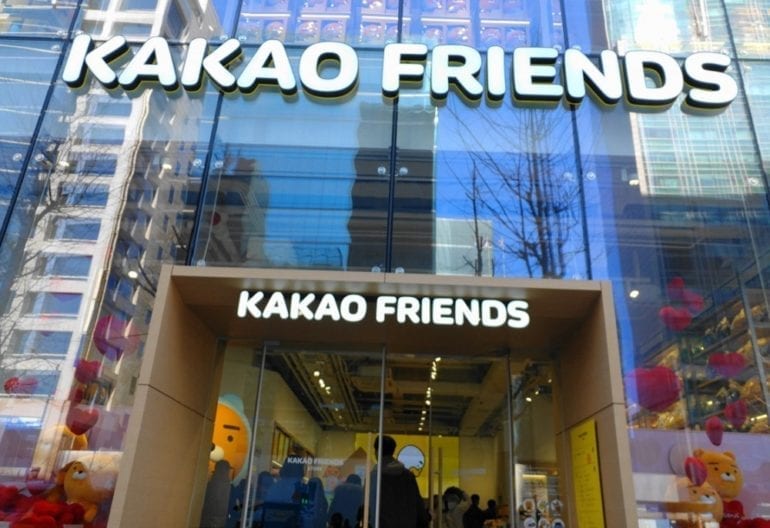
    Kakao Group will pursue the globalization of its public blockchain project, Klaytn, from the city-state.

    South Korea’s Kakao Group has established two new blockchain entities in Singapore – nonprofit Klaytn Foundation and global accelerator unit Krust, it announced in a statement.

    Kakao Foundation said in a statement that it would work proactively and systematically to expand the Klaytn network, while Krust, led by Dean Song, will work with the foundation to help accelerate its mission.

    We will actively invest our human as well as financial resources in developers and businesses of the blockchain world to accelerate the growth of our ecosystem and the development of our technology, the foundation said. Founded in 2010, Kakao Group operates messenger app KakaoTalk and internet bank KakaoBank. Kakao also recently won a bid to pilot South Korea’s central bank digital currency (CBDC) project.

    The Singapore development is funded by a $300 million blockchain development war chest that also includes an improvement reserve fund used for service maintenance purposes.

  • Decathlon in Australia fined A$1.5 million for breaking consumer law

    Decathlon in Australia fined A$1.5 million for breaking consumer law

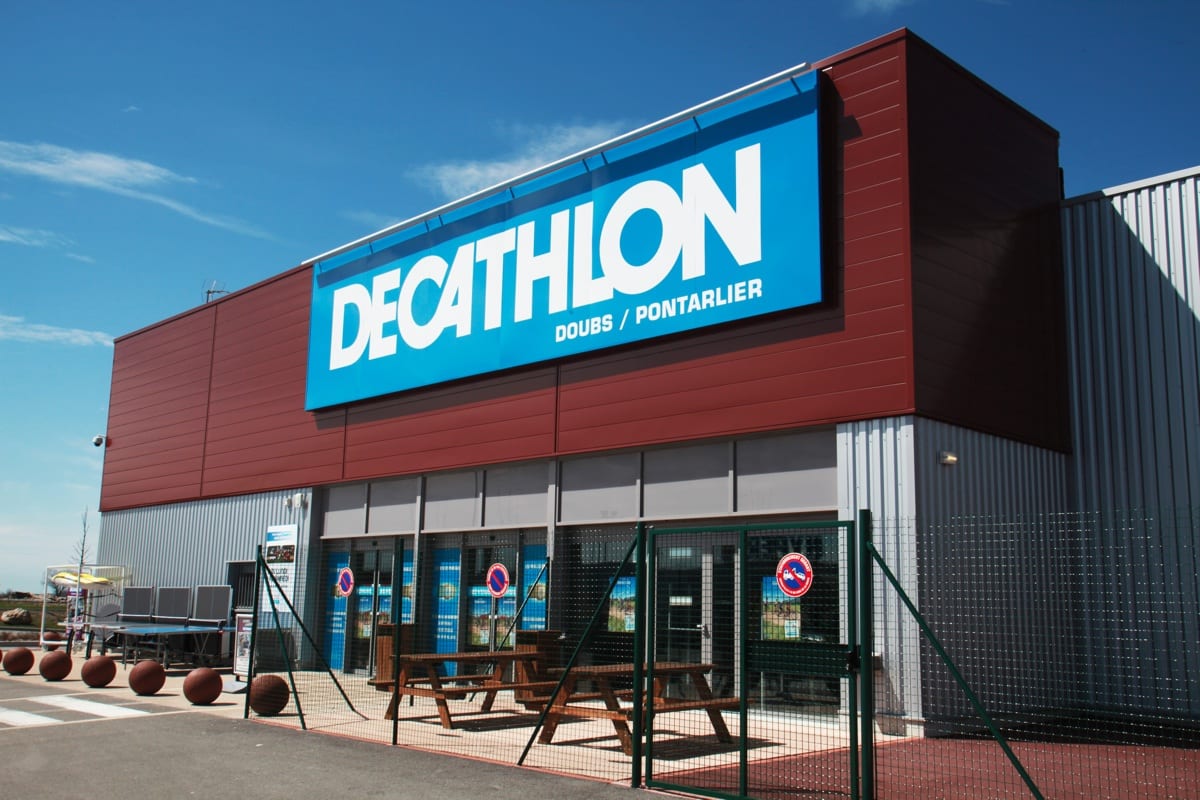
    French sporting goods business Decathlon has been fined $1.5 million for selling products that failed to meet Australia’s mandatory safety standards – an act in breach of consumer law.

    The Federal Court handed down the ruling, according to the Australian Competition and Consumer Commission, after the business sold more than 400 unsafe basketball rings and backboards, and over 300 portable pools, which failed to include relevant safety labelling, or installation and use instructions.

    “Mandatory safety standards exist to reduce the risk of death and serious injury to consumers, especially children, when using these types of products,” ACCC Deputy Chair Delia Rickard said.

    “By not including these important warnings, Decathlon put consumers at risk of serious harm when they were using the Decathlon swimming pools, basketball rings and backboards.”

    The basketball rings and backboards were made to appear safe to attach to brick walls, which is untrue: if a customer utilised the product in this way they risked fatal injury if the wall failed to hold the weight.

    Similarly, the portable pools failed to warn parents that children had drowned in pools of similar size (over 30 centimeters deep), and that adequate supervision and pool fencing laws applied to the product.

    “It is illegal to sell products in Australia that do not comply with mandatory safety standards, and consumers have a right to expect that products they purchase will not endanger their safety, or the safety of their family and others,” Rickard said.

    Decathlon admitted that it had contravened consumer law, and consented to issue a corrective notice to customers and implement an Australia Consumer Law compliance program to ensure it complies moving forward.

  • Vietnam world’s third largest instant noodles market

    Vietnam world’s third largest instant noodles market

    Vietnam has become the world’s third-largest instant noodles market with over 7.03 billion servings consumed last year, up two places from a year before.

    This is an increase of 29 percent from 2019 and a new record for the country, according to data from the World Instant Noodles Association (WINA).

    The latest figure means that Vietnam accounted for around 6 percent of instant noodles servings in the world. Each Vietnamese consumed 55.6 servings last year.

    The country ran behind China and Indonesia with 46.35 billion and 12.64 billion servings, respectively.

    India and Japan make up the top five instant noodles consumers in the world.

    The surge in instant noodles consumption in Vietnam has happened as the country dealt with two major Covid-19 outbreaks last year, forcing people to stay at home under social distancing orders.

    Global consumption of instant noodles rose nearly 10 percent in 2020 to 116.56 billion servings, WINA data shows.

  • End-to-end encryption now covers Messenger video and audio calls

    End-to-end encryption now covers Messenger video and audio calls

    In this era where privacy reigns, end-to-end encryption (E2EE) is an important feature because it keeps messages private and only the sender and the recipient know what it says. It prevents law enforcement, employees of the platform being used, and others from reading something that was not meant for their eyes. Facebook Messenger has offered end-to-end encryption for messages since 2016 and Facebook has announced in a blog post that it is now extending this privacy protection to both Messenger voice and video calls.

    As Facebook pointed out on Friday, 150 million video calls a day are handled by Messenger, and voice calls are now being added to this chat mode to protect both video and audio calls with the same encryption protection. Facebook states that “End-to-end encryption is already widely used by apps like WhatsApp to keep personal conversations safe from hackers and criminals. It’s becoming the industry standard and works like a lock and key, where just you and the people in the chat or call have access to the conversation.

    The content of your messages and calls in an end-to-end encrypted conversation is protected from the moment it leaves your device to the moment it reaches the receiver’s device. This means that nobody else, including Facebook, can see or listen to what’s sent or said. Keep in mind, you can report an end-to-end encrypted message to us if something’s wrong.”

    Facebook also announced that it updated its disappearing messages feature within its E2EE chats. With the newly updated controls, users will be given more options as to when they want their messages to disappear. The new range runs from just five seconds to as long as 24 hours. Not only will these messages be encrypted, they could also be set to fall off of the platform by the time five seconds can be counted.

    Over the next few weeks, Facebook will test end-to-end encrypted group chats and calls in Messenger. This includes both video and voice calls for family members that have an existing chat thread or are already connected. As noted by Facebook, “We’ll also begin a test for your delivery controls to work with your end-to-end encrypted chats. That way, you can prevent unwanted interactions by deciding who can reach your chats list, who goes to your requests folder, and who can’t message you at all.”

    Instagram users will also share in this bid to expand end-to-end encryption. In certain countries, adult Instagram users will be allowed to opt-in to end-to-end encrypted messages and calls for one-on-one conversations. You will need to have an existing chat or be following each other to start an encrypted DM (the same conditions needed to start an end-to-end encrypted voice or video call in Messenger).

    Facebook points out that you can always block someone that you don’t want to DM with. The option to make video and voice calls end-to-end encrypted on Messenger, along with updated controls for disappearing messages, will start rolling out today. “People expect their messaging apps to be secure and private, and with these new features, we’re giving them more control over how private they want their calls and chats to be,” Facebook says.
    The U.S. Justice Department under William Barr in 2020 issued a statement along with Australia, Canada, New Zealand, and the United Kingdom in favor of strong encryption. A statement issued by this group, called the Five Eyes, said that end-to-end encryption “plays a crucial role in protecting personal data, privacy, intellectual property, trade secrets and cybersecurity…and also serves a vital purpose in repressive states to protect journalists, human rights defenders and other vulnerable people.”

    Yet just the year before, the Trump administration reportedly weighed the idea of outlawing end-to-end encryption, and there was talk about the DOJ asking Apple to add a backdoor to the iPhone that would allow law enforcement to read certain messages related to investigations of drug trafficking, terrorism, and child pornography. Ironically, Apple itself plans on scanning iPhones seeking images that could be considered child abuse including child porn.

  • Nokia trials AI technology in Melbourne to keep streets clean and safe

    Nokia trials AI technology in Melbourne to keep streets clean and safe

    Nokia the City of Melbourne have conducted a trial using Nokia Scene Analytics artificial intelligence (AI) technology to develop a deeper understanding of waste disposal behaviour. This will allow the city to tackle the issue of waste dumping more efficiently keep laneways – the busy and narrow city streets and pedestrian areas – even more clean, safe and free of garbage.

    To decrease the frequency of waste contractor visits to busy areas, the City of Melbourne has offered local residents and businesses subscription-based access to the large-capacity compactor facilities. With the compactor in place, Council then wanted to understand how the service was being utilised and how to mitigate illegal waste dumping, which can quickly create safety and hygiene issues in the area.

    Under its ‘emerging technology testbed’ initiative, the City of Melbourne worked with Nokia to leverage an existing network of installed cameras as internet of things (IoT) sensors to monitor one of the compactors. The Nokia Scene Analytics solution employed an AI-powered algorithm to filter and collate data from the cameras, while also combining other data sources, such as operational data on the compactor itself, to create real-time alerts and produce reports. Initial trial results demonstrate that Scene Analytics can support the City’s objectives for better, safer citizen experiences while simultaneously lowering maintenance and down time costs for waste management services.

    This innovative use of Scene Analytics has been recognized on a national stage as the partnership between Nokia and the City of Melbourne was shortlisted for the Communications Alliance’s ACOMMS awards in the Artificial Intelligence category.

    Lord Mayor Sally Capp, City of Melbourne, said:“This is a great example of using new technology to help remove illegal waste more quickly, make our city cleaner and protect the environment. Our partnership with Nokia is another way we are gathering data to make Melbourne a safer, smarter and more sustainable city. This innovative project will help to avoid hazards and make our streets even cleaner by allowing our waste services to better understand behavior trends related to the illegal and dangerous dumping of waste.”

    Rob Mccabe, Head of Enterprise of Australia and New Zealand,Nokia,said: “The City of Melbourne is using robust AI technology to offer its citizens, visitors and businesses a greener and more liveable community. In helping the City of Melbourne monitor and enhance services with real-time driven actions, Nokia Scene Analytics is supporting the safety, security and operational continuity of this city in a proactive and automated way.”

  • Esprit issues shock profit warning

    Esprit issues shock profit warning

    Apparel retailer Esprit says it is on track to record its first profitable half year since the second part of 2017.

    In a positive profit alert filed with the Hong Kong stock exchange the embattled retailer – which lost US$463 million in the six months to June last year, mainly through writedowns – says it expects a profit of “not less than HKD 110 million” (US$14 million) for the six months to June this year. However, HKD 85 million ($10.9 million) of is due to currency-exchange gains.

    Sales for the half-year were down 6 per cent to HKD 3.8 billion (US$488 million).

    During the past three years, the company has slashed its store network, quit all Asian markets, culled staff and restructured its European operations under a form of bankruptcy protection to try to stem years of losses.

    Esprit’s acting executive chairman Christin Chiu said the reduction in sales was due to Covid-related lockdowns in key markets, and the closure of its Asia-Pacific retail operations.

    She said the group overcame the adverse effects of a significant decrease in consumer traffic and continued to implement its cost-control policy and development strategies, resulting in positive improvement in the overall operating conditions.

    “This performance reflects accelerated growth in the e-commerce channel in the first half of 2021, with a 17-per-cent year-on-year increase in the segment revenue.”

    She said the turnaround from loss to profit was due to the significant reduction in writedowns, cost control measures, higher sales and gross profit through its e-commerce channel, and the exchange gain.

    Esprit plans to release its interim results on August 24.

  • Giordano sales rebound, delivering first-half profit despite fewer stores

    Giordano sales rebound, delivering first-half profit despite fewer stores

    Hong Kong-listed apparel retailer Giordano is back in the black after first-half sales rose 19 percent against the prior year – including 44 percent in the second quarter.

    Giordano, which now has 2094 stores across Southeast Asia, Greater China, and the Middle East, reported a post-tax profit of HKD60 million (US$7.71 million) for the half, in which its gross margin grew by 2.4 percentage points to 57 percent. The profit was a stark contrast to the Covid-impacted comparable period’s loss of HKD175 million ($22.5 million).

    And despite ongoing disruption to sales in various markets, the company pared back its inventory turn from 138 days to 124.

    The retailer closed a net 93 stores during the period, but its online sales soared 21.6 percent and now represent 10.1 percent of total group sales. Wholesale sales to franchises rose by 21.1 percent.

    While the company incurred a loss in Hong Kong and Macau – where mainland tourists were effectively barred for the entire period – increased sales to local consumers, the closure of unprofitable stores and rent reductions helped lessen the impact.

    “The average rental is still high despite gloomy consumer sentiment and the absence of incoming tourists,” said chairman and CEO Peter Lau in a results filing. “Management is continuing to negotiate with landlords for more affordable rental arrangements.”

    However, sales in Mainland China delivered a double-digit increase despite fewer stores.

    “Online sales and the franchising business continue to be our focus of development,” said Lau. “The online gross margin improved with increases in selling prices and fewer discounts.”

  • Harley-Davidson Street Glide Special With Arctic Blast Colours Unveiled

    Harley-Davidson Street Glide Special With Arctic Blast Colours Unveiled

    Harley-Davidson has unveiled a limited edition H-D Street Glide Special, hand-finished in Artic Blast paintwork from Gunslinger Custom Paint, in Golden, Colorado. Only 500 units of the Harley-Davidson Street Glide Special factory custom will be made, each with a serialized individual number displayed on the fuel tank. The Street Glide Special was revealed at the 81st Sturgis Motorcycle Rally and will be available in just one single color, a metallic deep blue with bright blue strokes over a pearlescent white base.

    The attractive paintwork is hand-finished at the Gunslinger Custom Paint facility in Golden, Colorado. The facility is known for supplying CVO and limited-edition paint sets for the Harley-Davidson factory. The Street Glide Special in Arctic Blast has a subtle honeycomb pattern painted into the fairing and front fender. The paint scheme adds an exclusive custom finish to the 2021 Harley-Davidson Street Glide Special.

    Mechanically, the H-D Street Glide Special remains the same, and is powered by the larger 114 Milwaukee-Eight engine, with a higher level of trim. The 1,868 cc v-twin engine makes 161 Nm at 3,000 rpm. The 2021 Street Glide Special also features a long list of tech and gadgets, including Prodigy custom wheels, Daymaker LED headlight, Boom! Box GTS infotainment system with touch screen and Apple CarPlay, as well as Android Auto compatibility, and finished with the iconic batwing fairing with split-stream vent. The Arctic Blast Street Glide Special has been priced at $ 38,495, but it’s unlikely to be available on sale in India.

  • H1 surge in phone, laptop sales

    H1 surge in phone, laptop sales

    Vietnam’s largest electronics retailers, Mobile World and FPT Shop, saw H1 mobile phone and laptop sales in the first half of the year.

    Mobile World posted total revenues of nearly VND62.5 trillion ($2.7 billion) and pre-tax profits of more than VND2.5 trillion in the six-month period.

    Of this the sales of mobile phones, laptops and relevant accessories was over VND15.6 trillion, a year-on-year increase of 7 percent.

    The Mobile World management board said the sales performance was really impressive because hundreds of the company’s stores have had to temporarily shut down or restrict sales amidst the Covid-19 pandemic.

    The FPT Digital Retail Joint Stock Company, which runs FPT Shop, earned total consolidated revenues of over VND9 trillion and consolidated before-tax profits of VND76 billion in the first half of this year, realizing over half and two-thirds of its annualized plan, respectively.

    Up to 85 percent of the total revenues came from mobile phone, laptop and accessories sales, which grew 13 percent year-on-year.

    While mobile phone sales grew 16 percent on year for Mobile World and laptop sales remained unchanged, FPT Shop saw a 31 percent year-on-year surge in laptop sales to over VND1.3 trillion.

    As of end June, Mobile World had 936 stores, up 23 stores over late 2020, but down from nearly 1,100 stores in late 2017. Meanwhile, FPT Shop had 625 stores, up 30 stores against late last year.

    According to Counterpoint Research, smartphone sales in Vietnam in the second quarter of this year grew 11 percent year-on-year.

    Meanwhile GfK has reported that sales of gaming laptops in the country grew 217 percent in the first five months of the year.

  • Audi India To Launch At Least Three More Cars This Year

    Audi India To Launch At Least Three More Cars This Year

    German luxury carmaker Audi is likely to launch at least three more cars in India this year. The company launched the new Audi RS 5 Sportback in India, its fifth model after the A4 facelift, S5 Sportback, the all-electric e-tron and e-tron Sportback. During a post-launch interaction, Balbir Singh Dhillon, Head of Audi India hinted that the Ingolstadt-based carmaker has a strong product strategy in place for India, and as many as three more launches can be expected before the end of 2021.

    When asked about upcoming product launches Dhillon said, “Last month we did three cars launches, and (RS 5 Sportback) this month, and very soon we’ll again be facing each other with another launch, then another launch, and then another. So, successively you’re going to see many more cars coming.” In July Audi launched two variants of the all-electric e-tron – e-tron 50 and e-tron 55, along with its coupe version, the e-tron Sportback 55. And this month, the company has launched the Audi RS 5 Sportback.

    While Balbir did not mention which models are coming to our shores, we can expect at least one of them to be an electric car. In July, post the launch of the e-tron range, Dhillon told carandbike that the company will bring at least one more electric car to India this year. While details regarding the upcoming EV model were not shared, globally the e-tron GT and the RS e-tron GT four-door coupe sedans are the only electric models on sale, apart from the e-tron SUVs. So, chances of one of them, or both coming to India are very much plausible.

  • Asia Assets Climb Higher at HSBC Private Banking

    Asia Assets Climb Higher at HSBC Private Banking

    Assets under management at HSBC Private Banking climbed higher, driven in part by more than $9 billion of net new inflows in the first half of 2021.

    Asia assets under management at HSBC Private Banking grew 25 percent to $193 billion in the first half of this year, according to a statement, driven in part by $9.3 billion of net new money inflows.

    This accounts for over 45 percent of HSBC Private Banking’s total assets under management worldwide at $427 billion, according to its recent interim report.

    In addition to private banking, HSBC also saw growth across its affluent segments in Asia – Premier and Jade – with a 7 percent increase in the number of affluent and higher net worth clients to 1.7 million.

    Asian wealth revenues in the first half increased 26 percent and account for much of global wealth revenue growth.

    Asian wealth balances – the sum of client assets from HSBC’s Premier, Jade, and private banking segments – reached a new high of $810 billion and accounted for $49 percent of global assets.

    HSBC continues to pursue its ambitions of becoming a leading wealth manager by 2025.

    It has rolled out a series of mobile solutions and digital enhancements for wealth clients in key Asian markets.

    The bank also added around 600 full-time employees in the first half – including 350 personal wealth planners for its mainland China mobile services HSBC Pinnacle with plans to add another 100. The bank said it is on track to hire over 1,00 client-face wealth staff in Asia by the end of 2021.

    The positive momentum of our Asian Wealth business this year shows the traction we are seeing on-the-ground with our clients, as we forge ahead with our considerable investments in technology, products, and people,» said APAC regional head of wealth and personal banking Greg Hingston.

  • Imported seafood prices skyrocket amid transport restrictions

    Imported seafood prices skyrocket amid transport restrictions

    The prices of imported king crabs and abalones have risen by 30-50 percent in HCMC due to limited supply caused by mobility restrictions.

    King crabs are sold at VND2.5-2.9 million ($109-126) per kilogram, 50 percent higher year-on-year.

    Australian and South Korean abalones are sold at 30 percent higher at VND1.6-1.8 million.

    Salmon prices are up 18 percent at VND650,000.

    A seafood importer who owns a restaurant in the city’s Tan Binh District blamed the price rise on a supply shortage, saying the semi-lockdown has made transporting seafood difficult.

    Another reason is the limited number of flights coming to Vietnam from abroad.

    Another importer said half the crabs died on the way to Vietnam due to flight delays, causing him losses. He has stopped selling for now.

    Tran Van Truong, CEO of seafood chain Hoang Gia, said flights from Norway to HCMC are rare and in most cases have to transit in other countries.

    Many sellers are increasing the sale of domestic seafood items such as red tilapia and squid to survive.