Tag: asia

  • Tencent Ordered to Restructure Financial Units

    Tencent Ordered to Restructure Financial Units

    Similar to rival Ant Group, Tencent has also been ordered to set up a holding company to contain its finance-related businesses.

    Regulators told Tencent to place its finance-related businesses into a new financial holdings company for better supervision, according to a Caixin report citing unnamed sources.

    This follows a report last month that said top financial regulators summoned 13 tech giants – including Tencent – to discuss tighter restrictions across various areas including payments linked to financial products, customer data collection, and credit scoring services.

    Tencent and its peers are following a similar path to that of Ant Group which was first to face restructuring to become a financial holding company after it was ordered to do so by China’s central bank.

  • Beef prices rise as global supply gets ‘very tight’

    Beef prices rise as global supply gets ‘very tight’

    Beef prices are reaching record levels in some international markets with localized disruptions – including droughts and increased consumer demand in some countries – exerting a “dramatic impact” on global trade, according to Rabobank.

    In its Q2 Beef Quarterly research, the bank says a fundamental shift is underway in international beef market dynamics creating a “very tight” global market for beef cattle.

    The report’s co-author, Rabobank senior animal proteins analyst Angus Gidley-Baird, says local factors include the post-drought herd rebuilding in Australia which has reduced the number available for slaughter, and soaring demand in the US as restaurants reopen after Covid-related trading restrictions. Meanwhile, Chinese consumers are eating more beef.

    “Given the growth in demand (for beef) and global trade, pressures created in the system now mean that what may once have been considered slightly abnormal seasonal conditions (for example) are now causing major shifts to markets,” the report says.

    In the US, wholesales prices in April were running 18.5 percent higher than those of April 2019 and retail prices were up by 11.5 percent.

    “This is the result of a number of factors, including renewed competition between foodservice and retail triggered by the reopening US economy, combined with grilling season, high consumer incomes, and strong exports,” he said.

    In Australia, successive years of drought have forced farmers to liquidate stock resulting in the country’s smallest beef cattle herd in 30 years. East Coast cattle slaughter was down 30 percent in April, for example. These factors underpinned a 30-per-cent year-on-year surge in young cattle prices in February last year and a further 20 percent last February.

    But it is not all bad news for local farmers, said Gidley-Baird.

    “While lower volumes and higher prices make competing in the global market more difficult, the tight market situation is working in Australia’s favor and creating less resistance to our high prices,” he said.

    “We believe that current cattle prices in Australia will ease as cattle numbers increase and producer demand dissipates. However, as the supply chain overcomes the disruption here and consumers adjust their price expectations, we believe the market will adjust and a new baseline will be established.”

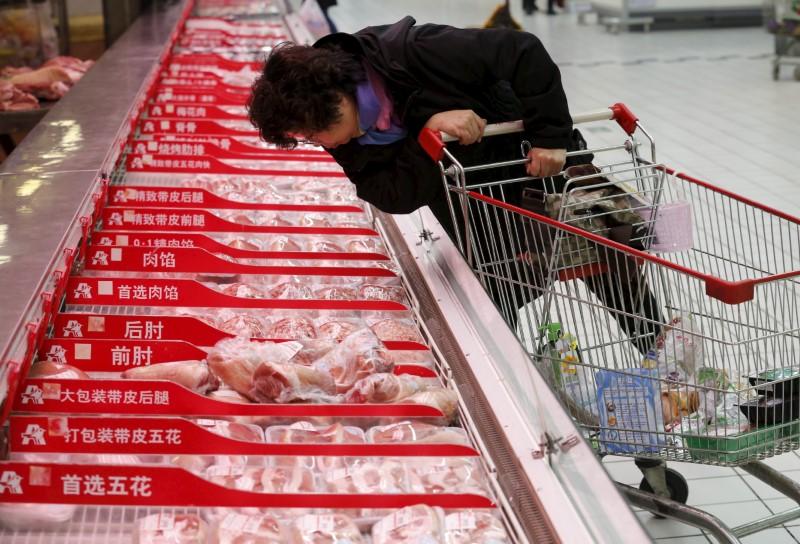
    In China, efforts to increase local beef production are failing to match increasing demand from consumers, forcing the country to rely on imported beef which is in short supply and commanding a higher price. Many Chinese consumers have switched from pork to beef after an outbreak of African swine fever.

    “While part of the beef consumed as a substitute for pork and will shift back when pork production recovers, we expect strong Chinese beef demand to remain as new markets have been established,” said Gidley-Baird.  “This will continue to drive Chinese beef imports from the global market.”

    Australia’s beef exports were down 22 percent in April and are running 11 percent below the five-year average. China accounted for just 17 percent of that, down from 24 percent in 2019.

  • Vietnam Airlines signs up for international vaccine passport program

    Vietnam Airlines signs up for international vaccine passport program

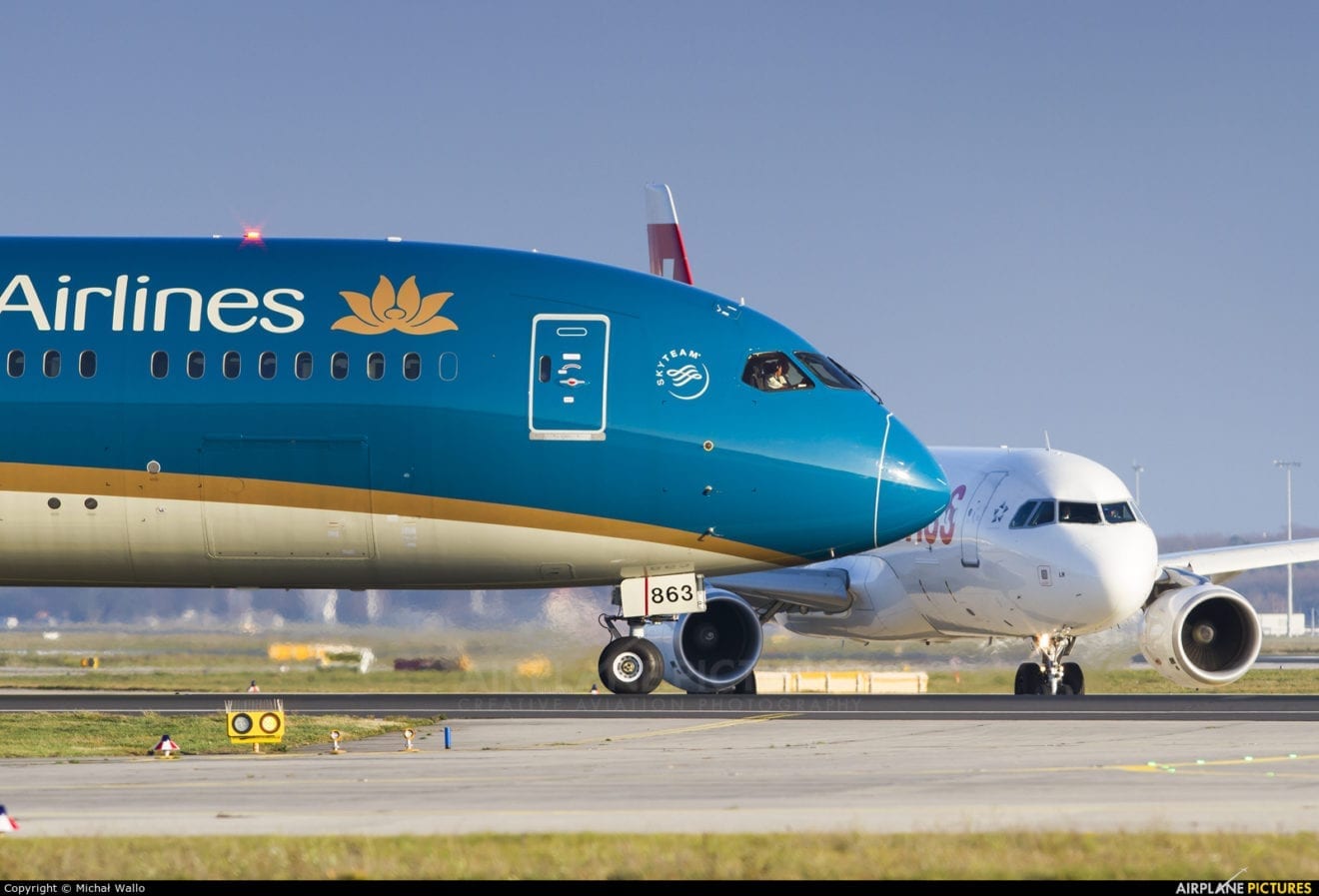
    Vietnam Airlines has signed an agreement with the International Air Transport Association to trial a vaccine passport next month.

    It will implement the IATA Travel Pass initiative that allows people to store verified Covid-19-test and vaccination certificates on a smartphone app.

    They must be issued by authorized facilities registered with IATA.

    Le Hong Ha, CEO of Vietnam Airlines, said: “The most important goal of the initiative is to revive people’s faith in air transport and ensure safe and smooth travel.”

    Nick Careen, an IATA board member, said it is a solution for facilitating international travel during the pandemic.

    Three countries have signed up for the use of the IATA Travel Pass, Singapore, Panama and Estonia, and 30 airlines.

  • Lazada’s president quits

    Lazada’s president quits

    Jessica Liu, president of Lazada Group, is leaving the South-East Asian online shopping unit of Alibaba Group Holding Ltd.

    She is departing Lazada to spend more time with her family, the company said, confirming an earlier report by Bloomberg News.

    Liu has been a key member of Lazada’s leadership team and also served as head of LazMall, the fast-growing marketplace for international and local brands within the Lazada platform.

    Earlier this year, she took on an additional role of chief executive officer of Thailand, becoming the company’s first female country head.

    “Under her leadership, Lazmall has grown to become one of the largest online virtual malls in South-East Asia, ” Lazada said in a statement.

    “We want to thank Jessica for this and her many other contributions, and wish her well as she takes some time off to focus on her family.”

    Lazada has gone through frequent management shuffles since it was acquired by Alibaba.

    The company appointed Chun Li as group CEO in July, and Lazada has since been investing in technology and logistics and recording triple-digit year-on-year order growth.

    Revenue from Alibaba’s international commerce retail business climbed 42% to US$5.26bil (RM21.74bil) in the fiscal year ended March 31, led by Lazada and Trendyol.

    Liu joined Lazada in 2020 from Alibaba, where she was general manager of Tmall Fashion and Luxury.

    Under her leadership, Tmall became China’s largest fashion business-to-consumer online platform.

    Nine-year-old Lazada operates in Indonesia, Malaysia, the Philippines, Singapore, Thailand and Vietnam.

  • Morgan Stanley Increases Ownership in China JVs

    Morgan Stanley Increases Ownership in China JVs

    Morgan Stanley is the latest global bank to add exposure to mainland China’s financial sector with increased ownership in two joint ventures.

    Morgan Stanley will buy stakes in its securities and mutual fund joint ventures, according to a company filing with the Shanghai Stock Exchange.

    We are excited by opportunities to significantly expand our onshore securities and asset management businesses, which further strengthen our position to provide the best advice and services to our clients, according to a spokesperson for the bank.

    China Fortune Securities is the planned seller of a 39 percent stake in Morgan Stanely Huaxin Securities and its entire 36 percent stake in Morgan Stanley Huaxin Fund Management Company to the American lender for 958.6 million yuan (US$150 million), according to the filing.

    If the sale succeeds, Morgan Stanley would effectively own 90 percent of the securities joint venture, with China Fortune retaining the remaining 10 percent stake, and 85 percent of the fund joint venture.

    Global banks continue to take advantage of the opening up of China’s financial sector with Goldman Sachs, most recently, receiving preliminary approval to establish a wealth management joint venture with ICBC.

  • Foxconn suppliers resume operations in coronavirus hotspot Bac Giang

    Foxconn suppliers resume operations in coronavirus hotspot Bac Giang

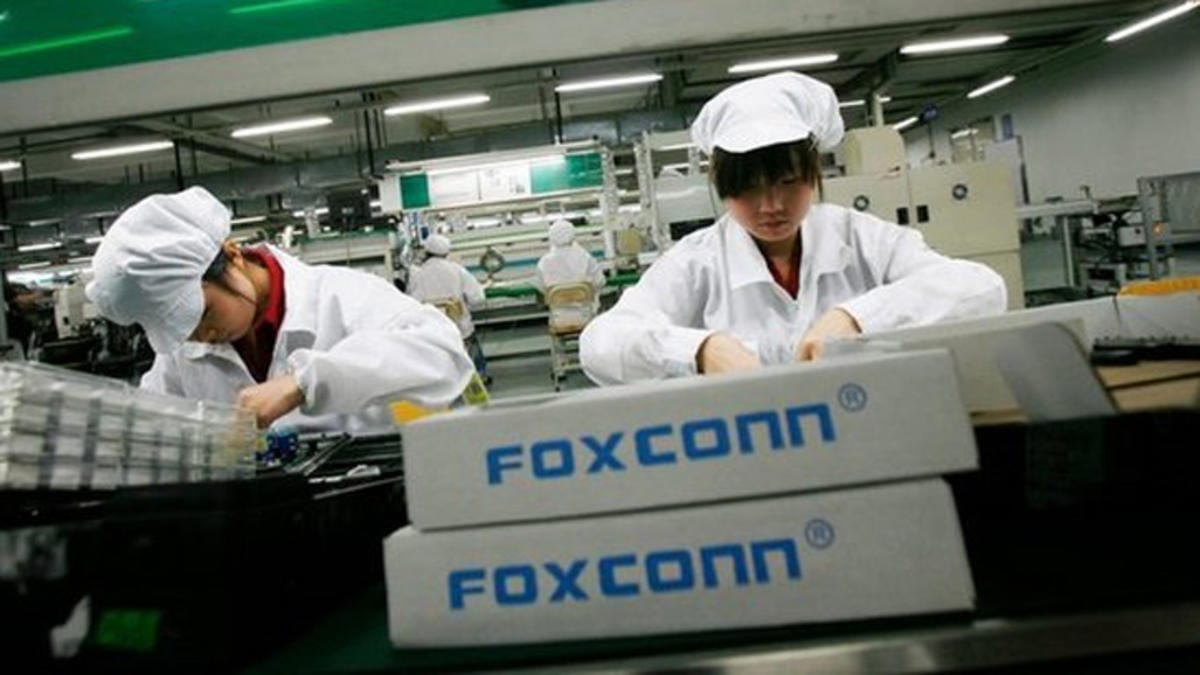
    Two electric component manufacturers for Foxconn in Bac Giang resumed operations Friday following a temporary suspension due to the coronavirus crisis.

    Fuhong Precision Component and New Wing Interconnect Technology, located inside two industrial parks, were allowed to resume operations as they satisfy Covid-19 prevention standards. Both firms produce electric components for Taiwanese electronics contract manufacturer Foxconn, a major assembler for several Apple products.

    Both firms have to abide by Covid-19 prevention protocols like maintaining distances between workers, providing them accommodation and testing them for Covid-19.

    As originally planned, eight firms in four industrial parks across Bac Giang were supposed to resume operations Friday. But only four firms filed documents to have their production process evaluated, and only two among them, Fuhong and New Wing, made the cut.

    Nguyen Xuan Ngoc, deputy head of the management board of Bac Giang industrial parks, said it would take weeks before all local industrial zones could resume operations due to strict evaluation procedures.

    Bac Giang, home to 13 Samsung suppliers and Apple partners Foxconn and Luxshare, is the most severely hit locality in Vietnam’s latest Covid-19 wave, recording 1,927 cases over the past month. It is followed by neighbor Bac Ninh with 736 cases.

    Bac Giang had to shut four local industrial parks: Van Trung, Quang Chau, Dinh Tram and Song Khe-Noi Hoang starting May 18 after the province recorded a staggeringly high number of new coronavirus cases due to the parks’ large scale and high number of workers. The province has around 240,000 people employed at its six industrial parks.

  • Hong Kong Launches Banker Bubble

    Hong Kong Launches Banker Bubble

    Top executives of financial firms in Hong Kong will be granted exemptions from quarantine in the city, according to the local regulator, giving the sector a first-mover advantage to reopening.

    Hong Kong authorities launched new rules, effective as of last week, that will enable alliterative traveling options specifically for senior executives in the financial sector with regional or global roles.

    The Chief Secretary for Administration of the Hong Kong Special Administrative Region Government (Matthew Cheung Kin-Chung) has designated certain categories of persons in the financial services sector to be exempted from the compulsory quarantine arrangements in Hong Kong, according to a circular released last Friday night by the Securities and Futures Commission (SFC).

    Senior executives of licensed corporations or their overseas affiliates who are fully vaccinated and meet the eligibility criteria may apply for exemption from the compulsory quarantine arrangements when they return or travel to Hong Kong, according to a circular released last Friday night by the Securities and Futures Commission (SFC).

    In addition a senior position at a licensed firm, financial professionals seeking exemption from the otherwise compulsory 21-day quarantine must submit an application with a detailed itinerary for the proposed trip to be electronically approved by the Financial Services and the Treasury Bureau (FSTB).

    The applying senior executive will only be allowed to leave their designated accommodation for approved activities set out in the itinerary alongside other requirements such as coronavirus tests, point-to-point transport, self-isolation, and medical surveillance.

    Licensed financial firms will be provided with four exemptions per month with two for visitors and two for returning executives, according to the circular.

    Breaching self-isolation requirements from designated accommodation will result in compulsory 21-day quarantine and failure to observe other exemption rules could result in a HK$5,000 ($644) fine and six months of imprisonment.

    The new rules were announced one day after the Hong Kong-Singapore travel bubble was supposed to launch but were suspended for the second time due to an infection spike in the latter city-state.

  • AirAsia’s digital businesses to become Asean’s leading super app

    AirAsia’s digital businesses to become Asean’s leading super app

    AIRASIA Group Bhd’s non-airline digital travel and lifestyle platform is now considered one of the region’s top three online travel agencies (OTAs), while AirAsia’s e-wallet BigPay is set to become the first virtual bank and its delivery service Teleport is strengthening.

    During the group’s first quarter of 2021 (1Q21) financial performance announcement on May 27, AirAsia’s super app posted a 45% year-on-year (YoY) increase in its revenue to RM10 million, supported by solid growth of products and services available on the platform.

    Teleport’s revenue tripled compared to its 1Q20 performance.

    AirAsia group CEO Tan Sri Dr Tony Fernandes stated that just as the carrier revolutionized air travel 20 years ago in the region with its low-cost model, AirAsia now aims to disrupt and democratize the lifestyle industry through the development of its super app, with over 17 travel and lifestyle products leveraging off one another.

    “In just over a year, we are now one of the top three leading OTAs in Asean based on website traffic, with over 100 million average page views monthly on airasia.com.

    “In the future, when travel resumes in our key markets, we can guarantee best value prices for our flight and hotel packages because we own our airline,” he explained in a press release last Friday.

    Expansion of its popular products and services in its Asean markets for its super app is in the pipeline.

    “We are working on expanding our health services in Thailand, Indonesia and the Philippines, while offering SNAP hotel and accommodation deals in Vietnam and Singapore in the near future,” Fernandes noted.

    He added that Teleport is now delivering vaccines across Malaysia and the Asean region, and has created more than 4,000 delivery driver jobs in 17 key markets.

    “We are also looking forward to converting passenger planes into freighters in the coming months to cater for unprecedented cargo demand,” he informed.

    Fernandes added that the group has plans to improve its BigPay e-wallet service to become the best virtual bank in Asean.

    “We are tapping into the full potential of our loyalty platform, BIG Rewards, to provide the best range for rewards and redemption in Asean and beyond.

    “Through our digital ecosystem, we have already created thousands of jobs and supported more than 3,500 small and medium enterprises (SMEs) in Malaysia.

    “Our training centre, AirAsia Academy (currently known as Redbeat Academy), offers affordable digital and tech training courses to equip not only our own employees, but also SMEs and members of the public, with skills to bridge the technology gap in Malaysia and beyond in this ever-changing digital world,” he explained. The group’s other non-airline businesses such as AirAsia Food, AirAsia Fresh, AirAsia Shop and its Santan franchise restaurants are also penetrating new markets.

    “We saw the crisis as an opportunity to use the downtime in flying caused by the Covid-19 pandemic to leverage the strength of our database of over 60 million customers and to focus on developing new non-airline revenue streams in the key areas of e-commerce, fintech and logistics,” Fernandes commented.

    In the pipeline are innovations such as ride-hailing “AirAsia Ride”, which will be launched in the coming months, as well as the potential of deliveries using drones.

    The group is also planning for electric or hydronic aeroplanes to meet consumer’s sustainability needs.

    In the airline business space, Asia Digital Engineering Sdn Bhd (ADE) aims to become one of the region’s best value aircraft maintenance and overhaul providers for both short-term line maintenance and longer-term base maintenance services, a space previously dominated by Singapore-based maintenance, repair and overhaul (MRO) companies.

    “I firmly believe ADE will become the leading aircraft MRO company in the region in the near future, with significant potential growth opportunities in Asean and beyond with service excellence and lowest cost base,” he added.

    AirAsia is also working to launch more contactless technologies to make flying a seamless and hygienic experience when it resumes.

    This includes a digital passport called Scan2Fly where passengers can upload required medical documentation and have it verified in real time online before heading to the airport.

    AirAsia will be introducing FACES, its biometric facial recognition technology, at the Kuala Lumpur International Airport 2 which will then be rolled out across all its key destinations.

    “There is a silver lining to every crisis and the best thing to come out of this pandemic is our recovery as a stronger, more resilient travel and lifestyle platform — not solely reliant on airfares alone anymore,” said Fernandes.

    The “new look” AirAsia, he noted, would be embarking on an exciting new phase of growth with the right focus and foundations to better meet the needs of the digital revolution.

    Fernandes stressed the group will remain true to its promise to deliver high quality service and make it affordable to fly, stay, shop, eat and upskill.

    AirAsia Group posted a net loss of RM767.42 million for 1Q21, as the group continued to suffer from the curbs on travel imposed by governments in many countries over the period.

    Revenue fell to RM298.22 million in the period as passenger load factor slumped 90% to 976,968 passengers compared to 9.8 million passengers recorded in the same period last year across its main markets of Malaysia, Indonesia and the Philippines.

  • David Jones Food review leads to end of BP partnership

    David Jones Food review leads to end of BP partnership

    Following a review of David Jones’ food business, which was signaled by chief executive Scott Fyfe in March, the department store’s partnership with convenience chain BP is ending.

    The 35 dual-branded sites built over the past year will be transitioned in the coming months as DJs continues to streamline its Food business.

    “Our organizations have collectively agreed to work through a managed transition that will see our relationship end in the coming months,” a BP spokesperson said.

    “We know the needs of consumers are changing and we are excited by the growth opportunity this presents for BP in Australia.

    “A differentiated offer which is delivered well clearly resonates with our consumers, who lead busy lives and want easy access to healthy and delicious food.”

    David Jones, on the other hand, will refocus its food efforts toward bespoke Food Halls in its Elizabeth Street and Bondi Junction locations, as well as its pantry and seasonal ranges.

    “We thank BP for its strong collaboration throughout the partnership and wish the business all the best in the next phase of its development,” a David Jones spokesperson said.

    “David Jones remains committed to delivering an exceptional food range reflective of our customers’ needs and preferences while reducing cost and enhancing overall business performance.”

    The issue seems to have stemmed from David Jones’ failure to make a profit from its Food ventures, with parent company Woolworths Holdings group chief executive Roy Bagattini stating the business has “not transitioned fast enough“ during an analyst call last September.

    And, that while the David Jones Food convenience locations were progressing well, the larger format David Jones Food business trades at a loss.

    At a minimum, Bagattini said he hoped a review would get the food business to a break-even position by the 2022 financial year.

  • Chubb Makes APAC Leadership Appointments

    Chubb Makes APAC Leadership Appointments

    The property and casualty insurer is making several senior management changes at its business in Asia Pacific, effective July 1, while launching a new division, it announced on Friday.

    Country president for Chubb’s general insurance business in Korea, Edward Ler, will take on a new role as head of Southeast Asia, responsible for the general management and business results in Indonesia, Malaysia, Philippines, Singapore, Thailand, and Vietnam.

    Ler joined Chubb in 2013. His 18-year career in the insurance industry spans a variety of managerial roles covering the Asia Pacific, the Middle East and European markets. He will relocate to Singapore for his new role and continue to report to Paul McNamee, Chubb’s regional president for Asia Pacific.

    Ler replaces Glen Browne, who was appointed division president of consumer lines, Asia Pacific, a newly created role to oversee the accident and health and personal lines businesses in the region.

    Browne, who brings 25 years of industry experience, will also have oversight for direct marketing, consumer partnerships, and digital distribution for both the company’s general and life insurance divisions in Asia Pacific. He reports to McNamee and will work closely with Brad Bennett, Chubb Life’s chief operating officer.

    McNamee said the new division is «a response to the evolving customer and growing partnership dynamics of [Chubb’s] business, which will necessitate the sharing of data, technology, and talent to deliver superior customer and partnership outcomes.»

    Taking over Ler in Korea is Edward Kopp, who is currently the firm’s regional head for accident and health since 2019. He continues to report to McNamee in his new capacity.

    Kopp has more than 25 years of experience in the financial services industry, including distribution, product development, underwriting, channel management, and has a deep understanding of the Korean market. Prior to joining Chubb in 2012, he held several leadership roles at leading banking and insurance firms.

    Kopp’s deputy, Ben Howell will replace him as regional head of accident and health, Asia Pacific. Howell will continue to be based in Singapore and report to Browne, in the latter’s new role as Division President – Consumer Lines, Asia Pacific.

    Mr. Howell has deep experience across both commercial and consumer insurance, with underwriting, product development, partnership and distribution management expertise spanning diverse product classes. He began his career with the company in Australia, then known as ACE, in 2002 before re-joining in 2016.

  • UBS Director’s Luxury Hong Kong Hideaway

    UBS Director’s Luxury Hong Kong Hideaway

    A board job at the Swiss wealth giant is a lucrative gig, but probably not lead to ultra-high net worth riches. Or at least not rich enough to purchase one of Hong Kong’s priciest manses, as Fred Hu just did.

    Hu plopped down HK$428 million ($55 million) for a 4,755-square foot home on Tai Tam Road in Hong Kong, according to Land Registry Records. This is just shy of an anonymous Chinese buyer who set a record when putting down HK$459 million in February for a home in the territory.

    Hu is a heavyweight who left Goldman Sachs, where he was a partner and oversaw the U.S. investment bank’s activities in China, to launch his own private equity firm, Primavera, in 2010. Primavera has $2.9 billion in assets under management, according to «Bloomberg».

    In 2018, Swiss wealth manager UBS snagged Hu as a director, where he is part of succession planning as a member of a governance and nominations committee, as well as part of risk oversight.

    Hu also sits on the boards of Ant Group, Hong Kong’s stock exchange, and ICBC, a Chinese lender which is the world’s largest by assets. A fund managed by Hu’s Primavera was spotlighted last year for allegedly selling heavily discounted Ant Group shares to Hu’s siblings – underscoring the perils of rapid wealth growth in Asia.

    As for Hu’s pay at UBS: he takes home 600,000 Swiss francs ($670,000) annually, 50 percent of which is in shares of the Swiss bank.

  • Vietnam might lose entry to global rice contest

    Vietnam might lose entry to global rice contest

    Vietnam might lose its right to enter the World’s Best Rice Contest because of the large number of unauthorized companies selling the ST25 variety on the market.

    U.S.-based The Rice Trader, organizer of the annual contest that started in 2009, said only the ST25 rice variants produced by the company of Ho Quang Tri, the son of the main developer of the rice, Ho Quang Cua, is allowed to use the “World’s Best Rice” title in promoting this product.

    However, many Vietnamese companies have been printing this title on their product packages without permission from The Rice Trader, which is a copyright infringement, it said in a statement.

    Should these actions persist, the organization will release the names of the infringers and take away Vietnam’s rights to participate in the contest in upcoming years, it warned.

    The ST25 variety from Vietnam won the World’s Best Rice Contest in 2019 and secured second place last year, losing first place to a jasmine fragrance variety from Thailand.

    The ST25 variety is the result of 25 years of work by Cua and his colleagues who cross-bred the premium fragrant rice, described as having a sweet taste and a hint of pineapple flavor, in the Mekong Delta province of Soc Trang.

    Other countries that have won the contest in previous years include Thailand, the U.S., and Cambodia.

  • Vietnamese consume more meat, beer despite falling incomes

    Vietnamese consume more meat, beer despite falling incomes

    Although incomes have fallen because of the pandemic, a survey has found living standard improvements with Vietnamese people consuming less rice but more beer and meat.

    The GSO estimates per capita monthly income fell 2 percent from the previous year to VND4.2 million ($182), because of the Covid-19 pandemic, according to the 2020 living standards survey conducted among 47,000 households nationwide by the General Statistic Office (GSO).

    The survey found that per capita monthly rice consumption declined from 9.7 kilograms in 2010 to 7.6 kilograms last year.

    On the other hand, per capita meat consumption rose from 1.8 kilograms per month in 2010 to 2.3 kilograms last year. Per capita beer and alcohol consumption reached 1.3 liters per month last year from 0.9 liters in 2018.

    The GSO reported that there were significant wealth discrepancies between urban and rural areas. The per capita monthly income in urban areas last year was VND5.5 million, 1.6 times higher than that in rural areas.

    A HCMC-based economist said that farmers should reduce rice farming and shift to produce with higher returns in order to increase per capita income in rural areas.

  • Hyundai To Slash Combustion Engine Line-Up, Invest In EVs

    Hyundai To Slash Combustion Engine Line-Up, Invest In EVs

    Hyundai Motor Group will slash the number of combustion engine models in its line-up to free up resources to invest in electric vehicles (EVs), two people close to the South Korean automaker told Reuters. The move will result in a 50% reduction in models powered by fossil fuels, one of the people said, adding the strategy was approved by top management in March. “It is an important business move, which first and foremost allows the release of R&D resources to focus on the rest: electric motors, batteries, fuel cells,” the person said, without giving a timeframe for the plan.

    While Hyundai did not specifically address a Reuters query on its plans for combustion engine models, it said in an email on Thursday that it was accelerating the adoption of eco-friendly vehicles such as hydrogen fuel cell vehicles and battery EVs. The automaker added that it aims to gradually expand battery EV offerings in key markets such as the United States, Europe, and China with a goal for full electrification by 2040.

    Hyundai Motor Group, which houses Hyundai Motor Co and Kia Corp and Genesis, aims to sell about one million EVs per year by 2025 to achieve a 10% share of the global EV market. Facing tightening CO2 emission targets in Europe and China, all major automakers are accelerating their shift to EVs. The huge cost of developing electric motors and increasing the driving range of car batteries has already led some to say their days of investing in conventional engines are over. “Hyundai has stopped developing new powertrains for internal combustion engine cars,” one of the people said.

    PSA Group said in November, shortly before merging with Fiat Chrysler to form Stellantis, that it was no longer investing in combustion engines. Daimler has recently revamped its combustion engines and executives say the new generation will see it through the electrification process. Some carmakers have already announced plans to go fully electric, with Sweden’s Volvo, which is owned by China’s Geely, saying it would do that by 2030. Ford Motor Co says its line-up in Europe will be fully electric by the same date.

    For Hyundai, which together with Kia is one of the world’s top ten auto groups, the move is particularly important because it has one of the broadest ranges of engine and transmission technologies in the industry. The group will finalize its strategy to switch to all-electric models within the next six months, one source said. In April, Hyundai said it would cut the number of its gasoline models in China to 14 from 21 by 2025, while launching new electric models every year starting in 2022. In February, the group said it was no longer in talks with Apple to develop an autonomous vehicle. Sources familiar with the matter said the idea of the group becoming a contract manufacturer for Apple encountered strong internal opposition.

  • Twitter Blue subscription tier confirmed

    Twitter Blue subscription tier confirmed

    Halfway through this month, we told you that Jane Manchun Wong had discovered that Twitter was working on a paid version of the app called Twitter Blue. The info discovered by Wong revealed that the subscription price would be $2.99 per month and would offer a feature allowing you to “save and organize your favorite tweets into Collections so that they’re easier to find later.” Another feature titled “Undo Send” gives users a short window of time to delete a tweet that was just sent.

    Today, Twitter confirmed that its subscription tier is real, that it is named Twitter Blue, and that it will cost $2.99 per month. If you look up the Twitter app in the App Store and scroll down to the section titled In-App Purchases, you’ll see one listing and that is for Twitter Blue priced at $2.99.

    Wong sent out another tweet today indicating that Twitter Blue will have a Reader Mode that will allow users to “Keep up with threads by turning them into easy-to-read-text.” Subscribers will also get to pick their own color theme and app icons with different colors.

    What we don’t know is when Twitter Blue will actually launch. But with the subscription tier listed in the App Store, a launch can’t be too far away!