Tag: asia

  • App Store billings and sales hit a whopping $643 billion last year

    App Store billings and sales hit a whopping $643 billion last year

    Based on an independent study of the App Store, the iOS app storefront generated $643 billion in sales and billings last year (which includes Apple’s cut of in-app purchases and ad sales), up 24% from the $519 billion that the App Store brought in during 2019. The study, titled “A Global Perspective on the Apple App Store Ecosystem,” reveals that not only did iOS app developers expand their business in 2020, they also expanded their customer base.

    It also turns out that since 2015, the number of small developers on the App Store has grown by 40%. The definition of a small developer is one with fewer than 1 million downloads and less than $1 million in earnings and 90% of App Store developers fit this definition. And of those small developers, 25% of them have managed to increase their earnings by 25% a year over the last five years.

    The report also shows that close to 80% of small developers have apps in App Stores across different countries. On average, App Store developers get paid from customers located in more than 40 countries. Overall, the App Store is available in more than 175 countries and regions, supports more than 40 different languages, 45 different currencies, and over 200 different payment methods.

    Apple CEO Tim Cook says, “Developers on the App Store proves every day that there is no more innovative, resilient or dynamic marketplace on earth than the app economy.” Cook adds that “The apps we’ve relied on through the pandemic have been life-changing in so many ways — from groceries delivered to our homes, to teaching tools for parents and educators, to an imaginative and ever-expanding universe of games and entertainment. The result isn’t just incredible apps for users: it’s jobs, it’s an opportunity, and it’s untold innovation that will power global economies for many years to come.”

    We should point out that the App Store has also generated conflict between Apple and developers because of the company’s in-app payment system under which Apple snags as much as a 30% cut of in-app transactions. And any developer that offers its own platform to compete with Apple and get around the 30% Apple Tax will find its app removed from the App Store. This is what happened with Epic Games and its popular Fortnite title.

    Last month Epic and Apple wrapped up a two-week trial and we expect the judge to announce her decision sometime during the third quarter. Apple and the App Store have been called anticompetitive since Apple doesn’t allow iOS and iPadOS users to install apps from any other app storefront outside of the App Store. This is one area where there is a big difference between iOS and Android since Android users are allowed to sideload apps from third-party app stores.

    Apple’s in-payment platform did get a thumbs up from the CEO of Snapchat parent Snap, Evan Spiegel. The executive said that Snap is “happy” to pay Apple’s 30% cut noting that Snapchat would not be around if it weren’t for Apple and the App Store. This is the minority view, but another developer has praised Apple’s app ecosystem.

    Wakeout! is an app that offers 1,500 exercises to keep users active and its founder, Andres Canella, called Apple’s in-app payment system “essential” for a small business. He states that “It’s enabled us to expand globally without having to worry about calculating things like local taxes or currency conversion. And using it is so transparent for our customers — we’re able to reach everywhere, China, France, you name it. We get all the benefits of selling globally without ever having to think about it, which is priceless.”

    Still, for every Snapchat and Wakeout! there is a Fortnite, a Netflix, or a Spotify that publicly attacks the App Store and Apple calling the setup a monopoly and anticompetitive.

  • Chinese E-Brokerages Unveil Crypto Trading Plans

    Chinese E-Brokerages Unveil Crypto Trading Plans

    Two Chinese online brokerages backed by major tech titans shared plans about expanding into crypto trading in the midst of a domestic crackdown.

    Tencent-backed Futu and Xiaomi-backed Tiger Brokers both unveiled crypto trading plans in their latest quarterly earnings call.

    Tiger Brokers said it was in the process of applying for relevant licenses for crypto trading without naming any markets.

    Futu senior vice president Robin Li Xu said the firm was applying for crypto-related licenses in the U.S., Singapore and Hong Kong.

    Since China’s most recent announcement to crack down on crypto, related firms are increasingly shifting operations abroad including miners who are seeking alternatives such as North America.

    According to Futu and Tiger Brokers, their crypto offering will only target customers not based in mainland China.

  • Woolworths launching stand-alone payments platform, Wpay

    Woolworths launching stand-alone payments platform, Wpay

    Woolworths is launching its own stand-alone payments platform, Wpay, which will power payments inside and outside its group of businesses, and further extends the group into the retail ecosystem in Australia.

    Wpay will provide an end-to-end payment solution, and will draw on Woolies’ national scale and capabilities to offer Australian merchants an integrated in-store and digital payment platform utilising digital wallets, as well as traditional card and alternate payment methods.

    “As Australia and New Zealand’s largest retailer, we’ve been investing in leading-edge payment capabilities to service our retail businesses for many years,” Woolworths Group chief executive Brad Banducci said.

    “We believe there is value in extending the benefits of the investments we’ve made in our payment platform to other merchants who may not have the scale to build it themselves.”

    As for why the supermarket giant is getting into the payments space, Banducci notes how important the convenience of a smooth payment experience has become to the overall shopping experience, and its expertise as a user of payments, rather than simply a provider, gives it a unique perspective in the space.

    Woolies’ head of fintech and the man behind the supermarket’s successful Scan&Go app, Paul Monnington, has been named managing director of Wpay.

    “It’s an exciting time in the world of payments with new technology driving better experiences for consumers,” Monnington said.

    “Wpay enters the sector with a strong Australian pedigree serving high volume retail brands across food and grocery, fuel, liquor, hospitality and e-commerce.

    “Aside from payments, we know merchants are also looking for simpler ways to integrate gifting, loyalty and direct marketing platforms to engage customers while maintaining direct relationships [and] we look forward to partnering with merchants to help bring this to life.”

  • Tyson Foods to launch plant-based foods in Australia

    Tyson Foods to launch plant-based foods in Australia

    Tyson Foods, the largest meat processor in the US, says it plans to launch plant-based products in Asia Pacific, including Australia.

    A range of three products will go on sale in Malaysia imminently under the First Pride brand – frozen Bites, Nuggets and Strips made with regionally sourced ingredients including bamboo fibre, soy protein and wheat protein. They will be halal certified.

    Tyson Foods said in a statement it would expand the range into other selected markets across the Apac region through retailers and online during the coming months.

    This is the first time the company has introduced plant-based products in Asia-Pacific. The company will go head to head against Impossible Foods, Nestle and Beyond Meat, along with  Omni-branded products from Hong Kong-based plant-based startup Green Monday.

    Demand for plant-based foods is surging across Asia Pacific, with manufacturers seeing a leap in sales during the Covid-19 pandemic.

    Data from Euromonitor cited by Tyson Foods predicts alternative proteins could account for 11 percent of the global protein market by 2035. APAC retail sales of meat substitutes reached US$16.3 billion last year and are expected to exceed $20 billion by 2025.

    Tan Sun, president at Tyson Foods APAC, said the company was targeting consumers embracing flexitarian diets.

    “Our plant-based launch will complement our existing assets across Thailand, Malaysia and Australia where we offer a range of products from poultry to beef.”

    He said the Asian market is a natural fit for this category with traditional plant-based products like tofu already entrenched in the culture. “The key to meeting consumer preferences with new plant-based protein is through innovation and making locally relevant products that taste great, which is our expertise,” he said.

    “Our new product expansion delivers on taste and quality, giving consumers a modern take on familiar tastes, local flavors and texture.”

    Tyson Foods says the flavors of products and package sizes will vary from country to country but would be “priced competitively”. The initial range sold in Malaysia will be sold in 420g bags priced at RM19.90 (US$4.81). They will be launched initially in retail stores, but a foodservice range will be developed later in the year.

    David Ervin, VP of alternative protein at Tyson Foods said the company’s global culinary network and scalability positions it well to replicate the success it has had in the US with plant-based foods in Asia Pacific.

  • Google Assistant to replace dialogue bubbles and small text with large bolded print

    Google Assistant to replace dialogue bubbles and small text with large bolded print

    Google is testing a major change to Google Assistant that makes the digital assistant look better on an Android phone. Right now, responses made by Google Assistant include showing the user appropriate cards, posting web results, opening an app, or showing a text response. Instead of showing the latter using a dialogue balloon with tiny print, Google is making a change.

    Some users are seeing text responses in larger bolded print without the comic strip-style dialogue balloons. For those who believe that seeing is believing and would rather see Google Assistant’s response to an inquiry than hear it, this is a positive change. Older responses on the screen will shrink and gray out.

    You won’t see the bolder, larger text for replies related to a weather-inspired task, a response that is put on a card, or on inquiries that return a list of web results. Instead, it appears that the change is more apt to appear when asking Google Assistant to tell a joke or for other tasks that might be considered “fun.” The hope is that the new response interface will eventually be used for other topics since it is easier to read.

    The larger, bolded text has been spotted with the latest build of the Google app from the Google Play Store. It also has been seen with the latest version of Google Assistant for Pixel models, and with the light bar version of Assistant on other Android devices.

  • Clubhouse to end invitation system this summer; over 2 million install the Android app

    Clubhouse to end invitation system this summer; over 2 million install the Android app

    Roughly a couple of weeks ago, popular group audio chat app Clubhouse finally made its debut on the Google Play Store although invites are still required to become a Clubhouse subscriber. This past Sunday, Clubhouse held a Town Hall meeting on the app and discussed what it has experienced since allowing the vast majority of smartphone users to install the app.

    In a tweet sent out following the Town Hall, Clubhouse noted that it now has over 2 million Android subscribers which double the 1 million Android users it had after the previous week. Since Clubhouse launched in March 2020 in the App Store and was available only on iOS until now, the number of subscribers on Apple’s mobile platform, over 10 million, currently swamps the number of Android users. And while the Android version of the Clubhouse app has yet to reach feature parity to the iOS variant, it is getting closer every day.

    More exciting though, is the statement that Clubhouse is “heading for general release sometime this summer!” That would mean the end of invites and should greatly expand the usage of the app. As a result, Clubhouse says that its next few updates will be about “discovery, notifications, and less visible but very crucial improvements” as it gears up for a massive surge in usage.

    Clubhouse does have its competition with many big names in social media having started something similar or announcing that a similar feature is on the way. And several Clubhouse users have been complaining about how glitchy the app has been with some users getting kicked out of a room in mid-sentence. So the company does face some hard work ahead.

  • Malaysia’s AirAsia X gets shareholder go-ahead for restructuring plan

    Malaysia’s AirAsia X gets shareholder go-ahead for restructuring plan

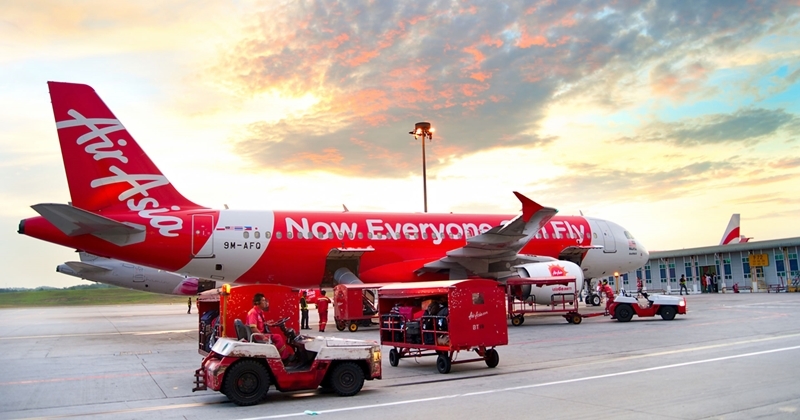
    AirAsia X Bhd shareholders have approved the Malaysian budget airline’s debt restructuring, it said on Tuesday, allowing it to pursue a scheme it viewed as key to survival.

    Shareholders of the long-haul affiliate of AirAsia Group Bhd approved all resolutions at an extraordinary general meeting, including a rights issue and a share subscription for new investors to raise 500 million ringgit.

    AirAsia X last October proposed restructuring its 64.15 billion ringgit ($15.6 billion) debt into a principal amount of 200 million ringgit and having the rest waived.

    The airline said in a separate statement that the resolutions were passed with at least a 99.8% margin, and marked a major milestone in its restructuring progress.

    “These approvals have been obtained simultaneously with final negotiations being held with creditors,” it said, adding that with advisers New York-based Seabury Capital it had been “in active and productive” talks with lessors and others.

    A Malaysian court in February granted the airline leave to convene separate meetings with its different groups of creditors within six months, to vote on its scheme.

    The meeting is scheduled for late July or August, AirAsia X said.

    In March, the court also granted AirAsia X a three-month order against any proceedings that may be filed against it, which could have slowed down its restructuring.

    Planemaker Airbus last year joined more than a dozen creditors to challenge the debt restructuring plan, telling the court it stands to lose more than $5 billion worth of orders if the scheme goes through.

    Other challengers include lessor BOC Aviation (BOCA), which called for a debt-to-equity swap.

    Airbus said it cannot comment on the airline’s ongoing restructuring plan, while BOCA did not immediately respond to an emailed query seeking comment.

    AirAsia X in February proposed a separate restructuring program for its aircraft lessors that aims to address their concerns about forward commercial agreements and the viability of the airline’s business after recapitalization.

  • Google is testing two features for mobile YouTube users

    Google is testing two features for mobile YouTube users

    Google has been busy testing new features on the mobile version of YouTube. Remember back in 2007 when one ad for the Apple iPhone said that “maybe the biggest surprise is finding YouTube on your phone.” But these days, every iOS and Android phone has access to the streaming video site and Google continues to improve the UI and functionality of the app.

    For example, a limited number of Android users are in the process of testing a feature called Loop video that is already offered to those running the desktop version of YouTube. With this feature, a video will automatically continue to play over and over again. This really isn’t meant for a long movie like Titanic (which runs for three hours and 30 minutes), but for short music videos that can be over in under four minutes.

    If you have an Android device, you can look for the Loop video option by tapping the three-dot menu button. The feature does have an icon consisting of a right-facing arrow on top, a left-facing arrow at the bottom with the number “1” sandwiched in between.

    Also being tested is another feature called Clip that allows YouTube users to create 60-second video clips from existing videos. The clip you create can then be shared with others. Clip, which uses the image of a scissor for its icon, is being tested on both Android and iOS devices which means that you might not see it on your device at the moment.

  • ZTE provides wireless coverage to the second highest peak in the world

    ZTE provides wireless coverage to the second highest peak in the world

    ZTE Corporation, a major international provider of telecommunications, enterprise and consumer technology solutions for the mobile internet, together with a local operator in Pakistan, has built a base station and completed several kilometers of wireless coverage around the station at the K2 base camp for the world’s second-highest peak on the border between China and Pakistan, with the aim of building a strong communication network for climbers.

    The altitude of K2, the second-highest peak in the world after Mount Qomolangma, is 8611 meters. It’s about 200 kilometers from the villages at the foot of the mountain in northern Pakistan to the K2 base camp. On the way to the K2 base camp, the mountain is steep and the environment is harsh. Compared with Mount Qomolangma, its difficulty and risk for climbers are higher and more challenging. It is one of the most popular peaks that climbers hope to conquer. However, there was no signal coverage along the K2 before April 2020, so it was very difficult for climbers to communicate in case of an emergency. The death rate of the climbers, who trek toward the K2’s summit, is as high as 25%.

    In order to fill the signal gap along the climbing route of K2, ZTE assisted the local operator in completing the construction and provisioning of the base station at the K2 base camp with an altitude of 5100 meters before the peak climbing season in 2021, so as to provide 24×7 stable network services for climbers in the area.

    The signal strength, speed rate, effective coverage distance, and other technical indicators of the base station have reached the desired level, providing stable and high-speed communication experiences for climbers, and effectively guaranteeing high-quality communication and timely information transmission for climbers.

    Since the establishment, the base station has provided communication services for hundreds of climbers. ZTE and the local operator will continue to work together to ensure the communication quality of the station, so as to protect the life security of climbers in this harsh environment.

  • Rimac Nevera Electric Hypercar Unveiled

    Rimac Nevera Electric Hypercar Unveiled

    After a long wait, Rimac Automobili has finally unveiled the Nevera, an all-electric, hypercar that has been designed and engineered to surpass anyone’s expectation of an electric car. The Nevera is the production-ready iteration of the Rimac C_Two concept car, which was revealed at the International Geneva Motor Show in 2018. Since then, Rimac’s engineers have refined the new flagship car. The Nevera was developed in-house at Rimac’s headquarters in Croatia and only 150 examples of the car will be made.

    Underlining his own commitment to the project, Mate Rimac will personally test and sign off each of the Neveras, before they are delivered to customers from the company’s current production site on the outskirts of Zagreb, Croatia.

    Nevera’s monocoque construction includes a bonded carbon roof, integrated structural battery pack, and rear carbon subframe, is forming the largest single carbon fibre piece in the entire automotive industry. Weighing less than 200 kg and utilizing 2200 carbon fibre plys and 222 aluminum inserts, the monocoque encases the car’s battery to form a compact yet incredibly strong structure with a torsional stiffness of 70.000 Nm/degree.

    The unique H-shaped, liquid-cooled, 120kWh, 6960-cell battery was designed from scratch by Rimac and sits at the heart of the Nevera. Capable of producing 1.4MW of power, the Lithium/Manganese/Nickel battery also forms an integral part of the car’s core, adding 37 percent structural stiffness to the carbon fibre monocoque. The battery’s optimum positioning low and central within the car’s floor contributes to an ultra-low centre of gravity. This helps create a 48/52 front/rear weight distribution.

    Four bespoke surface-mounted permanent magnet motors drive the Nevera’s four wheels individually. Together, they enable 1914 horsepower and 2360 Nm of torque, which is triple the output of a ‘conventional-engined’ supercar. The front and rear wheels are each connected to a pair of single-speed gearboxes.

    With the ability to sprint to 96.5 kmph in 1.85 seconds and continue the acceleration all the way to a 412 kmph which is its top speed, the Nevera opens up a new dimension in hypercar performance. Accelerating from rest to 161 kmph requires just 4.3 seconds and it maintains acceleration throughout a full-throttle cycle, achieving 300 kmph from rest in 9.3 seconds, shredding a whole 2.5 seconds from the initial targets.

    Rimac’s All-Wheel Torque Vectoring 2 (R-AWTV 2) system replaces traditional Electronic Stability Program and Traction Control systems to further bolster grip and traction. Meanwhile, the Nevera’s R-AWTV 2 system enables infinitely variable dynamic responses to road and track conditions by calibrating the amount of torque supplied to each wheel. R-AWTV 2 calculates the precise level of torque to channel through each wheel for ultimate stability and exceptional agility. Both predictive and responsive, R-AWTV reads the road and makes over 100 calculations per second to tailor the level of torque to achieve the desired driving style.

  • Nokia and Optus deploys Australia’s first integrated antenna

    Nokia and Optus deploys Australia’s first integrated antenna

    Nokia announced the deployment of Australia’s first Interleaved Passive Active Antenna (IPAA) in collaboration with Optus. Together, Nokia and Optus deployed the first IPAA in Yeerongpilly, Brisbane. The solution helps ease site-related challenges which accelerate the introduction of 5G services across the country.

    As operators look to rollout 5G, finding space on existing towers and rooftops for new massive MIMO active antenna equipment poses a significant deployment challenge for operators. Long delays in acquiring permission for site upgrades; the potential strengthening of the supporting structures and potentially higher rental payments to landlords, can in combination seriously delay operators, such as Optus, in getting 5G services to their customers.

    Nokia’s IPAA solution was developed in collaboration with CommScope. It will allow Optus and other operators to upgrade existing sites to 5G by simply replacing their existing antennas with a similar-sized unit that supports all legacy technologies as well as 5G massive MIMO active antenna, all in a single compact solution. By utilizing this solution, Optus can overcome many deployment challenges that can typically hinder the introduction of 5G.

    Lambo Kanagaratnam, Managing Director of Networks at Optus, said: “We’re committed to keeping our customers connected and at the forefront of 5G. By partnering with global technology leaders like Nokia, we continue to bring the best global innovations to our customers. The introduction of the IPAA into our network infrastructure will help us speed up the deployment of our 5G network by addressing space and structural capacity constraints.”

    Rob Joyce, Chief Technology Officer of Australia and New Zealand at Nokia, said: “We’re delighted to be partnering with Optus to bring our unique IPAA solution into play in the Australian market. The IPAA is an advanced technical solution to tackle the problems of finding space on towers and rooftops for 5G upgrades. Operators can now simply replace an existing antenna with Nokia’s IPAA solution to upgrade the site and at the same time, introduce 5G; it couldn’t be simpler.”

  • Deliveroo to expand Editions shared-kitchen network in Hong Kong

    Deliveroo to expand Editions shared-kitchen network in Hong Kong

    While the current COVID-19 pandemic is causing Hong Kong’s brick and mortar F&B industry to suffer, online food delivery platforms are enjoying success as self-isolating diners order from the safety of their homes. To reach out to more customers, Deliveroo Hong Kong has opened its third Editions site, a hub housing a number of delivery-only kitchens.

    Located in Quarry Bay, the new site, spanning 2,877 square feet, aims to serve customers from North Point, Braemar Hill, Quarry Bay, Tai Koo, and Shau Kei Wan. With six kitchen spaces, this latest addition is Deliveroo Hong Kong’s largest Editions site.

    “Our newest Deliveroo Editions at Quarry Bay highlights Deliveroo’s ambition, confidence, and vigorous commitment to investing in Hong Kong’s F&B industry. We look forward to continuing our investment in the industry in 2020 with additional openings towards Q3 and Q4,” said Brian Lo, general manager of Deliveroo Hong Kong.

    Deliveroo’s existing sites already include a location in Wan Chai and the Deliveroo Food Market in Sai Ying Pun. With the new Quarry Bay site, Deliveroo Hong Kong now houses a total of 17 kitchens consisting of 42 brands. In order to provide a range of cuisine types, Deliveroo Hong Kong’s new location will be working with Pirata Group, Shanghai Lane, Beef & Liberty, Treehouse, Pololi, and Soupday.

    In addition, Deliveroo Hong Kong has also rolled out a new pick-up feature on its app, allowing customers to order food from restaurants that might not offer delivery services or products suitable for delivery. At the same time, the pick-up service eliminates delivery fees and the need to stand in queues.

    Lo commented, “As Hong Kong’s food delivery sector leader, we want to ensure that we reach communities, deliver convenience, and provide great service across every part of Hong Kong.”

    Looking forward, Deliveroo Hong Kong is seeking opportunities to expand its Editions sites to Kowloon and New Territories later this year.

  • Intel Reiterates Chip Supply Shortages Could Last Several Years

    Intel Reiterates Chip Supply Shortages Could Last Several Years

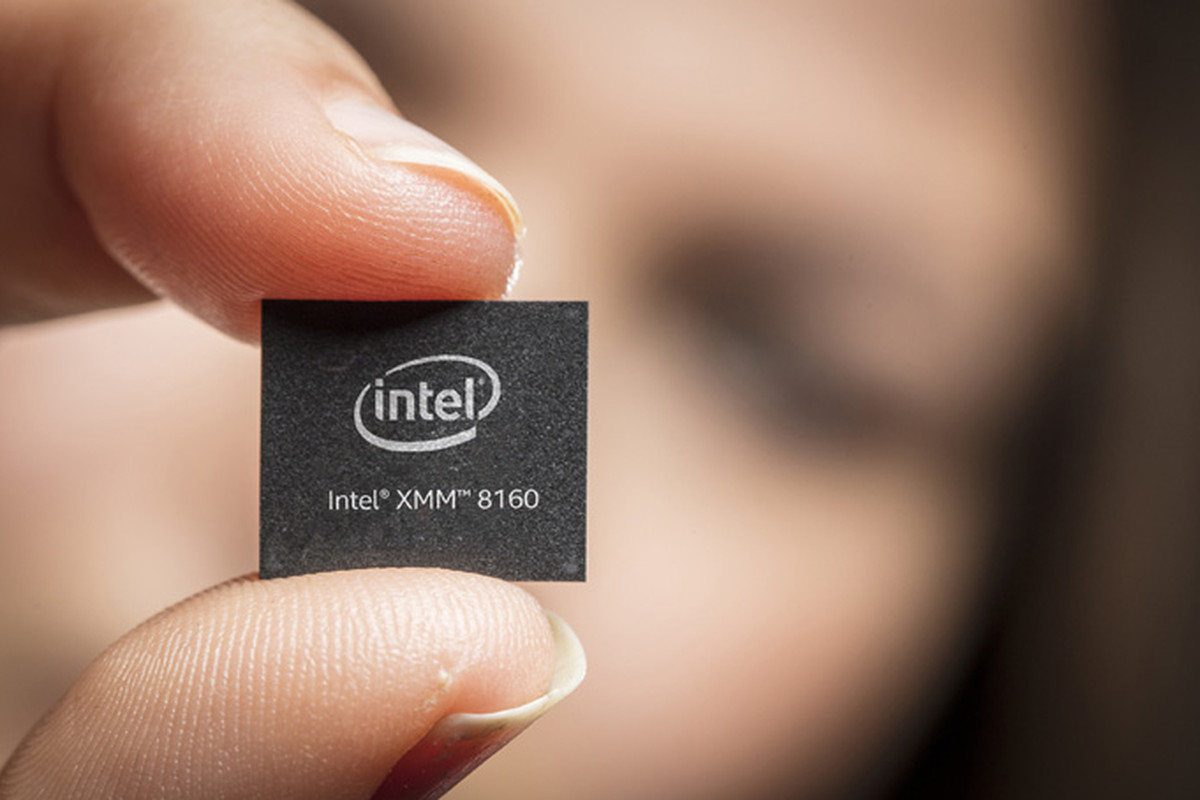
    Intel Corp’s CEO said on Monday it could take several years for a global shortage of semiconductors to be resolved, a problem that has shuttered some auto production lines and is also being felt in other areas, including consumer electronics. Pat Gelsinger told a virtual session of the Computex trade show in Taipei that the work-and-study-from-home trend during the COVID-19 pandemic had led to a “cycle of explosive growth in semiconductors” that has placed huge strain on global supply chains.

    “But while the industry has taken steps to address near-term constraints it could still take a couple of years for the ecosystem to address shortages of foundry capacity, substrates and components.”

    Gelsinger had told The Washington Post in an interview in mid-April the shortage was going to take “a couple of years” to abate, and that it planned to start producing chips within six to nine months to address shortages at U.S. car plants.

    Intel announced a $20 billion plan in March to expand its advanced chip manufacturing capacity, building two factories in Arizona and opening its plants to outside customers.

    “We plan to expand to other locations in the U.S. and Europe, ensuring a sustainable and secure semiconductor supply chain for the world,” Gelsinger said, without elaborating.

    Intel’s plans could directly challenge the two other companies in the world that can make the most advanced chips – Taiwan Semiconductor Manufacturing Co Ltd (TSMC) and South Korea’s Samsung Electronics Co Ltd.

    The two have come to dominate the semiconductor manufacturing business, moving its centre of gravity from the United States, where much of the technology was once invented, to Asia, where more than two-thirds of advanced chips are now manufactured.

  • Saxo Markets Appoints Hong Kong CEO

    Saxo Markets Appoints Hong Kong CEO

    Copenhagen-headquartered Saxo Markets has internally promoted a new chief executive for Hong Kong.

    Richard Douglas has been named Hong Kong CEO for Saxo Markets, effective immediately, according to a statement, reporting to APAC CEO Adam Reynolds.

    Douglas was most recently chief operating officer and chief information officer for Greater China and the role will be succeeded by Patrick Chung who will be responsible for all tech staff, platforms, and deliverables in the region while reporting to Saxo Bank chief information officer Ashok Kalyanswamy.

    Douglas has 18 years of experience, including six years in Hong Kong, having previously worked at the investment banking units of Macquarie, Nomura, Citi and UBS in London, Sydney, and Hong Kong.

    As part of the reshuffle, Greater China CEO Fan Xu will shift to a new role of CEO for Chongqing-based Saxo FinTech, a joint venture with Chinese automobile giant and majority shareholder Geely.

    China country head Echo Zhao will be leaving Saxo Group.

    «We believe that scaling and growing our Hong Kong business is critical to achieving our broader ambitions in the region, including building a strong partnership business,» said Saxo Bank CEO and founder Kim Fournais.

  • Bridging Asia-Pacific digital divide to attain sustainable development

    Bridging Asia-Pacific digital divide to attain sustainable development

    Expanding on his keynote speech at the 7th Asia-Pacific Spectrum Management Conference, held from 24 May to 27 May 2021, Tide Xu, Chief Strategy Officer, Wireless Product Line at Huawei addressed a prevalent digital divide in the Asia-Pacific region and offered details on policy recommendations as countries chart a sustainable digital development in the 5G era.

    APAC, made up of densely-populated countries and some of the fastest-growing economies in the world, has been experiencing a surge in mobile broadband demand in recent years. Against a backdrop of uneven network distribution between urban and rural areas, the pandemic has fuelled a greater divide, but has also helped governments recognize the role of mobile broadband as a catalyst for digital transformation moving forward.As nations embark on digitalization strategies to build economic resilience, Xu cited three policy recommendations to enhance mobile broadband development and close the digital divide.

    Firstly, with spectrum being critical to mobile network development, the ready provision of key spectrum bands such as C-band and 700 MHz is instrumental to unleashing a good mix of coverage and capacity benefits. As countries work towards a 5G-oriented evolution, Xu stressed the importance of adopting an all-encompassing spectrum strategy combining low-, mid- and high-bands to support all use cases.

    Secondly, countries yet to roll out 5G should continue investing in 4G infrastructure to ensure a seamless transition into the 5G era. Until 2030, 4G and 5G will coexist to power connectivity and offer nationwide network coverage. Apart from expanding 4G coverage to increase the penetration rate of network users, 4G VoLTE deployment should be accelerated to expedite the sunset of 2G/3G. With mobile broadband coverage being key to digital inclusion, policies can incentivize mobile broadband coverage in underserved areas.

    Thirdly, affordability and availability of entry-level mobile devices are essential for underprivileged families in rural areas to access mobile internet. Supportive demand-side policies as such respond to user needs to effectively bridge the usage gap.

    Bridging the experience gap

    While 4G changes lives, 5G changes societies. According to findings from consulting firm A.T. Kearney, the Industry 4.0 evolution is estimated to bring about a revenue potential of about $150 billion in ASEAN by 2025. In this evolution, 5G will be a key driver to unlock a broad range of opportunities to achieve significant socio-economic growth.

    These promises have motivated transitions from 4G to 5G, with 5G deployment gaining momentum in many countries. In fact, the 5G revolution is taking place at a faster pace compared to previous 3G or 4G revolution.  Frontrunners in global 5G adoption like China and South Korea are experiencing stellar progress. A leader in 5G adoption, China has accumulated more than 285 million 5G subscribers, with more than 819,000 base stations deployed. Meanwhile, South Korea has amassed 5G subscribers totaling about one-fourth of its total population. As regional countries chart their trajectories to harness the benefits of 5G, Xu noted three takeaways from China and South Korea’s 5G journey thus far.

    Firstly, both governments embrace national digitalization founded on 5G infrastructure, using stimulus policies to spur accelerated 5G adoption across various industries.

    Secondly, spectrum strategies have been mapped with future 5G evolution in mind; each MNO should be allocated a large bandwith of 80 MHz to 100 MHz continuous TDD, deemed ideal for 5G deployment to kickstart a country’s 5G journey. This strategy can attract early buy-in as advanced massive MIMO offers user experiences 25 times more superior than 4G.

    Thirdly, MNOs in both countries have been actively developing new applications, services and business models for both the consumer market and vertical industries. For the consumer market, MNOs have been delivering innovative content such as augmented reality and virtual reality experiences. Across vertical industries, high-connectivity, low-latency 5G has been deployed to power smart ports, smart manufacturing, smart agriculture and etc.. In 2020, China recorded more than 2,000 commercial and pilot projects across industry verticals.

    Besides China and South Korea, Thailand is also picking up speed in 5G deployment. A pioneer in 5G development in the region and the first country in ASEAN to launch a 5G commercial network utilizing a TDD band plan in 2.6 GHz, Thailand has garnered 1.5 million subscribers within the first year of launching 5G services, yielding user experiences 13 times more superior than that offered by 4G. Thailand has also begun exploring wide 5G applications in industrial use cases

    Additional mid-band spectrum to reap full 5G value

    5G marks a new era of connectivity that will lead this decade, similar to how 3G and 4G stayed dominant for about a decade before gradually phasing out. After 2025, the industry will enter 5G-Advanced (5.5G) – the second phase in the 5G evolution introduced by the 3GPP in conjunction with Release 18.

    Amid the transitions, industries will continually innovate to align with changing requirements of both the consumer and vertical markets. To keep abreast with the evolution, Huawei is committed to continually invest in research and innovation  to embrace 5G-Advanced and seek synergistic collaborations with global industry partners to develop new applications and expand existing capabilities.

    Moving forward, 5G success is dependent on access to a cost-effective mid-band spectrum, already deployed by about 90% of global MNOs to deliver an optimal balance of coverage and capacity for 5G services.

    Given that countries like China and South Korea are reporting an average handset data traffic per 5G user per month (DOU) of 30 GB to 40 GB – a threefold jump from 4G users – ITU predicts that DOU will reach 250 GB in the next 5 to 10 years. To support sustainable development in the coming years, APAC countries require at least 1 GHz of additional mid-band spectrum, according to research from Coleago Consulting. This will provide MNOs the capability to scale 5G or 5G-Advanced services accordingly, to reap the full potential of the prevailing service.

    Within the mid-band, countries are now exploring 6GHz as the ideal future mobile band after the WRC-19 earmarked it as a new agenda item for IMT identification for WRC-23. 6GHz is also perhaps the only optional intermediate frequency.

    Based on internal evaluations demonstrating 6GHz’s comparable performance to C-band in satisfying requirements for both capacity and coverage, Xu echoes GSMA’s recent call for governments to license the 6 GHz frequency band to facilitate sustainable digital development.

    Capturing the full value of 5G is an international effort that requires governments and regulators to work on supporting harmonised bands. For now, the success of 5G services and beyond weighs heavily on governments and regulators to evaluate and formulate spectrum strategies and policies. Xu concluded by urging policy-makers to take a comprehensive and balanced approach towards harnessing the potential of mid-band spectrum when pursuing national digitalization ambitions.