Tag: asia

  • Huawei launches “Make any room a data center” products

    Huawei launches “Make any room a data center” products

    In his opening remarks, Brandon Wu, Chief Technology Officer (CTO) of Huawei’s Asia Pacific Enterprise Business Unit, emphasized the need to ensure enhanced resiliency across all industries, given the impact of the global pandemic.

    Wu explored the key trends emerging in edge computing, namely: better-connected infrastructure, increased resiliency through the use of edge computing, and enhanced reliability through the use of Artificial Intelligence (AI).

    According to the estimation by Gartner, within four years, 75% of data generated by enterprises will be processed at the edge. Demand for real-time interaction is driving businesses to bring computing power closer to end-users.

    • Small and edge data center are therefore making an appearance in several industries and scenarios:Retail: Small and edge data centers can exist within retail outlets as retailers close the gap between online and offline sales.
    • Manufacturing: Edge data centers deployed in distribution warehouses are capable of managing growing volumes of inventory and shipping data; in factories, such data centers manage data generated from sensors as well as communications between equipment, contributing to a growing IIoT.
    • Telecoms: Central offices of telco companies are being converted to computing rooms and used as edge data centers to make networks more dynamic.

    Mahesh Choudhary, Solution Architect for the Huawei Digital Power Line, launched the new solution directly from the Huawei Digital Power Innovation Experience Center, offering a real-life demonstration for event attendees. Changing the game with SmartLi inside —Huawei’s smart lithium battery Uninterruptible Power Supply (UPS) —now any room can be made into a data center.

    With far lower requirements placed on ceiling height, the Huawei Modular Data Center Solution has no need for a traditional raised floor design. Instead, air conditioner pipes and strong-and weak-current cables are routed from top-down, meaning that equipment can be accommodated in ceiling heights as low as 2.6 m, far below the 3 m minimum height required for a traditional data center.

    At the Smart Modular Data Center Product Launch, Huawei’s partner — NetCraft Information Technology (Macau) Co., Ltd. — shared its experiences cooperating with Huawei. Benjiman Wong, the company’s Sales Director, said: “With the Huawei Modular Data Center Solution, all required components are modular. An easy way for customers to understand this solution is to consider that each component is like a building block: you can build up your castle by adding different blocks together, so you can add more blocks in the future when needed.”

  • AirAsia sees more layoffs if April domestic flights stay grounded

    AirAsia sees more layoffs if April domestic flights stay grounded

    Low-cost carrier AirAsia is ready to furlough more workers unless domestic coronavirus travel curbs end next month, even as the company speeds expansion of its non-airlines business to fill an earnings hole, top executives told Nikkei Asia.

    The airline founded by local tycoon Tony Fernandes and its budget model have been hammered by the drop in international air travel, while movement restrictions between states in Malaysia are also choking revenue. AirAsia Group President Bo Lingam said in an interview with Nikkei that it is critical for internal routes to reopen.

    “We would prefer [this] as soon as possible, but I think the green states can be opened first, and we would appreciate if it’s by next month,” he said, referring to the end of April. Green states are those with lower new COVID-19 cases, namely Melaka, Pahang, Terengganu, Sabah and the federal territories of Putrajaya and Labuan.

    The Malaysian government has not said when it will reopen domestic travel nationwide despite pressure from lobby groups, including hotels, tour operators and airlines.

    If the interstate travel ban remains into May, the company would have to dismiss more employees on a furlough basis, Bo said, adding to 3,000 mostly pilots and back-office staff already hit by the measure.

    Furloughed workers receive medical and travel benefits until called back to work. “We will pay them medical benefit[s] in full just like pre-COVID-19 and they would be first to be recalled once we fly our airplanes again,” said Bo, who has been with the company for over 21 years

    The carrier is ready to begin domestic or international travel when allowed, he said. “All necessary safety checks are always done and we have standby employees to be recalled, so we are ready anytime,” he said.

    AirAsia’s finances are clearly hurting. It suffered a net loss of 2.7 billion ringgit ($650 million) for the first nine months of 2020 compared with a net profit of 80.7 million ringgit the previous year. Revenue fell 68% to 2.9 billion ringgit from 9.1 billion ringgit. Fourth-quarter results are expected this month, with analysts forecasting a turn to profitability not before 2022.

    Bo said the airline is no longer accepting new jet deliveries from its primary supplier, Airbus. AirAsia is the European manufacturer’s largest customer in the single-aisle segment and was supposed to receive a combined 46 planes in 2020 and 2021 — mostly new A321s.

    “We have stopped taking in any deliveries because we have no place to park anymore and it’s a waste of resources,” he said. “We plan to take five aircraft next year only if the situation improves.”

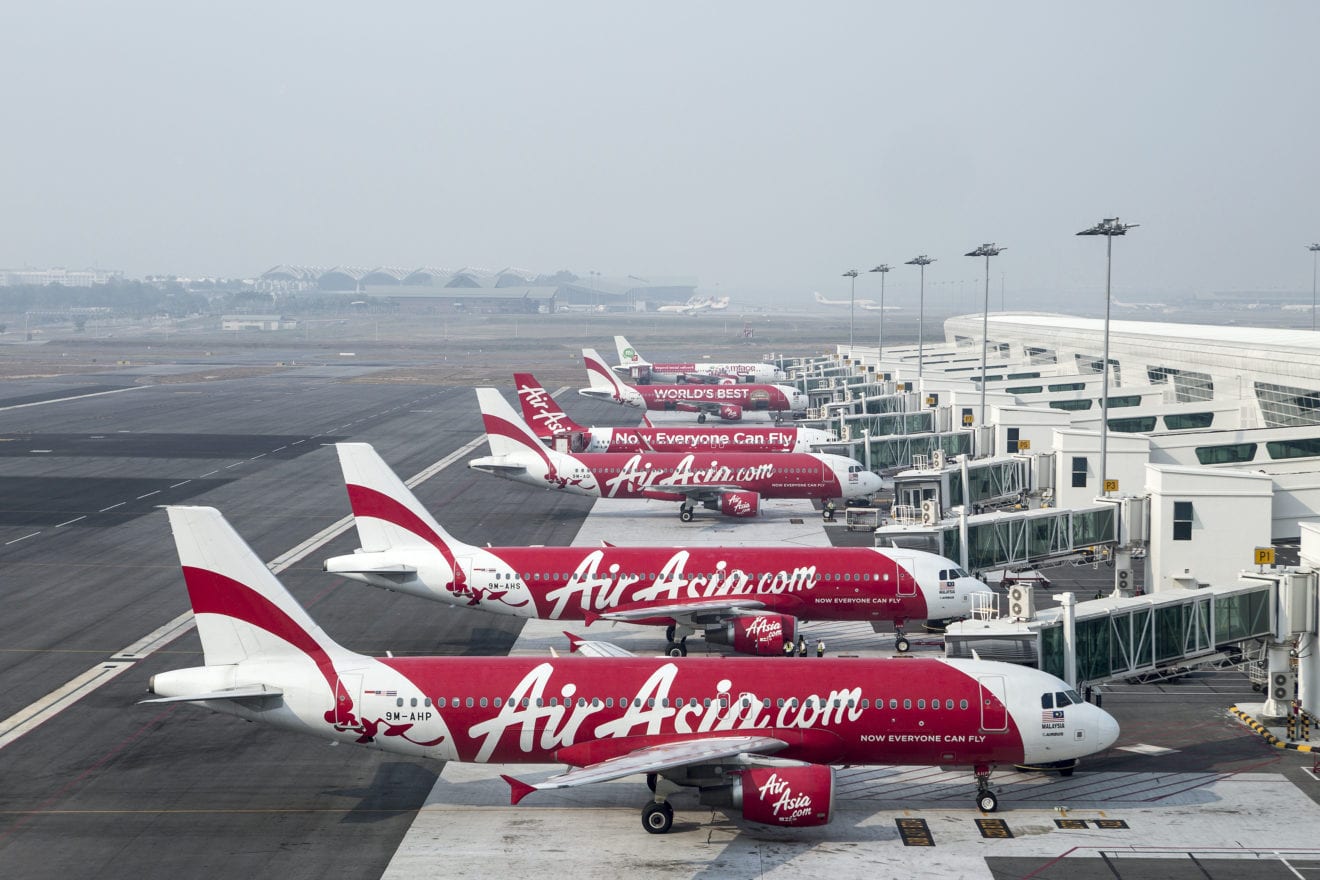
    The carrier, known for its bright red and white fleet, is currently raising 2.5 billion ringgit as working capital, which includes a loan of 300 million ringgit from Sabah state-owned Sabah Development Bank. It is also seeking a guaranteed loan from the federal government aimed at companies hurt by COVID-19.

    The airline also completed the first tranche of its private placement of up to 20% of the group’s total issued shares last month, raising over 250 million ringgit.

    With the outlook for air travel uncertain, AirAsia Digital — the holding company for its growing non-airline businesses — may spinoff within the next 3 to 5 years, Aireen Omar, the AirAsia Group president who manages it, told Nikkei in a separate interview.

    Aireen said the group is trying to lure new investment by bolstering core businesses, which include restaurants, food delivery and courier services.

    The group’s chain of Santan restaurants is expected to expand into Indonesia, Thailand and the southern Chinese city of Shenzen by the end of the year, she said. Santan — which means coconut milk in Malay — is a staple ingredient in Southeast Asian cooking.

    “We’re expecting to have about 60 restaurants by year-end from the current 13,” Aireen said, adding that all new locations will be franchises.

    “We are already receiving a lot of interest and evaluating our potential first investor. All of them want to come on board early before an IPO,” she said, adding that the business has drawn attention from large funds and family offices.

    But Aireen stressed that AirAsia does not intend to keep raising funds via numerous crowdfunding rounds favored by tech startups. “We want to be responsible and want a set of stakeholders to answer to,” she said.

    The pandemic has forced AirAsia to move into non-airline businesses faster than envisioned. “The road map which was supposed to take us three years was squeezed into the last nine months,” she said.

    According to group president Bo, AirAsia expects its international routes will not resume until the fourth quarter provided Malaysia’s immunization program, which began late last month, continues as planned. Southeast Asian destinations are expected to resume first, he said.

    He urged the Association of Southeast Asian Nations to come up with a travel policy in the next few months that can be used by all member countries to smooth the way.

    “One policy for the region would ease processes rather than having customized rules for every country,” he said.

    Bo added that in preparation for the return of international travel, AirAsia has already started working to update its mobile app and website to allow customers to upload proof of digital vaccination.
  • Starbucks opens online with a JD flagship store

    Starbucks opens online with a JD flagship store

    Starbucks, the world’s largest coffeehouse chain, launched a flagship store on JD.com on March 3.

    The online store is bringing Chinese consumers the brand’s new spring mugs, such as the Sakura Blossom Collection, together with its classic series, including the core classic series, and Starbucks Heritage. In addition to physical products such as mugs, the store also sells physical gift cards, seasonal foods (such as rice dumplings and mooncakes), and their corresponding gift certificates, bringing more quality choices to JD’s customers. A Super Brand Day will kick off on the store’s opening day to help promote sales for the newly opened Starbucks store.

    JD’s consumers are a strong match with Starbucks’ target consumers, and JD’s nationwide logistics network will ensure high efficiency and speed of deliveries for consumers who purchase Starbucks products on JD.

    “JD’s years of experience and good reputation in authentic products, logistics, and after-sales services will also

  • GoJek takes stake in e-wallet, ramping up rivalry with Grab

    GoJek takes stake in e-wallet, ramping up rivalry with Grab

    Grab Holdings and Gojek have made substantial progress in working out a deal to combine their businesses in what would be the biggest internet merger in Southeast Asia, according to people with knowledge of the talks.

    The region’s two most valuable startups have narrowed their differences of opinion, though some parts of the agreement still need to be negotiated, said the people, asking not to be named because the talks are private. The final details are being worked out among the most senior leaders of each company with the participation of SoftBank Group Corp.’s Masayoshi Son, a major Grab investor, one of the people said.

    Under one structure with substantial support, Grab co-founder Anthony Tan would become the chief executive officer of the combined entity, while Gojek executives would run the new combined business in Indonesia under the Gojek brand, the people said. The two brands may be run separately for an extended period of time, one of the people said. The combination is ultimately aimed at becoming a publicly listed company.

    Representatives of Grab, Gojek, and SoftBank declined to comment. The talks are still fluid and may not result in a transaction, the people said. The deal would need regulatory approval and governments may have antitrust concerns about the unification of the region’s two leading ride-hailing companies.

    Grab and Gojek have been locked in a fierce, expensive battle for dominance in that business along with food delivery and mobile payments over the last several years. Investors have been pushing for them to combine forces across Southeast Asia in order to reduce cash burn and create one of the most powerful internet companies in the region. Grab, which is present in eight countries, was last valued at more than $14 billion, while Gojek, valued at $10 billion, has a presence in Indonesia, Singapore, the Philippines, Thailand, and Vietnam.

    SoftBank has been pushing for a deal since Son visited Indonesia in January, but he’s grown increasingly frustrated with the lack of progress. The old rivalry and personality clashes between the two companies’ leaders have led to deadlocked negotiations in the past, according to one of the people familiar with the talks.

    Read more: SoftBank’s Son Is Said to Press Grab for Truce With Rival Gojek

    Sea Ltd.’s rise as a formidable force in e-commerce and digital payments has injected fresh impetus to the Grab-Gojek conversation, the people said. The Singapore-based company’s e-wallet, ShopeePay, has been gaining market share at a rapid clip, aided by the growing popularity of Sea’s e-commerce platform Shopee. That, in turn, is challenging market leaders GoPay and Grab-backed Ovo in Indonesia.

    Sea’s surprise journey from a scrappy startup to Southeast Asia’s most valuable company in the past 10 years has been the “biggest inspiration” for local internet companies lately, said Rohit Sipahimalani, chief investment strategist at Temasek Holdings Pte. Sea went public in 2017 after raising more than $720 million from investors and now has a market value approaching $88 billion.

    Read more: World’s Hottest Stock Is a Money-Losing Tech Giant Soaring 880%

    “People are now seeing that the public markets are a viable alternative for internet companies in Southeast Asia,” said Sipahimalani, whose firm is an investor in Gojek. “But they also recognize that they need to get to a certain scale, which is why the IPO route is becoming more attractive. I think that’s leading to some dialogue around combinations and consolidations in the region.”

    He declined to comment on the Grab-Gojek deal, adding that Singapore’s state-owned investment firm isn’t taking part in the negotiations.

  • Standard Chartered Joins BlackRock’s Provider Network

    Standard Chartered Joins BlackRock’s Provider Network

    The bank will offer integrated front-to-back office investment management solutions to mutual clients across Asia, Africa, and the Middle East on the Aladdin platform.

    Standard Chartered has become the latest bank to ink a strategic partnership with BlackRock’s «Aladdin» provider network, a platform that helps assets managers check risk in their portfolios, trade, manage data management, and other operational tasks.

    The alliance builds on Standard Chartered’s ongoing relationship with BlackRock, leveraging the focus both organizations have on innovation and digitization and is part of the Bank’s longer-term strategic partnership with the global asset manager to provide an enhanced experience for our institutional clients, Standard Chartered said in an announcement on Wednesday.

    Aladdin – or asset, liability, debt, and derivatives investment network – was conceived by the New York-based firm in the late 1990s as an internal tool. Today, it is one of Blackrock’s most powerful tech tools that it sells to smaller rivals, in a bid to stave off pressure on its active management fund arm from cheaper index funds. Credit Suisse and HSBC adopted the platform in 2019 and 2020 respectively.

    Akiyoshi Takeuchi, head of BlackRock Solutions Asia-Pacific, said Standard Chartered’s adoption of the platform «underscores growing momentum in bringing innovative solutions deeper into emerging markets throughout Asia, Africa, and the Middle East.»

  • OCBC Appoints Independent Director

    OCBC Appoints Independent Director

    He previously spent more than two decades at the Monetary Authority of Singapore, and was deputy managing director, corporate development, when he left in 2019.

    OCBC has appointed Andrew Khoo Cheng Hoe as a non-executive and independent director, effective March 8, according to a filing with bourse SGX.

    He will serve as a member of the board audit committee as well as the ethics and conduct committee, the announcement said.

    Khoo, 57, is an adjunct professor at the NUS Business School. He is also a director at the National Environment Agency, as well as at Stroke Support Station.

  • Macquarie Telecom signs $34 million exclusive deal with Optus

    Macquarie Telecom signs $34 million exclusive deal with Optus

    The decision follows a comprehensive, strategic review of mobile solutions, and will see Macquarie offer numerous key services to Australian enterprises as the need for greater connectivity continues, including:

    • 5G Connectivity and Speeds: Providing flexibility, faster speeds, and greater capacity across multiple devices, fully managed and supported in Australia by Macquarie’s dedicated customer and engineering teams.
    • Wi-Fi Calling: Extends full coverage and network access across all Wi-Fi areas.
    • Voice over LTE (VoLTE): A network standard enabling businesses to use high-speed 4G data and voice in tandem on devices at any time.
    • Coverage: New tools to enable customers to make coverage decisions.

    Due to the increasing emphasis on mobility and 5G, Macquarie plans to expand its mobile business and hire new staff over the next three years. This continues the company’s unwavering commitment to only provide service from and hire in Australia.

    “2020 changed the way Australians work forever. By providing 5G connectivity along with business-grade NBN, we can ensure Australian businesses can work from more places than ever before,” said Luke Clifton, Group Executive, Macquarie Telecom.

    “The fact is that 5G is here. It is fast becoming a necessity and complimentary service to nbn for Australian businesses. This agreement will ensure we can continue to compete in a market that is still underserved and overcharged. These new mobile offerings will also enable the right tools, technologies and customer service to manage a mobile workforce.”

    Optus currently has more than 1,000 live 5G sites covering more than 830,000 households across Sydney, Melbourne, Adelaide, Canberra, Perth and Brisbane.

    With the agreement, Macquarie will end its wholesale mobile contract with Telstra. It chose Optus’ wholesale offering due to its focus on collaboration, rapidly evolving 5G network, and commitment to future technologies.

    “We’re backing a winner,” added Clifton. “This investment reflects our commitment to Australian businesses and providing the technologies they need today and into the future.

    “Based on our comprehensive review, Optus was the clear choice in terms of superior technology, flexibility to build the right solutions, and cooperation. It is leading Australia’s wholesale 5G market, offers incredibly fast 5G and continues to invest heavily in its 5G network. Crucially, it understands the value of partnership in Australia’s 5G future while others are actively inhibiting it.”

    “Macquarie has a great reputation for customer service and Optus is genuinely excited to be partnering with Macquarie to deliver mobility solutions that businesses need today more than ever.” says Ben White, Managing Director, Wholesale, Satellite and Strategy, Optus.

    The new agreement complements a series of partnerships and technology investments by Macquarie Telecom in recent months and years. This includes its mobile reseller agreement with Apple, a preferred networking agreement with the nbn, its first-to-market VeloCloud by VMware SD-WAN, and a complete core network upgrade and refresh with Juniper Networks.

    The mobile agreement is a multi-year agreement. Services will be available to all customers, with existing customers transitioning over the coming months. The process will be managed end-to-end by Macquarie’s dedicated and local mobile support team. 5G plans are available immediately to new and existing customers.

  • Gojek-Grab Rivalry Extends to Digital Payments

    Gojek-Grab Rivalry Extends to Digital Payments

    Gojek has joined rival Grab in backing Indonesian state-backed e-wallet company in its Series B funding round.

    Gojek’s joining as a strategic shareholder will provide LinkAja access to the Gojek ecosystem to support LinkAja’s mission in accelerating financial inclusion in Indonesia, LinkAja CEO Haryati Lawidjaja said in a statement.

    As part of the deal, the ride-hailing giant will add LinkAja as a payment option on its app. The strategic investment builds on Gojek’s ongoing collaboration with the e-wallet, which includes payment for transportation and ticket reservation services.

    Formed from a consortium of state-owned enterprises, LinkAja operates an e-wallet and merchant services business focusing on the middle class, and micro, small, and medium-sized enterprise (MSME) segments in Indonesia.

    About 80 percent of its users are from tier 2 and 3 cities, according to LinkAja.

    According to GlobalData, rising Internet penetration, increasing digitalization and the proliferation of websites have been driving the growth of e-wallets in Indonesia, which further rose during the Covid-19 pandemic as customers have turned to alternative payment tools.

    Investments in state-backed entities can be a strategic move to maintain a healthy relationship with the government machinery. Though both Grab and Gojek managed to garner investment positions in LinkAja, Gojek seems to get some home advantage, Aurojyoti Bose, lead analyst at GlobalData, said about the deal.

    Grab, which competes with Gojek for dominance in the digital payments space in Southeast Asia, announced in November 2020 that it had invested $100 million in LinkAja, with participation from Telkomsel, BRI Ventura Investama and Mandiri Capital.

  • Malaysian firm to buy stake in five solar farms in Vietnam

    Malaysian firm to buy stake in five solar farms in Vietnam

    A subsidiary of Malaysia’s largest power utility, Tenaga Nasional Berhad, plans to acquire a 39 percent stake in five Vietnamese solar power projects from Singapore’s Sunseap Group.

    The farms were built last December in southern Vietnam and have a total capacity of 21.6 MW.

    After selling 39 percent to TNB Renewables, likely this month, Sunseap will own a 51 percent stake in them.

    President and CEO of TNB, Datuk Bahrain Din, said the deal would mark TNB’s entry into Vietnam’s fast-growing renewable energy and utility market.

    Sunseap Group owns projects in Singapore, Australia, Vietnam, China, Taiwan, and Cambodia.

    In 2019, it completed the $150-million solar farm, the solar power plant CMX Renewable Energy Vietnam, one of the country’s largest in central Ninh Thuan Province.

    TNB has projects in the UK, Kuwait, Turkey, Saudi Arabia, Pakistan, India, and Indonesia, and expects to have 8.3 GW of renewable energy by 2025.

    Of the foreign investors in Vietnam’s renewables sector, the majority are from Thailand.

    In 2020 Thailand’s Super Energy Corporation Public Company invested $456.7 million to build four solar plants in southern Vietnam, Loc Ninh 1, 2, 3, and 4.

    Gulf Group increased its ownership of two solar farms in the southern province of Tay Ninh from 49 percent to 90 percent in the second quarter of last year.

    In 2019, AC Energy, a subsidiary of the Philippines’ Ayala company, and Vietnam’s BIM Group established BIM/AC Renewables to develop projects in the central Ninh Thuan Province.

  • Nokia partners QTnet to launch local 5G network in Kyushu

    Nokia partners QTnet to launch local 5G network in Kyushu

    QTnet, which provides broadband and related services to customers, will now be able to launch new services using Nokia’s local 5G technology, thus creating a sizeable business opportunity. The private wireless network will be based on the Nokia Digital Automation Cloud, a high-performance, private wireless networking and edge computing platform that will power digital transformation across the Kyushu region.

    Together, Nokia and QTnet will also join forces with the Kyushu Institute of Technology to provide new local 5G-enabled services on the Institute’s university campus. This will be the first industry-academia collaboration in Japan to create a local 5G environment in a university campus setting. Services include self-operating stores, walking support for the visually impaired, cafeteria crowd monitoring, and new trials with partners and research labs.

    Sadao Mouri, Director and Senior Managing Executive Officer at QTnet, said: “Local 5G has the potential to enable new applications and business models while dramatically improving users’ quality of life. By deploying robust local 5G private wireless networks in Kyushu, we will enable anchor institutions like education, healthcare, and first responders to reach new levels of efficiency and productivity. Nokia’s track record in providing reliable local 5G networks will be an important milestone in creating new businesses.”

    Donny Janssens, Head of Nokia Enterprise Japan, said: “We are excited to work with QTnet on this 5G initiative, which is the first of its kind in Kyushu. With a high-performance 5G network, Kyushu institutions can take advantage of innovative new services and applications which will transform the way they operate. We look forward to expanding the local 5G private wireless ecosystem while delivering compelling 5G experiences.”

  • Fashion giant H&M pauses placing new orders in Myanmar

    Fashion giant H&M pauses placing new orders in Myanmar

    Sweden’s H&M, the world’s second-biggest fashion retailer, said on Monday it was shocked by the use of deadly force against protesters in Myanmar and that it had paused placing orders in the country.

    Police and military have killed more than 50 people to quell daily demonstrations and strikes against a Feb. 1 military coup, according to the United Nations last week.

    H&M has around 45 direct suppliers in Myanmar, it said on its website, and has sourced in the country for seven years.

    “Although we refrain from taking any immediate action regarding our long-term presence in the country, we have at this point paused placing new orders with our suppliers,” Serkan Tanka, Country Manager Myanmar, said in an email.

    “This is due to practical difficulties and an unpredictable situation limiting our ability to operate in the country, including challenges related to manufacturing and infrastructure, raw material imports, and transport of finished goods.”

    Two protesters were killed by gunshot wounds to the head in Myanmar on Monday, witnesses said, while shops, factories and banks were closed in the main city Yangon as part of the uprising against the country’s military rulers.

    Tanka said H&M was extremely concerned about the situation in the country and that it was in dialogue with UN agencies, diplomatic representatives, human rights experts, trade unions, and other multinational companies.

    “These consultations will guide us in any future decision in relation to how we as a company can best contribute to positive developments in accordance with the will of the people in Myanmar,” he said.

    Myanmar’s garment industry is smaller than that of neighboring countries Bangladesh, China and Thailand. However, its around 600 factories are significant employers, providing jobs for around 450,000 workers in 2020, according to the Myanmar Garment Manufacturers Association.

  • Nokia chosen by Globe Telecom for 5G rollout in the Philippines

    Nokia chosen by Globe Telecom for 5G rollout in the Philippines

    Under the terms of the agreement, Nokia will provide equipment and services from its comprehensive 5G AirScale portfolio to build out the Radio Access Network (RAN), including base stations and other radio access products. Globe Telecom will also use Nokia’s high-capacity AirScale massive MIMO Adaptive Antenna solution, which utilizes the latest 64TR radios, to boost coverage and performance.

    Utilizing the new 3.5GHz spectrum band for dense urban coverage, Globe Telecom will be able to provide end-users with high peak speeds typical on 5G network. The deal will also see the expansion of the existing FDD/TDD LTE network infrastructure. These solutions will enable Globe Telecom to roll out 5G services across the two major islands of the Philippines and offer customers superior speeds, capacity, and lower latencies while reducing complexity.

    Nokia will provide its NetAct solution for network management and seamless daily network operations as well as deliver digital design and deployment and optimization and technical support services.

    Nokia is an existing partner of Globe Telecom and provides a wide range of solutions including wireless, IP, optical, and fixed network products, and services.

    Ernest Cu, President and CEO, Globe Telecom, said:“We’re pleased to continue our partnership with Nokia to deliver compelling 5G experiences to our customers. We are going full steam ahead in delivering 5G in more areas, as this technology brings us closer to our goal of providing #1stWorldNetwork in the Philippines.”

    Tommi Uitto, President of Mobile Networks, Nokia, commented: “It’s exciting to be part of this project to deliver 5G services to citizens across the Philippines and see our industry-leading 5G RAN solutions underpin the network. The expanded and upgraded 5G network will deliver exciting new solutions to even more people and businesses and our technology will play a fundamental role in delivering these compelling connectivity experiences.”

  • Pay Hikes and Promotions to Resume at UOB

    Pay Hikes and Promotions to Resume at UOB

    The bank has announced that it will launch in June a round of pay increases and promotions, excluding senior employees, that will cover up to 98 percent of its employees.

    UOB said it is confident in a sustained economic recovery in 2021, and wants to recognize the efforts made by its 26,000-strong workforce in helping the bank navigate and emerge stronger from the crisis, according to a statement on Tuesday.

    The bank will award high-performing employees above-market average salary increases and grant mid-year promotions to staff with widened job scopes and who exceeded performance expectations over the last 12 months, the announcement said.

    With the green shoots of recovery appearing late last year and showing growth well into the new year, UOB has remained resilient. This is in large part because of the sense of purpose, strong team spirit and determination of our people, Dean Tong, UOB head of group human resources, said.

    UOB recently posted its annual earnings – S$2.92 billion ($2.21 billion) for the full year 2020, or 33 percent lower than 2019’s record earnings, citing lower margins and reduced customer activities amid the COVID-19 pandemic.

    In its annual report, UOB said it was optimistic about improved economic conditions, given ASEAN’s improved connectivity with Greater China and the region’s growing affluence, and would be rebalancing its business to focus on wealth and connectivity-related products and services that bring more value to customers and drive higher fee income.

  • StanChart Eyes Nearly 1,000 New GBA Jobs

    StanChart Eyes Nearly 1,000 New GBA Jobs

    Standard Chartered unveiled growth targets for its Greater Bay Area business, including the addition of nearly 1,000 new jobs.

    The Asia-focused British lender will grow its Greater Bay Area (GBA) headcount from 1,4000 now to 2,500 in 2023, according to its chief for the 11-city cluster Anthony Lin.

    The expansion includes a $40 million investment in a Guangzhou-based center that will house more than 1,600 employees by 2023, Lin said during a recent online media briefing.

    The headcount expansion will help Standard Chartered meet its aims to double its income from the GBA business over the next five years.

    Areas of focus include retail banking, corporate banking and, most notably, wealth management.

    Major lenders in Hong Kong are readying to make their inroads into the GBA market with the Wealth Management Connect being the most notable upcoming cross-border scheme.

  • The EU comes after Apple with list of antitrust charges

    The EU comes after Apple with list of antitrust charges

    Apple is taking hit after hit in its continued struggle against antitrust accusations, as only last week Arizona passed a bill forcing the App Store to allow third-party payment systems within apps to circumvent the 30% commission fee.

    Reuters has revealed that EU antitrust regulators are currently finalizing a list of charges against Apple for violating antitrust laws. Apparently, Spotify, the Swedish music streaming service, had jumpstarted a set of four cases against Apple when it filed a report against the tech giant two years ago.

    Spotify had initially complained to the European Commission that Apple was giving an unfair advantage to Apple Music by restricting alternative platforms to keep them in its shadow. This has since galvanized further complaints against Apple’s 30% commission fee imposed on all apps without allowing alternative payment systems or other app stores onto the iOS.

    If Apple loses to these charges, it could spell the end of its App Store monopoly. In the US, Apple is waiting to go on trial in only two months to face Epic Games in a lawsuit for antitrust practices, which was launched last August. It looks like a freer mobile app publishing platform may loom on the horizon after all, which would be fortunate for smaller developers and businesses who have been impacted the most by this monopoly.

    Reuters states that the document listing the charges is set to be delivered to Apple sometime before this summer.