Tag: asia

  • Volkswagen To Cut Up To 5,000 Jobs

    Volkswagen To Cut Up To 5,000 Jobs

    Carmaker Volkswagen plans to cut up to 5,000 jobs in Germany by offering early or partial retirement to older employees in a move that could cost 500 million euros ($598 million), the Handelsblatt newspaper reported on Sunday.

    The newspaper quoted a spokeswoman confirming that the company had agreed on the plan with the works council to open partial retirement to those born in 1964, while also offering early retirement to older employees.

    Handelsblatt cited company sources as saying Volkswagen was putting aside 500 million euros for the plan as it would compensate the employees who leave by topping up their pension, although it would save billions in the longer term.

    The newspaper said Volkswagen is also extending a hiring freeze until the end of the year. It had previously only been in place until the end of the first quarter. External hires can only be made in areas like information technology and software.

    The Volkswagen Group said in January it would cut overhead costs by 5% and procurement costs by 7% over the next two years.

  • Apple’s entire iPhone 13 family is ‘likely’ to bring a highly anticipated feature to market

    Apple’s entire iPhone 13 family is ‘likely’ to bring a highly anticipated feature to market

    While there’s clearly no room for Apple’s traditional fingerprint recognition method on modern-day high-end iPhones, the Cupertino-based tech giant has been reportedly working on adapting its classic Touch ID sensor for mobile devices with little to no screen bezels for a number of years now.

    Of course, there are no plans to abandon the increasingly sophisticated, secure, convenient, and yes, beloved Face ID technology either, with Apple instead most likely aiming to put both state-of-the-art fingerprint and facial scanning features on the same handsets… eventually.
    The return of the popular Touch ID functionality could take place later this year, at least according to several reputable sources, although other well-known analysts and trusted insiders seem hesitant the iPhone 13 family will indeed make this important leap forward.
    We know exactly what you’re thinking. Why is everyone making such a big deal out of Apple’s tardy potential adoption of a feature that’s been standard on premium Android handsets for quite some time now? Put simply, the answer is because Apple could do it better than everyone from Samsung to Huawei, LG, Motorola, OnePlus, and Google.
    Google, mind you, has been the other big holdout of the in-display fingerprint sensor movement, opting for a traditional rear-mounted biometric authentication method on last year’s Pixel 4a, 4a 5G, and 5 after experimenting with an Apple-rivaling 3D face unlock system on 2019’s Pixel 4 and 4 XL.
    In theory, that means this year’s Pixel 6 may well challenge the iPhone 13 lineup in terms of screen-embedded fingerprint recognition accuracy and reliability, but something tells us that’s unlikely to ultimately be the case.
    For what it’s worth, there are no words on how Apple’s internal testing of the under-glass Touch ID technology is going or what companies will supply the necessary parts and components to make this upgrade possible in the latest report anticipating “2H21 iPhone” changes and beyond.
    All that Barclays analysts are ready to predict today is the hidden fingerprint sensor is coming this year alongside a slightly smaller notch on all iPhone 13 models. Said notch should be able to accommodate a “more tightly integrated version of the existing structured light system”, which essentially means the Face ID feature will largely go unchanged in 2021.
    2022’s iPhone 14 roster, however, could make a radical “architectural shift from structured light to time-of-flight, allowing for an even smaller footprint.” In other words, 2022 is expected to be the year of the first iPhone with a hole punch display… if all these predictions come true.
    Speaking of time-of-flight (ToF) technology, it seems practically etched in stone that the vanilla iPhone 13 and the diminutive iPhone 13 mini will follow in the footsteps of their predecessors with no such 3D LiDAR scanner on their back.
    That, in turn, emphasizes Apple’s plan to release a compact iPhone 13 mini model even after the underwhelming sales numbers of the 5.4-inch iPhone 12 mini, as well as the pretty much guaranteed integration of the aforementioned LiDAR sensor into the quad rear-facing camera system of both the iPhone 13 Pro and 13 Pro Max.
    That obviously doesn’t mean the imaging setups of the four 5G-enabled iPhone 13 variants will be identical to the camera components of their 12-series forerunners, with important upgrades also rumored in the screen technology department and the overall design language unlikely to be radically transformed.
    It remains to be seen if Apple will indeed go the divisive portless route this year after already stirring controversy with its 2020 decision to drop the bundled charger and earphones from the iPhone 12 series boxes. If that happens, at least you have things like improved battery capacity and expanded storage space to look forward to.

  • Indosat Ooredoo partners Play2Pay to boost mobile gamification experience

    Indosat Ooredoo partners Play2Pay to boost mobile gamification experience

    Indosat Ooredoo and Play2Pay, Inc. have entered a partnership to launch Adsgift, a platform that provides a unique, exciting, and personalized gamification experience for its users. Adsgift enables users to find out about the latest trends in the market, gets the latest updates on content and games, and provides an opportunity for users to gain various attractive rewards.

    This partnership is in line with Indosat Ooredoo’s efforts to become Indonesia’s leading digital telecommunications company that supports the digital economy, enabling producers and customers to gain more digitization benefits through platforms provided.

    Ritesh Kumar Singh, Chief Commercial Officer of Indosat Ooredoo, said, “Indosat Ooredoo is committed to providing the best digital experience for users and offering products that have an added value. We understand that customers face challenges of going outside due to this pandemic, but they can still be productive by utilizing digital technology. Therefore, through Adsgift, we hope that people can get an added value through mobile gamification experience.”

    Adsgift combines personalized offers or promotions with a fun gamification experience for customers. Through Adsgift, customers can get an internet quota of up to 5 GB per month to support their digital activities.

    Customers can download Adsgift through the Google Play Store, then use the application to collect points. The points collected can later be exchanged for IM3 Ooredoo internet packages. Customers can even obtain a free internet quota after completing the registration process using an IM3 Ooredoo number.

    Besides, the Adsgift application allows full control by users through various options to redeem the offers given. Users will still feel comfortable and safe without the risk of disrupting their activities when accessing their gadgets.

    Chris Liveing, VP Carrier Sales at Play2Pay™, said, “Indonesia has a fairly leading mobile and telecommunications industry, making it the right place for Play2Pay™ to launch this innovation for the first time in Asia by partnering with Indosat Ooredoo. By expanding our gamification-based payments platform to Indonesia, it enables even more people having an option to play and participate in making bill payments to service providers.”

  • ZTE joins China Mobile in Xinfengming Group’s 5G intelligent manufacturing upgrade

    ZTE joins China Mobile in Xinfengming Group’s 5G intelligent manufacturing upgrade

    ZTE Corporation, a major international provider of telecommunications, enterprise and consumer technology solutions for the Mobile Internet, in partnership with China Mobile, has upgraded Xinfengming Group’s 5G intelligent manufacturing, following the completion of the test and verification of the “i – wireless 5G intelligent and one-stop local network” project.

    Leveraging ZTE’s NodeEngine solution, this Xinfengming 5G manufacturing platform has been upgraded to accelerate the comprehensive digital transformation. This is the first commercial deployment of NodeEngine solution by ZTE and China Mobile.

    Aiming to better serve manufacturing with 5G technologies and to offer enterprises with flexible and fast local services, ZTE, China Mobile Research Institute and the Zhejiang Branch of China Mobile have teamed up to provide industrial parks with the innovative solution, featuring functions of PRB resources reserved hard slicing, intelligent and simple local distribution, EdgeQoS service management and control, and enterprise self-service portal and more, based on the concept of i- wireless 5G intelligence and simplification. The NodeEngine solution is simple to deploy, quick to the commission, and excellent in performance and cost-effectiveness.

    In the 5G network of Xinfengming Group, most of the production equipment is dedicated to Xinfengming, such as AGV trucks, visual detection devices, and automatic assembly devices. PRB resources reserved hard slicing and local traffic offloading provide Xinfengming the 5G private network capability in a short time, enabling the access of this dedicated equipment and the local traffic offloading and clearly separating common mobile users from businesses, which ensures the access and network performance of different types of terminals. Compared with the existing solutions, this solution enables time delay improvement by 20%.

    ZTE’s NodeEngine solution also serves as an exclusive local O&M portal for enterprises, with which, the network can be dynamically adjusted to satisfy different application requirements. Meanwhile, the network performance can be viewed in real-time, thereby ensuring flexible management and control.

    In addition, ZTE’s NodeEngine solution provides sophisticated EdgeQoS management and control. With this, the QoS requirements of local services, on the one hand, can be intelligently identified and distributed through edge AI to trigger network adjustment parameters to match service requirements. On the other hand, according to the service model, the resources such as bandwidth, latency and reliability are dynamically scheduled to match and guarantee real-time requirements, thus realizing differentiated local network services.

    Through the sophisticated management and control of EdgeQoS, networks can truly be flexibly adjusted according to services, greatly improving the perception of private network services and the efficiency of network resources.

    Committed to empowering traditional industries with 5G, ZTE has made remarkable achievements in 5G industrial manufacturing. Besides the Xinfengming Group digital transformation, the Nanjing Binjiang Smart Manufacturing Base and Changsha Smart Factory, developed by ZTE also, have become the models in the industry. In addition, ZTE has built typical 5G applications together with leading manufacturers such as SANY Group and SUPCON.

    Moving forward, ZTE will be committed to helping industrial manufacturing develop towards a green ,low-carbon, digital, and intelligent future.

  • IronNet Cybersecurity adds new integrations to Collective Defense Platform

    IronNet Cybersecurity adds new integrations to Collective Defense Platform

    IronNet Cybersecurity, the leader in network detection and response and collective defense, announced new integrations with leading cloud, endpoint, and firewall platforms. These integrations enhance and expand the benefits of IronNet’s Collective Defense Platform for security operations teams.

    New capabilities in this release include integrations with:

    • Amazon Web Services (AWS): Adding new IronNet sensors that enable customers to leverage IronNet’s Collective Defense Platform to secure their AWS deployments.
    • Crowdstrike Falcon EDR: Enabling security analysts to seamlessly investigate threats detected by IronNet from the network to the host, and to contain compromised hosts.
    • Palo Alto Networks Strata Next-Generation Firewalls Native Response: Enabling security teams to generate firewall responses and stop threats detected by IronNet.
    • ZScaler Nanolog Streaming Service (NSS) Analysis: Enabling IronNet customers to apply IronNet’s IronDefenseⓇ NDR behavioral detection to HTTP/HTTPS logs.
    • Microsoft Office 365: Adding IronDefense behavioral detection of malicious login attacks targeting Microsoft’s productivity SaaS suite.

    In addition to these integrations, the new release includes:

    • New User & Entity Behavior Analytics (UEBA) to detect identity- and authentication-focused attack techniques.
    • Improved lateral movement and port-scanning detection.

    “The ability to correlate cloud, network, endpoint, and other security telemetry data into a richer, more complete picture of a risk-based event helps organizations more effectively evaluate and mitigate a threat. And that is the real value that network intelligence and threat analytics solutions like IronNet offer,” said Christopher Kissel, Research Director, Security & Trust Products, IDC. “IronNet’s additional capability to share information anonymously across a community of peers and enable security analysts to collaborate on threats is a noticeable differentiator in light of the rise of nation-state level cyber-attacks.”

    This expansion of IronNet’s capabilities continues the company’s momentum of growth in both technology and partnerships. David Lathrop, Vice President of the Utility Strategic Business Unit with Unlimited Technology, Inc., said, “IronNet’s latest release is exactly the kind of ecosystem support that helps us provide the unique, comprehensive cyber solutions we offer through the Enterprise Security Program Review.” Unlimited Technology is a founding partner, along with IronNet, DirectDefense, and Exero, of the ESPR, announced in January.

    “Empowering security teams and maximizing the effectiveness of their security investments against cyber threats targeting their enterprise, industry, or region is core to our Collective Defense mission,” said Don Closser, IronNet’s Chief Product Officer. “Together with our security ecosystem partners, IronNet can offer our customers a true, defense-in-depth approach that helps them reduce time to detection and scale up their ability to respond to cyber threats. This is especially important as factors like digital transformation and expanding supply chains are increasing the threat landscape exponentially.”

  • Tony Fernandes says AirAsia ‘can survive’ just on domestic traffic

    Tony Fernandes says AirAsia ‘can survive’ just on domestic traffic

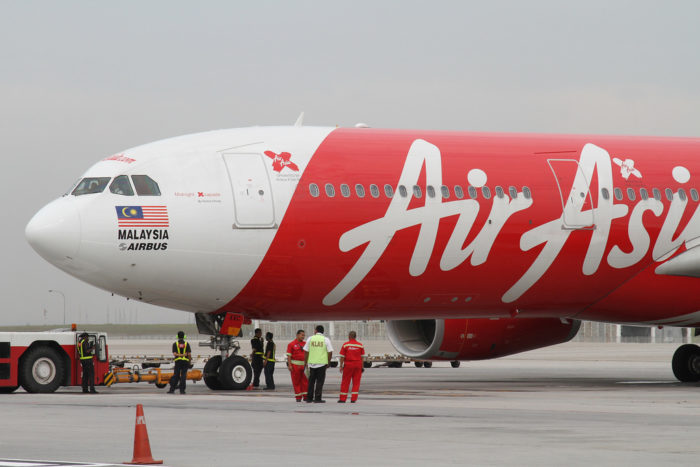
    AirAsia Group Bhd group CEO Tan Sri Tony Fernandes said the budget airline “can survive” just on domestic traffic, which is about 50% of the group’s business.

    “That is very different from Singapore Air (Singapore Airlines) or JAL (Japan Airlines Co Ltd) or ANA (All Nippon Airways Co Ltd),” Fernandes was quoted as saying.

    At the same time, Covid-19-related disruptions can actually make doing business easier, quoting Fernandes.

    It was reported that it took Fernandes seven years to get the Kuala Lumpur-Singapore route for AirAsia Group.

    “(But) it took me seven weeks to open AirAsia food in Singapore,” Fernandes said.

    For all the pain due to the Covid-19 pandemic, it was reported that Fernandes concluded this a “once-in-a-lifetime chance where you can really pivot”.

    It was reported that AirAsia Group under Fernandes’ leadership is pivoting into fintech and payments in a big way.

    It was reported that the group is working on opening a new neobank in Malaysia and Singapore, by tapping into the region’s biggest loyalty program

    “This fintech footprint is expanding to Singapore and soon to Indonesia, the Philippines, and Thailand.

    “AirAsia’s logistics arm has also rolled out a digital network to modernize air cargo using distributed ledger blockchain technology, called Freightchain.

    Logistics, it turns out, “is the real jewel in the crown that I never really saw”, Fernandes said.

  • Prada bags sales boost from China rebound

    Prada bags sales boost from China rebound

    Italian fashion group Prada’s sales and profits rebounded at the end of last year from a first-half slump due to the coronavirus pandemic, boosted by a strong performance in China and elsewhere in Asia, and the positive trend has carried on into 2021.

    Luxury fashion companies have been hit hard by the impact of the crisis on tourism and travel, but an improving backdrop in China, one of the world’s biggest luxury markets, has helped some companies to bounce back.

    Milan-based Prada, famous for its luxury bags and clothes, also benefited from a surge in online sales.

    The pandemic has accelerated the luxury goods industry’s move towards digital sales. Prada’s e-commerce sales more than tripled in 2020 versus 2019 levels, the Hong Kong-listed company said.

    Last year, Prada launched e-commerce in new key markets and revamped the Prada website.

    “We are just at the beginning of our growth trajectory and there is still a huge potential to unlock,” said marketing head Lorenzo Bertelli, son of Prada’s founders Miuccia Prada and Patrizio Bertelli, who are co-CEOs.

    CEO Patrizio Bertelli said: “We have 130 stores that are still closed due to the pandemic and group’s performance in early 2021 is quite good anyway. That give us the confidence to face the upcoming rebound, as soon as the most critical phase of the pandemic will end.”

    The first months of 2021 have seen a slight growth in sales compared with the early part of 2020 and are up from 2019 levels, CFO Alessandra Cozzani said conference call after the group’s results were published on Wednesday.

    CEO Bertelli said Prada had responded quickly to market changes, strengthening the relationship with local customers whose consumption in the second half of the year almost fully offset the absence of tourists.

    “All of these initiatives led to a full recovery in the second half to pre-pandemic profitability levels,” he said in a statement.

    The recovery in retail sales, which account for around 90% of Prada’s total, was driven in the second half by mainland China (+52%), Taiwan (+61%), Korea (+22%) and also by the Americas (+4%). Japan and Europe suffered from the lack of tourists and prolonged lockdowns.

    Full-year revenues fell by 24% to 2.42 billion euros ($2.9 billion) thanks to an improvement in the second half after a 40% slump in the first six months.

    Lockdown measures to stem the spread of coronavirus led to around 18% of the group’s store network being closed on average during the year and the restrictions also hit tourism.

    Earnings before interest and taxes (EBIT) totalled 20 million euros in the full-year, following a 216 million euro EBIT in the second half, broadly in line with the same period of 2019, after a 196 million euros operating loss in the first six months.

    Analysts had expected revenues at 2.44 billion euros and an EBIT of 13.8 million, based on a Refinitiv analyst consensus.

    Analysts did not expected any dividends, but Prada’s board decide

  • Adidas expects strong rebound, takes Reebok hit

    Adidas expects strong rebound, takes Reebok hit

    German sportswear maker Adidas AG predicted a strong rebound in sales in 2021, particularly in China, the rest of Asia, and Latin America, although its profits will be trimmed by costs associated with divesting the Reebok brand.

    The outlook for 2021 is part of a five-year strategy that Adidas is due to present on Wednesday.

    Fourth-quarter sales rose a currency-neutral 1 percent to €5.55 billion ($6.59 billion), while operating profit slipped slightly to €225 million, ahead of the €5.47 billion and €202 million expected by analysts.

    About half of its stores were closed in Europe in the period, but online sales grew 43 percent.

    Now that more than 95 percent of its stores have reopened after lockdowns, Adidas expects sales growth at a mid-to high-teens rate on a currency-neutral basis in 2021, rising by up to 30 percent in greater China, the rest of Asia, and Latin America.

    Rival Puma said last month it expects the financial impact from lockdowns to last well into the second quarter but believes global growth in running should help to support a strong improvement after that.

    As part of its new strategy, Adidas will manage greater China as a separate market from the rest of Asia, and has integrated Europe, Russia and emerging markets into a new Europe, Middle East and Africa (EMEA) region.

    For EMEA, Adidas expects sales growth in the mid-to high-teens, but only a high-single-digit rate in North America.

    Net income from continuing operating is set to rise to between €1.25 billion and €1.45 billion.

    However, Adidas said it expects a hit of around €250 million to the operating profit level and €200 million to net income due to costs to set up Reebok as a stand-alone company, with a third of that in 2022, but none in 2023.

    Adidas said last month it plans to sell or spin-off the underperforming brand, 15 years after it bought the U.S. fitness label to help compete with arch-rival Nike Inc .

  • Cybersecurity Startup Plots APAC Expansion

    Cybersecurity Startup Plots APAC Expansion

    London-based cloud-native application security startup Snyk is eyeing Asia Pacific and Japan, following a breakout year in 2020.

    Snyk has announced plans to expand in Singapore, India, Japan, Korea, Australia, and New Zealand, and has appointed vice president of APJ sales Shaun McLagan to lead and build out dedicated teams in the region, the firm announced in a blog post on Thursday.

    The appointment comes as Snyk announced its latest $300 million Series E funding, led by new partners – Singapore state investor Temasek and Geodesic Capital, a venture capital firm that specializes in helping technology companies expand into Asia.

    The startup cited an explosion of digital transformation initiatives across the region and a greater need for security among companies. Its customers include Revolut and Volt Bank.

    With an estimated 27 million software developers worldwide today, and the strongest growth for developers expected in Asia Pacific specifically, Snyk collectively recognizes that there has never been a better time to serve this market, Peter McKay, Snyk CEO said.

    Founded in 2015, the company had a breakout year in 2020, recording a 200 percent year-over-year increase in revenue and making strategic acquisitions of DeepCode and Manifold.

    With the new funding round, the company has now raised $470 million to date, bringing the company valuation to US$4.7 billion, quadrupling it since the beginning of 2020.

  • Grab in Talks to Go Public via SPAC Merger

    Grab in Talks to Go Public via SPAC Merger

    The technology platform and ride-hailing giant is reportedly considering a merger with an SPAC, but a U.S. listing via a traditional IPO is not off the table.

    J.P. Morgan and Morgan Stanley, which are advising Grab on its IPO plans, are in the midst of identifying special purpose acquisition companies (SPACs) for the company to merge with to accelerate its listing process, according to a «Bloomberg» report on Thursday.

    The Softbank-backed company’s listing considerations come after talks to combine with Indonesian rival Gojek collapsed, the report said. The latter is now in advanced discussions to merge with local e-commerce pioneer Tokopedia instead.

    SPACs are shell companies, also known as blank check companies, that go public on a stock exchange in order to then buy private companies, which are then listed virtually through the back door.

    They are also the hottest trend on Wall Street: the proceeds of SPAC IPOs grew from $14.7 billion across 96 issues in 2019, to $79.3 billion across 256 issues in 2020, according to data from Refinitiv. SPAC mergers also grew in value from $34.5 billion across 87 deals in 2019, to $157.5 billion across 163 deals in 2020.

    Asian Bourses Consider Listing

    The Hong Kong Exchange and Clearing is reviewing the possibility of adding SPACs to its offering while the Singapore Exchange could list them as early as this year.

  • Singapore-Based Blockchain Platform Zilliqa Launches Investment Hub

    Singapore-Based Blockchain Platform Zilliqa Launches Investment Hub

    Zilliqa Capital aims to invest in decentralized and fintech solutions in Southeast Asia and India, across investing, wealth management, insurance, lending, payments, and remittances, as well as critical infrastructures that will enable Web 3.0.

    Zilliqa Capital will be led by financial services veteran Michael H. Conn, the firm’s chairman, CEO, and co-chief investment officer, while Zilliqa co-founder, president, and chief scientific officer, Amrit Kumar, will serve as Zilliqa Capital’s co-chief investment officer and director, the company said in an announcement.

    The goal of Zilliqa Capital is to operate as a permanent capital, ecosystem-focused investment company, the announcement said. It will invest in Zilliqa’s native utility token «ZIL» as a strategic asset, and selectively invest in Zilliqa and relevant non-Zilliqa based businesses.

    Zilliqa, headquartered in London and Singapore, is a public blockchain platform known for use of sharding as an on-chain solution to preserve decentralization and enable greater scalability.

    Conn is the co-founder and former CEO of Ether Capital. His career spans the traditional financial services and digital assets space, with senior leadership positions at AllianceBernstein, Société Générale, Trust Company of the West, AsiaVest, and Quail Creek Ventures.

    We aim to be pragmatic and not dogmatic in seeking and delivering solutions that broaden access to financial services and products that are both accretive to our investors, as well as to the people served by the companies we support. We believe Singapore to be the ideal hub for the development and growth of our innovative approach to investing in the fintech and digital asset space, Conn said.

  • Chrome OS introduces a Phone Hub for Android devices

    Chrome OS introduces a Phone Hub for Android devices

    Chrome OS is celebrating its 10th birthday with some new features. The desktop OS’ latest version is introducing a Phone Hub which connects the user’s Android device to their laptop and synchronizes different data between the devices. The Phone Hub’s goal is to make moving between Android and ChromeOS devices easy.

    The Phone Hub shows different data from the user’s phone like its battery percentage and network reception. It also allows the user to access different phone features and settings from their Chrome OS device, such as enabling their Wi-Fi hotspot or switching to vibrate or silent modes. The different Chrome tabs opened on the user’s smartphone will also show up in this new hub.

    The Phone Hub feature will work wirelessly, as long as the two devices are connected two the same Wi-Fi network. Wi-Fi Sync has also been expanded so if only one of the devices has the network password, it is able to sync it with the other one.

    There are also other new features introduced with the anniversary update of Chrome OS. A new Screen Capture tool is featured in the Quick Settings menu, allowing users to take precise screenshots and screen recordings without using keyboard commands. The Quick Settings menu has also added media controls and pinning files with both these tools appearing in the menu when in use.

    Another new addition to Chrome OS is the ability to add a school account for children. This is managed with the company’s Family Link feature. With Family Link, a parent can automatically generate a school account for their child when signing them up to the Chrome OS device and then supervise them while they write their homework.

    Other smaller improvements in the new version of Chrome OS are found in the Desks app and Select-to-speak feature.

  • Diesel Hub concept store opens in Shanghai

    Diesel Hub concept store opens in Shanghai

    Glenn Martens may still be prepping his debut collection for Diesel, but he’s already leaving his mark on the brand. The Belgian designer, who was tapped as the Italian brand’s creative director last October, has imagined a new store concept for Diesel, an immersive branding experience in itself.

    Painted floor-to-ceiling in the brand’s signature red color, the new concept is being introduced at two temporary pop-up stores in Amsterdam and on the outskirts of Washington, D.C., at the mall Tyson’s Corner Center.

    The company said it will be extended to other pop-up units and be flanked by experiential initiatives, and the concept will also appear in the first permanent unit, called Diesel Hub, that the brand will open in Shanghai later this year.

    “This new pop-up represents a first step toward elevating the design and brand experience of Diesel, starting from its iconicity and heritage,” said Massimo Piombini, Diesel’s chief executive officer. “It is a bridge to the new permanent store concept coming at the end of the year, starting from our Diesel Hub in Shanghai.”

    Paying homage to the brand’s DNA, Martens has had a giant Diesel logo and “For Successful Living” catchphrase brushed across the spaces’ elements, including displays and shelves, which customers will be able to read in their entirety upon entering the store, giving the impression of jumping into the brand’s tag.

    Both pop-ups will carry the spring 2021 and pre-fall 2021 assortments — which were not designed by Martens. Parent company OTB, controlled by Italian industrialist Renzo Rosso, recently said the first collection designed by Martens will bow for spring 2022.

    The Paris-based Martens arrived at Diesel nine months after Piombini, previously CEO of Balmain, was named CEO at Diesel, and amid brightening prospects for the flagship property of OTB.

    Rosso has had Martens on his radar for several years and tapped him in 2018 as a guest designer of its experimental capsule series Diesel Red Tag, one year after Martens bagged the prestigious ANDAM fashion prize, of which OTB is a historical sponsor and mentor.

  • SoftBank-backed Coupang raises $4.2 billion in US IPO

    SoftBank-backed Coupang raises $4.2 billion in US IPO

    Coupang LLC, South Korea’s largest e-commerce company, raised $4.2 billion in the biggest share offering in the United States this year after selling stocks in the IPO above its deal target range, people familiar with the matter said.

    The initial public offering price of $35 apiece, higher than the marketing range $32-$34 per share, gives Seoul-headquartered Coupang, which is backed by Japan’s SoftBank Group Corp, a market value of $60 billion.

    Coupang’s successful share offering comes as the U.S. IPO market is at its strongest in more than two decades and investors are flocking to buy shares in technology companies that have benefited during the COVID-19 pandemic.

    The IPO is the biggest in the United States this year, surpassing the $2.15 billion raised by dating app Bumble Inc. It also marks a jump in Coupang’s valuation, which was pegged at $9 billion in a fundraising round in 2018, according to Pitchbook.

    Analysts in South Korea said the strong response to Coupang’s offering was a result of its market-leader position in the country at a time when, like many other e-commerce firms, its sales have grown due to the COVID-19 pandemic.

    “Considering the high level of valuation inherent in the pricing, the market is giving a generous assessment of the company’s achieving the top spot in market share,” said Park Sang-joon, analyst at Kiwoom Securities.

    Coupang was the top-ranked South Korean e-commerce firm in 2020 with 19.2% market share, according to Euromonitor, compared to Naver Corp’s 13.6% and eBay Korea’s 12.8%. It was the 10th largest e-commerce firm in the world, based on retail value excluding sales tax.

    In 2020, Coupang’s net sales jumped 91% year-on-year to $11 billion. Net losses narrowed to $567.6 million from $770.2 million posted in the prior year.

    Founded in 2010 by Korean-American billionaire Bom Suk Kim, Coupang rose to prominence after launching its guaranteed same-day or next-day delivery service in the East Asian country. SoftBank’s $100 billion Vision Fund owns 35.1% of Coupang.

    Achieving a $60 billion valuation would add to good news for the Vision Fund, which is bouncing back from an annual loss in March. Last month, it announced record quarterly profit.

    The company’s shares will begin trading on the New York Stock Exchange on Thursday under the symbol “CPNG.”

    Goldman Sachs, Allen & Co, JPMorgan and Citigroup are the lead underwriters for the offering.

  • Facebook launches Instagram Lite for improved experience on budget phones

    Facebook launches Instagram Lite for improved experience on budget phones

    Since the start of the COVID-19 pandemic everyone has become strongly dependent on their smartphone and internet connection. While many of us are used to upgrading their phone regularly (even when we might not need to), those in developing countries aren’t as fortunate.

    As you may know, smartphone innovation is mainly driven by hardware, which gets assembled in places like India, Vietnam, Taiwan and more. China is still the main smartphone-making hub, but this is slowly changing, with manufacturers like Samsung and Apple moving production away to other Asian countries mostly for economic reasons.

    While hardware is an asset, which involves a number of stakeholders, software is much easier to distribute. it can reach many more people, much quicker. That’s exactly what Facebook’s team is trying to achieve with the introduction of Instagram Lite.

    In a nutshell, this is a less demanding version of the Instagram app, which happens to cut only a few corners. Why? Well… not every country boasts yearly deals on the latest smartphones with unlimited data plans. Moreover, Apple simply isn’t a brand that fits everyone’s economic status. Brands like Xiaomi, VIvo and Oppo dominate markets like India, where the best-selling smartphones are budget models. They often offer less processing power, less storage and lower-tier connectivity hardware, which makes for limited performance under heavier load.

    You might not realize how demanding an app like Instagram or Facebook is, if you are using a high-end device (even if it’s from 2019). Running multiple apps, using navigation, taking photos etc., can quickly cause a budget phone to start acting up, so the Instagram Lite app will require only 2MB to download on Android (versus nearly 30MB for Instagram). Important features for the user experience such as dark mode, GIFs and Reels (Facebook’s version of TikTok, which is banned in countries like India and Pakistan), are kept in-tact. Corners are cut where it matters least: animations, icons, transitions are stripped-back and simple.

    This isn’t Facebook’s first attempt at such an app – Facebook Lite and Messenger Lite are great alternatives to the main versions of their full-sized brothers (or sisters!?). Speaking of family members, the main goal of the team behind this ‘lite’ idea is simple: help families and friends stay connected, despite the slower internet speeds and modest devices.

    Apps aren’t the full story. Google has made similar efforts to equip lower-end devices with Android Go, a much less-demanding version of Android, which is made to run apps like Instagram Lite, which is now rolling out in more than 170 countries worldwide, and will soon be available virtually anywhere with the upcoming global version.

    Tech can change the world, but the world can change tech too. It’s important to make phones and apps that can be used by anyone and anywhere!