Tag: asia

  • E-commerce market grows

    E-commerce market grows

    Vietnam’s e-commerce market expanded by 18 percent last year to $11.8 billion, the only country in Southeast Asia to record double-digit growth amid the Covid-19 pandemic.

    Besides, payment services were strengthened and the largest companies in the manufacturing sector incorporated e-commerce into their long-term strategies, according to a recent report by the Vietnam e-Commerce and Digital Economy Agency.

    The country’s Online Friday e-commerce event in early December last year saw the number of transactions rise by 267 percent from the previous year to 3.7 million, it said.

    However, though the number of transactions rose last year, revenues fell because most Covid-19 related items were of low value and people’s incomes were hit, it said.

    A report last month by market research company GlobalData’s E-Commerce Analytics said Vietnam’s e-commerce is set to see compounded annual growth of 18.8 percent between 2020 and 2024 to reach $26.1 billion.

  • Uniqlo Singapore set to open ‘Hub of the East’ store

    Uniqlo Singapore set to open ‘Hub of the East’ store

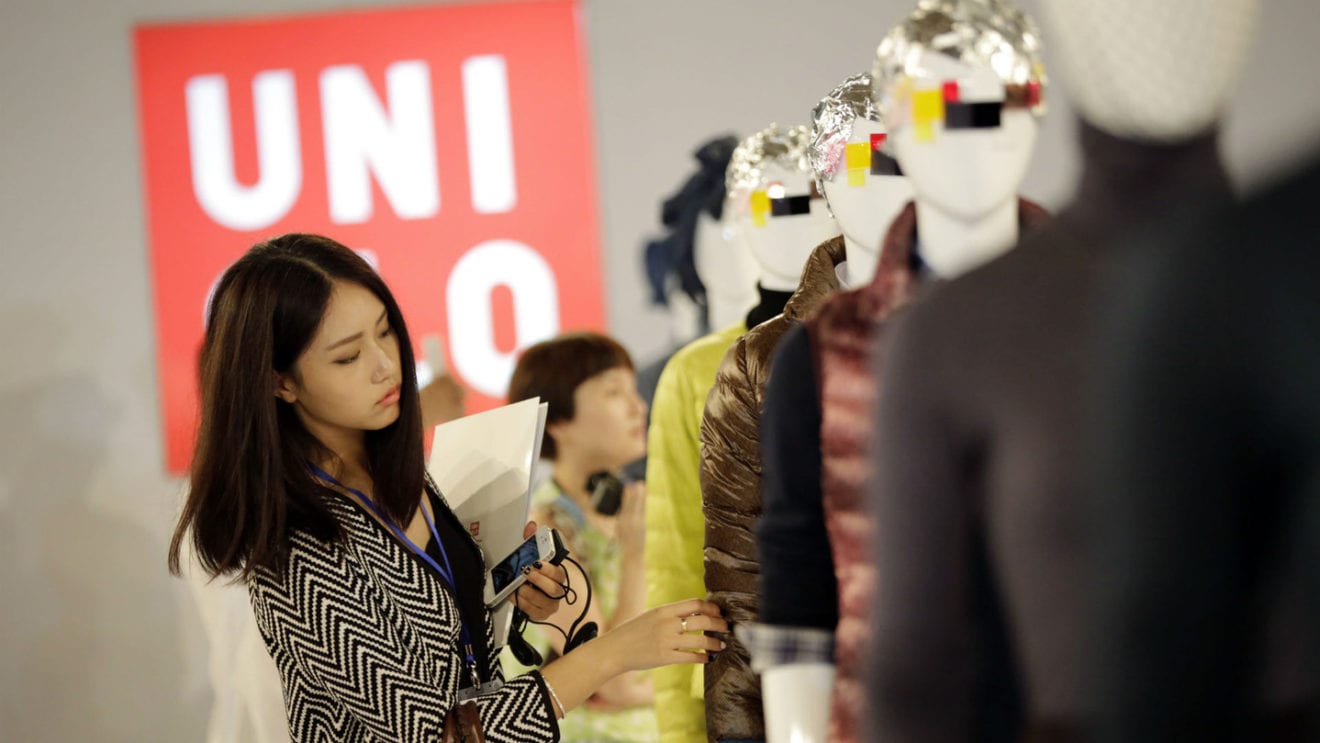
    UNIQLO today announces that it will open UNIQLO Orchard Central, its first Global Flagship Store for Southeast Asia and Singapore, on Friday, 2 September 2016. Under the concept of “U+S and The World”, the new store will showcase the brand’s full assortment of LifeWear – innovative, high-quality clothing that is universal in design and comfort, and made for anyone, anywhere – and will offer Singaporeans an exciting space to share their culture with the world. UNIQLO Orchard Central will be located in Orchard Central mall, along Orchard Road.

    “UNIQLO Orchard Central will be a unique store for the region, providing a new shopping experience for customers. With its vibrant creative scene, Singapore is the ideal location for us to showcase our LifeWear concept through the eyes of the local community. We hope that through our work with highly dedicated Singaporean individuals and groups, we will be able to turn this space into a platform where creative ideas can be expressed and shared with others,“ said Taku Morikawa, UNIQLO Southeast Asia CEO.

    UNIQLO Orchard Central spans three levels and covers 2,700 square meters in sales floor space. Fans of the brand can expect a new shopping experience, thanks to the combination of the in-store design, full product line-up and visually stunning displays. Even the elegant dark wood floors that evoke the mood of Singapore and Southeast Asia are intended to help create the proper setting for the largest product line-up anywhere in the region.

    Iconic rotating mannequins will be an integral part of UNIQLO Orchard Central, as well as close to 300 digital displays, the largest number anywhere in the UNIQLO world, and a total of 350 in-store mannequins, the latter matching the UNIQLO Ginza Global Flagship Store in Tokyo.

    “Singapore’s strategic location in Southeast Asia makes it the choice destination for UNIQLO’s first Global Flagship Store in the region. The opening of this new store marks a milestone in our highly successful eight-year joint venture collaboration.

    The Global Flagship Store will have exciting outreach programmes to engage the community. We look forward to serving our customers in this landmark store, and to inspire many creative talents to express themselves in this distinctive space with artistic works and concepts that are authentically Singaporean,” said Mrs Helen Khoo, Executive Director, Wing Tai Retail.

    A dedicated UT (UNIQLO T-shirt) corner on Level 1 will showcase exclusive UT designs drawn from the most popular collaborations such as Olympia Le-Tan and Bruno Munari. “i am OTHER”, the collection designed together with musician and style icon Pharrell Williams will also find a home on the shelves of UNIQLO Orchard Central. The new Disney Collection City Logo UTs includes a unique Singapore design featuring Mickey Mouse with the iconic Merlion, will be launched on the opening day of UNIQLO Orchard Central.

    The new store concept for UNIQLO Orchard Central, “U+S and The World” is taken from the words UNIQLO + Singapore and the company’s intention to serve as a bridge between Singapore and the World. The store is envisioned as the definitive place where UNIQLO will share the creativity, style and culture of a new Singapore with the rest of the world.

    Later this month, UNIQLO will launch “Your Stage Now Live”, the opening campaign of UNIQLO Orchard Central, by turning the hoarding around the store’s construction site into an urban canvas designed collectively by the local community. In addition, the campaign will also invite everyone to express themselves and showcase their culture to the world through a special “Your Stage Now Live” site.

    The opening of the store on 2 September will serve to kick-off a long-term collaboration with members of the local community through a broad array of programs centred on the store’s specially designed creative space, a launch pad for creativity and self-expression. Elements such as original in-store music, video content on the digital displays and curated spaces within the shop floor, as well as exclusive canvas tote bags and shopping bags, will all be co-created with the local community.

    “We warmly welcome UNIQLO’s global flagship store to Orchard Central, with its new shopping experience, innovative visual merchandising and special collections. UNIQLO will anchor Orchard Central’s appeal as a vibrant lifestyle and social hub for design conscious shoppers looking for quality affordable merchandise and a unique experience. Our mall enhancement works are also nearing completion and along with the opening of UNIQLO Orchard Central, our shoppers can look forward to a new retail experience as well as improved visibility and accessibility,’ said Ms Mavis Seow, Chief Operating Officer, Retail Business Group, Far East Organization.

  • Dyson opens its flagship store in Seoul

    Dyson opens its flagship store in Seoul

    British home appliance maker Dyson Ltd. said Thursday it will open its first flagship store in South Korea this week as the company eyes to expand its sales amid the pandemic.

    Dyson Demo Store will open at IFC Mall in western Seoul on Friday, featuring all of Dyson’s products and services. It is the first flagship store to be directly run by Dyson Korea since the Korean unit was established in 2018.

    “We want to offer a place where people can explore, test and try Dyson’s full lineup of technology, get advice and support on everything from their first demo store in Korea,” Tomas Centeno, the managing director of Dyson Korea, said. “The demo store will offer ultimate Dyson experience of our full products and services under one roof to choose the right product for you.”

    At the 323-square-meter space, Dyson Korea said its employees who were trained by Dyson engineers, called “experts,” will assist consumers in selecting its products from vacuum cleaners to hair appliances.

    Centeno said Dyson aims to “grow strongly” in South Korea, saying the country is one of its key markets.

    “Koreans are nimble in their approach to tech,” he said. “Not only do they have high interest but are also quick to evaluate new products.”

    Last year, Dyson’s vacuum cleaner with an omnidirectional head, the Omni-glide, was launched in South Korea first in the world.

    “We will continue to introduce new products, which have never existed before, based on our deep understanding of Korea,” he said.

  • Pandemic batters South Korea’s K-beauty shop

    Pandemic batters South Korea’s K-beauty shop

    Three years ago, Suh Kyung-bae was the second-richest person in South Korea. Today he’s barely Top 10, a stark reversal in a K-beauty boom known for minting billionaires, not breaking them.

    Suh’s $3.6 billion fortune, down from roughly $8 billion in 2017, is largely comprised of shares in his family’s cosmetics conglomerate, Amorepacific Group, which have fallen more than 40% from a mid-January high. The parent of brands like Innisfree, Laniege and Sulwhasoo, Amorepacific was struggling even before covid-19, and the pandemic has ushered in a slew of lifestyle changes that have made cosmetics less central to women’s daily routines.

    That’s brought a halt to the wealth created by the rapid rise in popularity of Korean beauty products and the deal-making frenzy that followed. From 2010 to 2014, foreign companies spent at least $215 million to acquire cosmetics firms there, according to a September report by Samjong KPMG. In the five years that followed, the country became the world’s fourth-largest exporter of beauty products, and the deal volume ballooned to $5 billion, not including transactions for undisclosed sums.

    Estee Lauder Cos. made Have & Be Co., widely known for its Dr. Jart+ line, its first acquisition of an Asian beauty brand in November 2019. That deal, worth $1.1 billion, turned founder ChinWook Lee into a billionaire. Goldman Sachs Group Inc. bought a minority stake in GP Club Co., best known for face masks, making founder Kim Jung-woong one of the country’s richest people. Unilever Plc, L’Oreal SA and other multinational companies also got stakes in Korean cosmetics firms, creating massive windfalls for their founders.

    But the pandemic has taken a double hit on K-beauty. Social distancing and remote work have lessened demand for makeup and led to store closures. For Korea, coronavirus travel restrictions have also cut off the flow of big-spending Chinese tourists and individual merchants who buy tax-free goods in bulk and sell them back home. Meanwhile, China’s customers have more access to global brands and are increasingly interested in products made locally.

    “Now it’s naive to think that cosmetic products with made-in-Korea tags would simply win over Chinese customers,” said Lina Oh, a Seoul-based analyst at Ebest Investment & Securities Co.

    Neither Have & Be nor GP Club have released financial information for 2020; GP Club’s plan for an initial public offering in 2019 hasn’t been rescheduled.

    For Amorepacific, consolidated revenue for the first nine months of the year fell 23% to 3.7 trillion won ($3.4 billion) from the same period in 2019, according to a company filing. For the first time in its history, the group announced last month a plan to offer voluntary retirement targeting employees who have worked for more than 15 years. The company declined to comment on its plans or on Suh’s personal fortune.

    At the same time, the pandemic has accelerated the shift to online in the beauty industry. Amorepacific’s revenue for the segment has seen substantial growth, pushing it to prioritize that part of the business. Cosmetics giant L’Oreal, whose sales dropped 12% in the first half of 2020, launched 300 digital services this year, including live beauty tutorials.

    Amorepacific plans to reduce the number of Innisfree stores in China but anticipates that overall, digital sales will make up half its business there next year, according to Yuanta Securities Korea. In the domestic market, the company sees the share of online revenue growing to 30% from 20%.

    “Spending on cosmetics was already down before Covid,” said Hye-mi Kim, an analyst at Cape Investment & Securities Co. in Seoul. “Covid made it even less necessary. Only must-have items like skincare products or those for facial problems are doing okay.”

    Meanwhile, South Korea has new billionaires rising, like Seo Jung-jin, founder of pharmaceutical firm Celltrion Inc., which is developing a Covid-19 antibody treatment. Seo’s wealth has almost tripled this year to $14.6 billion, making him the country’s new second-richest man.

  • How LVMH plans to reshape Tiffany

    How LVMH plans to reshape Tiffany

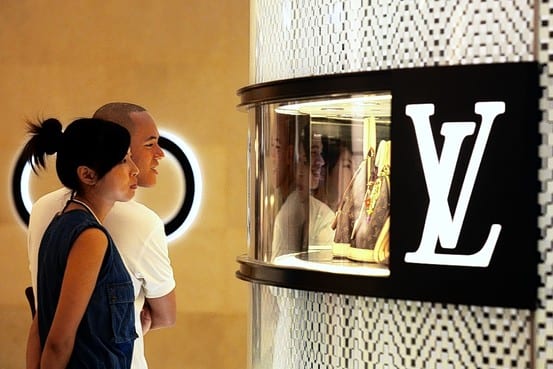
    French luxury goods group LVMH LVMH.PA plans to overhaul Tiffany & Co’s vast merchandise lineup to focus more on gold and precious gems while going more upmarket with its silver bangles after closing the $15.8 billion takeover of the U.S. jeweller this month.

    Six sources including two people with inside knowledge of Tiffany’s operations told Reuters the owner of Louis Vuitton would also likely revamp the appearance of the jeweler’s stores and boost its presence in Europe and Asia.

    More than a third of Tiffany’s 320 shops are in the United States and two sources described some of them as out-of-date, shoddy and in need of refurbishing.

    “LVMH can give Tiffany the kind of time and money needed to make some big investments in the product range and in stores worldwide, and wait for those to pay off in the medium term,” one of the sources said.

    At a town hall in New York for Tiffany’s 14,000 employees on Jan. 8 – a day after LVMH installed a new leadership team – the group’s new bosses laid out their initial plans to focus on high-end, sparkling jewelry, said one person who attended it. The group is also considering building out Tiffany’s lineup in watches, another source familiar with its thinking said.

    Unlike such rivals as Richemont-owned CFR.S Cartier and Van Cleef & Arpels, as well as fellow LVMH brand Bulgari, Tiffany’s products range from $150 silver pendants to diamond necklaces priced in the tens of millions.

    Silver jewelry has gross margins of around 90% and offers a perfect entry point for younger, less wealthy shoppers, but top industry names also need the medium- to the high range – with a price tag above $100,000 – to create an aura of exclusivity, experts say.

    In a video message to employees during the town hall, LVMH boss Bernard Arnault, who is also France’s richest man, said he wanted to elevate Tiffany’s standing, even if that took time.

    “We will also prioritize Tiffany’s long-term desirability over short-term constraints,” Arnault said, according to a person who attended. At one point brandishing one of Tiffany’s signature robin’s egg blue boxes, Arnault underscored the label could count on cash-rich LVMH’s resources.

    The world’s biggest luxury goods group, also home to Moet Chandon champagne, was shaken by the COVID-19 pandemic and sales in airport stores plunged, but its biggest labels have stayed the course.

    The mood among some of Tiffany’s workforce is anxious nonetheless.

    A senior store employee in Europe said the jeweler would benefit as a more sophisticated, exclusive brand under LVMH, but also worried about the group’s reputation as a demanding owner.

    “If a store doesn’t quite work, they just shut it down,” this person said, speaking on condition of anonymity.

    Arnault is known for dropping in on stores unexpectedly – including at a Tiffany store in Seoul after the deal was announced in late 2019, where he pointed out blips such as a cleaning product that had been left out on a stand and a pink Post-It note saying “not available” that had been put up on a product, people familiar with the group said.

    LVMH and Tiffany declined to comment. LVMH is due to report full-year 2020 results later on Tuesday.

    After a bruising court battle midway through the acquisition process, which ended with Tiffany and LVMH renegotiating the price tag slightly downwards, Arnault had soothing words for the U.S. jeweler.

    He told the town hall Tiffany’s resilience in recent months had exceeded LVMH’s expectations, one of those presents said.

    The group had previously called Tiffany’s prospects “dismal” due to poor management during the COVID-19 crisis.

    Tiffany regained some ground through online sales and in China in its last quarter. Jewelry as a whole, one of the fastest-growing luxury sectors in recent years, has resisted more than other areas during the pandemic.

    Tiffany is less exposed than rivals to Asia-Pacific – a major driver for luxury sales – which accounted for 28% of its worldwide sales of $4.4 billion in 2019. Europe stood at 11%.

    LVMH will scrutinize store performance and locations and could use its clout to get better leases or find better showcases freed up by other brands within the group.

    New York-based Tiffany, founded in 1837, achieved world fame with the 1961 movie “Breakfast at Tiffany’s” starring Audrey Hepburn, but a fresh marketing push could help the brand.

    Alexandre Arnault – one of four Arnault children with roles at LVMH and now Tiffany’s executive vice president, in charge of product and communication – told the town hall he would focus on advertising campaigns and luring young customers.

    The 28-year-old helped LVMH acquire luggage maker Rimowa and gave it a hipster edge while CEO there, through collaborations with Dior that made it sexy for the runway.

    The young Arnault will work alongside new CEO Anthony Ledru, who ran Vuitton’s global commercial activities but is also known for rolling out its high-end jewelry line and had a previous stint at Tiffany and also at Cartier.

    He takes over from Alessandro Bogliolo, who had already overseen a multi-year renovation of Tiffany’s flagship New York store on Fifth Avenue, and the purchase of an 80-carat-plus oval diamond to be set in a necklace that will become its most expensive piece of jewelry.
  • Suit accuses Apple of profiting from illegal gambling

    Suit accuses Apple of profiting from illegal gambling

    Hearing that Apple is being sued is not a surprise since it seems to happen often. Every attorney has the phone number of Apple General Counsel Katherine Adams in his or her Rolodex. Today, a lawsuit against Apple was filed in the U.S. District Court for the Northern District of California. The complaint alleges that Apple is making money and profiting from illegal gambling.

    The suit, focuses on free-to-play casino apps that allows users to buy in-game currency using real money. These so-called “social casino apps” allow smartphone and tablet owners to experience Vegas-style gambling using virtual slot machines. However, Chips won can only be used by players to continue playing the virtual slot machines. While players can’t make real money, Apple is since it gets 30% of in-app purchases including those for casino chips. The complaint says, “By utilizing Apple for distribution and payment processing, the social casinos entered into a mutually beneficial business partnership.”

    The lawsuit points out that through the App Store, Apple helps in the distribution of these apps, gives developers data and other info on users, and uses its in-app payment platform to process in-app payments. The plaintiffs argue that Apple ends up with a cut that is higher than what the house earns in a real-life casino.

    The plaintiffs also state that “The result (and intent) of this dangerous partnership is that consumers become addicted to social casino apps, maxing out their credit cards with purchases amounting to tens or even hundreds of thousands of dollars.” According to the filing, $6 billion was spent by consumers on virtual casino chips last year. The lawsuit seeks class-action status adding that Apple is in violation of California law which bans slot machines. It also accuses Apple of racketeering and collection of unlawful debts.

    The plaintiffs, Donald Nelson, and Cheree Bibbs, spent at least $15,000 each in virtual casino currency both of whom are social casino users who have spent “at least $15,000 each” in virtual casino currency. The plaintiffs want Apple’s actions to be ruled unlawful. They also want damages in the number of their losses and want the court to order Apple to give up its “ill-gotten gains.”

  • Developing Original Based On F1 Featuring Robert De Niro & John Boyega

    Developing Original Based On F1 Featuring Robert De Niro & John Boyega

    Netflix has gone all-in on F1. Apart from it being the progeny behind the “drive to survive” F1 documentary series that has been airing for the last two years, it has also promised a biopic series on the legendary Ayrton Senna. More recently, it even had a documentary on the life of 5-time world champion Juan Manuel Fangio. Now, it has roped in legendary actor Robert De Niro and John Boyega of Star Wars fame to develop a fictional thriller based on F1 called the Formula.

    The story of the Formula revolves around an American F1 driver who gets involved with the mafia and is forced to serve as a getaway driver to save his family. Interestingly, the original will be written, directed, and produced by Gerard McMurray who has also worked on Burning Sands which won the grand jury prize at the 2018 Sundance Festival.

    Netflix has roped in the legendary Robert De Niro for one of the lead roles

    McMurray recently also formed Buppie productions with the intent of “developing and producing stories featuring black characters for a mainstream film and television audience.”

    “Our company is constantly reinventing itself while charting a path to influence popular culture. We are the heroes and the villains, the good guys, bad guys, femme Fatales and girls next door,” he said.

    “Feels amazing to see this idea in my head finally come to life that I’m writing, directing, and producing,” he wrote. “My new production company Buppie Productions is teaming up with Tribeca Films and Netflix to bring to you a dope original film coming soon called THE FORMULA starring two of my favorite actors, John Boyega and Robert De Niro,” added McMurray.

    “It’s the story of a young man from Detroit who becomes an international racing star in the world of Formula 1 under the tutelage of his mentor with old mob ties,” he revealed.

    Netflix is home to the new Juan Manuel Fangio documentary apart from it developing a biopic on Senna.

    Of course, the CV of Robert De Niro is unprecedented who is best known for his work in the Godfather trilogy and also movies like Taxi Driver, Casino, Heat, and more recently the Netflix original the Irishman.

    John Boyega rose to fame only five years ago thanks to his central role in the Star Wars sequel trilogy with Disney.

    In the last decade with the advent of the Senna documentary, movies about motorsports have become popular with Rush based on the Nikki Lauda and James Hunt rivalry gaining popularity in the last decade alongside Ford vs Ferrari more recently from 2019.

  • NBA signs licensing deal with Decathlon, entering 1200 stores globally

    NBA signs licensing deal with Decathlon, entering 1200 stores globally

    DECATHLON, one of the world’s largest sporting goods retailers, and the National Basketball Association (NBA) today announced a new multiyear merchandising partnership that makes DECATHLON an official licensee of the NBA across Africa, Asia, Europe, the Middle East and Latin America and marks DECATHLON’s first partnership with a North American sports league.

    The partnership will feature a dedicated range of NBA team and league-branded base layers, accessories and footwear* designed by DECATHLON and sold under their basketball brand “TARMAK.” The collection will be sold exclusively in more than 1,200 DECATHLON stores worldwide and online at Decathlon.com. Products will be available for pre-order beginning in March 2021 ahead of the April 2021 launch in stores.

    “Since the creation of TARMAK four years ago, it has been our dream to collaborate with the NBA, the greatest basketball league in the world,” said TARMAK Leader Damien Dezitter. “We have a common objective to develop basketball all over the world, so it’s natural to work together to make this possible.”

    “We are excited to partner with DECATHLON, a leader in sporting goods retail with a global footprint,” said NBA EME Director, Global Partnerships Steve Griffiths. “Through this partnership, NBA fans and basketball players around the world will have access to an exciting and innovative range of merchandise to help them get in the game.”

    Fans can download the official NBA App on iOS and Android for the latest news, updates, scores, stats, schedules and videos and follow the NBA on Instagram at NBAEurope.

  • Shopee scales up Brazil operations, eyes Latam potential – sources

    Shopee scales up Brazil operations, eyes Latam potential – sources

    Shopee, the e-commerce arm of Southeast Asia’s SEA Ltd, is scaling up its operations in Brazil and evaluating the long-term potential of Latin American markets, according to two people with knowledge of the matter.

    Shopee, the largest e-commerce platform in Southeast Asia according to market researchers, launched a small presence in Brazil in late 2019 as a pilot initiative of its cross-border team.

    The company is now growing its presence and moving executives from Southeast Asia to Brazil said the sources who were briefed on the matter but declined to be identified as they were not authorized to speak to media.

    The Singapore-headquartered technology group’s shares surged more than 400% in 2020, taking its market capitalization to $120 billion. It raised close to $3 billion in a stock offering last month.

    On Linkedin, Shopee is currently recruiting for over three dozen positions in Brazil. Pine Kyaw, formerly country managing director for Shopee’s high-growth Vietnam unit, is listed on the job platform as having become Shopee Brazil country head. Kyaw could not be reached for comment.

    SEA Chief Corporate Office Yanjun Wang told an investor call in November that Shopee Brazil, while cross-border driven, was now being used by local sellers.

  • China’s Fintech Balancing Act

    China’s Fintech Balancing Act

    Days after the public reappearance of Alibaba founder Jack Ma, top Beijing authorities are facing a balancing act between reining in the dominance of internet giants while keeping the fintech industry sufficiently free to innovate.

    Investigations into fintech giant Ant Group will not undermine the firm’s business development nor does it signal a move against private businesses in mainland China, according to recent comments from Liang Tao, vice president of the China Banking and Insurance Regulatory Commission (CBIRC).

    In fact, banks and insurance agencies are encouraged to continue cooperation with internet platforms, said Liang in a recent press conference where he also credited the sector’s contributions to fintech advancements as well as improved financial efficiency and inclusiveness in China.

    Separately last month, the People’s Daily – the Chinese Communist Party’s official newspaper – published an editorial that downplayed political factors in the ongoing antitrust investigations, adding that the strengthening of anti-monopoly supervision will not bring about a ‘winter’ in the industry, but rather a new starting point for better and healthier development.

    Despite comments from state media and the CBIRC that tightening would have limited impact, China’s central bank recently signaled government intervention into payments providers deemed to dominant with the possibility of breakups should their market share be too high.

    The People’s Bank of China (PBoC) defined a digital payments monopoly as any non-bank provider with at least half of the market share for online transactions; any two non-bank providers with a two-thirds; or any three providers with three-quarters.

    The PBoC also proposed last week that it could advise the state council’s antitrust committee to take action should non-bank institutions severely hinder the healthy development of the payment service market».

    Following the scrapped $35 billion Ant IPO, the formation of a dedicated task force for the firm and the three-month disappearance of Jack Ma, Beijing’s top watchdogs signal a renewed take on the mainland’s fintech sector with hopes of controlling growth without obstructing innovation.

    Should Ma’s Ant Group be forced to break up as a result of the antitrust investigations, it remains to be seen how the outlook for the broader industry would be impacted but fintech giant could see its valuations slashed significantly.

    According to estimates from «Bloomberg Intelligence», Ant’s payment arm Alipay could see its value halved under the draft regulatory proposals. This could result in the overall Ant Group’s valuation plunging to around $108 billion, down from the original $320 billion before the IPO pullout, with further decreases should a breakup occur.

  • HSBC’s Noel Quinn Faces Questions from British MPs

    HSBC’s Noel Quinn Faces Questions from British MPs

    HSBC chief executive Noel Quinn is scheduled for a virtual session tomorrow with the U.K.’s Foreign Affairs Committee where he is expected to face tough questions about the bank’s relationship with Beijing.

    HSBC’s Noel Quinn alongside chief compliance officer Colin Bell will face questioning from the British parliament’s Foreign Affairs Committee (FAC) this week regarding political developments in Hong Kong.

    This occurs just days after self-exiled activist Ted Hui called on British member of parliament (MP) to investigate the British lender over frozen accounts and an apology from Quinn saying he had «no choice» after being instructed by Hong Kong police.

    The virtual session between FAC and top HSBC executives is scheduled for tomorrow with a private meeting followed by a public one at 2:30 pm in the U.K.

    The FAC meeting is expected to cover a number of recent events in Hong Kong including the passing of the national security law and the freezing of accounts belonging to activists involved in local protests.

    On Quinn’s emailed apology to Hui last week, Conservative MP and FAC chair Tom Tugendhat called the response «extraordinary» adding that the HSBC CEO was clearly defending his actions by denying responsibility, according to a  report.

    Companies listed in London should expect to be scrutinized according to the values we hold, not those of a foreign dictatorship,» he said.

    According to Hui, who self-exiled to the U.K., he has recently shared evidence and detailed information regarding the recent account freezes, as requested by FAC members.

    Any banks, businesses or organizations helping the communist tyranny to suppress the freedom of Hong Kong people will inevitably pay a heavy price internationally, Hui said in a social media post over the weekend.

    I will do everything I can to make these organizations face the consequences.

  • VinFast introduces self-driving car models

    VinFast introduces self-driving car models

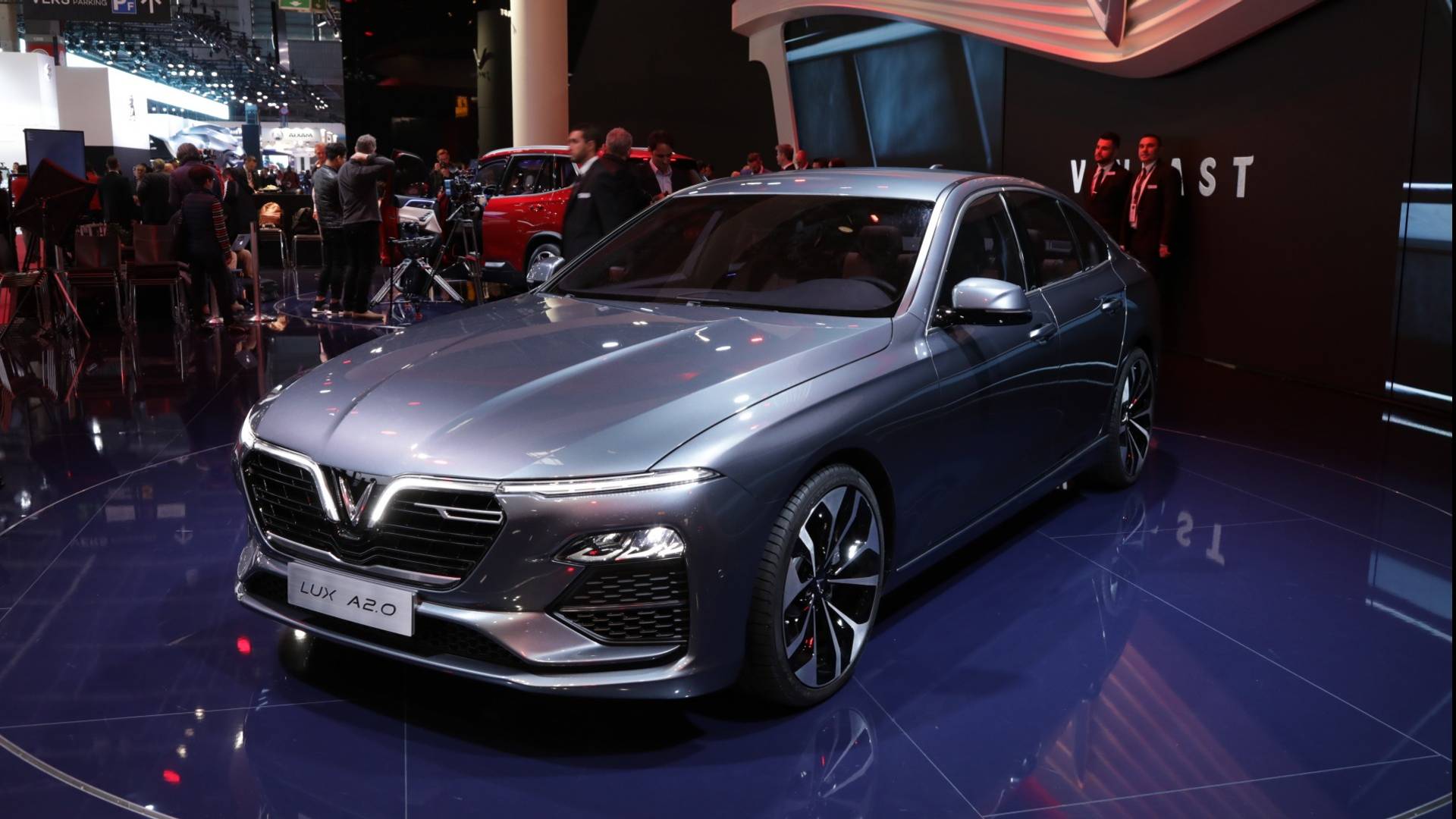
    Vietnamese automaker VinFast introduced Friday three new electric self-driving car models that will hit the market this year.

    The rollout of the new models is part of its plan to become a global major in electric car manufacturing.

    Two of the three models, all SUVs, also have a fuel version, the company said in a release.

    The cars, named VF31, VF32, and VF33, have several self-driving systems including steering assistance, adaptive lane control, and automatic parking.

    Depending on the model, the electric cars can go 300-500 kilometers per full charge.

    The premium versions of these cars have 14 cameras capable of detecting objects nearly 690 meters away, and the company claims its self-driving system is eight times faster than that of existing self-driving car models.

    The cars can find their own parking spots and can be summoned by drivers when needed.

    VinFast said the cars meet the highest safety standards in the world including a five-star rating of the U.S. National Highway Traffic Safety Administration and a five-star rating of the European New Car Assessment Programme.

    The standard version of the VF31 can be ordered in Vietnam starting this May and will be delivered in November.

    For the VF32 and VF33 models, customers can order starting September and delivery will begin in February 2022.

    The company will also sell these cars in the U.S., Canada, and the E.U. with orders opening in November and delivery in June next year.

    VinFast, a unit of Vietnam’s biggest private conglomerate Vingroup, entered the auto industry three years ago. It has an auto plant in the northern province of Hai Phong and research and development centers in Australia, Germany, and the U.S.

    The company said the manufacturing of electric bikes, buses, and cars is part of its strategy to become a favorable hi-tech auto manufacturer in the global market and to help develop green transportation by reducing emissions.

  • Huawei’s founder reveals plan to beat U.S. sanctions

    Huawei’s founder reveals plan to beat U.S. sanctions

    Last week we told you that starting on March 31st, Android phones uncertified by Google, including those made by Huawei, will no longer have access to the Google Messages app. While not too many Android handsets are uncertified by Google, Huawei’s newer models are because of its inclusion on the U.S. Commerce Department’s Entity List which prevents the Chinese manufacturer from using parts made by American suppliers. That includes software and since Google is a U.S. firm, Huawei cannot have the version of Android that is certified by the company.

    One Google app that Huawei users have been able to use without certification from Google is video chat app Duo. But just as Messages will be unavailable on uncertified Huawei devices this coming Spring, the same fate will befall the Duo app. According to XDA, strings of code found on version 123 of Duo reveal sentences that say, “Duo is going away soon,” and “Because you’re using an unsupported device, Duo will unregister your account on this device soon. Download your Clips and call history to avoid losing them.

    Note that the strings of code for Duo refer to unsupported devices as opposed to uncertified devices as with Messages. While unsupported phones do not comply with the Google Mobile Service ecosystem and are treated mostly the same as uncertified models, the difference is that after Duo shuts down for these handsets on March 31st, there will be a grace period of 14 days during which users will be able to save and download their data from Duo before the service shuts down.

    Right now, Duo can be installed and used on the Huawei P40 Pro series without requiring the phone to be running Google Mobile Services (GMS). This will end on March 31st unless Huawei is removed from the Entity List and is allowed to install GMS on its models missing Google’s ecosystem. For this to happen, the new U.S. president will have to decide what to do about the Chinese manufacturer in general. So far, there hasn’t been any word from the new administration on how it plans to treat Huawei, TikTok, Xiaomi, SMIC and other Chinese tech firms.

    Meanwhile, Huawei founder Ren Zhenfei had given a speech last June explaining how Huawei could survive the sanctions placed on it by the U.S. The speech was just published last week and ended up in the South China Morning Post (SCMP). Zhenfei, who is also Huawei’s CEO, said that the company needs to decentralize its operations, focus on making profits, simplify product lines, and freeze pay for three to five years. The 76-year old executive said that U.S. actions against Huawei have made it hard for the company to put its original globalization plans into play and have forced Huawei to develop its own production lines. As Zhenfei said, “There’s a big mismatch between our ability and strategy. It’s our weak link, and we are forced to start from the beginning like elementary school students.”

    Zhenfei says that Huawei will not be defeated, nor will it become resentful of the U.S. Speaking to Huawei back during the summer, Ren stated, “Please don’t be upset because of the temporary US pressure, or give up on our globalization strategy. There’s no future without embracing globalization (in development and research).” Besides having to motivate employees while keeping pay frozen for the next three to five years, Ren said that Huawei needs to focus on the bottom line. “We must gradually shift focus from the top line to the bottom line. All product lines … must not blindly pursue becoming No 1 … we don’t have the conditions to always fight to be No 1,” Ren said. “We must create value and reasonable profits to ensure healthy growth.” So instead of worrying about the number of units Huawei is shipping, the company’s founder says that it needs to focus on profitability.

    According to Ren, the U.S. wants Huawei to die. He said, “At the beginning, we thought we might have done something wrong in compliance and we carried out self-examination; but then the second blow and third blow followed. Then we realized that they want our death … but the desire to survive has also motivated us”

  • HCMC hotel occupancy hits record low

    HCMC hotel occupancy hits record low

    HCMC’s average hotel occupancy rates dropped 54 percentage points year-on-year to 20 percent last year as Covid-19 travel restrictions hit foreign arrivals, a report says.

    Over 3,600 hotel rooms were closed last year as the number of foreign tourist arrivals plunged 85 percent year-on-year to 1.3 million, according to real estate consultancy Savills.

    Average room rates fell 29 percent year-on-year to $61 per night, the report said. Total supply fell 5 percent year-on-year to 15,200 rooms in 111 hotels.

    The development of Covid-19 vaccines will help the industry improve over the next two years and it is expected to make a full recovery by 2024, the report said.

    Vietnam halted all international flights from March 25 in an unprecedented move to stem the spread of the novel coronavirus.

  • Real-World Examples of Text Analysis and AI-Driven Market Research

    Real-World Examples of Text Analysis and AI-Driven Market Research

    AI and text analysis is being incorporated into every aspect of life. On social media, entertainment, work, marketing, and sports, automation is becoming more “human.” The result is less time spent doing tedious tasks and more energy to focus on developing ideas and drafting new strategies. The following are examples of where AI and text analysis is creating an impact.

    Real Estate

    AI-driven market research and text analysis are making it easier to find and sell properties/ There is a significant amount of data to analyze before making a real estate investment, including the potential value of the property, market in the area, KPIs, and characteristics of the property. Getting the data together isn’t difficult, but the challenge is analyzing it to inform investment decisions.

    Property managers are discovering the benefits of AI in calculating assets, finding information about a property’s environmental footprint, and updating portfolios. An AI algorithm predicts future market value by looking at recent numbers and considering other factors such as changing prices in the area, crime rates, transportation, and schools.

    The number of data points required for analyzing property can be overwhelming.  AI technology organizes the information, sorts of relevant points, analyze the data, and updates existing information. AI also assists in creating in-depth property analysis for clients. It also makes property management easier with automatic updates on when things should be repaired, tenant information, and price trends.

    Real estate agencies and sites use chatbots to directly interact with potential buyers and sellers and collect useful information. For instance, if a visitor to a website or a social media page clicks on a link, they can immediately interact with a chatbot that answers questions and requests email addresses or  Whatsapp numbers of potential buyers and sellers.

    Market Research

    The amount of consumer data available online is a boon to market research. However, given the sheer enormity of social media updates and reviews, gathering and analyzing this information creates a significant challenge. AI-driven market research tools take unstructured user-generated content and create actionable data.

    AI and text analysis tools perform sentiment analysis, evaluating social media updates and reviews for emotional coloring, tone, and word choice. Machine learning associates certain words and phrases with emotions and gives each text a rating from very positive to very negative and in-between. These ratings are combined and compared to provide an overview of how consumers feel about a product or brand.

    The advantage of AI and text analysis is that it deals with direct feedback from customers rather than second-hand data from financial reports or company-generated resources. The main focus is the customer, and information about their preferences is the most relevant information. Market forecasts attempt to predict what consumers will want. Text analytics allows customers to customers to say they want directly to companies.

    Workplace

    AI in the workplace is at its early stages but is poised to grow rapidly. According to a Deloitte survey, 41% of businesses replied they are using automation extensively throughout their operations. Some examples of these tasks are ones that involve simple decisions, such as customer service chatbots that respond to specific queries according to set FAQ responses.

    In many cases, these automated tasks are not meant to replace the workforce. Still, they eliminate routine tasks so employees can spend their energy on tasks that require complex thinking or intricate decision making. For instance, a loan agency may use automated tools to calculate simple loans, but those that involve multiple factors are still dealt with by humans.

    Sentiment analysis is also used in the workplace to gauge how employees feel about their jobs, areas where they may need assistance, and where their morale is at its highest and lowest point. Public company chats and forums can yield user-generated data that can be evaluated by the human resource department using sentiment analysis tools. Besides, responses to memos can uncover between the lines how employees really feel about a new policy or launch.

    Sports

    Given the affection for numbers and statistics in sports, it is a natural area for AI to flourish. The success of data-driven strategies was seen in the 20 game-winning streak of Oakland Athletics in 2002 as depicted in the film Moneyball. The team applied data-driven strategies to players’ individual statistics and, through analytical tools, positioned each player according to his attributes. The result was an overwhelming success against rivals who had much larger budgets.

    AI is tremendously useful in scouting and recruitment. Statistics about players, such as the number of home runs or other performance data, can be calculated with AI tools to measure potential. AI also monitors training regimens and can personalize a diet, workout, and practice schedule suited to each player. AI uses performance indicators to evaluate how players are improving and where they need to improve.

    AI and Text Analysis Are Everywhere

    Smart AI technology is powering everything from the chatbot at a favorite website, communications at work, real estate investors’ calculations, and even draft picks for a favorite team. These tools aim to complete tasks more quickly and efficiently and offload monotonous jobs to automation to concentrate on the main task. Since automation saves money and time, it is being adopted rapidly and will continue to create value.