Tag: asia

  • Apple revenue accelerates after record iPhone sales, China strength

    Apple revenue accelerates after record iPhone sales, China strength

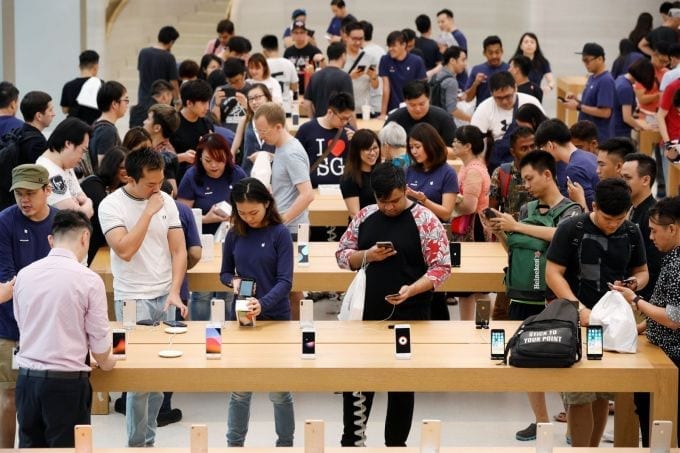
    Apple delivered its largest quarter by revenue of all time on Wednesday at $111.4 billion in its first-quarter earnings report for fiscal 2021. It’s the first time Apple crossed the symbolic $100 billion mark in a single quarter, and sales were up 21% year over year.

    Apple stock dropped 2% in extended trading. Apple’s results for the quarter ending in December weren’t just driven by 5G iPhone sales. Sales for every product category rose by double-digit percentage points. Apple’s earnings per share and sales handily beat Wall Street expectations.

    Here’s how Apple did versus consensus Refinitiv estimates:

    • EPS: $1.68 vs. $1.41 estimated
    • Revenue: $111.44 billion vs. $103.28 billion estimated, up 21% year over year
    • iPhone revenue: $65.60 billion vs. $59.80 billion estimated, up 17% year over year
    • Services revenue: $15.76 billion vs. $14.80 billion estimated, up 24% year over year
    • Other Products revenue: $12.97 billion vs. $11.96 billion estimated, up 29% year over year
    • Mac revenue: $8.68 billion vs. $8.69 billion estimated, up 21% year over year
    • iPad revenue: $8.44 billion vs. $7.46 billion estimated, up 41% year over year
    • Gross margin: 39.8% vs. 38.0% estimated

    Apple CEO Tim Cook said the results could have been even better if not for the Covid-19 pandemic and lockdowns that forced Apple to temporarily shutter some Apple stores around the world.

    “Taking the stores out of the equation, particularly for iPhones and wearables, there’s a drag on sales,” Cook said.

    Cook said that Apple’s total install base for iPhones is over 1 billion, up from the previous data point of 900 million. The total active install base for all Apple products is 1.65 billion.

    Apple did not provide official guidance for the upcoming quarter. It hasn’t offered investors forecasts since the beginning of the pandemic.

    But even the lack of guidance could not diminish what was a blowout quarter for the iPhone maker. Apple has benefited during the pandemic from increased PC and gadget sales as people who are working or going to school from home because of lockdowns look to upgrade the devices they use.

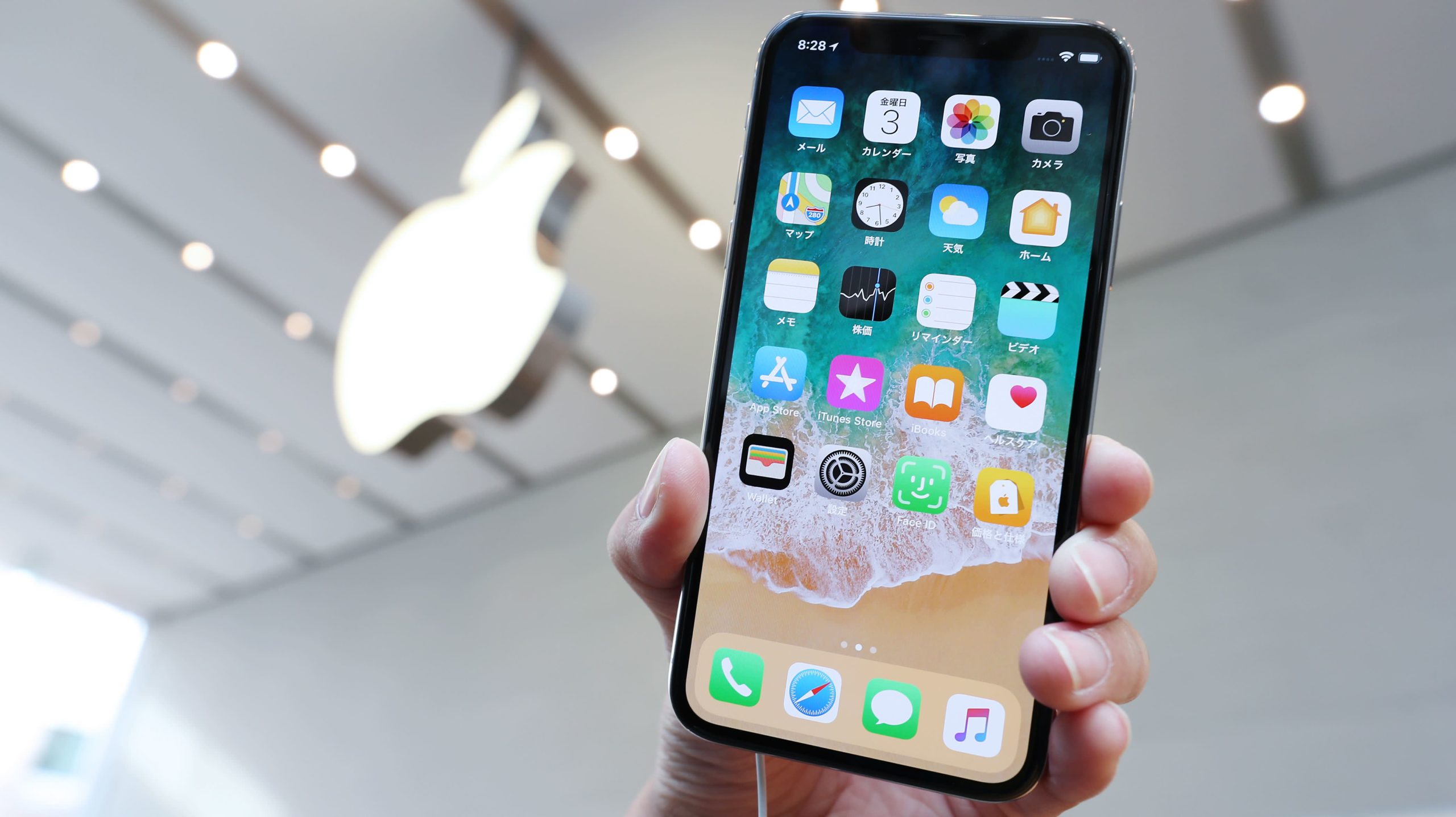
    Apple released new iPhone models in October. The four iPhone 12 models are the first to include 5G, which investors believed could drive a “supercycle” of users clamoring to upgrade. iPhone revenue was up 17% from the same period last year.

    “They’re full of features that customers love, and they came in at exactly the right time, with where 5G networks were,” Cook said.

    Apple’s other products category, which includes Apple Watch and headphones such as AirPods and Beats, was up 29% from last year to $12.97 billion, even as people are spending less time commuting and traveling. Apple released a high-end set of headphones, AirPods Pro Max, in December, with a steep $549 suggested price.

    Macs and iPads, the Apple devices most likely to be used for remote work and school, were also up this quarter. Apple released new Mac computers powered by its own chips instead of Intel processors in December to positive reviews that said they were superior in terms of power and battery life to the old models.

    Apple’s services business, which the company has highlighted as a growth engine, was up 24% year over year to $15.76 billion. That product category is a catch-all: It includes the money Apple makes from the App Store, subscriptions to digital content such as Apple Music or Apple TV+, licensing fees paid by Google to be the iPhone’s default search engine and AppleCare warranties.

    Apple highlighted in its release that international sales accounted for 64% of the company’s sales, up from 61% in the same quarter last year.

    How new iPhone models fare in China, the company’s third-largest market, is a constant topic of discussion among investors. Sales in what Apple calls greater China, which includes Taiwan and Hong Kong, were up nearly 57% to $21.3 billion.

    “China was strong across the board,” Cook said.

    Apple also declared a cash dividend of $0.205 cents per share and said that it had spent over $30 billion on total shareholder return, which includes share buybacks, during the quarter. Apple’s first fiscal quarter is typically its largest of the year and includes critical holiday sales during December.

    Wednesday’s blowout earnings are also a recovery story for Apple. Two years ago, Apple warned that its projection for its holiday quarter sales was lower than the company expected, a rare warning that raised questions about whether Apple was losing its momentum. On Wednesday, Apple revealed that revenue is up over 32% since that report.

  • Intel pumps additional $475 mln into Vietnam facility

    Intel pumps additional $475 mln into Vietnam facility

    Intel Corporation has invested $475 million in its Ho Chi Minh City facility to develop more complex technologies and tap new market opportunities.

    The latest investment takes its total in Vietnam to $1.5 billion, the U.S. chipmaker said in a statement.

    “As of the end of 2020, Intel Products Vietnam has shipped more than two billion units to customers worldwide,” Kim Huat Ooi, its general manager, said.

    “We are very proud of this milestone, which shows both how important IPV is to helping Intel meet the needs of its customers all around the world, and why we continue to invest in our facilities and team here in Vietnam.”

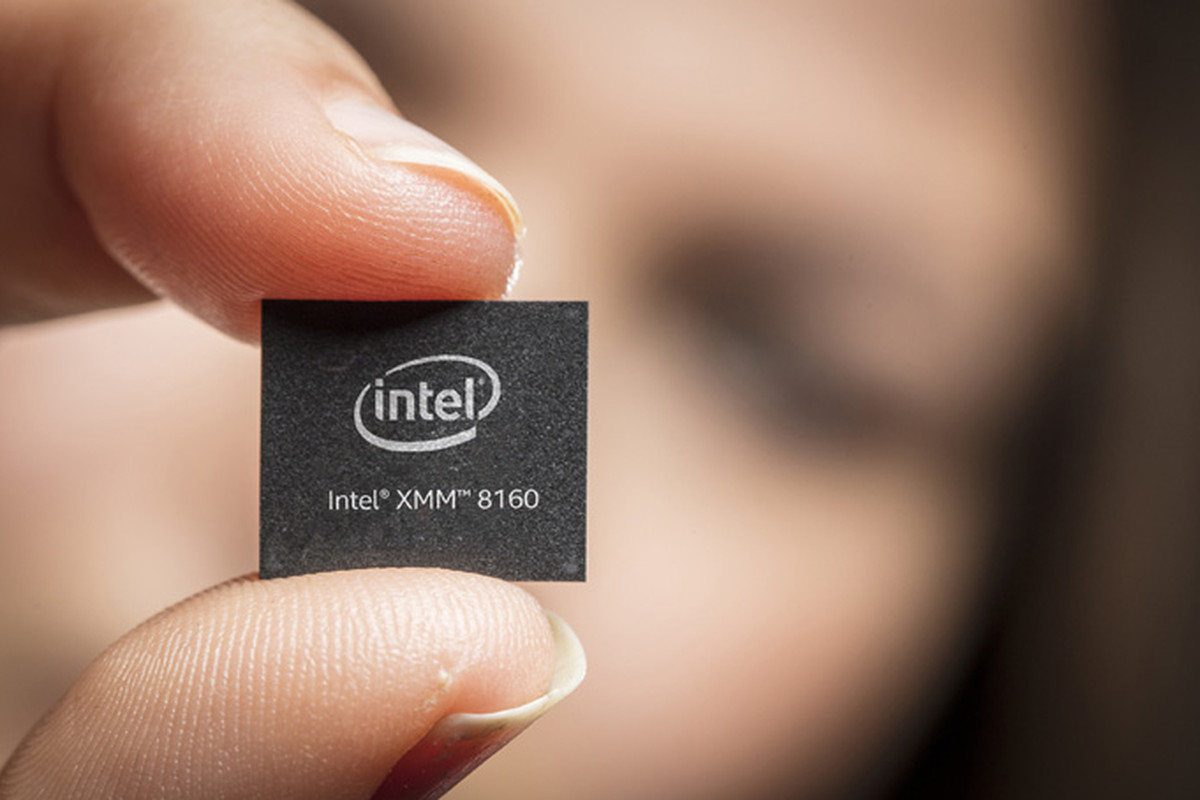
    The money will go into manufacturing 5G products and the 10th-generation Intel Core processors.

    One of Intel’s 10 manufacturing sites globally, IPV is the company’s largest assembly and test manufacturing facility with more than 2,700 employees.

    Nguyen Anh Thi, president of the Saigon Hi-Tech Park, where the plant is located, said Intel’s decision to increase its investment indicates its confidence in the workforce and Vietnam’s reliable investment environment.

    The new investment comes amid the expansion by a number of electronics giants in Vietnam as they seek to diversify their supply chains.

    Foxconn this month got the license to build a $270-million plant in the north capable of producing eight million laptops and tablets annually. It has so far invested $1.5 billion in Vietnam.

    Japan’s Panasonic decided to end the production of washing machines and refrigerators in Thailand and move it to a consolidated appliance assembly facility in Vietnam.

  • Covid hits coworking office space rents in HCMC

    Covid hits coworking office space rents in HCMC

    Rents for coworking office space in HCMC decreased 12 percent year-on-year last year due to the impacts of the Covid-19 pandemic, a report says.

    The occupancy rates of coworking office space in Grade A and B buildings last year plunged by 7 percentage points as its supply experienced the lowest growth since 2017 to 6 percent, according to a report by Savills Vietnam, the leading global property services provider.

    The gloomy outlook for the coworking space market, which boomed in the country between 2017 and 2019, has prompted investors to cancel expansion plans.

    The New York-based co-working startup, WeWork, the third-largest startup in the U.S. and the sixth-largest in the world, stopped leasing an office in HCMC’s District 1 while UP Co-working Space, headquartered in Hanoi, also postponed its plan to open two new offices in District 7, the report says.

    The number of newly registered coworking companies in the country also dropped by 6 percent.

    “2020 was a challenging year for both traditional and shared office segments. The market has been seeing a number of tenants turn to lower-priced office buildings and shophouses to cut down on rental costs in order to maintain their business,” said Vo Thi Khanh Trang, head of Savills Vietnam’s market research department.

    While the traditional office space has shown signs of a slight recovery in late 2020 thanks to better containment of the Covid-19 outbreaks in Vietnam, the shared workspace business has yet to see similar positive signs, Trang said.

    Before the Covid-19 pandemic broke out in Vietnam in January last year, co-working spaces had expanded in HCMC’s central districts since the limited traditional office space there was unable to meet burgeoning demand.

  • Apple ups Vietnam production of smart devices

    Apple ups Vietnam production of smart devices

    U.S. tech giant Apple Inc. is increasing its production of smart devices in Vietnam as it diversifies its supply chain outside of China.

    It will begin to produce the iPad tablet in Vietnam as early as the middle of this year, a Nikkei report says, citing sources.

    The company is also mobilizing suppliers to expand production capacity for the latest model of its smart speaker, the HomePod mini, which has been produced in Vietnam since it was introduced last year.

    The company is also set to move a part of its Macbook production from China to Vietnam this year, the report adds.

    Apple suppliers have also been expanding operations in Vietnam. Taiwanese tech giant Foxconn this month received its license to set up a $270 million plant in northern Vietnam.

    Luxshare Precision Industry (Luxshare-ICT) is increasing its capacity in northern Vietnam to make the HomePod mini.

  • Owndays may be sold, fetching US$300 million

    Owndays may be sold, fetching US$300 million

    L Catterton Asia Advisors, the Asian arm of the namesake consumer-focused buyout firm, is exploring a sale of Japanese eyewear retailer Owndays Inc., people with knowledge of the matter said.

    L Catterton Asia has invited investment banks to submit proposals and will soon pick an adviser, said the people, who asked not to be identified as the information is private. The private equity firm is considering divesting the asset with its partner Mitsui & Co. in a sale that could fetch about $300 million, the people said.

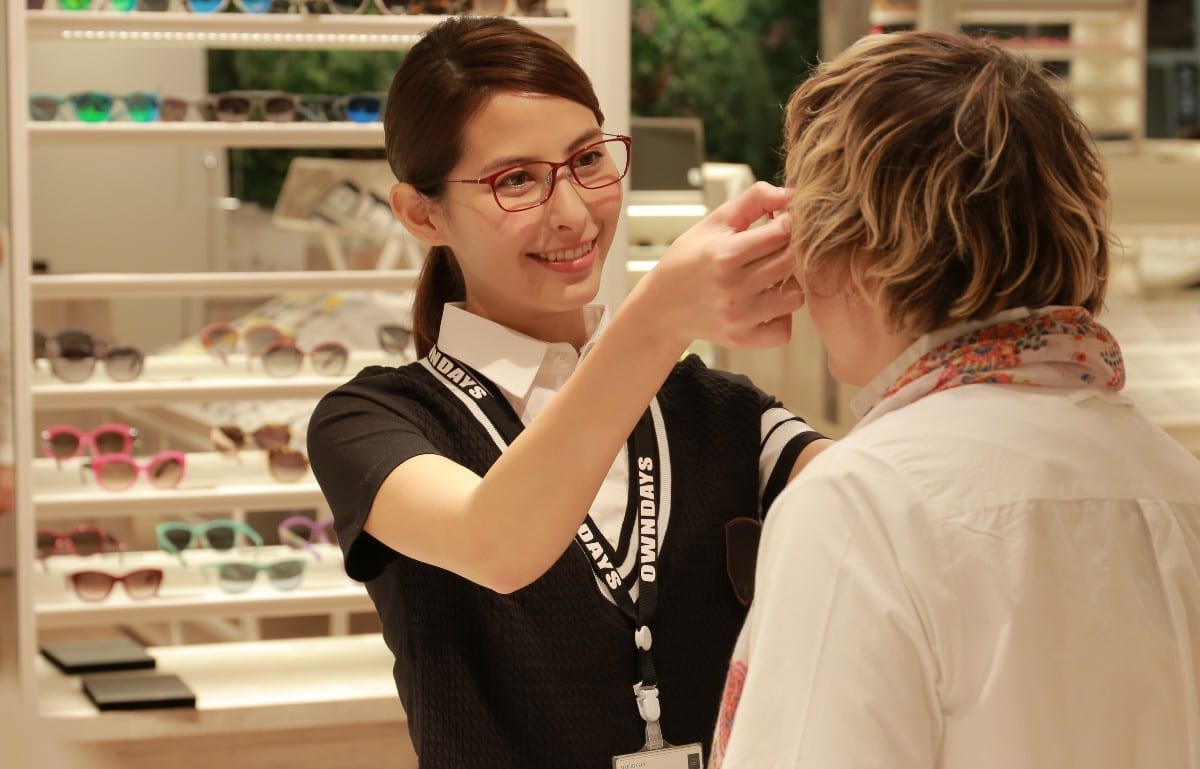
    Established in 1989, Tokyo-based Owndays designs and manufactures optical eyewear glasses and runs 156 stores across Japan, its website shows. It has another 206 stores abroad at locations including Hong Kong, Taiwan, Malaysia, Thailand, Singapore and Australia. The company had 2,200 employees as of last February.

    In 2018, L Catterton Asia teamed up with Mitsui and its subsidiary to invest in Owndays for an undisclosed sum, according to a press release at the time.

    Deliberations on the sale of Owndays are at an early stage, while L Catterton and its partners could decide to keep the business, the people said. Representatives for L Catterton Asia and Owndays declined to comment, while a representative for Mitsui said the company hasn’t acknowledged details on the sale of Owndays at this moment.

  • Bank of Singapore Sees Strong IAM Growth

    Bank of Singapore Sees Strong IAM Growth

    OCBC’s private banking arm, Bank of Singapore, saw a major boost in new clients and revenue from independent asset managers in the midst of a pandemic, according to senior market head Teresa Lee said.

    Independent asset managers (IAM) have been one of the major strategic focus for growing our business, said Bank of Singapore’s Greater China and North Asia senior market head Teresa Lee in an interview.

    According to the Singaporean private bank, the number of onboarded IAMs grew almost 50 percent year-on-year, as of November last year, with overall IAM revenue from the same period nearly doubling. This was owed in no small part to the Hong Kong IAMs business which has seen accelerated growth following the launch of a hub dedicated to the segment several years ago.

    We have successfully set up our Hong Kong-based ‘IAM Excellence Center’ in May 2018 to act as a hub to provide dedicated support such as onboarding, trade execution, services, marketing and more, Lee added. We have managed to see good progress in new relationships and client acquisition, especially for Greater China.

    Not unlike its competitors, the coronavirus pandemic has disrupted operations and driven digital transformation at Bank of Singapore.

    In a separate conversation with its global chief operating officer Sonjoy Phukan in mid-2020, he noted that over 70 percent of client accounts have already signed up for digital services.

    Similarly for the IAM segment, Lee noted growing adoption – close to 500 participants logged on to a market outlook for an online IAM Forum in April last year.

    Despite the digital gains, Lee echoed private banks’ industrywide belief that the «human touch» was unlikely to go extinct anytime soon.

    Digital capabilities can only accelerate and maintain some processes while others cannot be replaced, she said. I believe that the human touch continues to be key to maintaining relationships.

    Examples of the relevance of high-touch services remain in areas such as wealth or legacy planning, where the bank hired seasoned veteran and ex-APAC head of the practice for HSBC Private Banking Joanna Ho last year.

    In 2020, China was a rare case of growth amongst major economies at 2.3 percent, according to its national data, and mainland equity markets have been buoyed by tech, healthcare and other rallies.

    Similarly, Bank of Singapore has seen strong growth in assets under management across all Greater China client segments which posted a 17 percent increase as of the third quarter last year, outpacing the private bank’s overall growth of 5 percent to $116 billion.

    Lee also expressed confidence that Hong Kong will maintain its hub status and that it will always be an important financial center, especially for Greater China clients, adding that she observed no significant wealth shift to Singapore.

  • Seafood processor Vinh Hoan buys 51 pct stake in snack company

    Seafood processor Vinh Hoan buys 51 pct stake in snack company

    Seafood processing company Vinh Hoan Corporation has bought a 51.29 percent stake in the Sa Giang Import-Export Corporation.

    It bought 3.56 million shares from the State Capital Investment Corporation (SCIC) at VND97,500 per share in a deal worth almost VND350 billion.

    SCIC had planned to auction the shares in July 2020 at a starting price of VND111,700 ($4.80), but failed to attract investor interest.

    Sa Giang makes ready-to-eat foods such as prawn crackers and instant noodles and newer products such as crackers made from crab, fish and squid.

    It mainly exports its products to Europe, especially Germany and the Netherlands, and some Asian countries.

    Last year it reported revenues of VND310 billion and a net profit of VND31 billion.

    The company has convened an extraordinary general meeting at the beginning of February to dismiss some members.

  • Apple’s AirPods held sway over all competitors in the TWS Bluetooth Headset market

    Apple’s AirPods held sway over all competitors in the TWS Bluetooth Headset market

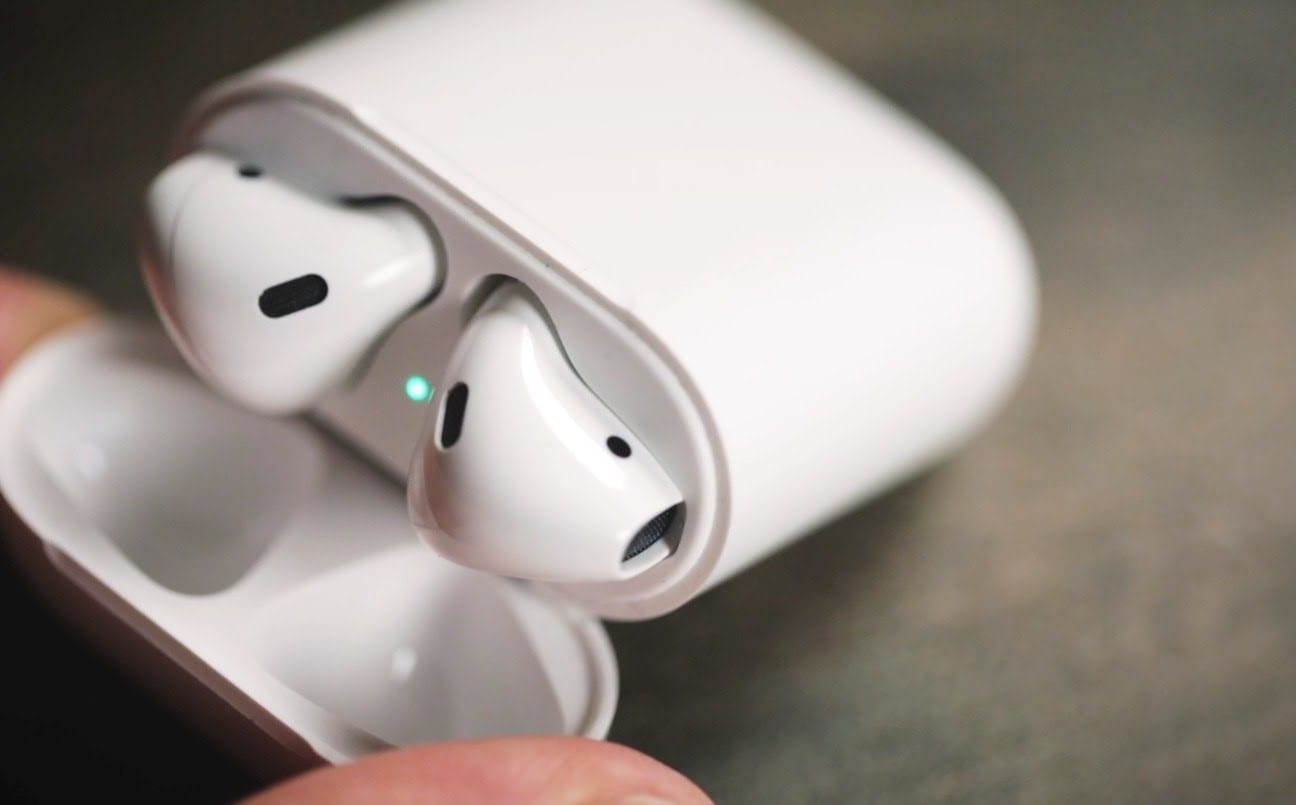
    According to research firm Strategy Analytics, Apple’s AirPods dominated the market for True Wireless Stereo (TWS) Bluetooth headsets in 2020. Overall, the accessory remains one of the hottest products in tech as the category saw sales soar 90% last year. Even after last year’s growth, there is room for more.

    Ville-Petteri Ukonaho, Strategy Analytics’ Associate Director, notes that globally, only one in 10 people own a Bluetooth headset. Ukonaho says that with companies like Apple and Samsung no longer including wired earphones in the box with new handsets, Strategy Analytics sees “huge potential” for Bluetooth headset sales.

    Ken Hyers, Director at Strategy Analytics, said, “TWS headsets drove global sales volumes in the Bluetooth headset segment. While the pandemic slowed demand briefly during the first half of the year, sales rebounded strongly during the second half. The Work From Home shift benefited the entire Bluetooth headset category in terms of sales volume growth.”

    Hyers also touched on Apple’s current domination of the TWS Bluetooth headset market while also pointing out that the tech giant’s share is shrinking thanks to competition this year from Samsung, Huawei, and Xiaomi. Hyers said, “Apple maintained a commanding lead in the TWS segment in 2020, but its commanding share is shrinking as competition intensifies. Strong competition is expected from Xiaomi, Samsung, and Huawei in 2021. The TWS headset market is already hugely overcrowded and despite a strong sales outlook, there will inevitably be consolidation in the years ahead.”

    Apple is expected to unveil two new AirPods versions this year, the third-generation AirPods and the second generation AirPods Pro. The new models could see the light of day this March. The first generation AirPods were released on December 13th, 2016 with the second-generation model launched last March. On October 30th, 2019, the AirPods Pro hit the market with new features including Active Noise Cancellation to remove ambient noise, and the Transparency mode to allow outside noises to be heard.

  • PepsiCo Pilots Micro-Fulfillment Centre

    PepsiCo Pilots Micro-Fulfillment Centre

    PepsiCo today announced the launch of a micro-fulfillment center in Joliet, Illinois. A technology and approach quickly gaining ground with retailers, PepsiCo will use this strategic capability to meet eCommerce demand of our key customers and to gain important learnings through working with retail partners to build fully integrated and highly efficient solutions. This fully automated fulfillment approach improves COVID safety, reduces the costs of floorspace and expedites the picking process which allows for faster delivery and a reduction on overall delivery costs.

    “PepsiCo is one of the first CPG brands to launch an eCommerce micro-fulfillment center, and the creation of this center solidifies our commitment to making the necessary investments to continue to stay ahead of the growing online consumer demand. Through collaboration with our retail partners, we are creating an end to end solution that empowers us collectively to enhance our operations with applied insights. The goal is getting PepsiCo products in consumers’ hands and delivering more smiles as quickly as possible.”

    – Vince Jones, Head of eCommerce, PepsiCo

    PepsiCo’s solution is powered by leading automation supplier Dematic due to their broad experience and ability to meet PepsiCo’s world-class standards. Initial tests show the high level of automation provided on-location allows PepsiCo to service 7.5x more units an hour than a traditional ecommerce warehouse operation.

    “We feel very good about where we are and continue to remain focused on our capabilities and the consumer,” said Jones. “When you look at what we’ve accomplished in the five years since PepsiCo started its eCommerce presence, retailers understand the value we bring in augmenting their operations to deliver great consumer experiences.”

  • Amazon tries to block Future’s retail asset sale, seeks CEO’s detention-filing

    Amazon tries to block Future’s retail asset sale, seeks CEO’s detention-filing

    Amazon.com Inc has requested an Indian court to block partner Future Group’s $3.4 billion deal to sell its retail assets and called for the Indian group’s CEO to be detained, a court filing seen by Reuters showed.

    In the U.S. giant’s latest effort to derail Future’s asset sale to Reliance Industries, it asked the High Court in New Delhi to enforce the decision of a Singapore arbitrator, which Amazon and Future had agreed to use in case of disputes, the filing showed.

    In October, the arbitrator issued an interim order saying Future’s deal with Reliance should be put on hold.

    Future has “deliberately” disobeyed the arbitrator’s order without challenging it, Amazon argued in its court filing, which is likely to be heard by the court in New Delhi later this week.

    Any violation of the arbitrator order invites the “same consequences” as a violation of an Indian court order would, Amazon argued, urging the court to also detain Future Group CEO Kishore Biyani, and some other respondents in the case, in a civil prison.

    Future, in a statement to India’s BSE and NSE stock exchanges, said it had been informed by Amazon lawyers about the court filing, and that it would defend the case.

    Future and a spokesman for Biyani, as well as Reliance, did not respond to Reuters’ requests for comment. Amazon declined to comment.

    Amazon has also asked the court to attach assets of Biyani to the case so they can’t be disposed of. Biyani is often dubbed India’s retail king for transforming the country’s retailing in recent decades.

    Amazon argues Future breached some pre-existing clauses by entering into a deal with Reliance, but the Indian group has maintained the arbitrator’s order is not binding and needs to be ratified by an Indian court.

    The U.S. group’s latest court move comes after Indian stock exchanges last week gave the go-ahead to the Future deal, after communicating with India’s markets regulator, the Securities and Exchange Board of India (SEBI).

    The Amazon filing also argued that Future should not rely on any regulatory approval it has received, in light of the arbitrator’s injunction.

    The dispute centers around Future’s decision in August to sell its retail, wholesale, logistics, and some other businesses to Reliance for $3.38 billion, including debt.

    Amazon argues that a 2019 deal it had with a Future unit had clauses saying the Indian group couldn’t sell its retail assets to anyone on a “restricted persons” list including Reliance.

    The outcome of the dispute embroiling Future, Reliance, and Amazon is seen shaping India’s retail landscape, especially in deciding who will occupy the top spot in the grocery market which could be worth around $740 billion a year by 2024, according to a forecast by Forrester Research.

  • The Vitamin Shoppe to launches stores in Vietnam

    The Vitamin Shoppe to launches stores in Vietnam

    The Vitamin Shoppe, an omnichannel specialty retailer of nutritional products, today announced a partnership agreement with Kim Lien Group for the
    Vietnam market. Under the country license agreement, Hanoi-based Kim Lien Group will open and operate The Vitamin Shoppe stores in Vietnam, as well as launch wholesale distribution of The Vitamin Shoppe family of proprietary brands in Vietnam.

    The first store under the partnership agreement opened this month in Hanoi. The bi-level, 140 square-meter (1,500 square feet) store is located at 58B Ba Trieu Street in the Hoan Kiem district. The store offers a wide assortment of vitamins, supplements, sports nutrition, and other health and wellness products under The Vitamin Shoppe’s proprietary brands, which include The Vitamin Shoppe, Vthrive The Vitamin Shoppe, BodyTech, BodyTech Elite, fitfactor Weight Management System, fitfactor KETO, plnt, ProBioCare, and True Athlete.

    Kim Lien Group will open a second Hanoi location of The Vitamin Shoppe later this month at 49 Phuong Mai Street in the Dong Da district, with additional stores to be announced. A wholesale distribution strategy for the various The Vitamin Shoppe brands will launch in the coming months, with a focus on pharmacies, gyms, and spas throughout Vietnam.

    This agreement marks the first country license agreement in Asia for The Vitamin Shoppe. The company currently operates country license agreements in Panama (8 stores), Guatemala (10 stores), and Paraguay (3 stores).

    Sharon Leite, CEO of The Vitamin Shoppe, commented: “We are excited to bring our industry-leading expertise and innovation to the Vietnam market, where we see strong interest in our products and increasing demand for high-quality health and wellness brands. Our partners at Kim Lien Group have an exceptional understanding of the Vietnam market and the knowledge and experience to make The Vitamin Shoppe a trusted destination for wellness solutions in Vietnam, as it is throughout the United States. We continue to see additional opportunities with international partners and plan to expand The Vitamin Shoppe into new growth markets.”

    Founded in 1994, Kim Lien Group operates a group of automotive, restaurant, and hotel businesses in Vietnam, including 16 auto dealerships across the Honda, Nissan, Mitsubishi, and MG brands.

    Mr. Anh Hoang, Vice Chairman of Kim Lien Group, will manage The Vitamin Shoppe business in Vietnam. He commented: “This partnership journey started when I visited one of The Vitamin Shoppe stores in Boston to find health solutions for my mother, Madame Lien, Chairwoman of Kim Lien Group. I was impressed with the customer experience, the knowledge of the Health Enthusiasts, and the product assortment in the store.

    Since then, Kim Lien Group realized that the Vietnam market could benefit tremendously from the products and services of The Vitamin Shoppe. During this time, Vietnam was having serious issues with fake supplements from unknown sources distributed here. We wanted to end that fear and bring a trusted, high-quality brand from the United States to Vietnam so that consumers can confidently shop for health and wellness supplements here.”

    Kim Lien Group expects key product categories in Vietnam to include vitamins, probiotics and digestion, healthy aging, herbs, omegas, antioxidants, collagen, bone, and children’s health. Each of The Vitamin Shoppe’s proprietary brands is put through 320 rigorous quality assurance steps, and ingredient purity and potency are verified by independent, third-party labs. Consumers can feel confident that all products from The Vitamin Shoppe family of brands meet or exceed industry quality standards.

  • L’Occitane files for bankruptcy in US

    L’Occitane files for bankruptcy in US

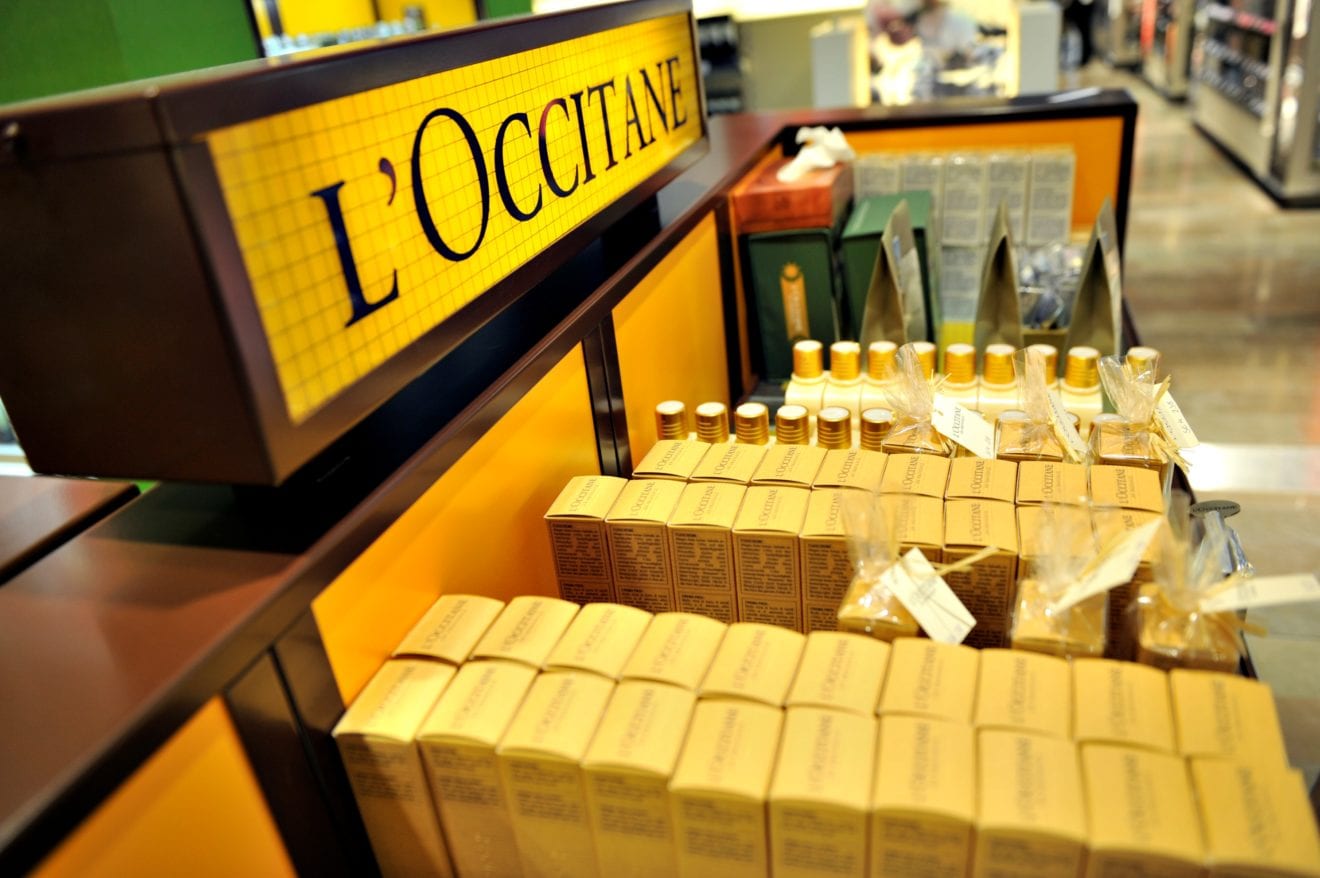
    L’Occitane U.S. filed Chapter 11 bankruptcy protection in New Jersey on Tuesday, seeking to close stores. The business cited declines in brick-and-mortar sales and the ongoing coronavirus pandemic as the reasons for the filing.

    “Like most retailers in the United States, the debtor has been impacted by the COVID-19 pandemic, which has significantly limited retail operations throughout the country and suppressed consumer willingness to shop in person,” L’Occitane regional managing director Yann Tanini wrote in a declaration for the court.

    “Even prior to the pandemic, the debtor was experiencing a decline in sales revenue from its brick-and-mortar boutiques, while its e-commerce revenue has dramatically increased,” Tanini said in court papers.

    L’Occitane had already starting downsizing its real estate footprint but wants to further reduce lease obligations due to the pandemic, the company said in court papers. The company hired Hilco Real Estate as a consultant to negotiate with landlords, but they have been reluctant, which prompted the bankruptcy filing. L’Occitane intends to reject 23 leases and “right-size its brick-and-mortar footprint,” it said.

    The company is the U.S. subsidiary of L’Occitane Groupe SA which is publicly listed in Hong Kong and also owns Erborian, LimeLife, and Elemis. U.S. operations account for about 9.1 percent of total company sales, the company said in court papers.

    The U.S. operations have 166 stores in 36 states and Puerto Rico, mostly in regional malls. Net sales have declined during COVID-19, the company said. Between April and December 2020, net sales dipped 21 percent year-over-year to $111 million. Brick-and-mortar sales made up 34 percent of that total, while e-commerce sales skyrocketed.

    L’Occitane has about 1,051 U.S. employees and furloughed and laid off certain workers during the pandemic. The company said that of 325 furloughed employees, 165 have come back, and 40 have been let go.

    The company has $161 million in assets and almost $162 million in liabilities, per court papers. L’Occitane U.S.’s biggest unsecured creditor is its parent company, which is owed $26 million related to loans and $4.5 million related to inventory.

  • Robinsons Retail chief to head Ace Hardware international arm

    Robinsons Retail chief to head Ace Hardware international arm

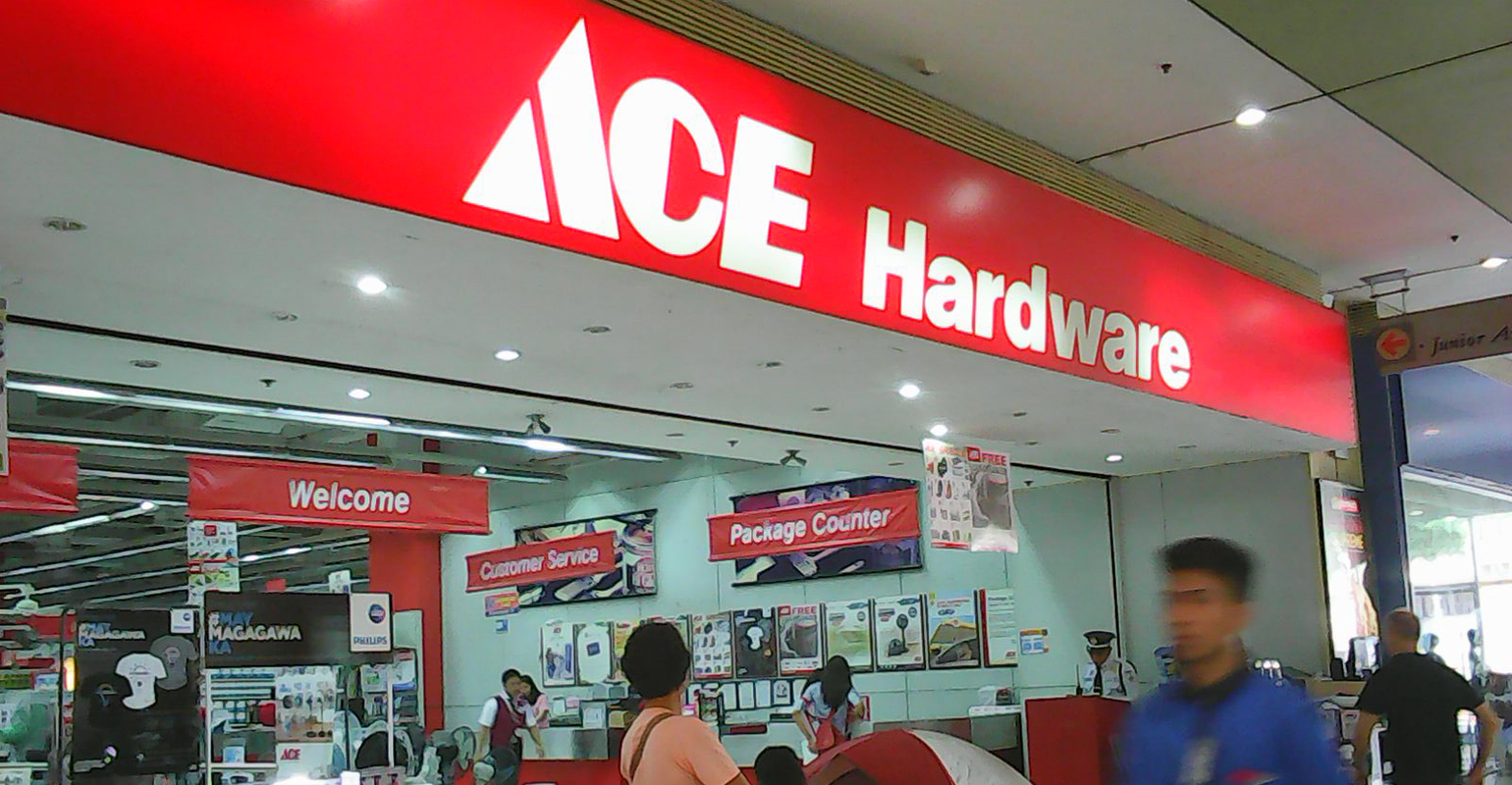
    Ace Hardware Corporation, the world’s largest retailer-owned hardware cooperative, announced today that Jay Heubner, President and General Manager of Ace International will retire March 1, 2021 after 38 years with the company.

    Heubner joined Ace Hardware in 1983 in the IT department and quickly rose up through the organization to become a director. In 2004, he took a position on Ace’s Technology Value Team within Retail Operations and was then tapped in 2007 to help lead a special retail project. In his next role, Heubner lead Operations Development and Retail Training until he was promoted in 2015 to the position of President and General Manager of Ace International, a subsidiary of Ace Hardware.

    “Jay is one of the most effective, highest character, servant-hearted leaders I know,” said John Venhuizen, President and CEO of Ace Hardware. “His wise, encouraging influence has had a significant impact on the business and made Ace a better place. I am grateful for Jay’s contributions and wish him and his family all the best as they embark on this exciting new chapter.”

    Over the coming weeks, Heubner will focus on ensuring a smooth leadership transition for Ace International.

    Effective April 5, David Goh will assume the role of President and General Manager of Ace International. Goh is currently managing director of Philippine-based retail chains Ministop convenience store, Southstar Drug and TGP (The Generics Pharmacy), which are subsidiaries of Robinsons Retail Holdings, Inc.

    Prior to this role, Goh held several leadership positions across various industries including a Vice President position at Singapore Airlines, CEO of 7-Eleven Singapore and CEO of Cold Storage, a grocery chain throughout Singapore.

    “David has a remarkable track record of success in growing businesses and transforming the customer experience,” said Venhuizen.

    Goh and his family will be relocating from the Philippines to Singapore to be closer to Ace International’s highest growth regions.

  • Thriving Louis Vuitton offsets drop in sales at luxury group LVMH

    Thriving Louis Vuitton offsets drop in sales at luxury group LVMH

    Booming sales at LVMH’s fashion brands like Louis Vuitton, particularly in China, helped to cushion the impact of the coronavirus pandemic, which has crimped revenues at the French luxury group.

    LVMH, which closed a $15.8 billion acquisition of U.S. jeweler Tiffany in the middle of the pandemic, has like rivals taken a hit as governments the world over forced retailers to close shops during lockdowns.

    Declining international travel has also deprived luxury goods companies of tourist revenues.

    But an improving backdrop in China, one of the world’s biggest markets for luxury fashions and which had eased COVID-19 measures by the second half of 2020, has helped some companies to rebound.

    LVMH’s fashion and leather goods business, home to Vuitton handbags and other brands like Christian Dior, performed better than analysts expected in the fourth quarter, with sales rising 18% year-on-year on a comparable basis. Louis Vuitton is the group’s biggest revenue driver.

    That was an improvement on the third quarter, when like-for-like sales, which strips out acquisitions and currency effects, were already up 12%.

    “The strong beat should get LVMH’s share price home and dry,” Berstein analyst Luca Solca said in a note.

    LVMH Financial Chief Jean-Jacques Guiony told a conference call that new product launches planned before the pandemic – like a Vuitton handbag named after the Pont Neuf bridge in Paris – had helped the brand.

    LVMH – which is setting the tone for luxury rivals such as Gucci-owned Kering with its earnings – has also kept up with marketing spending while some smaller peers have cut back, and holding catwalk shows in cities such as Shanghai despite the crisis had helped, Guiony said.

    “Louis Vuitton and Dior were taking the bulk of customers’ attention when nobody was talking,” he added.

    LVMH’s billionaire boss Bernard Arnault said in a statement that the group was well placed to build on a market recovery.

    Guiony said the company had no visibility, however, on the outlook for China, at a time when new restrictions to fight a resurgence of COVID-19 cases risk overshadowing Chinese New Year festivities in mid-February, usually a major shopping highlight.

    LVMH also owns spirits brands, like Hennessy cognac, and operates airport duty-free shops, which have struggled.

    The French company went ahead with its Tiffany deal during the pandemic but ended up renegotiating the price tag slightly downwards. LVMH is now betting on growing its clout in jewelry, a resilient area of the luxury goods business.

    LVMH overall group sales for the October to December period came in at 14.3 billion euros, in line with forecasts.

    For 2020 as a whole, LVMH’s revenues reached 44.65 billion euros, falling 16% from a year earlier on a like-for-like basis.

    LVMH’s net profit reached 4.7 billion euros ($5.71 billion), down 34% on a year earlier, while profits from recurring operations – or earnings before interest and tax – fell 28% but vastly exceeded analyst forecasts.

    The group said it would propose a dividend payout against 2020 results of 6 euros per share, including a 2 euros per share interim dividend paid in December.

    It had cut its dividend last year to 4.80 euros during the COVID-19 crisis.

  • Starbucks global sales fall despite Chinese boost

    Starbucks global sales fall despite Chinese boost

    Starbucks Corp. slumped in late trading on Tuesday after reporting a sales decline that was deeper than expected and the departure of Chief Operating Officer Roz Brewer.

    Global same-store sales, a key gauge of restaurant success, fell 5% in the fiscal first quarter. That’s worse than the estimated decline of 4.2% compiled by Consensus Metrix. A 5% drop in the U.S. was just ahead of estimates, while a 5% gain in China beat expectations.

    The results show the company is facing an uneven road back following the deep impact of the global pandemic. Despite the continued weakness in many markets, strength in China and overall same-store sales that are better than the previous quarter suggest it’s past the worst.

    Brewer’s exit, however, shows a substantial shakeup is underway in the coffee giant’s C-suite. Starbucks announced earlier this month that Chief Financial Officer Pat Grismer is leaving the company due to retirement. He will be replaced by Rachel Ruggeri, senior vice president of finance for the Americas.

    Brewer is leaving to become chief executive officer of Walgreens Boots Alliance Inc.

    In spite of the management changes, Starbucks sees performance turning around quickly from here, and the current quarter’s results will be bolstered by a year-ago comparison with the start of the pandemic when commerce was the most restricted.

    In the second quarter, U.S. same-store sales will grow 5% to 10%, the company said. Comparable sales in China will nearly double, the company said, although the result will be skewed by the pandemic comparison.

    Starbucks reported fewer transactions overall, but customers spent higher amounts, continuing a trend established earlier in the pandemic. Revenue fell 5% from the prior year.

    The U.S. and China are the company’s two largest markets, and together making up 61% of its global portfolio, with 15,340 and 4,863 stores, respectively, it said. Starbucks opened 278 net new stores in the quarter, underscoring how the company is looking to aggressively expand in spite of the global upheaval caused by Covid-19. The company also reported a 15% increase in members to its loyalty program.