Tag: asia

  • Ikea sunsetting catalogue after 70 years

    Ikea sunsetting catalogue after 70 years

    After almost 70 years, Swedish furniture giant Ikea is scrapping its iconic catalog.

    The company will no longer produce print and digital versions of the book, it announced Monday.

    It’s been touted as the most widely-distributed publication in the world, and more copies of the catalog are printed each year than the Bible or Quran.

    Ikea’s decision to scrap the catalog didn’t come lightly. The company collected extensive customer feedback, it said, and decided to focus on its online store instead.

    Ikea has seen a significant shift in consumer behavior thanks to the digital boom. In 2019, its online retail sales grew 45% worldwide.

    Fewer people are using the catalog because of changing media consumption, it added.

    The company will release a book of home furnishing inspiration “as tribute” in fall 2021.

    “For 70 years it has been one of our most unique and iconic products, which has inspired billions of people across the world,” Konrad Grüss, managing director of the chain’s global franchisor Inter IKEA Systems, said.

    Ikea described the decision as “emotional but rational.”

    Perhaps surprisingly, Ikea didn’t didn’t explicitly cite its environmental credentials as a reason for the decision.

    The company has increasingly focused on sustainability as it works towards its goal of becoming carbon positive by 2030, and in November it started buying back and reselling UK customers’ used furniture to counter the mass consumption associated with Black Friday.

    This is the second time Ikea’s catalog has hit the headlines this fall.

    In October, Ikea reissued some editions of its 2021 catalog because it included an image that it admitted could reinforce racist stereotypes

    The first 68-page Ikea catalog was released in 1951 by the furniture chain’s founder Ingvar Kamprad, eight years after the company launched.

    Its print run of 285,000 copies was distributed across southern Sweden

    Fast-forward to 2016, and the catalog reached its highest print run. Around 200 million copies were distributed in 69 different versions, 32 languages, and more than 50 markets. Since 2000, Ikea has launched a full digital version of the catalog, too.

    The catalog as we now know it is a massive affair for Ikea, taking around nine months to design each year. It shoots the images in its own studios in Älmhult, Sweden, which is one of the biggest photo studios in Europe.

    The Ikea Museum, which is located in the same city, includes an exhibition on the catalog’s history.

  • Goldman Sachs MENA Head Retires

    Goldman Sachs MENA Head Retires

    Wassim Younan will retire from his position after nearly three decades with the bank and seeing its Middle Eastern expansion up close.

    Younan, 58, will retire by year-end, according to a report, and his role thereafter will be replaced by co-chief executive officers Fadi Abuali and Zaid Khaldi. The two will continue to retain their existing responsibilities in asset management and investment banking, respectively.

    Khaldi will relocate to Dubai and Abuali will stay based in London and split time with the bank’s MENA offices.

    Younan’s time with Goldman Sachs saw its expansion in the region since 2006 which included various milestones including the establishment of offices in Dubai, Doha and Riyadh as well as the achievement of key deals such as Saudi Aramco’s record $29.3 billion IPO earlier this year.

  • Vietcombank set for lower profit as lending slows

    Vietcombank set for lower profit as lending slows

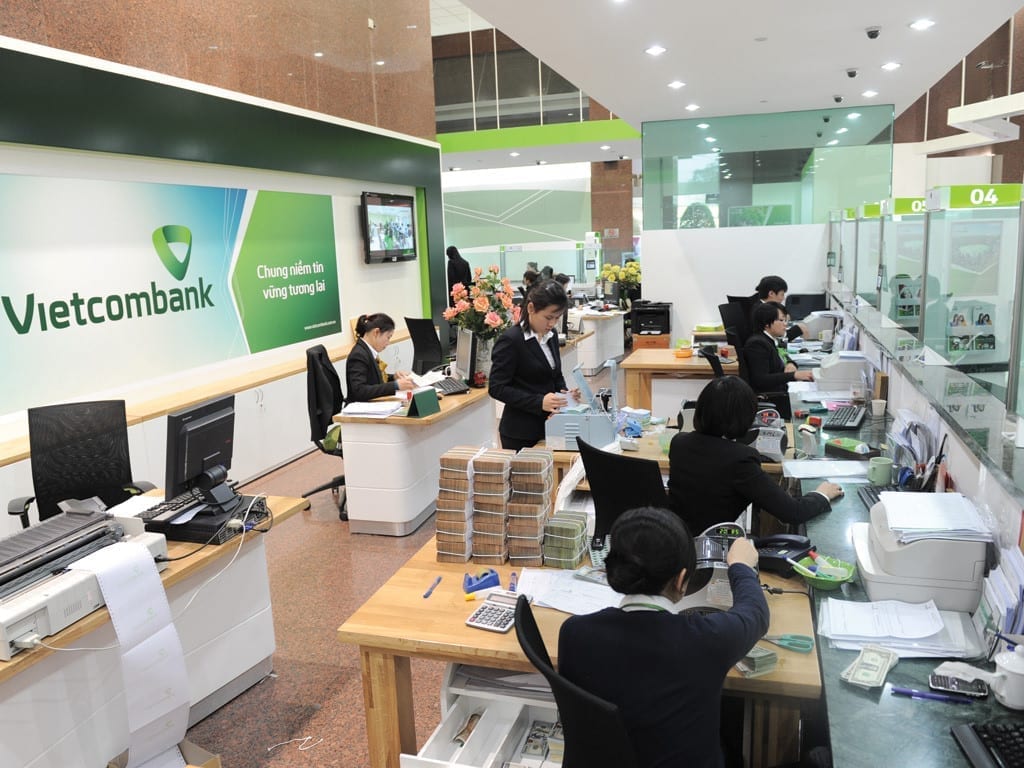
    Vietcombank’s profits are set to decline for the first time since 2013 due to slower credit growth amid the Covid-19 pandemic, a brokerage forecast.

    The country’s most profitable lender’s pre-tax profit could fall by 1.6 percent to VND22.75 trillion ($984 billion) this year after credit growth in the first nine months virtually halved year-on-year to 6.5 percent, RongViet Securities Corporation (VDSC) in Ho Chi Minh City said in a note.

    Provision for bad debts in the period rose 25 percent to VND6 trillion as companies suspended business.

    Its investment in securities resulted in a loss of VND14.5 billion as against a profit of VND116.5 billion last year.

    RongViet forecast 16 percent growth in pre-tax profit next year at VND26.37 trillion if the pandemic is under control by then.

    The bank signed an exclusive bancassurance deal with insurance firm FWD, which will give it $400 million in prepaid fees for the next five years.

    That will help increase the bank’s top line this quarter by 23 percent year-on-year, the brokerage said.

  • Uber Sells Its Controversial Self Driving Unit To Aurora For $4 Billion

    Uber Sells Its Controversial Self Driving Unit To Aurora For $4 Billion

    Uber’s self-driving car unit which incorporated Otto, the self-driving trucking start-up founded by Waymo’s co-founder Anthony Levandowski was at the heart of its feud with Alphabet. It was also a long term project for Uber founder Travis Kalanick. Uber now, has sold its Advanced Technology Group to self-driving start-up Aurora for $4 billion.

    Uber’s deal with Aurora values the start-up at $10 billion but it also comes with a few riders. Uber makes an investment of $400 million into the start-up, it gets a 26 percent stake in the company and its CEO Dara Khosrowshahi gets a seat on its board. This deal entails Aurora taking over Uber’s self-driving project in its entirety and continuing that work, presumably with Uber being one of the prime customers for the technology.

    This is neat inflation of the valuation of Aurora which was previously valued at $7.25 billion over 20 months ago with counting the likes of SoftBank, Denso and Toyota as its investors. It is also backed by Amazon, Hyundai and venture capital biggies like Sequoia and Greylock. Suffice to say, it has a hefty tailwind behind it.

    Aurora notably is also a self-driving start-up which was founded by Chris Urmson who was also the leader of Google’s self-driving car project which turned into Waymo. He was, ironically, Levandowski’s boss. He exited Google in an amicable way, unlike Levandowski who left disgruntled as Urmson was made the head of the project.

    Aurora was founded in 2017 after he left Google along with Sterling Anderson, the former director of Tesla’s Autopilot technology and Drew Bagnell who led Uber’s autonomy and perception tech before the arrival of Levandowski.

    “With the addition of ATG, Aurora will have an incredibly strong team and technology, a clear path to several markets, and the resources to deliver,” Chris Urmson, co-founder and CEO of Aurora, said in a statement. “Simply put, Aurora will be the company best positioned to deliver the self-driving products necessary to make transportation and logistics safer, more accessible, and less expensive.

    “Few technologies hold as much promise to improve people’s lives with safe, accessible, and environmentally friendly transportation as self-driving vehicles,” said Khosrowshahi in a statement. “For the last five years, our phenomenal team at ATG has been at the forefront of this effort-and in joining forces with Aurora, they are now in pole position to deliver on that promise even faster.”

    This marks an end to the contentious and safety riddled self-driving project that Uber pursued since 2015. Levandowski and the Otto acquisition trigged arbitration requests from Google for Levandowski and Lior Ron which were denied. By 2017, Waymo had filed a case against Uber for trade secret theft and patent infringement, but this case was settled by 2018 when Khosrowshahi was in-charge.

    Despite the lawsuit, Uber pursued the technology. It even wanted to pursue it after the settlement but when one of its test cars with a driver behind it struck and killed a pedestrian, it caused Uber to stop all testing. By 2019, the unit was spun off after getting $1 billion in funding from Toyota, Denso and the Vision Fund by SoftBank.

    Despite this, the Uber ATG group was losing money. In November, the ATG group and other technologies unit which includes Uber Elevate lost $303 million in nine months with the quarter ending September 30, 2020. In its S1 document, it further revealed that $457 million of R&D expense was incurred by the ATG and other technologies group. This was happening at a time where Uber’s core ride-hailing business was ravaged by the pandemic.

    While all this has happened, Anthony Levandowski, whose start-up was a strategic acquisition for Uber’s self-driving overtures for Uber founder and former CEO Travis Kalanick finds himself in jail for 18 months after pleading guilty for theft of trade secrets. In a way, the saga comes a full circle.

  • Singapore Fintechs Exceedingly Optimistic on Growth Prospects

    Singapore Fintechs Exceedingly Optimistic on Growth Prospects

    The majority of fintech companies in Singapore are bullish about their prospects over the next three to five years, as they see new opportunities emerging in the post-pandemic world.

    The majority of companies surveyed in the «Fintech Talent Report 2020» said they are planning to hire more people in the coming months to support their expansion plans, and are gradually shifting towards hiring local talent.

    Demand for talent is even higher than last year, despite the pandemic and economic situation, the report said.

    This shows that the FinTech industry is resilient and continues to be a strong source of growth in the market. In fact, the challenge is the availability of talents with the right skillset and mindset,  Wanyi Wong, fintech leader at PwC Singapore, said.

    The report, published by PwC Singapore, the Singapore FinTech Association (SFA), and the Banking and Financial Services Union (BFSU), surveyed 1,491 individuals working at fintech firms with a presence in Singapore.

    It said that the introduction of digital banks in Singapore is likely to have spillover benefits to the wider fintech community, increasing the availability of local talent across the industry.

    The combination of banking and fintech is seen as offering the best of both worlds and driving interest in people to learn the necessary skills to work in such institutions,» the report said.

  • I.T Group founder and CVC plans to delist from stock market

    I.T Group founder and CVC plans to delist from stock market

    Fashion retailer I.T Group has proposed to privatize its business in a cash deal worth $168 million on Sunday, according to a Hong Kong Stock Exchange filing.

    The deal, backed by private equity firm CVC Capital Partners, will see non-founder shares bought at $3 Hong Kong dollars apiece in cash, which is a 55 percent premium to the stock’s last closing price on Nov 30. Under the proposal, company founder Sham Kar Wai will retain 50.65 percent ownership, with CVC owning the remainder 49.35 percent after going private. The deal is still subject to shareholder approval.

    In recent years, I.T Group has faced a similar fate as its Hong Kong-based peers such as Lane Crawford, Joyce, and Swank, struggling to keep up with retail’s digital transformation, which is dominated by Alibaba and JD.com in the mainland Chinese market.

    “While the company has adopted online strategies, it has been unable to transform business operations sufficiently for online growth and related cost-savings measures to offset a decline in sales from retail outlets,” the filing read. “In the six-month period prior to August 31, 2020, turnover for the company declined by 31.9 percent, following an annual net loss for the financial year ending February 29 2020 of $745.8 million dollars.”

    “The company foresees a long and challenging journey ahead until a full restoration of consumer confidence across most regions where the company operates…These factors require the company to re-strategize, undertake a deeper business transformation, and restructure in order to achieve long-term sustainable growth,” the filing said.

    As with the wider industry, I.T has faced sharp declines in consumer spending across several key markets due to the outbreak of COVID-19, but it also earlier grappled with the impact of pro-democracy protests in Hong Kong. I.T’s outlets themselves also became targets in protests earlier this year because of a perceived pro-Beijing stance of its founder, Sham. Meanwhile, inbound tourism to Hong Kong has plunged this year, with arrivals during the third quarter declining by 99.7 percent from a year earlier.

  • Singapore retail sales down in October

    Singapore retail sales down in October

    Retail sales in Singapore fell by 8.6 percent year-on-year in October, said the Department of Statistics (SingStat) on Friday (Dec 4), although the decline was not as steep as the revised 10.7 percent fall seen in September.

    Most retail industries continued to register declines in sales in October. Food and alcohol, department stores, as well as cosmetics, toiletries and medical goods continued to be among the hardest-hit sectors, with takings down by 44.7 percent, 35.2 percent, and 30 percent respectively, according to the Retail Sales Index released on Friday.

    Wearing apparel and footwear, as well as watches and jewelry fell by more than 20 percent.

    The best-performing sector was again supermarkets and hypermarkets, with sales up by 22.3 percent.

    Takings also improved for the furniture and household equipment, recreational goods, motor vehicles, and mini-marts and convenience stores sectors.

    Compared to the previous month, seasonally adjusted retail sales expanded 0.2 percent, with most sectors reporting growths.

    Takings at petrol service stations increased the most at 5.1 percent as more people returned to the workplace. In contrast, retailers in the watches and jewellery; cosmetics, toiletries, and medical goods; and food and alcohol recorded a decline in sales.

    The estimated total value of retail sales in October was about S$3.3 billion, of which 10.5 percent was spent online.

    Food and beverage sales continued to decline in October as well on a year-on-year basis, although they showed a seasonally adjusted month-on-month improvement across the board, according to the Food & Beverage Services Index.

    “Sales of food and beverage services fell 23.5 percent in October 2020 on a year-on-year basis, an improvement over the 29.1 percent decline in September 2020,” SingStat said. “On a seasonally adjusted basis, sales of food & beverage services increased 5.6 percent in October 2020 over the previous month.”

    Food caterers again suffered the biggest drop in year-on-year turnover – 76.4 percent – although they saw a 6.4 percent increase in sales compared to September.

    “The total sales value of food and beverage services in October 2020 was estimated at S$692 million,” SingStat said. “Of these, online food and beverage sales made up an estimated 19.7 percent.”

  • Cole Haan opens new concept store in Tokyo

    Cole Haan opens new concept store in Tokyo

    American luxury fashion brand Cole Haan has launched its concept store in Tokyo at Grandshop – Cat Street, Harajuku. The flagship houses a selection of footwear and lifestyle products, including the exclusive GrandPro Rally Court Sneakers range in collaboration with Indian-American comedian Hasan Minhaj.

    “Japan holds a special place for the Cole Haan brand as we’ve been there for more than a quarter-century,” said  David Maddocks, brand president at Cole Haan. “It only made sense to bring our most innovative retail concept to one of the most iconic shopping destinations in the world — Harajuku district’s Cat Street.”

    The store facade includes a window integrated with a transparent LED screen showcasing Cole Haan’s product. Digital touchpoints such as QR codes and a selfie station are implemented inside the store.

    The Cole Haan Harajuku is also the brand’s third Grandshop. Founded in 1928, Cole Hann is now sold in more than 60 countries.

  • Vietnam rationalizes tax regime for ride-hailing companies, to treat them as transporters

    Vietnam rationalizes tax regime for ride-hailing companies, to treat them as transporters

    Vietnam has imposed a 10-percent value-added tax for each trip by a ride-hailing company vehicle as it seeks to create a level playing field for traditional taxi firms.

    According to a new decree, with effect from December 5, the tax will have to be paid on the full fare unlike earlier when companies paid the 10 percent rate only on their share of the fare after paying off the driver.

    Thus, as Grab drivers get to keep 80 percent of the fare, the company only pays 10 percent tax on its 20 percent income. The driver pays 3 percent VAT on his 80 percent.

    The new tax rate is thus more than double the old one of around 4.4 percent, and according to Grab’s calculation, drivers’ income would have been reduced by around 7.3 percent.

    It has hiked its fares by 5-6 percent to reduce drivers’ loss of income to around 1 percent, a spokesperson said.

    Vietnamese officials have long been pondering whether ride-hailing companies are technology service providers or transport companies, but the new decree makes it clear they are the latter.

    Ta Thi Phuong Lan, deputy head of the department of tax administration for small and medium enterprises and individuals, said VAT rates for companies like Grab and Gojek have hitherto been too low and tax authorities need to raise it to the correct level.

    Luong Huy Ha, CEO of legal consulting firm Lawkey Vietnam, said the 10 percent rate is appropriate for ride-hailing firms since they operate like transport companies.

  • Dunhill catches Chinese star Yang Yang for global ambassadorship

    Dunhill catches Chinese star Yang Yang for global ambassadorship

    Fashion brand Dunhill introduces Chinese actor Yang Yang as their newest Global Brand Ambassador. Yang and Dunhill’s creative director Mark Weston first meet at brand’s Fall Winter 2020.21 show in Paris. Chinese actor will represent Dunhill at this year’s GQ China Men of the Year Awards.

    As a British luxury House, Dunhill has always fascinated me and I am honoured to be their Global Brand Ambassador. When I met Mark in Paris at the show, it was clear to me that we hold many shared sensibilities and I am looking forward to continuing our work together. – Yang

    It’s great to work more closely with Yang Yang and I am excited for the new perspective he will bring. I was intrigued to hear about his personal and professional story and impressed by his drive and humility. His considered approach to his craft resonates with me personally. – Mark Weston.

  • Blockchain Ecosystem Report Lanuched

    Blockchain Ecosystem Report Lanuched

    The Singapore Blockchain Ecosystem Report 2020, launched at this year’s Singapore FinTech Festival x Singapore Week of Innovation and TeCHnology, highlights impactful developments and trends in Singapore’s blockchain ecosystem over the last year.

    The report is co-presented by OpenNodes, Temasek, IBM, PwC Singapore, EY, and SGTech, and supported by the Infocomm Media Development Authority and the Monetary Authority of Singapore. It highlights Singapore’s lively blockchain research landscape due to active contributions from both academic institutions and the private sector.

    The report also showcases how COVID-19 has accelerated the application of blockchain technology, which is being used to verify health credentials amid the pandemic.

    It features a bibliometric analysis of blockchain-related scientific publications, showcasing Singapore’s pioneering progress in driving both high quality and quantity research in the field of blockchain technology. It concludes that Singapore has produced the highest number of research publications on the subject in ASEAN, and the third-highest in the world.

    PwC Singapore conducted a survey for the Singapore Blockchain Ecosystem Report 2020 to assess the developments of blockchain-related activities in Singapore. Results showed that blockchain emerged as one of the top three technology trends in Singapore for 2021, with 70 percent of the respondents showing support for the technology. The survey also ranked Si

  • StanChart Explores Second Digital-Only Bank

    StanChart Explores Second Digital-Only Bank

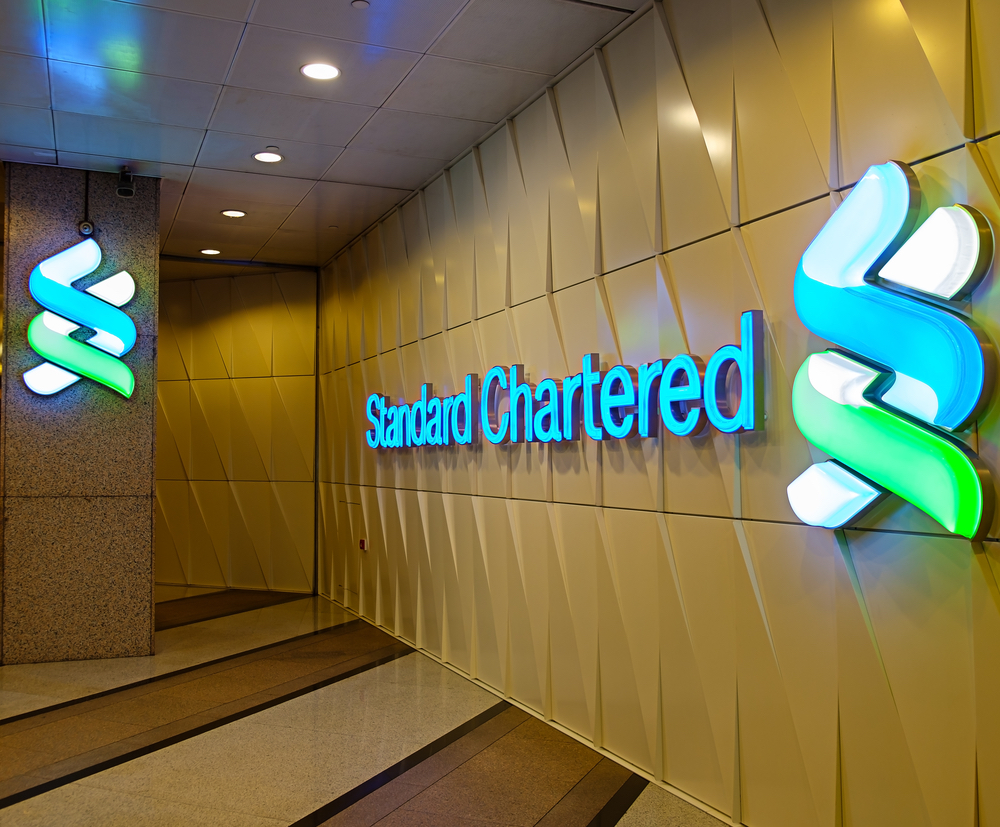
    Standard Chartered said that it was considering another digital-only bank based in Singapore – similar to MOX in Hong Kong – after receiving recognition by local regulators to receive preferential treatment as a foreign lender earlier this year.

    Standard Chartered could acquire an additional Singapore banking license under the Significantly Rooted Foreign Bank (SRFB), according to a report, in a move that would mirror its Hong Kong digital-only bank, Mox.

    We are naturally interested in qualifying for the recently-announced enhanced SRFB framework to further deepen our presence here, according to a spokesperson for the bank.

    This will give us the option to explore an additional banking license. Under this construct, we would look to leverage on the technology and experience gained from MOX, our digital bank in Hong Kong, to operate a similar platform in Singapore together with a strong ecosystem partner.

    Standard Chartered was the first foreign bank to be named an SFRB in August this year and the new status gives it significant advantages such as the ability to set up a digital-only unit, lower amounts in paid-up capital and a greater number of places of businesses (POBs) allowed (from 25 to 50), of which 35 may be branches.

    We have a very robust record in digitalization and digital banking, and we will continue to invest and explore the best digital model for our clients in Singapore, the spokesperson said.

    Earlier this year, reports claimed that the bank was already considering the launch of another digital-only bank through a joint venture with the National Trade Union Congress (NTUC) Enterprise. The latest comments about the plans were made on the same day that the city-state announced the four winners of the much anticipated digital banking license race.

  • UOB Deploys AI-Powered AML Solution

    UOB Deploys AI-Powered AML Solution

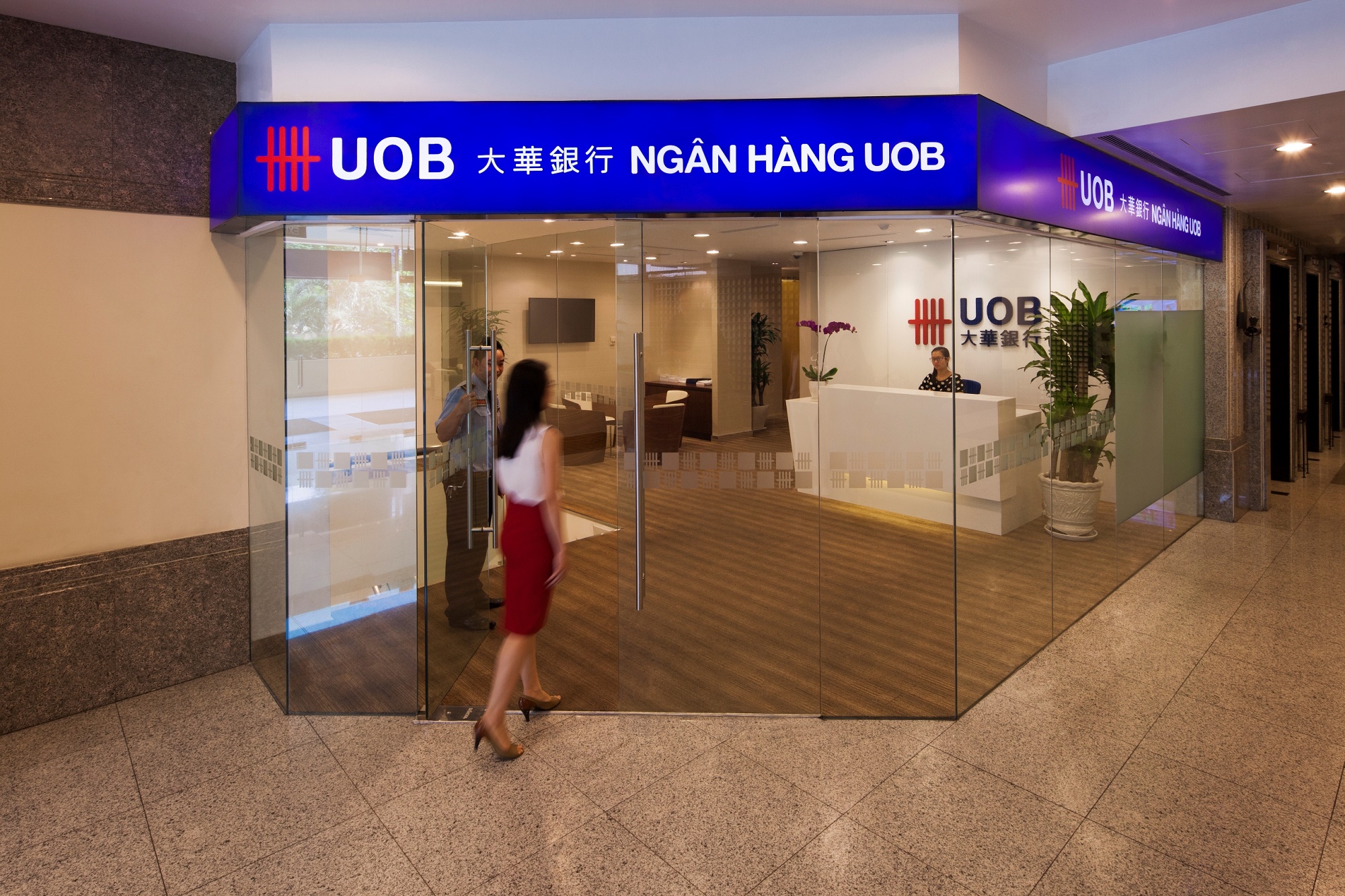
    The bank’s new artificial intelligence (AI) solution was developed in collaboration with Singapore-based regulatory technology company Tookitaki, after more than two years of validation and evaluation.

    UOB has pioneered an AI solution that is highly accurate in identifying suspicious transactions and connected parties as it combats the increased sophistication in financial crime, it announced on Thursday in a statement.

    The bank’s use of AI enables it to pinpoint higher-priority cases from the 5,700+ average monthly suspicious transaction alerts flagged and to deploy the necessary resources to investigate potential money laundering attempts. The new solution can spot more sophisticated transaction patterns and is more effective at connecting data points with entities using the financial system, UOB said.

    The AI solution, which complements the traditional rules-based method, is being used to screen all customers and transactions involving Singapore-based UOB accounts and will be expanded to cover all UOB accounts globally.

    Our AI solution works concurrently on two AML risk dimensions, which is technically more difficult, but also more fruitful as it helps us to pinpoint criminals trying to pose as customers. UOB will continue to invest in advanced technology to strengthen our AML system to deal with emerging risks,» Victor Ngo, UOB’s head of group compliance, said.

    According to the bank, the new solution has proven an overall true positive prediction rate of 96 percent among high priority cases, which includes transactions and accounts that are deemed most likely to be suspicious and are therefore subject to earlier and more thorough investigations.

    Tookitaki is a graduate of UOB FinLab’s second accelerator program in 2017.

    Going live with UOB is a testament to our ability to develop and to harness the benefits of new-edge technologies such as machine learning to mitigate real-world problems of money laundering,» Abhishek Chatterjee, founder and CEO of Tookitaki, said.

    Founded in 2014, Tookitaki’s revenue growth has surpassed 300 percent over the last two years. It raised $19.2 million in Series A funding in 2019, which the startup said would be used to grow its presence across the U.S. and Asia-Pacific.

  • Vietnamese telcos begin testing 5G services in earnest

    Vietnamese telcos begin testing 5G services in earnest

    Vietnam’s three major telecom companies are racing to test 5G services to achieve the government’s goal of making the country one of the earliest to adopt the technology.

    State-owned Vinaphone last week became the first to conduct 5G commercial tests in both Ho Chi Minh City and Hanoi.

    In Hanoi, VnExpress reporters using 5G devices were able to reach download speeds of 721 megabit per second (Mbps), or 10 times higher than 4G speeds. In HCMC, it reached 1,000 Mbps, with downloading a 1.16 gigabyte (GB) app taking around 34 seconds.

    Vinaphone also unveiled its 5G routers developed in partnership with Finland’s Nokia.

    The device collects 5G waves and broadcasts it as wifi signals, enabling Internet use in households without the need for fiber-optic cables.

    Military-run Viettel commercially tested its 5G broadcast in Hanoi on November 30, achieving 10 times the download speeds of 4G when the user is in one place and five times when traveling in a vehicle.

    Viettel has put up 100 base stations in the city’s three downtown districts, and users with 5G devices can start experiencing the technology without the need to change their sim cards.

    Of the 100 stations, it produced 15 in-house and bought the rest from Sweden’s Ericsson.

    The company plans to expand to Da Nang and HCMC soon.

    Le Dang Dung, the chairman of the company, said when 5G transmission is stable it could help doctors perform surgeries through the Internet and factories could be completely automated.

    Another state-owned telecom firm, MobiFone, began commercially testing 5G services in HCMC on November 27, achieving average speeds of 600-800 Mbps, going up to 1,500 Mbps.

    The company plans to install 50 stations in the city this month.

    But it will take time for smartphone makers and networks to perfect 5G operations.

    Some Huawei, Xiaomi, Asus, Nokia, and Oppo devices can use 5G, but Samsung devices have to wait until the end of the year at least, and it is unclear when iPhone devices will be able to connect in Vietnam.

    The subscription rate is a concern among users. Currently, operators are providing free data to promote the new technology, but it is unclear what the tariffs will be.

    During the commercial test period, the Ministry of Information and Communications has limited the rates to the same level as for 4G, but operators can later change them.

    Pham Ngoc Tu, head of Vinaphone’s services research and development department, said it is still too early to determine 5G rates, and the company needs to establish around 50,000 stations to calculate prices.

    Communications minister Nguyen Manh Hung said in 2018 that Vietnam would be one of the first countries in the world to launch 5G services.

    It was seven or eight years behind in adopting 3G and 4G technologies, but not with 5G, he promised last month, adding that it would be widely available in the country from next year.

  • Petrol, Diesel Prices Hiked For Sixth Consecutive Day

    Petrol, Diesel Prices Hiked For Sixth Consecutive Day

    Domestic fuel rates on Monday were hiked for the sixth consecutive day by the state-owned marketing companies across the metro cities in India leading the prices to touch two-year high. As per the notification from Indian Oil Corporation, petrol and diesel rates were increased by 30 paise and 26 paise in the national capital. Due to firming international oil prices, there has been a continuous revision in fuel prices across the country. In the last sixteen days, the fuel rates have been hiked on fifteen occasions that came into effect from 6 am today.

    Here are the prices of petrol and diesel per litre in the five metros on December 7, 2020:

    City Petrol Diesel
    Delhi ₹ 83.71 ₹ 73.87
    Mumbai ₹ 90.34 ₹ 80.51
    Chennai ₹ 86.51 ₹ 79.21
    Kolkata ₹ 85.19 ₹ 77.44
    Bengaluru ₹ 86.51 ₹ 78.31

    On Sunday, petrol and diesel prices shot past ₹ 90 per litre and ₹ 80 per litre in Mumbai. With a new revision in fuel rates, petrol retails at ₹ 90.34 per litre and ₹ 80.51 per litre. Buyers in the capital city will have to shell out ₹ 83.71 for one litre of petrol and will have to pay ₹ 73.87 per litre for diesel. The fuel prices have seen a cumulative hike of ₹ 2.65 per and ₹ 3.42 per litre, respectively. Petrol and diesel rates remained static since September 22 and October 2, respectively. The OMCs started revising rates of auto fuels from November 20 onwards.

    Petrol price in Kolkata has been increased to ₹ 85.19 per litre, which was ₹ 84.90 per litre on Sunday. Similarly, the cost of diesel also increased by 26 paise from 77.18 to 77.44 rupees per litre. In Chennai, petrol and diesel retailed at ₹ 86.51 per litre and ₹ 79.21 per litre, respectively. The two auto fuels in Bengaluru cost ₹ 86.51 per litre and ₹ 78.31 per litre for petrol and diesel respectively.

    Oil marketing companies (OMCs) have been revising the retail rates of petroleum products since November 20, 2020. The 58-day hiatus in petrol price revision and 48-day status quo on diesel rates were preceded by no change in rates between June 30 and August 15 and an 85-day status quo between March 17 and June 6.