Tag: asia

  • Facebook could be forced by the U.S. to sell Instagram and WhatsApp

    Facebook could be forced by the U.S. to sell Instagram and WhatsApp

    Facebook is going to be spending a lot of time in court after the U.S. Federal Trade Commission (FTC) and almost every U.S. state sued the social media company today. At issue is the “buy or bury” strategy used to snap up rival firms and keep smaller competitors away. Facebook was charged in two lawsuits of using its financial power to buy out rivals. In 2012, Facebook spent $1 billion to buy Instagram, which at the time was a photo-filter related app.

    Eventually, Instagram added a Stories feature that made it extremely popular. At the beginning of this year, Instagram had 1 billion monthly active users and an estimated valuation over $100 billion.. That means that Facebook was the beneficiary of one of the most profitable transactions ever made with a profit of more than $99 billion on paper. Two years later, Facebook paid $19 billion for the messaging app WhatsApp. By the time that deal closed, the rise in Facebook’s shares turned the value of the purchase to more than $21 billion.

    Both federal and state regulators want the deals to be overturned even though both were approved by the FTC years ago. If the regulators do agree to start the process of overturning the Instagram and WhatsApp deals, you can best believe that there will be legal challenges initiated by Facebook. 46 states are taking part in the suit with Alabama, Georgia, South Carolina and South Dakota sitting on the sidelines. New York Attorney General Letitia James, speaking on behalf of the coalition of the 46 states, Washington, D.C. and Guam that are suing Facebook, said, “For nearly a decade, Facebook has used its dominance and monopoly power to crush smaller rivals, snuff out competition, all at the expense of everyday users.” James said that Facebook acquired the companies before they got big enough to challenge Facebook.

    Jennifer Newstead, Facebook’s general counsel, called the lawsuits “revisionist history” and said that antitrust suits don’t exist to punish successful companies. She added that Instagram and WhatsApp became successful after Facebook spent billions of dollars on improving the apps. Newstead added that “The government now wants a do-over, sending a chilling warning to American business that no sale is ever final.” She pointed out that because of the merger, consumers benefited from the decision to make WhatsApp free. Prior to the deal, WhatsApp used to cost $1 to download and a dollar per year for service.

    Facebook co-founder and CEO Mark Zuckerberg did not help his own cause with a statement he made in 2008. According to at least one antitrust expert, Zuckerberg wrote in an email “it is better to buy than compete.” Seth Bloom of Bloom Strategic Counsel made an interesting point when he said that it will be hard for the government to “order divestitures of many years ago.” The transactions made by Facebook that are being challenged are six to eight years old and many courts would probably refuse to order Facebook to give up Instagram and WhatsApp. Daniel Morgan, a portfolio manager at Synovus Trust in Atlanta, Georgia, said, “I do not know if the FTC or DOJ will be successful in breaking Facebook up. I’m assuming this will be dragged out in the courts as FB defends itself.” Back in July, Zuckerberg made it clear that Facebook will “go to the mat” to defend itself against a federally ordered divestiture. The executive called the government’s actions “an ‘existential’ threat.”

    Interestingly, breaking up big tech seems to be something that both Democrats and Republicans are agreeing on. Both sides have been in favor of breaking up Google and Facebook. Many see the legal actions against the two tech firms as being the biggest antitrust cases against tech since Microsoft’s antitrust case from 1988.

  • BMW Group And AWS Collaborate To Develop IT Solutions

    BMW Group And AWS Collaborate To Develop IT Solutions

    Amazon Web Services (AWS) and the BMW Group announced a comprehensive strategic collaboration. The goal of the collaboration is to further accelerate the BMW Group’s pace of innovation by placing data and analytics at the centre of its decision-making. The companies will combine their strengths to jointly develop cloud-based IT and software solutions that increase efficiency, performance, and sustainability across all company processes, from vehicle development to after-sales services.

    As part of the wide-ranging collaboration, the BMW Group will migrate data from across its business units and operations in over a hundred countries to AWS. The move will encompass a number of the BMW Group’s central IT systems and databases for functions such as sales, manufacturing, and maintenance, and will help increase agility, achieve new insights from data analysis and more quickly innovate new customer experiences. In addition, the companies will invest in enabling and training up to 5,000 software-engineers in the latest AWS technologies to empower the BMW Group’s global workforce to make better use of data.

    Alexander Buresch, CIO and Senior Vice President, BMW Group IT said, “We are making data central to the way we work and we look forward to collaborating with AWS to merge our talents, continuing to raise the bar for innovation among automakers and delivering exciting new experiences for our customers around the world.”

    A key element of the collaboration is the further development of the Cloud Data Hub of the BMW Group. It is the central platform for managing company-wide data and data solutions in the cloud. The Cloud Data Hub offers BMW Group employees across all corporate divisions a central starting point for implementing analytical and data-driven applications. Via the Cloud Data Hub, employees use various AWS services already today to process, interrogate and enrich development-, production-, sales- and vehicle performance data in the order of several petabytes and to gain insights through the application of machine learning. For example, this will enable the BMW Group to better forecast the demand for its range of vehicle models and equipment options worldwide. In this way, planning in purchasing, production and sales can be optimized and, as a result, customer satisfaction can be increased.

  • Toyota Working On New Electric SUV

    Toyota Working On New Electric SUV

    Toyota has revealed that it will debut a new full-electric SUV in 2021. The details about the new EV are scant but it will be built on the company’s new e-TNGA platform. In terms of size, it will be similar to the current RAV4. Toyota aims to focus on the European market with the new electric SUV which is yet to be named. Toyota believes that a compact SUV can accommodate the needs of most regions in which the company operates and there are more volumes in that segment. The new battery-electric SUV will be one of the first of six EVs to be coming from the e-TNGA platform.

    Koji Toyoshima, Deputy Chief Officer, ZEV Factory, Toyota Motor Corporation, said, “Toyota will shortly take the next step in the rollout of its forthcoming battery-electric portfolio by first previewing an all-new mid-sized SUV in the coming months. The versatility and flexibility of e-TNGA technology allows us to design and create vehicles that are not just battery-electric, but also exciting to drive and beautiful to look at.”

    The new platform gets a clever design and Toyota says it is both highly versatile and easily adaptable for a range of product types. The basic architecture principle is that a number of key elements remain fixed whilst others vary. This allows the company to bring in variance in different parameters such as vehicle width, length, wheelbase and height. The e-TNGA platform can accommodate front, rear or four-wheel drive layouts. With a wide-range of battery and electric motor capacities that can be adapted to suit various vehicle types and usage profiles, Toyota is likely to use this platform increasingly in the near future. The development time of different model variants can be reduced and individual models can be developed in parallel to each other.

  • WhatsApp launches Carts for small businesses to sell in app, online

    WhatsApp launches Carts for small businesses to sell in app, online

    WhatsApp has added a feature called Carts to its business app, offering a more “seamless and intuitive” shopping experience on the chat program.

    The Carts feature will allow customers to quickly add goods or services they want from a business’ catalog, and then send the order as one message to the business. WhatsApp says this makes it easier for customers to order products and for businesses to keep track of order inquiries.

    Due to the Covid-19 pandemic, a significant number of small businesses in Hong Kong and Singapore have moved their focus to digital tools like WhatsApp Business to keep close connections and high interactivity with their customers.

    The app has turned into a potential channel for brands as about 175 million people around the world message a WhatsApp Business account every day. This trend in conversational commerce is rising across many industries – from fashion and beauty, to food and beverage, and even home and living.

  • Bonjour subsidiary faces winding-up petition over unpaid rent

    Bonjour subsidiary faces winding-up petition over unpaid rent

    Hong Kong’s Bonjour Holdings, parent of the namesake cosmetics retail chain, has confirmed it is being sued for unpaid rent relating to a tenancy dispute.

    In an advisory note to the city’s stock exchange, the company said its subsidiary Bonjour Cosmetic Wholesale Center, is the subject of a winding-up petition lodged by Apexwealth Investment which will be heard in court on March 10.

    Apexwealth claims Bonjour has failed to pay HK$4.03 million (US$520,000) in rent, air-conditioning charges, management fees and interest following “an alleged breach of a tenancy agreement”.

    Bonjour said in its statement that it was seeking legal advice relating to the petition which it says will have no material impact on the business and normal operations of the company and its subsidiaries.

    Like most Hong Kong retail chains whose business models rely on high volumes of spending by Mainland Chinese and other inbound visitors, Bonjour has been closing underperforming stores in tourist areas since the social unrest of last year and the advent of the Covid-19 pandemic early this year.

    In August, the company reported a loss attributable to shareholders of US$17.93 million on sales down 59.7 percent to $42.93 million. At the time it said it was continuing to review its store network, closing underperforming outlets and negotiating rent discounts with landlords.

  • Korea’s Emart set to scale back in Vietnam

    Korea’s Emart set to scale back in Vietnam

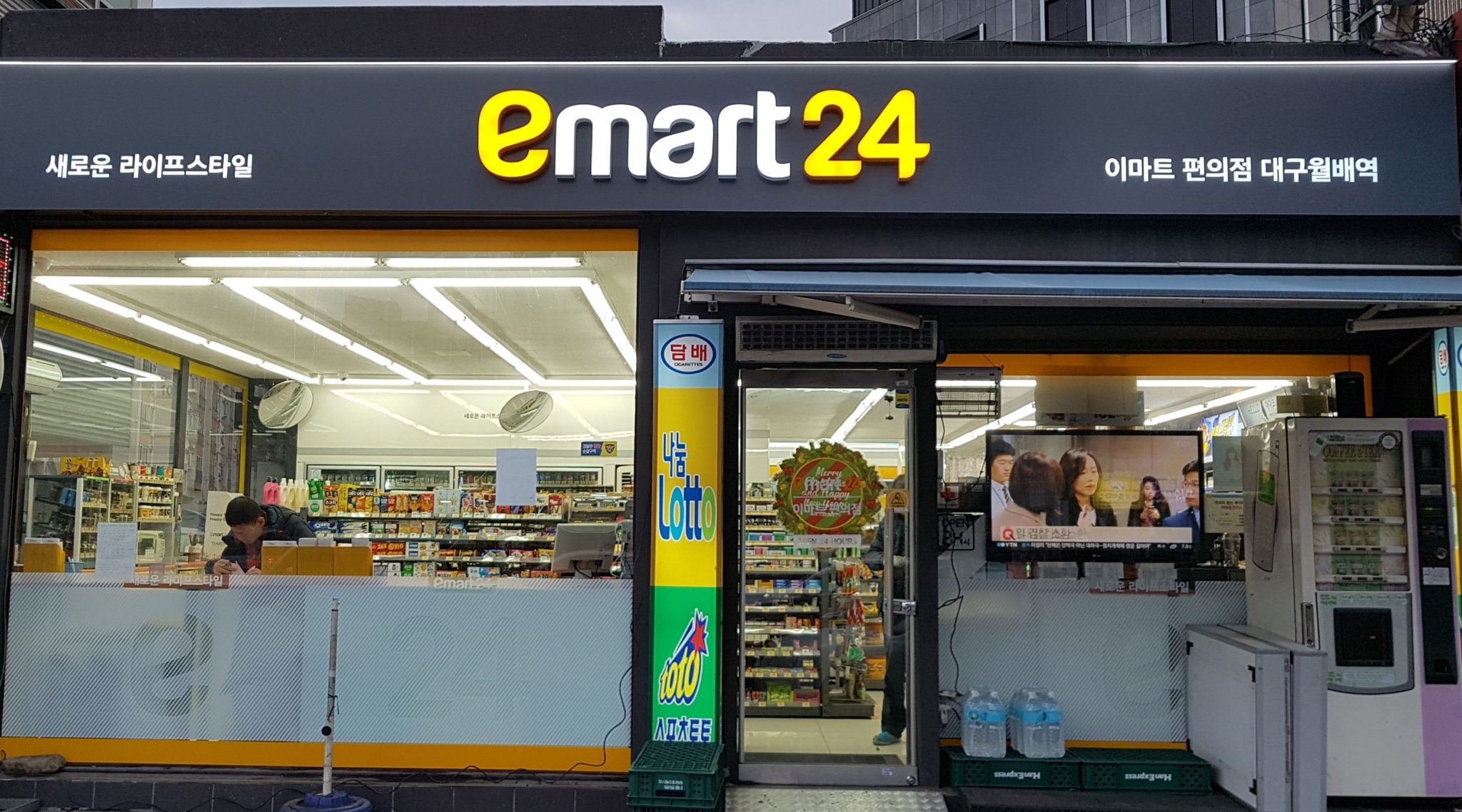
    South Korea’s largest supermarket chain operator Emart Inc. is pulling out of Vietnam, the second major Asian market after China, in the face of regulatory hurdles.

    The retailer opened its first outlet in Vietnam’s Go Vap district in 2015 and had procured a site at Ho Chi Minh City for a second opening last year. But the project has been delayed due to licensing setbacks, disrupting its plans to open five to six more outposts.

    Emart’s direct foray has proven difficult as Vietnam, like China, prioritizes joint ventures in permitting a foreign business. Emart started operation in Vietnam in 2014 after setting up a wholly-owned local entity.

    A retail industry source said a hypermarket needs at least 10 outlets to have bargaining power with vendors and maintain logistics efficiency. Unable to meet this number, Emart may have concluded it was better to fold the business, the source added.

    The retailer has been rolling back investments in the country. In its 2019 semiannual report, it had vowed to invest 460 billion won ($424.3 million) in its Vietnamese entity through 2022. But it had slashed that amount to 247.8 billion won in the third-quarter report.

    An Emart representative, however, denied the exit rumors and said it was studying other options such as strategic alliance or business partnership.

    Industry observers believe Emart is wary of making the same mistake as in its Chinese operation.

    Emart entered China in 1997 and aggressively expanded its operations, running at one point 26 outlets across the country. But it failed to overcome Beijing’s stiff regulations and saw losses snowball to 150 billion won over four years from 2013.

    In 2016, it found itself caught in the crosshairs of a diplomatic feud over Korea’s decision to build an anti-missile system, a move China vehemently opposed on national security grounds. Emart, along with many other Korean brands, suffered the brunt of Beijing’s retaliatory nationwide boycott on all things Korean. After suffering steep losses, the retail chain in 2017 sold off its remaining five outlets in China to a Thai company and pulled out of the country altogether.

    After scaling back its Asian operations, Emart is expected to focus more on the U.S. market, where Korean brands have been making rapid grounds. According to its regulatory filings, Emart generated 1.28 trillion won in the first three quarters of this year from overseas, up 122 percent from the same period last year and topping last year’s full annual sales of 778.5 billion won.

    Emarts’ robust overseas performance owes largely to its U.S. subsidiary Good Food Holdings, which the Korean retail conglomerate acquired for $275 million in 2018. The Los Angeles-based company owns five upscale food retailing brands, including Bristol Farms, Lazy Acres Natural Market, Metropolitan Market, New Seasons Market, and New Leaf Community Markets, operating mostly in the West Coast.

    Good Food Holdings raked in sales of 1.2 trillion won in the January-September period, up 136 percent from a year ago, on explosive demand for food products among people sheltering at home during the coronavirus outbreak. The company alone was responsible for nearly 93 percent of Emart’s total global sales in the period.

    Emart plans to invest 83.7 billion won through 2022 to expand its U.S. footprint. It is scheduled to launch PK Market, a shop specializing in Asian goods including Korean food, as early as next year in downtown Los Angeles.

  • UBS CEO Ralph Hamers’ Fintech Trends for 2021

    UBS CEO Ralph Hamers’ Fintech Trends for 2021

    The Singapore Fintech Festival is currently discussing the hot new trends for the fintech business in 2021. UBS Chief Executive stayed in Switzerland, but he can be trusted to know where things are heading.

    Ralph Hamers – Mister Fintech among the banking CEOs – has been in charge of Switzerland’s largest bank, UBS, for about a month. He didn’t fly out to attend the Singapore Fintech Festival in person.

    Instead, he took part at an event hosted by Switzerland Global Enterprise, which on Monday had launched the information platform finance.swiss at an event billed as World Fintech Festival in Switzerland.

    He used his time to present an overview of the big trends in fintech in the coming year.

    1. Neobanking: Source of a New Business Model?

    As a CEO of a traditional bank, Hamers maintains the view that neobanks such as Revolut, Monzo, or N26 have no business model to speak of. Neobanks may be digital and mobile, but their sole characteristic from a business point of view is growth. But that’s hardly a business model to speak of.

    Hamers believes that the so-called Freemium-Model, which entails a basic free-of-charge service, won’t suffice to run a successful business. To be true, neobanks have so far defined themselves by the number of clients won as well as the number of financing rounds completed. But one day, investors will want to get a return on their investment. Hamers says time will tell how the new banks will manage to earn money.

    2. Robo-Adviser: Whereto Henceforth?

    Robo advisory seems doomed in Switzerland. They only work in connection with personal advice from a bank in a kind-of hybrid model. Hamers believes that robo advisers and algorithms have proven their ability to deliver good results. But only few people actually want to entrust their money to a robot. Therefore, the raison-d’être of robo advisers gets lost – namely the leveraging and the ensuing benefit of scale.

    To get clients to trust the robot advisory system, advisers have started offering personal consultancy services. The problem of how to scale the business remains though, Hamers says. He believes that efforts will be made to address the problem in 2021.

    3. Tokenisation: Huge Potential?

    UBS CEO Hamers pronounced himself a great supporter of tokenization and digitization of assets. He may have been obliged to say so given that the event was hosted by SIX CEO Jos Dijsselhof and Chairman Thomas Wellauer at the Convention Point. The digital exchange SDX aims to become the first regulated exchange for tokens and digital assets.

    Tokenization is a fintech trend with huge potential, Hamers said. UBS has been working on such projects for some two years. He believes that there is work to be done still to free the full potential of tokenization.

    4. Green Fintech: Two Trends Merged

    Green fintech – a no-brainer according to Hamers: fintech and sustainable investing are trends and combining the two is simply perfect. In Switzerland, green fintech is a trendsetter and has become a founding principle for the financial market strategy. In November, the government launched the green fintech network that brings to one table business, associations, risk capital, universities, consultancies, and law firms.

    One great example of what green fintech is able to is the application provided by Yova, where clients can engage in impact investing. Zurich-based Globalance Bank helps clients understand the ins and outs of green investing by displaying the emissions and energy use of a portfolio.

    5. Open Banking: Perfecting a Symbiotic Existence?

    Not a new trend, but one that might prove disruptive, according to Hamers: open banking. If banks don’t open their business to a third party, they risk disintermediation, the destruction of supply chains. If banks however choose to open their business, they can retain client access, even if the best offering for a specific service no longer is its own one. UBS is moving toward open banking, as was shown by its announcement on Monday that it will cooperate with finance platform Financescout24.

    Open banking is creating a win-win situation, says Hamers: fintech that lacks the resources to build their own customer base, receive access to an established market. And the banks get access to technology and digital services they couldn’t develop themselves.

    6. E-Identity: Key Behind It All

    The e-identity is a hotly disputed political issue, and not a trend. On March 7, 2021, Swiss voters will decide on the legal framework for a state-approved electronic identity. The contentious issue is the separation of powers between state and economy. Only the approval of a signature will remain a state prerogative, while private firms can launch an e-ID.

    Hamers understands the issue of data protection and demanded an international framework agreement on the protection of personal data when still at ING. But he equally firm in his belief that no digital economy can survive without an e-identity. It is the key to success behind any fintech trend, he said in Zurich.

    He may have read up on the fine print of Swiss direct democracy because if the electronic identity fails, many a fintech trend will founder. It would tend to take another two to three years before Switzerland will count on an E-ID. And that’s a long time in the digital economy.

  • Volkswagen adopts new sales model in Mainland

    Volkswagen adopts new sales model in Mainland

    Volkswagen AG is launching another sales model in China that will see the automaker open showrooms in city centres for electric vehicles (EV) and offer fixed prices.

    The move marks a departure from the conventional sales system used by the wider industry in China.

    Last week, Volkswagen’s joint venture with SAIC Motor opened its first showroom under this system in the eastern city of Hangzhou, according to a social media post. The store, named “ID. Store X”, sells its ID. range of family cars.

    The German automaker said customers can order vehicles at a fixed price directly through the company website, phone app or from authorized dealers. The stores are invested and operated by selected dealers, not the automaker.

    The dealers get a commission from vehicle sales and do not need to maintain the car inventory, Volkswagen said.

    Traditionally automakers including Volkswagen, GM and Toyota set the official price, but dealers are expected to keep an inventory of vehicles and often allowed to offer discounts or price them higher depending on the demand for the models.

    The German automaker’s new attempt still differs from Tesla’s direct sales model that bypasses dealers entirely. Tesla’s model allows the US carmaker to manage the process from production to pricing to sales to delivery while adding operational costs of running the wholly-owned stores.

    Showroom strength is becoming an important differentiator for EV makers in the world’s biggest auto market, as they line up model launches. Tesla currently has over 150 showrooms and service centres in China while Nio has 189 stores. Xpeng had 116 and Li Auto has 45 showrooms, as of the end of September.

    SAIC-Volkswagen said it would open 40 ID. Store X stores in 29 Chinese cities in the next 18 months. Volkswagen’s other venture with FAW Group has yet to announce a detailed sales plan for EVs.

    Volkswagen said last month that it will launch eight ID. family models in China by 2023 with its local partners SAIC and FAW.

    Sales of electric, plug-in hybrid and hydrogen-powered vehicles in China are forecast to rise to 20 percent of new car sales by 2025 from just 5 percent now, the State Council said last month.

  • Fintech Sector Shows Resilience Amid Pandemic

    Fintech Sector Shows Resilience Amid Pandemic

    Singapore’s fintech investments rebounded in the second quarter of 2020, with investors recognizing the opportunities existing in Southeast Asia.

    Despite an initial decline in funding (-49 percent in Q1 2020 vs. Q4 2019), fintech investments in Singapore grew more than fourfold to $278 million in the second quarter of 2020, compared to the quarter before, according to the «Singapore FinTech Landscape 2020 and Beyond» report, released on Tuesday.

    Over the past five years, the number of fintechs in the city-state has grown from less than 100 to over 1,000, with the number of employees growing from about 1,100 to more than 10,000, the report said.

    The report, published by the Singapore Fintech Association (SFA) and Oliver Wyman, highlights Singapore’s evolution as a fintech innovation center over the past five years and forecasts the trends expected in the next five years.

    Singapore is Asia’s highest-ranking fintech city, according to Findexable’s «Global FinTech Index 2020,» with more than 40 percent of Southeast Asian fintech’s based in the republic.

    The key enablers that have contributed to Singapore’s success include innovation-focused investors, a close-knit network of corporates, banks and partners, as well as progressive government and industry associations, the report said.

    Looking ahead, the report recommended several themes to ensure the republic remains attractive for fintech firms: continue to keep regulation current, further open up financial services infrastructure, and work towards harmonizing standards.

  • Venture funds commit $815 mln to Vietnamese startups

    Venture funds commit $815 mln to Vietnamese startups

    Vietnamese startups earned pledges of $815 million over the next five years from 33 foreign and domestic venture funds.

    The pledges, announced at the recent Vietnam Venture Summit, came from several foreign funds who’ve been active in Vietnam in recent years, like CyberAgent Capital, AlphaJWC, Monk’s Hill Ventures, as well as several domestic funds like VinaCapital Ventures, Do Ventures, and Viet Capital Ventures.

    At the same event last year, 18 funds had committed $415 million to Vietnamese startups for three years, and $220 million of this was disbursed in the first half of this year.

    Investment in Vietnamese tech startups in the first six months fell 22 percent year-on-year to $222 million due to the Covid-19 pandemic, according to a report by Ho Chi Minh City-based venture capital firm Do Ventures.

    Among six major economies in Southeast Asia, Vietnam accounted for 16 percent of the latest investment pledges, ranking third behind Singapore (37 percent) and Indonesia (30 percent), it added.

    A recent report by U.S.-based consulting firm McKinsey & Company says 12 large digital ecosystems (companies providing services across sectors) will be established across retail and services in Vietnam by 2025, creating a revenue pool of about $100 billion.

  • Amazon has over 100,000 Vietnamese sellers

    Amazon has over 100,000 Vietnamese sellers

    Over 100,000 Vietnamese sellers have successfully debuted on Amazon, with fashion and household goods being some of their best-selling products.

    Gijae Seong, head of Amazon Global Selling Vietnam, said amid the Covid-19 pandemic, sellers have been focusing on products with high demand such as kitchenware, sports gear and house decoration items.

    The world’s largest e-commerce company has also been working with Vietnamese exporters to sell medical masks to the U.S., and would continue this partnership to sell masks, gloves and protective clothing, he said.

    Before demand surged for pandemic-related products, the most popular items sold by Vietnamese sellers had been women and children’s fashion, 3D cards and paper flowers, he added.

    Tran Van Tuoi, CEO of Sea Grapes Vietnam, which sells sea grapes on Amazon, said this year his company participated in the Black Friday and Cyber Monday promotions for the first time and saw sales rise by 300 percent. They rose by 500 percent on Thanksgiving, he added.

    Amazon has in recent years been recruiting Vietnamese sellers by organizing workshops to teach them how to reach out to global customers.

    Eric Broussard, Amazon’s vice president of international marketplaces and retail, said Vietnam is a country with strengths in manufacturing and a large number of good sellers, which is why his company has been investing and expanding there in recent years.

    Amazon Global Selling on Tuesday unveiled a task force in Hanoi to support Vietnamese sellers and launched a Vietnamese version of its sellers’ information center.

    But their initial success notwithstanding, Vietnamese sellers need to make improvements to reach more customers.

    Lai Viet Anh, deputy head of the Ministry of Industry and Trade’s Vietnam e-Commerce and Digital Economy Agency, said local firms need to educate themselves on e-commerce, study foreign customers’ preferences and overcome language barriers as cross-border sales require direct interaction with buyers.

  • Samsung’s official 5G Galaxy S21 teasers have leaked

    Samsung’s official 5G Galaxy S21 teasers have leaked

    It may be Tuesday, but this week is already proving to be a massive one for Samsung Galaxy S21 leaks. Concept renders based on photos of Samsung’s next-gen flagship lineup were published yesterday morning and were followed hours later by the first live image of the Galaxy S21+ and S21 Ultra.

    The teaser videos that show off the Galaxy S21 and Galaxy S21+ depict both smartphones in the new Phantom Violet finish, which is perhaps Samsung’s most adventurous colorway since the Galaxy Note 10’s Aura Glow.

    Rather than settling for a single color across the phone, Phantom Violet pairs a violet rear panel with a copper-colored frame. The latter is presumably made out of aluminum, whereas the rear panel is made out of plastic on the Galaxy S21 and glass on the Plus-branded smartphone.

    When it comes to the finalized design, Samsung’s decision to use a new camera design on its next flagship lineup has essentially been confirmed by the videos. The new camera module blends into the frame on both the left side and top edge.

    In the case of the Galaxy S21 and Galaxy S21+, it houses three cameras, although there is an LED flash positioned next to it too. On the hardware front, these cameras won’t introduce anything groundbreaking because they have been borrowed from the Galaxy S20. A range of software improvements is very likely, though.

    Coupled with everything mentioned above is a punch-hole display. The panel measures in at 6.2-inches on the Galaxy S21 and 6.7-inches on the S21+ and, as confirmed by the teaser videos, settles for flat edges.

    One-upping the vanilla models is the Galaxy S21 Ultra, which features a quad-camera setup on the back. It consists of a 108-megapixel main sensor, a 10-megapixel 3x telephoto zoom shooter, a 12-megapixel ultra-wide, and a 10-megapixel 10x periscope zoom.

    These components sit alongside an LED flash and a laser autofocus system. The latter was present on the Galaxy Note 20 Ultra as well and ultimately helps avoid the autofocus issues that plagued the Galaxy S20 Ultra earlier this year.

    Of course, due to the extra cameras and laser autofocus system, the overall camera bump is much larger, although it still blends into the frame. Speaking of which, the frame should be carved out of stainless steel and paired with a glass back panel.

    As for the color, the Galaxy S21 Ultra is shown off in Phantom Black, which is paired with a matte finish. On a separate note, the punch-hole display can be seen in the longer video with curved edges. It boasts a diagonal of 6.8-inches, per recent reports.

    Samsung is understood to have scheduled its next Unpacked event for Thursday, January 14. It will unveil the whole Galaxy S21 series at the event and its next pair of earbuds, the Galaxy Buds Pro.

    Pre-orders are rumored to kick off the same day ahead of shipments on Friday, January 29. The flagship lineup could start at $849, with the Plus-branded device landing at $1,049 and the Ultra coming in at $1,249.

  • A Guide to Starting a Successful Business

    Starting your own business is anything but simple. Throughout the journey, there will be obstacles, rejection, and the chance of financial worry. Despite that, with a solid idea, your business could turn into something huge. If you have always dreamed about being your own boss, then here is a guide to starting your own successful business and joining the masters in leadership.

    Start with Education

    Like with many other endeavors, first, you must get educated. Business isn’t something anyone knows off the bat, so it’s important to give yourself all the knowledge you can. A masters in leadership will enable you to learn all the necessary skills you need to become a successful leader of a company.

    If you have already started your business, don’t worry about a lack of education. There are plenty of courses and resources online for you to level up your knowledge. Over time, you will learn all about being a leader through experience, but education is crucial for giving you a head start.

    Research, Research, Research

    Don’t jump into a business plan without first doing plenty of research. If you are selling clothes, check out any fierce competition. You could even take a leaf out of other people’s books. Market research never ends, but it is especially crucial in the beginning.

    The best masters in leadership tend to keep a notebook with them at all times. You never know what you might learn in your day-to-day life. If you’re selling a product, a trip to the mall counts as research. Research can be perusing the web in your PJs with endless cups of tea, too – it’s all about what kind of product you are putting out there. Get into good habits early on for an increased chance of success.

    Write a Detailed Business Plan

    All masters in leadership know you cannot wing your business route. A plan is an essential part of starting up, so make sure you make it as detailed as possible. Some things to include are:

    . Your competition

    . Your audience

    . Your company goals

    . Marketing strategies

    . Budgeting

    Create a folder with your business plan so you can always refer to it or adjust it if need be. It will help guide you through the highs and lows of your journey, and when you’re lost, you can use it to help you find a way forward.

    Understand the Skills Required

    Being a successful business owner takes a wide range of skills, some you’ll pick up over time, and some you’ll already have. A masters in leadership will help you acquire the skills you need to succeed, which include:

    Motivation: On the days when everything seems to be falling apart, you must be able to find the motivation to push through.

    Organization: A business without organization is destined to fail. The ability to stick to deadlines, plan, and budget properly are all crucial for masters in leadership.

    Commitment: When starting, it’s likely that you won’t find time to switch off. Commitment to your business is important for pushing through challenges.

    Leadership: When your business expands, you will need to lead other people to success. Masters in leadership start learning how to manage before even having someone under them.

    Communication: Great communication is essential. You will be speaking with clients, customers, and co-workers daily, so you must be able to use your words wisely.

    Find Your Audience

    There’s no use in marketing your business if you don’t know who your audience is. This will usually tie into research, but it is a particularly important part of it. Spend some time figuring out who your audience is, and analytics can help you get there. Once you’ve managed to decipher the types of people who are interested in what you have to offer, you must then understand what exactly they want. By doing this, you can then tailor your marketing and product towards them, resulting in more engagement and sales.

    Open a Business Bank Account

    Opening a business account is a relatively simple part of starting your business, but it’s one that should be done as early as possible.

    There is a great risk involved in combining your personal finances with your business’, so get out of the habit of that as soon as possible. It can cause issues with taxes, and you might find that you end up spending your money that was for personal bills on your company by mistake. A well thought-out budget comes in handy here. If you want to expand your organizational skills, then attaining a masters in leadership will help you.

    Find a Loan or Investor

    Another area of finance to focus on is applying for loans and finding investors. Your business plan will come in handy when applying for loans, and for it to be appealing, you will want to make it as clear and succinct as possible, highlighting why your business has a high chance of success.

    Investors can be tricky to come by, so you should get used to making connections early on. Don’t expect the first person you speak with to throw money in your lap! Masters in leadership have a natural-sounding pitch for speaking with potential clients. Create one of your own so when you come into contact with a potential investor, you know exactly how to sell your business to them.

    Find a Location

    Many small businesses start at the kitchen table, and while there is a charm to that, it is not necessarily viable in the long run. If you plan on hiring employees or you simply need extra space to store your stock, then finding a workspace is necessary.

    Office spaces come in a large variety, so you’ll need to take into account the needs of your business. Do you need lots of space? How many employees are you planning on having work there? How many desks will need to fit in? There are other aspects to consider, too, like natural light to boost workplace positivity. You must aim to find a location that is comfortable and spacious enough without going over budget. Masters in leadership understand how crucial it is to have a workspace that feels right for everyone.

    Keep an Open Mind

    When running a business, you never know what is around the corner. There will be obstacles you never expected and triumphs you never thought would occur. Surprises are all a part of the experience.

    If you had a well thought-out, detailed business plan to begin with, but evidence shows it is simply not working out, then it is your job to shift it around. As a business owner, adjusting your expectations is key. Many masters in leadership understand that there are times when things will not go according to plan, but they can adapt to whatever the business throws at them. Learn to do the same by keeping an open mind and never keeping all your eggs in one basket.

    By keeping an open mind, you open the door to a potential improvement in areas you never thought of. For example, if you never use someone else to manage your social media, then you might find that you lose time, and your social media engagement dwindles. If you dare to try something new by giving control of your accounts to a professional, there’s a chance you could save yourself lots of time and greatly increase engagement on the platforms, leading to more customers heading your way. Join the masters in leadership by keeping your mind as open as possible.

    Grow a Back Bone

    “In order to succeed, we must first believe that we can,” said Nikos Kazantzakis.

    It is no secret that running a business takes great strengths. You will face rejection, and you must learn to take it in your stride. Build yourself up so you don’t even think about falling, and you will find that you overcome each obstacle far more easily. Attaining a masters in leadership will help you learn how to stay strong even when things are tough. Over time, your backbone will only grow stronger and stronger, but to get started, you must believe in yourself from the beginning.

    Learn to Budget

    Budgeting is an enormous part of a successful business, and the greatest masters in leadership are the most organized with it. No matter how much profit is rolling in, without a budget, you could end up losing money. This is where your organizational skills come in handy. At the beginning of each year, you should make an estimate of how much profit you expect to make, how much your outgoings will be, and then leave some extra wiggle room for any emergencies. Budgeting is something you will need to do at the beginning, and you will continue to do it all the way through, so it’s important to learn how to budget efficiently early on.

    Choose Your Marketing Strategies

    Your product or services could be the best in the world, but without consistent, effective marketing, nobody will know to come to you.

    Most masters in leadership are not boring and repetitive in their marketing strategies. Remember, your competitors are likely to be adopting similar methods to you, so it helps to get creative. Of course, with some marketing strategies, repetition is necessary, for example, SEO content. When it comes to social media, however, it’s beneficial to shake things up now and again. You could host competitions, start a fundraiser, or even start a giveaway. Your goal is to keep potential customers consistently interested.

    Embrace Leadership

    “Before you are a leader, success is all about growing yourself. When you become a leader, success is all about growing others,” said Jack Welch.

    To become a successful business owner, you must become an excellent leader. Some people are born with leadership skills, whereas others need guidance to get them where they need to be. Attaining a masters in leadership is a handy step for teaching you exactly how to manage a team well. You will learn to guide others in the right direction, bringing out the best of their abilities rather than bringing up their weaknesses. If you commit to becoming a leader, soon you will join those who can call themselves masters in leadership.

    Find an Excellent Team

    When it’s time to build your business’ team, you want to find the best of the best. This takes some work, but the outcome is worth it.

    First of all, you must learn the ways of the recruiting process. You may find yourself swamped with tons of resumes without knowing what direction to go in. First, you should figure out exactly what you are looking for so you can be as specific as possible on the job description.

    When it comes to interviewing, it helps to have a range of questions ready and tailor them depending on how the interview is going. A promising interview tends to end up sounding more like a conversation rather than a simple question-answer scenario. While it might be tempting, don’t just go with your gut. Unless they’re applying for a role in customer service, charm doesn’t equal a great worker. What you should look for is passion, commitment, and whatever else you need to get your business running smoothly. The best masters in leadership start by acquiring a fantastic team.

    Focus on Quality

    Whatever distractions you may come across when leading your business, you should always prioritize the quality of your product or services. Your marketing strategies and organization skills are crucial, but without high-quality services, your customers won’t be satisfied.

    Keep the Passion – and the Motivation

    Above all else, stay passionate about your business. Remember, you started it for a reason, so when you find your motivation dwindling, remind yourself of that.

    On the days when passion seems impossible, it’s important to stay motivated. The best masters in leadership have passion, but they don’t rely on it. Committing to your business doesn’t just mean committing when you’re excited, it also means you need to stay motivated even when the day is falling apart.

    Starting a new business is an exciting adventure and one that no one is ever fully prepared for. By using this guide, you will find the road has less traffic and more green lights, resulting in you joining the ranks of the true masters in leadership.


  • Moncler aqcuiring Stone Island

    Moncler aqcuiring Stone Island

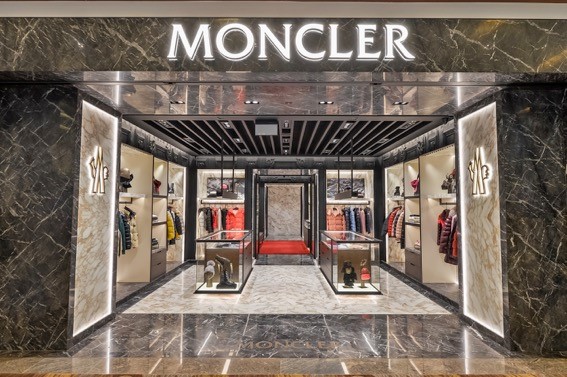
    Italian designer clothing brand Stone Island has just been snapped up by Italian winter wear’s favorite Moncler SpA (BIT: MONC). While some retailers are winding up operations and slipping into administration, others are seeing an opportunity to expand. Designer goods are selling surprisingly well this year, and many analysts think 2021 will see a massive recovery in the sector.

    Last month we discussed how exclusive streetwear brand Supreme was acquired in a $2 billion deal by VF Corporation (NYSE: VFC). Now it’s the turn of Stone Island, which is being acquired by Luxury Italian group Moncler for $1.39 billion.

    Family-owned Stone Island was founded in 1982 by Massimo Osti. In the prior years, he’d created an unusual fabric that went onto become an integral part of Stone Island’s popularity. The Tella Stella fabric is a tarpaulin like weight, heavily stonewashed, and dyed in a variety of colors. In 1983 Carlo Rivetti, the current CEO and owner of Stone Island, bought his 50% stake in the company. In the ensuing years, the brand enjoyed increasing popularity. Inspired by both the military and traditional workwear, the pair created innovative new jacket designs with unusual features. For instance, a color-changing jacket that responds to temperature through its liquid crystal coating and a reflective jacket coated in a thin layer of glass.

    The brand’s popularity spiked in the nineties as English football hooligans embraced it. The founder left the company in 1994. In 2009 the brand began collaborating with others such as Adidas and then Supreme in 2014. The Supreme collab caught the eye of rapper Drake, who loved it and became a major fan and unofficial ambassador of the brand. This transitioned it away from the hardman image of football thugs to the trendy streetwear image popularised by sports brands. And Drake’s fan base was a boon to Stone Island, increasing its popularity stateside.

    Stone Islands’ growth has surged in recent years. In 2018, Stone Island’s revenue was approaching €200 million from around €56 million in 2012. It sold a 30% stake to Singapore’s sovereign wealth fund in 2017.

    CEO and owner Carlo Rivetti still owns just over 50% of Stone Island, and his family owners own an additional 19.9%. Skiwear-turned-fashion-brand Moncler is buying it from them in cash. It is buying the other 30% from Temasek, which also has a small stake in Moncler. All parties are being offered the same terms, but Temasek also has the option of taking newly issued Moncler shares for up to 50% of the cash consideration.

    Chairman and CEO of Moncler, Remo Ruffini said: “We are coming together at a challenging moment both for Italy and the world, when everything seems uncertain and unpredictable but I believe it is precisely in these moments that we need new energy and new inspiration to build our tomorrow,”

    What the Moncler and VF Corp. deals signify is the arrival of streetwear in a world of its own. No longer simply cheap and cheerful clothes for skaters, tradesmen or football fans. These brands cover all manner of outdoor pursuits, but in a trendy, designer way that makes even the laziest youngsters look cool. The streetwear market has an estimated value of $50 billion and is expected to enjoy double-digit sales growth by 2024.

    VF Corp now owns Supreme, along with The North Face, Dickies and Vans, but this isn’t stopping Supreme taking part in its exclusive collaborations with other popular brands. These surprise drops are what keeps it in demand. Customers love it, and they’re often oversubscribed in next to no time. Supreme just joined forces with Stone Island last month, when they dropped another sell-out collection. They’ve been partnering on occasion since 2014, and their limited-edition outerwear remains as popular as ever.

    This latest collab features both Supreme’s logo and Stone Island’s compass. Pieces include hand-painted shearling jackets, which have become one of Stone Island’s signature edits, as well as wind-resistant crinkle down jackets in camouflage print. There are also corduroy jackets, hoodies and some of Supreme’s quirky accessories, such as a glow-in-the-dark balaclava and swimming goggle inspired sunglasses.

    Dual branding opens up potential buyers to a much wider audience. It also gives a unique spin to a garment, but keeps it exclusive and therefore highly profitable. Despite the economic uncertainty facing the world, designer streetwear is on the up, with social media the perfect place to showcase and drop their latest offerings. Emerging markets are bringing youth and wealth, hungry to add the coolest fashion garb to their image streams. Both Stone Island and Supreme look to be headed for several years of continued growth ahead.

  • Acecook to open instant-noodle buffet restaurant in Vietnam

    Acecook to open instant-noodle buffet restaurant in Vietnam

    Called ‘Acecook Noodles Cup Buffet’, the store allows customers to create and mix instant noodles to their own preference. Customers can also customize their noodles cup design with stickers and pencil crayon provided.

    Besides providing the buffet service, the store also has a dedicated display area for Acecook’s new noodles range as part of its marketing plan. The store is scheduled to launch on December 19.

    “This is also a tribute to the companionship and support of customers for Acecook Vietnam over the past 25 years,” said Kajiwara Junichi, general director at Acecook Vietnam. “I hope the restaurant will be an attractive destination for our customers, who love instant cup noodles and want to experience new things.”

    The launch is part of Acecook’s strategy to increase the cup noodles sales in the country. According to Nikkei, the Japanese instant-noodle maker aims to achieve about 350 million servings by 2022. Acecook estimates cup noodles will account for 9 percent of its sales in the country by then.

    Prior to creating the instant-noodle buffet concept, Acecook Vietnam entered the retail market with its Japanese restaurant chain Ringer Hut.