Tag: asia

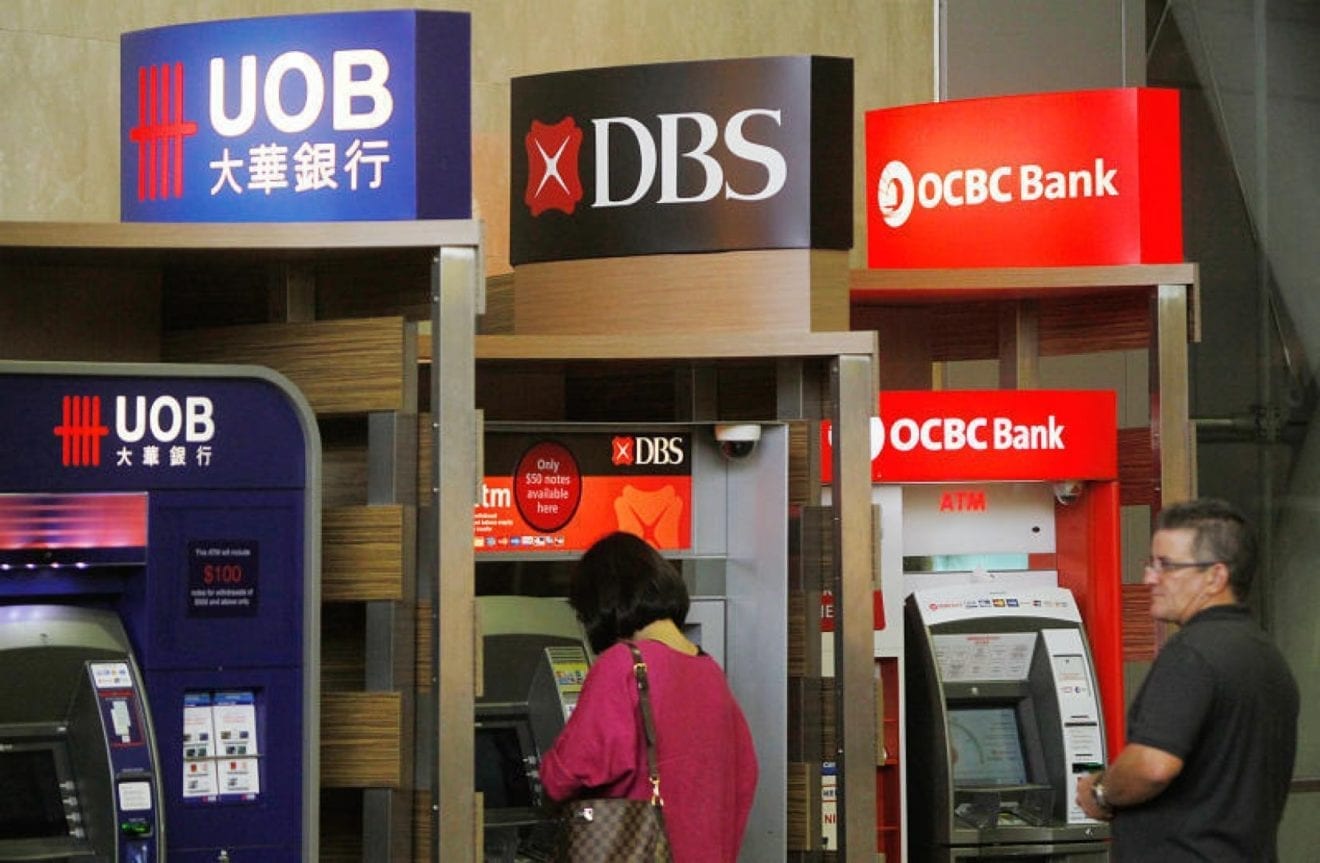
  • Vietnam allows taxman greater scrutiny of bank accounts

    Vietnam allows taxman greater scrutiny of bank accounts

    The decree requires banks to provide the account balance and transaction details to tax authorities upon request.

    While the current law does state that the banks are required to provide authorities with information, the nature of such information was not specified.

    Under the decree, banks will also need to provide monthly details on the newly opened or closed accounts of taxpayers.

    The stated purpose of the decree is to allow authorities supervise and examine the tax responsibilities of citizens as e-commerce develops rapidly in Vietnam.

    The decree also requires banks to pay tax dues on behalf of foreign organizations doing e-commerce and digitized business in Vietnam with local organizations and individuals.

    The banks are also required to submit to tax authorities every month a list of transfers from customers to foreign organizations.

    The decree had earlier received mixed responses from lawmakers. Pham Thi Thu Trang, a National Assembly deputy from the central province of Quang Ngai said that the decree contradicts regulations on personal information security and should not be imposed.

    Another lawmaker, Bui Thi Quy Tho, supported the new decree but proposed that transaction fees be reduced to boost cashless spending and better tax management.

    Vietnam is trying to tighten its tax policies as e-commerce booms as foreign service providers like Netflix expand their reach in the country.

    An official of the General Department of Taxation said last month that, in Hanoi alone, there were over 18,300 organizations and individuals making a total of VND1.46 trillion ($62.9 million) from online sales via Google, Facebook, and YouTube in Hanoi alone, according to data from 45 commercial banks.

    The department had collected nearly VND14 billion from them, the official said but did not mention the time frame for the figures.


  • Older workers in Australia have significantly been impacted by COVID-19

    Older workers in Australia have significantly been impacted by COVID-19

    As Australia’s unemployment rate rose to 6.9% in September amidst the ongoing impacts of COVID-19, 42% of older workers said they had recently lost their job or had their hours reduced, a Humanforce survey has revealed.

    As a result of the challenges faced during COVID-19, older workers are now more open minded to different types of employment and are looking to explore opportunities within the retail sector, with 41% open to casual employment and 39% open to any type of work.

    “We know that COVID-19 is changing the face of work across the world, as unemployment rates continue to rise. Our research shows that one of the flow-on effects could be that older Australians who lose their job because of the pandemic will be transitioning into different types of work, including casual work in the leisure field. This means employers need to look closer at how to support older Australians as casual employees.”

    Older Australian workers said the key factors they would look for in casual retail employment would be a stable income (70%), a reliable number of days and hours (65%) and flexibility with days and hours (62%).

    “A common misconception about older workers is that they aren’t open to learning new technologies or skills as part of their job,” added Bruce Mackenzie. “Yet the overwhelming majority of older workers we surveyed were supportive of casual jobs where automated technologies were used or where they could retrain or learn new skills.”

    Almost three-quarters (73%) of older workers said they are open to using automated technologies and 85% are open to retraining or learning new skills in a new role. Most of them (65%) also said that the best way to support older workers in using technology at work would be through training provided by a manager or colleague.

    “Australian retail businesses are going to need casual workers to assist in their recovery from COVID-19. As older Australians become more open to casual work due to the pandemic, this is an opportunity for employers to also become more open minded about employing and supporting them in casual roles.”

    Methodology

    Humanforce contracted Zoho Survey to survey 500 older worker respondents (workers of ages 45 and over) as part of this research project.

    About Humanforce

    The intelligent platform for your shift-based workforce.

    Almost every shift has its no-shows, late arrivals, and special requests, but, you’ve also got to deal with the big shifts in how people work – everything from new employee expectations to new technologies, new regulations, and other major changes. Humanforce brings a whole new approach to managing your teams where you can simplify the process, see everything at once, and stay ahead of the curve. That’s why thousands of businesses of all sizes – hotels to hospitals, resources to recreation, stadiums to shops and more – use Humanforce to get ready for the next shift. www.humanforce.com


    Media Contact:

    Corinne Nolte

    Mulberry Marketing Communications

    +613 9023 9110

    [email protected]


  • Vietnam has most adult gamers globally

    Vietnam has most adult gamers globally

    Vietnam has the highest number of adult gamers in the world in 2020, according to a recently released global consumer survey by German data portal Statista.

    Ninety four percent of Vietnamese said they gamed at least occasionally while nearly 20 percent said they were frequent gamers, according to the Statista Global Consumer Survey.

    Eighty five percent said they gamed on smartphones.

    Besides Vietnam, other developing countries like Nigeria, Thailand and the Philippines also reported high numbers of adult gamers, aided by their younger demographics.

    Smartphone gaming has won over people not previously invested in the activity by giving them easy access at low or no initial cost.

    The Statista Global Consumer Survey polled 1,000-4,000 respondents between 18 and 64 years of age in 55 countries and territories.

    Vietnam is a growing market for e-sport and online games. An earlier Statista report said online game revenues in the country this year are expected to top $10.1 million, up 16 percent from 2019.

    Another study by market research company Niko Partners and Google earlier this year forecast Vietnam’s e-sport market to achieve the highest five-year compounded annual growth rate in Southeast Asia, from 2018, of 28 percent.

  • Google accidentally reveals new icon and name for a key Android app

    Google accidentally reveals new icon and name for a key Android app

    Over the last few weeks, Google has been making changes to the icons for its apps like Gmail, Calendar, Drive, Docs, Sheets, Slides, Meet, and more. Google added more of the company’s traditional colors (blue, red, yellow, and green) to the icons belonging to its apps. Now, an eagle-eyed Reddit user (vihas spotted what seemingly will be the new icon and name of the app currently known as Phone by Google. The leaked icon and name were spotted in an ad found on YouTube.

    Based on the ad, the new name of the app will be Google Call and the icon resembles the illustration of a on the new Google Voice icon. One major difference is that the illustration of the landline ear and mouthpiece is done up in Google’s four colors. Note that the new name and icon are not yet in use in the Google Play Store and when the change will be made is anybody’s guess. The current icon shows a landline hand and mouthpiece in white against a blue background.

    The ad that leaked the new name and logo for what is now Phone by Google highlights the app’s “reliable” caller ID that Google says  “lets you answer with confidence.” Google has been adding new features to the mundane app including Hold for Me. This feature comes into play when you’re placed on hold after dialing a toll-free number. you will see a prompt that reads “Don’t hang up” prompt with the option to “Return to call” always available. When a real live person starts talking, the phone will ring and vibrate alerting you that the call is no longer on hold. A transcription at the bottom of the screen keep tabs on what is being said while you are on hold. As Google states, the Google Duplex technology used to drive Hold for Me “not only recognizes hold music but also understands the difference between a recorded message (like ‘Hello, thank you for waiting’) and a representative on the line.”

    Hold for Me is the typical new Android feature that Google adds to its mobile OS to make to help with the little things in life that can be a big pain in the butt. We probably all agree that waiting on hold is generally as much fun as hammering a nail through your skull.

  • Huawei, Qualcomm, and Oppo are arguably the three most innovative firms in wireless technology

    Huawei, Qualcomm, and Oppo are arguably the three most innovative firms in wireless technology

    This might not come as a surprise to some people living in China, or to those who make a living by following the goings on of the wireless world, but there is a good case for calling Huawei the most innovative outfit in this realm. The company’s Mate series phones are traditionally one of the top technologically based smartphones in the world each year. However, the powerful 5nm chips it designed for this year’s Mate 40 line can no longer be shipped to the company because of a new U.S. export rule. The rule bans foundries like TSMC from shipping cutting-edge chips to Huawei without a license if said chips were produced using American technology.

    An industry report cited by the South China Morning Post states that from the beginning of this year through the end of October, Huawei filed 8,607 patent applications related to wireless technology. That put the firm at the top of the pack, well ahead of San Diego, California based chip designer Qualcomm; the latter sought 5,807 patents during the same January to October time period. Chinese smartphone manufacturer Oppo was third with 5,353 patent applications. Database provider incoPat, headquartered in Beijing, is responsible for the data used to compile the list.

    According to incoPat, both China and the U.S. led the way with each making up 32% of the patents filed from January through October. Japan was next with 15% followed by the 7% submitted by South Korea. IncoPat says that the information it uses comes from patent filings available to the public in the field of wireless communications. This includes patents filed to protect inventions related to 5G technology. The report issued by incoPat notes “As a key area of modern communications, wireless communication network technology has always been a very important part in the 5G research and development process. With the new technological competition and new globalisation situation, wireless communication network technology is becoming an important strategic choice for enterprises to face international competition.”

    5G is the next generation of wireless connectivity and the countries that control 5G will have an advantage economically. That is why, seeing how innovative Huawei is and not wanting to be left behind, back in June the U.S. Commerce Department amended the entity list ruling that prevents Huawei from working and doing business with U.S. based firms. Now, American tech companies are allowed to work alongside Huawei to help create global 5G standards. The U.S. feared that being left out of the meetings attended by Huawei would hold the U.S. back in terms of the development of 5G.

    Huawei is also the leader in helping the 3GPP develop standards for 5G. 3GPP (the 3rd Generation Partnership Project) is a term that covers standards organizations that help create protocols for mobile telecom. After Huawei, Ericsson and Qualcomm provide the most contributions to 3GPP for 5G standards. According to SCMP, this year 3GPP completed its next set of standards for 5G which include possible applications for 5G such as autonomous driving, smart factories, and remote surgery.

    Earlier this month, China’s Ministry of Industry and Information Technology (MIIT) said that the country has built nearly 700,000 base stations in 2020 topping its original target of 500,000 for the whole year. As the world’s leading provider of networking equipment, Huawei is also an important supplier of 5G base stations. In fact, published reports indicate that Huawei will replace Ericsson this year to become number one in 5G base stations. Ericsson is expected to see its market share decline from 30% last year to 26.5% in 2020. Huawei, on the other hand, should see its 5G base station share rise from 27.5% last year to a leading 28.5% in 2020. That is, along as it can find enough 5nm Kirin 9000 chipsets to power these base stations. As we mentioned earlier in this article, the U.S. is preventing Huawei from receiving cutting-edge chips from TSMC.

  • Samsung refreshes Black Friday offers with TV discounts

    Samsung refreshes Black Friday offers with TV discounts

    The 20th might be behind us, but that doesn’t mean that the Black Friday offers are over! Samsung has refreshed its store with a new slew of offers, bringing the prices of many TV models down.

    You can save up to $3,000 on a nice new QLED or browse through the many offers on smartphones, smartwatches, washers, and other electronics — many of these are still live!Samsung is slashing the prices of its wide portfolio of TVs. From small UHD sets to gargantuan QLED beasts that can transform your living room into a cinema. Head over to the link below to view all Samsung Black Friday TV deals:

    Samsung’s S20 line starts with the budget-friendly Galaxy S20 FE 5G and tops off with the behemoth Galaxy S20 Ultra 5G. All of them have exquisite displays with 120 Hz refresh rates, the perfect camera to help you capture the moment, and the processing power to play all your favorite games.

    The Note line has always been the productive person’s phone — “For those who do”. Huge, beautiful screens, powerful hardware, and the best stylus you can find bundled up with a smartphone — the S Pen.

  • Kia Motors India Issues A Recall For Seltos Diesel Over Faulty Fuel Pump

    Kia Motors India Issues A Recall For Seltos Diesel Over Faulty Fuel Pump

    Kia Motors India has issued a recall for the diesel models of the Seltos compact SUV to fix potential damage to the fuel pump. While the company is doing this a service campaign, it has notified its dealer partners to inspect the fuel pump of the diesel Seltos that come for servicing and if its damaged, the part needs to be replaced. When reached out to Kia Motors India, the company said, “The recent communication, involves inspection of fuel pump and in-case of any observation dealer is required to carry out repair/replacement as the case may be.” It’s certainly encouraging to see manufacturers take such proactive initiatives.

    Furthermore, according to a leaked service bulletin that’s circulating the internet, the affected Kia Seltos units were manufactured between October 1, 2019, and March 31, 2020. The damaged fuel pump could cause problems like excessive vibrations, poor pick-up, or in some cases, the vehicle might face a starting problem. So, Seltos owners facing similar issue should reach out to their nearest service centre and get the vehicle examined. As of now, the company is not sending out any communication to vehicle owners, but the faulty part will be replaced by the service centres free of cost.

    According to a leaked service bulletin, the damaged fuel pump could cause problems like excessive vibrations, poor pick-up, or starting problem.

    The Kia Seltos diesel is powered by a 1.5-litre four-cylinder diesel engine that is tuned to produce 113 bhp and 250 Nm of peak torque. The motor comes mated to a 6-speed manual gearbox and an option 6-speed automatic torque converter unit. It worth mentioning that the same engine is used in the Hyundai Verna, and the Kia Sonet, however, considering both these models were launch after March 2020, they are not likely to be affected by this problem.

  • New-Gen Volvo S60 Sedan To Be Unveiled This Month

    New-Gen Volvo S60 Sedan To Be Unveiled This Month

    The new-generation Volvo S60 sedan will be unveiled in India on November 27, 2020. Of course, given the current situation with the pandemic, the car will be revealed via a digital event, while the official launch will take place in the first quarter (Q1) of 2021. While the car was supposed to be launched this year itself, the COVID-19 and the resultant lockdown has forced the company to push the launch to next year. Last year, Volvo India had announced that it will be introducing 4 new electrified cars in the country in the next 3 years, so the S60 coming to India could be the plug-in hybrid version.

    Volvo Cars plans to slowly phase out conventional powertrains and focus only on electrified vehicles like PHEVs and fully electric vehicles (EVs). The company has already committed to a goal of featuring some form of electric propulsion in its models from 2019 onwards and now India too is part of this plan. Every new Volvo from 2019 onwards will be electrified.

    Volvo India had announced that it will be introducing 4 new electrified cars in the country, so the S60 could get a plugin hybrid version.

    The Volvo S60 coming to India has been in the global market for a couple of years now, and we have already driven the global-spec model. Overall, the car has become much sleeker now and flaunts some bold character lines that give it a sculpted look. Upfront the car comes with a wide grille with a chequered grille and the Volvo badge at the centre. It’s flanked by a set of sharper-looking headlights with the signature Thor Hammer LED daytime running lamps, and a sporty bumper. The car also comes with a set of 19-inch alloy wheels, along with a new rear design featuring S90 style C-shaped LED taillights, centrally positioned Volvo lettering, and the muscular rear bumper.

    The Volvo S60 is a petrol-only model and it comes with a 2.0-litre in-line 4-cylinder engine, mated to an 8-speed automatic transmission.

    The regular petrol model gets a 2.0-litre in-line 4-cylinder engine which is turbo-charged and pumps out 310 bhp and 400 Nm of peak torque, while mated to an 8-speed automatic. The plug-in hybrid version though gets the same 2.0-litre motor, but, with an electric motor at the rear. The combined power output is about 413 bhp and the total torque output stands at 670 Nm. In pure electric mode, the car can cover a range of up to 45 kilometres.

  • California’s New Coronavirus Curfew Does Not Apply To Tesla Workers

    California’s New Coronavirus Curfew Does Not Apply To Tesla Workers

    Workers at Tesla Inc’s California vehicle factory are deemed essential and are not impacted by the state’s latest restrictions to curb a new surge in coronavirus infections, the California health department said on Friday. Tesla and local California officials in March engaged in a heated months-long standoff over restrictions imposed to curb the first wave of infections, which culminated in the company’s chief executive, Elon Musk, defying health orders, suing local officials and threatening to leave the state. California’s governor on Thursday imposed a curfew on social gatherings and other nonessential activities

    Beginning on Saturday, the stay-at-home order prohibits non-essential business from 10 p.m. until 5 a.m. each day and applies in the majority of the state’s counties, including Alameda County, where Tesla’s factory is located.

    Workers at Tesla Inc’s California vehicle factory are not impacted by the state’s latest restrictions to curb a new surge in coronavirus infections.

    Asked whether the order applied to workers at Tesla’s Fremont factory, the California Department of Public Health in a statement said it did not apply to employees deemed essential workers, with manufacturing listed as an essential workforce.

    “The Critical Manufacturing Sector identifies several industries to serve as the core of the sector including Transportation Equipment Manufacturing Products,” the office said.

    CNBC first reported on the health department’s policies. Under California law, local counties can impose more restrictive measures than mandated by the state. Alameda County on Friday did not immediately respond to a request for comment.

    In a statement on Monday the county’s health department said it was following state guidance, but may act to restrict activities beyond the state’s requirements.

    During the initial virus outbreak in March, local officials ordered Tesla to halt production and Tesla’s factory remained shut down for roughly six weeks. Billionaire Musk in early May defied county orders by reopening the factory, telling county officials he stood ready for arrest.

  • Fiat Chrysler, PSA Merger To Include Investor Loyalty Scheme

    Fiat Chrysler, PSA Merger To Include Investor Loyalty Scheme

    Fiat Chrysler’s merger with Peugeot maker PSA will include a loyalty scheme to reward long-term investors and help prevent future takeover attempts, the prospectus for the planned tie-up shows. Italian-American carmaker Fiat Chrysler (FCA) and France’s PSA agreed to combine in a $38 billion all-share deal in December, uniting brands such as Fiat, Jeep, Dodge, Ram and Maserati with the likes of Peugeot, Opel, Citroen and DS.

    Holders of shares in Stellantis – as the merged group will be known – for an uninterrupted period of at least three years may receive a special voting share in addition to each common share, the companies said in the prospectus.

    Such a move could make management changes and takeover attempts of Stellantis more difficult, they added. The tax consequences of the loyalty scheme are uncertain, the companies said.

    Stellantis will have a Dutch-domiciled parent company and its shares will be listed in Paris, Milan and New York.

    Loyalty schemes are common for companies in the Netherlands and have already been used by Exor, the holding company of Italy’s Agnelli family and FCA’s controlling shareholder, not least during the spin-off of Ferrari, boosting Exor’s grip on the luxury sports car maker.

    PSA CEO Carlos Tavares will run Stellantis and will receive a 1.7 million euro ($2.02 million) bonus upon completion of the merger.

    FCA CEO Mike Manley will receive “a recognition award with a value equivalent to approximately five times his annual base salary” and a cash retention after the merger if certain conditions are met.

    The two companies said they have agreed to review the potential distribution of 1 billion euros to shareholders, either through a dividend evenly before the merger, or to be distributed afterwards by Stellantis.

    PSA and FCA have filed the merger plan with antitrust authorities in 21 countries and the European Union. To date, they have obtained approval from 15 countries and a preliminary okay from Brazil which becomes final next week. The EU is also expected to authorise the merger, sources have said.

  • Revolut Singapore Compliance Chief Joins Swiss Private Bank

    Revolut Singapore Compliance Chief Joins Swiss Private Bank

    He leaves the fintech a little over a year after he joined from Credit Suisse.

    Rayson Tan, who joined Revolut Singapore in September 2019, has left the company. Tan joined the fintech as chief compliance officer, and was later appointed chief risk officer and head of legal in April 2020.

    Since his departure, Tan has taken on a new role at Geneva-based private bank Pictet as chief risk officer, Asia. A spokesperson for Pictet confirmed the appointment as of 4 November 2020.

    Based in Singapore, Tan is responsible for overseeing the firm’s risk management framework across Asia, covering all key risks (including strategic, operational, regulatory, financial, reputational, etc.), as well as management of its Risk and Compliance teams.

    Tan was one of Revolut’s most senior hires. He spent 18 years in banking, and was a managing director in the Compliance & Regulatory Affairs department of Credit Suisse.

    He was previously with Deutsche Bank and UBS Investment Bank in various country, regional and global compliance roles.

  • CIMB Restructures Singapore Business

    CIMB Restructures Singapore Business

    The Malaysian bank is letting go of three business heads in Singapore, following a review of its operations.

    Changes are afoot at CIMB Singapore, as the bank has moved to ax its consumer, commercial and corporate banking heads: Josandi Thor, Yong Jiunn Run and Lai Ven-Li, citing an internal memo viewed by the portal.

    The bank cited the poor performance brought about by the pandemic, which required it to reshape its business portfolios to drive cost efficiency across the bank. The bank said it recently adapted its Forward23 five-year growth plan, launched in 2018, in response to the pandemic.

    CIMB Singapore’s posted losses of 939 million ringgit ($229.42 million) for the first half of the year, largely due to impairments.

    However, there have been talks of restructuring since the middle of the year and the possibility of wider layoffs.

    An observer told the publication that CIMB Singapore CEO Victor Lee, who was appointed earlier this year, was looking to restructure the senior management team and bring in people he had previously worked with.

    Given the business pivots moving forward, we have carefully deliberated with group management on the optimal structure to deliver our Forward23+ strategy. This entails streamlining the leadership structure and reducing the CEO’s span of control to focus on key areas impacting the business, Lee said in the email.

  • Gucci revives classics to regain edge in crimping luxury market

    Gucci revives classics to regain edge in crimping luxury market

    Gucci is revisiting 1960s handbags and other classics in its latest collection, mixing them with up-to-the-minute sneakers and logoed skateboards, as it seeks to reach a wider audience and reverse a fall in sales after years of stellar growth.

    With traditional fashion shows cancelled because of the coronavirus pandemic, designer Alessandro Michele teamed up with US director Gus Van Sant to shoot a seven-part miniseries to show off his largely season-less, gender-neutral creations.

    Gucci is showing the videos as a virtual fashion film festival, with a new instalment released daily over the course of this week.

    The films, which have a dream-like, retro quality with vintage cars and juke-boxes, follow a woman, played by Italian actress Silvia Calderoni, as she goes about her daily routine in Rome.

    They feature cameo appearances by celebrities close to the fashion house such as singers Billie Eilish and Harry Styles – all wearing Gucci creations, including re-editions of Michele’s designs from his first 2015 collection.

    The former One Direction singer has also created a buzz in the fashion world by appearing on the cover of a December edition of Vogue, clad in a Gucci ball gown.

    Watershed moment

    Behind the scenes, luxury industry watchers say this is a watershed moment for Gucci, the business that drives the bulk of revenue and profits at parent Kering, but which has been losing steam over the past year.

    After a nearly fourfold increase in earnings since Michele took the creative helm, Gucci’s revenues have slowed down, lagging rivals like LVMH’s Louis Vuitton and Hermes. Gucci was the only fashion brand in Kering’s stable to suffer a sales decline in the third quarter.

    Much of the brand’s success up until recently relied on well-heeled, young Chinese shoppers travelling to Europe’s fashion capitals and snapping up Michele’s quirky, flamboyant designs.

    But with international tourism almost frozen due to the pandemic, Gucci can no longer rely on foreign visitors coming to Europe’s shopping streets to boost sales.

    Consultancy Bain, which produces closely-followed forecasts for the luxury industry, said on Wednesday the share of high-end goods purchases by local clients is expected to rise to 80-85 per cent of the total this year from 60 per cent in 2019. Local buyers are still set to account for 65-70 per cent of luxury shopping in 2025.

    Gucci is rejigging its marketing and product line-up to refocus the label and boost its appeal among local and older shoppers in Europe and the United States. The fashion house has, for example, produced “re-edited” versions of its classic handbags such as the 1800-euro Jackie 1961.

    People born from 1981 onwards — Millennials and Generation Z buyers — now make up almost 60 per cent of luxury purchases, Bain said, but brands cannot afford to neglect the remaining 40 per cent.

    That is why on top of tweaking their ranges to include less trend-driven items, most luxury labels are directing their customer service to establish close contact with clients who are not able to go to the stores themselves.

    Gucci is still doing well on many fronts, including an operating margin of 30 per cent in the first half of 2020, down from a record high of 40.6 per cent a year earlier but still far exceeding that of many competitors.

    But analysts say there are some signs of fatigue. Luca Solca of Bernstein said Gucci’s social media traction, while still high, is diminishing. It also seems to have more trouble selling excess inventory at full price.

    “There is no red flag at Gucci, but we see an opportunity to act now in order to avoid bigger issues down the road,” said Solca in a note.

  • Korean department stores are being converted into culture spaces

    Korean department stores are being converted into culture spaces

    South Korean department stores are on track to transform their outlets from simple shopping centres into culture spaces.

    The primary factor behind the department stores’ increasing efforts to install cultural spaces is the sluggish performance of their offline stores amid the expansion of contactless consumption through online channels resulting from the spread of the Covid-19 pandemic.

    Lotte Department Store, for example, started setting up experience-focused cultural facilities within its outlets across the country last year.

    The company’s flagship store in Jamsil, southern Seoul, is running a cultural space called 291 Photographs, which hosts a variety of photo exhibitions and offers profile photograph services for professional writers, in addition to camera and book sales.

    Hyundai Department Store also built a cultural space at its Pangyo branch, south of Seoul.

    Under the concept of an ‘Art Museum’ that focuses on installing a variety of artworks including sculptures and paintings on each floor of the store, Hyundai Department Store is turning its Pangyo store into a kind of art gallery.

    Shinsegae Department Store is running professional galleries at its flagship location in Seoul and as well as stores in Busan, Gwangju and Daegu.

    As the shopping experience itself is becoming not enough to lure consumers, department store operators are looking for ways to differentiate themselves by transforming their stores into cultural attractions where visitors can enjoy not only shopping but also a variety of culture and art.

  • DHL Supply Chain to build warehouse at DP World London Gateway

    DHL Supply Chain to build warehouse at DP World London Gateway

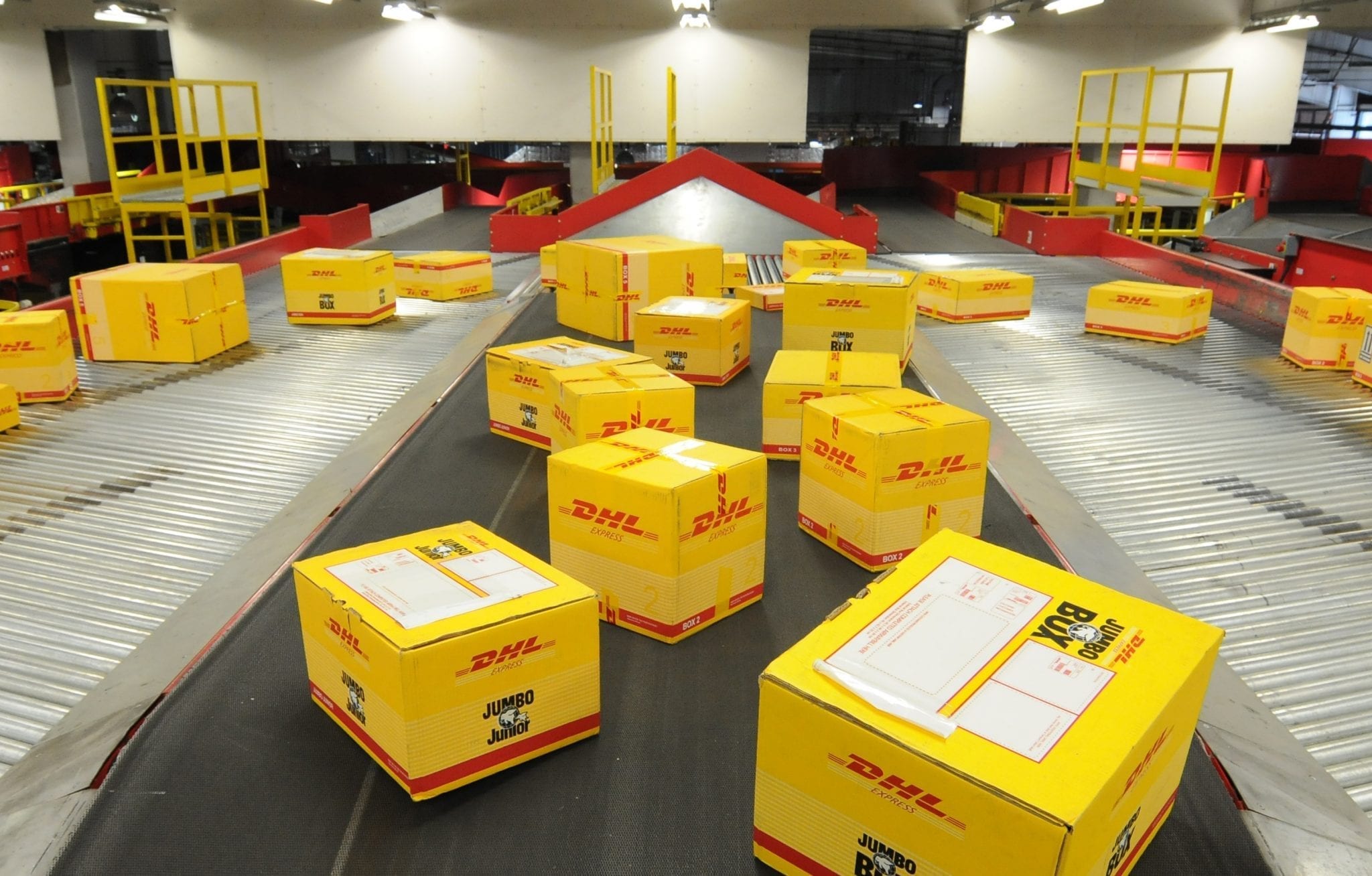
    DHL will construct the brand-new bespoke facility at Plot 3040 on London Gateway’s Logistics Park with the main facility build due to commence in early 2021. On completion, DHL will lease the facility from DP World London Gateway.

    The 42m high bay warehouse will feature 36m of clear internal eaves height. DHL said it would be fully automated and ready for operation in early 2023.

    When completed, the facility will be the largest single-unit at London Gateway’s Logistics Park.

    Oliver Treneman, Park Development Director at DP World London Gateway, said: “The most striking feature of this new letting is DHL’s significant investment in automation that underpins its commitment to this strategic location.”

    DHL joins UPS, Dixons Carphone, MADE.COM, Lidl, Ceva Logistics, P&O Ferrymasters, Halo Handling (SH Pratt), Ziegler UK and Compagnie Fruitiere at DP World London Gateway.

    DP World sponsored the Supply Chain Excellence Awards 2020. Discover how it feels to win a Supply Chain Excellence Award by watching the virtual ceremony on-demand.